David Holmes was drawn to DIE HEXEN by their 'magical sensibility that has both shades of dark and light, which is something that always appeals to me in music'. After featuring in his edition of the famed Late Night Tales compilation with a take on the original suicide song 'Gloomy Sunday', DIE HEXEN returns to expand upon their dark ambient journey towards transcendence with an eagerly awaited debut album.
DIE HEXEN's genre eschewing synth driven compositions draw inspiration from the disturbing beauty of Hieronymus Bosch's artwork and several brushes with death, evoking a spirit who traverses realms of the underworld to bring forth knowledge of an Ancient past and in doing so, to reveal the not so distant future.
The Garden of Unearthly Delights transports the listener through strange visions of darkness, beauty, creation, destruction, death & rebirth. An exorcism of body, gender, tribe towards a place of ultimate transcendence.
Somewhat of a polymath, DIE HEXEN has already shown their prowess with live performances part music/part performance art spectacle, as an avant-garde filmmaker and as an award-winning multi-instrumentalist, sound designer and film scorer.
DIE HEXEN's divergent interests from Japanese Butoh theatre to Wiccanism, Shamanism, celestial mysticism and time travel informs their method, as they explain themself; 'The compositions I write are not written, at least not by me. They appear to me as audio/visual hallucinations. I can hear, visualise, and feel the whole composition before me. My hands know instinctively what notes to play and like a stream of consciousness, voices emerge. Having suffered severe head trauma that resulted in a heightening of the senses, the theme of death is an increasingly present theme in my work. With this, my perception of death and what is beyond changes as I contort between this world and the next physically and mentally, musically and visually. Working with music or film, my vision is one. The calling to express these auditory hallucinations is inevitable'.

Поиск:sensi
Все
Beautiful contemporary African music. Deep percussion with great guitar playing and vocal chants on top. Driving basslines all over the album. Spiritual feel! Tip
.
Son of the legendary Dr Philip Nchipi Tabane and heir to the malombo sound that he originated and pioneered in the early 1960s, Thabang Tabane has been touring the world playing with his father's band and other South African luminaries (such as Thandiswa Mazwai, Madala Kunene and Mabi Thobejane) since he was 8 years old.
Emerging into his own with his debut solo album, Matjale, this energetic percussionist carves a driving, joyous and worldly version of the malombo genre that takes in his continental travels. The album brims with ambition and an appetite for life. Employing brisk tempos, nimble basslines and intersecting polyrhythms, Thabang crafts songs cognisant of the hardships of life, but chooses to deliver them with an irrepressible optimism.
Expanding parameters of what is essentially an artform patented by his father, Thabang and his cohorts seem unburdened by pedigree, infusing the sound with a modern sensibility. His reverence for the vibrational resonance and drive of the bass guitar, not to mention his explosive bursts of hand drumming, gives the album an undeniable, cathartic exuberance.
Marti Caine's infamous Point Of View is a groovy blend of slow-mo funk, dark disco and precise pop. Originally released on BBC Records in 1981, it has attracted a considerable cult following this century. The odd charity shop score aside, it has been impossible to find a copy for less than eye-watering sums (often selling for over £200) and, as such, it's an honour to present the first officially licensed vinyl reissue of this sublime record. Featuring expert liner notes written by Bill Brewster - perhaps the record's most notable champion - this lovingly curated release is limited to just 500 copies.
Marti Caine was a popular UK TV entertainer in the late 1970s onwards and Point Of View presented her with an opportunity to proceed in a hip direction by working with British R&B heavyweight Barry Blue. His legendary reputation was secured with a string of great records, among them the first three Heatwave albums, the Balearic hit "Afro Dizzi Act" by Cry Cisco and the cult smash "Breakin' In" by Javaroo. However, despite the array of talent working on the album, Point Of View sank without trace at the time. It's something that Blue attributes to the bizarre way BBC Records worked, and he entertainingly expands upon this within the liner notes.
Musically, the highlights are many and memorable. Its most notorious track is the sublime soul stepper "Love The Way You Love Me", the reason most people covet this album so profoundly. However, from the dark dubby disco of "Snowbird City" to the moody ballad "Love Is Running Through Me", the lesser heralded tracks are nothing short of exquisite. Indeed, the chugging elegance of sleazy disco opener "Can I Speak To The World Please" showcases a string-drenched strutting-funk that would've been enviable the world over. It's that good.
The outlandish artwork - presenting a striking, green-eyed Marti treating a tiger to a headlock - has been faithfully restored and is arguably worth the price of admission alone. With access to the original tape transfers, Simon Francis' sensitive mastering elevates the sound throughout and, as ever, it has been pressed at a reassuringly weighty 180g. Sadly, Marti died of lymphatic cancer at the tragically early age of 50 in 1995, so is not here to experience what we hope will be a long overdue reappraisal of the hitherto underheard genius of Marti Caine, the singer
- A1: Natural Selection
- A2: Mother And Daughters Now Mothers
- A3: Forbidden Fruit
- B1: Epsilon Transmission
- B2: Epsilon
- B3: Love Lies Bleeding
- C1: Time Capsule
- C2: Mind And Matter
- C3: Retrospective
- C4: Solo
- C5: Extra Vehicular Activity (Eva)
- C6: Life Support
- D1: Telescopic One
- D2: Telescopic Two
- D3: Telescopic Three
- D4: Sane
- D5: Angel Falls
- D6: Mothers Too
- D7: Deaf Out
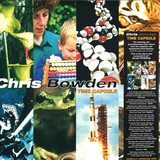
The Stunning And Ground-breaking Album From The Composer And Saxophonist Chris Bowden.
'this Is The Album That Connected It All.' Gilles Peterson 2018
Chris Bowden's Debut Album Time Capsule Was First Released On Soul Jazz Records In 1992 To Universal And Widespread Critical Acclaim. Now 20 Years On A New Wave Of Current Jazz Artists Led By The Likes Of Kamasi Washington In The Usa And A Host Of British Artists - Shabaka Hutchings /sons Of Kemet, The Ezra Collective, Moses Boyd, Nubya Garcia, Fourtet, Yussef Kamaal, Tenderlonious, Binker & Moses - Have Brought This Original Ground-breaking Album Into The Limelight Once More As A Pivotal Starting Point, Sharing Many Of The Aesthetics Of These Current Artists At Work Today.
Musically All Are Inspired By The Spiritual Jazz Of John Coltrane, Alice Coltrane, Pharoah Sanders, Archie Shepp, Don Cherry Et Al Paired With A Modern Electronic Music Sensibility. Chris Bowden's Time Capsule Has Stood The Test Of Time Like Few Other Albums (as The Title Of The Album Suggested), And Remains A Pivotal, Wholly-successful And Original Experimental Musical Collage, A Radical Inspiration And Forebearer To Many Of The Best Progressive Jazz And Electronic Artists Working Today.
The Album Has Been Fully Hi-spec Re-mastered And Is Available As A Limited-edition Heavyweight Double-vinyl Release With Gatefold Sleeve (+ Free Download Code), Slipcase Cd And Digital Album.
Fast-moving Times, In Which Popularity And Quality Are Often Equated Or Commonly Confused With One Another, Aids And Abets This Imitation Game Some Call Conformity, Others Professionalism. In The End, Both Paths Will End Up In Predictability. Here's Where Stathis Kalatzis, Aka Mr. Statik, Comes To Play. The Resident At Athens' Multi-purpose Cultural Space Six D.o.g.s Has Not Only Been One Of The Scene's Pivotal Figures, But Since He Started To Release His First Solo Releases In The Mid-00s, The Now Berlin-based Greek Dj Has Earned A Reputation For Being A Trend-ignoring, Unconventional Producer.
Whether His Output For Bpitch Control, Rotary Cocktail, Or Even Last Year's Debut Ep "rogue
Cherub" For Away - Mr. Statik Enjoys Thinking Outside The Box By Crossing His Diverse Pop-cultural Interests And Pulling In Expertise And Perspective From Beyond The Usual Functional Formulas. After A Decade Of Not Staying In One Comfort Zone Or Sticking To One Musical Direction, He Finds Himself More Comfortable In His Producer Shoes Presenting His Debut Album "metamorphose". Housing A Few Film References In This For Mr. Statik Typical Nebulous Fashion, The Ten Tracks Not Only Carrying The Narrative Potential Of An Imaginary Score, But Primarily Exploring A Versatile Array Of Influences, Themes, And Contradictions (which Mr. Statik As An Illustrator Also United On The Albums' Artwork). Ranging From The Sci-fi Infused Album Opener "insomnia", The First Non-dancefloor Piece He Ever Produced Around 7 Years Ago, Over "atastrophe", An Homage To Ancient Greek Theater, To Collaborate With Others Such As Beatrice Ballabile, Jan Niklas Jansen (locas In Love), And Rbma Alumnus Claude Speeed, Who Contributed Synth Work On "soulfur".
"metamorphose" Succeeds In Constantly Changing Its Tones, While Maintaining An Emotional
Frame, In Which Mr. Statik's Melancholic, Introvert, At Times Hopeful And Euphoric, Bottom End
Inclined Electronic Music Can Elaborate.
Mr. Statik On His Album Debut:
"i Have Always Tried To Approach Producing As Storytelling Exercises. This Allowed Me To
Experiment Finding Myself In Uncharted Territories, More Specifically In Music That Doesn't
Necessarily Fit To A Dance Floor - Unless It's A Very Adventurous One. 'metamorphose'' Is Loyal To That Mindset. I Usually Draw Inspiration From Cinema And Comic Books And Have Always Been Fascinated With Sci-fi, South Asian Culture, Surrealism And The Dreamworld. Initially The Album Was Supposed To Be A Collage Of The Various Influences That Had Shaped My Life, But Ended Up Being Something Very Different. During The Conceptualization And Recording Process A Lot Of Things Around Us Have Changed, Primarily For The Worse. I Became More And More Sensitive And Susceptible To Pessimism And Trendy Visions Of 'dystopian Futurism', So That The Lp Emerged Being An Exercise In Positivity: 'metamorphose' Is A Verb Describing The Act Of
Conversion, But In Greeklish It Is Describes The Urge Towards Others To Start Transforming Their
Environment, In This Case For The Better."
Rhythmic Brutalism' is the title of this release, available as a two CD set or two separate LPs, the title is also a very apt description of the music itself. Romanian-born Alexandra Atnif was fascinated by the harsh, grey concrete beauty and minimally repetitive force of the brutalist post-war architecture of her homeland, and this fascination has given rise to the music here. Vol. 1 is an EM Records edition, compiled from an earlier self-released double CD featuring recordings from 2014-15. Vol. 2 consists of previously unreleased recordings from 2015 to 2017. Using elemental, inexpensive technology, Atnif' s music is heavy and harsh, stripped down to distressed skeletal frameworks, rhythmic noise, rusting metal and weathered concrete, a distorted DIY realization of her beautifully brutal vision. With a background in European modernist/avant-garde music, Atnif has been influenced by early rhythmic industrial music such as Throbbing Gristle, Esplendor Geometrico and Muslimgauze, as well as later practitioners of rhythm and noise including Pan Sonic, Autechre, Winterkälte, Prurient and Scorn. Across the relatively brief span of years contained within these two volumes, we hear the rhythmic structures begin to fracture and fray, and the outlines darken and become more obscure, with Antif's sensibility evident throughout.
Compilation of the works by MJ Lallo, weird harmonizing mantras layered with drummachine rhythms.. Very psychedelic compositions where she uses her voice to create all kinds of sound(scapes)
.
Take Me With You is a revelatory voyage through the captivating universe of voice artist and poet MJ Lallo. The works on this 2LP compilation were all recorded in her home studio between 1982 and 1997, primarily using drum computer, synth and her own voice processed through a Yamaha SPX 90 digital effects unit. They range from wordless harmonizer mantras and primitive drum computer meditations, to psychedelic latin dance-floor anthems and synth-drenched end-of-the-nighters. Lallo has created her own inimitable galaxy of sound where the human voice, liberated from the constraints of language and abstracted using digital technology, is able to explore the outer realms of human expression, like Joan La Barbara with an Eventide and a new-age sensibility. Although Lallo's flight path is distinctly her own, her journey converges with other travellers as diverse as Jon Hassell, Laraaji, Stereolab, William Aura, Laurie Anderson, Meredith Monk, Gertrude Stein and even Terry Gilliam (whose film Brazil was a big influence on Lallo). Like something beamed in from another planet, Lallo's work is both fascinatingly strange and strangely familiar, and will leave a lasting impression for lightyears to come. Double gatefold LP, remastered DDM pressing.
[E B1 | Midnight in the Sky
Produced by Jenn Wasner of Wye Oak. LP is on coloured coke bottle green vinyl + inclues download code and 12x12' lyric sheet/ liner note insert.
Madeline will be on tour throughout the UK and Europe this Autumn.
'Building from understated beauty to dense guitar theatrics. It reminds me of Chicago circa '93 as remembered in a dream — a little bit of Liz Phair 'Exile In Guyville' - rendered in soft-focus with the graceful confidence of a young master. ' STEREOGUM
In January of 2018, five months after the release of her debut album Night Night at the First Landing, Madeline Kenney traveled from Oakland, California to the woods outside of Durham, North Carolina to record her sophomore album with a new collaborator, Wye Oak's Jenn Wasner.
The choice was a conscious decision to explore new methodology in writing, recording, production and even genre. Perfect Shapes sees Kenney leaping headfirst into fresh and adventurous territory, largely eschewing conventional rock structures in favor of theme and melody. Its ten songs are full of surprises big and small - from vibrant synth lines to taut bass figures and subtly modulated vocals - that instead of feeling fussed over, reveal Kenney's penchant for elegant and abstract composition.
Kenney's 2017 debut, Night Night at the First Landing, was a guitar-centric rock album, produced by friend and collaborator Chaz Bear of Toro Y Moi, Perfect Shapes leans on the foundational pieces of Night Night - fuzzed-out guitar tones, coy wordplay and Kenney's notably strong voice - but with an unconventional approach that allows them to bloom, reincarnated. Perfect Shapes marks Wasner's first foray into producing another artist's work and is permeated by the pair's collaborative spirit. Both Wasner and Kenney play multiple instruments on the record, and engineered the session alongside Kenney's touring percussionist, Camille Lewis.
An eagerness to explore and experiment is apparent from start to finish, as Kenney and Wasner weave endless sonic curve balls into the arrangements. From the delightfully warped percussion on opening track 'Overhead' to the burbling synths on the R&B-tinted 'The Flavor of the Fruit Tree' and the left-field trumpet solo in 'Your Art,' these rich and inventive ideas echo Yo La Tengo's everything-but-the-kitchen-sink mentality, as well as the surging soundscapes of Tame Impala and Wye Oak at their most impressionistic. Lead single "Cut Me Off" is a surprise of its own - the most pop-forward song Kenney has written yet. 'Bad Idea,' finds her balancing fragility as foil; later, 'I Went Home' manages to evoke both frustration and affection in a single breath.
The complex and open-ended questions that lay at the core of Perfect Shapes mark Kenney's arrival into a hard-hitting reflective space: How do you love another when it hurts to do so What is the physical limit to which one can carry the emotions of others How does a modern female artist reckon with the expectations demanded of her femininity Yet for all the notes of doubt and fear that Kenney raises, she delivers each song with confidence and poise, grounded by the pointedly laid and surging soundscape.
Kenney has always had a penchant for curiosity and experimentation. Raised in the Pacific Northwest, she began studying classical piano and dance in kindergarten, and grew to believe her future lay in modern dance choreography. Not one to be tied to a singular pursuit, however, Kenney took a hard left in college, studying Interpersonal Neurobiology and supporting herself with a career in baking. Music remained a constant however, and after moving to the Bay Area in 2013, Kenney quickly found footing in the supportive arts community in Oakland. There, she met and began collaborating with Chaz Bear (Toro Y Moi), which led to the production of her Signals EP and later her debut album, Night Night at the First Landing. Both releases were received with great critical acclaim, and saw Kenney exploring the sounds within her self-proclaimed twang-haze genre, defined by cathartic fuzz breakdowns and lyrical sensitivity.
Shielding's Innerlig is viscous, densely detailed, trippy music.
Dripping with texture, these are supple tunes that generously expand to fill whatever space they're in, loops stretching towards the lilac virtual horizon. Constantly mutating rhythms, heavily atmospheric grooves. RIYL Harmonious Thelonious, Jan Jelinek, Theo Parrish.
is it the best jazz record from japan, as the french-born english disc jockey, record label owner and music collector gilles peterson once assumed or is it maybe the best jazz record of all jazz records
well, everybody needs to decide by himself and has to listen to 'watabase', the second solo piano album of the japanese jazz pianist fumio itabashi, that was originally released in 1982.
tokyo based mule music unearth it, remastered the original recordings and brings it back to the global stores in order to seduce all music lovers that embrace notes who come straight from the heart and soul.
while diving deep into the seven compositions on 'watarese', any sensible listener finds out, that the instrumental piano pieces are somehow soulfully connected to what keith jarret plays on his legendary 'the köln concert' live album for the munich based ecm record company.
like jarret, itabashi does not play his notes academic. he let them fly, gives them some kind a life of their own, hits the piano keys deeply emotional and injects his compositions and interpretations some kind of nervous human soul.
in terms of style some call his 'watarase' recordings post-bop, others contemporary jazz. none of such definitions fit really, as all is just that kind of agitating jazz that melts spirituality with humanity. three tunes, the epic 'someday my prince will come' as well as 'msunduza' and 'i can't get started', are interpretations of compositions by the us-american movie score pioneer frank churchill, south african pianist dollar brand and russian-american composer and songwriter vernon duke.
all other four compositions been written and recorded by the 1949 born itabashi who started to play the piano when he was eight years old. while studying at the tokyo based kunitachi college of music, he fell in love with jazz.
his love was so deep, that he starts to work in the 1970's with such legendary japanese jazz musicians like trumpet player terumasa hino, drummer takeo moriyama and saxophonist sadao watanabe.
till today fumio itabashi is a vital part of the japanese jazz culture as a live performer and film score composer. those who want to see how he makes love with his piano should check the world wide web for the french documentary 'jazzed out', that captured his unique way of playing in one episode.
but as music is always firstly for the ears, and not for the eyes, this little letter in-front of you would rather like to recommend to play the 'watarase' recordings loud to get hooked by the highly infectious piano gems that have been recorded at nippon columbia 1st studio in tokyo on 12th and 13th of octo-ber 1981.
they will haunt you. they will come for good. and they will force you to be a good friend with the repeat button - whatever medium you chose to surrender to the piano jazz music of fumio itabashi.
Terence Fixmer's path through the changing techno landscape of the past 20 years has been anything but direct. Indeed, the French born producer, musician and Planete Rouge label founder has long been influenced by the periphery of continental European dance music subgenres from electronic body music, new beat and acid, before combining them into his own pioneering hybrid of futuristic, EBM-inflected techno with classic releases such as 2001's Muscle Machine or the collaborative Between The Devil LP with Nitzer Ebb's Douglas McCarthy as Fixmer/McCarthy. While the sound in recent years has been rediscovered and recast in diverse contexts by a new generation of producers, Through The Cortex sees Fixmer gravitating toward a different kind of industrial-tinged electronics, led as much (or more) by analogue sequencers, melodies and ultra-saturated sounds of synthesizers than drums and percussion. Across eight tracks at a compact but varied 40 minutes, the LP touches on an aesthetic hinted at in recent Ostgut Ton releases (2016's Beneath The Skin EP and 2017's Force EP), revealing a sonic narrative through noisy, screaming synth/vocal riffs with a jagged, guitar- like post-punk sensibility. Through The Cortex is techno with a voice - or rather multiple voices - guiding listeners through hypnotic, space- and social-themed terrain as a kind of dark soundtrack to darker days. The result ranges from the slow John Carpenter-inspired Escape From Precinct 13 funk of 'Expedition' and the patient yet muscular stomp of 'Fury' to the mesmerizing Suicide-like pop of single 'Accelerate', where Fixmer, using his voice as an instrument, chants the track's ambiguous title in an invocation of systemic change/collapse. Elsewhere, the story is told with more abstract and wailing vocals like on 'Shout in A Black Hole', or in the warm, entrancing chords floating across the stereo image in ostensibly changing time-signatures on 'A Halo Somewhere' - the LP's uncharacteristically kosmische musik come-down. The track, and Through The Cortex as a whole, reflect what can be described as Fixmer's idiosyncratic take on both techno subgenres as well as the larger pool of electronic music in general. This broad approach translates into a sound that is not only difficult to pin down, but also one that lends itself to multiple listens.
From the inheritor of John Coltrane's mouthpiece a re-integration of deep South African jazz roots with the Black Atlantic spiritual jazz continuum.
Celebration's release trumpeted the emerging dawn of South Africa's epochal changes. Sainted and blessed, Bheki Mseleku appeared as the herald of a new era, a prophet of rebirth and reconnection. This is a work signalling transition and change, and a sign of a South African music that was properly reconnected with global currents - a music that could journey far beyond the stifling combination of exile and oppression in which it had been bound.
Recognising Bheki as a kindred spirit to her late husband, Alice gave him the saxophone mouthpiece that John Coltrane had used during the recording of A Love Supreme. Coltrane was a permanent touchstone for the pianist, one of the few who Bheki felt had the same esoteric and spiritual focus as himself: 'the only musicians I know of who were deeply into this were Coltrane, and Pharoah and Sun Ra', he told an interviewer in 1992.
While the idioms of post-Coltrane spirit jazz are certainly to the fore on Celebration, they are energised by a swift and original musical vision, quite specific to Bheki's music, in which whole musical systems - the marabi and mbhaqanga jazz of the townships, American jazz, European classical, and more - are seamlessly mended together by the pianist's quicksilver musical sensibility and legendary technical ability.
Celebration was originally released on compact disc and cassette in the middle of 1992 by World Circuit. It was Bheki's first statement under his own name, and the first recorded presentation of his personal musical vision. This vision had been tempered across two decades which had combined intense professional playing with profound personal trials in both the spiritual and earthly domains, all set against the greater backdrop of South African political turmoil and exile in Europe.
The band brought together musicians hailing from three signally important points within the interconnected, communicating spaces of the Black Atlantic continuum - North America, post-colonial Britain, and southern Africa. With them, Mseleku created the first major South African-led musical statement to be produced after the sufferance of exile was ended. The ultimate and most egregious remnant of the centuries-long colonial era, apartheid, was finally being dismantled as they played. At this critical point, Mseleku's musical spirit work, channelled from a higher source, spoke of a time to come where all divisions might be transcended by a greater unity.
- A1: N'écrire Que Du Vent
- A2: La Visite Au Musée
- A3: And Then The Wind
- A4: Chienne De Vie
- A5: Quand Natalia Peint
- A6: Thème Entre Deux Chants
- A7: Les Sanglots Du Locataire
- B1: John Doe
- B2: C'était À L'aube
- B3: Le Dialogue Des Joueurs De Cartes
- B4: Et L'obscurité Toute Entière Pour Me Rappeler Cela
- B5: Le Train Ne S'arrêtera Plus
- B6: L'oubli
- B7: Chryséléphantines
- B8: D'un Pas Chancelant
Le Raccourci is a welcome introduction to the world of modern classical identity Sebastian Gandera. The impressionist landscapes of a sensitive soul self-reflecting, these miniature compositions alternate across a rudimentary set up of piano, field recorder, sampler and four track. Melancholic utterings hastily captured some 100km east of Paris. Classically trained by the same teacher as his parents, Gandera first began recording in the confines of his university dorm room, inspired by a C60 from friend and future collaborator Bernard Odot (A Gethsémani). Humbly existing without sparing a thought to music industry or career, Gandera's personal effects surfaced via the European and US cassette networks from 1988 to 1994. Impressively accomplished for the DIY scene they orbited, these tapes were issued in scant quantities, rendering his pieces as private secrets shared and duplicated in small concentric circles. Aside from a sole, avowedly traumatic performance, the material was never shared in a live context.
If you check the credits of The Rolling Stones' Goats Head Soup LP from 1973 you'll find a certain "Pascal" listed on the percussion section. That is none other than Los Angeles based artist Nicolas Pascal Raicevik (1933-1994), aka 107-34-8933, aka Head, aka Nik Pascal, aka Nik Raicevic. Besides his hitting the bongoes on the Stones album, Nik was a great artist on his own, both as a painter and as a musician. As a musician, he was a pioneer in the use of synthesizers, preceeding the Berlin school by some years when his Head LP was released on on Buddah in 1970. Buddah probably saw in Head the opportunity to cash in some money from the remains of the psychedelic scene - the three tracks on the LP are named after drugs used in the late sixties. The sounds, however, are accomplished works that show Raicevic as one of the most interesting pioneers in the use of synths. The album probably didn't do too well, since Buddah didn't renew the contract with Raicevic, who instead took his own way releasing his works on his very own Narco Records and Tapes label. Between 1968 and 1975 Narco would issue 4 LPs credited either to Nik Raicevic (Beyond The End... Eternity) or Nik Pascal (The Sixth Ear, Magnetic Web and Zero Gravity) plus one credited to 107-34-8933 (Numbers, which is in fact the same LP as Buddah's Head, albeit with different cover art). Copies of these LPs came with an ironic sticker over the shrinkwrap that read "Do not listen to this LP if you are stoned".
1972 saw the release of The Sixth Ear (Narco NR666), this time credited to Nik Pascal. A more complex work than Beyond The End..., it adds consistent rhythmic patterns to the mix with the addition of bongoes and also explores some interesting chord progressions.
Besides his musical explorations, Nik was also an interesting painter. His paintings are auctioned from time to time, and are consciousness expanding works influenced by abstract cubism and surrealism, some kind of Salvador Dalí on drugs exploring the outter and inner space. All the artwork on the sleeves of his LPs is done by himself. Spacey landscapes and psychedelic colours that fit perfectly to the music they contain.
"Nik Raicevic's music is at the intersection of radical psycho-electronic weirdness and kraut kosmische music (in particular the scifi-hypno-minimal modules of Conrad Schnitzler in Grun, Rot and Blau). It presents mega epic & tripped out electronic improvisations.
"This is an absolute must for collectors and fans of visceral, neurotic soundscapes." (progarchives)
"As far as late-60s / early-70s American Bedroom' Electronic Music goes, these LPS have to be among the first transmissions from this sector, made all the more attractive when coupled with Raicevic's alien topographIes - the covers are high-color portrayals of Venusian lanes, knotted growths, & future-past architecture in a style you might equate with Vintage' sci-fi pulp-novel covers - & copious Downer' sentiment. This music is imbued with a sort of lonely, anti-social sensibility that's about as far as you can get from the Academic' Early Electronic vector. I will say that if the Steve Birchall, Cellutron & the Invisible, and/or Pythagoron™ seed your garden, this will likely do the same." (twoheadeddog)
Never reissued before on vinyl format, the Wah Wah reissue features original sleeve artwork made of paintings and drawings by Nik himself and reproduction of the famous ironic "Do not listen if you are stoned" sticker. Limited edition, 500 copies only.
If you check the credits of The Rolling Stones' Goats Head Soup LP from 1973 you'll find a certain "Pascal" listed on the percussion section. That is none other than Los Angeles based artist Nicolas Pascal Raicevik (1933-1994), aka 107-34-8933, aka Head, aka Nik Pascal, aka Nik Raicevic. Besides his hitting the bongoes on the Stones album, Nik was a great artist on his own, both as a painter and as a musician. As a musician, he was a pioneer in the use of synthesizers, preceeding the Berlin school by some years when his Head LP was released on on Buddah in 1970. Buddah probably saw in Head the opportunity to cash in some money from the remains of the psychedelic scene - the three tracks on the LP are named after drugs used in the late sixties. The sounds, however, are accomplished works that show Raicevic as one of the most interesting pioneers in the use of synths. The album probably didn't do too well, since Buddah didn't renew the contract with Raicevic, who instead took his own way releasing his works on his very own Narco Records and Tapes label. Between 1968 and 1975 Narco would issue 4 LPs credited either to Nik Raicevic (Beyond The End... Eternity) or Nik Pascal (The Sixth Ear, Magnetic Web and Zero Gravity) plus one credited to 107-34-8933 (Numbers, which is in fact the same LP as Buddah's Head, albeit with different cover art). Copies of these LPs came with an ironic sticker over the shrinkwrap that read "Do not listen to this LP if you are stoned".
Magnetic Web was released in 1973. It appeared under the Nik Pascal monicker and showed a clear evolution in sound, favoured by the addition of an Arp 2600 and some rhythm boxes. It also included percussions and cymbals. The Two Headed Dog site thinks "this is his masterpiece in all of its acid-laced glory."
Besides his musical explorations, Nik was also an interesting painter. His paintings are auctioned from time to time, and are consciousness expanding works influenced by abstract cubism and surrealism, some kind of Salvador Dalí on drugs exploring the outter and inner space. All the artwork on the sleeves of his LPs is done by himself. Spacey landscapes and psychedelic colours that fit perfectly to the music they contain.
"Nik Raicevic's music is at the intersection of radical psycho-electronic weirdness and kraut kosmische music (in particular the scifi-hypno-minimal modules of Conrad Schnitzler in Grun, Rot and Blau). It presents mega epic & tripped out electronic improvisations.
"This is an absolute must for collectors and fans of visceral, neurotic soundscapes."
"As far as late-60s / early-70s American Bedroom' Electronic Music goes, these LPS have to be among the first transmissions from this sector, made all the more attractive when coupled with Raicevic's alien topographIes - the covers are high-color portrayals of Venusian lanes, knotted growths, & future-past architecture in a style you might equate with Vintage' sci-fi pulp-novel covers - & copious Downer' sentiment. This music is imbued with a sort of lonely, anti-social sensibility that's about as far as you can get from the Academic' Early Electronic vector. I will say that if the Steve Birchall, Cellutron & the Invisible, and/or Pythagoron™ seed your garden, this will likely do the same."
Never reissued before on vinyl format, the Wah Wah reissue features original sleeve artwork made of paintings and drawings by Nik himself, and reproduction of the famous ironic "Do not listen if you are stoned" sticker. Limited edition, 500 copies only.
If you check the credits of The Rolling Stones' Goats Head Soup LP from 1973 you'll find a certain "Pascal" listed on the percussion section. That is none other than Los Angeles based artist Nicolas Pascal Raicevik (1933-1994), aka 107-34-8933, aka Head, aka Nik Pascal, aka Nik Raicevic. Besides his hitting the bongoes on the Stones album, Nik was a great artist on his own, both as a painter and as a musician. As a musician, he was a pioneer in the use of synthesizers, preceeding the Berlin school by some years when his Head LP was released on on Buddah in 1970. Buddah probably saw in Head the opportunity to cash in some money from the remains of the psychedelic scene - the three tracks on the LP are named after drugs used in the late sixties. The sounds, however, are accomplished works that show Raicevic as one of the most interesting pioneers in the use of synths. The album probably didn't do too well, since Buddah didn't renew the contract with Raicevic, who instead took his own way releasing his works on his very own Narco Records and Tapes label. Between 1968 and 1975 Narco would issue 4 LPs credited either to Nik Raicevic (Beyond The End... Eternity) or Nik Pascal (The Sixth Ear, Magnetic Web and Zero Gravity) plus one credited to 107-34-8933 (Numbers, which is in fact the same LP as Buddah's Head, albeit with different cover art). Copies of these LPs came with an ironic sticker over the shrinkwrap that read "Do not listen to this LP if you are stoned".
Nik's last album, Zero Gravity (Narco NR123) came under the Nik Pascal name and had a fantastic side long piece on the title track which reminisces of the works of Cluster. B side features four tracks that also bear some Conrad Schnitzler reminiscences. This was to be Nik's last LP before he would sell all his synths to ex car racer and future electronic/ambient music star Steve Roach.
Besides his musical explorations, Nik was also an interesting painter. His paintings are auctioned from time to time, and are consciousness expanding works influenced by abstract cubism and surrealism, some kind of Salvador Dalí on drugs exploring the outter and inner space. All the artwork on the sleeves of his LPs is done by himself. Spacey landscapes and psychedelic colours that fit perfectly to the music they contain.
"Nik Raicevic's music is at the intersection of radical psycho-electronic weirdness and kraut kosmische music (in particular the scifi-hypno-minimal modules of Conrad Schnitzler in Grun, Rot and Blau). It presents mega epic & tripped out electronic improvisations.
"This is an absolute must for collectors and fans of visceral, neurotic soundscapes."
"As far as late-60s / early-70s American Bedroom' Electronic Music goes, these LPS have to be among the first transmissions from this sector, made all the more attractive when coupled with Raicevic's alien topographIes - the covers are high-color portrayals of Venusian lanes, knotted growths, & future-past architecture in a style you might equate with Vintage' sci-fi pulp-novel covers - & copious Downer' sentiment. This music is imbued with a sort of lonely, anti-social sensibility that's about as far as you can get from the Academic' Early Electronic vector. I will say that if the Steve Birchall, Cellutron & the Invisible, and/or Pythagoron™ seed your garden, this will likely do the same."
Never reissued before on vinyl format, the Wah Wah reissue features original sleeve artwork made of paintings and drawings by Nik himself, and reproduction of the famous ironic "Do not listen if you are stoned" sticker. Limited edition, 500 copies only.
As we reach our 30th release on the label, Animal Farm is proud to present Stephanie Sykes' first solo EP since 2016's effort on Prodigal Son. Those two years have seen her presence in the techno scene explode, with a flurry of appearances across Europe - our own Animal Farm night in Glasgow among them + residencies at Tbilisi's KHIDI and the infamous after hours Jaded crew in London, Corsica Studios.
Title track 'Interference' is an impeccably crafted tool in the vein of her recent DJ sets - boomy in the low end with sweeping peak time sensibilities. It's a brand of unpretentious techno purism Sykes has become synonymous with, also making her a firm favourite with the Animal Farm crowd.
The electro-informed 'On The Other Side' shows a new side to Sykes' production; contrasting mean drums with opulent synth work to craft something that is simultaneously dreamy and floor effective. The elusive Janice turns his hand to 'Interference' on the flip, providing a razor sharp mind-trip of a remix that's as affirming as it is abrasive.
All tracks mastered by Conor Dalton @ Glowcast Mastering.
On her debut EP, Brussels-based multi-instrumentalist Esinam gives us an entrancing insight into her eclectic world of jazztronica.
Released 21st September via Sdban Ultra, her self-titled EP carries influences from different worlds geographically, culturally and musically. Blending traditional and modern instruments with her soulful voice, the acoustic sounds of the instruments are allowed to evolve and take on new dimensions, opening up a kaleidoscopic spectrum of sound and colour.
Esinam Dogbatse is part of a new generation of musicians bringing forth a cultural blend of music. Having opened for the likes of Nakhane and Témé Tan at Les Nuits earlier this year, Belgian rapper Baloji invited her to guest on his latest critically acclaimed album '137 Avenue Kaniama'. She has also supported Alsarah & The Nubatones, Selah Sue and Melanie De Biasio on her sold-out shows at Ancienne Belgique.
For the recording of the EP, Esinam joined forces with Jules Fradet from Studio Planet (Damso, Afrikan Prötökol). Producing and playing most of the instruments herself, the EP was mastered by LA-based producer Kelly Hibbert aka Almachrome (J Dilla, Madlib, Little Dragon, Flying Lotus, Ebo Taylor, Mark de Clive-Lowe and Arca).
Lead track 'Birds Fly Under a Heavy Sky' is a mesmerising opener that smoulders effortlessly against a backdrop of subtle beats and sensual rhythms, with Esinam's soft vocals and hypnotic flute providing the groove.
On 'Do Not Go Into That Black Night', she is dark and direct. It's a magnetic take on jazz noire that doesn't distract from the sultry inflections of her voice, while 'Gavoé' recalls the spirit of her Ghanaian roots in a ballet of instruments that display a level of personal freedom and sensitivity. Through merging different genres of music, we are warmly welcomed into Esinam's musical universe.
Esinam teamed up with Senegalese DJ and producer Ibaaku on the highly charged 'Electric Lady', who provided some distinctive musical hues. A track drenched in afro-futurist colours, sonic samples and collages freely mix with electric and raw sounds, supporting the energetic playing of the flute. The structure of the song remains true to Esinam's signature sounds: surprising ruptures, poetic atmospheres and constant affirmation of groove.
When Esinam performs live, she juggles traditional instruments such as the tama, kalimba and pandeiro, which she loops and blends with the sound of her flute and voice. It sometimes triggers dance, sometimes contemplation
Children Of Tomorrow will celebrate soon its 10 years anniversary. The label was created by Emmanuel Ternois back in the day and being joined by Arnaud Le Texier in 2011. Since then they focused on Techno producing amazing artists, to name few: Terrence Dixon, Zadig, Tensal, Antigone, Oscar Mulero, Jonas Kopp, Samuli Kemppi etc... Children Of Tomorrow is now presenting the first album from Arnaud Le Texier. After almost 30 years Dj-ing around the world and almost 20 years producing. Signing many releases over the years and always busy delivering dance floor releases, it's been a long wait to finally get an album from ArnaudOn his first album we can feel that he wanted to tell a story and to express something deeper with his production experience. There is a different variety of Techno that stretches from ambient / broken beat / hypnotic / raw Techno along with subtles grooves, wondrous atmospheres & sonic textures. On A side the album opens with Dusk, an ambient atmospheric mid-tempo track with sonic sounds that is a perfect intro.Pattern 2 starts with drones and blip sounds and a broken beat groove follows with a pad that sounds like a voice coming from the space. The track ends with some modular click sounds that make the whole track clever. Followed by the album title Granular Therapy, a deep techno track with modular bass line and melancholic pad. A perfect track to play in after or to warm up a party.The B Side is more dedicated to the dance floor with Black Nympheas that is a proper dark modern techno with a grinding bass line and magic drones. A simple beat makes the track evolve in a nice way. Blade Pass frequency is 4/4 effective Techno with a 909 kick, a syncope acid bass line and a pad that sends you to another dimension. It is a powerful track but with a sense of deepness and sensibility that Arnaud can achieve sometimes. This side closes with Binary Sun Dawn which is an ambient track with melody that has a jazz feeling mixed with dark atmospheres, sonic drones and water drops. The C side opens with Mono Driver, a minimal track with a little synth that stays until the end repetitively until it makes you travel and lose your mind. Deep and dance floor at the same time.
Then Snapper is a more percussive track with some shinning bells and a grinding modular bass line.
The last track Virgo Consortium is a cosmic broken beat with dark atmospheric drone, simple bass and phasing efx. The D Side starts with Midi overdub which is a beauty. A mix between ambient and broken beat. The pad has the deepness that transports you somewhere else with an angel choir on top. The beat is spacial and groovy at the same time with smart high hats. This reminds Arnaud's past ambient production but with a modern approach. Surely a special track of the album.
Hideous Engine is more dance floor with metallic bass line and 4'4 beat going towards a sonic pad that closes the track.The last track Dawn is ambient with drones and blip sounds and an acid bass line modulate. A perfect end of the album.This album is an accomplished journey that makes you dance and travel from dusk till dawn. Arnaud Le Texier shows a coherent vision and illustrates his vast diversity in the techno world. Hopefully we won't have to wait 20 years to get another one.
Daniel Terndrup Is A Los Angeles-based Dj And Producer. A Longtime Record Collector And
Digger, Daniel Has Become A Local Authority On Bygone Music. He Hosts Regular Radio Shows
On Dublab (crosseyed & Painless) And Nts (heat-wave) While Also Throwing A Weekly Party
For Heat-wave In Collaboration With Wyatt Potts At Former Hollywood Stripclub, Gold
Diggers. Daniel Started Making Music A Decade Ago As One Half Of Cosmic Kids. Alongside
Ron Poznansky, He Made A Name For Himself Producing Heady House And Astral Dance Tunes,
And Releasing Records With Cult Labels Throne Of Blood, Let's Play House And Dfa. In Addition
To Racking Up Plays On Original Cuts, The Duo Was Regularly Tapped To Deliver Remixes For
Heavyweights Like The Rapture, Holy Ghost!, Poolside And Superhumanoids.
After A Handful Of Releases With Cosmic Kids, Daniel Pivoted Toward His Own Project As Daniel
T. His Solo Output Is Inspired By Everything That You Might Find Leafing Through His Record
Collection: Funk, Post Punk, New Age And Pop Of Yesteryear (think: Compass Point All Stars To
Yellow Magic Orchestra). The Music He Releases As Daniel T. Is A Reflection Of His Global Taste,
But Indelibly Filtered Through His Southern California Surroundings
Blurb Attached
Following His 2015 Solo Debut Tetrachromat, Released On Friends Of Friends Sister Label
Young Adults, Daniel T. Returns With A New Album Called Heliotrope, Out This Summer On
Cascine. In Contrast To The Steady Dance-oriented Tempos Of Tetrachromat, Heliotrope
Moves Across More Dynamic Landscapes, All United Under Daniel's Sun-soaked Sensibility.
From The Breezy Bounce Of call,' To The Lithe Cover Of Tatsuro Yamashita's Classic windy
Lady,' He Effortlessly Wades Into Pop Territory. Elsewhere, On The Neon Glow Of moonlight
Bounce' (inspired By Dan's Near-religious Love Of Roller-skating) And The Ebullient First Single
'heat-wave', His Trademark Mid-tempo Swing Shines As Bright As His Synths. Heliotrope Is A
Reflection Of His Global Taste, But Indelibly Filtered Through His Southern California
Surroundings