Get in the car, we're goin' to the Cirque Du Freque, starring Normal Ones, Deepchord, and Lost Lake. A journey from the murky depths to the boogie caves, from your pals at Make Mistakes.
On the A side, Deepchord crafts a driving, shifting, wall of noise. Melodic stabs and resonant fuzz coat a pulsing beat and
bass. Hypnotic and divine, Deepchord's take on the original is a potent, psychedelic tool for the late night warehouse dance floor.
The original shines bright, a playful groove with an undercurrent of menace. With that sweet, sweet growling bass, and tip-a-tap percs, skittering all about, Cirque Du Freque brings the dirty heat. Cirque du Freque carries an old school vibe, with modern sensibilities; a memorable jam for sweaty frantic, nights.
Every time the label features Lost Lake, he delivers an original, compelling dance floor jam, while retaining a warm, familial vibe. You'll know it when you hear it, as Lost Lake's pure electro funk works its way through your soul. One of those tracks you drop down into to relieve some pressure in the room, a deep sigh of release in preparation for the next round.
As always, Make Mistakes brings high quality and varied content to the table. Cirque du Freque is another versatile, high quality record, that any DJ can stick in their crate knowing it'll find a way to fill a special moment in any night.
Поиск:sensi
Все
· Bart Davenport's 7th album since his 2002 solo debut
· West Coast yacht rock meets '80s English pop
· Produced by L.A. Takedown's Aaron M. Olson
· Confirmed live dates in Los Angeles, San Francisco, Portland, Seattle, San Diego, Vida Festival (Spain)
Recorded in Boyle Heights, Los Angeles, Blue Motel is the new album by Bart & The Bedazzled, a brand new musical enterprise by Bart Davenport and his seventh album proper since his solo breakout in 2002. Alluding to Los Angeles with the lights down, it's an amalgam sound of '80s English pop and West Coast yacht rock jams, sprinkled with cinematic flourishes clearly influenced by the understated production of L.A. Takedown's Aaron M. Olson. The jangly pop aesthetic, resplendent with choppy chorus tinted guitar, snappy snares, sax and bass is underlined with life trodden stories about day jobs, dating, financial insecurities, lost innocence and most prominently, time travel.
The album lives somewhere in an imagined past (or future) that is curiously both the 1960s and 1980s conveying the groups's nostalgia for a fantasy world with a cheeky cynicism, despite a perception of a world that is, for Bart, on the downfall. To that end, Davenport's songs are, as always, delivered with a happy and sad sensibility reminiscent of the great Burt Bacharach. From the surreal yet humorous 'The House That Built Itself' to the sad surf music of 'Halloween By The Sea' or the romantic L.A. noir of the title track, Blue Motel arrives with a spoonful of tears, a nod and a wink.
The Bedazzled band lineup, united by their love of the 'Elegant '80s', includes the guitar of Wayne Faler (Dream Boys), drums, percussion and beats by Andres Renteria (Jose Gonzales) and post-punk bass lines from Jessica Espeleta (L.A. Takedown). The four friends from Los Angeles, united in their affection for the more sophisticated sounds of English '80s groups like Prefab Sprout and Style Council give the setlist a more distinctively pop flavour compared to Bart's soulful last outing on his album Physical World, also released on Lovemonk. Blue Motel features regular appearances from female vocalist Nedelle Torrisi (Domino, Asthmatic Kitty) who notably adds the lush layers of harmony on 'The Amateurs'. Saxophonist Billy McShane is also featured on three songs with improvisations that evoke the scene of whales in outer space.
Producer Olson often incorporates soundtrack and avant-garde elements in his own work. His gift for song arrangement, understanding of the synth and penchant for subtlety all shine brightly on Blue Motel.
Cryovac Recordings enters a new sensible era of home grown production focusing on strong statements of personal style. Cryovac stresses a minimal approach to basic production with a simple soul to shape a tale of sound. The Broke Lighter E.P. is a versatile mix of characters that come together and combine their visions into one vista. This shared space of consciousness is translated to vinyl for your inspection. Cryovac Recordings continues to shine light on every corner of the Detroit Underground to expose a depth of talent that is overlooked.
The 19th edition of the Cryovac series is a moody stab at the heart of techno. It starts off with Disc Detroit's upliftingly melancholy 4/4 groover that transforms synth and turns percussion with a steady patience. Dutch Mike executes a smooth assault lead by a 303 harmony, backed by a heavy baseline and flanked by tricky programming that shifts cymbal formations. Vontell C. and his son Vontell F. sneak a dark vibe into the mix with a manic and excitable minimal ballad detuning and nodding out while detailing the burning of pretty things. Andy Garcia applies a minimalized Motown sound via strumming guitar, vintage vocals, and easy beat that rises and falls creating a serene phonic envirorment. Every track on the Broke Lighter is an opportunity to go in a new direction.
Three years since Profane's seminal album 'V.illan Mills' was recorded for Inperspective and it's long overdue that he returns to the label. This canadian native's unique style that somehow fuses the hip hop sensibilities of J.Dilla, the jazz/funk ideologies of Danny Breaks and the experimental truth of Squarepusher has been a breath of fresh air in recent years on the Underground D&B scene and these two new cuts from him are no exception. The experimentally epic breakbeat off tempo monstrosity of 'Drughmada' is a heady, giddy tapestry of beats and breaks with a sleazy sample and panic led overtones. 'West Newton Views' is a darker more minimal affair. A clunky, dubstep vibe which maintains moody intensity throughout. Tense and suspenseful.
The other side sees the triumphant return of Rome's Lynch Kingsley. This young, precocious talent has been a good friend to the label for a number of years and after making waves with his debut 'Eden EP' it was only a matter of time before his return. We are pleased to present 'Void', a dark journey through the breakbeat, sci-fi escapism of early 90's D&B which in time develops into a deep, break laden workout with gorgeous synths and fantasy atmospheres. A joy to behold.
The latest release on Serotonin brings recently remastered versions of four classic Synapse tracks from the early years of the label together into the "Cosmic Freak Gas Bubble" EP
Side A features two tracks from SER004 "Get the Freaks and Get Some". Side B contains two tracks from SER-002, a split EP with Auto Kine c.
"Cosmic Connecton" is classic Synapse electro-chill, featured
back in the day on the infamous late night German television
series 'Space Night' and related compilatons. This track is a call
to intelligent extraterrestrial seekers of intergalactc FNK. Fse
this as your beacon, broadcastng across the galaxy and bringing the aliens to you.
"The Freak" is an undeniable body mover and was featured on the legendary DJ Assault mix CD "Straight Up Shit Detroit Vol 3". An homage to straight up Detroit funk is exactly what Synapse was going for and with 'The Freak' they clearly hit the target.
Back in the rave days 'Gas" was an electro/breaks cross-over 'hit" in the FSA, getng play in dirty warehouses across the naton in 996. A randomly
selected spoken Japanese vocal clip provides a repetetve, non-sensical hypnotc hook. The sample apparently has something to do with environmentalism and sounds cool. The hybrid style of "Gas" hits a lot of the Serotonin values, from funk to new wave melody to breakbeat rave energy.
Just when you think you've fgured out what Synapse is all about, 'Bubble" presents yet another hybrid. The hypnotc dub techno chords create a dream state in which to lose consciousness of the fact that the infectous beat already has you rocking.
The "Cosmic Freak Gas Bubble" EP from Synapse is one record to have when you need some funk to match any occasion.
The second of Alma Negra's 12 Rhythms Series is dedicated to the Maloya sound from La Réunion, a tiny island where a
melting pot of cultures is reflected strongly in its music. Maloya's roots go back to the time of slavery, its quick tempo and raw
energy making it not only a popular dance music but also a powerful protest through movement.
On their Maloya EP, the Basel collective pay tribute to the hypnotic rhythms that were feared both by the Catholic Church and the French government for the musical form's subversive part in the rebellion against colonialism.
The release revolves around two contrasting Alma Negra re-workings of Lindigo's Tany Be. The first takes a classic call &
response structure in 12/8 and 6/8 rhythms, adding a driving bass line and guitar licks. A solid 909-kick locks things in step,
along with a sax flourish and FM synths. Their re-imagining of African and Tamil influences for modern dancers is a triumphant
manifestation of the music's origins.
With the main reworking focusing on a rolling dance floor groove, the Dub Mix concentrates on trance-inducing aspect of
Maloya. Using a modular set up to pick apart layers of percussion, it is a dense and heady trip into the spirit world.
The B side focuses on Christine Salem, one of today's stars of the Maloya scene. Without wanting to squeeze the soul from her
deep tones, Kabaré is slowed down a notch, with drums added sparingly. This sensitive treatment gives the track just enough
weight and tension to punch in on todays dance floors without losing the intent of the original.
The source material for this EP has been road tested from the very beginning of Alma Negra's journey. The collective have gone
to great lengths to ensure the original creators are on board with their treatment of their music and are honoured to be given the
chance to distil their own ethos into a record that is bubbling with today's dance floor drive. Their reverent treatment aims to
preserve the power and beauty of the source material, to bring uncovered gems to a new audience.
There are some records that manage to sound both of a time and utterly timeless and Bon Voyage Organisation's Jungle Quelle Jungle (a nod to Supertramp's Crisis What Crisis) is one of those albums. Its silken-smooth production, irresistible grooves, funk-tinged guitars, lush soundscapes and general glowing presence could easily lead one to believe that have dug up a lost disco gem from the 1970s. However, behind the disco-pop gleam lies eerie dystopian sci-fi ruminations of a futuristic bent and tones that can often feel as French as they do Asian or African.
This sort of cross-continental exploration is an expansion on BVO's previous two EPs, the man behind the Organisation, Adrien Durand, says. 'I tried to continue the musical expedition between dystopian Science-Fiction Haunted Africa - plus Haitian Vaudou on 'Soleil Dieu' - and futuristic Asia. Addressing, in a double entendre manner, some of the political issues that I am sensitive to.' In fact the jungle in question in the album's title is a metaphorical one and one that creates a vast series of environments for Durand to explore such subjects as world trade, utopian ideals and themes of idols, as well as of time and communication. However, one will need to speak French to decipher such explorations, as well as shake off the natural impulse to move with every glorious beat on its 13 tracks, of which are moved along by Maud Nadal and Agathe Bonitzer's golden vocals.
Durand is a full-time producer based in Paris, working with the likes of Amadou & Mariam, so it makes sense that this record would absolutely sparkle in this department. Durand feeds off the variety of musicians coming and going during recording sessions as well as the rotating members and numbers of people involved with the band but fundamentally he writes all songs on piano first before bringing them to record live. 'We recorded a rhythm section of five - drums, percussion, guitar and myself on bass/synth bass and keyboards - at La Frette which is a studio located in a mansion outside of Paris and fitted with a beautiful 1973 NEVE desk. We only used analogue gear, by taste really, and found it a pretty reliable way of doing things. This simply consists of putting good players together in a room and waiting for the right take to happen.' Two four-day sessions and a 'cooling off' period (to let the recordings settle) soon followed before Durand picked the material back up to give it a final polish.
The resulting album is one loaded with intricacies and idiosyncrasies, something that Durand puts down to his own unique approach. 'I don't consider myself much of a songwriter but I love arranging rhythm sections and I'm pretty proud of the ones on this record.' This applies when it comes to working with such musicians as Inor Sotolongo Zapata, who with Durand used traditional Cuban percussive instruments and explored Haitian rhythms. When Durand expands on some of the ideas and influences that were funnelled into the record, you begin to get a sense of the vastness of the sounds that fill his world, from Trevor Horn's production work on ABC's Lexicon of Love, to the literary work of JG Ballard to the visual flair of the original Blade Runner and even the Tuareg sounds of Tinariwen, due to the fact that his studio neighbours their manager's and he would hear their rhythms bleeding through the walls. You therefore end up with an album that offers tracks such as 'GOMA' that fuses Chinese and African rhythms as well as 'SI D'Adventure' a piece of pop music that is dazzlingly hook-laden.
As a result of this cooking pot of sounds, influences, thoughts and creations, Durand has more of a gumbo approach to making this music than a set-out scientific formula. 'There is no definite recipe for me to like the production of a record,' he says. 'Of course it really sticks out that my work is really influenced by the 1978-1983 period, the golden age and last stand of analogue studios and session musicians.' Whilst Durand adores the traditional and conventional music, he really views this as something bigger and wider. 'I have a taste for the otherworldly vibe from records coming from less sought-after musical scenes, particularly Poland, Haiti, Ethiopia, Somalia, Congo and early Cantonese pop. Languages and the rapport of the people involved in the making of those records really inspires me. I particularly hate the use of the word 'World Music' as a potpourri for everything that doesn't sound quite western enough.'
It was chance that brought about the release of One/Three, Dabrye's debut album. Early demos were tucked on the B side of a cassette Tadd Mullinix passed to Sam Valenti in 2000 while working at the Dubplate Pressure record shop in Ann Arbor. Mullinix had spent the late '90s producing jungle, techno, house, hip-hop and more using the All Sound Tracker software as a primary instrument. Each style pulled from a similar sound palette as Mullinix used limitations to define the contours of di-erent musical personalities. Dabrye was his hip-hop wildstyle, a captivating collage of sparse instrumentals inspired by the laid back vibes of midwestern hip-hop and east coast boom bap, the futuristic funk of Umma-era Jay Dee, and the calculated subtlety of Detroit dance music. Released in 2001 as the first in an intended trilogy, One/Three announced Dabrye's arrival with an unavoidable contribution to Detroit hip-hop. Ghostly International is reissuing the album in 2017 for the first time, including a long overdue vinyl edition.
On its release One/Three was the rare album that appealed to both fans of Slum Village's smooth yet rugged hip-hop and enthusiasts of the distinct American IDM released by labels like Schematic. Over the following decade, the inadvertent demo submission turned into a body of work that placed Dabrye alongside innovators such as Prefuse 73 amid the cannon of a new generation of producers. Today, One/Three remains a concise and intriguing study in instrumental hip-hop that helps join the dots between J Dilla and Flying Lotus.
One/Three is a record that says much with little. There are no obvious hip-hop tropes. Instead Mullinix captures the ingenious minimalism of '90s hip-hop instrumentals to build tracks both supple and hard, joyous and melancholy, full of sharply angled rhythms and warm rubbery basslines: 'The Lish' throws a sickly sweet saxophone against digitally fragmented melodies, 'How Many Times (with this)' draws you in with an irresistible, clipped guitar groove, the rhythmic stutter of 'Smoking The Edge' makes your head spin with pleasure. Playing with his inspirations, Mullinix injects omitted downbeats for imagined rhymes and repurposes the intricacy of ragga jungle for breakdowns.
But what really defines One/Three is the rhythmic sensibility and metric modulation of Detroit's school of hip-hop production, which Mullinix was a fervent student of. The beats feel like they're constantly escaping a rigid tempo grid even though they are, in fact, pretty tight. A lot of it is nuance,' Mullinix explains. I've been known to say that I'm not impressed by spectacle. I think that nuance is what really captivates people.'
If you like your beats with a dash of class, do not miss this. An essential purchase of the highest order.' -BBC
- First time all tracks from the original 2001 release appear on vinyl.
- Remastered by Daddy Kev
- Standard weight black vinyl is inserted in to 3.5mm matte finish vinyl jacket.
- Download card includes free download of the Payback EP
Techno Album of the month March 2018 in Mixmag UK!
Central to the Israeli club scene, Deep'a & Biri have long been defying expectations even within a community they helped construct. Serving as resident DJs, activists and bookers for Tel Aviv's legendary Barzilay Club, the pair helped build a transcendent club scene. Hugely influential artists such as Robert Hood, Derrick May, Rødhad, Ben Klock and Moritz Von Oswald passed through the club, enjoying legendary crowds and what they could surely sense was a genuine air of anarchy, rebellion and unadulterated rave pleasure.
As the duo held down dozens of parties with dozens of DJs, there was no 'eureka' moment for their emerging sound; just a steady stream of brilliant, inspiring electronic music, much of which left an indelible imprint on the pair. Now based in Berlin, for Deep'a & Biri, things are much the same, even if the landscape and the city is different. Always rooted in the fertile ground between machines and emotion, on their second full-length LP, 'Dominance', the duo demonstrate their unique grasp of the sensitive, unfolding relationship between man and machine. Steadfast in their insistence never to remain in one lane in terms of their sound, 'Dominance' flawlessly segues between forcefulness and weightlessness. From beginning to end, this is not a record afraid to show its teeth with an uncompromising, instantly recognisable techno palette that kicks the foundations of any sound system with menace, anger and determination, particularly on tracks such as the dense 'Voltage' and pulsing throughout the more industrial flourishes of 'Ecole De Nancy' and 'Seeking Solace'.
Beyond these grittier, although never mindless, moments of authority, a sense of escapism and curiosity imbues the album. 'Alpha Cephei' offers the first hint of Deep'a & Biri's more wistful concepts, producing a smoke trail of twinkling electronics out of a smudged but distinctive bassline. That understated sense of emotional catharsis carries throughout, to be found between the complex-yet-familiar bells that drive 'Flow Diverter's' rhythm to a Detroit-indebted landscape that will surely instantly elasticate any keen dancers, while 'False Memories' offers big-room techno fulfillment with none of the character or sincerity removed for cheap thrills. Saving the most remarkable moments for last, the pair sign off 'Dominance' with the poignant and purifying 'Astral Trails', fusing an ethereal, ambient landscape with the more pronounced rhythms of their hardware.
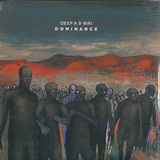
The album's distinctive artwork comes from the studio of Jewish orthodox artist Avraham Guy Barchil, who forged a powerful connection with Deep'a, both was immediately drawn to 'weird atmosphere, amazing technique and emotions involved with his work'. Perhaps one of the most interesting painters from Israel, Avraham is known for his unique perspective, taking his inspiration from the Zohar - the foundational work in the literature of Jewish mystical thought known as Kabbalah. The ambiguous figures represent mystical aspects of the Torah (the five books of Moses), as well as material on mysticism and mythical cosmogony.
Ensuring their natural, conscious touch always remains at the forefront of this unapologetically machine-driven music, Deep'a & Biri have produced an album in the lineage of their heroes and greatest influences. Cerebral yet satisfying, deep yet always engaging, 'Dominance' both reasserts and evolves Deep'a & Biri's forward facing and singular sound.
more talking all that jazz, more high aiming music by fumio itabashi: mule musiq is ready to release another record by the legendary japanese jazz pianist, born in ashikaga, tochigi in the year 1949.
this time his first solo record ever: the heavy jazzing 'nature', which has never been reissued on vinyl since its birth in 1979. it has been recorded at nippon columbia 1st studio, tokyo from march 13 to 15 in the year of its release.
it features itabashi making feverish love with the piano and sharing the studio with the great bass players hideaki mochizuki and koichi yamazaki, drummers kenichi kameyama and ryojiro furusawa, soprano saxophonist yoshio otomo and vibraphone wizard hiroshi hatsuyama.
they all joined him to perform his very own songs, composed by itabashi himself and produced by ryonosuke honmura, who also produced japanese jazz heroes like saxophonist keizo inoue during his career.
but enough background information. what counts is sound. it is fresh, propulsive, twitchy and melodi-ous from the first to the last tone. sometimes the instrumentalists play a classic solo in an overall deep modal jazz atmosphere that seems to be made for cats that love the good old stars and inventors - from john coltrane to mile davis, from thelonious monk to art blakey.
'nature' also shows how deep itabashi studied the history of the genre, while keeping his very own vision of jazz alive. the man that made his professional debut as a member of the sadao watanabe quintet in 1971 and that also was a member of the elvin jones jazz machine world tour from 1985 to 1987, plays the piano in all tempos: nervous high-flying quick, deeply blue blues style slow.
besides the traditional jazz flavours, you get a feeling of mind-expanding spiritual jazz, that grand mas-ters like pharaoh sanders or gary bartz turned into a sacred music genre. a master-class record in ravishing big city jazz music, adventurous, sometimes meditative, sometimes faster than the speed of light, always grooving with a bright, pure-toned sensibility and deeply soulful melodic imaginations.
it extends the jazz history with a fine balance between tradition and innovation. and it stays infectious all the time while sounding surprisingly fresh due to a lot of thrilling musical spontaneity that touches profoundly even though all notes have been written down by fumio itabashi before he and his combat-ants entered the studio.
and maybe that's the mystery of these timeless five at times epic recordings: all notes been written on paper but each musician had the freedom to dance with them in his very own unique way. so, turn the volume loud and get ready to be steamrolled by fumio itabashi's 'nature', an inebriant album that is talking all that jazz deeply!
- A1: New Age Synthesis ( Unzipping The Zype )
- A2: Hurdy Gurdy Glissando (Live At Philips Halle )
- B1: Light In The Sky ( Live At Philips Halle )
- B2: Unidentified (Flying Being )
- C1: Radio ( Live At Philips Halle )
- C2: The Dervish Riff ( Live At Philips Halle )
- C3: Hurdy Gurdy Man ( Live At Philips Halle )
- D1: Motivation ( Live At Philips Halle)
- D2: 1988 Aktivator ( Live At Philips Halle )
- D3: Crystal City ( Live At Philips Halle )
- E1: Activation, Meditation ( Live At Philips Halle )
- E2: The Glorious Om Riff ( Live At Philips Halle )
- E3: Meditation Of The Dragon ( Live At Philips Halle )
- F1: It's All Too Much ( Live At Philips Halle )
- F2: Encore 1 : Electrik Gypsies ( Live At Philips Halle )
- F3: Encore 2 : Talking To The Sun ( Live At Philips Halle )
Some gigs are simply meant to be out there - even if they take decades to actually make it into our hands. This is without doubt one of those concerts, recorded at the Philips Halle, D sselsdorf on the 28th March 1979
during the Live Herald Tour. Includes the only known live recording of Talking to the Sun' Released following the AIM-nominated deluxe box set from Hillage, 'Searching for the Spark', this new 'Dusselsdorf' double CD showcases the Steve Hillage Band's prowess with excellent sound quality - a quality so high that you'll forget that it's a live recording until the applause. This is a band at the height of its powers, with Steve in great voice throughout, and most obviously utterly
enjoying themselves. The vibe is completely infectious and doesn't let up throughout the entire gig. Featuring Steve's own adventurous compositions and covers of Beatles and Donovan classics, all are approached with a joie-de-vivre and high sensibility. The trademark heady combination of vibrant psychedelic rock interwoven with an irresistible full blooded groove, interspersed with the smoothest of deepspace synth/guitar trips gathers all before it in a tsunami of up-lifting music.
With the benefit of hindsight, Steve's musical trajectory from the creative space riffs of Gong to the trance and techno of System 7 is made instantly clear. This version of 'Dusseldorf' will be released as a double CD presented in
mediabook packaging complete with a 24-page booklet and 3LP gatefold pressed on to 180g heavyweight vinyl.
This is the first album of Borusiade, in which she takes her music to a new level, finding her very own expression, that is making us first shiver then sweat, then chill and finally melt.
Cómeme starts 2018 by proving again to be a safe haven and a sanctuary for sensitive plants and unique characters devoted to music - just like Miruna Boruzescu aka Borusiade - from Bucharest - who conquered the radio stations of our parallel worlds and utopian desire. 'Dream catcher' was the name of the show, and 'Jeopardy', a nocturnal EP, her first release on vinyl.
Now, after adventurous travels through night clubs, theatres, windy cities, snowy fields and merciless deserts her desires and imagination have manifested themselves in her very first album, carrying the intriguing title: 'A Body'
The record sleeve features the back of her head, making us wonder what she sees, on the other side. Her visions unfold through 8 pieces of music that follow a dreamlike narrative of associations and transformations. Somber synthetic atmospheres, sparse and spatial rhythmical arrangements, strangely seductive melodies and lysergic ally pulsating bass lines lead us away from a dystopian present towards a sensorial experience we long to repeat as soon as it's over.
'A Body' is a deeply poetic work in which again and again you will hear Borusiade's voice, sometimes dissolving and recreating meanings in mantra-like repetitions, sometimes layering itself to pagan choirs of smooth ecstasy. Then again you will also hear that voice close to you, singing, sharing an experience or a thought. It is always soft, effortless and unpretentious, but always strong, clear and precise, like the voice that speaks to you in an altered state of consciousness. It seems to come from the same person that is holding your hand, when everything else seems to fade into uncertainty while wandering through strange times and places...
Starting with the song CLUSTER the effect is kicking in, we sink into the universe of the album through this throbbing ambience that seems populated by a reverberated ant colony that broke into a synthesizer. The introduction of this album is a complex emotional soundscape that is followed by a song: BREATHE, which sounds like a classic you never heard. With its catchy melancholia, it creates a déjà vu like strange familiarity of the unknown - a memory from the future. And though our minds were just twisting and turning in an overflow of information, we suddenly leave our bodies and observe ourselves breathe.
Other tracks, like DORMANT are more focused on the narration of the body and its state. Words, describing it in many ways, softly and incessantly repeated, are mixed deeply into the soundscapes of a track that features a bass drum so soft it could be a heartbeat. Foggy moments like these dissolve in a track like AN ACUARIAN FEELING, which is queer synthesizer love, shifting in shape and momentum, a ray of light that pushes itself through the nightly atmosphere that was preceding these moments, a similar landscape in different times - a choir enters, cheerful drums, climbing and descending melodies and rhythms of hope. Just like the utopian vision in the title track A BODY, that stands at the end of this journey, which in itself just opens another new horizon.
Seven years ago, Unbalance created his own label as a base for his musical ideas; a platform to play around with the conception of what "techno" is and would be alongside his own creative progression. Come to present day and the label is now at its ninth release, reaching a point where the line of accumulated experiences must be drawn in the sand — and the experiences of previous projects and releases lead to venerable conclusion.
Enter Ten, an album of internalized strife that was created during a period of big changes in the artist's life. Between enduring personal experiences, his creative output veering between his straightforward club eccentricities and subdural sensibilities; Unbalance cultivates a symbiotic link between sounds played and sounds portrayed — whilst paying tribute to the essence of groove, vibration and the hypnotic unknown that exists to balance the scales. This album will be the final point in the label's journey into the depths of multifaceted techno music.
Vozduh (air) marks the first in a series of EPs by Nocow for Figure, showcasing his emerging signature-style of Electronica-tinged techno. Drawing inspiration from the sheer endless winters of St. Petersburg, his series builds on classic IDM tropes, imbuing them with a noticably Russian and deeply personal sensitivity. As each part of the trilogy is represented by an element, the tracks on Vozduh are vaporous by nature: from the crackling ambiance of opener Bouis to the weightless vocals on stoic Forgiven, as well as a surprisingly introspec-tive take on ghetto-house or the wafting melodies closing out the record's B-side - all forms seem to be in con-stant shift, casting a dense yet permeable body of sound. With two more releases on the way, which will be exploring the themes of voda (water) and zemlya (earth) within this artist's singular spectrum, the outlook (which also includes a full- volume edition) on this approaching season is anything but gloomy.
The latest vinyl slice from FBNM sees us head to the depths of central Africa via Paris to track down a feast of rare seventies afro funky jams from Cameroonian master musician EKO. We've brought FBNM favourite Riccio along for the journey too, who has provided us with a fantastic Rerub coaxing out some modern dancefloor sensibilities and production sparkle.
Eko Roosevelt Louis has had a music career spanning over forty years, born the grandson of a Kribi tribal chief, his musical persuasion beginning humbly with his village's local church before his formal education at the Senegal conservatoire and Paris' École Normale de Musique. EKO made a number of jazz funk and disco records in the mid seventies during a stint recording and touring in and around France before returning to Cameroon to take over his grandfather's tribal chieftaincy, a role he still holds today! Alongside this position of office EKO has continued to work with music, performing, teaching and even leading Cameroon's national orchestra!
The tracks we have selected for reissue are all taken from EKO's third album, Funky Disco Music which was recorded in Paris and released on his own Dragon Phenix imprint. Sung in a combination of English and EKO's native tongue we've lined up a real excursion in feel good afro-jazz, funk and soul made purely for dancing feet and boogying butts!
All tracks have been officially licensed and lovingly remastered for this special release by Andreas (Lupo) Lubich (CALYX Berlin), packaged alongside Riccio's sympathetic work in the cutting room on 12" vinyl with a special interview with Eko Roosevelt Louis himself!
This 12' begins with Collocutor ripping into Miles Davis' 'Black Satin', from the benchmark On The Corner LP, and owning it from the off. A respectful homage is paid to the original with sensational improvised parts being added with a hip groove from the percussive wonders of Magnus Mehta (Magnus P.I.), Maurizio Ravalico and bassist Suman Joshi. The sparks fly as guitarist Marco Piccioni channels the spirits of late '60s psychedelic fires. The melodic riff of Miles' classic is stripped down by Simon 'Shwaa' Finch and Mike Lesirge who subtly encapsulate the original's atmosphere.
The A-side is completed with the label's latest signing, DJ Khalab delivering a sharp, warped assault on Collocutor's 'The Search', just in time for the LP's repress.
On the flip is a live version of 'The Search' recorded during the 'Live at the Fish Factory' Session in 2016 which, have so far resulted in two collector's edition dubplates that are as rare as hen's teeth. The invigorated far out sound has been mixed on this recording by producer Sam Jones who has entrenched himself with the On the Corner approach and brought his 'Sam Jones Construct' vision to the label. Marco Piccioni sold his soul at a highway crossroads on the way to the recording. There are spirits riding on the backs of the ensemble guiding this version of 'The Search' out into cosmic oceans.
The 12' ends with bassist Ruth Goller (Melt Yourself Down, Let Spin, Gufo and Bug Prentice) stewarding her virtuosic groove sensibilities into the twilight zone with this brooding off -kilter abstraction of 'Everywhere'. The stripped backbones of the tracks rhythm are punctuated by a dialogue and mantra summoned by Goller that moves menacingly over a synth bass augmented b-line.
As label founder Pete OntheCorner describes the release: 'This EP ushers in a string of releases that embody the label's vision. The futuristic concept first realised by Miles Davis with On The Corner and more generally during his electric period is at the heart of our collaborative, genre-less burning chalice. Analogue genius being mutated with a charge into something other, a vanishing point of ethereal musical feeling where the space for fresh narratives can be formed beyond genre and out On the Corner.
Victoria's artwork is always stunning and for this series of works she has already conquered the sublime with the sleeve for Black Satin".
Paper Dollhouse is the production alias of Astrud Steehouder and Nina Bosnic. Having previously recorded albums for Jane Weaver and Finders Keepers' Bird imprint, plus the Folklore Tapes and Night School labels. The Sky Looks Different Here arrives via the group's independently ran MoonDome imprint. Paper Dollhouse have collaborated and performed with artists including Old Apparatus, The Wolfhounds, Daniel O'Sullivan, Killing Sound, DB1, Joe Cocherell and Pye Corner Audio, and their music has been featured in mixes by Skee Mask, Mark Pritchard, Blackest Ever Black, Lobster Theremin, Lanark Artefax and Ancient Methods.
The Sky Looks Different Here features twelve tracks that draw parallels between the project's past roots in spidery post-punk electronica and a neon-lit, radioactive ambient pop sensibility. This has lead to the creation of what is sure to be the most concise and realised Paper Dollhouse record yet. One that mixes the group's signature brand of darkwave influenced left-field pop, urban field recordings and electronic composition.
Beyond being a quality mixture of unusual dance tracks and unique electronica, XYXX is a conceptual body of work whose themes of sex, race, unity and destruction reveal themselves to those listening closely. XYXX is the first collaborative album between Berlin based electronic producer NYMA (Nima Chatrsimab) and Toronto based, Detroit raised vocalist Noisy Vibration. Sitting somewhere in between house, techno and electro, but with honest pop sensibilities, the record is a push-and-pull of ideas, highlighting each artist in distinctive and mesmerizing ways. The Berlin-via-Tehran musician, DJ and sound engineers melting-pot influences and wealth of experience are the perfect vehicle for Noisy Vibrations piercing lyrical style. He lets her do the talking, while delivering a powerful message of his own through more subconscious means. From the opening refrain the dialogue begins, angelic tones embrace you with open arms. Noisys lyrics speak to NYMAs colourful beats and masterful sound design, connecting to the moment and full of unexpected turns. XYXX is an album that is both spontaneous and carefully considered. With XYXX, the ride is completethe DNA whole.
The word 'Icosahedrite' refers to the geometric figure icosahedron, and arises from the idea that the EP is an amalgam of electronic music styles with many other aspects of traditional musical genres, like jazz or blues. Metaphorically, those genres act as the multiple sides of an imaginary icosahedron. Something complex yet solid that sits outside of the conventional emerges as the final result. A1 'Phason Jazz' - This is a track where conventional jazz structures converge with electronica, and the influences Eduardo gets from Miles Davis and John Coltrane shine themselves. Twisted keyboards patterns mixed with delays and deafening effects form a place to get lost, and eventually repetition becomes hypnotism and turns into an automatic trance. B1 ' Mr Dewey D' - Mr Dewey D is referring again to Miles, and his first and second surnames.This song is much more influenced by Dark Comedy (aka Kenny Larkin) and all the records that he throws out on the french label 'Poussez' titled 'FunkFaker: Music Saves My Soul' Blues breath tirelessly in this composition where there is not much time for an objective analysis and where everything finally leads to an insane ending. B2 'Rhythmic Soundscapes ' - This track is, I guess, the most conventional part of the EP, Nonetheless, it retains special qualities. Floating pianos with delays are combined with bass sounds that go back and forth, forming a musical piece with techno sensibilities that I hope will give opportunities to the most daring DJs.
In 1980 Ilitch mastermind Thierry Müller released his second LP, 10 Suicides, on the French imprint S.C.O.P.A. Unlike his debut Periodikmindtrouble (also available from Superior Viaduct), which featured intricately layered instrumentals, 10 Suicides explores a more art-damaged pop sensibility. While distorted guitars and atmospheric synth workouts remain a part of Müller's signature sound, several songs credit the mysterious Ruth Ellyeri, who was not an actual person, but rather Müller's female alter-ego. Opening track "Elle Voulait Que Je Sois Drôle" shows Ilitch's new direction with overloaded vocoders, driving Moog basslines and soft, Eno-like melodic flourishes. The androgynous vocals on "Waiting For Mabelle (Je Ne Viendrais Pas)" resemble an upbeat Gregorian chant bent through a 20th century lens. 10 Suicides is a staggeringly personal album that still sounds years ahead of its time.This first-time vinyl reissue comes with 16-page booklet and is recommended for fans of Ghédalia Tazartès, Chris & Cosey and Monoton.