The record captures an expansive performance in Poitiers, France in November 2023. First working together in an unpredictable trio with minimalist legend and eccentric extraordinaire Charlemagne Palestine, Ambarchi and Thielemans quickly established a remarkable musical chemistry that led to an ongoing series of duo concerts, including the performance documented on their LP Double Consciousness (Matière Mémorie, 2023).
Kind Regards finds the duo refining their shared language while continuing to take risks, allowing the music’s gravitational pull to lead them from meditative calm to unexpectedly expressive passages of melodic invention and rhythmic drive.
Recorded in sparkling fidelity and carefully mixed by Ambarchi’s longtime collaborator Joe Talia, the LP contains a single unbroken performance, stretching out for over 45 minutes. Guitar and drums weave together into a symbiotic whole that nevertheless affords us ample opportunity to marvel at the highly personal approaches these two musicians have developed to their chosen instruments through decades of diverse collaboration and prolific performance. The set begins with Thielemans’ hypnotic tom patterns, around which Ambarchi’s wavering, shimmering guitar tones—achieved with the help of the rotating speaker of a Leslie cabinet—flurry and swirl. Thielemans’ drums play subtle tricks with time and perception, adding and dropping beats within repeated patterns to create an effect at once rhythmically insistent and liquified. Growing at first into a rapidly pulsing texture of brushed drums and flickering harmonics, the music builds momentum into an irregular groove over which Ambarchi’s guitar is transformed into haunting, monumental electric organ chords, strikingly recalling the Wurlitzer work of Alice Coltrane, before settling into a section of gentle portamento melody embedded into the tactile clicks and clangs of Thielemans’ percussion.
When Thielemans adopts a more traditional jazz approach to the kit in some of the set’s second half, the results are stunning, demonstrating a feel for shifting accents and sensibility to the touch of the stick on the drum or cymbal that recalls greats like Jack DeJohnette or Billy Hart (one of Thielemans’ mentors). And when Ambarchi turns up the heat, he does so in an unexpected and delightful way, letting loose a swarm of jittering delayed tones straight out of Henry Kaiser’s classic It’s a Wonderful Life, with a more active use of the guitar’s fretboard than his usual approach to the instrument allows. As the performance draws to a close after a climactic episode of distorted harmonic groans and crashing cymbals that manages to be at once thunderous and carefully attuned to detail, it is clearer than ever that, for these two serial collaborators, this is a very special pairing.
Kind Regards shows us the kind of magic that can happen when two masters who have dedicated decades to reimagining their instruments simply begin to play, following the music wherever it goes.
Поиск:sensi
Все
After a Classic/Defected release and a string of edit projects/remix work Snips returns to his own Barbershop Records for his latest release "Blasphemy", a project drawing solely on Gospel samples from Snips' personal collection. Barbershop sticks with the theme of re-imagining the past to create something new while continually offering an alternative to todays mainstream. With Gospel music being the least commodified of its contemporaries yet the most essential element of them all, it would seem the perfect sample source for a Barbershop release and a sonically perfect fit for Snips' brand of Hip Hop, Soul & House inspired beats. From future club friendly anthems like "Feed The People" and "Feel The Spirit" to the true school Boom Bap sensibilities of "Pattersons Pilgrims" and "Never Waltz Alone" this release has all bases covered.
- A1: Bluenow1, Out-Of-Tune Piano, St Mary's Hospital Basement, Electriksnippets
- A2: Bluenow2, Virus, Hurricane Bomber
- A3: Derek Jarman Reads White Lies
- B1: Brother James Plays J.s. Bach's 'Erbarm Dich Mein, O Herre Gott' On The Great Rissington Organ, Bertrand Russell Gives Sound Advice
- B2: Brother James Plays J.s. Bach's 'Erbarm Dich Mein, O Herre Gott' On The Great Rissington Organ
- B3: Electriksnippets
- B4: Terre Thaemlitz's Remix Of Shishapangma, Remixed By Simon Fisher Turner
Where to begin with a figure like Simon Fisher Turner? From teenage stage and screen star to illustrious recording artist for Creation and Mute and score composer of Caravaggio, Blue and The Epic of Everest - via a stint with The The and collaborations with Derek Jarman, David Lynch and Tilda Swinton - Turner embodies a distinctly British sensibility and boundless curiosity for sound. For A Colourful Storm, discovering Deux Filles, his mysterious project with Colin Lloyd-Tucker that has since been reissued by Dark Entries, was a significant moment in shaping their identity.
In August 2023, A Colourful Storm presented Simon Fisher Turner and Time is Away at Spanners, London. Performed at the tail end of Blue Now, a series of events celebrating Derek Jarman's last feature film, Blue, the recording reveals a lifetime of significant events and influences. Terre Thaemlitz's remix of Turner's Shishapangma (Comatonse Recordings, 2015) is reworked and appears on vinyl only, Jarman is privately recorded reading White Lies, Bertrand Russell is sampled, and Turner records his brother practising the Great Rissington organ for their father's funeral.
"My wife and I lived in Brixton, near the venue, on Coldharbour Lane, 20 years ago. We were above a takeaway shop. The air extractor was a nightmare and the flat smelled of grease. The market was a great place to buy fish. We adopted a giant snail, who we called Ayrton. I used to take him all over town and he loved lettuce and tomatoes. There was a wonderful small pizza shop too, which was so delicious. But back to the music. Brixton is music and I'm a lucky man."
The story of So-Do is both familiar and completely unique. A classically trained multi-instrumentalist with a poet’s sensibility and a passion for folk music meets a worldly bar owner with a love for psychedelia, post-punk and dub in the small town neither could bring themselves to leave. Over two years, they play dozens of shows in independent live houses across Japan, cut and self-release three singles – two 7”s and a 12” – and leave behind just eight tracks, all of which are set to be reissued for the first time forty years on.
So-Do’s Studio Works ’83-’85 collects the full output of this iconoclastic post-punk phenomenon, whose sparse, syncopated arrangements were infused with a dubbed-out flair that owed more to Dennis Bovell’s productions of Orange Juice, the Jah Wobble basslines of Public Image Limited or Adrian Sherwood’s live dubs of Mark Stewart than even they knew at the time.
Because for lead songwriter Hideshi Akuta, music offered an escape from the existential malaise of small-town life, folding a melancholy nihilism into tracks like ‘Kakashi’ and ‘Hashiru’ (which translates as ‘run’), or taking aim at the inequalities and creeping apathies of the middle classes, as he does on ‘Get Away’ and ‘Nothing’.
And if Talking Heads had CBGBs, Sex Pistols had the Roxy, then So-Do had Buddha. Influenced by Buddha venue owner and amateur producer Atsuo Takeuchi, Akuta turned So-Do’s sound towards dub, crafting playful, ironic and funky compositions that crackle with live energy at the vanguard of Japan’s nascent independent music scene.“So-Do is hard to explain,” Takeuchi says. “It’s been a struggle for years to try to find the words for our music.” The answer perhaps, is just to listen.
Both familiar and completely unique, So-Do extend Time Capsule’s genre-defining exposition of Japan’s reggae-inspired music of the ‘70s and ‘80s, as collected on the label’s two critically acclaimed Tokyo Riddim compilations, and London-based live outfit Tokyo Riddim Band.
Embracing the rip-it-up-and-start-again ethos of the early ‘80s, So-Do burned bright for a short time and then burned out. Their legacy is about to be reignited. Expect it to catch alight once more.
All songs are written & composed by Hideshi Akuta
Produced by Atsuo Takeuchi
Artwork by Ben Arfur
Liner Notes by Anton Spice, Ayana Honma, Kay Suzuki
Curated by Kay Suzuki
Licensed from Atsuo Takeuchi (Oregano Cafe)
Tape Restoration and Mastered by Mike Hillier at Metropolis Studios, London, UK
Time Capsule | TIME023 | 1983-1985 → 2025
This blissful example of Lover’s Rock from 1985 showcases the very specific sonic template of a portion of Reggae music that was coming from the United Kingdom during the period - steeped in a soulful, Pop sensibility. We are also treated to a version by Lindel Lewis aka The Gentle Giant of Reggae music under the guise of One Man Band that submerges the original into a rich, sun-kissed honey, securing it firmly into the territory of Balearica. Whilst not achieving commercial success at the time, You, Me & He has grown to become a much coveted artefact and we are pleased to have lovingly reissued this gem for your listening pleasure.
A Strangely Isolated Place presents a long-lost collaboration between Polish artists Olga Wojciechowska and Tomasz Walkiewicz as Monoparts—a partnership formed many years ago that resulted in an album once destined to remain unreleased.
Olga Wojciechowska, known for her modern-classical masterpieces such as Infinite Distances (2019) and Unseen Traces (2020), as well as her 2022 collaboration with Scanner, breaks all known expectations with Soothsayers. In a dramatic departure, Olga unveils a new and unexpected side, debuting her haunting vocals—a delicate, spellbinding performance that recalls the golden era of trip-hop, and comparisons to the sounds pioneered by Tricky, Massive Attack, and Martina Topley-Bird.
With Tomasz adding layers of depth through intricate beats and electronics, Olga’s voice becomes the emotional core of the record, conjuring an intimate and nostalgic atmosphere.
"This album is like becoming one with the earth itself—feeling the rawness of the wood, tasting the earth in your mouth, and sensing the presence of ancient spirits. The music carries a deep, primal energy, like being part of the forest, with creatures watching you from the shadows." - Olga Wojciechowska
To complete the journey, ASC lends his signature touch with a stunning drum’n’bass reinterpretation, amplifying the album’s nostalgic essence. Soothsayers emerges as a spellbinding ode to times gone by, in more ways than one.
Featuring artwork by Moon Patrol, with mastering and lacquer by Andreas LUPO Lubich.
Berlin-based producer EDE returns with the Odyssey EP, a forward-leaning release that stays true to house music’s roots while carving its own path. Following his Poptroit EP, known for its pop sensibilities and Detroit-inspired grit, EDE refines his dancefloor-focused sound with a cinematic edge.
“I Am Wavy” featuring Nowa is a true highlight of the EP, it digs into the core aspects of the genre—bass, groove, and an unrelenting "four-to-the-floor" drive—brought to life by a melody and vocal combination that makes the track a hot piece of music.
The title track, “Odyssey,” ramps up the tempo with bubbling, wafting elements and subtle acid touches. Closing track of the EP is “Paradox,” a collaboration between EDE, Nowa, and Samet Günal, delivering tool-like textures and energy to leave a lasting impression.
Born in 1989 in Bamako, Mali, Nfaly Diakité is a member of the Donsow, Bambara animist hunters. Nfaly Diakité is named after his grandfather, the late Nfaly Diakité, one of Mali’s most respected donso chiefs. His grandfather did not play, but as a leading figure in the donso brotherhood, he was always accompanied by musician Yoro Sidibé. Nfaly grew up alongside Yoro Sidibé, who became his first master of the donso ngoni, a type of eight-stringed antelope skin harp. After leaving school to devote himself to his instrument, Nfaly continued his apprenticeship with Diakaria Diakité and Oumar Sidibé, two donso masters from the Wassolo region.
He quickly made a name for himself in the donso community and was much asked to play at the traditional ceremonies of his brotherhood. He then met percussionist Ibrahim Sarr and joined the BKO Quintet, with whom he recorded an album and toured Europe and the United States. His virtuosity on the donso ngoni soon attracted attention, and he took part in numerous music and dance festivals in Mali and abroad, with the aim of raising awareness of this little-known traditional instrument.
Nfaly Diakité is also a Kônô, meaning that he is responsible for passing on the history and culture of the Bambara people through music and song. He pursues his mission by combining tradition with more contemporary sounds and by collaborating with artists from a wide range of musical backgrounds. For him, music is a means of conveying messages of peace, love and harmony, and his compositions evoke the values of respect, tolerance and open-mindedness.
‘Tribute to Toumani Koné’ is Nfay Diakité’s first solo album, recorded in Bamako in June 2020. On the album, Nfaly is the only singer, providing backing vocals and playing the donso ngoni and keregne. The album is a tribute to the storyteller and poet Toumani Koné, the greatest donso ngoni player since N’gonifo Bourama. Nfaly Diakité is a representative of the new generation of donso ngoni players and he wishes to pay tribute to Toumani Koné, who throughout his long career has been a symbol of courage, daring, loyalty and honesty.
The nine-track of this solo album leaves no room for hesitation. Three instruments (donso ngoni, voice and keregne) manage to carry one into another dimension without ever tiring. The fitting and precise rhythm is a deep but melodious transe. Nfaly’s voice plays between expressive urgency and calm wisdom, and the choruses with his own voice multiply the planes of dimension of the music. The donso n’goni, of which Nfaly is an excellent player, sounds rough and earthy but always clear and sharp. All the strength of a music that does not belong to a single musician but to a long cultural tradition of which he is the spokesman is expressed here. The young Nfaly, thanks to his experience and sensitivity, succeeds on his own in pushing us into this world without feeling the weight of tradition but only the liberation of music that sounds all the more contemporary. This album is to be listened to in its entirety as one tight journey between repeated formulas, highlights and moments of rest within the same relentless rhythm. The densest moment is probably found in the heart of the album, between the tracks Nankama (the predestined one) and Mogote Diabeye (no one can please everyone). Here, the message, which can be deciphered from the translation of the lyrics, seems to transcend language barriers and intepret us directly about our human condition, urging us to move our bodies to the dense rhythm of life.
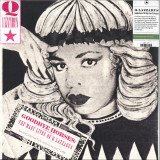
Der Einstieg in die Musik von Q Lazzarus erfolgte für fast alle über „Goodbye Horses“. Der Song tauchte erstmals 1988 in Jonathan Demmes „Married to the Mob“ auf, aber er sollte sich erst dann vollständig im Bewusstsein der Menschen verankern, als er 1991 in Demmes „The Silence of the Lambs“ wieder auftauchte. „Goodbye Horses“ fühlte sich an wie ein in sich geschlossenes Universum - traumhaft und völlig ungewöhnlich, ein sofortiger Klassiker, der die Zuhörer fesselte und neugierig auf die geheimnisvolle Stimme dahinter machte. Diese Stimme gehörte Diane Luckey, einer einzigartig talentierten Künstlerin, deren Musik ihrer Zeit voraus war und die letztlich zu Lebzeiten weitgehend unerkannt bleiben sollte. In Verbindung mit der Veröffentlichung des Dokumentarfilms „Goodbye Horses: The Many Lives of Q Lazzarus“ von Aridjis Fuentes veröffentlicht Sacred Bones eine Sammlung von Songs, die die gesamte Karriere von Q abdecken und die verschiedenen Epochen ihres Schaffens und die ganze Bandbreite ihrer Persönlichkeit zeigen. „Goodbye Horses“ ist die erste Musiksammlung, die den Segen von Qs verbliebener Familie erhalten hat, und hat die Besonderheit, ihre erste und einzige Albumveröffentlichung in voller Länge zu sein. Aufgenommen zwischen 1985 und 1995, spiegelt diese Fundgrube bisher unveröffentlichter Musik einige der interessantesten Facetten der Popmusik der letzten vier Jahrzehnte auf eine Weise wider, die sowohl versiert als auch wild eklektisch wirkt Das titelgebende „Goodbye Horses“ bleibt ein einzigartiges Stück gespenstischer New-Wave-Perfektion, und man könnte sich ein ganzes Q-Lazzarus-Album vorstellen, das sich um diese Ästhetik dreht, aber ähnlich den Gesangsikonen Alison Moyet, Annie Lennox oder Lisa Gerrard eignet sich Qs chamäleonhafte Stimme perfekt für eine Vielzahl von Stilen und Settings. Ihre Coverversion von Talking aHeads' „Heaven“ verwandelt den Song in eine aus voller Kehle gesungene Power-Ballade mit klimpernden Klavierverzierungen, während ihre Interpretation von Gershwins „Summertime“ wie eine dubbige Club-Reduktion klingt, die zu einem Grace Jones Stück der Nightclubbing-Ära hätte passen können. Tracks wie „My Mistake“ und „Hellfire“ flirten mit House-Musik und zeigen, wie frech und glockig Qs Stimme sein kann, wenn sie sich richtig austobt, während „Don't Let Go“ wie eine bombastische Radiosingle klingt, die Cher vor einigen Jahrzehnten hätte veröffentlichen können. Andere Songs wie „Bang Bang“ und „I See Your Eyes“ sind von einer gitarrenbetonten Alt-Rock-Sensibilität, die in einem Paralleluniversum auch auf MTVs 120 Minutes Show hätte laufen können. „Goodbye Horses“ verkörpert das Potenzial für so viele verschiedene Arten von Karrieren, die, aus welchen Gründen auch immer, nie vollständig verwirklicht wurden. Dass wir jetzt diese Songs in der Welt haben und ein klareres Bild von der Person dahinter, ist nichts weniger als ein Segen.
Since launching her own club night, “Motivation,” back in 2018, B.AI has played a key role in bringing the underground’s club sounds to her home country, China. While introducing some of the scene's most exciting artists to her local audiences, she emerged as one to look out for as well: first as a DJ and quickly thereafter as a producer. Her original takes – a sensitive, highly personal approach to melody and a knack for playing with expectations – crystallized in a slew of A+ releases and a couple of international tours. This trajectory, shaped by taking matters into her own hands and self-empowerment, now sees a logical next step, with the inception of a label that will also operate under the “Motivation” banner and features her own “Hope” EP as its first release.
Sparkling mallets, with synth-pop quality catchiness, open the title track. Rather than further evolving, their two-bar arrangement gets looped over and again, serving as the foundation for a slick FM bass rhythm and a variety of hooks. Although these incline to the bright, the overall vibe is melancholic. In vintage B.AI style, the aptly titled “Hope” is more ambiguous than its patches suggest. Similarly, the vocal this type of palette would call for ultimately comes in the form of aloof, covert musings. A bit buried in the mix, they are most efficient – just like the tension that keeps brooding underneath the surface.
“Murderbot Diaries 1991” turbocharges four-to-the-floor synthetic drums with an arpeggiated rolling bass. The blue note melody on top feels sequenced via a pocket calculator, and the dissonant, electroclash-reminiscent stabs that follow might sound even more angular. The tune is frantic, sinister – and perhaps above all tongue in cheek. It reaches fever pitch with the arrival of a tubular bell theme between the two breaks.
“Once”’s slomo cutoff modulation on the 16th note mid-bass instantly creates a sultry atmosphere that meshes greatly with the pastel cool of the gently delayed DX7 leads. The energy drifts between effortless control and uncertain outcome. These contrasts are amplified as the drums alternate amidst moderation and beat-repeat rendered havoc.
On “Only We Know,” a progressive sine lead lays out the central motif. Yet as briskly as it appears, it makes way for detuned, gliding square waves taking on the same theme. This outlines the track’s structure: as slightly morphed repetitions keep getting introduced almost haphazardly, a dreamlike, mesmerizing ambience unfolds. Techy drum rhythms and a 101-type bass make sure everything stays fuelled. Within the ingenious tapestry of melodies and new twists, it never loses touch with the dance floor. It illustrates B.AI’s club savvy neatly and is therefore a perfect closer for this EP.
New album from the South African musician + creative visionary, known for her vibrant, inimitable style + affirming lyricism Full Moon is a collection of 12 songs which displays Sanelly's unique sonic fingerprint, joyous attitude, distinctive vocals + genre-bending hits. Recorded in multiple locations while on the road, Full Moon is an introspective yet kinetic display of her versatility. "I can make any genre, I have fun creating music because I'm not limited," she says. Its club- ready beats oscillate between electronic, afro-punk, edgy-pop, kwaito, + hip-hop sensibilities. Produced by Johan Hugo (Diplo, MIA, Self Esteem)
Making beats since ’95, Uruguay’s Two Phase U now lands on System Error’s ERROR100 series. Exploring the delicious intersection between classic hardware-driven sounds and modern sensibilities, where the familiar warmth of hardware grooves connects seamlessly with the pulse of modern dancefloors.
From electro-inspired rhythms to housier tones, Face Five EP delivers tough beats and moods that are dancefloor ready, for any dancefloor hour…
All tracks written and produced by Hernan Gonzalez.
Mastered by Analaogcut in Berlin.
System Error MM GmbH, Berlin, Germany, Earth © 2025
The million-selling self-titled duet album by Roberta Flack and Donny Hathaway was the breakthrough record for Flack. Donny already enjoyed some commercial success, but their hit singles “You’ve Got a Friend” and “You’ve Lost That Lovin’ Feelin’” put Roberta on the radar. The sensitive and emotional masterpiece can be seen as one of the best duet albums of all time. It was the album’s third single “Where Is the Love” which dominated the US radio for almost a year, and reached the fifth spot in the Billboard Hot 100. The album itself shows a work of great depth and tenderness, with some of the most impressive vocal harmonies you’ll ever hear. After the success of the album Flack and Hathaway recorded sporadically together throughout the ‘70s, until Hathaway’s tragic death in 1979.
Following up on the 2024 released remix album You Are Dreaming! Random Numbers continues its presentation of La Serpiente’s immersive output with Elaphe Dione: The first full-length album of the multifaceted producer and a matured imprint of his distinct sound. The record includes five tracks and a digital bonus exhibiting a sonorous marriage between post-industrial esotericism and club-ready psychedelia; A labyrinth of elaborate sound design coiling around sharp rhythms, adorned by fractured voices spawned in obscure worlds. With sensibility towards granular detailing amidst a powerful cascading flow, La Serpiente’s versatile sonic arrangements coalesce into music that always breathes – A drifting current of enchantment materializing as a release that is both ornamental and symbolic in its vision.
System Error’s Flow Series proudly welcomes Gianluca Pellerano, a dedicated DJ and producer from Rapallo, Italy, and the founder of labels Cime di Rapax Records and RPX16035.
This record marks Gianluca’s second vinyl release, showcasing four punchy, head-turning tracks blending playful energy with electro sensibilities. Grounded in his deep-rooted passion for hardware, the record reflects his continuing journey through analogue sounds, pushing boundaries with finesse.
The record’s closing track, ‘Streghe’, is a special collaboration with Gianluca’s mentor, Niki il B. Featuring a driving bassline and fluid drum patterns, the track delivers a captivating and dynamic finale to the EP.
Humanoid continue their push to shine the spotlight on up-and-coming artists and the fifth instalment on the label comes from another Liverpool local on the rise – Brent, with a powerful release bringing synthwave sensibilities and driving basslines to the forefront - taking you on a sleek, high-octane journey through a polyphonic landscape.
Tamati's Notte in Riviera EP on the ever-stronger young label Saint Wax is a perfect bit of Balearic house escapism. The title track, which translates as 'night on the Riviera', is just that - a humid late-night house cut with some erect female vocals. 'Tutto Un Deja Vu' cuts loose with freewheeling melodies and blissed-out pads, and 'Magica' then goes deep. Italian producer Franz Scala blends 80s vibes with modern sensibilities like few others as he shows on his remix of the title cut, then Sparkling Attitude and Gledd add their own fresh versions.
CWPT welcomes Acopia to the label with a reissue of the cult Australian bands self-titled sophomore album, available on vinyl outside of Australia for the first time.
Based in Melbourne/Naarm, Acopia’s music is a careful control of tension and release, sparseness and warmth, momentum, and space. Across ten tracks, the band’s three members move across post-punk lamentation, shoegazing DnB, smoldering trip hop and subdued electronic pop, as they carve out their own hazy world of romanticism and restraint.
The highly anticipated follow-up to the band’s stellar 2022 debut, ‘Chances’, this is a deeply emotionally sensitive record, equal parts refined and relatable, and a listening journey that is immediately understood while revealing new layers with each subsequent listen.
Alongside the physical release of ‘Acopia’, CWPT will also release two digital-only remixes of the band, courtesy of Daniel Avery and JD Twitch.
Glenn Astro leans into the twilight months of 2024 with a new album from his Delta Rain Dance project. Divining fourth world sensibilities from his restlessly curious studio workflow, Astro weaves a mesmerising tapestry of sound on Music For Autumn which treads the line between horizontal meditation and head- nodding, backroom-ready groove.
Amongst his constellation of myriad aliases, Delta Rain Dance spells out the inspiration Astro takes from fourth world pioneer Jon Hassell. The project first surfaced with a string of tapes, LPs and digital releases around 2018, all carried on a label of the same name to keep Delta Rain Dance enclosed in its own space
independent of Astro's many other musical endeavours.
"I’m really into the world building aspect in science fiction and fantasy," says Astro. "This is my way of creating worlds and spaces that co-exist next to each other. Sometimes they collide but mostly they exist peacefully next to each other or pursue some form of cultural exchange by collaborating with each other."
There's a strong sense of balance and cohesion throughout Music For Autumn, as organic percussion and instrumentation wraps around delicate synthesis and patient drum machine pulses so naturally it's hard to spot the joins. The sound has plenty of room to stretch out, from the mantra-like chimes and rattles of the album opener 'Green Light Fade' to the luxury funk of 'Mmmh, Nice' (featuring fellow Tartelet alumni Nelson of the East). At times the electronic elements seem to entirely dissolve, not least behind the loping strings and tumbledown percussion of 'Second Sleep', while achingly beautiful closer 'Plucked' centres on the fluttering movement and expression Astro elicits from his modular setup.
True to the project's influences, a consistent ambiguous mood lingers in the air over Music For Autumn somewhere between far- flung mystery and comforting familiarity, reliably calm but equally contemplative. It's an odyssey of serenity with enough nuance to make you really think, perfect for the days getting shorter, leaves crunching underfoot and the last fading rays of warmth from the sun.