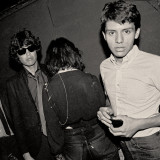
Hard-Fi make their welcome return with brand new single ‘Don’t Go Making Plans’ on Ignition Records. Their first new material in ten years, the track marks the first taste of an EP of brand new songs, as well as a big UK headline tour this November. Rolling around a sun-scorched groove and boisterous beats, ‘Don’t Go Making Plans’ is an immediate, soul-infused summer anthem, recorded at the band’s own Staines studio, produced by frontman Richard Archer and long-term contributor Wolsey White. It’s the end result of the first session together since 2011 album Killer Sounds and follows a series of sold-out tours and live shows over the last 18 months - listen here. As with many of the band’s songs, there is a thought-provoking depth behind Hard-Fi’s pop sensibility. The song’s defiant themes were initially inspired by the UK Government’s attempts to criminalise many aspects of popular protest through the 2022 Public Order Act, while the issue has been thrown into even sharper focus over the last year as police and people have repeatedly clashed on streets around the globe. SGB50LPXX
Buscar:serie rec
- A1: King Of The Night . Bobby Harrison Feat. Tony Iommi
- A2: I Believe In You (Fire In My Body) . Bedlam Feat. Cozy Powell
- A3: Finally The Finale . Ian Gillan
- A4: Flowers In The Rain . The Move Feat. Bev Bevan
- A5: Mainline Riders . Quartz (Prod. By Tony Iommi)
- B1: Paranoid . Vince Neil, George Lynch, Stu Hamm & Gregg Bissonnette
- B2: Highway To Madness . Quartz Feat. Geoff Nicholls
- B3: Freak Out Tonight .Chris Catena Feat Glenn Hughes, Tony Franklin & Bruce Kulick
- B4: And The Cradle Will Rock . Vinny Appice, Marko Pukkila, Rowan Robertson & Andy Endberg
- B5: Over The Mountain . Brad Gillis, Mark Slaughter, Gary Moon, Eric Singer & Paul Taylor
- C1: War Pigs . Leaving Eden
- C2: After Forever . Fierce Atmospheres
- C3: Hole In The Sky . Kingshifter
- C4: Into The Void . High Voltage
- C5: Ron Man . Critical Solution
- D1: Children Of The Grave . Bugsy Parker
- D2: Electric Funeral . In His Blood
- D3: Snowblind . Cornivus
- D4: Wicked World . Through The Stone
- D5: Under The Sun . Stalwart
lack Sabbath is, along with Led Zeppelin and Deep Purple, the most important british hard rock band of all time.
With its dark, mystical, obsessive atmosphere, Black Sabbath built an unique sound that has influenced countless bands since its emergence in the late ‘60s to these days. As usual in our series The Many Faces, we will enter the fantastic secret world of Black Sabbath, and we will enjoy their collaborations, side projects and their greatest hits. The Many Faces of Black Sabbath is a fantastic album, especially for those of you who considers yourself fans of hard rock.
Now, it’s part of our Many Faces collection on vinyl format.
- A1: Are We There Yet (Ft West Felton , Howard Wazeerud-Din Ii, Malik Alston)
- A2: Boom Bap Jazz 7 (Ft Dave Mcmurry , Takashi Iio, Malik Alston)
- A3: We Have Been Assimilated(Malik's Linwood Mix)Ft Malik Alston, Dave Mcmurry & The Black Light Collective
- B1: Vampires (Ft Elmus,Allan Barnes, Cen Dervin, Craig Huckaby)(Malik's Afro Remix)
- B2: Shine(Instrumental)
- B3: The Doctor (Ft Zacland)
- B4: Soul Guitar Love (Ft Gabe Gonzalez & Bubz Fiddler & Malik Alston)
- B5: We Can Make It Through (Ft Doc Link, Laronn Dolley, Malik Alston)
Truth Manifest Records is proud and excited to release Beyond Jazz Volume 2, the second volume in this wonderful, futuristic four-part series!
This stellar vinyl release on Truth Manifest Records is from executive producer Malik Alston, with distribution from Mother Tongue. As we travel to the edge of our senses with Beyond Jazz Volume 2, it is immersed in poetry pulling on the heartstrings of urban reality. This is where live meets a hip-hop foundation, sped up and transformed into a dance jazz Afro-Cuban up-tempo banger, to tell the story of the groove. Put Volume 2 to a funky jazz lick phrase, reminding us that through the struggle, there is victory. Let your spirit shine as you feel the essence of boom bap jazz.
This powerful collection has special new remixes and edits based on Malik’s current radio show, Beyond Jazz
Diamond D is back with his 3rd installment of his Diam Piece series, The Diam Piece 3: Initium. Vol. 3 will be broken down into 3 separate parts with Initium being the 1st of 3.
With Diamond on the tracks, Initium boasts features from KRS-One, RJ Payne, Skyzoo, Torae, Bishop Lamont, Sauce Money, Lord Tariq, Fat Man Scoop, Static The Prodigy, Royal Flush, Agallah, David Bars, Inspectah Deck, Shyheim, 38 Spesh, E-A-Ski & Bonecrusher.
This 1986 album by The Primates remain as the only recording ever released by these four 60s r&b and garage fans. Originally published on Greg Shaw's very own Voxx (Bomp! sublabel focused on revival garage/psychedelia) and produced by Shaw himself, this valuable musical document that portraits the essence of the L.A. 80s garage scene, has been out of print for more than 20 years! So we thought it would be a perfect record to reissue as part of our Bomp! reissue series. The Primates were formed in 1984 and cut their teeth at L.A. spots such as the Cavern Club, as part of a growing scene of devoted Nuggets/Pebbles fans, fascinated with 1960s garage punk classics. The core of the band were Brett Miller and Ted Edlefsen, sporting Vox guitars, and Erik Bluhm as front man, with different drummers, mostly Brian Corrigan but then also Eric from Threw the Looking Glass and Gene from The Miracle Workers. The opener 'I Ain't Like You', 'Bad Luck' or the fun cover of Neil Sedaka's 'I Go Ape' reflect the wild, party-driven mood of the entire album, making you wonder how crazy their shows were in the golden era of the L.A. 80s garage scene. Combining originals and versions (check their great take on Q65's 'I Got Nightmares'), "We Are The Primates" remains as a wild, raw, party album that every fan of garage music should own. Munster is thrilled to reissue this essential '80s garage gem as part of a series of releases celebrating Bomp! 50th anniversary. Our issue includes a booklet with liner notes and rare photos and ephemera.
Punk pioneers Crass continue their vinyl reissue series, repressing their limited releases by adjacent artists through Crass Records, in association with One Little Independent. 1983's 'Multi-Death Corporations' broke new ground by addressing, in the lengthy liner notes and artwork, the growth of corporations and the violent suppression of leftwing politics in Central America. The Austin-based band released material through ex-Dead Kennedys singer Jello Biafra, cited influences such as Black Flag and D.O.A, as well as working with Crass Records. Penny Rimbaud tells us; “MDC were one of the first American bands to follow the political mantle set by Crass in the UK. Straight-edge purist to the last mouthful of sprouted grass, MDC were equally fierce with their polemic and uncompromising politics. Sharp as a blade, they cut through the crap. ‘They meant it, ma’am’, and some.”
Ltd White Vinyl, DL card. 1992's 'Untitled' brought the band's third album that re-cemented the duo once again as the progenitors of the "lo-fi" genre. This breakthrough set transitioned "The Trux" into a never ending all-inclusive rotating cast of musicians. Continuing Fire Records' series of classic remastered albums from Royal Trux, 'Untitled' is released on white vinyl and features updated monochrome and silver artwork. As unpredictable as ever, Neil Hagerty and Jennifer Herrema shook off the next level layering and noise of 'Twin Infinitives' to embrace the history of rock 'n' roll in all its deformed grandeur. Utilizing their ever present mind set of macro-inclusivity, they allowed the subconscious "radio stations" of their lives to infiltrate, lead, and dictate. Culling from their collective minds and memories twisted tunes that touched them. After the blood rush of their much-hailed avant-garde masterpiece 'Twin Infinitives' (1988), this eight-song opus added to the lo-fi genre that originated on 'Twin Infinitives'. On 'Untitled' Hagerty uses his 5-string blues roots and hails rock's twisted potential, while Herrema slurs and snarls in ecstasy. They sound like they're locked in a fourth-floor boudoir at the Chelsea Hotel; bottles clink, an album clicks on its run-out groove, the band plays on. In the mix are the characters and casualties of the 90s, a roll call of swaggering misfits. These aren't superficial sketches, the Trux cut much deeper than that_ "'Junkie Nurse' isn't just about addiction; it's about the twisted hope that even the most broken people can somehow mend others, even when they're falling apart themselves." Jennifer Herrema, Royal Trux. With 'Untitled' Royal Trux justifiably increased their coterie of convicted followers, becoming the cult heroes for a transgressive generation, and the Rosetta Stone for male/female duos (ie:The White Stripes, The Kills etc... ) over the years inspiring everyone from The Silver Jews (David Berman) & Sonic Youth through to melodic blue-eyed soulsters like Hot Chip - "I urge and encourage you to enter the harmolodic multiverse of their music." Alexis Taylor, Hot Chip. "Royal Trux were nothing if not fearless." Pitchfork.
Recorded at the Studio Acousti, Paris, September 23, 1965.
Original LP issue: International Polydor Production – 46.871.
This self-titled album is a testimony of the short lived-band led by New-York drummer Ron Jefferson during his stay in Paris in the mid-60s. After a first album under his name on Pacific Jazz in 1962, the founding member of The Jazz Modes and the Les McCann trio made the trip overseas.
Here, he made his living by playing with the popular pianists Errol Parker or Hazel Scott but his main drive was this trio that he formed with two other US expats, bassist Roland Haynes (the same musician who recorded an album on Black Jazz as a pianist, as confirmed by Kirk Lightsey) and guitarist Buz Saviano. After a highly successful show at ‘Palais de Chaillot’ in 1965, they were invited for a series of concerts in Dakar Sénégal. On their return, Polydor International proposed them this session. You can hear the deep impact their stay in the Motherland had on their music on the stand-out track ‘Africa the Beautiful’. On pair with the best of Yusef Lateef’s afro-eastern explorations from the time, it showcases Ron on flute and Senegalese percussion. The album release nonetheless was a commercial failure that prompted the band’s separation and Ron’s return to New-York where he performed until his passing in 2007.
Only a few copies of this record ever made it to the shops at the time and very few have had the chance to listen to it before this legit reissue remastered from the original MONO master tapes.
– Antoine Rajon –
Ron Jefferson (Drums & Flute)
Buz Saviano (Guitar)
Roland Haynes (Bass)
Jackie Robinson (Vocal on The Speaker)
Jazz vocalist Helen Humes’ second album on Contemporary Records, “Songs I Like to Sing!” was released in 1961 and is conducted by Marty Paich. Backed by musicians including Art Pepper (sax), Leroy Vinnegar (bass), Shelly Manne (drums), Barney Kessel (guitar) and Andre Previn (piano). This new edition released as part of the Acoustic Sounds Series, features (AAA) lacquers cut from the original master tapes by Bernie Grundman and is pressed on 180-gram vinyl at QRP, and presented in a tip-on jacket.
The seeds of composer Rafael Anton Irisarri’s latest LP were first planted during his 2016 tour in Italy, months before that Autumn’s unexpected presidential election. The linguistic glitch of an innocuous diner in Milan named “il Mito Americano” – meant as “The American Dream” but translated literally to English as “The American Myth” – sparked a series of ideas, both conceptual and musical.
Amid the chaos of 2020, while exploring the stark world of brutalist architecture and inspired by the false fronts of Potemkin villages, a vision started to take shape: FAÇADISMS. Composed over three years, it’s a late capitalist lament of simmering electric despondency.
Irisarri’s obsession with repeating motifs mirrors the cyclical nature of our tumultuous political history. The album’s eight tracks heave and storm like a tempest being drained of its rage. This is the sound of majestic dissipation, of morning afters, fashioned from a mournful haze with cavernous guitars and granular twilight. A euphony of a receding tide as one sifts through the remnants of what remains: dust, delusion, and memory.
Opening with the somber gauze of “Broken Intensification," FAÇADISMS moves fluidly between moments of absence and abandon. Ashen swaths of electronics billow above smoldering embers of melody, guitar, and scattered streaks of processed strings and voice, as on the rapturous doom of “Control Your Soul's Desire for Freedom,” featuring Julia Kent on cello and Hannah Elizabeth Cox on vocals. "The impoverished peoples of the Americas have known all along that 'freedom' is a cruel illusion crafted by the elites, akin to Potemkin's fake villages designed to impress Catherine the Great," Irisarri indicates. "FAÇADISMS illustrates a twisted inversion where the rulers deceive their subjects with illusions of safety, democracy, and free speech to create a grotesque mirage of control over their own lives.”
Elsewhere, Irisarri leans into passages of hushed oblivion (“Hollow,” “Dispersion of Belief”), while ragged drones rumble and disintegrate into wind-battered ambient wreckage. One has the sense that it’s all too late. The hour of fury has passed. The beauty has come and gone. Irisarri’s muse has become the crack in the façade of the unraveling myth.
The record closes with a climax of grand departure. Co-written with Kenyan sound artist KMRU, “Red Moon Tide” surges from flickering elegy to celestial disquiet, roiling waves of hymnal descent, and bristling noise. The effect is unsettling and unmooring: a soundtrack for the soul leaving the body, only to discover a void. It’s the sound of the center not holding, of shared illusions being dissolved in a tunnel of white light.
The cover photograph captures a profound sense of desolation. Taken in the historic shanty town of La Perla, Puerto Rico, where Irisarri spent his childhood, brutal colonial mysteries are lost to time. A skeletal concrete structure decays against an expansive blue horizon. Only the shadow of its shell ripples on the empty sea.
Has the American myth finally run its course?
The seeds of composer Rafael Anton Irisarri’s latest LP were first planted during his 2016 tour in Italy, months before that Autumn’s unexpected presidential election. The linguistic glitch of an innocuous diner in Milan named “il Mito Americano” – meant as “The American Dream” but translated literally to English as “The American Myth” – sparked a series of ideas, both conceptual and musical.
Amid the chaos of 2020, while exploring the stark world of brutalist architecture and inspired by the false fronts of Potemkin villages, a vision started to take shape: FAÇADISMS. Composed over three years, it’s a late capitalist lament of simmering electric despondency.
Irisarri’s obsession with repeating motifs mirrors the cyclical nature of our tumultuous political history. The album’s eight tracks heave and storm like a tempest being drained of its rage. This is the sound of majestic dissipation, of morning afters, fashioned from a mournful haze with cavernous guitars and granular twilight. A euphony of a receding tide as one sifts through the remnants of what remains: dust, delusion, and memory.
Opening with the somber gauze of “Broken Intensification," FAÇADISMS moves fluidly between moments of absence and abandon. Ashen swaths of electronics billow above smoldering embers of melody, guitar, and scattered streaks of processed strings and voice, as on the rapturous doom of “Control Your Soul's Desire for Freedom,” featuring Julia Kent on cello and Hannah Elizabeth Cox on vocals. "The impoverished peoples of the Americas have known all along that 'freedom' is a cruel illusion crafted by the elites, akin to Potemkin's fake villages designed to impress Catherine the Great," Irisarri indicates. "FAÇADISMS illustrates a twisted inversion where the rulers deceive their subjects with illusions of safety, democracy, and free speech to create a grotesque mirage of control over their own lives.”
Elsewhere, Irisarri leans into passages of hushed oblivion (“Hollow,” “Dispersion of Belief”), while ragged drones rumble and disintegrate into wind-battered ambient wreckage. One has the sense that it’s all too late. The hour of fury has passed. The beauty has come and gone. Irisarri’s muse has become the crack in the façade of the unraveling myth.
The record closes with a climax of grand departure. Co-written with Kenyan sound artist KMRU, “Red Moon Tide” surges from flickering elegy to celestial disquiet, roiling waves of hymnal descent, and bristling noise. The effect is unsettling and unmooring: a soundtrack for the soul leaving the body, only to discover a void. It’s the sound of the center not holding, of shared illusions being dissolved in a tunnel of white light.
The cover photograph captures a profound sense of desolation. Taken in the historic shanty town of La Perla, Puerto Rico, where Irisarri spent his childhood, brutal colonial mysteries are lost to time. A skeletal concrete structure decays against an expansive blue horizon. Only the shadow of its shell ripples on the empty sea.
Has the American myth finally run its course?
The seeds of composer Rafael Anton Irisarri’s latest LP were first planted during his 2016 tour in Italy, months before that Autumn’s unexpected presidential election. The linguistic glitch of an innocuous diner in Milan named “il Mito Americano” – meant as “The American Dream” but translated literally to English as “The American Myth” – sparked a series of ideas, both conceptual and musical.
Amid the chaos of 2020, while exploring the stark world of brutalist architecture and inspired by the false fronts of Potemkin villages, a vision started to take shape: FAÇADISMS. Composed over three years, it’s a late capitalist lament of simmering electric despondency.
Irisarri’s obsession with repeating motifs mirrors the cyclical nature of our tumultuous political history. The album’s eight tracks heave and storm like a tempest being drained of its rage. This is the sound of majestic dissipation, of morning afters, fashioned from a mournful haze with cavernous guitars and granular twilight. A euphony of a receding tide as one sifts through the remnants of what remains: dust, delusion, and memory.
Opening with the somber gauze of “Broken Intensification," FAÇADISMS moves fluidly between moments of absence and abandon. Ashen swaths of electronics billow above smoldering embers of melody, guitar, and scattered streaks of processed strings and voice, as on the rapturous doom of “Control Your Soul's Desire for Freedom,” featuring Julia Kent on cello and Hannah Elizabeth Cox on vocals. "The impoverished peoples of the Americas have known all along that 'freedom' is a cruel illusion crafted by the elites, akin to Potemkin's fake villages designed to impress Catherine the Great," Irisarri indicates. "FAÇADISMS illustrates a twisted inversion where the rulers deceive their subjects with illusions of safety, democracy, and free speech to create a grotesque mirage of control over their own lives.”
Elsewhere, Irisarri leans into passages of hushed oblivion (“Hollow,” “Dispersion of Belief”), while ragged drones rumble and disintegrate into wind-battered ambient wreckage. One has the sense that it’s all too late. The hour of fury has passed. The beauty has come and gone. Irisarri’s muse has become the crack in the façade of the unraveling myth.
The record closes with a climax of grand departure. Co-written with Kenyan sound artist KMRU, “Red Moon Tide” surges from flickering elegy to celestial disquiet, roiling waves of hymnal descent, and bristling noise. The effect is unsettling and unmooring: a soundtrack for the soul leaving the body, only to discover a void. It’s the sound of the center not holding, of shared illusions being dissolved in a tunnel of white light.
The cover photograph captures a profound sense of desolation. Taken in the historic shanty town of La Perla, Puerto Rico, where Irisarri spent his childhood, brutal colonial mysteries are lost to time. A skeletal concrete structure decays against an expansive blue horizon. Only the shadow of its shell ripples on the empty sea.
Has the American myth finally run its course?
Throughout the 1960s, Canadian composer Bruce Haack was as ubiquitous on children’s and variety shows as were exotic animals from the San Diego Zoo. But he wasn’t there to perform so much as demonstrate. In his formative compositions for theatre and ballet, he had experimented with tape loops and musique concrète techniques; by the early ’60s, he wasn’t just playing around with electronic sounds, but also making the very gizmos that generated them. By day, Haack would eke out a living as a composer for commercials and a series of instructive, interactive children’s records made with collaborator Esther Nelson.
But by night, Haack was making music that was decidedly adults-only.
Originally released in 1970, The Electric Lucifer was Haack’s first work pitched to a contemporary rock audience, released by Columbia Records in the dying days of a post-hippie moment when bizarro outsider-psych could still find a home on a major label. If it was not the first rock record to feature electronics, it was certainly among the first to give them a starring role—both musically and conceptually.
Ltd Silver Vinyl, DL card. From a long-forgotten trunk; two extended jams, twin slabs, circa 1989. Continuing Fire Records' series of classic remastered albums from Royal Trux, 'Hand Of Glory' is released on silver vinyl. This bad-ass black, white and blue magic is a kind of Burial Dub_ or so preached the sleeve of 'Hand Of Glory' on its original release in 2002. Legend has it, the two sides of this 40-minute gem were recorded between 1985 and 1989. The resultant mountain of creativity from where they hail were inevitably left under a scuzzy sofa as life and a career that ebbed and flowed over nine albums. Royal Trux became an inspirational tipping point for everyone from Pavement & Sonic Youth to the Black Keys, Kurt Cobain, The Avalanches & Hot Chip's Alexis Taylor. "I urge and encourage you to enter the harmolodic multiverse of their music." Alexis Taylor, Hot Chip. 'Hand Of Glory' is not like their other albums but then again none of their albums are alike, it's a two-faced masterpiece. Side one's 'Domo Des Burros'/'Two Sticks' is on par with Beefheart's sprawling 'Trout Mask Replica'. It plays out in 19 minutes, sounding like it was laid down on Warhol's sofa in The Factory; like Dylan's sprawling 'Desolation Row' with, background squalls, interruptions and both Neil Hagerty and Jennifer Herrema's overlayed stream of consciousness peeping through a multi-layered backdrop. It's just staggering. "Royal Trux were nothing if not fearless." Pitchfork. Side two's 'The Boxing Story', a loose homage to William Burroughs, moulds and morphs from tape to tape, a multi-speed soundtrack, while the dynamic duo press pause, guitars ring, occasional melodic lines arrive and evaporate. Lou Reed's pastoral 'Metal Machine Music' could perhaps be recognized as an older and perhaps less challenging sibling. A two-sided masterpiece featuring two wayward pieces of creative genius.
Black Vinyl[27,69 €]
LP Ltd vinyl picture disc version w/ DL card, 500 pressed. Vanishing Twin furthers their exploration of decidedly experimental territories with Afternoon X. Crafted with a playful balance of humour and rigour, with each member embracing the role of the multi-instrumentalist and process, over outcome. Following a series of line-up changes, Vanishing Twin is now the tightly honed collective of singer and multi-instrumentalist Cathy Lucas, drummer Valentina Magaletti (Holy Tongue, Tomaga, Moin) and bassist Susumu Mukai (Zongamin). Harnessing the diverse touchstones of its members; Lucas' left-field song-craft, Magaletti's singular approaches to experimental percussion, and Mukai's long history in the production of electronic music, the band has refined a hypnotic sound at the juncture of minimalism, kosmische, post-punk, and dream-laden, psychedelic pop. These eight fluttering abstractions, culled, collaged, and built upon from a vast constellation of instruments, samples, and unclaimed sources. Lucas employs her voice as an instrument and a generator of raw sound, weaving surreal imagery and uncanny juxtapositions amongst the dance and propellant drive. From infectious grooves of the album's title track and the constrained minimalism of "Subito", to the ambitious heights of pieces like 'The Down Below' and Lazy Garden, which unfurl a psychedelic avant-gardism on the scope and scale of David Axelrod and Scott Walker. Vanishing Twin embark upon a new multifaceted journey that collectively culminates as the bands most forward-thinking and groundbreaking release to date.
The Zeros is a pioneer punk rock band formed in 1976 in Chula Vista, California. Comparisons with The Ramones are often made when describing the energetic and fierce guitar driven sound of the group. The first singles recorded by the band instantly catapulted The Zeros into a top draw on the local scene and have become legendary. Unfortunately, the band never cut an album during these days. Their debut single was released in 1977 on Greg Shaw's very own Bomp! Records. It included 'Don't Push Me Around' and 'Wimp', two of the greatest punk rock songs of all time, both written by Javier Escovedo. It was followed by another single in 1978, "Wild Weekend" and a third one in 1980, "They Say That (Everything's Alright)". This release compiles all their early singles, some rare tracks (including the previously unreleased 'Left to Right') and songs taken from a 1978 live show. Munste is thrilled to reissue this essential '80s power pop gem as part of a series of releases celebrating Bomp! 50th anniversary.
- A1: In A Blaze Of Fame
- A2: Racefietsen In De Polder
- B1: Ghost Stories From A New House
- B2: Satyricon Pandemonium
- C1: Come And See Your Misery
- C2: Ritmo Siniestro Embrujado
- D1: Ethics Synths Morality
- D2: I Got Lost In The Tool Shed
- D3: A Million Exoplanets Without Djs
- E1: A Vast Comfortless Universe
- E2: North Rhine Westphalia Theme
- F1: Taping A Broken Heart
- F2: Tears From A Manta
Legowelt returns to Clone Records with yet another sonic journey that defies conventional electronic music boundaries, offering an album that is as eclectic as it is immersive. Blending different styles and textures seamlessly and proving that electronic music can still be creative and that function doesn't always prevail style. He delivers a collection that transports listeners through a kaleidoscope of retro-futuristic sounds, deep grooves, and cosmic melodies. Despite being in the music game for more than 25 years the music from Danny Wolfers remains playful and refreshing. Stylistically taking elements from his whole musical career and not commiting to the latest trend or any genre specifically, and low-key taking the piss with everyone who takes themself to seriously. While many electronic music artists are stuck in their own void, busy pleasing the big room, Legowelt meticulously crafts rich textured soundscapes, balancing between cosmic exploration and the dancefoor, that evoke both nostalgia and futuristic visions. His ability to fuse elements of house, techno, disco and electro with cinematic influences results in an album that is not only ready for club use but also gratifying at home. Each track offers something unique--whether it's the hypnotic rhythms, the lush synth lines, or the subtle, eerie undertones that creep in unexpectedly. Legowelt's attention to detail and passion for his craft shine through, making this album a worthy follow up to his last album on the Clone Jack For Daze series.
Names You Can Trust presents the third release in its Swing-A-Ling "Now Sounds" 7-inch series, a limited collection of record presses celebrating the label's long-running summertime Jamaican music dance and cookout that takes place in the relatively undiscovered enclaves of the Flatlands neighborhood of Brooklyn. In the spirit of the Swing-A-Ling event, the "Now Sounds" series focuses on the unreleased, never-to-be-released, or utterly underground gems that may have otherwise been locked in the vaults for years to come. This year, the series resurrects a definitive tasty treat for the Fall and upcoming Halloween season, a picturesque capture of obscure early-70's cinematic darkness, featuring an ode to horror-style DJ toasting and its accompanying haunted hammond organ cut, courtesy of the curious and spectral stage name Vincent Price & The Young Spirits. As always, the Swing-A-Ling series has been touched up sonically at the NYCT studio HQ in Brooklyn, then mastered and cut by renown London engineer Frank Merritt at The Carvery for maximum sound system engagement.
The much acclaimed Environments series returns with an exclusive to Record Store Day vinyl edition of “RITUALS” the first in the Environment 7 trilogy - a 13 track album of new recordings by The Future Sound of London, engineered by Yage.
Delicate melodies collide with deeply fragmented electronics - surfing atop muted rhythms and beats. Unique and unplaced the FSOL are unrivalled in art-electronic.