crystal blue vinyl
South London based producer Lxury is a subtle experimentalist, pairing house rhythms with eclectic genre blending and risk-taking. Returning to Shall Not Fade's Lost Palms series for a second record, Smart Digital Life EP shows the maturity and complexity of his production while keeping the energy light and summery.
"1722" opens things up with dreamlike pitched vocals that provide a vaporwave feel, hypnotizing over stuttering synths and a wonky beat. "Spin" has an experimental sound palette, a euphoric pulse and a sweet melody, dance music doused in honey.
This sweetness spills over onto the B side; "Pad Ma" sounds like a pumping club track meets a trip to the fairground - unstoppably buoyant and headsy. The vocals in "When I Wake Up" spin around your head before a muscular beat kicks in, the most stripped back and raw sounding of the record. This one is certain to get heads down and feet moving. "Up High" is an expansive closing track, built around fuzzy drums as the clever use of vocal samples creates a melody with a loved-up feeling; it's a tour-de-force of Lxury's delicate production skills.
Suche:serie rec
- A1: Africa Is My Root - Osayomore Joseph And The Creative Seven
- A2: Ta Gha Hunsimwen - Akaba Man The Nigie Rokets
- A3: Popular Side - Akaba Man And The African Pride
- B1: Iranm Iran - Victor Uwaifo And His Titibitis
- B2: Sakpaide No 2 - Victor Uwaifo And His Titibitis
- B3: Ta Ghi Rare - Akaba Man The Nigie Rokets
- C1: My Name Is Money - Osayomore Joseph
- C2: Ogbov Omwan - Akaba Man The Nigie Rokets
- C3: Aibalegbe - Victor Uwaifo And His Titibitis
- D1: Who Know Man - Osayomore Joseph And The Ulele Power Sound
- D2: Obviemama - Victor Uwaifo And His Titibitis
- D3: Ororo No De Fade - Osayomore Joseph And The Ulele Power Sound
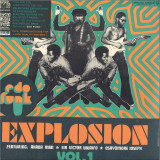
Analog Africa Presents Edo Funk Explosion Vol. 1, available on
2xLP/Gatefold LP with 20-page booklet / CD with 36-page booklet. It was
in Benin City, in the heart of Nigeria, that a new hybrid of intoxicating
highlife music known as Edo Funk was born.
It first emerged in the late 1970s when a group of musicians began to experiment with different ways of integrating elements from their native Edo culture
and fusing them with new sound effects coming from West Africa s night-clubs.
Unlike the rather polished 1980 s Nigerian disco productions coming out of the
international metropolis of Lagos Edo Funk was raw and reduced to its bare
minimum.
Someone was needed to channel this energy into a distinctive sound and Sir
Victor Uwaifo appeared like a mad professor with his Joromi studio. Uwaifo
took the skeletal structure of Edo music and relentless began fusing them with
synthesizers, electric guitars and 80 s effect racks which resulted in some of the
most outstanding Edo recordings ever made. An explosive spiced up brew with
an odd psychedelic note known as Edo Funk.
That’s the sound you’ll be discovering in the first volume of the Edo Funk Explosion series which focusses on the genre’s greatest originators; Osayomore
Joseph, Akaba Man, and Sir Victor Uwaifo: Osayomore Joseph was one of the
first musicians to bring the sound of the flute into the horn-dominated world
of highlife, and his skills as a performer made him a fixture on the Lagos scene.
When he returned to settle in Benin City in the mid 1970s - at the invitation of
the royal family - he devoted himself to the modernisation and electrification
of Edo music, using funk and Afro-beat as the building blocks for songs that
weren’t afraid to call out government corruption or confront the dark legacy of
Nigeria’s colonial past.
Akaba Man was the philosopher king of Edo funk. Less overtly political than Osayomore Joseph and less psychedelic than Victor Uwaifo, he found the perfect
medium for his message in the trance-like grooves of Edo funk. With pulsating
rhythms awash in cosmic synth-fields and lyrics that express a deep personal
vision, he found great success at the dawn of the 1980s as one of Benin City’s
most persuasive ambassadors of funky highlife.
Victor Uwaifo was already a star in Nigeria when he built the legendary Joromi
studios in his hometown of Benin City in 1978. Using his unique guitar style as
the mediating force between West-African highlife and the traditional rhythms
and melodies of Edo music, he had scored several hits in the early seventies,
but once he had his own sixteen-track facility he was able to pursue his obsession with the synesthetic possibilities of pure sound, adding squelchy synths,
swirling organs and studio effects to hypnotic basslines and raw grooves. Between his own records and his production for other musicians, he quickly established himself as the godfather of Edo funk.
What unites these diverse musicians is their ability to strip funk down to its
primal essence and use it as the foundation for their own excursions inward to
the heart of Edo culture and outward to the furthest limits of sonic alchemy.
The twelve tracks on Edo Funk Explosion Volume 1 pulse with raw inspiration,
mixing highlife horns, driving rhythms, day-glo keyboards and tripped-out guitars into a funk experience unlike any other.
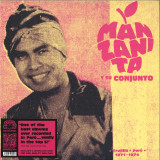
Following the 70s Peruvian cumbia compilation by Ranil last year, Analog Africa returns to Latin America to highlight the work of one of Perú’s undisputed masters of the electric guitar: Manzanita. This 13th release in the Limited Dance Edition Series includes 14 mostly instrumental compositions of electrifying Peruvian cumbia and guaracha. Manzanita's unique guitar lines rest on confident foundations that shifts gears effortlessly. Limited Edition LP in Gatefold Cover pressed on 180g high quality virgin vinyl
"I was in Lima, hanging out with collector-extraordinaire Victor Zela, who had spent the previous few years pouring his passion for Peruvian Cumbia into the blog „la cumbia de mis viejos“, a trove of incredible music. But after the birth of his first child, his priorities shifted and he decided to part with some of his rarest LPs. I was one of the lucky few given an early chance to examine his treasures, and when I picked up the album Manzaneando com Manzanita, Victor said: “Take it! its one of the best LPs ever recorded in Perú … easily in the top five”. That was all the encouragement I needed … two years later many of the songs from that masterpiece have made it onto Manzanita y su Conjunto, a compilation of electrifying Cumbia sides from Manzanita’s golden era.
Berardo Hernández – better known as Manzanita – first surfaced during the psychedelic Cumbia craze. At the head of the scene were the magnificent Los Destellos, whose leader, Enrique Delgado, was such a six-string wizard that other guitarists found it impossible to escape his shadow. But when Manzanita arrived, his electric criollo style sent shockwaves through Lima’s music scene and posed a serious threat to Delgado’s dominance as king of the Peruvian guitar.
Manzanita had come to Lima from the coastal city of Trujillo, five hundred miles up the coast – a place where Spanish, African and indigenous populations had been living and making music together for centuries – and came of age at a time when the first wave of psychedelic rock from the US and UK was starting to sweep the airwaves. But the sounds of Cream and Hendrix disappeared from the radio just as quickly in 1968 when Juan Velasco seized control of the country in a military coup. The new regime, which favoured local traditions over cultural ‘imports’ from the north, was a blessing in disguise for the Peruvian music scene.
Record labels flourished as new bands, raised on a hybrid diet of electric guitars and Cuban rhythms, rushed in to fill the vacuum created by the lack of imported rock. A new genre, known as Peruvian cumbia, was born and Manzanita quickly became one of its most original voices.
Starting in 1969, Manzanita y su Conjunto released a steady stream of singles that used Cuban guaracha rhythms as the foundation for dazzling electric guitar lines. After countless 45s and several years on the touring circuit, the band signed to Virrey, an important Peruvian label, and recorded two LPs acknowledged as masterpieces among aficionados of tropical music. Most of the songs on Analog Africa’s new compilation Manzanita y su Conjunto are drawn from those legendary sessions of 1973 and 74.
Although he scored a few more hits in the later 70s, his dissatisfaction with the music industry caused him to withdraw from the scene for several years; and when he finally retired for good, the golden age of Peruvian cumbia was a distant memory. But when Manzanita was at the top of his game he had few equals. Victor Zela was right: this is some of the best music ever recorded in Perú."
Born Bad continue their mind-expanding and totally essential series of library music ‘Space Oddities’ compilations with this set focusing on French musician and composer Sauveur Mallia.
In the ever-expanding universe of 70s and 80s French library music, Mallia holds a special place; his career, multifaceted work and the uniqueness of his talent have made him an exemplary figure in the unsung world of library musicians.
In those years a few of them, often for economical reasons, would set off on a
space conquest, taking along just a few synthesisers.
Their ambition well surpassed the modesty of their means; it was in turn the
condition to their experimentations with sound which were to create a new
sonic space: that of a nation tumbling into modernity. From French soil to the
farthest reaches of the cosmos, there were just a few steps to take. It’s with the
label Tele Music, boarding the spaceship Arpadys, along with the Voyage crew,
that Sauveur Mallia took the big leap.
The third release from Exalt Records Fallen Entertainers series is by an artist so hot right now, it's ridiculous. Having has recent releases on some of the hottest electronic music labels on the planet, this producer is certainly having 'a moment'. Electro superstar Sound Synthesis submits an incredible remix to complete the package.
(part 2/3 featuring Sept, Raven, Frazi.er & Trym) Amelie Lens' EXHALE Records continues to deliver fiercely dynamic techno from the underground's most promising, rising and established artists with its second VA compilation.
Amelie Lens' EXHALE Records continues to deliver fiercely dynamic techno from the underground's most promising, rising and established artists with its second VA compilation.
Following EXHALE's first VA release in 2020, the party series turned label once again welcomes existing members, flourishing producers and blossoming new artists to the EXHALE family for its second various artists compilation.
Opening the second EXH002 vinyl is 'Bóg Jest w Techno' event boss Sept, who presents us with a stripped back cut layered with piercing synth keys and gentle electro elements in 'Beyond The Veil'. Acid stabs and a female voice echo the track title in Raven's trippy cut 'Metal On Metal', with light airy synths to close out that simulate euphoria. We're taken on a dark and weighteir expedition with Frazi.er in 'Systematic Ignorance' - a brooding bass drives the sound, with acid melodies adding texture throughout. Keeping up pace is 'Kendall' by Trym, a cinematic composition that utilises cymbals, hi-hats and synth notes to create a brighter melody over its dark percussion.
Nimbus West spirit jazz essential: the Creative Arts Ensemble's classic debut One Step Out. One of the most sought after and highly-regarded titles to have appeared on Tom Albach's celebrated Nimbus West imprint, One Step Out is a timeless work of spiritualized jazz. A true gem from the Los Angeles jazz underground, the album was pianist and composer Kaeef Ruzadun Ali's first recording as leader of the Creative Arts Ensemble, the only large ensemble group that emerged directly from Horace Tapscott's legendary Pan Afrikan Peoples Arkestra community jazz group. A Los Angeles native, Kaeef was introduced to the Tapscott circle in the late 1970s. His first experience of the Arkestra's ethos was through PAPA tenorist Michael Session, who took him to the famous "Great House" at 2412 South Western Ave., LA -- a large mansion house which members of the Arkestra had taken over as a space for communal living. Life in the Great House was a continuous stream of music, dance and community events. "When I walked in there," recalled Kaeef, "it was like this whole rush came over me, just from going in the front door -- It was like a very, very warm feeling of love. I went and I came out with 'Flashback Of Time', and that was my first arrangement." Kaeef quickly became a significant contributor of compositions to the Arkestra's songbook -- his piece "New Horizon" would be recorded by Horace Tapscott for the latter's Tapscott Sessions series. But "Flashback Of Time" would eventually appear on One Step Out, played by the new group he had put together from stalwart Arkestra members. Inspired by both Tapscott's example and by the Art Ensemble of Chicago, Kaeef had wanted to follow their lead by assembling a larger unit. Featuring seasoned Arkestra regulars including reedsman Dadisi Komolafe, drummer Woody "Sonship" Theus and altoist Gary Bias, with veterans Henry "The Skipper" Franklin on bass and George Bohannon on trombone, One Step Out is a key document of the Los Angeles radical jazz underground. Featuring the sanctified vocals of Kaeef's sister, B. J. Crowley, the album is a tour de force of spiritually energized independent jazz music.
Robert Schwarz’s background lies in both architecture and computer music. Across a handful of labels, he’s presented field recordings and experimental works, and he’s participated in exhibitions with some of Europe’s most prominent institutions for adventurous art practices. He is also the co-founder and curator of the Viennese festival ”PARKEN; Or, Live in the Park”, which aims to mediate experimental forms of music in public spaces and co-author of the works ”Los Bar”, ”Strookoffer” and ”Lax Bar”, a series of artist run spaces in Los Angeles, Brussels and Vienna.
Recently he presented a row of debut releases with new side projects like She Was A Visitor, Privat and Ausgsburger Messer.
- A1: Someone To Watch Over Me (Intro)
- A2: Backlash Blues
- A3: I Wish I Knew How It Would Feel To Be Free
- A4: See-Line Woman
- B1: Little Girl Blue (Part 1 & 2)
- B2: Don't Smoke In Bed
- B3: Stars
- B4: What A Little Moonlight Can Do
- C1: African Mailman
- C2: Just In Time
- C3: Four Women
- C4: No Woman No Cry
- D1: Liberian Calypso
- D2: Ne Me Quitte Pas
- D3: Montreux Blues
- D4: My Baby Just Cares For Me
Nina Simone: The Montreux Years is released as part of a brand new Montreux Jazz Festival and BMG collection series “The Montreux Years”. The collections will uncover legendary performances by the world’s most iconic artists alongside rare and never-before-released recordings from the festival’s rich 55-year history, remastered in superlative audio. Each collection will be accompanied by exclusive liner notes and previously unseen photography.
Nina Simone’s story from the late sixties to the nineties can be told through her legendary performances in Montreux. Taking to the Montreux stage for the first time on 16 June 1968 for the festival’s second edition, Simone built a lasting relationship with Montreux Jazz Festival and its Creator and Founder Claude Nobs, which uniqueness, trust and electricity can be clearly felt on the recordings. Simone’s multi-faceted and radical story is laid bare on ‘Nina Simone: The Montreux Years’. From Nina’s glorious and emotional 1968 performance to her fiery and unpredictable concert in 1976, one of the festival’s most remarkable performances ever witnessed, the collection includes recordings from all of her five legendary Montreux concerts – 1968, 1976, 1981, 1987 and 1990.
Featuring rare and previously unreleased material from Claude Nobs’ private collection, Nina Simone devotees worldwide will be thrilled by the inclusion of the powerful I Wish I Knew How It Would Feel To Be Free, poignant and fearless Four Women and Simone’s hauntingly beautiful performance of Ne Me Quitte Pas. A spine-tingling version of Janis Ian’s searing and potent Stars, which Simone covered for the very first time during her 1976 Montreux performance, sits alongside her bold and electrifying re-imagine of Bob Marley’s ballad No Women No Cry in 1990. The collection closes with the encore of Nina Simone’s final Montreux Jazz Festival concert and one of Simone’s most-loved and best-known recordings, the exuberant My Baby Just Cares For Me, showcasing the deep and multidimensional facets of Simone’s life and music.
DYNAMITE CUTS and its series of amazing 45s have unleashed another Gem for RSD. This Rare groove club classic has now been shrunk down to a stunning 7”, for the first time. The LP was first released in 1981 along with a single.- which is now a mega-rare collector’s items; selling for £200 plus.
Steve Parks’ big song on this LP is the epitome of Rare groove music in the 90s. almost every club and radio would play this every night – it would be banging out of The Mud Club, Astoria, The Wag and all the other hot, sweaty, but very brilliant, clubs of the 80’s and 90’s. This is definitely on the ultimate soundtrack to that funky era.
This one-off LP and it iconic cover by Steve Parks has been reissued before but never as a 7” and never with a full colour sleeve, Dynamite Cuts’ mini version does both, delivering op-point artwork and finely tuned mastering. Steve Parks is a very private man; this iconic cover only happened because his friend Rico, who coerce him into wearing the shirt as Steve didn’t like it at all. The only way to do it was to take him to Leon’s BBQ by the beach and buy them both a bucket of tips and corn bread.
Don’t miss out!!! - Must have vinyl release – record store day release!
Our KORE Series is up for a new chapter!
We started with a fresh Sign series: First Sign EP (ZC-KORE004). This is the first one of this brand new series with a compilation of Oldschool Acidcore, Acidcore and Acid Tribe.
From the center of the Netherlands Procell emerged. His blend of oldschool kickdrums, powerful sweeps and lethal acid patterns will make you want to rave all night long!
To complete the release we received two fierce and rough cuts by veteran in the scene Jaquarius. Are you ready for some acid tribe and kore?
Design by OdS#23
Mastering by Stefan ZMK
Procell - Matrix Theory
Neo loves to dodge bullets. Can you dodge this high caliber ammunition?
Procell - Acid Mindset
A massive sweeping oscillator, hard broken beats and a perfect fitting 303. This will have impact on your mind(set)
Jaquarius - L'ombre du Volcan
Like a volcano, Jaquarius is a master at building the tension untill the hot lava erupts. Burning hot acidcore!
Jaquarius - Lunar Live Shoot #1
Transmitting directly from the moon. Sound flying through space and penetrating earth's atmosphere. This is what Acid Tribe is about!
Bring me a record, and I’ll show you a record! Laced Records and Gearbox Software have peeped in the oven and the extended Borderlands 2 soundtrack on piping hot wax is nearly ready to serve.
The seminal first-person looter-shooter returned in 2012, expanding upon the first game. Players were pitted against the quippiest antagonist of them all, corporate dictator Handsome Jack, as they battled across Pandora to just find that one killer Maliwan Shock Sniper Rifle...
The game’s music team comprised Jesper Kyd (Assassin’s Creed, Hitman), Sascha Dikiciyan & Cris Velasco (dual and individual credits include Quake 2 & 3, Unreal Tournament, Mass Effect 3, God of War 3, and Deus Ex: Mankind Divided) and Raison Varner (Borderlands series), all of whom collaborated on the 2009 original. Together they honed the series’ Western-tinged, electronic and guitar-driven sound to create a fan-favourite soundtrack.
46 tracks (23 from the OST, 23 from the extended soundtrack and DLC) have been specially mastered for vinyl and will be pressed to audiophile-quality, heavyweight 180g black discs.
Saint Petersburg-based Kuzma Palkin returns to GOST Zvuk with a new series, Memont. GOST has been expanding its presence for several years through sublabels Instrument and Archive, as well as releases from GOST family members on their own labels. Flaty's experiments can be found on the ANWO label, while OL has issued a number of releases through Asyncro. For Palkin, Memont represents a return to his roots. The artwork for the first release, stadion sever, features the original packaging of Moment universal superglue, something that will be familiar to every Russian who lived through the 1990s. The album is named after the eponymous stadium in Palkin's hometown of Severodvinsk, which is displayed on the back cover. Sever represented a kind of playing field in childhood, but has now come to stand in as a metaphor for daily life. The visual landscape of modern Russian life points back to Sever.
Musically, stadion sever is also a return to Palkin's roots. The echoes of early IDM that kickstarted his career in the beginning of the 2000s are on display here. While the music is thoughtful and attentive to detail, traces of irony can be identified among the seriousness, not least in the title of the series and the track synth1 power user. The same ironic touch makes its mark on the album's sound. Palkin borrows the recognizable textures of club music, but drastically modifies their context and transforms them into something altogether more thought-provoking and inscrutable. Palkin's unique sound and the beauty of his music can be found in the balance between retrospection and looking ahead, where austerity meets humour.
For BRZ45087 we present a split release comprised of two tried-and-tested favourites from the Mr Bongo record bag.
Rio-born pianist and organist Lafayette’s career started in the mid-60s and saw him become a prominent member of the Brazilian musical movement entitled 'Jovem Guarda’. For his inclusion on this selection in the Brazil45 series we move things along a few years to 1982 and the Brazilian boogie gem 'Sol De Verão'. Taken from his album 'Edição Especial’ and originally released on Copacabana Records, 'Sol De Verão' was written by Jorginho Gomes from one of Brazil's greatest bands Os Novos Baianos. It's a superb slice of 80s boogie/funk brilliance with a super catchy ear-worm of a vocal - definitely one for the dancers!
For the flip, we include an absolute monster from the fantastic Marisa Rossi, who we featured previously on number 38 in the Brazil45 series. 'Quem Vem Lá’ is a heavy driving Samba Rock / MPB groove track with female and male call and response vocals. Originally released on a very rare and exclusive 7" also on Copacabana Records, but this time in 1971. Marisa would go on to work with the legendary Arthur Verocai in the 1980s.
Two very different slices and styles of Brazilian music, but both absolute gems.
Tape
Tekanan is the full-length debut of Melbourne-based Indonesian-Australian drummer and sound artist, Rama Parwata. A thorough exploration of rhythmic capabilities and percussive improvisation under ever-shifting timbral and stylistic environments, Tekanan is Parwata’s examination and documentation of his vast musical influences in electro-acoustic improvisation, Indonesian gamelan music, free jazz, electronic music, R&B, and noise music, whilst still maintaining an entirely unique non-idiomatic musical voice. Tekanan sees Parwata experimenting with not only the drum kit, but additionally implementing no-input mixing boards, musique-concréte sampling techniques, junk percussion, electric guitar, and computer music production to create a relentlessly metamorphosing soundscape that abruptly, yet seamlessly oscillates between ethereal ambiances to turbulent barrages of rhythm and noise through five unique movements.
Aptly named after the Indonesian word for pressure and stress, Tekanan was composed by Parwata with the intent of it being a listening experience which would pressure the listener to have no clear indication of the direction of the music and where it will ultimately settle, leading the listener on a sinuous, yet intriguing aural journey. This title additionally applies to the pressure of the challenging nature of the music, in a performative sense, which pushed Parwata to his physical and mental limits to perform and compose.
“As cliche or banal this might sound, I tried to make a record that was purposely made to be hard to put into a box. I didn’t want to make a “drumming” record or a noise record or anything of the type, but a record that just contained "good” music (or what I constitute as being good). Many aspects of my musical life were injected into this release: gamelan music (the first music I was exposed to), noise, hip-hop, free-improvisation, Xenakis, jazz, electronic music. Ultimately this record is a homage to those musical influences.” - Rama Parwata
-
An active figure in Australia’s experimental music and art scenes, Parwata has worked with the likes of Marco Fusinato, Robin Fox, and Robbie Avenaim, and choreographers Stephanie Lake, Juliet Burnett, and Melanie Lane. He is also a member of seminal long-running Melbourne Doom Metal band, Whitehorse.
As of 2019, Parwata has been a co-curator and committee member of Melbourne’s legendary concert series, Make It Up Club, which has been presenting weekly avant-garde improvised performances since 1998.
For Bajram Bili, every new record is the kick off for reinventing himself in a series of explorations and experimentations.
After venturing through techno, Adrien Gachet opens a new page bursting with artistic possibilities and sonic freedom. His new research is founded on two cornerstones : his reassuming of the piano, the historic medium he’s left aside those past years, and the deconstruction of contemporary electronic music. The result is a flush yet tight affair condensing the broad spectrum of its ambitions in just six tracks.
A true mine for textures and melodies, Detuning Euphoria feels like a blinding mirage. The music conjugates cinematic composition and borrowings of the 2020’s club music, where laser synths and skeletal beats melt one another in bare and frontal feelings. It’s a total work, an exhilarating and untamed piece opening a new chapter in a maniac and turbulent discography. We’re very proud to be associated to this new stage of Bajram Bili’s fascinating research for new horizons.
It’s been ten years since Adrian Gachet first ventured into electronic soundscapes under his Bajram Bili moniker. On wax, the project started with the romantic label Another Record with the Sequenced Fog EP and his dance-kraut manifest of a debut album Saturdays With No Memory.
The affair became more muscular with the acquaintance of the Neo Punks from Le Turc Mecanique. After a first warning with the break-heavy Distant Drone (with the banger ‘Roger and Stan’) and the blasting Need Meditation, the Remembered Waves LP is released, oscillating between ecstatic urgency and foggy electric landscapes.
The following Spin / Consequence was dedicated to the drills of seminal techno giving way to the quieter Reshaped Distortion EP on Chloe’s label Lumière Noire.
Those years of intense creation, massive live sets and federating DJ sets come together in today’s new research, mixing the experience of his epic machinery with the deviation of the acoustic piano, following the aesthetic of his new record Detuning Euphoria.
Sdban Records will reissue several installments of the legendary library series 'A Special Radio ~ TV Record' on vinyl. These were originally released on Belgian imprint 'Selection Records' between 1976 and 1981.Selection N°20 is the soundtrack to the 1978 Belgian cult movie 'In Kluis' made by Belgian composer, arranger, pianist and keyboardist Koen De Bruyne (1946 - 1977).
Etta James: The Montreux Years is released as part of a brand new Montreux Jazz Festival and BMG collection series “The Montreux Years”. The collections will uncover legendary performances by the world’s most iconic artists alongside rare and never-before-released recordings from the festival’s rich 55-year history, remastered in superlative audio. Each collection will be accompanied by exclusive liner notes and previously unseen photography.
‘Etta James: The Montreux Years’ is a treasure trove of timeless classics, powerful and electrifying performances and raw, soaring vocals by one of the greatest ever female vocalists. The collection, featuring recordings from James’ Montreux Jazz Festival concerts in 1977, 1978, 1989 1990 and 1993, encapsulates and reflects Etta’s dynamic artistry and long-lasting impact. Spanning performances from across three decades, ‘Etta James: The Montreux Years’ offers deeply personal and intimate snapshots into James’ acclaimed musical journey, highlights and her phenomenal career.
From one of Etta James’ earliest successes, the infectious and endlessly elegant Something’s Got A Hold On Me, a medley that consist of At Last, Trust In Me and Sunday Kind of Love, which is a fusion of highlights from the early 60s, to the raw and emotional I’d Rather Go Blind and soulful horn-driven Tell Mama. The collection closes with Baby What You Want Me To Do, James’ homage to Jimmy Reed and the encore of her 1979 concert.
In 1975, Montreux Jazz Festival captured a significant moment of musical history – Etta James’ very first concert in Europe, performing at the festival’s 9th edition. The CD edition of ‘Etta James: The Montreux Years’ will include this special landmark concert, held at Montreux Casino on 11 July 1975.
Cinema – which features tracks in English and Spanish – draws inspiration from the classic films and directors that María and Josh grew up watching, including Pedro Almodóvar and Wes Anderson. The title also pays homage to how the band first began creating music in the first place.
The Marías have fast proven among the most visionary and entrancing new bands in recent memory. Born in Puerto Rico and raised in Atlanta, María Zardoya moved to Los Angeles in 2016 where she met drummer Josh Conway after a performance at the famed Kibitz Room Bar at Canter’s Deli. The two began writing together, crafting a remarkable collection of mesmerizing original songs fusing kaleidoscopic soul, gentle jazz, and imagistic, bilingual lyricism.
Last year saw The Marías unleash a series of new songs affirming their continued creative evolution. “Hold It Together” and “Jupiter” were released in the top half of 2020, accompanied by official music videos. The former received praise from The FADER, which wrote, “The pop-leaning and low-key love song features guitar and key lines that interlock hand in hand. Right in the pocket is the cotton candy-textured voice of vocalist María that coolly asks you to slow down with her. ”Meanwhile, “Jupiter” was hailed as “a soothing dream from retro outer-space,” by Melted.
In October of last year, the group released two new songs written and recorded during lockdown – “Care For You” and “bop it up!” – both joined by official videos co-directed by María with longtime visual collaborator Bethany Vargas. “Care For You” received acclaim from V Magazine, which praised it as “a slow, jazzy jam, both sensual and soothing,” while Órale enthused, “‘bop it up!’ is unlike any project The Marías have put out before... Although their signature tenderness is still recognizable, listeners will discover a newfound sense of invigoration. ”International art and fashion magazine Teeth added: “Both tracks are quarantine jams to dance and cry to, the kind of music we need during this endlessly trying time... The Marías have this incredible ability to transport you.”


![Various - [R]3volution H3roes Vol.1](https://www.deejay.de/images/l/9/2/976292.jpg)