Will Long is an American artist. He curates and manages the label Two Acorns, as well as producing music since 2005, in various forms under his own name for Terre Thaemiltz's Comatonse Recordings, and as Celer for his own label and many others.
Here he joins the perfectly aligned Scissor and Thread label of Francis Harris and Anthony Collins for the Too Much EP.
"Too Much" is a deep cut from the same grooves as the Long Trax series," says Will Long, "a further entry for the downtrodden, the overwhelmed, and those that think change has come. A midnight meditation of intentional simplicity, strained, and on that night train."
The title track is lush, loose deep jam that combines wistful, warm pads with an insistent groove and choice samples.
Francis Harris steps up to provide one of his signature reforms, adding a little more percussion and drive to the track, while DJ Aakmael (Greg Stewart) offers up another version that takes the track somehow even deeper, adding some additional instrumentation and raw sounds.
Search:series
Ajay Saggar is BHAJAN BHOY. Since his debut album was released in June 2020 (“Bless Bless”) he has been receiving critical acclaim for his recorded output and his live shows. His second album “Shanti Shanti Shanti” was initially released on a limited edition cassette in November 2022 on his own Wormer Bros. Records. However, when respected label honchos at Cardinal Fuzz (UK) and Feeding Tube Records (USA) heard it, they insisted that this mighty album deserved a vinyl release. This album is part of a triptych. The other two albums in this series (“To Love Is To Love Vols.1+2”) were released in March 2023 to universal acclaim, with publications such as Mojo and Uncut and the Wire heaping praise on the two albums. "Another fine release by Dutch musician Ajay Saggar. His basic thrust is modern psychedelia, minted from radio snippets, dubby reverb flapping, elegant guitar washing, electronic drones interwoven with flashes of mock jaw harp or sploshy drums, and a generally stoned atmosphere. And the concept is spectrally sound!" (Byron Coley / the Wire magazine...January 2023) The songs on this album are varied stylistically. Combining psych, drones, minimalism, free jazz, electronic music and dub in this work, this is another album's worth of musical joy and wonder for all to enjoy.
- You're All I Need To Make It
- Who Knows
- I'm Gonna Keep On Loving You
- Sock It To 'Em Soul Brother
- Too Far Gone
- You Can't Blame Me
- Number One
- Row My Boat
- Without Love
- I Want To Be Ready
- Your Love Keeps Drawing Me Closer
- Hot Grits!!!
- I Can't Take It
- Can We Try Love Again
- You're My Desire
- A World Without You
- Go On Fool
- Pure Soul
- It To 'Em Soul Brother (Inst.)
- All I Need To Make It (Inst.)
Where everything Numero begins. Three guys in a purple Saturn station wagon drove down to Columbus, Ohio, and came back to Chicago with a lost label - the rest is history. In the early '70s, Bill Moss' Capsoul imprint could barely break wind in the larger music marketplace, and yet today the label's output can stand shoulder-to-shoulder with any classic soul of its era. Isolated in central Ohio and lacking the funds to back them, groups like the Four Mints and Johnson, Hawkins, Tatum & Durr might've easily withstood ten rounds against the Temptations, Smokey, or Otis. The scrappy Capsoul writing team of Dean Francis, Jeff Smith, and Norman Whiteside would've thrown blow-for-hook-filled-blow with any Gamble & Huff or Holland/Dozier/Holland thrown at them. From Bill Moss' civil rights meditation "Sock It To 'Em Soul Brother" to Marion Black's future hit about the future "Who Knows" to Kool Blues bounding "I'm Gonna Keep on Loving You," Eccentric Soul: The Capsoul Label remains dollar-for-dollar the best soul compilation of its century and the perfect primer for anyone piqued by the Eccentric Soul series - otherwise known around here as the "budding Numero enthusiast."
Studio One was founded by Clement "Coxsone" Dodd1 in 1954, and the first recordings were cut in 1963 on Brentford Road in Kingston.1[2] Amongst its earliest records were "Easy Snappin" by Theophilus Beckford, backed by Clue J & His Blues Blasters, and "This Man is Back" by trombonist Don Drummond. Dodd had previously issued music on a series of other labels, including World Disc, and had run Sir Coxsone the Downbeat, one of the largest and most reputable sound systems in the Kingston ghettos.
In the early 1960s, the house band providing backing for the vocalists were the Skatalites[3] (1964–65), whose members (including Roland Alphonso, Don Drummond, Tommy McCook, Jackie Mittoo, Lester Sterling and Lloyd Brevett) were recruited from the Kingston jazz scene by Dodd. The Skatalites split up in 1965 after Drummond was jailed for murder, and Dodd formed new house band the Soul Brothers (1965–66), later named the Soul Vendors (1967) and Sound Dimension (1967-). From 1965 to 1968 they played 9 a.m. to 5 p.m., 5 days a week, 12 rhythms a day (about 60 rhythms a week) with Jackie Mittoo as music director, Brian Atkinson (1965–1968) on bass, Hux Brown on guitar, Harry Haughton (guitar), Joe Isaacs on drums (1966–1968), Denzel Laing on percussion, and on horns (some initially and some throughout): Roland Alphonso, Dennis 'Ska' Campbell, Bobby Ellis, Lester Sterling, among others on horns during the era of Rock Steady. Headley Bennett, Ernest Ranglin, Vin Gordon and Leroy Sibbles were included among a fluid line-up, to record tracks directed by Jackie Mittoo at Studio One from 1966-1968.
During the night hours at Studio One from 1965-1968, singers like Bob Marley, Burning Spear, The Heptones, The Ethiopians, Ken Boothe, Rita Marley, Marcia Griffiths, Judy Mowatt, Alton Ellis, Delroy Wilson, Bunny Wailer[4] and Johnny Nash, among others, would put on headphones to sing lyrics to original tracks recorded by the Soul Brothers earlier each day. These seminal recordings included "Real Rock" (by Sound Dimension), "Heavy Rock", "Jamaica Underground", "Wakie Wakie", "Lemon Tree", "Hot Shot", "I'm Still In Love With You", "Dancing Mood", and "Creation Rebel".
Jackie Mittoo, Joe Isaacs, and Brian Atkinson left Studio One in 1968, recorded drums and bass for Desmond Dekker's and Toots' biggest hits at other Kingston studios, then moved to Canada. Hux Brown stayed in Jamaica to record on the soundtrack The Harder They Come, The Harder They Fall, and toured in Nigeria with Toots and the Maytals and Fela Kuti. The Soul Brothers (a.k.a. Sound Dimension) formed the basis of reggae music in the late 1960s, being versioned and re-versioned time after time over decades by musicians like Shaggy, Sean Paul, Snoop Lion, The Clash, String Cheese Incident, UB40, Sublime, and countless other Billboard originals and remakes trying to emulate their original Rock Steady sound at Coxsone's Studio One.
The label and studio were closed when Dodd relocated to New York City in the 1980s.
Studio One was founded by Clement "Coxsone" Dodd1 in 1954, and the first recordings were cut in 1963 on Brentford Road in Kingston.1[2] Amongst its earliest records were "Easy Snappin" by Theophilus Beckford, backed by Clue J & His Blues Blasters, and "This Man is Back" by trombonist Don Drummond. Dodd had previously issued music on a series of other labels, including World Disc, and had run Sir Coxsone the Downbeat, one of the largest and most reputable sound systems in the Kingston ghettos.
In the early 1960s, the house band providing backing for the vocalists were the Skatalites[3] (1964–65), whose members (including Roland Alphonso, Don Drummond, Tommy McCook, Jackie Mittoo, Lester Sterling and Lloyd Brevett) were recruited from the Kingston jazz scene by Dodd. The Skatalites split up in 1965 after Drummond was jailed for murder, and Dodd formed new house band the Soul Brothers (1965–66), later named the Soul Vendors (1967) and Sound Dimension (1967-). From 1965 to 1968 they played 9 a.m. to 5 p.m., 5 days a week, 12 rhythms a day (about 60 rhythms a week) with Jackie Mittoo as music director, Brian Atkinson (1965–1968) on bass, Hux Brown on guitar, Harry Haughton (guitar), Joe Isaacs on drums (1966–1968), Denzel Laing on percussion, and on horns (some initially and some throughout): Roland Alphonso, Dennis 'Ska' Campbell, Bobby Ellis, Lester Sterling, among others on horns during the era of Rock Steady. Headley Bennett, Ernest Ranglin, Vin Gordon and Leroy Sibbles were included among a fluid line-up, to record tracks directed by Jackie Mittoo at Studio One from 1966-1968.
During the night hours at Studio One from 1965-1968, singers like Bob Marley, Burning Spear, The Heptones, The Ethiopians, Ken Boothe, Rita Marley, Marcia Griffiths, Judy Mowatt, Alton Ellis, Delroy Wilson, Bunny Wailer[4] and Johnny Nash, among others, would put on headphones to sing lyrics to original tracks recorded by the Soul Brothers earlier each day. These seminal recordings included "Real Rock" (by Sound Dimension), "Heavy Rock", "Jamaica Underground", "Wakie Wakie", "Lemon Tree", "Hot Shot", "I'm Still In Love With You", "Dancing Mood", and "Creation Rebel".
Jackie Mittoo, Joe Isaacs, and Brian Atkinson left Studio One in 1968, recorded drums and bass for Desmond Dekker's and Toots' biggest hits at other Kingston studios, then moved to Canada. Hux Brown stayed in Jamaica to record on the soundtrack The Harder They Come, The Harder They Fall, and toured in Nigeria with Toots and the Maytals and Fela Kuti. The Soul Brothers (a.k.a. Sound Dimension) formed the basis of reggae music in the late 1960s, being versioned and re-versioned time after time over decades by musicians like Shaggy, Sean Paul, Snoop Lion, The Clash, String Cheese Incident, UB40, Sublime, and countless other Billboard originals and remakes trying to emulate their original Rock Steady sound at Coxsone's Studio One.
The label and studio were closed when Dodd relocated to New York City in the 1980s.
If the Corona pandemic and the accompanying concert bans have at least one good thing going for them, it's the extra time musicians have to write songs and live out their creativity. This circumstance was also the driving force for the SAMURAI PIZZA CATS, who come from the Electric Callboy environment. Frontman Sebastian Fischer was behind the microphone in their predecessor band Her Smile In Grief, whose line-up also included Daniel "Danskimo" Haniß, who is now celebrating success as guitarist, songwriter and producer of Electric Callboy. The contact between the two never broke off and so Daniel also produced Sebastian's later band Fall Of Gaia in recent years, whose former drummer and multi-instrumentalist Stefan Buchwald is also involved in this new project - family business from downtown Castrop Rauxel! So while Stefan contributes the music, Sebastian writes the lyrics and Daniel, as a creatively involved producer, ensures a well-rounded overall result. Okay, before we try your patience any further, let's talk about the elephant in the room: the band name. The SAMURAI PIZZA CATS have named themselves after a Japanese anime series from the early nineties. Why? Stupid question! Of course, because they are fearless warriors on their instruments, love to eat pizza and like cats! And maybe a little bit because they have soft spots for anime and silly band names - but only maybe. Rumour also has it that "Banzai! Smack! Meow!" is an onomatopoeic description of the band's sound.
Cam Cameron appears to be another one of those performers from an infinite list of Black American artists that cut a solitary 45 single and then disappear into obscurity never to be seen or heard from again. Couple this with the passing of any of the relevant protagonists from the time along with any of the surviving ones ever diminishing memories and the job of collating events and artists back stories from over 50 years ago becomes that much harder.
Cam Cameron appears to be one of those artists (although our investigations are ongoing). Therefore, from the information currently gleaned, the artist Cam Cameron was none other than Alvin Cameron the writer of the featured song “You Say”, with Cam being a kind of nickname. The string arrangements on both “They Say” and “I’m A Lonely Man” were provided by the late John Andrew Cameron a hugely respected arranger, producer and songwriter within the Chicago music scene of the 1960’s and early 70’s, more often credited as Johnny Cameron. Johnny’s credits can be found on many recordings of the time often working with fellow Chicago music scene producer Clarence Johnson, some of the highlights from this liaison being the song “I Really Love You” recorded by both Jimmy Burns (Erica) and Bobby James (Karol) and the girl group, ‘The Lovelites’, on their acclaimed album “With Love From The Lovelites” (Uni). Johnny’s involvement with the Scott Brothers goes as far back as 1965 when he provided the musical arrangements on The Howard Scott penned song “I’ve Got To Get Over” recorded by Syl Johnson for the TMP-Ting label. Although they share the same surname, Alvin (Cam) Cameron is believed to be of no relation to Johnny Cameron.
“You Say” would gain a release on the independent Capri label owned by Sephus Howard Scott who together with brother Walter Scott composed the 45’s flipside “I’m A Lonely Man”. Howard also featured as one of the songs producers alongside the mysterious Edgar Mullins (a name which has been found on a couple of other tape boxes, the investigations continue).
Musical accompaniment was provided by The Scott Brothers Band, with both songs being recorded at RCA Victor’s Chicago number 2 Recording Studio at 445 North Lake Shore Drive, in the Navy Pier section. on the 10th of August 1967 and released on Capri Records during the month of February 1968.
Cameron’s “You Say” was another 45 that was first introduced to UK Soul Collectors via those much lamented and fondly remembered soul packs, always regarded as a quality collector’s 45 the only regular turntable action remembered was provided by Northampton’s very own discerning DJ Cliff Steele at venues such as ‘Detroit Academicals’, ‘Bretby Country Club’ and later ‘Albrighton’ during the leaner days of the UK Rare Soul Scene?! Hopefully a wider appreciation of both sides of this soulful Windy City 45 beckons! The second release in Soul Junction’s Capri series.
Karl-Marx-Stadt (now Chemnitz) was one of the GDR’s subcultural hubs in the late 1970s and 80s. The industrial city in Saxony produced an impressively wide informal cultural programme beyond state structures. Bands such as Die Gehirne, Knut Baltz Formation, Die Arroganten Sorben, Kartoffelschälmaschine, AG Geige or the projects of cassette label klangFarBe created a complex artistic environment, in which Tropenkoller ran its spiritual exercises from 1986 to 1989. The “introverted experiment” remained distinct yet was exemplary of a KarlMarx-Stadt sound that considered dissonance a non-ideological form of harmonics. A first and only tape appeared in 1988. The extravagant packaging illustrated the edition’s exclusive nature; no more than twenty-five copies were released by Tropenkoller into the limited coterie of its open circle. tapetopia is a series of vinyl releases based on cassettes from East Germany’s 80s underground, particularly from the East Berlin "Mauerstadt" music scene, featuring original layouts and track lists. For over 30 years after their initial “release” the music on these tapes was neither available on vinyl nor CD, but they were important statements in the canon of the GDR subculture. Contrary to the small print runs of the time, many of the bands were considered cult in the underground,but suspect in the higher floors.
tapetopia 010 FO 32 extra hart arbeitendes rastermaterial für kontakt did not emerge from the usual underground milieu – their setting was the base of the 4th Flotilla of the GDR People’s Navy! The propaganda unit PrK 18 had among its recruits some who turned the logistics for agitation against the intentions of the system. Inside a barracks, but under the state radar, the paramilitary music corps FO 32 boarded an NVA studio and recorded industrial tracks and dark ambient. The experimental military band gave an illegal concert; they had previously been heard on the radio programme “Parocktikum”, a pirate gig from the ranks of the People’s Navy on GDR radio. In 1989, a first FO-32 tape was shared among just a few friends. Shortly after, an abridged mix of material was released on the illegal Trash Tape label in an edition of no more than one hundred copies. The vinyl version on tapetopia is based on the original tape. The tapetopia series, using the original layouts and track lists, publishes cassette editions from the GDR underground of the 1980s, especially from the “walled-in” scene in East Berlin. More than three decades after their initial “release”, these tapes have yet to be heard on either vinyl or CD, even though they made an audible mark in the canon of GDR subculture. Despite the tiny original editions of the time, many of the bands were considered cult in countercultural circles, which made them highly suspect in informed circles.
tapetopia 008 Der Expander des Fortschritts was founded in 1986. The “risk group” described itself as “pop musique concrète” or “abstract pop”. Der Expander des Fortschritts relied on disharmony and ruptures, which resulted in radio plays in a song format; the GDR as a realsocialist satire provided its material. Even the band’s name was a cultural appropriation of the superstructure by the substructure: “progress” was a fetishized word in the GDR, factory sports clubs would add it to their name, solidarity concerts would use it as a motto. The title “Urknall · Horde · Mensch” resulted from an Expander-typical translation of “Weltall, Erde, Mensch”, a compendium ceremoniously presented to each initiator on the occasion of their socialist youth initiation. In 1988, the band released the tape album on their own label Irrmenschkassette, a big bang in a tiny edition. The tapetopia series, using the original layouts and track lists, publishes cassette editions from the GDR underground of the 1980s, especially from the “walledin” scene in East Berlin. More than three decades after their initial “release”, most of these tapes have yet to be heard on either vinyl or CD, even though they made an audible mark in the canon of GDR subculture. Despite the tiny original editions of the time, many of the bands were considered cult in countercultural circles, which made them highly suspect in informed circles.
Two Berlin techno icons merge their art for a first collaborative EP on Amsterdam's Delsin Records. The two prolific producers have been playing a series of back to back DJ sets in the past months before they joined forces in the studio. The result is a flawless combination of their own unique styles, atmospheric break-beats from Answer Code Request matching the impeccable grooves and deep subs of Amotik.
Originally released in 2014 as Vol.7 in the Luv N'Haight Edit Series which was the first on a 7-inch and featured heavyweight digger, edit-master, and producer Kon with his take on Twilight’s Modern Soul and Boogie classic “You’re In Love”. He stays true to the original but packs a bit more punch into the groove while keeping the focus on the catchy vocals and chorus on the A-side, and doing it Dub-style with minimal vocals and plenty of echo on the flip.
Repress!
Given the vital importance of your contribuNon as a member of the music community in France, we would like to tell you about our new approach – which aims to miNgate the impact of the current lack of events and fesNviNes – and explain iniNaNves organized to provide the best possible response to both your needs and those of the clubbers you are helping during this extraordinary crisis. Pixadelic and E.enne de Crécy are working to make new tracks available and help to limit the gloom that has been furNvely emerging over this period with the producNon of a third release in the Commercial ep series.
Begun in 2006 and halted in 2007, the series achieved very promising results, encouraging fun on the dance floor all over the world. In view of recent events, we felt it was urgent to conNnue our efforts in that direcNon. The result is two tracks: JUNK and DRUNK, whose effects on the body sNmulate those rushes of communicaNve excitement that have become essenNal at this Nme. We will be supplying these resources to players in the sector in order to contribute to cultural and fesNve events in France and the other countries of the world.
Part of The Optic Sevens 5.0 Reissue Series.
Limited to 500 copies worldwide . Pressed on Blue Vinyl . Includes poster.
By 1986 Nikki Sudden had found a home at Creation Records releasing Texas.
Widely considered Sudden’s solo magnum opus,. Co-produced by Sudden and his brother Epic Soundtracks, Texas is a masterpiece. Like Young’s After the Gold Rush or the Rolling Stones’ Sticky Fingers, Texas holds together as a damaged, atmospheric take on Americana. At this time in rock history, Sudden was nearly alone in referencing Brian Wilson’s Smile album.
Jangle Town was the opening track and only single that was taken from the album. This reissue uses the 12” artwork
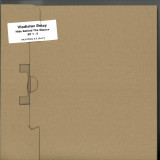
Vladislav Delay's complete "Hide Behind The Silence" series. Intuitive and raw music, momentary and reflective, released on Ripatti's own label Rajaton.
Stillness is a myth. Consider concepts such as ”still water”, or ”still air” for that matter. Go to a restaurant, ask them for a glass of still water, hold it against the light and see where we’re at. Even though the water itself has been captured and imprisoned in the glass, it never stops breathing. It’s filled with tiny particles, dancing. Everything can be explained on a molecular level, but since we’re not scientists – and even if you happen to be – it’s the natural world of perception that moves me.
Still air is very similar. A hot summer’s day with zero wind feels completely still. It’s the closest I have felt to complete stillness. Or for a more urban adaptation, imagine the same vibe inside a normal apartment. In those moments, revelations and mind- blowing experiences can be had with experiments in stillness.
Try this: Just sit down for a minute on a sunny day, making sure there’s enough natural light. Do absolutely nothing. Try not to breathe for a bit. (If you need a mental anchor, you can play Cage’s 4’33” in your head but nothing else.) Watch the tiny dots of dust dancing :..’ ̈.:; ́ ́*°.,’:,. ̈ ̈ ̈ ̈:,.’
The movement is crazy, but the feeling of stillness comes from witnessing how subtle it is. In (perceived) complete stillness, every act of microscopic mobility seems to speak volumes. Yet, it feels both reassuring and oddly threatening that the stillness is never complete. What if we would need absolute stillness? Or is it just enough that we can perceive something as such? Extremes attract, so for both water and air, extraordinary movement is equally fascinating. That is also a luxury item of sorts. For us to enjoy a very ”loud” body of water or air, we need to be safe, in enough control of the situation. So when you are, it’s worthwhile to pay attention and take it all in.
A rapid flowing free with extreme strength and just barely in control. Look at that water go! No still water on this one, only ”sparkling”. A windy day when birds seem surprised how hard it is to fly, but in the end they make it. Trees bend but don’t break. The wind shows you its movement but doesn’t hurt you. It feels friendly, like a big clumsy dog that doesn’t quite understand its size.
It’s beautiful to be a guest of the elements, but not at the mercy of them. A new kind of dialogue forms.
Q&A with Sasu Ripatti:
1) Tell us something about the EP series ”Hide Behind the Silence”, what’s the idea and what can we expect?
Exploration of inaction. Of many kinds. In arts and in personal life, or at bigger and more serious levels. Questioning myself as a human being as well as an artist. Acknowledging the growing activism all around, and the very clear need for it, and how it reflects my own inaction.
Musically speaking, after Rakka, Isoviha and Speed Demon, I finally found some relief, but more importantly lost the need to go musically ever more outward and intensive. I felt quite strongly certain periods/moods from the past and they made me revisit some musical ideas or states of mind I was exploring early on.
It’s about live moments being captured, not much premeditation or editing. More intuitive and raw, even though the end result (to me) feels and sounds quite introspective and calm. It’s not very ambitious. Momentary and reflective.
2) Your music doesn’t sound very silent. Does it come from somewhere behind the silence?
Oh, this time to me it sounds quite quiet and playing with space if not silence. I don’t know what’s actually behind silence, but I think silence is the source of everything. We just don’t understand it yet.
3) What kind of thoughts or experiences gave inspiration to this series?
Writing this in Nov ’22, it’s not a stretch to say the world has been really unwell. Sometimes, like Mika Vainio put it, the world eats you up. I feel a bit like that. And I try to hide in my studio and stay away from it all, but it’s getting harder by the day. I’ve been questioning myself and thinking if what us artists are doing is worth anything, and whether it’s just a selfish thing I’ve been doing for the past 25 years, running away from everything. I haven’t come to a conclusion yet.
4) Is it easy for you to be in silence, or around silence?
Absolutely. I not only hide behind silence but I also love silence. It’s only since I started going back to nature as a grown-up person that I sensed and was enveloped by silence, true silence. I have begun to appreciate it a lot. I think all the people should spend more time in silence.
All tracks composed and produced by Sasu Ripatti.
Artwork by Marc Hohmann, photography by Shinnosuke Yoshimori.
Mastering by Stephan Mathieu for Schwebung Mastering.
Vinyl cut by SST Brueggemann.
Publishing by WARP Music Ltd.