
10
Extremely limited collectors edition of Atom™ & Tobias.' Toolbox Series (Cuando, Zahlenraum & Enne) released on Pomelo (POM45-47) with a Dextro-designed cover.
Extremely limited collectors edition of Atom™ & Tobias.' Toolbox Series (Cuando, Zahlenraum & Enne) released on Pomelo (POM45-47) with a Dextro-designed cover.

Banoffee Pies Records in its 10th year of operations welcomes UK based artist Syz to the label for the 22nd Original Series Release via their "Headspin" EP. Kicking off 2023 with a 4 track collection of shape shifting hybrid techno ear worms.
Distinctly playful compositions from an artist continually paving their own sonic path between drum heavy and broken beat UK techno. Focused and dynamic club music made for the sound system explored through always evolving, grime influenced post dubstep sounds and percussions. BPR x

Matador makes his debut appearance on Crosstown Rebels with his absorbing new EP ‘My Yellow Coat’, accompanied a remix from NYC house and techno favourite Levon Vincent.
An outstandingly technical live artist, DJ and producer, Matador, real name Gavin Lynch, has a prolific discography with releases on renowned labels such as Minus, Hot Creations, and Cocoon. A resident at Richie Hawtin’s iconic ENTER series in Ibiza, the past decade has seen the Irish talent tour the globe consistently with performances at some of the world’s most prestigious festivals and clubs, including Awakenings, TimeWarp, and Neopop, while featuring in Resident Advisor’s ‘Tip 20 Live Acts’ on three separate occasions. ‘My Yellow Coat’ marks his first appearance on Damian Lazarus’ Crosstown Rebels, describing the debut as “a result all round” with the imprint featuring as a personal favourite of his over the years.
The EP features two original tracks, ‘My Yellow Coat’ and ‘What You Say Is So’, showcasing a dynamic approach to electronic music with a deep dive into rich beds of emotive and spellbinding tones. Title track ‘My Yellow Coat’ is a slow-blooming and delightfully suspenseful production guided by the track’s charming vocals as soft synth melodies and refined percussion build gracefully across its eight-minute duration. . Novel Sound boss Levon Vincent’s dynamic interpretation of the title cut welcomes a new side to his expansive sound, building on his distinctive sound palette and welcoming a shift towards faster realms.

"Hungarian guitarist Gabor Szabo (1936-82) issued only three live recordings during his lifetime. Significantly, the first of these, The Sorcerer (1967), remains the most popular album in the guitarist’s all-too abbreviated discography. But there were also More Sorcery (1968) and Gabor Szabo Live with Charles Lloyd (1974), offering Szabo totally in his element and at his bewitching best.
Several more of Szabo’s concert recordings have surfaced in the intervening years, including this one, superbly captured for radio broadcast live in 1976 at the 600-seat Agora Ballroom in Cleveland, Ohio. It is a revelation. There is a sense here that concert patrons may have been hearing an altogether different Gabor Szabo than record buyers.
For one thing, Szabo is heard fronting what is likely his own group, rather than an army of studio musicians. In 1976, Szabo was leading a tremendous quartet with George Cables (or Joanne Grauer) on piano, Tony Dumas on bass and Sherman Ferguson on drums. Szabo had not had a band with this much jazz clout since his famed quartet with Jimmy Stewart in 1967-68 – and it is a union worth savoring: Szabo’s records during this period were light, at best, on jazz.
It’s unclear if any of these musicians are on the Agora date, but as Dumas’s “It Happens” opens the program, it’s a good bet, at least, that the bassist is on board here. But as Szabo’s ’76 quartet is not known to have recorded a studio record, Live in Cleveland is the closest thing to what a mid-seventies Szabo jazz album would sound like.
Gone, are the strings, vocals and concessions to commercial consideration so prevalent on so many of Szabo’s studio records at the time. What is present, though, is fine craftsmanship, tremendous interplay, and the exciting improvisation that good jazz always yields.
This particular concert was part of Sansui’s “New World of Jazz,” a series of 13 hour-long jazz concerts recorded at Cleveland’s iconic Agora Ballroom and broadcast over 40 FM radio stations. The series was sponsored by Sansui Electronics, a Japanese manufacturer of audio and video equipment, which previously sponsored a similar series of rock concerts recorded at the Agora as well.
Sansui was promoting its matrix QS 4-channel sound system – offering, what was considered at the time, superior diagonal separation and stereo compatibility. The firm, partnering with Agora Ballroom and Agency Recording Studio owner Hank LoConti (1929-2014), was looking to take advantage of what they rightly felt was the then-current jazz renaissance.
Each show’s 16-track master tape was mixed through the Sansui QS 4-channel encoder,” according to an August 1976 Billboard article detailing the arrangement, “for distribution to the 40 FM stations throughout the United States that bought the series” – allowing for three commercial spots for local dealers to advertise."
The recording is available for the first time on CD and VINYL. Mastering by grammy-nominated Jessica Thompson.

Light in the Attic’s Pacific Breeze series has supplied the world’s growing legions of Japanese music fans with an expertly curated selection of the most sought-after City Pop recordings—the mesmerizing and nebulous genre of Japanese bubble-era music of the ‘70s-’80s that encompasses AOR, R&B, jazz fusion, funk, boogie and disco. These familiar sounds are spun through the unique lens of optimistic, cosmopolitan fantasy colored by Japan’s affluence at the time. Much of the music has previously been nearly impossible to acquire outside of Japan and continues to captivate listeners with its unique blend of groove-laden escapism, even birthing wholly new genres such as Vaporwave.
Pacific Breeze 3: Japanese City Pop, AOR & Boogie 1975-1987 marks the latest chapter in the famed series and features holy grails plus under-the-radar rarities. The collection bursts at the seams to reveal some of the greatest Japanese tracks ever laid to tape, pushing towards the edge of City Pop to reveal glimmers of the next waves of styles to spring forth from the country’s creative minds. The appearance of Pizzicato Five hint at the emergence of Shibuya-kei while the influence of hip hop and electro as an emerging global trend are also evident here through the prevalence of heavier programmed drum beats on tracks such as “Heartbeat” by Miho Fujiwara.
This volume of Pacific Breeze, like its predecessors, is a female-forward offering with many tracks being voiced by women who would become household names in Japan as actresses and pop idols. Their songs here subvert the norm and brim with an innovative spirit that shatters gender roles in favor of sonic transcendence. Techno-pop classics from Susan, Miharu Koshi and Chiemi Manabe sit alongside sublime funk from Atsuko Nina and Naomi Akimoto while Teresa Noda slides into the mix with a sultry reggae jam. The genre span is stretched wider with hypnotic jazz fusion by Parachute and Hiroyuki Namba, a synthesizer fantasy from Osamu Shoji, and magnetic pop by Makoto Matsushita and Chu Kosaka.
Although not front and center, the visionary members of Yellow Magic Orchestra are still very present on Pacific Breeze 3, with Haruomi Hosono, Ryuichi Sakamoto, and Yukihiro Takahashi taking up producer and musician roles on many of these tracks. Pacific Breeze 3 serves up a captivating musical journey that adds an essential chapter to the iconic compilation series.
Tracklist:
Naomi Akimoto - Bewitched (Are You Leaving Soon), Atsuko Nina - Tonkachi, Miho Fujiwara - Heartbeat, Miharu Koshi - Scandal Night, Chu Kosaka - Shirakechimauze, Teresa Noda - Tropical Love, Makoto Matsushita - Business Man Pt. 1, Susan - Ah! Soka, Yukako Hayase - Suiyoubi Madeni Shinitaino, Parachute - Kowloon Daily, Hiroyuki Namba - Tropical Exposition (Who Done It? Version), Pizzicato Five - Boy Meets Girl, Mari Iijima - Love Sick, 1986 Omega Tribe - Cosmic Love, Osamu Shoji - Pub Casablanca, Chiemi Manabe - Untotooku

On the heels of his already critically acclaimed (yes, already!) retrospective, World Spirituality Classics 3: The Muslim Highlife of Alhaji Waziri Oshomah, Alhaji Waziri Oshomah — the Oyoyo King, the Godfather of Afemai Music, the Etsako Super Star, Mr. Please Please Please, Mr. Dynamite — returns with Vol. 2.
Along with the other four volumes of the series, Vol. 2 is now available—for the very first time!—as part of a complete set (in a box): Vol 1 - 5 (1978 - 1985) (November 4, 2022).
Waziri hails from a small part of Edo State in southern Nigeria called Afemailand, known for being a harmonious region where Muslims and Christians live—and dance—together. And there, as a devout Muslim and an exemplar of religious piety in his community, Waziri’s music fuses Etsako/Afemai folk styles with pan-Nigerian highlife and pop to create a sublime vehicle for his Islamic philosophy that gets everyone—Muslims, Christians, whoever—on the dancefloor.
Vol. 2 focuses on Waziri’s illustrious mid-career output—the music he created during the years leading up to and after he performed his first hajj. Every song here (one of which you might recognize from The Muslim Highlife) strikes his signature balance of traditional music, highlife, and funk, as he entreats you to stay on the straight and narrow, though there’s nothing straight about his beat.
On and off the record…
This is the second of the five-part Volume Series, which was recently compiled for the first time in the limited-edition box set, Vol. 1 - 5 (1978 - 1984) (November 4, 2022).
This release follows World Spirituality Classics 3: The Muslim Highlife of Alhaji Waziri Oshomah (September 23, 2022).
The Muslim Highlife of Alhaji Waziri Oshomah, received an 8/10 from Uncut, ★★★★ from MOJO, and has been called “therapy, worship, ecstasy” by Pitchfork (7.2).
Release supported by archival and new video content.
Alhaji Waziri Oshomah will play select shows—along with his wife and musical collaborator Madam Hassanah Waziri—in the U.S. and Europe throughout 2023. l He can perform sets as long as 3-4 hours! (Depending on the financial strength of the village).
Sings in English and local languages and is regarded as #1 Singer in all of Edo State.


(2022 REISSUE)
"...some of the most delightful electronica to arise in Britain since Aphex Twin, the Black Dog and Global Communication." - Bethan Cole, The Sunday Times
"...electronica rarely comes as intriguing and atmospheric and laden with weirdly unshakable tunes" - Alexis Petridis, The Guardian
The first in a complete series of Ghost Box re-issues, starts with the 2004 EP Farmer’s Angle by Belbury Poly. The very first release for label co-founder Jim Jupp was joyfully naïve yet oddly sinister electronica. It very much set out Ghost Box’s stall with its strong roots in library music, TV soundtracks, folk and psychedelia.
Farmer’s Angle is issued on 7inch vinyl, CD and all digital channels. Packaged in the original sleeve art by Julian House that was to establish the label’s strong visual identity. Drawing influences from library music albums and Penguin books of the 60s and 70s with a classic British modernist aesthetic, House’s work for Ghost Box predated the eventually ubiquitous use of paperback book visuals in popular commercial graphic design. Farmer’s Angle was included in an Electronic Sound magazine feature, A History of Electronic Music in 75 Records.
Belbury Poly
Jim Jupp has released EPs, singles and seven albums on Ghost Box under the name of Belbury Poly. He is also a member of The Belbury Circle along with Cate Brooks (of The Advisory Circle) and occasional collaborator, John Foxx. In 2019 he co-wrote and produced the music and spoken word album Chanctonbury Rings with Justin Hopper and Sharron Kraus. He has recorded library tracks for KPM, BMG and Lo-Editions. He has remixed tracks for several artists including John Foxx and Bill Ryder-Jones (The Coral) and co-written a song with Paul Weller for his 2020 album On Sunset.
Still rooted in these early influences and with a consistent and strong visual identity, the label has developed over the years and now has a more international roster with a broader range of musical styles. But each new release continues to be a unique fit into the label’s distinctive parallel universe.

coloured vinylHyperionORBIT is back with his 3rd EP, opening the series of UTM's colored vinyls.
"Digital reality is malleable and information equals power. Our computer systems have become playgrounds for our imagined avatars. These synthetic spaces and their inhabitants have been the main inspiration for 2400Hz."
AZMLP01COR[19,29 €]
Part 31[19,71 €]
Part 6[14,92 €]
Part 4[14,92 €]
Part 15[14,92 €]
Part 43[14,92 €]
Part 17[14,92 €]
Part 26[14,92 €]
Part 27[14,92 €]
Part 12[14,92 €]
Part 9[19,71 €]
Part 3[19,71 €]
Part 2[19,71 €]
Part 7[19,71 €]
Part 41[19,71 €]
Part 40[19,71 €]
Part 37[19,71 €]
Part 39[19,71 €]
Part 44[19,71 €]
Part 38[19,71 €]
Part 29[19,71 €]
Part 20[19,71 €]
Part 19[19,71 €]
Part 33[19,71 €]
Part 42[19,71 €]
Part 45[22,06 €]
Part 21 Standard[22,06 €]
Part 22[22,06 €]
Part 5[29,79 €]
Part 8[29,79 €]
Part 18[29,79 €]
Part 35[29,79 €]
Part 16[29,79 €]
White/Purple Vinyl[26,01 €]
Part 21 Edition Or[26,01 €]
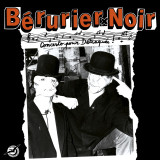
Concerto Pour Détraqués" was ranked 52nd best French rock album by Rolling Stones magazine in 2010.
Eleven tracks like so many vitriolic pictures of a sick society: rape, extreme right-wing, psychiatric confinement, security paranoia, alcoholism and all the other crap that the future seems to hold. Loran and François express more than ever their rage and their refusal of the adult world in a recital with three chords: more aggressive guitars, more incisive lyrics and voices while an armada of chorus members and a saxophone come to heckle or underline this darkness.
"Concerto Pour Détraqués" is the band's reference album, with a string of hymns to insubordination and freedom: Petit Agité, Vivre Libre ou Mourir, Les Rebelles, Porcherie, Hélène et le Sang...
The band's name alone evokes the epic of alternative rock: rebellious and committed.
Born by mistake on a February evening in 1983, Bérurier Noir soon found itself the driving force behind a vast "Youth Movement", determined to take control of its life in the face of a society that was ultra conservative at the time. Times have hardly changed.
From the first self-produced records distributed by hand to the creation of self-managed labels, from concerts in squats and wild appearances in demonstrations, on the street or in the metro to endless tours, from interviews given to fanzines and free radio stations to unclassifiable appearances in the mainstream media, Bérurier Noir has waged the most exciting war of independence in the history of French rock, with only a microphone, a guitar, a drum machine, a few red noses and patched-up theatre masks.
The last finger of honour of this turbulent and irrecoverable raia, François, Loran and their "Troupeau d'Rock" commit hara-kiri, at the peak of their glory, during three last concerts in the heart of Paris in November 1989.
Forty years after its birth, Bérurier Noir's work still resonates, whether in demonstrations or free parties, nourishing the hopes of those who wish to overthrow this world to build a truly libertarian, united and fraternal society.
The label Archives de la Zone Mondiale reminds those who missed this unprecedented adventure, 8 discographic parts of the group Bérurier Noir in the form of reissues on particularly original colour vinyls (crown finish), in a limited series and distributed throughout the year.
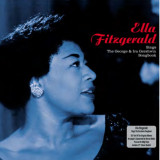
When Ella Fitzgerald began recording her series of albums devoted to the work of
America’s greatest song writers, she elevated the art of Jazz singing into a new
dimension while celebrating a unique musical heritage bequeathed to the world of
popular music. Norman Granz encouraged the bold decision to record five albums all
featuring the extraordinary output of songs composed by the brothers George and Ira
Gershwin during the Golden Age of popular song. Gershwin show tunes had long been
a staple diet for bandleaders, pop-vocalists and star-instrumentalists eager to perform
such exhilarating material as Strike Up The Band, Oh, Lady Be Good!, S’Wonderful and
I Got Rhythm. But there was also a gamut of ballads and romantic dance themes
needing to be interpreted with greater sensitivity. Ella was more than capable of
focusing on lyrics and caressing melodies of songs like Someone To Watch Over Me, A
Foggy Day and Embraceable You. They are among the 53 Gershwin classics she
recorded over an eight month period in 1959 and now featured in this superb collection.

ShitKids lo-fi indie/punk rock debut LP Fish polarised music fans across the world.
Most the reviews came in either 5/5 or 1/5, which is just the way we like it. Athrilling start of a great career that included shows all over the world and makingIggy Pop a fan. This repress contains two bonus tracks and is a part of thePNKSLM 10 year anniversary repress series featuring represses of some of theSwedish label's sold out key releases.

Nearly five years on from their acclaimed debut, Bennett Wilson Poole reveal the follow up. It's been a long time coming, but...
That eponymous first album was only ever intended as a one-off collaborative project — a serendipitous series of events which began with a late evening session where the trio wrote ‘Hate Won't Win’. A response to the murder of MP Jo Cox, it was something of a fresh take on Crosby Stills Nash and Young’s classic protest song ‘Ohio’. The release saw Bennett Wilson Poole embraced by the Americana community, playing live on the Andrew Marr show and crowned as ‘UK Artist of the Year’ at the 2019 UK Americana Awards, in front of a watching crowd including Graham Nash himself.
The new album came together in similar fashion; Robin (Bennett) and Danny (Wilson) started writing new songs late into the night whilst on tour to promote the first record — a tour which unfolded from a three-night residency in a London pub into a year-long odyssey culminating in a headline show in Hall One at King’s Place — and before they knew it, there were enough songs to begin recording an unplanned second album.
Where the first record drank deep from 70s US west coast folk-rock, the second has been heavily spiked with 1960s British psychedelia, even featuring a cover by legendary counterculture artist John Hurford (whose credits include 60s artwork for Oz Magazine and International Times).*
Tony Poole’s meticulous and inspired production has spun Robin and Danny’s fresh batch of songs into a delicate web of musical delight. Fans of the ‘spot the reference’ game Tony started on the first record won’t be disappointed this time either, as there are plenty more to be found here.
As with the first album, the lyrics don’t shy away from current affairs – by the end of that year of touring, the band were already playing “I Wanna Love You (But I Can’t Right Now)”, reflecting on the state of US politics, yet optimistic that the problems are only temporary.
Many of the tracks on the new album feature live rhythm section Fin Kenny (drums) and Joe Bennett (bass) for the first time on a BWP record.
The title of the album comes from the lyrics of ‘Help Me See My Way’, the first single, a prayer for strength in difficult times, the trippy animated video for which was originally issued during lockdown. The dreamy positivity of the line "I saw a star behind your eyes" is tempered with the plea "don't let it die away", a message which feels as important as ever two years on.
All three collaborators have had critical acclaim in their own right. Danny Wilson’s credentials go back to his days in Grand Drive with brother Julian, and his consistent high calibre output with his Champions of the World led them to sweeping the board at the first UK Americana Awards with Album, Artist and Song of the year awards richly deserved; Tony Poole’s Starry Eyed and Laughing were hailed as “the English Byrds” on the back of their two CBS-released albums in the mid-seventies and he has since built an enviable reputation as producer and engineer; Robin Bennett has been relentlessly turning out timeless songs from his Oxfordshire base in bands from Goldrush to The Dreaming Spires

Angel numbers: a series of recurring numerical patterns or sequences which those who believe in such things invest with cosmic significance.
Also, the name of the forthcoming album by Hamish Hawk – an apt title for an artist who bounces between scepticism and wonder, who alchemises the quotidian, who is engaged in a constant quest to outwit and outflank the ordinary. With the release of Heavy Elevator in September 2021, Edinburgh-based Hawk established himself as a writer of heartfelt, headstrong, unashamedly literate songs to stimulate both pulse and psyche. Heavy Elevator offered words to savour and tunes to relish. The songs were filmic and romantic, blending wit, wisdom, resignation and beauty with a kind of sceptical joie de vivre, delivered in a rich baritone that has drawn comparisons to everyone from Jarvis Cocker to Scott Walker. A singer of style and guile peddling accessible intelligence: what’s
not to love? Heavy Elevator established a powerful artistic imprimatur which nonetheless felt neither defining nor confining. While the album has been justly lauded, Hawk’s next steps have moved the story considerably further forward. Angel Numbers meets growing expectations head on, with panache and aplomb.
The endlessly prolific and unpredictable Richard Youngs returns to Black Truffle with Modern Sorrow. As any Youngs fan knows, one of the great pleasures of following his career comes from not being able to predict what the next entry in his inexhaustible string of releases will bring: Unaccompanied voice? Country songs? Shakuhachi? Guitar pieces played with his feet? Shredding fuzz bass over the top of hyper-speed distorted drum machine beats? Continuing in the grand Youngs tradition of exploring new techniques, instrumentation and approaches while bringing to all of them his idiosyncratic touch, Modern Sorrow serves up two sides of twistedly elegiac, radically stark takes on contemporary pop production. The side-long title track is built from a piano sample, synthetic bass notes and organ swells, and an iterative blurt that seems to have wandered out of a 90s jungle track. Eventually joined by a shuffling drum machine, the track moves very slowly through a series of chords, each delayed long enough that its arrival comes as a major event. Over the top, Youngs’ heavily pitch-corrected voice is heard. The processing paints his signature wandering melodic improvisations with shades of contemporary R&B; at the same time, it cuts the natural swoops and glides of Youngs’ melodies into rapid microtonal trills, giving his voice a quavering, middle eastern feel. Unfolding languorously over more than 17 minutes, the piece’s final minutes make room for an extended drumless coda, returning to the stark palette of its opening moments. On the second side, the two parts of ‘Benevolence’ push this minimalism ever further, its first half consisting of nothing more than a remarkably slow drum machine hit, bass-heavy chords and pitch-corrected voice, here so heavily processed that it starts to resemble a shawn solo. In its second part, the harmonic foundation drops out from under the piece while two more voices join; at some moments the voices pause, leaving nothing more than isolated, metronomic drum hits. Though Youngs has explored the sound worlds associated with dance music and contemporary pop in previous work, here these elements are radically reduced, foregrounding a meditative bed of silence with a boldness equal to any more academically inclined contemporary composer. Embracing the accessible digital tools of contemporary music production just as at another moment he would pick up a kazoo, like much of Youngs’ work Modern Sorrow uses simple DIY tools to generous ends, producing formally radical music that remains both free from pretension and deeply moving.

Vol.2[32,73 €]
On the heels of his already critically acclaimed (yes, already!) retrospective, World Spirituality Classics 3: The Muslim Highlife of Alhaji Waziri Oshomah, Alhaji Waziri Oshomah — the Oyoyo King, the Godfather of Afemai Music, the Etsako Super Star, Mr. Please Please Please, Mr. Dynamite — returns with Vol. 3.
Along with the other four volumes of the series, Vol. 3 is now available—for the very first time!—as part of a complete set (in a box): Vol 1 - 5 (1978 - 1985) (November 4, 2022).
Waziri hails from a small part of Edo State in southern Nigeria called Afemailand, known for being a harmonious region where Muslims and Christians live—and dance—together. And there, as a devout Muslim and an exemplar of religious piety in his community, Waziri’s music fuses Etsako/ Afemai folk styles with pan-Nigerian highlife and pop to create a sublime vehicle for his Islamic philosophy that gets everyone—Muslims, Christians, whoever—on the dancefloor.
Every song on Vol. 3 (one of which you might recognize from The Muslim Highlife) strikes his signature balance of traditional music, highlife, and funk, as he entreats you to stay on the straight and narrow, though there’s nothing straight about his beat.

Calisthenics is the first album by Institute for Certified Nomadic Illicit Sonic Practices (ICNISP), the Berlin-based duo of Brazilian musicians Marina Cyrino (flute) and Matthias Koole (el.guitar).
With a mixture of electronic and acoustic sound sources, objects and preparations, inside amplification and no-input mixing, the duo leads guitar and flute towards a common hybrid terrain. Sound perspectives are shifted, instrumental identities are displaced. The piccolo can function as a noise generator and a percussion instrument, the guitar can sound like a bird, the alto flute can be played by an external balloon that moans. Partly inspired by drawings of the Handbook of Calisthenics and Gymnastics: A Complete Drill- book with Music to Accompany the Exercises by J. Watson, first published in 1864, ICNISP came up with a series of musical exercises to stay healthy and fit during the several lockdowns over the past few years. In a playful way, the title Calisthenics also translates an agitation present in many of the duo's energetic playing modes.
On Side A, Calisthenics comprises 7 tracks - or exercises - of different lengths, with a focus on specific instrumental materials or preparations. Side B consists of one track in which a larger form unfurls, with elements of the exercises concatenated into a Full Arch.
No cuts or overdubs.
Marina Cyrino - Amplified Piccolo and Alto Flute.
Matthias Koole - Electric Guitar.
Recorded and mixed by Rabih Beaini at Morphine Raum in Berlin.
Mastered by Paulo Dantas in Rio de Janeiro.
Cover art by Sara Lambranho.

Gargantuan volcanoes erupting with primal force, fountains of molten lava bursting sky high and massive boulders hurtling capriciously through the air. These potent and violently alluring images in the documentary series The Living Planet captivated Raoul Björkenheim's imagination in 1986. The search for a band name had come to an end. -”I was mesmerised. The name Krakatau sounded like a drum fill to me”. After studying at the Helsinki Conservatory for a year and the Berklee College of Music in Boston for three, Björkenheim relocated to Finland where he played in bands with Jone Takamäki, Antti Hytti and Tom Nekljudow, and later went on to work with composer and drummer Edward “Eetu” Vesala (1945-1999). His always original and highly demanding Sound & Fury workshops were a pivotal hotbed in the local improvised music scene, but after four years of Vesala's strict leadership Björkenheim felt a need to leave Sound & Fury behind and direct all of his attention towards Krakatau. The lineup on the first album “Ritual” consisted of reed virtuosos Jorma Tapio and Tapani Rinne, the bassist Sampo Lassila and two drummers, Michel Lambert and Heikki “Lefty” Lehto. “Krakatau’s debut album was very challenging to make, as I felt that it might be my one and only chance to record my own music, so I wanted it to be as intense and effective as possible”, says Björkenheim, “I was lucky enough to work with an incredibly talented cast of musicians. I can still listen to the album and feel satisfied that it really works. The first guitar solo illustrates what was to become my modus operandi: to try and play the electric guitar in unexpected ways.” Svart Records will release an expanded double LP version of Krakatau’s Ritual. Limited to 500 copies and due out on March 24th, the album contains an album’s worth of previously unheard material recorded in 1987 in Studio Helsinki and at the Finnish Broadcasting Corporation studio.

Steve Gunn and David Moore's Let the Moon be a Planet is a volume of improvisatory exchanges between classical guitar and piano, and a meeting place where two artists become acquainted through instrumental dialogue without a single expectation distracting them from the joy and open field possibility of collaboration. A project enveloped by an aura of reciprocity, Let the Moon Be a Planet unfolded from an invitation to connect between two New York-based musicians who admired each other's work but had never intersected: guitarist and songwriter Steve Gunn, whose solo, duo, and ensemble recordings represent milestones of contemporary guitar-guided material, and pianist and composer David Moore, acclaimed for his minimalist ensemble music as the leader of Bing & Ruth. The exchange began remotely as Gunn and Moore responded to one another's solo improvisations, embarking on a synergistic progression of deep listening and connection through musical conversation. "We were both fans of each other's music and this was a chance to try a different process which was much more open," says Moore. "It felt like something I needed personally as an artist, to not be so controlling over the final output, and to truly collaborate with somebody else." Similarly for Gunn, who was exploring new pastures and passages in classical guitar when the dialogue began, the project was an invitation for pure conversation and exchange, creating space for him to revisit foundational forms with his playing: "I was trying to break out of what I was doing, to have something that just pulled away all the elements of usual structured things." Let the Moon Be a Planet intertwines the trajectories of two musicians acclaimed for pushing the boundaries of their instruments, unified by a shift away from what they recall as more "detail-oriented" approaches to composition. Fueled by the magnetism of their call and response exercise, Gunn and Moore set out on a nomadic songwriting venture without an intended destination. "We didn't know it was going to be an album," Gunn explains. "There was never pressure on us to complete or make something. It was interesting to start realizing that this could be an album and to take a step back_ to arrive at a project after the fact." Calibrating their focus to connect with a spectrum of inner and external emotional realities, the duo found their way into a world where the most subtle of gestures can eternally flow. Let the Moon be a Planet is an ode to experimentation over outcome; it holds a candle light to the corners of introspection and captures the patterns that flicker within. Cast across the compositions of the album is a gritty, filmic grain _ a quality that emerged partially from recording "without the greatest microphones" or their usual studio environments. For both artists, this lo-fi sensitivity felt integral to the record and its production, and they worked closely with engineer Nick Principe to preserve its otherworldly haze in the final mixes. Across the record's eight compositions, the rippling impulses of Gunn and Moore's inner worlds converge in the spirit of two strangers wandering the same path, engaged in a daydream state of natural back and forth. Melodic tableaux arise, drift and disperse across serene open spaces, painted in earthy hues of nylon string and balmy, undulating keys _ side by side, the duo converse in tessellating motifs and gestures of lucid introspection, cultivated by a shared desire for intuitive play. "This project was such a simple idea," says Gunn. "It got down to the very core of where I am or where I was, and where I'm trying to be as a musician. Making this record became a very beneficial ritual for me, almost a meditative process." As Moore recalls, "Our only motivation for making these tracks was that it felt good to make them and there was nothing else behind it_ I don't know that I've ever made a record that came about so naturally." While Let the Moon Be a Planet was envisioned through a deeply collaborative process, it uncovered a path for Gunn and Moore to respectively return home as musicians. Imbued with the forces of interconnection and balance, the record is an exploration of creative synergy while following the currents of inner experience _ of looking outwards to arrive at one's natural self. Steve Gunn and David Moore's Let the Moon Be a Planet will be released March 31, 2023 in LP, CD, and digital editions. The album represents the first volume of Reflections, a new series of contemporary collaborations orchestrated by RVNG Intl. A portion of the proceeds from this release will benefit St. John's Bread and Life, whose mission is to respect the dignity and rights of all persons by ensuring access to healthy, nutritious food and comprehensive human services resulting in self-sufficiency and stability.

On behalf of re:discovery records, it is with great excitement that we announce the 3rd and last EP of the set highlighting the music of 1990's Norwegian electronic act Neural Network. Part 3 hones in on their unreleased album that was never formely named. The band and those in the industry who heard it felt it was their best music yet. There were label suitors for this album including a top tier Belgian label but sadly things did not work out as that label folded. And this project was left on DAT's.
Of the 9 tracks we chose, there were 4 we felt would most fit the vinyl medium and the theme of the first 2 EP's. These fit in with music like B12, Stasis and As One for some lofty comparisons and we think it fit's perfectly in that esteem company. The Detroit-esque beautifully somber 'Lambent' sounds almost 'Tedra' like from Kenny Larkin. 'Jetstream' is pure melodic robotic funk from the future. The side B track 'Floatation' coming in at just over 18 minutes and is a prime example of the sci-fi music they so wonderfully produced. This 3 record series is a great example of re:discovery records' mission to present the past for the future. All feature amazing artwork from UK's Grid Pattern complete with insert that features info on the music and their history. Bring back the Chill Out Rooms!
