“Soul is My Salvation is a collection of dance friendly gospel songs. The mission is to simply uplift your spirit through music and word. Dance floor’s around the world mirror the reactions of Churches from the 70’s and 80’s when experiencing these recordings.” - Tone B. Nimble.
Released as a series of eight limited vinyl-only 45, when assembled together the covers reveal a beautiful design courtesy of designer Charlotte McCrae. See the full eight record assembled design here.
A true collectors item.
DJ Support:
Tone B. Nimble, Greg Belson, Skymark, Darryn Jones
Search:series
Returning to the label's dance floor roots, BODYCLOCK is a natural extension of Darker Than Wax's DNA - a foray into the late night club sounds that defined their sound. The freshly minted series represents the Singaporean label's primary outlet for dance floor burners and machine soul, shedding light on a new school of producers from around the globe and at the same time paying homage to the pioneers who laid the foundations for us. A celebration of afro-futurism that is ever-present in the consciousness of dance, BODYCLOCK is built for the nocturnal beings and discerning selectors that push this timeless tradition forward. This first volume brings together five producers across four continents - Teymori from Australia, NYC's Malik Hendricks, label mainstay Ricky Razu from Belgium, as well as Darker Than Wax co-founder Kaye and up-and-comer Halal Sol from Singapore. Establishing both facets of the BODYCLOCK sound, Side A features two vocal-led soulful excursions, while the flip brings three unabashedly jacking cuts to light the floor on fire. This is only the beginning - BODYCLOCK is coming with an onslaught of twelve inches and EPs, distilling our sonic outlook and looking to the future.
The first installment in Fu Manchu’s 30th Anniversary vinyl 10” series, Fu30, Pt.1, includes 2 new original Fu Manchu songs, as well as a cover of The Doobie Brothers’ “Takin’ It To The Streets.” The band will be releasing 2 more editions in this 10” series over this year making a total of 30” of new Fu Manchu music for the Fu30 anniversary.
Each release will include 2 new original compositions and a newly recorded cover. Like the band’s most recent album, Clone Of The Universe, Fu30, Pt. 1 was recorded at The Racket Room in Santa Ana, California by Jim Monroe (Adolescents, Ignite) and co-produced with Fu Manchu.
This ltd. edition 2500 unit run is pressed on translucent orange sunshine vinyl at 45 RPM for maximum heaviness with a package design that pays homage to the cover of the Doobie Brother’s original single.
Bunny Wailer’s album Sings the Wailers successfully reworks many of The Wailers songs with the backing of top Jamaican musicians, Sly and Robbie. The way he edited the songs for the modern age is impressive. At some moments he’s harmonizing with himself, to keep the spirit of The Wailers alive. Dubby overtones and well produced arrangements are all part of the wonderful sound created by Bunny and Sly and Robbie.
• 180 GRAM AUDIOPHILE VINYL
• INCLUDES “MELLOW MOOD”, “HYPOCRITE”, “RULE THIS LAND”, “I’M THE TOUGHEST” AND MORE REGGAE SONGS
• REGGAE SERIES WITH SELECTED REGGAE CLASSICS STICKER ON SEAL
► One half of duo Lumisokea and persistent sonic explorer ANDREA TAEGGI (Opal Tapes, SM-LL, Type, Präsens Editionen) debuts on OOH-sounds with a new solo album under-the-influence of mushrooms.
► Recorded at Willem-Twee synthesis studios in Holland, Mycorrhiza is a lucid excursion into a new form of 'ritual-computer-music' — gamelan from the future.
►Master + Cut by Helmut Erler, D&M Berlin. Limited Edition of 200, 12" black vinyl housed in gold cardboard sleeve with 'ad-hoc' fluo sticker.
Of course this is not the first album born under-the-influence of mushrooms, but apparentlyTaeggi doesn't take them here as he rather observes the cognitive and intelligent behavior of mycorrhizal fungal roots—one of the great mysteries inhabiting the forest soil, and from which a network of beneficial underground relationships with plants sprouts. Known as Mycelium, this fascinating wood-wide-web very much resembles the intricacy of the human neural system—transporting carbon, water and nutrients from one tree to another. A mutualistic symbiosis that Taeggi similarly establishes with the rather rare arsenal of sound machineries he had access to at Willem-Twee synthesis studios in Holland—a center for experimentation inspired by Berio and Maderna's Studio di Fonologia RAI in 1950s Milan.
In the process of tweaking and feeding electric impulses and sound signals into instruments of the likes of the iconic ARP 2500/2600 and a number of testing/measuring units from the 50/60s—originallynot conceived as musical instruments—Taeggi engages into an exchange of nutrients and information, while abruptly sabotaging un-welcome elements, hence accelerating the sound superhighway towards spectral psychedelic tension—a process he seems to be extremely in control of. Taking a step aside from his usual minimal approach to address more complex structures and augmented mind-sets, Mycorrhiza sounds at times like gamelan from the future: a lucid excursion into a form of "ritual-computer-music" with a conspicuous penchant for detail,alluding to a continuitybetween pseudo-cerimonial and laboratory-like computer music, steering clear from any reference to a specific creed or religion—imagine Stockhausen drinking the Amazonian sacred brew Ayahuasca..
The swarming micro-movements of "Cuttleburrs" multiply in a series of crescendos marked by sudden falls, saturated drums incursions and tense sonic clusters, introducing the more explicit gamelan percussive tones and compositional forms of "Kodama" and "Icaro". Recorded on the ARP 2500, "Mycorrhiza" uses white noise generators, resonant bass and spring reverb to conjure up a magical fungal diorama, which expands into the spooky shadows of skeletons and demons of "Phantasmagoria" and the spectral mystics of "Oculus Cordis"—the Eye of the Spirit — in which Taeggi grapples with the same sine-wave generators that Stockhausen used in his seminal "Studie I" and "Studie II".
Faze Action return with the 3rd instalment of their 4 part series featuring Zeke Manyika. "Sununguka", sung in Zeke's native Shona, is literally translated to mean, "To unravel oneself and unlock yourself".
It's set over an infectious reggae, boogie rhythm, with an early proto house feel. Featuring backing vocals from Sharon Manyika and heavenly keyboard solos from Rob Lee, this EP is set to take us into summer and beyond.
The package comes with a stunning remix from Alan Dixon who has been lighting up dance floors with his releases on Running Back and more. Here he turns the original into an Italo/electronic Aend of night classics, managing to seamlessly Amerge Zeke's African vocals with a serious bass line, ahead of the curve, contempory production whilst placing the release firmly in the credible main room department.
On "A2" we have Rwendo where Zeke really stretches his songwriting skills as the whole track manages to fuse a variety of rhythms together to create a beautiful downtempo masterpiece.
Finishing off we have the "Special Extended Dub Mix" which strips back the original and turns it into a balearic house gem made for the summer ahead.
'Banoffee Pies Records' drop their 12th release in the original series with a solo EP from New York based Tristan Arp. With a string of intricate music on the likes of Human Pitch and a recent LP entitled "Suggested Forms", which offers a wider exploration into his work, Tristan's passion for sound design echoes in this record.
All four tracks offer an environment somewhere between a feeling &
a dancefloor with obscure influences in polyrhythmic drum patterns and a clear combination of digital and analogue processing. "Swept Thru" opens proceedings with a spiral of rhythms and heavy percussion leaping in energy throughout, before the spooked out Vox takes control on "Oblique House" with deeper movements in a haunted club tune. The B side opens with the title track "Slip" in a powerful whirlwind arrangement of sub bending sounds before the final colour is added to the palette in "Circling Music'' with emotive jingles in a more retained and patient mood.
You can hear Tristan's other work within the Asa Tone project - a trio group well worth the trip, offering a deep variety of works exploring field recordings taken and formulated in Indonesia beneath a tree canopy deep in the jungle. This same energy and mood spills into this release. Music for feeling. Much love BP x
Mastered: Optimum, Pressed: MPO & Distributed by KUDOS.
Following on from an excellent debut in 2019, with ‘Karoussel’, Mow Records unveils its second album. A further exploration of label head Mowgan’s penchant for house music and authentic African sounds, ‘Soya’ features percussion and vocals from Solo Sanou, an artist whose roots lie in Burkina Faso - though he’s based in Toulouse, where the album was recorded.
Comprised seven Afro house cuts that utilise organic instrumentation and Solo’s raw, emotive voice, the album is the second installment in a series of five long-players recorded by Mowgan in the space of a year. This new LP goes deep into the heart of Africa’s rich musical culture, delivering contagious rhythms, rousing atmospherics and a pure, organic, unadulterated sound that has been cultivated through electrifying jam sessions at Mowgan’s studio. Also featured on ‘Soya’ are Yoan Hernandez and Yaya Dembele who play guitar, Gauthier Djalate on bass, alongside Mamadou ‘Madou’ Dembele, a multi-instrumentalist who plays flute and ngoni, while also handling backing vocals with Adama Coulibaly aka Demsi and teaming up for a duet with Solo on ‘Badenya’. Another vocalist, Fanta, was intrinsic to this LP. The granddaughter of renowned Malian performer Kandia Kouyaté, Fanta appears on ‘Fatanya’ and is a crucial component of the album’s conception…
The story goes that Mowgan was making an album with Fanta when he realised he needed a percussionist. Fanta brought in Solo Sanou, who was very timid to begin with. Mowgan liked his style and decided to work on some music with Solo separately. As the relationship blossomed, and they recorded more music, Solo brought more and more instruments to Mowgan’s studio. During those sessions Mowgan gently encouraged Solo to try using his voice, eventually he did and, when he heard how good it sounded, ended up singing across the whole LP. So, the beauty of this album, beyond the wonderful instrumentation, is the fact that you’re hearing Solo Sanou sing for the very first time.
With all the songs recorded in his native languages, Bobo and Bambara, ‘Soya’ is an exhilarating blend of electronic production and African influences that emanates a feeling of authenticity throughout. From the opening cut ‘Adamine’, which is about Solo’s first meeting with Mowgan, to ‘Badenya’ which refers to family bonds - “There may be quarrels, but it will never catch fire,” Solo says.
There is social commentary, such as that featured on ‘Fantaya’, which is about poverty - “While some people worry about what they will eat at night, others have fun without worrying about them,” he says.
A soul-nourishing, vibrant and utterly contagious collection of raw, authentic Afro house, ‘Soya’ marks another step forward for Mow Records and a triumph for all the artists involved. Look out for further installments…
“Miss Honey” by Moi Rene was an underground New York anthem during the early 90’s. While the artist and the song never fully got the acclaim it deserved, it’s originality and authenticity was strong enough to sustain its reputation as a must have track for any DJ who wanted to inject some raw and real NYC underground vibes into their set.
Through a series of memorable releases, the production team known as SRVD has emerged as one of the worldwide DJ community’s most original and innovative talents. Consisting of renowned producer Radio Slave and Performance arsist Partrick Mason, SRVD has done a remix that retains the New York-in-the-90’s edge of the vocal, while adding a techno – laced rocket fueled beat and synth that have made the track an immediate favorite of headlining DJ’s worldwide. Entitled Moi Honey, the SRVD remix package consists of a vocal and instrumental version.
- A1: Calm And Agitation (Title)
- A2: Calm And Agitation - Short Version - (30 Sec. Title)
- A3: The Twelve Challengers (Player Select)
- A4: The Way (Map)
- A5: Honor's Melody - Day (Haohmaru)
- A6: Honor's Melody - Night (Ukyo Tachibana)
- A7: Drum Roll I (Amakusa Demo)
- A8: Bambuseae (Jubei Yagyu)
- A9: Shadow (Hanzo Hattori)
- A10: Infortune (Four Wins Demo)
- B1: Tuna (Galford)
- B2: Banquet Of Nature (Nakoruru)
- B3: Indigenous (Tam Tam)
- B4: Diligence (Bonus Stage)
- B5: Exotic Lady (Charlotte)
- C1: Evil (Gen-An Shiranui)
- C2: Magatama (Kyoshiro Senryo)
- C3: Gaïa (Earthquake)
- C4: Wan Fu (Wan Fu)
- C5: Victory (Victory Demo)
- C6: Drum Roll Ii (Final Demo)
- D1: Heartbeat (Shiro Tokisada Amakusa 1)
- D2: Flames (Conversion)
- D3: Darkness (Shiro Tokisada Amakusa 2)
- D6: Revolutionary Lady (Charlotte Ending)
- D7: Celebration (Staff Roll)
- D8: Request For An Encore (Continue) - The Curtain Falls (Game Over)
- D4: Scream (Ending 1)
- D5: Harmony (Ending 2)
Brave Wave’s first 3-LP vinyls colored (Red, Black and White) set , Samurai Shodown The Definitive Soundtrack will come in a box set featuring three LP sleeves decorated with artwork from the game, with the box set featuring the original iconic Japanese cover drawn by famed illustrator Shinkiro. Both 3LP and 2CD version includes booklet.
SNK and Brave Wave Productions are proud to reveal their fourth collaboration, Generation Series 010: Samurai Shodown for both CD and vinyl.
Known as Samurai Spirits in Japan and originally released for NEOGEO in 1993, Samurai Shodown is one of SNK’s most classic and timeless 2D fighting games, featuring fast-paced gameplay, beautiful graphics and catchy music.
The soundtrack, composed by Norio Tate, achieves the difficult task of producing traditional Japanese sound comprised of instruments such as the shamisen and shachihata while maintaining a distinct NEOGEO vibe. The result is a beloved soundtrack that is simultaneous timeless, yet historical.
There are two variations of the soundtrack: an AES version and a NEOGEO CD arranged version. Samurai Shodown The Definitive Soundtrack will include both versions, featuring the entirety of the original soundtracks remastered and restored to the highest possible quality, in collaboration and consultation with SNK.
The CD and vinyl editions will feature a booklet containing artwork from the SNK archives, in addition to in-depth liner notes written by some of the original creators of the game, including series creator Yasushi Adachi, as well as Tate. In addition, the booklet will feature an in-depth essay by Greg Kasavin of Supergiant Games on the impact of Samurai Shodown on video game culture and history.
Outta Sight’s collectable ‘Classics’ series continues with two real heavyweight’s of the rare soul scene, face-to-face for the very first time. Together, these two icons helped define, not only Northern Soul, but the soul music genre… and now, almost sixty years on, they go head to head.
In the blue corner is former commercial artist and amateur heavyweight boxer Mr Roy Hamilton who set the dancefloors trembling across the North of England when his 1962 “Earthquake” was finally unleashed on the Northern Soul scene. Hamilton was already a huge star in America scoring two R&B No.1’s in 1954 and ’55 with the standards “You’ll Never Walk Alone” and “Unchned Melody”. But, he will forever be remembered in the U.K. for his Northern anthems “Crackin’ Up Over You”, “The Panic Is On”, “You Shook Me Up” and the explosive “Earthquake”.
In the red corner is the multi-talented actor, pianist, arranger, producer, songwriter and singer Mr H. B. Barnum who’s early belter “It Hurts Too Much To Cry” belies its 1962 recording date. Barnum also scored on the rare soul scene with “Three Rooms With Running Water”, “The Record” and the awesome “Heartbreaker”.
But his contribution far exceeds his personal output with writer, producer and arranger credits on a slue of floorfillers inlcuding Judy Street’s “What”, Earl Wright’s “Thumb A Ride” and The Magnificents’ ”My Heart Is Calling You”, to name but a few.
“History repeats itself, first as tragedy, second as a farce” -Karl Marx
Uun returns for his fifth entry in the Ego Death series. This EP was created in solidarity with the global leftist movement that has risen to fight fascism around the world. Tonally the record stays intense throughout, which expresses the passion and immediacy of this coalition. For if we do not understand the past, we are doomed to
repeat it.
NORTHERN SOUL ESSENTIALS!!! 2020 finally sees the long-awaited follow-up to the mega-succesful Frank Wilson 45 in our ‘Soul Essentials’ series. And they don’t come more “essential” than The Tempests “Someday”. What a fabulous record and a top notch dancer to boot! For many, “Someday” is the Northern Soul sound of the millenium, and it is! But we have to go much further back in time to find it’s roots on the scene. Back another twenty years in fact, back to the eighties to the “discovery-city” of Stafford where it was first played to an astonished and eager audience. It was originally released as an LP-only track on the album ‘Would You Believe’ on Smash Records in 1967. And what an incredible album it is offering up a number of potential B-sides for our single: the title track, plus a very credible rendition of “Ain’t No Big Thing”, “Happiness”, “I Cried For You” and “What You Gonna Do” – all totally fantastic. But, we went with the stunningly sublime and pleading “I Don’t Want To Lose Her” dripping in tortured emotion that sends shivers across the dance floor! The Tempests were originally an all-white 10-piece outfit formed in the early-Sixties in Charlotte, North Carolina. They went through a number of personel changes over the years but by the time they signed to the Mercury owned ‘Smash’ label their unique sound featured black vocalist, Hazel Martin. It is Martin’s implouringy desperate delivery that resonated instantly with the Northern Soul scene propelling the band to iconic status. Now, over fifty years on, the two standout tracks from the album are available back-to-back for the very first time! Also available the No.1 oldie “Do I Love You” by Frank Wilson.
This EP is Volume two in the series of early 1990's slower tracks by Mike Wells that Rabbit City didn't want to release as they wanted all "Bangers".
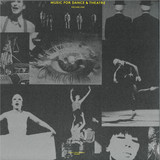
Music From Memory are happy to finally announce MFM045 - VA ‘Music For Theatre And Dance’ (EP).
This will be the first in a small series of EPs which will focus on music which was initially created for or inspired by dance and performance. Created as a dialogue with the avant-garde and highly experimental work in dance, theatre and art evolving at the time, the music was in turn at times greatly innovative.
That it was created for a dance or performance though means that such music was also often highly rhythmic and a number of pieces from this time stand out and seem greatly deserving of a new context.
Whether it’s more ambient or atmospheric works or whether it’s in the more rhythmic or percussive pieces, Music From Memory brings together a selection of tracks which aim to highlight this highly innovative direction in music.
Matière Mémoire presents the MMXX Series: In anticipation of the year 2020, Matière Mémoire asked 20 experimental/electronic artists to create an original 20 minutes piece and an artwork. Throughout this year, each quarter will see the release of 5 new vinyls.
Each record is limited to 500 copies and comes as a crystal clear vinyl featuring an original track of 20 minutes on one side, and a laser engraved artwork on the other. Each 12" is housed in a transparent sleeve printed with the MMXX logo, coming with a print of the artist artwork.
Participate in this series:
Franck Vigroux, John Duncan, Phill Niblock, Jim O’Rourke, Reinier Van Houdt, Stephen O’Malley, CM Von Hausswolff, Hampus Lindwall, Oren Ambarchi, Kevin Drumm, Bérangère Maximin, Kassel Jaeger, Daniel Menche, Charlemagne Palestine, Giueseppe Ielasi, Carlos Casas, Susanna Santos Silva, Joachim Nordwall, Karbé Dinel, Mauro Lanza
Sven Libaek's Inner Space is, simply put, one of the most legendary soundtrack recordings in the history of Australian music. Released in 1973, soundtracking a documentary series on underwater life by Ron & Valerie Taylor, it now stands proud as a key album of 'underwater music', one of the most rightly and righteously revered fields within soundtrack and library music circles.
Endlessly inventive, gorgeously melodic, at times oceanic, at times amphibian, at other times in some mysterious pelagic zone, Inner Space sits proudly alongside such classic underwater OST's and libraries as Egisto Macchi's Fauna Marina, the Sonoton Underwater Music series, the Ittologia and Biologia Marina twin-set, and Danielle Patucchi's Men Of The Sea, Alla Scoperti Del Mare and Uomini E Squali. Considered to be one of the unsung masters of Australian Film music, Sven Libaek composed for many Australian Films and TV series in 1960's and 70's. Inner Space is considered amongst his finest.
Featuring the best Australian jazz musicians including Don Burrows and John Sangster, they masterfully range from the incidental to the improvisational as they create a whirlpool of sublime aquatic jazz exotica. Notably, in 2004 the soundtrack had a second lease on life when several tracks were used in the Wes Anderson film.
'The life aquatic with Steve Zizzou'.
- A1: An Ardent Heart (Stefan Goldmann)
- A2: Arcade (Santiago Salazar)
- A3: Furniture (Raudive)
- B1: Soon (Patrick Cowley & Jorge Socarras)
- B2: Feral (Raudive)
- B3: Memory Fails Me (Patrick Cowley)
- C1: Vodolaz (Kink)
- C2: Law Of Return (Peter Kruder)
- C3: Stammophorm (Anno Stamm)
- D1: Darksun (Rroxymore)
- D2: Hollow Sound (Stefan Goldmann)
Electronic / acoustic wonder band KUF deliver a special surprise for their third album: eleven sizzling hot takes on tracks drawn from the Macro label's stellar catalog, as originally crafted by some of today's most respected artists in electronic music. KiNK, Patrick Cowley, Peter Kruder (of K&D), Stefan Goldmann, rRoxymore and more get the treatment. With a nod to the label's previous highly original compilations and mixes from the Macrospective and Vinylism series, Re:Re:Re captures more new ground.
KUF's previous albums presented an astonishing inversion of the typical extended electronic set up, in that they paired a plethora of disembodied, sampled voices with acoustic real time interaction on bass, drums and keys. Re:Re:Re shifts the focus of sampling altogether to scanning entire tracks and compositions which are then reimagined with the band's singular approach. Neither just remixes, nor faithful reproductions, KUF engage in careful sound archaeology. From re-programming key sounds to holistic granular deconstructions, the originals's sound palettes are reproduced to serve as a springboard towards entirely new instalments. The resulting tracks range from intimate ballads to full power dance floor movers, spanning a highly engaging arc of sheer listening pleasure.