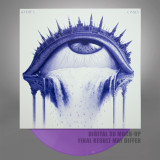
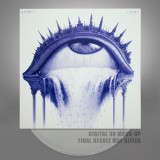
Something About Livingis an album of live recordings by experimental jazz composer/multi-instrumentalist Robert Stillman. The music was captured over the course of Stillman's time as the solo support act for The Smile (Thom Yorke, Jonny Greenwood, Tom Skinner). The album weaves excerpts from various theater and arena shows along the tour's North American routing into a seamless whole, creating a 40-minute program that represents an expanded version of Stillman's ever-transforming live set.
Something About Livingis the product of a steady, on-stage evolution that happened over the course of the nearly 60 shows opening for the Smile across the EU, UK, US, Canada and Mexico. However, the creative origins of the set began in relative isolation during the pandemic, through Stillman's work on projects like his multi-media installationUnseen Forcesand his monthly broadcast for Margate Radio, both of which drew upon solo improvisation using saxophone, cassettes, Yamaha DX7 synthesizer, and effects.
"At the time The Smile asked whether I'd like to open for them on their first tour, I felt like I'd already been preparing without really knowing it," says Stillman. "I'd been doing this music constantly, but always for a hypothetical audience" During the pandemic, Stillman's solo set-up served as the research lab where he worked on all the concepts he was interested in: solo improvisation, creating and manipulating cassettes, FM synthesis, analogue delays chains, no-input mixing, and non-metric rhythmic pulses. So when he was offered the first Smile tour, the idea was to bring "the lab" onto the stage.
What Stillman could not have prepared for was the experience of playing in venues with capacities of up to ten thousand listeners. "The first tour was in summer 2022, so not that long after the worst of the pandemic, when I had pretty much made peace with the idea that I might never be able to perform for an audience again. Then all of a sudden I found myself in front of huge numbers of people, and felt the massive responsibility of being with an audience, of this thing I'd done alone for so longactually being witnessed, and it was completely overwhelming!" On the flip-side, Stillman also recalls, was a new appreciation of how powerful the live performance was as a social phenomenon. "It's a cliche, but also true: the moment of making and hearing music in a shared time and space has a very specific meaning and power; there was a sense that everyone in the venue was necessary to make it real, regardless of what they were doing, or how they felt about it. There was an inevitability about it that I'd never fully appreciated."
Over the course of the tours that followed, Stillman transformed this appreciation of the shared moment into an ethic of spontaneity that guided the development of his live set. "An important reference for this set has always been an Animal Collective show I saw when I first moved to New York, probably in 2001 or so, that has always set the high-water mark for what I wanted to do live- they were improvising a lot, and out of what would seem to be absolute chaos they'd find their way to something structured, and then back out again into the unknown. It was so thrilling to witness".
ThoughSomething About Livingcompiles recordings from different dates along the tour, Stillman has edited and mixed them into a work that seeks to reflect the ebb and flow between 'chaos and control' that characterizes his live set. Among the compositions featured are some from previous album releases ("Time of Waves", "What I Owe", "What Does it Mean to Be American") as well as some new compositions ("The Dream of Waking", "Renaissance 2.0," and the title track, "Something About Living").
The album/track title "Something About Living" is a reference to a line from Stillman's favorite film,My Dinner With André: "André Gregory is explaining the value of life experiences that, as he says, are'to do with living'.That really struck me, the way he articulated it. I strongly believe live music situations can ask these kinds of questions, for performers and audiences. I hope that's reflected in this music."
[a] 01: Time of Waves (Live in Miami FL) [Live]
[b] 02: What Does It Mean to Be American (Live in Forest Hills NY) [Live]
[c] 03: The Dream of Waking (Live in St Augustine FL) [Live]
[d] 04: Something About Living (Live in Richmond VA) [Live]
[e] 05: What I Owe (Live in Chesterfield MO) [Live]
[f] 06: Renaissance 2.0 (Live in Chesterfield MO) [Live]
quête:set unknown
Als Gaerea aus dem pandemischen Limbo auftauchten, brachte die maskierte Band eine Vision von Black Metal auf die Bühne, die sich nicht von Mythen oder heidnischem Glauben leiten ließ - sondern von einer Läuterung der Gefühle. Die Welt nahm diese Vision schnell an und folgte ihnen auf Festivals, u.a. Hellfest, bis hin zu gut besuchten Touren durch China und die USA.
Mit "Coma" sind Gaerea nicht mehr nur Black Metal. Obwohl ihr viertes Album wieder von ihrem Vertrauten Miguel Tereso produziert wurde, erweitert es ihren charakteristischen Sound, indem es ihn in zwei scheinbar entgegengesetzte Richtungen führt. Es gibt mehr Momente von intensiver Schönheit, aber sie verstärken nur die darauf folgende Brutalität.
"World Ablaze" läutet diese neue Ära von Gearea ein, indem es eine konventionellere Songstruktur über feurigem Tremolo-Picking aufbaut. "Hope Shatters" stellt selbst die höchsten Fan-Erwartungen auf den Kopf: nachdem der Song unter seiner rasenden Schwere zusammenbricht, hängt die Melodie gefährlich in der Luft, wie ein schwankender Kronleuchter, bevor sie von hämmernden Bässen und erschütternden Blastbeats zertrümmert wird.
"I've known faces within me", schreit der Sänger nach einem langsamen und düsteren Gitarrensolo, bevor "Unknown" in eine messerscharfe Hook einrastet. “I transform with every passing moment”.
Mit "Coma" setzen sich Gaerea endgültig an die Spitze des extremen Metal!
FFO: Orbit Culture, Zeal & Ardor, Bad Omens
Als Gaerea aus dem pandemischen Limbo auftauchten, brachte die maskierte Band eine Vision von Black Metal auf die Bühne, die sich nicht von Mythen oder heidnischem Glauben leiten ließ - sondern von einer Läuterung der Gefühle. Die Welt nahm diese Vision schnell an und folgte ihnen auf Festivals, u.a. Hellfest, bis hin zu gut besuchten Touren durch China und die USA.
Mit "Coma" sind Gaerea nicht mehr nur Black Metal. Obwohl ihr viertes Album wieder von ihrem Vertrauten Miguel Tereso produziert wurde, erweitert es ihren charakteristischen Sound, indem es ihn in zwei scheinbar entgegengesetzte Richtungen führt. Es gibt mehr Momente von intensiver Schönheit, aber sie verstärken nur die darauf folgende Brutalität.
"World Ablaze" läutet diese neue Ära von Gearea ein, indem es eine konventionellere Songstruktur über feurigem Tremolo-Picking aufbaut. "Hope Shatters" stellt selbst die höchsten Fan-Erwartungen auf den Kopf: nachdem der Song unter seiner rasenden Schwere zusammenbricht, hängt die Melodie gefährlich in der Luft, wie ein schwankender Kronleuchter, bevor sie von hämmernden Bässen und erschütternden Blastbeats zertrümmert wird.
"I've known faces within me", schreit der Sänger nach einem langsamen und düsteren Gitarrensolo, bevor "Unknown" in eine messerscharfe Hook einrastet. “I transform with every passing moment”.
Mit "Coma" setzen sich Gaerea endgültig an die Spitze des extremen Metal!
FFO: Orbit Culture, Zeal & Ardor, Bad Omens
Als Gaerea aus dem pandemischen Limbo auftauchten, brachte die maskierte Band eine Vision von Black Metal auf die Bühne, die sich nicht von Mythen oder heidnischem Glauben leiten ließ - sondern von einer Läuterung der Gefühle. Die Welt nahm diese Vision schnell an und folgte ihnen auf Festivals, u.a. Hellfest, bis hin zu gut besuchten Touren durch China und die USA.
Mit "Coma" sind Gaerea nicht mehr nur Black Metal. Obwohl ihr viertes Album wieder von ihrem Vertrauten Miguel Tereso produziert wurde, erweitert es ihren charakteristischen Sound, indem es ihn in zwei scheinbar entgegengesetzte Richtungen führt. Es gibt mehr Momente von intensiver Schönheit, aber sie verstärken nur die darauf folgende Brutalität.
"World Ablaze" läutet diese neue Ära von Gearea ein, indem es eine konventionellere Songstruktur über feurigem Tremolo-Picking aufbaut. "Hope Shatters" stellt selbst die höchsten Fan-Erwartungen auf den Kopf: nachdem der Song unter seiner rasenden Schwere zusammenbricht, hängt die Melodie gefährlich in der Luft, wie ein schwankender Kronleuchter, bevor sie von hämmernden Bässen und erschütternden Blastbeats zertrümmert wird.
"I've known faces within me", schreit der Sänger nach einem langsamen und düsteren Gitarrensolo, bevor "Unknown" in eine messerscharfe Hook einrastet. “I transform with every passing moment”.
Mit "Coma" setzen sich Gaerea endgültig an die Spitze des extremen Metal!
FFO: Orbit Culture, Zeal & Ardor, Bad Omens
Population Four signaled the first major change in the lineup of Cranes with the departure of bassist Cope. Jim Shaw stepped from behind the drums to take over lead guitar duties in full, Francombe switched to bass, while new member Manu Ros settled behind the drum kit. The band is ultimately the most conventional it’s ever been on Population Four. In this album Cranes continue a change strongly evident in Loved from the stark and enigmatic vocals of Alison Shaw and their more synthesized sounds to acoustic guitars and standard drums.
Available on vinyl for the first time as a limited pressing of 1500 individually numbered copies on blue & white swirled vinyl. The package includes an insert.
Produced by Wild Rivers and Gabe Wax (Soccer Mommy, Adrienne Lenker), "Better Now" consists of eight tracks that complement the recent album Never Better, as the group dives deeper into the complicated, confusing and unknown realities of life in their twenties, and the personal growth they’ve found through it all. Of the new project, Wild Rivers shares: “Better Now" is our companion record, and the other side to "Never Better".
On the first record, the songs contain raw, absolute and instinctual feelings. In many ways, Better Now is the afterglow of this. We’re reflecting and understanding that relationships change over time. Complicated situations can be just that, complicated. Feelings can remain unresolved. If the first record is bright and bold, this one is the softer gradients in between; the sunrises and the sunsets. Both projects make up the full spectrum of who we are.
"Better Now" is just the moodier, misunderstood one. Musically the records really are twins. We wrote all of the songs at the same time. Finishing Better Now, we really felt that it was the close of a massive musical and personal chapter. It’s bittersweet but so meaningful to be able to chronicle our lives between these projects. Ultimately, we are optimistic; ‘better now,’ after the ups and downs of the relationships and turbulence of our twenties. Hopefully we’re wiser for it.”
Permanent Parts is the second album released by visual artist Katharina Grosse (synthesizer) and musician Stefan Schneider (synthesizer; So Sner, To Rococo Rot). Grosse and Schneider were joined at Galerie Max Hetzler on 29 April 2023, performing as part of the Spectrum without Traces exhibition, by three artists who all generally work within improvised music – Carina Khorkhordina (trumpet), Tintin Patrone (trombone and electronics), and Billy Roisz (noise generator, piezo and mini cymbal). Permanent Parts is an extraordinary set of recordings that inhabits multiple zones at once: within its thirty-five minutes, we can hear the interactions of non-idiomatic collective music making, and the electronic glimmers of electro-acoustics, while, at the same time, the music remains untethered to genre.
This capacity to work within liminal zones makes perfect sense when thinking about both Grosse’s and Schneider’s prior work, whether the energetic diffusions and spatial explorations of Grosse’s artistic practice, or the slippery texturology of Schneider’s recent work with electronics. Khorkhordina, Patrone and Roisz all find their own ways into this dynamic, too, and Permanent Parts feels like an equal exchange of presence and contribution; there are no hierarchies here. This might explain the music’s curious sense of development, where several elements are allowed to exist alongside each other, not in direct contact but in a mode that’s somewhere between carefree layering and unconscious juxtaposition. The musicians are listening, but not just with their ears – their skin, their bodies are hearing, too.
When talking about Permanent Parts, Schneider is careful to place it within contexts that are specific, to some degree, but which allow for difference to blossom. “Although it was recorded live, it somehow was not meant to be a documentation of a live event in the first place. The five piece line up that appears on the record had met for the first time only a few hours before the concert took place.” While it might take a leap of faith for all parties to walk together, and so willingly, into a place of such freedom, of such risk, there is clear sympathy here between the musicians, and a shared appreciation of the immediacies of the situation.
It also throws some of our preconceptions about this music out of the window. “The record does not feel like a document of a performance as the music was not pre-composed and there was no reference,” Schneider continues. “Perhaps it was not even an improvisation?” For Grosse, her musical relationship with Schneider similarly shakes free from expectation: “My sound does not exist without Stefan’s. It is neither written down nor is it improvised. It is instantaneous.” When thinking about the five-piece exploration on Permanent Parts and asked to expand on what each musician brings to the table, she continues, “We all love the thrill of an unknown encounter and we seem to have a need for building connections through the thicket of our voices.”
There’s a curious phrase on the back cover of the album, before the artists are listed: “Wir sind eine Batterie / We are a battery.” This sums up the spirit of Permanent Parts. Schneider recalls that Grosse said this phrase to the musicians at the start of the performance. Grosse explains further, “The figure of the battery referred to our placement in the space building out a small circle facing one another from where the sound could spill into the impressive volume of the gallery.” The battery as an arrangement of similar devices; but I also think of charge, and the conversion of chemical energy, and of fortification. It’s a poetic metaphor that sums up much of the febrile pleasure of the music contained on these Permanent Parts.
– Jon Dale, Melbourne
returning, dream’ is the second album from Paradise Cinema – the‘Fourth World’ inspired project led by multi-instrumentalist Jack Wyllie (Portico Quartet/Szun Waves). While Wyllie’s other projects move between tightknit electronica, widescreen minimalism and improvised ambient sounds, ‘returning, dream’ contains nods to Jon Hassell, Terry Riley, Don Cherry and Midori Takada as well as more contemporary electronic, ambient and non-western music and even draws inspiration from physics and science fiction.
The first, eponymous, Paradise Cinema record, released in 2020, was recorded in Dakar (Wyllie lived in Senegal for a while in the late 2010s) and featured the dense rhythms of Mbalax music combining with Wyllie’s textural saxophone and synth playing, but here he takes a step into the unknown:
The music is no longer built primarily around the rumbling
propulsiveness of Mbalax, but takes its inspiration from the Many-Worlds Interpretation of quantum mechanics, which suggests that there are many different worlds that branch off from our own. Wyllie explains: “It is an imagining of what music could be like in a different time and space, ancient and futuristic from everywhere and nowhere at once. I was listening to a lot of physics podcasts when I created this record. I loved the many-worlds interpretation of quantum mechanics; about the multiple paths we are taking each time a quantum decision is taken. The different worlds then splitting off like branches on a tree. I could imagine different histories and worlds and multiple versions of myself, others and even other societies existing. In this album I’ve dug into these ideas andattempted to make music that would come from those different spaces, trying to poke my finger through to the other selves and stories. Effectively a form of composed science fiction, the music is an idea of what might be occurring or have occurred on a branch of the tree in a different world. But I like to think the tracks might actually have been composed somewhere or sometime.”
Created in London by Jack Wyllie with additional recordings from Dakar and Sydney, ‘returning, dream’ blends sounds that do not typically live together. It features Khadim Mbaye (sabar drums) and Tons Sambe (tama drums) who provide the dense Sengalese rhythms, plus Szun Waves colleague Laurence Pike, also on drums.
Ginger Root ist das Projekt von Cameron Lew aus Südkalifornien. Seit seiner ersten Veröffentlichung 2017 vermischt der Multi-Instrumentalist, Produzent, Songwriter und visuelle Künstler handgemachten, aber makellos polierten Synth-Pop, Alt-Disco, Boogie und Soul zu einem Sound, den er selbst als "aggressiven Fahrstuhl-Soul" beschreibt. Durch seine Linse als asiatischer Amerikaner, der mit der Musik der 1970er und 80er Jahre aufgewachsen ist, nimmt eine Musik Gestalt an, die insbesondere den kreativen und kulturellen Dialog zwischen japanischem City Pop und seinen westlichen Gegenstücken von French Pop über Philly Soul bis hin zu McCartney der Ram-Ära hervorhebt. SHINBANGUMI ist seine dritte LP und die erste für sein neues Label Ghostly International. Lew zeigt sich auf SHINBANGUMI gelassener, eigenwilliger und bewusster denn je und bringt genau das zum Vorschein, wonach sich Ginger Root anhören und anfühlen sollte. Die Leadsingle "No Problems" fungiert mit singbaren Basslines, schwungvollen Gitarrenriffs und cleveren Keyboard-Hooks als Eröffnungssequenz und als Brücke zu neuem Terrain. Für Fans von L'Imperatrice, Toro y Moi, Unknown Mortal Orchestra, Thundercat, Crumb, Khruangbin. ENGStep inside the world of Ginger Root. Cameron Lew makes it easy to do so; every considered detail is his own manifestation, written, designed, and executed as an all-encompassing diorama of sound and sight. A multi-instrumentalist, producer, songwriter, and visual artist from Southern California, Lew has crafted his project steadily since 2017, inviting a fervent and growing legion of fans into storylines drawn across mediums: captivating albums with accompanying films and globe-spanning tours. The Ginger Root sound _ handmade yet immaculately polished synth-pop, alt-disco, boogie, and soul _ takes shape through Lew's lens as an Asian-American growing up enamored by 1970s and '80s music, specifically the creative and cultural dialogue between Japanese City Pop and its Western counterparts from French Pop to Philly Soul to Ram-era McCartney. He spins his retro-minded influences and proliferates savvily in the present, synthesizing a songwriter's wit, an editor's eye, and a producer's resource into something singular and modern. SHINBANGUMI, his long-awaited third LP, and Ghostly International debut set for physical release in 2024 with a visual album component, translates roughly to a new season of a show. It finds Lew more poised, idiosyncratic, and intentional than ever in a new chapter of life, unlocking "exactly what Ginger Root should sound and feel like," he says. "In terms of instrumentation and musicality, it's the first time that I felt very confident and comfortable with what everything should be comprised of. On the more personal side, I'm coming out of the last four years of writing, touring, and living as a different person; SHINBANGUMI is a platform to showcase my new self."
returning, dream’ is the second album from Paradise Cinema – the‘Fourth World’ inspired project led by multi-instrumentalist Jack Wyllie (Portico Quartet/Szun Waves). While Wyllie’s other projects move between tightknit electronica, widescreen minimalism and improvised ambient sounds, ‘returning, dream’ contains nods to Jon Hassell, Terry Riley, Don Cherry and Midori Takada as well as more contemporary electronic, ambient and non-western music and even draws inspiration from physics and science fiction.
The first, eponymous, Paradise Cinema record, released in 2020, was recorded in Dakar (Wyllie lived in Senegal for a while in the late 2010s) and featured the dense rhythms of Mbalax music combining with Wyllie’s textural saxophone and synth playing, but here he takes a step into the unknown:
The music is no longer built primarily around the rumbling
propulsiveness of Mbalax, but takes its inspiration from the Many-Worlds Interpretation of quantum mechanics, which suggests that there are many different worlds that branch off from our own. Wyllie explains: “It is an imagining of what music could be like in a different time and space, ancient and futuristic from everywhere and nowhere at once. I was listening to a lot of physics podcasts when I created this record. I loved the many-worlds interpretation of quantum mechanics; about the multiple paths we are taking each time a quantum decision is taken. The different worlds then splitting off like branches on a tree. I could imagine different histories and worlds and multiple versions of myself, others and even other societies existing. In this album I’ve dug into these ideas andattempted to make music that would come from those different spaces, trying to poke my finger through to the other selves and stories. Effectively a form of composed science fiction, the music is an idea of what might be occurring or have occurred on a branch of the tree in a different world. But I like to think the tracks might actually have been composed somewhere or sometime.”
Created in London by Jack Wyllie with additional recordings from Dakar and Sydney, ‘returning, dream’ blends sounds that do not typically live together. It features Khadim Mbaye (sabar drums) and Tons Sambe (tama drums) who provide the dense Sengalese rhythms, plus Szun Waves colleague Laurence Pike, also on drums.
Japanese vibraphonist and marimba player Masayoshi Fujita returns with Migratory, his masterful new solo album, where his sonic explorations into the unknown continue.
In 2019, after 13 years of living in Berlin, Fujita returned to his native Japan with his wife and their three children, fulfilling his life-long dream of living and composing music in the midst of nature. The family found their new home in the mountain hills along the coast of Kami-cho, Hyōgo, three hours west of Kyoto.
Once settled in, Fujita spent his time turning an old kindergarten into his own music studio, Kebi Bird Studio, which became the birthplace of Migratory. On his new album, the composer and producer masterfully reimagines and mesmerises with his trademark sounds of vibraphone, and resumes his experimentation with the marimba and synthesisers that he first incorporated on his 2021 album, Bird Ambience, which followed the release of his acclaimed vibraphone triptych: Stories (2012), Apologues (2015) and Book of Life (2018).
On Fujita’s ever-evolving list of collaborators, Migratory introduces vocals from Moor Mother on ‘Our Mother’s Lights’ and Hatis Noit on ‘Higurashi’, as well as shō and saxophone to its soundscapes. Whilst at a music residency in Stockholm in 2021, Fujita met Swedish shō player Mattias Hållsten. Although it was a brief encounter, the two musicians stayed in touch. During a visit to Japan, Hållsten stopped by the studio and played on three of the tracks, including the alluring album closer ‘Yodaka’, exceeding Fujita’s own expectations.
Japanese vibraphonist and marimba player Masayoshi Fujita returns with Migratory, his masterful new solo album, where his sonic explorations into the unknown continue.
In 2019, after 13 years of living in Berlin, Fujita returned to his native Japan with his wife and their three children, fulfilling his life-long dream of living and composing music in the midst of nature. The family found their new home in the mountain hills along the coast of Kami-cho, Hyōgo, three hours west of Kyoto.
Once settled in, Fujita spent his time turning an old kindergarten into his own music studio, Kebi Bird Studio, which became the birthplace of Migratory. On his new album, the composer and producer masterfully reimagines and mesmerises with his trademark sounds of vibraphone, and resumes his experimentation with the marimba and synthesisers that he first incorporated on his 2021 album, Bird Ambience, which followed the release of his acclaimed vibraphone triptych: Stories (2012), Apologues (2015) and Book of Life (2018).
On Fujita’s ever-evolving list of collaborators, Migratory introduces vocals from Moor Mother on ‘Our Mother’s Lights’ and Hatis Noit on ‘Higurashi’, as well as shō and saxophone to its soundscapes. Whilst at a music residency in Stockholm in 2021, Fujita met Swedish shō player Mattias Hållsten. Although it was a brief encounter, the two musicians stayed in touch. During a visit to Japan, Hållsten stopped by the studio and played on three of the tracks, including the alluring album closer ‘Yodaka’, exceeding Fujita’s own expectations.
Dark Entries and Honey Soundsystem Records have teamed up once more to release the final volume of gay porn soundtracks by San Francisco-based musician and producer, Patrick Cowley. One of the most revolutionary and influential figures in the canon of disco, Cowley created his own brand of Hi-NRG dance music, The San Francisco Sound.' Born in Buffalo, NY on October 19, 1950, Patrick moved to San Francisco in 1971 to study at the City College of San Francisco. He founded the Electronic Music Lab at the school, where he would make experimental soundtracks by blending various types of music and adapting them to the synthesizer.
By the mid-70's, Patrick's synthesis techniques landed him a job composing and producing songs for disco superstar Sylvester, including hits like You Make Me Feel (Mighty Real)', Dance Disco Heat' and Stars.' This helped Patrick obtain more work as a remixer and producer. His 18-minute long remix of Donna Summer's I Feel Love' and his production work with edgy New Wave band Indoor Life were both of particular note. By 1981, Patrick had released a string of dance 12 singles, like Menergy' and Megatron Man'. He also had founded Megatone Records, the label upon which he released his debut album, Menergy'. Around this time Patrick was hospitalized and diagnosed with an unknown illness: that which would later be called AIDS. Throughout 1982, he recorded two more Hi-NRG hits, Do You Wanna Funk' for Sylvester, and Right On Target' for Paul Parker, as well as a second solo album Mind Warp'. On November 12, 1982, he passed away.
In 1979 Patrick was contacted by John Coletti, owner of famed gay porn company Fox Studio in Los Angeles. Patrick jumped on this offer and sent reels of his college compositions from the 70s to John in LA. Coletti then used a variable speed oscillator to adjust the pitch and speed of Patrick's songs in-sync with the film scenes. The result was the VHS collections Muscle Up' and School Daze' released in 1979 and 1980. Afternooners' is the third collection of Cowley's instrumental songs, recorded in May 1982. These recordings were culled from two 23-minute reels in the Fox Studio vaults. All songs were originally untitled, so we've used the titles from Fox Studio's 8mm film loops. This compilation also includes three bonus tracks found in the archives of fellow Megatone Records recording artist Paul Parker and the attic of teenage friend Lily Bartels. Influenced by Tomita, Wendy Carlos, and Giorgio Moroder, Patrick crafted a singular sound from his collection of synthesizers, percussion, modified guitars, and hand-built equipment. The listener enters a world of forbidden vices, evocative of Patrick's time spent in the bathhouses of San Francisco. The songs on Afternooners' reflect the advances of the equipment available at the onset of the 1980s. Cowley's unadulterated electronic forms are stripped down and dubbed up. Lush electronic percussion, soaring synthesizer riffs and low slung funk grooves comingle on these magnificent soundscapes.
Featuring 70 minutes of music never before released on vinyl. All songs have been remastered by George Horn at Fantasy Studios in Berkeley, CA. The vinyl is housed in a gatefold jacket designed by Berlin-based artist Gwenael Rattke, featuring black and white photos of Patrick in his studio that opens to a full color array of x-rated scenes from the Fox Studio vaults. Included is a fold-out poster featuring a handmade collage using photography and xeroxed graphics of classic gay porn imagery and an essay from Drew Daniel of Matmos. For Patrick's 67th birthday, Dark Entries and Honey Soundsystem Records present a glimpse into the futuristic world of a young genius. These recordings shed a new light on the experimental side of a disco legend who was taken too soon.
- A1: Big Majestic
- A2: Spiritual Sun (Feat. Shabaka Hutchings)
- A3: Sunrisein Central Park
- A4: Alone On Mulholland
- A5: West Coast Sky Forever (Feat. Kronos Quartet)
- B1: Primrose Hill(Feat. Shabaka Hutchings)
- B2: Strawberry Hill Descent (Feat. Nadia Sirota And
- Gabriel Cabezas)
- B3: Sunset In Ueno Park
- B4: Blue Sky | Mirrored Glass (Feat. James
- Mcvinnie)
- B5: Pavilion In Thetrees Pt. 2 (Feat.lisel)
- B6: Mt.lee+ Step Lightly Now (Feat. Riley
- Mulherkar)
Ambient Maximalism in Synths, Strings, Harps, and Horns. A sonic excursion, taking inspiration from public parks across the globe, Big Majestic features Kronos Quartet soaring above desert vistas on West Coast Sky Forever, Shabaka Hutchings' kaleidoscopic shakuhachi and tenor saxophone meditations on Spiritual Sun and Primrose Hill, James McVinnie performing an electrifying synth organ epic on Blue Sky | Mirrored Glass, and the otherworldly voice of Lisel beckoning the listener into the unknown.
American Pulitzer Prize winning composer and sound artist Ellen Reid is set to release ‘Big Majestic,’ an album of music written for her acclaimed GPS-enabled work of public art, Ellen Reid SOUNDWALK, that reimagines urban parks as interactive soundscapes. The album features performances by the Kronos Quartet and Shabaka Hutchings. SOUNDWALK premiered in New York's Central Park, and continues to expand to urban parkland around the world, including Los Angeles' Griffith Park, London's Regent's Park & Primrose Hill, and Tokyo's Ueno Park. The project has already been featured on NPR, the New York Times, the Washington Post, and the LA Times.
Gregory T.S. Walker’s Minstrels & Minimoogs was self-published by a young, nomadic composer and virtuoso in 1988 to accompany an immersive multimedia performance at the University of Colorado Boulder’s Fiske Planetarium. Created with this outer, and other, world setting in mind, the four tracks find Walker stretching toward an ancient-to-future vision where Egyptian myths and Hieronymus Bosch-ian tableaus are rendered in a screaming three dimensional circuitry of electronic drums, synth guitars, and, of course, Minimoog. Given the musical terrains and outmoded topics traversed, and that this entirely DIY effort was originally released as a micro one-sided 12” edition, Minstrels & Minimoogs is as perplexing and euphoric a document lost-to-time as it is now found.
Born in 1961 into an intensely musical family spanning four generations, Gregory’s mother Helen Walker-Hill was a noted musicologist specializing in the rediscovery and work of historical Black female composers, while his father, George Walker, was the first African American composer to win the Pulitzer Prize for music. Both parents studied with the famed (and famously strict) Nadia Boulanger in Paris in the 1950s, and held to lofty aesthetic standards in their home life. Walker began studying the violin as a child, but when a burgeoning interest in the electric guitar and rock music as a teen manifested, it was largely verboten in the household. The rule was that the music played in the home was to be acoustic and classical. Although the elder Walkers eventually relented and allowed Gregory’s guitar to be plugged in for a brief interval on the weekends, the remaining days he settled for strumming it sans amplification.
Gregory, conditioned and eager for a life in music but looking to get out from under the influence and yoke of his famous composer father, ultimately chose to study computer music at the University of California at San Diego, where he earned a Master of Arts. This was followed by another MA in electronic music composition at that hotbed of West Coast experimental music, Mills College. Intermedia and multimedia in the arts was the rage in the 1980s, and Mills was one of the centers for it; audacious spectacle meeting visionary performance, such as one of the realizations for Anthony Braxton’s music for multiple orchestras a young Gregory performed in with his violin.
After a series of solo synthesizer concerts around California, Gregory followed a girlfriend on a mid-country move to Boulder, Colorado. After picking up yet another composition degree at University of Colorado Boulder, his life as a composer really started, writing a piece for extended technique for guitar, a passacaglia for vocoder and orchestra, as well as Minstrels & Minimoogs.
Envisioned as a multimedia performance such as the kind he’d experienced at Mills (which was all but unknown in Boulder at the time), Gregory roped in a number of college going or aged friends of varying skill levels and musical sympathies to accompany him with distorted sax or oblique spoken interludes. Confronted with a lack of finances, but driven to get his ideas captured in a complete musical package, the album was recorded in his brother’s apartment. If not every player assembled was on Gregory’s virtuosic level, so be it; it was more about capturing the spirit of his intentions and embracing the serendipity of mistakes.
An inspired attempt at world building, Minstrels & Minimoogs draws on the deep well of musical knowledge Gregory gathered from his parents and teachers, but all the while subverting that historical basis by incorporating mutant strains of prog and pop music. The work accumulated is not unlike the playful 1980s work of Gregorio Paniagua, where medieval estampies and rondeaus are wrenched into an anachronistic present where Hildegard Von Bingen and Kate Bush are contemporaries. Ars nova, new art, a 20th century minimalist jester and troubadour.
A one sided LP was the cheapest option Gregory found to have Minstrels & Minimoogs memorialized on vinyl, so somewhere between 50 to 100 copies were pressed. There was no distribution, outside of copies that were handed out to friends or sold at the performances at the planetarium. Gregory T.S. Walker’s cosmic-futuristic forays into oblique pop and baroque subversion could forever reside perfectly in both the domed simulacrum of our universe for which it was composed, in the formats it is being reintoduced now, and our own biblical firmament. For in the words of Gregory, straight from the original liner notes: “God Is A Minimoog”
Gregory T.S. Walker’s Minstrels & Minimoogs arrives again August 23, 2024 on vinyl and digitally as part of uncommon¢ (“uncommon sense”), an open-ended, serialized endeavor from Freedom to Spend that provides new meaning for rarefied recordings from music's outermost fringe.
Dance floor in need of a little spark? Need some extra ammo in the record bag for this weekend’s set? Pleasure of Love has the key to your ignition with a new series of specialty re-edits from the vaults. "Covers Blown Vol. 1," features a pair of unlikely disco classics expertly done up in a smokin' tex-mex style
Black Truffle is thrilled to announce a reissue of Chico Mello and Helinho Brandão’s self-titled release from 1984, the first return to vinyl of this classic of Brazilian experimental music with its original cover art and complete track listing. An under-recognised figure whose work inhabits a singular terrain where radical new music techniques and music theatre meet musica popular brasileira, Mello has lived and worked in Berlin since the late 1980s. A student of Dieter Schnebel, Mello played in the 90s iteration of Arnold Dreyblatt’s Orchestra of Excited Strings alongside compatriot Silvia Ocougne, with whom he produced a radical and hilarious deconstruction of MPB classics on Musica Brasileira De(s)composta (an early and rather atypical release on Edition Wandelweiser).
On this release, his only recording predating his move to Europe, Mello works with the alto saxophonist Helinho Brandão, who appears to be otherwise unknown outside Brazil. The record’s six tracks range from solo saxophone improvisation to densely layered ensemble works bridging minimalism, acoustic sound art and a plaintive melodic sensibility that calls up Edu Lobo or Milton Nascimento. Beginning with a dramatic, dissonant wind and string surge from which emerge ominously pounding piano chords, opener ‘Água’ slowly builds in intensity, a halo of clustered vocal harmonies gradually closing in on Brandão’s squealing sax until the piece opens up to reveal a gorgeous passage of melodic singing. The piano accompaniment reduces to tolling bass notes as the voice begins a repeated incantation, suggesting a ritualistic atmosphere reminiscent of parts of Xenakis’ setting of Oresteia. Dissonant, sawing tremolos on the strings climb to a crescendo before disappearing into the sounds of water being poured and splashed into metal vessels, presented not as a field recording but as a percussive element performed by the ensemble. A child’s voice then appears, singing to piano accompaniment the same melody heard earlier in the piece. After a brief solo alto improvisation from Brandão, working with the guttural pops and fleeting melodic gestures of Braxton or Roscoe Mitchell, the remainder of the first side is dedicated to the leisurely unfolding of ‘Baiando’ over the course of twelve minutes. A trio for Brandão on soprano saxophone, Mello on a very period-appropriate phased nylon string guitar and Edu Dequech on bongos, the performance eases its way hypnotically through subtle variations on a set of rhythmic and melodic patterns, almost derailed at points by Brandão’s wild forays into extended technique but held together by Mello’s droning guitar notes.
The second side opens with another multi-part epic for a larger ensemble, ‘Matraca’, which makes use of strings, electric guitars and a wide range of South American percussion instruments. Rasping violin harmonics hover as drum hits, repeated guitar notes and triangle accompany a slowly descending bass glissando. A sudden change in direction introduces a thrumming, incessantly repeated bowed bass tone, beginning a series of episodes of minimalist phasing and pattern variation, the combinations of electric guitars and orchestral instruments giving the ensemble an ad hoc charm like the early Penguin Café Orchestra but with more percussive drive. Eventually the piece is overrun by a cacophony of the titular matracas (a kind of ratchet/cog rattle). Following a lyrical trio improvisation by Mello, Brandão and Gerson Kornin on bass, the final ‘Danca’ focuses entirely on Mello’s layered acoustic guitars and vocals, using this restricted palette to build up a haunting piece of almost orchestral density, reminiscent of the 70s work of Egberto Gismonti in how it thickens a folkish ambience with harmonic sophistication.
Arriving in a starkly beautiful gatefold sleeve and sounding better than ever in its new remaster, one might call the stunning music contained on Chico Mello/Helinho Brandão ahead of its time. But what (other than some of Mello’s own work) produced in the years since its initial release has really touched the organic fusion of minimalism, free improvisation, radical instrumental technique and popular song achieved here? Forty years after its first release, Chico Mello/Helinho Brandão remains music of the future.
The 2019 released "Caligula" took the vision of Kristin Hayter's vessel to the next level of grandeur, her purging and vengeful audial vision went beyond anything preceding it and reached an unparalleled sonic plane within her oeuvre. Succeeding her self-released 2017 "All Bitches Die" opus, "CALIGULA" saw Hayter design an ambitious work, displaying the full force of her talent as a vocalist, composer, and storyteller. Vast in scope and multivalent in its influences, with delivery nothing short of demonic, "CALIGULA" is an outsider's opera; magnificent, hideous, and raw. Eschewing and disavowing genre altogether, Hayter built her own world. Here she fully embodied the moniker Lingua Ignota, from the German mystic Hildegard of Bingen, meaning "unknown language" _ this music has no home, any precedent or comparison could only be uneasily given, and there is nothing else like it in our contemporary realm. Whilst "CALIGULA" is unapologetically personal and critically self-aware, there are broader themes explored; the decadence, corruption, depravity and senseless violence of emperor Caligula is well documented and yet still permeates today. Brimming with references and sly jabs, Hayter's sardonic commentary on abuse of power and invalidation is deftly woven. Working closely with Seth Manchester at Machines With Magnets studio in Pawtucket, Rhode Island, Hayter stripped away much of the industrial and electronic elements of her previous work, approaching instead the corporeal intensity and intimate menace of her notorious live performances, achieved with unconventional recording techniques and sound sources, as well as a full arsenal of live instrumentation and collaborators including harsh noise master Sam McKinlay (THE RITA), visceral drummer Lee Buford (The Body) and frenetic percussionist Ted Byrnes (Cackle Car, Wood & Metal), with guest vocals from Dylan Walker (Full of Hell), Mike Berdan (Uniform), and Noraa Kaplan (Visibilities). "CALIGULA" is a massive work, a multi-layered epic that gives voice and space to that which has been silenced and cut out.
Limited edition "Coke Bottle Cloud" color vinyl with etched b-side. Australian duo Armlock make music for having your head in the clouds. On new album Seashell Angel Lucky Charm, Simon Lam and Hamish Mitchell bring you on a steady ascension through compressed and heavenly sonic realms. The band's second proper release, and first for Run For Cover Records, showcases the songwriters' experimental electronic roots through an indie rock lens. Free from distortion or overindulgence, Seashell Angel Lucky Charm is a collection of consistent rhythms decorated with clean guitar tones and eccentricities. Through playful layers of vocal harmony and minimal arrangements, Armlock capture the inventive and uncomplicated essence of Pinback or Alex G. Self-described as "indie rock with a touch of spirituality and emo", Armlock's journey into a higher realm is seeped with the looming confusion that comes with exploring the unknown. With an introverted demeanor, Armlock explores the human desire to find guidance in a world much bigger than its people. Every sound on Seashell Angel Lucky Charm feels precise and intentional, making the anthemic choruses on tracks like "Fear" and "El Oh Ve Ee'' feel expertly placed and pop-oriented. These two songs show Armlock's savvy with harmony as they use octaves of angelic sounds to stretch a simple one-word chorus until it soars with meaning. Unlike most indie rockers, Armlock use guitar as a tool in their belt rather than a vessel for songwriting. Where their 2021 EP Trust set foundations in downtempo acoustic guitar, Lam and Mitchell's evolved songwriting is a testament to where an electric guitar can amplify a song's groove, or usher in sonic space.
HIGHLIGHTS Originally released in 1980, this was Stiv Bators' first solo album. Now reissued with 2 bonus tracks, not available on the original version, a slightly different picture on the cover (the actual unfiltered photo as used on the 1980 issue) and a booklet with extensive liner notes and photos. Bators was the man who destroyed Rocket from the Tombs, from which he hijacked half the members to found one of the most influential American punk bands to have existed, The Dead Boys. Stiv had turned in his broken teeth for a more power pop oriented solo career. This is not an album recorded by a has-been former punk idealist; instead it's a true step forward into another unknown arena packing all the glare and attitude that remained from the last. The music is more similar to 60's power pop than the vicious punk rock that Bators became known for originally, while a member of The Dead Boys. New generations continue to discover it. It still holds up very well and sounds as fresh and vibrant as ever. DESCRIPTION On August 11th of 1980, Stiv Bators, David Quinton Steinberg, George Cabaniss and Frank Secich flew to Vancouver, in British Columbia, Canada. They were there to do the West Coast leg of the "URGH! A Music War" tour. On the bill of the tour were Pere Ubu, Magazine, the Members, and they were billed as Stiv Bators and the Dead Boys or just the Dead Boys. After the tour they were supposed to embark on a 6-week tour of Australia, New Zealand, and the Far East. During the beginning of the Urgh Tour the Australian Tour was abruptly canceled. Greg Shaw who owned Bomp Records decided that since the band were already going to be in California that they should do Stiv's solo album which they had planned to do after returning from Down Under. So, Bators and the rest of the group set up camp at the infamous Tropicana Motel in West Hollywood and Greg booked them into Perspective Studios in Sun Valley, CA. Before going into Perspective, they went into Andy Chappel's Stone Fox rehearsal studio in North Hollywood, CA for a few days to rehearse the songs and arrange them for the album. "We had 'Evil Boy' (Zero-Secich), David Quinton's 'Make Up Your Mind' and my song 'A Million Miles Away'. We also rearranged mine and Stiv's 'The Last Year' changing the key from D to F# and making it much easier to sing in a power pop vein. In addition, we had 'Swinging A Go-Go' another great contribution by George Cabaniss. Stiv and I had written two more for the album 'Ready Anytime' and the album closer 'I Wanna Forget You (Just the Way You Are)'. We also had a moody dark instrumental (written by Cabaniss-Quinton-Secich) that we were playing around with for some time. Stiv was supposed to write lyrics for it, but he never got around to it, so we left it as an instrumental. It had a great vibe and reminded me of the John Cassavetes 1956 film "Crime in The Streets" and was thus christened that. The last song we picked for the LP was 'I Had Too Much To Dream (Last Night)' which was the one cover we did that suited Stiv's voice perfectly. After a few days of rehearsing at Stone Fox, we went into Perspective Studio in Sun Valley, California. Greg hired Thom Wilson (who would later become a famous punk rock producer of Offspring, Iggy Pop, Dead Kennedys, T.S.O.L., Bad Religion and many others). Stiv co-produced with Thom and Andy Chappel and Thom did the engineering." Frank Secich recalls. In September, after the "Disconnected" mixing sessions, Stiv went to Baltimore to film "Polyester" with Movie Director John Waters and actors Tab Hunter and Divine. Stiv then went to the UK to record with the Wanderers doing their LP "Only Lovers Left Alive". He wanted to have both bands going simultaneously but logistically and practically they all knew that could never work. The "Disconnected" Band would do one last tour to support the album release of "Disconnected". The LP was released by Bomp Records on Monday December 08th, 1980. Later that night, John Lennon was murdered in New York City. So many of the principal characters involved in the creation of "Disconnected" have passed on. Stiv Bators (June 3rd, 1990), Greg Shaw (October 2nd, 2004), Thom Wilson (February 8th, 2015), and George Cabaniss (July 17th, 2020). But "Disconnected" lives on and on and has left quite a legacy for itself. There have been over 100 cover versions internationally of the songs from "Disconnected" and it has been in print and reissued in various forms in many countries around the world. New generations continue to discover it. It still holds up very well and sounds as fresh and vibrant as ever.