Marie-Pierre Rixain and David Fenech form an unexpected and captivating duo, pushing the boundaries of alternative music. Together, they embark on an unclassifiable sonic journey, blending industrial downtempo, steady kicks, cold percussion, field recordings, and electric guitar feedback. Their music, often dark, carries flashes of warmth inspired by British dub—like an imaginary collaboration between The Bug and This Heat. At times, it echoes the world of La Perversita by Hector Zazou & Co.
Their debut album, Insane Ghosts, due out in spring 2025 on the Parisian label Hublotone, was recorded in 2024 in the intimate privacy of the bedroom. Mixed by David Fenech, it also benefits from the participation of Alexandre Berly (La Mverte) on the track ‘Toi en Moi’, adding a sub and experimental touch. The mastering was handled by the legendary Noel Summerville, whose sonic signature graces iconic albums by The Clash, My Bloody Valentine, Kraftwerk, Aphex Twin, and Nick Cave and the Bad Seeds.
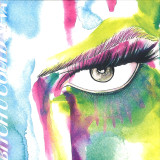
The album cover features a striking work by French photographer and filmmaker Antoine d’Agata (Magnum Photos). His poetic and abstract image adds another layer to Insane Ghosts, a project already shaping up to be a must-have for fans of introspective, dark and cold music. Like if Lost in Highway from David Lynch had a new soundtrack.
Buscar:sha
Zara is the first album of Parus ethno-ambient project from Belarus that combines pagan songs that are sang by ethnographer and folk singer Hanna Silivonchyk on various dialects of Belarusian language and mixture of synthesizers and field recordings that where reordered in national parks of the country by electroacoustic music composer - Anton Anishchanka. The songs where collected during ethnographic expeditions in remote territories by Belarusian ethnographers in different periods of time
"What I choose to sing from the vast amount of authentic material are songs that
somehow feel like mine for all sorts of reasons, but that I love to be inside." - Hanna Silivonchyk
"Soniejka" is a summer song from the Dnepr river region, which sings about the readiness to meet life in any of its manifestations, about acceptance and love. "Zara" is also from the Dnepr river region, depicting the main Indo-European mythological story of the heavenly love between the Moon and the Dawn and their melting.
"Ruzovyja cviaty" is a lyrical song from Dzvina river region, romantic and touching, which sings about the very beginning of love between two people. And the song "Oj luhom idu" is a spring song from the territory of modern Poland, from Podlasie region, which tells about the life of a married woman, about the fate that may befall her and how it can be experienced. All of them are about one's own feeling of the present time, one's life, about personal life
experience, but at the same time - about universal human contents and meanings that exist outside of time.
Scheurneus EP is Vunks latest 12 inch vinyl release on his own legendary imprint Moustache Records. This release is a tribute to the underground scene, no hipster house only pure electro techno acid EBM sounds. This release is part of his 30 year anniversary as a DJ. Produced in his atomic basement Baan Studios downtown Rotterdam. A1 has a crazy funky 303 bassline, 606 hi-hats, 909 toms and more cowbell, vocoder voices and some italo-ish Legowelt-ish melody , this all blends together for this "You Sexy Bassline". When David played it in a B2B with Tom Trago, Tom said are you kidding me, is this your track? A2 "Sorry ain't enough" is a musical tribute to the legendary Emmanuel Top from Belgium. Electro acid and a building up deep track. Expect some extra cut off frequency and resonance. Already played on National Dutch Radio 3FM by the best and funniest radio DJ the Netherlands has to offer; Justin Verkijk. B1 provides a tribute to the EBM wave scene, originally made for a VA compilation that was never released. Now brought to you on Moustache Records because we don't want you to miss this! Expect TR909 hats, vocoders, modular Fenix 4 system and more modular. A hit from the legendary Paradisco Festival in Belgium. B2 is filled to the brim with Flangers, TR 606 Drums and a sharp bassline form the Roland SH101, Davids first and favorite synthesizer ever! He paid 37,50 euro for it back in the days SH101 :) This is a tribute to Robert Armani and Chicago house pumping, jacking and goes up, up, upper, upperst! A pure club banger.
Ben Gomori's Monologues Records imprint celebrates its first decade with a slew of activity including a party at fabric, the launch of its own sound system in the crypt of a church, the release of a digital compilation and a clutch of vinyl releases across 2025. First up, this volume digging through some of the deeper moments from their catalogue, including Laurence Guy's very first release 'Les Mur', the balmy bliss of Devante Embers' 'When You Focus On The Good The Good Gets Better', the propulsive stomp of Damian Rausch's 'Roots' and Gomori's deep 'n' smoky 'What Is Jazz?' under his G. Markus alias. Dig and ye shall find...
Aimer Perdre is a movie by the Guit Brothers and tells the story of Armande Pigeon; the queen of shenanigans. In Brussels, she struggles to make ends meet because she can’t stop gambling on everything, always ending up on the wrong side of luck. When she teams up with Ronnie one night, everything changes – they win it all. And when you hit a winning streak, you have to know when to stop.
For Aimer Perdre, Brooklyn NY native Simon Hanes travelled to Brussels in order to work directly with the directors, synchronizing the editing of the film with the composition of the soundtrack so that both processes would influence each other. Hanes and the Guits spent 3 months working alongside each other almost every day, passing ideas back and forth and allowing the soundtrack to grow organically. The music is an honest representation of Hanes’ experiences over those months, which he spent couch surfing across Brussels, sharing meals and ideas with new friends in broken refrains of French and English – falling asleep at the Cinémathèque, and occasionally breaking into abandoned buildings…but thats a story for another time.
Throughout all this, Simon hired musicians he met in bars, members of the Brussels experimental/artistic community, singers from a choir that was rehearsing in the squat where the Guits built their editing room…All the while sculpting the soundtrack out of these seemingly dissolute elements and constantly blurring the line between the compositional process and his day to day life.
Finally the process culminated in hiring the FAMES string orchestra for ONE SINGLE HOUR (all they could afford) to achieve the full orchestral sound the film’s climax so clearly needed.
The end result, like the film itself, is a reflection of life – a hodgepodge of sounds, colors and ideas that come together to create a beautiful, unique tapestry, sometimes harmonious, other times less so.
Comes with a limited edition flexidisc with a bonus track.
Z.I.P.P.O returns to SK11 with his second EP 'Eleven', a collection of four tracks that defy formula while remaining anchored to the roots of techno. Boldly unconventional yet highly functional, each piece serves as a passage: a shift in tempo, tone, or texture, shaped by a deeply personal sonic vision. Rather than offering a fixed narrative, the record encourages fluid movement - between genres, emotional states, and sonic architectures. Eleven is a finely tuned exercise in tension, groove, and release a thoughtful and uncompromising work from one of Italy's most singular voices.
The EP kicks off with the title track "Eleven", which carries the weight of a timeless hymn - balancing melancholy and release through an impactful lead motif, anchored by a heavy, hypnotic kick. "Hypernova" dives into submerged territory, where swinging percussions, chopped vocals, and aquatic atmospheres unfold with eerie precision on its 909 workout. On the B side, "Kaus" moves in a state of continuous evolution: elegant and deep, driven by tribal rhythms and swelling chords that glide into trance-like dimensions. "Replication" closes the cycle with relentless pressure: twisted sound design, full-bodied groove, and a sense of motion that refuses to resolve.
180 G. BLACK VINYL WITH LINER NOTES IN CREOLE, FRENCH, ENGLISH
Originally released in 1979, "Spiritual Sound" lives up to its name, a soaring, triumphant album, six tracks of spirit magic from Guadeloupe.
Telluric, intense, terribly alive, the gwoka drums of Guadeloupe carry the identity of a painful and fervent island. Marked forever by the crime of slavery, Guadeloupe's créolité cherishes the ka drums and their natural environment: the low-pitched boula drum with male goatskin, the high-pitched soloist makè drum with female goatskin, the chacha, ti bwa, triangle, calabash and other percussion instruments that surround them, and the voices - the fiery, proud, timbred, urgent voices of the gwoka.
This album is also a legend for its voices: in his then dazzling youth, singer Lukuber Séjor was one of the first gwoka artists to largely feminize the chorus of répondè, who converse with his text delivered in a straight and powerful voice.
And everything here sets new standards. In 1979, Mizik Filamonik - Spiritual Sound proclaimed a spiritual patriotism of ferocious intensity. The album by Lukuber Séjor - whose spelling alone is a battle - sets out to give Guadeloupe the intangible weapons of self-respect and self-knowledge, through a singular practice of traditional music.
The genesis of gwoka music is less straightforward than one might imagine... The drums performed the servile task of accompanying the work of slaves in the fields and during the “corvées” imposed by the administration, before being freely practiced by the common people after the abolition of 1848. At the heart of the conviviality of the Guadeloupeans furthest from the cities - geographically and socially - the gwoka drums come out for carnival, funeral wakes and neighborhood celebrations, but also during strikes, fits of anger and armed vigils of the riots and revolts that have punctuated the island's history. For generations, governors of the colony and then the prefects of the overseas department of Guadeloupe have been viewing the gwoka as a potential for turbulence and a threat to public order.
But as the Beatlesmania, “chanson engagée” and rock revolutions unfolded in Europe, young people turned to the drums of mizik a vié nèg (“bad negro music”, in Creole), which Guadeloupeans had learned to despise by following the “assimilation” process advocated by the school system and most of the political class. At the end of the sixties, in a Guadeloupe mourning the deadly repression of the May 1967 social movement, they played traditional music, refusing to wrap it up in tourist prettiness and madras folk costumes. Instinctively, they played a rough and contemporary gwoka, led by the incendiary Guy Konkèt. This was the era of decisive 45 rpm records such as Robert Loyson's Kann a la richès, which brought to light the fieriest words of union rallies.
At his home in Sainte-Anne, Lukuber Séjor played with flautist Olivier Vamur and his brother Claude Vamur, who cobbled together a drum kit from tin crockery and became, a few years later, the most influential drummer in Kassav'.
These were the years of the Bumidom program, when young Guadeloupeans were encouraged to emigrate to mainland France. At the age of twenty, Lukuber Séjor embarked on the liner Irpinia, disembarking at Le Havre and taking the train to the Gare Saint-Lazare - the route taken by thousands of young West Indians who went on to study or looked for work, all the while trying to maintain a link with their homeland. In this case, it's at the Antony university residence, where Lukuber played the drum and participated in a thousand gwoka updates and aggiornamentos, while exile reinforced the need for a spiritual link with the native land.
In 1978, Guy Konkèt played at the Salle Wagram, a historic event for West Indian music. After serving as répondè - i.e. backing vocalist - on one of his home-recorded albums, Lukuber joined his live band. Little by little, he became one of the key artists on a circuit parallel to French show business. At a student party in Caen, he met a young woman from Martinique who, at the time, was more motivated by her ambitions as a visual artist than by her vocation as a musician. Her name was Jocelyne Béroard and, a few years before she plunged into the Kassav' adventure and became the greatest West Indian singer of her generation, she designed the cover of Lukuber Séjor's LP.
This ambition was obvious and imposed its will. A more or less regular band was formed, with Roger Raspail, Rudy Mompière and Éric Danquin on ka drums, Claude Vamur on ti bwa, Olivier Vamur and Françoise Lancréot on flutes and Annick Noël on keyboards. Lukuber Séjor is set on wanting to extend the gwoka palette to other instruments, as the jazz-rock revolution opens a thousand new doors. Annick Noël will play a wide range of timbres and textures on electric piano and synthesizer. Another novelty: the répondè are two men and two women, Roger Raspail, Olivier Vamur, Françoise Lancréot and Maryann Mathéus ...
Mizik Filamonik - Spiritual Sound is a self-production in which the singer and leader sank all his savings, allowing him no more than a single day in the studio. The first side is more of a musical manifesto, with the first two tracks, Éritage and Penn é plézi, being instrumentals. The third, Son, forcefully celebrates the need for Guadeloupeans to connect with the gwoka. In fact, Jocelyne Béroard's cover shows a tambouyé in the shadow of a cloudy sky, against which a radiant sun is rising and whose light will soon flood the entire landscape. The silhouette and face of this man strongly evoke the immense Vélo, master of the ka, rejected at the time on the fringes of society.
The second side of the LP is surprising. Formally, three tracks are explicitly linked like the three parts of a triptych. Primyé voyaj evokes the appalling tribulation of Africans deported as slaves to Guadeloupe; dézyèm voyaj speaks of the Bumidom program and the economic, political and social forces driving young Guadeloupeans towards the mirage of prosperity in France; twazyèm voyaj closes the cycle with the emigrants' return from Europe after years away from their island...
This gwoka, obsessed with the need to save Guadeloupe spiritually, appeals far beyond the politicized audience. Mizik Filamonik - Spiritual Sound instantly became a classic, although Lukuber Séjor never really made a career for himself as a musician.
After all, the album was released in 1980, with no promotional resources in France or Guadeloupe - and therefore no concerts. The thirty-two-year-old author, composer and performer made his own third trip back to Guadeloupe. He set up a small woodworking business, which he lost in Hurricane Hugo in 1989. His other activity, teaching in a medical-educational institute, became the core of his professional life. He continued to be an active campaigner - a campaigner for the Creole language, a campaigner for the reawakening of identity, a campaigner for special education, a campaigner for a thousand causes that he ignited with his generous and perceptive enthusiasm, such as the defense of breadfruit fries...
The echoes of his 1979 album have not died down. Of course, the use of Penn é plézi as the theme tune for Radio Guadeloupe's funeral notices from 1980 to 1992 kept him in the collective memory, but he continues to sing and compose sporadically, as with his all-female
vocal group Vwapoulouéka... Still convinced that music is a means of liberating the spirit, he continues the journey of a young man eager to deploy the power of Creole music and language.
Bertrand Dicale
SPR004 – Kvater
The neighborhood vinyl-only gem straight out of Munich.
For our fourth release, we celebrate a dear friendship that has grown over the years through a shared passion for music. Longtime DJ and producer Dexxis joins forces with Niko S., label head of Super Party Records, to light up Studio Alpenblick with a special collaboration.
A1 – 1-2-3 (Radical Party Mix)
Built to catch you off guard, this ’90s trance-infused wild ride will get any floor moving - and maybe even make you rethink some of your life choices.
B1 – Easy Rider
High energy and pure momentum. This one feels like a Harley road trip through the desert, wind in your face and all.
B2 – 4th Floor
Starts off dreamy, housy, and feel-good - but don’t get too comfortable. An acid line creeps in, drilling into your head and reminding you that you’re not dreaming - you’re dancing.
Our ENDZ series returns for its landmark 60th edition, welcoming Gaskin to the fold. A rising force in the scene, Gaskin has been making serious waves with his infectious energy and sharp productions. With Inspired Eyes already causing a stir, this three-track EP delivers high-energy, no-nonsense club weapons.
Skylax Records proudly presents "Winter Sequences", the debut EP by Arnaud Rebotini on the label and the launch of the Skylax Black series, dedicated to bold, sophisticated electronic productions. For over two decades, Arnaud Rebotini has been a defining figure in electronic music. As a producer, composer, and master of analog live performances, he bridges the worlds of techno, electro, and cinematic scores. Winner of the César Award for Best Original Score for Robin Campillo’s "120 Beats Per Minute", his talent transcends the dancefloor, captivating audiences in both clubs and cinemas. Rebotini is also a master of the remix, collaborating with legendary acts like Depeche Mode, Rammstein, Nitzer Ebb, and Bloc Party amongst others, and delivering a standout reinterpretation of Bronski Beat’s "Smalltown Boy" for the "120 Beats Per Minute" soundtrack. His remix work blends respect for the originals with his own creative power, placing him among the most revered names in electronic music.
The EP opens with “Snowy Sunday Smile”, a track that combines melodic depth with techno power, showcasing Rebotini's mastery of analog live performance in a compelling and emotional way. “Abnegation Electronique” follows with a subtle homage to Drexciya’s universe, fusing deep basslines and hypnotic layers to create a pure and immersive electro experience. On the B-side, “December in G” delivers a live improvisation featuring SH101 and TB303, seamlessly shifting between G minor and G major chords, evoking life’s contrasts between shadow and light. Closing the EP, “Echo Park’s Bells” conjures the enigmatic magic of Los Angeles with dreamy bells and ethereal textures that capture the city’s endless nights. Staying true to his raw, analog aesthetic, Rebotini’s music embodies timelessness and cutting-edge innovation. "Winter Sequences" captures this duality perfectly, blending raw energy with melodic sophistication. An iconic release, "Winter Sequences" is more than an EP—it’s an analog masterpiece, a sonic exploration, and a bold statement cementing the collaboration between Arnaud Rebotini and Skylax Record
Artwork by H5: The cover art, designed by the legendary H5 studio (Daft Punk, Air, Logorama), adds a unique visual dimension to the EP. Known for their globally acclaimed graphic work, H5 enhances the identity of this release with their unmatched creative touch. Available on 12” vinyl. Head to Bandcamp to secure your copy. A must-have for electronic music aficionados.
We all remember with mixed feelings the past two years of domestic isolation: a temporary anomaly in which the world had to adjust to a new routine, a new rhythm. In these daunting yet precious circumstances, Italian producer Markeno has found his rhythm back, dusting off old records and re-approaching his past musical love affairs that he believed to be long forgotten. Here, in the fertile limbo that connects past and future, “Dock lown (exploring)” is born: a 3-tracker release with a chameleonic nature and an undeniable groove, in which Markeno is able to tactfully combine different genres such as indie, post-rock, African mu- sic, electro and funk.
In the contemporary music scene, overly saturated with catchy melodies and seductive lyrics, it is refreshing to encounter a composition like “Fase 01”, which starts from a purely percussive structure. Just when the ear is settled and well inserted into the tangle of drums, here comes the melodic twist, no less than at the fourth minute, injecting an unexpected groove and chalking out the contours of a track with multiple personalities: a little esoteric, a little synth-wave, quirky and badass. The temperature rises with “Zona Ros- sa”, in which the electro hint sketched in “Fase 01” becomes more pronounced, opening the doors to a dense psychedelic scenario. A shamanic loop accompanies the electric bass and escorts us through the smoke of the bonfire, veils swayed by the wind and colored lights that sparkle in the night. The ritualistic humming of ‘’Zona Rossa”’ is still hearable, floating in the rarefied atmosphere, while the last track “Limbo” makes its entrance and confirms once again the poliedric but congruous essence of this release, whose percussive attitude lures you in and whose hypnotic and groovy body makes you stay. At least for one more dance.
Sara Berton
The annual Bonkers Music compilation returns, delivering another round of high-energy bangers. This year, the release explores a slightly evolved musical style while staying true to its signature sound. Celebrating its sixth edition, “Year VI” will be available on 12” vinyl, accompanied by a few exciting surprises.
A1. Neskeh’s “106 Cabrel” revolves around a melodic yet hypnotically repetitive lead sequence, crafted to evoke a trance-like state on the dance floor and radiate positive energy. The foundation of big, punchy kicks and a robust bassline gives it a quintessential club vibe.
A percussive break in the middle shifts the mood entirely, paying homage to Goa rhythms and shamanic rituals, immersing listeners in a more primal atmosphere. The drop reignites the momentum, enhanced by the warm tones of the beloved Minilogue, adding an almost epic dimension to the journey.
A2. Berlin’s Mike Sacchetti and Madrid’s David Meyer unite on “Agria Pachanga,” a dance energy piece that pulses with percussive drive and a subtle touch of Latin identity.
Acid-inspired arrangements swirl around classic drum machine sounds. The syncopated rhythms and pumping basslines push the track towards an agitated club atmosphere, building this song into a bold declaration of fiesta.
A3. Two friends from Guadalajara, Mexico, Leonor & Ludviq, now living in different European cities, (Barcelona & Lyon) join forces to bring you Capybara Trance, This electrifying track combines dark, driving energy with intricately sequenced melodies, a hard-hitting chugging bassline, and the unique touch of capybara-inspired sounds. Anchored by a commanding kick drum that sets an unrelenting tempo.
B1. “Nebula” is a deep, atmospheric journey through cosmic sounds and pulsating rhythms. The track blends hypnotic melodies with dark synthetic textures, evoking a sense of drifting through endless galaxies. With a strong groove and intricate arrangements, it delivers energy that fits perfectly in both morning sets and more conceptual playlists. The collaboration between Radial Gaze, Ducati Flux, and Persona RS captures the spirit of exploration, creating a versatile track that can be the highlight of any set
B2. Intruso hailing from Bogota, now based in Barcelona brings “Somos Acido” this track draws inspiration from the early 2000’s House and Trance, capturing the nostalgia and emotional resonance of his first experiences with electronic music as a child. A driving Acid bassline injects dynamic energy, making it perfectly suited for the dance floor.
B3. Argentinian born, Australia based producer Poulper teams up with Mexican maestro Hugo Vallejo to kick off this intergalactic adventure. This track weaves together acid-laced elements and an infectious rhythm, layered with haunting post-dark vocals that narrate the fiery, cosmic tale of love burning in the vast expanse of space. A bold and immersive journey into the unknown, perfect for this stellar compilation.
- A1: Everything Is Real
- A2: Antibodies
- A3: She's On The Radio
- A4: Life In A New Motion
- A5: Tropical Suite São Paulo
- B1: Pretty Tall Girls
- B2: Budapest
- B3: Down On Serpent Street - Alternate
- B4: The Paper Bride
- C1: The Wild
- C2: I Shall Take It Anyway
- C3: The Bird Is On Fire
- C4: Jesus Told Me Too
- D1: Country Leather
- D2: Carrie Ann
- D3: The Word
- D4: The Music Never Dies
Poni Hoax, a French band born in the early 2000s under the impulse of Laurent Bardainne, immediately emerged as the union of converging forces: on one side, the precision of a composer and instrumentalist breaking away from jazz conservatory traditions; on the other, the magnetic presence of Nicolas Ker, a terminal new wave crooner with a sepulchral voice. Surrounded by Arnaud Roulin on keyboards, Vincent Taeger on drums, and Nicolas Villebrun on guitar, they made an instant mark with Budapest—dark and haunting—followed by the unstoppable She’s on the Radio, crafting a unique identity that blended the venomous elegance of Roxy Music, the tension of New Order, and the fervor of Larry Levan. With Images of Sigrid, Poni Hoax achieved the miracle of an instant classic before continuing their journey with A State of War and Tropical Suite, sonic odysseys haunted by memory and distant horizons. On stage, it was either an apocalypse or a revelation—a Formula 1 driven by a gang of Gremlins, a blazing energy leaving only burning embers in its wake. The adventure came to a tragic end with the passing of Nicolas Ker in 2021, as the notes of Laurent Bardainne’s saxophone rose into the gray skies of Père-Lachaise, the final echo of a dazzling odyssey.In 2025, Poni Hoax celebrates its 20th anniversary with the release of Greatest Hits: Everything is Real.
In musical terms, Bill Converse is as iconic as the basketball sneaker with which he shares his name. He's a techno favourite and veteran of the Midwest scene who has come up under the likes of Claude Young and Traxx but very much fomented his own sound. Here the American ace returns to Dark Entries with a new seven-track exploration of raw, analogue-driven techno. His sound blends the acid grit of Relief Records, the hypnotic pulses of early IDM and Detroit's energy all with an unpredictability that mirrors that of his live sets. He makes fine use of classic hardware like the Roland TB-303 and modern modular synthesis to cook up off-kilter rhythms and abrupt shifts that keep you on edge. Another vital and visceral offering from this legend.
The Rising Wave marks the debut collaboration between singer-songwriter Marlene Ribeiro (of psychedelic band GNOD) and electronic producer Shackleton under the name Light Space Modulator. The album will be released via AD 93.
- A1: Translation 1 12" Original
- A2: Translation 2 Papsico
- B1: Translation 3 The Lovers
- B2: Translation 4 Wooden Ships
- C1: Translation 5 The Great Marmalade Mama In The Sky
- C2: Translation 6 Requiem
- D1: Translation 7 Things Change Like The Patterns And Shades That Fall From The Sun
- D2: Translation 8 The Big Blue
Neuauflage des 2001er "Translations"-Samplers der visionären The Future Sound Of London, auf dem sie ihren bahnbrechenden Überklassiker "Papua New Guinea" auf einen mitreissenden Trip durch exotische Welten und Paralleluniversen nehmen. Knapp 10 Jahre nach dessen Original-Veröffentlichung 1992 kombinieren FSOL ihr Frühwerk mit ihren neu entwickelten Inkarnationen. Die Vielfältigkeit des 1990er Techno/Electronica-Genres auf einem Klassikeralbum.
Neroli's own Volcov selects some favourites that never been available on vinyl before and shares them re-mastered and ready for all the music lovers. Music ranges from Larry Heard collaborator's Lee Pearson jr to Blaze collaboration with the late Dj Man X, passing through a Manoo deep and hypnotic late nite jam.
Tuskegee returns with serious intent and a fresh club weapon from a recognised statesman of house music, Junior Sanchez. Having written and collaborated with artists including Daft Punk, Armand Van Helden, Todd Terry, and Roger Sanchez, ‘Bitch U Could Neva’ pairs Sanchez with vocalist and songwriter Dave Giles II, riding high himself following link-ups with Honey Dijon, Mike Dunn, and a producer on Beyonce’s anthemic ‘Cozy’.
‘Bitch U Could Neva’ is a powerful, instantaneous trip back into the underground style and attitude shared between both artists, reflecting the vibe of Sanchez’s rise to success in the halcyon days of New York nineties clubbing, alongside Giles II’s own youth in the Chicago creative scene. Living up to the attitude of its title, ‘Bitch U Could Neva’ bumps with peak-time energy, jackhammer drums and chopped-up vocals never undermining its fundamental sensuality, an increasingly rare link between true, authentic dancefloors past and present.
The pair then look to London for a confident, stripped-back take from prestigious record collector and curator GIDEON. The founder of dance music institutions Adonis and Glastonbury’s infamous Block 9 goes deep to find the track’s potential as a minimal, vogue-adjacent house workout, scattered with telephone dial tones and an upfront disclosure; “Bitch, I’m serving.”
Back across the Atlantic, Physical Therapy and Michael Mangan team up under their Fatherhood project to give ‘Bitch U Could Neva’ a seriously bouncy redress, winding tight drums atop a rubbery bassline and paying their own Twilo and Tunnel-era tributes with cut-up vocals and an ecstatic onslaught of rave stabs.