Local Sugar Diggers dive back into their closest friends' shelves for another round of sly re-edits and low-slung reworks that flip old and obscure sides into sharp new tools. Nothing overcooked, just tight surgery and a feel for locked-in grooves. A'Ola!' Is all big brassy horns and Latin-flavoured funk while 'Rio Ritmo' then cuts back with a more sunny, whimsical sound for lazy afternoons daydreaming at the park. LTF very much keeps the heat simmering after his Soviet jazz-funk excursions on BMM Records, USA The Content (L)abel and Rucksack Records with the same crate-digger mania here, all executed with a wink and a steady hand.
quête:sha
Simina Grigoriu returns to DCLTD with an EP 'Divine Assignment', delivering 4 brand new techno tracks. Divine Assessment - dub techno roller made for building atmosphere throughout the first stanza of DJ sets. Layers of Reality - slick slice of techno that mixes up dreamy synths with propulsive percussion. Love Honey - soulful techno as its finest, a cut with plenty of heart and warmth that makes an excellent bridging track to shift between moods. Shatter Pattern - a perky slab of deep techno with plenty of soul that works in the sunshine and club alike.
Die brandneue Kollaboration zwischen Freddie Gibbs und The Alchemist, „Alfredo 2”, ist der offizielle Nachfolger der gefeierten „Alfredo”-Veröffentlichung des Duos aus dem Jahr 2020.
Der Rapper Freddie Gibbs wird für sein technisches Können und seine provokanten Texte gelobt und hat sowohl Fans des Gangsta-Rap als auch des Underground-Hip-Hop für sich gewonnen. Er reimt sowohl auf dröhnende Breakbeats als auch auf Trap-Beats und hat mit zahlreichen Rappern und Produzenten zusammengearbeitet, darunter Young Thug, Jeezy, DJ Drama und Statik Selektah. In den 2000er- und frühen 2010er-Jahren machte er sich mit einer Reihe von selbst veröffentlichten Mixtapes einen Namen. Nach seiner ersten offiziell veröffentlichten EP Str8 Killa (2010) begann er, richtige Studioalben zu veröffentlichen, darunter die gut angenommenen Kollaborationen mit Madlib Piñata (2014) und Shadow of a Doubt (2015) sowie You Only Live 2wice (2017). Nach dem kommerziellen Mixtape Freddie (2018) tat er sich für Bandana (2019) wieder mit Madlib zusammen und produzierte mit The Alchemist das Album Alfredo (2020). Letzteres wurde seine erste LP, die die Top 20 der Billboard 200 erreichte und anschließend für einen Grammy Award nominiert wurde.
In a sharp-angled, fiercely inventive reflection on the nature of club culture and digital fatigue, Simo Cell and Abdullah Miniawy reunite to deliver their new album, Dying is the internet, to Dekmantel's UFO series.
French producer Simo Cell has blazed a singular path from his dubstep-influenced origins to become a leading light in contemporary leftfield club music, twisting up adventurous rhythms and flamboyant production in pursuit of a perpetual freshness for the floor. Egyptian singer, poet, producer and composer Abdullah Miniawy has become equally omnipresent in the past 10 years, straddling the arts world and leading with his piercing Arabic lyricism while maintaining an eternally curious spirit that leads into open-ended, experimental music from the abstract to the propulsive.
Following up on their 2020 EP for BFDM, Kill Me Or Negotiate, Miniawy describes their sharply focused new album as "a playful prophecy about the triggers of a new global revolution." Cell considers the title, Dying is the internet, to be a mantra about "how the internet lost its soul," becoming "less about sharing ideas and more about surviving in a digital business ecosystem." Deliberately at odds with the reel-ready two-minute attention span of the average social media surfer (i.e. everyone), the pair set out to make an album that takes its time to reveal nuanced ideas and expressions. Rather than one-note despair for the modern malaise, Cell and Miniawy offer a philosophical reminder that this present moment in the human experience is a temporary phase, no matter how overwhelming it feels.
Dying is the internet finds Miniawy experimenting with auto-tune across the record, while Cell has developed his voice design chops and compositional instincts, moving closer to fully realised song structures without losing the fundamental 'clubbiness' of each track. The result is a cohesive, wildly original kind of heavyweight dance music that slings out hooks left right and centre, from Miniawy's laconic trumpet looming through low-slung 'Reels in 360' and 'Travelling In BCC' to the persistent handclaps that bring 'Living Emojis' to life. Miniawy's poetry explores the power of insistent, repeated phrases in a break from his more typically structured form.
Kenyan powerhouse Lord Spikeheart adds extra snarl to stripped-back, slow-burn opener 'I See The Stadium', but otherwise Dying is the internet is purely the work of Miniawy and Cell casting their considerable chops out into unexplored territory. The results are electric, bound together by a consistent economy of sound that burrows into a shroud of bass-heavy minimalism barely masking Cell's incredibly detailed studio flex. Even the beatless flourish of the Miniawy-produced 'Tear Chime' comes loaded with physicality — a sensory rush at the mid-section of the album bookended by some of the most idiosyncratic club music in recent memory.
Both Simo Cell and Abdullah Miniawy have already proved themselves as fearless innovators across different fields. The strength of their partnership lies in their ability to make space for each other while letting their distinctive sonic identities ring loud and true. Dying is the internet has immediacy and physicality to translate over a soundsystem, but its intricacies are purpose-built for repeat visits and contemplation, unveiling hidden dimensions the deeper you dive into it.
Gatefold Sleeve
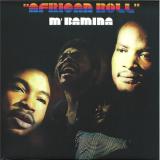
M’Bamina – African Roll (1975)
The story of an album born between Africa, Italy, and the nightclub culture of the 1970s
In the heart of 1970s Italy — a country undergoing profound social change and a music scene just beginning to open itself to distant sounds and cultures — an extraordinary, almost improbable story took shape. It is the story of a group of young African musicians who found their way to Europe, of a Turin nightclub that became a crossroads for communities and experimenters, and of an album which, released in small numbers and largely unnoticed at the time, is now considered a rare jewel of Afro-fusion.
The band called themselves M’Bamina — an ensemble of musicians from Congo, Cameroon, and Benin, who arrived in Italy in the early Seventies. Settling between northern Italy and the Pavia area, they began performing in small clubs and community events, bringing with them a vibrant rhythmic heritage: African polyrhythms, call-and-response vocals, funk-infused bass lines, and Caribbean or Afro-Latin colours absorbed along their musical journeys. Their raw, contagious energy on stage quickly drew attention.
Meanwhile, in Turin, another story was unfolding. There was a venue becoming almost legendary: Voom Voom, one of the city’s liveliest nightclubs, run by Ivo Lunardi. The club attracted an eclectic crowd — students, artists, foreigners, night owls — and Lunardi quickly understood that the dancefloor wasn’t just a place for music, but a melting pot for a new kind of cultural energy. Out of this vibrant atmosphere came his idea: to turn the club’s name into a small independent record label, Voom Voom Music, capable of capturing the spirit of those years and giving voice to unconventional projects.
When Lunardi heard M’Bamina, he immediately sensed that this was the sound he had been searching for: fresh, different from anything circulating in Italy at the time, and capable of blending African tradition with funk and European sensibility. He brought them into the studio.
Production was handled by Lunardi along with Christian Carbaza Michel, while the engineering was entrusted to Danilo Pennone, a young sound technician with a sharp, intuitive ear.
The recording sessions — held in Turin in 1975 — produced a remarkably warm and direct sound. The music feels almost live: grooves rooted in African tradition, but open to funk-rock structures and modern arrangements. It is a natural fusion, never forced. Tracks move between tribal rhythms, funk basslines, light electric guitars, congas and Afro-Latin percussion, with call-and-response vocals and melodies that echo both Congolese tradition and the lineage of Latin jazz. Not by chance, one of the album’s most striking tracks, Watchiwara, reinterprets a Latin standard through M’Bamina’s own rhythmic language.
The album was titled African Roll — a name that was already a statement of intention. It is African music that “rolls,” that moves, adapts, transforms within a new geographic and cultural setting. It is not strictly Afrobeat, nor Congolese rumba, nor Western funk: it is a spontaneous, hybrid blend, shaped more by lived experience than by any calculated aesthetic program.
When African Roll was released, the world around it barely noticed. Distribution was limited, and 1970s Italy had yet to develop a cultural framework for receiving such music. The national music press rarely paid attention to African or “world” productions. The album slipped into silence — though the band’s own story did not.
M’Bamina continued performing across Europe and Africa, even sharing a stage in Cameroon with none other than Manu Dibango. By the late Seventies, they moved to Paris, signed with Fiesta/Decca, and recorded a second LP, Experimental (1978). Meanwhile, the peculiar record they had made in Turin began to resurface quietly among vinyl collectors, Afro-funk enthusiasts, and DJs hunting for forgotten grooves.
That is when the album’s fate began to shift.
Over the decades, African Roll emerged as an almost unique document: a snapshot of an intercultural Italy before the word “intercultural” even existed, a fragment of migrant history, a spontaneous experiment in musical fusion born far from major industry circuits but rich in authenticity. Original copies began commanding high prices on the collector’s market, and the album became recognized as one of the hidden classics of European Afro-fusion from the 1970s.
Today, more than fifty years later, this reissue finally restores visibility and dignity to a project that deserves to be heard, studied, and celebrated. It is not simply an album: it is the testimony of a rare cultural encounter, born in an Italy unaware of how fertile such exchanges would one day become.
It is the story of a visionary producer, an extraordinary band, and a fleeting moment in which music, migration, and nightlife came together to create something genuinely new.
African Roll is — now more than ever — the sound of a bridge: between continents, between eras, between cultures. A record that, after rolling far and wide, has finally come home.

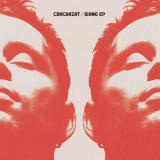
Crackazat returns to Freerange for his latest EP entitled Shine, and sees the artist in his finest form to date! An absolute anthem in the making the title track appears here in Club Mix and Mana’s Dub form, plus an amazing flip of Crouching Tiger from Baltimore legend Karizma Shine is a soulful, jazz-inflicted epic which will have any dance floor worth it’s salt fully locked in. Crackazat’s own vocals bring hints of Jamiroquai whilst his production calls golden era MAW and Blaze to mind. Add an incredible arrangement, live horns, bass and drums to this already heady concoction and you get an idea of why we’re so excited about this release. These kind of club tracks are few and far between these days! Next up we have one of Crackazat’s own Mana’s Dubs of Shine.
A chance for Ben to strip things back, loop things up and dub things out. Keeping the funk intact, we’re treated to a feelgood party-starting house track which has a classic sound that can’t fail to warm the cockles! Flip over for a proper curve-ball from everyone’s favourite Baltimore house hero Karizma who turns Crouching Tiger into the kind of twisted, rolling, jazzy and leftfield workout we love him for. A driving force of the city’s underground, he always comes with the raw energy and fearless creativity. A staple of the dance floor and a leader beyond it, Karizma represents the past, present, and future of Baltimore House and once again proves why he’s such a don.
Drop this one and run for cover whilst the dancers throw crazy shapes! Closing out the EP we have Crackazat’s Mana’s Dub take on previous single Watchu Say. Looping up the killer piano hook and his live bass line, Ben manages to craft the kind of warm, uplifting slice of house music which simply works. And for those who love a big drop, this one should fit the bill with a trademark Mana’s Dub seratonin-boosting build that hits all the right buttons.
2026 Repress
French DJ and producer Hemka makes a striking solo debut on Mutual Rytm with 'Introspection'.
Born in Marseille and based in Paris, Hemka has been shaping her take on techno for over a decade, steadily growing her international presence with music on respected imprints such as Token. Her music fuses the raw energy of 90s techno with modern textures and is fast-paced, groovy and laced with subtle psychedelia. By weaving in her own vocals, Hemka adds a deeply personal and authentic layer that resonates with both the body and mind. Following the strong reception of her track 'Fragrance' on the 'Federation Of Rytm III' compilation, this potent new EP is a powerful reflection of her bold, emotional and forward-thinking artistic voice and the start of an exciting new chapter with SHDW's Mutual Rytm.
'Abyss' kicks off with tightly coiled, heavy-hitting drum funk and eerie synths that never let up while ghoulish vocals layer in extra darkness and anxiety. 'Time' is another sleek, stripped-back but banging wedge of linear techno excellence and 'I Can't Shine' layers up paranoid vocals with high-speed glitches and rubbery drums to ensure maximum impact in the club. The excellence continues with 'The Bad Place' with booming drums and moody synth atmospheres, getting you up on your toes and keeping you there. Last, 'Unchanged' fizzes with static electricity as wordless vocals refract around the mix next to wispy synths and icy hi-hats. Digital bonus cuts 'Voice In My Head' and 'Eternity' round things out with more heady and intense techno for driving deep into the night.
DJ Support: Louie Vega, Dave Lee, Mousse T, The Brothers Macklovitch, Folamour, Bellaire, Moonboots, DJ Spen, Terry Hunter, Michael Gray, Dr Packer, JKriv, The Shapeshifters, Moplen, Melvo Baptiste, Saucy Lady, Tedd Patterson, John Morales, Maurice Joshua, DJ Minx, DJ Dove and DJ Disciple.
Big Love return with EP 7 in the A Touch Of Love vinyl series. Label head Seamus Haji kicks off proceedings with his popular ‘Disco Dreams’ feat Chicago legend Mike Dunn on vocals given a fresh new lick by Toronto’s jackin’ house master Hatiras. Shawn Christopher‘s 90’s house classic ‘Don’t Lose The Magic’ gets a sublimely soulful update from Chicago’s Emmaculate. On the flip side we have 2 French House veterans with Art Of Tones serving up the Chic inspired disco beauty ‘Hoping For Another Chance’ followed by Yass feat the vocal powerhouse Michelle Weeks on the disco driven gospel stormer ‘Hallelujah’.
Early Dj plays from Louie Vega, Dj Sneak & Carl Cox!
Brand new vinyl-exclusive music for 2026 from 4 legends of electronic music.
Teachers is a new series from Only Cuts showing love and respect to the architects of our sound.
5th release from the Only Cuts label run by Sydney maestros, Mo’funk & Encee
All new music from these Teachers, Dj Sneak returns with one of his best works in a long time with ‘Hear The Music’ Todd Terry appears under his ‘House of Gypsies’ alias with a horn driven percussive groover. Junior Sanchez with a brilliantly produced Wham flip & The Stanton Warriors come at it with an anthem used in their live sets, appearing for the 1st time on vinyl!
Farron is back on Shaw Cuts with his next EP called ãHuman LanternsÒ - a tale of social jealousy and long-standing rivalry transformed into 4 bass-heavy broken techno tracks.
The two wealthy kung-fu masters Lung and Tan are embroiled in a long lasting game of perpetual one-upmanship. Vowing to show Tan up, Lung enlists the aid of a man he defeated in a duel years ago in fashioning a masterful lantern for the upcoming festival in which both masters will compete. ãWe Are The WaveÒ and its noisy fragments and broken rhythmics led by a hefty stormy bassline, underline the tension and aversion between the two competing masters.
But the eccentric artisan is more interested in seeking revenge for his old defeat, in taking away everything Lung holds dear. The bass-driven ãSwitch OddÒ and its sharp percussions and phat kick underline the ulterior motives of the shady character.
The evil villainÕs plan of revenge contains kidnapping several beloved women of Lung, skinning them alive and using their flaps of skin to create the ordered lantern. ãGX100Ò and its fast-paced drum pattern carried by virulent synth fragments and raucous pads, epitomises the merciless act of violence.
Tan and Lung falsely accuse each other but feel constrained to eventually team up and hunt the criminal together. ãTalking To ThemÒ rings in furiously and chases the enemy with its rolling bass, chopped vocals and stomping drums, but the villain is sneaky and recalcitrant. Silence before the attackÉ
ALTERNATE ART EDITION[29,83 €]
On a Sunday in the early 70s in South LA one could asily find themselves experiencing the Pan Afrikan Peoples Arkestra doing what they do for the community, performing incredible music. "Live at Widney High December 26th, 1971" is a previously unreleased PAPA recording. It finds director Horace Tapscott conducting the band at Widney Career Preparatory & Transition Center, a special-education magnet high school in Los Angeles. The band played shows here between 1970 and "72, often sharing the bill with contemporaries John Carter and Bobby Bradford"s group, and at one point the Sun-Ra Arkestra. These weekend shows were free and meant for the surrounding Black community. On this date the PAPA performed a range of compositions from the Ark"s expansive songbook, including arrangements of tunes by Pharoah Sanders and John Coltrane.
Vertigo is proud to announce their debut physical release Necessity from Perth/Boorloo electronic duo Ezines, available March 20th. Necessity is a sleazy, pressure-driven club record, built on a balance of short, immediate ideas and long-term structural development. Across four original tracks and a remix — Dissolve, Necessity, Pacer, Ekspres, and Necessity (Liquid Earth Heaven ’N’ Hell Dub) — Ezines balance instant impact with slow-burn momentum, allowing tracks to hit fast before stretching into longer, more patient forms. The EP thrives on tension, repetition, and release, shaped equally by instinct, live performance, and hands-on studio refinement.
London-based producer IZCO is set to release his latest single, “Guiding Star (feat. Reek0)”, blending soulful nostalgia with the raw energy of the capital’s underground sound.
Drawing from influences that span UK dance music, hip hop, and soul, IZCO’s music captures both the energy of the dancefloor and the emotion of lived experience. Over the years, IZCO has become a key figure in London’s cross-genre underground scene, collaborating with artists like Reek0, Greentea Peng, Sam Wise, Liam Bailey, and Novelist, and performing at iconic venues and festivals across the UK and Europe.
His previous releases, including tracks like soulboy - IZCO Remix, Beauty Inside, and OBiNRin - IZCO Remix, showcase his knack for crafting warm, sample-rich productions that balance classic influences with a distinctly modern edge. Whether behind the decks or in the studio, IZCO continues to push boundaries, creating music that feels timeless, authentic, and deeply rooted in community.
“Guiding Star” is no different. It pairs warm, vintage soul textures with the sharp percussion and bass-driven pulse that have defined IZCO’s sound across his discography. Featuring long-time collaborator Reek0, the single bridges eras and styles; a homage to the past while firmly rooted in the energy of today’s London.
Speaking on this release, IZCO says:
“Guiding Star. That classic shit, Combining the soulful sample with the London grit, real London track. Inspired by a mixture of 70s soul, US hip hop and UK grime.
Made this track without thinking much, the sample spoke for itself.
Reek0’s vocal was from one of the first sessions we ever did years ago, and it had never been released but it sounded perfect on this track. A taste of nostalgia, this track reminds me of good memories and friendships. Simple but meaningful. And an honour to use such a beautiful sample”
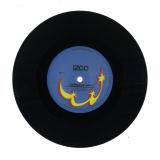
Later this year, fans will be able to own an exclusive 7-inch vinyl edition of Guiding Star, featuring both the original and instrumental versions - a collector’s piece for crate diggers and fans alike. Out on the 5th December.
With “Guiding Star (feat. Reek0)”, IZCO continues to carve out his place as one of the most versatile and soulful producers in UK production, grounding every beat in authenticity, emotion, and connection
Jerome Hill, Lukes Anger, Dark Vektor and Computer Madness deliver a no-nonsense 12 Inch strike between Electro, Detroit pressure and machine funk. Punchy drums, icy synth cuts, raw momentum, built for DJs, built for floors. Four producers, four angles, one shared language of body-ready electronics, driven by Detroit energy and sharp-edged Electro.
uper Deception dives into the uncanny beauty within the everyday, drawing inspiration from M.C. Escher’s idea of “super deception”: the art of creating the impossible without illusion. Nelson of the East translates that concept into sound: deep, tactile basslines and intricate percussion twist familiar rhythms into hypnotic new forms. Textures and samples are lifted from their origins and reimagined, creating tracks that feel both ancient and futuristic, physical and dreamlike. The result is an electronic landscape where sound folds in on itself: a timeless, shape-shifting exploration of rhythm, resonance and perception.
Nelson of the East is a Berlin-based sound artist, producer and educator. He operates at the intersection of experimental composition and club culture, shaping his craft both as a music teacher and behind the scenes as an experienced ghost producer.
Artwork & Layout by Alicia Carrera
Arriving twenty-six years after his debut Cell, Particle further sharpens the fractured electronics and muted melodic language explored on 2021’s From Stasis, presenting a crisper, more immediate set of compositions.
Cadoo, also widely known as a founding member of pioneering electronic project Gridlock, has used Dryft as a consistent outlet for his electronic work across decades, bridging early post-industrial IDM with more contemporary, restrained forms.
Long recognized for beat structures that feel precarious, rhythms that seem to strain, erode, and reassemble in real time, he approached Particle with a renewed focus on allowing these patterns to fully resolve. Melodic elements are given a more direct role, actively driving momentum rather than hovering in the margins.
Emphasizing clarity and immediacy, Particle favors tactile sound design and forward-pushing arrangements over density or abstraction. The result is a notably focused Dryft release that functions as an all-encompassing signpost for Cadoo’s electronic output to date, informed by decades of exploration while remaining resolutely forward-looking