For their first album as Gilla Band (formerly Girl Band), the
foursome have redrawn their own paradigm. ‘Most Normal’ is like
little you’ve heard before, a kaleidoscopic spectrum of noise put in
service of broken pop songs, FX-strafed Avant-punk rollercoaster
rides and passages of futurist dancefloor nihilism.
Lockdown robbed Gilla Band of any opportunity to try the new
material out live, but the pandemic also incinerated any idea of a
deadline for the new album. They were free to tinker at leisure, to
rewrite and restructure and reinvent tracks they’d cut, to, as
drummer Adam Faulkner puts it, “pull things apart and be like,
‘Let’s try this. We could try out every wild idea.’”
The group also fell under the spell of modern hip-hop, “where
there’s really heavy-handed production and they’re messing with
the track the whole time,” says Fox. “That felt like a fun route to go
down, it was a definite influence.”
‘Most Normal’ opens with an absolute industrial-noise banger that
sounds like a manic house party throbbing through the walls of the
next room as a downed jetliner brings death from above. What
follows is unpredictable, leading the listener through a sonic house
of mirrors, where the unexpected awaits around every corner.
The common thread holding ‘Most Normal’’s ambitious Avant-pop
shapes together is frontman Dara Kiely. Throughout, he’s an antic,
antagonistic presence, barking wild, hilarious, unsettling spiels,
babbling about smearing fish with lubricant or dressing up in binliners or having to wear hand-me-down bootcut jeans (“It was a
big, shameful thing, growing up, not being able to afford the look I
wanted and having to wear all my brother’s old clothes,” says
Kiely).
‘Most Normal’, then, is a triumph, the bold work of a group who’ve
taken the time to evolve their ideas, to deconstruct and reconstruct
their music and rebuild it into something new, something
challenging and infinitely rewarding. It’s a headphone masterpiece.
It’s a majestic exploration of the infinite possibilities of noise. It’s a
bold riposte to your parochial beliefs on whatever a pop song can
or should be. It’s the best work these musicians have put to
(mangled) tape.
quête:sha
To mark 10 years since SOPHIE’s game-changing singles collection PRODUCT, Numbers are celebrating with a special edition featuring 11 songs across Deluxe Vinyl and Compact Disc.
This anniversary release includes bonus tracks, track-by-track slide posters, and a SOPHIE PRODUCT Card. Physical editions are now available for pre-order and released on 11th July 2025.
SOPHIE classics ‘BIPP’, ‘LEMONADE’ and ‘VYZEE’ are joined by two immaculate PRODUCT-era songs ‘OOH’ and ‘GET HIGHER’ recorded and produced at the time, each with colourful single artwork completing the set.
‘OOH’ is one of SOPHIE's earliest productions that has been through several revisions since 2011. It was one of three original tracks that Numbers had signed when SOPHIE uploaded the song alongside 'BIPP' and 'ELLE' to her Soundcloud, and while it had been through several iterations and speed changes, this finalised version was completed by SOPHIE in 2019.
SOPHIE once described ‘OOH’ as “hi tech club dance pop”. Musically speaking, the earworm hook is carved out by her signature portamento-infused synths and candy-coated lyrics, a firm cult classic approved by AG Cook and Charli XCX. Initially titled 'MAKE RESPECT', the track was first performed live by SOPHIE in 2011 to a handful of lucky people at a beach afterparty surrounding Sonar Festival, Barcelona and later that year at Manhattan's New Museum. The vocal was recorded as the first track in the same one-day recording session as SOPHIE's debut single 'NOTHING MORE TO SAY', released on the Huntley & Palmers label, where Sophie's songwriting was performed by the London vocalist Jaide Green.
The genesis of the ‘OOH’ and ‘NOTHING MORE TO SAY’ recording session is lore-worthy in its own right: after watching Jaide Green perform live with Olly Murs during the sixth series of The X Factor in 2009, SOPHIE reached out and invited Jaide to record in her home bedroom studio.
‘GET HIGHER’ was born during joyous sessions in 2013, when SOPHIE’s beat was introduced to the vocalists Cassie Davis and Sean Mullins. The track feels like a visionary precursor to ‘Vroom Vroom’, and doesn't sound out of place next to the sub-clang intensity of SOPHIE’s ‘HARD’ and ‘MSMSMSM’. Striking a playful balance between blissed-out hyperpop and club-ready Atlanta trap, it showcases SOPHIE’s signature, laser sharp sound design. Originally released as a bonus track on the Japanese CD edition of PRODUCT, ‘GET HIGHER’ has remained a hidden gem.
A groundbreaking producer, songwriter and performer, SOPHIE's visionary approach reshaped the landscape of pop and electronic music. Emerging in the early 2010s, SOPHIE introduced a hyper-detailed, futuristic sound defined by metallic textures, elastic basslines, and an uncanny blend of synthetic and emotional tones. Collaborating with artists including Charli XCX, Madonna, Vince Staples and Arca, SOPHIE helped pioneer a new pop movement while challenging conventions around identity, genre and production. SOPHIE's work continues to resonate deeply, leaving a lasting impact on a generation of artists and listeners alike. Discography: PRODUCT (2015), OIL OF EVERY PEARL'S UN-INSIDES (2018), SOPHIE (released posthumously, 2024).
Parallax explores the shifting boundary between human intuition and algorithmic logic, a space where two perspectives converge and blur until the center is lost. Composed through a hybrid system of voltage-controlled hardware and digital manipulation, the five tracks apply FM synthesis, granular processing, and bit-level degradation to rigid electro structures. Sequences are shaped by modulation instability and clock drift, gradually disrupting pattern integrity and simulating a loss of systemic control. Precise yet disrupted grooves hint at a deeper malfunction, as if something is corrupting the system from within. Parallax is the gap between the human who creates and the algorithm that imitates.
- A1: Satellite (Feat. Jon Hopkins, Obi Franky, Ila And Trans Voices)
- A2: All That Falls Apart / Comes Together (Feat. James Massiah)
- B1: Stitches
- B2: Can't Stand To Lose
- B3: Shapeshift (Feat. Kam-Bu)
- C1: Voices
- C2: Go Feat. Kaiden Ford
- C3: Humanise
- D1: Hey!
- D2: Rushing (Feat. Ila And Trans Voices)
- D3: New Euphoria (Feat. Alexis Taylor, Ila And Trans Voices)
- D4: Hq (Feat. Kaiden Ford)
HAAi kehrt mit ihrem kühnen und brillanten zweiten Album 'HUMANiSE' zurück und erkundet den Sweet Spot zwischen maschinengesteuerter Dystopie und emotionsgeladener Utopie.
Mit all ihren Veröffentlichungen hat HAAi (bürgerlich Teneil Throssell) immer versucht, neue Grenzen in der elektronischen Musik zu erkunden, und auf dem neuen Album bohrt sie noch mal tiefer in diese Richtung. 'HUMANiSE' setzt sich mit der Frage auseinander, was es bedeutet, in einer zunehmend digitalen Welt ein Mensch zu sein, in der KI alles in den Schatten zu stellen droht und unsere Bildschirme uns voneinander trennen. Das Ergebnis ist ein ehrgeiziges und aufregendes Epos: ein klanglicher Sprung nach oben und eine deutliche Weiterentwicklung ihres 2022er Debüts 'Baby, We're Ascending'.
Stimmen - sowohl reale als auch digitalisierte - spielen auf 'HUMANiSE' eine große Rolle, ebenso wie Ideen von Gemeinschaft und Zugehörigkeitsgefühl. Sie ist zurückgekehrt, um mit Freunden wie Jon Hopkins, Alexis Taylor von Hot Chip, dem Sänger Obi Franky, dem Rapper KAM-BU, dem Künstler Kaiden Ford und dem Dichter James Massiah sowie mit zwei Chören zu arbeiten: Trans Voices mit Chorleiter ILA und ein Gospelchor unter der Leitung von Wendi Rose. Nachdem sie jahrelang hinter den Decks verbracht hat, bringt HAAi nun auch ihre eigene Stimme in den Vordergrund, mit der sie sich verletzlich und selbstbewusst ausdrückt. Ihre Stimme ist umwerfend zart und verleiht ihren kinetischen Produktionen eine neue Dimension.
Das Konzept des Albums wurde klar, als HAAi mit Jon Hopkins im Studio war. Die beiden spielten mit einem Vocal-Harmonizer-Plug-in mit einer Funktion namens 'Humanize'. Für HAAi ging ein Licht auf: „Die Vorstellung, dass etwas völlig Synthetisches versucht, eine echte Person menschlicher klingen zu lassen, ist verrückt“, sagt sie. HAAi lässt diese Extreme im Laufe des Albums verschwimmen: Sie digitalisiert Stimmen, überlagert sie zu einem verschwommenen Effekt und verwendet sogar eine KI-Text-to-Speech, um ihre Stimme zu erzeugen. Letztendlich kommt sie jedoch zu dem Schluss, dass Erfahrung und Erinnerung - das, was uns wirklich menschlich macht - nicht ersetzt werden können.
Vom euphorischen Opener 'Satellite' über UK-Radiohit 'Can't Stand To Lose' bis hin zu genreübergreifenden Stücken wie 'Shapeshift' ist das Album voll von aufregenden klanglichen Wendungen und zutiefst persönlichen Texten. 'HUMANiSE' ist ein kraftvoller, emotionsgeladener Sprung nach vorn: eine Feier der Gemeinschaft, des Selbstausdrucks und der Menschlichkeit.
- Ltd. Col. 2LP: (Crystal Clear Vinyl)
The Finnish nu school jungle label is back with an amazing Blade Runner sampling sci-fi jungle belter with three distinct remixes. Wasteman’s original version alternates between mystical storytelling and heavyweight amen salvos. Park Shadow’s dark cyborg vibed remix would make Metalheadz
proud, while Tim Reaper serves some absolutely smashing amens alongside a commanding bassline. Label curator ODJ Pirkka takes things to yet another direction with a long atmospheric jungle tune that builds on the original’s vibey Goemon loop, adding bunch of new instruments into the mix.
- A1: Will Thomson / Paul Mottram — Electrospheres / Incandescence (2025 Medley)
- A2: Paul Lewis — Hello Spring
- A3: Douglas Wood — Making Parts
- A4: Paul Lewis — Goodbye Autumn
- A5: Paul Lewis — Colourful Life Suite Flowers
- A6: Peter Nicholas — Pastoral Reflections
- A7: Vince Cross — One Summer’s Night
- A8: James Harpham — Slow Motion
- A9: James Harpham — Candle Flute / Mexican Motel (2025 Medley)
- A10: Cliff Johns — Man O’vibes
- A11: James Harpham — Asian Dolls
- A12: James Harpham — Pastoral
- A13: James Harpham — Flower Garden
- A14: Liane Carroll — Sweet Dreams
- A15: Bob Cort — Humming Song
- B1: James Harpham — Flight Landing
- B2: John Hyde, Andrew Procter — Promise Of Beauty
- B3: Trevor Nightingale — On The Wing
- B4: James Asher / Pete Willsher, Tony Kelly — Extra Silky / Funk Fobia (2025 Medley)
- B5: Trevor Nightingale — Wastelands
- B6: Stan Medcalf / Pete Giles, Sean Houchin — Computer Games / Night Trawler (2025 Medley)
- B7: James Asher — Asian Workload
- B8: John Brown — Slope Soaring
- B9: James Harpham — Star Blossom
- B12: John Hyde, Andrew Procter — Private Thoughts
- B10: Harry Wild — Barcarolle Blues
- B11: David Stoll — Tight Corner
Since the 1940s, Library Music has lurked in the shadows, peripherally touching our lives through TV and film. Among the stalwarts of the industry was UK's Studio G, with cues heard on Doctor Who, and sampled by the likes of The Chemical Brothers, and Tyler, the Creator. Jazz Dispensary's Dream a Dream with Studio G: Cratedigger's Archive (1970–2009) culls some of their most sought-after cuts, with liner note commentary from Saint Etienne’s Bob Stanley, and illustrations by Ivan Minsloff.
Best known for his cinematic jungle excursions, Seb Uncles returns to Livity Sound for a second extended release of introspective electronics with a strong influence from mystical sources.
As Eusebeia, Uncles has developed a strong, independent presence in modern electronic music defined by a prolific run of deep-diving, breakbeat-driven albums and EPs. In 2022 he released Cosmos on Livity Sound, a mini-album that zoomed out to a more reflective strain of electronica shaped by atmospheric synth lines in the hauntological vein of Ghost Box, Pye Corner Audio et al.
The Wyrding Way finds Uncles delving even deeper into this area of his output, keeping drums to a bare minimum and focusing instead on powerful melodic lines. There are still considered soundsystem moments that connect with Livity's long-standing sonic focus, not least the subtle dub inflection of EP centrepiece 'By The Light Of The Moon'. Elsewhere Uncles leaves the melodic parts unaccompanied, letting the phrasing and emotional pull of the title track tell its own story.
Balancing light and dark elements and drawing inspiration from personal experiences and perspectives, combined with spiritual and existential observations, Uncles capitalises on the evocative streak in his studio practice to deliver a timeless, immersive experience unlike anything else in his considerable back catalogue.
Livity Sound is a label set up by Peverelist in 2011 as a vehicle for a raw and exploratory strain of UK techno, rooted in the heritage of UK dance music and sound system culture. It has since become one of the UK's foremost protagonists for cutting edge underground electronic music.
Swiss shapeshifter Elsa surfaces on Punctuality for the first time, marking the label’s seventh release with a debut EP that dives deep and swims sideways through an eclectic milieu of club influences.
Across the five tracks on Web Glow, there are nods to turn-of-the-century tech house, liquid D&B, broken IDM, psy-laced trance, and modern tek mutations. Subtle wubs ripple under the surface, low-end pressure coils tight, and meticulous sound design binds the tracks into a fully realized vision of Elsa’s forward-thinking sound. Enter the unfolding.
Roza Terenzi steps up to remix “Web Glow,” reanimating the track as a skeletal early-morning stepper—the mood is giving sizzling dubbed-out vocal wisps, pulsing subs, and stripped-back drums. “Groupie” notches up the BPM but keeps things fluid with aquatic atmospherix, jittering FX, and drums that skid out and under rolling basslines.
“Fortune Cookie” flashes uk-tinged tech house with shimmering shards of SFX, resplendent with stuttering kicks, glassy pads, and sultry textures. The halftime jungle-IDM stylings of “No Ads” round off the EP in a haze of fractured breaks and dubbed-out atmospherics. A murky, magnetic debut on Punctuality—Elsa sketches out a soundworld all her own. Dive in and catch it.
DJ support: Michael Bibi, Solomun, ANOTR and more
Rising duo Moontalk step into the spotlight on Planet X with ‘Hot Line 84’, a track that channels tightly wound grooves, warped guitar licks and infectious vocal touches into a rolling dancefloor cut. Built with a sharp focus on rhythm and texture, the single captures the duo’s forward-thinking approach and delivers a fresh statement of intent on one of the underground’s most closely watched labels.
Planet X head Ben Sterling completes the release with his own reinterpretation, steering ‘Hot Line 84’ into darker, hypnotic territory. Crafted live using various guitars and analogue synths, Sterling’s remix brims with raw energy, tunnelling its way through Indie Dance textures while retaining the future-facing edge of the original. A track already championed by the likes of Michael Bibi, Solomun, ANOTR and more, it’s another bold showcase of Sterling’s versatility as both a producer and label curator — and a reminder of Planet X’s commitment to cutting-edge, cross-genre sound.
Together, the original and remix strike a balance between groove-driven immediacy and late-night depth, capturing two distinct yet complementary sides of the Planet X universe. ‘Hot Line 84’ stands as a compelling snapshot of where the label is heading next: innovative, immersive and firmly in tune with the dancefloor.
- A1: Emerge / Fischerspooner
- A2: Seventeen / Ladytron
- A3: Strict Machine/ Goldfrapp
- A4: Girls On Pills / The Droyds
- A5: Hooked On Radiation (Pet Shop Boys Orange Alert Mix) / Atomizer
- B1: Fuck The Pain Away / Peaches
- B2: Do I Look Like A Slut? (Original Version) / Avenue D
- B3: Galang / M.i.a
- B4: Kernkraft 400 (Dj Gius Mix) (Radio Edit) / Zombie Nation
- B5: Poney Pt. 1. (Edit) / Vitalic
- B6: The Game Is Not Over / T. Raumschmiere Feat. Miss Kittin
- C1: Over And Over (Naum Gabo Remix) / Hot Chip (7.05)
- C2: Banquet (Phones Disco Remix) / Bloc Party (5.25)
- C3: E Talking (Nite Version) / Soulwax (6.08)
- C4: ?Zdarlight» / Digitalism (5.44)
- D1: Daft Punk Is Playing At My House (Edit) / Lcd Soundsystem (3.23)
- D2: Hustler / Simian Mobile Disco (3.43)
- D3: We Share Our Mother's Health / The Knife (4.09)
- D4: Missy Queen's Gonna Die / Tok Tok Vs. Soffy O (4.13)
- D5: What Was Her Name (Radio Edit) / Dave Clarke Featuring Chicks On Speed (4.44)
- D6: I Am The Fly / Adam Sky And Crossover (4.59)
- E1: We Are Your Friends / Justice Vs. Simian
- E2: Take Me Out (Daft Punk Remix) / Franz Ferdinand
- E3: Slow (Chemical Brothers Remix Edit) / Kylie Minogue
- F2: Warm Leatherette / The Normal
- F3: Empire State Human / The Human League
- F4: Tryouts For The Human Race / Sparks
- F5: Telephone Operator / Pete Shelley
- F6: Nag Nag Nag / Cabaret Voltaire
- E4: Let's Make Love And Listen To Death From Above / Css
- E5: Solta O Frango / Bonde De Rolê
- E6: Club Action / Yo Majesty
- F1: Numbers / Kraftwerk
‘When The 2000s Clashed: Machine Music For A New Millenium’ is the story of how, 25 years ago, a new form of electronic music – known as electroclash - reignited a tired clubland and gave the indie scene and mainstream pop a shot in the arm in the process. Over this 3LP highlights set, carefully curated from the 5CD box of the same name (also released, 3rd October) the collection showcases the back-to-basics electronic beats that heralded in a new generation of exciting and innovative new artists - Hot Chip, Peaches, LCD Soundystem, and Ladytron, to name a handful. It also shows how the sound and attitude of electroclash plugged into the decade’s cutting-edge indie bands, (Franz Ferdinand, Bloc Party), and became intrinsic to the way chart pop would sound in the first decade of the 2000s (Kylie, Goldfrapp).
The collection also shows how the scene’s underground DIY ethos evolved and inspired the next generation of electronic buccaneers (Simian Mobile Disco, Justice Vs. Simian). ‘When The 2000s Clashed’ brings together a dazzling, diverse selection of artists, producers and remixers from right across the 2000s zeitgeist – from The Chemical Brothers and Daft Punk, from M.I.A. to Soulwax and many points in-between. For good measure, there’s also one side of LP3 given over to the original post punk and electronic sounds (including Kraftwerk, The Human League and Cabaret Voltaire) who’d played such a big influence on the electroclash sound. ‘
When The 2000s Clashed’ was compiled and sequenced for Demon / Edsel by Jonny Slut, founder of London’s electroclash citadel Nag Nag Nag. Established in 2002, in a small Soho venue called Ghetto, ‘Nag’ quickly became THE hottest club, first in London and then in the whole world. A glorious mess and hedonists’ hotspot, a night at ‘Nag Nag Nag’ (if you could get in!) saw the capital’s club kids, students and creatives rub up alongside names from the fashion and music worlds - Björk, Pet Shop Boys, Kate Moss, Boy George, Alexander McQueen, and Pam Hogg were among the regulars. Madonna visited, so did John Peel, Yoko Ono asked to perform and did, Throbbing Gristle’s Chris and Cosey DJ’d, so did Marc Almond, and Too Many DJ’s.
Justin Timberlake was refused entry (too many bodyguards)… even Cilla Black was spotted getting down! Jonny shares these reminisces – and many more - in the collection’s sleevenotes. Named after the 1979 Cabaret Voltaire classic, ‘Nag, Nag, Nag’ became the first place to hear the seemingly endless flow of thrilling new tunes coming from every direction during that decade of dance. Many of them are included on this collection.
DJ Support: Kenny Dope, Mark Knight, Riva Starr, The Shapeshifters, Tedd Patterson, Hector Romero, Grant Nelson, Brian Tappert, Kevin Yost, Saison, Ron Carroll, Steve Bug, The Cube Guys, Massimino Lippoli.
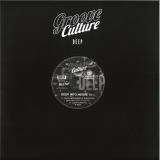
Get yourself geared up for summer season with some fierce dancefloor prime time certified with the Groove Culture Deep Stamp. DEEP INTO HOUSE vol.3 includes some fresh House/Deephouse actions from Ricky Montanari & Discoplex, Luca Olivotto, Gianni Bini and Andrea Tomei. An essential package for diggers.
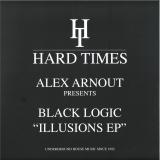
Hard Times welcomes back Alex Arnout and his BLACK LOGIC project, following their recent ‘Pull Up’ EP with a second installment of new music from collective - The Illusions EP.
Hailing from West Yorkshire, Arnout spent his formative years on the Hard Times dancefloors, absorbing the beats and vibes that would later shape his own productions. His journey with the label reignited when he was invited to remix Michael Watford’s classic 'Love Change Over' and Steve Silk Hurley’s fresh hit 'All I Need'. Now, he returns with something truly special.
“Black Logic was born out of the pandemic,” says Arnout. “I wanted to move away from drum machines and synths, getting back to sampling jazz and the deep house sounds of the ‘90s - taking inspiration from artists like Bugs in the Attic, Jazzanova, and Ernest Saint Laurent.”
What began as a solo project soon evolved into a collective effort. Bassist and guitarist Alan Riggs, a former member of Delta 5, joined the sessions, bringing warmth and groove to the productions. Vocalists Tempo O’Neil, Anthony Beckford, Mariana Orsho, and Sophie Barker added their distinct voices, completing the vision
Across four tracks, The Illusions EP pulls us deeper into Black Logic’s rich, live-wired universe. The title track pairs Tempo O’Neil’s vocal with a grooving, low-slung bassline, whilst “Dusty” drifts in on brushed snares and ghostly Rhodes, its saxophone lines curling through the mix like smoke. “Chasing Daze,” analog synth shimmer and Tempo’s velvet tones, is a track suspended between head-nod groove and astral lift.
The curtain falls with “Disco Down,” a jubilant ensemble of Hammond organ, flute, guitar, bongos, and horns locking into joyous conversation.
With Liquid Body, Matteo Point makes his debut on Incoherent Debts with an EP that combines raw energy and emotional intensity. Hypnotic basslines, magnetic vocal samples and driving grooves shape five tracks suspended between the dancefloor and inner reflection, revealing a sound that is both physical and deeply emotive.
Wrong Filament embodies Robert Piotrowicz's creation of fictional traditional music - not studied but invented, a utopian and oniric construct that becomes tangible in sound. These imagined traditions act as communal forces of music-making, resisting dominant structures of power.
The album unfolds in six dense compositions built on rhythm, repetition and minimal melodic gestures that draw on archetypal patterns of Eastern European traditions. Entirely synthetic yet strikingly instrumental in character, they develop as autonomous sound events, expanding into multi-part forms that evoke the physicality of ensemble performance - as if played by an imagined community of musicians.
Rather than reconstruction, Piotrowicz invents forged dances - a pre-techno of sorts, where complex meters and dense textures point to a parallel history of collective sound beyond industrial uniformity. They imagine a utopian and fictional genealogy of collective sound: one where industrial modernity yields to more unstable, communal energies.
This is celebratory music with invocatory charge: calls to dance, echoes of ceremony, microtonal melodies shaped by emotional weight, and traces of Eastern ornamentation stretched through synthetic means. Wrong Filament sacralises performance through sound alone, spinning a world where spectres of collective experience vibrate against the limits of rupture and resistance.
These pieces confront the traces of violence inscribed in body and memory, yet also affirm freedom, emancipation and integration. They manifest celebration, identity and resistance while opening a path toward liberation and shared needs that exceed social, private and intimate categories.
- A1: When I Sing, I Slip Into The Microphone. Into That Void, I Bring Comrade "Prayers", Then, Turning To Face The Outside, Together We Explode. Part I
- B1: When I Sing, I Slip Into The Microphone. Into That Void, I Bring Comrade "Prayers", Then, Turning To Face The Outside, Together We Explode. Part Ii
- C1: When I Sing, I Slip Into The Microphone. Into That Void, I Bring Comrade "Prayers", Then, Turning To Face The Outside, Together We Explode. Part Ii (Continued)
- D1: When I Sing, I Slip Into The Microphone. Into That Void, I Bring Comrade "Prayers", Then, Turning To Face The Outside, Together We Explode. Part Ii (Conclusion)
- D2: When I Sing, I Slip Into The Microphone. Into That Void, I Bring Comrade "Prayers", Then, Turning To Face The Outside, Together We Explode. Part Iii
Among the true Keiji Haino devotees, Nijiumu’s Era of Sad Wings (released on P.S.F. in 1993) has always held a special place in the pantheon. Operating for only a few years in the early 90s and apparently only performing a handful of shows, Nijiumu operated at the opposite end of the dynamic spectrum to Haino’s famed power trio Fushitsusha, dwelling in a hushed, meditative realm of mysterious droning sonorities and free-floating melodies that occasionally erupts into violence. Black Truffle is pleased to announce a new double-LP edition of a lesser-known 1994 Nijiumu recording, When I sing, I slip into the microphone. Into that void, I bring comrade “prayers”, then, turning to face the outside, together we explode. Here, Nijiumu is the trio of Haino, Tetuzi Akiyama and the obscure Takashi Matsuoka, the three performing on a wide variety of string, wind and percussion instruments, as well as electric guitar and bass, and Haino’s unmistakeable voice.
Like on the early solo Haino album that shares the group’s name (released on P.S.F. in 1993), the instrumentation swims in reverb (the use of which Akiyama recalls as ‘a kind of point of the band’), often obscuring the instrumental sources. On the short opening piece, a distant reed instrument arcs long buzzing melodies over a bed of cymbals and gongs, like a psychedelic take on Tibetan music. The epic second part, occupying almost 50 minutes, begins as a splayed, near-formless cloud of electric guitar and bass, shadowed by bowed and plucked strings, the three elements working through twisting atonal shapes. At various points in the recording, we hear what seems to be the sounds of musicians moving between instruments, their shuffling and bumps fitting seamlessly into this radically open music. Eventually, what sounds like electric guitar moves closer to the foreground, fixing on a repeated melodic cell around which hover mysterious clouds of long tones and a sporadic shaker. At the half-hour mark, the music begins to build to a violently emotive climax, Haino’s impassioned vocal cries punctuating a lumbering, bass-heavy murk, contrasted at points by what sounds like a tin whistle. Suddenly, the volume drops to a near-whisper, opening the way for the stunning final moments, which touch on the slow-motion balladry of Haino’s classic Affection, here given an eccentric twist by an occasional woodblock hit. The third piece opens with a hazy trio of rumbling bass, bowed strings and abstracted slide guitar, the latter calling to mind some of Akiyama’s later solo work. Eventually joined by Haino’s voice, its fragile, haunted tone might remind the listener of the man in black’s documented love of the madrigals of the murderous Count Gesualdo, before the recording abruptly breaks off mid-note. In this new edition, the Nijiumu trio recording is supplemented by a piece recorded solo by Haino in 1973, a bracing electronic blowout stretching almost half an hour. Using a homemade electronics setup to unleash a barrage of crunching distortion and shuddering harmonic fuzz, it takes its place in the canon of extreme live electronics next to Robert Ashley’s Wolfman and Walter Marchetti’s Osmanthus fragrans, looking forward to extreme noise years before Merzbow. Taken as a whole, these four sides of music are a stunning document of some of the lesser-known waystations of Haino’s singular creative path.
Classonix are back with another red-hot delivery of smart edits designed for maximum club impact. 'Lilith' marries deep house beats and dreamy roads with exotic international vocals that lend it plenty of spice. 'Coute' is a UK street soul and Afro disco collision with 80s pads that shine bright. 'Hala Hala' is another international delight with summer-ready vocals and an old-school bassline that never quits. 'Shabakni El Hawa' classes out with candied disco-pop and hypnotic vocals over some fresh synth work. A colourful package of sure-fire winners.
'Don't Turn Your Back On Me feat. Pauline Taylor' originally featured on US house innovator and Basement Boys co-founder Teddy Douglas's ‘I’m Here’ album in late 2024. It's a true soulful house anthem with funky bass and a glorious vocal that was primed for a A-list remix package. Douglas himself opens up this package with joyous organ chords and soft melodies lighting up the smooth, seductive drums. Swiss DJ and producer Shaka goes next as an artist who has spent decades blending acid, Chicago, and Detroit influences into his own tunes on top labels like Nervous, GooD MooD, and Mister Bear Records. His 12-inch Club version strips things back to go deep and dubby before rebuilding with sunny melodies, expressive organs, and proggy guitar licks that bring joyous energy and real dance floor unity.
Next is NYC DJ Tedd Patterson, a true originator, resident at Ladyfags’ Battle Hymn party and a regular at Horse Meat Disco, Berghain’s Panorama Bar, and Glitterbox, as well as releasing on Strictly Rhythm, Nervous, Defected, and more. His sophisticated remix boasts a warm and bouncy sound, complemented by soulful vocals that lend richness. Then it's seminal NYC favourite Danny Krivit, who is part of the cult Body and Soul crew, is a renowned remixer and editor with hundreds of credits to his name on the most important labels in the scene, and is resident DJ at New York’s legendary 718 Sessions. He draws on his vast experience to edit the original into a playful disco stomper, complete with neat guitar riffs and zippy synths, all bursting with joy as the funky beats roll on and the lush vocals soar to new heights.
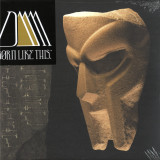
‘BORN LIKE THIS.’ is MF DOOM’s last solo album. Featuring Ghostface Killah, Raekwon and seminal American poet and writer Charles Bukowski with beats from J Dilla, Madlib and ol’ Metal Fingers himself. “I’ve been a fan of Bukowski for a while. It was a friend of mine – damn, I forget the n*gga name – from Life Sucks Die, it’s a graffiti magazine but it’s real kinda edgy, out of Minneapolis. They did an interview with me and then me and Andrew Broder was friends ever since then. He said, ‘Your shit reminds me of this dude Bukowski, you gotta read his stuff.’ I was a little apprehensive at first, ‘cos I was like, ‘What kinda weird shit is this?’ Then he gave me a book, The Most Beautiful Woman In Town, and after that I just got into it. “So for this album, to celebrate all us writers, emcees, if you look at it, it’s a lot of words that we say, and we all write those words: if it was written down on a piece of paper it could be a short story or like a good book. So I saw where Andrew was coming from where he sees the similarities. In tribute to Bukowski I said let me get him as a guest appear ance…” DOOM as quoted in HHC. “Whatever caused DOOM to scale back his output and go off the grid, he’s only come back from it sharper, stronger, and more powerful than before.” Pitchfork “DOOM still has the sickest vocabulary, broadest frame of reference, and densest, most quotable rhymes in hip-hop… he has created an album of sublimely half-assed super-genius.” Onion AV Club