Svart Records presents a very limited vinyl edition of Kivimetsän Druidi's two full length albums. Never before available on vinyl, Shadowheart (2008) and Betrayal, Justice, Revenge (2010) are limited to 400 copies on pitch black vinyl. Newly remastered for vinyl, both come with spectacular 12 inch booklets. Kivimetsän Druidi (The Druid Of The Stone Forest) play metal that is both adventurously original and filled with elements that sound familiar. Part of the Finnish folk metal movement, which also spawned bands like Korpiklaani and Turisas, Kivimetsän Druidi's music stems from a similar origin but is more complex and symphonic. Their two albums to date were released by Century Media and are now being made available on limited vinyl courtesy of Svart Records.
Buscar:shadow movement
Jimmy LaValle’s The Album Leaf has spun from solo outlet to full band and back in its nearly 25 years. His acclaimed catalog spans releases for labels such as Sub Pop, City Slang, Relapse, and others. He also composes music for film and television, scoring over 20 projects (narrative features, documentaries, and TV series) since 2009. The cinematic sensibilities of The Album Leaf were present from the beginning. His 1999 debut introduced the start of a signature sound: melodic and meditative electro-organic soundscapes constructed with guitar, percussion, Rhodes, and field recordings.
His seventh full-length LP, and first since 2016, arrives in 2023 via Vancouver’s Nettwerk Records. FUTURE FALLING finds LaValle working with an array of musicians, shaping slightly darker, more spacious, and synth-driven songs with contributions from Bat For Lashes, Kimbra, and many others.
The music registers a shade darker and more synth-driven than most moments in his acclaimed catalog, a bridge between shadowy, cerebral terrain and dreamy precision pop, where softly percussive frameworks meet shimmering sound design and emotive instrumentation.
LaValle sees the construction of FUTURE FALLING as less conventional than past work. Contributions were done remotely with a “throw everything at it” mindset, making LaValle the arranger of layers from all over: drums, synths, horns, violins, voice, and more. LaValle created a pastiche of these layers and elements; in some cases even moving vocal takes to new tracks entirely. Without the in-the-room dynamics, he had more time to experiment, adding and subtracting ad infinitum.
The album opens on “PROLOGUE,” an evocative, slow-building instrumental that rides a pattern into a symphonic sea of static. Keys and horns glide atop the rhythmic pulse of “DUST COLLECTS,” setting the contemplative scene for “AFTERGLOW,” the record’s most pop-minded performance. Here Kimbra, the Grammy-winning New Zealand singer-songwriter, renders a striking recollection of past love as percussive elements shimmer and swirl.
A plaintive piano line moves throughout “Cycles 19.9” encircled by light ambient washes, both a valley between two peaks and a powerful composition in its own right. “Future Falling” follows; with origins tracing back to 2015, the track embodies the full sonic journey LaValle has taken. All the hallmarks of The Album Leaf — melodic builds, vivid sprawl, tonal shape-shifting — assemble to a blissful finish.
For the next stretch, “Cycles” begins with a uneasy Rhodes loop that builds and erupts into a wall of texture paving its way into “Give In,” where LaValle models a movement that begins subtle and measured before curving up with skyward, percussive bursts (“Stride”) and settling back down to the album’s back-half centerpiece, “Near” featuring the acclaimed English artist Natasha Khan aka Bat For Lashes. “Do you feel me near?” she sings into a mist of widescreen synths and soothing, distant drum beats as if searching through the dark.
Neon is eviscerated across the wet light of pavement dreams, splashed back and absorbed by the darker shapes coalescing in the shadows. Through the broken concatenation of the night, neuron inputs are fed relentlessly by hardwire bodies. Mainlined subtle as a fetishist’s whisper, they in turn feed a punishing progression of rhythms dragged like a dream through your body. Against this digital dystopia, Sequence 87’s I Am Sequence propels the ear through a high-intensity array of blackened beats at once familiar and fresh. The grimey pulse of underground techno bridges the DNA of early industrialized electronics, a chimeric construct which heaves with the chrome breath of EBM’s heavy assembly. Shawn Rudiman, the Pittsburgh pioneer behind alias, has been crafting techgnosis solo and as part of the experimental dance duo T.H.D., and these veteran bona fides show in how deftly he parses the language of that era’s heavy synthesis into a work that easily translates into the modern languages of club movement. I Am Sequence retains that chunky ‘80s analog bounce, while injecting a wriggling sheen of HD intensity through its veins. Vocals emerge from the glistening shards, bursting against a wash of sine waves before remerging in a fusion of funked-out bass. Headlights crashing as horns blare, an autobahn nightmare funneling you down some future highway where machines crash ceaselessly across a horizon of endless red night. Lifting the psyche upon high, corroded harmonies herald the last chants to dance before the inevitable systemic collapse. An album for a foreseen Apocalypse, experienced through the language of dance floor speakers. All songs written and recorded by Shawn Rudiman Artwork by Shawn Rudiman Mastering at Dadub Studio Distributed by ReadyMade Distribution Braid Records 2023
Wistful, quietly positive, and a little bit melancholic; ambient artist Umber is set to release kaleidoscopic new album ‘Sometimes that light, that shine, seemed like a pretty nice thing’ on 17th March 2023. Focused on melodies that engage the heart as much as the mind, the album brings his electronic influences to the fore, combining shimmering soundscapes with a throbbing pulse of movement.
Umber, the project of Nottingham based Alex Steward, has been steadily releasing sublime music since 2011. Living in a small town provides Alex with a balance between the peace of rolling green fields and the energy of community. This life on the edge of the countryside comes across in his music, which finds the verve of night life enveloped in organic textures and environments.
Wistful, quietly positive, and a little bit melancholic; ambient artist Umber is set to release kaleidoscopic new album ‘Sometimes that light, that shine, seemed like a pretty nice thing’ on 21st April 2023. Focused on melodies that engage the heart as much as the mind, the album brings his electronic influences to the fore, combining shimmering soundscapes with a throbbing pulse of movement.
Umber, the project of Nottingham based Alex Steward, has been steadily releasing sublime music since 2011. Living in a small town provides Alex with a balance between the peace of rolling green fields and the energy of community. This life on the edge of the countryside comes across in his music, which finds the verve of night life enveloped in organic textures and environments.
Alex draws from his experience as a part time palliative care giver, which has had a significant impact on this record. He says, “Through caring for elderly patients, whose time is in short supply, I have discovered that life needs to be celebrated. Even if it’s just playing a game of Scrabble or the way that the shadows of trees dance on a living room wall on a sunny day; there is beauty everywhere. Sometimes we just need to slow down and look a little harder.”
The evocative track titles stem from phrases Alex has heard or read, with the album’s title taken from Stephen King’s book The Shining. They range from the literal (‘It Is Going To Be Ok’, ‘The Last Perfect Day’) to the oblique (‘Hologram Shut Stability’, ‘Sun House Chant’), bestowing the everydayness of fleeting inputs and thought processes to more conscious mantras.
“I feel that my music taps into a part of who we all are”, says Alex. “I try to create music that will emotionally resonate with the listener. Ultimately the album is about finding hope in the smallest actions, something that can often be overlooked or discarded in a world that doesn’t always make a lot of sense.”
Umber’s ‘Sometimes that light, that shine, seemed like a pretty nice thing’ is set to be released on vinyl and digital formats via California-based label Subtempo on 17th March 2023.
Denver producer and visual artist John T. Hastings aka RUMTUM returns to Bastard Jazz for his second album on the label, "Arcadian Daze". The album is a contemplative drive down a nostalgic highway, reflecting on a period of his late adolescence growing up in Ohio, spending time at Arcadia Beach on Lake Erie and discovering the likes DJ Shadow, Madlib, Fila Brazilla, early Four Tet, the original Ninja Tune roster and more. Revisiting these coming of age memories, John purchased an older MPC 2000XL and set out to musically capture the excitement of putting his first nascent loops together, inspired by this pivotal era of electronic music that has since birthed movements like such as Lo-Fi/Chillhop, Vaporwave, LA's mid-2000s Beat Scene / Low End Theory, etc.
The end result of "Arcadian Daze" is indeed filled with that nostalgic spirit paying homage to those aforementioned sounds, but also presents a forward thinking musical palate that's very much grounded in RUMTUM's sensibilities as a producer and time spent learning to program new & vintage outboard gear. The album moves away from the warm, dreamy sounds of last year's "Isles in Indigo" LP, and touches more into a mystical, pensive vibe with elements of darkness and light.
Purple Vinyl
London’s abundant waterways and parks provide an oneiric muse for Cucina Povera and Ben Vince’s resounding debut full-length collaboration, an engrossing suite of weightless sax, synth and disklavier-bedded soundscapes that land somewhere between Grouper and Terry Riley.
As a newcomer to London, Rossi was caught up in a sort of wondrous reverie - a feeling that seeps through every movement of thia almost hour long album. Vince's plasmic echoes and Rossi's aerial delivery form a poetic union, twisting and painting each sound in pearlescent shades, finding a musical confluence between Rossi's words - fluid, dreamy, hazy ideations - and Vince's shadowy renditions.
Rossi's folk roots shine through like cracks of dawn sunlight on 'Sumu Puistossa' ("fog in the park"), reverberating over organ and dream-zone sax; her words tip into muted surrealism thanks to the controlled chaos of Vince's bleak treatments. His grasp of jazz is transfixing: bending sax motifs like ghostly memories of music from another timeline, smudging them into the soundfield. It’s most effective on the title tracx, where sickly, dissonant notes flicker like an almost-extinguished candle alongside motorised furniture music courtesy of a Disklavier.
From the Terry Riley-esque transcendence of '∞' to the sacred incantation of long-form closer 'Pikku Muurahaiskeko' ("little anthill"), the pair expose a new layer of creativity with each turn, gradually zooming out from discreet, vulnerable beauty to encompass a gently orchestrated chaos of sustained, sublime tension
[b] 02. [_]
Tunisian oud player and vocalist Dhafer Youssef is at the vanguard of a movement in contemporary music that brings East and West together. He is one of the most inventive oud players in the world and has succeeded in freeing the instrument from its traditional role and bringing it into jazz.
In 2016, he released his solo album Diwan Of Beauty And Odd, which he recorded together with Aaron Parks, Ben Williams, Mark Giuliana and Ambrose Akinmusire. The album was received with critical acclaim and fuses Arabic and Western culture. It features the popular tracks “Fly Shadow Fly” and “Diving In The Air”.
Diwan Of Beauty And Odd is available as a limited edition of 500 individually numbered copies on translucent magenta coloured vinyl, housed in gatefold sleeve and includes an insert.
"Most of this record was created in the shadow of COVID and deep in the maw of Melbourne’s 2020 long winter lockdown. It is a meditation on the nature of connection.
Restricted to a 5km zone, one of the only people I saw outside my family during this time was my old friend and teacher, Ania Walwicz. We met in the overlap between our zones on the waterfront near Docklands to walk and talk on bright, cool winter afternoons. Those conversations became large in my thoughts when Ania suddenly passed away in September. Her voice was in my head as I worked on this music, trawling through threads of ideas, recordings made on my phone, and thoughts jotted down in notebooks.
Ania’s practice as a writer relied on ‘automatic’ processes. Her work was informed by everything she had read (a lot) but it was created in the manner of dreams. In a state where the subconscious might bubble up and the words arrange themselves into meaning bearing forms that resonate more than represent. I thought a lot about that as I made this music. I recorded everyday using the trumpet, my old Revox reel-to-reel, a couple of synths, a harmonium I lent from a friend, and whatever else was around. I worked mostly on just diving a little deeper each time I sat down to it.
Through the simple process of exhalation, I explored my relationship with the trumpet, which has been through so many twists and turns. I let the tones produced by my breath unfurl on long tape loops and degrade beyond recognition through pedal and plugin chains, until the only imprint of the initial gesture remained.
My process also involved long bike rides during which I’d listen to the work of previous days on ear buds, gliding through familiar streets made slightly strange by the absence of people and movement. Often my rides took me along Footscray Rd next to the port, and as I washed down towards Docklands past the old boat moorings I stopped pedalling to coast. The sounds from my darkened studio mingled with the low rush of air past my helmet, the click and whirr of my bike gears, a squalling bird, a whooshing car. And I remembered my last conversation with Ania. Sitting in the late afternoon sun, squinting against the light that raked across the water, she was telling me about all the different words for they have for blue in Polish and Russian, and how words don’t just change our perception of things, but also actually change the thing being perceived.
As I rode home that afternoon, I felt like anything was possible. "
Peter Knight
For Oleg Azelitskiy, known as DJ Slon, the nineties and the first half of the aughts were an era of "firsts". First squat parties on the banks of the Obvodny Canal and more legitimate ones at Tunnel, first proper techno club in Russia. First DJ sets, first vinyl records in his collection, first radio shows at Port FM. He is a true veteran of the Russian techno movement, who carried his love for the genre through three decades and inspired more than one generation of musicians. Album Nr. 1 is the first edition of his music on vinyl. It comprises the music that Azelitskiy made during 1995 - 2005, except for the track My 40th Vesna, produced in 2010.
Azelitskiy's love for techno was born out of contradictions. Thanks to the Soviet synth band Zodiac and the French pioneer Jean-Michel Jarre, he had loved electronic music since his childhood. When he grew up, he got into the dark, introspective pieces by Einsturzende Neubauten and Bauhaus. Not only does the wide-ranging palette on Album Nr. 1 reflect its creator's taste, it echoes the changing times of the Russian nineties. It was the time when confrontations with criminals were inseparable from the parties and get-togethers bustling with local artists.
His affection for various genres led to many monikers and projects, all represented here on Album Nr. 1. He recorded most of his music as DJ Slon. Then there was a project Zhutkiy Lazer (Scary Laser), where Azelitskiy made music that was more experimental but still techno-oriented, with the occasional help of his friend Aleksey Gaponenko (Lazer became a proper solo project of DJ Slon in 1999). There are also tracks under the aliases Mass Fatality, which combined techno and synth-pop, and Razrushiteli Mozgovych Uliev (Brain Hive' Destroyers), with its more direct tight techno tracks.
The music of DJ Slon sounds fresher and more alive on Album Nr. 1 than ever before.
Noticeably, this record, first and foremost, is dance music. As a voice on one of the album tracks boldly states, we came to dance.
Collins Dictionary Example sentence: „Other ocular signs include involuntary rhythmic movement of the eyeball.“ Someone in the editorial department wasn‘t paying attention and involuntarily spoke a deeply buried truth: The movement from the eye to rhythm and from there to sound is sometimes a small, puny one.
Now Infuso Giallo provides the proof at the same time and implements his live show for last year‘s debut album „Ocular Soda“ as an audio-visual show, as intertwined senses. Visible sound, audible images. Such ideas only last when they are put to the test and scrutinised by several experts.
The duo Globus, which consists of 2/5 of the post-hardcore band PTTRNS, examines the synth hook of the second part of the double-opener „Every Waking Hour Pt.2“ by playing it, varying it, letting it sway.
In contrast, Anatolian Weapons from Athens can‘t help but immerse the ambient, Soft Machine-production-like first minutes of „Every Waking Hour Pt.1“ in a sinister black light. Staggering into a basement club filled with nocturnal shadow people and indulge in carousing. Cautiously at first, then more and more determinedly.
From Hamburg and Berlin, the „Mole Gaze“ gets a special treatment. The trio Love-Songs drags the number off to Hamburg harbour, packs it onto a steamer, deep into the bow and lets it operate the sonar there. Conrad Schnitzler would have been delighted.
Infuso Giallo, meanwhile, realises that there is nothing more boring than standing still, so he revamps „Hello World“ and gives it a rear spoiler that keeps this number in lane even at club speed.
Speaking of „keeping in lane“: Niklas Wandt, the magician, doesn‘t even try such tricks. He simply throws an acid bolt on the closer „Ocular Soda“ and waits to see what happens. Alongside breakbeats from nowhere, Albert Hoffmann himself appears on a bicycle.
„Ocular Soda Remixes“ is the first tape on the Kame House label, so there‘s only one thing to do: open your eyes and listen!
Following up their hugely respected 2 demos (also available as a compilation) and fairly recent 7”, CHAOTIAN are back to release ultimate Death Metal barbarity into the underground in the form of their debut full length. Storming into life with a rotten amalgamation of putrescent riffing and blastbeats, the instrumental unity of this Danish titan is a juggernaut of pure filth. It is telling when a band can have those super groovy pinch harmonic laden riffs and not making them sound like all the others. This may seem a weirdly specific observation (perhaps a guitarist just being a guitarist) but it makes all the difference with heaviness, intensity and also the catchiness on the records. When met with the sewer-spewing vocals and weird dissonant spasms in the music, it doesn’t take long to recognise this will be a truly warped and maniacally brutal experience of Death Metal might. Interlinking primitive hooks that grasp you by the throat then transcend into these weird effects or spacious riffs, there’s nothing predictable about the album yet it has that familiar feeling that all good Death Metal has where it feels a bit daunting, unnerving and yet you cannot escape it. Obviously Denmark and this trio does not let the scene down. Amazingly this small country seems to have so much diversity in their rotten underground movement and CHAOTIAN are a shining example who embody the grotesqueries, masterful songwriting and tight musicianship that has become associated with this otherwise pretty and peaceful nation. It explains that mysterious gurgling from the sewers at least! Bludgeoning, cavernous and ultimately otherworldly, CHAOTIAN masterfully combine the cerebral and cosmic with brutish, old school music that is damned heavy and doesn’t feel pretentious nor directionless. Their debut LP is not just as strong as their previous works, but a more refined and complete vision, showcasing the bands full potential (so far)…
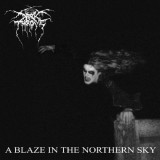
30th ANNIVERSARY VINYL EDITION OF THE ICONIC 1992 BLACK METAL
CLASSIC FROM DARKTHRONE - PRESENTED ON LIMITED WHITE VINYL
WITH SLEEVE DESIGN REPLICATING THE ORIGINAL PRESSING
'A Blaze In The Northern Sky', Darkthrone's official second album, was originally
released in 1992 & was without question the blueprint for the Black Metal scene,
spearheading the evolution of the early second wave movement in Norway &
beyond. It was hailed on release as an album of true scene- shifting greatness,
following their more death metal focussed debut, 'Soulside Journey'. The rawness
apparent on the album (recorded at Creative Studios, the same location as
Mayhem's legendary Deathcrush was put to tape), was unusual for the time & an
antithesis to the usual metal production values & standards during the period.
With this, Darkthrone's statement of attitude & intent was clear & their status as
masters of Norwegian black metal was set.
This edition of 'A Blaze in the Northern Sky' coincides with the 30th anniversary of
the seminal album's release & is presented on limited white vinyl, with the sleeve
design replicating the original pressing, plus a refresh of the original 1992 audio
master.
30th ANNIVERSARY VINYL EDITION OF THE ICONIC 1992 BLACK METAL
CLASSIC FROM DARKTHRONE - PRESENTED ON LIMITED WHITE VINYL
WITH SLEEVE DESIGN REPLICATING THE ORIGINAL PRESSING
'A Blaze In The Northern Sky', Darkthrone's official second album, was originally
released in 1992 & was without question the blueprint for the Black Metal scene,
spearheading the evolution of the early second wave movement in Norway &
beyond. It was hailed on release as an album of true scene- shifting greatness,
following their more death metal focussed debut, 'Soulside Journey'. The rawness
apparent on the album (recorded at Creative Studios, the same location as
Mayhem's legendary Deathcrush was put to tape), was unusual for the time & an
antithesis to the usual metal production values & standards during the period.
With this, Darkthrone's statement of attitude & intent was clear & their status as
masters of Norwegian black metal was set.
This edition of 'A Blaze in the Northern Sky' coincides with the 30th anniversary of
the seminal album's release & is presented on limited white vinyl, with the sleeve
design replicating the original pressing, plus a refresh of the original 1992 audio
master.
Kicks & Hugs, a multi-disciplinary platform established in 2017 to hold space for like-minded creators, now launches its own label showcasing emerging sonic spheres that reach beyond momentary hype and trends alike. Based in Berlin, the foundation of Kicks & Hugs lies at intersectional crossroads of music and art, with their first record establishing a definite attitude towards contemporary artistry. Kicks & Hugs celebrates an immersive spectrum of talent across different mediums and promotes ideas composed of color to challenge a steady current of long exhausted black & white patterns within the realm of electronic music. The debut EP available on black & limited edition colored marble vinyl assorts a kinetic flow of ideas produced by a seemingly divergent roster. Completely ecstatic & exhilarating maze of rhythm by The Lone Flanger, additionally reworked with Varg2TM versus contrasting yet innovative dancefloor mechanics by Bertrand., ending with a hypnotic mix by Dasha Rush, the record is an absorbing material of dynamics that subtly surprise and leave nothing but an ambitious statement for what’s yet to come. KH01 is dedicated to a musical shape-shifter, a paramount figure, ephemeral talent & a dear friend – Andrew Smith. To end in his own words, Keep It Fungki. The Lone Flanger was an audio-visual project from the artist Jasen Loveland also known as Andrew Smith (1980-2021). Dedicated to exploring the intersection of music and visual arts in the expanded dimension, the work of TLF picked up where Loveland’s eponymous acid-based project left off, aspiring for a kind of transcendence that takes the listener beyond the previously known concepts to experiments with the possibility of creating a resonant bridge between frequencies, worlds and dimensions. The work of TLF questions, obfuscates and complexifies notions of rhythm, melody and musical genre… even our ability to rely on our senses for accurate information about the work in question Varg2TM also known as Jonas Rönnberg casts a cryptic shadow from the North over contemporary aesthetics, continuing to create in his largely collaborative and always thrilling approach. Tempering a caustic rhythmic sensibility with a pneumatic palette for high definition synthesis, his unique embrace of risk tests the reliability of the forms he works in as well as the genre borders he surveys. Bertrand.’s work as a producer incorporates a wide spectrum of influences and aims to create beyond the common means of electronic dance music. Bertrand.’s restless nature and desire for technical perfection bleed into his productions of bass-heavy futuristic soundscapes often juxtaposed with playfully intense dancefloor fundamentals. Dasha Rush constructs a rather wide assortment of electronic music and arts projects. She sees the genre as a starting place, not a destination. Rush brings up a mixture of rather rare electronic experimentation more akin to the brief movement of underground music. Credits: Mastering and mastercut by Andreas LUPO Lubich at Loop-O Cover artwork by Fredrik Altinell Graphic Design by Marta Braga Inner label artwork by Tommy Dwane Vocals by Kawala Bravo
- A1: Showtime (Feat Sl8R)
- A2: All For Something (Feat L-Side)
- A3: Two Sides (Feat Roni Size)
- A4: Vices (Feat Whiney)
- B1: Little Things (Feat Technimatic)
- B2: Say No More (Feat Ben Soundscape & Visionobi)
- B3: Dance In The Shadows (Feat Bcee)
- B4: Surrender (Feat Phil Osophy & Tali)
- C1: Inside The Fire (Feat Monrroe)
- C2: Sliding Doors (Feat Visages)
- C3: Carnelian (Feat Koherent)
- D1: Stepping Stones (Feat Kyrist & Sofi Mari)
- D2: Yellow Roses (Feat Random Movement)
- D3: Whatever Comes (Feat Dogger & Mindstate)
Well-loved vocal starlets of the drum and bass scene, Riya and Collette Warren have teamed up to create the stunning vocalist lead LP, ‘Two Sides of Everything’. Both originally hailing from Birmingham the women have been friends for more decade, making this a powerfully personal project. This groundbreaking album is the first time two female vocalists have teamed up in the world of 170, and the release enlists some of the scenes best-known producers from all corners of DNB’s eclectic spectrum.
With tracks from seasoned veterans such as Technimatic and Mercury Prize Award Winner Roni Size and leaders of the new school like Whiney and Monrroe and the pair have ensured all musical areas of the scene are represented. Making sure to include some more female talent, the album also includes Kyrist, and vocal support from Sofi Mari and the legendary Tali who was a huge formative influence on this duo growing up. Separately both artists have carved out significant notches within drum and bass, with their vocals on tracks being heard on timeless classics such as the forever beautiful ‘Kismet’ by Hybrid Minds and the haunting ‘One Exception’ with DJ Marky and Tyler Daley.
Always open to experimentation, Welsh imprint Haŵs welcomes Wyatt to the family. Comprising five evocative, glossy cuts, the ‘Netherwood’ EP is a time capsule back to his hometown, turning memories into alchemical moments experienced under a blazing sun or by the light of a full moon.
The opening ‘Sewell’ sails through a sensory voyage of stripped-back breakbeat, travel intercom samples and earworm melodies. ‘Netherwood’ snakes into a trippy pace, carving an indefinable sculpture of synth melodies nestled between weightless ambient.
On the B-side, ‘Mousehold’ launches into a peak-time club number, its initial drive of drums and bass tempered down by emotive accents that feel like a coy dance between yin and yang. ‘Tombland’ slinks into a shadow-cast realm of melancholy and introspection, joining the hands of broken beat and synth lines into a melodic collaboration drunk on its private thoughts. To close, ‘Heathgate’ retreats into a hopeful murmur, reflecting its quiet, percussive optimism back at itself through tear-stained melodies and a glassy bass.
Sometimes, existential introspection happens through external movement. ‘Netherwood’ is a catalyst for those epiphanies.
Party starting outfit Spaghetti Club dive into 2022 with a hop, skip and a wobble as their third release sees the light of day this January. The four track VA maneuvers between dynamic moods for the dance floor, including sounds from label founder, Pierre Codarin, Harry Wills, Philipp Boss, and Jealous Lover.
Carrying the torch for the first track is UK producer, Harry Wills with “Longbags”, his animated sound fitting the ethos of the label entirely, cruising on a slinky arrangement, and sub heavy bass. Next up is Activo founder Philipp Boss, with a deeper and curious encounter, riding his synths around subtle house movements in “Serious Cat”.
Head chef Pierre Codarin provides a pacey and elasticated groove in “Smoke The Gap”, mechanical beeps and bleeps breathing life into the forward motion of the track. On a more mysterious trip is the last track of the EP from Jealous Lover. “Dresses For The Ride Not The Slide” is a hazy trip, crammed full of rippling shades of electro, calling in the shadows of the afters.
Following hot on the heels of lead single and recent mind-body tantalizer “I Feel Stronger Now,” we are now truly proud to present you with Portable’s latest full-length My Sentient Shadow. Filled to the brim with all of the inventiveness the sonic auteur has commanded we expect from his sizable and consistent body of work on worldrenown labels such as Perlon, ~scape, !K7, and his own Süd Electronic and Khoikhoi imprints, and dare we say offering us perhaps the most cohesive, emotive, and balanced of his highly-admirable catalog here to date. By using the analogy of a shadow that possesses its own consciousness, the theme of light and its distortion vs balance with the inherent and necessary darkness that surrounds it is in clear vision.
Immediately from the warmly bizarre vibes of opening cut “The Simulacrum”, it’s clear Portable is requesting clearance to other worlds of funk and ingenuity. The delightfully trippy, smoky, back-room of the Tattooine Cantina feel sets the stage just right to curb expectations and let the carefully constructed noise movements wash over us.
Elsewhere amongst the generous set we find tracks like “Cages” and “Ripple Effect” continue in the direction of horizontally-maximized aural tapestries oozing with texture, while at the other end of the energy spectrum pieces such as “The Self-Assembling” and “We Exist..” roll and bounce with all the sci-fi gyrations and slick synth layers hinting at a hypnotic halfway rendezvous point to his Bodycode moniker. And of course, no proper Portable outing would be complete without his own robust tenor vocal tone, which feels right at home front-and-center on the space travel anthem “The Spacetime Curvature” and used in more calculated micro-doses on “Analogue World”, as well as the gorgeous “Foreign to You” whose meta-title features a rare guest starring vocalist NiQ.E, and brings to hearts some of Herbert’s finer moments with dear friend Dani Siciliano, albeit done-up entirely in some distant yet alluring parallel dimension. The LP journey finishes with the frenetically-charged closer “Fractal Distortion” which will no doubt please many-a cosmic techno purist while making percussion masters from the afterlife such as Jaki Liebezeit and Tony Allen proud, and is quite possibly the closest thing to a danceable musical take on the current state of cognitive dissonance in the world that surrounds us, offering us a one-way
ticket out from the not-too-distant future. Please join us in welcoming and celebrating this wonderful album from Portable on Circus Company.
Alto saxophonist Immanuel Wilkins follows-up his acclaimed debut Omega (NY Times Best Jazz Album of 2020) with another striking album featuring his remarkable quartet with Micah Thomas on piano, Daryl Johns on bass, and Kweku Sumbry on drums plus special guest appearances by flutist Elena Pinderhughes and the Farafina Kan Percussion Ensemble The album consists of an hour-long suite comprised of seven movements that strive to bring the quartet closer to complete vesselhood by the end, where the music would be entirely improvised, channeled collectively. The title is derived from a question steeped in Biblical symbolism: If the number six represents the extent of human possibility, Wilkins wondered how it would sound to invoke divine intervention and allow that seventh element to possess his quartet. “It’s the idea of being a conduit for the music as a higher power that actually influences what we’re playing,” he says.
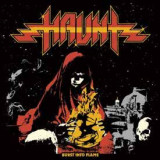
Hailing from the United States, Haunt began as the work of modern
renaissance man Trevor William Church.
Son of Montrose / Sammy Hagar solo bassist Bill “The Electric” Church, the
California native came to prominence as the vocalist/guitarist of doom-lords
Beastmaker, who’ve released two critically acclaimed albums on Rise Above.
As Haunt, Church went solo and created a bewitching brew of classic, turn-ofthe-’80s heavy metal, drawing deeply from the momentous NWOBHM movement. He proved just how proficient and powerful his vision is with Haunt’s
2017 debut EP, ‘Luminous Eyes’, which was originally self-released but then
picked up for physical release by Shadow Kingdom not long after.
Fans and critics all agreed, and quickly: Haunt is heavy metal heaven, and
Church’s brilliance has only just begun
Mixed Colored Vinyl
The London label continues to innovate with their biggest release to date.
10 tracks – 10 incredible artists adding to their string of solid releases by new and established art-ists.
Setting fire to the rage of acceptance.
–
Sublime Creatures, defiant of society’s cages, its definitions of power, beauty and status. A higher stance above bitter re-sentment. A pro-active community of thin- kers. A patch-work of empowered souls, ideas and experiences.
Directly related to one of the sentences in our manifesto, Sublime Creatures is a call to our most powerful selves.
–
The name of the label itself is about us working on bettering ourselves and being united in all our differences. “Reptile” is about our relationship with the reptilian brain and our efforts to understand what truly means to be human (tools to perfect your instinct), becoming aware of our-selves and the others around us. “House of” is a direct allusion to the “house and ball culture” movements in NYC in the early 80s.
The sense of a real family of strangers coming together around a shared sense of purpose.
- A1: The Way Of Discreet Ten
- A2: Woman Of Water _ Music
- A3: Claudia Wilhelm R _ Me
- A4: Shadow Player
- A5: The Sneerer (Mr G C)
- A6: Improbably Music
- B1: Loa Song
- B2: Night Music
- B3: Dalangs Dream
- B4: Lidia After The Snow
- B5: Drums On Chambri Lake
- B6: Katak Dance For H Partch
- C1: Kami Shintai
- C2: Lazy Raga
- C3: Night Music Ii
- C4: Okkulte Stimme
- D1: Tantric Hymes
- D2: The Age Of Fragmentation
- D3: The Story Of The Serpent Who Created The World
- D4: The Time Of Fine _ Dream
- D5: Vinaya Pitaka
Italian experimental music is notoriously resistant to definition and location. If ever there was an object to encapsulate the spirit of that movement, it is the composer and musician Roberto Musci’s debut album from 1984 - The Loa Of Music. Recorded after a decade travelling the world - drifting between African, Indian, and the Near & Far East - studying music, making field recordings, and collecting instruments, not only is it a perfect culmination of such an experience, but a lens into the rigorously democratic and international spirit of the generation of artists to which Musci belongs. Phenomenally ambitious,The Loa Of Music entirely refuses the well trod path - distilling a remarkable range of sonic reference and reality. A work of field recording, musique concrète, electronics, synthesis, and instrumentation, pulling from countless musics from across the globe, the result is nothing short of brilliant and stunningly beautiful. A near perfect work - an egoless gesture, which rather than attempting to find consensus, offers every voice equity and cohabitation - harnessing the history music, with all of its cultural diversity, as a vision for a more ideal future. Geographies and their sounds intertwine, while Musci’s interventions and instrumentation thread a path. Ambiences ripple, sounds and voices converse in a vision of unity that may only exist within sonic realms. Unquestionably seminal, and one of the most important works to emerge from Italy in the last 50 years. Never before issued on vinyl since it’s original release, and surely not to be around for long, this is one not to miss.
Cole Pulice is a saxophone player from Minneapolis. An improviser of Ambient Jazz who earned his merits touring with Bon Iver, working with Godspeed You! Black Emperor and releasing wonderful electroacoustic gems with the groups Iceblink (Moon Glyph) and LCM (Orange Milk). With Gloam - his solo debut - Cole Pulice offers us six spacious audio holograms, one-take recordings of his saxophone entangled with live electronic hardware. We hear undulating pitch shifters, ring modulations and spectrally rich harmonizers. Cole applies all signal processing live, augmenting the calm, serene melodies Cole plays on his saxophone. The electronics never serve as a mere effect here. Instead, Cole’s fine-tuned setup functions as one whole instrument with which he effortlessly morphs shapes and colors, like fractals within a kaleidoscope or fragments of stained glass in a rock tumbler. Cole mentions the Synchromism visual art movement as an influence for this record, an American avantgarde style of the early 20th century in which colour and sound were treated as equivalents. It’s a spot-on analogy for these musical gems which serve to immerse us in imaginatory prisms. Cole’s sessions conjoin artificial processes with the vibrations of his breath to create electro-acoustic lullabies which reveal ever more timbral layers with each listen. Gloam was released on tape by the Moon Glyph imprint from Portland during the first lockdown in 2020 and has been licensed to Pingipung for this vinyl edition.
One happy thing to be grateful for during otherwise trying times is finally getting to hear and enjoy new work by a man whose music is familiar to millions even if his name is less so. Indeed, Gil Scott-Heron continues to cast such a wide shadow that even many of his biggest fans often seem to forget that there's another name next to his on the bulk of his albums, the name of a man teamed up with Gil as a teenager and proceeded to ride out the decade as his writing partner, keyboardist, arranger, and bandleader for their Midnight Band. That man's name is Brian Jackson. His considerable backlog of unheard material reveals a stillenergetic and still-vital icon of the music wing of the Black Liberation movement. Prepare to hear from a musician whose work has contributed to the enhancement of all our lives in some form or another with the latest installment of the Ali Shaheed Muhammad and Adrian Younge's Jazz Is Dead series.
Includes Download Code and Special Insert Drawing !
Quindi Records continues to yield intriguing prospects as we reach the third edition, moving from Woo's astral ruminations via Cabaret Du Ciel's sonorous meditations on to the dusty, dusky mantras of Dead Bandit. Maintaining the ambiguous creative practices of the label's previous releases, From The Basement r eaches to the earth for the malleable grit of post-rock while making the most of the broader sonic outlooks afforded by kosmische and electronic effects processes.
Dead Bandit are Chicagoan songwriter Ellis Swan and Canadian multi-instrumentalist James Schimpl. Swan has previously released solo works including the stunning, inward-looking album I'll Be Around, a lo-fi Southern gothic dragging the husk of country ballads through battered signal chains. In Dead Bandit, Swan and Schimpl's artistic vision casts its gaze outwards on a vast expanse, where the distortion has space to stretch its legs and the drums pound out into open space. There's a common tonality at work here, the duos guitars telling a thousand hard-bitten tales where Swan's voice falls silent. It's no surprise to learn Swan and Schimpl's reference points include Neil Young's Dead Man soundtrack, SF noise rockers Chrome and the imperial work of the late, great Mark Sandman of Morphine.
You can sense Jim Jarmusch's America just lingering behind the road-weary thrum of 'These Clouds' and detect the shadow of Tom Waits lurking in the raunchy lurch of 'FF M'. The pointedly titled 'Sedated' calls to mind the slowcore movement and its rejection of rock n' roll's fixation on speed. Instead, tonality and atmosphere are key across From The Basement , although the ambient lull of 'I See Her There' is the exception rather than the rule. Dead Bandit's desert sound has vibrancy and immediacy to match its moodiness, from the sultry swagger of opening track 'Mud' to the bold and borderline bombastic 'When I Looked Around'.
Like the previous Quindi releases, this record is inherently experimental in nature, but not at the expense of its warmth and instant appeal. From the basement, an inquisitive pair with primitive tools look out and imagine a colossal plain as the canvas on which to paint their picture
Debut solo album by the Red River Dialect songwriter. Recorded at the Hotel2Tango, Montreal, by Howard Bilerman. Featuring Thor Harris (Swans, Thor & Friends, Shearwater) on drums and Thierry Amar (GYBE!, ASMZ) on bass, with guest appearances from Tom Relleen (RIP) (Tomaga, Melos Kalpa), Catrin Vincent (Another Sky) and Coral Rose (The Silver Field, Red River Dialect).
David has written five critically acclaimed collections of songs under the Red River Dialect name. The last two albums (released by Paradise of Bachelors) achieved a glowing Pitchfork review and a Folk Album of the Month award from the Guardian. Selected press below.
“Folk Album of the Month. Alert, anti-colonialist folk. Songwriter David Morris brings alternate seduction and disquiet on this worldly album steeped in the British landscape... a wide-eyed, curious creature, willingly alert to the world.” – 4/5 The Guardian
“Animated with a new intensity, the Cornwall band’s fifth album may be its most ingenious and immersive mix of folk and rock yet. It’s also Morris’ most compelling set of songs. He invests small sensations with outsize power, finding joy in sensory pleasures as well as in the mystical inquests that music allows. Even as the record is steeped in the long history of British folk music, that balance of the tactile and the spiritual anchors these songs in the present moment.” – Pitchfork
“The most underrated folk-rock band in Britain. The idea of them as a Cornish-born, Buddhist-inclined Waterboys is more potent than ever. Their fifth album of elementally-battered, rueful and rousing folk-rock ... is as stirringly anthemic as they've managed thus far.” – MOJO
“A beguilingly atmospheric record… imagine Steve Gunn transplanted to Kernow.” – Clash
“Gorgeous and moving, anchored by the heft of the physical but reaching for more. The epic spareness, the way it manages to be both still and an enveloping swirl, reminds me most of Talk Talk. There’s a prayerful intensity to the quiet bits, a listening, wondering awe, that makes the rock payoffs more powerful. The album works as a restless, searching, gorgeous whole. Morris and his band have never been better.” – Dusted
“It’s not often that a band comes along and over the course of nine songs both plays to the tradition and stands it on its ear. RRD has taken the challenge of playing with reckless abandon to heart, generating an album that stands on the shoulder of giants showing no fear.” Folk Radio
Monastic Love Songs continues the tradition that David has established over the course of five albums with Red River Dialect: using a song cycle to articulate a relationship with inner and outer landscapes, inspired by the Taoist approach of observing the movement of the heavens in order to understand the cosmos within, and vice versa. The joyful closing track Inner Smile was initially written as a poem of thanks to his Tai Chi teacher Hollis and takes its name from a Taoist practice.
The songs were written during the final weeks of a nine-month retreat at Gampo Abbey, a Buddhist monastery in Nova Scotia where David took ordination as Buddhist monk. The album title is sincere, with a little tongue-in-cheek. The songs mostly explore human relationships within the community, with outliers: Gone Beyond shimmers with cosmic devotion, in Rhododendron a reverie grows from the shadow of a flower. Steadfast concerns the love to be found beyond the urge to like and be liked, when you can’t avoid that difficult person. Leonard Cohen, on his six years living in a monastery:
“You know, there’s a Zen saying: ‘Like pebbles in a bag, the monks polish one another.’
David considers this album to be a follow up to 2015’s Tender Gold and Gentle Blue. The cover of that lp featured an image of him on top of Skellig Michael, in the years before the island was made famous as the home of the Jedi. He considers the visit to that abandoned Celtic monastic site to be one of the influences that stirred up his motivation. Skeleton Key speaks of what was given up to go, and what he was giving up to leave, referencing the Tibetan concept of the ‘bardo of becoming’.
The album came about through a series of fortunate encounters. David’s friend Tom Relleen visited him at the Abbey in May 2019, mentioning a postponed plan to visit the Hotel2Tango. A spark was sown: this studio had long figured in David’s imagination. Many of the releases on Constellation Records, which he had become a die-hard fan of in his teens, were recorded there. Tom contributed some Buchla synthesizer to the opener New Safe, which concerns healing in emptiness and light.
In May David was given permission by the senior monastics to acquire a guitar, which was swiftly baptised as “Malibu Barbie”. Having let the identity of being a songwriter loosen up, not playing an instrument in six months, he was unsure what would happen. In the single hour he was permitted to practice each day, songs began to cascade. The first, Purple Gold, concerns a reacquaintance with first love. David wrote to the Hotel2Tango asking if they had any days available in mid-July?
Engineer and studio co-owner Howard Bilerman replied that they did, and a date was set. Did Howard know any local drummers or bass players who might do a session? He did, too many to choose from, what kind of style? David decided to ask for his ideal: did Thierry from Godspeed ever do sessions? Howard sent him the demos. Thierry was up for it. On the day he went deep into the cover of traditional song Rosemary Lane, his double bass singing on this and on Circus Wagon.
David asked if there were any local drummers he would recommend? Thierry said “many, what style?” David tried his luck again, “two of my favourite drummers are Thor Harris and Jim White.” Thierry said let’s invite them. Thor, having met David a decade earlier, flew from Austin to Montreal for that July day in the studio. Nine months of watching thoughts come and go in meditation helped David recognise this as an opportunity to practice enjoying the day without expectations.
He is, however, grateful that this album came out the way it did, channelling some of what it was like to live those nine months in a monastery overlooking the Gulf of St Lawrence, frozen and flowing.
Mixed by Jimmy Robertson at SNAFU, London, mastered by DenisBlackham.
Backed by members of the David Nance Group, Rosali (Long Hots, Wandering Shade, Monocot) wades through the emotional mire with infectious, earworm melodies led by her luminous voice. With their rich, raw instrumentation, these rock ballads sound like the resilience discovered in facing one’s darkest moments, the assurance of the calm and clarity that comes after the storm. As she sings on the second track, “Bones,” “Through the darkness of the field / I walk through without yielding / To the rest of the feelings / I’m carrying.” With her confident song craft, Rosali illustrates the ability to push through, moving toward something greater without being destroyed by the weight of trauma.
Engineered by James Shroeder and featuring Kevin Donahue (Simon Joyner), James Shroeder (Simon Joyner, DNG, Connor Oberst), David Nance, Noah Sterba, Colin Duckworth, and Daniel Knapp, the album was recorded in ten days and the raw immediacy of the music is palpable across these ten tracks. Added adornment was contributed by Philadelphia's Robbie Bennett (War on Drugs) on organ and keys, and Matt Barrick (The Walkmen, Jonathan Fire Eater, Muzz) makes a percussion cameo on “Whisper,”which was tracked at Philly’s Silent Partner Studio, where No Medium was mixed by Quentin Stoltzfus (Mazarin, Light Heat). The open creative collaboration elevated the songs, resulting in the exciting, vibrant sound of the album.
Rosali wrote the bulk of these songs in January of 2019 while on a self-imposed two week residency in the hills of South Carolina. Alone in an old farmhouse, she experienced supernatural events and faced her own demons in the deepest darkness. Perhaps as a result, there is a boldness that permeates the album, a daring vulnerability in both the lyrical themes and their musical accompaniment. Rosali says, “I approach guitar playing the same intuitive way I sing, which is profoundly spiritual for me. Where words fail, the guitar becomes the conduit for raw feelings, providing a direct connection to them. I’m constantly working on being fearless in my work, which means showing the rough side, the mistakes along with the triumphs.”
While writing No Medium, Rosali was inspired by harmonographs—swinging pendulums that create beautiful illustrations of the mathematics of music—considering how the mind, too, creates images through song. She imagined herself as the swinging pendulum—“a body suspended from a fixed point” (Encyclopedia Britannica), governed by the forces surrounding her. She thought about the pendulum’s relationship to time, movement, and even its use in divination practices. The album’s title, lifted from Charlotte Brontë’s, Jane Eyre, resonated with this vision: “I know no medium: I never in my life have known any medium in my dealings with positive, hard characters, antagonistic to my own, between absolute submission and determined revolt. I have always faithfully observed the one, up to the very moment of bursting, sometimes with volcanic vehemence, into the other.” With the multiple meanings of “medium”—as middle ground, a term for psychics, and as the material of artistic expression—No Medium felt like the appropriate name, describing how the self is shaped by the patterns of life .
The influences for the sound of No Medium reflect this pairing of assured vulnerability, in the stylistic coherence of Bob Dylan’s Desire, the tender delivery in Iain Matthews’ Journey From Gospel Oak, the strut and swagger of Bowie’s Hunky Dory, the ambition and beauty of Gene Clark’s No Other, and the playful catharsis of Harry Nilsson’s Nilsson Schmilsson. The Richard and Linda Thompson-esque album opener “Mouth,” places Rosali within both a physical and emotional space. “East of the river I was travelling on / watch me lie, undone / rest me in a forest, overgrown / until I am free of all that I’ve known,” she sings. There is movement, both within a cityscape, and in her outlook on love. Speaking of her thought process when writing the song, she says, “I imagine confidently walking away from the past, toward a new approach to love and intimacy to achieve a closer relationship with myself.”
In “Pour Over Ice,” Rosali explores her relationship with alcohol and her former reliance upon it as a social lubricant to quell her social anxiety, an energizer to keep moving, a means to cope and self-medicate, and most addictively, to lure out her wild side as a free flowing, good time girl. While drinking helped her through some shitty times, it eventually got the upper hand and became an insatiable hole within. She says, “The ‘you’ in the song is really me, talking to that component of myself struggling with drinking and self-sabotage, caught up in the cycle, and all the bad choices I made.” She sings, “Maybe I didn’t care enough / or can’t remember / chasing small pleasures / making fire from embers.” Rosali wanted her lead guitar on this track to simultaneously sound like a slow motion car crash propelling her through the day, and the sound of a gnawing hunger for something more.
Rosali’s alliance with the Omaha musicians that orbit David Nance Group (including Nance himself) came about while on a Long Hots / DNG tour in the summer of 2019. Great friendships formed and one night after playing in Detroit, Dave suggested they be her backing band. The pairing was effortless and natural, and in November of the same year, they were recording No Medium in a basement in Omaha.
- A1: Bokani Dyer - Ke Nako
- A2: The Brother Moves On - Umthandazo Wamagenge
- B1: Lwanda Gogwana - All Ok
- B2: The Wretched - What Is History
- C1: Sibusile Xaba - Umdali (With Naftali, Fakazile Nkosi & Ashk)
- C2: The Ancestors - Prelude To Writing Together
- D1: Thandi Ntuli - Dikeledi
- D2: Iphupho L'ka Biko - Abaphezulu (Feat Siyabonga Mthembu & Kinsmen)
Brownswood are delighted to share this hotly anticipated “unofficial” follow up to We Out Here and Sunny Side Up which respectively showcased music from London and Melbourne. This time we turn our attention to the vital scene in South Africa, one of many effervescent movements erupting around the world . Specially created recordings featuring some of most exciting post rock, avant garde and improvised music emerging from Johannesburg’s scene - the album was curated and produced by Thandi Ntuli and The Brother Moves On band leader Siyabonga Mthembu, and includes turns from such luminaries as Bokani Dyer and Sibusile Xaba. It's an album as sonically diverse as the South African nation itself.
Recorded over a week in June 2020 with South Africa just emerging from Lockdown and in the shadow of the global BLM movement - questions about lineage, community and spirit thread through the tracks – not just communities of descent or language, but the communities being built now through collective creation. The persistent fractures in South African society that were deliberately engineered by apartheid, results of an attempt to impose unitary, racially-constructed identities on all. All the tracks in this collection challenge that: they demonstrate the unifying power of collective music work.
The act of gathering to record in a time of isolation becomes one of anchoring and care, creating an energy field and capturing a living culture of making music. It is one in which bands exist to birth musical concepts as opposed to being static monoliths. Indaba Is propels a collective of musicians to the precipice of a new frontier. South Africa’s incredible jazz heritage becomes the departure point, as opposed to a tether.
Peter Hook and The Light are an English rock band, formed in May 2010 by bass guitarist/vocalist Peter Hook, formerly of the influential post-punk bands Joy Division and New Order.
The band is noted for performing the Joy Division and New Order albums live.Their setlists primarily feature the two Joy Division albums, Unknown Pleasures and Closer or the first two New Order albums, Movement and Power, Corruption & Lies, depending on the respective tour.
The very concept is bound to stir up conflicted feelings -- bafflement, interest, cynicism, anger -- in any Joy Division fan. Here’s that band’s Peter Hook, singing lead and playing bass, supported by a guitarist, drummer, keyboard player, and additional bassist. In front of a Melbourne crowd, the band roars through the entirety of Joy Division's Unknown Pleasures, book-ending the album with six additional reinterpretations. The musicians play their hearts out, and Hook is absolutely locked into the material. One can’t deny the man’s conviction. The moments of aggression are far more suited for his gruff, seething vocals than the likes of “Candidate” and “I Remember Nothing,” where he has some trouble dialing it down. As an in-the-flesh experience, this was probably quite thrilling. As a home listening experience, it seems unnecessary -- at best, a curiosity -- especially when the source material is a couple clicks away.
Generative music seems to imply a systems approach to music, or a system that once created can utilise randomness in a creative way. The benevolence of nature’s creativity belies this musical term, and can flip the word ‘generative’ to mean to involve constantly flowing creativity with purpose. In Europe there was a time in the Pagan Renaissance when architecture would mirror nature’s generative quality. Sculptures and columns were to imply animation or movement.
That’s where Milan W.’s album comes through in 2020. His music involves the night shadows of Europe’s architecture and its growth. In Bloom personifies itself by showing Antwerp’s influential ‘Night Play’: a term that can relate to many European cities such as Bologna, Vienna, and so on and so on. The leftovers of Renaissance and gothic architecture are everywhere in Europe still; layers of ruins that can generate the impression of simultaneous time periods. Tracks like Spa and Helium Queen reveal and revel in the power of shadow movement that is generated by the night. In Milan W.’s past works, the poignant and simple creative play of dark wave and synth beat music was his vehicle for expression, but now on In Bloom he departs to a touching sidereal impressionism allied with Coil’s instrumental pieces on Horse Rotorvator — an album whose cover portrays the potential powers of the pavilion just as Milan W. is portraying the generative soul and alienation of Europe’s ‘Night Play’. Because of In Bloom we can come to believe that there is a secretive energy in alienation, a playfulness that is alight at Night.
The different seeds that have been planted throughout the life of Croatian Amor come to bloom on 'All In The Same Breath,' affirming an equilibrium that's all its own. Spiralling through the half-light electronics are gentle bumps and breaks that are layered into moments of elevation. A coarse edge remains just an arm's length away, but there is an unmistakable element of celebration throughout the album's 10 tracks. As the syncopated terrains ring out, their perpetual rhythmic motions call a medley of human voices that speak in security. They sing to everyone just as they sing to themselves. In the years since the seminal Croatian Amor album 'Love Means Taking Action' Loke Rahbek has strode a twofold path. There are the delicate, meditative compositions that he has made with Frederik Valentin; setting acoustic instrumentation against affecting digital treatments, each of their collaborative albums are an exercise in the magnificence of subtle restraint. And with the sharpest of turns you'll find Rahbek's parallel universe of rave-shocked rhythms and kinetic helixes that eddy through genre and tempo with few constraints. Collaborations with Varg²™ have yielded the wildest of this, and remain ongoing, yet the traces were already apparent across much of the previous Croatian Amor album 'Isa' with its treated vocalizations and cascading rhythmic mechanics. 'All In The Same Breath,' arrives as a steady handed synthesis of these divergent instincts. Elaborating the distinct techniques and themes that form the wistful essence of the project, the album's quiet composure is a sign that these familiarities have been set adrift to settle into their own private ecosystem.Small vessels travel in a perfect array. Light following shadows, following light. Every movement a signal, every second is camouflage. 'All In The Same Breath' is perhaps more than anything an invitation to be open to wonder.
The man in the crowd is a wonderer with relaxed habits. In him the course of things and movement of the city is reproduced. The Düsseldorfer Detlef Weinrich is such a man in the crows. Some one who is constantly listening to future winds through rushes of the past. He loves the night for its free will. And his music tells stories about it. You might know him as a member of the band Kreidler. As a solo artist he goes under the name Tolouse Low Trax. And he's already got three Eps and two albums under his belt. His first solo album „Mask Talk“ thrives on a feathery beat frequency and cool new-wave-strength. His recently released piece „Corridor Plateau“, which appeared as a limited edition to accompany the exhibition „Corridor Plateau“ contains percussive electronics and Industrial sounding like its from the second industrial revolution. His third album „Jeidem Fall“, is also not from here. It sounds like music brought down to earth from the heavens. But its a dark cosmos in which there are only fleeting glimpses of light. All eight tracks were composed in a short space of time over the period of just a few months and fit together perfectly atmospherically. With a musical expressiveness that undoubtedly twists your emotions, „Jeidem Fall“ attacks the subconscious and clouds the mind. The drums have more movement that on „Mask Talk“. Along with the constant tapping of drumsticks goes melodical arpeggios dancing dark and dirty. At times longing vocals drift abstractly through the room, as on „Sa Seline“ or „Geo Scan“, without telling any obvious story.
To sound like stylistic cross references from the present and past is all just speculation for nothing on „Jeidem Fall“ really sounds like anything that has gone before. You could compare the dark minimal timbre of the drum computer aesthetic with Craig Leon's first reductive album „Nommos“. There is also a hint of the minimallist industrial of the Spanish band Esplendor Geometrico in the bubbly textures. But Tolouse Low Trax is still looking from the present into the future and filter and filters all his personal preferences through his MPC and his small synth setup to make them come alive here and now in a new way. Again Tolouse Low Trax has created a truly mysteriously vibrating drum computer music which offers hypnotic magic for the shadowy dance floor. Only a little light should illuminate the whole thing and the bodies that move above them should have no fear from threatening percussion which are displaced into a misty trance. A dark swaying shadowy mass, ideal for a journey at the end of the night and all those non-places where longing sleeps and the last romantics dance while getting drunk.
O YAMA O explores a certain domestic and democratic quality of everyday life, born through associations to folk music of Japan and a folding of myth, tradition, and routine; the non-spectacular and the sublime.
Formed of musician and artist Rie Nakajima and Cafe OTO co-founder Keiko Yamamoto, the group has performed since 2014 at venues and festivals such as noshowspace, Ikon Gallery, Wysing Arts Centre, Supernormal, Borealis Festival, Mayhem, and allEars Festival.
Nakajima’s performance often focuses on the use of found and kinetic objects, using modest items such as rice bowls, toys, clockwork, balloons and small motors as instruments to create a “micro orchestra”. Elements are layered into impressive and immersive atmospheres. Yamamoto alternatively floats and charges through this with body and voice; chanting, incanting, thundering, whispering, stamping on the floor.
Their debut album consolidates their musical conversations into keenly paced studio music, the duo working with additional instrumentation and a resolved focus on melody to provide vivid portraits of folkloric Japan in song.
They move between pop and the philosophical, defined by the overall space afforded to texture and movement. In small, delicate sound an intimate musical climate is established that reflects on life, telling stories of improvised clockwork, whispered dreams, small movements of the hand and the rhythm to be found in the shuffle of a deck of cards.
Grandly theatric and dramatic flourishes add solidity to these illustrations, operas driven by the swooping energy and power of Yamamoto’s voice can be playful or emotionally charged, particularly when the duo arrange themselves in ensemble with violinist Billy Steiger and percussionist Marie Roux. Production by David Cunningham creates the shadowy presence of a leftfield Flying Lizards dubwise depth that adds subtle strangeness to the atmosphere. The result is something raw, full-bodied; full of energy, grace and mystery.
As witnessed in the preceding decades of electronic music fragmentation, it is a bit of a phenomenon that entire threads of sound exist elusively between the tempos and syncopation of rhythm and percussion of each respective genre. just as dubstep was evolved into & somewhat stumbled upon it is somewhat certain that many more areas of illumination lurk in the echoes & shadows of sound.
As has been hinted on sonically with Surface Tension I, Clubroot's previous release & first foray into the second decade of the new millennium, the elusive aforementioned producer from St. Albans has managed to alloy a new sound with the swing and BPM of uk garage, space, air and atmosphere of true dubstep, and with all the unparalleled virtuosity and unmistakable aural DNA of Clubroot, which we dare say is rarely equaled. in doing so, clubroot illuminates the realm of uk garage and electronic music in general towards a currently unforeseen future.
Surface Tension: II further explores these discoveries and further reinvents them in the process. starting with the expansive 'Infatuated'; with its gradual, intensifying movements towards the ultimate reveal, and supported by the equally singular 'Explorer' and 'For You', Surface Tension: II is as much an additional high watermark in clubroot's overall discography as it is a companion piece to Surface Tension: I in both its genre-straddling style and overall ethos, with the vinyl release being pressed on one-time 'solar flare' color vinyl featuring moving original art which stylistically continues the narrative through the as of yet not fully revealed tetraptych.
► One half of duo Lumisokea and persistent sonic explorer ANDREA TAEGGI (Opal Tapes, SM-LL, Type, Präsens Editionen) debuts on OOH-sounds with a new solo album under-the-influence of mushrooms.
► Recorded at Willem-Twee synthesis studios in Holland, Mycorrhiza is a lucid excursion into a new form of 'ritual-computer-music' — gamelan from the future.
►Master + Cut by Helmut Erler, D&M Berlin. Limited Edition of 200, 12" black vinyl housed in gold cardboard sleeve with 'ad-hoc' fluo sticker.
Of course this is not the first album born under-the-influence of mushrooms, but apparentlyTaeggi doesn't take them here as he rather observes the cognitive and intelligent behavior of mycorrhizal fungal roots—one of the great mysteries inhabiting the forest soil, and from which a network of beneficial underground relationships with plants sprouts. Known as Mycelium, this fascinating wood-wide-web very much resembles the intricacy of the human neural system—transporting carbon, water and nutrients from one tree to another. A mutualistic symbiosis that Taeggi similarly establishes with the rather rare arsenal of sound machineries he had access to at Willem-Twee synthesis studios in Holland—a center for experimentation inspired by Berio and Maderna's Studio di Fonologia RAI in 1950s Milan.
In the process of tweaking and feeding electric impulses and sound signals into instruments of the likes of the iconic ARP 2500/2600 and a number of testing/measuring units from the 50/60s—originallynot conceived as musical instruments—Taeggi engages into an exchange of nutrients and information, while abruptly sabotaging un-welcome elements, hence accelerating the sound superhighway towards spectral psychedelic tension—a process he seems to be extremely in control of. Taking a step aside from his usual minimal approach to address more complex structures and augmented mind-sets, Mycorrhiza sounds at times like gamelan from the future: a lucid excursion into a form of "ritual-computer-music" with a conspicuous penchant for detail,alluding to a continuitybetween pseudo-cerimonial and laboratory-like computer music, steering clear from any reference to a specific creed or religion—imagine Stockhausen drinking the Amazonian sacred brew Ayahuasca..
The swarming micro-movements of "Cuttleburrs" multiply in a series of crescendos marked by sudden falls, saturated drums incursions and tense sonic clusters, introducing the more explicit gamelan percussive tones and compositional forms of "Kodama" and "Icaro". Recorded on the ARP 2500, "Mycorrhiza" uses white noise generators, resonant bass and spring reverb to conjure up a magical fungal diorama, which expands into the spooky shadows of skeletons and demons of "Phantasmagoria" and the spectral mystics of "Oculus Cordis"—the Eye of the Spirit — in which Taeggi grapples with the same sine-wave generators that Stockhausen used in his seminal "Studie I" and "Studie II".
Collocutor enter a new decade with the timeless, introspective Continuation. Continuation is a remarkable work in which the interplay of emotional experience and life motion experienced by band leader Tamar Osborn AKA Tamar Collocutor is channelled and explored by Collocutor.
The band's third LP assuredly strides forward following the critical acclaim awarded to 'The Search' from 2017 from the likes of The Wire, Vinyl Factory and Gilles Peterson. Continuation is an album about coping with grief and loss/bereavement: The music charts the many (and sometimes surprising) emotional states encountered, moving from acknowledgement, trying to keep 'normal' life going, the need to sometimes put a pause button on the world/existence and let the waves of feelings crash and roll, sudden anger & confusion, finally to moving (perhaps with uncertainty) forward.
Tamar Osborn has led Collocutor through a line-up shift from septet to quintet for Continuation. The modified line-up creates space for the musicians to express themselves through the shadows of Continuation's movement. The quintet allows for more group improvisation, based on just a few motifs and thereby giving the musicians more space to converse. The tracks Lost & Found and in particular the album's title track, Continuation (the only piece with 3 horns) hark back to the intricate arrangements of 'The Search'. It's a deeply personal album, the writing of which acted as Tamar's way of processing and understanding experience and the need to channel feeling.
In listening truly 'Continuation' bares that rare and precious gift of a morsel of the human experience being illuminated by artistic genius.
The music of Chel White is celebrated in Automaton, a collection of mostly unreleased recordings from 1985 to 1991, by this innovative animator, film maker and visual artist.
Having studied music theory in grade school, White taught himself drumming and played in a new wave band until, in 1981, together with Dan Gediman, they formed the minimal wave duo Process Blue (Alternative Funk, 1985 / Dark Entries, 2018). Here their experimentation went way beyond playing drums.
His interest in industrial music, fostered in the late '70s and early '80s while working in factories as a way to put himself through college, informed his use of electronic instruments, tape manipulation, noise and unconventional percussion.
By 1985, as a now solo artist buoyed by newly affordable audio sampling technology, White tapped into his earlier teenage fascination with the art and films of both the Surrealist and Dada movements - in particular their disparate and fragmented imagery and sound - as a means to create striking new sonic palettes.
Science & Industry - a track largely influenced by Balinese monkey chanting and the consumer excess of American in the 1980's - is a clear example of "music collage". Photocopy Cha Cha, made for the short animation film Choreography for Copy Machine (Berlin International Film Festival, 1992 / Sundance Film Festival, 2001) moved his music into the realm of early multi-media.
Experimenting further, tracks like Liquid Shadows and Pensive provide minimalist moments, before the drone-like Dream #630 and Forest Song point to a future that included music video works (David Lynch/Thom Yorke).
Recital publish the newest record by Canadian composer Sarah Davachi. Currently working on her PhD in Musicology at UCLA, her trajectory has been unorthodox. Hailing from Calgary, Alberta, which, if you've never been there, doesn't really scream "Avant-Garde" (Calgary is the rodeo capital of the world). From a young age, Sarah was a driven pianist (and figure-skater, although that's a story for a different time). It is important and interesting that she chose to study esoteric music; as Sarah could have easily been a cowgirl or a concert pianist had her ingrained love of synthesis and sonic phenomenology not taken the wheel.
Sarah is a considered person. I find few people that have the diligence and resolve to take their time with music... especially in a live context. I respect that about her. The first time I saw Sarah perform, I presumptuously told her that her music reminded me of my favorite Mirror albums (the exceptional project of Andrew Chalk and Christoph Heemann). Sarah was not familiar with Mirror, so the compliment was initially lost on her. Years back I was in the same situation when a review compared my music to Andrew Chalk, who was unknown to me at the time. So I felt a kinship in our magnetic drift towards unspoken and clustered beauty.
Let Night Come On Bells End The Day follows the release of her "sound-wheel" LP All My Circles Run, which examines the isolation of different instruments. Let Night Come On..., recorded mainly with a Mellotron and electronic organ, feels like a return to the nest. Burrowed in the studio, Davachi was the only performer on this album. She both splays her compositional architecture and re-contextualizes the essence of her early output. She chiseled careful and shadowed hymns; anchors of emotion.
Two pillars of this album are "Mordents", which to my ears drops hints of her love for Progressive rock music - and "Buhrstone," comparable to a sombre funeral march of piano and flutes. These two examine punctuations of early music, gently plucking melodies and movements. The three other compositions are tonal works, blowing slow jets of lapping harmonics.
Writing this description now, I find it hard to separate "At Hand" from filmmaker Paul Clipson, who made a melancholic film for this piece of Sarah's. A fitting title for Sarah and Paul's relationship - frequently working in orbit of each other, meticulous and tactile. I cherish this track as a memory of Paul.
This is a lovely album to fill an evening living room with. A blanket, a cup of wine, a dim bulb, a wide window.
Three beautiful photo-prints by Davachi are included with Let Night Come On Bells End The Day. Frames are not included.
- Sean McCann