Meet Camy Huot: a French performance artist, music producer, and DJ currently based in Utrecht, The Netherlands. Known for driving the pulse of the underground scene via her events, radio shows and DJ sets at live shows & festivals (e.g. Best Kept Secret, Gothic Pogo and Grauzone)
The night stretches elastic, twisted. You’re a hostage to the rhythm, riding the edge of something primal and broken. Neon shadows flinch and fold into your peripheral vision. A voice, your own maybe, says you don’t have to worry about it. The night insists. The echoes pile up in your skull, turning themselves inside out. –It’s boring here, and I don’t wanna go home–
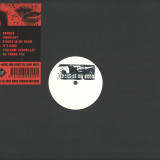
For her debut EP “Echoes in my Room”, Camy Huot set out to write about what she knows, channeling a primal collection of fucked up thoughts through an invigorating, brutally honest clash of feverish noise, cavernous textures and arpeggiated beats.
Long Beach legend Scotty Coats links the West Coast eclecticism of Stones Throw to the NYC cool of DFA and Rong to the Balearic gods of DJ Harvey et al. He personally introduced Be With to Ned Doheny 10 years ago and he was immortalised on Smith & Mudd's last LP. And he's the main man behind the mysteriously titled duo Todd Russell & The Dangerous Coats, alongside Erick "Todd" Coomes (Lettuce founder/bassist).
In very real danger of being lost forever, we unearthed two of their private recordings and present them as a double A-Side 12", adorned with S-T-U-N-N-I-N-G artwork, courtesy of Arizona artist Frank Gonzales.
"Playa Larga" is a melodic, mellow masterpiece and is quintessentially Balearic. It's stretched out, low slung, guitar-soaked drum-machine soul music. It's multi-layered and contains multitudes: it builds and builds and builds and mesmerises as it does so. On the flip, "1900 Ocean Avenue" is a super slo-mo, sunbaked drug-chug which is already blowing minds thanks to early leaks of this cosmic, psychedelic detonation.
On first listen back, Erick said to Scotty: “So wait, nothing really happens, I mean nothing bad happens but nothing really happens”. Apparently these tracks were a bit foreign for Erick, musically, because of the lack of structure in the songs.
One morning, years later, Erick called Scotty and excitedly declared: “dude, I get it now!”. He was listening to random music with a lady friend while watching the sunrise in his 1900 Ocean Ave apartment and "Playa Larga" came on randomly. He'd forgotten all about it and said he had to get up and see what song it was because "it was the perfect soundtrack for a psychedelic sunrise over the ocean."
And that's exactly how we came across it, circa 2018, randomly popping up on a playlist while we were busy doing other things. It stopped us in our tracks but, when trying to find any info on iTunes, we were out of luck. It was only years later that we worked out Scotty had sent it to us. Ever since, we've been working on getting this out to you all. It's finally time.
We've only 500 pressed for the world, with many of them spoken for by those lucky enough to be already ITK, so these are gonna fly: be warned!
Scotty is a world class raconteur so we'll hand over to him to explain how these songs came about and why they mean so much to him in the context of his wider raison d'être:
"These were made 13 years ago when I was a new dad and left my job at Ubiquity Records to provide security for my newborn son, Nolan Liam Chai Coats. I became miserable working a job outside of music for the first time in my life and I was laid off 4 months into it. I was left wondering how the fuck am I going to provide for my family?
I lived in Long Beach and Erick lived a few blocks away. I would walk to his house when Jen finally got Nolan to sleep so I could escape my panic, drink some beers (is it beerlearic?) and make some music. He lived overlooking the ocean with the Queen Mary on the horizon, so I guess mellow Long Beach nights unintentionally inspired the music. These songs were the first two songs we ever made and they embody the desperation and hope I really needed at that time. 12 years later, when Rob at Be With expressed an interest in releasing it, we had Erick's brother Tyler Tycoon Coomes play drums on it at Jazzcats Studio in LBC, with Jonny Bell.
Shortly after I was laid off, I discovered The Stepkids. I was blown away by "Shadows On Behalf" and sent it on to Gilles Peterson. He played it on Worldwide the next day. The Stepkids pulled me back into music and made me realize I wasn't prepared to do anything but be involved with music. After I heard their unreleased album, I knew there was something there so I sent it to my good friend Jamie Strong who was at Stones Throw at the time. Jamie passed it along to Peanut Butter Wolf and the band asked me to be their manager. I didn't think I was the right guy for the job but wanted to see them do well so I told them I would help shop their album. Jamie suggested I take his place at Stones Throw, just as he did when he left Ubiquity Records. I always joke that Jamie can call me Scotty Coat Tails because I had been riding his for years.
Wolf told him that "Scotty is a nice guy but has horrible taste in music", which was ironic because he was literally trying to sign the band that I brought him. The Stepkids signed with Stones Throw and found a real manager. 6 or so months later Jamie sent me a note saying "Stones Throw is hiring and you should apply lol". I told him I was going to send my resume and the subject of the email was to read I HAVE GREAT FUCKING TASTE IN MUSIC. I did just that and got a call the next day from their new GM asking me to come in for an interview. When I walked in I was in Wolf's office where I had been 6 months before, signing The Stepkids
deal. Wolf and Jason McGuire were asking me some questions and wanted to introduce me to Jeff Jank. Jank walked in and said "Isn't this the guy that Jamie wanted to bring on 6 months ago?" They confirmed and he threw his hands up and walked out saying "I've seen enough". I got the job. I worked there for 2 or 3 years until I left to join forces with Jamie Strong at his label and stayed there for almost 7 years."
Scotty wanted to use a painting by his good friend, Frank Gonzales, for the front cover image. Frank was incredibly generous in letting us use this one, and Scotty was completely honoured. We think you'll agree, it's pretty striking. Simon Francis carefully mastered the original audio for both tracks and Cicely Balston's precise cut for Alchemy at AIR Studios ensures this double A-side 12" sounds appropriately outstanding. The immaculate Record Industry pressing will ensure these previously unheard, recently discovered recordings finally get a chance to shine.
Tapping into the seductive unease of the unexplained, Modula lands on Tartelet Archives with Paranormal Phenomena – The Icelandic Expedition, a nine-track album that evokes alien synth- electro and New Age soundscapes.
During a trip to Iceland in February 2020, Naples native Filippo Colonna Romano (Modula) experienced the raw power of the island’s otherworldly natural forces. Inspired by his field recordings and a rekindled interest in sci-fi, Paranormal Phenomena – The Icelandic Expedition was born. Steeped in haunting LA synthesis and cinematic tension, the album is an imagined soundtrack to a supernatural thriller, cast in the icy tones of the Roland JD-800.
“When I went to Iceland I was so excited about the ambience and sounds,” says Modula. “I felt everything was stronger than normal; the wind was brutal, the waves fast and noisy. I came to the conclusion that what I had captured all sounded strangely eerie and otherworldly. I decided to compose music that had the same vibe as the field recordings – cold and strange, mysterious and alien.”
The album includes nine tracks each representing a scene in the “movie” ranging from alien synth-electro to New Age ambient moods and soundscapes, inviting the listener on a journey through cold landscapes and into dark caves where unknown creatures lurk in the shadows. Paranormal Phenomena leads logically on from Modula’s previous work for Bordello A Parigi and Firecracker, not to mention his Alba – Tempesta – Notturno EP on Tartelet Records which drew on field recordings from the jungles of South America. Merging extreme environments with a rich palette of classic outboard gear, Modula’s music transports listeners through space and time. Given the heavy motion-picture theme present in Paranormal Phenomena – The Icelandic Expedition, the album is a fitting release to inaugurate Tartelet Archives, a new sub-label to Tartelet Records focusing on electronic obscurities and sounds from the past.
Futurismo proudly present a vital compilation born in the shadows of American punk; AMERICAN GRAVE Gothic Punk / Deathrock USA: 1978-1988, the third volume in their Altered Vision anthology series.
Drawing from darkest depths of the American spirit, American Grave is testament to a subculture spawned from late night savagery, graveyard hangouts and suburban isolation. Deathrock, post-punk, goth, whatever term you prefer, this compilation showcases the sounds and aesthetics of a tarnished golden era, an underground movement that took the DIY concepts of punk and the velocity of a burgeoning hardcore scene and immersed it in echoes, distortion, tribal rhythms and macabre vocals, thematically preying upon cult horror flicks, surrealism, and the manipulation of religious iconography. Whilst the UK had a counterpart scene many would hail as Goth, this was different, this was a truly American incarnation, a new breed of youth haunted by the ghosts of old blues, garage and glam, bleak theatrical imagery dressed up to evoke a response, smeared eyeliner, leather, bones…black. This was a backlash against a culture in decay, bucking against a puritanical oppression brought on by the archaic social standards set by their parents. It was aggression manifested as gloom, it was a ceremony, the celebration of death.
American Grave has been co-curated by Wesley Eisold (Cold Cave/American Nightmare/Heartworm Press) in collaboration with Futurismo head honcho Del Jae, to bring you a haunting tracklist ranging from the all important integral mainstays of the genre to those rarer and more elusive artists, including many recordings that have never been reissued before on any format. Featuring the music of Christian Death, T.S.O.L., The Cramps, Of A Mesh, The Gun Club, Twisted Roots, Kommunity FK, The Brainz, Theatre Of Ice, Burning Image, Fur Bible, PSI Com, Shadow Of Fear, Super Heroines, 45 Grave and more.
The music on this compilation is reinstated further from a visual perspective by an array of incredible images by famed punk photographer Edward Colver, and lovingly designed to the level you would expect from a Futurismo release.
2xLP on limited edition ‘Splintered Tomb’ coloured vinyl. It is housed in a gloss laminated outer sleeve with colour inner sleeves and contains a large fold-out poster with unseen photos by the great Edward Colver, words by Lisa Fancher and liner notes by Wesley Eisold of Cold Cave/American Nightmare.
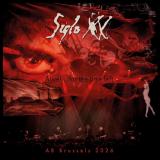
Belgian Limburg-based Cold Wavers Siglo XX, were a leading coldwave band, successfully touring around Europe,and active between 1978 and 1989. Often called the Belgian Joy Division with their dark sound they made quite an impression in their heydays. Their backcatalogue and their liveshows still sound today timeless and fresh.
The past year they started touring again and played an impressive and powerful concert on January 17th in Ancienne Belgique, Brussels. On the set list an exquisite selection of their best work. This live album captures that performance as if you were there yourself, and maybe you were!
Tucked in the heart of Koreatown, Los Angeles, lies The Libra Hotel—the titular architecture of Nick Malkin's new album and site of his musical and psychogeographic exploration. Unlike most musical "site-specific" studies, Malkin remains wholly ambivalent to the documentarian approach, instead sharpening an auteur-like focus on the site as a conceptual and highly expressive backdrop. The Libra is musically explored as a space that houses a noir fragmentation of identity—the exhausted trope of a complicated protagonist walking through rain-soaked street corners and fumy neon lights—where an inner monologue is rendered in both miniature and at a cosmic scale. Casting aside stifling tropes around field recording, ambient, and improvised music, Malkin's work finds its own unique fidelity and emotional core through the assembly and reassembly of memory. Nearly every sound on the album—from frayed saxophones, lambent pianos, and dissected jazz drum kits—are multiplied, shattered, and reconstituted into shapes that adorn The Libra in a motion-blurred fog. The narrative of the Hotel suddenly appears as if out of the mist, with intersecting characters interacting within its walls by happenstance. Adminst the languid set pieces, wraith-like sonic grains gravitate around wide subbass beams that give structural form to The Libra, a narrative tension like when a scene is shot from hundreds of different perspectives: an image both luminous and veiled.
Much like Frank Sinatra's own spatial residency immortalized on "Live at The Sands," "At The Libra Hotel" showcases an exuberant view of entertainment, hospitality, and a form of masculinity, one that can quickly detourn into darkness. Knowing this, Malkin extracts a melancholic core out of The Libra locale. The flickering shadows of American decadence are shown in their ephemeral honesty, lines that trace how even in everyday life virtue is tested, sanity is tested, even reality is tested within the confines of desire, within the night. The album is draped in fleeting textures, carefully arranged with a trance-like microtonality, the faint inflections and articulations of a jazz band cascading into dissipated stillness. Voicemails about changed locations and covert eavesdropping on guests' whispered conversations provide an atmosphere of missed connection and voyeurism—a purloined letter of desire receding into a vanishing point. Like the music itself, The Hotel, a chapel perilous at the intersection of desolation row, the center of it all, yet simultaneously at the edge of town, becomes a structure between libidinous virtuality and actuality—our inevitable half-light.
Ultimately, the pensive atmosphere of "At The Libra Hotel," powerfully asserts a plea for the kinds of intimacy only possible in transient spaces. Here, memory cascades into a force that feels like something supernatural, perhaps even religious, yet always subject to the infidelity of our imagination. Here, the album opens into its primary psychodrama, the transient nature of subjectivity itself and how this becomes fractured in the tumult between our commitments and desires. Within this nocturnal space, to quote Louise Bourgeois, "you pile up associations the way you pile up bricks. Memory itself is a form of architecture."
Liam Hayes is an acclaimed American musical artist known for his songwriting and uncompromising approach to making records. He started cassette multitracking while a preteen and made his first real studio recording at twenty one. This started an obsession that ultimately led to his releasing a 7” single (Found A Little Baby/Three Quarters Blind Eyes) on a small US indie label. Those tracks garnered the attention of the UK music press, and on the strength of those songs a career was launched. The follow up was highly anticipated by critics and listeners alike, but rather than playing to expectations he delivered a highly personal album of solo piano/vocal songs (More You Becomes You). Not one to repeat himself, Hayes started off the millennium by serving up the extravagant pop/soul opus (Fed). Both records are now considered to be masterpieces.
Hayes’ songs are recognised for their exquisite melodies, poetic lyrics and distinctive vocals. He’s released seven albums, two singles and a soundtrack, and applies his craftsmanship to a variety of genres from orchestrated pop to stripped down rock. Comparisons to Brian Wilson, Laura Nyro, Carole King, Harry Nilsson, Badfinger (and even Prince) are numerous. His music takes the best of radio and stellar classic pop records of the 60’s and 70’s and brings it into the present.
Along with making records Hayes has appeared on screen performing his music in High Fidelity (directed by Stephen Frears) and A Glimpse Inside the Mind of Charles Swan III(directed by Roman Coppola) which he also wrote the soundtrack for.
In this, their first production for Hayes, are (executive producer) Terrence Washington and (multi-instrumentalist/producer/arranger) Vincent Carlo with additional contributions from Terrence’s father, legendary arranger TOM TOM 2084 (Chi-Lites, Phil Collins, Plush).
His latest album, Dancing Backwards, sees Liam stepping through the shadows in his life and into a new musical day.
Shaped in the shadows and sounds of the legendary Topanga Canyon, California. The debut album from Biita Houdei is buoyed by a magic that feels wildly and beautifully untamed; wild-hearted sentiments that are shaped by the world around it, fascinated by the enchantment of it all, and delivered via a collective (harmony layered) voice that understands the complex nature of what it means to be alive in the here and now.
Produced by Haley Heynderickx, 'This Bed Was Made For Me' is a striking collection of stirring, signature folk songs animated by subtle instrumentation and orchestral flourishes. It feels lived in: vocals weave together in a beautiful harmonic dance, seasons shift, sunshine appears and bold psychedelic colours warm the horizon.
In the early stages of making her debut album, Biita Houdei knew two things: that she wanted the recordings to feel distinctly and palpably warm, and that she would sew a unique patch for every song on the album. The first of those things is subjective, though brightness pours in from all corners of This Bed Was Made For Me. The second became a laborious task she undertook throughout the process, the completion of which is testament to the slow process of it all, to the physical commitment and patience required to make a full work of art.
The patches she crafted during the making of This Bed Was Made For Me became a full quilt, one that now adorns the album’s front cover. Beneath it sits a striking collection of Houdei’s stirring, signature folk songs, brought into fruition with the help of fellow songwriter Haley Heynderickx, in her first lead production role, and the album’s producer/engineer Sahil Ansari. It’s also the first release Biita (pronounced “bee-tah”) is releasing under her newly-taken name, one that was gifted to her by her auntie and means "unique" in the Farsi language. “I proudly take this name,” Biita says of the change. “It makes me feel that much closer to my Persian heritage.”
Recorded across ten back-to-back and full days, the album touches on themes of love and heritage, of taking chances, the preciousness of time and the impact we all have on the world around us. A number of the songs were written in Topanga, California, while Biita settled into a new home as wild fires raged, and as she adjusted to a life which no longer held distinct seasonal changes, far from the Ozark Mountain home she felt so attached to. Such themes reveal themselves in a variety of ways across the album’s fourteen songs, that key sense of warmth retained in the bones of the album whether they are stepping into darkness or seeking out light.
The album feels lived in and alive; dust swirls, seasons shift, sunshine appears and is held. Biita calls it ‘psychedelic’ and there is indeed a sense of that in the world building, in the way the bold colours are always shifting. Formed of fourteen songs, and filling nearly forty-five minutes, This Bed Was Made For Me not only builds a whole world for listeners to inhabit but also implores you to stay a while. This was deliberate, indeed it’s Biita’s wish that listeners give the album dedicated time; to learn its shape, to explore it fully, away from the instant grab of playlists and skewed algorithms.
“Many of my favourite albums didn’t reveal themselves instantly to me,” Biita, now based in the Catskill Mountains of New York, explains. “Some did, of course, but I had to work to understand the full scope of the piece as a whole. I encourage people to dive deeper into everything that they choose to consume. It is not my intention to sound pretentious, but instead, I am trying harder to explain the gratitude I have for being able to craft every part of this album— using my hands, my brain, my voice, my visions. To me, it is an all encompassing work of art,” she continues. “Making the quilt was laborious. Taking the cover photo was laborious. No shortcuts, but rather a manual and tangible approach. I am thankful for the time it took.”
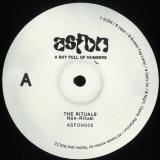
After making waves in the underground with their first release, psychedelic techno explorations from Winkles, A Sky Full Of Numbers head to the shoreline with a five tracker of misty electronica from Japan’s The Rituals, the new collaboration between Tasoko and DOLTZ. Across acclaimed releases on Explore, Bitta, and Delsin, the duo have separately explored deep techno, ambient, acid house and IDM, showcasing innovative sound design and spacious, understated grooves. For AFSON, the duo apply their unique point of view at a lower tempo, pulling away from the peak time to deliver a shadowy journey through dewy electronics.
Opening transmission 503M feels like tuning into a damaged frequency somewhere beyond the cloud line. Misty lead synths slither through blown circuitry while buzzing sequences and short-circuiting percussion crackle against purring bass pressure below.
There’s an eerie electricity in the atmosphere, as if the track’s been exposed to too much heat and left glowing softly in the dark. From the opening bars, The Rituals instantly establish their ability to make techno feel both mechanical and hallucinatory.
Ugan sees the duo descend deeper into the haze. Reverb-drenched synth motifs hover like distant lights through thick fog while a propulsive dub bassline locks into loose electro-funk rhythms beneath. There are echoes of hauntological electronics and early IDM experiments here, but The Rituals avoid nostalgia entirely, steering the track instead towards something crepuscular and alive.
Stepping out of the shadows, Broken Frog Lamp pushes forward on a rolling rhythmic framework as melodies slowly force their way through layers of sea mist and static interference. Atmospheric without losing momentum, the track balances submerged emotional weight with hypnotic forward motion.
The mood softens but never dissipates on Salty Air, a damp and dewy excursion into dubbed-out psychedelia. Rainfall ambience, skittering stone percussion and swelling pads fold around sliding sub bass and filtered stabs, while jazzy cymbals and syncopated hats gently pull the track forward, as the condensation clings to the hardware.
Closing cut “Night, Castle, Reflection” drifts into darker territories, where redlining drums and pulsing low-end pressure throb beneath thick layers of saturated texture. Woozy synth work smears against tightly controlled rhythms, creating an immersive and slightly uneasy atmosphere that closes the EP at its most introspective point.
Taken as a whole, the EP transports you into the midnight hour, when the comforting embrace of stillness can easily nudge you towards hallucination, dissolving the boundaries between dream state and dancefloor hypnosis.
out of Stock
Last delivered 38 days ago available to reorder, subject to availability
Italian-Iranian DJ/producer Sciahri lays down a deeply hypnotic seven- track EP on return to Mutual Rytm. Heading up the agenda-setting Sublunar label, which is one of Mutual Rytm boss SHDW's personal favourites, Sciahri has been deep in the scene for more than a decade ever since he turned heads with a debut on Ilian Tape in 2014. Well respected for his carefully balanced love of the classic sound with new school influences, always delivering cuts with a refined and personal touch, highlighted and showcased via his widely-loved ‘Pareidolia’ release series. Returning on the label following his appearance on the ‘Federation of Rytm IV’ compilation, he lands with a freshly evolved EP that kicks off with the much hyped ID, ‘Moonwake’. That cut is built on robust, rumbling drums and layered up with flashy synths that bring stark futurism to the dance floor. ‘Liminal’ follows a similar linear path with musical drums and synths that twist and twitch, firing your synapses while your body is locked to the rhythm, before ‘Night Sentinel’ transports you to a more eerie world of anxiousness and tension - the synths are spooky, and the sonar pulses keep you on edge as immersive drums race nonstop. ‘Unmoved’ lands heavy, the bulky kick drums coming on like a storm with howling synth winds adding to the all-consuming atmosphere. ‘Too Much Time’ closes out with a wall-rattling groove and subtle synth motifs that creep in the shadows. As always with the label, digital cuts ‘Silent Frontier’ - which gets dancers on their toes with a backlit synth glow - and ‘Louisiana’ - which brings a more psychedelic energy and hard, hammering groove, rounding out a stylish, meticulously produced offering.
out of Stock
Last delivered 31 days ago available to reorder, subject to availability
Am 15. Februar 2026 feierte Posaunist und Sänger Nils Landgren seinen 70. Geburtstag – wie es sich für einen der erfolgreichsten europäischen Musiker seines Fachs gehört mit einem oppulenten Orchesteralbum »Love of My Life« und einer Tour durch die großen Konzerthäuser.
ACT-Gründer, Förderer und Freund Siggi Loch machte Nils Landgren ein besonderes Geschenk: Einen Abend in der von ihm kuratierten Reihe »Jazz at Berlin Philharmonic« im großen Saal der Berliner Philharmonie. Im ersten Teil des Konzertes spielten Mitglieder der ACT Family für »Mr. Red Horn«.
Nach der Pause betrat Nils Landgren unter großem Jubel selbst die Bühne – mit einem exklusiven Programm, dass seinem großen Idol und Weggefährten Joe Sample gewidmet war. Mit dabei: Michael Wollny, Lars Danielsson, Wolfgang Haffner, China Moses und Mitglieder der Berliner Philharmoniker mit Arrangements von Magnus Lindgren.
Es wurde eine Soul-Jazz-Party im Klassiktempel, bei der am Ende der ganze Saal tanzte – jetzt nachzuhören auf »Jazz at Berlin Philharmonic – Nils Landgren 70«
Not all tropical escapes are meant to soothe. Some are meant to seduce… and unsettle.
On Haunted Bossa Nova, Creepxotica reimagines the language of classic exotica through a darker, more cinematic lens—where swaying rhythms and lush melodies drift through shadows instead of sunlight. This isn’t background music for a carefree afternoon. It’s a late-night transmission from a hidden lounge at the edge of a dream.
Built on the bones of traditional bossa nova and mid-century exotica, the album pulses with nylon-string guitars, vibraphone shimmer, and hypnotic percussion—but everything feels just slightly off-center, like a memory slipping out of reach. There’s a tension beneath the beauty, a sense that something unseen is moving just beyond the music. Each track unfolds like a scene, contributing to a larger atmosphere that’s immersive, cohesive, and quietly haunting.
What sets Haunted Bossa Nova apart is its intention. This is not nostalgia for nostalgia’s sake—it’s a deliberate evolution. Creepxotica honors the lineage of the genre while pushing it into more mysterious territory, blending tropical warmth with ambient unease and cinematic depth. The result feels less like a throwback and more like a lost soundtrack—discovered, not created.
Sonically rich and meticulously arranged, the album invites deep listening. Every tone, every pause, every echo has purpose. It’s exotica for those who crave mood over kitsch, atmosphere over imitation.
For listeners drawn to the edges of jazz, lounge, and ambient soundscapes, Haunted Bossa Nova offers something rare: a fully realized world that lingers long after the final note fades.
“No-one does 140 better than the UK, the way it gets done here is different and I really wanted to explore that…”
King Kashmere is an experimental musician from North West London.
Best known as a voice of distinction among the UK rap fraternity and frontman of decorated duo Strange U, much less is known about his work as a producer.
After years of fine tuning his craft, King Kashmere reveals ’Zero Point Modulations’, his first full length release as executive producer / from behind the boards.
A feature-stacked, genre-blurring spectacular that shines a powerful light on what Kashmere sees as his true calling, the 23-track release marks the start of a long-awaited shift in King Kashmere’s output; rooted in the coding boom of the mid-eighties but encapsulated in a double disc vinyl this Summer.
“No-one does 140 better than the UK, the way it gets done here is different and I really wanted to explore that…”
King Kashmere is an experimental musician from North West London.
Best known as a voice of distinction among the UK rap fraternity and frontman of decorated duo Strange U, much less is known about his work as a producer.
After years of fine tuning his craft, King Kashmere reveals ’Zero Point Modulations’, his first full length release as executive producer / from behind the boards.
A feature-stacked, genre-blurring spectacular that shines a powerful light on what Kashmere sees as his true calling, the 23-track release marks the start of a long-awaited shift in King Kashmere’s output; rooted in the coding boom of the mid-eighties but encapsulated in a double disc vinyl this Summer.
“No-one does 140 better than the UK, the way it gets done here is different and I really wanted to explore that…”
King Kashmere is an experimental musician from North West London.
Best known as a voice of distinction among the UK rap fraternity and frontman of decorated duo Strange U, much less is known about his work as a producer.
After years of fine tuning his craft, King Kashmere reveals ’Zero Point Modulations’, his first full length release as executive producer / from behind the boards.
A feature-stacked, genre-blurring spectacular that shines a powerful light on what Kashmere sees as his true calling, the 23-track release marks the start of a long-awaited shift in King Kashmere’s output; rooted in the coding boom of the mid-eighties but encapsulated in a double disc vinyl this Summer.
Sasha & Franky Wah reunite for second collaborative single, 'Get On My Level'.
The club-ready cut blends marries inviting darkness with meticulous synth craft.
Seasoned electronic favourite Sasha and contemporary trailblazer Franky Wah have shown great creative chemistry in both the studio and the DJ booth: their fi rst hook-up was on Last Night On Earth back in 2020 when they dropped the huge four-track 'Haunted EP.' Since then, they’ve reunited for multiple b2b sets across the globe - from Sydney to Ibiza. Now they have once more combined their respective nous into a new track destined to become an Ibiza anthem this summer.
'Get On My Level' is primed and ready to shake up the dance fl oor. It's powered by a warped, dark bassline that throbs underneath subtle percussion. Plenty of open space lets a moody atmosphere draw you in, while skeletal drums and percussion keep things moving before a big drop, and wispy synths inject future energy as a grainy, ominous voice lurks in the shadows. Dub and instrumental versions are also included to cover all bases.
out of Stock
Last delivered 20 days ago available to reorder, subject to availability
Shinichi Koboyashi’s music as Bot1500 has such a beautiful signature to it. Using the layers and language of ambient IDM, artfully arranged pads & chords and crisp vectored breaks, he’s been creating a beautiful and highly individual sound.
The Black Sea, His first album since 2022’s Surreal on AD93’s sister label Lith Dolina, spaces things out more and focuses inward with a palette of minimalism and increased emotional resonance. It’s been a focus for Shinichi across his self-published studio work in the last few years.
The album’s tracks feel increasingly rooted in the principles and logic of dub. Utilising more space, more silence, and more focus on the simplicity and elegance of the composition folded into radiant arrangements of melody, snare, shade and echo.
The sea is both an inner landscape and a geographic image that hangs over the record’s mood. A dark humid summer night, like that on Japanese coasts. A small boat sails aimlessly. An eerie tone, but with a glimpse of beauty. The water is melancholic, enveloping, and endless.
Each track is written at 140bpm save for last track “White Flocks” at 120, for the image of heading south to close out.
out of Stock
Last delivered 19 days ago available to reorder, subject to availability
Bristol duo Pume Orenge unspool a world of spectral electronica from cassette loops and instrumental improvisation on their debut album Angel By Milo for Odda Recordings.
It is a world that opens draped in ferric hiss. A fog of sound, dense and yet not quite there, catching the light in strange shades and ambient drifts. Looping and receding, looping and receding, as pucks of static burst like faraway fireworks on a cold winter’s night. Sound sources obscured, ambiguous, not quite what they seem.
Angel By Milo takes its lead from the analogue process and textures by which it was made. Percussive and melodic loops were established, manipulated and responded to with instrumental improvisation, in a give-and-take with the materiality of the medium.
Across these seven intricately developed tracks, the sound fluctuates between the cinematic and the introspective, at times melancholy, at others verging on a kind of restrained anger, before the calm sets in once more. It is music for the small hours, awash with the grainy stuff of memory.
Embedded within Bristol’s independent scene, Pume Orenge’s quiet debut also speaks to the duo’s shared roots in the area, and like many of Odda’s previous releases, contains a sensitivity to place and atmosphere, even when these are no more than implied.
Angel By Milo builds on the DIY ethos of Pume Orenge's 2023 self-titled debut EP, whose tracks were recorded live in single takes, now honing a more intentional, purposeful approach to music making. It is one in which layers of meaning are allowed to reveal themselves, a way of composing that makes a virtue of its labour and the chance occurrences that can arise in the process.
This is music in praise of shadows. Of the things we can’t quite see, the feelings we can’t quite grasp. Heard through the haze, or maybe not at all.
out of Stock
Last delivered 5 months ago available to reorder, subject to availability