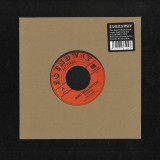
Daryl Hall & John Oates and All-4-One's reggae cover of the popular song is now available on 7-inch vinyl!
The second 7-inch release from "avex REGGAE SYSTEM," a compilation series of reggae covers of classic songs from various genres, features the dance classic "I Can't Go For That" by Daryl Hall & John Oates and All-4-One's hit " So Much In Love". Both songs have been arranged in a way that transforms the original's gentle tone into a groovy reggae number with a hint of sadness. This is a track that can be used anywhere from relaxing time at home to DJ play.
Buscar:shango
- 1
Soundway presents a double-sider of raw, West Indian Funk from 1977. Led by King Wellington’s ‘Shango’, the stand-out cut harvested from his Sooner Or Later LP finally gets the 45 treatment
it deserves.
Inspired by the Shango ritual with its roots in Yoruba culture, traces of Calypso music are driven by hypnotic bass and Wellington’s signature vocal, making up a musical blend only found in the
Caribbean.
Hidden on the B-side, ‘Mystery Music’ fronted by Canadian musician Tony Springer, embarks on a dreamy, dynamic and even a touch psychedelic trip.
Steel pans coupled with floating horns, electronic keyboard effects, crisp drums and subtle guitar licks cook up a soundscape baked by the Trinidad sun. While original copies climb their way to impossible-to-find status, enthusiasts will be excited to hear this sought after piece of music is available on the 45 format again.
repressed !
For the Shango EP, producer Waajeed transitions from downbeat to upbeat on the latest release from his DIRT TECH RECK imprint with three choice cuts ranging from the millennial Blaxploitation vibes of the title track to the orgasmic, angular funk that is “Better Late Than Never” and “Winston’s Midnight Disco.” Merging the electro sounds of his native city with the pulsating drums of his native land, Waajeed taps into African roots in reclaiming the dance music that is his birthright as a son of Detroit.
Quick run of remixes for Addison Groove's recently released 'Changa' — The white-label style series from Tony aka Headhunter aka Addison Grooove is now here, in it's fourth edition, coming with a series of Shango remixes from Ejeca, O'Flynn, Nan Kole, Amit and Subp Yao. You know the deal.....
- A1: Orlando Julius & The Afro Sounders - Alo Mi Alo (Parts 1 & 2)
- A2: Segun Bucknor & His Revolution - La La La
- A3: Lijadu Sisters - Orere Elejigbo
- B1: Peter King - Shango
- B2: Sahara All Stars Band Jos - Enjoy Yourse Lf
- C1: Fela Ransome Kuti & The Africa 70 - Jeun Ko Ku (Chop %U2018N%U2019 Quench)
- C2: Tunji Oyelana & The Benders - Ifa
- C3: Ofo The Black Company - Allah Wakbarr
- D1: He Funkees - Dancing Time
- D2: Monomono - Tire Loma Da Nigbehin
- D3: Bala Miller & The Great Music Pirameeds Of Afrika - Ikon Allah
- E1: Sir Victor Uwaifo & His Melody Maestroes - Akuyan Ekassa
- E2: Shina Williams & His African Percussionists - Agboju Logun
- F1: Gasper Lawal - Kita Kita
- F2: Sunny Ade & His African Beats - Ja Fun Mi (Instrumental)
25TH ANNIVERSARY EDITION[31,05 €]
Strut present a definitive vinyl edition of the groundbreaking compilation 'Nigeria 70'. Originally released in 2001, the collection set the benchmark for a new generation of archive labels and releases mining the vaults for rare Afro funk and Afro jazz fusions and helped to paint the wider picture of the 1970s Lagos scene beyond Fela Kuti's catalogue for a legion of soul, funk and dance music enthusiasts. This definitive reissue features the original LP remastered and pressed on 180g triple vinyl in a gatefold sleeve.
Narrated by Wunmi with commentary by the late Nigerian academic "Elder" Steve Rhodes, this one-hour piece is an essential snapshot of the 1970s Lagos scene and the cultural and political context from many of the key players of the time. It includes interviews with Ginger Baker, Fela Kuti, Ebenezer Obey, Segun Bucknor, Joni Haastrup of Monomono and many more.
- A1: Praise Poems - Warmth
- A2: Carefree - Larry Covin
- A3: Alone Again - Jorge Darden
- B1: What Is Life - Lee Stone
- B2: Resurgence - Ulysses Crockett
- B3: Dragon Rock - The P.t.s
- B4: Black Velvet Soul - Cookie Thomas (Part 1)
- C1: Black Velvet Soul - Cookie Thomas (Part 2)
- C2: Let Me Down Easy - Bold Breed Ft. B.g
- C3: God Of Thunder And Lightning (Shango) - Larry Dismond
- C4: Strawberries - Raspberries - Don Hales
- C5: Wait For Me - Bobby Stroup
- D1: The Way I See It - Far Out - Nature's Time
- D2: Can You Understand Sacrifice - Tom Macke
- D3: Cold Soul - Gemstones
- D4: Tribute To Ruffian - Innerflight (Part 1&2)
To all our respected critics, reviewers, and wisenheimer: be prepared to listen to this album in tranquility. If you do not do so you will most likely rate this release one out of five stars. And this is something which it certainly does not deserve. This album needs time and patience to be fully understood. And if you do so you will be enlightened by the true beauty of this selection.
Not only for Don McCaslin's project Warmth the time has come for representation and appreciation. All the songs on this disc are well worth to be discovered. No matter if you skip to Jorge Darden's jazzy-soulful "Alone Again" or to Seeds of Fulfillment's stunning "Solemn Solitude". Each and every song is a masterpiece in its own right. Funky soul music fans will be pleased to get a chance to listen to Cookie Thomas and Bold Breed, two cuts which are hard to find in its original format. Rarity is one thing, quality is another. The songs to be found here are both rare and good. Better yet, until now, all of these tracks had not yet been compiled.
After Movements and Feeling Nice, two already well-established compilation series on Tramp, Praise Poems could be the start of a new successful one. It was solely the title track which lead us to release this album. Don't ask if there will be a Volume 2. We don't know yet. What we do know is that if we ever come across a similar tour de force as Don McCaslin's compostion, then there will certainly be one.
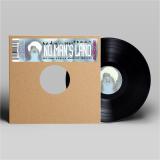
Complimenting his singular debut LP, 2025’s ‘Light Months Will Fly Over Us’, singer-songwriter and producer Addy Weitzman sees his thoughtful artrock and new wave aesthetic expanded by The Time & Space Machine for a limited three-track 12".
The long-running alias of British DJ, archivist and acid pioneer Richard Norris, this trio of remixes from The Time & Space Machine’s central processing unit finds Norris in a jubilant raving mode, his trademark psychedelia contributing to Slacker at its best and baggiest. The initial mix captures Weitzman’s songwriting in full, including his portentous vocal hook – “No man is a prophet in his own land” – a proverb first found in the gospels, blessed with the innovative Norris’s application of hypnotic groove, fat low-end and a ton of percussion.
The B-side sees Norris stripping things back in two directions: the Shango Dub draws focus on the higher vibrations found in the track’s beautifully intertwined percussive and synth elements, while the Riddim Mix reduces the frequencies further still, with a phased, slightly fried drum workout primed to spin heads as the night gets deeper and darker.
- A1: Malavoi - Te Traigo Guajira
- A2: Los Caraibes - Donde
- A3: Tropicana - Amor En Chachacha
- A4: Ryco Jazz - Wachi Wara
- A5: Eugene Balthazar - Dap Pignan
- A6: Roger Jaffort - Oye Mi Consejo
- A7: Les Kings - Oriza
- B1: Les Supers Jaguars - Tatalibaba
- B2: Super Combo De Pointe A Pitre - Serrana
- B3: L'ensemble Abricot - Se Quedo Boogaloo
- B4: Henri Guedon - Bilonga
- B5: Les Aiglons - Pensando En Ti
- B6: Los Martiniquenos - Caterate
In Guadeloupe, many people think that jazz and ka music are like a ring and a finger. To some extent, the same could be said about so called Latin music and the music played in the French West Indies.
Both aesthetics were born in the Caribbean and bear so many connections that they can easily be considered cousins. In constant dialogue, there are lots of examples of their fruitful alliance and have been for a while. The English country dance that used to be practiced in European lounges came to be called kadrille in Martinique and contradanza in Cuba. They both featured additional percussion instruments inherited from the transatlantic deportation. Drawing from shared feelings about the same traumatized identity – later to be creolized – it would be hard not to assume that they were meant to inspire each other. The golden age of the orchestras that graced the Pigalle nights during the interwar period further proves the point. As soon as the 1930s, Havana-born Don Barreto naturally mixed danzón and biguine music in a combo based at Melody's Bar. In the following decade, Félix Valvert, a conductor who was born and raised in Basse-Terre in Guadelupe, also worked wonders in Montparnasse with La Coupole, which was an orchestra made up of eclectic musicians. Afro- Caribbean performers of various origins were often hired on rhythm and brass sections in jazz bands, which used to enliven the typical French balls of the capital. In the 1930s and onwards, Rico’s Creole Band was one of them.
Martinican violinist-clarinettist Ernest Léardée, who would become the king of biguine music as well as the main figure of French Uncle Ben's TV commercials (a dark stigma of post-colonial stereotypes), had musicians from the whole Caribbean sphere play at his Bal Blomet – and they all enchanted "ces Zazous-là" (according the words of Léardée's biguine-calypso piece). In les Antilles (French for French West Indies), music history started to speed up in the 1950s, when trade expanded and radio stations grew bigger. The Guadelupean and Martiniquais youth tuned in their old galena radio sets to South American and Caribbean music. As for the women traders, les pacotilleuses, they bought and sold goods across different islands (the "passing of items through various hands" was thought to be most pleasurable) and brought back countless sounds in their luggage. Such was the case of Madame Balthazar, who once returned from Puerto Rico with the first 45rpm and 33rpm to ever enter Martinique.
Out of this adventure was created the famous Martinican label La Maison des Merengues, a music business she opened and undertook with her husband and which proved to be a major landmark. At the end of the 1950s, in Puerto Rico, Marius Cultier competed in the Piano International Contest playing a version of Monk's Round 'Midnight. He won the first prize and this distinction foreshadowed everything that was to come. Cultier, the heretic Monk of jazz, was quickly praised for writing superb melodies, always tinged with a twist that conferred a unique sound to his music. It didn't take long for the gifted self-taught musician to get to play with Los Cubanos, making a name for himself thanks to his impressive maestria on merengues.
The rest is history. Besides, in the late 1950s, Frantz Charles-Denis, born into the upper middle class in Saint-Pierre and better known by his first name Francisco, went back home after working at La Cabane Cubaine – a club located rue Fontaine where he had caught the Latin fever. Francisco's music was therefore heavily marked by his Cuban cousins' influence, which gave the combos he led a specific style and also led to renewal. Things were swinging hard in La Savane, located in the main square in Fort-de-France. He set up the Shango club close by and tested out the biguine lélé there, a new music formula spiced up with Latin rhythms. Soon afterwards, fate had him fly to Puerto Rico and Venezuela.
As for percussionist Henri Guédon (percussions were only a part of his many talents), he was born in Fort-de-France in May 22nd 1944, the day marking the celebration of the abolition of slavery. As an old man, he could remember that in " his father's Teppaz, a lot of hectic 6/8 music was constantly playing...". In the opening lines of his Lettre à Dizzy, a small illustrated collection of writings published by Del Arco, he highlighted the huge impact that cubop had on him as a teenage boy, around 1960. He eventually turned out to be the lider maximo in La Contesta, a big band steeped in Latin jazz. He was also the one who originated the word zouk to describe music which brought the sound of the New York barrio to Paris. It was the culmination of a journey that started in Sainte-Marie: "a mythical place for bélé, the equivalent of Cuban guaguancó". In the early 1960s, the tertiary economy developed to the detriment of agriculture. Yet rural life was where roots music emerged in Martinique and in Guadeloupe.
Record companies played a major part in the process of Latin versions sweeping across the islands – before reaching everywhere else. Producer Célini, boss of the great Aux Ondes label, and Marcel Mavounzy, both the head of Émeraude records - a firm which was founded in 1953 - as well as the brother of famous saxophonist Robert Mavounzy, were big names to bear in mind. Although there were many of them - all of whom are featured on this record - Henri Debs was definitely the major figure in the recording adventure. He proved to be so influential that he even got compared to Berry Gordy. In the mid 1950s, when he acquired his first Teppaz, he worked on his first compositions: a bolero and a chachacha. Then, he became the one man who made people discover Caribbean music, from calypso to merengue. He was among the first ones to rush out to San Juan, Puerto Rico, to buy records and distribute them through a store run by one of his brothers in Fort-de-France. He had members of the Fania All Star come and perform there, which he was madly proud about. He was also the first one to pay attention to Haitian music, such as compas direct and various other rhythms which would soon flood the market. As a result, many of the combos hitting his legendary studio would end up boosted by widespread "Afro-Latin" rhythms. However, he never denied his identity: gwo ka drums were given a major role, although they were instruments which had long been banned from the "official" music spheres. The present selection bears witness to such a creative swarming. Here are fourteen tracks of untimely yet unprecedented cross-fertilization: all types of music rooted in the Creole archipelago have found their way, whatsoever, to the tracklisting. Whether originating from the city or being more rural, they all go back to what Edouard Glissant, in an interview about the place of West Indian music in the Afro-American scope, called "the trace of singing, the one which got erased by slavery." "It is so in jazz, but also in reggae, calypso, biguine, salsa... This trace also manifests through the drums, whether Guadelupean, Dominican, Jamaican or Cuban... None of them being quite the same. They all point to the idea of a trace, seeking it out and connecting to each other through it. This is the hallmark of the African diaspora: its ability to create something new, in relation to itself, out of a trace. It may be the memory of a rhythm, the crafting of a drum, a means of expression which doesn't resort to an old language but to the modalities of it." The opening track features one of the emblematic orchestras of this aesthetic identity, criscrossing many music types from the archipelago. The 1974 Ray Barretto guajira – Ray Barretto was a major New York drummer influenced by Charlie Parker and Chano Pozzo – is magnificently performed by Malavoi, a legendary Fayolais group (i.e from Fort-de-France). Additionally, the compilation ends on a piece by Los Martiniqueños de Francisco. It symbolically closes the circle as it is a genuine potomitan of Martinique culture which also functions as a tireless campaigner for Afro-Caribbean music. Practicing the danmyé rounds (a kind of capoeiria) to the rhythm of the bèlè drum, it delivers a terrific Caterete, a kind of champeta of Afro- Colombian obedience which was originally composed by Colombian Fabián Ramón Veloz Fernández for the group Wgenda Kenya. The icing on the cake is Brazilian Marku Ribas, who found refuge in Martinique in the early 1970s, bringing his singing to the last trance-inducing track. These two "versions" convey the whole tone of a selection composed of rarities and classics of the tropicalized genre, swarming with tonic accents and convoluted rhythms. It is the sort of cocktail that the West Indians never failed to spice up with their own ingredients. For instance, the Los Caraïbes cover of Dónde, a famous Cuban theme composed by producer Ernesto Duarte Brito, has a typical violin and features renowned Martinique singer Joby Valente and his piquant voice.
The track used to be – or so we think – their only existing 45rpm. The meaningful Amor en chachachá by L'Ensemble Tropicana, a band which included Haitian musicians among whom was composer and leader Michel Desgrotte, also recalls how Latin music was pervasive in the tropics in the mid-1960s. They were the ones keeping people dancing at Le Cocoteraie in Guadelupe and La Bananeraie in Martinique. Around the same time, another "foreign" band, Congolese Freddy Mars N'Kounkou's Ryco Jazz, achieved some success on both islands by covering Latin jazz classics – such as their adaptation of Wachi Wara, a "soul sauce" by Dizzy Gillespie and Chano Pozo whose interweaving of strings and percussions can have anyone hit the dancefloor. How can you resist Dap Pinian indeed, a powerful guaguancó by Eugene Balthazar, performed by the Tropicana Orchestra and published by the Martinique-founded La Maison des Merengues? It also acts as a symbol of the maelstrom at work. Going by the name Paco et L'orchestre Cachunga, Roger Jaffory used to play guaguancó too: his Fania-inspired Oye mi consejo is one example of his style. Baila!!!!! Dancing was also one of the Kings' focus points. Oriza is a Puerto Rican bomba and a "classic" originally composed by Nuevayorquino trumpeter Ernie Agosto, which reserves major space for brasses, giving it a special sheen.
Emerging from the New York barrios crucible was also La Perfecta, a Martinique group originating from Trinidad, whose name directly references the totemic Eddie Palmieri figure as well as his own band, also called La Perfecta. Here they borrow Toumbadora from Colombian producer and composer Efraín Lancheros and interpret it by emphasizing percussions, which set fire to the track even more than the wind instruments. The same goes for Martinique's Super Jaguars, who use Tatalibaba – a composition by Cuban guitarist Florencio "Picolo" Santana which was made famous by Celia Cruz & La Sonora Matencera – as a pretext for sending their cadences into a frenzy. In a more typically salsa vein, the Super Combo, a famous Guadelupean orchestra from Pointe-Noire that was formed around the Desplan family and had Roger Plonquitte and Elie Bianay on board, adapt Serana, a theme by Roberto Angleró Pepín, a Puerto Rican composer, singer and musician also known for his song Soy Boricua. Here again, their vision comes close to surpassing the original. In the 1970s, L'Ensemble Abricot provided a handful of tracks of different syles, hence reaching the pinnacle of the art of achieving variety and giving pleasure. They played boleros, biguines, compas direct, guaguancó and even a good old boogaloo - the type they wanted to keep close to their hearts for ever, "pour toujours", as they sang along together in one of their songs. Léon Bertide's Martinican ensemble excelled at the boogaloo which had been composed by Puerto Rican saxophonist Hector Santos for the legendary El Gran Combo.
Three years later, in 1972, Henri Guédon, with the help of Paul Rosine on the vibraphone, tackled the Bilongo made famous by Eddie Palmieri. Such a classic!!!!! And so were the Aiglons, the band from Guadelupe: choosing to execute Pensando en tí, a composition by Dominican Aniceto Batista, on a cooler tempo than the original, they noticeably used a wonderfully (un)tuned keyboard in place of the accordion. On the high-value collectible single – the first one released by Les Aiglons under the Duli Disc label – there is a sticker classifying the track under the generic name "Afro". Now that is what we call a symbol. Jacques Denis
This London-based crew follows up their recent and acclaimed Akyio project with a 12" that dives deep into the vibrant rhythms of Brazil. The original is by the unique Samba De Matuto Leao Do Norte De Maragogi and was recorded by DJ Tudo. Kolago Kult offers a mix that is packed with Latin swagger, organic percussion and jumble of hand drums while the late Master Tiao adds his vocals to this samba-inspired street sound. Kolago Kult then steps up with two psychedelic remixes that are packed with heavy and dubby rhythms and many layers of percussion. A truly global journey, this one.
- A1: Orlando Julius & The Afro Sounders - Alo Mi Alo (Parts 1 & 2)
- A2: Segun Bucknor & His Revolution - La La La
- A3: Lijadu Sisters - Orere Elejigbo
- B1: Peter King - Shango
- B2: Sahara All Stars Band Jos - Enjoy Yourse Lf
- C1: Fela Ransome Kuti & The Africa 70 - Jeun Ko Ku (Chop %U2018N%U2019 Quench)
- C2: Tunji Oyelana & The Benders - Ifa
- C3: Ofo The Black Company - Allah Wakbarr
- D1: He Funkees - Dancing Time
- D2: Monomono - Tire Loma Da Nigbehin
- D3: Bala Miller & The Great Music Pirameeds Of Afrika - Ikon Allah
- E1: Sir Victor Uwaifo & His Melody Maestroes - Akuyan Ekassa
- E2: Shina Williams & His African Percussionists - Agboju Logun
- F1: Gasper Lawal - Kita Kita
- F2: Sunny Ade & His African Beats - Ja Fun Mi (Instrumental)
The Definitive Lp Edition[33,57 €]
Special edition repress of the groundbreaking ‘Nigeria 70’ compilation, now available on translucent green vinyl 3LP to celebrate the label’s 25th Anniversary.
Originally released in 2001, the collection set the benchmark for a new generation of archive labels and releases mining the vaults for rare Afro funk and Afro jazz fusions and helped to paint the wider picture of the 1970s Lagos scene beyond Fela Kuti's catalogue for a legion of soul, funk and dance music enthusiasts. Check!
Stark, cavernous and politically critical dub-poetry lands next on FELT in a vital sign-of-the-times fashion. Where much new music in our scene seems to act as a conduit for escapism, usually via melodic mind-balm or, if vocal at all, lyrical surrealism and ambiguity, the collaborative works of ELDON & Withdrawn take the left turn. The sound design perfectly fits into the FELT jigsaw puzzle: cold, slightly glitch-inspired, echo/reverb minimalism etc, but things are kicked up a stratosphere with the half dancehall-toasting, half scathing analysis of modern Britain coming straight from the mouth of ELDON.
Processed, enveloping kalimba notes shatter off into the distance in the opening moments of 'reGenaRation' before we're plunged into the depths. Bleeding into the title track, the A-side is all claustrophobic commentary on trickle down economics, overdrafts, killer shark metaphors and empire. Adam & Eve? Rewind and there's Shango, god of thunder and lightning. 5 rewinds later - still going. The B-side continues with equal strength, amazing wordplay and broken, industrial rhythms for a broken United Kingdom.
IYA SHILLELAGH is ELDON & Withdrawn
Recorded at Zig Zag Zig Studios
A2 co-produced by How-du
B1 co-produced by Shifting Borders
Mastered by GENG PTP
Design by Fergus Jones
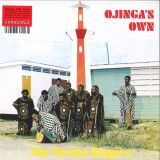
The 1974 debut album Ojinga’s Own and single Basa Bongo/Black Pepper by Guyanese Afro-Folk band The Yoruba Singers has been remastered for vinyl and digital.
The Yoruba Singers formed in Georgetown, Guyana in 1971. Despite their name they were not from Nigeria, but identified strongly with the area from which so many of the African diaspora in Guyana and neighbouring regions were originally descended.
The group started adapting Guyanese traditional folk music as well as writing their own - blending a mixture of protest, social commentary, blues, and genres inspired by the times. Beginning with about 12 people sharing vocal duties, most of the early repertoire was inspired
by folk songs that started life on plantations or in religious settings accompanied by a few sparse musical instruments.
Integral to the Yoruba Singers’ sound are echoes of Obeah traditions which are very closely related to the Santería religion of Cuba and the Orisha and Shango traditions of Trinidad and Tobago. Calypso and steel band culture from nearby Trinidad and Tobago was to some extent part of the musical DNA of the group, but they were naturally also influenced by the massive volume of rocksteady and roots-reggae coming from Jamaica.
- 01: Preludio Ii (Feat. Lex)
- 02: Fireflies
- 03: Fake Blood (Feat. Robby The Lord)
- 04: Tu Sabes K Si
- 05: Wednesday's Child (Feat. Saint Ezekiel)
- 06: The Tearer (Bembe)
- 07: Prayer For Shangó (Feat. Lex)
- 08: Voodoo Economics (Wolfman)
- 09: Heart Full Of Love
- 10: Mr. Envy
- 11: Closing Prayer (Feat. The London Lucumi Choir)
Red & Black Splatter Vinyl[23,74 €]
- 01: Preludio Ii (Feat. Lex)
- 02: Fireflies
- 03: Fake Blood (Feat. Robby The Lord)
- 04: Tu Sabes K Si
- 05: Wednesday's Child (Feat. Saint Ezekiel)
- 06: The Tearer (Bembe)
- 07: Prayer For Shangó (Feat. Lex)
- 08: Voodoo Economics (Wolfman)
- 09: Heart Full Of Love
- 10: Mr. Envy
- 11: Closing Prayer (Feat. The London Lucumi Choir)
Black Vinyl[21,81 €]
- A1: Marie Knight And Sister Rosetta Tharpe - Calvary
- A2: The Dundees - Evil One
- A3: The Heartbreakers - Wanda
- A4: Helene Polite - Love For Sale
- A5: Oscar Pettiford - Oscalypse
- A6: Bixie Crawford - Go Away Blues
- B1: Preston Love - Ali Baba's Boogie
- B2: Mamie Ree - I Wake Up Early In The Morning
- B3: Monchito - Caldonia
- B4: Betty Mattson - What Is This Thing Called Love
- B5: Effie Smith & Johnny Criner - Mambo Blues
- B6: Titus Turner - Big Mary's
- C1: The Blasts - Canaveral Rock
- C2: The Royals - I Want You To Be My Baby
- C3: Eunice Davis - My Beat Is 125Th St
- C4: Frank Butler - Girl Of My Dreams
- C5: Mr Bo - Heartache & Troubles
- C6: Otis Smith - You're So Good Looking
- D1: The Dukes Of Rhythm - Buddah's Boogie
- D2: Innocentay - Voodoo Shango
- D3: Lawrence Stone - Dark Of Night
- D4: Lawrence Peel And The Filatones - Song Of Sadar
- D5: Kiki Williams - When Love Is New
Ten years after our initial survey of Afro-Latin accented rhythm & blues from the mid-century, Jazzman proudly presents a fourth installment, packed with as many musical surprises as the first. With music plucked from an era spanning the late 1940s into the early 60s, Jukebox Mambo IV highlights yet again the unparalleled musical creativity of the post war era, and shows how the infusion of afro-latin rhythms was key to these revolutions.
Lovingly and painstakingly researched and curated, the album boasts 23 tracks, many previously uncompiled, touching on jazz, blues, doo wop, calypso, rock & roll, gospel and more. Featuring individual track notes for every song along with some never seen before photographs of the artists, Jukebox Mambo Vol IV maintains the same high production values of each previous volume, and indeed the wider Jazzman catalogue.
Echoes of this summer's 'Shango' still shimmer through systems as Detroit's Waajeed continues to make good on his promise: to 'put paint where it ain't.'
After years of soul, funk and hip-hop explorations as a founding member of the Platinum Pied Pipers (among many other innovative escapades) and, most recently, a soulful remix of Amp Fiddler on Kenny Dixon's Mahogany Music, Waajeed is building on the fresh line of house grooves he commenced this summer. His first pedigree dancefloor tracks in almost 20 years, he taps directly into the source and builds with his own soulful bricks. It's working, too; DJ-wise he's playing alongside Moodyman, Mr. Scruff and Carl Craig this fall, while 'Shango' has enjoyed heavyweight support by The Black Madonna, Carl Craig, Jackmaster, Gilles Peterson and many notable selectors.
This release marks the first vinyl reissue of the jazz classic by master conguero Mongo Santamaría. First released in 1976, Sofrito combines jazz with Afro-Cuban grooves, funk and soul. From the simmering blues of “Spring Song” to the devastating bass line of “O Mi Shangó” to the rousing groove of the title track, this set exemplifies the heady ambition of ’70s Afro-fusion at its most soulful. This edition features lacquers cut by Kevin Gray at Cohearent Audio and is pressed on 180-gram vinyl.
New Orleans-based African-American producer/composer, IFÉ feeds Afro-Caribbean hand percussion through digital synthesizers and drum machines as he delivers explosive lyrics tackling life, death and the world we live in today to create a 21st century soundsystem experience on 0000+000 - the follow up to IFÉ's acclaimed 2017 debut LP IIII+IIII.
Ubiquity Records presents a limited repressing of "Awakeining" by the legendary Pharaohs which is highly sought after and has been out of print for several years. Awakening was originally released in 1971 and re-issued by Luv n’Haight in 1996 and quickly became a must-have for collectors of spiritual, deep, Afro-centric Jazz. "The legend of The Pharaohs starts at Crane Junior College on the West side of Chicago. Under the tutelage of James Mack a student band is formed- The Jazzmen- which in 1962 wins the best band category at Chicago's annual Harvest Moon Festival which translated into the early members finding success at Chess Records as studio musicians. After a while these musicians moved over to the South Side to the fledgling Affro Arts Theater where they joined the Artistic Heritage Ensemble, under the leadership of Phil Cohran and where they eventually merged after Cohran left to teach at Malcolm X Junior College. It was this version of the band: Louis Satterfield, Charles Handy, “Big” Willie Woods (Trombone), Oye Bisi (African drums), Shango Njoko Adefumi (African Drums), Black Herman Waterford (Quinto drum, alto sax), Don Myrick (saxes), Yehudah Ben Israel (guitar, vocals), Alious Watkins (trap drums, tuba), Derf Reklaw Raheem (percussion, flute), Aaron Dodd (Tuba); that in 197I recorded “The Awakening”. By 1972 when “In The Basement” was recorded the unit had expanded to include Derrick Morris (trap drums), Warren Bingham (guitar), Rahm Lee (trumpet) and Sue Conway (Vocal).
US based label, Lurid welcomes Spanish producer Señora for a stunning new double gatefold album entitled ‘Fósil’ that showcases his unique take on hypnotic rhythm, found sounds and sampling.
Señora became a firm favourite with the likes of Andrew Weatherall (R.I.P.) and Sean Johnston for his rugged grooves and innovative approach to production, melding the sounds of machines, animals, electricity and other weird noises in a flurry of FX and sonic experimentation. He debuted on this label in 2017 and has also landed on Shango Records, Night Noise and LNDKHN since then. Now based in Berlin and a regular at clubs and festivals round Europe he offers up a debut album that features nine stunning pieces that ”aim to reflect on the next evolutionary steps of the human race".
The otherworldly ‘Preludio: Ocaso Hominido’ kicks off with a swampy bass sound overlaid with cosmic details and downtempo drums. It’s a brilliantly mysterious opener than leads on to ‘Antropoceno’, a spacious soundtrack with bubbling synths, undulating drums and plenty of sonic details that paint a picture of a starry night sky up above. The tumbling drums of ‘Segundo Sexo’ sink you into a dubby reverie with bird calls and wordless vocal sounds mixing with percolating percussion.
The excellent ‘El Elefante Que Siempre Andaba Solo’ is a perfectly flabby and chugging dark disco cut with bright chords and scintillating drum work while ‘Código y Marfil’ is a futurist landscape in outer space with modulated synths and deft astral details making it colourful and cinematic. This most escapist of listens then plays out through the supple bass warbles and spacecraft sound effects of the entrancing ‘Papaver Somniferum’ and churning drums and twisted bass funk of the brilliantly slow burning ‘El Último Discurso’ before closing on ‘Fuga: La Gran Desconexión’ a downbeat offering with myriad pads circling the skies above a deeply rooted rhythm.
This is a hugely atmospheric album of perfectly realised inter planetary sounds, the whole thing taking you on a cerebral and evocative journey far away from here.
Supported by: Tim Sweeney (Beats In Space), Dr. Rob (Ban Ban Ton Ton), Balearic Mike, Elena Colombi (NTS), Andrew Wowk (Decoded Magazine), Faze Magazine Germany, DJ Mag Espana, Future Music UK, ClubbingSpain, and others.
Die sechste Veröffentlichung in der Limited Dance Edition Serie präsentiert die allererste 12" Maxi Single von Anthony Emrold Phillip, besser bekannt als "Bro. Valentino". Die A-Seite 'Stay Up Zimbabwe' ist eine legendäre Shango / Orisha / Calypso Melodie aus dem Jahr 1979, die in die Karnevalszeit in Trinidad und Tobago eingedrungen ist. Bro. Valentino betäubte die Welt erneut mit 'Ah Wo (Band New Revolution)', ein Jahr später mit einer Melodie, die sich für die neue Stimmung der Inseln und den neuen Ruhm der Karibik einsetzte, die zweifellos von der grenadischen Revolution ein Jahr zuvor abgelehnt wurde. Diese erfrischenden karibischen Calypso Afro-Tunes, werden in einem wunderschönen Siebdruckcover und türkisfarbenem limitiertem Vinyl geliefert.
- 1