Dance music legend Mark Archer returns with our own Shadow Child under the M.A.S.C alias with the Grandstand EP.
2 new slices of new dance floor hardware come in the shape of 'Grandstand' & 'Bumpy Shit', and the much in demand original 'Rise Up’ and instrumental is finally yours.
'Grandstand' pounds its way into the lead spot with earth shaking drums, acid lines and rave bleeps whilst 'Bumpy Shit' does exactly what it says on the tin.
Search:shape
A little over a year ago, Nathan Williams found himself back in San Diego, writing what would eventually become Hideaway, his seventh album as Wavves, in a little shed behind his parents’ house. It was also the place where he made some of his earliest albums, before he became known for his uncanny ability to write songs that sneered at the world while evoking pathos, sympathy, and a deep understanding of how sometimes we’re our own worst enemies, and that can be okay. Williams’ return to his childhood home was not just a symbolic attempt at jumpstarting creativity. It came as a result of a series of major life changes. A decade ago, Williams released King of the Beach on the maverick indie label Fat Possum. The album was a cocky collection of pop punk gems that catapulted him into the public consciousness, eventually prompting a jump from Fat Possum into the major label system, where he released two albums before becoming disillusioned by the lack of creative agency available to him. In 2017, Williams self-released You’re Welcome on his label, Ghost Ramp. Now, Williams has returned to Fat Possum with a barbed collection of anxious anthems that grapple with the looming sense of doom and despair that comes with getting older in an increasingly chaotic world. “He’ll always skew toward the Bart Simpson character,” says Matthew Johnson, founder of Fat Possum. “But that does not mean that he doesn’t have some commentary, and once in awhile, it’s totally spot on.” Across its brief but impactful nine tracks, Hideaway is about what happens when you get old enough to take stock of the world around you and realize that no one is going to save you but yourself, and even that might be a tall order. The album features Williams’ most universal and urgent songs yet. “Honeycomb” lopes along sunnily, as Williams sings affecting lines like “I feel like I’m dying, it’s cool, it’s great, just pretend I’m okay.” His directness is shocking, and proof that Williams is the kind of songwriter who can capture pain and uncertainty with resonant brutal force. “It’s real peaks and valleys with me,” Williams says. “I can be super optimistic and I can feel really good, and then I can hit a skid and it’s like an earthquake hits my life, and everything just falls apart. Some of it is my own doing, of course.” It’s this self awareness that permeates each of Hideaway’s songs, marking them each as mature reckonings with who he is. After realizing the material he’d been working on in the hideaway was starting to take shape, Williams, along with bandmates Stephen Pope and Alex Gates workshopped the songs in a series of now-abandoned studio sessions, before linking up with musician and producer Dave Sitek of TV on the Radio to help fully realize their new songs.
Jackie Mittoo is one of Jamaica’s musical giants, a towering figure in the development of reggae whose skills as a keyboardist and musical arranger led to indelible changes in the evolution of Jamaican popular music, helping it to reach international prominence. An exceptionally-expressive player whose mastery of the organ was truly outstanding, Mittoo was also a gifted arranger with an intrinsic feel for what would work best, his key instruction giving shape to ska at Studio One and roots reggae at Channel One and other Kingston studios, as well as lover’s rock at Wackies in New York and with Sugar Minott and UB40 in Britain, Jackie’s own productions later incorporating far-out synthesizer experiments and vocoder techniques. Reggae as we know it would never have existed without Mittoo’s essential input, making him an under-sung icon of Jamaican song. Jackie Mittoo went on to make all kinds of other incredible music in Jamaica, the UK, USA, and Canada before dying of cancer in 1990 at the tragically young age of 42; the dramatic send-off he received at the National Arena in Kingston gives some indication of the stellar status he achieved in his lifetime and the universal respect with which he was regarded. In an exemplary career full of exceptional music, 'Showcase', originally released on Bunny Lee's own imprint Jackpot in 1977, remains one of his greatest, an enthralling collection of stunners that shows why he will always be regarded as Jamaica’s keyboard king.
Karakul welcomes Lea Lisa to the label for her new 12" 'Keys Of Life' featuring House legend Glenn Underground on remix duties.
Nice's Lea Lisa has been involved in the French and Swiss House music scenes since the early 90s and is a long time family member of Toulouse record shop InnerDisc. During the past decade she also added production to her musical talents and a string of releases on labels such as Wolf Music, Mona Musique and Inner Balance have followed.
Her latest track 'Keys Of Life' is a bumping yet soulful and uplifting piece, classic sounding yet with a contemporary feel.
Glenn Underground's mix takes the track to a more ethereal place, spacious pads swirl above a squelching bass line, while his dub version lets things breathe even more and twists the track's components into new shapes.
Originally conceived as a medium for Chicago-based multi-media artist/activist Damon Locks's sample-based sound collage work, Black Monument Ensemble (BME) has evolved from a solo mission into a vibrant collective of artists, musicians, singers, and dancers making work with common goals of joy, compassion, and intention. A genuinely multi-generational collective, ages of BME members range from 9 to 52 years old; members include instrumentalists and fellow IARC recording artists Angel Bat Dawid and Ben LaMar Gay. Their debut album Where Future Unfolds was released in 2019 by International Anthem glowing praise; landing at #3 on Bandcamp's "Best Albums of the Year," #25 on WIRE Magazine's "Best Albums of 2019," and being repeatedly dubbed "The Best Album of 2019" by BBC/Worldwide radio titan Gilles Peterson. Locks & BME's new album NOW was created in the final throes of Summer 2020, following months of pandemic-induced fear & isolation, the explosion of social unrest, struggle & violence in the streets, and as the certain presence of a new reality had fully settled in. Set up safely in the garden behind Chicago's Experimental Sound Studio, the music was recorded in only a few takes, capturing the first times members of BME had ever played or sang the tunes. For Locks, the impetus was more about getting together to commune and make art than it was about producing an album. In his words: "It was about offering a new thought. It was about resisting the darkness. It was about expressing possibility. It was about asking the question, 'Since the future has unfolded and taken a new and dangerous shape... what happens NOW?'"
CRIMSON/BLACK COLORED
Indie Retail Exclusive Crimson & Black color vinyl Originally conceived as a medium for Chicago-based multi-media artist/activist Damon Locks's sample-based sound collage work, Black Monument Ensemble (BME) has evolved from a solo mission into a vibrant collective of artists, musicians, singers, and dancers making work with common goals of joy, compassion, and intention. A genuinely multi-generational collective, ages of BME members range from 9 to 52 years old; members include instrumentalists and fellow IARC recording artists Angel Bat Dawid and Ben LaMar Gay. Their debut album Where Future Unfolds was released in 2019 by International Anthem glowing praise; landing at #3 on Bandcamp's "Best Albums of the Year," #25 on WIRE Magazine's "Best Albums of 2019," and being repeatedly dubbed "The Best Album of 2019" by BBC/Worldwide radio titan Gilles Peterson. Locks & BME's new album NOW was created in the final throes of Summer 2020, following months of pandemic-induced fear & isolation, the explosion of social unrest, struggle & violence in the streets, and as the certain presence of a new reality had fully settled in. Set up safely in the garden behind Chicago's Experimental Sound Studio, the music was recorded in only a few takes, capturing the first times members of BME had ever played or sang the tunes. For Locks, the impetus was more about getting together to commune and make art than it was about producing an album. In his words: "It was about offering a new thought. It was about resisting the darkness. It was about expressing possibility. It was about asking the question, 'Since the future has unfolded and taken a new and dangerous shape... what happens NOW?'"
- A1: Banana Peel Samba
- A2: Thrasher In The Fastlane
- A3: Girl In The Random Dark
- A4: Una Noche En Tijuana
- A5: Satellite Samba
- A6: Space Jazz From Spazzmotica
- A7: Nu Roman Tek Ride
- B1: Weird Thrash Hop
- B2: World Of End
- B3: The Serious Metal Question
- B4: The Salsatronic Theme
- B5: Funky Spy Suite
- B6: Theme Of The Heroine
- B7: Hummn' With Mr Synth
Original compositions for virtual game music recorded in 1995 by Los Microwaves founder David Javelosa. That period in the 90s was one of rare times that Los Angeles was sort of a fun. You'd go somewhere for a drink and hear the late 1950s-early 1960s quirky instrumental pop that became known that year by the "Space Age Bachelor Pad Music" sobriquet. Many of the 14 tracks you are ideally hearing now for the first time were inspired by that long-gone cocktail-glass-shaped crack in time. Made in a tiny Santa Monica studio, surrounded by bits and pieces of torn-apart game consoles, trashed Casios and forgotten keyboards, inventing this set of ephemeral computer-generated sounds. Javelosa remembers what begat the tunes. Thrasher in the Fast Lane, inspired by driving on Bay Area freeways, fast, after hours, an Astor Piazzolla melody blowing with the wind, a party in Mexico City, an exotic perfume, Chet Baker in the background. He's always been fascinated by the concept of computer-generated jazz – still is. The sound of uncertainty, musical cut 'n' paste, excitement when something occurs that maybe has never happened before.
The latest collection by Cascadian resident loscil aka Scott Morgan is a stunning meditation on light, shade, and decay, sourced from a single three-minute composition performed by a 22-piece string orchestra in Budapest.
The subsequent recording was lathe-cut on to a 7-inch, then “scratched and abused to add texture and color,” from which the entirety of Clara was sampled, shape-shifted, and sculpted. Despite their limited palette, the compositions summon a sense of the infinite, swelling and swimming through luminous depths. Certain tracks percolate over narcoleptic metronomes while others slowdive in shimmering shadowplay, sounding at times like some noir music of the spheres.
Although Morgan's compositional premise for Clara was quite defined, the resultant work is wonderfully opaque and spatial, equal parts lush and lurking, traced in fine-grained gradients and radiant silences. The album's title comes from the Latin for ‘bright': a fitting muse for this masterpiece of celestial electric currents and interstitial ether, where “shadows are amplified and bright spots dimmed.”
New inductees to the Permanent Vacation congregation, say hi to Reznik & Mikesh. To be precise, Mikesh left his mark on the PV backcatalogue in conjunction with Filburt a couple years back already, but in pairing with Keinemusik's mainstay Reznik, it is a premiere for the label. They've previously been dropping joint EP-releases on Mike Simonetti's 2MR imprint and on Keinemusik respectively, now following up with this three chapter spanning "Number Done" EP. And frankly, it is quite a ride.
From the roughed up groove monster that is the opener "Number One" - straight forward in arrangement, yet keeping a tongue in cheek attitude. Rave launching leads, breakbeat climax, pads to fire up frenzy heaven - it is all in place. Followed by "DT64" - in title hinting towards the real-socialist upbringing of the lads, in sound leaning even into Detroit admiration and Techno realms, yet adding their very own take while flashing that subtle piano line and keeping things utmost catchy. To the closing "Almost Wanted", the House-anthem in this batch, building up floor wreaking, piano driven 808 patterns to follow up with glorious string-shaped euphoria in a break that is bound to cause numerous dancefloor meltdowns.
Hong Kong based hypno-tropicalia duo Blood Wine or Honey are set to release their second album 'DTx2' on 30th June 2021. Made up of seasoned multi-instrumentalists James Banbury (synths, bass, percussion, cello) and Joseph von Hess (vocals, clarinet, sax, percussion), they create a heaving, heady brew of brazen sax themes, lo-fi/hi-tech electronics, densely layered cello inflections and motorik drums.
These explorations start with the dance-floor then go above and beyond, taking notes from post-punk and tropical polyrhythms, always anchored by the bass weight of the sound system. Their distinctive sound is created in the industrial warehouses and hidden rural settlements of Hong Kong, surrounded by the low-end throb of heavy machinery, the lingering scent of hand sanitiser and the humidity of the South China Sea.
Written and recorded during 2020-21, new album 'DTx2' looks ahead to an uncertain future, drawing deep on their experiences and influences and welcoming a host of co-conspirators.
Jean Daval, aka Preservation (credits include Yasiin Bey fka Mos Def, MF Doom, RZA, GZA, Raekwon, KRS-One, Aesop Rock), provided truffle-hunted beats, synths and basses, which, when put through the BWoH mangle, emerged as 'Messenger'.
Superstar and old friend of the band KT Tunstall came to work with BWoH after they contributed a DJ mix for her lockdown 'KTRave' on Instagram. 'Attraction' was the result. Wonky bass, found-bounce beats and Buddy Rich drums smashed out by Tim Weller (Marc Almond, Future Sound of London, Goldfrapp, The Chemical Brothers, David Axelrod) resulted in a bonkers production with passionate vocals and layers of harmony.
'I Shall Rush Out As I Am' is a collaboration with legendary pop provocateur Paul Morley and Janice Lau of Hong Kong band David Boring. The track is based on the words and the spirit of sci-fi writer, satirist, literary critic and radical feminist Joanna Russ and took shape quickly, with tinges of A Certain Ratio and memories of Suicide, provoking Janice to an authentic scream-of-consciousness delivery.
Multi-talented London singer, musician and composer Kamal (Neighbourhood Recordings) took time away from being the Next Big Thing to transform 'Testing Time' with funk-edged keys. A key figure in the extraordinary '90s Hong Kong music scene, Zoë Brewster contributed vocals.
Roughly divided, the album's first set of songs make relatively short statements, punchily self-contained with common threads. The final four tracks, Testing Time, Embers, Embrasure
and Echt Embrace disperse into flights of mantric fantasy, with quicksand time-signature shifts and key-changes emerging into a more introspective zone with a fervent pulse, a shift in energy: stamina over speed.
- A1: Knockin’ On Heaven's Door (Bob Dylan)
- A2: Hickory Wind (Gram Parsons)
- A3: A Little Faster (John Hurlbut)
- B1: Seems Like A Long Time (Theodore Anderson)
- B2: All Along The Watchtower (Bob Dylan)
- B3: This Land Is Your Land (Woody Guthrie)
RECORD STORE DAY 2021 TITLE!!!
VOLUME TWO OF THE CRITICALLY ACCLAIMED THE RIVER FLOWS!
A FANTASTIC SET OF SONGS CHOSEN AND SUNG BY JOHN HURLBUT, PERFECTLY
EMBELISHED AND CONSTRUCTED WITH SATISFYING GUITAR SOLOS OF GRAMMY AWARD
WINNING ROCK & ROLL HALL OF FAME INDUCTEE JORMA KAUKONEN (JEFFERSON
AIRPLANE / HOT TUNA)
ONE TIME PRESSING COLLECTOR'S EDITION - ON CLEAR SPLATTER VINYL - STRICTLY
LIMITED TO ONLY 3,000 COPIES WORLWIDE!
Off the back of his debut album as Trance Wax in November, Belfast producer Ejeca returns with his new project of mixtapes of all original material spanning across his musical influences. The first instalment of the mixtape series comes in the shape of 45 minutes of hi-nrg hardcore and rave. The first run of cassette tapes sold out over a weekend and this new edition includes on body printing and fluo pink cassette tape. Limited run of 100 tapes.
By 1991, the world’s most celebrated trumpeter could look back on five decades of musical evolution – his own, and that of the world around him. Miles Davis had found ways of marrying jazz with classical ideas, then later R&B, rock and funk, producing hybrid offspring that shaped the course of popular music and had come to define his legend. In 1985, he’d left Columbia after thirty years to sign to Warner Bros. Records, a label riding high with best-selling artists like Madonna, Van Halen and Prince, with whom he had a mutual admiration and friendship.
Miles Davis’s lifelong love for France is well-documented, and in July 1991, he became a Knight of their Legion of Honour. Davis received the award from French culture minister Jack Lang, who described him as: "The Picasso of jazz." A few days before, he played this electrifying set at the Vienne Jazz Festival with the Miles Davis Group. He passed away two months later in September 1991.
Miles Davis’ performance at Jazz a Vienne on July 1, 1991 became one of his final live performances before he passed away on September 28, 1991, and this previously unreleased set includes two songs written by Prince, “Penetration” and “Jailbait”. The package features liner notes from music historian, journalist, and producer Ashley Kahn, with art designed by Bruno Tilley.
Eight years passes like nothing for Birds of Maya. Their fourth
album kicks out the Philly jams with every bit as much fervour
as their earlier releases - in fact, as it was recorded in 2014, it
kind of is one of their earlier releases.
A long era of dull ringing and nothing else in our ears is over.
Once again, winds of warm guitar and humid thunderheads of
bass and toms rumble all around. With ‘Valdez’, Birds of Maya
are back in flight. And like the first song title explicitly states, this
latest is a soaring blast of riffers, rife with punk rock abandon,
sludge, treble, distortion, neck-throttling rock ‘n’ roll solos,
pummelling drums and bass and half-shouted/half-gargled
vocals, all of it half on and half off the mic.
‘Valdez’ was recorded in 2014 at Black Dirt Studios in otherstate New York. After a Purling Hiss session there, Birds of
Maya got a bunch of tunes they liked into shape - that is,
different shapes on different days. But nice shapes. Once they
got to the studio, they loaded in and set up, curious to see how
they felt playing in a different room. Pretty good as it turned out
- running through the songs that first night, they accidentally
recorded the whole album. Then they finished up the next day,
mostly. Trading the crushed harmonics of their basement tapes
for studio-grade mics, overdubs in the mix and only slightly lessbruised harmonics, their roiling essence not only survives but
thrives, non-stop, on ‘Valdez’, stuttering, screaming and
stomping through six circuitous numbers.
At the time this was recorded, Birds of Maya were standing on
the other side of ten years kicking around town, suddenly far
away from the primordial ooze they’d flopped forth from. The
streets where all this had happened on were changing, with new
money rolling in, but they were the same old Birds, content with
their libations and ear-splitting variations on old favourite
Stooges chords. The cover art of Valdez is a couple of images
from those days, glimpses at the old grass roots before they
were ripped up by developers to build condos. But nothing ever
really goes away. ‘Valdez’ is a totem of the wildness that refuses
be tamed
- A1: Automatic - Too Much Money
- A2: Zongamin - Underwater Paramid
- A3: New Fries - Lily
- A4: Vex Ruffin & Fab 5 Freddy - The Balance
- A5: Ixna - Somebody Said
- B1: Leroy Duncann - Dream River
- B2: Tom Of England - Neon Green
- B3: Toresch - Tocar
- B4: Becker & Mukai - La Riviere Des Perles
- C1: Gramme - Discolovers
- C2: Niagara - Ida
- C3: Charles Manier - Sift Through Art Collecting People
- D1: Black Deer - Baseball Shorts
- D2: Madmadmad - Hot Disco
- D3: Wino D - Untitled
Soul Jazz Records new 'Two Synths, A Guitar (and) A Drum Machine' is a new collection of current D-I-Y post-punk bands shaped by the mutant sounds of no wave, punk funk and New York Noise bands from the late 70s and early 80s that collided with the world of underground dance music found at the Paradise Garage, Mudd Club in New York City (ESG, Arthur Russell, Bush Tetras, Talking Heads, Suicide, Liquid Liquid). Other influences cited here include Manchester and Sheffield's industrial post-punk sounds of the 1980s (Joy Division, Cabaret Voltaire, Gang of Four) as well as the 1970s German electronic experimentalism of Cluster, Neu!, Harmonia and Can. Featured artists from around the globe include Los Angeles D-I-Y band Automatic, New Fries from Toronto, artist/music collaborators Toresch from Germany, Susumu Makai from Japan/UK, VexRuffin from the Philippines/California and Madmadmad, Gramme, Tom of England and other UK groups. That all the bands featured here manage to make distinctive contemporary music out of these 80s roots is testament to the wide range of other musics that are seamlessly absorbed into a modern melting pot of sound - hip-hop, the electronic European avant-garde, rave culture, and more.
- A1: Dissemblance – Capture
- A2: Carcass Identity – Reflexion Ocean
- A3: Fit Siegel – Wayne County Stomp
- B1: De Ambassade – Standhouden
- B2: Wang Inc – Approdo
- B3: Krikor Kouchian – Niños Matadores
- C1: Céline Gillain – Fight Or Flight
- C2: Kreidler – Kannibal
- D1: Moisture – Gammut
- D2: Violent Quand On Aime – Of Course I'm A Liar
Orange Vinyl
Soul Jazz Records new ‘Cold Wave’ is a new collection of current electronic artists who have all been shaped by the early European cold wave artists of the late 70s and early 80s. This is the first release of Soul Jazz Records’ new Cold Wave overview and a second volume will be released just four weeks later. These first artists created new electronic musical landscapes as well as pursuing a stubborn D-I-Y aesthetic, often releasing material on cassette and pioneering use of lo-fi technology, primitive drum machines and home-recording
techniques. As part of this continued evolution today many of the artists featured here also self-release their own material, run labels, publish fanzines, or are part of wider musical collectives. Aside from the first electronic, no wave, and post-punk artists cited as influences – Suicide, Patrick Cowley, The Normal, Martin Hannett, Laurie Anderson, Public Image – this new generation of artists also show an exquisitely open source of electronic and disparate influences, everything from Underground Resistance to Purcell, from Scientist to New Beat and more besides. Most of the featured artists are based in Europe and include Krikor, Dissemblance and VQOA from France, De
Ambassade from the Netherlands, Moisture from Sweden, Kreidler from Germany, Celine Gillian and Carcass Identity from Belgium. One exception is FIT Siegel out of Detroit, connecting the electronic pathways of Europe to the Motor City.
JANA IRMERT – THE SOFT BIT
"The compositions for this album were shaped over the course of one year, at first without a concept or storyline as a starting point. Yet what I became increasingly interested in was a kind of sensory aspect of sounds. I felt I wanted to get closer so the sounds, feel their structure and surface and how they contrast each other."
stick your hands into the sand and feel the grains against your skin.
"Throughout the musical process, I used materials like metal, water, sand and air in a very direct and maybe more raw way to create and record sounds than I did in previous works, where I had often manipulated field recordings that had a more ambient character and thus strongly carried the location of origin in them.So in a sense, for the compositions of this album, I used sounds without a place, or just an expression of the sound of the particular material itself."
submerge yourself in water and listen to the sounds you hear.
"It turned out the processed sounds resulting from hard materials would often have soft and tonal qualities whereas those made from "soft" materials like water or air would ultimately be of percussive or harsh and noisy character. Finishing the compositions was like feeling along the surfaces of the single pieces with closed eyes, making out their shape and outline inch by inch. Maybe this is why to me, some of the compositions feel solidified like pieces of rock, while others seem to be ready to evaporate into air."
stand as still as you can and feel the air moving against your face.
Question everything. Consider your sources. Be wary of ulterior motives, insidious media narratives and even your own unconscious bias. Trust sparingly and try to make smart, informed choices. As the world slides further into ruin, it’s more important than ever to be vigilant and fight back. Luckily, Hacktivist are back to help cut through the noise and bullshit, tooled-up and ready to attack with renewed vigour and reinforced ranks. With Jot Maxi and J. Hurley now sharing the vocal and lyrical load, drummer Rich Hawking and bassist Josh Gurner bringing the beats and rhythms, and guitarist and production don James Hewitt fleshing out the group’s genre-fluid muscle, new album Hyperdialect arrives less like a mission statement and more as a flaming musical Molotov, declaring all-out war. “Hyperdialect isn’t an album for people to just casually listen to,” J insists, “we’ve taken things to the next level, which I didn’t even think was possible. We spit the truth. *We are the truth.*” In 2016, when Hacktivist initially set sights on their enemies with debut album Outside The Box, the world wasn’t fully equipped to heed their warnings and pay attention to its timely rallying cries. They return into a very different one, however – a world that’s sadly now all-too-finely-attuned to the horrors they first forecasted four years ago. “It’s becoming clear that we are on the brink of some type of revolution,” says Jot, with no small dose of conviction or optimism. “Hacktivist are here to bring truth and positivity – the silver lining of a society clouded in poisonous fear. Hacktivist also represents a voice that isn’t afraid of saying what needs to be said. We’re already living in the future. We have the choice to either be shaped by it or to stand up and shape it ourselves. Which path will you take?” It was with those battle lines clearly drawn and ambitions duly set that Hacktivist entered into the creation of Hyperdialect. Starting almost two years ago and developing on the acerbic sonic filth introduced by 2019 singles Reprogram and Dogs Of War, the five-piece felt fired up by their new working dynamic and the collective process involved, with each member actively encouraged to contribute ideas until the best outcome was reached. Unusually, for such a group of bloody-minded insurrectionists, this democratic approach worked wonders – a testament to how much they were all on the same page on these 12 tracks.
London-based musician Harriet Zoe Pittard aka Zoee has been described as an artist who writes 'personal pop for people who don't fit in' (Huck Magazine). Previously, Zoee has released singles through Ryan Hemworth's 'Secret Songs' imprint and Vegyn's label Plz Make It Ruins, as well as guesting as a vocalist on tracks with Hot Chip's Joe Goddard and with hyper-pop collective PC Music.Over the past two years Zoee has taken some time to nurture her voice and her sound. Her debut album 'Flaw Flower' is due on June 25th. 'Flaw Flower' is an honest and vulnerable glimpse into Zoee's interior world, a world she creates through marrying her real-life phone notes with imagery taken from modern works of literature such as "The Flowering Corpse" by Djuna Barnes, Sylvia Plath's "A Winter Ship" and Maggie Nelson's "Bluets". Through these 11 new songs, Zoee delves deep into her own emotional life, combining aspects of the everyday with the surreal in order to uncover the beauty found in being flawed. The record nods to the avant pop of the 80s, an era that Zoee has always been drawn to thanks to the expressive and trailblazing music of women including Anne Clark, Joan Armatrading, Cyndi Lauper, Rose McDowall and Anna Domino. The album is characterised by a mix of hi-fi and lo-fi instrumentation. 'The Loft' features a free jazz solo from acclaimed experimental saxophonist Ben Vince alongside stock GarageBand synths. 'Host' combines home demo backing vocals with an elaborate baby grand piano solo. Zoee sources foley sounds from YouTube and pulls from her own domestic field recordings, such as a microwave buzzing in 'Microwave' and a shower running in 'Evening Primrose', often using these sounds as the starting point for the songs. Maintaining intimate bedroom elements whilst developing a more expansive band sound, felt integral to the project, since that's where Zoee's writing process often starts, sat on her bed with her laptop and midi keyboard. Writing for the album began in October 2018 when Zoee started working closely again with friend and long-term musical collaborator Rowan Martin. As the material for the record began to take shape the writing and recording process also evolved with the addition of bassist Kyrone Oak and keys player Laura Norman, as well as contributions from Ben Vince and London pop artist Saint Torrente. "I feel like the songs on this album took me deeper into myself, the sad song that I thought was about a boy is still about that but it's also about loss, about self-determination, about not losing hope, about memory, about domesticity, about detachment, about my dad, about my mum, about change, about feeling incredibly alone, about growing up."
RECORD STORE DAY 2021 TITLE!!!
IT’S WILD ! IT’S COOL AND IT’S SWINGIN’, JUST THE THING FOR YOUR NEXT GROOVY PARTY
BABY!
POP IT ON AND WATCH THE MAGIC HAPPEN - THE PERFECT MARTINI-AND-MUSIC COMBO WITH
VOCAL VIXENS, CHEESE-BALL-SHAPED SONGS AND NAUGHTILY NOSTALGIC TUNES!
COLLECTORS EDITION STRICTLY LIMITED: ONLY 500 COPIES WORLDWIDE IN
AMAZING SPLATTERED BLUE & YELLOW VINYL INCLUDING A CD!
REMASTERED FOR AUDIOPHILE LISTENERS
What began as a challenge to fight creative stagnation, soon grew into a fully-fledged audio-visual project for Belgian DJ, producer and live artist, Biesmans. Setting himself the goal of making three tracks per week for a month, he re-scored ‘80s pop culture moments – including films, TV shows and games, resulting in a brilliant 12-track work encompassing new wave, indie, dark wave, electro and
disco.
Moving his modular-heavy studio to Berlin in 2014, the ensuring years saw Joris Biesmans drop heat on Correspondent, Disco Halal, AEON, 17 Steps and Future Disco. He’s been a core member of Watergate
family since his arrival in the capital, working as the club’s sound technician. He made his debut on Watergate Records in 2020 with the well-received ‘Electric Love’ EP.
The ‘Planes, Trains & Automobiles’ album took shape in April last year as the lockdown was starting to take grip and Biesmans needed a positive distraction. Ensconced in the music of his childhood and ‘80s
pop cultural fodder, he locked himself in his studio and set about creating, later digging through archival footage to match the music. Biesmans, who previously undertook work scoring films, was so absorbed by the process, he’d sometimes do it in reverse; allowing the vintage media be the guide. Throughout the period, the clips were shared each Monday, Wednesday and Friday on his Instagram, building up a firm following from fans, friends and colleagues. And thus, the project found its wings, developing into an album.
Throughout the dozen tracks, highlights are plentiful; from the neon ambience of the Kraftwerk-inspired ‘ ‘Cosmic Cruise’, which later accompanied a smoky scene between Tom Cruise and Rebecca de Mornay in ‘Risky Business’; the sun-soaked, retro-pop title track, which became the album’s first single, and was paired with a jubilant dance scene from the Breakfast Club; ‘Cold Void’, the album’s second single, which saw Biesmans link up with fellow Belgians Boi Wonder and Tom the Bomb for a dark wave creation built around a heavy guitar solo and set against a backdrop of Blade Runner clips; and the silky electro funk of ‘Another World’ that soundtracks scenes from Miami Vice.
Biesmans explains about ‘Planes, Trains and Automobiles’: “I started this as a lockdown challenge, in which I would make three tracks per week for a month, alongside providing videos where I re-scored
footage of 80s pop culture moments. Inspired by the movie of the same name, I picked the title because it ties to the theme of ‘mobility’. Our society is based upon being mobile and when Corona hit us, we
could taste a bit of being immobile. As an artist that meant, I could focus on making music 100%. No distractions, no weekend gigs, no parties just making music. This new lifestyle resulted in my first album.
A journey into the past but looking forward to the future, experimenting with other genres and techniques to make a real album that goes beyond club music.”
Audio visual sculptor Kero operates the multidisciplinary arts collective Detroit Underground record label and continues to produce bit crushed experimental electronic music with over two decades under his belt.
Demo Vectors showcases Kero's sonic range—bouncing back and forth between IDM fractures, broken electro shapes and an all around low-end forcefield. Splicing machined modular tunes with syncopated rhythms and Detroit-inspired slivers, Kero's fingerprints can be found on imprints like Blueprint, Wild oats, Ghostly International, Shitkatapult, Semantica, Touchin' Bass, BPitch Control, and many others.
Using different studio setups from 1998 to 2021, Demo Vectors culminated from many different locations including Detroit, Windsor, Barcelona, Berlin and Los Angeles and reveals Kero's curriculum vitae packaged in a 60 minute robust collection.
The downtempo groove of "ABSTR_B&B" offers a classic bricolage of collapsed mechanical percussion straight from the foundry as the definitive sound design and glitchy bits of "BLISS" take shape. Fluid robotics and bass jabs progress on "GROUNDZEROBACK" pushing each pixel to their breaking point. You'll also find stark industrial elements on tracks like "PREFREAK.EPS" and spastic acid on "COMOFFICE-1" displaying the wide angle lens Kero employs to capture improvised dark drill'n bass techniques with a Squarepusher sheen. From the slow burning "PILL'LATHE2" humming its way across laid back digitized acrobatics to the aptly titled "COLOR_CUB" that clicks, cuts and collects subtle low frequency modulations, Demo Vectors is a tightly compacted and forward thinking IDM album.
Sandblasted electronics mixed with shattered glass and corrosive blips'n bleeps, Demo Vectors acts as Kero's raison d'etre as each piece eclipses itself.
For fans of AMON DÜÜL, CAN, FAUST, NEUBAUTEN, BRIAN ENO, CLUSTER, CULT OF LUNA, NINE INCH NAILS, MASSIVE ATTACK OR - Norwegian for "dizzy, confusing" - is the third album from Italian avant-rock trio OSLO TAPES, and the album keeps what the word promises: a dizzying ride through a feverish dreamscape of imaginary Norwegian highlands painted in cubistic shapes. Hypnotic basslines, repetitive drum patterns, new wave synths and psychedelic guitar textures covering the full width of the stereo room, all seamlessly woven into a gloomy Kraut - tapestry which sounds refreshingly_ modern, while paying tribute to the aged genre. Marco Campitelli, born and raised in Lanciano on the Southern Adriatic coast of Italy, founded OSLO TAPES in the early 2010s after a trip to the Norwegian Capital left him deeply impressed. Under the influence of this infatuation, he composed and produced OSLO TAPES' first record "OT (un cuore in pasto a pesci con teste di cane)" within a week in 2013. Supervised and supported by friend Amaury Cambuzat (faUSt / Ulan Bator), Campitelli's first attempt to capture the mystical vibe of Norway was released on DeAmbula Records (Ulan Bator, The Marigold, 7C). In 2015 he was joined by Mauro Spada and Federico Sergente (Zippo) and together they recorded OSLO TAPES' sophomore album "Tango Kalashnikov", also released on DeAmbula Records. "OR" is a much more collaborative effort for OSLO TAPES than the first two records. Next to Campitelli, the album was co-produced by Amaury Cambuzat (Ulan Bator) and James Aparicio (house engineer for Mute Records and mixing and mastering engineer for Depeche Mode, Mogwai, Nick Cave). During production, Campitelli became friends with Emil Nikolaisen of Serena Maneesh w h o guided him "through the Norwegian imagination". As a result, the record's title is also courtesy of Nikolaisen. During this journey spanning over eight songs, OSLO TAPES, completed by Mauro Spada (bass) and Davide Di Virgilio (drums and percussions) construct a dense and ever so dark atmosphere that is captivating, brooding and imaginative. After a spiraling takeoff with "Space is the place", we find ourselves floating weightlessly above the nocturnal Norwegian highlands through "Zenith" and "Kosmik Feels", an airy circulation of jazzy drums, pulsating bass lines and shimmering guitar clouds. We saddle up, gallop across the sky on "Bodo Dakar" and drift back into the night on "Cosmonaut". The trifecta of "Norwegian Dream", "Exotic Dreams" and "Obession Is The Mother of All" conclude this agitated fever dream journey. There is a sense of solitude in OSLO TAPES' compositions which makes it easy to imagine them as interstellar jam sessions between cosmonauts, each in their own isolated space capsule. Every spin of "OR" brings new discoveries: sometimes it is a noise that we did not notice before, sometimes a slight change in the drum groove, sometimes just a piece of the lyrics, meandering through our mental space. "OR" is a vertiginious journey to be remembered - and repeated. "The focus of Oslo Tapes is to harmonize the noise" says Marco Campitelli.
- Peter Gunn
- Sweet Soulful Music
- La Booga Rooga / Something You Got
- Spider Jiving
- Hymn 4 My Soul
- Got Love If You Want It
- The Ship Titanic
- High In The Sky/Bend
- Me Shape Me
- Blood Toys
- So Glad You’re Mine
- Tv Mama
- Lightnin’s Boogie
- When A Man Loves A Woman
- If I Ever Get Lucky
- Wide Eyed And Legless
- If Paradise Is Half As Nice
- Route 66
All recordings made during Andy Fairweather Low and the Low Riders’ featuring the Hi Riders Soul Revue “Live In Lockdown” live performance at the Hideaway Club, London on 9th September 2020 and streamed live to a virtual audience.
Featuring the hit singles High In The Sky, Bend Me Shape Me, Wide Eyed And Legless and If Paradise Is Half As Nice, plus extensive sleeve notes.
Canadian born and Naarm (Melbourne) based Jennifer Loveless returns one year on from her debut releaseHard/Soft(Pure Space Records) withWater, a 12" EP presented by Butter Sessions. Bestowing us with five tracks of dystopian dance-floor thump,Wateris a bustling showcase of Jenn's breadth as an artist. Reflecting on the contrast ofWaterwith her first EP, Loveless comments "I wanted a hard contrast to theHard/Softrelease. I always had a plan to release an energetic frivolous fun type EP afterHard/Soft. I had a feeling people might see me as an ambient producer (although I wouldn't really categoriseHard/Softas that), and I guess this EP,Water, is my response".
At its core,Wateris a hyper-charged cetacean maelstrom of electronic music, sampling weddell seals, humpback whales, pacific walruses and water itself.Waterkicks off with the rumbling patter ofOut/Underbefore moving into the unabatingSyzygy(Scissor Me).Jenn stamps a joyful yet skittish imprint ontoECC,while fly on the wallBackroll Buddysits on a sound bed of audio Jenn recorded at parties, capturing friends chattering and an edit of a Whitney Houston earworm she heard a DJ playing, paying ode to a night out.B L U YOUis a charming endnote; a fusion of fluorescent pop and a catchy bassline. The verdict here is thatWaterallows Jennifer Loveless to prove herself truly as a jack of all trades.Watertakes shape as an engrossing palette of bold dance music.
A fresh and open music, delicate and space-conscious, is shaped as
drummer Thomas Stronen and Ayumi Tanaka, previously heard in the
ensemble Time Is A Blind Guide on ‘Lucus’, resurface in a new trio with clarinettist/singer/percussionist Marthe Lea.
The group first came together at Oslo’s Royal Academy of Music, where for two years the players would meet each week for exploratory music making.
Stronen: “We always played freely- drifting between elements of contemporary classical music, folk music, jazz, whatever we were inspired by. Sometimes the music was very quiet and minimalistic: playing together generated some special experiences.”
The spontaneous spirit of the music is reflected in the trio’s debut recording, which was made at the Lugano radio studio and produced by Manfred Eicher.
With the exception of the title piece, based on a traditional Norwegian tune, the music on Bayou was collectively created in the moment.
- A1: Jayda G - All I Need
- A2: Fred Again - Diana (You Don't Even Know) (You Don't Even Know)
- B1: Lns - Bitumen
- B2: Jennifer Loveless - In 10.000 Places
- B3: Haai - Good Ol'fashioned Rugs
- C1: Dj Boring - Gardenia
- C2: House Of Jazz - Hold Your Head Up
- D1: Glass Beams - Taurus
- D2: Royale - I Want Your Body
- D3: Benny Sings - Summerlude
Orange Vinyl[24,33 €]
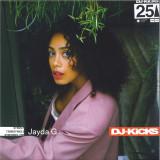
For Jayda G, joy is a state of mind. Whether she transmits it through her upbeat productions or magnetic energy at the decks, the Canadian-born DJ and producer, real name Jayda Guy, is a beacon of empathy on the dancefloor. It's no surprise, then, that Jayda G's DJ-Kicks mix captures the buoyant spirit of the music that has influenced her most. "DJ-Kicks has been a personal goal of mine for a really long time. I've been a fan for decades now. I remember there was one mix by Chromeo and it had some French disco on it that always stood out in my mind," she remembers. Clocking in at just over an hour, Guy's mixtakes you on a journey that moves through loved classics and new bubblers. The mix contains Jayda's Brand new single "All I Need", the follow up to Grammy Nominated breakthrough single "Both Of Us", a slinky house tune co-produced with James Ford that fizzes with shimmering energy. A rallying cry for kinship and understanding, Guy's insouciant vocals insist "all I need is you to hear me", gliding across the perfectly swung house beat. "Because the mix was made during the pandemic, I thought, 'What music makes me happy?' I want people to feel like they know me. I wanted it to be approachable, still honouring the disco and soul music that I love. I hope that translates in some shape or form."
- A1: Jayda G - All I Need
- A2: Fred Again - Diana (You Don't Even Know) (You Don't Even Know)
- B1: Lns - Bitumen
- B2: Jennifer Loveless - In 10.000 Places
- B3: Haai - Good Ol'fashioned Rugs
- C1: Dj Boring - Gardenia
- C2: House Of Jazz - Hold Your Head Up
- D1: Glass Beams - Taurus
- D2: Royale - I Want Your Body
- D3: Benny Sings - Summerlude
2LP+Dwn[24,75 €]
TRANSPARENT ORANGE VINYL
For Jayda G, joy is a state of mind. Whether she transmits it through her upbeat productions or magnetic energy at the decks, the Canadian-born DJ and producer, real name Jayda Guy, is a beacon of empathy on the dancefloor. It's no surprise, then, that Jayda G's DJ-Kicks mix captures the buoyant spirit of the music that has influenced her most. "DJ-Kicks has been a personal goal of mine for a really long time. I've been a fan for decades now. I remember there was one mix by Chromeo and it had some French disco on it that always stood out in my mind," she remembers. Clocking in at just over an hour, Guy's mixtakes you on a journey that moves through loved classics and new bubblers. The mix contains Jayda's Brand new single "All I Need", the follow up to Grammy Nominated breakthrough single "Both Of Us", a slinky house tune co-produced with James Ford that fizzes with shimmering energy. A rallying cry for kinship and understanding, Guy's insouciant vocals insist "all I need is you to hear me", gliding across the perfectly swung house beat. "Because the mix was made during the pandemic, I thought, 'What music makes me happy?' I want people to feel like they know me. I wanted it to be approachable, still honouring the disco and soul music that I love. I hope that translates in some shape or form."
Since her crowning in 2009 at the Blues sur Seine Festival, the young guitar prodigy Nina Attal, with a powerful soul voice, has imposed herself to the public, recording 2 EPs, 3 albums and performing more
than 600 concerts.
‘Pieces of Soul’, is Attal’s fourth album and shows her return to the blues, rhythm ‘n’ blues and rock. Written and composed in the wake of a road trip on the West Coast of the United States, ‘Pieces of Soul’ is eagerly awaited.
These 12 tracks, to which is added a cover of “You’re No Good” popularized by Linda Ronstadt, put the guitar back at the heart of her creative process, through a range of sunny sounds, discreetly and respectfully tinted by various Californian influences (Ben Harper, Lenny Kravitz, John Mayer...).
The riffs with rock distortions are next to great blues-soul ballads, folk, or rhythm ‘n’ blues. Her lyrics, very personal, translate as many doubts as to her desire for emancipation. Inspired by her incompressible love for the music she has in her skin, just like her tattoos, ‘Pieces of Soul’ undoubtedly offers Nina Attal a new dimension.
- A1: Daze (Missing & Messed Up Mix)
- A2: House Of Narcotics (Opium Wars Mix)
- A3: Hawk Kings (Oseberg Buddhas Buttonhole) (Oseberg Buddhas Buttonhole)
- A4: Honey Moonies (Brain Washed At Area 49 Mix)
- B1: Pervitin (Empire Culling & The Hemlock Stone Version)
- B2: Afros, Afghans & Angels (Helgo Treasure Chest) (Helgo Treasure Chest)
- B3: Shape Shifters (In Two Parts) (In Two Parts)
- C1: Say Cheese (Siberian Tiger Cookie Mix)
- C2: Ital Orb (Too Blessed To Be Stressed Mix)
- C3: The Queen Of Hearts (Princess Of Clubs Mix)
- D1: The Weekend It Rained Forever (Oseberg Buddha Mix (The Ravens Have Left The Tower)
- D2: Slave Till U Die, No Matter What U Buy (L'anse Aux Meadows Mix)
After releasing their outstanding 17th album 'Abolition of The Royal Familia' earlier this year, The Orb are back with further guest appearances on their remix album 'Abolition Of The Royal Familia - Guillotine Mixes' (April 2021). Including mixes from David Harrow, Moody Boyz, Youth, Violeta Vicci, Andy Falconer and more.
After he became one of the most respected name in the global Balearic scene skipping rocks across water and moving through an amazing and different philosophy. A Vision of Panorama's latest release is an extremely well-designed album which is morphing his synth-o-logy on even more subtly and glistering shapes. With previous 12'' releases on Mellophonia, Cala Tarida Musica and Omena gave us the first sings ''Tiger'' was a matter of time. Boogie-crafted sound with squelching percussions and a touch of 'jazz in the house' which representing the charismatic sound of Larry Heard is managing not only to satisfy his already fans but to be discovered by tones of new ones who their musical references are not only the European 'state of Balearic music' but the breezy US sound too
Be With is delighted to present Jorge López Ruiz’s El Grito (Suite Para Orquesta De Jazz), eternal Argentinian magic released on CBS in 1967 that must be one of the most sought-after South American jazz LPs.
Living in Buenos Aires in the 60s, driven by creative impulse and rage Jorge López Ruiz used music as his platform to protest the Argentine military dictatorship: “I could never stand dictatorships, to be told how you have to think, what you have to do. Nor did I endure discrimination”.
A young López Ruiz had appeared on a television panel alongside writer, politician and philosopher Arturo Jauretche, criticising the Onganía dictatorship. Jauretche told López Ruiz “Now say it with music”. This was the deep inhale that lead to El Grito, literally “The Scream”. As López Ruiz later explained “Jauretche urged me that my protests should not remain in words and acquire the consistency of a work… but it was not so much what he told me but how he told me, what prompted me to make the work take shape, first in a live concert and then in a recording”.
As the police and military began resorting to kidnapping, torture and summary executions to quiet dissent, with depressing inevitability the artist community and their work were a particular target of the increasingly brutal regime. El Grito was banned not long after it was released and the majority of original copies were unceremoniously destroyed.
The work of a genius artist living under an opressive dictatorship, erased by the government of the time, this is buried treasure in every sense and it’s been a rare record for over 50 years. But it isn’t just being hard to find that has pushed up the prices of those few original copies that survived, this is a foundational record in the development of jazz in South America.
El Grito (Suite Para Orquesta De Jazz) is a showcase for Jorge López Ruiz’s skills as a composer and arranger as he leads a virtuoso orchestra of the likes of Mario Cosentino (alto sax), Baby López Furst (piano), Pichi Mazzei (drums), Gustavo Bergalli (trumpet), Oscar López Ruiz (guitar), Arturo Schneider (flute) and Jorge López Ruiz himself plays double bass on the fourth and fifth movements.
As the album’s sub-title explains, The album is a Jazz orchestra concept suite. Five movements, to be heard as a whole, that end where they begin.
“When I wrote it there was no history of a cyclical work in jazz. But I didn't notice that, I needed to express something and I did it. At that time they told me I was crazy, that such a thing was very difficult to do. But hey, I like challenges”.
Yet this is not challenging jazz. There are certainly avant garde, free jazz flourishes, but the hard bop characteristics make this a very accessible album: easy to listen to without being easy listening. López Ruiz’s love of film brings a definite cinematic feel.
The title movement opens the album in bombastic style. “El Grito” grabs you by the lapels and refuses to let go. Raw then controlled, it’s by turns stabbing then soothing, with rage weaved in and out of the elegant styles. “M.A.B. = Amor” is our favourite here. With a tense introduction and a patient build, a gentle sax sweeps in to lift everything up to meet the serene piano and soft drums. Elegantly paced, it moves back and forth between deep contemplation and a more urgent call and response between strings and horns. A near-eight-minute, slow motion marvel.
The second side eases in with the beautifully-titled “Hasta El Cielo, Sin Nubes, Con Todas Las Estrellas” (“Up To The Sky, No Clouds, With All The Stars”) a relatively brief mid-tempo piece featuring López Ruiz’s insistent bass notes high in the mix, and again blending the sublime with the emotive with its wild horns and tight rhythm section.
It’s followed by “Tendré El Mundo” (“I Will Have The World”) which also leads with hypnotic bass, but this time swifter, driven by crashing drums, rapid horn conversations and effortlessly cool piano flourishes. Rounding out the suite, “De Nuevo El Grito” (something like “The Next Scream” or “The Scream Renewed”) is a stylish closer. Whilst López Ruiz’s bass shifts the track along, the horns and piano are more restrained, yet no less stunning.
This Be With edition of El Grito sounds sensational, if we do say so ourselves. Working with audio from the original analogue tapes, the vinyl mastering chops of Simon Francis are on full show here in what he considers to be some of his best ever work for Be With. Pete Norman’s cutting skills have made sure nothing is lost. The tortured artwork has been restored here at Be With HQ as the finishing touch to helping this revered work find a rightful place in every protest art collection.
Backed by members of the David Nance Group, Rosali (Long Hots, Wandering Shade, Monocot) wades through the emotional mire with infectious, earworm melodies led by her luminous voice. With their rich, raw instrumentation, these rock ballads sound like the resilience discovered in facing one’s darkest moments, the assurance of the calm and clarity that comes after the storm. As she sings on the second track, “Bones,” “Through the darkness of the field / I walk through without yielding / To the rest of the feelings / I’m carrying.” With her confident song craft, Rosali illustrates the ability to push through, moving toward something greater without being destroyed by the weight of trauma.
Engineered by James Shroeder and featuring Kevin Donahue (Simon Joyner), James Shroeder (Simon Joyner, DNG, Connor Oberst), David Nance, Noah Sterba, Colin Duckworth, and Daniel Knapp, the album was recorded in ten days and the raw immediacy of the music is palpable across these ten tracks. Added adornment was contributed by Philadelphia's Robbie Bennett (War on Drugs) on organ and keys, and Matt Barrick (The Walkmen, Jonathan Fire Eater, Muzz) makes a percussion cameo on “Whisper,”which was tracked at Philly’s Silent Partner Studio, where No Medium was mixed by Quentin Stoltzfus (Mazarin, Light Heat). The open creative collaboration elevated the songs, resulting in the exciting, vibrant sound of the album.
Rosali wrote the bulk of these songs in January of 2019 while on a self-imposed two week residency in the hills of South Carolina. Alone in an old farmhouse, she experienced supernatural events and faced her own demons in the deepest darkness. Perhaps as a result, there is a boldness that permeates the album, a daring vulnerability in both the lyrical themes and their musical accompaniment. Rosali says, “I approach guitar playing the same intuitive way I sing, which is profoundly spiritual for me. Where words fail, the guitar becomes the conduit for raw feelings, providing a direct connection to them. I’m constantly working on being fearless in my work, which means showing the rough side, the mistakes along with the triumphs.”
While writing No Medium, Rosali was inspired by harmonographs—swinging pendulums that create beautiful illustrations of the mathematics of music—considering how the mind, too, creates images through song. She imagined herself as the swinging pendulum—“a body suspended from a fixed point” (Encyclopedia Britannica), governed by the forces surrounding her. She thought about the pendulum’s relationship to time, movement, and even its use in divination practices. The album’s title, lifted from Charlotte Brontë’s, Jane Eyre, resonated with this vision: “I know no medium: I never in my life have known any medium in my dealings with positive, hard characters, antagonistic to my own, between absolute submission and determined revolt. I have always faithfully observed the one, up to the very moment of bursting, sometimes with volcanic vehemence, into the other.” With the multiple meanings of “medium”—as middle ground, a term for psychics, and as the material of artistic expression—No Medium felt like the appropriate name, describing how the self is shaped by the patterns of life .
The influences for the sound of No Medium reflect this pairing of assured vulnerability, in the stylistic coherence of Bob Dylan’s Desire, the tender delivery in Iain Matthews’ Journey From Gospel Oak, the strut and swagger of Bowie’s Hunky Dory, the ambition and beauty of Gene Clark’s No Other, and the playful catharsis of Harry Nilsson’s Nilsson Schmilsson. The Richard and Linda Thompson-esque album opener “Mouth,” places Rosali within both a physical and emotional space. “East of the river I was travelling on / watch me lie, undone / rest me in a forest, overgrown / until I am free of all that I’ve known,” she sings. There is movement, both within a cityscape, and in her outlook on love. Speaking of her thought process when writing the song, she says, “I imagine confidently walking away from the past, toward a new approach to love and intimacy to achieve a closer relationship with myself.”
In “Pour Over Ice,” Rosali explores her relationship with alcohol and her former reliance upon it as a social lubricant to quell her social anxiety, an energizer to keep moving, a means to cope and self-medicate, and most addictively, to lure out her wild side as a free flowing, good time girl. While drinking helped her through some shitty times, it eventually got the upper hand and became an insatiable hole within. She says, “The ‘you’ in the song is really me, talking to that component of myself struggling with drinking and self-sabotage, caught up in the cycle, and all the bad choices I made.” She sings, “Maybe I didn’t care enough / or can’t remember / chasing small pleasures / making fire from embers.” Rosali wanted her lead guitar on this track to simultaneously sound like a slow motion car crash propelling her through the day, and the sound of a gnawing hunger for something more.
Rosali’s alliance with the Omaha musicians that orbit David Nance Group (including Nance himself) came about while on a Long Hots / DNG tour in the summer of 2019. Great friendships formed and one night after playing in Detroit, Dave suggested they be her backing band. The pairing was effortless and natural, and in November of the same year, they were recording No Medium in a basement in Omaha.
NVST, part of Statement Crew, Female:Pressure and co-running the Big Science label, drops her debut EP on Serious Trouble, smashing the front door with heavy boots and a belt of sharp throwing knifes. No excuses to be made when she cuts throats, just like she does it to her drum constructions, super sharp filtered and directly forward driven arrangements. She knows how to create a nice tension throughout the record and hits the upper floor just the right time. She definitely belongs to the young artists out there who know how to shape their blades right. Better take a step back. Remix by Benedikt Frey included.
Red Smoke Vinyl[26,85 €]
John Carpenter, the Legendary Director and Composer behind Halloween, Escape From New York, They Live, Assault on Precinct 13 and many more announces his debut solo album ‘Lost Themes’ out February 3rd on Sacred Bones Records. In anticipation of his debut release, Carpenter shares a new track “Vortex,” a custom-designed video for “Vortex” set to clips from different Carpenter films and the full album artwork and track list.
John Carpenter has been responsible for much of the horror genre’s most striking soundtrack work in the fifteen movies he’s both directed and scored. The themes that drive them can be stripped to a few coldly repeating notes, take on the electrifying thunder of a rock concert, or submerge themselves into exotic, unholy miasmas. It’s work that instantly floods his fans’ musical memory with imagery of a menacing shape stalking a babysitter, a relentless wall of ghost-filled fog, lightning-fisted kung fufighters, or a mirror holding the gateway to hell. Lost Themes asks Carpenter’s acolytes to visualize their own nightmares.
“Lost Themes was all about having fun,” Carpenter says. “It can be both great and bad to score over images, which is what I’m used to. Here there were no pressures. No actors asking me what they’re supposed to do. No crew waiting. No cutting room to go to. No
release pending. It’s just fun. And I couldn’t have a better set-up at my house, where I depended on (collaborators) Cody (Carpenter, of the band Ludrium) and Daniel (Davies, who scored I, Frankenstein) to bring me ideas as we began improvising. The plan was to make my music more complete and fuller, because we had unlimited tracks. I wasn’t dealing with just analogue anymore. It’s a brand new world. And there was nothing in any of our heads when we started other than to make it moody.”
After a year of sadness comes an album fit to resist it. Detritus, the third solo LP by violinist/composer Sarah Neufeld, confronts anguish with beauty, turmoil with grace, gliding through the present like a dancer mid-motion, reaching through space 'til she's caught. Detritus originated with a collaboration: in 2015, Neufeld was invited to appear on stage with the legendary dancer/choreographer Peggy Baker. Baker had prepared a solo piece based on work from Neufeld's second album, The Ridge, to which Neufeld added an original lyrical prelude. The live result was an incendiary duet, almost a sort of face-off, which left each artist unsated. They agreed to reunite for a more extended collaboration - a full-length show with Baker's company, where Neufeld would write to (and perform music alongside) Baker's choreography. It was a fertile partnership, uniting the two women's intense, curious, ferocious sensibilities across an age difference of 29 years. Baker had conceived the show around the title of Neufeld's prelude, "Who We Are In The Dark," exploring themes of loss, betrayal and the emptiness of space; Neufeld was herself in crisis mode, reacting to a specific, earthbound kind of grief (including the end of a relationship). Making work together, they drew on these raw feelings - insistent, urgent darkness but also something that was, for Neufeld at least, much more unexpected: a romantic, tender-hearted love, inspired by the movements of the dancers before her. The work premiered in February 2019. Even before Neufeld and Peggy Baker Dance Projects set off on tour, she had the intuition that this music might take another form: as a distilled set of songs, refined and developed beyond the versions performed on stage. Starting that summer, she began arranging this lush and soloistic material - work that eventually became Detritus - and performed some of these experiments at her own solo gigs. Neufeld worked throughout the process with her Arcade Fire bandmate Jeremy Gara, whose drums, synths and ambient electronics co-anchored the Peggy Baker shows and helped shape the reimagined album versions. She would go on to add foot-pedal bass synth, wordless vocals and swells of French horn courtesy of Bell Orchestre compatriot Pietro, bringing in woodwind wizard Stuart Bogie as a one-man flute ensemble, layering clusters of chords atop Neufeld's luminous compositions.
It's 1992. You're seven to twelve years old. What are you doing? You're probably biking home from Blockbuster with a Sonic the Hedgehog 2 cartridge. You've waited weeks to get your paws on it, but since it's still a "new release," it's only a three day rental. No matter - you've already stocked a whole weekend's worth of Surge and Fun Dip. You fire up your Genesis. Your television screen erupts with a blinding flash of white light, as The Blue One tears across the screen leaving the letters S - E - G - A emblazoned in his path. You're in a tizzy. Your thumbs begin to twitch in anticipation. Level two, CHEMICAL PLANT ZONE, is uncharted territory. Your palms start to get sweat as you see toxic sludge fill the screen. The Surge and the Fun Dip hit you at the same time. Rings, spin dashes, Chaos Emeralds...everything blurs into a kaleidoscope of colors and shapes and sounds and... You snap out of it. It's not the nineties. It's 2021 and you're in your 30s. Drats. The good news is the new "Chemical Plant Zone" 45 by Minneapolis rascals Black Market Brass. A 12-piece psych-afrobeat band covering music from the Sonic 2 soundtrack? Pshaw!
- A1: Revisionist History
- A2: The American Negro
- A3: The Black Broadcast
- A4: Revolutionize
- A5: Double Consciousness
- A6: Watch The Children
- A7: Dying On The Run
- A8: Intransigence Of The Blind
- A9: James Mincey Jr
- A10: Disadvantaged Without A Title
- A11: Mama (You Will Make It)
- A12: The Black Queen
- A13: Margaret Garner
- A14: Race Is A Fallacy
- B1: Light On The Horizon
- B2: A Symphony For Sahara
- B3: America Is Listening
- B4: The March On America
- B5: Paradox Of The Positive
- B6: The Death March
- B7: Black Lives Matter
- B8: Rotten Roses
- B9: Jim Crow's Dance
- B10: Patriotic Portraits
- B11: George Stinney Jr
- B12: Sullen Countenance
The American Negro is an unapologetic critique, detailing the systemic & malevolent psychology that afflicts people of color. It should be evident that any examination of black music is an examination of the relationship between black & white America. This relationship has shaped the cultural evolution of the world and its negative roots run deep into our psyche. With an elaborate orchestral and soulful display, The American Negro re-invents the black native tongue: a politically conscious LP with a prescription to eradicate hate in America. "The American Negro is the most important creative accomplishment of my life. This project dissects the chemistry behind blind racism, using music as the medium to restore dignity and self-worth to my people": Adrian Younge is a multi-instrumentalist, film composer and producer with an analog studio and record store in Los Angeles. He is a member of The Midnight Hour and has produced for entertainment greats ranging from Jay Z, Kendrick Lamar and Wu Tang Clan. He's composed for television shows such as Marvel's Luke Cage (with Ali Shaheed Muhammad), and films including Black Dynamite. He owns the boutique record label, Linear Labs, and is co-owner of Jazz Is Dead. When he's not working on scores for major studios or networks, he's making albums that speak to his own artistry. For The American Negro, Younge not only wrote, but played every instrument of the album's rhythm section; he also orchestrated a 30-piece orchestra and recorded them in his analog studio.
2024 Repress
Grey Marbled Vinyl
Focus mode to the fullest. Berlin-based Lars Huismann strikes back on Voxnox Records, with his four-track EP "Take The Step".
Self-titled "Take The Step" kicks in first by delivering filthy hat shuffles on even nastier drums and a growing arpeggiator line. With small, yet effective vocal pieces emerging over the place, mysterious pad shapes build a tremendous climax ready to roll further into the future on this one. It's a Voxnox Fam thing with this perfect introduction!
With "Not The Same" stepping up next, Huismann showcases an ever-evolving percussion line on top of some tasty claps and flowing synthesizer plugs. Small voice parts enter the situation too as we get into deeper, atmospheric vibes bringing us a never stopping joy.
And so it's said that the B-sided "Bulletproof" takes nothing less but marching drum patterns and melody glitches coming out of nowhere to prove a forward-directed vibe afterwards. Eventually taking us back to the good old raving area, where eclectic synth lines were the regular state, followed by clever arrangement moves.
Rounding up this EP is the delivered "Bulletproof" remix by Manchester's powerhouse AnD. Taking a faster pitch on the original stems, this remix is a forward-moving rave machine par excellence. With synthesizers marching around the room, proofing that nothing can stop them, we get lost inside this epic round up for the 44th Release of VNR.
The Süddeutsche Zeitung hailed Johanna Summer’s performance
at the Young Munich Jazz Prize in 2018 as “a small sensation.”
The pianist, born in Plauen in Saxony in 1995, had encompassed
the whole gamut, from jazz freedom to classical rigour. The critic
from this respected newspaper marvelled at her “amazing gift to
make well-known melodies sound so convincingly her own, they
develop a real sense of creative urgency.” Summer’s winning of
the prize itself became almost incidental; far more significant was
the fact that this competition heralded the arrival of one of the
most interesting new pianists in European jazz.
For her debut album, Summer has chosen to make compositions
by Robert Schumann the point of departure for her journeys into
pianistic fantasy. Schumann’s cycles of piano pieces
‘Kinderszenen’ (scenes from childhood) and ‘Album für die
Jugend’ (album for the young) had been familiar to her since
childhood, not just as player and listener but also - because
Schumann was from nearby Zwickau - as works by someone from
her region of Germany. From an early age she was enchanted by
both the melodic and the pictorial aspects of these short pieces.
And yet, to make her own adaptations of seven of the pieces was
a far from a simple task: “I worked for a long time on re-casting
them, trying out all of the pieces in all keys and in a lot of different
time signatures, creating several miniature interpretations and
finally arrived at this selection, which I shaped into a cohesive
sequence with a single arc.”
The depth of her involvement with the original Schumann pieces
comes across strongly on the album. As does her impressive and
complex personality as a jazz musician with a very wide range of
expression: romantic passages and an instinct for melody but also
powerful grooves and exciting innovations. And all imbued with a
sense of how to tell stories through music, a mature and clear
vision of dramaturgy, dynamics, tension and atmosphere. A
sentence written by Schumann seems to predict exactly the kind
of new life that Johanna Summer has breathed into these pieces:
“How infinite is the realm of forms, with everything that can be
used and worked on for centuries to come.”
As if the ever evolving style and sprawling narratives of Creeper didn’t already keep him busy enough, Will Gould reacted to last year’s initial lockdown by delving into the archives to complete the debut EP from his side project SALEM. Working alongside his friend and collaborator Matt Reynolds, SALEM quickly sold-out the first vinyl pressing of their self-titled debut EP while also earning fresh acclaim and streaming an In The K! Pit show for Kerrang!.
Now the second chapter in the SALEM story emerges from the underworld with the news that they’ll release their new EP ‘SALEM II’ on May 7TH and now share the first taste of the EP in the shape of the new single ‘DRACULADS’.
‘DRACULADS’ opens with the kind of larger-than-life b-movie horror love letter that can only come from Gould’s poison pen: “Maybe the blood of Jesus Christ is laced upon your lips / I get a little closer to God and too drunk each time we kiss.” It sets the tone for a blitzkrieg rush of melodic punk and raucous rock ‘n’ roll that only stops for breath for the song’s cabaret croon breakdown.
Elsewhere, the EP builds upon the style that SALEM established with their debut. From the tongue-in-cheek reference to The Smiths on the opening track ‘William, It Was Really Something’ to the closing ‘Heaven Help Me’, SALEM play it fast, frenetic and fun. As with the best old school punk EPs, ‘SALEM II’ is an escapist rush of attention that commands your attention for 15 minutes before it’s time to drop the needle back to the start.
Electronic producer Intriguant with his 3rd album Spirits on vinyl as a limited release under record label from Singapore, TAV Records.
When it comes to the relationship between electronic music and its interaction with Singapore, we always find the theme of longing connectivity through its panorama even within the many concrete walls and high-rises we have grown accustomed to living in. With Spirits, Intriguant takes the role of an observer and explores the landscapes of many different cultures and sounds that have taken habitat past and present. Driven by hauntingly futuristic break-beats of the 90s, shaped 808s, imagined club sounds of dancing folks, bass-heavy textures reminiscent of Burial, Spirits is both for the late- night vanguards and personal home listening rooms. Intriguant's third album encompasses his experiences as an artist most vividly, highlighting his ability to use the flexibility of electronic music to link floating ideas to the physical world.
The Analog Vault is honoured to be working with Intriguant for our third release as TAV Records.
After the exceptional first volume of ‘Rakka’, Vladislav Delay is taken by the wanderlust again for a ravishing 2nd album of elemental electronics inspired by the Finnish wilderness. RIYL Shackleton, Rian Treanor...
Where 2020’s ‘Rakka’ represented some of Sasu Ripatti aka Vladislav Delay’s most intensely noisy textures and rhythmic complexity, as inspired by walks in his native Finnish wilderness, his follow-up further draws on and refines that experience in a beautifully brutalist bouquet of brambling distortion and tempestuous pulses that speak to the chaotic power of nature’s ecological interdependence. In the process ‘Rakka II’ fulminates Delay’s reactive sound even closer to the styles of Shapednoise, but still distinguished by his signature,
freehanded style of percussive tumult that reaches beyond techno and club music into an ecstatic, holistic hybrid of power ambient, black metal, avant-dub, free jazz, and extreme dance musicks.
While still breathlessly busy and densely overgrown, ‘Rakka II’ is intended as the romantic answer to the more hostile first volume. Its seven parts balance a sense of febrile passion with hyper-disciplined logic in more explicitly emotive, optimistic gestures that emerge from its atonal murk and convulsive structures.
Boundaries of discord and harmony are smudged almost into the red, but rendered with the spatial definition that become a hallmark of Delay’s best work for over 20 years, but never heard quite so wild and lushly semi-conscious as on cuts such as the soaring and collapsing ‘Raato’, or the craggy might of ‘Raaha’, and the heart-in-mouth headiness of ‘Rapaa.
Darkhan Music is proud to present Vector Seven’s latest darksynth album
“Electric Blood”! “Electric Blood” is a homage to horror movies from the
70’s, 80’s and 90’s.
Musically this electronic gem is a fine blend of different genres such as Synthwave, Rock, Metal, French House and 80’s movie soundtracks. Now, for the first
time ever on vinyl & CD.
- A1: The Mental Traveller Takes Off 00 01:06
- A2: The Mental Traveller Theme (Feat Nardo Says) 00 05:05
- A3: Train Ride (Feat Miles Bonny) 00 03:21
- A4: Seeds Of Labor (Feat Shamir Of Wolm) 00 03:14
- A5: Microsleep 00 03:09
- A6: Longitude (W/ S Fidelity) 00 04:13
- B1: Calmility 00 02:41
- B2: Second Nature Of The Beast (Feat Count Bass D) 00 01:54
- B3: Square (Feat Nardo Says) 00 02:07
- B4: Uncertainty 00 02:58
- B5: Shapes 00 02:33
- B6: Damn It's Sunny (Feat Robot Orchestra) 00 04:33
The Mental Traveller - A Soundtrack by Noa Erni
If music can take our mind to any imaginable place, on endless individual journeys, Noa Erni's "The Mental Traveller" is the infinite soundtrack. A soundtrack for mental wandering and soul searching, a blend of rap, jazz and hip-hop beats. "The Mental Traveller", an album assembled like a literary anthology, offers musical arrangements and unique narratives where epilogue and prologue of each track merge seamlessly. Far beyond the horizon of compiling single tracks, "The Mental Traveller" is a journey of sound and unity. Inspired by David Axelrod and William Blake, Ahmad Jamal and Flying Lotus - just to name a few - this work aims to be a tribute to these legends' legacies of past, present and future, detached from trends, norms and classical narrative structure.
Swiss-born producer and computer conductor Noa Erni has been crafting obscure jazz and hip-hop behind closed curtains (a.k.a. his flat in Berlin, Germany) for years - free from external pressure and as an adjunct to his day jobs as sommelier and co-owner of local fine wine store "Friedenauer Weinhandlung". On April 30th, 2021, Kommerz Records will release Noa Erni's debut album "The Mental Traveller" on 12" vinyl as well as on all digital platforms. The project features internationally renowned artists such as Count Bass D (alternative rap pioneer, who worked with Snoop Dogg, MF Doom (R.I.P.) and Retrogott), Miles Bonny (New Mexico-based singer and trumpeter), S. Fidelity (hip-hop producer signed to German tastemaker label Jakarta Records) and more. Erni's guests meld seamingly with this unapologetic and experimental album showcasing stand out performances on vocals, instruments and production.
While the album sounds like it was played by a jazz outfit with years of stage experience, the truth surprises and is even more exciting: Noa crafted the songs in countless hours of experimenting with a midi keyboard, various instrument plugins and perfected reverb settings. It was not one and the same band but one and the same person. Just a few tracks include actual live instruments: drums by Max von der Goltz on "The Mental Traveller Theme" and "Uncertainty", bass by Roman Klobe on "Longitude" and flugelhorn by Miles Bonny on "Train Ride".
Julien Sénélas, Jérôme Vassereau and Soia present a new version of In C, Terry Riley's seminal work : a musical interpretation with two modular synthesizers (11 oscillators) and a graphic interpretation of the original score (53 shapes). Composed in 1964 by Terry Riley, In C is considered as the founding work of the minimalist movement. Like the 11 acoustic instruments that can be heard on the most famous version recorded in 1968, 11 oscillators from two modular synthesizers are used here. The illustrator and visual artist Soia has created an alphabet of shapes, which represents each of the 53 musical cells that make up In C. A visual and electronic reinterpretation of this evolving composition, among the most accessible and generous of contemporary music.
On his latest opus, 2121, Michigan composer and multi-instrumentalist, The Lasso, creates a thermonuclear rocket ship glide of astral funk: a floating house party that exists at that eternal crossroads, suspended in timeless animation, the axis mundi where past, present, and future all get down. Its genesis traces back to the dozens of instrumental demos that The Lasso created throughout 2019 and early 2020, vulcanizing his singular twists on psychedelic rap with delirious mutations of vintage Ohio and Minneapolis funk. A long-brewing collaboration with New Mexico-based vocalist A. Billi Free, coupled with his introduction to the vocalist Rachele Eve, allowed for their voices to buoy his interstellar thump. Over the course of the summer of 2020, Lasso gathered various features from old and new collaborators to fill out the core vocalists, including Fat Tony, Hemlock Ernst (Sam Herring of Future Islands), Ill Camille, Namir Blade, and Nelson Bandela. In the fall of that year, The Lasso met up with The Saxsquatch and cellist Jordan Hamilton for the fait accompli: layering lush orchestrations to capture the haunted reverberations of a renowned 100-year old Michigan theatre. 2121 exists in its own galaxy, its own planetary tilt, its own sense of time. A record that asks whether the future is merely the place where the loop starts again, but this time a little more aged. As the centuries progress -- from 1921 to 2021 to 2121, with each repetition, we can hear the tape warble deepen and the hi-end lose its definition. What is it about this moment now that will shape our future ten decades hence? Life revolves in cycles, so you might as well maximize the upswing. If music is our collective vessel to track where and who we are and what we hope to lean towards in this next passage through history, the only sane answer is to turn 2121 up as loud as possible, until we all disappear into the shadows.
Five years on from Birdy’s last studio album ‘Beautiful Lies’, it may sound like a long break between albums but for Birdy, taking time to stop, experience the world and find out who she really is, was a necessary circuit break. Travelling to Nashville, home to the greatest heartache songs ever written and visiting LA drawing from classic artists Joni Mitchell and Nick Dave was the perfect way to seek inspiration. These gorgeous surroundings and collaborators seemed to know, instinctively, how to draw the words out from Birdy imbued Young Heart with strokes of the artists who had gone before.
‘Young Heart’ is quite the departure from Birdy’s previous album, 2015’s dramatic Beautiful Lies. Where Beautiful Lies was a fairy tale, Young Heart is a gritty realist portrait of the artist in pain, looking for the light.
Speaking of Young Heart, Birdy says: I’m so proud of this album, my last record was a lot more theatrical–there was a lot going on, it was a big production. Whereas this is quite stripped back -anything that didn’t need to be there, isn’t. There’s no decoration. This album just feels very personal – I’ve grown up a lot over the past five years and have experienced new things that have shaped my understanding of the world, but also of who I am as an artist. This album means a lot to me -I want to protect it.”
Recorded sporadically over five years from 2015 to 2019, Sixty Summers was shaped profoundly by Stone’s key collaborators on the album: Thomas Bartlett, aka Doveman, and Annie Clark, the Grammy-winning singer, songwriter and producer known as St. Vincent. Bartlett and Clark were the symbiotic pair Stone needed to realise her first pop vision. A wizard of production and songwriting, Bartlett helped coax Sixty Summers’ independent, elemental spirit from Stone, writing and recording over 50 demos with her at his studio in New York. Itself a thoroughfare for indie rock luminaries, some of whom, such as The National’s Matt Berninger and Bryce Dessner, ended up on the album, Bartlett’s studio was perfect fertile ground for Stone’s growth.
Clark was the incisive yang to Bartlett’s yin, a sharp musical polymath who, when presented with the work Bartlett and Stone had made together, quickly helped fashion Sixty Summers into the album it was destined to be. Contributing vocals and guitar in addition to production, Clark’s revered acidic touch ignited the sparks of Stone’s creations.
The scope of Sixty Summers is dizzyingly vast; miles away from Stone’s past work, it is a world unto itself, a surreal and breathtaking new landscape. Where Stone’s previous solo records, 2010’s The Memory Machine and 2014’s By The Horns, found her grappling with the natural darkness that comes with loving too much, Sixty Summers finds Stone claiming every part of herself: fire, fury, love, lust, longing. Touching on reference points as disparate as the avant-funk of Talking Heads (on ‘Break’) the romantic 2am musings of Serge Gainsbourg (‘Free’, ‘Dance’) and the sleek, ecstatic synth work of Lorde’s Melodrama (‘Substance’), Sixty Summers is an album you can dance to and one you can lose yourself in completely.
After two UK #1 albums, 2 million album sales and an array of international acclaim, you might’ve thought you knew what to expect from Royal Blood. Those preconceptions were shattered when they released ‘Trouble’s Coming’ last summer. Hitting a melting pot of fiery rock riffs and danceable beats, they delivered something fresh, unexpected and yet entirely in tune with what they’d forged their reputation with.
The reaction was phenomenal, with highlights including 20 million streams, a premiere as Annie Mac’s Hottest Record and a run on Radio 1’s A-list and earned alternative radio support and media attention across the globe. In short, Royal Blood are primed to be bigger than ever before. That feat is set to be realised when they release their eagerly anticipated third album ‘Typhoons’ on April 30th via Warner Records.
When Mike Kerr and Ben Thatcher sat down to talk about making a new album, they knew what they wanted to achieve. It involved a conscious return to their roots, back when they had made music that was influenced by Daft Punk, Justice, and Philippe Zdar of Cassius. It also called for a similar back-to-basics approach to what had made their self-titled debut album so thrilling, visceral and original.
“We sort of stumbled on this sound, and it was immediately fun to play,” recalls Kerr. “That’s what sparked the creativity on the new album, the chasing of that feeling. It’s weird, though - if you think back to ‘Figure it Out’, it kind of contains the embryo of this album. We realised that we didn’t have to completely destroy what we’d created so far; we just had to shift it, change it. On paper, it’s a small reinvention. But when you hear it, it sounds so fresh.”
Those traits pulsate throughout the new single and title track. Kerr’s spiralling bass riff casts an hypnotic allure as it grows in intensity, while his vocals switch at will between a raw rock roar and a soulful falsetto. It’s underpinned by Thatcher’s thundering beats, his taut rhythms infused with groove-laden hi-hats.
After setting the tone with ‘Trouble’s Coming’, the album opens in breathless, take-no-prisoners style with the fierce metallic grooves of ‘Who Needs Friends’ hitting an early visceral peak. Royal Blood further reference their fresh array of influences by deploying vocodered vocals on ‘Million & One’ before dynamically switching between the biggest contrasts of their sound with ‘Limbo’. Already a fan favourite having been a regular during the duo’s 2019 shows, ‘Boilermaker’ lives up to its reputation and is more than matched by ‘Mad Visions’, which evokes a hyper-aggressive Prince. It ends with a final surprise in the shape of the stark piano ballad ‘All We Have Is Now’, a vulnerable and revealing reminder to live in the moment.
That song’s unguarded sentiments gives the album a redemptive finale. Whether directly or allusively, the album focuses on exploring the flipside of success that they’ve experienced. It comes from the realisation that success is much more complicated than it seems and that having the time to regain perspective is a precious commodity which becomes ever more elusive. The situation called for reflection and change, which Kerr addressed in Las Vegas. He downed an espresso martini and declared it to be his last drink, and soon discovered that his new-found sobriety would have a positive impact upon his creativity and life as a whole.
That new approach manifested itself in the duo’s decision to produce the majority of ‘Typhoons’ themselves. ‘Boilermaker’ was produced by Queens of the Stone Age frontman Josh Homme, the two bands having first connected when Royal Blood supported them on a huge North American tour. Meanwhile, the multiple Grammy Award winner Paul Epworth produced ‘Who Needs Friends’ and contributed additional production to ‘Trouble’s Coming’.
After two UK #1 albums, 2 million album sales and an array of international acclaim, you might’ve thought you knew what to expect from Royal Blood. Those preconceptions were shattered when they released ‘Trouble’s Coming’ last summer. Hitting a melting pot of fiery rock riffs and danceable beats, they delivered something fresh, unexpected and yet entirely in tune with what they’d forged their reputation with.
The reaction was phenomenal, with highlights including 20 million streams, a premiere as Annie Mac’s Hottest Record and a run on Radio 1’s A-list and earned alternative radio support and media attention across the globe. In short, Royal Blood are primed to be bigger than ever before. That feat is set to be realised when they release their eagerly anticipated third album ‘Typhoons’ on April 30th via Warner Records.
When Mike Kerr and Ben Thatcher sat down to talk about making a new album, they knew what they wanted to achieve. It involved a conscious return to their roots, back when they had made music that was influenced by Daft Punk, Justice, and Philippe Zdar of Cassius. It also called for a similar back-to-basics approach to what had made their self-titled debut album so thrilling, visceral and original.
“We sort of stumbled on this sound, and it was immediately fun to play,” recalls Kerr. “That’s what sparked the creativity on the new album, the chasing of that feeling. It’s weird, though - if you think back to ‘Figure it Out’, it kind of contains the embryo of this album. We realised that we didn’t have to completely destroy what we’d created so far; we just had to shift it, change it. On paper, it’s a small reinvention. But when you hear it, it sounds so fresh.”
Those traits pulsate throughout the new single and title track. Kerr’s spiralling bass riff casts an hypnotic allure as it grows in intensity, while his vocals switch at will between a raw rock roar and a soulful falsetto. It’s underpinned by Thatcher’s thundering beats, his taut rhythms infused with groove-laden hi-hats.
After setting the tone with ‘Trouble’s Coming’, the album opens in breathless, take-no-prisoners style with the fierce metallic grooves of ‘Who Needs Friends’ hitting an early visceral peak. Royal Blood further reference their fresh array of influences by deploying vocodered vocals on ‘Million & One’ before dynamically switching between the biggest contrasts of their sound with ‘Limbo’. Already a fan favourite having been a regular during the duo’s 2019 shows, ‘Boilermaker’ lives up to its reputation and is more than matched by ‘Mad Visions’, which evokes a hyper-aggressive Prince. It ends with a final surprise in the shape of the stark piano ballad ‘All We Have Is Now’, a vulnerable and revealing reminder to live in the moment.
That song’s unguarded sentiments gives the album a redemptive finale. Whether directly or allusively, the album focuses on exploring the flipside of success that they’ve experienced. It comes from the realisation that success is much more complicated than it seems and that having the time to regain perspective is a precious commodity which becomes ever more elusive. The situation called for reflection and change, which Kerr addressed in Las Vegas. He downed an espresso martini and declared it to be his last drink, and soon discovered that his new-found sobriety would have a positive impact upon his creativity and life as a whole.
That new approach manifested itself in the duo’s decision to produce the majority of ‘Typhoons’ themselves. ‘Boilermaker’ was produced by Queens of the Stone Age frontman Josh Homme, the two bands having first connected when Royal Blood supported them on a huge North American tour. Meanwhile, the multiple Grammy Award winner Paul Epworth produced ‘Who Needs Friends’ and contributed additional production to ‘Trouble’s Coming’.
La grande vallée (1993/95), 20'41
Musical composition, design and sound production carried out at the INA grm Studios (Paris) in 1993/95
Original audio recordings in the Drôme and the Mont Ventoux areas
Voice: Hélène Bettencourt
Vocal occurrences: Frédéric Malenfer, Bruno Roche, Lionel Marchetti
Bass clarinet (for processing): Jean Andréo
Micro-climat (1989/90), 21'33
Micro-climat is the first movement of the Sirrus cycle (Micro-climat, Passerelle, Sirrus) composed in 1989/90
Musical composition, sound design and production, audio recordings in 1989/90 at the CFMI studios in Lyon (Lumière University, Lyon 2)
"I wonder if my fascination for clouds (without being an obsession) may have risen at the end of the 80s as, whilst composing Micro-climat, I would regularly wander between the Vercors mountains and the high plateaus of the Monts du Forez discovering, through my eyes, body, breath, active observation and walk, that natural forms when constantly changing and yet swollen with a unity of matter (in this instance, water) open one up to a deep, fundamental breath and a clear field for the mind. The sky and its forces: our ally.
A model for a natural music which, although fixed, as in musique concrète (a rule of the genre), moreover on a recording tape, will remain charged with such a poetic quality that (isn't it its role or rather its reality?) it will ensure a perpetual renewal for our senses, so as to reach another idea of the world, far more open and richer than what we could have imagined."
Lionel Marchetti, 2011
Lionel Marchetti is a major figure of the "third generation" of concrète musicians, a term he values. Listening to these works, imbued with poetry and traversed by micro-narratives, one can indeed retrieve the original concrète spirit, the one that draws from the sonic world, with ears wide open, so as to extract a fertile, rich and multiple substance then shaped and conveyed towards a formal and musical abstraction. Lionel Marchetti has mastered this process, but his real distinctive feature is a truly unique talent for setting climates (as one sets traps) and keeping us on constant alert. The two pieces in this record perfectly illustrate the entrancing dimension of Lionel Marchetti's music, whose charm leads us, through each successive listening, to become voluntary captives so as to better liberate ourselves.
François Bonnet, Paris, 2020
Optimo Music presents “Janara” the new album from Italy’s José Manuel. We always have our ears open for music that is unique, powerful and that can conjure up a ritualistic atmosphere, and this meistrerwerk did all that, and then some. We knew we had to release it after the first listen.
We’ll let José tell you about it….
This album is a result of the necessity of exploring and opening my mind to new musical horizons, by testing the main traditional instrument of the Italian region Campania, whose name is “Tammorra”. It is a big drum, which must not be confused with the typical tambourine, made from a wrap of wood shaped in a circle and covered with dried skin (almost always goatskin or sheepskin). This instrument was used during playful events, especially during rituals and ceremonies, such as the frequent devotional pilgrimages in honour of the Virgin Mary. By using this instrument, the sound, the rite and the magic could take possession of the mind and the body creating a perfect union. Also, the dancers, as if they were bitten by a tarantula and possessed by a strange evil, launched themselves to an uncontrolled dance by moving every part of their body.
In addition to the Tammorra, I also inserted some texts, which have been written by some Neapolitan friends and interpreted with Neapolitans voices, in honour of the “JANARA”. The Janara represents a popular belief of the Southern Italian regions, particularly of the Benevento area. The Janara is one of the many types of witches represented by folktales belonging to the rural tradition.
The Janara was expert in medical herbs, which were also be used for her magical practices, such as the manufacturing of ointment. The ointment gave her the power to become incorporeal with the same nature as the wind. According to the tradition, in order to snatch the Janara it was necessary to grab her by the hair. It was also said that if anyone was able to capture the Janara during her incorporeal moment then Janara herself would offer protection to them and their family for seven generations, in exchange for her freedom.
With this work I hope that the listener might get carried away by the spirit of this pagan and popular legend that can be still be considered as current. As a matter of fact, the folk tales speak of a probable comeback of the Janara, who after being burned at the stake seems to be thirsting for revenge for the evil suffered.
Sdban Records will reissue parts of the library serie 'A Special Radio ~ TV Record' released on the Belgian based Selection Records between 1976 and 1981 on vinyl. Sdban Records teams up with publisher Hans Kusters wo recently bought this catalog. Nonetheless, the first release will be a contemporary adaptation of the original concept by composer Reinhard Vanbergen (Das Pop, Rheinzand).
When Hans Kusters heard some music of Reinhard Vanbergen on the radio, he started dreaming of a new chapter. When asking Reinhard if he would be interested, Reinhard gladly accepted after finding out that one of the original composers from the Selection series, Rene Costy, had a very similar background, being a Belgian violinist and composer. It seemed like a perfect fit.
While respecting the concept of the past, Reinhard tried to give the record a modern touch, by simulating 10 geometric shapes, using immersive audio. With headphones on, you can detect the geometric shapes that move around your head in a little dance of their own. The mix of vintage and modern synths are an homage to the past while trying to give it something new and bring the concept into modern times. The new album, Selection 19 - Geometric Shapes opens the door to a new special radio and TV-records series, to continue in the same spirit from the past, but with an eye for the future.
Ian Nyquist is a composer currently based in Dublin, Ireland with a background of field recording and sound art. After very positive feedbacks on his first album on eilean rec. in 2019, his second LP release, a creative landscape between electronic, ambient and post-classical confirm a talented music artist who increases his musical range.
Veteran NYC based Scottish electronic musician Drew McDowall's latest work is his loftiest, most liturgical, and least industrial outing to date —and potentially the apex of his recent discography.Named after an ancient Greek word for votive offering, Agalmaexudes a hooded, devotional aura, creaking and keeling under vast rafters of stone, stained glass, and shredded wires. It's a music of majesty and mystery but also modernity, McDowall's refined modular system shape-shifting strings, piano, pipe organ, and choral masses into disorienting synthetic mirages of the sacred. He cites the intersection of “joy, terror, and the elegiac” as a centering inspiration –or, phrased more bluntly, “that 'what the fuck is going on' feeling.”
As a career collaborator himself, with stints in Coil, Psychic TV, and countless other shorter-lived partnerships, it's telling that McDowall chose this project to gather such an impressive spectrum of peers. Italian synthesist Caterina Barbieri, American drone organist Kali Malone, prolific multi-instrumentalistRobert Aiki Aubrey Lowe, operatic Humanbeast vocalist Maralie Armstrong-Rial, Saudi producer MSYLMA, and warped futurist beat-makers Bashar Suleiman and Elvin Brandhi cameo across the album's 42 minutes, contouring McDowall's nuanced negative spaces with shudders, shadows, and shivering flickers of serenity. Each of them shines in their spotlight, elevating these elusive alchemical states into surreal revelations of texture and transcendence.
McDowall's original working title for the record is revealing: Ritual Music.He speaks of his creative practice in ceremonial terms, negating binaries by seeking the middle path to anuminousequilibrium that erases the distinction between the inner and outer worlds.These compositions feel similarly processional and intuitive, at the crossroads of holiness and hallucination, the sacred vertigo of yawning naves rising into untouchable night skies. It's a vision of industrial music as enigma and invocation, cryptic hymnals of shroudedbeautysummoned in catacombs and crumbling cathedrals.
Despite its depths, Agalmais also an album of immediacy and emotion. Celestial laments of and for times of unrest and suffering. McDowall characterizes his initial intention for this music as an to attempt to convey experiences he felt incapable of putting into words: “To try and approach sublimity, or at least acknowledge it in some way.”Agalmamore than acknowledges the ineffable –it embodies it.
With his seventh studio album, Shapes of the Fall, Piers Faccini, pursues his passion for the kind of cross-cultural dialogues that have long been heard on Mediterranean shores throughout the centuries, bridging southern Europe with the Near East and Africa. Although the songs are written and sung in English, the musical influences in Shapes of the Fall draw heavily on Faccini's own Mediterranean ancestry, creating a musical voyage whose geography varies from song to song, crossing multiple frontiers with his voice over the course of the journey, from the snow tipped anglo-american Folk registers of songs like Paradise Fell or Together Forever Everywhere to the eerie desert blown notes of Middle Eastern or north African modes in tracks like Firefly or Dunya. Ruin or repair and hope or despair are the album's parallel narratives and if shapes of the fall are the myriad endangered forms that make up the mosaic of our environmental collapse, the descent, Faccini sings, is of our doing or undoing. ''Bring me my home back'' the chorus of the album's emblamatic opening song They Will Gather No Seed is not then, the singer's personal cry for a home but the animal lament of innumerable species on the brink of extinction. Faccini who has previously collaborated with cellist Vincent Segal for their 2014 duo album Songs of Time Lost has collaborated over the years with musicians far and wide in search of musical dialogue such as Ballake Sissoko, Ibrahim Maalouf or Jasser Haj Youssef. Two exceptional voices feature on the album; Californian singer-songwriter Ben Harper, a collaborator from his 2005 album, Tearing Sky and Moroccan singer and master of the trance traditions known as Gnawa, Abdelkebir Merchane. The album was co-produced by Piers Faccini and Fred Soulard.
Blackened Blues with Doom and Punk influences, Black Totem’s Deathrock is overflowing with superstition, vice and horror. Up to no good since 2008, Black Totem are notorious road-dogs of the Finnish underground, cutting their teeth and scraping their raw knuckles in a slew of live shows through the years. The band has shown promise since the early days releasing two EP’s and a self-titled debut album, which won an award for Best Rock Album at the Turku Music Awards in 2016. With their new album “Shapeshifting,” Black Totem are downright lycanthropic, breaking out of their enigmatic origins and taking on a much more unadulterated form. Their catchy, raucous Blues songs, with wild, untamed backing vocals and horror-soundtrack keys, give a distinctly Finnish lizard-disco hysteria to their fortified sound, coming across like a blood-bath in a moonshine distillery. Howling at the moon, with lungs of bile, Danzig/Misfits/Samhain influences are fleshed out with the Doom-laden riff-war of Celtic Frost, Venom and Darkthrone. Together with the catchier urban song-craft of the Black Keys, this cauldron of Black Totem’s magic formula makes “Shapeshifting” a familiar, yet heavily enjoyable natural genre-clash of their own.
Conceived at the heel of Italy's boot-shaped peninsula in Apulia, Patrick Belaga's Blutt makes music for the unruly imagination. The title is an old German word for 'naked', 'bare', but it can also mean 'blood' when spelt blut. Take away another letter and it makes 'butt'. None of these definitions and adaptations were what prompted the classically-trained composer and cellist to name his second album with a word simulating the sound of a punctured artery. That came later. Blutt's nine woozy compositions are inspired by a contemplative road trip with a friend, and the mysterious muffled music heard from an unidentified source. It was a combination of jazz and classical music that haunted Belaga's wanderings through the Byzantine town Gallipoli, and soon infected his dreams of long-gone civilizations. This record is its outcome, where organic instrumentals and electronic production merge into a sound that's both contemporary and ancient. Samples of mewing incantations and tape hiss sway atop the waltzing thud of piano chords on "Sigh". Composite layers of Belaga's cello play in downcast harmony on "Rust". There's a wistful sense for the romantic, in the eerie rhythm of a piece like "Momentum". The quarter tones of an Eastern European and Middle Eastern folk scale probe a profound melancholy via Kai Knight's violin. Its notes are haunted by a field recording of running water on "Unsoft", echoes of panpipes and a Jew's harp on opener "Lilt". As a consummate composer and performer known for his work with artists Wu Tsang, boychild, Josh Johnson and Asma Maroof, Belaga's Blutt is itself marked by flawless collaborations. Vocalist and instrumentalist Jazmin Romero sings and composes the surreal melodies of "Grey Eye". Multidisciplinary dance artist and producer Riley Watts contributes to the muted, motorik movement of "The Tunnel is a Tower". Together, the record plays as a stunning soundtrack to the strangeness of sleeping, and the heartbreaking transience of time. Like an intense dream half-remembered, the emotions persist after waking but for the sharp machinations just outside of the mind's reach. The album is mastered by Rashad Becker, featuring artwork by Giovanni Furlino & design by N MRE 08.
Built on a foundation of authenticity, passion and innovation, Archie Lee Hooker & The Coast to Coast Blues Band is a spearheading group that has established itself in the world of music. Formedby Archie Lee Hooker, the nephew of John Lee Hooker, Archie and his leading handpicked team arehighly recognised for creating compelling, soul-enriching productions that leave their audienceswanting more.
Archie was born on Christmas Day of 1949 in Lambert, Mississippi, just 20 miles from thecrossroads where Robert Johnson supposedly sold his soul to the devil. He was the son of a sharecropper, and up until age thirteen, that was the life he was accustomed to. That all changed when he headed up north and found himself standing in the big city of Memphis,Tennessee.
The paved roads and city lights felt like a new world to Archie, one that was filled with opportunities. Inspired by the Memphis music scene, it didn’t take long for Archie to begin singing with his first gospel group called The Marvellous Five. However, December of 1989 was when hispassion for Blues started to surface. During this time, Archie lived with his uncle, John Lee (the Boogieman himself) until his death in 2001. Being surrounded by him and other committed, talented, and influencing musicians is what became the catalyst for Archie to crave sharing his own life experiences through music and leave his lasting impression.
Though Archie left for France in 2011 to join Carl Wyatt & The Delta Voodoo Kings to tour Europe, he eventually chose to seek the right musicians to have on his side. He wanted a team that resembled family, chemistry, and a bond unlike any other. Once he found them, Archie founded the Archie Lee Hooker & The Coast to Coast Blues Band, which was specially named after the late John Lee’s Coast to Coast Blues Band. Since then, the crew has done nothing but thrive and impress.
They released their first album called ‘Chilling’ under the French label Dixiefrog in 2018, which received a 5-star review in Rolling Stone Magazine. Fast forward to today, they have recorded a new 12 song CD called ‘Living in a Memory’, and this all-original playlist of storytelling art is set to be released through Dixiefrog worldwide on April 16th, 2021. In the end, every song and performance that Archie Lee Hooker & The Coast to Coast Blues Band creates paints an incredible picture that inevitably provokes uplifting emotional influences and invested attraction.
They are entirely passionate about delivering remarkable music, and continuously provide fully authentic productions that have shaped them to become what they are today. With their immense drive and determination, it is exciting to see what they will launch next.
Master craftsman James Welburn’s new LP, Sleeper in the Void, marks the 50th Miasmah release.The six years after his monumental debut have bred six tracks Welburn brings to fruition with the help of past co-conspirators from the Norwegian underground scene - Tomas Järmyr (Motorpsycho, Zu, Barchan), Hilde Marie Holsen (Hubro Records), and vocal artist Juliana Venter (W/V, Phil Winter).
On Sleeper in the Void, Welburn expands the domain of his sound, unveiling surprises until the very end of the album’s 36 minute playtime. While the character of the record is unmistakably his own, the tracks veer into many different territories, including a banging foray to the dancefloor.
The LP begins slowly with Raze, where Järmyr’s ritualistic cymbals introduce layers of Welburn’s signature sculpted bass drones and noise, building into a heart-wrenching epic of a track. This is perhaps the closest we ever get to Hold - Welburn’s previous LP. Falling from Time immediately surprises with it’s subdued mechanical techno beat, stark and cold as a glacier. Welburn’s texture-work is the star of the show, creating curious nooks and crannies of drone adorned with eerie melodies straight out of oblivion. This sense of wonder shines through to the album’s title track as well, where Welburn and Järmyr build another patient, echoing, and deeply cinematic piece, the drum patterns slowly shifting around a metallic hum that evokes the vision of church bells, ringing out under tonnes of seawater.
Sleeper in the Void feels like a story in two parts, rising lethargically, but with gargantuan power. The second begins with the momentous In and out of Blue, where Juliana Venter’s disembodied, spectral dirge takes center stage among the furious drums and bassy riffs, reaching a full crescendo with seconds to go. Parallel marks a release - Hilde Marie Holsen’s nostalgic soundscapes, pristine as glass, meeting the distant thunder of Welburn’s strings on the horizon. And finally, Fast Moon ends the record in a most surprising way - a tribal industrialized banger, complete with vile distorted beats and every other spice in demand on a blackened dancefloor.
Welburn’s Sleeper in the Void is a generous shapeshifter. Every inch of its soundwave breathes emotion and imagery - an invitation to take a dive and linger.
The sound of MARTIN MERZ is a scenario of gloomy soundscapes and analogue bass figures, paired with elements from Industrial and EBM which takes the listener into the abyss of an urban future.
For his electronic compositions MARTIN MERZ isn’t only fishing in technowaters as he also lets his listeners glide through ambient landscapes which transform into pumping organic shapes of groove and synth melodies.
It’s those bubbly basslines making love to space-filling spheric sounds and tribal drums that turn everything into a timeless and dancy work of art.
Under exhausted lights of civil discontent the count has just began. What you parodied, what you scrutinised rears its pure gaze when punctured beyond performance. We cried for justice but instead found order, and now we face the chain. PC World comes through with a haunting EP on She Lost Kontrol to distort the view and warp the vision of industrial addicts and mutant punks with their second release “Order”, a discursive counterattack on four distinct forms of command. The South London duo disfigures the unconscious reduction of pleasure and fetish, the connective tissue between privatisation and violence, the seduction of societal norms, and the neurotic tendencies of self-defeat. Like the surrender to a future shock, these four interwoven tracks are produced for the recognition of restraint and the demand for wanting more. B-side remixes of the title track “Order” come from Physical Wash (former member of High-Functioning Flesh) and Aktion Mutante (featuring members of Violent Poison and Unhuman), two additional perversions of protocol from synth-punk veterans on both sides of the Atlantic. So initiate these six cries of havoc in solidarity with this wasted world, a world of precarious necessity and incessant definition. A world whose shape and conscience will forever be satisfied by order.
Australian label Ernest’s Way is back with their follow up to last year's debut.
Featherstone makes a return with his Tunnel Vision EP, a 4 track release that explores some of the early musical influences that shaped his sound.
Expect chopped up drum breaks, melodic acid lines, swelling JX pads and a few sneaky vocal cuts.
The first Azu Tiwaline's album, after been acclaimed by DJs like Lena Willikens, upsammy, Shanti Celeste and a bunch of electronic medias (Bandcamp, RA, Crack), is now remixed by a Lyon-Bristol-Berlin trifecta of similarly minded rhythmic innovators - twisting and warping her work into new shapes, featuring Don't DJ, Laksa & Flore reinterpretations.
Nothing happens overnight. Behind every emergence, there’s years of work, thought and preparation - both intentional and unconscious - that’s gone unseen.
So the past year might have been a ‘breakout’ year for Azu Tiwaline, but it was really built over two decades of experimentation, soul-searching - both creative and personal - and exploration. “A new name for a new spirit” as she likes to say, but with an unmistakable identity rooted in her history and ancestry.
On her debut album as Azu Tiwaline, Draw Me A Silence, a record released in two parts with her family at I.O.T. , she fused together two halves of her own heritage, inspired by a new home in the desert. Personal history collided with family heritage: half step rhythms from a career in bass music met the warm winds and wide open silence of El Djerid in Tunisia.
When music is sincere and honest, it tends to reverberate more widely, and deeply. The tracks written for the Magnetic Service EP were sent to one label and one label only, Livity Sound, who picked it up instantly. Something about the spacious, yet dense sonics - crafted with the help of percussionist Cinna Peyghamy - resonated with listeners starved of both the community of the dancefloor and the space of the outside world. The EP became one of the Bristol label’s most heralded releases of 2020, featuring in end of year coverage from Bandcamp to Resident Advisor.
Beneath the calm of her productions, a restless spirit inhabits Azu, born out of months and years spent on the road. In 2020, it was her music that took her places. She put together a series of podcast mixes that echoed the percussive, rhythmic curves of her own productions, for Boiler Room, Dekmantel and Crack Mag. She distilled Fazer Drums’ percussive experiments into dubby downtempo with a remix, and contributed her most rooted track yet - Violet Curves with Cinna Peyghamy - to On the Corner’s Door to The Cosmos compilation.
This will be followed by the Extended version of the album with a gorgeous ambient bonus track “Eyes of the Wind”, accompanied by a video clip directed by Azu Tiwaline, shot in her desert lands. This track will be appearing in a digital reupload reunifying Draw Me A Silence Part.I and II. As a sort of final chapter of this debut album.
As for the rest? We’ll see what 2021 has to offer for both the world and Azu Tiwaline. In the meantime, take inspiration from her music: keep the tempo steady, let some light in, and listen for the silence.
Shapes of Rhythm welcomes Emanative to the label for his first vinyl project following contributions to its Isolation Compilation and an Awkward Corners EP both earlier in 2020. Known for his love of collaboration, Emanative connected remotely with Bex Burch during the global lockdown. Disrupt #4 is the result of a meeting of two percussive minds in the midst of a pandemic, and like all good things it started with a groove. Nick initially provided Bex with a hazy, electrified afrobeat sketch. What followed was a musical dialogue which quickly gained momentum. A punk-esque vocal mantra was added, reflecting the here and now of 2020 to drive the track forward. Bex's trademark Ghanaian Gyil xylophone is the conversation with the groove throughout the track. Hector Plimmer also joins the collaboration, seasoning the mix with synthesizers and fx.
Following his stunning Dislocation Songs LP, the label drafted in Awkward Corners AKA Paradise Bangkok's Chris Menist for a remix on the flip that heads towards the club (remember clubs?). Adding 808s, his own conga recordings, synth lines, a sprinkle of acid and a warped vocal treatment, this is classic Awkward Corners: pumped with feeling and rhythm. If Andrew Weatherall was still with us today he'd be digging this take on the a-side.
Marco Lazovic has been burning up dancefloors for over four years with his potent blend of house grooves and feisty jungle breakbeats, and so it continues on this new drop for Craft Music. "Dance System" is predominantly shaped out by gorgeous Detroit-inspired synths, but there's also some seriously spicy breaks choppage going off throughout the track. "The Dredwerkz" is a tight and punchy electro jam with plenty of melodic delights fluttering around the 808 drums, while "Daydreaming" gets further up the tempo range to outright ambient jungle a la early Good Looking. "End Theme" stays in jungle mode for an acute exercise in classic rollage.
Brand new album of pure bass and breaks ingenuity from the consistently brilliant Brighton, UK-based producer, who has had previous releases on Sneaker Social Club and is tipped for forthcoming work on Moving Shadow and Planet Mu shortly. Featuring art by RAYS with handstyle track titles on the vinyl edition by REQ TDK.
Cabaret Voltaire is Richard H. Kirk and ‘Shadow of
Fear’ was the band’s first studio album in 26 years,
released in 2020 to critical acclaim.
‘Dekadrone’ delves deeper into Cabaret Voltaire’s
arsenal of “harsh rhythms and threatening
detonations” (Classic Pop).
A brand-new drone album on CD packaged in a
gatefold card pack and white double vinyl in a
gatefold sleeve with full colour inner bags and high
definition audio download. (‘Dekadrone’ is
presented across the double LP as four ‘Phases’.)
“‘Shadow of Fear’ is a brash and confident
rebirth… Richard H. Kirk has chosen a good time to
revive the Cabs’ ominous industrial funk” - Uncut
(8*)
“Masterclass in shapeshifting disco… clinches these
industrial shadow-dwellers’ influence” - Mojo (4/5)
“Kirk is intent on pushing forward, ensuring that
the hints of familiarity never come with an
accompanying tang of comforting nostalgia.” - The
Guardian (4/5)
“A lot has changed in the past 26 years, but what
hasn’t altered is Cabaret Voltaire’s knack for eerie
but danceable post-punk.” - NME
Wenn die Grenzen zwischen Oldschool Death Metal und den schwarzen Künsten geradezu ineinander fließen, dann ist meist eine ziegenhafte Gestalt mit involviert. So auch bei der Nürnberger Formation Goath, die uns seit ihrer Gründung 2015 quasi im Jahrestakt eine Veröffentlichung nach der anderen spendiert hat. Nachdem nun aber eine etwas längere Zeit zwischen dem letzten Longplayer „II: Opposition“ vergangen ist, präsentieren uns die Jungs nun ihr neues Werk „III: Shaped by the Unlight“. "III: Shaped by the Unligh“ kann durch ein abwechslungsreiches Programm mit viel traditionellen Oldschool-Abschnitten einen mehr als guten Eindruck hinterlassen. Währen der Titeltrack auch sehr Death Metal-lastig ausgeprägt ist, erinnert Letzterer eher an schwarzmetallische Perlen von Inquisition oder Immortal. Vor allem durch Gesang und die Riffstrukturen schaffen Goath hier klare Unterschiede, die aber eine willkommene Abwechslung darstellen.
PRIMAL FEAR's ferocious new record “Metal Commando” has been an undisputed highlight of 2020. The German power metal band's 13th full length detonated in the midst of a raging pandemic, leaving no stone unturned in its path. The whole world got stuck in, achieving the 6 piece some of their highest chart positions in their 20+ year career, which included; a top ten in Switzerland (6), Germany (7), Japan (7), Finland (9) and Sweden (9) next to multiple high entries in countries such as Austria, Spain, France and the USA.
PRIMAL FEAR are Germany’s metal band of the hour, again. Right now however, they want to show us something new, a different side to them - after releasing a string of heavy and hard-hitting singles from “Metal Commando”, mastermind Mat Sinner and vocal force Ralf Scheepers have something extraordinary up their sleeves; a 5-track single, built around an exclusive new rendition of their achingly beautiful ballad ‘I Will Be Gone’, re-recorded with none other than Finnish metal diva extraordinaire, Tarja Turunen.
“There were three famous vocalists on our final wish list,” Mat Sinner comments. “That it was Tarja who got involved in this song is a matter of pure joy for all of us. Working together on the song and video was totally relaxed and professional – a great experience also because Tarja’s and Ralf’s voices go together incredibly well. Now, we can expand the ‘Metal Commando’ saga with a unique chapter. We’re all really proud of this single.”
The Finnish icon can only agree: “I was very happy to receive the invitation to take part in PRIMAL FEAR’s beautiful song ‘I Will Be Gone’. We started our careers nearly at the same time many years ago, and finally got a chance to work together. I love the song and personally it helped me to stay connected and rock again, even if at the studio this time. I really hope that people will like this collaboration and that it will bring them joy especially during these difficult times we are living through at the moment.”
The song, fragile and touching, gets an altogether new and deeply melancholic vibe with Tarja’s unbelievably emotional performance, showcasing a different facet of PRIMAL FEAR. Yet, it’s not the only gift they deliver on this 5-track sensation - just take ‘Vote Of No Confidence’ for example, an all-new, previously unreleased beast of a song. Clocking in at over six minutes, this storming, furious anthem gives a brilliant glimpse of things to come. Previously only available as bonus tracks on the limited “Metal Commando” digipack, three more tracks complete this release; enchanting guitar instrumental ‘Rising Fear’, massive mid-tempo smasher ‘Leave Me Alone’, and heavy metal monument ‘Second To None’, making ‘I Will Be Gone’ so much more than just another off shoot of a successful album.
“Metal Commando” is so much more than just another album by a veteran band. The songs are too strong, the hooks too merciless, the refrains too huge, and their trademark phalanx of three guitars too indomitable for any meek kind of listener response. “We’re simply an awesome team,” Sinner laughs. The “we” he’s talking about are of course himself on bass guitar and vocals, fierce vocalist Ralf Scheepers, guitarists Tom Naumann, Alex Beyrodt and Magnus Karlsson as well as that brand-new whirlwind of a drummer, Michael Ehré.
After six albums “abroad”, “Metal Commando” saw the band return to their first home Nuclear Blast. Where some bands would give in under such pressure, changing labels for PRIMAL FEAR has unleashed a huge amount of sublime heavy metal energy. Heck, we bet this seismic shock was visible on the Richter scale! “We wrote and wrote and realised quite early on that we had a lot of good ideas going”. Good ideas? The songs are bangers as only PRIMAL FEAR anthems can be – a sound that’s long become a trademark just got new, shiny alloys.
New track ‘I Will Be Gone’ showcases PRIMAL FEAR’s mellow, bittersweet side – available on multi coloured vinyl, shaped vinyl, CD digipack or digitally. Let’s all take a deep breath now; soon enough it’ll get loud again on stages around the globe.
PRIMAL FEAR's ferocious new record “Metal Commando” has been an undisputed highlight of 2020. The German power metal band's 13th full length detonated in the midst of a raging pandemic, leaving no stone unturned in its path. The whole world got stuck in, achieving the 6 piece some of their highest chart positions in their 20+ year career, which included; a top ten in Switzerland (6), Germany (7), Japan (7), Finland (9) and Sweden (9) next to multiple high entries in countries such as Austria, Spain, France and the USA.
PRIMAL FEAR are Germany’s metal band of the hour, again. Right now however, they want to show us something new, a different side to them - after releasing a string of heavy and hard-hitting singles from “Metal Commando”, mastermind Mat Sinner and vocal force Ralf Scheepers have something extraordinary up their sleeves; a 5-track single, built around an exclusive new rendition of their achingly beautiful ballad ‘I Will Be Gone’, re-recorded with none other than Finnish metal diva extraordinaire, Tarja Turunen.
“There were three famous vocalists on our final wish list,” Mat Sinner comments. “That it was Tarja who got involved in this song is a matter of pure joy for all of us. Working together on the song and video was totally relaxed and professional – a great experience also because Tarja’s and Ralf’s voices go together incredibly well. Now, we can expand the ‘Metal Commando’ saga with a unique chapter. We’re all really proud of this single.”
The Finnish icon can only agree: “I was very happy to receive the invitation to take part in PRIMAL FEAR’s beautiful song ‘I Will Be Gone’. We started our careers nearly at the same time many years ago, and finally got a chance to work together. I love the song and personally it helped me to stay connected and rock again, even if at the studio this time. I really hope that people will like this collaboration and that it will bring them joy especially during these difficult times we are living through at the moment.”
The song, fragile and touching, gets an altogether new and deeply melancholic vibe with Tarja’s unbelievably emotional performance, showcasing a different facet of PRIMAL FEAR. Yet, it’s not the only gift they deliver on this 5-track sensation - just take ‘Vote Of No Confidence’ for example, an all-new, previously unreleased beast of a song. Clocking in at over six minutes, this storming, furious anthem gives a brilliant glimpse of things to come. Previously only available as bonus tracks on the limited “Metal Commando” digipack, three more tracks complete this release; enchanting guitar instrumental ‘Rising Fear’, massive mid-tempo smasher ‘Leave Me Alone’, and heavy metal monument ‘Second To None’, making ‘I Will Be Gone’ so much more than just another off shoot of a successful album.
“Metal Commando” is so much more than just another album by a veteran band. The songs are too strong, the hooks too merciless, the refrains too huge, and their trademark phalanx of three guitars too indomitable for any meek kind of listener response. “We’re simply an awesome team,” Sinner laughs. The “we” he’s talking about are of course himself on bass guitar and vocals, fierce vocalist Ralf Scheepers, guitarists Tom Naumann, Alex Beyrodt and Magnus Karlsson as well as that brand-new whirlwind of a drummer, Michael Ehré.
After six albums “abroad”, “Metal Commando” saw the band return to their first home Nuclear Blast. Where some bands would give in under such pressure, changing labels for PRIMAL FEAR has unleashed a huge amount of sublime heavy metal energy. Heck, we bet this seismic shock was visible on the Richter scale! “We wrote and wrote and realised quite early on that we had a lot of good ideas going”. Good ideas? The songs are bangers as only PRIMAL FEAR anthems can be – a sound that’s long become a trademark just got new, shiny alloys.
New track ‘I Will Be Gone’ showcases PRIMAL FEAR’s mellow, bittersweet side – available on multi coloured vinyl, shaped vinyl, CD digipack or digitally. Let’s all take a deep breath now; soon enough it’ll get loud again on stages around the globe.
Bill MacKay and Nathan Bowles’ debut is well titled: keys are what they play
and keys unlock things too. Their trad bonafides are balanced with
inquisitive playing that adds surprise as a formal songwriting and arranging
tool. Spirited 21st Century folk music made of equal parts bluegrass,
classical, country, gospel and improv.
‘Keys’ is, on first blush, a collection of guitar and banjo duets - but from the
opening moment, it is clear that Bill and Nathan’s agreed-upon duo is a
living organism, growing as it goes. Behind the stately figures of ‘Idumea’, a
19th Century southern hymnal played out on their stringed instruments, a
low organ drone hums persistently, signalling that this music, while coming
from traditional places, is asking more of itself, seeking sparks of inspiration
to light the path forward.
Bill and Nathan met a few years back, if time has any meaning. It didn’t
seem to at the time - after the first night they hung out, it seemed as if
they’d known each other for a while already. A year later, in 2018, they
were booked as a duo at Cropped Out. Preparing for the show involved a
correspondence exchanging lots of provisional ideas, thoughts and music
back and forth from Chicago to Durham NC, then dashing through the ideas
again on the festival grounds an hour before the show. From this seemingly
hectic preparation, their playing that night was remarkably serene, a
spiritual treatise clothed in the casual and natural manner of the proverbial
porch, or in this case, riverside-jam, as the stage literally straddled the edge
of the Ohio River. It was a stellar, simpatico first moment that asked for
more moments like it.
After several more sets the following year, they felt ready to roll tape (as the
saying goes) and chose to do so in Chicago, with Nick Broste at The Shape
Shoppe. Again, an easy rapport prevailed, allowing them to work through
their collected ideas quickly and freely, with the moments of spontaneous
decision that can come only with comfort and trust in each other’s presence.
Throughout ‘Keys’, Bill and Nathan propel their power-folk engine with intent
and feeling, joy and solemnity, as images of wariness, wonder, anger,
deliberation, forgiveness, trust and devotion rise up from the music and roll
it forward into the unknown, a place we can sense both players are happy
to go.
Eight of the ten songs featured are originals, with the other two coming
from different centuries to this one. The diversity of song is matched by the
instrumentation: in addition to Bill’s guitar and Nathan’s banjo, they add
voice, piano, percussion, pump organ, requinto and electric organ to the
richness and rusticity, the traditionalism and open space of the
compositions.
The fifth album from Oklahoma-bred singer/songwriter Parker Millsap, Be Here Instead emerged from a wild alchemy of instinct, ingenuity, and joyfully determined rule-breaking. In a departure from the guitar-and-notebook-based approach to songwriting that shaped his earlier work, the Nashville-based artist followed his curiosity to countless other modes of expression, experimenting with everything from piano to effects pedals to old-school drum machines (a fascination partly inspired by the early-’70s innovations of Sly Stone and J.J. Cale). As those explorations deepened and broadened his musical vision, Millsap soon arrived at a body of work touched with both unbridled imagination and lucid insight into the search for presence in a chaotic world. Produced by John Agnello (Kurt Vile, Sonic Youth, Waxahatchee) and mainly recorded live with Millsap’s full band, Be Here Instead marks a stylistic shift from the gritty and high-energy folk of his previous output, including 2018’s acclaimed Other Arrangements and 2016’s The Very Last Day (an Americana Music Association Awards nominee for Album of the Year). With its adventurous yet immaculately detailed sonic palette, the album warps genres to glorious effect, at one point offering up what Millsap aptly refers to as a “disco-Americana showtune.” In another creative breakthrough, Be Here Instead forgoes the character-driven storytelling of his past in favor of a more introspective and endlessly revelatory form of lyricism, an element he traces back to the charmed nature of his songwriting process. “Because the lyrics were appearing seemingly out of nowhere and with no prior intent, some of them started to feel like transmissions from my subconscious, rather than the preconceived linear stories or waking thoughts of my earlier songs,” says Millsap. “They feel like words I needed to hear from myself, and not just things I wanted to say to someone else.”
Avont is a music project by Amsterdam based artist Arjan Timmermans The music on Avont's #1 EP was mainly created with the use of a four-track tape machine, guitar, hardware synths and a eurorack modular synthesizer. Avont juxtaposes the element of chance and the glitches that are inherent in the use of tape loops, with meticulous sound design and synthesizer programming.
Genres that influenced this collection of recordings range from krautrock and noise to jazz and ambient. This resulted in combining atmospheric tape loops with the lush Rhodes piano improvisations of Onno Beukenhorst on "Camtas", while the ambient of "Even" is based on a classic jazz chord progression. Arjan Timmermans studied music at London's Middlesex University, has been a successful sound designer for creative brands such as Van Gogh Museum and Bas Kosters and gained notoriety with new wave and electro infused solo performances in European clubs in the early 00's. For the music on this EP, he was equally influenced by electronic acts like Bitchin Bajas, the krautrock of Harmonia and jazz artists such as Jakob Bro and The Necks.
Unobvious Creative Studio created the concept & design for the cover. They asked Amsterdam based collage artist Dewy Karouw to create artwork. Dewy combined fragments of black and white photo's from vintage adult magazines. By omitting the genitals of the original photos, she prevents an explicit sexual image, in favour of sensual, organic shapes. By adding geometric shapes and colour to these images, Unobvious found a way to underpin the contrast of organic and artificial sounds found in the music.
Warning: don't pull off the fluorescent sticker! Enjoy!
Luca Yupanqui was not yet born when she recorded her debut album. The music on the aptly titled Sounds of the Unborn is the expression of life in its cosmic state _ pre-mind, pre-speculation, pre-influence, and pre-human. It is the first album created by a person while they were still inside the womb, the expression of a soul that hasn't yet seen the light of day nor taken a single breath of air. It is a message that comes from a different realm, a sublayer of our existence. Sounds of the Unborn was made with biosonic MIDI technology, which translated Luca's in utero movements into sound. With the help of her parents, Psychic Ills bassist Elizabeth Hart and Lee Scratch Perry collaborator Iván Diaz Mathé, Luca's prenatal essence was captured in audio. They designed a ritual, a kind of joint meditation for the three of them, with the MIDI devices hooked to Elizabeth's stomach, transcribing its vibrations into Iván's synthesizers. They let the free-form meditations flow without much interference, just falling deeper into trance and feeling the unity. After five hour-long sessions, the shape of an album began to emerge. Elizabeth and Iván then edited and mixed the results of the sessions, respecting the sounds as they were produced, trying to intervene as little as possible, allowing Luca's message to exist in its raw form. This cosmic soul summoning created new sounds, striking into uncharted territory for Elizabeth and Iván as musicians. A new language was being created, a new form of communication. It was a music without intellect or intentionality behind it, with no preconception or attempt to create any specific sound or melody. Every note on Sounds of the Unborn occurred naturally. It is human nature to wonder what life is like inside another human being's consciousness. How does it feel? What does it sound like? All these questions became stronger and more important to Elizabeth and Iván while they were waiting for Luca to come into the world. At a certain point the questions turned into, What would she say if she could speak? How would she react to the outer world? And ultimately, What kind of music would she play if she was able to? This album is an attempt to answer those questions. RIYL: Brian Eno, Mort Garson, Kaitlyn Aurelia-Smith
Superb Gatefold delux editioon of a magic ambient to ambient-core sound... Ritch and conceptual music... Out from the fields and upper than any montaign... this is This tale is written inside the gatefold : The Bandiagara Escarpement unravels for more than 400.000 hectares, multitude of sandstone cliffs and plateaus, ravines and caverns. A West African area of unique and exceptional beauty also known as the Land of Dogon.
Summer night is fading away when the Hogon Kalapodis stands up abruptly after days completely motionless staring at the stars through the openings of the Kukulu Kommo Cave. Time has come. The heliacal rising of Sirius is getting nearer. Aware of the power of the word to bring everything into existence by naming, the Hogon reaches with a resolute pace the Polio Kommo Plain where his ancestors wrote in stone the past and future of mankind. There he finds the Awa fully deployed in two lines, the oldest standing and the others sitting before them. Dressed with braids of dyed fibers and embroidered with cowry shells, figures of mythological beings, humans, animals hold the painted wooden masks tightly between their teeth. Behind them, the whole tribe stood around the rock ark in the kanaga position : legs well planted in the sandstone, arms waving to the lightening sky.
Just a nod and Nogod, the most skilled percussionist, starts a solo on his Gom Boy. First he keeps on repeating over and over the same obsessive pattern and then, squeezing the leather chords of the talking drum with arm and body, he modulates the frequency produced with the beats originating from the rest of the tribe. The last Dama has just begun.
The end of the mourning ritual is now looming over the cliff. Hundreds of Boy Na and Boy Tolo and Gom Boys jam together with bells and bullroarers and all the singers. The masked crews jump and dance quickly in sonic belligerence and the faster they cross one another, the more the rhythm accelerates.
Drumming gets supersonic. No longer possible to detect a percussive sound, only a single powerful Black Drone. Super fast music becomes super slow.
In the light of dawn, looking at the horizon, Sigui Sirius A Tolo is now rising. Also its dark companion Po Sirius B Tolo is over there and far away a new New form is taking shape. Nogod standing right at the middle of the vibing tribe, whispers sweetly something but somehow in all that rumble everybody hears clearly the name : S………I………R………I………U………S………C
Luca Yupanqui was not yet born when she recorded her debut album. The music on the aptly titled Sounds of the Unborn is the expression of life in its cosmic state _ pre-mind, pre-speculation, pre-influence, and pre-human. It is the first album created by a person while they were still inside the womb, the expression of a soul that hasn't yet seen the light of day nor taken a single breath of air. It is a message that comes from a different realm, a sublayer of our existence. Sounds of the Unborn was made with biosonic MIDI technology, which translated Luca's in utero movements into sound. With the help of her parents, Psychic Ills bassist Elizabeth Hart and Lee Scratch Perry collaborator Iván Diaz Mathé, Luca's prenatal essence was captured in audio. They designed a ritual, a kind of joint meditation for the three of them, with the MIDI devices hooked to Elizabeth's stomach, transcribing its vibrations into Iván's synthesizers. They let the free-form meditations flow without much interference, just falling deeper into trance and feeling the unity. After five hour-long sessions, the shape of an album began to emerge. Elizabeth and Iván then edited and mixed the results of the sessions, respecting the sounds as they were produced, trying to intervene as little as possible, allowing Luca's message to exist in its raw form. This cosmic soul summoning created new sounds, striking into uncharted territory for Elizabeth and Iván as musicians. A new language was being created, a new form of communication. It was a music without intellect or intentionality behind it, with no preconception or attempt to create any specific sound or melody. Every note on Sounds of the Unborn occurred naturally. It is human nature to wonder what life is like inside another human being's consciousness. How does it feel? What does it sound like? All these questions became stronger and more important to Elizabeth and Iván while they were waiting for Luca to come into the world. At a certain point the questions turned into, What would she say if she could speak? How would she react to the outer world? And ultimately, What kind of music would she play if she was able to? This album is an attempt to answer those questions. RIYL: Brian Eno, Mort Garson, Kaitlyn Aurelia-Smith
- A1: Missing Highs
- A2: Caveat Emptor
- A3: Ultra Blue (Feat Newborn Jr)
- A4: An Obstruction In The Clear Plastic
- A5: What Else Do You Want? (Feat Baltra)
- A6: Utica
- A7: Salvaged Copper (Feat Terrence Dixon)
- B1: Basic Needs (Feat Nick Murphy)
- B2: Asmr/Exhaustion
- B3: Cement Object, Vacuum Sealed
- B4: Pain Tolerance
- B5: Muscle/Maintain/Feen (Feat Danny Scales)
- B6: Faith For The Weak
- B7: Life Out Of Balance (Feat Santpoort, Shigeto & Krzysztof Wodiczko)
Since his 2012 debut as Heathered Pearls, Jakub Alexander has constructed art — music, objects, installations, performances — as a way of re-imagining fragments of his past and mapping ideas for his future. The Polish-born, Michigan-raised, New York-based artist and producer sees imagery and narrative framework as fluid components to his craft. Alexander’s first album, Loyal, mimicked the hypnotic motions of ocean waves at night, offering melodic, loop-based ambient music as a tribute to the tasteful influence of his mother and aunt. The second Heathered Pearls album, Body Complex, found inspiration from comfort, imperfection, and visions of interior architecture, transforming Loyal’s soft textures into driving 4/4 figures, glacial tone drifts, and starry synth plateaus. His 2017 EP, Detroit, MI 1997 - 2001, reflected on a formative era through ephem- eral dance music. The third Heathered Pearls full-length,
Cast, returns to moodier loop formats joined by the distinctly new presence of the spo- ken word. The move mirrors the multitudes of its namesake: collaborators comprise a cast, healing in the bind of a cast, complex emotions and the shadows they cast. Alexander started work on Cast when living in Berlin and in Queens.
“I hit a wall listening to these tracks when they were instrumental.” This is where he diverged from previous modes, deciding to integrate speech. With a healthy distaste for aspects of performance art, he invited strictly non-scripted recordings, a series of anti-performances. This new format adds a surprising human element to music that has previously operated as sea-shapes or infrastructure. These flashes of language, Alexander’s close friends speaking about things, narratively and cerebrally, casually and profoundly, turn the distinctive Heathered Pearls sound into some- thing surprisingly gritty, tangible, and in certain sweeps, cinematic. It is as if the world outside of these compositions bleeds into the music, casting their verbal being from just off the surface, like the album’s cover artwork where the light hits the plexi object but misses the wall.
Alexander sees his covers as naturally unfinished workstations; the gauzed and patinaed copper on Cast continues in this philosophy. This is all to say Cast deals with absence as much a presence. Among the guest storytellers is Alexander’s friend and tourmate Nick Murphy (formerly Chet Faker), who unwinds a series of tender observations on “Basic Needs.” The swirling synthesizer immerses a series of empathies; feeling like an egg yolk, a window’s view, his love for the color yellow, and wanting yellow to love him back.
- 1: Not From This World
- 1: 2To Heal A Shape-Shifted Mind
- 1: 3Itself
- 1: 4A Lost Song
- 1: 5On Perd Sa Vie À Chercher Sa Place
- 1: 6Un Volcan Qui Pousse Les Os
- 1: 7De L'incapacité De Dire Au Revoir Aux Belles Choses
- 2: 1Behind The Unknow Is Where Magic Is
- 2: Eternal Conflicts
- 2: 3La Résilience Se Trouve À L'est
- 2: 4Hope Is By Nature
- 2: 5L'eternité Se Cache Dans Un Jardin Au Fond Du Mois D'août
- 2: 6Today Is The Journey
- 2: 7Toucher Le Temps Du Bout Des Doigts
THE EYE OF TIME ist das Solo-Projekt des französischen Musikers Marc Euvrie. Wesentlich geprägt wurde Euvries musikalische Entwicklung durch die DIY-Punk und Hardcore-Szene Frankreichs, obwohl er ebenso eine klassische Musikausbildung genossen hat. Mit 9 Jahren begann er Klavier zu spielen, komponierte mit 15 erste eigene Stücke und studierte später Cello am Konservatorium. Inspiriert durch Claude Debussy, Philip Glass, Eric Chopin, J.S. Bach, Michael Nyman als auch Godspeed You Black Emperor, A Silver Mt. Zion oder Portishead, fing Euvrie an, seine ganz persönliche Reflektion des komplexen Weltgeschehens in Musik zu übersetzen. Acoustic II ist das sechste Studio Album von Marc Euvrie, und sein zweites, das sich komplett auf Klavier & Cello konzentriert. Über den Entwicklungsprozess seines neuen Albums sagt Euvrie: "Klavier und Cello nahmen in den letzten Jahren einen immer wichtigeren Stellenwert in meinem kreativen Prozess ein. Nach Acoustic (2014) stieg in mir das Bedürfnis nach weiteren Akustik-Songs."
MJN RECORDS Trondheim Jazz Orchestra & The MaXx / Live ‘Live’ with
Trondheim Jazz Orchestra & The MaXx is really a story of three young
Swedes, Oscar Gr nberg, Petter Kraft and Tomas J rmyr meeting in college
before starting their formal jazz education in Trondheim.
When The MaXx won the prestigious Jazz talent award (JazZtipendiatet) at
Molde International Jazz Festival in 2017, they decided to use the opportunity
to invite some of their best friends and amazing musicians from their college
years, both guitarist Anton Toorell and trombone player Petter H ngsel met the
guys from The MaXx at Fridheim Folkh gskola in 2006. A few years later Oscar,
Petter and Tomas reunited in Trondheim, and The MaXx was born.
The MaXx developed the music on ‘Live’ through hours of jamming in their
studio in an old German bunker in Trondheim. Simultaneously with the music
slowly taking shape, a theme dealing with the youth’s fascination for dystopian
sci-fi, involuntary heroes and time travels evolved. Combined with their love
for rhythmical riffs and extreme musical shifts a new piece of music appeared.
Some people have called it an abstract rock opera. The MaXx tells us that what
this project is really about is to amplify the undisguised energy and joy that
always has been the core of band.
Advice: Live is grasping the steaming atmosphere in the theatre a hot summer
night in Molde, and should be played on a high volume!
TJO & The MaXx:
Oscar Gr nberg - keyboards; Petter Kraft - guitar, tenor saxophone and vocals;
Tomas J rmyr - drums; Mia Marlen Berg - vocals; Thomas Johansson - trumpet;
Petter H ngsel - trombone and recorder; Mette Rasmussen - alto saxophone;
Kjetil M ster - tenor saxophone; Anton Toorell - electric guitar; Anja Lauvdal -
keyboards; Mattis Kleppen - electric bass; Recorded by Tor Breivik Mixed by H
vard Soknes.
The “Hôtel Costes Presents” series returns this March with "Hardcore Lounge", the new album by Greek duo Glacial, comprise of eight original tracks and a special collaboration with the well-know star singer Giorgos Mazonakis.
Glacial is the joint project of renowned Greek techno/house producer Lemos and saxophonist/experimental artist Ilan Manouach. The duo released their debut album back in 2012 via the former “Costes Presente” series, picking up support along the way from Ricardo Villalobos who called it “the album of his dreams”. With this new album, the band is back together for a release on the new “Hotel Costes Presents” series, once again delivering their inimitable twist on jazz infused electronic music.
The focal point from the album comes in the shape of "Den Ime Ego", which sees Glacial collaborating with one of Greece’s most infamous pop singers, Giorgos Mazonakis, to create a cinematic composition driven by emotive strings, jazzy drums and airy sax tones alongside Mazonakis haunting vocals.
Following a journey of releases via Morocco, Uganda and Kenya, Banana Hill look close to home for their fifth release and present an accomplished debut from Manchester-based producer Clay. Sounds of the city run through this record, from the ethereal synths, scattered percussion and driving low end of 'Up There' to the broken beat swing of 'People Floating' and the title track 'Shapes' that sounds like it was crafted for a specific moment at 5am in a Salford club.
“I made this record for young women to feel invincible.” - Izzy B. Phillips, Black Honey Having last week been pre-empted by the landing of their colossal new single ‘Run For Cover’, today Black Honey have announced their brand-new album – ‘Written & Directed’. ‘Written & Directed’ will be released on the 29 th of January 2021 on Foxfive Records. ‘Written & Directed’ is Black Honey’s second album. It follows their outstanding self-titled debut released back in 2018 when the world that surrounded the Brighton four piece looked and felt like a very different place. Black Honey however are still the bad-ass, truly original band they have always been, they’ve just graduated from the intriguingly anomalous newcomers to becoming one of UK indie’s most singular outfits. They've travelled the world and released a Top 40 album; graced the cover of the NME and become the faces and soundtrack of Roberto Cavalli's Milan Fashion Week show; smashed Glastonbury and supported Queens of the Stone Age, all without compromising a shred of the wild, wicked vision they first set out with. It's now time for the next instalment of their story – ‘Written & Directed” – which see’s Black Honey deliver one, very singular, message – a 10 track mission statement that aims to unashamedly plant a flag in the ground for strong, world-conquering women. For fierce frontwoman and album protagonist Izzy B. Phillips – it’s the most important message she could send to inspire her cult-like fanbase and fill the female-shaped gap that she felt so acutely when she was growing up and discovering rock music for the first time. Written throughout 2019 and recorded in fits and spurts between touring, ‘Written & Directed’ is drenched with a hedonistic, anything-goes attitude. It’s also the most full-throttle collection of music that Black Honey have ever-written – egged-on by their run of shows supporting long-term friends and collaborators Royal Blood. Exploring everything from womanhood, to identity and power, it’s an album that revels in the rich history of pop culture, throws a wink to its rock- and-roll heroes, but ultimately (and in true Black Honey fashion) it stands on its own two feet. With a typically hyper-visual world referencing grindhouse cinema, kitschy pulp films and a flip-reverse of female cinematic representation all primed to unfurl and explode around them, 'Written & Directed' is the sound of Black Honey strapping in and saddling up, of harnessing their quirks, and, as the Phillips has always hoped, riding them joyously into the sunset.
With a new project called Don Juan 73, in which Magne met up with his old crony Roger Vadim again after the wreckage of the latter's low-key Hollywood escapade. The filmmaker's project with screenwriter Jean Cau was a rereading of the legend of Don Juan, now transformed as a female in the shape of Brigitte Bardot. Together, Magne and Bergman wrote several songs based on a fusion of cultures: an English rock voice (Mister Eye) over romantic melodies, all of it structured with themes that had a stoned atmosphere (Swedish Dream, for flute and orchestra), plus power-packed pieces that cast sidelong glances at Carl Orff.
On 28th August, Nirvana's self-titled 7 x platinum-selling posthumous collection Nirvana makes its debut on Deluxe 45rpm double LP on heavyweight 180-gram vinyl with a digital download card for 24-bit 96kHz HD audio, as well as a standard 33rpm single LP 180-gram heavyweight vinyl edition which will feature a download card for 320kbps MP4 audio. Nirvana will also be released as a Blu-Ray Pure Audio in high resolution 24-bit 96kHz in three stereo audio formats: PCM, DTS-HD Master Audio and Dolby TrueHD stereo.
Originally released in 2002, Nirvana features the rare and previously unreleased studio version of You Know You're Right', the last song the band ever recorded, available exclusively on this compilation. Also among the 14 classics on Nirvana: 1991's breakthrough Smells Like Teen Spirit', and fellow Nevermind singles Come As You Are', and In Bloom', In Utero singles Heart-Shaped Box' and Pennyroyal Tea', as well as deep cuts including About A Girl' from first album Bleach, Been A Son' from the Blew EP, the non-LP single Sliver', and live acoustic versions of All Apologies' and David Bowie's The Man Who Sold The World' from the GRAMMY® winning MTV Unplugged In New York.
Little do we know about Moondance, in fact when these tracks just showed up in the inbox one day, we said "Moon who?".
All we got was a link to a dropbox folder with three tracks signed Moondance.
One thing is for sure though, the music peaks volumes and that is why we didn't hesitate to sign all three of them.
The title track, 'Never Found Love' comes in two different shapes. While the original is a colourful, rich, and jazzy piano driven house track with a vocal to tie it all together, the Amen Mix is an off-kilter dub inspired version, it sounds like something straight out of a Innerzone Orchestra jam session
Moondance's own theme, 'The Moon Dance (2020)' sounds like the perfect blend between house and techno, carefully dipped into a pot with equal parts of forward thinking Detroit style and organic house.
Swedish producer and electronic enthusiast Rivet (Mika Hallbäck Vuorenpää, Malmö) joins the Editions Mego fold with a dynamic and diverse album that pivots between the punctuated pop of Ivan Pavlov's COH project, the chromatic slink of Chris and Cosey whilst also bearing a degree of fruit birthed from Hallbäck's home country Sweden in skewered pop such as The Knife.
This is electronic music born from the worship of machines and the spirit of punk, mood music brooding with sophistication and subversive twists all underscored with a deep industrial pulse. Are these songs? Are these lyrics? Words melt as beat perpetually takes us deeper into flight.
Interpretation is flung open as the audience are invited to gauge what on earth is going on here. Are Sooty Wing Flecks a minuscule species of half keyboard half vocoder chatter? Is Gleitende Liebe to be trusted or simply laying out a guide for disorientation? Pearling Woes is a queasy ballad sung by a robot on a very special comedown. Keloid knows exactly where the party can be now whereas Sodden Healer is an uber ride sans mask to destinations dark and unknown. Throughout this trip sharp snares punctuate ghost melodies as vocals rise and vaporise. Shadows hover the walls leaving holographic traces of the duality between fun and fear, the unexpected drifts diagonally across the audio plane teasing and taunting the listener in a unique blend of industrial, techno, pop and experimental forms.
On Feather and Wire album is a deep absorbing trip through multiple moods, genres and guises, as mysterious as it is engaging and one to ingest in a single sitting, lying back, sitting up, standing up and yes, even dancing. Let the angels and angles, the voices and distorted faces take shape before your mind. Who is Ordine Kadmia? What are they saying to me, here we go, on and on...
With it's haunted vocals, coded linguistics and dark sensual propulsive atmosphere On Feather and Wire is a sublime contemporary techno pop trip both psychedelic and subversive.
Written and produced by Mika Hallbäck Vuorenpää
Post-production by Mika Hallbäck Vuorenpää and Benny Liberg at Inkonst Studio Malmö
Mixed by Oscar Mulero at Dead Souls Studio Gijón
Mastered by Stephan Mathieu
Images by Dimitrios Bizios
Artwork by Nik Void
“Nothing ever really disappears,” Cassandra Jenkins says. “It just changes shape.” Over the past few years, she’s seen relationships altered, travelled three continents, wandered through museums and parks, and recorded free-associative guided tours of her New York haunts. Her observations capture the humanity and nature around her, as well as thought patterns, memories, and attempts to be present while dealing with pain and loss. With a singular voice, Jenkins siphons these ideas into the ambient folk of her new album.
An Overview on Phenomenal Nature honors flux, detail, and moments of intimacy. Jenkins arrived at engineer Josh Kaufman’s studio with ideas rather than full songs — nevertheless, they finished the album in a week. Jenkins’ voice floats amid sensuous chamber pop arrangements and raw-edged drums, ferrying us through impressionistic portraits of friends and strangers. Her lyrics unfold magical worlds, introducing you to a cast of characters like a local fisherman, a psychic at a birthday party, and driving instructor of a spiritual bent.
Jenkins’ last record, 2017’s Play Till You Win, confirmed the veteran artist’s talent. Evident of Jenkins’ experience growing up in a family band in New York City, the album showcased her meticulous songwriting and musicianship, earning her comparisons to George Harrison and Emmylou Harris. Jenkins has since played in the bands of Eleanor Friedberger, Craig Finn, and Lola Kirke, and rehearsed to tour with Purple Mountains last August before the tour’s cancellation. Her new record departs from her previous work in its openness and flexibility, following her peripatetic lifestyle. “The goal is to be more fluid, to be more like the clouds shifting constantly,” she says. The approach allowed Jenkins to express herself like she never has.
On album opener “Michaelangelo,” before the heavy drum beat and fuzz guitars enter, Jenkins sings quietly “I’m a three-legged dog, working with what I’ve got / and part of me will always be looking for what I lost // there’s a fly around my head, waiting for the day I drop dead.” Phenomenal Nature thrives in this dichotomy between ornate sonics and verbal frankness, a calming guided tour to the edge. Later, on “Crosshairs,” amid lush strings, she sings conversationally: “Empty space is my escape / it runs through me like a river / while time spits in my face.”
“Hard Drive,” the third track and album centerpiece, opens with a voice memo Jenkins recorded at The Met Breuer: a guard muses about Mrinalini Mukherjee’s hybrid textile and sculpture works, which were then on display in a retrospective titled Phenomenal Nature. “When we lose our connection to nature, we lose our spirit, our humanity,” she explains. Stuart Bogie's saxophone & Josh Kaufman's glittering guitar make way for Jenkins' spoken word which constellates scenes from her life, gradually building and blossoming as she recreates a meditation guided by a friend who incants, “One, two, three.”
Sounds of footsteps and bird calls run through the album’s glittering conclusion, “The Ramble.” Meditative and bright, it recalls how Jenkins felt while writing and recording her new material: “Everything else is falling apart, so let’s just enjoy this time,” she said. If Phenomenal Nature has a unifying theme, it’s the power of presence, the joy of walking in a world in constant flux and opening oneself to change.
Following his latest contribution to Innervisions Limbo compilation and a personal EP on TAU, Skatman returns to his home of Scatcity Records.
This release defines Skatman's current artistic direction as well as his vision for the future of his label and the melodic scene. We see him bring his sound forward as a more minimalistic approach to the deep and melodic sounds that have shaped him over the years.
Skatman’s mission is to bring back the integrity to the sound he loves, taking it to a new level and triggering a change of direction within the niche that is melodic electronic music. The name ‘Aromanticism’ is a reference to the revolutionary aspect of the realism movement that happened as a reaction to what dominated art and literature in the age of romanticism in the 19th century.
- A1: Darker Times
- A2: Monoculture
- A3: Le Grand Guignol
- A4: The Night
- B1: Last Chance
- B2: Together Alone
- B3: Desperate
- B4: Whatever It Takes
- C1: All Out Of Love
- C2: Sensation Nation
- C3: Caligula Syndrome
- C4: On An Up
- D1: Divided Soul
- D2: God Shaped Hole
- D3: Somebody, Somewhere, Sometime
- D4: Dancing Alone
- D5: Perversity
Soft Cell’s 2002 reunion album ‘Cruelty Without Beauty’ is set for reissue in new expanded and remastered 2CD format, as well as being released on vinyl for the very first time.
Long regarded by many fans as an overlooked masterpiece, the album features a lyrical outlook that was as true to Soft Cell’s maturity and perspective back in 2002 as it is relevant and accurate to the world situation in 2020. Harshly honest, fatalistic and bleakly humorous, Cruelty Without Beauty also preserves the band’s highly distinctive and edgy sound, and stands alongside their greatest work.
The new 2020 version includes tracks originally destined for the album, but for various reasons not on the final cut. It also includes brand new 2020 versions of album highlights Monoculture, Together Alone, Darker Times and Last Chance, updated this year by Dave Ball. Also included are a number of unreleased live versions of album tracks, plus rare remixes.
Cruelty WithoutBeauty, Soft Cell’s fourth studio album, and the first since their original split in 1984, happened after Marc Almond and Dave Ball reunited in the studio after Dave’s ‘other’ band The Grid (with Richard Norris). They worked with Marc on some tracks from his 1991 Tenement Symphony album, which eventually opened the door for some live Soft Cell dates and areunion in 2001. As well as this album release in 2002, the band toured thealbum extensively in the UK, and across Europe and the US, including many festival appearances throughout 2002 and 2003.
The album includes the singles Monoculture and a cover of Frankie Valli & The Four Season’s classic The Night, which became the band’s first Top 40 hit since since 1984.
Most recently in 2018, Soft Cell sold out London’s O2 Arena and were the subject of a career retrospective BBC documentary. They have recently signed to BMG and are currently recording a brand-new album, set for release in 2021. Before then, all of their classic Phonogram-era albums will be reissued in new expanded editions via Universal Music.
Marc Almond commented at the time of the album release ‘I always felt it was an unfinished story, and I’m glad we’re able to write another chapter’.
Dave Ball also commented ‘As soon as we work together, we become Soft Cell, you know’. I don’t know what the magic element is, but it just seems to be there’.
King Gizzard & The Lizard Wizard return with new album K.G., their sixteenth since forming in 2010. In the wake of a global pandemic, it’s a collection of songs composed and recorded remotely after the six members of the band retreated to their own homes scattered around Melbourne, Australia. K.G. is a pure distillation of the King Gizzard sound, one that cherry picks the best aspects of previous albums and contorts them into new shapes via defiantly non-western rock scales.
BACK IN 2001, when Detroit exploded all over the airwaves, the Dirtbombs’ released this album.. it flew out.. and here it is again on glorious vinyl format. Mick Collins and his merry band of Dirtbombs (which, this time around, features Bantam Rooster's Tom Potter and Detroit studio wiz Jim Diamond) bring the soul on their sophomore album Ultraglide In Black, named after Ultraglide in Blue, a cool late-nite flick from your youth. All the influences that helped shaped his sonic psyche are in the forefront here - Sly & the Family Stone, Marvin Gaye, Curtis Mayfield, Stevie Wonder, Parliament, the Miracles and host of others too obscure to mention all have their presence felt. If the Temptations owned fuzz pedals and read too many comic books they might've sounded something like this. There are a lot of young bands claiming to be creating "soul" music and "testifying" (we won't name names) but this here is the authentic item - accept no substitutes. "The Dirtbombs' combination of squealing feedback-driven guitar, dual drumming and walloping bass presence rivals that of the Velvet Underground. Imagine the Velvets, Gories and Oblivians battling to the death inside a tuna fish can, their raw and ultra crude instrumentation blazing away with hell-bent fury. Led by Mick Collins (who spent time fronting the Gories and the rockabilly grunge outfit Blacktop), the Dirtbombs' distinctive Motown howl and wicked axe slingin' escapades shred like one of Dolemite's rapid-fire, X-rated monologues.… Collins executes some snarling, self-professed "cyclone" guitar riffs underneath the stomping, mummified mayhem. These Detroit cavemen have found their place in a fuzz-drenched, garage band sound reminiscent of Question Mark and the Mysterians fused with the sonic annihilation of the Stooges." -Tucson Weekly
Every shop /home NEEDS THIS ALBUM.
An unlikely meeting of two like-minded spirits, »First Man in the Moon« sees the former Swans guitarist and Hallow Ground regular Norman Westberg and the prolific double bass player Jacek Mazurkiewicz collaborate for five evocative tracks. The pair finds common ground beyond the boundaries of atmospheric drone, abstract jazz and experimental music and blurs the lines between the acoustic and the electronic.The two first met when the composer Mazurkiewicz supported Swans with his solo project 3FoNIA on their 2014 European tour. »I really enjoyed his approach,« says Westberg about the Polish musician’s blending of the acoustic qualities of his instrument with electronically generated sounds. A decision to collaborate was made and when the US-American musician returned to Eastern Europe to support Michael Gira on his solo tour in late 2019, Mazurkiewicz reached out to him with the idea of booking some studio time before Gira’s two concerts in Warsaw. »Recording was very fun and easy,« remembers Westberg. »It was just two people enjoying hearing and reacting to what the other is doing.« »First Man in the Moon« is not however a plain document of these improvised sessions, but also shaped by Mazurkiewicz’s approach as a composer. Once the recordings were finished, he selected and edited the recorded material, refining the peculiar dialogue between the guitarist’s meditative drones and bright chords and his own rhythmic yet subtle approach to playing the double bass, sometimes plucking the strings and occasionally using his bow to underscore
Westberg’s fleeting melodies, but also using the instrument in unconventional ways to generate sound. A feeling of weightlessness prevails throughout the aptly-titled »First Man in the Moon.« Even at their most abstract however, these five improvisations-turned-compositions remain tangible, lively, and joyfully explorative. It is a record that you wouldn’t expect from either of these musicians, but
the logical result of two idiosyncratic minds sharing not only space and time, but also their respective visions with each other. Credits:
Recorded at Studio Diamentowy Pies/ Damian Pielka, engineering/Piotr Mazurek, engineering assistance/Jacek Mazurkiewicz, mix/
Lawrence English, mastering/John Fell, photographs.
Tape
Dylan Henner is back on Dauw with his new album "Great Prairie Plains: studies of American Minimalism". The album is a celebration of two pieces of music that he loves and have been hugely important to his musical life and education.
The album starts with an arrangement of Terry Riley's In C. During his school-time, Henner was allowed by his music teacher - with plenty of persuasion, in an environment of mostly much straighter classical music - to study this piece. He not only had a deep familiarity with it, but also the pdf scores that he transcribed for his homework. The arrangement was created mostly with the marimba, as an instrument that can layer very deeply without muddying the frequency range and also includes some synths, piano and a VST choir.
“I tried to balance my boundless admiration for the piece with a personalised arrangement. It would be pointless to copy Riley's original - it's too good - but I can at least try to do well by it.”
Alongside In C is an arrangement of Su Tissue's 2nd Movement, from her near-mythical "lost" album Salon de Musique. After trying to buy a copy of this record for years - they are so scarcely found he suspects he never will – Henner wondered if the next best thing would be - instead of owning a copy - to create his own copy. He started this arrangement with as much faith as he could. According to Henner, Su’s work is too rare to warrant changing, but instead should be honoured with autencitiy.
“It's not until the end of the piece that my arrangement begins to take a different shape to Su's. Once I started playing along on the piano, the rest fell into place.”
Dylan lives in Brighton, works as a photographer's assistant for his day-job and plays analogue synths, tuned percussion and cello. Last year Dylan released well-received albums on Dauw and AD 93 (fka Whities) among others. Even though he is a relatively new name, with these albums he already came to the fore as a promising artist within the electro-acoustic field.
a 01. In C [Terry Riley]
[b] 02. 2nd Movement [Su Tissue]
[a] 01. In C [Terry Riley]
[b] 02. 2nd Movement [Su Tissue]
2020 has been a terrible year for everyone. However, it has also been the year in which some projects have had time to develop. This is the case of Tactil, responsible for the fourth Antimatter refelease. This new tandem is born from the collaboration between the artists from Madrid, Kawn and F-on. Deeply influenced by projects from 90´s like Porter Ricks, Jetone, Gas or Thomas Köner, "1-4" means the first ep from this duo. Drones, wrinkled textures and field recording meet long and progressive rhythmical sequences, complex delays, long reverbs and LFO modulations to shape their distinctive sound.
Nearly three years on from that release (for Bernice a rapid turnaround by comparison to the seven-year gap between their 2011 debut and Puff), the band return with their third full-length, Eau de Bonjourno, out March 5th from Telephone Explosion and figureeight records. It marks their first collaboration with producer Shahzad Ismaily, the acclaimed multi-instrumentalist who has worked with artists as varied as Laurie Anderson, Lou Reed, Elvis Costello, Iggy Pop, John Zorn, and Bonnie ‘Prince’ Billy. While their genre reconstruction remains distinctly Bernice, Dann’s lyrics bring a newfound focus to storytelling in the present moment, compassionately meeting ourselves where we are, and finding joy in spaces that are familiar but ever changing.
Eau de Bonjourno, according to Dann, “openly plays with the shape of a pop song,” drawing on the band members’ backgrounds in jazz, subverting rhythmic formulas, and resting in grooves that sit just outside of predictable. Instead of letting instruments take
extended solos, the tone is set on opener “Groove Elation” with brief blurts of synthesized sax, patient passages of space, or clusters of beats, tenderly held together by Dann and Williams’ intimate vocals. The album’s sound is experimental in its truest definition, chopped up like musique concrète and then delicately placed back together with the loving touch of a scrapbook collagist.
This project is funded in part by FACTOR, the Government of Canada and Canada’s private radio broadcasters.
This album was created with the generous support of the Ontario Creates.
Clive Phillips, Dominic Goodman, Peter Blundell are Mosquitoes, a somewhat inscrutable London-based outfit in operation for something close to seven years now, and have released music across a host of celebrated and broad-minded underground labels. Give or take the occasional interview in the less-straight parts of the music press, this is as much formal biography as their music has thus far allowed, for there's something essentially unknowable at the centre of what makes Mosquitoes what they are. So murky is their early history in fact, the first two self-released Mosquitoes records seemed to disappear from sight before really becoming visible. As more records have emerged, those first communications accumulate new meanings, acting as vital documents in tracking the evolution of a band who stand at the vanguard of contemporary British music.
The second of these records, recorded to tape in summer 2016 and first released as a single-sided 12" under the name MOS-002, is arguably the first true iteration of Mosquitoes. Now fittingly renamed Mosquitoes for its reissue as a dubplate-style 10" on World of Echo on 5th March, these five cryptically titled, shape-shifting tracks, see the trio embrace a near-genre-less fluidity, and in doing so express a unique combination of both freedom and intent. By design or instinct, Mosquitoes stand at their own inverted rock nexus, presenting a music that's turned inside out, and in doing so, music that twists the listener the same way.
In that sense, Mosquitoes plug into a long lineage of DIY savant iconoclasts, those outliers who would deny orthodoxy in order to excavate new languages and ideas - The Dead C, This Heat, the anti-formalism of No Wave, David Toop's General Strike. As such, Mosquitoes rely on a musical pluralism in order to take it apart - you must know how something is made before you reassemble it anew. Labelling this an EP may possibly underplay the breadth and ambition of what's on show. Later records would arguably be more cohesive, but what stands as particularly startling with this early work is their fearless and all-encompassing dive into the avant garde. Consider the anti-rockism of the scorched earth 90s re-imagined through a distinctly avant filter of free jazz and dub aesthetics. And it's the latter which perhaps shapes Mosquitoes most, dub the perfect vehicle for the articulation of such wilful anti-formalism. Make no mistake, this is music that's unafraid to be tough, to demand something of the listener and to not ask permission. And to bear witness to a rejection of formalism so aggressively pursued is to be reconciled.
- Intro Feat. Bobby Rox
- Relax Playa
- You Sure Love It Feat Kenny Keys
- It's Gonna Be Trouble Find Myself Interlude
- There's No Wasting Time
- Feel Involved In Love Feat. Mr. Tanqueray
- Comfortable Place
- The Next Level Feat Keya Maeesha
- Live At The Beeiscuit Lounge
- Feeling Good Off That Life
- Let Love Be Your Magic Carpet Feat Kyotey Grey
- Speak Low
Generally speaking, albums are created over the course of a few weeks, months, or years. However when it comes to Airplane Mode, not only has it spanned the latter, but its DNA was formed across two continents, a multitude of significant life changes, and an overall renaming of the projects title.
What started as a collaboration effort morphed in to a sonic space that Tall Black Guy used to highlight questions many of us frequently ask, but struggle to answer; Why am I here? Am I enough? What makes me happy? How do I move forward? What does real love feel like? Although the answers may be different for us all, Airplane Mode sets the path that the listeners use to reach their own conclusion.
In closing, rarely does 40 minutes capture the essence of so many different facades of an artist’s process, and personal transition. As intimate as the album may be, Tall Black Guy leaves room for people to shape their own interpretation by what they bring to the listening experience. Airplane Mode demands your complete consideration, and is intended to be consumed without skips, or interruptions. In other words, sit back, relax, and put your mind in….Airplane Mode!
‘Banane Bleue’ (French for blue banana), the brand new album from Frànçois & The Atlas Mountains, is a nomadic and truly European record, hailing from rented workspaces in some of the continent’s key cities - Berlin, Athens and Paris - and recorded with instruments that were often borrowed from likeminded musicians.
Written solely by Frànçois Marry himself, close collaborator and Weird World artist Jaakko Eino Kalevi was enlisted for production duties whilst Renaud Letang (Feist, Gonzales, Connan Mockasin) mixed the album.
The title of the album is taken from the ‘blue banana’ concept, a geographical theory that groups together a corridor of Europe’s biggest cities, originally conceived in the 1980s. The theory states that the blurring of these cities’ boundaries has resulted in the formation of one massive, interconnected megalopolis.
Expanding on the theory, Frànçois poetised it, picturing a luminescent blue banana shape that you can see from space with vibrant, ethereal currents that surround and bind us. It explores common cultural and romantic ground, creating an album full of missed meetings and misunderstandings.
CD into printed inner wallet and 8-page booklet.
Vinyl into printed inner sleeve with digital download card.
Wyvern Lingo are ready to reveal another taste of their highly-anticipated second album ‘Awake You Lie’, in the shape of record opener ‘Only Love, Only Light’. “This album is so much about us comforting each other. It’s about being in your late-twenties, when all the pieces are starting to settle into place and you worry whether or not you’ve made the right moves” - Wyvern Lingo, October 2020. ‘Awake You Lie’ will be released on Friday 26th February. Recorded in JRS studios in Berlin pre-COVID, with the final tweaks managed in lockdown Ireland, ‘Awake You Lie’ comes almost two years to the day after their widely acclaimed, Choice Music Prize-nominated, debut album. The tracks released thus far, accompanied by videos filmed in both Berlin and Bray, show a band brimming with confidence in their sound, relaxed in their environment, but still ready to ask hard questions about their place in the world. To describe Wyvern Lingo as ‘tight-knit’ wouldn’t even cover it - they have long debunked the myth that you can’t choose your family. After all, the band was formed in Bray in a teenage world of self-discovery, soundtracked by the 60's/70's music of their parents, and the 90's/00's R'n'B of their childhood. If anything, the band - Caoimhe Barry, Karen Cowley and Saoirse Duane - are closer than ever two years on from their first album, a steely, us-against-the-world determination that has its roots in their origin story. If the self-titled first album caught the band on the cusp of transitioning from folky songstresses to R’n’B/alt-pop influenced players, then ‘Awake You Lie’ sees Wyvern Lingo fully immersed in who they are as a band - superb musicians and supernatural harmonisers with a gimlet eye to spear the ever shifting mores of modern relationships, both intimate and platonic. The album title - ‘Awake You Lie’ - is taken from a line in the new song ‘Aurora’, the phones-aloft, showstopper that closes side 1 of the record. The band add: “A recurring image during this album writing process was light, the lack thereof, and wanting to see things more clearly, for ourselves and others. We called the album "Awake You Lie" because it evokes an image of night-time when someone should be sleeping but can’t, due to restlessness or worry..
For Another Michael, it all boils down to trust. In mid-2017, the critically acclaimed indie three-piece packed their bags and collectively relocated from Albany, NY to a shared house in West Philadelphia. This move signaled not only the start of a new chapter for the trio, but also a deepening of the bonds that would come to define their captivating debut LP, `New Music and Big Pop.' "It's hard for a group of people to get closer than living together," says bassist and producer Nick Sebastiano. "The stronger our connection grew, the more it shaped the music we found ourselves making." It should come as little surprise, then, that `New Music and Big Pop' is Another Michael's most collaborative work yet. Recorded in a small A-frame house-turned-makeshift studio outside Ferndale, NY, the record finds the trio pushing their sound in a dreamier, more folk-influenced direction, building songs around vulnerable, intimate performances using an ethereal palette of breezy guitars, subtle keyboards, and layered harmonies. As on the band's early EPs, singer and songwriter Michael Doherty's mesmerizing voice is front and center here, calling to mind Robin Pecknold or Ben Bridwell in its reedy, crystalline timbre, but it feels more at home than ever before amidst the album's lush, Technicolor landscape, which the band partnered with producer and fellow housemate Scoops Dardaris to create. The result is a masterfully understated record that belies its status as a full-length debut, a thoughtful, poetic, collection all about growth and change, hope and faith, endings and beginnings, delivered by a band that's only just begun to scratch the surface of their story.
- A1: A Shell Immerse In The Dark
- A2: Back To Chambi Lake
- A3: Sepik Dream
- A4: The Frogs Of Darana
- A5: Virgin Of The Dawn
- A6: Dance Of Heinghene
- B1: Kaluli Crayfish Song
- B2: Voices Of The Spirits
- B3: Vaihiti
- B4: Wahnui, The Guardian Of The Yam
- B5: Incantation Chant
- B6: Kaluli Storm Song
- B7: Twilight In The Low Tide
A journey back in time, maybe thousands of years ago, somewhere in the isolated islands of Melanesia. Here, just like a sound alchemist, Roberto Musci transforms organic nature elements into a unique sound performance of self-estrangement.
In the artists’ laboratory, we will discover a melting pot of ancestral ceremonial sounds collided with contemporary chamber music and experimental-electronic methods based on music research. Among these, ethnical music of the populations of Kanaki, Itamul, Kaluli, Niugini, Abelam, Huli, Enga unconventionally search for an intrinsic connection between humankind and music, part of our lives since the dawn of times. Several studies have highlighted in the DNA of the people of Melanesia genetic traits that trace their origins back to the man of Neanderthal and Denisova (about 70,000 years ago). Their isolation has preserved primitive culture and, perhaps, music.
Roberto Musci composed “Melanesia” based on the Plunderphonics technique mixing traditional ethnic music with contemporary chamber music and concrete music. Mastered by Kassian Troyer at Dubplates & Mastering, “Melanesia” is released in a limited edition 12", 180g vinyl, with a cover artwork created by Giuseppe Lo Schiavo.
Roberto Musci is an Italian music composer, performer, saxophonist and guitar player, born in 1956 in Milan, Italy. From 1974 to 1985 he traveled around the world to research African, Indian, Near East, and Far East music. During his travels, he recorded on-field music, studied and collected ethnic music instruments from across many countries and cultures.
His LP “Water messages on desert sand” composed and performed with Giovanni Venosta was Grammy-nominated in the UK in 1987. Roberto Musci released LPs and CDs with many European labels, including Raw Material, Island Records, Music from Memory, and Recommended Records. He collaborated with musicians and researchers from all over the world, composed and performed music for films, live soundtracks for silent movies, audio-video installations, poems, dance, and theatre.
His latest project, "Melanesia", is composed based on the Plunderphonics technique mixing traditional ethnic music with contemporary chamber music and concrete music. The artist puts together live recordings of tribal ethnic music of indigenous people from the Pacific islands of Melanesia, performed with the body and with archaic instruments. Along with these, contemporary chamber music collides with the sea, wind, rain, thunderstorms of the Melanesian islands, modified according to the techniques of Concrete Music, in homage to Pierre Schaeffer and Pierre Henry, two of the artists who shaped his way of experiencing sound.
Angel Tears in Sunlight is Pauline Anna Strom's first album in over thirty years; an assemblage of music that refracts the expansiveness, and minutiae, of imagined realms while embracing the kaleidoscopic echoes of our distant epochs. The capacity to collapse time might elucidate the enigma of Pauline Anna Strom. A mystic force in music, emerging during the dawn of new age as the Trans-Millenia Consort, the pioneering synthesist channelled primordial energies into future-facing sound through a series of full-length releases between 1982 and 1988. Little was known about her, except by a constellation of devoted followers who saw a unique legacy forming amidst the (mostly male) synthesist canon of the time. Following the 2017 release of Trans-Millenia Music, an anthology revitalizing the most evocative parts of Strom's catalog, the Bay Area visionary sensed the universe telling her to return to music. As with her work in the 80s, Angel Tears in Sunlight was composed and recorded in the same San Francisco apartment where Strom has lived for almost four decades in synthesis with her machines and "dinosaurs." Populated by a compact array of modern instruments that streamline the sound of her analog past and her beloved iguanas, Little Soulstice and Ms Huff, the terrarium of her home forms an intimate yet limitless ecosystem that defies the constraints of the outside world. Within this sanctuary, Strom becomes lost in time, drawing on the ancient energies of her inner visions. Her hardware forms the crux of translating these ideas into sound. "It's the only way this stuff can be pulled out of myself, the universe, Little Soulstice, an ammonite_," Strom notes. "It couldn't be done without this machinery, because there's no other way to draw and capture these frequencies into sonic interpretation." Strom's process of recording transient live-takes enriches the mystery of her work. She renders the machinery a composer itself, a cohabitation with a living other. "Many musicians wouldn't go that far because of ego," Strom muses. "The equipment has to become part of you and your creativity. That's how I think it all comes together." Music-making becomes a harmonic language of intuition with an instrument, where Strom cultivates sound for a harvest that defies season. Shaped by circadian contours, Angel Tears in Sunlight is a celestial observatory of earthborn phonic mosaics. Strom uncovers a symbiosis between hardware frequencies and apparitions of nature in the record's arena of organic tones, emulating the melodic pulses of primeval terrain. The album transcends both shadow and light, falling to hushed stretches of sound as if not to awaken antediluvian animals, before soaring through the treetops where ancient skies peer over reptilian traffic and unsparing rains.
- A1: Phantoms Of Dreamland (Lh Mix)
- A2: Men In Green (Neue Grafik Rework)
- A3: End Of An Era (Felicia Atkinson Fennel And Moon Mix)
- B1: Our Man In (D.k. Remix)
- B2: Rainwater Fjit (Jimmy Edgar Remix)
- B3: Phil 5 (Lucrecia Dalt Remix)
- B4: Ball Of Fire (Object Blue Version)
- C1: Maid Of The Mist (Nick Höppner Remix)
- C2: Spookie Boogie (Luca Durán Remix)
- D1: El Teb (Mehmet Aslan Remix)
- D2: Are You Psychic (Parco Palaz Remix Pt I)
- D3: Are You Psychic (Parco Palaz Remix Pt Ii)
- D4: Maid Of The Mist (Oso Leone Rework)
Born in Croydon, UK in 1960 and working in Switzerland for decades, Michal Turtle has led a storied career as a composer, arranger, technician and producer, consistently aligned with some
of the most exciting bands and projects within the realms of pop and experimental music. A figure as masterful in the realm of expansive ambient recordings as advertising jingles, it’s only in recent
years that Michal’s solo productions have gained acclaim and a cult following that continues to grow ever wider.
Turtle made a long-awaited return earlier in 2020 with the extended ‘On a Canvas Lived a Baby’, a one-sided twelve of new material released on Planisphere Editorial. Now, the Basel based label
invites a diverse and international cross-section of electronic musicians to reinterpret the artist’s back-catalogue, each delivering a thoughtful remix driven by the same sense of curiosity,
exploration and genre-blurring that Turtle himself helped pioneer. Each track on the remixes collection was originally recorded between 1980 and 1985, in between Turtle’s regular tours with established bands. Opening the collection, Laurel Halo adopts her LH alias for a textural and tripping revisit to ‘Phantoms of Dreamland’, transporting the haunting original to a hyper-detailed alternate dimension. Zoning back in, Neue Grafik finds typically eclectic form with ‘Men in Green’, turning the dials and blending ideas as if tuning between the emerging musical scenes that defined Turtle’s early-eighties life in Camden, London. In stark contrast, avant-garde polymath Felicia
Atkinson designs a ‘Fennel and Moon’ version, weaving between earthy field recordings and an aching piano line, conjuring an almost ritualistic atmosphere, far from the city. Radical musical turns continue to define the collection as son of Detroit, Jimmy Edgar takes
‘Rainwater Fijit’ down a dark, damp tunnel, expanding on the pitter patter of Turtle’s more outlandish studio experiments, blending vocal experiments with fresh funk. Colombian experimentalist Lucrecia Dalt pulls further bizarre shapes from a patchwork of samples, a heaving,
gasping industrial shuffle, before French producer D.K. returns a stronger rhythm, both building on Turtle’s lovingly naive tributes to the legacy of sample culture and his trusty ARP2600.
Ostgut Ton mainstay and Panorama Bar resident Nick Höppner proceeds to sensitively rewire ‘Maid Of The Mist’ into a blossoming, introspective celebration of melody and ambience, an
almost weightless experience that lends itself well as a breather before Luca Duran’s analogue, acid-tinged take on Spookie Boogie takes Turtle’s esoteric touches back into the direction of the
funk and italo records at the heart of his initial inspiration.
The Remixes final chapter continues to expand in distinct and wide-reaching sonic directions. London’s Object Blue seems to slow time itself across her sublime interpretation of ‘Ball Of Fire’.
Initially Turtle’s tribute to Howard Hawks 1941 film classic and the legacy of old Hollywood, worlds further collide into rolling, weightless bliss.
Fellow Swiss citizen Mehmet Aslan stirs an enchanting, percussive mystery that unfolds with great
pleasure on El Teb, while Parco Palaz conjures not one but two radically different remixes of ‘Are
You Psychic?’, demonstrating both their imaginative nous, as well as the depth of Turtle’s legacy.
Finally, an irresistible vocal contribution from Oso Leone adds even further colour and joy to ‘Maid
of The Mist’, sending off this ambitious collection on a transformative, dream-pop high.
With further details set to be revealed, there is an ongoing development focused around the
accompanying art and visuals. The Peruvian born and now Amsterdam based graphic designer
Jonathan Castro leads the art direction, along with visual artist Chris Harnan. Both artists look to
explore the intersection between sound, imagery and its reorientation, exhibited through the
musical contributors and visual translation.
“I am happy and honoured to have been the spark for this remarkable compilation.
The magnificent work done by this collection of very special people speaks for itself, so listen and
be transported. It has been half a lifetime since my original tracks were written, and I am gratified
to know that they are somehow still relevant enough to be reworked and reinvented.”
- A1: Korridor - Dyson Sector (Cassegrain Swarm Vinyl Edit)
- A2: Korridor - Dyson Sector (Cassegrain Stellar Version)
- A3: Korridor - Binocular Observer (Ness Remix)
- B1: Blndr - The Untitleds (Svreca Remix)
- B2: Korridor - Vacuum Decay (Mike Parker Remix)
- C1: Blndr - Mental Stretching (Incantation 2) (Alan Backdrop Remix)
- C2: Ntogn & Luigi Tozzi - Wsjr (Orphx Remix)
- D1: Blndr - Untitled 1 (Cio D'or Trilogy Remix) (Cio D'or Remix)
- D2: Luigi Tozzi - Sub-Photic Zone (Edit Select Remix)
Repress
Arnaud le Texier (Cocoon Records): "Top quality! Really nice.." 10/10
Cio D'Or (Telrae): "An amazing double Vinyl of different interpretations from some music friends in techno for Hypnus! Thank you!" 9/10
David Att (ATT Series): "SUPER VARIOS ARTIST. THANKS: D" 10/10
Deepbass (Informa Records): "Great remix package here! Will be using most of them, a true showcase of the love for Hypnus" 10/10
Etapp Kyle (Klockworks): "Edit Select and Mike Parker are winners!" 8/10
Exium (PoleGroup): "Great stuff, thanks!" 8/10
Francois X (Dement3d): "Perfect Package of Remix!" 10/10
I/Y: "wow.. really good.. too many of them to choose one favourite" 10/10
Kwartz (Shapeless Records): "Congratulations for this great work, I love every song of the release" 10/10
Mattias Fridell (Gynoid): "This is a very solid compilation congrats." 8/10
MTD (Sonntag Morgen): "AMAZING release! hard to choose a favorite..." 10/10
Mod21 (Prologue): "No words for this release.. Hypnus is flying high!!" 10/10
Nima Khak (H-Productions): "Great bits! The Ness mix is outstanding, but a lot of great stuff in this package! Will play for sure!" 9/10
Nobody Home (Home Records): "Very nice release with many of my favorite musicians! Thank you very much :-)" 8/10
Reggy van Oers (Affin): "Some crazy stuff in here! love it!" 9/10
Samuli Kemppi (M_REC Ltd.): "Fan boy likes. Brilliant release. Full support." 10/10
Svreca (Semantica Records): "Excellent release. Full support." 8/10
Takaaki Itoh (Phobiq): "what a great trks. im sure to play all of them. full support!" 10/10
Terence Fixmer (CLR): "Top release, difficult to choose a favourite here...all are nice." 10/10
The Noisemaker (Par Recordings): "Hypnus is going to be one of the best label on earth! full support! all tracks have his own personality and are well designed.. top for opening a djset" 10/10
Tommy Four Seven (Stroboscopic Artefacts): "Big!" 8/10
Also supported by:
Dimi Angelis, Unam Zetineb, Antonio de Angelis, Artefakt, DARS, Gianluca Meloni, Jonas Kopp, Hector Oaks, Juho Kahilainen, Vilix, Eric Cloutier, Brendon Moeller (Echologist), Iori, Jose Pouj, VSK, AnD, Rasmus Hedlund, Victor Martinez, Antonio Vazquez, BLNDR, Luigi Tozzi and many more.
Half of Manie Sans Délire, June, turns up on Artificial Dance with his anticipated new mini-album, ‘Horizons’ - following on from his studio companion Trenton Chase’s ‘Planar Array’ released earlier in 2020. True to the signature synth-splattered sound of his and his duo, June’s newest wave-imbued manifesto has us swimming amidst an organized chaos of roughly extruded keyboard wizardry, punk-minded drum programming and a retro-futuristic headspace.
Scanning out the gap between Italo, new wave, EBM and new beat, ‘Horizons’ shifts seamlessly from forward-moving, arpeggio-laden circuitry (‘JW’, ‘Infinity Room') to hi-intensity body music (’New Horizons’), through ambientoid spaced-out sonic explorations (‘Uncharted Territories’) and quirky downtempo chuggers (‘Reverie’, ‘Psychic Process’). A kaleidoscope of rhythmic tricks and shape-shifting mirages, June’s scope-expanding six-track voyage vows to play mind games with its listener till all lights have gone off.
Tape / Cassette
"Like water drops, gently hovering, slowly bursting one by one, reassembling themselves simultaneously." An imagery that shaped this shining debut album "klondike" by hanisii - a mysteriously operating artist who has been flying under the radar for half a decade now yet scattering some highly unique re-interpretations via Soundcloud.
After a no-contact-no-contract-deal with Rico Puestel about remixing and editing his music back in 2016 and 2017 (working out both stunningly and skillfully), it took three years until this album at hand emerged out of the blue. Adapted to the circumstances, Rico Puestel constructed a way of presenting this specialty item appropriately on his large-scale project "Time In The Special Practice Of Relativity": A "slight bit" beyond the usual, showcasing the entire album on a limited cassette tape together with an exclusive SD card, carrying its digital audio version + bonus material.
As one might cynically state that God created music, the devil the ones writing about it, it feels right to keep it short and simple about the album itself here: Setting the scene itself with an intro and outro of genuine beauty (letting even an old broadcasting signal sound like those multifarious water drops of elegancy), everything in between profoundly passes through the depths of electronic onomatopoeia in nine diverse yet coherent and organic shapes, melting the groovy energy of House music with a pervasive serenity and clearness of Techno aesthetics.
While "klondike" allows itself to only raise the singular claim of wanting to get listened to, the scent of a future classic might be floating around the ether...
LP Ltd edition YELLOW vinyl (300 copies), DL card + BONUS Fire Records Compilation CD. New album from kosmiche folk-rock quartet Modern Studies on LTD edition Yellow vinyl. A glorious compendium of haunted disco hallelujahs, mercurial krautrock chorales, cosmic pop adagios and euphoric, resilient, anthems. 'The Weight of the Sun' sees principal songwriters Emily Scott and Rob St John further their warm, esoteric field studies with Pete Harvey and Joe Smillie, as previously reconnoitred on 'Swell To Great' (2016) and 'Welcome Strangers' (2018). "The exact point where Fairport Convention meet Jim O'Rourke at a remote Scottish railway station."
The trinity of piano, bass and drums is an ensemble construction with a particularly prominent place in jazz, past and present. Indeed, some of these piano trios are among the most revered and popular groups the music has seen.
The standing of the piano trio in the Norwegian jazz landscape is no different. And like a lot of modern jazz from Norway it has also taken on flavours very distinct to this country.
Pianist Torvik met and played with double bassist Bjornar Kaldefoss Tveite and drummer Oystein Aarnes Vik during a short stint in Oslo.
They quickly hit it off, and the idea of making an album with this trio began to take shape. The resulting album, ‘Northwestern Songs’, was recorded at Newtone Studio in Oslo, June 2019.
Here, Torvik continues to explore the relationships between pop sensibilities and jazz, which was also a feature of the music on his debut as a leader, the 2016 quintet recording ‘Northwestern Sounds’. At the same time, the open and revealing nature of the trio format allows him to further explore and challenge himself as piano player.
Personnel: Arne Torvik (piano), Bj rnar Kaldefoss Tveite (bass), ystein Aarnes Vik (drums)
The five members of Sun June spent their early years spread out across the United States, from the boonies of the Hudson Valley to the sprawling outskirts of LA. Having spent their college years within the gloomy, cold winters of the North East, Laura Colwell and Stephen Salisbury found themselves in the vibrant melting-pot of inspiration that is Austin, Texas. Meeting each other while working on Terrence Malick's 'Song to Song', the pair were immediately taken by the city's bustling small clubs and honky-tonk scene, and the fact that there was always an instrument within reach, always someone to play alongside. Coming alive in this newly discovered landscape, Colwell and Salisbury formed Sun June alongside Michael Bain on lead guitar, Sarah Schultz on drums, and Justin Harris on bass and recorded their debut album live to tape, releasing it via the city's esteemed Keeled Scales label in 2018. The band coined the term 'regret pop' to describe the music they made on the 'Years' LP. Though somewhat tongue in cheek, it made perfect sense ~ the gentle sway of their country leaning pop songs seeped in melancholy, as if each subtle turn of phrase was always grasping for something just out of reach. Sun June returns with Somewhere, a brand new album, out February 2021. It's a record that feels distinctly more present than its predecessor. In the time since, Colwell and Salisbury have become a couple, and it's had a profound effect on their work; if Years was about how loss evolves, Somewhere is about how love evolves. "We explore a lot of the same themes across it," Colwell says, "but I think there's a lot more love here." Somewhere is Sun June at their most decadent, a richly diverse album which sees them exploring bright new corners with full hearts and wide eyes. Embracing a more pop-oriented sound the album consists of eleven beautiful new songs and is deliberately more collaborative and fully arranged: Laura played guitar for the first time; band members swapped instruments, and producer Danny Reisch helped flesh out layers of synth and percussion that provides a sweeping undercurrent to the whole thing. Throughout Somewhere you can hear Sun June blossom into a living-and-breathing five-piece, the album formed from an exploratory track building process which results in a more formidable version of the band we once knew. 'Real Thing' is most indicative of this, a fully collaborative effort which encompasses all of the nuances that come to define the album. "Are you the real thing?" Laura Colwell questions in the song's repeated refrain. "Honey I'm the real thing," she answers back. They've called this one their 'prom' record; a sincere, alive-in-the-moment snapshot of the heady rush of love. "The prom idea started as a mood for us to arrange and shape the music to, which we hadn't done before," the band explains. " Prom isn't all rosy and perfect. The songs show you the crying in the bathroom,, the fear of dancing, the joy of a kiss - all the highs and all the lows." It's in both those highs and lows where Somewhere comes alive. Laura Colwell's voice is mesmerising throughout, and while the record is a document of falling in love, there's still room for her to wilt and linger, the vibrancy of the production creating beautiful contrasts for her voice to pull us through. Opening track 'Bad With Time' sets this tone from the outset, both dark and mysterious, sad and sultry as it fascinatingly unrolls. "I didn't mean what I said," Colwell sings. "But I wanted you to think I did." Somewhere showcases a gentle but eminently pronounced maturation of Sun June's sound, a second record full of quiet revelation, eleven songs that bristle with love and longing. It finds a band at the height of their collective potency, a marked stride forward from the band that created that debut record, but also one that once again is able to transport the listener into a fascinating new landscape, one that lies somewhere between the town and the city, between the head and the heart; neither here nor there, but certainly somewhere.
Hot on the heels of our tentacular project "The Most Famous Unknown", Planet Phuture is proud to welcome rising French talent Cuften to the fold. A most fitting match for PP's phuture-facing vision, Damien Peltier has been pushing some of the finest techno around over the last couple of years, landing a handful memorable cuts via the likes of Parisian label Tripalium and his own imprint, Purusu. Cloaked in dim-lit atmospheres and open-ended post-apocalyptic narratives, his debut solo 12" blends in all of the elements that made his sound stand out from the crowd of releases coming up these days - traversed by dogged primitive rhythms and reassessed 303-infused Detroit'isms, but also stamped with his signature no-frills rave elegance.
Speeding up the cosmic highway like Deckard roams San Fran's neon-splattered alleys on the hunt for replicants, Cuften takes us on a full-immersion journey into dystopian electronic soundscapes. Full-beam on, "Solar Ashes" has us drifting amidst ruins of a devastated city - its lysergic bass languidly threading its way across brutalist concrete facades and cold ember set for reignition. A more martial affair, "The Black Rain Order" pulls out the rattling drums, slo-boiling arpeggios and moebius-strips of wistful acid to score a supremely tense crescendo, both optimally tasted on and off the dance floor.
Moving up closer to the free-spirited vibe of the '90s open-air raves, "Rise Of The Neo-Humans" unleashes a baroque firestorm of sucker-punchy toms and hyperventilating shuffle, woven against an endlessly expanding corolla of hallucinogenic shapes and fluttering harmonics. Sinking further deep into all-dark dubby grounds, "Lasttt Batttle" extrudes its obsessive melody out a thick gangue of squelchy chords and bleepin' engineering to form the kind of brain-washing hybrid pumper that'll roast your last remaining neurones. Trouble-brewing isn't over though and the droney "Kjhfskjoize" shall take you to places unknown through eleven minutes of envelope-shifting shamanism, thinking noise bake-off and gravity-defying arrangements. Bend your mind.
Perhaps best known as the upside-down, guitar-wielding frontman of psych-legends The Entrance Band, and solo albums released under the ENTRANCE moniker, notably 2004's country blues epic Wandering Stranger (Fat Possum) , 2006's self-released cult classic, Prayer of Death ( which led to the formation of The Entrance Band) , and most recently 2017's Book of Changes (Thrill Jockey), Blakeslee has typically used his own name to release his most experimental and confounding records. Postcards From The Edge is no exception. Nearly two decades into a lifer's voyage of shapeshifting through shadowy realms of the American underground, Guy Blakeslee, poses these and other conundrums on his dramatic new album, Postcards From The Edge (Entrance Records). Recorded in New Orleans at the house studio of Preservation Hall Jazz Band, with former Sonic Ranch engineer and producer, Enrique Tena Padilla (Oh Sees, Wand), and featuring appearances from singers Lael Neale, Hale May, Rachel Fannan, and drummer Derek James of The Entrance Band, Postcards From The Edge is electrified by the spirit of sonic experimentation, and the fervent desire to chart a map into unknown territory. Across the record's seven tracks, Blakeslee's questing lyrics teem with stormy emotion, his plaintive voice finding succour in richly-textured melodies that soar over lushly-produced soundscapes, always on the verge of collapse. A wandering soul who has spent the better part of his musical life on the road, Blakeslee, a Baltimore native and LA transplant currently residing in the wilds of Virginia, has supported the likes of Spiritualized, Beach House, Cat Power, Mazzy Star, Interpol, and Father John Misty to name a few. "Seven tracks of questioning, tremulous, occasionally beautiful gospel-psych" - Uncut Magazine
From Tromso to Oyafestivalen, to Roskilde Festival, moving to Oslo and now with new label Fysisk Format onboard, Heave Blood & Die is ready to follow up their 2018 effort "Vol. II", with "Post People". A mournful panoramic rock piece that brings to mind the inward explosions of The Cure, Smashing Pumpkins and Killing Joke. Given life through the mix by Graham Walsh (Holy Fuck, METZ, Viet Cong) and master by Paul Gold (Angel Olsen, Preoccupations, Beach House). Post People started as a concept we talked about together as a group, the more we discussed the topic, the more it turned out to it could possibly be so many different things: A fictional universe deprived of an established society, a post-apocalyptic universe of sorts, which the concept Post People very much is. It would be humankind as a whole transcending modern society, leaving capitalism behind, laying waste to non-justified authority, achieving the climate neutral goal, equality for all and ending the war on drugs. Post People is very much an activist piece of art, a critical view on how things are, and always has been, put into rhythm and sounds sequenced in an order that makes melodies that some find pleasant.
Clash lands once again on his very own label with a powerful statement: "Nuevo Orden Mundial" (spanish for "New World Order"), a taste of the singular and trademark sound from the Madrid-based producer, but in a very particular way... A release fully oriented to the dancefloor!
Five cuts of raw techno and modular sounds with a rave touch, influences that come together to give shape to this EP. The release includes three original productions by Clash: "Overflow", "Alone" and "Pills"; along with two totally killer remixes.
The first one by the Russian duo PTU (formed by Alina Izolenta and Kamil Ea) who took “Overflow” and dismantled it and then blended it back together to leave their characteristic stamp, a strong and energetic sound, a proof of frenetic rhythms. This track has been an essential part of the shows the duo has been doing live during the last few months.
The second remix comes by the berlin-based italian techno veteran Davide Carbone, better known as D.Carbone. In his "Pills" remix, Carbone injected all of his industrial techno power and translated the track to a rave oriented atmosphere. There's no doubt his remix will definitely be considered a dancefloor anthem for this post-pandemic times to come.
South London-based band Soothsayers are set to release their ninth studio album 'We Are Many'. Held together by heavy basslines, solid grooves, and socially and politically charged lyrics; the album takes the listener into different sonic spaces with elements of dub, Afrobeat, improvisational jazz and electronica.
The initial steps in recording 'We Are Many' came in January 2019 when the band's founders - saxophonist Idris Rahman and trumpeter Robin Hopcraft - set out on a journey to Brazil. With executive production in the Sao Paulo studio by renowned music journalist and author David Katz, they hooked up with bass player and producer Victor Rice who they'd met sharing the bill at Freedom Sounds festival in Cologne, Germany a year earlier. Victor organised a session in Studio Traquitana, home of acclaimed Brazilian band Bixiga 70, and invited a selection of local musicians. Percussionist and singer Ligia Kamara contributed lyrics and melodies written in the studio, and drummer Bruno Buarque, guitarist Joao Erbetta and bassist Victor provided some solid, personality-driven input. Fresh and vital, what came out was a fascinating blend of Soothsayers' dub and Afrobeat mixed with distinctly Brazilian inflections.
After arriving back in the UK, Idris and Robin set about creating the remainder of the album in a different, yet complimentary way, and called on the services of Wu-Lu and Kwake at their The Room studio in South London. Things started to take shape very quickly, Wu-Lu and Kwake combining Soothsayers' music with electronic elements, while also referencing elements of the current UK jazz scene.
When lockdown hit in March 2020, there was still a lot of work to do in order to complete a full album and Robin and Idris set about working on tracks with their musicians remotely. Having time to consider the album as a whole, they found strong connections between the music recorded in Brazil and the tracks recorded in London and they set about fusing and combining these elements further into a satisfying whole.
UK based Sengalese singer Modou Toure was enlisted to guest on one track while percussionists Satin Singh and Maurizio Ravalico were engaged to help affirm a sound-world where Brazilian flavours, such as the low-end Surdo drum, were combined with sounds more readily associated with reggae and Afrobeat.
Soothsayers' three part vocal harmony is a defining factor in this album. With strong references to the vocal styles of reggae legends such as The Gladiators, Mighty Diamonds, Heptones, and Abyssinnians; it has benefited from the long-standing friendship between Robin, Idris and Julia Biel. Lyrics, melodies and harmonies were presented, discussed, explored and recorded at Idris' and Julia's home studio in Streatham in a relaxed and positive way, with concepts from social and political commentary turned into powerful songs.
Themes cover political observations of Trump and beyond alongside Brazil's president Bolsanaro (Rat Race), speaking out against increasing levels of violence from the Brazilian government towards its native and indigenous people (Love And Unity) and keeping hopeful despite the impending horrors of a no-deal Brexit (We Won't Lose Hope).
Elsewhere they discuss striving to create space for meditation and reflection against the background noise of 24/7 news and social media (Move In Silence), the daily grind (No Sacrifice) and workers' rights (Slave), while highlighting those that fall through the cracks in society and end up without a permanent address, what led to this and how close we all are from this happening (One Step Away).
'We Are Many' represents a positive and uplifting statement in the face of challenging times - the overriding force, power and positivity of the music to continue forward, pushing the boundaries of musical concepts into the future.
"Whilst heavy questions of life and death and the future of our species surround us all, music is a guide that can help us perceive the challenges in a different way - a guide that can help us towards a deep inner peace. If we listen, music can help light the way. We hope you will listen, and we hope you will experience the joy, meditative power and beauty in the connection of different musical cultures that was experienced in the creation of this album."
Two years after the release of 'Kreise' Selm have once again peered out from the torture racked enclave they call a studio. Originally conceived as two separate EP's and later stacked into an all-consuming album over 44 minutes 'TiiiER / Post-Adrenaline' pushes Selm's agenda of black dwarf techno and physically exhausting industrial churning to new levels. The opening salvo of tracks that form the 'TiiiER' disc (tracks 1-5) posit a techno minimalism coated in the incredible, almost edible crust of controlled distortion and flaking edges garnered through masterful gain staging. Opener 'Sin' accrues greater density with each iteration and pass. 'Kreise' is classic DBX style beep ran into manic filters and weight gain classes.'Moger' is a truly sinister and clinical piece of industrial sound design raising blood pressure with its stainless steel poise. 'Laus' is a real percy, syncopated just the right side of falling over and baked into the toughest compression throbs. It closes the first 'disc' and perhaps what could be considered the more straight forward tracks of the album. 'Post-Adrenaline' the second disc of the set is where Selm's love of intensely textural sound design work can be best felt. 'Nineteen Voices' opens with its disembodied conversations utterly smothered by the roiling mass of bass synth which surrounds on all sides. 'Irr' terrifies the young with it's truly OTT undulance of seismic tone, as reverential to death industrial as it is to guitar music, the riff laid bare. 'Brett' is a damp, warm environment of intelligent growth. Fermenting itself again in a stew of gnashing bass heaviness now crowned with glowing bowed metal and tuned feedback. 'Sommeil' closes the second disc with not a single positive note played, it's a dreary escalation of all the albums previous incarnations, flickering noise shaped rhythm, serpentine bass formations and no rush to please or to entertain. At just under 6 minutes, it and the album are over. Selm do not hold up on this follow up to Kreise. While the albums share ideas they are refined to a point of punishment here. 'TiiiER / Post-Adrenaline' is hyper-modern music that sounds like it's made from air, stone and rust.
Krijn Moons aka Alchi emerges as a new voice in instrumental electronic music with his debut 'Full of It' released with Mylja.
Inspired by artists such as Nicolás Jaar, Boards of Canada, Sigur Rós and James Holden, Alchi produces and performs music that is rooted in experiment rather than a single genre, flowing between and weaving through alternative dance, instrumental electronic postrock and neoclassical influences. Playing with imperfections and disarray, Alchi’s work honours emotional ambiguity, cultivating a sound that can be equally euphoric as it can be melancholic, a feeling that words cannot - and do not have to - articulate.
This is also the approach to composition and production for ‘Full of It’, Alchi explains. “More than the sum of its parts, the sound of a song creates a space that it starts to exist in, an intangible context shaped by the details that come from zoomed-in sound design and
production or even working with old or broken instruments. At a certain point, in this space that feels somewhat unknown and familiar at the same time, everything comes to life.”
Within this ambiguity, Alchi finds a place to liberate himself from instrumental boundaries, creating landscapes that value coincidence, playful sound choices and a little bit of chaos.
'Full of It' portrays an uncommon kind of music that, in its abstraction, layers and linear structures, will balance both the familiar and the surreal.
South London-based band Soothsayers are set to release their ninth studio album 'We Are Many'. Held together by heavy basslines, solid grooves, and socially and politically charged lyrics; the album takes the listener into different sonic spaces with elements of dub, Afrobeat, improvisational jazz and electronica.
The initial steps in recording 'We Are Many' came in January 2019 when the band's founders - saxophonist Idris Rahman and trumpeter Robin Hopcraft - set out on a journey to Brazil. With executive production in the Sao Paulo studio by renowned music journalist and author David Katz, they hooked up with bass player and producer Victor Rice who they'd met sharing the bill at Freedom Sounds festival in Cologne, Germany a year earlier. Victor organised a session in Studio Traquitana, home of acclaimed Brazilian band Bixiga 70, and invited a selection of local musicians. Percussionist and singer Ligia Kamara contributed lyrics and melodies written in the studio, and drummer Bruno Buarque, guitarist Joao Erbetta and bassist Victor provided some solid, personality-driven input. Fresh and vital, what came out was a fascinating blend of Soothsayers' dub and Afrobeat mixed with distinctly Brazilian inflections.
After arriving back in the UK, Idris and Robin set about creating the remainder of the album in a different, yet complimentary way, and called on the services of Wu-Lu and Kwake at their The Room studio in South London. Things started to take shape very quickly, Wu-Lu and Kwake combining Soothsayers' music with electronic elements, while also referencing elements of the current UK jazz scene.
When lockdown hit in March 2020, there was still a lot of work to do in order to complete a full album and Robin and Idris set about working on tracks with their musicians remotely. Having time to consider the album as a whole, they found strong connections between the music recorded in Brazil and the tracks recorded in London and they set about fusing and combining these elements further into a satisfying whole.
UK based Sengalese singer Modou Toure was enlisted to guest on one track while percussionists Satin Singh and Maurizio Ravalico were engaged to help affirm a sound-world where Brazilian flavours, such as the low-end Surdo drum, were combined with sounds more readily associated with reggae and Afrobeat.
Soothsayers' three part vocal harmony is a defining factor in this album. With strong references to the vocal styles of reggae legends such as The Gladiators, Mighty Diamonds, Heptones, and Abyssinnians; it has benefited from the long-standing friendship between Robin, Idris and Julia Biel. Lyrics, melodies and harmonies were presented, discussed, explored and recorded at Idris' and Julia's home studio in Streatham in a relaxed and positive way, with concepts from social and political commentary turned into powerful songs.
Themes cover political observations of Trump and beyond alongside Brazil's president Bolsanaro (Rat Race), speaking out against increasing levels of violence from the Brazilian government towards its native and indigenous people (Love And Unity) and keeping hopeful despite the impending horrors of a no-deal Brexit (We Won't Lose Hope).
Elsewhere they discuss striving to create space for meditation and reflection against the background noise of 24/7 news and social media (Move In Silence), the daily grind (No Sacrifice) and workers' rights (Slave), while highlighting those that fall through the cracks in society and end up without a permanent address, what led to this and how close we all are from this happening (One Step Away).
'We Are Many' represents a positive and uplifting statement in the face of challenging times - the overriding force, power and positivity of the music to continue forward, pushing the boundaries of musical concepts into the future.
"Whilst heavy questions of life and death and the future of our species surround us all, music is a guide that can help us perceive the challenges in a different way - a guide that can help us towards a deep inner peace. If we listen, music can help light the way. We hope you will listen, and we hope you will experience the joy, meditative power and beauty in the connection of different musical cultures that was experienced in the creation of this album."
- Idris Rahman and Robin Hopcraft
The Body is a prolific musical force whose creativity is matched only by the astonishing weight of their sound. Duo Lee Buford and Chip King have established their own musical language that reimagines how rhythm, dynamics, and sonics can shape or dismantle song structure. Over the course of two decades, the duo has consistently challenged assumptions and defied categorization, redefining what it means to be a heavy band. On their new album, The Body are again pushing limits and testing the boundaries of the studio to explore the extremes and microtonality of distortion to find its maximal impact. I've Seen All I Need To See is The Body at their most incisively bleak, a towering monolith of noise.
‘Instant Opaque Evening’ is an epic offering from The Underflow, the new trio of Mats Gustafsson, David Grubbs and Rob Mazurek. It makes vast strides on the heels of their self-titled 2019 debut (Corbett vs. Dempsey/Underflow Records) with nearly 90 minutes of intensely focused live performances from January 2020 shows in France, Belgium, Italy and Poland. That tour was a revelation for all three members, experienced as they are, with this still-new group’s freedom to walk onstage each night determined to surprise one another, moving from long instrumental improvisations into and out of songs and covering a terrific amount of ground at each of these concerts.
‘Instant Opaque Evening’ conveys this broad sweep, from the full-tilt electronics of ‘Self-Portrait As Interference Pattern’ and the climax of the seventeen-minute ‘Instant Opaque Evening’ to the inspired, alternate universe chamber music of ‘Planks’ and ‘A Thin Eternity’ and the group’s spontaneous arrangements of three previously recorded songs by Grubbs, ‘Gethsemani Night’, ‘An Optimist Declines’ and ‘Cooler Side Of The Pillow’.
The short version of the long tale of intersecting paths bringing together these three musicians begins in Chicago in the 1990s, with all three active participants in numerous convergences among jazz, free improvisation, experimental rock and more. Both Gustafsson and Mazurek appear as guests on Gastr del Sol albums (‘Upgrade & Afterlife’ and ‘Camoufleur’ respectively; that’s Rob’s cornet taking ‘The Seasons Reverse’ to new heights) and shortly thereafter Grubbs and Gustafsson recorded two duo albums, including the deep minimalism of ‘Apertura’, a talismanic favourite of both musicians.
David Grubbs has played in Gastr del Sol, the Red Krayola and Squirrel Bait and performed with Tony Conrad, Susan Howe, Pauline Oliveros, Will Oldham and many others. He’s the author of the books The Voice in the Headphones, Now that the audience is assembled and Records Ruin the Landscape.
Saxophone player, improviser and composer Mats Gustafsson is known as a solo artist and for international tours and projects with, among many others, Sonic Youth, Merzbow, Jim O’Rourke, Barry Guy, Otomo Yoshihide, Yoshimi, Peter Brötzmann, Neneh Cherry, Christian Marclay, Albert Oehlen, Ken Vandermark and the working groups FIRE!, THE END, LUFT, ANGUISH and Gush, as well as collaborations with contemporary dance, theatre, art, poetry and projects with noise.
Rob Mazurek is a multidisciplinary artist with a focus on electro-acoustic composition, improvisation, performance, painting, sculpture, video, film and installation, who spent much of his creative life in Chicago and then Brazil. He currently lives and works in Marfa, Texas. He leads/co-leads many ensembles of various sizes and shapes including his flagship large ensemble Exploding Star Orchestra, Chicago Underground and São Paulo Underground. He has
collaborated with Bill Dixon, Pharoah Sanders, Roscoe Mitchell, Jeff Parker, Nicole Mitchell, Chad Taylor, Jim O’Rourke, Naná Vasconcelos and many others.
To anyone who has heard the music of Kikagaku Moyo, it should come as no surprise that the band’s origins lie in hours upon hours of late-night jamming, illuminated by nothing more than the geometric patterns playing behind the band’s eyelids, resulting in a natural, free-floating sound, as of-the-earth as it is intergalactic. It may be surprising that the band sharpened their improvisational skills by busking on the streets of their native Tokyo. It may be surprising that the band’s overall sound may owe as much or more to the Incredible String Band as it does to Acid Mother’s Temple.
But what’s perhaps most surprising about Forest of Lost Children, the band’s face-melting, recorded-ritual sophomore album, is how utterly centered and mature the band sounds, especially given their relatively short lifespan as a band. Boundless though they may be, Kikagaku Moyo here sound anything but lost, their child-like wonder manifested in a confident, courageous exploration of sound. Labels – psychedelic, folk, prog-rock, psychedelic-folk-mixed-with-prog-rock – do little to accurately reflect the spectrum of influences on display, let alone the more impactful realization of completeness in Kikagaku Moyo’s songs.
Easily one of the most shimmering crown-jewels in the rapidly expanding BBiB catalog, look for Kikagaku Moyo and Forest of Lost Children to be found taking shape in the expanded minds of listeners everywhere. - Ryan Muldoon
CLEAR VINYL W. PINK STREAKS
2xLP pressed on virgin vinyl, packaged in a wide spine jacket printed on uncoated stock with custom high gloss slipcase and free download card. Love is what makes us human. It guides our decisions, shapes our worldview, and defines our experiences. Its absence equates to tragedy while its presence gives our lives meaning. "Love has been well worn theme throughout a lot of rock music, but most commonly in terms of love-lost, overly romanticized versions of new love, or as a veil for sexual conquest," says SUMAC guitarist and vocalist Aaron Turner (Old Man Gloom, Mamiffer, ISIS). "It is rarely addressed in its more spiritual and vulnerable aspects." Those less-traversed territories of humankind's connective bond became the central theme SUMAC's third full-length album, Love In Shadow, though their explorations of that motif are a far cry from traditional manifestations of love in the realm of art. Across four protracted songs, Turner and his cohorts-Nick Yacyshyn (Baptists, Erosion) on drums and Brian Cook (Russian Circles) on bass-interlace and mangle sounds from their instruments in a sonic homage to both the innate warmth of human magnetism and the cold realities of corrupted love-jealousy, obsession, perversion, addiction.
In his essay ‘The Meaning of My Avant-Garde Hillbilly and Blues Music’, Henry Flynt talks about how his music should be analysed as an intellectual tribute to the music of the autochtone, setting aside plain folk references, but adopting academic insights to mold the music one makes as a folk creature. Much of Flynt’s discourse applies to the music of Glen Steenkiste’s Hellvete. Over the past twenty years he has been thoroughly investigating both the ethnic musical language of various regions as well as the contemporary pioneers that preceded him as a drone musician, internalizing concepts such as e.g. deep listening or just intonation. Casting off any redundant ideas or sounds, and stripping down the focus to develop singular concepts, his working method lead to pieces such as ‘Droomharmonium’, in which he shapes the endless variations on a theme, emphasizing detail and nuance rather than multitude. The Indian harmonium here serves as the main device to worship ancient ghosts and masters, and to preserve a continuum in a tradition that touches both folk and avant-garde culture. The materialisations are sustained tone compositions which become a means of appreciation of the people and cultures that paved the way for forms of mutual escapism. This might well be the core of what Hellvete’s music is about. As much as it is a form of self-entertainment – like folk music in the old days – it also invites the listener to a shared experience of sonic reverie, it is a casual gift to the community.
This is certainly true for the pieces presented on this album. They were first presented in a smoke filled and darkened art space in Ghent, Steenkiste surrounded by only a couple of candles and just enough stage light to see him erratically moving to the rhythm of the piece, occasionally twiddling the knobs of a Doepfer synth that processed the prerecorded harmonium tracks. Unlike most of his other performances this piece embraced the audience in a trance that was similar to that of an old-school rave club. Flynt writes: ‘The music should be intellectually fascinating because the listener can perceive and participate in its rhythmic and melodic intricacies, audacity of organization, etc. At the same time, the music should be kinesthetic, that is, it should encourage dancing.’ ‘Voor Harmonium’ does exactly that; it builds on the artistic ideas that have long been established in Hellvete’s oeuvre, but the ecstatic nature of these pieces merges the usual spiritual transcendence with one of determined physical bliss. It encourages both mind and body to step into the sound, to be enraptured, to celebrate.
"The process of morphogenesis is an evaluation of the shape of an organism together with the differentiation of its parts.“
The T-shirts are based on the 2020 Innervisions artwork objects.
An ongoing exchange between our collaborator duo and procedural models based on mathematic formulas.
Stay tuned and enjoy the shirts.
Innervisions
Name
Object 2 - IV P(t)= 2^t/T*P0
Size & Fit
o regular fit, slightly long in length
o fits true to size
o mid to heavy weight cotton
Details
o 100% Cotton
o made in Portugal
o certified fair trade
o Crew Neck
o Pre-Washed
Print
o high quality 6 color screen print made in Berlin
Care
o Machine Wash
At the disco there is a mentasm... You will find me there..."
So begins Cornwallis' "At The Disco", a robot-voiced spoken word oddity released on Power Vacuum in 2015.
Power Vacuum is all about the mentasm: the mental orgasm, the moment when psychoactive electronics remould your grey matter into discombobulating new shapes, and when silliness, surreality, and playful aggression flip the sensible order of things upside down.
A folk/bluegrass troubadour from Vermont who delves into shape-note traditions and Appalachian ballads and makes it all beguilingly his own. His guitar lines have the fancy fingerwork of a crack banjo player and his banjo lines have the tugging suspensions of a jazzer.’ – Guardian
‘Amidon is a rare Americana artist whose … signature banjo-strewn style … and disparate mix of influences play into a sound that is at once archaically rootsy and savvily refined.’ – Wall Street Journal
Sam Amidon considers his new self-titled album the fullest realization to date of his artistic vision. It comprises his radical reworkings of nine mostly traditional folk songs, performed with his band of longtime friends and collaborators. Amidon produced the record, applying the sonic universe of his 2017 The Following Mountain to these beloved tunes, many of which he first learned as a child. ‘Pretty Polly,’ for example, was one of the first traditional tunes he learned to play, and ‘Time Has Made A Change’ is a song that his parents – singers who were on the 1977 Nonesuch recording Rivers of Delight with the Word of Mouth Chorus – sang around the house when he was young. Amidon will perform two concerts at Kings Place in London on October 3. A limited number of tickets will be available in the venue, as well as tickets to stream the event from home. Further details are available here.
Amidon and his frequent band of multi-instrumentalist Shahzad Ismaily and drummer Chris Vatalaro were joined in the studio by Belgian guitarist Bert Cools (who played on his last EP), as well as Amidon’s wife, Beth Orton, who adds vocals on three songs. Acoustic bassist Ruth Goller and saxophonist and labelmate Sam Gendel also play on the album, which was mixed by Leo Abrahams. Sam Amidon was mostly recorded live in the studio. Amidon arranged the songs, which are traditional tunes, with the exception of Taj Mahal’s ‘Light Rain Blues’, Harkins Frye’s ‘Time Has Made A Change’, and ‘Hallelujah’, which is an 1835 William Walker shape-note tune using earlier words by Charles Wesley, found in the Sacred Harp collection of early American folk-hymns.
Sam Amidon is Amidon’s fifth recording on Nonesuch and follows the 2019 EP Fatal Flower Garden (A Tribute to Harry Smith). Additional recordings include his 2017 album The Following Mountain and Kronos Quartet’s Folk Songs the same year, on which he was a featured singer along with Rhiannon Giddens, Natalie Merchant, and Olivia Chaney; Lily-O in 2014; and his label debut, Bright Sunny South, in 2013.
- The Last Exit
- Crying
- White Sands
- Till We Meet Again
- A Kiss Before Dying
- Bad Town
- Mystery Road
- Static
- It's Voodoo
- Shifting Dunes
- Old Arcade
THE LAST EXIT is the fifth studio album from Still Corners. With the shimmering desert noir sound the band has become known for, THE LAST EXIT takes you on a hypnotic journey, one filled with dilapidated towns, mysterious shapes on the horizon, and long trips that blur the line between what's there and not there. Greg says, "We found something out there in the desert - something in the vast landscapes that went on forever." THE LAST EXIT consists of eleven beautifully crafted songs with organic instrumentation, clean-toned guitar, spacious drums and the smoky croon of Tessa Murray. Album highlights include "The Last Exit", "White Sands" and "Shifting Dunes" all of which evoke the vast space of the desert and rolling unconcerned skies.
LTD. CRYSTAL CLEAR VINYL
THE LAST EXIT is the fifth studio album from Still Corners. With the shimmering desert noir sound the band has become known for, THE LAST EXIT takes you on a hypnotic journey, one filled with dilapidated towns, mysterious shapes on the horizon, and long trips that blur the line between what's there and not there. Greg says, "We found something out there in the desert - something in the vast landscapes that went on forever." THE LAST EXIT consists of eleven beautifully crafted songs with organic instrumentation, clean-toned guitar, spacious drums and the smoky croon of Tessa Murray. Album highlights include "The Last Exit", "White Sands" and "Shifting Dunes" all of which evoke the vast space of the desert and rolling unconcerned skies.
Terry Gross is an engrossing trio composed of guitarist Phil Manley (Trans Am), bassist Donny Newenhouse, and drummer Phil Becker. The trio are also connected as owners and engineers at Bay Area recording spot El Studio, where they began improvising together as a way to test the boundaries and gear of the studio. Their loose, organic chemistry burgeoned into a deep camaraderie and a sound both expansive and exacting. The three experienced musicians crafted their first fulllength album through the pure joy of playing together with no expectations. With the tapes rolling on their rehearsals, the band captures the exuberance of live performance and elevates those recordings through a deft use of the studio as their collective instrument. On their debut LP Soft Opening, Terry Gross channels their cosmic powers and considerable chops into a gleefully mesmerizing odyssey fit for an arena. Soft Opening took shape over the course of 2016-2019, with Terry Gross writing and refining their songs. "Space Voyage Mission" and "Worm Gear" parallel one another as sinuous jams that pulse with adamantine fervor. Each mountainous epic churns spellbinding repetition and simplicity into dizzying gallops that take hairpin turns into sinewy riffing and elysian vocal melodies. Phil Manley's guitar takes on a constellation of tones across "Space Voyage Mission" with drifting delays soaring over the Newenhouse and Becker's driving rhythm section which all succumb to frothing overdrives that spin the song into entirely new pastures. The hypnotic throb of "Worm Gear" grows all the more enchanting as Newenhouse and Becker add subtle shifts to the single-chord barrage. "Specificity (Or What Have You)" contrasts these two in its more traditionally pop-oriented structure while retaining its predecessors wide-eyed energy and delves further into the album's lightheartedyet-earnest take on sci-fi tropes from space and time travel to the singularity. As Terry Gross, Phil Manley, Donny Newenhouse, and Phil Becker are sonic scientists traversing the borderlands of rock. Soft Opening captures the simple joy of a no-holds-barred trio in stunning detail, transporting the listener into the splendor and freedom of rock.
‘The Fountain was supposed to be a full length album but as the songs took shape, I realized that there was something cohesive going on with a smaller batch.
They all focused on the theme of platonic love with a sense of gratitude. I think that traditionally, I had mostly written yearning, romantic odes and it was nice to focus on what was right in front of me,’ says Justin Sullivan, who records as Night Shop and also plays with Kevin Morby.
Fittingly, The Fountain is a family affair, with friends and collaborators bringing the songs to life. The E.P. features Katie Crutchfield (Waxahatchee) on backup vocals, Meg Duffy (Hand Habits) on guitar and bass, Sofia Arreguin (Wand) on piano, Jarvis Taveniere (Woods), engineering and playing a host of instruments, Anna St. Louis on backup vocals, Tiffanie Lanmon (Jess Williamson) on drums and Flat Worms bandmates Ivy and Hellman.
Tape / Cassette
Spite Cathedral is an S+M regular but the music found on his releases speaks for an artist that is constantly challenging his own creative boundaries. With equal ease Spite Cathedral delves in micro sounds, multilayered noisescapes or more conventional yet daring musical form and structure. ‘The Human Touchʼ is not an exception of this creative modus operandi and certainly takes things further. Dan Mortazaviʼs teams up with his long term partner Karsten Svendsen on his latest album as Spite Cathedral which is a 13-track sonic shapeshifter that will take you all the way from the clinical minimalist sub-tech realms of opener ‘Wake Up Darling Iʼm Spitting Bloodʼ to the industrial- influenced and raw vocal-driven ‘In Godʼs Cornerʼ, the microscopic sound bits and muted angst of “Without a Soundʼ, to the freeform drifting ambiance of ‘Spellcasterʼ. While these pieces might be a guideline of sorts between them there definitely lies more. While it is indeed impressive that Spite Cathedral can speak to us through a plethora of electronic sub-genres itʼs more fascinating how all his different ways are not only not clashing but are always somehow working together in a hypnotizing unison.
William Basinski's reputation as the foremost producer of profound meditations on death and decay has long been established, but on his new album, Lamentations, he transforms operatic tragedy into abyssal beauty. More than any other work since The Disintegration Loops, there is an ominous grief throughout the album, and that sense of loss lingers like an emotional vapor. Captured and constructed from tape loops and studies from Basinski's archives - dating back to 1979 - Lamentations is over forty years of mournful sighs meticulously crafted into songs. They are shaped by the inevitable passage of time and the indisputable collapsing of space - and their collective resonance is infinite and eternal.
Following the stellar trip through Woo’s Arcturian Corridor , Quindi Records continues to explore intimate, inviting sounds with an experimental bent by facilitating the return of overlooked Italian duo Cabaret du Ciel.
Initially formed in 1986, Cabaret du Ciel’s debut album Skies In The Mirror was a low-key and extremely rare cassette release of spellbinding electro-acoustic ambient music created by Gian Luigi Morosin and Andrea Desiderà. A reissue on Hybride Sentimento in 2018 brought renewed attention to the startling music contained within this unique project.
The Breath Of Infinity is an album comprised of new works recorded over the past year, either as new pieces or reworked from old ideas with the assistance of Giorgio Ricci. Morosin and Desiderà’s natural instincts as multi-instrumentalists shine through across the record as they did on Skies in the Mirror , although these tracks were in fact composed as raw live takes using electronic workstations (with a little additional fretless bass provided by a close friend Giampaolo Diacci on “Different Suns” and “Climatic Variations”).
There is a crisp, digital timbre to the worlds Cabaret du Ciel shape out on The Breath Of Infinity – utopian pastureswith an air of optimism similarly expressed in the first waves of ambient electronica. Folk traditions exert a guiding influence on the sparkling, ethereal melodies and full-frequency harmonisation, but this is music enamoured with timeless plateaus rather than hackneyed interpretations of the past, present or future.
It’s also an album of variety. “Different Suns” tumbles with a pastoral, elemental earthiness thanks to the interwoven rhythmic murmuring of percussion and live bass, while “Lakota” pivots in sharply rendered bio-mechanical formations.
There’s a widescreen bombast to “Theatre Azure” which calls to mind mid-90s US electronica, while “Meredith” reclines in a blissful bath of plush 80s FM synthesis. “Sunset Parade March” has a distinct sense of propulsion thanks to its overdriven, broken techno rhythm and “Highlands” skips with an infectious energy despite not using any formal
kind of percussion, but even in these more kinetic moments a preference for mellow musicality maintains the dreamlike mood.
Consider The Breath of Infinity like an archipelago, where each track functions as its own distinct island of ideas while being intrinsically interconnected to the others. In a similar fashion to acts such as Ultramarine (who appeared as remixers on Quindi 001), Cabaret du Ciel emphasise the musicality in their electronic music, shaping out an
evocative, imaginative environment to idly glide through or attentively explore.
Shame follow up their wildly acclaimed debut with a James Ford-produced peek into the riddled mind of the band's frontman, Charlie Steen. There are moments on Drunk Tank Pink where you almost have to reach for the sleeve to check this is the same band who made 2018's Songs Of Praise. Such is the jump Shame have made from the riotous post-punk of their debut to the sprawling adventurism and twitching anxieties laid out here. The South Londoner's blood and guts spirit, that wink and grin of devious charm, is still present, it's just that it's grown into something bigger, something deeper, more ambitious and unflinchingly honest. The genius of Drunk Tank Pink is how these lyrical themes dovetail with the music. Opener Alphabet dissects the premise of performance over a siren call of nervous, jerking guitars, its chorus thrown out like a beer bottle across a mosh pit. Songs spin off and lurch into unexpected directions throughout here, be it March Day's escalating aural panic attack or the shapeshifting darkness of Snow Day. There's a Berlin era Bowie beauty to the lovelorn Human For A Minute while closer Station Wagon weaves from a downbeat mooch into a souring, soullifting climax in which Steen elevates himself beyond the clouds and into the heavens. Or at least that's what it sounds like. From the womb to the clouds (sort of), Shame are currently very much in the pink.
Germany Exclusive on Smoke Marble Vinyl, only 1000 copies available. Shame follow up their wildly acclaimed debut with a James Ford-produced peek into the riddled mind of the band's frontman, Charlie Steen. There are moments on Drunk Tank Pink where you almost have to reach for the sleeve to check this is the same band who made 2018's Songs Of Praise. Such is the jump Shame have made from the riotous post-punk of their debut to the sprawling adventurism and twitching anxieties laid out here. The South Londoner's blood and guts spirit, that wink and grin of devious charm, is still present, it's just that it's grown into something bigger, something deeper, more ambitious and unflinchingly honest. The genius of Drunk Tank Pink is how these lyrical themes dovetail with the music. Opener Alphabet dissects the premise of performance over a siren call of nervous, jerking guitars, its chorus thrown out like a beer bottle across a mosh pit. Songs spin off and lurch into unexpected directions throughout here, be it March Day's escalating aural panic attack or the shapeshifting darkness of Snow Day. There's a Berlin era Bowie beauty to the lovelorn Human For A Minute while closer Station Wagon weaves from a downbeat mooch into a souring, soullifting climax in which Steen elevates himself beyond the clouds and into the heavens. Or at least that's what it sounds like. From the womb to the clouds (sort of), Shame are currently very much in the pink.
Shame follow up their wildly acclaimed debut with a James Ford-produced peek into the riddled mind of the band's frontman, Charlie Steen. There are moments on Drunk Tank Pink where you almost have to reach for the sleeve to check this is the same band who made 2018's Songs Of Praise. Such is the jump Shame have made from the riotous post-punk of their debut to the sprawling adventurism and twitching anxieties laid out here. The South Londoner's blood and guts spirit, that wink and grin of devious charm, is still present, it's just that it's grown into something bigger, something deeper, more ambitious and unflinchingly honest. The genius of Drunk Tank Pink is how these lyrical themes dovetail with the music. Opener Alphabet dissects the premise of performance over a siren call of nervous, jerking guitars, its chorus thrown out like a beer bottle across a mosh pit. Songs spin off and lurch into unexpected directions throughout here, be it March Day's escalating aural panic attack or the shapeshifting darkness of Snow Day. There's a Berlin era Bowie beauty to the lovelorn Human For A Minute while closer Station Wagon weaves from a downbeat mooch into a souring, soullifting climax in which Steen elevates himself beyond the clouds and into the heavens. Or at least that's what it sounds like. From the womb to the clouds (sort of), Shame are currently very much in the pink.
It was inside Jeff Tweedy’s second home, The Loft in Chicago, that Love Is The King was recorded in April of 2020. Surrounded by an assemblage of treasured instruments and loved ones in a world that felt more and more alien by the day.
Out on dBpm Records, Love Is The King, a “beautifully honest ode to love and hope,” is the follow-up to 2018’s WARM and 2019’s WARMER, and comes on the heels of Tweedy’s second book, How To Write One Song, out October 13th via Penguin Random House's Dutton. “At the beginning of the lockdown I started writing country songs to console myself. Folk and country type forms being the shapes that come most easily to me in a comforting way. 'Guess Again' is a good example of the success I was having at pushing the world away, counting my blessings — taking stock in my good fortune to have love in my life,” comments Tweedy. “A few weeks later things began to sound like 'Love Is The King' — a little more frayed around the edges with a lot more fear creeping in. Still hopeful but definitely discovering the limits of my own ability to self soothe." –Jeff Tweedy
Growing Bin say sayonara to summer with these bittersweet Balearic gems from Japan’s Nuback. Emotional pop and daydream dub to make you feel younger than yesterday. While the Discogs hipsters hastily hunt down the last, lost street soul OGs, Growing Bin choose instead to indulge in a little Nuback swing. Enlisting the talents of Tokyo’s Dai Nakamura, Hamburg’s home for sensitive sounds provide a much needed vinyl release for the misty-eyed ‘When The Party Is Over’ and ‘Heartbeat Summer’. Largely operating through his own Too Young Records, Nuback trades in textured soul, sympathetic synthesis and forlorn funk - a master at making you move while breaking your heart. Back in 2013, he waved ‘Goodbye To Summer, Again’, giving a digital release to these two tracks, which lurked a little low for the radar until Dai and Basso met somewhere beyond the algorithm, soon bringing this release to bloom. Opening with a fanfare of featherlight pads and full bodied bass, ‘When The Party Is Over’ is pure sonic seduction, holding both Balearic boogie and City Pop in a tender embrace. Delicate guitar and sparkling sequences tug the heartstrings with nostalgic beauty, and Dai’s smooth vocals are made to make you swoon. Emotional pop at its finest folks. On the B-side, ‘Heartbeat Summer’ drops the tempo and soaks up the sun, losing its cares in a haze of loved up dub. As soulful keys sink into spring reverb and steam kettle synths ride a rolling bassline, this downbeat delight lays back in the long grass, making shapes from the clouds and sipping a cool koshu. For summer lovers everywhere; A facemask ruins a first kiss, so start your romance right with Nuback.
“The greatest thing about being a musician is experiencing it with other people,” says Ed Riman, the Brighton-based Eurasian singer, songwriter and sound-scapist who records as Hilang Child. “Whether that’s playing with others, creating together, sharing a vision, whatever, I just think in all aspects it’s a totally elevated experience when you’re not alone.” Proof rings out with force and feeling on Hilang Child’s superlative second album, ‘Every Mover’, released on Bella Union.
In 2018, Riman delivered a serene, textured debut album in ‘Years’, rich in sound and feeling. Lauren Laverne, Q, MOJO and others lavished praise but the “isolating process” of making the album left Riman hungry to find alternative ways of working. Meanwhile, the “lonely, pressured” aftermath of ‘Years’ found Riman grappling with “rough selfesteem and anxiety issues,” amplified in part by social media’s “fulfilment narratives.” Duly, he set out to navigate and overcome these mindsets, drawing deeply on his own insecurities and those he recognised in others.
These themes converge emphatically on ‘Every Mover’, an album steeped in everyday emotional states and crafted for cathartic, communal performance. Drawing on a rich spread of collaborators, sounds and themes, Riman uses his frustrations as the impetus to transform the brimming promise of ‘Years’ into upfront and expansive new shapes. “I wanted it to sound a bit gutsier than the first album,” he says, succinctly, “heavier and closer to the kind of stuff that hits me when I go to shows or blast music in the car. I started out in music as a drummer playing for pop or beat-driven artists and grew up listening to louder stuff, but a lot of the music I’ve made as Hilang Child has been more ethereal. I wanted to bring it back to a place that feels more ‘me’ and make more of a thing of having big hypnotic drums, aggressive bass, ripping distorted instruments and a general energy to it.”
‘Good To Be Young’ serves swift notice of this leap, its banked synths and twinkling sound clusters leading to an assertion of fresh force when the main beat lands and a congregation of friends - AK Patterson, Paul Thomas Saunders, Dog in the Snow, Ellen Murphy, members of Penelope Isles - unite for the gang-vocal refrains. “It’s all iridescent colour I’m on,” Riman exults, a claim lived up to on the full-flush folktronica of ‘Shenley’.
A reflection on spiralling insecurity, ‘Seen The Boreal’ ups the ante again with its monkish chorales, looping samples, spectral woodwinds (from multi-instrumentalist John ‘Rittipo’ Moore, of Public Service Broadcasting and Bastille previous) and ecstatic chorus, Riman transforming a meditation on hindsight’s limiting effects into a spur to look forwards. And surge forwards he does with the glittering synths, spacey guitars and Krautrock propulsion of ‘King Quail’, developed in jam sessions with dream-pop wonder Zoe Mead (Wyldest) in her basement studio.
Brought to a sublime close with ‘Steppe’, the resulting album projects its own epiphanic force. Thankfully, most of the main parts were recorded pre-lockdown between East London, Gateshead, Brighton, Wandsworth and elsewhere, before mixing proceeded remotely. Meanwhile, alongside indie-pop trio OUTLYA’s Will Bloomfield (percussion/coproduction on ‘Play ’Til Evening’), visual design collective Tough Honey (accompanying videos) and other collaborators, Riman’s bond with co-producer JMAC (Troye Sivan, Haux, Lucy Rose) proved crucial. “It felt freeing to work collaboratively and have that push-andpull of ideas,” says Riman. “Even the moments where we didn’t see eye-to-eye made it feel like I wasn’t alone, with someone else working just as passionately on the project.”
LP pressed on red transparent vinyl.
A ‘satire about satire’, WASTELAND is a wild Burroughsian adventure melding science-fiction, absurdism and magical realism, calling fora revolution against the reductive ‘good versus evil’ narratives of popular satirical music. Arguing that through experimenting with the form of the song lyric (our most widely disseminated form of creative writing) we can build more nuanced popular discourse around the implicit forms of bias that ail us, WASTELAND presents complex characters changing their minds–along with their bodies and places in spacetime. Set in an unearthly liminal space populated by shape-shifters, time-travellers, talking genitalia and ectoplasmic spectres, the prose text evolves as the characters do: warping into cut-ups, soliloquies and even plays.Created over two years, the album draws from LICE’s rise in ‘the punk world’ (sharing stages with IDLES, The Fall, Squid, Fat White Family, Girl Band etc.) and eventual disillusionment with the limits of its prevailing ideas.
WASTELAND is a concept album structured as an experimental short story, taking cues from Brian Catling, William Burroughs and Kurt Vonnegut Jr. Its core argument is that, through reworking the prevailing forms of satirical song lyrics, we can build more nuanced popular discourse around the implicit forms of bias that ail us–the song lyric being the most widely disseminated and commonly ‘engaged with’ form of creative writing there is. In this allegory for crises in society and art (from commodification to ideological state apparatuses), the moral, physical and temporal transformations of its characters are paired with the text’s transformation: breaking from prose into cut-ups, soliloquies and even plays. In the wild, liminal space of the Wasteland, this story
The sublime songs comprising Los Angeles-based musician Ana Roxanne's second release, Because Of A Flower, germinated gradually across five years, inspired by interwoven notions of gender identity, beauty, and cruelty. She describes her process as beginning with “a drone element and a mood,” then intuiting melody, syllables, and lyrics incrementally, like sacred shapes materializing from mist.
The experience of identifying as intersex informs the album on levels both sonic and thematic, from spoken word texts borrowed from tonal harmony textbooks to cinematic dialogue samples and castrati aria allusions. It's an appropriately interstitial vision of ambient songcraft, a chemistry of wisps and whispers, sanctuary and sorrow, conjured through a fragile balance of voice, bass, space, and texture.
Despite a background studying at the prestigious Mills College in Oakland, Roxanne's music rarely feels conceptual, instead radiating an immediate and emotive aura, rooted in the present tense of her personal journey. She speaks of the flower in the title as a body, singular and sunlit, as many petals as thorns, an enigma beholden only to itself. But whether taken as surface or subtext, Because is a transfixing document of a rare artist in the spring of their ascension.
Utter presents the debut album ‘Taiyō’ by Vādin, a new collaborative project from Lucie Štěpánková (Avsluta) and Christian Duka.
They describe the record:
“Vādin is a shapeshifter formed through sound, a seismic energy. ‘Taiyō’ is Vādin’s first word. It was improvised and recorded in the Welsh wilderness over three days within a makeshift yurt studio using analogue and digital synthesizers, voice, location field recordings and amplified objects. ‘Taiyō’ is an entity emerging from the process of opening up, inviting, curiously exploring and being vulnerable; it is inspired by the flow of life in all its finite magic, intangibility and imperfection.
The album opens with the drizzling drone scenery interweaved with shivering whispers of ‘The Seven Laws’ followed by the disintegrated rhythms and warm ripples of ‘First Contact’. ‘Merging’ is a multi-layered organism of spiralling undulations, astral droplets and hypnotic pulsations while ‘The Forest’ narrates a sensuous connection with the world where the suggestive monologue and extra-terrestrial pearls float atop galloping liquid rhythms. ‘Sufi Trance’ is a slow-burning cyclone, an ecstatic rite, a hypnotic pilgrimage into the centre of the Sun - ‘Taiyō’ - which brings the journey to a stirring climax with its morphing drops and electrifying trills.”
- A1: Mega Corp - Jon Sewi
- A2: Gladdics - Black Soyls
- A3: It's Tea Time - Renegades Of Jazz
- A4: Jagged - Serafin Plum
- A5: Opera - The Maenads
- A6: Sheikah - Double Screen
- A7: Put It On Ice - Stubby Dials
- B1: The Cards - Lucinate
- B2: Waving At A Melting Square Tooth Of A Specific Rabbit (Short Version) - Woodpecking Mantis
- B3: Lucempight - Wrenasmir
- B4: Poets And Rockets - Jay Solomon
- B5: Midnight Sun - The Motion Orchestra
- B6: What - Teis Ortved
- B7: The Last Recording From Earth - Funki Porcini
This compilation sees the coming together of independent music makers from across the globe to meet in one place and gather as a single entity. That simmering hub of warmth and affection is known as Motor Jazz - a place for artists to congregate and share their devotion for songs that are infused with rhythms created by anodic wires, buttons and other digital paraphernalia. That's electronic music to you and me, and in this case electronic music with swing, a sense of freedom and improvisation that some might call 'Jazz'.
The album opens with the ominous drone of the Mega Corp., sounding like one of the parties responsible for 2020's almost post-apocalyptic feel. It's perhaps an unlikely opener for a what's a positive and optimistic collection courtesy of young musicians from across the globe, but we all need to be reminded of who's in charge sometimes, and Dutch producer Jon Sewi does just that!
The mood soon lightens though, with the soulful strings and enticing keys of Gladdics by the mysterious Black Soyls, before well established German musical artisan Renegades of Jazz brings the family in for It's Tea Time with ticking clocks, warm tea pots and slices of cake, whilst being serenaded by a very vintage sounding horn section.
Serafin Plum almost steer us into drum & bass territory with their off-the-wall percussive nugget Jagged, whilst keeping a calming hand on the shoulder (as all good parents should) with soothing keys, before it's playtime once again.
There's nothing conventional about the Motor Jazz family though, and after tea time and play time, it's time to rave! In Greek mythology, The Maenads were female followers of Dionysus; their name literally translating as "the raving ones". Often they were portrayed as being inspired by the god into a state of ecstasy through a combination of dancing and intoxication, during which time they would dress in fawn skins and carry a thyrsus - a long stick wrapped in ivy or vine leaves and tipped with a pine cone. With a sound ranging between Jazz, Techno, Rave and Breaks their track, Opera, delivers a psyche and Jazz influenced piece with colliding styles, busy drums and rich melodies.
Heading over to Dublin, Ireland, and multi-talented producer, musician and DJ, Donal Sharpson (aka Double Screen) makes his presence known with grandiose brass preempting a four-to-the-floor wood block frenzy in the shape of Sheikah, complete with enthusiastic whoops and a persuasive bassline. Meanwhile, somewhere below the Irish Sea, aquatic artiste Stubby Dials delivers the bass worrying Put It On Ice the only way he knows how - living in a submarine, he emerges from time to time to leave his master tapes on the beach with a note saying "Release this!" before submerging, never been seen again.
Back in the Netherlands, Bram van der Hoeven, otherwise known as Lucinate, is an electronic Jazz producer par excellence. His effortless balance of organic musical roots like Fusion, Bossa Nova and Soul, into the world of modern beat orientated sounds is something to behold, and with The Cards he offsets life-affirming keys with rolling drums reminiscent of some of the seminal liquid Drum & Bass he grew up with.
As the global Motor Jazz family expands, we head to Canada, where the wonderfully monikered Woodpecking Mantis brings a little acid to the party with his squelchy, stuttering and brilliantly entitled Waving At A Melting Square Tooth Of A Specific Rabbit……. We're guessing they like acid a lot in Canada.
We're going down under to Newcastle, Australia next, where things take a more serene turn. Wrenasmir, known to his parents as Craig Smith, used to be a baroque pipe organist before he discovered samplers and synthesizers. Now he makes imaginary soundtracks at his studio for the twilight beachside city that lives in his head - full of vinyl and pixels and bittersweet memories. The gorgeous Lucempight is exactly that.
Keeping things low key and tranquil, Poets And Rockets, the latest offering from Jay Solomon is a horn driven slice of futuristic dub that makes way for The Motion Orchestra's majestic Midnight Sun, complete with Alexander Bednasch on double-bass, Mark Matthes on violins, Andy Sells on drums and David Hanke on electronics and production. Though influenced heavily by neo-classical and jazz sensibilities they occupy a musical space that sits in neither sphere, with a compositional style that deftly fuses the orchestral and electronic worlds. The full Motion Orchestra album, All One, will be released later this year on Bathurst.
Sixteen year old, self taught producer and multi-instrumentalist Teis Ortved is something of a prodigy. The Copenhagen based wunderkind has so far self-released two EPs, and if What, his offering here, is anything to go by, he's going to be making big waves across the eclectic music spectrum for years to come.
If Teis is the new kid on the block then what better way to round off this compilation that with its patriarchal figure. Funki Porcini has over a quarter of a century of recordings in his back catalogue, and has spent fifteen of those years dedicated to the independent UK behemoth that is Ninja Tune records. The Last Recording From Earth is exclusive to this album and is in many ways the perfect closing song. Perhaps more concept art than traditional piece of music, the idea behind it is that an alien archeologist has found this recording tens of thousands of years after humans have disappeared into the sand…. You never know, it might just happen, and hopefully Them To Us will take on a whole new meaning.
Gang of Ducks welcomes back Haf Haf, whose Notch ep, released in 2014, helped define the early sound of the label. Pattern of chaos is a journey through 8 heterogeneous tracks, where Haf Haf's unique timbre is the narrative voice.The pleasure of the exploration, finding out new places beyond what we're used to, is the main concept of the record.All the tracks sit on a blurred line. On one hand you feel the echoes of different genres, extracts of voices, samples, that you may be familiar with.On the other hand these tracks take a final shape you're not used to, making each one of them hard to label. Every track feels like observing a planet through a window, which filters the landscape while at the same time reflecting the image to the observer.Pattern of Chaos is a really singular record, which moves energies in a new way."
Flaming Tunes' sole release is perhaps the finest elegy to the '80s home recording ethos that you've never heard. Originally released in 1985 on cassette (with individually hand-colored covers), this self-titled album grew out of the collaboration between childhood friends Gareth Williams and Mary Currie.
Williams is best known as a member of English art-rock band This Heat. After leaving the group in the early '80s, he travelled to India where he studied classical Kathakali dance – an experience that would profoundly shape the music of Flaming Tunes.
In an old Victorian house in South London, the duo recorded during the day while Currie's young son attended school and Williams conducted tape treatments at night. They were joined by various guests including This Heat guitarist Charles Bullen as well as long-term collaborators Martin Harrison and Rick Wilson.
Using whatever instruments they had on hand (clarinet, piano, bells, etc.), Flaming Tunes create lo-fi melodies around simple arrangements, oblique rhythms and densely layered natural sounds. The results are a mesmeric collage of instrumental daydreams and sideways pop songs, floating into one another in a hazy confluence of late '60s Canterbury psych-folk and early Residents experimentation.
All of these beguiling elements converge in a personal manner, quietly insistent in listeners' ears like the blood pulsing in one's veins on a warm summer day.
- A1: Frank Wiedemann - Dream Hoarding
- A2: Sainte Vie - Hibernation
- A3: Mano Le Tough - Oblivion
- B1: Marc Piñol - Sooner
- B2: Adana Twins -Shadow Of Doubt
- B3: Axel Boman - Anywhere In The World
- C1: Echonomist - Cecil
- C2: Perel - Der Abend Birgt Keine Ruh
- C3: Michael Mayer - Hamstring
- D1: Rebolledo - Twenty Tears
- D2: Frank Wiedemann - Peter Pan Me
- D3: Robag Wruhme - If You Leave
“We have always been very fortunate to meet and know many talented producers. In recent years, we have been exploring those relationships with different remixes and collaborations, and every time something exciting came out. That’s why we started our Synchronicity project. To challenge ourselves making inspiring, fun and beautiful music.‘Synchronicity’ means "the simultaneous occurrence of events which appear significantly related but have no discernible causal connection. This very well describes how our path led to the place we are now – somewhere between the club and indie scenes.” – WhoMadeWho
KOMPAKT welcomes back Copenhagen’s WhoMadeWho. Tomas Barfod’s penchant for electronic music poetically juxtaposed with Tomas Høffding and Jeppe Kjellberg’s respective backgrounds in rock and jazz, gives their music an electrifying combination of sounds, merging a variety of influences to produce a unique sonic fingerprint that is emotive, irresistible and immensely satisfying.
Though we both have yet to strike a note together since the release of their 2012 full length “Brighter” (KOM 254), WhoMadeWho have been remarkably productive. With two full lengths, a DJ mix for Watergate’s series and releasing two of 2019’s most played out club tracks together with Rampa (Innervisions) and Artbat (Watergate Records), the trio have found themselves diving more and more into the world of electronic music, tapping into their goldmine of connections within the scene to spearhead an array of collaborations.
Synchronicity is all about ‘meaningful coincidences’ – bringing interpretation to bear on connections that have no actual causal relationship. It’s a canny concept to pin onto Copenhagen trio WhoMadeWho’s latest album, which sees them return to Kompakt for the first time since 2012’s Brighter.
This re-established connection helps us to understand the synchronicity at play, the way that the WhoMadeWho core ave built an album around collaboration with friends and peers, much as Kompakt is all about cross-connections and family. On Synchronicity, WhoMadeWho call on friends old and new – Michael Mayer, Echonomist, Adana Twins, Alex Boman, Robag Wruhme, Frank Wiedemann, Sainte Vie, Mano Le Tough, Marc Piñol, Rebolledo, and Perel is the cast list; WhoMadeWho direct the material, shaping it into one lovingly flowing gem of dance-pop glory.
There’s something particularly generous about hearing an album as all-inclusive and open-hearted as Synchronicity in the midst of the profound social and cultural shifts we’re currently experiencing. While some songs on Synchronicity were recorded together, in real time, such as the collaborations with Adana Twins and Rebolledo, most of them have taken place via long distance, thanks to the pandemic lockdown. But you don’t need to know who was where to understand either the magnesium-flare melancholy of “Sooner”, recorded with Piñol, which has you holding your breath with the gentle thrill of the song’s lush melody, or the stomping strut of the following Adana Twins collaboration, “Shadow Of Doubt”.
Elsewhere, there’s the stentorian robot voice at the heart of “Hamstring”, where they’re joined by Michael Mayer; the lustrous headsoak of “Twenty Tears”, a tender intervention by Rebolledo; the strip-light, slow-motion disco strut of “Cecil”, produced alongside Echonomist; or the glittering, arpeggio dreamwork that Perel helps sculpt into shape on “Der Abend birgt keine Ruh.”… Really, there’s so much to celebrate here, a panoply of pleasures. From pop revelations to dancefloor delirium to slow-burning brooders, Synchronicity is just that; a space for the joys of the unexpected to collide, and to be given meaning by their coincidental co-existence in WhoMadeWho’s beautiful world.
"Wir hatten immer schon das Glück, viele talentierte Produzenten kennenzulernen. In den letzten Jahren haben wir diese Beziehungen durch verschiedene Remixe und Kollaborationen vertieft und jedes Mal kam etwas Aufregendes dabei heraus. Aus diesem Grund haben wir unser Synchronicity-Projekt gestartet: um uns selbst herauszufordern inspirierte, lustige und schöne Musik zu machen. “Synchronizität” bedeutet das gleichzeitige Auftreten von Ereignissen, die scheinbar in einem signifikanten Zusammenhang stehen, aber keinen erkennbaren kausalen Zusammenhang haben. Das beschreibt sehr gut, wie unser Weg zu dem Ort geführt hat, an dem wir jetzt sind - irgendwo zwischen der Club- und der Indie-Szene". – WhoMadeWho
KOMPAKT freut sich über Rückkehr der Kopenhagener Band WhoMadeWho. Tomas Barfods Vorliebe für elektronische Musik im poetischen Kontrast zu Tomas Høffding und Jeppe Kjellbergs jeweiligem Hintergrund im Rock und Jazz macht ihre Musik zu einem elektrisierenden Konglomerat, in das verschiedene Einflüsse zu einem einzigartigen klanglichen Fingerabdruck verschmelzen: gefühlvoll, unwiderstehlich und immens befriedigend.
Obwohl wir seit der Veröffentlichung von "Brighter" (KOM 254) in 2012 keine gemeinsamen Dinger gedreht haben, waren WhoMadeWho in der Zwischenzeit bemerkenswert produktiv. Mit zwei Full-Length-Alben, einem DJ-Mix für die Watergate-Reihe und der Veröffentlichung von zwei der meistgespielten Clubtracks aus dem Jahr 2019 zusammen mit Rampa (Innervisions) und Artbat (Watergate Records), taucht das Trio mehr und mehr in die Welt der elektronischen Musik ein. Für ihre Kollaborationen greifen WhoMadeWho immer wieder auf ihre Goldgrube an Bekanntschaften innerhalb der Szene zurück.
Bei “Synchronicity” geht es um "sinnvolle Zufälle" - also um die Interpretation von Verbindungen, die keinen tatsächlichen Kausalzusammenhang haben. Es ist ein ausgeklügeltes Konzept, das dem neuesten Album des Kopenhagener Trios WhoMadeWho anheftet: Diese wieder hergestellte Verbindung hilft uns, die Synchronizität im Spiel zu verstehen; die Art und Weise, wie WhoMadeWho ein Album um die Zusammenarbeit mit Freunden und Gleichgesinnten herum aufgebaut hat: schließlich geht es auch bei Kompakt um Querverbindungen und Familie. Auf Synchronicity richten sich WhoMadeWho an alte und neue Freunde: Michael Mayer, Echonomist, Adana Twins, Axel Boman, Robag Wruhme, Frank Wiedemann, Terr, Sainte Vie, Mano Le Tough, Marc Piñol, Rebolledo und Perel stehen auf der Liste. Das Trio führt Regie und sorgt für den Feinschliff. Das Ergebnis: ein echtes Juwel aus Dance, Pop und Glorie.
Inmitten der tiefgreifenden sozialen und kulturellen Veränderungen, die wir derzeit erleben, ist es etwas Besonderes, ein Album zu hören, das so offenherzig ist wie “Synchronicity”. Zwar wurden einige Songs gemeinsam und in Echtzeit aufgenommen – etwa die Kollaboration mit den Adana Twins und Rebolledo – die meisten Sessions fanden aufgrund der Pandemie jedoch über größere Entfernungen statt. Letztlich muss man aber gar nicht wissen wer wo war, um die Melancholie von "Sooner" mit Marc Piñol zu verstehen und im sanften melodischen Rausch des Liedes den Atem anzuhalten. Auch die eher brachiale Energie der darauf folgenden Adana-Twins-Kollaboration , "Shadow Of Doubt" vermittelt sich eingehend über die soziale Distanz hinweg.
An anderer Stelle ertönt die schallende Roboterstimme im Herzen von "Hamstring", wo sich Michael Mayer zu ihnen gesellt; die schimmernden "Twenty Tears", einer zärtlichen Intervention von Rebolledo; der Zeitlupen- Disco-Nummer "Cecil", die zusammen mit Echonomist produziert wurde; oder der glitzernde Arpeggio-Traum, den Perel in "Der Abend birgt keine Ruh" in Form bringt.. Ja, es gibt tatsächlich einiges zu feiern: Von Pop-Enthüllungen über Dancefloor-Delirium bis hin zu Stücken, die sich ihre Zeit nehmen - Synchronicity bietet Platz für all das; das Album spendet Raum, in dem die Freuden des Unerwarteten aufeinanderprallen und durch ihr zufälliges Nebeneinander in der Welt von WhoMadeWho Sinn ergeben.
Subheim adds a new chapter to his catalog of shadowy raves with ΠΟΛΙΣ – the fourth long player. Pronounced "Polis," the Greek word for "city," ΠΟΛΙΣ doesn't so much evoke the rapid cadences of life in a modern metropolis as it does the unspoken tension between longing to escape and being trapped in some kind of concrete stasis – living together with millions of souls in an expansive emptiness.
Subheim uses ΠΟΛΙΣ as a vehicle to depart from traditional songwriting structures, crafting each track as a piece of a larger sonic collage. Songs come out of nowhere, abruptly come to end before they even get a chance to start or introduce new motifs and surprise reprises long after we expect the next track to cue up. These stutter-start forms reflect the four years it took for the record to take shape: a series of failed musical experiments, indecision, balancing an unstoppable creative drive with the unavoidable emotional ebb and flow of life.
Though this is clearly Subheim working at a new level, listeners will recognize the sound of ΠΟΛΙΣ instantly as his, with both hints of the IDM/electronica of Approach era and the unmistaken human element that is present in all his work. The natural, off-grid time feel of the record is effortlessly augmented with field recordings and found sounds, this time around with the addition of more grit and power, and with heavier use of analog synthesizers.
Despite the album being born out of a feeling of alienation from one’s surroundings, it's impossible to ignore the sense of hope that runs through this LP. In ΠΟΛΙΣ, we hear an arrival at a deeper understanding of oneself, an inner peace amidst the decay and a cautious optimism that comes from someone who just happens to feel most at home in darkness.
- A1: Machinecode - Flat Earth
- A2: Machinecode - 031703
- A3: Machinecode - King Trigger
- B1: Machinecode - Lefortovo
- B2: Machinecode - Moksha
- B3: Machinecode - Mj-12
- C1: Machinecode & Coppa - Iron Mountain
- C2: Machinecode - Hollow Moon
- C3: Machinecode - Everyone's & Nothing's
- D1: Machinecode - Paperclip
- D2: Machinecode - Bluebeam
- D3: Machinecode - Mockingbird
Pink Vinyl
Machinecode is a duo comprising Current Value and Dean Rodell, a pair of artists who have shaped a unique sound in bass music and techno throughout their careers. Everyones and Nothings is an exploratory body of work that is immediately identifiable with the Machinecode audio aesthetic, and that moves through genres with ease - from 130 bpm leftfield bass, to Dr.Octagon-inspired halftime, techno, ambient and experimental dnb. It is layered with mystery and myth, exploring conspiracy, the stories that people tell each other, and the things that are whispered about in obscure corners of the Internet. The album artwork is by Zeke Clough (of Skull Disco notoriety and more) and an accompanying video by animator Oskar Alvarado retells and reimagines the folklore behind the Mesoamerican serpent deity, Kukulkan.
FILM Recordings will release the debut LP from Denial of Service.
The album follows up EP's Sensou (2015), and more recently Contour & Shape (2017) - but marks the producer's most expansive release on the label thus far by some margin. Clocking in at 15 tracks, the lengthy opus draws from the same palette found on previous work - drum machine driven, heavily mutated Electro and IDM sit alongside low slung Techno cuts and arpeggiated EBM references. As ever, the production is stunning - crisp and plosive, as much a record for the club as it is a tempered headphone experience; whilst the mood channels that same dank, claustrophobic energy found on previous missives.
As a body of work, the LP displays the distinctive touch of a production veteran. The transformative shifts in structure on opener A Fine, New Mother Now belie a kind of boldness found less often across the contemporary electronic music landscape; and the drum programming on IDM-leaning explorations Autoimmune & Supercell bear the hallmarks of a perfectionist with time on his hands and in full control of his art. Space and the placement of sonic components plays a huge role in the artist's work and the 3 Stigmata of Palmer Eldritch displays this canny knack for generating both textural, wide angle soundscapes whilst maintaining that wrought-iron edge to drums and percussive elements - even more fervent, noisy compositions like Dr Manahattan manage to keep hold of this remarkable balance. It's impressive stuff, a fine and well worked meeting point between artistic vision and engineering prowess.
An elongated discussion, no doubt - but worth hearing every word. Each twist and bend, however sharp, remains carefully placed and beautifully recorded. Dryer works Slither & Junkie Foxtrot towards the LP finish offer a less introspective, more hard hitting angle to the work, and by the time the listener arrives at dual closer the Daisy Chain - Adults - they're ready for its heady catharsis.
The debut album from Denial of Service is a trip, and the line between club space and home listening environment is decidedly blurred - an emotive exploration of true psychedelic Electronica, delivered direct from the source.
Big Crown Records is proud to present Ekundayo, Liam Bailey’s debut record on the label. This album is a long time in the making, and after listening, clearly worth the wait. It didn’t take a long time to record, but it did take years for all the stars to line up.
Bailey, born and raised in Nottingham, England, the son of an English mother and Jamaican father got his early influences from his mom’s record collection. Bob Marley and Dillinger, Stevie Wonder and The Supremes, The Beatles and Jimi Hendrix would eventually shape the singer/songwriter we know today.
Fast-forward to 2005, Liam is in London and doing the whatever-gig-you-can-get musician hustle with hopes of landing a record deal. And it was through this time that Liam first teamed up with Leon Michels, musician / producer luminary, and the co-founder of Brooklyn's own Big Crown Records. Liam flew out to New York and those first sessions together produced the now classic tunes “When Will They Learn” and “I’m Gonna Miss You” which still get spins at reggae spots around the globe. That trip helped kick off what was to follow next for Liam: a slew of record releases, label deals, and working with some wildly-notable mainstream producers. Even a just-famous Amy Winehouse heard one of Liam's apartment-made, lo-fi recordings through a friend and liked what she heard. Regardless of the audio quality, Liam's particular sound shone through—all guitar, warm-rough and genuine soul. She signed him to her label shortly after.
But, as the story can go with major labels, they already had an idea of the Liam they wanted to make, promote, and push. With the typical pay-day enticement, Liam did his best to fit into whatever shape they put him to. "'Maybe I can make it work,' that's what you're thinking," Liam remembers, "but, you quickly find out that you can't."
While Liam’s career went through a bunch of record industry twists and turns he and Michels stayed in touch and would regularly connect and collaborate. Finally, in 2019, the time was right to do a full-length album together. And this time, it would be free of any restricting major label presumptions and opinions. "This is the record we always wanted to make," says Michels. Set to release in November 2020, the album is called Ekundayo. And the word's meaning may be all you need to know to get to the essence of this project. It means "sorrow becomes joy" in Yoruba, a language spoken mostly in Western Africa. On the surface, Ekundayo is a weighty Reggae record, full of new and old textured riddims. But listen more in-depth, and you'll find subject matter that's more recognizable from a modern-day R&B record. An example of the former is the first single off the album. Sung to the most beautiful woman at the nightspot, "Champion" is a joyous anthem powered by a silly-thick Juno-bass throb and 808-proof drums. In short, "Champion" is dancehall-ready. But then there's a song like "Don't Blame NY." Moody and sparse with a somber drive, you might have to resist the urge to compare it to a Frank Ocean-ish type vibe. Liam's voice is in a different but fitting element here, showing stripped-back emotion and soulful restraint. Anyone who has lived and tried to thrive in New York won't have a hard time relating to the lyrics but they may join the masses who blame the city, while Liam points the finger at himself and sings praises to The Big Apple.
Credit to Leon's hand, elements of Jamaican production are everywhere, peppered throughout the record. Like the pitch-perfect organ stabs that push through the authentically positive "White Light," or the muted, percussive guitar strums that chug along in the back of "Fight." In the same vein of any fantastic singer/songwriter album, Ekundayo is a reflection of who Liam Bailey is, taking on topics and approaches he never would think of just a few years ago. Some evidence: "Ugly Truth" is about reconnecting with his biological father, a subject he once thought would be too personal to address. The journey from conforming to major labels to this latest record has been a long one for Liam, and a bit of a struggle. But struggle may be the only way we truly grow and evolve. With a new clarity of purpose, sound, and life, Liam has found joy out of those struggles. And it's called Ekundayo.
Released in 1981 and seamlessly blending passion, sleaze and synths, this was the stunning debut album by the influential duo Soft Cell. The album's critical and commercial success was helped by the worldwide success of its lead single single 'Tainted Love', a cover version of a soul song by Gloria Jones, which topped charts worldwide. The album produced two more wonderful top five singles in the UK in the shape of 'Bedsitter' and 'Say Hello, Wave Goodbye'. Meanwhile the infamous 'Sex Dwarf' caused something of a national furore. Bravo, Soft Cell! 180g, Back To Black vinyl with an MP3 Download voucher.
The first vinyl LP by Moscow-based Boris Solomatin also known as DJ Kassir. An outsider from the beginning, this singular producer has shaped his universe around the denial of common sense. Obsessed with absurdity, confusion and weirdness in everyday life, he creates his own narrative where low quality is part of the message. His layering of obscure sound artifacts into psychedelic collages makes the music seem like a sonic counterpart to Russian meme culture. He acts as a modern ragman pursuing the documentation of this delirious post-reality using the language of sound. The album consists of the works created by him and his fellow producers around 2015-2017 and it's truly a blessing that these haven't been lost and are finally available on vinyl.
Big Crown Records is proud to present Ekundayo, Liam Bailey’s debut record on the label. This album is a long time in the making, and after listening, clearly worth the wait. It didn’t take a long time to record, but it did take years for all the stars to line up.
Bailey, born and raised in Nottingham, England, the son of an English mother and Jamaican father got his early influences from his mom’s record collection. Bob Marley and Dillinger, Stevie Wonder and The Supremes, The Beatles and Jimi Hendrix would eventually shape the singer/songwriter we know today.
Fast-forward to 2005, Liam is in London and doing the whatever-gig-you-can-get musician hustle with hopes of landing a record deal. And it was through this time that Liam first teamed up with Leon Michels, musician / producer luminary, and the co-founder of Brooklyn's own Big Crown Records. Liam flew out to New York and those first sessions together produced the now classic tunes “When Will They Learn” and “I’m Gonna Miss You” which still get spins at reggae spots around the globe. That trip helped kick off what was to follow next for Liam: a slew of record releases, label deals, and working with some wildly-notable mainstream producers. Even a just-famous Amy Winehouse heard one of Liam's apartment-made, lo-fi recordings through a friend and liked what she heard. Regardless of the audio quality, Liam's particular sound shone through—all guitar, warm-rough and genuine soul. She signed him to her label shortly after.
But, as the story can go with major labels, they already had an idea of the Liam they wanted to make, promote, and push. With the typical pay-day enticement, Liam did his best to fit into whatever shape they put him to. "'Maybe I can make it work,' that's what you're thinking," Liam remembers, "but, you quickly find out that you can't."
While Liam’s career went through a bunch of record industry twists and turns he and Michels stayed in touch and would regularly connect and collaborate. Finally, in 2019, the time was right to do a full-length album together. And this time, it would be free of any restricting major label presumptions and opinions. "This is the record we always wanted to make," says Michels. Set to release in November 2020, the album is called Ekundayo. And the word's meaning may be all you need to know to get to the essence of this project. It means "sorrow becomes joy" in Yoruba, a language spoken mostly in Western Africa. On the surface, Ekundayo is a weighty Reggae record, full of new and old textured riddims. But listen more in-depth, and you'll find subject matter that's more recognizable from a modern-day R&B record. An example of the former is the first single off the album. Sung to the most beautiful woman at the nightspot, "Champion" is a joyous anthem powered by a silly-thick Juno-bass throb and 808-proof drums. In short, "Champion" is dancehall-ready. But then there's a song like "Don't Blame NY." Moody and sparse with a somber drive, you might have to resist the urge to compare it to a Frank Ocean-ish type vibe. Liam's voice is in a different but fitting element here, showing stripped-back emotion and soulful restraint. Anyone who has lived and tried to thrive in New York won't have a hard time relating to the lyrics but they may join the masses who blame the city, while Liam points the finger at himself and sings praises to The Big Apple.
Credit to Leon's hand, elements of Jamaican production are everywhere, peppered throughout the record. Like the pitch-perfect organ stabs that push through the authentically positive "White Light," or the muted, percussive guitar strums that chug along in the back of "Fight." In the same vein of any fantastic singer/songwriter album, Ekundayo is a reflection of who Liam Bailey is, taking on topics and approaches he never would think of just a few years ago. Some evidence: "Ugly Truth" is about reconnecting with his biological father, a subject he once thought would be too personal to address. The journey from conforming to major labels to this latest record has been a long one for Liam, and a bit of a struggle. But struggle may be the only way we truly grow and evolve. With a new clarity of purpose, sound, and life, Liam has found joy out of those struggles. And it's called Ekundayo.