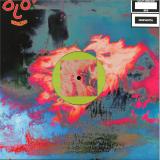
Latest record off the Kalahari production line comes courtesy of a real one. Klon Dump in the building, moving like a madman across four barrelling tech house scorchers.
Part-producer, part-engineer and a long time co-conspirator of A Colourful Storm’s Moopie. Better known to some under the alias Mark, but always surefire for some serious dancefloor potency. Doubters, look no further-this is another demonstration of his mastery.
Big with the radiant stabs, even bigger on the earworm groove. Ploughing the furrow of tough, direct but deft as the Klon Dump faithful will have come to expect by now. Proper belters.
Always flexing outstanding rhythmic ingenuity, whether it’s hardcore hybridity as Mark or the tech house innovation shown here. If anything in life is certain, it’s that a KD record will lay down some serious torque.
There’s also an off-kilter playfulness that kinda feels reminiscent of T+++’s ‘Space Pong’ or Fiedel and Errorsmith’s MMM project. Another ace in the hole from the Antipodean shapeshifter.
Поиск:shapes 11
Все
2025 Repress
Sean McCabe’s impressive Good Vibrations Music is back with its 3rd vinyl instalment and features 4 heavyweight, tried and tested soulful cuts.
Kicking off the 12 Inch is the Black Sonix & Sean McCabe Extended Mix of ‘Rise’ from the Matsiko World Orphan Choir, a moving and heart-felt orphan choir group based in Liberia. The choir is an initiative that aims to provide education and break the cycle of poverty for vulnerable children around the world. With a strong message embedded throughout and given the 5-star production treatment, ‘Rise’ has already been heavily pushed by a wide array of artists including Daniel Steinberg, Red Rack’em and The Shapeshifters.
Next up is Sean’s lush piano-laden remix of ‘Baby Don’t Make Me Wait’, from David Bailey and MissFly. David is a firm favourite amongst the London house music community and regular across labels such as Idris Elba's 7wallace, Makin Moves, Rhemi Music & Unquantize. MissFly is widely renowned for her soulful serenades and ability to write songs 'on the fly' in the studio as well as being found regularly on tour with the likes of Thelma Houston, Andrew Tosh, and The Notorious BIG. Sprinkled with luscious piano undertones and subtle string lines. With support from the likes of Dave Lee and Natasha Diggs.
On the flip is ‘Got It Bad’ from Ellis Aaron & Sean McCabe. Built on a rocksolid foundation of late-night, swing-heavy beats, ‘Got It Bad’ bubbles and froths with creamy Rhodes, lush organ swirls and a bassline that moves and grooves in all the right places. Ellis’ warm and rich soulful vocals are the perfect complement to that unmistakeable sound Sean has become renowned for. Early adopters include Ash Lauryn, Ralf GUM, and Mr V.
Rounding off the EP is Last Nubian’s ‘Dance Together’ which beautifully blurs the lines quite beautiful between Deep House, House and Broken Beat, Josh’s strikingly soulful vocals pair harmoniously with the lush, musical backdrop spear-headed with an abundance of Rhodes, soothing string & synth riffs and a tight, rhythmic drum arrangement that simply refuses to let your feet rest!
Olof Dreijer (ex-The Knife) returns to Dekmantel with Iris, a new 4-track EP out this September, just in time for his North America tour. Featuring remixes by Nidia and Verraco, Iris follows his 2024 collab with Diva Cruz, remixes for Björk ft. Rosalía and Röyksopp, plus acclaimed solo EPs on Hessle Audio and AD 93.
Think breakdance-era energy, sound-humour, and body-synth mischief. Iris plays like a garden of sonic creatures—synths mimicking bodily sounds, chopped-up vocal textures, and ‘90s-style chord stabs inspired by Olof’s high school b-boy phase. It’s playful, raw, and weird in the best way.
With over two decades of shapeshifting behind machines and decks, Dreijer’s been a force in electronic music—from festival headliners across Europe to pushing the boundaries with his Oni Ayhun alias. He also co-founded Stockholm’s Bamba Club, a hub for progressive, percussive sounds.
Further recent highlights include co-producing tracks on Fever Ray’s latest album, producing Houeida Hedfi’s debut LP, contributing to projects by Planningtorock and Zhala, remixing Nine Inch Nails, Röyksopp & Robyn, and Emmanuel Jal.
Fatboy Slim & Daniel Steinberg join forces with a plethora of producers on the Bus Stop Please remixes. The package is one for all shapes and sizes - from the world renowned hit-maker David Guetta, through to UK underground royalty Sally C, Scotlands deep house finest Hayley Zalassi, and enigmatic French trio PPJ.
For their first album as Gilla Band (formerly Girl Band), the
foursome have redrawn their own paradigm. ‘Most Normal’ is like
little you’ve heard before, a kaleidoscopic spectrum of noise put in
service of broken pop songs, FX-strafed Avant-punk rollercoaster
rides and passages of futurist dancefloor nihilism.
Lockdown robbed Gilla Band of any opportunity to try the new
material out live, but the pandemic also incinerated any idea of a
deadline for the new album. They were free to tinker at leisure, to
rewrite and restructure and reinvent tracks they’d cut, to, as
drummer Adam Faulkner puts it, “pull things apart and be like,
‘Let’s try this. We could try out every wild idea.’”
The group also fell under the spell of modern hip-hop, “where
there’s really heavy-handed production and they’re messing with
the track the whole time,” says Fox. “That felt like a fun route to go
down, it was a definite influence.”
‘Most Normal’ opens with an absolute industrial-noise banger that
sounds like a manic house party throbbing through the walls of the
next room as a downed jetliner brings death from above. What
follows is unpredictable, leading the listener through a sonic house
of mirrors, where the unexpected awaits around every corner.
The common thread holding ‘Most Normal’’s ambitious Avant-pop
shapes together is frontman Dara Kiely. Throughout, he’s an antic,
antagonistic presence, barking wild, hilarious, unsettling spiels,
babbling about smearing fish with lubricant or dressing up in binliners or having to wear hand-me-down bootcut jeans (“It was a
big, shameful thing, growing up, not being able to afford the look I
wanted and having to wear all my brother’s old clothes,” says
Kiely).
‘Most Normal’, then, is a triumph, the bold work of a group who’ve
taken the time to evolve their ideas, to deconstruct and reconstruct
their music and rebuild it into something new, something
challenging and infinitely rewarding. It’s a headphone masterpiece.
It’s a majestic exploration of the infinite possibilities of noise. It’s a
bold riposte to your parochial beliefs on whatever a pop song can
or should be. It’s the best work these musicians have put to
(mangled) tape.
- A1: Satellite (Feat. Jon Hopkins, Obi Franky, Ila And Trans Voices)
- A2: All That Falls Apart / Comes Together (Feat. James Massiah)
- B1: Stitches
- B2: Can't Stand To Lose
- B3: Shapeshift (Feat. Kam-Bu)
- C1: Voices
- C2: Go Feat. Kaiden Ford
- C3: Humanise
- D1: Hey!
- D2: Rushing (Feat. Ila And Trans Voices)
- D3: New Euphoria (Feat. Alexis Taylor, Ila And Trans Voices)
- D4: Hq (Feat. Kaiden Ford)
HAAi kehrt mit ihrem kühnen und brillanten zweiten Album 'HUMANiSE' zurück und erkundet den Sweet Spot zwischen maschinengesteuerter Dystopie und emotionsgeladener Utopie.
Mit all ihren Veröffentlichungen hat HAAi (bürgerlich Teneil Throssell) immer versucht, neue Grenzen in der elektronischen Musik zu erkunden, und auf dem neuen Album bohrt sie noch mal tiefer in diese Richtung. 'HUMANiSE' setzt sich mit der Frage auseinander, was es bedeutet, in einer zunehmend digitalen Welt ein Mensch zu sein, in der KI alles in den Schatten zu stellen droht und unsere Bildschirme uns voneinander trennen. Das Ergebnis ist ein ehrgeiziges und aufregendes Epos: ein klanglicher Sprung nach oben und eine deutliche Weiterentwicklung ihres 2022er Debüts 'Baby, We're Ascending'.
Stimmen - sowohl reale als auch digitalisierte - spielen auf 'HUMANiSE' eine große Rolle, ebenso wie Ideen von Gemeinschaft und Zugehörigkeitsgefühl. Sie ist zurückgekehrt, um mit Freunden wie Jon Hopkins, Alexis Taylor von Hot Chip, dem Sänger Obi Franky, dem Rapper KAM-BU, dem Künstler Kaiden Ford und dem Dichter James Massiah sowie mit zwei Chören zu arbeiten: Trans Voices mit Chorleiter ILA und ein Gospelchor unter der Leitung von Wendi Rose. Nachdem sie jahrelang hinter den Decks verbracht hat, bringt HAAi nun auch ihre eigene Stimme in den Vordergrund, mit der sie sich verletzlich und selbstbewusst ausdrückt. Ihre Stimme ist umwerfend zart und verleiht ihren kinetischen Produktionen eine neue Dimension.
Das Konzept des Albums wurde klar, als HAAi mit Jon Hopkins im Studio war. Die beiden spielten mit einem Vocal-Harmonizer-Plug-in mit einer Funktion namens 'Humanize'. Für HAAi ging ein Licht auf: „Die Vorstellung, dass etwas völlig Synthetisches versucht, eine echte Person menschlicher klingen zu lassen, ist verrückt“, sagt sie. HAAi lässt diese Extreme im Laufe des Albums verschwimmen: Sie digitalisiert Stimmen, überlagert sie zu einem verschwommenen Effekt und verwendet sogar eine KI-Text-to-Speech, um ihre Stimme zu erzeugen. Letztendlich kommt sie jedoch zu dem Schluss, dass Erfahrung und Erinnerung - das, was uns wirklich menschlich macht - nicht ersetzt werden können.
Vom euphorischen Opener 'Satellite' über UK-Radiohit 'Can't Stand To Lose' bis hin zu genreübergreifenden Stücken wie 'Shapeshift' ist das Album voll von aufregenden klanglichen Wendungen und zutiefst persönlichen Texten. 'HUMANiSE' ist ein kraftvoller, emotionsgeladener Sprung nach vorn: eine Feier der Gemeinschaft, des Selbstausdrucks und der Menschlichkeit.
- Ltd. Col. 2LP: (Crystal Clear Vinyl)
Swiss shapeshifter Elsa surfaces on Punctuality for the first time, marking the label’s seventh release with a debut EP that dives deep and swims sideways through an eclectic milieu of club influences.
Across the five tracks on Web Glow, there are nods to turn-of-the-century tech house, liquid D&B, broken IDM, psy-laced trance, and modern tek mutations. Subtle wubs ripple under the surface, low-end pressure coils tight, and meticulous sound design binds the tracks into a fully realized vision of Elsa’s forward-thinking sound. Enter the unfolding.
Roza Terenzi steps up to remix “Web Glow,” reanimating the track as a skeletal early-morning stepper—the mood is giving sizzling dubbed-out vocal wisps, pulsing subs, and stripped-back drums. “Groupie” notches up the BPM but keeps things fluid with aquatic atmospherix, jittering FX, and drums that skid out and under rolling basslines.
“Fortune Cookie” flashes uk-tinged tech house with shimmering shards of SFX, resplendent with stuttering kicks, glassy pads, and sultry textures. The halftime jungle-IDM stylings of “No Ads” round off the EP in a haze of fractured breaks and dubbed-out atmospherics. A murky, magnetic debut on Punctuality—Elsa sketches out a soundworld all her own. Dive in and catch it.
DJ Support: Kenny Dope, Mark Knight, Riva Starr, The Shapeshifters, Tedd Patterson, Hector Romero, Grant Nelson, Brian Tappert, Kevin Yost, Saison, Ron Carroll, Steve Bug, The Cube Guys, Massimino Lippoli.
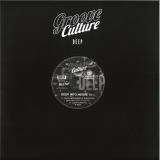
Get yourself geared up for summer season with some fierce dancefloor prime time certified with the Groove Culture Deep Stamp. DEEP INTO HOUSE vol.3 includes some fresh House/Deephouse actions from Ricky Montanari & Discoplex, Luca Olivotto, Gianni Bini and Andrea Tomei. An essential package for diggers.
- A1: When I Sing, I Slip Into The Microphone. Into That Void, I Bring Comrade "Prayers", Then, Turning To Face The Outside, Together We Explode. Part I
- B1: When I Sing, I Slip Into The Microphone. Into That Void, I Bring Comrade "Prayers", Then, Turning To Face The Outside, Together We Explode. Part Ii
- C1: When I Sing, I Slip Into The Microphone. Into That Void, I Bring Comrade "Prayers", Then, Turning To Face The Outside, Together We Explode. Part Ii (Continued)
- D1: When I Sing, I Slip Into The Microphone. Into That Void, I Bring Comrade "Prayers", Then, Turning To Face The Outside, Together We Explode. Part Ii (Conclusion)
- D2: When I Sing, I Slip Into The Microphone. Into That Void, I Bring Comrade "Prayers", Then, Turning To Face The Outside, Together We Explode. Part Iii
Among the true Keiji Haino devotees, Nijiumu’s Era of Sad Wings (released on P.S.F. in 1993) has always held a special place in the pantheon. Operating for only a few years in the early 90s and apparently only performing a handful of shows, Nijiumu operated at the opposite end of the dynamic spectrum to Haino’s famed power trio Fushitsusha, dwelling in a hushed, meditative realm of mysterious droning sonorities and free-floating melodies that occasionally erupts into violence. Black Truffle is pleased to announce a new double-LP edition of a lesser-known 1994 Nijiumu recording, When I sing, I slip into the microphone. Into that void, I bring comrade “prayers”, then, turning to face the outside, together we explode. Here, Nijiumu is the trio of Haino, Tetuzi Akiyama and the obscure Takashi Matsuoka, the three performing on a wide variety of string, wind and percussion instruments, as well as electric guitar and bass, and Haino’s unmistakeable voice.
Like on the early solo Haino album that shares the group’s name (released on P.S.F. in 1993), the instrumentation swims in reverb (the use of which Akiyama recalls as ‘a kind of point of the band’), often obscuring the instrumental sources. On the short opening piece, a distant reed instrument arcs long buzzing melodies over a bed of cymbals and gongs, like a psychedelic take on Tibetan music. The epic second part, occupying almost 50 minutes, begins as a splayed, near-formless cloud of electric guitar and bass, shadowed by bowed and plucked strings, the three elements working through twisting atonal shapes. At various points in the recording, we hear what seems to be the sounds of musicians moving between instruments, their shuffling and bumps fitting seamlessly into this radically open music. Eventually, what sounds like electric guitar moves closer to the foreground, fixing on a repeated melodic cell around which hover mysterious clouds of long tones and a sporadic shaker. At the half-hour mark, the music begins to build to a violently emotive climax, Haino’s impassioned vocal cries punctuating a lumbering, bass-heavy murk, contrasted at points by what sounds like a tin whistle. Suddenly, the volume drops to a near-whisper, opening the way for the stunning final moments, which touch on the slow-motion balladry of Haino’s classic Affection, here given an eccentric twist by an occasional woodblock hit. The third piece opens with a hazy trio of rumbling bass, bowed strings and abstracted slide guitar, the latter calling to mind some of Akiyama’s later solo work. Eventually joined by Haino’s voice, its fragile, haunted tone might remind the listener of the man in black’s documented love of the madrigals of the murderous Count Gesualdo, before the recording abruptly breaks off mid-note. In this new edition, the Nijiumu trio recording is supplemented by a piece recorded solo by Haino in 1973, a bracing electronic blowout stretching almost half an hour. Using a homemade electronics setup to unleash a barrage of crunching distortion and shuddering harmonic fuzz, it takes its place in the canon of extreme live electronics next to Robert Ashley’s Wolfman and Walter Marchetti’s Osmanthus fragrans, looking forward to extreme noise years before Merzbow. Taken as a whole, these four sides of music are a stunning document of some of the lesser-known waystations of Haino’s singular creative path.
In a fusion of science and sound, Kalocain's debut vinyl release, "Genetic Memory," unfolds an eerie tale. "W.N.G." opens a portal to an ancient world, where forgotten tongues unveil cryptic secrets. "Genetic Memory" weaves ethereal connections between ancestral recollections and the present, warping the fabric of time. "Ivermectin" delves into the surreal realms of molecular melodies, as if sonic DNA deciphers sound's enigmas. Remixes from Normal 4, Patricia Kokett, and Jacques Satre reshape the auditory cosmos with a dash of the bizarre.
To amplify the weirdness, Evaldas Bubinas aka Hermandrowning, concocts mind-bending artwork, beckoning listeners into a realm where sound and art meld in uncanny harmony.
But that's not all! The digital copy unveils an additional original track, "Groove Drift," along with a wild array of remixes by Henry Greenleaf, Frankfurt Bass, and Dogpatrol.
"Genetic Memory" isn't just music; it's a transcendent odyssey blending the past, present, and the surreal future, with a digital twist that will leave you questioning the boundaries of sonic exploration.
Swiss label keepitgoing. returns with La Buena Muerte, a three-tracker uniting Ricardo Villalobos & Washington Miranda, Siddhartha, and Wata with Jorge González of Los Updates — a cross-section of Chile’s most vital electronic voices brought together on one record.
The EP opens with Bajo Tierra – Mis Juguetes, a ten-minute drift of slow-burning minimalism where Villalobos’ elastic modular textures and patient rhythmic detail entwine with Miranda’s hypnotic vocal, processed and stretched into new shapes and forms — a continuation of the deep, organic dialogues the pair first explored on De Cada Uno in 2022. On the flip, Siddhartha – Poema 4 slides into minimal electro and broken beat territory, sparse yet restless. Razor-sharp drums and pulsing bass unfold through dynamic structures that thrives on tension and space where a menacing voice cuts through with insistence. Closing the record, Wata – El Soul de Los Que Sobran (feat. Jorge González) brings González’s unmistakable voice into Wata’s playful framework, a looser, rather light-hearted cut where percussion and gentle melodies expand the palette and connect the EP back to Chile’s rich electronic lineage.
With artwork by Damian Schopf, brother of Martin Schopf aka Dandy Jack, La Buena Muerte stands as a collective statement of Chilean experimentalism — free of borders, rooted in collaboration, and tuned for the floor.
After two albums inspired by vast northern landscapes, the forces of nature, and an ever-present sense of duality, Glass Museum shifts gears. The Brussels-based group-originally formed in 2016 by pianist Antoine Flipo and drummer Martin Grégoire-welcomes bassist Issam Labbene as an official third member, opening up a richer, more immersive sound and setting its sights on the rhythms of the modern city.
A true turning point in Glass Museum's career, the new album 4N4LOG CITY twists the codes of electronic music, explores the depths of jazz, and asserts its eclecticism through a fresh and infectious groove.
Signed to the forward-thinking Belgian label Sdban Records, the group shapes its identity within the vaulted ceilings of Volta, a creative hub in Brussels frequented by the vanguard of Belgium's "new scene." Sharing space with acts like ECHT!, Lander & Adriaan, and Tukan, the band continues to push its boundaries through collaboration and reinvention.
Recorded between the French countryside of Drôme, the industrial edges of Brussels, and Volta, 4N4LOG CITY features striking guest appearances. Swiss drummer Arthur Hnatek-known for his work with Tigran Hamasyan and Erik Truffaz, and praised by Gilles Peterson and Laurent Garnier-drives the opener "GATE 1" into hypnotic, krautrock-inspired territory. Meanwhile, rising vocalist JDS lends soulful grace to "Call Me Names", evoking the emotive textures and elegance of vintage soul-jazz reminiscent of the likes of Jordan Rakei or Tom Misch & Yussef Dayes.
Without abandoning their melodic roots and foundational approach, the trio takes daring steps into new terrain. The experimental centerpiece "III" explores the piano as a textural and rhythmic force, drifting between ambient and breakbeat. Elsewhere, the gritty "VAN GLAS"-a hip-hop-tinged track featuring rapper JAZZ BRAK of STIKSTOF-the band ventures far beyond their comfort zone, injecting streetwise lyricism in their mix of electronics and jazz.
Fueled by the heartbeat of the city, 4N4LOG CITY captures the mechanical ebb and flow beneath concrete towers-the anonymous rhythms of daily life moving over the asphalt, and the fleeting, meaningful connections made along the way. Produced by Antoine Flipo and mixed by Elsa Grelot (Avalanche Kaito), the album stands at the intersection of human emotion and urban architecture-a post-modern, deeply cinematic work that asserts Glass Museum's place at the cutting edge of European music.
Black Vinyl[30,21 €]
1x Gold Vinyl & 1 x Khaki Vinyl[34,24 €]
4LP Boxset[144,33 €]
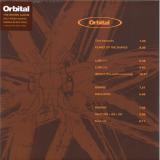
- Originally released in 1993, 'The Brown Album' marked a significant evolution in Orbital's sound - and was met with widespread critical acclaim. NME awarded it 9/10 in their review, and it was chosen as one of Mixmag's best albums of all time.
- Standout track, "Halcyon + On + On", became an instant classic, known for its ethereal atmosphere and haunting vocal sample from Opus III's It's a Fine Day. The track's dreamy progression and uplifting yet melancholic tone made it a staple in film soundtracks and DJ sets, embodying the emotional depth electronic music could achieve. "Impact (The Earth Is Burning)" is another defining moment, an evolving journey of layered breakbeats and dynamic synth arrangements, reflecting the duo's ability to create both club-ready and introspective music. Meanwhile, "Lush 3-1" and "Lush 3-2" demonstrate Orbital's knack for crafting intricate, evolving grooves, balancing pulsating rhythms with melodic flourishes that keep the listener engaged.
- 'The Brown Album' 2LP reissue has been cut at half speed, to ensure maximum audio fidelity for this landmark release, and is the first time the album has been pressed on vinyl for over ten year
- The Brown Album' 2CD includes a 2nd disc of rarities, including the full 11:09 version of Halycon and the 13-minute Underworld mix of Lush.
Waves Within is a genre-blending triumph from Mexican producers Luca Ferrand and Selva in which they serve up sounds that evolve through deep house, broken beat, jazz, nu-disco and hip-hop. Opener 'Bona Fide' pairs dusty jazz and disco-house with a slick hip-hop switch and some superbly sunny melodies. 'Zarapes (After the Rain)' marries Mexican folk and broken beat, then 'Back To That Thang' twists jazz guitar into a genre-fluid ride and the title track evokes tropical 90s house. Closer 'Lynx' is a shapeshifting house cut with bulbous bass and sophisticated sound design that really brings it to life.
Mr. Face, a four-song EP that's a terrific showcase for Segall's artfully ragged style. He plays everything on these recordings with the exception of one drum part on one song. - NPR Fresh Air / Segall appears decidedly more at ease, or even at peace, on the four tracks, but while they build upon acoustic foundations, the tracks quickly take different shapes filled with sublime guitar (and piccolo!) solos that are utterly transfixing."- Exclaim / The real testament to Segall's growing maturity as an artist, however, comes with closing track 'The Picture', one of the most subtle and moving songs in his entire catalog. Segall's guitar sounds like it's scoring a dazed carnival ride as he lays out a tale of learning to say goodbye. - Consequence of Sound
LTD SPLIT COLOUR TRANSLUCENT RED/BLUE VINYL W/ 3-D GLASSES** Back in 2015, Ty Segall released Mr. Face EP, the fantastic gatefold 2x7" was not only packed with four killer jams but was also quite possibly the world's first playable pair of 3D glasses. Now Famous Class Records is thrilled to release a 10th anniversary 12” vinyl edition. All copies are pressed on split color translucent red and blue-colored vinyl and come with special Mr. Face 3-D glasses to activate the supercharged 3D artwork.
Teasing dread atmospheres and zooming in on microscopic details that bring every beat in every bar to life, Seb Uncles returns to Samurai Music with another deep dive into his exquisitely crafted, cinematic progression of the drum & bass tradition.
Even a cursory glance at the Eusebeia back catalogue tells you Uncles is an artist committed to the storytelling promise of breakbeat culture. His work has been heavily tipped towards albums since he first broke through around 2015, and across more than 10 long-players he's cultivated a strong line in moody, evocative jungle and drum & bass more concerned with world-building and subtle detail rather than aggression and intensity.
Following up on his 2023 LP for Samurai, X, on Undertones Uncles applies his signature meditative tones to a broad expanse. There's a consistent sound palette that leans on the warm snarl of monosynth low end and aqueous pads, delicately edited breaks and crisply sculpted synth percussion, but Uncles moves with dexterity around different tempos and structures within this considered sound world. The overarching notion is one of things lurking beneath the surface - a comfortably open theme to be approached and understood from any number of angles. It certainly chimes with the upfront detail and brooding tension that gives the Eusebeia sound such depth.
There are moments of direct drum pressure, such as fierce opener 'Undertones' with its diced-up breaks and icy chords, the boisterous jungle dread of 'Uncover' and chasmic roller 'Root Out', but on the likes of 'Beneath The Surface' and 'Out In The Open' it's the mellow elements that take precedence over the deft drum science. The motion is persistent and nuanced, but it's achieved without deferring to default dancefloor tropes.
'Emergence' marks a pointed shift towards a delicate strain of techno that maintains the album's sound at a mid-paced pulse, focusing on synth shapes and textures to achieve propulsion with only the lightest of drum parts. Alongside the energetic intrigue of Uncles' sonic choices, the melodic make-up of the track is a compelling showcase for his emotionally ambiguous approach, both rousing and chilling in the same curious chord shapes.
From the half-time prowl of 'Lifting The Veil' to the creeping textures and haunted phrasing of 'Brought To Light', Undertones is another stunning exercise in widescreen jungle. It flows naturally from the rich body of work Uncles has cultivated over the past 10 years while carving out its own unique pocket - a reminder if you needed one of the profound sound bedded into the Eusebeia project.
Gradually, the latest album by Julien Mier, is a sonic journey that delves into the transitions of life, identity, and the blurred boundaries between art and personal growth. With a trilingual brain, Mier reflects on how language shifts have shaped his sense of self throughout his life and the music that he writes. Gradually is his exploration of shapelessness—an urge to break free from rigid musical genres and get closer to his most fundamental expression. The album is composed of nine tracks, each representing a distinct cultural and linguistic influence, all tied together by the theme of gradual evolution.
The first section, Ciel, Soleil, and Espace (French for Sky, Sun, and Space), draws on Mier’s French heritage, evoking the feeling of childhood memories bathed in a warm, nostalgic glow. This fluid, atmospheric section mirrors the soft, ever-changing air, symbolising a time of pure, untainted intention. It feels like a hazy, sepia-toned dream, as fleeting and elusive as the scent of an old friend. The gentle flow of the music mirrors the flow of wind, effortlessly shifting from one element to the next, a reflection of the innocence and clarity of youth.
The second section, Steen, Zee, and Zand (Dutch for Stone, Sea, and Sand), channels the influence of Mier’s childhood in a small Dutch dune village. These tracks are grounded in the hard-edged textures of electronic dance music, a genre that introduced him to a world of rhythm and movement. With a sonic palette of blues, greys, and more defined shapes, this section captures the solid, enduring forces of nature—earth, water, and stone. It’s a sonic landscape rooted in stability, a foundation from which everything can grow. The tracks build from the fluidity of the first section into more structured, rhythmic territories, mirroring the natural transition from childhood innocence to the discovery of deeper, more grounded musical influences.
The final section, Scrap (a collaborative track with the Japanese producer Daisuke Tanabe), Soil, and Spark, dives into the exploration of the world beyond familiar borders. Mier’s relocation from the Netherlands to Australia in 2016 is reflected in these pieces, which grapple with the contrast and complexity of different cultures and environments. These tracks are tinged with rust-red hues and a sense of eroded beauty, evoking a more fragmented, distorted view of the world. The music here is marked by tension, conflict, and the erosion of once-solid forms—symbolic of the digital and ecological storms that shape our modern existence. The closing piece, Spark, signals a new beginning, a hopeful initiation into the cycle of renewal.
The album artwork for Gradually is a conclusive visual representation of this journey, captured in the final frame of an analog film roll that began in the Netherlands and concluded with an image of the streets of Sydney, Australia—a perfect metaphor for the album’s narrative of gradual transition and discovery.
M.R.E. is Michiel Eskes - a hot new talent from Holland. His music is deep, emotional and full of finely tuned melodies, these two tracks show off his style perfectly. His two tracks on this EP were written especially for FT having been chased down for them since the label first heard his music. ReKab is back with his trademark deep techno and a 9 minute workout on his "Climbing High" track. "Always Having Fun" is a melody driven bubbling acid track on the flip, if you love ReKaB these are essential. FTV005 is limited to 150 copies and comes on coloured, marbled, eco-vinyl with an insert showing "Post Clubbing Exercises" for when you have thrown too many shapes on the dancefloor the night before!