- A1: Orchestral Manoeuvres In The Dark - If You Leave
- A2: Suzanne Vega, Joe Jackson - Left Of Center
- A3: Jesse Johnson - Get To Know Ya
- A4: Inxs - Do Wot You Do
- A5: The Psychedelic Furs - Pretty In Pink
- B1: New Order - Shell Shock
- B2: Belouis Some - Round, Round
- B3: Danny Hutton Hitters - Wouldn’t It Be Good
- B4: Echo & The Bunnymen - Bring On The Dancing Horses
- B5: The Smiths - Please Please Please Let Me Get What I Want
Search:shell
Opaque Pink Version
Bubble Bath for Giants is an ode, a Tribute, a reverence for Oceans, for the Mighty Magnificent Power of Fairies, to the energy that we are all everything, whole, well, but in different sized and shaped vessels at times . . . It is a Celebration of Gentleness and of incredible Force, and Charge . . . These, I sea as the same. The Yang Springs from the Yin and together they ever reflect, dance, and express themselves . . .
Many Bells, Bowls, Ceramics, Chimes, Cymbals, Drums (Bass, Sakara, Surdo, Tom, and many more,) Gongs (Chao, Cup, Indonesian, Sun, and Symphonic,) Keyboards (Metal, Synthesizer, and Wooden,) Percussion, Plant Leaf Bundles and Fronds (Bamboo, Eucalyptus, and Palm,) Ratlles, Shakers, Voice, Whistles, and Sound Design by Carlos Niño.
Featuring:
Luis Pérez Ixoneztli, Bernard Xolotl, Aaron Shaw, Surya Botofasina, Nate Mercereau, Laraaji, Darius Jones, Sheila Govindarajan, Idris Ackamoor, Deantoni Parks, André 3000, Marshall Allen, Sam Gendel, Sibusile Xaba, Mia Doi Todd, Anisia Uzeyman, Saul Williams, Jojo Abot, Jowee Omicil, Aztlan Unearthed
///
Cover Photo by Carlos, from in the Maui Waters
Art Direction, Design and Original Art by Nep Sidhu
Layout Production by Jonny O'Hara
Recorded by Carlos Niño in Topanga, California, and by some of the Artists named above, from their Homes . . .
Mastered by David Allen
///
This double LP of instrumental Hindustani, Carnatic and folk 78rpm shellac records from India comes with a full color 12-page insert of gramophone record ephemera, shops, labels, manufacturing details and graphics. The LPs feature over 25 artists recorded between 1904 and 1959 playing a panoply of instruments: jalatarang, dilruba, sarod, clarionet, pakhawaj, violin, been, kazoo, shehnai, tabla, sarangi, sitar, vina and more.
Artists include Imdad Khan (the first sitarist ever recorded), Ahmedjan Thirkhawa, Bundu Khan, Amir Hussain, Allauddin Khan (who taught Ravi Shankar), and others both forgotten and revered.
The Indian classical instrumental tradition is one of incredible proficiency and expressiveness using instruments and techniques created over generations that seem to perfectly and uniquely compliment Indian culture, landscape and tradition. Sympathetic strings resonate inside sitars and sarangis to manifest shimmering reverberant spiritual spaces; horns, reeds and flutes extend the range, volume and melodic inventiveness of the voice; a mind-boggling array of elaborately turned percussion instruments allow for rhythms as complex or as simple as the flowing Ganges river. Classical music in India was perhaps at its height during the 78rpm period as the Raj era was ending and the world was globalizing.
2-LP gatefold with 12 page full-color booklet insert - features never reissued recordings and is the long-anticipated follow up to the Indian Talking Machine book/CD (Sublime Frequencies 099), which was also produced by Robert Millis from his collection of 78rpm records and ephemera.
Siavash Amini is a composer from Tehran, Iran. He Has worked with labels like Room40, Hallow Ground, Opal Tapes and Umor Rex for the better half of the past ten years. He has performed at festivals like CTM & MUTEK and many other well known international events. Apart from it Siavash is a co-founder of the “SET experimental art events” and “SETfest” in Tehran, Iran. His work ranges from fragile ambient pieces and brittle IDM (incorporating his distinctive style of atmospheric guitar playing) to noisy drones and bleak modern classical pieces. His compositions have been inspired by films such as Andrei Tarkovsky's The Mirror as well as novels by Dostoyesvky and poems by T.S. Eliot.
Saffronkeira is the Sardinian sound researcher Eugenio Caria being active in the electronic music scene since almost two decades. His most recent work - a cooperation with the Italian jazz trumpet legend Paolo Fresu - earned a lot of praise from the international music press for the pure timelessness of the album.
"Upon hearing a small snippet of sound an image is conjured, not a memory but not unfamiliar. A shell of a memory, thousand events superimposed on each other. While trying to extract points of a narrative to ease the discomfort of this recollection, I try to separate and unfold the image and with it the points of the spectrum which make up the sound, a shell of a narrative. Here is an album based upon an almost entirely imagined/ synthesized happening upon hearing a snippet of sound. It sounded like of a whole story that never happened but yet I felt myself amongst it’s participants, a sound triggering a false memory. Each sound in Eugenio’s collection of sounds and ideas guided me a to a point in the narrative and it’s construction. He had handed me a portals of some kind to a few scenes of the whole narrative. This is the soundtrack for that false memory from all the perspectives I can think of."
West Mineral returns with lushly amorphous actions by Shiner, Pontiac Streator & Ben Bondy aka Shinetiac; together fused for an immersive flux of vapoured dub, chopped and droned Billie Eilish, and fidgety algorithmic jams.
There's not a single, specific sound you can peg to the West Mineral axis at this stage in the label’s evolution - it's rather a set of shared aesthetics that freely bend into various interconnected shapes. Shinetiac's contemptuous, critic-baiting gear is the ideal example; on their last album, 2023's 'Not All Who Wander Are Lost', skittery, ketamized IDM sparkled over Spice Girls samples and the Foo Fighters' 'Everlong' was transmuted into Sneaker Pimps-style trip-hop. 'Infiltrating Roku City' might be a little less blatant with its out-and-out poptimism, but it takes a similarly dim view of conservative "big ambient" snobbishness. Just a few minutes of 'Bluemosa' should be enough to let you know what's up; the overall character of the sound is hazed, with frozen pads and garbled, dubbed-out voices smudged into a mess of effects and samples. But it sups up different nuances as it wriggles, absorbing scampering breaks, dizzy acoustic guitar strums and half-heard wordless vocals, flipping in the third act to emerge from its shell as minimalist balearic folk-pop - something like Bon Iver doing 'Electric Counterpoint'.
Brooklyn's Shiner, Philly's Pontiac Streator and Berlin-based Ben Bondy navigate the labyrinthine streaming landscape, guided by their own private experiences of mindless doom-scrolling and cruising the darkest corners of YouTube. They formulated 'Infiltrating Roku City' while they were rehearsing last year and spent the winter stitching together various recordings and jams into a layered, dry-witted commentary on our algorithmic reality. Laden with inside jokes and refried memes, it's surprisingly elegant gear; handling the most unseemly elements like sonic recyclers, earnestly repurposing pop and nostalgia to create an atmospheric echo of contemporary reality.
Screwing Chief Keef's enduring 'Citgo', 'Clublyfe (hulu)' emphasises the original's AFX-pilled euphoria with Robert Miles-style piano hits, replacing Young Ravisu's brittle 128kbps trap rhythm with a glitchy rattle that picks up dembow spikes as it rolls. 'I Hate Being Sober' vaporises the Chicago drill pioneer's 'Hate Bein' Sober', blocking out his voice with glitchy, downsampled interference and elasticated Rhodes. The trio team up with Orange Milk's goo age on the sublime 'Crisis Angel', catching a ray of Malibu's sunshine in the process, and reduce Billie Eilish's voice to a Romance-does-Celine cinder on 'Billie', stretching it to fit next to gassed Future ad-libs and swooping 808 Mafia sub womps. And although the album takes a murky diversion on 'Roku Axes Ultra’, and a cloud-stepping centrepiece ‘Purelink’ in homage to the eponymous dubbed ambient dynamos, it's back on course with 'Jiafei (NETFLIX)', taking aim at TikTok bot videos and welding screams from Florida metal band Underoath to AI-strength vocal curlicues.
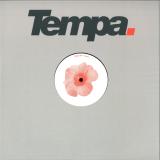
Following the widely acclaimed release of Body Shell in Spring 2025, Carré returns to Tempa, for a new EP, ‘Hibiscus’, featuring a collaborative track with LA-artist Bbyafricka, highlighting the synergy of West Coast Rap & London Soundsystem culture.
Connected by warmth and groove that define where Carré is musically right now, each of the four tracks on ‘Hibiscus’ stands on its own, yet together they continue to showcase Carré’s flair for producing sleek dubstep with melodic verve. From the shimmering ‘Warm Light’, the razor-sharp edge of ‘X Effect’, the deep stepper ‘Ride It Out’ to the stripped back ‘Hibiscus’ which glows with the addition of Bbyafricka’s sultry vocals, the EP is a concise statement of Carré’s evolving sound.
Speaking about the collaboration, Carré says, “I’d been a fan of Bbyafricka’s sound, style, and tone — tracks like ‘Baton Rouge’ and ‘Dumbo’ really stood out to me — and I could already imagine how her voice would fit with my production. The fact that she’s from LA made the connection feel even more natural. When I reached out, she was down straight away and came back with something I genuinely loved. She captured the energy of the track perfectly, and together I think we created something that feels authentic and even better than I’d imagined.”
For Bbyafricka, working on ‘Hibiscus’ was a moment of overcoming writer's block, “this song was me coming out of it on a weekend spent in Joshua tree, sitting outside looking at the view and the solar panels. I think you can envision what my view was when you play the song,” she explains.
Carré’s next outing on Tempa is a welcome return, signifying the home run she’s on as a producer and marking another impressive instalment in the producer's growing catalogue. In the last three years, Carré has quickly become a leading figure in the contemporary wave of artists pushing the true school Dubstep sound to new places and new audiences, expanding on the roots laid down by the likes of Skream, Benga, and Loefah.
- Oracle Road
- Tonic
- Rv Envy
- Not Trad
- Color In The B&W
- Compact Mirror/Last Names
- Government Job
- Pumpkin Festival
- Shelley Duvall
- Sonora
- Last Names (W/Drums)
Refracting beatifically through realities and mirages flickering along his aural parade route, Animal Collective"s Geologist rides the high country on a hurdy gurdy of many colours. Via the mystery science of musical engagement, we take his sonic kaleidoscope of encounters into our own experience as we listen. That"s the beauty of Can I Get a Pack of Camel Lights?, the debut solo transmission of the heart and soul and life and times of Geologist.
- Ascending
- Cascading Crescent (Ft. Geoff Rickly)
- Adrift
- Tending The Embers
FIRST RUN CLUB INDIE EXCLUSIVE[22,65 €]
Pelican war schon immer eine Band, die nicht nur aus Chicago kommt, sondern echt typisch für Chicago ist. Gegründet im Jahr 2000 von den Gitarristen Trevor Shelley de Brauw und Laurent Schroeder-Lebec zusammen mit den Brüdern Bryan und Larry Herweg am Bass und Schlagzeug, hat Pelican seine Wurzeln in der regel- und genreunabhängigen Szene, die man mit dem Fireside Bowl verbindet. Nachdem Schroeder-Lebec nach dem Weggang von Dallas Thomas im Jahr 2022 zur Band zurückgekehrt war, konnte Pelican in dieser wiedervereinigten Besetzung an den Geist ihrer Gründungszeit anknüpfen und mit ihrem 2025 erschienenen Album Flickering Resonance" etwas ganz Neues schaffen. Das Album ist bereits in der dritten Vinyl-Auflage. Sowohl neue als auch alte Fans stöbern wieder im Pelican-Katalog, was auch zu zusätzlichen Neupressungen und Wiederveröffentlichungen ihrer beliebtesten Titel geführt hat. Mit drei Vinyl-Neupressungen allein im ersten Jahr und mehreren Tourneen in den USA und Europa zur Unterstützung des Albums hat Pelican nun eine EP mit vier Titeln aus der Flickering Resonance"-Ära als neue 12"-EP Ascending" neu aufgelegt. Pelican-Fans werden die letzten beiden Tracks Adrift" und Tending the Embers" wiedererkennen, die 2024 digital selbst veröffentlicht wurden und nur auf einer limitierten Anzahl von Kassetten erhältlich waren. Diese 12"-Platte enthält auch eine Gesangsversion der Lead-Single Cascading Crescent" von Flickering Resonance mit Geoff Rickly von Thursday. Diese Version des Tracks war bisher nur auf einer limitierten Anzahl von 7"-Singles erhältlich, sodass sie nun zum ersten Mal digital veröffentlicht und auch in physischer Form allgemein verfügbar ist. Der Titeltrack der EP, Ascending", wurde etwa zur gleichen Zeit wie Flickering Resonance aufgenommen, aber nicht auf dem Album veröffentlicht, da er eher wie ein eigenständiges Werk wirkt. Die Zusammenführung dieser vier Tracks auf einer EP unterstreicht einmal mehr, dass Pelicans regelwidriger Ansatz der Kern dessen ist, was Pelican zu einer festen Größe in allen Genres macht, die sie erkunden.
Black Vinyl[20,59 €]
Pelican war schon immer eine Band, die nicht nur aus Chicago kommt, sondern echt typisch für Chicago ist. Gegründet im Jahr 2000 von den Gitarristen Trevor Shelley de Brauw und Laurent Schroeder-Lebec zusammen mit den Brüdern Bryan und Larry Herweg am Bass und Schlagzeug, hat Pelican seine Wurzeln in der regel- und genreunabhängigen Szene, die man mit dem Fireside Bowl verbindet. Nachdem Schroeder-Lebec nach dem Weggang von Dallas Thomas im Jahr 2022 zur Band zurückgekehrt war, konnte Pelican in dieser wiedervereinigten Besetzung an den Geist ihrer Gründungszeit anknüpfen und mit ihrem 2025 erschienenen Album Flickering Resonance" etwas ganz Neues schaffen. Das Album ist bereits in der dritten Vinyl-Auflage. Sowohl neue als auch alte Fans stöbern wieder im Pelican-Katalog, was auch zu zusätzlichen Neupressungen und Wiederveröffentlichungen ihrer beliebtesten Titel geführt hat. Mit drei Vinyl-Neupressungen allein im ersten Jahr und mehreren Tourneen in den USA und Europa zur Unterstützung des Albums hat Pelican nun eine EP mit vier Titeln aus der Flickering Resonance"-Ära als neue 12"-EP Ascending" neu aufgelegt. Pelican-Fans werden die letzten beiden Tracks Adrift" und Tending the Embers" wiedererkennen, die 2024 digital selbst veröffentlicht wurden und nur auf einer limitierten Anzahl von Kassetten erhältlich waren. Diese 12"-Platte enthält auch eine Gesangsversion der Lead-Single Cascading Crescent" von Flickering Resonance mit Geoff Rickly von Thursday. Diese Version des Tracks war bisher nur auf einer limitierten Anzahl von 7"-Singles erhältlich, sodass sie nun zum ersten Mal digital veröffentlicht und auch in physischer Form allgemein verfügbar ist. Der Titeltrack der EP, Ascending", wurde etwa zur gleichen Zeit wie Flickering Resonance aufgenommen, aber nicht auf dem Album veröffentlicht, da er eher wie ein eigenständiges Werk wirkt. Die Zusammenführung dieser vier Tracks auf einer EP unterstreicht einmal mehr, dass Pelicans regelwidriger Ansatz der Kern dessen ist, was Pelican zu einer festen Größe in allen Genres macht, die sie erkunden.
- A1: Robert Pico - Le Chien Fidèle
- A2: Annie Girardot - La Femme Faux Cils
- A3: Spauv Georges - Je Suis L'état
- A4: Zoé - Zoé
- A5: Jacques Da Sylva - Fou
- A6: Valentin - Je Suis Un Vagabond
- A7: Jacques Malia - Histoire De Gitan
- A8: Bernard Jamet - Raison Legale
- B1: Jean-Pierre Lebort - Barbara Au Chapeau Rose
- B2: Les Concentrés - Fils De Dégénérés
- B3: Les Missiles - Publicité
- B4: Hegessipe - Le Credi D'hegessipe
- B5: Marechalement Votre - Ethero Disco
- B6: Mamlouk - Decollez Les
- B7: Mozaique - L'amour Nu
- B8: Jean-Marc Garrigues - Je Dis Non
- B9: Penuel - Astronef 328
The journey through French-speaking pop archives continues with this fifth volume, packed with fuzz, gimmicks, and dissent. Far from the charts, the selected tracks display a great creative freedom, often backed by corrosive humor. Welcome to the surprising, kaleidoscopic, and colorful world of the late sixties and early seventies, Wizzz!
Born in Montauban, Robert Pico stumbled into music by chance when he met René Vaneste, then artistic director at Pathé-Marconi. René brought him to Paris to record his first 45 RPM EP in 1964. A year later, Pierre Perret introduced him to Vogue, where he recorded his second album with Claude Nougaro’s orchestra. Sylvie Vartan then introduced him to RCA, where he recorded four singles, including the astonishing "Chien Fidèle," a track backed by a hair-rising fuzz guitar. Alongside his solo career, he also composed for other artists like Alain Delon (the song was recorded but remains unreleased), Magali Noël, Bourvil, and Georges Guétary. In the Paris of the sixties, he mingled with Mireille Darc, Elsa Martinelli, Marie Laforêt, France Gall, Françoise Hardy, Petula Clark, Régine, Dani, Serge Gainsbourg, Joe Dassin, Franck Fernandel, Charles Level, and Roland Vincent. Despite his efforts and winning a Grand Prix Sacem for his final record, Robert Pico didn’t achieve the expected success in show business and decided to leave Paris and return to the Southwest, where he devoted himself to writing. He is the author of 23 books (including Delon et Compagnie, Jean-Marc Savary Editions 2025, a memoir about his youth and his many encounters). Today, he is relieved to never have become a celebrity and devotes himself to his work with passion.
In 1969, the Franco-Italian movie Erotissimo was released, directed by Gérard Pirès (who later directed Taxi in 1998, written and produced by Luc Besson). This pop comedy features Annie Girardot, Jean Yanne, Francis Blanche, Serge Gainsbourg, Nicole Croisille, Jacques Martin, and Patrick Topaloff. The soundtrack was written by Michel Polnareff and William Sheller, with lyrics by Jean-Lou Dabadie. "La Femme Faux-cils," performed by Annie Girardot. It recounts the feelings of a rich CEO's wife who seeks to develop her sex appeal under the influence of advertisement and magazines. Groovy, sparkling and light, this track, with ITS lush arrangements humorously critiques consumer society and feminine beauty standards.
“Je suis l’Etat” (1967) is the flagship track of the first EP by singer-songwriter Spauv Georges, aka Georges Larriaga, better known as Jim Larriaga (1941-2022). Born into a family of bakers, the young man was initially planning to become a hairdresser when he discovered English-speaking music through Elvis Presley and the Beatles. After this revelation, he decided he would become a songwriter and gave himself five years to succeed. He recorded his first two EP’s independently for RCA under the pseudonym Spauv Georges; meaning “that poor George”, a nickname given to him by the mother of her friend Jean-Pierre Prévotat (future drummer of the Players, Triangle, or Johnny Hallyday). Portraying a depressed and eccentric young man, Spauv Georges created corrosive and amusing songs that didn’t reach a wide audience, despite a TV appearance with Jean-Christophe Averty.
Supported by his loyal friend and fellow songwriter Jean-Max Rivière, Georges Larriaga met the future singer Carlos in the early '70s, then Sylvie Vartan’s assistant. He wrote songs for Carlos, including the popular "La vie est belle," "Y’a des indiens partout," and "La cantine", which went onto become a huge hit in 1972. He also composed for Claude François (“Anne-Marie”, 1971), Charlotte Julian (“Fleur de province”, 1972), helped launch child singer Roméo (who sold 4 million records), and later wrote the hit "Pas besoin d’éducation sexuelle" (1975) for the young Julie Bataille. In 1971, Jim recorded an album for Disc'Az: “L’univers étrange et fou de Jim Larriaga”, which featured pop gems like “La maison de mon père”.
The story of the song "Zoé" began when Pierre Dorsay, artistic director at Vogue Records, asked Swiss singer and musician Pierre Alain to write a song for a new female singer. The inspiration came when he realized that Zoé (the artist's name) was also the name of France's first atomic battery, created in 1948, which consisted of uranium oxide immersed in heavy water! The lyrics reflect a bubbling energy that must be handled with caution, while the instrumentation echoes this atomic theme, notably with the use of a theremin.
Zoé’s career lasted only as long as a single 45 RPM, but it seems Christine Fontane was the vocalist behind this pseudonym, who is known for several EPs, a good "popcorn" album in 1964, and a handful of children’s singles in the '70s. Regardless, the photograph on the cover is of a different girl entirely.
Later, Pierre Alain continued his career, writing songs for himself, Marie Laforêt, Danièle Licari, Alice Dona, Arlette Zola (3rd place in Eurovision 1982), and achieving multiple gold and platinum records in Canada. Also an inventor with several patents, president of the Romande Academy, and head of the French Alliance in Geneva, he now composes atonal music, books, and poetry. Moreover, he is also the host of "Les Mardis de Pierre Alain" at "Le P'tit Music'Hohl" in Geneva.
Filled with oriental choruses and fuzz guitar, "Fou" is from Jacques Da Sylva's only EP released by Vogue in 1967. Despite the quality of this recording, all traces of this singer disappear after this first effort.
Valentin is a baroque pop singer born in Belgium. He is the songwriter and composer of most of the tracks on his three singles released in the late 60s in Canada. A legend says that he reincarnated himself as Jacky Valentin during the 1970s for a rock'n'roll revival career in Belgium, but his older brother sadly debunked this story. Valentin's first two singles were arranged by Claude Rogen, a Parisian session pianist who had come to Canada to promote the song “Mister A Gogo”, a cover of David Bowie’s “Laughing Gnome”, adapted by singer Delphine, his wife at the time. Far from his usual network, Claude Rogen arranged music for Polydor, including the arrangements for “Je suis un vagabond” in 1969, a jerk tune with string arrangements and a furious optimism.
Jacques Malia wrote, composed, and recorded his only 45 EP for Festival in 1966. “Histoire de gitan” is an incredible beat track with bohemian scat that tells the story of a gypsy musician who came to Paris to make it in the Music-Hall, to no avail. The hero of the song and its author probably shared a similar fate, as Jacques Malia faded into anonymity after this remarkable attempt.
Bernard Jamet recorded two EPs for Barclay in the late sixties and co-wrote several songs with Christine Pilzer, Pascal Danel, and prolific songwriters Michel Delancray and Mya Simile. The track “Raison Légale” (1968), his masterpiece, immerses the listener in a courtroom right when a murderer is being judged, with jerk rhythm and free arrangements. A unique, paranoid, judicial, and psychedelic oddity.
Jean-Pierre Lebrot-Millers started his career in show business in 1967 as a singer and songwriter for the Philips label. After three singles, he wrote several songs of a new kind with his friend Pierre Halioche, in the midst of the sexual liberation movement and the democratization of drugs. With provocative lyrics, “Les filles du hasard” and “Barbara au Chapeau Rose” were released on a Philips singles in 1968. The character of Barbara was inspired by a queen of Parisian nightlife during the psychedelic years: model Charlotte Martin, who dated Eric Clapton from 1965 to 1968, then Jimmy Page from 1970 to 1983. Jean-Claude Petit’s arrangements, with a table-filled intro, soul brass, and Hendrixian guitar, emphasize the flamboyance of a hedonistic and sexy character, whose dog is named Junkie because “Junkie est un nom exquis”! The track was recorded live in three takes with a full orchestra.
Upon its release, the record was censored by Europe 1 and RTL due to its references to drug use. Jean-Pierre Lebrot was then banned from the airwaves and later dismissed by his record label. He changed his artist name to Jean-Pierre Millers, while his companion Pierre Halioche became D. Dolby for a new dreamy composition, “Chilla”, which Jean-Pierre produced himself with arrangements by Jean Musy. Once again, the song was immediately censored everywhere. After this setback, he decided to stop singing and started taking on odd jobs to support his Swedish wife and their son until the day he met Jean-Pierre Martin, then production manager at Decca, who had worked with Manu Dibango. Martin offered Jean-Pierre Lebrot-Millers, then employed at Rank Xerox, the position of artistic director at Decca. He accepted and became, a year later, promotion director (radio, press, TV). He worked on Julio Iglesias’s first album for Decca, which became a massive hit and allowed him to meet Claude Carrère. The latter asked him to write new songs and find their performers, much like a “talent scout.” It’s through him that Jean-Pierre discovered Julie Pietri and Corinne Hermès. He composed “Ma Pompadour” for Ringo, Sheila’s husband, and took the microphone again for the syncope hit “Rendez-Vous” in 1982.
That same year, Jean-Pierre Lebrot-Millers tried to release a track for which he had heavily gone into debt: “Si la vie est un cadeau”. Having recorded it in London, he presented it to numerous professionals, all of whom refused to get involved. The same thing happened with Antenne 2 and the Sacem when he proposed the song as France’s entry for Eurovision. He then met Haïm Saban, who was producing cartoon soundtracks and had just launched the Goldorak theme song. Saban, having listened to the song, declared it had the potential to become a hit. He sent Jean-Pierre and Corinne Hermès to meet the CEO of the Luxembourg radio and television network. The latter received them, asked to hear a verse and chorus a cappella in his office, and immediately hired them to represent Luxembourg at Eurovision 1983. They reworked the arrangements and recorded a new version with Haïm Saban as co-producer. The song ended up winning Eurovision 1983, a great comeback for our hero. He continued producing and hung out with the band Nacash in Belgium when a couple came to introduce their daughter for an impromptu audition in a hotel room. The girl sang “Les démons de minuit” while dancing to a radio cassette. Impressed, he had her take singing lessons for a year and composed a song for her (for which he had the melody and title, but no lyrics). This required him to go on the hunt for a lyricist, who ended up being Guy Carlier. They recorded the song, which was initially a ballad, at Bernard Estardy’s CBE studio, and gave the singer a new name: Melody. They showed the song around their industry network without success. Later, Estardy called Jean-Pierre to suggest changing the rhythm and making it pop-rock. Orlando, Dalida’s brother, liked the result and decided to co-produce the track. “Y’a pas que les grands qui rêvent » became a classic hit. The song has since been covered by Juliette Armanet (as a ballad, like the original) and Valentina.
Born into an aristocratic Breton family, Hervé Mettais-Cartier worked as a DJ at Queen Kiss, a nightclub in Poitiers, where he formed the band Les Concentrés with Michel (an actor) and Christian (a radio technician). Together, they created a repertoire of whimsical songs (“Ma bique est morte”, “J’suis un salaud”, “Fils de dégénéré”...) that they performed on stage dressed in white (in homage to “concentrated milk”). They performed at Bliboquet and Olympia in 1968 for the 10th edition of the “Relais de la chanson Française” organized by L’Humanité-Dimanche and Nous les Garçons et les Filles, sponsored by Pepsi Cola. Winners in the author-composer category, alongside Danish singer Dorte, their visibility allowed them to record a 45, and appear on television in Jean-Christophe Averty’s show. The A-side of the disc features Bruno le ravageur, a casatchok dedicated to Bruno Caquatrix, the director of Olympia, nicknamed in the song “Coq Atroce” or “croque-actrices”. The B-side is dedicated to “Fils de dégénéré”, a quirky tribute to Hervé's aristocratic roots, mixing absurdity with sophisticated vocal harmonies.
After Les Concentrés, Hervé Mettais-Cartier formed the duo La Paire et sa Bêtise with his friend Olivier Robert. They performed in Parisian cabarets and toured with Pierre Vassiliu. In the late 1970s, Hervé began a solo career. He recorded two albums for the Motors label in 1978 and 1979, which did not achieve their anticipated success due to lack of promotion. In 1980, he met Bernadette, with whom he started a family and created a “Chansons à voir” (songs to see) show that he performed until his death at the end of 2024.
Publicité comes from the final EP by the Missiles (Ducretet Thomson, 1966), a disc that also includes “La (nouvelle) guerre de cent ans”, featured on Volume 4 of our Wizzz! series. Please refer to the booklet for the story of the band.
“He’s 1.82 meters tall, 28 years old, weighs 135 kg, is black and Belgian”: this is the description of singer Hegesippe on the back of his sole single (Decca, 1967). He appears on the album cover wearing a Greek toga, like a hippie gag – we are at the end of the year 1967. In “Le crédo d’Hegesippe”, this former bodyguard of Antoine and the Charlots plays the delightful card of the thick brute converted to Flower-Power and non-violence, with arrangements by Jean-Daniel Mercier, aka Paul Mille.
“Ethéro-disco” was released on a promotional record for clients of the Maréchal company (Liège, Belgium) for the New Year 1979. Over a funky rhythm, celebrity impersonations (Brigitte Bardot, Jacques Dutronc, Fernandel…) deliver an enigmatic text about pharmaceutical products like ether, bismuth, and aspartate. The track was composed by Dan Sarravah (responsible for Joanna's “Hold-up inusité” featured on Wizzz! Volume 3) and Tony Talado, who was also a singer (one 45 in 1967), songwriter (with over a dozen credits between 1964 and 1985 in various styles from surf music to disco), author (Devenez Végétarien, Dricot Editions, 1985), ad designer, and psychologist.
Décollez-les is on the A-side of Mamlouk's only single, a pseudonym for Marsel Hurten, who is known for his work on several EPs in the late sixties, as well as composing music for Hervé Vilard’s “Capri, c’est fini”, Claude Channes' “La Haine”, Annie Philippe’s “On m’a toujours dit”, and Nancy Holloway’s “Panne de Cœur”.
This strange song, with Afrobeat horns and absurd dialogues between a chef and his kitchen staff, is the result of a collaboration between Marsel Hurten and one of his neighbors, a photographer from Pavillon-sous-Bois (93), where the musician settled after returning from the Algerian War. A music video was shot to promote the record.
Marsel Hurten was born in Tourcoing (59) into a musical family. At a young age, he joined the brass band founded by his grandfather, playing the piston before studying trumpet at the conservatory, as well as teaching himself how to play the guitar. As an orchestra musician, he toured in France, Belgium, Germany, and England. He released a series of solo 45’s between 1965 and 1968 for the DMF and Az labels before stopping recording to focus on working for other artists (Gilles Olivier, Noëlle Cordier…).
“L’amour nu” (Vogue, 1971) is the work of the short-lived Belgian band Mozaïque. The track, written by singer Jacques Albin, closely resembles another of his compositions, “Carré Blanc”, which he recorded in 1969 for Disc’AZ.
Represented by the Lumi Son micro-label based in Marignane (Côte d'Azur), Jean-Marc Garrigues released two 45 RPMs in the late sixties, defending the French jerk sound. The song “Je dis Non” is a short, joyful ode to youth, pop music, and rebellion.
Songwriter and performer Jacques Penuel released three singles. The first one, “Astronef 328” (Fontana, 1969), features a dizzying series of chords punctuated by sound effects, a sci-fi story, and arrangements by Jean-Claude Vannier.
We would like to sincerely thank Pierre Alain, Moon Blaha, Marsel Hurten, Bastien Larriaga, Jean-Pierre Lebrot-Millers, Bernadette Mettais-Cartier, Robert Pico, Olivier Robert, Claude Rogen, Micky Segura.
Rare as fish knees, roots gem!
“Me Look Like A Lion But Me Humble Like A Man”
Fredrick Dookie & Desmond Silpatt were cousins and close friends who though not prolific, created one stunning reggae tune which has been near impossible to find for over 40 years.
Like artists from Supercat to Sheila Rickards, Freddie & Dessie are of Indo-Jamaican descent. They gravitated to music from an early age.
Recorded at Aquarius and arranged by Wire Lindo, the track features back up vocals from a young Beres Hammond.
"I have loved this song for a very long time and this exclusive reissue has been in the works for several years since I tracked down one half of the duo Dessie aka Desmond Silpatt who is now based in Florida." says Chris from Shella Records.
Freddie who provides the song’s hypnotic vocal was a devout Rasta man who sadly passed away in 2019. He is survived by Dessie, a renaissance man, inventor and author who has penned thousands of songs in his time.
Limited to 250 copies !
The Deadheads had never had much luck with spaceships. Their first mission had ended in a catastrophic engine failure, leaving them adrift in deep space for weeks. This time, their craft was hardly more reassuring. A hodgepodge of outdated technology and shoddy repairs made it more of a floating death trap than a reliable cruiser. As they began their descent toward the strange planet, the hull creaked and rattled, sending a wave of dread through the crew.
"Hold on," Matt's voice crackled over the intercom, without much conviction, as if he himself doubted they would make it out alive. Outside, a thick, grayish atmosphere swirled ominously, while the planet's gravity became far stronger than anticipated.
“Fuck, we’re gonna burn at the entrance!” M yelled, his hands flailing on the console as sparks flew from the control panel. The ship’s sensors were completely jammed, and the navigation system flickered intermittently, like a dying light. Below, the planet’s surface was a tangle of lava rivers and jagged rock formations, the kind of place no sane person would ever land. But the Deadheads had never pretended to be. They lived in a state of constant emergency.
As the descent intensified, the alarms blared. On the bridge, the screens lit up with red warnings and flashing messages: "SYSTEM ERROR," "UNSTABLE TRAJECTORY," "SUIVITY SYSTEM COMPROMISED." The lines of code scrolled by too quickly to be read, while a mechanical voice repeated relentlessly: "Imminent impact. Structural integrity at twenty percent."
The once pristine shell of the vessel began to disintegrate, with shards of metal breaking away and disappearing into the atmosphere.
With a final, piercing screech, the ship crashed onto the planet's surface, sending up a cloud of dust and debris. The crew was violently thrown from their seats, stunned but barely alive. They struggled to their feet amidst the wreckage, the ship reduced to a charred shell around them.
"Well," M said, wiping the dirt off his suit with a grimace, "at least the air is breathable." Matt scanned the hostile expanse stretching before them and smiled slightly. "Perfect. Let's hope we have better luck with the planet than with our ships."
With that, the Deadheads gathered their equipment and headed into the unknown, while the remains of their ship slowly sank into the unstable soil of the planet.
Cloud Holding is NYC-based Bryce Hackford's fifth album, and first for Futura Resistenza. Seven sound sculptures are coaxed out of recorded improvisations by a group of musicians--Ka Baird, Shelley Burgon, Alice Cohen, Michael Hurder, Dominika Mazurova, Camilla Padgitt-Coles--and worked into formless figures that express an always drifting present. Guided by the Suzuki Nobara--a kind of electric koto with many traditional instrument sounds and unique pitch adjustment controls--and the lyric-less utterances of the human voice, Cloud Holding traces delicate outlines in a collaborative sound world that shines with mysterious, searching affinity.
- A1: I've Never Met Anyone I Thought I Could Really Love (Until I Met You)
- A2: Alright Alright Alright
- A3: Drunk Surfer
- A4: Shells
- A5: Slowly I'm Sure
Westside Cowboy return with their new EP ‘So Much Country Till’ We Get There”, released January 16th via their new label home Adventure Recordings. With their particular blend of self-titled ‘Britainicana’ the Manchester-based four piece have been heralded as one of the best live bands in the country, winning Glastonbury’s Emerging Talent Competition, and appearing as a regular fixture on the BBC Radio 6 Music playlist.
Auf dem vierten Album von Chrystia Cabral als SPELLLING verwandelt die Künstlerin aus der Bay Area ihr gefeiertes Avant-Pop-Projekt in einen Spiegel. Cabrals Texte auf „Portrait of My Heart“ befassen sich mit Liebe, Intimität, Angst und Entfremdung und tauschen den allegorischen Ansatz vieler ihrer früheren Werke gegen einen Blick in ihr menschliches Herz. Die thematische Unverblümtheit des Albums spiegelt sich in den Arrangements wider und macht es zum bisher schärfsten und direktesten SPELLLING-Album. Vom düsteren Minimalismus ihrer frühesten Musik über den üppig orchestrierten Prog-Pop von „The Turning Wheel“ aus dem Jahr 2021 bis hin zu diesem neuen energiegeladenen Ausdruck ihres kreativen Geistes hat Cabral immer wieder bewiesen, dass SPELLLING alles sein kann, was sie braucht. Der Titeltrack mit seinem treibenden Drum-Groove und dem hymnischen Refrain von „I don't belong here“ ist die stärkste Verkörperung der Hinwendung des Albums zu emotionaler Direktheit. Sobald sich die Hauptmelodie herauskristallisiert hatte, nutzte Cabral den Song als Werkzeug, um ihre Ängste als Performerin zu verarbeiten, und entschied sich für eine straffere, rockigere Komposition. Diese Transformation spiegelt die allgemeine Verlagerung des Albums in Richtung Energie und Unmittelbarkeit wider, die von der Kernband Wyatt Overson (Gitarre), Patrick Shelley (Schlagzeug) und Giulio Xavier Cetto (Bass) vorangetrieben wird, deren Zusammenarbeit neue Konturen des SPELLLING-Sounds offenbart. Cabral schreibt und demontiert immer noch alleine, aber die Präsentation der Songs für „Portrait of My Heart“ vor ihren Bandkollegen hat ihr geholfen, die späteren lebendigen, organischen Formen zu entdecken. Das gilt auch für die Zusammenarbeit mit einem Produzententrio: Drew Vandenberg, der Tontechniker von „The Turning Wheel“, Rob Bisel, der mit SZA zusammenarbeitet, und Psymun, der Produzent von Yves Tumor. Wichtige Gastbeiträge prägen das Album zusätzlich. Chaz Bear (Toro y Moi) liefert SPELLLINGs erstes Duett auf „Mount Analogue“, Turnstile-Gitarrist Pat McCrory verwandelt Cabrals ursprüngliches Piano-Demo für „Alibi“ in die knackige, rifflastige Version, die auf dem Album zu hören ist, während Braxton Marcellous von Zulu „Drain“ seine schlammige Wucht verleiht. Diese Teile fügen sich nicht nur nahtlos in das Album ein, sie fühlen sich wie ein integraler Bestandteil seines Universums an. Letztendlich ist Portrait of My Heart jedoch niemandes Platte, sondern die von Cabral. Sie zieht furchtlos den Vorhang über Teile ihrer selbst zurück, die sie in SPELLLING noch nie gezeigt hat - ihre Gefühle als Außenseiterin, ihre übermäßig vorsichtige Art, die Art und Weise, wie sie sich rücksichtslos in intime Beziehungen stürzen kann, um sie dann genauso schnell wieder abzubrechen. „Es ist wie ein offenes Tagebuch all dieser Empfindungen“, sagt sie.
Roughly three years after the release of Balts, Schreel Van De Velde’s debut album on Blickwinkel, the guitar and drums improv-centered duo is happy to present their sophomore album A One And A Two.
The Brussels-based musicians sound more decisive than ever: the loud became louder, the quiet became quieter, the weird became weirder and the nostalgic became more nostalgic. The fruit peeled off one of its own shells, getting closer to its heart.
The album came about as a result of 2 separate studio sessions. For a first one, they restricted themself to solely electric guitar and drums, without overdubs, and with most songs ending up as one-takers. A second one took place some months later in a different recording space, using classical guitar with a matching small, cute drum set-up.
On both sessions, the duo played the same compositions, with some additional improvisations. Afterwards they made a blend of both sessions, mixing both energies: A One And A Two. A new language, organic and well-considered, was found.
Throughout the album, touches of minimalism, American primitivism, free-improv, and 90s indie rock can be found, but always within the limits of Schreel Van De Veldes freshly found voice: one that combines sentiment and cerebrality, overview, playfulness and mystery.
Lucas Schreel is a classically trained guitarist based in Brussels. His first solo album We're Never Afraid of Getting Up Every Morning was released through Sentimental Records in 2019 and was well-received both in written-press (Humo, Enola & Indiestyle) and radio (Duyster, Radio 1 & Klara). Besides his solo work, Schreel is also a member of the lo-fi indierockband Kloothommel.
Acclaimed Brussels percussionist Casper Van De Velde made quite a name for himself through his bands like SCHNTZL, Bombataz, Donder among others. His work received prices at International Jazz Contest d’Avignon and Storm! Contest (Jazzlab). Casper is currently also a member of the recently formed An Pierlé Quartet.
KEG announce new EP Girders set for release September 2nd on Alcopop! Records/BMG. The band also share the frenzied and whip-smart new single Kids. The band, who have been hotly tipped across the board for 2022, will also play their debut UK headline tour plus festivals which include Green Man, End Of The Road, Latitude and more. Kids strides into the deep lineage of British art-punk songwriting that is both self-referencing and outward-facing - while being consistently innovative. Few singles manage to take aim at both the restaurant chain Itsu and the comedian Michael McIntyre, but KEG somehow pull it off.
Following a widely successful debut single release Heyshaw in the summer of 2021, KEG saw major support from publications such as NME, DIY, Dork, So Young, Clash etc. Leading into their debut EP Assembly, released October 2021, KEG toured with contemporaries such as Squid and Talk Show.
KEG are a seven piece. Albert (vocals), Joel (bass) & Will (synth) grew up together around the seaside Yorkshire town of Bridlington; and like many artists growing up in removed quarters of the country, they shared a yearning to leave. Spreading to different parts of the country after leaving school, they found their bandmates in their respective cities and found one another once again on the southern shores of Brighton.
Frank (guitar), whose background resides mostly in hip-hop, afforded a unique pulse with a guitar sound which is manic, discordant but firm. Jules (guitar) whose songwriting sensibilities come from a love of cadence and craft of beautiful soul ballads, imbued the band with his structured sense of composition. Both Charlie (trombone & shell) and Johnny (drums) come from classically trained Jazz backgrounds.
The announcement will receive digital marketing support and will launch with new tour dates announced (below) with pre-order for presale access available.
A meditative, folk-inflected score rooted in improvisation, ‘Dragon’s return’ echoes the soul of A film long buried behind the Iron Curtain
With Dragon’s Return, Australian composer and multi-instrumentalist Oren Ambarchi and Norwegian guitarist Fredrik Rasten present a new, meditative score to Eduard Grecner’s eponymous 1967 Slovak cult film — a stark, black-and-white parable.
The album captures a unique live performance recorded at the Videodroom Festival during Film Fest Ghent in October 2024, where this new score premiered alongside the film in collaboration with the Slovak Film Institute. What began as a fleeting, improvisational encounter between music and image has since taken on a life of its own — an evocative sound world that retains its power even in the absence of visuals.
The album will be available on vinyl and all digital platforms from September 12 via VIERNULVIER Records. The vinyl edition includes an obi strip, a booklet with film stills, and extensive liner notes on the film.
The label is known for shedding new light on forgotten films through reimagined soundtracks — claire rousay’s acclaimed The Bloody Lady being the most recent example.
“Folklore meets avant-garde in an ancient drama - a ballad about love, hate and finding a way out of loneliness” - Rastislav Steranka (Slovak Film Institute)
Ambarchi and Rasten do not accompany the images so much as speak through them. Their interplay — on guitars, flutes, percussion, and voice — unfolds slowly, without a fixed destination, culminating in subtle, entrancing drones. With few breaks or ruptures, this trippy, folk-inflected continuous composition invites surrender.
Rasten’s 12-string guitar and delicate use of voice create layered textures that shimmer and shift. Ambarchi, known for his electro-acoustic work, here explores a radically softer mode — strumming, bowing and coaxing tones from his instrument as though it were a string section unto itself. He blows into shells, adding breath and texture to the sonic palette, touching on something elemental.
Together, they evoke a sound world that feels both ritualistic and strangely familiar — as if echoing from a forgotten ceremony or dreamed into being after hearing an old folk tale. Rooted in improvisation, the music speaks in tones both intimate and expansive, shaped live in dialogue with the film and with each other, with only minimal overdubs added afterward.
- A1: Canvas 11
- A2: Canvas 2
- A3: Speed Table
- A4: More Frog Poems
- A5: Beautiful Holy Jewel Home
- B1: Canvas 8
- B2: Bird Spells
- B3: I See Poseurs Every Day
- B4: The Suite Goes Quiet
“So, how did this band even happen?” That’s the question most often asked of Winged Wheel, a creatively and geographically scattered collective who have somehow congregated to make a noise that’s unexpected but undeniable. The band includes Whitney Johnson (Matchess, Circuit des Yeux), Cory Plump (Spray Paint, co-owner of the dream venue Tubby’s), Matthew J. Rolin (solo guitar wizard and half of the Powers/Rolin Duo), Steve Shelley (Sonic Youth), Lonnie Slack, and Fred Thomas (Idle Ray, Tyvek), each player living in a different city and bringing their own unique element to the group’s chain reactions. Early long distance file-trading between a few members yielded 2022’s No Island, a debut album that was accidentally really good. Good enough for the band to expand their membership and meet in person for the sessions that became 2024’s Big Hotel, a surgically-assembled murk of high energy kosmische rock with jammed-out tendencies.
Fast forward just a little and all of a sudden the band that started out as a passing idea has completed multiple tours, become a taper’s dream with sets that drift through structure and improvisation, and ridden the momentum to places unforeseen on their third album, Desert So Green. After a run of shows across the Midwest in the spring of 2025, the group settled into a studio on the outskirts of Chicago to track their next record. Though the full lineup had only been solidified for a little over a year at this point, time together on stage led to a quickly-expanding sound and a unified vision of always going somewhere new. To this end, Winged Wheel abandoned the play-now-sort-it-out-later approach of Big Hotel and instead spent hours refining flashes of inspiration into coherent songs.