Italianmusic producer, DJ and sound artist, Piezo, joins the Nervous Horizon roster with a 5-tracker EP titled Cyclic Wavez.
Stretching into a vast, yet coherent, sound exploration while maintaining his quirky andversatile approach to composition and sound design, the producer travels across the wide array of stylesthat inform his versatile flare.Thought-provoking, but dance floor-ready,Cyclic Waves EP is a shape-shifting, hyper-detailed and funnily weird new creaturewhere Piezo'sattention to sound design and unexpected creative choices will shock and surprise you.
Cerca:shock dj
Berlin based Millhouse has been bangin' out the tunes for over 20 years, playing in venues across Europe alongside many of the world’s top DJ’s, continuously demonstrating energetic musical dynamics in mixing and producing the machine based techno he’s become so well-known and respected for.
Continuing with the ‘Limited As Fuck’ series of releases, on our fiercely independent techno label based in Scotland, we’re absolutely going to cause outrageous arm waving behaviour on the dance floors with this scandalous techno due to the despicable nature of the notoriety it’s going to make for itself. Full of driving kicks, bass lines and sinister synth stabs, this release will set off a series of events that’ll shock your speakers with outrageous consequences.
WARNING: TUMULTUOUS TECHNO OF SUCH MAGNITUDE CAN ONLY LEAD TO A DANCE FLOOR DISASTER SHOW
Hospital Records proudly present the debut solo album from drum & bass icon Grafix. ‘Half Life’ is an introspective glimpse into the influences and sonic development of the Bristol-based producer, who over the years has established himself as a pinnacle of the dance music world. Grafix’s first ever studio longplayer as a solo artist consists of 14 hotly-anticipated pulse pounding anthems, featuring killer collaborations from the likes of Metrik, Lauren L’aimant, Reiki Ruawai and Chrissie Huntley in his hit singles ‘Somewhere’, ‘Feel Alive’ and ‘Skyline’.
High-octane dancefloor energiser ‘Skyline’ sees drum & bass titans Grafix and Metrik collide for a third time on this futuristic drum & bass cut infused with pure uplifting soundscapes. Enter a world of powerhouse synthesis, relentless basslines and Metrik’s very own vocal performance. This is just the follow up you needed from the mammoth success with the duo’s previous collaborations ‘Overdrive’ and ‘Parallel’.
Grafix draws upon his love for rave culture on the acid heavy ‘Blast Out’ - a no-holds-barred drum & bass system shocker. Skittery vocal chops, shredding bass hits and minimal-funk drums show the side of Grafix well known for tearing up the dance - never afraid to drop a wild card.
From the hypnotic and distorted energies on the likes of ‘CTRL’ and album title track ‘Half Life’, to the forward-facing vibes on LP numbers such as ‘Accelerate’ and ‘The Chance’, the versatile flavours supplied by Grafix throughout are a testament to his years of experience in the studio.
Other album highlights include two tracks with the immensely talented Lauren L’aimant who boasts previous releases on staple dance imprints including Anjunadeep, Colorize and Protocol Recordings. ‘Watch The Sky’ is an anthemic stepper home to Lauren’s spine-tingling vocals and Grafix’s catchy synth hooks. ‘Feel Alive’ captures the pair’s undeniable ability to strike up a euphorically cutting-edge dance music banger.
The ‘Half Life’ LP also features the previously released tracks ‘Radiance’ as well as radio hit ‘Somewhere’ featuring New Zealand’s very own Reiki Ruawai. Both tracks of which are no stranger to worldwide drum & bass listeners.
Grafix’s debut album marks a signature milestone within his musical journey as a solo artist and his achievements so far only scratch the surface. The first single ‘Somewhere (feat. Reiki Ruawai)’ to drop from his album racked up global airwave support with an impressive number of plays from radio tastemakers including Danny Howard, René LaVice, Mollie Collins, the George FM crew in New Zealand and of course, Fred V. With regular support from big hitters including Sub Focus, Wilkinson, Friction, Camo & Krooked and more, Grafix’s music continues to talk for itself when racking up countless DJ spins as well as consistent landings across pinnacle industry platforms such as UKF. Keep an eye out for Grafix at Snowbombing, Hospitality On The Beach Albania and more throughout 2022!
"Mary Yuzovskaya's Monday Off rounds out 2025 with its eighth vinyl-only various artists compilation, arriving 12th December, featuring Feph, Rasser, Mathys Lenne, and Xhato.
Opening the record is Florida's Feph, co-operator of Alchemista Records and Zosimos, with 'A Realization', where wild electric currents crackle over a subtle, sharp beat as shocks and zaps scatter into the darkness. Spanish DJ and producer Rasser follows with 'Constant Pulse', a hulking techno chugger of warped rhythms and hammering metallic hits. On the flip, France-born Germany-based Mathys Lenne, known for outings on Mord, ORBE, and Blue Hour, offers 'A Gentle Singularity', its tumbling percussion and drone-like synth casting a hypnotic spell while sparkling high-end shimmers above. Previous Monday Off contributor Xhato then closes with 'Lemon Swirl', a mystical finisher where soft sequences snake through brooding ambience, providing a guiding light as the kick drum marches resolutely."
- A1: Dj Lux & Claudio Diva - Soul Control Part 1
- A2: Jaguar
- A3: Aurora (Mare)
- B1: Diva Dj & An'qua Cosmic Boys - Ascen'on To Al'tude
- B2: Ὄλυμπος - Free Your Mind
- B3: Valium - Digital Dream (Club Vrs )
- C1: Claudio Diva - Clon3 (Bass Vrs )
- C2: Diva Dj & An'qua Cosmic Boys – Energy
- C3: C D.jay - Sunday (A;Ack Mix)
- D1: Diva Dj & An'qua Cosmic Boys - Time Flies (Trance Remix)
- D2: Dj Lux & Claudio Diva - Clear World Phase One (L B.tribute)
- D3: En'ty - Midnight Express (M 1)
This is the second volume of the double compila"on Shock Room. This collec"on features iconic
and sought-a(er "techno, trance & progressive" sounds that got en"re genera"ons dancing and
are s"ll being played and sought a(er by DJs and fans of this musical genre. The compila"on
takes its name from the "main room" inside the Ul"mo Impero nightclub in Turin, a historical
temple of '90s techno trance music in Italy
- A1: Tha Playah– Why So Serious?
- A2: Tha Playah– The Rule Of Cool (Art Of Fighters Remix)
- A3: Tha Playah– Bounce Back
- A4: Tha Playah Vs Dj Mad Dog– Enter The Time Machine (Tha Playah Mix)
- B1: Tha Playah– Bling Bling (Dj D Vs Nitrogenetics Remix)
- B2: Tha Playah With Neophyte– Still Nr 1
- B3: Tha Playah– Dicks, Pussy’s & Assholes
- B4: Tha Playah With Evil Activities– Imperial
- C1: Tha Playah With Tommyknocker– The Easy Way
- C2: Tha Playah With Neophyte– I’m In A Nightmare
- C3: Neophyte Records All Stars– Adrenaline
- D1: Tha Playah– Walking The Line
- D2: Tha Playah– Mastah Of Shock (Angerfist Remix)
- D3: Tha Playah With Nosferatu– Requiem Of The Fallen
- D4: Tha Playah With Neophyte & Mc Alee– The Ultimate Project
- E1: Tha Playah– Hit ‘Em (Evil Activities Vs The Viper Remix)
- E2: Tha Playah With Neophyte– Negative
- E3: Tha Playah With Mc Alee– Always Right
- F1: Tha Playah With Nexes– The One
- F2: Tha Playah– Call My Name
- F3: Tha Playah With Neophyte– Great Success!
- F4: Tha Playah– My Misery
- A1: Dave Watts Aka Kinglman - The Loop Jerk
- A2: Kiki Hitomi - Red Mustang
- A3: Kris Kemist - Casio Hiphop
- A4: El Fata - Boom Sound
- A5: Jura Soundsystem - On My Way (Dub)
- B1: Pupajim - Tidal Wave (Raggattack Disco Dub)
- B2: Noda Wolfers - Cabal Of Puppeteers
- B3: Speng Bond - Wha Mek
- B4: Namahage - Voidout Dub
- B5: Tiiu Helina - Muuri Dub
Jahtari label compilation full of all-new Outsider Dubs, Dancehall bangers and lots of cosmic low end, marking twenty years of Reggae oddness from Leipzig.
Vol. 5 is the first addition to the Jahtarian Dubbers series in over ten years, starting off with ‘The Loop Jerk’ by DJ and activist Dave Watts aka KingLMan (who sadly passed away in 2024).
Kiki Hitomi turns up the heat with ‘Red Mustang’, a raw but sweet PG 18-rated Japanese lofi Reggae gem, followed by ‘Casio HipHop’, an addictive synth & drum machine session by UK bedrock producer Kris Kemist (Reality Shock Records).
Singjay miracle El Fata brings the positive energy with ‘Boom Sound’, a synthie dancehall scorcher hot off the tape reels at Naram’s studio in the New Zealand bush, while Jura Soundsystem’s hypnotizing ‘On My Way (Dub)’ easily shifts gears into Sly & Robbie-mode.
Side B starts off with Pupajim’s prophetic ‘Tidal Wave’, produced by digi-reggae specialist Raggattack and coming in an epic extended Disco Dub version.
Melodica wizard Taka Noda (Mystica Tribe) and synth shaman Danny Wolfers (Legowelt) enter into deep magnetic communion with their Sacred Tascam tape deck on ‘Cabal of Puppeteers’, followed by DJ veteran Speng Bond chanting ‘Wha Mek’ over a spaced out depth charge by Jahtari co-founder Rootah.
Gameboy-whisperer DJ Scotch Egg (WaqWaq Kingdom, Seefeel) joins forces with disrupt and Dub trumpet black belt Pablo Volt (STA) for a mindbending journey going all the way from synth heavy Roots to Acid Jazz, on Namahage‘s ‘Voidout Dub’.
The voyage ends with a hazy and mystical Ambient Dub version of ‘Muuri’ by Finish singer Tiiu Helinä, with Tapes on keys – not to be missed!
All lovingly mixed by disrupt, coming with iconic artwork by Disko 69 (Doppeldenk).
For customers of the Rush Hour shop, this item ships for its may 23rd release date. Any items ordered along with this will ship then also
A classic returns. Mystery, one of The RAH Band’s most beloved albums, celebrates its 40th anniversary with this long-awaited reissue - the album's first time on vinyl since its original 1985 release.
The RAH Band, the brainchild of producer and arranger Richard Anthony Hewson, has been synthesizing jazz, funk, and electronic pop into out-of-this-world tracks since the late 1970s. Mystery marked an important moment in Richard's career, following on from The Crunch & Beyond (1978), RAH (1980), and Going Up (1983). With this album, Hewson took his pop songwriting and commercial success to new heights while never compromising his unique and unbound production style.
At the heart of the album are eight perfectly crafted pop songs, each standing strong on its own, with no filler in sight. The lead single, Are You Satisfied?, set the tone for the album’s jazz-funk evolution, but it was Clouds Across The Moon, with its futuristic narrative of love and longing across the cosmos, that became a chart-topping phenomenon, reaching #6 in the UK. The track’s space-age storytelling cemented its place in pop history, with many still recalling that 1985 Top of the Pops performance as the moment they fell in love with The RAH Band - if you know, you know.
From the dreamy synth-jazz of Float, a club and radio favourite to this day, to the smooth saxophone solo on Out On The Edge, recently featured on Steven Julien (aka Funkineven)'s DJ Kicks mix, Mystery remains an essential album four decades later - a testament to the genius of one of the most quietly influential songwriter-producer-arrangers of our time.
- A1: オリーブの笛 = Olive's Horn
- A2: 国際スパイ = International Spy
- A3: 新成人 = Neu Adult
- B1: 紙袋 = Paperbag / Orange Laptop
- B2: くっついたガム = Stuck On Gum
- B3: 揚げキノコ = Fried Mushroom
- C1: 何が好き? (キム) = What Do You Want? (Kim)
- C2: レモネード = Lemonade
- C3: 我らは王女 = We Are The Princesses
- D1: 元に戻して = Take Me Back
- D2: ヒットを狙って = Take It To The Hit
"Donald Duck, kill Minnie!" These words, ordered with urgency against a circular series of drum strikes and manipulated guitar/electronic textures, come over three fourths of the way through the album known as SYR 5 (aka "Olive's Horn"). While the words and sounds taken on their own may shock, their appearance within this collaborative effort between Kim Gordon (Sonic Youth, Body/Head, solo efforts), Ikue Mori (DNA, solo) and DJ Olive (We, solo) by this point in the album are not surprising. Taken on whole, SYR 5 sees its creators' respective histories forged in the 80s downtown noise scene, No Wave zone and Marclay-inspired club collide head on to create the audio equivalent of a slow-playing J.G. Ballard novel. Starting from the album's initial impressions where shimmering tones are interrupted by the sounds of winding clocks and bird calls before giving way to a cinematic sweeps of percussion, alien samples and blown out wasteland subs, the listener is constantly taken on a guided journey through a waking dream state where anything is possible. It is a world where dub samples, gurling beats and plaintive vocals (as only Gordon can deliver) fit together like the final locking puzzle pieces, the only elements needed to fully grasp a new reality. Re-appearing on vinyl for the first time in 25 years, these sounds have proven to be jaw-droppingly timeless. - Cory Rayborn, 2025
- A1: Montego Bay - Everything (Paradise Mix) 04 59
- A2: Atelier - Got To Live Together (Club Mix) 06 06
- A3: Golem - Music Sensations 04 56
- B1: The True Underground Sound Of Rome Feat. Stefano Di Carlo - Gladiators 05 26
- B2: Eagle Parade - I Believe 04 26
- C1: Dj Le Roi - Bocachica (Detroit Version) 05 28
- C2: Green Baize - Synthetic Rhythm 01 41
- C3: M.c.j. Feat. Sima - Sexitivity (Deep Mix) 05 30
- D1: Kwanzaa Posse Feat. Funk Master Sweat - Wicked Funk (Afro Ambient Mix) 06 31
- D2: Progetto Tribale - The Bird Of Paradise 06 29
- D3: Mbg - The Quite 06 59
Vol 1[28,99 €]
Googling “paradise house”, the first results to pop up are an endless list of European b&b’s with whitewashed lime façades, all of them promising “…an unmatched travel experience a few steps from the sea”. Next, a little further down, are the institutional websites of a few select semi-luxury retirement homes (no photos shown, but lots of stock images of smiling nurses with reassuring looks). To find the “paradise house” we’re after, we have to scroll even further down. Much further down.
It feels like yesterday, and at the same time it seems like a million years ago. The Eighties had just ended, and it was still unclear what to expect from the Nineties. Mobile phones that were not the size of a briefcase and did not cost as much as a car? A frightening economic crisis? The guitar-rock revival?! Certainly, the best place to observe that moment of transition was the dancefloor. Truly epochal transformations were happening there. From America, within a short distance one from the other, two revolutionary new musical styles had arrived: the first one sounded a bit like an “on a budget” version of the best Seventies disco-music – Philly sound made with a set of piano-bar keyboards! – the other was even more sparse, futuristic and extraterrestrial. It was a music with a quite distinct “physical” component, which at the same time, to be fully grasped, seemed to call for the knotty theories of certain French post-modern philosophers: Gilles Deleuze, Félix Guattari, Paul Virilio... Both those genres – we would learn shortly after – were born in the black communities of Chicago and Detroit, although listening to those vinyl 12” (often wrapped in generic white covers, and with little indication in the label) you could not easily guess whether behind them there was a black boy from somewhere in the Usa, or a girl from Berlin, or a pale kid from a Cornish coastal town.
Quickly, similar sounds began to show up from all corners of Europe. A thousand variations of the same intuition: leaner, less lean, happier, slightly less intoxicated, more broken, slower, faster, much faster... Boom! From the dancefloors – the London ones at least, whose chronicles we eagerly read every month in the pages of The Face and i-D – came tales of a new generation of clubbers who had completely stopped “dressing up” to go dancing; of hot tempered hooligans bursting into tears and hugging everyone under the strobe lights as the notes of Strings of Life rose up through the fumes of dry ice (certain “smiling” pills were also involved, sure). At this point, however, we must move on to Switzerland.
In Switzerland, in the quiet and diligent town of Lugano, between the 1980s and 1990s there was a club called “Morandi”. Its hot night was on Wednesdays, when the audience also came from Milan, Como, Varese and Zurich. Legend goes that, one night, none less than Prince and Sheila E were spotted hiding among the sofas, on a day-off of the Italian dates of the Nude Tour… The Wednesday resident and superstar was an Italian dj with an exotic name: Don Carlos. The soundtrack he devised was a mixture of Chicago, Detroit, the most progressive R&B and certain forgotten classics of old disco music: practically, what the Paradise Garage in New York might have sounded like had it not closed in 1987. In between, Don Carlos also managed to squeeze in some tracks he had worked on in his studio on Lago Maggiore. One in particular: a track that was rather slow compared to the BPM in fashion at the time, but which was a perfect bridge between house and R&B. The title was Alone: Don Carlos would explain years later that it had to be intended both in the English meaning of “by itself” and like the Italian word meaning “halo”. That wasn’t the only double entendre about the song, anyway. Its own very deep nature was, indeed, double. On the one hand, Alone was built around an angelic keyboard pattern and a romantic piano riff that took you straight to heaven; on the other, it showcased enough electronic squelches (plus a sax part that sounded like it had been dissolved by acid rain) to pigeonhole the tune into the “junk modernity” section, aka the hallmark of all the most innovative sounds of the time: music that sounded like it was hand-crafted from the scraps of glittering overground pop.
No one knows who was the first to call it “paradise house”, nor when it happened. Alternative definitions on the same topic one happened to hear included “ambient house”, “dream house”, “Mediterranean progressive”… but of course none were as good (and alluring) as “paradise house”. What is certain is that such inclination for sounds that were in equal measure angelic and neurotic, romantic and unaffective, quickly became the trademark of the second generation of Italian house. Music that seemed shyly equidistant from all the rhythmic and electronic revolutions that had happened up to that moment (“Music perfectly adept at going nowhere slowly” as noted by English journalist Craig McLean in a legendary field report for Blah Blah Blah magazine). Music that to a inattentive ear might have sounded as anonymous as a snapshot of a random group of passers-by at 10AM in the centre of any major city, but perfectly described the (slow) awakening in the real world after the universal love binge of the so-called Second Summer of Love.
For a brief but unforgettable season, in Italy “paradise house” was the official soundtrack of interminable weekends spent inside the car, darting from one club to another, cutting the peninsula from North to centre, from East to West coast in pursuit of the latest after-hours disco, trading kilometres per hour with beats per minute: practically, a new New Year’s Eve every Friday and Saturday night. This too was no small transformation, as well as a shock for an adult Italy that was encountering for the first time – thanks to its sons and daughters – the wild side of industrial modernity. The clubbers of the so-called “fuoriorario” scene were the balls gone mad in the pinball machine most feared by newspapers, magazines and TV pundits. What they did each and every weekend, apart from going crazy to the sound of the current white labels, was linking distant geographical points and non-places (thank you Marc Augé!) – old dance halls, farmhouses and business centres – transformed for one night into house music heaven. As Marco D’Eramo wrote in his 1995 essay on Chicago, Il maiale e il grattacielo: “Four-wheeled capitalism distorts our age-old image of the city, it allows the suburbs to be connected to each other, whereas before they were connected only by the centre (…) It makes possible a metropolitan area without a metropolis, without a city centre, without downtown. The periphery is no longer a periphery of any centre, but is self-centred”.
“Paradise house” perfectly understood all of this and turned it into a sort of cyber-blues that didn’t even need words, and unexpectedly brought back a drop of melancholic (post?)-humanity within a world that by then – as we would wholly realise in the decades to come – was fully inhuman and heartless. A world where we were all alone, and surrounded by a sinister yellowish halo, like a neon at the end of its life cycle. But, for one night at least, happy."
- A1: Progetto Tribale - The Sweep
- A2: Onirico - Echo Giomini
- A3: Open Spaces - Artist In Wonderland
- B1: Alex Neri – The Wizard (Hot Funky Version)
- B2: M C.j. Feat. Sima - To Yourself Be Free - Instrumental Mix Energy Prod
- B3: Mato Grosso - Titanic Expande
- C1: Dreamatic - I Can Feel It (Part 1)
- C2: Carol Bailey - Understand Me Free Your Mind (Dream Piano Remix)
- C3: The True Underground Sound Of Rome - Secret Doctrine
- D1: Don Carlos - Boy
- D2: Lazy Bird – Jazzy Doll (Odyssey Dub)
Vol 2[28,99 €]
Volume 1 of this expertly curated project of 90s Italian House - put together by Don Carlos.
If Paradise was half as nice… by Fabio De Luca.
Googling “paradise house”, the first results to pop up are an endless list of European b&b’s with whitewashed lime façades, all of them promising “…an unmatched travel experience a few steps from the sea”. Next, a little further down, are the institutional websites of a few select semi-luxury retirement homes (no photos shown, but lots of stock images of smiling nurses with reassuring looks). To find the “paradise house” we’re after, we have to scroll even further down. Much further down.
It feels like yesterday, and at the same time it seems like a million years ago. The Eighties had just ended, and it was still unclear what to expect from the Nineties. Mobile phones that were not the size of a briefcase and did not cost as much as a car? A frightening economic crisis? The guitar-rock revival?! Certainly, the best place to observe that moment of transition was the dancefloor. Truly epochal transformations were happening there. From America, within a short distance one from the other, two revolutionary new musical styles had arrived: the first one sounded a bit like an “on a budget” version of the best Seventies disco-music – Philly sound made with a set of piano-bar keyboards! – the other was even more sparse, futuristic and extraterrestrial. It was a music with a quite distinct “physical” component, which at the same time, to be fully grasped, seemed to call for the knotty theories of certain French post-modern philosophers: Gilles Deleuze, Félix Guattari, Paul Virilio... Both those genres – we would learn shortly after – were born in the black communities of Chicago and Detroit, although listening to those vinyl 12” (often wrapped in generic white covers, and with little indication in the label) you could not easily guess whether behind them there was a black boy from somewhere in the Usa, or a girl from Berlin, or a pale kid from a Cornish coastal town.
Quickly, similar sounds began to show up from all corners of Europe. A thousand variations of the same intuition: leaner, less lean, happier, slightly less intoxicated, more broken, slower, faster, much faster... Boom! From the dancefloors – the London ones at least, whose chronicles we eagerly read every month in the pages of The Face and i-D – came tales of a new generation of clubbers who had completely stopped “dressing up” to go dancing; of hot tempered hooligans bursting into tears and hugging everyone under the strobe lights as the notes of Strings of Life rose up through the fumes of dry ice (certain “smiling” pills were also involved, sure). At this point, however, we must move on to Switzerland.
In Switzerland, in the quiet and diligent town of Lugano, between the 1980s and 1990s there was a club called “Morandi”. Its hot night was on Wednesdays, when the audience also came from Milan, Como, Varese and Zurich. Legend goes that, one night, none less than Prince and Sheila E were spotted hiding among the sofas, on a day-off of the Italian dates of the Nude Tour… The Wednesday resident and superstar was an Italian dj with an exotic name: Don Carlos. The soundtrack he devised was a mixture of Chicago, Detroit, the most progressive R&B and certain forgotten classics of old disco music: practically, what the Paradise Garage in New York might have sounded like had it not closed in 1987. In between, Don Carlos also managed to squeeze in some tracks he had worked on in his studio on Lago Maggiore. One in particular: a track that was rather slow compared to the BPM in fashion at the time, but which was a perfect bridge between house and R&B. The title was Alone: Don Carlos would explain years later that it had to be intended both in the English meaning of “by itself” and like the Italian word meaning “halo”. That wasn’t the only double entendre about the song, anyway. Its own very deep nature was, indeed, double. On the one hand, Alone was built around an angelic keyboard pattern and a romantic piano riff that took you straight to heaven; on the other, it showcased enough electronic squelches (plus a sax part that sounded like it had been dissolved by acid rain) to pigeonhole the tune into the “junk modernity” section, aka the hallmark of all the most innovative sounds of the time: music that sounded like it was hand-crafted from the scraps of glittering overground pop.
No one knows who was the first to call it “paradise house”, nor when it happened. Alternative definitions on the same topic one happened to hear included “ambient house”, “dream house”, “Mediterranean progressive”… but of course none were as good (and alluring) as “paradise house”. What is certain is that such inclination for sounds that were in equal measure angelic and neurotic, romantic and unaffective, quickly became the trademark of the second generation of Italian house. Music that seemed shyly equidistant from all the rhythmic and electronic revolutions that had happened up to that moment (“Music perfectly adept at going nowhere slowly” as noted by English journalist Craig McLean in a legendary field report for Blah Blah Blah magazine). Music that to a inattentive ear might have sounded as anonymous as a snapshot of a random group of passers-by at 10AM in the centre of any major city, but perfectly described the (slow) awakening in the real world after the universal love binge of the so-called Second Summer of Love.
For a brief but unforgettable season, in Italy “paradise house” was the official soundtrack of interminable weekends spent inside the car, darting from one club to another, cutting the peninsula from North to centre, from East to West coast in pursuit of the latest after-hours disco, trading kilometres per hour with beats per minute: practically, a new New Year’s Eve every Friday and Saturday night. This too was no small transformation, as well as a shock for an adult Italy that was encountering for the first time – thanks to its sons and daughters – the wild side of industrial modernity. The clubbers of the so-called “fuoriorario” scene were the balls gone mad in the pinball machine most feared by newspapers, magazines and TV pundits. What they did each and every weekend, apart from going crazy to the sound of the current white labels, was linking distant geographical points and non-places (thank you Marc Augé!) – old dance halls, farmhouses and business centres – transformed for one night into house music heaven. As Marco D’Eramo wrote in his 1995 essay on Chicago, Il maiale e il grattacielo: “Four-wheeled capitalism distorts our age-old image of the city, it allows the suburbs to be connected to each other, whereas before they were connected only by the centre (…) It makes possible a metropolitan area without a metropolis, without a city centre, without downtown. The periphery is no longer a periphery of any centre, but is self-centred”.
“Paradise house” perfectly understood all of this and turned it into a sort of cyber-blues that didn’t even need words, and unexpectedly brought back a drop of melancholic (post?)-humanity within a world that by then – as we would wholly realise in the decades to come – was fully inhuman and heartless. A world where we were all alone, and surrounded by a sinister yellowish halo, like a neon at the end of its life cycle. But, for one night at least, happy.
- A1: Diva Dj & An)Qua Cosmic Boys - Bright White Light
- A2: Next Generation - Mystic Force (Psychic Harmony Mix)
- A3: Synchro - Illogical Simmetry (Revisited Mix)
- A4: Diva Dj & Antiqua Cosmic Boys - Rain Forest
- B1: Diva Dj & An)Qua Cosmic Boys – Céline
- B2: Voyager - City Of Night
- B3: Pano Dj - Spiritual (Original Vrs )
- B4: Overture - Poem Without Words (Spanish Dream)
- C1: Diva Dj & An)Qua Cosmic Boys - La Sirena
- C2: Marco Carola - Apollo 13
- C3: Tin Drums - Tin Drums (Noisemaker Snare)
- C4: Diva Dj & An)Qua Cosmic Boys - Benededa Campana
- D1: Dj Lux & Diolac - Project 106 (Club Version)
- D2: Smorphya Dj - Symmetry (Synchro Remix)
- D3: Ramses - Supers))Ous (Rmx By Smorphya Dj)
- D4: Diva Dj & An)Qua Cosmic Boys - Peace On Earth
Shock Room it’s a double vinyl release who takes the name from the main room of the discoteque.
ULTIMO IMPERO DI Torino; an historic temple of the techno music from the ‘90s. in this compila)on are all included the most iconic and an)cipated “techno, trance & progressive” grooves that have made dance en)re genera)ons of people, nowadays again on track and well
spinned up by djs all arounf the world.
The mighty U Roy is the originator, the man who put the DJ phenomenon on the map and made it an artform. From Kingston Jamaica to the corners of all the Dancefloors, Clubs and Sound Systems across the world. U Roy (B. Ewart Beckford, 1942, Kingston, Jamaica) began his musical career spinning records for Doctor Dickies Sound System way back in 1961. The mid sixties saw him working for Sir George The Atomic before moving in 1967 to the man who best shaped his sound King Tubby on his Home Town HI - FI. Tubbys work in the dub field, dropping out vocals on his versions for the Sound Systems allowed U Roy to voice over these spaces adding to the excitment of the Dance!!!
U Roy moved into the recording arena firstly cutting two disc's for Producer Lee Perry 'Earths Rightful Ruler' and 'OK Corral' and then following this with 'Dynamic Fashion Way' and 'Riot' for Producer Keith Hudson. Producer Duke Reid seeing the protential in this new found form brought U Roy to his Treasure Isle Studios to voice over his back catalogue of Rocksteady Hits. His first three releases for Duke Reid 'Wake The Town', 'Rule The Nation' and 'Wear You To The Ball' held the Top 3 positions for 12 weeks in early 1970's.
We have compiled some of U Roy's best loved cuts from his mid 70's period when all were still looking at him for guidence. The opening cut Call On Me sees him working over Delroy Wilson's 'Got To Be There'. You Never Get Away gets U Roy answering Delroy Wison's 'Keep On Rocking'. Johnny Clarke's 'Time Gonna Tell' with rootsy bassline turns into Every Knee Shall Bow. Cornell Campbell the Gorgon himself gets his 'Check Mr Morgon' turned into Gorgon Wise. Johnny Clarke's Hold On gets reworked. Jeff Barnes 'Blowing In The Wind' tuned into Number 1 and alongside King of The Road which sees Lennox Brown blow his saxophone over the instrumental 'In The Swing of Things', was one of U Roys first releases. Linval Thompson's 'Let Jah Arise' is versioned to Joyful Locks. I Originate which lends us to the title of this compilation, says it as it is, a classic built over Dave Barker's 'Shocks of Mighty'. Linval Thompson again provides the backbone with his Cool Down Your Temper cut for U Roys version. The mighty Burning Spear's Creation Rebel although providing our next track, it is Johnny Clarke's version that gets worked over. Leo Graham's 'Birds of A Feather' turns into Stick Together. Soul Syndicates instrumental 'Goliath' grows into Riot. A big hit for Max Romeo Wet Dream sounds great under U Roy's new rendition.
Two extra tracks for the CD release of this album sees the great voice of Slim Smith on his 'Let's Stick Together' becomes ‘Ain’t To Proud To Beg’ and Cornell Campbell's 'Stand Firm' works with
U Roy to sign us off with ‘I Shall Not Remove’. A fine collection i hope you agree to the Daddy of all DJ's who in his own words ''I Originate, so you must appreciate, while the others got to imitate'' says it all really……
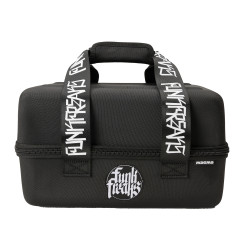
Designed for dedictated 45 vinyl-DJs, the all-new MAGMA 45 SANDWICH offers a remarkably sleek and lightweight innovation for carrying your 7“ records.
Constructed with a fully molded, shock-absorbing EVA shell, this case ensures superior protection and a secure fit for up to 150 7“ records.
The unique 50/50 "Sandwich" style enables the lid to serve as a second storage section, making organizing and flipping through your 45s more convenient. Tailored for seasoned 45 collectors on the move, the 45 SANDWICH seamlessly combines style and functionality, ensuring a solid and efficient travel companion for your musical treasures.
- fits: 120-150 x 7“ records
- Compact and lightweight design
- Crafted from 8 mm thick and rigid Durashock molded EVA foam and water rejecting 1680D Polyester exterior shell
- Molded interior for additional protection
- 50/50 Sandwich style enables the lid to serve as a second storage section
-Sturdy zipper
- Embossed molded feet
- Including shoulder strap (with metal hook)
- Including trolley sling
Outer dimensions (H/B/T):
38 x 22 x 24 cm
Inner dimensions:
33 x 19,5 x 20 cm
Weight:
1,1 kg
Color: black/misty magenta
DE:
Maßgeschneidert für ambitionierte 45-DJs, bietet das brandneue MAGMA 45 SANDWICH eine stylische und innovative Lösung, um deine 7-Inch Singles sicher zum nächsten Gig zu transportieren.
Durch seine robuste, stoßdämpfende Hülle aus geformtem EVA-Hartschaum gewährleistet dieses Case optimalen Schutz und festen Halt für bis zu 150 7“-Singles.
Der praktische 50/50 "Sandwich"-Style erlaubt es, den Deckel als zusätzliches Fach zu nutzen, was das Sortieren und Durchblättern deiner 45s noch komfortabler macht.
Das 45 SANDWICH vereint mühelos Style und Funktionalität, und wird so zu einem robusten und effizienten Reisebegleiter für deine musikalischen Schätze
- fits: 120-150 x 7“ Vinyl-Singles
- 8 mm EVA-Durashock-Hartschaum und wasserabweisendes 1680D D Polyesteraußenmaterial
- EVA-geformtes Innenleben für zusätzlichen Schutz
- Robuster Reißverschluss
- 50/50 Sandwich Style ermöglicht es, den Deckel als zusätzliche Ablage zu nutzen
- Komfortable Trageschlaufen und abnehmbarer Schultergurt (mit Metallverschluss)
- Trolley-Schlaufe
- Including shoulder strap (with metal hook)
- Including trolley sling
Aussenmaße (H/B/T):
38 x 22 x 24 cm
Innenmaße:
33 x 19,5 x 20 cm
Gewicht:
1,1 kg
Farbe: black/misty magenta
Designed for dedictated 45 vinyl-DJs, the all-new MAGMA 45 SANDWICH offers a remarkably sleek and lightweight innovation for carrying your 7“ records.
Constructed with a fully molded, shock-absorbing EVA shell, this case ensures superior protection and a secure fit for up to 150 7“ records.
The unique 50/50 "Sandwich" style enables the lid to serve as a second storage section, making organizing and flipping through your 45s more convenient. Tailored for seasoned 45 collectors on the move, the 45 SANDWICH seamlessly combines style and functionality, ensuring a solid and efficient travel companion for your musical treasures.
- fits: 120-150 x 7“ records
- Compact and lightweight design
- Crafted from 8 mm thick and rigid Durashock molded EVA foam and water rejecting 1680D Polyester exterior shell
- Molded interior for additional protection
- 50/50 Sandwich style enables the lid to serve as a second storage section
-Sturdy zipper
- Embossed molded feet
- Including shoulder strap (with metal hook)
- Including trolley sling
Outer dimensions (H/B/T):
38 x 22 x 24 cm
Inner dimensions:
33 x 19,5 x 20 cm
Weight:
1,1 kg
Color: black/juicy orange
DE:
Maßgeschneidert für ambitionierte 45-DJs, bietet das brandneue MAGMA 45 SANDWICH eine stylische und innovative Lösung, um deine 7-Inch Singles sicher zum nächsten Gig zu transportieren.
Durch seine robuste, stoßdämpfende Hülle aus geformtem EVA-Hartschaum gewährleistet dieses Case optimalen Schutz und festen Halt für bis zu 150 7“-Singles.
Der praktische 50/50 "Sandwich"-Style erlaubt es, den Deckel als zusätzliches Fach zu nutzen, was das Sortieren und Durchblättern deiner 45s noch komfortabler macht.
Das 45 SANDWICH vereint mühelos Style und Funktionalität, und wird so zu einem robusten und effizienten Reisebegleiter für deine musikalischen Schätze
- fits: 120-150 x 7“ Vinyl-Singles
- 8 mm EVA-Durashock-Hartschaum und wasserabweisendes 1680D D Polyesteraußenmaterial
- EVA-geformtes Innenleben für zusätzlichen Schutz
- Robuster Reißverschluss
- 50/50 Sandwich Style ermöglicht es, den Deckel als zusätzliche Ablage zu nutzen
- Komfortable Trageschlaufen und abnehmbarer Schultergurt (mit Metallverschluss)
- Trolley-Schlaufe
- Including shoulder strap (with metal hook)
- Including trolley sling
Aussenmaße (H/B/T):
38 x 22 x 24 cm
Innenmaße:
33 x 19,5 x 20 cm
Gewicht:
1,1 kg
Farbe: black/juicy orange
- A5: Dolomite (Voice
- A1: Dolomite Intro (Voice
- A2: Buck 'Em (Feat Sticky Fingaz)
- A3: Trust Me (Feat Suga Free, Sylk E. Fyne)
- A4: My Heat Goes Boom
- A6: Snoopafella
- B1: In Love With A Thug
- B2: G Bedtime Stories
- B3: Down 4 My N's (Feat C-Murder, Magic)
- B4: Betta Days
- B5: Something Bout Yo Bidness (Feat Raphael Saadiq)
- C1: B Please (Feat Xzibit)
- C2: Doin' Too Much
- C3: Gangsta Ride (Feat Silkk The Shocker)
- C4: Ghetto Symphony (Feat C-Murder, Fiend, Goldie Loc, Mia X, Mystikal, Silkk The Shocker)
- C5: Party With A D P.g
- D1: Buss'n Rock
- D2: Just Dippin' (Feat Dr. Dre, Jewel)
- D3: Don't Tell (Feat Mausberg, Nate Dogg, Warren G)
- D4: 20 Minutes (Feat Goldie Loc)
- D5: I Love My Momma
Snoop Dogg’s fourth studio album, No Limit Top Dogg, debuted on May 11, 1999, under No Limit Records and Priority Records. Working alongside renowned producers like Dr. Dre, Dj Quik, G-One, Jelly Roll, Bud’da, and Meech Wells, they created the signature West Coast G-Funk sound that is synonymous with Snoop Dogg. The album reached the #1 spot on the US Top R&B/Hip-Hop Albums chart and peaked at number 2 on the Billboard 200. Featuring hit singles ‘Buck’em’ (featuring Sticky Fingaz), ‘Down 4 My N’s’ (featuring C-Murder and Magic), and ‘Bitch Please’ (featuring Xzibit).
a a1 Dolomite Intro (Voice Uncredited – Dolomite)
e a5 Dolomite (Voice Uncredited – Dolomite)
a a1 Dolomite Intro (Voice [Uncredited] – Dolomite)
[e] a5 Dolomite (Voice [Uncredited] – Dolomite)
- A1: Masters Of Ceremony – Rocking With The Best
- A2: Evil Activities – Mc’s And Dj’s
- A3: Kasparov – Part Of The Project
- A4: D-Fence – Krakaka
- B1: The Viper & Neophyte – Coming Home
- B2: Hard Creation – I Will Have That Power (The Stunned Guys Remix)
- B3: Evil Activities & Dj Mad Dog – 911
- B4: Nosferatu & Sefa – Killer Beat
- C1: Kasparov, System Shock & Revolter Ft Zwaargewicht – Poeder In Je Neusgat
- C2: Tha Playah & Restrained – Let It Burn
- C3: Neophyte & Nosferatu – Rubberduck
- C4: Neophyte Records All Stars – Door Het Dak!
- D1: Furyan & Angerfist – Hoax
- D2: Tha Playah – Controlled By Chaos
- D3: D-Fence – Pompen
- D4: Guerrillas – Can’t Stop Us Now
Introducing a new double vinyl: Neophyte Records – 25 Years Of Hardcore Legacy – Volume 1! A timeless journey through the decades of hardcore music that has left an indelible mark on the scene. This exclusive vinyl celebrates a quarter-century of Neophyte Records, taking you on a nostalgic trip back in time.
A Musical Odyssey Across Decades:
Relive the evolution of hardcore as Neophyte Records presents a curated selection of tracks spanning all eras. From the iconic beats of the late ‘90s to the raw energy of the 2000s and beyond, this vinyl encapsulates the essence of hardcore.
Special Artwork Design:
Immerse yourself in the visual spectacle of 25 Years Of Hardcore Legacy. The vinyl features specially commissioned covers that captures the spirit of each era, making it a collector’s item not just for the ears but for the eyes as well.
Limited-Edition Collectors Item:
This vinyl is not just an album; it’s a piece of history. Limited to a select number of copies, this vinyl is a rare gem that will become a prized possession for hardcore enthusiasts and collectors.
Anniversary Edition Celebration:
Join the celebration of Neophyte Records’ 25th anniversary with this special edition vinyl. Commemorate the legacy of one of the pioneering labels in the hardcore scene! Embrace the passion, dedication and innovation that has defined Neophyte Records over the years.
Whether you’re a devoted hardcore fan, a collector or someone looking to rediscover the magic of hardcore through the ages, this vinyl is a must-have addition to your collection. Secure your copy now and become part of the enduring legacy of hardcore music!
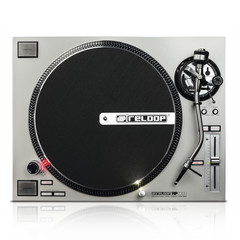
Features
NEW features of the MK2 version
Built for the club: Rigid chassis construction with an even heavier design with additional reinforcements made of metal, rubber and molding compound for high vibration damping and isolation
More powerful starting torque (adjustable from 2.8 - 4.5 kg/cm)
Fine-tuned motor control for further optimization of wow and flutter and rotation
Newly developed, height-adjustable tone arm base (VTA) and Anti-Skating control
Particularly light weight and rigid, satin aluminium material used for tone arm pipe
Pitch scale for precise adjustments
Optional ground terminal offers additional protection in complex club & studio environments
Easily replaceable, freely rotatable LED needle light in new aluminium design
High-quality and hard-wearing silver metallic finish
Quartz driven DJ turntable with upper-torque direct drive
Adjustable stop speed (0.2 - 6 sec.)
Precise control of motor with 3 speeds (33 1/3, 45 & 78 RPM)
Precision manufactured, die cast aluminium turntable
Rubber inlays for reduction of vibrations and background noise
Statically-balanced universal S-shaped tonearm with hydraulic lift and anti-skating mechanism
Universal connection for pickup systems (SME)
Pitch range +/-8 %, +/-16 %, +/-50 % (Ultra Pitch)
Quartz lock
Additional start/stop button for vertical positioning
Reverse function: switch for forwards and reverse operation
Recessed connection cavity for easy installation in cases & seamless adjustment
Phono and line out (no grounding required)
Removable mains and RCA cable
Safety mains switch
Shock-absorbing feet against vibrations
Technical Data
Turntable:
Type: direct-drive turntable
Drive: quartz driven upper-torque direct drive
Motor: 16-pole, 3-phase, brushless motor
Turntable speeds: 3 speeds, manual (33 1/3, 45, 78 RPM)
Starting torque: 2.8 - 4.5 kg/cm (adjustable)
Adjustable stop time (0.2 - 6 sec.)
Start-up time / change to RPM: 55dB (DIN-B)
Brake system: electronic brake
Platter:
Material: die cast aluminium
Diameter: 332 mm
Weight: approx. 1.5 kg
Tone arm:
Type: universal, statically balanced, S-shaped
Effective length: 230 mm
Overhang: 15 mm
Tracking error range: < 3°
VTA setting range: 0-6 mm
Useable weight of pickups: 3.5~8.5 g (incl. headshell 13~18 g)
Anti-skating range: 0 - 3 g
Effective tone arm mass: 30 g
Connections: 1x Phono/Line Out (gold-plated), 1x GND earth connection
General:
Power supply: AC 115/230 V, 60/50 Hz (EU/US), AC 100 V, 50/60 Hz (JP)
Power consumption: 13 W
Dimensions: 458 x 354 x 144,6 mm
Weight: approx. 11.7 kg
Accessories included: turntable, slipmat, LED needle light, counterweight, PHONO Cinch cable with earth, AC mains adapter, operating instructions