Buscar:shot

Estilos
Todo
Gábor Szabó - Spellbinder

Durch das 1966 auf Impulse! Records veröffentlichte Album “Spellbinder” wurde der ungarische Jazzgitarrist Gábor Szabó einem breiteren amerikanischen Publikum bekannt. Auf dem Album bot er eine originelle
Mischung aus modalem Jazz, osteuropäischen Folkeinflüssen und Popklängen, die er selbst als “Pop-Jazz”
bezeichnete.

No en stock

Haga su pedido ahora y le encargaremos el artículo en nuestro proveedor.

25,17

Ültimo hace: 46 Días
Dub Pistols & Freestylers - Enter The Sound LP
  • 1: Enter The Sound
  • 2: Power & Sound Feat. Tippa Irie
  • 3: Believe Me Now Feat. Mc Spyda, Persona And Tenor Fly
  • 4: Like We Feat. General Levy
  • 5: Whiskey & Water Feat. Scarlett Quinn
  • 6: Back On The Circuit Feat. Harry Shotta
  • 7: Ska Train Feat. Ja-13
  • 8: Pull Up Feat. Horseman And Seanie T
  • 9: Give You Love Feat. Belle Humble
  • 10: All In Feat. Too Many T's
  • 11: Put It On Feat. Seanie T
  • 12: Hold Up Your Hands Feat. Jonny Osbourne
También disponible

Black Vinyl[25,00 €]


Two of the UK’s finest party-starters Dub Pistols and the Freestylers team up on ‘Enter The Sound’ to bring you an album of high-grade & high-pressure, bass-heavy cuts. Enter the party, Enter The Sound!

The album is a sonic journey through their diverse influences, blending genres like Reggae, Ska, Breakbeat, Jungle, Hip Hop & Trip Hop. It’s a celebration of their shared musical roots and evolution.
 
The album features an all-star lineup of guest artists, including Johnny Osbourne, Tippa Irie, General Levy, Too Many T’s, Horseman, Belle Humble, Scarlett Quinn, Tenor Fly, MC Spyda, Persona, Harry Shotta  and of course, Seanie T.

Reservar06.03.2026

debe ser publicado en 06.03.2026

26,68
DELAIN - WE ARE THE OTHERS LP

Dutch symphonic metal band Delain released their third studio album We Are the Others in 2012 to positive reviews from music critics. The album title was inspired by the murder of 20-year-old Sophie Lancaster, whose death was likely a hate crime due to her being part of the goth subculture.

Two singles were released: “Get The Devil Out of Me” and the title track "We Are The Others", for which the band shot a music video that included many well-known people from the metal scene, including George Oosthoek, Sharon den Adel, Robert Westerholt and Rob van der Loo. The album features guest contributions by the likes of Burton C. Bell (ex-Fear Factory) and Marko Hietala (ex-Nightwish) and was produced by Jacob Hellner (aka Tripod), who is best known for producing most of Rammstein’s albums.

This release of We Are the Others contains an insert and is limited to only 750 individually numbered copies on orange & black marble vinyl.

Reservar06.03.2026

debe ser publicado en 06.03.2026

30,04
John Lee Hooker - The Big Soul Of John Lee Hooker LP
  • San Francisco
  • Take A Look At Yourself
  • Send Me Your Pillow
  • She Shot Me Down
  • I Love Her
  • Old Time Shimmy
  • What Do You Say
  • Let's Make It
  • You Know I Love You
  • Big Soul
  • Good Rocking Mama
  • Onions
  • No One Told Me
  • Boom Boom
  • Thelma
  • Process

John Lee Hooker is widely recognised as one of the true giants of the blues, along with Muddy Waters, B.B. King, and Howlin' Wolf. Hooker is often called the "King of the Boogie" and his driving, rhythmic approach to guitar playing has become an integral part of the blues' sound and style that perpetuated the UK's rhythm and blues scene of the '60s. Presented here is one of John Lee Hooker' s finest album, The Big Soul of John Lee Hooker, recorded in Chicago in 1962.

In a career that spanned some forty odd years, a pivotal point of success came with his 1989 album The Healer, which featured collaborations with Carlos Sanatana, Bonnie Raitt, Charlie Musselwhite, and Los Lobas. The album expanded his audience beyond the blues idiom, earning him his highest Billboard album chart success (#62) his first Grammy Award; all of this at the grand-old-age of 73. For those not familiar with Hooker's earlier work, the Big Soul of John Lee Hooker is an excellent starting point.

Reservar06.03.2026

debe ser publicado en 06.03.2026

21,43
Arthur Russell - Another Thought 2x12"

2026 Repress


Another Thought was the first collection of Arthur Russell’s music to be released after his death in 1992. Released in 1993 on Point Music it marked the beginning of nearly 30 years of work to let the world hear the enormous archive of unreleased recordings Arthur left behind. Be With revisits this first compilation for a new gatefold double vinyl version and a triple-fold digipak CD reissue.

Both versions of Be With’s 2021 reissue of Another Thought have been mastered by Simon Francis and the vinyl cut by Pete Norman. The original artwork has been restored and tweaked at Be With HQ for the gatefold sleeve and the triple-fold digipak, with the essential help of Janette Beckman. Each version comes with an insert reproducing the liner notes and lyrics from the original CD release.

Together with Calling Out Of Context, Soul Jazz’s World of Arthur Russell, and much of the ongoing work of Audika, Another Thought is absolutely essential for even the most casual Arthur Russell collection. In fact we’d argue it’s essential for any fan of non-obvious pop music. This is the only place where you can hear some of Arthur’s most recognisable tunes and it’s an album that absolutely deserves to be kept in press.


We’ll assume that by now you’re all at least a little familiar with the story of Arthur Russell, the farm boy from Iowa who moved to 1970s New York. Arthur Russell the genuine musical genius who died just 40 years old, leaving behind a wealth of music that dwarfed the few 12"s and LPs that were released during his short life.

Although Arthur had been working on an album for Rough Trade during his last years, with the label no-longer operating it was Point Music (Philip Glass and Michael Riesman’s label set up together with Philips) who stepped in to help Arthur’s partner Tom Lee start working out exactly what Arthur had left behind.

Tom suggested that Arthur’s friend Mikel Rouse was the right person to make the first catalogue. Working in Tom and Arthur’s apartment he had only two weeks to go through what turned out to be around 800 tapes.

As Tom explained “at the end of each day he would generally wait for me to come home and I would, to the best of my knowledge, name and identify pieces in question from that day’s work. As he worked Mikel compiled about a dozen cassettes that he thought would present the most finished sounding songs for Don/Point to use. As Don listened he would then suggest and ask me and thus we collaborated on the choices.”

Don is Don Christensen, Another Thought’s producer. With a final selection of songs from recordings made between 1982 and 1990, including sessions with some of Arthur’s regular collaborators Peter Zummo, Steven Hall, Mustafa Ahmed, Elodie Lauten, Julius Eastman, Jennifer Warnes and Joyce Bowden, it was then Don’s job to turn these into a finished album.

Another Thought is a little different from the compilations of Arthur’s music that came out since. In our conversations with Steve Knutson (who founded Audika Records and who manages Arthur’s estate together with Tom), he explained that “more than any project released by Arthur during his lifetime or posthumously by Audika, ‘Another Thought’ is the most worked over. The material was significantly edited and rearranged from the original source tapes”.

If the aim was to release a comprehensive exploration of every facet of Arthur’s music, from the most avant-garde of his avant-garde compositions through to the most disco-not-disco of his disco-not-disco tunes then the project was a spectacular failure. But as a coherent album of non-obvious pop music Another Thought is wonderful.

Starting with the sparse voice-and-cello of the title track, A Little Lost adds some guitar along with the sneaking suspicion that we’re listening to something nowhere near as simple as it first sounds. By the time we get to This Is How We Walk On The Moon - it could be the moment you notice the congas, or the percussion that’s been building behind them, or maybe it’s that blast of trumpet and trombone - we realise we’ve gone from splashing around to being completely submerged in the musical world of Arthur Russell.

From here the album heads off on its journey around the sounds of the left-field contemporary classical music of the time, re-directed towards pop ears, with minor detours through the swirling woozy disco of the half-remembered night before on In The Light Of The Miracle and My Tiger, My Timing. Whether it’s just Arthur, his cello and some bleeps on Just A Blip, or whether he has some vocal help as he does on the bounding Keeping Up, this is difficult music made so, so easy. And through it all is Arthur’s voice and cello. Sometimes drowned in distortion and sometimes clear as a bell, but always there somewhere.

A Sudden Chill finally returns us to the calmer waters we started in and this last track closes the album with a melancholy that’s not surprising given how soon after Arthur’s death the album was put together.

Whilst Another Thought holds together with the consistency of a proper album, there’s still no getting away from the fact that this was put together from audio recorded in different ways, in different places, with different people at different times. Those with keen ears will hear traces of tape hiss, the occasional blown-out note and some digital fuzz, all fingerprints of those original recordings as well as of the 1990s digital equipment that was used to piece Another Thought together.

Add to this Arthur’s obvious pleasure in making music from the sort of sounds that can make microphones, speakers and ears uncomfortable, it’s no surprise that Another Thought isn’t glossy and pristine. Don Christensen’s productions have been careful to not scrub up those original recordings so much that they lose their original vibe, understandable given that Arthur wasn’t around as a guide. We’ve applied a similarly light touch with the mastering for these Be With versions, just working to make sure they sound like they should on both the vinyl and the CD.

Despite the Discogs rumours, Another Thought was never originally released as an LP. So when it came to the sleeve for this Be With vinyl version we took the original CD artwork as a starting point to come up with something that looks like it could have been in the record racks back in 1993.

We have to thank Janette Beckman for helping us reproduce her iconic photograph of Arthur in his newspaper boat hat. One of many photographs she took of Arthur, Janette shot this in her New York studio back in 1986 for a short article in the January ’87 issue of The Face Magazine. Those with eagle-eyes will notice we’ve used an ever-so-slightly different shot from the one that appeared in The Face and then again on the original cover of Another Thought. The original has long since been lost so we’ve worked with what is left in Janette’s archives. And we also have to thank Tom Lee for giving us permission to reproduce his liner notes from the original CD booklet, together with Arthur’s lyrics.

No en stock

Haga su pedido ahora y le encargaremos el artículo en nuestro proveedor.

28,19

Ültimo hace: 4 Años
Final Gasp - New Day Symptoms
  • 1: Eternal Silence
  • 2: Look Away
  • 3: The Apparition
  • 4: Gifted Shame
  • 5: No Hand To Lead
  • 6: Prediction
  • 7: Burials Of Birth
  • 8: Fractures
  • 9: New Day Symptoms
  • 10: Pale Sun

Steeped in nocturnal, death rock adventurism, riven with a post-punk anxiety that feels increasingly like the twitching heart of our modern age, and driven by hardcore punk intensity, the second studio album from Boston’s FINAL GASP, titled New Day Symptoms, does what all great rock records do - not only does it place itself within a lineage, summoning up and amplifying a spectrum of powers from Rock n' Roll lore, it makes them resonate in the here and now. It gives voice to those fears and frustrations lurking just under the surface of waking consciousness and turns them into a rallying cry. Throughout New Day Symptoms, FINAL GASP create a potent reaction from the furious and the forlorn, frontman Jake Murphy’s vocalizes both a supercharged howl into the void and a remorseful echo back. But where the band’s 2023 debut, Mourning Moon, was a concentrated shot of acrid, underground death rock, its propulsion tanks largely filled with references to Samhain and Killing Joke, New Day Symptoms keeps all the core urgent energy while vastly broadening its scope. Through the anthemic, acid-corroded vistas of "Look Away" and gothic tub-thumping beat of "Gifted Shame" to "No Hand To Lead" channelling "Don’t Fear The Reaper" and its loping groove, New Day Symptoms takes the familiar into uncharted territory and makes the unfamiliar instantly, internally recognisable. With new space to explore, this is an album that feels a mapping of personal trials and dark recesses. Short: Boston's FINAL GASP return with New Day Symptoms - the new album steeped in nocturnal, death rock adventurism, riven with a post-punk anxiety that feels increasingly like the twitching heart of our modern age, and driven by hardcore punk intensity! FFO: Danzig, Killing Joke, TSOL, Lathe of Heaven, Poison Ruin, Gouge Away, Tribulation

Reservar27.02.2026

debe ser publicado en 27.02.2026

22,06
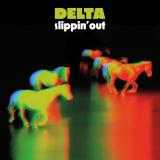
Delta - Slippin’ Out (2x12")

Delta

Slippin’ Out (2x12")

2x12inchPLEXUS002P
Circuitry
27.02.2026

“From Birmingham and centred around the extraordinary songwriting talent of James and Patrick Roberts – initially as The Sea Urchins and since 1993 as Delta – they’ve only just got round to releasing their debut album, Slippin’ Out. It is a work of some beauty”. 9/10 NME ALBUM OF THE MONTH, 2000

“It’s classicist for sure, shot through with the influence of The Beatles, Byrds and Buffalo Springfield. In James’ downright beautiful closing ballad ‘I Want You’ one can also discern the school of ambitious English balladry that peaked in about 1968: The Casuals, Love Affair, Barry Ryan. The impression of accomplished old-schoolery is only furthered by the dizzying string arrangements penned by Louis Clark Jnr, son and namesake of the one-time orchestral chief of Electric Light Orchestra” – Mojo lead review, 2000


Having ended the 90s with the spirited ‘Laughing Mostly’ compilation of singles and demos (Guardian Album Of The Week) Delta finally released their debut studio album of twelve songs in the summer of 2000 on the Dishy Recordings label. Accepting that this might be their sole studio album the band threw everything at these recordings allowing it to exist in its own sphere, unbothered by their contemporary generation and disregarding the idea of even releasing a single.

Recorded at DEP International there was a notable difference to the scruffier, looser charm of their 1990s recordings, a tighter focus developed by having the experienced Lenny Franchi mixing the LP with them. Lenny had been working with a number of Island artists including My Bloody Valentine and Tricky so knew his way around a desk. There was also the question of budget (a few months passed between recording and mixing whilst funds were raised) so every day counted. Ultimately though you can hear the joy in the recordings, even amongst the melancholy and angst. As James recently recalled in an interview in Shindig! Magazine: “It was such a big deal for us. It’s one of my fondest memories doing that record. Everyone was happy. If there’s anything that I’d stand by, I think it would be that”

Louis Clark Jr joined the band towards the end of the ‘90s and brought a classically-trained element to the recordings particularly with his string arrangements. For ‘Cuckoo’, ‘I Want You’ and the prophetic ‘We Come Back’ Louis brought in eight players from the Birmingham Conservatoire; the baroque style is partly why the record often receives comparisons to Love’s ‘Forever Changes’.

On release ‘Slippin’ Out’ was a big favourite with writers at the NME, Mojo and The Guardian again and before long the band were signed to Mercury/Universal for their second studio album ‘Hard Light’, a far more expensive and expansive love affair. It was a temporary palatial home where things quietly fell apart again, but that’s another chapter.

“If long-term memory is nothing more than selective editing and only pop’s most weighty visceral works are built to last then it’s quite possible that in 50 years the Britpop era will be best recollected for the two bands it ostracised. Earlier this year we met Shack and thought their story of mercurial brilliance indicated the biggest music biz oversight of the 90s. We were wrong because we hadn’t met Delta yet. This is richer and more engrossing than anything by Shack” 

Reservar27.02.2026

debe ser publicado en 27.02.2026

24,16
THE GITS - FRENCHING THE BULLY LP

THE GITS

FRENCHING THE BULLY LP

12inchSP1648WH
Sub Pop
27.02.2026

Mia Zapata was the greatest rock singer of her time. She may have likely been the greatest blues singer in punk rock history, the woman who married the 78 and the '78. Tragedy did not make this true. Mia Zapata made this true, and the ferocious, spring-loaded shrapnel frame that was built around her by Andy Kessler (guitar: metronomic and furious), Matt Dresdner (bass: fluid, punching, beat-addicted and melodic), and Steve Moriarty (drums: martial and explosive) - who, with Mia, combined to form The Gits - made it true. The Gits were formed at Antioch College in Yellow Springs, Ohio in mid-1986, grabbing and swapping pieces of art, thrash, noise, punk rock, classic rock, and all the sorts of magical silly and bookish jingle bells that an old-school liberal arts education handed you; for the next few years they worked on turning it all into something tough, sensitive, both brutal and kind. Andy, Matt, Mia, and Steve moved to Seattle in middish 1989, landing in a house on Capitol Hill where they (and fellow travelers) wood-shedded and rehearsed for the next few years. The Gits put out three EPs in 1990 and '91 before signing with C/Z Records and releasing their first full-length album, Frenching the Bully. Seattle quickly claimed the quartet as their own and embraced the Gits blend of ferocious fangs and soft heart, the slug/slap of the guitars, and the gorgeous, soft underbelly of the poetic emotions. These qualities not only fit in with the doe-eyed/sharp-clawed grunge ethos but earned the Gits the respect of their peers, including Nirvana, who tapped them to open a major local show in 1990. Then other stuff happened, and their frantic, confessional barbed-heart snowball began rolling up hill very, very fast; the Gits "quickly" (hah! After half a decade learning to implode and explode hearts and stomping their boots on manifold beer-softened, Marlboro-weeded wood stages!) inspired rapture, awe, and the levitation that happened when peak emotion meets peak grindage in front of amps spitting out something that sounded like the mad marriage of Bolan swagger and Dischord tension_ all fronted by a genuinely incomparable woman who held her heart in her mouth and shared it, in all its celebration and fear, without hesitation. The Gits were an angry, inflamed slinky fully in tune with and tuned by the Bessie Patti Smith of her time, truly the only singer who could summon Joplin, Poly Styrene, Sam Cooke, Iggy Pop and Ian MacKaye all in the same goddamn song. In 1993, less than four weeks after accepting an offer from Atlantic Records, Mia died. I leave it at that, because this is not about death; it's about an extraordinary life. I do not say, "You should have been there," I say, "We are lucky so many of us were, and I am so glad we have this extraordinary evidence of the power and gifts of Mia and the Gits that you now can hold in your hands." And I note that Frenching the Bully, this extraordinary testament to the soul, shock, fury and feeling of the Gits, has been long out of print on vinyl and CD, and this new edition - remastered by legendary Seattle engineer Jack Endino - joyfully rectifies that. -Tim Sommer

Reservar27.02.2026

debe ser publicado en 27.02.2026

23,32
Alton Miller - Spirit Chaser

Alton Miller

Spirit Chaser

12inchQUINTESSE99
Quintessentials
27.02.2026

Before celebrating its 100th release, Quintessentials is very happy to present another ep from Detroit’s finest Alton Miller (in fact it’s his 4th for the label)! „Last one 1st“ is a driving and building Detroit inspired track, that doesn’t lack elegance. The remix courtesy of french hot shot Life Recorder (check out his full EP on Quintessentials as well) focuses on a proper Detroit House vibe, call it a classic. The b-side is deeeeep! The original version of „give it up“ is a smooth and soulful tune providing goose bumps. Switzerland’s finest house producer Shaka adds some club feel to a beautiful early morning track. Classic release!

No en stock

Haga su pedido ahora y le encargaremos el artículo en nuestro proveedor.

12,56

Ültimo hace: 32 Días
Rikk Agnew - All by Myself

Rikk Agnew

All by Myself

12inchMR496
MUNSTER
27.02.2026
  • 1: O.c. Life
  • 2: 10
  • 3: Yur 2 Late
  • 4: Everyday
  • 5: One Shot
  • 6: Falling Out
  • 7: Surfside
  • 8: It's Doing Something
  • 9: Fast
  • 10: Section 8

Rikk Agnew's All by Myself is one of those records that feels like a secret you're lucky to stumble upon -- a raw, weird, totally personal snapshot of a restless artist at a pivotal moment. Originally released in 1982 on Frontier Records, the album stands apart from most of what was coming out of Southern California at the time, even though it was born right in the middle of the exploding hardcore punk scene. By 1982, Rikk Agnew was already a big deal underground. As the guitarist for Adolescents, he helped shape the sound of Orange County hardcore with sharp riffs, surf-inflected melodies, and a sense of urgency that became hugely influential. He also played in bands like D.I. and later Christian Death, moving fluidly between hardcore punk, post-punk, and darker, more experimental territory. Agnew wasn't just a fast, aggressive guitarist -- he was a songwriter with range, curiosity, and a strong DIY instinct. All by Myself lives up to its title in the most literal way. Agnew recorded the album largely on his own, playing all the instruments and handling vocals himself. Instead of delivering another straight-up hardcore record, he went inward. The result is a lo-fi, home-recorded collection of songs that blend punk energy with new wave, post-punk, psychedelic touches, and even moments of pop sensitivity. It's rough around the edges, but that's exactly the point -- the album feels intimate, unfiltered, and honest. In the early '80s, Southern California punk was loud, fast, and often confrontational. Bands were pushing against the mainstream and even against each other, racing toward more extreme sounds. While All by Myself shares that DIY spirit, it doesn't fully play by hardcore rules. The tempos shift, the moods wander, and the songs feel more like personal experiments than scene anthems. That made the record a bit of an outlier at the time -- but also what gives it lasting appeal. Frontier Records was the perfect home for a release like this. The label was known for supporting artists who didn't quite fit into neat categories, and All by Myself captured that ethos perfectly. Today, All by Myself is often seen as a cult classic. For fans of early punk, post-punk, or anyone interested in the roots of DIY recording culture, this album is essential listening

Reservar27.02.2026

debe ser publicado en 27.02.2026

23,11
TX2 - END OF US

TX2

END OF US

12inchHR17492
Hopeless
23.02.2026
  • Feed (Feat. Deathbyromy)
  • Nice Guy (Feat. Ekoh)
  • Reject Vampirism (Interlude)
  • Hostage (They Will Not Erase Us)
  • The Resistance
  • 6: Shots Left
  • The Rain
  • Singing Along
  • Lost Souls
  • Die Alone
  • Murder Scene (Feat. Magnolia Park)
  • Mad (Feat. Ice Nine Kills)
  • The End Of Us (Feat. Black Veil Brides)

End of Us, ist das 13 Tracks umfassende Debütalbum von TX2, mit Features von DeathbyRomy, Ekoh, Magnolia Park, Ice Nine Kills und Black Veil Brides. Die Wahrheit ist simpel: TX2 polarisiert. Es gibt Kräfte in dieser Welt, die versuchen, das zu zerstören, wofür gekämpft und was hart erkämpft wurde, und zu einer Zeit zurückzukehren, in der die Menschen ihr wahres Ich versteckten. Es gibt Künstler wie TX2 - den Anti-Ronald Radke -, die dir zeigen wollen, dass du in diesem Kampf gegen den Hass nicht allein bist. TX2 hat Politiker namentlich genannt, schwenkt auf der Bühne eine Trans-Flagge, thematisiert in seinen Songs Waffengewalt, Essstörungen, Trauer und Depressionen und verspottet die Gatekeeper, die offensichtlich noch nie einen Punk-Song gehört haben. Der Sänger ist bereit, mit seiner Musik ein wenig Chaos zu verursachen, wenn es nötig ist, um die Aufmerksamkeit auf wichtige gesellschaftliche Themen zu lenken. So hat TX2 unter seinen Fans eine Bewegung ins Leben gerufen, die als ,X Movement" bekannt ist und deren Ziel es ist, das Bewusstsein für psychische Gesundheit zu schärfen und einen sicheren Raum für diejenigen zu schaffen, die jemanden zum Reden brauchen. In den letzten 24 Monaten tourte TX2 um die Welt, trat mit Ice Nine Kills, Hail the Sun, Dark Divine, tiLLie, In This Moment, Magnolia Park, Warped Tour & Summer of Loud Tour auf, wurde auf SiriusXM Octane gespielt, erreichte über 1 Million monatliche Hörer, gab über 50.000 Autogramme und erhielt 42 Millionen Likes auf Tik Tok. End of US ist ein lauter, unverblümter Aufruf zum Handeln. Beherzigen Sie den Aufruf oder treten Sie beiseite.

Reservar23.02.2026

debe ser publicado en 23.02.2026

24,33
WEDGE - LIKE NO TOMORROW
  • Computer
  • Playing A Role
  • Blood Red Wine
  • Across The Water
  • Queens Of The Night
  • U'n'i
  • At The Speed Of Life
  • Soldier

Volcanic Sun Vinyl, limited to 500 copies. The Berlin-based power trio once more is driving their musical WEDGE in between many different genres: Garage rock turns progressive while psychedelic guitar lines are tripping over hard rocking riffs. Does this work together? Hell yes! For fans of Deep Purple, MC5, Led Zeppelin or Humble Pie this album is a sure shot. You like fuzz guitars? Hammond organ and vocals trough a swirling Leslie cabinet? More cowbell? You got it. But unlike our beloved rock records from around 1971, which we've heard a hundred times before "Like No Tomorrow" has one huge advantage: It's brand new and the 8 tracks, ranging from 3:00 to 9:00 minutes, deliver a fresh, unspent and unmistakably unique taste to the rock'n'roll menu. In the tradition of bands like The Raconteurs, The Hellacopters, Graveyard or Wolfmother, WEDGE are building on that vintage vibe we all know and love but evolve their very own thing and are able to connect it directly to here and now.

Reservar20.02.2026

debe ser publicado en 20.02.2026

31,51
Sylvain Chauveau - Politique du silence LP 3x12"
  • A1: Des Plumes Dans La Tête (Variation 1) 1:15
  • A2: Situation Initiale 1:20
  • A3: Pour Les Oiseaux 1:16
  • A4: Feu 0:24
  • A5: Le Brasier De Tristesse 3:36
  • A6: Ferme Les Yeux 1:08
  • A7: Des Plumes Dans La Tête (Variation 2) 1:15
  • A8: Les Débutants 1 1:50
  • A9: Pour Les Oiseaux (Variation 1) 1:17
  • B1: Anthracite 1:28
  • B2: Nocturne Urbain 2 0:59
  • B3: Pour Les Oiseaux (Variation 2) 0:39
  • B4: Sinon Le Vent Qui Passe 0:41
  • B5: Noir 1:19
  • B6: Ferme Les Yeux (Variation) 0:42
  • B7: Les Débutants 2 1:16
  • B8: Pour Les Oiseaux (Variation 3) 0:36
  • B9: Blanche Comme L'infini 1:58
  • B10: Situation Finale 2:02
  • B11: Des Plumes Dans La Tête 1:20
  • Un Autre Décembre Lp
  • C1: Minéral 3:28
  • C2: Sous Tes Yeux Probablement 1:16
  • C3: Granulation 1 1:38
  • C4: Neuf Cents Lunes 3:56
  • C5: Alors La Lumière Vacille 1:07
  • C6: Granulation 2 0:56
  • D1: Il Fait Nuit Noire À Berlin 2:12
  • D2: La Lettre Qu'il N'envoya Jamais 2:00
  • D3: Granulation 3 1:35
  • D4: Un Autre Décembre 2:24
  • D5: Granulation 4 1:26
  • D6: Du Rève Dans Les Yeux 1:30
  • Nocturne Impalpable Lp
  • E1: Blanc 2:23
  • E2: Cet Enfer Miraculeux 2:59
  • E3: Radiophonie N°1 2:54
  • E4: Doucement, Le Grain De Sa Peau 3:41
  • E5: 0:36
  • E6: Ocre 2:47
  • E7: 0:35
  • E8: Radiophonie N°2 3:15
  • E9: Adieu Miséricorde 1:14
  • E10: 0:31
  • E11: Léger 2:25
  • E12: 0:40
  • F1: Le Monde Intérieur 4:01
  • F2: Arachnéenne Encore 1:29
  • F3: 0:27
  • F4: Je Me Suis Bâti Sur Une Colonne Absente 4:04
  • F5: 0:33
  • F6: Radiophonie N°3 2:07
  • F7: Nocturne Urbain 4:56

Minority Records is releasing a unique boxset Politique du silence with three early albums from Sylvain Chauveau, French composer of minimalist neoclassical music.
“When I made my first albums as a composer, I was obsessed with minimalism, and this quote from the film director Robert Bresson summed up my state of mind. I set myself three principles: 1) Use silence as a starting point, 2) Only add sound when it's absolutely essential, 3) Don't imitate the Anglo-Saxon musicians I admired, but draw on the musical culture of my country, France which lead me to listen intensively to Satie, Debussy and Ravel.” Chauveau explains the background to his work.

The collection Politique du silence contains the recordings of Des plumes dans la tête (2004), Un autre Décembre (2003) and Nocturne impalpable (2001) on coloured 180 gram vinyls. The cover features artwork by French photographer Valéry Lorenzo.

“When I discovered the simple and powerful black and white pictures by Valéry Lorenzo, in the 90s, I immediately fell in love with them. We became good friends and since then I ask him to let me use one of his photos for most of my album covers, or to make my portrait for press shots. It has become a real collaboration, music and images, for more than 25 years. It was then logical to ask him again for the cover of this boxset, like a gentle reflection on my piano and strings era. It's a true honour for me to see my early music recollected, repackaged, remastered after all this time. Which gives me hope that this music, in which I've put all my soul and heart during the years 2001 to 2003, is maybe not forgotten yet.” Chauveau himself adds of his collaboration with Valéry Lorenzo.
Nocturne impalpable and Un autre Décembre were re-issued by Minority Records in 2014 and 2015 and both titles completely sold out. This year’s release also includes the album Des plumes dans la tête in its world premiere on vinyl.

Nocturne Impalpable is a world of minimalism, abstraction, and contemporary rendition of classical music with variations for the piano, clarinet, strings, and accordion which are often compared to the compositions of composers Harold Budd and Claude Debussy. Here, Chauveau partially reveals his versatility as a composer by connecting electronic elements, noises, and ambient planes with monumental strings and piano preludes. The
album of piano variations Un autre Décembre is interspersed with field recordings and electronic noises. The inspiration for the recording of the album and for its name was the song Jaurès by the Belgian singer and composer Jacques Brel. This song tells the story of the grandparents’ generation who toiled in the mines. “Comfort and health won’t protect our generation from sadness and discontent. We also live through winter times, even if these are slightly warmer due to the current climate.” An album of 20 short instrumental sketches with several delicate intermezzos for the piano, string quartet, and the clarinet, Des plumes dans la tête, was composed for the eponymous film by director Thomas de Thier.
Sylvain Chauveau was born in 1971 in the French town of Bayonne and currently lives in Barcelona. His extensive discography of mainly meditative neo-classical recordings for the music labels FatCat, Sub Rosa, Sonic Pieces, and Flau is enriched by several collaborations and his participation in the Ensemble 0, Arca, and On projects. Chauveau has also composed many film soundtracks as well as music for the theatre. He has presented his works in Prague several times, most recently in the spring of 2024 at the Spectaculare festival. His compositions get tens of millions of streams on streaming services, and he’s been called the French king of minimalism.

Reservar19.02.2026

debe ser publicado en 19.02.2026

105,84
Movie Movie - Coming Attractions (10")
  • 1: After Hours
  • 2: Wasting Time
  • 3: First Love (Never Dies)
  • 4: Photograph

MOVIE MOVIE is based out of NYC and features members of the bands TWIN GUNS, THE ELECTRIC MESS, and THE ABOVE. The band combine elements of power pop, '60s, '70s and '80s garage, classic, alternative and glam rock, but they have a sound all their own, with a focus on strong hooks and melodic vocals. "After Hours" is a 1980s New Wave comedy about a party girl on the downtown scene whose claim to fame is a bit part in a popular movie, where she uttered the immortal line, "Won't you look at the time," but she wouldn't give you the time. "Wasting Time" is an existential road picture in the mind of the protagonist, set across heartland America and a sunny beach in the Caribbean, but in reality he never leaves the girl, or town, and in the end ponders his wasted years. "First Love (Never Dies)" is a romantic drama that spans decades, about an aging rocker who reflects on his first teenage love, a girl he has never stopped thinking about. He tries to track her down and reconnect after all these years, only to find she is now married to his old childhood rival.

"Photograph" is a future arthouse hit, shot in stark black white, about the disintegration of a relationship seen from two different perspectives, captured in an old photograph, in which the truth is revealed in the looks on their faces. "Coming Attractions" is MOVIE MOVIE's second EP, after their debut six track EP, "Now Playing" (2022), on Ghost Highway/ KOTJ Records, and they have two full LPs, "Storyboards" (2023), and "In 4-D!" (2024), both Topsy-Turvy Records.

Reservar13.02.2026

debe ser publicado en 13.02.2026

26,85
The Aries Project - AP EP 001

This debut 12" is a real statement of intent from The Aries Project, aka the ongoing creative collaboration of Collin Suttles and moe.BPM. The sound is rooted in house music's classical values of inviting groove, heartfelt warmth and a sense of patience, but all shot through with a modern and cosmically minded confidence. The Jules.NYC dub of 'You Need A Rock' is pure peak-time persuasion, all forward momentum and locked-in swing, while 'Someone Who Dances' keeps things closer to the body, riding a supple rhythm with soulful ease. Flip it over and 'Keep Me' (Lucky.Moe dub) strips the palette back to let deep chords and spacious keys stretch out hypnotically. 'When I See You' with Toni's Son closes on a celebratory note and Latin disco energy in a deep house framework.

No en stock

Haga su pedido ahora y le encargaremos el artículo en nuestro proveedor.

20,59

Ültimo hace: 87 Días
The Mad Geezers - Genius of Love b/w Genius of Dub (7")

The Mad Geezers are basically F-Spot mainstays Night Owls’ Dan Ubick, Dave Wilder, and Roger Rivas, but with long-time friend and drum guru, Oliver Charles (Ben Harper & The Innocent Criminals, Gogol Bordello) behind the kit. It’s safe to say that these four musicians love their Ska, Rocksteady, roots, and dub, but for this lineup, the four Mad Geezers collectively decided to explore their other obsession... early Jamaican Dancehall.

First on producer Dan Ubick’s To Do list was to channel the fun, attitude, and natural talent on records by Jamaican legends like Yellowman, U-Roy, Sister Nancy, Barrington Levy, Bunny Wailer, and Freddie McGregor. Secondly, find a song that no Jamaican artist has covered, but every DJ on the planet loves, and flip it into a Dancehall groove. Hmm… What about Tom Tom Club’s “Genius of Love”? Ooh! That’s it! So, The Mad Geezers broke out synths, Syn drums, and invited some friends to the party, stepping up to the plate with the brand-new F-Spot Records 45 “Genius Of Love” b/w “Genius Of Dub (Roger Rivas Dub Version). Featuring vocals by one of Jamaica’s shining jewels, Ranking Joe & Oakland’s chosen daughter, Destani Wolf (who many will recall from top-selling Night Owls singles such as “After Laughter” and “Let’s Stay Together,”) this 7” is a sure shot.

With its iconic bass line and catchy synth hook, this 1981 decade-long crate essential is in the collective unconscious at this point. Whether you found it as a Talking Heads fan, or as a rap music fan via Dr. Jeckyll & Mr. Hyde’s “Genius Rap” or Grandmaster Flash and the Furious Five’s “It’s Nasty,” the groove is infectious. It’s hard to imagine no one had yet infused this punk-disco powerhouse with a dancehall injection… until now.

No en stock

Haga su pedido ahora y le encargaremos el artículo en nuestro proveedor.

12,82

Ültimo hace: 3 Meses
Various - Wizzz! French Psychorama Volume 5 (67-75)

The journey through French-speaking pop archives continues with this fifth volume, packed with fuzz, gimmicks, and dissent. Far from the charts, the selected tracks display a great creative freedom, often backed by corrosive humor. Welcome to the surprising, kaleidoscopic, and colorful world of the late sixties and early seventies, Wizzz!
Born in Montauban, Robert Pico stumbled into music by chance when he met René Vaneste, then artistic director at Pathé-Marconi. René brought him to Paris to record his first 45 RPM EP in 1964. A year later, Pierre Perret introduced him to Vogue, where he recorded his second album with Claude Nougaro’s orchestra. Sylvie Vartan then introduced him to RCA, where he recorded four singles, including the astonishing "Chien Fidèle," a track backed by a hair-rising fuzz guitar. Alongside his solo career, he also composed for other artists like Alain Delon (the song was recorded but remains unreleased), Magali Noël, Bourvil, and Georges Guétary. In the Paris of the sixties, he mingled with Mireille Darc, Elsa Martinelli, Marie Laforêt, France Gall, Françoise Hardy, Petula Clark, Régine, Dani, Serge Gainsbourg, Joe Dassin, Franck Fernandel, Charles Level, and Roland Vincent. Despite his efforts and winning a Grand Prix Sacem for his final record, Robert Pico didn’t achieve the expected success in show business and decided to leave Paris and return to the Southwest, where he devoted himself to writing. He is the author of 23 books (including Delon et Compagnie, Jean-Marc Savary Editions 2025, a memoir about his youth and his many encounters). Today, he is relieved to never have become a celebrity and devotes himself to his work with passion.
In 1969, the Franco-Italian movie Erotissimo was released, directed by Gérard Pirès (who later directed Taxi in 1998, written and produced by Luc Besson). This pop comedy features Annie Girardot, Jean Yanne, Francis Blanche, Serge Gainsbourg, Nicole Croisille, Jacques Martin, and Patrick Topaloff. The soundtrack was written by Michel Polnareff and William Sheller, with lyrics by Jean-Lou Dabadie. "La Femme Faux-cils," performed by Annie Girardot. It recounts the feelings of a rich CEO's wife who seeks to develop her sex appeal under the influence of advertisement and magazines. Groovy, sparkling and light, this track, with ITS lush arrangements humorously critiques consumer society and feminine beauty standards.
“Je suis l’Etat” (1967) is the flagship track of the first EP by singer-songwriter Spauv Georges, aka Georges Larriaga, better known as Jim Larriaga (1941-2022). Born into a family of bakers, the young man was initially planning to become a hairdresser when he discovered English-speaking music through Elvis Presley and the Beatles. After this revelation, he decided he would become a songwriter and gave himself five years to succeed. He recorded his first two EP’s independently for RCA under the pseudonym Spauv Georges; meaning “that poor George”, a nickname given to him by the mother of her friend Jean-Pierre Prévotat (future drummer of the Players, Triangle, or Johnny Hallyday). Portraying a depressed and eccentric young man, Spauv Georges created corrosive and amusing songs that didn’t reach a wide audience, despite a TV appearance with Jean-Christophe Averty.
Supported by his loyal friend and fellow songwriter Jean-Max Rivière, Georges Larriaga met the future singer Carlos in the early '70s, then Sylvie Vartan’s assistant. He wrote songs for Carlos, including the popular "La vie est belle," "Y’a des indiens partout," and "La cantine", which went onto become a huge hit in 1972. He also composed for Claude François (“Anne-Marie”, 1971), Charlotte Julian (“Fleur de province”, 1972), helped launch child singer Roméo (who sold 4 million records), and later wrote the hit "Pas besoin d’éducation sexuelle" (1975) for the young Julie Bataille. In 1971, Jim recorded an album for Disc'Az: “L’univers étrange et fou de Jim Larriaga”, which featured pop gems like “La maison de mon père”.
The story of the song "Zoé" began when Pierre Dorsay, artistic director at Vogue Records, asked Swiss singer and musician Pierre Alain to write a song for a new female singer. The inspiration came when he realized that Zoé (the artist's name) was also the name of France's first atomic battery, created in 1948, which consisted of uranium oxide immersed in heavy water! The lyrics reflect a bubbling energy that must be handled with caution, while the instrumentation echoes this atomic theme, notably with the use of a theremin.
Zoé’s career lasted only as long as a single 45 RPM, but it seems Christine Fontane was the vocalist behind this pseudonym, who is known for several EPs, a good "popcorn" album in 1964, and a handful of children’s singles in the '70s. Regardless, the photograph on the cover is of a different girl entirely.
Later, Pierre Alain continued his career, writing songs for himself, Marie Laforêt, Danièle Licari, Alice Dona, Arlette Zola (3rd place in Eurovision 1982), and achieving multiple gold and platinum records in Canada. Also an inventor with several patents, president of the Romande Academy, and head of the French Alliance in Geneva, he now composes atonal music, books, and poetry. Moreover, he is also the host of "Les Mardis de Pierre Alain" at "Le P'tit Music'Hohl" in Geneva.
Filled with oriental choruses and fuzz guitar, "Fou" is from Jacques Da Sylva's only EP released by Vogue in 1967. Despite the quality of this recording, all traces of this singer disappear after this first effort.
Valentin is a baroque pop singer born in Belgium. He is the songwriter and composer of most of the tracks on his three singles released in the late 60s in Canada. A legend says that he reincarnated himself as Jacky Valentin during the 1970s for a rock'n'roll revival career in Belgium, but his older brother sadly debunked this story. Valentin's first two singles were arranged by Claude Rogen, a Parisian session pianist who had come to Canada to promote the song “Mister A Gogo”, a cover of David Bowie’s “Laughing Gnome”, adapted by singer Delphine, his wife at the time. Far from his usual network, Claude Rogen arranged music for Polydor, including the arrangements for “Je suis un vagabond” in 1969, a jerk tune with string arrangements and a furious optimism.
Jacques Malia wrote, composed, and recorded his only 45 EP for Festival in 1966. “Histoire de gitan” is an incredible beat track with bohemian scat that tells the story of a gypsy musician who came to Paris to make it in the Music-Hall, to no avail. The hero of the song and its author probably shared a similar fate, as Jacques Malia faded into anonymity after this remarkable attempt.
Bernard Jamet recorded two EPs for Barclay in the late sixties and co-wrote several songs with Christine Pilzer, Pascal Danel, and prolific songwriters Michel Delancray and Mya Simile. The track “Raison Légale” (1968), his masterpiece, immerses the listener in a courtroom right when a murderer is being judged, with jerk rhythm and free arrangements. A unique, paranoid, judicial, and psychedelic oddity.
Jean-Pierre Lebrot-Millers started his career in show business in 1967 as a singer and songwriter for the Philips label. After three singles, he wrote several songs of a new kind with his friend Pierre Halioche, in the midst of the sexual liberation movement and the democratization of drugs. With provocative lyrics, “Les filles du hasard” and “Barbara au Chapeau Rose” were released on a Philips singles in 1968. The character of Barbara was inspired by a queen of Parisian nightlife during the psychedelic years: model Charlotte Martin, who dated Eric Clapton from 1965 to 1968, then Jimmy Page from 1970 to 1983. Jean-Claude Petit’s arrangements, with a table-filled intro, soul brass, and Hendrixian guitar, emphasize the flamboyance of a hedonistic and sexy character, whose dog is named Junkie because “Junkie est un nom exquis”! The track was recorded live in three takes with a full orchestra.
Upon its release, the record was censored by Europe 1 and RTL due to its references to drug use. Jean-Pierre Lebrot was then banned from the airwaves and later dismissed by his record label. He changed his artist name to Jean-Pierre Millers, while his companion Pierre Halioche became D. Dolby for a new dreamy composition, “Chilla”, which Jean-Pierre produced himself with arrangements by Jean Musy. Once again, the song was immediately censored everywhere. After this setback, he decided to stop singing and started taking on odd jobs to support his Swedish wife and their son until the day he met Jean-Pierre Martin, then production manager at Decca, who had worked with Manu Dibango. Martin offered Jean-Pierre Lebrot-Millers, then employed at Rank Xerox, the position of artistic director at Decca. He accepted and became, a year later, promotion director (radio, press, TV). He worked on Julio Iglesias’s first album for Decca, which became a massive hit and allowed him to meet Claude Carrère. The latter asked him to write new songs and find their performers, much like a “talent scout.” It’s through him that Jean-Pierre discovered Julie Pietri and Corinne Hermès. He composed “Ma Pompadour” for Ringo, Sheila’s husband, and took the microphone again for the syncope hit “Rendez-Vous” in 1982.
That same year, Jean-Pierre Lebrot-Millers tried to release a track for which he had heavily gone into debt: “Si la vie est un cadeau”. Having recorded it in London, he presented it to numerous professionals, all of whom refused to get involved. The same thing happened with Antenne 2 and the Sacem when he proposed the song as France’s entry for Eurovision. He then met Haïm Saban, who was producing cartoon soundtracks and had just launched the Goldorak theme song. Saban, having listened to the song, declared it had the potential to become a hit. He sent Jean-Pierre and Corinne Hermès to meet the CEO of the Luxembourg radio and television network. The latter received them, asked to hear a verse and chorus a cappella in his office, and immediately hired them to represent Luxembourg at Eurovision 1983. They reworked the arrangements and recorded a new version with Haïm Saban as co-producer. The song ended up winning Eurovision 1983, a great comeback for our hero. He continued producing and hung out with the band Nacash in Belgium when a couple came to introduce their daughter for an impromptu audition in a hotel room. The girl sang “Les démons de minuit” while dancing to a radio cassette. Impressed, he had her take singing lessons for a year and composed a song for her (for which he had the melody and title, but no lyrics). This required him to go on the hunt for a lyricist, who ended up being Guy Carlier. They recorded the song, which was initially a ballad, at Bernard Estardy’s CBE studio, and gave the singer a new name: Melody. They showed the song around their industry network without success. Later, Estardy called Jean-Pierre to suggest changing the rhythm and making it pop-rock. Orlando, Dalida’s brother, liked the result and decided to co-produce the track. “Y’a pas que les grands qui rêvent » became a classic hit. The song has since been covered by Juliette Armanet (as a ballad, like the original) and Valentina.

Born into an aristocratic Breton family, Hervé Mettais-Cartier worked as a DJ at Queen Kiss, a nightclub in Poitiers, where he formed the band Les Concentrés with Michel (an actor) and Christian (a radio technician). Together, they created a repertoire of whimsical songs (“Ma bique est morte”, “J’suis un salaud”, “Fils de dégénéré”...) that they performed on stage dressed in white (in homage to “concentrated milk”). They performed at Bliboquet and Olympia in 1968 for the 10th edition of the “Relais de la chanson Française” organized by L’Humanité-Dimanche and Nous les Garçons et les Filles, sponsored by Pepsi Cola. Winners in the author-composer category, alongside Danish singer Dorte, their visibility allowed them to record a 45, and appear on television in Jean-Christophe Averty’s show. The A-side of the disc features Bruno le ravageur, a casatchok dedicated to Bruno Caquatrix, the director of Olympia, nicknamed in the song “Coq Atroce” or “croque-actrices”. The B-side is dedicated to “Fils de dégénéré”, a quirky tribute to Hervé's aristocratic roots, mixing absurdity with sophisticated vocal harmonies.
After Les Concentrés, Hervé Mettais-Cartier formed the duo La Paire et sa Bêtise with his friend Olivier Robert. They performed in Parisian cabarets and toured with Pierre Vassiliu. In the late 1970s, Hervé began a solo career. He recorded two albums for the Motors label in 1978 and 1979, which did not achieve their anticipated success due to lack of promotion. In 1980, he met Bernadette, with whom he started a family and created a “Chansons à voir” (songs to see) show that he performed until his death at the end of 2024.

Publicité comes from the final EP by the Missiles (Ducretet Thomson, 1966), a disc that also includes “La (nouvelle) guerre de cent ans”, featured on Volume 4 of our Wizzz! series. Please refer to the booklet for the story of the band.

“He’s 1.82 meters tall, 28 years old, weighs 135 kg, is black and Belgian”: this is the description of singer Hegesippe on the back of his sole single (Decca, 1967). He appears on the album cover wearing a Greek toga, like a hippie gag – we are at the end of the year 1967. In “Le crédo d’Hegesippe”, this former bodyguard of Antoine and the Charlots plays the delightful card of the thick brute converted to Flower-Power and non-violence, with arrangements by Jean-Daniel Mercier, aka Paul Mille.
“Ethéro-disco” was released on a promotional record for clients of the Maréchal company (Liège, Belgium) for the New Year 1979. Over a funky rhythm, celebrity impersonations (Brigitte Bardot, Jacques Dutronc, Fernandel…) deliver an enigmatic text about pharmaceutical products like ether, bismuth, and aspartate. The track was composed by Dan Sarravah (responsible for Joanna's “Hold-up inusité” featured on Wizzz! Volume 3) and Tony Talado, who was also a singer (one 45 in 1967), songwriter (with over a dozen credits between 1964 and 1985 in various styles from surf music to disco), author (Devenez Végétarien, Dricot Editions, 1985), ad designer, and psychologist.

Décollez-les is on the A-side of Mamlouk's only single, a pseudonym for Marsel Hurten, who is known for his work on several EPs in the late sixties, as well as composing music for Hervé Vilard’s “Capri, c’est fini”, Claude Channes' “La Haine”, Annie Philippe’s “On m’a toujours dit”, and Nancy Holloway’s “Panne de Cœur”.
This strange song, with Afrobeat horns and absurd dialogues between a chef and his kitchen staff, is the result of a collaboration between Marsel Hurten and one of his neighbors, a photographer from Pavillon-sous-Bois (93), where the musician settled after returning from the Algerian War. A music video was shot to promote the record.
Marsel Hurten was born in Tourcoing (59) into a musical family. At a young age, he joined the brass band founded by his grandfather, playing the piston before studying trumpet at the conservatory, as well as teaching himself how to play the guitar. As an orchestra musician, he toured in France, Belgium, Germany, and England. He released a series of solo 45’s between 1965 and 1968 for the DMF and Az labels before stopping recording to focus on working for other artists (Gilles Olivier, Noëlle Cordier…).
“L’amour nu” (Vogue, 1971) is the work of the short-lived Belgian band Mozaïque. The track, written by singer Jacques Albin, closely resembles another of his compositions, “Carré Blanc”, which he recorded in 1969 for Disc’AZ.
Represented by the Lumi Son micro-label based in Marignane (Côte d'Azur), Jean-Marc Garrigues released two 45 RPMs in the late sixties, defending the French jerk sound. The song “Je dis Non” is a short, joyful ode to youth, pop music, and rebellion.
Songwriter and performer Jacques Penuel released three singles. The first one, “Astronef 328” (Fontana, 1969), features a dizzying series of chords punctuated by sound effects, a sci-fi story, and arrangements by Jean-Claude Vannier.

We would like to sincerely thank Pierre Alain, Moon Blaha, Marsel Hurten, Bastien Larriaga, Jean-Pierre Lebrot-Millers, Bernadette Mettais-Cartier, Robert Pico, Olivier Robert, Claude Rogen, Micky Segura.

No en stock

Haga su pedido ahora y le encargaremos el artículo en nuestro proveedor.

23,11

Ültimo hace: 3 Meses
Luka Lickshot - Shots Fired (TAPE)

Introducing Luka Lickshot aka Luke Palmer aka the Wolverhampton Wolverine, prolific reggae DJ and genre warping producer of all things low end inclined.

In previous incarnations Luke has released hypnagogic house for labels such as Workshop and Third Ear, but with his debut LP release ‘Shots Fired’ he takes a sharp turn into the leftfield.

Sonically triangulating early 80s Manc post punk existentialism, 90s darkside trip hop and UK (On-U) sound system culture, the result is something like a more ruffneck Massive Attack jamming with Dome in the Black Ark.

‘Shots Fired’ was forged in an underground Peckham hideout, under strict parameters of time and space, fusing conventional instrumentation with digi know-how, improvised vocals, one take licks and dub fx. Pretty much impossible to pigeonhole the ten tracks but adjacent to / resonant with Giulio Erasmus, DJ Marcelle, Tricky, ‘Hex’….

Reservar23.01.2026

debe ser publicado en 23.01.2026

14,71
Artículos por página
N/ABPM
Vinyl