The Illegal Disco Limited series makes its return with a purple vinyl treat. On the A-side, Monsieur Van Pratt delivers two sure-fire weapons: 'What About Me', a familiar sample flipped for today's dancefloors, and 'Sunset Driver', a killer reconstruction of MJ's rare demo. Flip over for the B-side, opening with a collab between Van Pratt and BoogietraxxAon the viral Japanese gem 'Stay With Me'. BoogietraxxAthen takes control with the funky 'Moving Down the Line' before closing the record in style with 'Pretty Good Feeling'. A must-have for disco and edit heads alike.
Suche:sid vaga
- 1
The Revenge of Alice Cooper, the long-awaited new album from the reunited original Alice Cooper Group, is officially out today on earMUSIC. Marking their first full-length collaboration in over 50 years, the original lineup returns in fierce form, unleashing all the chaos, danger, and theatrical swagger that first defined their legacy and cemented their place in rock history.
- A1: Robert Pico - Le Chien Fidèle
- A2: Annie Girardot - La Femme Faux Cils
- A3: Spauv Georges - Je Suis L'état
- A4: Zoé - Zoé
- A5: Jacques Da Sylva - Fou
- A6: Valentin - Je Suis Un Vagabond
- A7: Jacques Malia - Histoire De Gitan
- A8: Bernard Jamet - Raison Legale
- B1: Jean-Pierre Lebort - Barbara Au Chapeau Rose
- B2: Les Concentrés - Fils De Dégénérés
- B3: Les Missiles - Publicité
- B4: Hegessipe - Le Credi D'hegessipe
- B5: Marechalement Votre - Ethero Disco
- B6: Mamlouk - Decollez Les
- B7: Mozaique - L'amour Nu
- B8: Jean-Marc Garrigues - Je Dis Non
- B9: Penuel - Astronef 328
The journey through French-speaking pop archives continues with this fifth volume, packed with fuzz, gimmicks, and dissent. Far from the charts, the selected tracks display a great creative freedom, often backed by corrosive humor. Welcome to the surprising, kaleidoscopic, and colorful world of the late sixties and early seventies, Wizzz!
Born in Montauban, Robert Pico stumbled into music by chance when he met René Vaneste, then artistic director at Pathé-Marconi. René brought him to Paris to record his first 45 RPM EP in 1964. A year later, Pierre Perret introduced him to Vogue, where he recorded his second album with Claude Nougaro’s orchestra. Sylvie Vartan then introduced him to RCA, where he recorded four singles, including the astonishing "Chien Fidèle," a track backed by a hair-rising fuzz guitar. Alongside his solo career, he also composed for other artists like Alain Delon (the song was recorded but remains unreleased), Magali Noël, Bourvil, and Georges Guétary. In the Paris of the sixties, he mingled with Mireille Darc, Elsa Martinelli, Marie Laforêt, France Gall, Françoise Hardy, Petula Clark, Régine, Dani, Serge Gainsbourg, Joe Dassin, Franck Fernandel, Charles Level, and Roland Vincent. Despite his efforts and winning a Grand Prix Sacem for his final record, Robert Pico didn’t achieve the expected success in show business and decided to leave Paris and return to the Southwest, where he devoted himself to writing. He is the author of 23 books (including Delon et Compagnie, Jean-Marc Savary Editions 2025, a memoir about his youth and his many encounters). Today, he is relieved to never have become a celebrity and devotes himself to his work with passion.
In 1969, the Franco-Italian movie Erotissimo was released, directed by Gérard Pirès (who later directed Taxi in 1998, written and produced by Luc Besson). This pop comedy features Annie Girardot, Jean Yanne, Francis Blanche, Serge Gainsbourg, Nicole Croisille, Jacques Martin, and Patrick Topaloff. The soundtrack was written by Michel Polnareff and William Sheller, with lyrics by Jean-Lou Dabadie. "La Femme Faux-cils," performed by Annie Girardot. It recounts the feelings of a rich CEO's wife who seeks to develop her sex appeal under the influence of advertisement and magazines. Groovy, sparkling and light, this track, with ITS lush arrangements humorously critiques consumer society and feminine beauty standards.
“Je suis l’Etat” (1967) is the flagship track of the first EP by singer-songwriter Spauv Georges, aka Georges Larriaga, better known as Jim Larriaga (1941-2022). Born into a family of bakers, the young man was initially planning to become a hairdresser when he discovered English-speaking music through Elvis Presley and the Beatles. After this revelation, he decided he would become a songwriter and gave himself five years to succeed. He recorded his first two EP’s independently for RCA under the pseudonym Spauv Georges; meaning “that poor George”, a nickname given to him by the mother of her friend Jean-Pierre Prévotat (future drummer of the Players, Triangle, or Johnny Hallyday). Portraying a depressed and eccentric young man, Spauv Georges created corrosive and amusing songs that didn’t reach a wide audience, despite a TV appearance with Jean-Christophe Averty.
Supported by his loyal friend and fellow songwriter Jean-Max Rivière, Georges Larriaga met the future singer Carlos in the early '70s, then Sylvie Vartan’s assistant. He wrote songs for Carlos, including the popular "La vie est belle," "Y’a des indiens partout," and "La cantine", which went onto become a huge hit in 1972. He also composed for Claude François (“Anne-Marie”, 1971), Charlotte Julian (“Fleur de province”, 1972), helped launch child singer Roméo (who sold 4 million records), and later wrote the hit "Pas besoin d’éducation sexuelle" (1975) for the young Julie Bataille. In 1971, Jim recorded an album for Disc'Az: “L’univers étrange et fou de Jim Larriaga”, which featured pop gems like “La maison de mon père”.
The story of the song "Zoé" began when Pierre Dorsay, artistic director at Vogue Records, asked Swiss singer and musician Pierre Alain to write a song for a new female singer. The inspiration came when he realized that Zoé (the artist's name) was also the name of France's first atomic battery, created in 1948, which consisted of uranium oxide immersed in heavy water! The lyrics reflect a bubbling energy that must be handled with caution, while the instrumentation echoes this atomic theme, notably with the use of a theremin.
Zoé’s career lasted only as long as a single 45 RPM, but it seems Christine Fontane was the vocalist behind this pseudonym, who is known for several EPs, a good "popcorn" album in 1964, and a handful of children’s singles in the '70s. Regardless, the photograph on the cover is of a different girl entirely.
Later, Pierre Alain continued his career, writing songs for himself, Marie Laforêt, Danièle Licari, Alice Dona, Arlette Zola (3rd place in Eurovision 1982), and achieving multiple gold and platinum records in Canada. Also an inventor with several patents, president of the Romande Academy, and head of the French Alliance in Geneva, he now composes atonal music, books, and poetry. Moreover, he is also the host of "Les Mardis de Pierre Alain" at "Le P'tit Music'Hohl" in Geneva.
Filled with oriental choruses and fuzz guitar, "Fou" is from Jacques Da Sylva's only EP released by Vogue in 1967. Despite the quality of this recording, all traces of this singer disappear after this first effort.
Valentin is a baroque pop singer born in Belgium. He is the songwriter and composer of most of the tracks on his three singles released in the late 60s in Canada. A legend says that he reincarnated himself as Jacky Valentin during the 1970s for a rock'n'roll revival career in Belgium, but his older brother sadly debunked this story. Valentin's first two singles were arranged by Claude Rogen, a Parisian session pianist who had come to Canada to promote the song “Mister A Gogo”, a cover of David Bowie’s “Laughing Gnome”, adapted by singer Delphine, his wife at the time. Far from his usual network, Claude Rogen arranged music for Polydor, including the arrangements for “Je suis un vagabond” in 1969, a jerk tune with string arrangements and a furious optimism.
Jacques Malia wrote, composed, and recorded his only 45 EP for Festival in 1966. “Histoire de gitan” is an incredible beat track with bohemian scat that tells the story of a gypsy musician who came to Paris to make it in the Music-Hall, to no avail. The hero of the song and its author probably shared a similar fate, as Jacques Malia faded into anonymity after this remarkable attempt.
Bernard Jamet recorded two EPs for Barclay in the late sixties and co-wrote several songs with Christine Pilzer, Pascal Danel, and prolific songwriters Michel Delancray and Mya Simile. The track “Raison Légale” (1968), his masterpiece, immerses the listener in a courtroom right when a murderer is being judged, with jerk rhythm and free arrangements. A unique, paranoid, judicial, and psychedelic oddity.
Jean-Pierre Lebrot-Millers started his career in show business in 1967 as a singer and songwriter for the Philips label. After three singles, he wrote several songs of a new kind with his friend Pierre Halioche, in the midst of the sexual liberation movement and the democratization of drugs. With provocative lyrics, “Les filles du hasard” and “Barbara au Chapeau Rose” were released on a Philips singles in 1968. The character of Barbara was inspired by a queen of Parisian nightlife during the psychedelic years: model Charlotte Martin, who dated Eric Clapton from 1965 to 1968, then Jimmy Page from 1970 to 1983. Jean-Claude Petit’s arrangements, with a table-filled intro, soul brass, and Hendrixian guitar, emphasize the flamboyance of a hedonistic and sexy character, whose dog is named Junkie because “Junkie est un nom exquis”! The track was recorded live in three takes with a full orchestra.
Upon its release, the record was censored by Europe 1 and RTL due to its references to drug use. Jean-Pierre Lebrot was then banned from the airwaves and later dismissed by his record label. He changed his artist name to Jean-Pierre Millers, while his companion Pierre Halioche became D. Dolby for a new dreamy composition, “Chilla”, which Jean-Pierre produced himself with arrangements by Jean Musy. Once again, the song was immediately censored everywhere. After this setback, he decided to stop singing and started taking on odd jobs to support his Swedish wife and their son until the day he met Jean-Pierre Martin, then production manager at Decca, who had worked with Manu Dibango. Martin offered Jean-Pierre Lebrot-Millers, then employed at Rank Xerox, the position of artistic director at Decca. He accepted and became, a year later, promotion director (radio, press, TV). He worked on Julio Iglesias’s first album for Decca, which became a massive hit and allowed him to meet Claude Carrère. The latter asked him to write new songs and find their performers, much like a “talent scout.” It’s through him that Jean-Pierre discovered Julie Pietri and Corinne Hermès. He composed “Ma Pompadour” for Ringo, Sheila’s husband, and took the microphone again for the syncope hit “Rendez-Vous” in 1982.
That same year, Jean-Pierre Lebrot-Millers tried to release a track for which he had heavily gone into debt: “Si la vie est un cadeau”. Having recorded it in London, he presented it to numerous professionals, all of whom refused to get involved. The same thing happened with Antenne 2 and the Sacem when he proposed the song as France’s entry for Eurovision. He then met Haïm Saban, who was producing cartoon soundtracks and had just launched the Goldorak theme song. Saban, having listened to the song, declared it had the potential to become a hit. He sent Jean-Pierre and Corinne Hermès to meet the CEO of the Luxembourg radio and television network. The latter received them, asked to hear a verse and chorus a cappella in his office, and immediately hired them to represent Luxembourg at Eurovision 1983. They reworked the arrangements and recorded a new version with Haïm Saban as co-producer. The song ended up winning Eurovision 1983, a great comeback for our hero. He continued producing and hung out with the band Nacash in Belgium when a couple came to introduce their daughter for an impromptu audition in a hotel room. The girl sang “Les démons de minuit” while dancing to a radio cassette. Impressed, he had her take singing lessons for a year and composed a song for her (for which he had the melody and title, but no lyrics). This required him to go on the hunt for a lyricist, who ended up being Guy Carlier. They recorded the song, which was initially a ballad, at Bernard Estardy’s CBE studio, and gave the singer a new name: Melody. They showed the song around their industry network without success. Later, Estardy called Jean-Pierre to suggest changing the rhythm and making it pop-rock. Orlando, Dalida’s brother, liked the result and decided to co-produce the track. “Y’a pas que les grands qui rêvent » became a classic hit. The song has since been covered by Juliette Armanet (as a ballad, like the original) and Valentina.
Born into an aristocratic Breton family, Hervé Mettais-Cartier worked as a DJ at Queen Kiss, a nightclub in Poitiers, where he formed the band Les Concentrés with Michel (an actor) and Christian (a radio technician). Together, they created a repertoire of whimsical songs (“Ma bique est morte”, “J’suis un salaud”, “Fils de dégénéré”...) that they performed on stage dressed in white (in homage to “concentrated milk”). They performed at Bliboquet and Olympia in 1968 for the 10th edition of the “Relais de la chanson Française” organized by L’Humanité-Dimanche and Nous les Garçons et les Filles, sponsored by Pepsi Cola. Winners in the author-composer category, alongside Danish singer Dorte, their visibility allowed them to record a 45, and appear on television in Jean-Christophe Averty’s show. The A-side of the disc features Bruno le ravageur, a casatchok dedicated to Bruno Caquatrix, the director of Olympia, nicknamed in the song “Coq Atroce” or “croque-actrices”. The B-side is dedicated to “Fils de dégénéré”, a quirky tribute to Hervé's aristocratic roots, mixing absurdity with sophisticated vocal harmonies.
After Les Concentrés, Hervé Mettais-Cartier formed the duo La Paire et sa Bêtise with his friend Olivier Robert. They performed in Parisian cabarets and toured with Pierre Vassiliu. In the late 1970s, Hervé began a solo career. He recorded two albums for the Motors label in 1978 and 1979, which did not achieve their anticipated success due to lack of promotion. In 1980, he met Bernadette, with whom he started a family and created a “Chansons à voir” (songs to see) show that he performed until his death at the end of 2024.
Publicité comes from the final EP by the Missiles (Ducretet Thomson, 1966), a disc that also includes “La (nouvelle) guerre de cent ans”, featured on Volume 4 of our Wizzz! series. Please refer to the booklet for the story of the band.
“He’s 1.82 meters tall, 28 years old, weighs 135 kg, is black and Belgian”: this is the description of singer Hegesippe on the back of his sole single (Decca, 1967). He appears on the album cover wearing a Greek toga, like a hippie gag – we are at the end of the year 1967. In “Le crédo d’Hegesippe”, this former bodyguard of Antoine and the Charlots plays the delightful card of the thick brute converted to Flower-Power and non-violence, with arrangements by Jean-Daniel Mercier, aka Paul Mille.
“Ethéro-disco” was released on a promotional record for clients of the Maréchal company (Liège, Belgium) for the New Year 1979. Over a funky rhythm, celebrity impersonations (Brigitte Bardot, Jacques Dutronc, Fernandel…) deliver an enigmatic text about pharmaceutical products like ether, bismuth, and aspartate. The track was composed by Dan Sarravah (responsible for Joanna's “Hold-up inusité” featured on Wizzz! Volume 3) and Tony Talado, who was also a singer (one 45 in 1967), songwriter (with over a dozen credits between 1964 and 1985 in various styles from surf music to disco), author (Devenez Végétarien, Dricot Editions, 1985), ad designer, and psychologist.
Décollez-les is on the A-side of Mamlouk's only single, a pseudonym for Marsel Hurten, who is known for his work on several EPs in the late sixties, as well as composing music for Hervé Vilard’s “Capri, c’est fini”, Claude Channes' “La Haine”, Annie Philippe’s “On m’a toujours dit”, and Nancy Holloway’s “Panne de Cœur”.
This strange song, with Afrobeat horns and absurd dialogues between a chef and his kitchen staff, is the result of a collaboration between Marsel Hurten and one of his neighbors, a photographer from Pavillon-sous-Bois (93), where the musician settled after returning from the Algerian War. A music video was shot to promote the record.
Marsel Hurten was born in Tourcoing (59) into a musical family. At a young age, he joined the brass band founded by his grandfather, playing the piston before studying trumpet at the conservatory, as well as teaching himself how to play the guitar. As an orchestra musician, he toured in France, Belgium, Germany, and England. He released a series of solo 45’s between 1965 and 1968 for the DMF and Az labels before stopping recording to focus on working for other artists (Gilles Olivier, Noëlle Cordier…).
“L’amour nu” (Vogue, 1971) is the work of the short-lived Belgian band Mozaïque. The track, written by singer Jacques Albin, closely resembles another of his compositions, “Carré Blanc”, which he recorded in 1969 for Disc’AZ.
Represented by the Lumi Son micro-label based in Marignane (Côte d'Azur), Jean-Marc Garrigues released two 45 RPMs in the late sixties, defending the French jerk sound. The song “Je dis Non” is a short, joyful ode to youth, pop music, and rebellion.
Songwriter and performer Jacques Penuel released three singles. The first one, “Astronef 328” (Fontana, 1969), features a dizzying series of chords punctuated by sound effects, a sci-fi story, and arrangements by Jean-Claude Vannier.
We would like to sincerely thank Pierre Alain, Moon Blaha, Marsel Hurten, Bastien Larriaga, Jean-Pierre Lebrot-Millers, Bernadette Mettais-Cartier, Robert Pico, Olivier Robert, Claude Rogen, Micky Segura.

Limited edition BROWN & BLACK SWIRL vinyl 1000 copies worldwide. Remastered by Bob Weston at Chicago Mastering Service. Originally released in 1989 vinyl reissue includes 2 bonus tracks. "...one of the best examples of melodic hardcore just a step away from emo. The album is excellently played and is full of breathtaking anthems that, from time to time, even wink at metal soundscapes." - Debaser - // Naked Raygun were an extraordinary staple in the Chicago music scene - beginning in the early 80's and continuing until their quiet demise in the early 90's. Their music showed the world that punk rockers could play and be really good at it. Founded in Chicago in 1980, by Marco Pezzati, Jeff Pezzati and Santiago Durango, Naked Raygun released six albums during their eleven year career that would change the sound of punk rock indefinitely. The band is widely recognized as being one of the most influential punk bands of the 80's. Their anthemic style incorporated politics in a uniquely accessible way, melding pop and hardcore into one cohesive sound, that would later be dubbed, "The Chicago Sound". Shortly after their first release, Basement Screams, Durango left to join Big Black permanently, and was replaced by John Haggerty, whose unique style of buzzsaw guitar would define Raygun's sound for their next four albums. Additionally, Pierre Kezdy replaced Camilo Gonzalez and Eric Spicer took over drums for Jim Colao. In 1990, Haggerty left the band to start Pegboy. Bill Stephens joined the band for their final studio release entitled, Raygun...Naked Raygun.
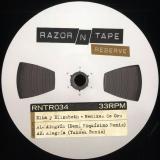
RNT takes a trip south with some fresh modern takes on a pair of Colombian tropicalia classics from the 1970s! Sisters Elia and Elizabeth Fleta recorded some of the most beloved rare groove from Baranquilla’s early-70s period, and when Jaime Tuiran (Vagabundo Club Social) brought the project to label owners Aaron Dae and JKriv, they jumped at the opportunity to work with such rarefied source material.
On the A side, the mysterious newcomer producer Demi Riquisimo crafts a synth-laden tropical opus of a remix of Elia y Elizabeth’s signature hit 'Alegria' and the ever solid Parisian Yuksek works the tune into a concise and mid tempo disco stomper.
On the flip, Bostonian-come-Colombian BOSQ turns 'Soy Una Nube' into an uptempo soul banger, and Baranquilla natives Vagabundo Club Social lend their homegrown organic and clubby style to their mix of 'Alegria'. The perfect blend of earthy OG soul with modern and musical production, this record is as colorful and vibrant as the streets of Baranquilla during Carnaval. And RNT is throwing in a 7Inch with solid new masters of the original songs on heavyweight wax, to boot!
Repress
Samosa Records swings back into action for the summer months with Afrikano Vol. 1 - a scintillating four tracker EP from Various Artists which you will fall in love with on the first listen.
On the A-side, the always impressive Vagabundo Club Social kick things off with the enigmatically titled ‘Mr. Mista’ - a hypnotic, (almost calypso inspired) rhythmic explosion of Mibra guitar, whirling organ, horns and a wicked high end laser sweep. This is a pure chugger, folks. At a deceptive 120bpm it will have you dancing til dusk.
A2 brings us ‘Sweet Dance’ where C. Da Afro met De Gama: after a brief shuffle beat start (liberally peppered with rhythm guitar and organ stabs), the unusual duo make sure it’s all about the beat and horn breakdowns. Pre-drinks in Lagos, people watching and waiting for the night to start is the order of the day here. Cut this in half and it has ‘summer’ stamped right through it. Gloriously sweet.
On the B-Side, Atchoum & Grincheux take centre stage with ‘Demokoussé’. Les Inferno applies the special retouch here, and straight away we’re treated to a gloriously produced trip through breakbeat inspired beats, deep, throaty horns and an outrageously soaring sax. Oh you want more? Well try the addition of the gorgeous spiritual vocals that put the bow nicely on this African sizzler.
Finishing the EP on B.2 is Lego Edit and the aptly titled ‘Afromaniaco’. A pulsating, horn inspired shaker, this track grabs you right by the beat bone from the off and won’t let go. Lego Edit’s trademark deft touches and attention to detail is all on display here - sweet sounding African vocals weave in and out of the almost melancholy horn stabs and washboard beats. A soundtrack for one of those incredible sunsets, ‘Afromaniaco’ is the missing piece of this diverse jigsaw.
With Afrikano Vol. 1, Samosa Records has found the perfect accompaniment to what is hopefully a long, hot summer. So Samosa, so brilliant.
A slice of Norwegian cultural history in album form – a unique
interpretation of traditional Norwegian Travellers' songs.Elias Akselsen,
Ola Kvernberg and Stian Carstensen take us on a journey through
Norwegian music history
The album's title, "Horta", means "authentic" in the language of the Travellers,
Romani. Elias Akselsen (74) is a member of the oldest generation who knew and
can remember the "authentic" life of the Travellers, and is today one of the
foremost representatives of the musical heritage of the Norwegian Travellers/
Roma. He was born on the road and learned to play and sing the traditional songs
while gathered around the bonfire with his relatives. He has a deep and inborn
appreciation of these songs. Musician/producer Stian Carstensen and musician/
arranger Ola Kvernberg join him in raising these old songs to a new level. With the
addition of guest artists Anita Kleppe and Sara Wilhelmsen, three voices from
three generations of Travellers meet one another. Together they have recorded
their unique interpretations of nine Travellers' songs, some known and some
unfamiliar, with the aim of preserving and carrying on the rich, but partly hidden,
cultural heritage of the Travellers, and of making it more widely accessible.
The musical tradition of the Travellers is vivid and complex, featuring elements
from a variety of countries and cultures – from broadside ballads and folk songs
to Russian folk tunes and Balkan rhythms. In many ways this music bears
witness to the way the Travellers drew musical inspiration from their travels. In
addition to the treasure trove of songs the Travellers have kept alive, they have
also had a strong influence on Norwegian folk music. Many traditional fiddle
tunes that are well known today can be traced back to the Traveller fiddler FantKarl, and one of Norway's most famous fiddlers, Myllarguten, often learned tunes
from Travellers passing by.
This is the Norwegian equivalent of blues and soul, and has at least as much
authenticity as the American genres we know so well. But it belongs to us
Norwegians, and to the Norwegian landscape, nature and people. Today Akselsen
is the leading practitioner of the musical heritage of the Norwegian Travellers/
Roma. He was born on the road, with genuine Travellers on both sides of his
family; he was the great-grandchild of the "Traveller king" Stor-Johan on one side,
and of "sea vagabonds" in Bergen on the other. Today he is the last remaining
representative of the original song tradition, and also practises traditional
handicrafts, making knives and whisks.
The album was produced by Skøyerstaten Teater, a voluntary organisation that
works to present the cultural treasure trove of the Travellers/Roma in an artistic
form
- A1: The High Numbers - I’m The Face
- A2: The Action - Never Ever
- A3: The Hollies - Bus Stop
- A4: Small Faces - Don’t Burst My Bubble
- A5: Georgie Fame & The Blue Flames - Sweet Thing
- A6: Tony & Tandy - Two Can Make It Together
- A7: Jimmy James & The Vagabonds - Ain’t No Big Thing
- A8: Geno Washington & The Ram Jam Band - Michael (The Lover) (The Lover)
- A9: The Artwoods - I Take What I Want
- B1: Dusty Springfield - Little By Little
- B2: The Richard Kent Style - I’m Out
- B3: Bluesology - Come Back Baby
- B4: Wynder K Frog - Henry’s Panter
- B5: The Organisers - The Organiser (Feat Harold Smart)
- B6: Timebox - Soul Sauce
- B7: The Spencer Davis Group - High Time Baby
- B8: The Syndicats - Crawdaddy Simone
- C1: Fleur De Lys - Circles
- C2: Rod Stewart - Good Morning Little Schoolgirl
- C3: The Yardbirds - Over Under Sideways Down
- C4: The Birds - How Can It Be
- C5: The Creation - Makin’ Time
- C6: The Carnaby - Jump & Dance
- C7: The Eyes - I’m Rowed Out
- D4: The Quik Bert’s - Apple Crumble
- D5: Apostolic Intervention - Madame Garcia
- D6: Madeline Bell - Picture Me Gone
- D7: Sharon Tandy - Hold On
- D8: Pp Arnold - (If You Think You’re) Groovy (If You Think You’re)
- D9: Love Affair - Everlasting Love
- C8: The Kinks - She’s Got Everything
- D1: The Mike Cotton Sound - Soul Serenade
- D2: John Mayall & The Bluesbreakers - Crawling Up A Hill
- D3: The Alan Bown - Set Emergency 999
Demon are proud to release “Eddie Piller Presents British Mod Sounds Of the 1960s”, the follow up the “The Mod Revival”. This 2LP set serves an introduction to 'British Mod Sounds of the '60s’ and features 34 tracks.
Curated by Acid Jazz Records and Modcast founder Eddie Piller, this collection features the stapes of the British Mod scene including Small Faces, The High Numbers, The Action, The Fleur De Lys, The Kinks, Spencer Davis Group, The Creation, Rod Stewart, The Yardbirds, and The Love Affair.
"Be in with the In Crowd once more."
Every great youth cult deserves a great soundtrack, and when the '60s Mods adopted classic American R&B, with a side order of hip Jazz, they undoubtedly found the right music for their exuberant and stylish way of life. And yet, buying expensive imports, hoping for a local release or praying for a rare visit from overseas talent was never going to be enough to satisfy British youth with a thirst for the latest sounds. Certainly not those on the dancefloor and definitely not those with their own musical ambitions.
It was a music scene that began with imitation, before skill and imagination lead curious minds to innovation, a scene that evolved from average (at best) copies of releases on the Chess, Motown and Stax labels, to become something more sophisticated,something quite unique, something very British.
Formed in 1968, Nazareth rose from the pubs and clubs of their native Scotland to become one of the most successful rock bands in the world, notching up a string of hit records along the way. Hard-working, honest, sincere, and unaffected by the vagaries of fashion, this band of the people have influenced many great artists. Half a century later, and having sold in excess of 20 million albums around the globe, the legendary Nazareth are still rocking hard!
Cinema, originally released in 1986, is Nazareth’s 16th studio album, which will be reissued on white coloured vinyl, as well as on CD with bonus track.
FOR FANS OF: Big Thief, Parquet Courts, Cate Le Bon, Elliott Smith, LVL UP. On their debut for Western Vinyl, recording engineer and multi-instrumentalist Nate Mendelsohn and his band use lyrical maximalism for the powers of good. Where Market’s previous home recorded releases shifted genre restlessly, on The Consistent Brutal Bullshit Gong Mendelsohn took a core band of longtime collaborators to a house in rural Massachusetts where they carved out space for his words to speak through with humor and intensity. Though he comes from a background in experimental music, Mendelsohn’s ear for pop has prevailed. Certain moments on Bullshit Gong reveal his stranger side, as on the thundering bridge of “Scar,” which sounds like a more unhinged Parquet Courts, or the angular “I Would Do That,” which takes cues from Cate Le Bon. On the whole, though, this band of close friends insists on directness, their arrangements clear despite the intricacies. Guitars and synthesizers tangle fluidly atop the rhythm section’s tight bedrock, evoking the tenderness and backbeat-centric qualities of Elliott Smith or Big Thief. After college, where he met most of the members of Market, Mendelsohn became an engineer and producer at the Brooklyn studio Figure 8 Recording. Through that community he’s recorded artists like Frankie Cosmos and Wendy Eisenberg, and played with Yaeji, Vagabon, Katie Von Schleicher (who co-produced Bullshit Gong with him), and Sam Evian, who mixed the album. Creating intimacy out of manic self-reflection requires a delicate balancing act, one Mendelsohn tackles with abandon. His words never skew too poetic or grandiose, and when he invokes the ugly it’s met with a sonic tonality that sets him right again. In tender moments, his voice is often flanked by bandmates Natasha Thweatt or Von Schleicher, who help skew his words toward the universal. Still, Bullshit Gong is an obsessive look inward, one in which Mendelsohn simply asks himself if he is good to those he loves. It’s an act of trust between the artist and the imagined listener he takes with him. UK press campaign by Silver PR. Mendelsohn has worked in the studio as an engineer and musician with Frankie Cosmos, Yaeji, Sam Evian, Wendy Eisenberg, Thor Harris, Rebecca Black, in addition to touring as a member of Katie Von Schleicher’s band. Market developed a cult following emerge after being championed by British comedian James Acaster, who featured the band’s first album in his book Perfect Sound Forever and his follow-up podcast for BBC Sounds.
Pressed on 140g Black Vinyl Including a signed print from Eddie Piller, limited to 750.
Demon are proud to release “Eddie Piller Presents British Mod Sounds Of the 1960s”, the follow up the “The
Mod Revival”. Featuring 100 original tracks across 6LPs, its a deep dive into the Mod scene in '60s Britain.
Including a selection of classic and rare tracks, tracing the scene from its R&B rootsto a soulful finale
Curated by Acid Jazz Records and Modcast founder Eddie Piller, and featuring new sleeve notes from
respected author and broadcaster Paul 'Smiler' Anderson.
As Eddie Piller points out in the forward to the extensive sleeve notes that accompany this collection, he
chose the word 'Sounds' carefully, reflecting the variety of talent contained here, from uncool session
musicians without an ounce of style in them, acts who saw an opportunity to jump on the Mod bandwagon
and bands who whole heartedly embraced Mod way of life.
And so this new collection mixes the Mod mainstays (Small Faces, The High Numbers The Action, The Fleur
De Lys), with a generous selection of future superstars (David Bowie, Rod Stewart, Elton John, Marc Bolan,
Jeff Beck and Graham Gouldman of 10cc are all represented here), and a few artists so obscure, so rare, that
they never got to release a record in the '60s, but Eddie has tracked down the tapes nonetheless.
"Be in with the In Crowd once more."
Every great youth cult deserves a great soundtrack, and when the '60s Mods adopted classic American R&B,
with a side order of hip Jazz, they undoubtedly found the right music for their exuberant and stylish way of
life. And yet, buying expensive imports, hoping for a local release or praying for a rare visit from overseas
talent was never going to be enough to satisfy British youth with a thirst for the latest sounds. Certainly not
those on the dancefloor and definitely not those with their own musical ambitions.
It was a music scene that began with imitation, before skill and imagination lead curious minds to innovation,
a scene that evolved from average (at best) copies of releases on the Chess, Motown and Stax labels, to
become something more sophisticated,something quite unique, something very British.
All formats are stylishly packaged (of course) and include new sleeve notes by Paul 'Smiler' Anderson, author
of the best-selling and highly regarded books'Mods: The New Religion' and 'Mod Art'.
2x12"
since long, chilean/swiss producer and dj luciano is a prominent figure in the global electron-ic club music circle. already from a young age on he was exposed to music profoundly, as his father worked as a jukebox repairman and possessed a large record collection.
when he was twelve, his mother gifted him a guitar, that turned luciano shortly into a mem-ber of a school punk rock band. soon after, his passion for electronic music rose. infected by detroit techno and engaged by close friends like producer dandy jack, he started to play rec-ords in local santiago de chile dance clubs and became involved in the minimal techno scene around friends like ricardo villalobos.
when luciano moved back from chile to switzerland in 2000, he established a residency at weetamix club in geneva, started releasing his own productions on labels like mental groove and joining the cocoon team in ibiza to play at the famous monday night at club amnesia.
since then he is a regular on the balearic island, holding residencies at clubs like dc10 or, with his “vagabundos” serial, at ushuaïa. besides playing around the globe with the likes of carl craig, richie hawtin or loco dice, he is releasing groundbreaking minimal techno and house on his label cadenza since 2003, featuring music by artists like nsi, ricardo villalobos, pikaya, reboot, maayan nidam and himself.
his very own music, so far issued on three albums and countless eps, was always ambiguous. there is his club leaning creativity that can dance slightly into pop spheres while never for-getting the power of precise sliced rhythms and subtle bass sensations.
and then there is a calmer luciano, that displays his love for “music to listen at home, done for a spiritual travel, an inner universe and a moment paralyzed in ether”, as he describes it.
on his first ever mule musiq album release “luci neu house”, luciano now delivers meditative journey music full of repetitive patterns that slowly playing tricks on the listeners subcon-sciousness. “i love music that has a dimension more than music designed for the radio or tv format. mu-sic, that is designed to bring you a higher level of energy and creativity.
so, there is no pretentious things in it ... more just sounds and dimension that will lead your head into the fall of jupiter” he reveals about the one-hour long composition “luci neu house”, whose esoteric deepness reminds on the intensely meditative class of his older pro-ductions like “behind my soul” from 2010.
an epic tune cut on vinyl into four 15-minute long pieces, who shift slowly, almost unper-ceived, whilst absorbing the mind of close observers into a micro-sliced world of moving gen-tleness.
maelstrom magnetism against the gravity of time, that also can be found on the additional mule musiq 257 12inch, which functions as a soothing footnote to luciano’s album.
the almost 13 minutes long trip “flags of himalaya” opens with restful percussions that unhur-riedly start to dance with soft string, piano and horn melodies. on the opposite, the nine-minute long “the evasion of the spiritual soldier” grooves laidback with jazzy rhythms and italo leaning melodies.
a perfect tune for slow dance sensations and endless sunset seaside drives. at a total length of almost 90 minutes, all new mule musiq music composed by luciano distributes a mesmer-izing healing spirit, that grounds organically, even if it is totally rooted in the digital, soft-ware driven world of composing music. “check your buddha” tunes, that somehow sound novel during each new listening circle.
Hot off the heels of Aluxes, his 2018 Lumière Noire debut EP, young Mexican DJ/producer Iñigo
Vontier is inviting Chloé's label on a trip to the far corners of the body & mind with an album of
demented grooves, psychedelic take-offs and imaginary comic strips of mystical rituals. A
bewitching debut full-length. Mexicans may never possess the sonic science of the Germans,
the hedonistic madness of the English or the gift for synthesis of the French, but, as proven by
Iñigo Vontier's first full-length for Lumière Noire, their universe is much more exciting than
anyone would have ever thought.
The DJ/producer fully asserts his origins by brandishing the album’s title "El Hijo del Maiz" ("the
son of the corn") almost as an emblem: "in Mexico, corn is eaten daily. It has long been defined
as 'the gold of America', and I consider all Mexicans as children of corn". A spiritual and
embodied vision Iñigo's first Lumière Noire release, the four-track Aluxes, set the tone of the
young talent's distinctive interpretation of dark disco, which creeps up on the dancefloor from its
iconoclastic side. The two tracks and two remixes (one by Flügel, the other by Inigo himself)
featured on the 12" for lead single "Xu Xu" (featuring Red Axes-affiliate Xen's irrelevant vocals)
was a full-bodied confirmation that Vontier sees the dancefloor as an arena for the occult –
whether from the peoples of the equatorial jungle, the Middle East or, even from indocile
machines. But, while the spiritual element seems part and parcel of the Jalisco native’s output, it
is in no way the only ingredient of this first long-player: "this album best reflects my own vision
and spirituality, and the way I feel it" he says.
Whether contemplative or frenetic, the collection of tracks that make up “El Hijo Del Maiz” takes
the kitchen sink and throws it out the window: languid rhythms, haunted vocals, and mysterious
percussion fuel a discombobulated house set that scrambles the listener's five senses, leaving
one disoriented and exposed to the vagaries of vertigo. Following the demented, dystopian “Xu
Xu” EP, which explored an imaginary jungle that harbored Mayan and Egyptian pyramids,
Middle Eastern accents are once more present in the off-kilter “Bo Ni Ke” and its Japaneseinfluenced vocal trickery, which Moroccan flutes à la Jajouka transform into a feverish trance.
With the following three tracks, Iñigo Vontier raises himself to the same level of excellence as
the Pachanga duo (of which pride of the Mexican scene Rebolledo, is also known as a prolific
artisan of deconstruction): “Awaken”'s slumbering voice, heard as through the veil of hypnosis,
slowly introduces a techno beat which, as in follow-up “Time”, literally brings the listener to a
levitative state. In a housier vein, yet continuing in the same psychedelic, 90s-infused spirit,
“Don’t Go Back” disrupts the genre’s usual signatures with an out-of-tune keyboard that is
becoming the artist's trademark, destabilizing the listener into a drunken vertigo, with a good
helping of sexiness: "I think the sexy dimension definitely brings a kind of magic to music," says
Vontier. “I'm sure I felt this magic during my DJ sets, and I like to think that sorcerers use this
element in their practices. I might consider myself a bit of a sorcerer when I take over the DJ
booth, by the way." A mood and sound that can once again be found – in a quieter, more
bucolic version – on “Chiquitita” (feat. the flute stylings of pioneer DJ Rocca, now a partner of
cosmic disco legend Daniele Baldelli). The more cinematic, fast-paced and dreamy beat of the
no less captivating “Little Monster” might evoke the mischievous spirit of the Mayas' minor
mythological creatures, while ode to the magical herb Marijuana (feat Thomass Jackson)
proudly tramples into the debate that such a provocative title inevitably provokes: "psychedelic
drugs are powerful tools to reach a higher level of consciousness about what surrounds us, but
we must learn how to complete this psychic journey by ourselves, notably through meditation
and love.
In the end, El Hijo del Maiz is an album-length confirmation of Iñigo Vontier's uniqueness, and
his adherence to Lumière Noire's policy of letting artists fully express their vision – while letting
their passions guide their idiosyncrasies and explorations of innovative electronic signatures
Quavius, the deep south vagabond known for his raw and sophisticated dance collages returns to Lustwerk Music with his second EP for the label, Find Ready. While mostly an instrumental affair, Find Ready is an updated glimpse into the producer / rapper's latest repertoire, ranging from the sunny, Baltimore club-influenced house of "Flo Central" to funky Motor City workouts like "Heaven Is In You" and "Find Ready". The EP starts off on a high clip with a nostalgic, forward-driving deep house instrumental, "That Beat." Quavius dons the mic on three of the seven tracks. "The Gist", the EPs cornerstone, sounds something like a Rakim-meets-Sensate Focus. The A and B side are each topped off with downtempo Hip-hop. "Let it Rock" and "Fa Sho" are contemporary updates on cloud rap that bleed atmosphere and confidence while revealing Quavius' knack for tight songwriting and arrangement.
Double 180 gram, half-speed vinyl re-release of the orchestral epic. Norwegian Grammy-nominated and critically acclaimed masterpiece «The Mechanical Fair» finally gets it's long awaited vinyl release
Jampacked with a wellspring of harmonic slingshots, pumping beats and melodic rollercoasters, critics called The Mechanical Fair «the best movie you'll never see» and drew comparisons to Igor Stravinsky's «The Rite of Spring» upon it's original release in 2014. It's apparent appeal to an surprisingly wide range of musical communities finally brought it right into DJ dance-wiz Todd Terje's hands. And make no mistake: the physicist hands doesn't settle for an iPad. It craves vinyl. His wholehearted endorsement led the captain of the Olsen Family to clear the rights, assemble his own killer remix and requisition Grammy-winning cutting engineer Matt Colton for a gorgeous double 180 gram, half-speed vinyl re-release of the orchestral epic.
Originally written for a quintet including heavily merited jazz cats Erik Nylander, Ole Morten Vågan, Petter Vågan and Even Helte Hermansen in 2013, The Mechanical Fair expanded at the initiative of the Trondheim Chamber Music Festival, growing bolder and more powerful with the addition of the adventurous and Grammy-winning chamber orchestra The Trondheim Soloists in 2014.
Having just spearheaded seven genre-blending shows in just six days as the «Artist in Residence» of this years prestigious Molde International Jazz Festival, the multi award-winning Norwegian violinist/multiinstrumentalist, composer and producer Ola Kvernberg (35) can look back at an already impressive recording- and performing career. The once 17 year old jazz manouche violin sensation quickly and impatiently moved beyond the jazz realm for inspiration - resulting in seven albums as a solo artist, eight feature films as a movie score composer and countless additional recordings as a sideman. His list of collaborators range from jazz legends Pat Metheny and Joshua Redman, via post/prog-rock act Motorpsycho, to collaborations with world renowned novelists Lars Saabye Christensen and Jo Nesbø. His fearless attitude and relentless drive towards the boundaries of genres has given him a well-earned high standing on the Scandinavian scene today.
Don't miss out on this rollercoasting, genre-twisting magnum opus as it finally hits is true potential on the Olsen label on November 11 this fall.
- 1