Buscar:side effect

Estilos
Todo
Trent - Yūshū No Bi

Trent

Yūshū No Bi

12inchBLESSYOU033
BLESS YOU
12.03.2026

Further exploring his signature darker peak-time Cocktail D'Amore sound with highly effective collages of samples and added elements, Trent comes on strong at 127BPM with "BB Disco" on the A side, a disco percussive heavy 8 minute galloping excursion with an array of trippy layers, guitar and sound effects. B side goes more in the cosmic hole chugger realm with two hypnotic tracks at 111 and 106 BPM. Big sounding club tools ood for the healthy DJ bag, mastered at man made mastering.

No en stock

Haga su pedido ahora y le encargaremos el artículo en nuestro proveedor.

15,08

Ültimo hace: 60 Días
ZHERAV - NAJA / BAZAAR (7")

ZHERAV

NAJA / BAZAAR (7")

7"-VinylBTR133
Batov Records
11.03.2026

ZHERAV unleashes hypnotic Middle Eastern grooves on NAJA / BAZAAR 45 for Batov’s highly collectable 45 series.

New Zealand-based producer ZHERAV announces his debut release, NAJA / BAZAAR, a double single and 45 on Batov’s Middle Eastern Grooves series. The record fuses psychedelic rock, hypnotic rhythms, and electronic production influences, creating a sound that moves between swung grooves and cinematic, reverb-soaked textures.

ZHERAV draws from his background in house and techno, layering live guitar, bass, and synths over programmed drums. “I had a production template for house music on Ableton” he explains, “and I thought about how to switch to this Middle Eastern sound using the same format”. Most of ZHERAV’s tracks developed through improvisation - starting with programmed drums, then experimenting around scales on instruments until something works. ZHERAV has already received support from independent radio in Australia and New Zealand, and encouragement from international artists like Ko Shin Moon.

Both tracks explore Middle Eastern scales, bringing a distinct flavour to the grooves, while maintaining ZHERAV’s signature hypnotic layered sound. ZHERAV had something in mind related to snakes and their charmers when creating the A-side, NAJA (“Indian Cobra”). An ominous bassline loops repeatedly over snapping drums and percussion, whilst ZHERAV improvises guitar riffs and effects over the top.

No en stock

Haga su pedido ahora y le encargaremos el artículo en nuestro proveedor.

13,66

Ültimo hace: 18 Días
Noah Howard - The Black Ark

In the pantheon of classic free jazz, Noah Howard's The Black Ark looms large. Recorded at Bell Sound Studios in New York City in 1969 – just prior to the alto saxophonist's relocation to Europe – the album was eventually released in 1972.

The Black Ark exhibits not only the power and imagination of Howard's playing, but also his breadth as a composer and bandleader. Listeners expecting unrelenting blasts of "energy music" might be surprised to find a cohesion atypical of free jazz; amidst the wild, impassioned solos, Howard weaves in Latin rhythms and fat-bottomed grooves.

The first side, consisting of "Domiabra" and “Ole Negro,” sets the album's tone. Both tracks sound as if they could have appeared on some of Blue Note's proto-spiritual jazz, groove-heavy releases – evoking the likes of Lou Donaldson or Horace Silver – before ceding the floor to the horn players' anarchic firepower.

As John Corbett writes in the liner notes, "Two players stand out. Bassist Norris Jones – who would soon consolidate his name into a one-word reversed amalgamation/permutation of the two, Sirone – is given ample room, largely unaccompanied; his corporal approach foreshadows later work with the Revolutionary Ensemble. But the secret weapon on The Black Ark is Arthur Doyle. Straight from basement rehearsal sessions with Milford Graves, whose ensemble he had joined and who remained a favorite of the drummer for decades, Doyle is a human flamethrower."

Trumpeter Earl Cross' guttural, vocal effects complement Doyle's take-no-prisoners approach, while the estimable combination of Muhammad Ali (Rashied's brother) on drums and Juma Sultan on congas adds an ever-shifting propulsion. The septet is rounded out by the enigmatic pianist Leslie Waldron, who anchors the group with imaginative accompaniment and occasional boppish flourishes.

Every bit worthy of its reputation as an "out-jazz" holy grail, The Black Ark only sounds better with age. It remains the ideal record to convert the remaining free-jazz skeptics.

Reservar06.03.2026

debe ser publicado en 06.03.2026

26,47
Sofia Jernberg - Voice

Sofia Jernberg

Voice

12inchSTSLJN408LP
SMALLTOWN SUPERSOUND
20.02.2026
  • Multiphonic I
  • Gurgle
  • Air Hand Whistle
  • Inhale Exhale
  • Birds
  • Multiphonic Ii
  • Mouth Synthesizer
  • Multiphonic Iii
  • One Pitch
  • Throat
  • Whistle Pitch

Un-easy listening from »anti-singer« and improviser Sofia Jernberg, a celebration of the voice in its rawest, most malleable form. Jernberg was born in Ethiopia and grew up in Vietnam and Sweden, so one can only imagine these diverse languages opened up a wealth of phonetic possibilities before she entered academia to study jazz and composition. If you dive into her catalogue you’ll clock her startling range – working as a jazz soprano and as an improviser, collaborating with everyone from Stefan Schneider to Mats Gustafsson, as well as appearances on the stage and screen, most notably in Matthew Barney, Erna Ómarsdóttir, and Valdimar Jóhannsson’s »Union of the North«.

On »Voice«, Jernberg provides a ground-level entry point to her work, meticulously running through a litany of unconventional techniques (non-verbal vocalisation, split tones, toneless singing, and distortion) without any effects, just pure batshit sonics designed to show off the voice’s scope as an experimental instrument. On »Mouth Synthesizer« she purses her lips to make ratcheting pops like some analog oscillator, hoarsely mimicking the sort of blustery, Merzbow-coded distortions you might get if you patched a RAT pedal into a broken guitar amp. It isn’t an act of caricature, it’s Jernberg’s way of demonstrating that expensive modular rigs aren’t an essential tool for experimental music, before throwing a side-eye to the field recording industrial complex on »Birds«, transforming her vocal chords into a nightmare aviary. But it’s Jernberg’s startling »multiphonic« experiments that hit hardest. The album opens on »Multiphonic I«, and it’s difficult to tell that you’re listening to a human voice at first – you could just as well be on Colin Stetson’s overblown sax airstreams. Jernberg creates a captivating spiral of crooked, phased tones and hoarse, guttural croaks that she develops over three movements. On »Multiphonic II«, her voice is turned into a storm of pained shrieks, and on the third and final segment, it almost resembles Arve Henriksen or Jon Hassell’s muted brass curlicues. Each track pulls a different musical muscle, whether it’s »One Pitch« with its unsettling yodel-like quivering drones or »Gurgle«, sounding like a close mic-ed recording of a small pot gently simmering.

Reservar20.02.2026

debe ser publicado en 20.02.2026

33,19
Daphni - Butterfly LP 2x12"

Daphni

Butterfly LP 2x12"

2x12inchJIAOLONG034CLP
JIAOLONG
19.02.2026

At the start of this summer, following a three-year hiatus for Daphni (punctuated only by his first ever collaborative Daphni track ‘Unidos’ alongside Sofia Kourtesis), he dropped ‘Sad Piano House’. The track represented something of a continuation in the Daphni catalogue, its roots growing from Cherry’s ‘Cloudy’ and its subsequent Kelbin remix, something in that song’s makeup having a profound effect when played on dancefloors by Snaith and countless others. ‘Sad Piano House’ deployed more intangibly irresistible bendy piano to equally satisfying effect and continues to achieve similarly rhapsodic dancefloor saturation.
Though a sizeable gap for Daphni releases, between Cherry and Butterfly however of course sits Honey, the latest Caribou album and one that saw the more instantaneous and dancefloor leaning traits of Daphni peaking through the cracks more than ever before. This blurring of the lines leads to an intriguing collaboration in Butterfly’s lead single ‘Waiting So Long (feat. Caribou)’. An unlikely duo - in that both artists are the same man, Dan Snaith - ‘Waiting So Long’ is not so much an identity crisis, ego trip, or the result of a chemical spill in the Snaith laboratory. It’s simply a track that Snaith felt for the first time belongs to both aliases, and might appeal to fans of both. He has never sung on a Daphni track before, and did not set out with the intention to do so this time, and yet this strange billing was born.

Daphni music has always been Snaith’s way of hitting directly to the core of the dancefloors he spends so much of his time playing to, and those dancefloors have been steadily expanding as his name grows, with the music following suit. This album however also draws from further back with a definite kinship to the very first Daphni album, the invigorating bag of ideas that was Jiaolong.
Butterfly is a showcase of the wonderful variety and surprising twists and turns that made that album such an exciting new prospect and that still to this day make Snaith such an intriguing DJ. There are more heavy hitters here, tracks that fill those dancefloors better than anyone, like ‘Clap Your Hands’ which picks up the energy of ‘Sad Piano House’ and flips it, exposing the gritty and intoxicating underbelly of Snaith’s hitmaking side, while retaining the playful urgency that runs through all of his work of late. Meanwhile ‘Hang’’s comic-strip horns are unpinned by gleeful force, unrelenting and thrillingly unshakeable. Elsewhere though comes a clutch of other tunes that might creep out somewhere more off the beaten path, a path Snaith has never stopped seeking in amongst his larger billings. ‘Lucky’ is squirmy and elusively intoxicating, ‘Invention’ skitters down meandering, inviting corridors, ‘Talk To Me’ grumbles and broods in the murk, and ‘Miles Smiles’ could roll on endlessly, so confident in its groove. There are no obvious peaks in these tracks or unifying moments, in fact many of them really have no business being on the dancefloor at all, and yet in the right setting, they could be the most fun to be had all night.

One such club is a good microcosm for the ethos of Butterfly as a whole. “Around the time I was finishing up this album I played a long set in a club called Open Ground in Wuppertal, Germany.” Snaith recalls, “It’s kind of, in one sense, the platonic ideal of the kind of club I’d want to play in. Every single decision has been taken, at great expense, with the aim of making the perfect sounding medium sized club room. But on top of it being the perfect acoustic environment it also is run by an amazing collection of people in a way that gives it a sense of community that dance music at its best provides. It is an absolute pleasure to play in that room to a crowd of people who come from all over. Playing in there you feel like you can play anything, and I played works in progress of pretty much every track on this album in my set there. Don’t get me wrong, I love playing a short set at a festival or in a more raw warehouse kind of club where you bang it out and only really functional music works but on record I guess the point of these Daphni records is to keep in mind a more expansive idea of dance music where the parameters are broad and the church is broad. I think that actually, putting really functional stuff next to weirder tracks (both on an album and in a dj set) might be the thing that’s still most interesting to me.”
This is the feeling that’s most palpable on Butterfly, and in every single time you see Snaith DJ. Right from the inception of the Daphni alias - and even before that – the thrill of trying stuff out, pushing at the boundaries has always been there and on Butterfly is present in all its twists and turns. It leaps all over the place and yet it hangs together, never feeling like a grab bag of dancefloor utilities but rather a distillation of all the strings to Snaith’s bow, exhilaratingly human and unified by one singular concept – simple and joyful exploration.

No en stock

Haga su pedido ahora y le encargaremos el artículo en nuestro proveedor.

25,34

Ültimo hace: 81 Días
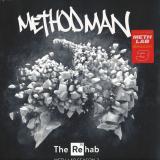
METHOD MAN - Meth Lab Season 3: The Rehab LP

The Meth Lab returns for its third instalment with “Meth Lab Season 3: The Rehab,” a sharp, hard-hitting chapter that cements Method Man’s place as one of hip-hop’s most consistent and enduring voices. Executive produced by longtime collaborator Handz On, this project finds the Wu-Tang legend in rare form—polished, precise, and laser-focused.

“The Rehab” pulls listeners back into the world Meth has been building since the first Meth Lab sessions: a mixtape-style showcase blending razor-sharp lyricism with streetwise storytelling, packed with energy and attitude. Method Man’s flow remains timeless, weaving between gritty boom-bap, polished modern production, and the unmistakable Wu-Tang aesthetic. A strong lineup of guests brings extra fire to the set—Cappadonna, RJ Payne, Redman, KRS-One, JoJo Pellegrino, Jadakiss, Carlton Fisk, Hanz On, Intell, Iron Mic, 5th Pxwer, Chunk Bizza, Eddie I, Cortez, and more—each stepping into Meth’s world with their own hard-edged energy. Behind the boards, producers like P. Version, Rockwilder, Eric Sermon, Adam McLeer, Daniel C. Wells, Darnell Norman McConnell, and Joshua D. Zimmerman craft a gritty yet refined sonic framework that elevates every performance.

More than just another chapter, Season 3: The Rehab feels like a victory lap: a culmination of decades of craft, a celebration of the Staten Island movement, and a reminder that Method Man still out-rhymes rappers half his age. It’s a must-own for Wu-Tang fans, East Coast purists, and anyone who appreciates sharp writing and decades-deep mastery.

No en stock

Haga su pedido ahora y le encargaremos el artículo en nuestro proveedor.

26,01

Ültimo hace: 81 Días
Nick Bike - Yabba Dabba

Nick Bike

Yabba Dabba

12inchCS013
Chosen Spokes
13.02.2026

2026 Repress

Nick Bike hops aboard his groove machine again for another tidy two tracker that does disco differently., The A-side is 'Yabba Dabba', which is an edit of a classic Scandi-pop gem with plenty of the original melodies reworked into a fatter groove with disco claps. It's full of fun but also nice chunky drums and subtle effects that draw out the magic and up the funk. On the flip side is a dub that is a little more airy and light, with a dreamier edge for the zoned-out moments, but also a reverb-drenched vocal. Two effective and charming cuts for grown-up floors and magic moments.

No en stock

Haga su pedido ahora y le encargaremos el artículo en nuestro proveedor.

13,24

Ültimo hace: 32 Días
Jan Jelinek - Loop-Finding-Jazz-Records 2x12"

2024 repress

In February 2021, Jan Jelinek's seminal album "Loop-Finding-Jazz-Records" turned 20. The anniversary repress, a double LP with two bonus tracks (B-sides from the Tendency EP, 2000), is a little late to the party.
What the press said about Loop-Finding-Jazz-Records:
“Don’t be misled by the title, though for there isn’t a finger-snapping rhythm c bebop lead anywhere on the album. Instead, Jelinek chooses to explore the visual effect moiré - two shifting patterns creating an implied third dimension - in the audio realm.” (Alternative Press)
“The title acts as explanation for the studio technique that provided the basis for this album, snippets of other people’s arrangements deconstructed through a sampler into loops and then splashed onto an audio canvas.” (ATM)
“Jelinek’s sound evolved out of his dislike for (and inability to play) keyboards.” (RPM)
“Jelinek has abstracted his sources beyond recognition, looping his millisecond samples into flickering patterns of sonic moiré laid atop a dub Techno framework. (...) Jelinek might as well have sampled a horn player’s hissing intake of breath – it would have been ‘jazz’ enough for his purposes.“ (The Wire)
“It’s a perfect inversion of conventional music, a sonic negative. Everything that would typically be foreground is moved back or pushed off the screen altogether, and the flecks of sonic debris that would normally be covered by other sounds are left to carry the melody and rhythm.” (Pitchfork)
“All you need to know is that these onomatopoeic non-specific songs (...) are warm, paradisical creations”. (NME)
“Listen carefully and you’ll hear textures slowly unfolding and mutating. Presuming you’ve not fallen asleep of course.” (iDJ)
“At times, it’s all a bit dripping tap Japanese water torture; so sedentary it drowns in its own motionlessness” (DJ)
“Loop Finding Jazz Records' is a genuine modern classic whose re-release is anything but a cynical mortgage repayment exercise. Consider this a second chance, then pretend you had it all along.” (Boomkat)
PS:
“I’ve been fortunate enough to see Jan Jelinek live once, at Tonic NYC (...). Wearing a black and white striped shirt, he looked like a nihilistic Charlie Brown.” (beachsloth)

No en stock

Haga su pedido ahora y le encargaremos el artículo en nuestro proveedor.

26,01

Ültimo hace: 52 Días
Various - Hot Creations Sampler I

Hot Creations new Vinyl Sampler featuring four of the Hottest recent release on Hot Creations.

The A Side features Kolter’s superb slice of old school House, ‘Red Alert’ a stomping powerhouse of a trackk, delivering relentless grooves and serious intensity. The A Side also features and Jamie Jones’s hugely popular rework of ‘XTC by HoneyLuv & Mason Maynard, a head bobbing hypnotic groover an exemplary, underground dubby take on the Original, intertwining layered effects and hypnotic atmospherics for the ultimate dancefloor weapon.

On the flip we have Lauren Lane’s monstrous Ryde Or Die Anthem, a inspired rework of DMX - Ruff Ryder's Anthem, a robust house cut that weaves hypnotic guitar strums, driving beats, and a mix of rolling low-ends and rapped vocals, coming together for a tripped-out ride with a deep bass and playful groove. Finally, we have Carloh’s ‘Quisiera Tenerte’ is a magnetic dancefloor filler, pulsing with a lively Latin groove and dripped in resonant basslines groove-led percussion, and hooky as hell vocal’s.

No en stock

Haga su pedido ahora y le encargaremos el artículo en nuestro proveedor.

14,50

Ültimo hace: 13 Días
Various - Wizzz! French Psychorama Volume 5 (67-75)

The journey through French-speaking pop archives continues with this fifth volume, packed with fuzz, gimmicks, and dissent. Far from the charts, the selected tracks display a great creative freedom, often backed by corrosive humor. Welcome to the surprising, kaleidoscopic, and colorful world of the late sixties and early seventies, Wizzz!
Born in Montauban, Robert Pico stumbled into music by chance when he met René Vaneste, then artistic director at Pathé-Marconi. René brought him to Paris to record his first 45 RPM EP in 1964. A year later, Pierre Perret introduced him to Vogue, where he recorded his second album with Claude Nougaro’s orchestra. Sylvie Vartan then introduced him to RCA, where he recorded four singles, including the astonishing "Chien Fidèle," a track backed by a hair-rising fuzz guitar. Alongside his solo career, he also composed for other artists like Alain Delon (the song was recorded but remains unreleased), Magali Noël, Bourvil, and Georges Guétary. In the Paris of the sixties, he mingled with Mireille Darc, Elsa Martinelli, Marie Laforêt, France Gall, Françoise Hardy, Petula Clark, Régine, Dani, Serge Gainsbourg, Joe Dassin, Franck Fernandel, Charles Level, and Roland Vincent. Despite his efforts and winning a Grand Prix Sacem for his final record, Robert Pico didn’t achieve the expected success in show business and decided to leave Paris and return to the Southwest, where he devoted himself to writing. He is the author of 23 books (including Delon et Compagnie, Jean-Marc Savary Editions 2025, a memoir about his youth and his many encounters). Today, he is relieved to never have become a celebrity and devotes himself to his work with passion.
In 1969, the Franco-Italian movie Erotissimo was released, directed by Gérard Pirès (who later directed Taxi in 1998, written and produced by Luc Besson). This pop comedy features Annie Girardot, Jean Yanne, Francis Blanche, Serge Gainsbourg, Nicole Croisille, Jacques Martin, and Patrick Topaloff. The soundtrack was written by Michel Polnareff and William Sheller, with lyrics by Jean-Lou Dabadie. "La Femme Faux-cils," performed by Annie Girardot. It recounts the feelings of a rich CEO's wife who seeks to develop her sex appeal under the influence of advertisement and magazines. Groovy, sparkling and light, this track, with ITS lush arrangements humorously critiques consumer society and feminine beauty standards.
“Je suis l’Etat” (1967) is the flagship track of the first EP by singer-songwriter Spauv Georges, aka Georges Larriaga, better known as Jim Larriaga (1941-2022). Born into a family of bakers, the young man was initially planning to become a hairdresser when he discovered English-speaking music through Elvis Presley and the Beatles. After this revelation, he decided he would become a songwriter and gave himself five years to succeed. He recorded his first two EP’s independently for RCA under the pseudonym Spauv Georges; meaning “that poor George”, a nickname given to him by the mother of her friend Jean-Pierre Prévotat (future drummer of the Players, Triangle, or Johnny Hallyday). Portraying a depressed and eccentric young man, Spauv Georges created corrosive and amusing songs that didn’t reach a wide audience, despite a TV appearance with Jean-Christophe Averty.
Supported by his loyal friend and fellow songwriter Jean-Max Rivière, Georges Larriaga met the future singer Carlos in the early '70s, then Sylvie Vartan’s assistant. He wrote songs for Carlos, including the popular "La vie est belle," "Y’a des indiens partout," and "La cantine", which went onto become a huge hit in 1972. He also composed for Claude François (“Anne-Marie”, 1971), Charlotte Julian (“Fleur de province”, 1972), helped launch child singer Roméo (who sold 4 million records), and later wrote the hit "Pas besoin d’éducation sexuelle" (1975) for the young Julie Bataille. In 1971, Jim recorded an album for Disc'Az: “L’univers étrange et fou de Jim Larriaga”, which featured pop gems like “La maison de mon père”.
The story of the song "Zoé" began when Pierre Dorsay, artistic director at Vogue Records, asked Swiss singer and musician Pierre Alain to write a song for a new female singer. The inspiration came when he realized that Zoé (the artist's name) was also the name of France's first atomic battery, created in 1948, which consisted of uranium oxide immersed in heavy water! The lyrics reflect a bubbling energy that must be handled with caution, while the instrumentation echoes this atomic theme, notably with the use of a theremin.
Zoé’s career lasted only as long as a single 45 RPM, but it seems Christine Fontane was the vocalist behind this pseudonym, who is known for several EPs, a good "popcorn" album in 1964, and a handful of children’s singles in the '70s. Regardless, the photograph on the cover is of a different girl entirely.
Later, Pierre Alain continued his career, writing songs for himself, Marie Laforêt, Danièle Licari, Alice Dona, Arlette Zola (3rd place in Eurovision 1982), and achieving multiple gold and platinum records in Canada. Also an inventor with several patents, president of the Romande Academy, and head of the French Alliance in Geneva, he now composes atonal music, books, and poetry. Moreover, he is also the host of "Les Mardis de Pierre Alain" at "Le P'tit Music'Hohl" in Geneva.
Filled with oriental choruses and fuzz guitar, "Fou" is from Jacques Da Sylva's only EP released by Vogue in 1967. Despite the quality of this recording, all traces of this singer disappear after this first effort.
Valentin is a baroque pop singer born in Belgium. He is the songwriter and composer of most of the tracks on his three singles released in the late 60s in Canada. A legend says that he reincarnated himself as Jacky Valentin during the 1970s for a rock'n'roll revival career in Belgium, but his older brother sadly debunked this story. Valentin's first two singles were arranged by Claude Rogen, a Parisian session pianist who had come to Canada to promote the song “Mister A Gogo”, a cover of David Bowie’s “Laughing Gnome”, adapted by singer Delphine, his wife at the time. Far from his usual network, Claude Rogen arranged music for Polydor, including the arrangements for “Je suis un vagabond” in 1969, a jerk tune with string arrangements and a furious optimism.
Jacques Malia wrote, composed, and recorded his only 45 EP for Festival in 1966. “Histoire de gitan” is an incredible beat track with bohemian scat that tells the story of a gypsy musician who came to Paris to make it in the Music-Hall, to no avail. The hero of the song and its author probably shared a similar fate, as Jacques Malia faded into anonymity after this remarkable attempt.
Bernard Jamet recorded two EPs for Barclay in the late sixties and co-wrote several songs with Christine Pilzer, Pascal Danel, and prolific songwriters Michel Delancray and Mya Simile. The track “Raison Légale” (1968), his masterpiece, immerses the listener in a courtroom right when a murderer is being judged, with jerk rhythm and free arrangements. A unique, paranoid, judicial, and psychedelic oddity.
Jean-Pierre Lebrot-Millers started his career in show business in 1967 as a singer and songwriter for the Philips label. After three singles, he wrote several songs of a new kind with his friend Pierre Halioche, in the midst of the sexual liberation movement and the democratization of drugs. With provocative lyrics, “Les filles du hasard” and “Barbara au Chapeau Rose” were released on a Philips singles in 1968. The character of Barbara was inspired by a queen of Parisian nightlife during the psychedelic years: model Charlotte Martin, who dated Eric Clapton from 1965 to 1968, then Jimmy Page from 1970 to 1983. Jean-Claude Petit’s arrangements, with a table-filled intro, soul brass, and Hendrixian guitar, emphasize the flamboyance of a hedonistic and sexy character, whose dog is named Junkie because “Junkie est un nom exquis”! The track was recorded live in three takes with a full orchestra.
Upon its release, the record was censored by Europe 1 and RTL due to its references to drug use. Jean-Pierre Lebrot was then banned from the airwaves and later dismissed by his record label. He changed his artist name to Jean-Pierre Millers, while his companion Pierre Halioche became D. Dolby for a new dreamy composition, “Chilla”, which Jean-Pierre produced himself with arrangements by Jean Musy. Once again, the song was immediately censored everywhere. After this setback, he decided to stop singing and started taking on odd jobs to support his Swedish wife and their son until the day he met Jean-Pierre Martin, then production manager at Decca, who had worked with Manu Dibango. Martin offered Jean-Pierre Lebrot-Millers, then employed at Rank Xerox, the position of artistic director at Decca. He accepted and became, a year later, promotion director (radio, press, TV). He worked on Julio Iglesias’s first album for Decca, which became a massive hit and allowed him to meet Claude Carrère. The latter asked him to write new songs and find their performers, much like a “talent scout.” It’s through him that Jean-Pierre discovered Julie Pietri and Corinne Hermès. He composed “Ma Pompadour” for Ringo, Sheila’s husband, and took the microphone again for the syncope hit “Rendez-Vous” in 1982.
That same year, Jean-Pierre Lebrot-Millers tried to release a track for which he had heavily gone into debt: “Si la vie est un cadeau”. Having recorded it in London, he presented it to numerous professionals, all of whom refused to get involved. The same thing happened with Antenne 2 and the Sacem when he proposed the song as France’s entry for Eurovision. He then met Haïm Saban, who was producing cartoon soundtracks and had just launched the Goldorak theme song. Saban, having listened to the song, declared it had the potential to become a hit. He sent Jean-Pierre and Corinne Hermès to meet the CEO of the Luxembourg radio and television network. The latter received them, asked to hear a verse and chorus a cappella in his office, and immediately hired them to represent Luxembourg at Eurovision 1983. They reworked the arrangements and recorded a new version with Haïm Saban as co-producer. The song ended up winning Eurovision 1983, a great comeback for our hero. He continued producing and hung out with the band Nacash in Belgium when a couple came to introduce their daughter for an impromptu audition in a hotel room. The girl sang “Les démons de minuit” while dancing to a radio cassette. Impressed, he had her take singing lessons for a year and composed a song for her (for which he had the melody and title, but no lyrics). This required him to go on the hunt for a lyricist, who ended up being Guy Carlier. They recorded the song, which was initially a ballad, at Bernard Estardy’s CBE studio, and gave the singer a new name: Melody. They showed the song around their industry network without success. Later, Estardy called Jean-Pierre to suggest changing the rhythm and making it pop-rock. Orlando, Dalida’s brother, liked the result and decided to co-produce the track. “Y’a pas que les grands qui rêvent » became a classic hit. The song has since been covered by Juliette Armanet (as a ballad, like the original) and Valentina.

Born into an aristocratic Breton family, Hervé Mettais-Cartier worked as a DJ at Queen Kiss, a nightclub in Poitiers, where he formed the band Les Concentrés with Michel (an actor) and Christian (a radio technician). Together, they created a repertoire of whimsical songs (“Ma bique est morte”, “J’suis un salaud”, “Fils de dégénéré”...) that they performed on stage dressed in white (in homage to “concentrated milk”). They performed at Bliboquet and Olympia in 1968 for the 10th edition of the “Relais de la chanson Française” organized by L’Humanité-Dimanche and Nous les Garçons et les Filles, sponsored by Pepsi Cola. Winners in the author-composer category, alongside Danish singer Dorte, their visibility allowed them to record a 45, and appear on television in Jean-Christophe Averty’s show. The A-side of the disc features Bruno le ravageur, a casatchok dedicated to Bruno Caquatrix, the director of Olympia, nicknamed in the song “Coq Atroce” or “croque-actrices”. The B-side is dedicated to “Fils de dégénéré”, a quirky tribute to Hervé's aristocratic roots, mixing absurdity with sophisticated vocal harmonies.
After Les Concentrés, Hervé Mettais-Cartier formed the duo La Paire et sa Bêtise with his friend Olivier Robert. They performed in Parisian cabarets and toured with Pierre Vassiliu. In the late 1970s, Hervé began a solo career. He recorded two albums for the Motors label in 1978 and 1979, which did not achieve their anticipated success due to lack of promotion. In 1980, he met Bernadette, with whom he started a family and created a “Chansons à voir” (songs to see) show that he performed until his death at the end of 2024.

Publicité comes from the final EP by the Missiles (Ducretet Thomson, 1966), a disc that also includes “La (nouvelle) guerre de cent ans”, featured on Volume 4 of our Wizzz! series. Please refer to the booklet for the story of the band.

“He’s 1.82 meters tall, 28 years old, weighs 135 kg, is black and Belgian”: this is the description of singer Hegesippe on the back of his sole single (Decca, 1967). He appears on the album cover wearing a Greek toga, like a hippie gag – we are at the end of the year 1967. In “Le crédo d’Hegesippe”, this former bodyguard of Antoine and the Charlots plays the delightful card of the thick brute converted to Flower-Power and non-violence, with arrangements by Jean-Daniel Mercier, aka Paul Mille.
“Ethéro-disco” was released on a promotional record for clients of the Maréchal company (Liège, Belgium) for the New Year 1979. Over a funky rhythm, celebrity impersonations (Brigitte Bardot, Jacques Dutronc, Fernandel…) deliver an enigmatic text about pharmaceutical products like ether, bismuth, and aspartate. The track was composed by Dan Sarravah (responsible for Joanna's “Hold-up inusité” featured on Wizzz! Volume 3) and Tony Talado, who was also a singer (one 45 in 1967), songwriter (with over a dozen credits between 1964 and 1985 in various styles from surf music to disco), author (Devenez Végétarien, Dricot Editions, 1985), ad designer, and psychologist.

Décollez-les is on the A-side of Mamlouk's only single, a pseudonym for Marsel Hurten, who is known for his work on several EPs in the late sixties, as well as composing music for Hervé Vilard’s “Capri, c’est fini”, Claude Channes' “La Haine”, Annie Philippe’s “On m’a toujours dit”, and Nancy Holloway’s “Panne de Cœur”.
This strange song, with Afrobeat horns and absurd dialogues between a chef and his kitchen staff, is the result of a collaboration between Marsel Hurten and one of his neighbors, a photographer from Pavillon-sous-Bois (93), where the musician settled after returning from the Algerian War. A music video was shot to promote the record.
Marsel Hurten was born in Tourcoing (59) into a musical family. At a young age, he joined the brass band founded by his grandfather, playing the piston before studying trumpet at the conservatory, as well as teaching himself how to play the guitar. As an orchestra musician, he toured in France, Belgium, Germany, and England. He released a series of solo 45’s between 1965 and 1968 for the DMF and Az labels before stopping recording to focus on working for other artists (Gilles Olivier, Noëlle Cordier…).
“L’amour nu” (Vogue, 1971) is the work of the short-lived Belgian band Mozaïque. The track, written by singer Jacques Albin, closely resembles another of his compositions, “Carré Blanc”, which he recorded in 1969 for Disc’AZ.
Represented by the Lumi Son micro-label based in Marignane (Côte d'Azur), Jean-Marc Garrigues released two 45 RPMs in the late sixties, defending the French jerk sound. The song “Je dis Non” is a short, joyful ode to youth, pop music, and rebellion.
Songwriter and performer Jacques Penuel released three singles. The first one, “Astronef 328” (Fontana, 1969), features a dizzying series of chords punctuated by sound effects, a sci-fi story, and arrangements by Jean-Claude Vannier.

We would like to sincerely thank Pierre Alain, Moon Blaha, Marsel Hurten, Bastien Larriaga, Jean-Pierre Lebrot-Millers, Bernadette Mettais-Cartier, Robert Pico, Olivier Robert, Claude Rogen, Micky Segura.

No en stock

Haga su pedido ahora y le encargaremos el artículo en nuestro proveedor.

23,11

Ültimo hace: 3 Meses
The Mars Volta - Noctourniquet

The Mars Volta

Noctourniquet

2x12inch4250795604969
CLOUDS HILL
30.01.2026
  • A1: The Whip Hand
  • A2: Aegis
  • A3: Dyslexicon
  • B1: Empty Vessels Make The Loudest Sound
  • B2: The Malkin Jewel
  • B3: Lapochka
  • C1: In Absentia
  • C2: Imago
  • C3: Molochwalker
  • C4: Trinkets Pale Of Moon
  • D1: Vedamalady
  • D2: Noctourniquet
  • D3: Zed And Two Naughts

Noctourniquet And then everything went black, at least for a while, at least for The Mars Volta. In the months and years following their fifth full-length, Octahedron, Omar kept on at his usual fearsome creative pace. In fact, he ramped up his output considerably, starting up his own Rodriguez Lopez Productions label and releasing a slew of solo albums. It was a practice he’d begun shortly after De-Loused’s release, with his solo debut A Manual Dexterity: Soundtrack Volume One, but as the decade reached its close, Omar grew to rely upon his solo recordings as an outlet for his prolific creativity, these albums often exploring musical pastures far beyond even The Mars Volta’s wide-ranging parameters. Before choosing to release music under his own name, Omar would always play it to Cedric first, to see if the frontman thought it had potential to become Mars Volta music. Shortly after Octahedron’s completion, Cedric flagged one batch of tracks Omar had cut with Deantoni Parks, a brilliant drummer and composer who’d briefly occupied the Mars Volta drumstool in-between Jon Theodore and Thomas Pridgen’s tenures, and whose volcanic creativity and unique, unpredictable approach to rhythm and composition had quickly made him one of Omar’s favourite artistic foils.

As with the music that made up Octahedron, the new tracks Cedric had optioned for The Mars Volta often veered far from the riotous, Grand Guignol visions of their earlier releases. It possessed the punchy, song-based focus of Octahedron, though this was a considerably darker, more menacing strain of pop, with synthesisers figuring heavily in the productions. Cedric took the tracks in 2009 and set about writing songs to the music. But no more new Mars Volta music would be heard until 2012. The years that passed in-between were nonetheless momentous, and busy, witnessing an unexpected reunion of the members of At The Drive-In, and Cedric joining his own side-project, Anywhere. But there wasn’t any sign of life within the Mars Volta until Omar, Cedric and their bandmates took to the road for a series of live shows in the spring of 2011, billed as The Omar Rodriguez-Lopez Group, debuting the songs that would become Noctourniquet. The album followed the next year, and it remains one of The Mars Volta’s finest, its electronic textures staking out unfamiliar but fertile new ground.

An unsettling, subtly turbulent listen, Noctourniquet found Cedric sketching out a story about “some sort of device that stops the darkness from bleeding”, drawing influence variously from the nursery rhyme Solomon Grundy, the Greek myth of Hyacinthus and the song Birth, School, Work, Death by British underground rockers The Godfathers. It was an album of dystopian futurism, signalled by the paranoid cyber-rock of opener The Whip Hand and its unnerving chorus, “That’s when I disconnect from you”. But it was also an album of inspired, unexpected moves and uncanny invention, like how Dyslexicon seemed to eerily evoke Blondie’s Rapture, before rushing headlong into its bruising chorus, tempos shifting restlessly throughout like quaking earth beneath the listener’s feet, or how Aegis put a brave new spin on The Mars Volta’s trademark rewiring of salsa’s overdriven passions, or how Cedric had never sounded as scary as he did on The Malkin Jewel’s mutant burlesque shuffle. Tracks like Molochwalker were sleek and concise in a way The Mars Volta had never really attempted before – which was all part of Omar’s plan.

“It had all been guitar, guitar, guitar, overdubs, everything fighting for space in the same frequency,” he explains. “So for Noctourniquet, it was all about subtracting elements, of sticking to how I made demos.” Deantoni’s presence helped revivify the group, playing against cliché and expectation, and taking each song in unexpected directions. “I’d beatbox a rhythm for him to play, to go with my guitar part, and he’d come back with three or four alternate options. It was so great.” Similarly, Cedric had never sung better than on Noctourniquet, staking out a fearsome spectrum from the chilling Tom Waitsian growl of The Malkin Jewel to the keening, beautiful vocalisation on Vedamalady, rising to match some of Omar’s most deft, most immediately effective and melodic songs yet. Indeed, Noctourniquet is the sound of a band discovering new ways to do familiar things, renewing their commitment to their mission, finding fresh inspiration a decade in, and shaking off any complacency that might have come with ten years of acclaim and success.

Reservar30.01.2026

debe ser publicado en 30.01.2026

27,69
Chambers Brothers - Time Has Come LP
  • A1: All Strung Out Over You
  • A2: People Get Ready
  • A3: I Can't Stand It
  • A4: Romeo And Juliet
  • A5: In The Midnight Hour
  • A6: So Tired Side
  • B1: Uptown
  • B2: Please Don't Leave Me
  • B3: What The World Needs Now Is Love
  • B4: Time Has Come Today

The Chambers Brothers are four biological brothers who cut their teeth in church choirs and on the gospel and folk circuit around Southern California. But, things really picked up halfway the 1960s when they started performing in New York and in 1968 scored their only hit “Time Has Come Today”. This 11-minute opus spent five consecutive weeks at #11 (yes, really!) on the Billboard Hot 100 and really showcased the progressive mindset of the brothers; the group combined American blues and gospel traditions with the effects-laden sound of psychedelic rock that was very much in-vogue around that time. If you’re fan of psychedelic soul such Rotary Connection, you can’t miss this. The Time Has Come is available as a limited edition of 1000 individually numbered copies on red coloured vinyl.

Reservar23.01.2026

debe ser publicado en 23.01.2026

28,78
MANNY CORCHADO / NELSON Y SUS ESTRELLAS - CHICKEN AND BOOZE / AGUARDIENTE Y POLLO

Manny Corchado should be a household name for all boogaloo fans. A true boogaloo gem that blends Manny Corchado's explosive rhythm with the melodic touch of salsa legend Nelson y sus Estrellas. His classic track 'Pow-Wow' is one of the most sought-after singles among collectors and DJs-not just for its A-side, but also for the absolute dance floor bomb hidden on its B-side: 'Chicken and Booze.' This instrumental recording features an irresistible rhythm section that could practically serve as the definition of the boogaloo genre itself. In this case, it plays at a faster tempo than other similar hits, making it even more effective on the dance floor. The horn arrangements create a catchy hook, spiced up with percussion breaks, all while driving its addictive, fast-paced groove. On the B-side of this single, we find another version of the same song-this time re-titled 'Aguardiente y Pollo' in Spanish-performed by Nelson y sus Estrellas. The tropical and salsa orchestra, founded in Venezuela by pianist, composer, and bandleader Nelson González Rojas, keeps the same punch and dance-driven focus as Corchado's version, but adds more melodic and sophisticated arrangements, in the style of the other tracks featured on the band's 1977 album, where this stunning cut was originally included (available here on a 45 for the first time). This Latin vinyl 45er is pure dance floor dynamite!

No en stock

Haga su pedido ahora y le encargaremos el artículo en nuestro proveedor.

11,35

Ültimo hace: 68 Días
Autumns - Get A Life, Listen To Autumns EP

‘Get A Life, Listen To Autumns’ is a statement that tells you everything you need to know about the quality and attitude of the Irish producer’s latest EP. His DNO debut presents five tracks of steel-studded EBM and industrial run through with his trademark dub aesthetics.

A1 ‘100 Ways To Get Fucked’ — another bold title — struts its stuff to a methodical stomp; strained vocals pulled out of shape and fed back into macabre forms; low-end chugging like some smoke-billowing, grease-slicked machine.
‘Let It Melt’ picks up the pace, making judicious use of the reverse function, while subtle acid chirps and woozy arpeggios provide a chaotic, though not unpleasant, dissonance that induces a feeling of headrush.
‘Petted’ swaggers like sex incarnate, alongside snatches of diva vox and the kind of sweeping space-age pads that Holst might have used had he been born a century later, seemingly taking cues from the hot and sweaty nights of ’80s Chicago.

Over on the B-side, ‘LDRO’ sets its kicks and snares thrusting at full tilt over an inexorable bassline; Autumns’ favourite effect, delay, keeping things squelching like the jellified flesh of a ballistics dummy.
And to finish, ‘God’s Gift’ drops down to a sludgy rhythm — though with surprisingly spritely percussion — to match its tortured guitar, shrieking horns, and deadly subs. A fever dream of twisted metal and hot breath, like the gradual slowing after the climax of debauchery.

Marking a sultry new route for DNO, Autumns’ first for the label is confident, confrontational, and
not to be missed.

Rhythms of postmodern realism at the very bottom of the DNO.

No en stock

Haga su pedido ahora y le encargaremos el artículo en nuestro proveedor.

14,71

Ültimo hace: 4 Meses
FRACTION - MOON BLOOD LP

FRACTION

MOON BLOOD LP

12inchEZRDR169LP
Riding Easy
05.12.2025

US Black Friday 2025 Release. There are very few albums in the psych/punk/hard rock/private presses strata that garner the sort of universal awe and accolades that Fraction’s almighty Moonblood LP does, and even fewer records in the world that could be dubbed ‘Christian Rock’ incur such fierce devotion. Indeed some records just meteorically lift themselves out any genre tag with brilliance and sheer defiance--and Moonblood is surely one of them. Based in LA, Fraction was a ragged collection of working-class musicians--the line-up was ringleader Jim Beach--vocals; Don Swanson--lead guitar, Curt Swanson--drums, Victor Hemme--bass, and Robert Meinel--rhythm guitar. Beach himself describes those early days: “The guys met through various acquaintances that we had in LA. All of us had been in bands before, but were seeking something with more teeth. We had a small studio in an industrial complex in North Hollywood and started practicing sometimes as early as 4:30 AM. We all had day jobs, so we did what we could.”

Amazingly the recording sessions for the album were recorded similarly on the fly, as Beach further states: “The Moonblood recording took place at Whitney’s Studio in Glendale, CA, early in 1971. On a strict budget, these songs were recorded in less than three hours—all of them “one takes.” We played, all 5 of us, simultaneously-- there were no studio effects, no overdubbing or any additional sound effects added. Basically what you hear is considered ‘old school’ recording.”

This workmanlike description in no way prepares one for the pure tortured genius the session wrought. Particularly noteworthy is Beach’s vocals—as commonly stated, the spirit of Jim Morrison is conjured in his deep baritone, which gives way to unparalleled pained howls, at times bathed in delay which trails into the abyss. Fascinatingly enough, Beach cites the much punker Love as his fave LA band over the Doors, and also gives influence-nods to proto-everything rockers The Yardbirds and to Dylan, whose dark word tapestries surely inspired Beach’s lyrics (though lines from The Doors’ “L’America” pop up on the LP) Whatever the case, the man clearly has a vision, as even the stark sleeve concept is Beach’s own. Equally as integral to the Fraction sound is lead guitarist Don Swanson—his blown-out fuzz riffs set a template for what is now commonly known as “stoner rock” or “acid punk,” and his solos consist of jagged, wah-wah-ed shards of notes, with his amplifier clearly pushed to the limit.

Beach says: “Don’s guitar was always my driving force and he did everything he could to keep it over the top. You’d never know that (his sound) was coming from an old, broken down Esquire. Don kept it alive!” The other members contributions shouldn’t be underappreciated though-- drummer Curt Swanson keeps things at a constant simmer, and then boils over when the whole band launches into snarling glory. The band and LP as a whole equals something indescribably intense from start to finish—comparisons to the Detroit late 60s high-energy bands like The Stooges and MC5 abound, as well as the sort of late 60s damaged spirit lurking in biker clubs and disgruntled Vietnam vets. The song cycle on side 1 of the LP in particular cuts to the emotional core, with severely charged dark lyrics like “Extend your thumbs and burn the darkness out of her.” Which brings us to the Christian aspect--it often can confuse listeners. The Fraction/Beach world of religion is complex and perhaps a bit pagan/sinister than most---fire and brimstone, temptation, and the truth-seeker being burned by this hell on earth—or perhaps as Beach himself best put it: “Speaking for myself, as a believer, it’s been a progressive experience since my childhood.

I think we’re all basically driven to live more than religion.” The album was pressed in a run of but a few hundred to little attention in the day, but now inferior bootlegs flood the marketplace, and originals of Moonblood command thousands of dollars. So enjoy this all-inclusive reissue, which also features for the first time on vinyl, 3 lost tracks-- like the more acoustic-minded “prisms” and “dawning light,” as well as the proto-metal choogle of “Intercessor’s Blues.”

Reservar05.12.2025

debe ser publicado en 05.12.2025

45,80
Clint Jackson III, Byard Lancaster - Mother Africa

At the beginning of the 1960s, at the Berklee College of Music, Byard Lancaster met some feisty friends: Sonny Sharrock, Dave Burrell and Ted Daniel. It is easy to see why he rapidly became involved in free jazz. Once he was settled in New York, he appeared on Sunny Murray Quintet, recorded under the leadership of the drum crazy colleague of Albert Ayler.


In 1968, the saxophonist and flutist recorded his first album under his own name: It’s Not Up To Us. The following year he came to Paris in the wake of… Sunny Murray. He would come back to France in 1971 (again with Murray) and in 1973 (without Murray for a change). This is when he met Jef Gilson, the pianist and producer who encouraged him to record under his own name again.

On Palm Records (Gilson’s label), he would release four albums: Us, Mother Africa, Exactement and Funny Funky Rib Crib.


A few months after recording “Us”, Lancaster recorded “Mother Africa” along with Clint Jackson III, a trumpeter, partner of Khan Jamal or Noah Howard on other recordings.

On march 8th, 1974, Lancaster and Jackson headed up a group composed of Jean-François Catoire (electric and double bass), Keno Speller (percussion) and Jonathan Dickinson (drums).


Together, they create an immediate impression. From the first seconds of “We The Blessed”, they develop a free jazz which rapidly abandons any virulence under the effect of blues and soul based interventions.

When Gilson’s composition “Mother Africa” begins, listeners are transported into the studio, listening to the musicians setting up: chatting and joking… Then comes the melody: a dozen or so notes of a repeated theme which is accelerated and deformed according to their whims… The jazz played by the association Byard Lancaster / Clint Jackson III is rare: creative AND recreational. “We the blessed”, is apt listening to this again today!

This CD edition contains a bonus track, the magnificent “Love Always” that was originally released on the fourth (and last) volume of the Jef Gilson Anthology series released in 1975.


Recorded on 8th March 1974, it is a beautiful 15-minute-long modal jazz piece. Four notes from the bass (the relentless Jean-François Catoire, who makes up the rhythm section alongside drummer Jonathan Dickinson and percussionist Keno Speller), and the group is up and running!

On piano, Gilson shows the subtle tact of a sideman, leaving the lions’ share of the place to the horns. This allows us to hear the trumpet of Clint Jackson III and the alto (which sometimes sounds almost flute-like) of Byard Lancaster each staking their claim in a long hallucinatory march which moves from moments of direct exaltation to profoundly sensitive collective playing.

Reservar05.12.2025

debe ser publicado en 05.12.2025

26,47
Cindy Lee - Cat O' Nine Tails

Cindy Lee

Cat O' Nine Tails

12inchW25-16LP
W.25TH
04.12.2025

Originally released as an edition of 50 lathe-cut LPs housed in silk-screened jackets in 2020 (fast on the heels of What's Tonight To Eternity), Cat O' Nine Tails has long intrigued die-hard Cindy Lee fans with its combination of the classic songwriting that would dominate Diamond Jubilee a few years later and an actual suite of classical songs under the title itself.

Opening with the gothic soap opera theme of "Our Lady Of Sorrows" into the manic exploration of "Cat O' Nine Tails," onto the dusty western walk through Patrick Flegel's lovely guitar work on "Faith Restored," the album seems to soundtrack the coolest movie the late '60s ever produced. All of this builds to the lush and sweeping ballad of bruised hearts that introduces that beautiful voice via "Love Remains."

Side Two sees 2024 live show closer "Cat O' Nine Tails III" complete the suite to epic effect, before introducing the absolute showstopper that is "I Don't Want To Fall In Love Again." It is tender and fragile in that way that only Flegel can make both familiar and unique. Closing with the ethereal soul shuffle stomp of "Bondage Of The Mind," the album showcases nine songs from an essential time in the Cindy Lee evolution.

W.25TH / Superior Viaduct bring this collection to the larger audience as it deserves.

No en stock

Haga su pedido ahora y le encargaremos el artículo en nuestro proveedor.

23,32

Ültimo hace: 5 Meses
SIMON B - SCHÖNEN ABEND

Straight out of the local mud of the city of Antwerp comes dancing this next Souvenirs from Imaginary Cities slab of free-flowing bits of electronic wonder : Schönen Abend by Simon B. Just in time to ease you out of this endless winter and right into springtime. Like the previous hit by Purple Uncle, this flower takes some time to bloom and fill up your head and body with it's ear wormy fragrance.

It's hazy and cinematic, makes you think of Italian electronic pioneers and their library magic, Patrick Cowley's School Daze and Haruomi Hosono in some kind of gothic manner. It's quite stripped and lush at the same time, rhythms like minimal mechanics make you fly above the river and land just outside reality. It's a nice place where soft jazz tingles right around the dark corner, and that particular mix of exotica and melancholia — the trademark of this port city's best electronic auteurs is definitely in the air. The river still shines, but she’s deeply poisoned. The old town has lost every bit of fresh air but keeps on digging for old gold. This bitter pill is served with delicacy and lightness, the wound is dressed up seductively — feet in the mud, head in the air. Stuff is sensuous, with quiet places reminding of the good side of those times when the big wheel stopped turning ever so madly. A strange quietness whistles through the leaves. Some things take time to unfold. In or out of C.

Four years in the making, this is the solo debut LP of Simon B, a longtime contributor to Antwerp's improvised music scene (Groovecats Deluxe, Wij Blij Trio ). Primarily a double bass player, he also has a deep-felt passion for offbeat electronica and the rainbowy side of American minimalism, which takes front here. The smoky voice on the last track belongs to Nina-Joy Thielemans, Nina-Joy is part of Particals, a trio working with live electronics and field recordings, releasing an lp on Ultra Eczema later this year. Furthermore, you can hear the tenor and soprano saxophone of Adia Van Heerentals on 4 tracks, deepening out Simon's naturally flowing compositions and playing around with his melodies. You may know her from Bodem and her strong presence in the Belgian jazz scene lately.

Simon's electroacoustic experiments — using a clarinet and some outboard effects — were important tools in finding the very specific colour of this record. There's this airy character, like wind blowing through old layers of bricks and over the river, anchored with a deep sense of bass, gathering ages of dust and memories in these eight elegantly wobbling tracks, forming a perfect whole that’s really coming together in one deep listening from A to Z.

The centrepiece is perhaps Come to Me, instrumental and reprise with vocals, but no fillers on this one. Every part of the mystery is needed to come to its end and back again. It's a record that works in the morning, to open up a day and in the quiet corners of the night, with it's sleazy quirkiness, smiling towards you from the right corner of the eye. A perfect compagnon for your long-form wandering habits, light reflections on a wet surface obsessions, coffee slurping in the morning and the forgotten art of beachcombing. Quite essential these days, witnessing a world going apeshit.

No en stock

Haga su pedido ahora y le encargaremos el artículo en nuestro proveedor.

20,59

Ültimo hace: 5 Meses
Silent Servant - In Memoriam

Silent Servant

In Memoriam

12inchTRESOR362
Tresor
28.11.2025

2025 Repress
Juan Mendez aka Silent Servant is a figure in techno history that needs little introduction. As a member of the Sandwell District collective and the label’s art director he collaborated on works that were responsible for a global focal shift in the genre as their label adapted and challenged the paradigm of minimal techno, taking influence from other sources such as dub, post-punk, and even classical minimalism.

But Mendez’s relationship with music goes back much further than these seminal releases. With In Memoriam, Silent Servant’s latest release on Tresor Records, Mendez writes a deeply personal memoir of a 30-plus year career spent exploring and absorbing the shadowy side of music; a carefully crafted elegy to people, places, and times past and the lasting effect they have on the present.

Across the four tracks, Mendez pays tribute to the earliest Detroit techno and electro, the Belgian EBM movement and the wave music that followed, the monumental dub techno sound from Berlin, and the harder, abrasive sound of the UK at the turn of the last millennium; exploring and referencing the genres that informed his later work. Each track name gives a hint to the timeframe he is revisiting and re-contextualising as the E.P. repurposes the styles that exerted an influence on him.

This E.P. represents a pure distillation of Mendez’s memories whilst also cementing his place in the current and future sound of 21st century techno; aware of where we came from but focused on where we are heading.

No en stock

Haga su pedido ahora y le encargaremos el artículo en nuestro proveedor.

11,72

Ültimo hace: 3 Meses
Teflon Dons / Coastal Commission - The Rendezvous

Sam Robson continues to reissue gems from the vaults of his initially short-lived Pacific Coast House Recordings imprint, which released a string of superb West Coast house singles between 1999 and 2003. This split 12” originally landed way back in 2001 and has become something of an in-demand rarity in recent years. The now-familiar Teflon Dons handle side A, wrapping jaunty, spaced-out stabs, intergalactic pads, echo-laden vocal snippets and TB-303 style moody electronics around a hybrid acid house/tech-house groove on the swirling and immersive early morning delights of ‘Vice’. Over on side B, Robson dons his The Coastal Commission guise for a deeper, dub-flecked and breakbeat-enhanced house workout that adds cosmic spoken word snippets and effects-laden ambient chords to the San Fran deep house template drawn up by Dubtribe Soundsystem and Charles Webster.

No en stock

Haga su pedido ahora y le encargaremos el artículo en nuestro proveedor.

16,18

Ültimo hace: 19 Días
Artículos por página
N/ABPM
Vinyl