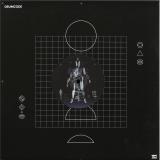
After a series of successful outings alongside sidekicks Ofofo and Zongamin, studio wizard MYTRON turns in his debut solo full-length for Multi Culti World Records. With contributions on Invisible Inc, Calypso, Bongo Joe, Kalahari Oyster Cult, LYO, Codek Records and Earthly Measures, Mytron has carved out a name for himself in a carefully-curated left-field quadrant of the indie-dance galaxy. Tuning his oscillators to myriad sounds — from dub and disco to krautrock — the London-based producer perhaps most notably channels the pristine compositional style of Kraftwerk. While most apparent in the use of vocoder, there’s a consistent efficiency of arrangement that recalls the man-machine in effervescent, idealistic fashion. Mytron manages to keep it simple, funky and musical — whimsical tunes that bop along with analog grit, wilderness, and wonk. There’s a warmth and wit that shine through every synth line, an understated confidence that speaks of years spent tangled in wires and waveforms, with an inclusive sonic eclecticism that flattens hierarchies between genres, geographies, and generations. Each influence is invited to the table, treated not as pastiche but invited to dine and dance in a space where kosmische dub disco and Afro rhythms can coexist without borders. The sleeve design echoes this philosophy: video-feedback patterns hinting at our modern screens, both portals and filters — coloured, distorted intermediaries through which we perceive the world. In the trippiest sense, the record is both reflection and refraction — a sonic mirror held up to an interconnected, glitchy reality. Tailored equally for DJ use and home-listening head trip, the album is meticulous, mischievous and merry.
BanBanTonTon review:
On Mytron’s debut long-player for Multi Culti groovy 21st Century leftfield house gear collides with Daniele Baldelli and Beppe Loda’s hugely influential `80s afro / cosmic. The 9 tracks are chunky, chugging and full of funky, funny noises. Old school B-lines mixing with eccentric electronics. Spinning, spiralling sounds.
Sugar is an electro-pop, vocoder confection, cut from the same sonic cloth as cult classics like Codek’s Tam Tam. Created from tough trap drums, splashing effects and a mutant Giorgio Moroder bass arpeggio. The title track, Propellor, pits Kraftwerk-esque hardware harmonised vocals against a bongo loop and a whistling hook. Playground has simian shrieks surround tumbling tom-toms. Highway Maintenance adds kosmische synths to a dance of woodblocks and buzzing bottom end. Keep On Dubbing is an organ-led, clip clopping percussive canter.
Tracks such as Speaker Can Talk, shot through with disco lasers blasts and recalling Curt Cress’ Dschung Tek, also lift the tempo up, but the bulk of the music here is a mid-tempo, techno drum circle. Squelchy sequences gurgling in and out of programmed percussion. On Quasar, spiky acid edges in and slowly takes over.
Key references that come to mind are Baldelli’s own turn-of-the-2000s Cosmic Sound Project productions, and Wolf Müller’s scene shaking sides on Themes For Great Cites, from around a decade later.
Search:side effects
Hot Creations new Vinyl Sampler featuring four of the Hottest recent release on Hot Creations.
The A Side features Kolter’s superb slice of old school House, ‘Red Alert’ a stomping powerhouse of a trackk, delivering relentless grooves and serious intensity. The A Side also features and Jamie Jones’s hugely popular rework of ‘XTC by HoneyLuv & Mason Maynard, a head bobbing hypnotic groover an exemplary, underground dubby take on the Original, intertwining layered effects and hypnotic atmospherics for the ultimate dancefloor weapon.
On the flip we have Lauren Lane’s monstrous Ryde Or Die Anthem, a inspired rework of DMX - Ruff Ryder's Anthem, a robust house cut that weaves hypnotic guitar strums, driving beats, and a mix of rolling low-ends and rapped vocals, coming together for a tripped-out ride with a deep bass and playful groove. Finally, we have Carloh’s ‘Quisiera Tenerte’ is a magnetic dancefloor filler, pulsing with a lively Latin groove and dripped in resonant basslines groove-led percussion, and hooky as hell vocal’s.
- A1: Init
- A2: Terminal Feeling
- A3: Higher Resolution
- A4: Daydream
- A5: Remission
- A6: Side Effects
- B1: Clarity
- B2: Breathe
- B3: Dawn
- B4: Kosmos
- B5: Inner_Mission Lp
- C1: Better Today Better Tomorrow
- C2: The Legend Of
- C3: Audio Machina
- C4:
- C5: Time
- C6: Missed Connections
- D1: <<
- D2: Television
- D3: String Theory
- D4: Touch
- D5: Hold For Applause
- D6: Trinitron
Kasablanca deliver their long awaited debut album ‘Higher Resolution’. Hitting milestone after milestone over the past five years, Kasablanca has quickly risen through the ranks of dance music must-see acts. Launching into the scene with their first singles in 2020 they struck gold early on with their hit collaboration ‘Run’ alongside Lane 8. With over 40M streams on the track since, the duo hasn’t looked back since. Hailing from Toronto, Canada the band has been explosive over the years since their first ‘Human Learning EP’ in 2020. Most widely known for their enthralling live performances, Kasablanca has played some of the world’s most well-known venues and festivals, like Printworks, Coachella, Red Rocks, Carnival in Brazil and The Gorge to name just a few. Their songs have also been heard worldwide across radio airwaves including features on BBC Radio 1 and Sirius XM (which brought in their #1 hit with ‘Run’) as well as thousands of spins from stations across North and South America, Europe and Asia.
Original Gravity Records announces a deadly new 7" from Boss Foundation, the fresh alias of producer and multi-instrumentalist Neil Anderson. Previously known as Woodfield Rd Allstars for his vintage Jamaican (predominantly instrumental) output, Anderson now moves forward under the sharper, more genre-focused name Boss Foundation—a banner that reflects the heavy, stripped-down, late-’60s Boss Reggae style at the core of his sound.
Side A: The Henchman
A tough, propulsive Boss Reggae instrumental driven by a fierce groove, The Henchman comes armed with vintage-style pistol-shot effects and a pair of unmistakable Dennis Alcapone vocal drops, giving the cut the swagger and tension of a lost 1969 sound-system special. Heavy, atmospheric, and tailor-made for selectors who favour harder-edged instrumentals.
Side B: Pressure Version
An organ-led version built on the riddim Anderson created for The Pioneers’ 2025 recording of “I Feel So Bad” (the Jackie Edwards classic). Featuring Abramo Riti on Hammond organ, Pressure Version offers a warm, melodic excursion that highlights the depth and movement of the rhythm—spacious, soulful, and crafted with the sensibilities of a classic late-’60s version cut.
Pressed in a strictly limited edition, this double-sided killer marks the official debut of Boss Foundation, signalling a powerful new chapter in Original Gravity’s ongoing commitment to era-authentic Jamaican sounds.
- A1: Init (2 58)
- A2: Terminal Feeling (1 35)
- A3: Higher Resolution (4 06)
- A4: Daydream (With Aname) (3 04)
- A5: Remission (With Lane 8) (4 00)
- B1: Side Effects (0 54)
- B2: Clarity (4 24)
- B3: Breathe (3 14)
- B4: Dawn (2 05)
- B5: Kosmos (1 50)
- B6: Inner Mission (4 54)
- C1: Better Today Better Tomorrow (4 42)
- C2: The Legend Of (2 27)
- C3: Audio Machina (1 33)
- C4: Ii (3 46)
- C5: Time (1 52)
- D1: Missed Connections (3 05)
- D2: Track 18 (0 49)
- D3: Television (4 04)
- D4: String Theory (2 28)
- D5: Touch (1 16)
- D6: Hold For Applause (2 00)
- D7: Trinitron (1 57)
dungeon acid review 25-09-03 by Joakim Cosmo A acid house style EP by swedish acid techno pioneer on swedens oldest underground label? Making a acid house EP in 2025 that makes a difference is a challenging task but this one just nails it. Here you see a softer and more musical side of Dungeon Acid in the shape of 5 dark yet hopeful Acid House tracks. Despite the classic form and ingredients it somehow avoids feeling retro but I guess this is what happens when you let a true grand master do it combined with a selector and label boss beyond the ordinary. It's like a paralell universe version of what Acid House could have become, and its a beautiful vision. A1-101-303 starts off with a dreamy, moody dubby and slightly romantic track that is just utterly beautiful in all its simplicity. The elegance and easy touch strikes me instantly. Nails the essence of the genre. One more like this and im buying it. The way A2-Unlock rewind builds up gives me goosebumps. So hypnotic and dark and experimental and the way it progresses to the ravey chord-break. The sounds and effects and details feel so alive and on the fly. In the record store this is where id already go "ok, im having this one" B1-Lonely Acid boy is yet another simple yet super atmospheric track. The contrasts between the rough robotic parts and the jazzy live solos ontop just gets to me. The roughness in the mix, that second beat with the hi-hats and extra bass, the fact that its so loud and sudden, is just great. And then we get to B2-Shnukki and all of a sudden, a romantic melodious electro track with a asian touch and acid bassline, that somehow goes well together with the other tracks. This one isnt my favourite or what I would buy the record for, but it would probably be the one I discover years later. Typical Borft Records to think that far ahead. The EP ends with B3-Chiliflex BB come on and this one starts with more late 80's ravey chords but the further you get into the track the more disharmonic, tweaky and punky it becomes. Things dont really fit together yet they do. To sum it up, these tracks are raw, funky, gutsy, streety, visionary, full of contrast and a bit challenging, just like acid house should be, but often isnt. I think Dungeon Acid and Borft Records nails it here. I'd buy doubles of this.
Lunfardo presents “Aurora" introducing the fourth conceptual album that deep dives into Uruguayan culture and misticism once again.
On March 3, 1976, Ángel María Tonna, owner of the ¨La Aurora¨ ranch in Paysandú, observed a strange flash of light near his shed. Upon approaching, he found a spaceship suspended 75 meters high, with an intense circular light that caused radiation effects later discovered in the ground. Simultaneously, a blackout occurred in the nearby cities of Paysandú and Salto, and several witnesses of lights crossing the sky were documented in the local press by major newspapers such as El Telegrafo.
Thereafter, Neil Armstrong, the first man to walk on the moon, visited Uruguay and the ranch several times, eight times to be exact. He shared photos of flying objects with Tonna and left a drawing in the house depicting space and "supreme beings." Despite UFO reports throughout Uruguay, ¨La Aurora¨ remains a mystical place. The truth is out there, or as it is sayed beneath there.
“Aurora EP¨ immerses us in two sides divided between Molen and Qasio. Side A invites us to explore the inexplicable in an abduction, a “close encounter” (Encuentro cercano) that transports us directly on a journey through outer space but also immerses us in the mysteries of "Ulimen." Side B offers a profound guide to worlds of "dark matter” (Materia Oscura), disconcerting presences, “orbs”(Orbes), and galaxies above our heads
How about a volley of hydraulic heaters from one of Denmark’s finest?
Already a man of many projects, both on the label side and in the studio, Natal Zaks has minted a brand-new alias… Enter Aquafaba, the ocean floor operator kicking it on a subaqueous tip.
Not many moving like this today. Properly submerged techno, masterful and ultra-essential by Aquafaba, self-monikered after the starchy, liquid byproduct of cooking chickpeas. Patrick Star would be proud for sure.
From Aarhus to the deepest ocean trenches in pursuit of that fathoms-below sound. Nods to the Midwest – chiefly mid-’90s Robert Hood and Cajmere’s ‘Percolator’ – felt in parts, but it’s also riddled with ultra-engrossing detail. Zaks goes heavy with the effects as tracky rollers are propelled to new mesmeric heights, even allowing for a moment of proper widescreen ascension.
Heads-down dynamixxx in full effect as we harness immense hydraulic power. Eschewing instant dancefloor gratification, Zaks emerges with tension and funk, like only the finest strains of techno can achieve.
After an initial European release in 1976 on the Isadora label Age Of Earth was re-issued on Virgin Records in Summer 1977 and fast became a beacon for electronic music and what was becoming known as ambient - Some cite its very title as helping introduce 'new age' music - This re-issue faithfully replicates the original 1977 Virgin Records release and is pressed on 180g heavyweight vinyl.
Guitarist and synthesiser player Manuel Göttsching formed Ashra after disbanding Ash Ra Tempel, the outfit he had led since 1971. Moving away from the space rock of his previous group, Ashra was a far more electronics-based project. Recorded in Berlin, between March and June 1976, the four pieces on the album represent the very best of what became known as Kosmiche: dreamily repetitive, glancing to the stars while keeping feet firmly on the ground.
New Age Of Earth is a record full of contrasts: the throbbing, techno-predicting Sunrain opens the album; with its waves and crickets sound effects, Ocean Of Tenderness pulses gently like a space-age early Fleetwood Mac; Deep Distance brings elements of surf music into glacial electronica. At 21 minutes long, Nightdust occupies all of the album's second side, a ruminative, slowly unfolding piece that, after its crescendo, gives way to Göttsching's impressively celestial electric guitar solo.
Leeds-based producer Nathan Alexander kicks off KUJE's debut release with PROFETIA EP, a bold four-tracker that drips personality and club-focused energy.
A rising name turning heads from the likes of Blasha & Allatt and NIX, Nathan brings his signature blend of cheeky rhythms and weighty low-end to the table. KUJE001 proudly marks the first chapter of the label's journey, dedicated to unearthing raw, unfiltered talent.
The A-side delivers serious impact: Bound is a propulsive dancefloor tool built for DJs, while Rabbit Hole hits hard with distorted effects and a Blawan-esque edge. On the flip, Tracer floats into spacey, bounding territory with a touch of psychedelic energy, already picking up early support. Closing the release is Technical Itch, a UK-rooted banger that ties together the artist's heritage with the label's forward-thinking intent.
Each track carries Nathan's unmistakable character-playful, punchy, and irresistibly 2-steppable. This is techno with a wink, made for sweat-soaked floors and heads-down moments alike.
A1 - Side Effect
Diving straight into the breakbeats for a classic atmospheric workout, Side Effect sees Aural Imbalance utilise the timeless Hot Pants break with a juddering, detailed beat pattern which sets the tone for a delightfully dreamlike track. Inspiring washes of floaty, subtle synthwork sail serenely across bassy seas - an inquisitive, tonally perfect 808 sub rising and falling below like distant waves, far away from land.
A2 - Blue Light
Panning, swooshing effects and filtered breaks introduce Blue Light, dancing gently before presenting us with an elegantly sombre synth that surrounds the ears like a calming comfort blanket. A clutch of discreet melodies develop throughout, hovering over the breaks like a living watercolour, begging you to shut the noise of the world out and allow this expertly crafted atmosphere to soothe your core.
AA1 - Cascade
Clouds of wistful pads wash over delicate hi hats as Aural Imbalance smoothly introduces Cascade, an immensely tight, break-driven track with a beat pattern to die for. The breaks are crisp and intense in the mix with swathes of inimitable ambience flowing as the 808 dutifully rumbles below. This track is a classic, impeccable fusion of atmospherics and breakbeats that make you move, and will fit any discerning DJ setlist.
AA2 - Different World
An inspired, melodic underwater kaleidoscopic introduction welcomes a fitting closing track to the EP, Different World. Conjuring images of playful marine life dancing in the filtered light, a serene landscape of sound rides analogue old-school breaks laden with dense kickdrums and excitable hats. The track develops with quiet intent, effects constantly added and retracted as the breaks flow, effortlessly.
Words by Chris Hayes (Spatial / Red Mist)
Det Gode Selskab presents its latest vinyl release, DGS10Y2. This exclusive drop continues the label's 10th-anniversary festivities, encapsulating the sound that has shaped Oslo’s underground house music scene. DGS10Y2 brings together a standout selection of tracks, each crafted to capture Det Gode Selskab's unique blend of dance floor energy and rich musical storytelling.
Label founder, Tod Louie opens Side A with Trixie, a playful, modular-heavy progression that shifts between intense stabs and melodic synths, embodying a “devil on the shoulder” vibe. Mike Shannon’s Data Missive follows, blending crunchy modular tones with evolving percussion. Side B features Since Day One by Ohm Hourani, adding hopeful synths and trippy vocals, while Karl Fraunhofer’s Protect The Party closes with a low-slung groove and distinctive vocal effects, telling a well-known late-night tale.
With 200 copies only, this limited edition release stands as a piece of the label’s history. Make sure and don’t sleep on this.
Charles D has got the touch right now. Following ‘The Bouncer’, his blistering collaboration with Space 92, he returns with another slice of peak-time perfection, ‘Control’. The New Yorker has become one of the most promising artists to emerge on Drumcode in recent times; from his terrific body of remixes, led by Adam Beyer & Bart Skils ‘Your Mind’ and Mike Macaluso’s ‘Final Chapter’, to cuts on the label’s A-Sides compilation (‘Traction’ and ‘Yantee’), right through to his breakthrough EP release in 2023 ‘Don’t Stop’. With a recent standout collab with Space 92 ‘The Bouncer’ under his belt, you can always rely on the artist to craft captivating, big-moment productions.
Host of the popular Synthesized Radio and soon to be launching his own label project KONKRTE, Charles D says the writing process for ‘Control’ came quickly, with the first ideas coming together on the plane home from an energising weekend of gigs. “I'm really inspired by a lot of the new music out there, and wanted to make something that felt peak time, but had some melodic techno and tech house flavor to it. I made several versions of it, but the very first version was the one that made the cut. When I heard Adam play it at Drumsheds and Resistance in Miami and saw the crowd’s reaction, I knew not to mess with it too much.” – Charles D ‘Control’ is a high-octane trip and deliciously dynamic. Framed by the producer’s trademark plump basslines and crisp percussion, it makes a statement via a torrent of head-scrambling riffs and effects.
- A1: Cloud Nine
- A2: I Heard It Through The Grapevine
- B1: Run Away Child, Running Wild
- C1: Love Is A Hurtin’ Thing
- C2: Hey Girl
- C3: Why Did She Have To Leave Me (Why Did She Have To Go)
- C4: I Need Your Lovin’
- D1: Don’t Let Him Take Your Love From Me
- D2: I Gotta Find A Way (To Get You Back)
- D3: Gonna Keep On Tryin’ Till I Win Your Love
The Temptations Get High on Psychedelic Soul: Cloud Nine Soars with Ambitious Arrangements and Production, Features Standout Vocal Performances and Instrumentation by the Funk Brothers
The Temptations’ Cloud Nine announced that Motown — and “The Sound of Young America” — would never be the same. Influenced by the emergence of cutting-edge rock and pop currents, as well as increasing sociopolitical turmoil, the album broke down barriers between rock, psychedelia, and soul while heralding the arrival of visionary arrangements and production techniques. Bookended by traditional R&B numbers, the 1969 record sent the Temptations in bold new directions and signaled the advent of psychedelic soul.
Sourced from the original master tapes, strictly limited to 3,000 numbered copies, pressed at Fidelity Record Pressing, and housed in a Stoughton gatefold jacket, Mobile Fidelity’s 180g 45PM 2LP set presents Cloud Nine in audiophile sound for the first time on a domestic pressing. This collectible reissue bestows Norman Whitfield’s extraordinary production with the grand-scale dynamics, natural tonality, expansive openness, and low-end weight it deserves. The timbre of each of the five members’ voices is readily identifiable — even within the group harmonies — bestowing a realism never experienced outside the recording studio.
Making its debut on 45RPM, the album further benefits from the wide groove space by playing with greater separation and more realistic presence than prior editions. Everything from the brassiness of the horns to the dry snap of the snare comes across with reference-grade clarity and positioning. And since Motown’s renowned Funk Brothers backing band plays on many of the cuts, you’ll want to savor every note. The imaging, soundstaging, and organic bloom-and-decay of the notes make that possible.
Amid Cloud Nine, the instrumentation and architecture stand out as much as any element. Never before had a Motown album contained such ambitious patterns and complex passages. Seemingly conscientious of the departure from their past methods, the Temptations and Whitfield bunched together the tracks that mark a deep dive into psychedelic territory and counterbalance them with seven sterling soul cuts that dovetail with Motown tradition drenched with heartfelt vocals, swelling strings, and finger-snapping beats.
On the original 33RPM release, traditional Motown soul — laden with heartfelt vocals, swelling strings, and finger-snapping beats — occupies Side Two. These songs reveal an ensemble still very much on top of delivering pristine pop-soul material graced with romantic sweetness, persuasive insistent, and soaring highs. Re-energized after the departure of lead singer David Ruffin, who was fired for a variety of reasons in June 1968, the Temptations seamlessly meld with his replacement, Dennis Edwards, on one melodic gem after another.
The collective tackles five songs co-written by the legendary Motown team of Barrett Strong and Whitfield. Not the least of which are the smooth, shuffling “Why Did She Have to Leave Me (Why Did She Have to Go)” and deceptively simple, horn-spiked “Gonna Keep on Tryin’ till I Win Your Love.” On these tracks, as well as on a lush rendition of the ballad “Love Is a Hurtin’ Thing” and pleading, tender send-up of the Gerry Goffin-Carole King classic “Hey Girl,” Edwards and Paul Williams take turns on the lead with the estimable Eddie Kendricks, Melvin Franklin, and Otis Williams providing backing support.
All five vocalists trade-off leads on the simmering title track, a groundbreaking composition shot through with wah-wah-pedal effects, liquid funk, deep bass lines, Cuban percussion, saturated reverb, and gang choruses. Whitfield mines each member’s natural vocal range with spectacular results, keeps time with cymbals, and channels both the heated temperatures and escapist desires of a society embroiled in war, conflict, and experimental drugs.
Amazingly, the Temptations top themselves on the similarly revealing “Run Away Child, Running Wild.” Nearly 10 minutes in length, the song explodes R&B parameters and harbors a cinematic scope. Urgent pianos, distorted guitars, stripped-down percussion, steamy Hammond organs, minimal bass motifs, five distinct voices narrating the tale of a boy who fled home and now finds himself amid the scary, unforgiving external world: They combine to give the urgent tune a walls-closing-in atmosphere where fear and desperation reign. Bolstered by an extended instrumental section that precedes a climactic return of the singers’ voices, “Run Away Child, Running Wild” equaled the success of the record’s title track, with both reaching No. 6 on the pop charts.
raum…musik welcomes Italian producer Santos for his debut on the label with Human Factor EP — a versatile four-tracker blending tech house, deep house, minimal, and acid, crafted with the finesse of someone two decades deep in the game.
The EP opens with “Some We Are,” a deep acid house track driven by a steady groove, bubbling 303s, and teasing vocal snippets. Atmospheric pads and warm chords emerge as the track evolves, balancing dancefloor function with rich detail.
“Paragonal” shifts gears with sampled breaks and emotional synth stabs layered over a 4x4 pulse. Hazy vocals and spacey effects give it a bright, euphoric edge while keeping it floor-ready.
On the B-side, “Done Everyday” leans into swing-heavy deep house territory. Shuffled hats, micro-programmed percussion, and a solid sub-bass glue everything together — minimal house with punch and precision.
“Kink In Me” closes the record with a more experimental mood. Sparse and hypnotic at first, it patiently unfolds into a deep, quirky, and rhythmically rich groover of jazzy chords and dubby textures.
With Human Factor EP, Santos delivers a polished and dynamic record that speaks to seasoned diggers and fast-moving dance floors alike. raum…musik continues its tradition of top-shelf, club-focused curation with this timeless release.
The writer Max Sebald often pondered over the nature of human memory, specifically, how our thoughts and desires - and their results - overlap and mutate over time. In A Place in the Country, he writes of the significance of what see as “similarities, overlaps and coincidences”. Are they the “delusions” of the self and senses, or manifestations of “an order underlying the chaos of human relationships, ... which lies beyond our comprehension”?
Song of the Night Mists, the new album by post-classical composer Stefan Wesołowski, often feels it draws on Sebald’s premise.
On a simpler plane, the one where the market dictates the neatly ordered information we consume, Song of the Night Mists can be described thus: recorded in the main by Stefan Wesołowski in Gdańsk, both in his studio and in Saint Nicholas' Basilica, the album incorporates acoustic instruments - piano, violin, double bass - and classic synthesizers such as the Roland Jupiter-8, the Soviet Polivoks. A Roland Space Echo RE-150 tape delay was also pressed into service as an instrument. We also hear the basillica’s organ and field recordings from the Tatra Mountains. Other musicians were Maja Miro, who played the flute parts on ‘Glacial Troughs’ and brother Piotr Wesołowski, who played the organ on ‘Wilhelm Tombeau’. Sound engineer was Marcin Nenko, who was also on hand to record the basilica organ parts. The album was mixed in New York by Al Carlson (Oneohtrix Point Never, Jessica Pratt, Zola Jesus, Lady Gaga, and Liturgy) and Rafael Anton Irisarri handled the mastering.
Ostensibly, Song of the Night Mists is the last in a trilogy, following on from albums Liebestod (2013) and Rite of the End (2017). All three deal with existential matters such as love, death, decay and “an ultimate end”; apocalyptic and Promethean in spirit, and betraying very human conceits. The Sebaldian nature of the new record starts to make itself felt when Wesołowski talks of how he used sampling. One element is unexpected, that of sampling himself: “I go back to dozens of my own unused sketches and recordings, treating them as raw material to cut, slow down, reverse, and transform in every possible way.” Memory as sound, to be reemployed by the listener through their own imaginings.
Another set of samples made by Wesołowski plays another role. These are field recordings, originally created for an audio illustration of the formation of the Tatra Mountains, and used in a film by sound designer Michał Fojcik. Wesołowski: “You can hear cracking ice, streams, footsteps in the snow and the wind, and a real avalanche, recorded from the inside.” The “Tatra connection” on the album is also found in samples referencing composer Karol Szymanowski. The album’s title alludes to a poem about the mountains by Polish poet, Kazimierz Przerwa-Tetmajer.
Wesołowski’s Tatra recordings are “about a world without humans - about the fact that the world existed, was beautiful, and had meaning long before people arrived, and for the vast majority of its history, it was a place without us.” Wesołowski, using one iteration of the natural world, plays out in sound Sebald’s idea of another order, underlying the chaos of human relationships lying beyond human comprehension.
These feelings play themselves out on the five album tracks. Sonorous and rich, they illustrate tectonic shifts we have no control over. Wesołowski hints that the overall sound is a “meditation on the metaphysics of the non-human set against the spirituality that human presence has brought into it.” In that light, the opening number, ‘Core’, with its slow build, and crackling and straining sound effects, create an effect of the earth groaning into life in a creation myth. Once the piano part raps out a simple melody and modulated tonguing trumpet samples add to the overall atmosphere, the listener can certainly find a cue in the “spiritual”, or “human” side of the story. Human versus nature: from the strains and harmonic muscle stretches of the second number, ‘Glacial Troughs’, through to the powerful and filmic ‘Stalagmite’ and heart-on-sleeve romance expressed in closer, ‘Wilhelm Tombeau’, we listeners are cast as Friedrich’s wanderer, looking out over a landscape that will appear only if we engage with it.
Formations of melody appear incrementally, almost appearing by chance - like hidden footings in the rock shelves to give us something to grasp onto. Rhythms are used sparsely: the prolonged percussive taps on ‘Glacial Troughs’ are an anomaly and maybe there to give pace to the album to come; essentially to keep the listener strapped in. Elsewhere, percussion is used as an aid to mood, the two thudding, timpani-style passages on ‘Peak’ there to offset the short, beautiful, kosmische passage that splits them.
Elements of the borderline religious spirit that drove German electronic music in the late 1960s and 1970s also find a place on Song of the Night Mists. The swells and recessions of the organ find their emotional climax on ‘Wilhelm Tombeau’, a track which summons up echoes of the “mountain magic” vistas created by Popol Vuh or Tangerine Dream, especially with the slightly atonal wobble of the Mellotron that counters it.
This is a dramatic album, but it does feel a strangely short, or curtailed listen on ending, evoking the feeling one gets when waking from a dream, and, for all its incipient grandeur, a track like ‘Stalagmite’, for instance, ends on a minor note. Wesołowski admits that Song of the Night Mists is born of the all too human process of temptation, doubt and recalibration - Sebaldian overlaps and coincidences forming something that must live another life, away from its creator. In Wesołowski’s words, the album is “a newborn foal must stand up and walk right after birth.” Now it is yours to ponder.
Joe Bataan's extensive discography was expanded in 2022 with the release of some old recordings from the King of Latin Soul that had never been previously published. After the success of his album "Riot!" (1968), Bataan had easy access to a studio whenever inspiration struck to record a new song sketch or even a complete track. Sometimes, he would finish the recording entirely and offer it in its final version to Fania for release. This usually worked, although on some occasions, the song was rejected. In the case of 'Drug Story,' the track was recorded without a clear final purpose, even though Bataan hoped it would become part of an album. When the Fania executives heard the result, they immediately rejected it, thinking it promoted drug use. The tapes were filed away and lost in oblivion until they ended up in a thrift store in New York. From there, they were rescued by a Latin music specialist and later sold, eventually making their way to the Vampisoul archives. The song was finally released in its entirety in 2022 on the LP "Drug Story" by Now Again. It features a long, slow vocal intro that evolves into a more uptempo track with two very distinct parts, to the point that it almost feels like two different songs. It transports us to the best moment of Joe Bataan's career, with all of his classic ingredients, delivering a track as good as his most famous songs. Bataan himself takes on the lead vocals and piano, Bobby Rodríguez handles the flute, sax, and bass, Pete 'Choki' Quintero plays the drums, and William Howes Jr. plays the electric guitar with wah-wah effects. Vampisoul strongly believes that the song deserved to be released as a single as well, and that its structure was perfect for each side to have a separate identity. So here it is, for the first time on a 45, 'Drug Story,', parts one & two, the long lost track by Joe Bataan. Pure Latin soul, recorded at the peak of the artist's career!
Apersonal Music, the Barcelona-based imprint known for its sun-drenched blend of house and disco since 2010, proudly presents the new EP by one of its longest-standing artists: Cisco Cisco. Portuguese duo Cisco Cisco are renowned for crafting emotional and uplifting house and disco, filled with hypnotic sampling and shimmering effects. Their sound has become a signature of Apersonal’s catalog, and The Heat EP is a glowing continuation of this.
On the A side “Why Can’t I Be You?” brings classic disco energy to the table — lush, melodic, and full of that heartfelt groove Cisco Cisco do so well. Plus returning to remix duties alongside Cisco Cisco is Ron Basejam, whose unmatched ability to transform disco originals into
dancefloor monsters shines once again. His remix of “Why Can’t I Be You?” stretches nearly eight minutes, slowly building and wrapping the listener in a deep, infectious groove.
On the B side “The Heat” is a bold detour into early-2000s French electro house, evoking the raw drive of the 2000s. “Under the Bridge” channels the spirit of a Generation X Parisian house party, with filtered synths and punchy basslines reminiscent of Daft Punk’s earliest work. And rounding out the EP Rayko delivers on his finest style, bringing a darker, late-night vibe to the release. His remix of “The Heat” is a driving, immersive journey blending electro and techno influences tailored for the deeper hours on the floor.
- A1: Delenz & Zeitstill – Place To Be
- B1: Superpitcher – Dream B
- C1: Patrice Bäumel – Nat
- D1: Sawlin – Der Jasager
- E1: Dc Salas – Escapism
- F1: Tal Fussman – Eyes
- G1: Ken Ishii & Yuada – Split Second
- H1: Marcel Fengler – Aura
- I1: Impérieux – Kala
- J1: Joe Metzenmacher – Da Freak
- K1: Joseph Capriati – Cosmopop
- L1: Matthias Schildger – Distorter
Limited Vinyl Box Set including 6x olive 12” vinyl & download code
Cocoon Recordings presents: Cocoon Compilation V
Back for the summer season, Cocoon Recordings proudly unveils the next chapter in its iconic compilation series. With its 22nd edition, Cocoon Compilation V once again bridges past and future, showcasing the essence of electronic music’s constant evolution. True to the spirit of the label, this handpicked collection delivers a diverse, emotional, and forward-thinking selection that drifts through shimmering currents, pulsating machinery, and moments of pure release.
Delenz & Zeitstill set the tone with “Place To Be”, a smooth and warm opener that invites the listener into a meditative microcosm. What starts as dreamy minimalism steadily unfolds into deep, shimmering depth. A sublime invitation to get lost in sound. Superpitcher takes us further into the mist with “Dream B”, an ethereal and cinematic dreamscape that floats between melancholy and magic. Its stretched textures and hypnotic pacing form a gentle passage into inner space.
The energy intensifies with Patrice Bäumel’s “Nat”, a sophisticated tension-builder with a subtle pulse and haunting atmospheres. Sound waves that breathe, evolve, and subtly command movement. Sawlin switches gears with “Der Jasager”, a deep technoid beast that hits with low-end pressure, modulated percussions, and gritty textures and spooky features. Raw, physical, and unrelenting.
A bright contrast comes from DC Salas and his track “Escapism.” Psychedelic, synth-heavy, and effortlessly groovy, it channels the playful side of electronic storytelling. It channels a trancy 90s flair with its vibrant energy, brilliant use of choir bits, and irresistible vibe that transports you back to a golden era. With Tal Fussman’s “Eyes”, we’re taken into euphoric territory. This stomper is a conversation between piano and strings, rising above crisp grooves, weaving emotion and momentum with finesse.
On the second half of the journey, legendary Ken Ishii teams up with Yuada to deliver “Split Second,” a bold, wild and crazy techno excursion full of mechanical grace and Japanese precision. An ode to organized chaos. Marcel Fengler’s “Aura” follows, powerful and deep, pushing air like an engine through tunnels of tension and light. The blend of rhythm and sentiments is a masterclass in functional elegance and states of mind.
Impérieux brings us “Kala,” a track both twisted and beautiful. Its detuned hypnotic melodies and skewed harmonics are unsettling in the best way while the unconventional rhythms cloak the entire track in a mysterious aura. It creaks and twists toward transcendence, underscored by primordial flute sounds. A fractured lullaby for the club. Joe Metzenmacher injects wildness and attitude into the mix with “Da Freak.” Fuzzy, distorted synths collide with a funky bassline, sharp guitar stabs, and mad bleep effects, bringing the raw groove and dancefloor chaos of a bygone funk era into a futuristic setting.
Joseph Capriati debuts on Cocoon with “Cosmopop” and surprises with an unexpected stylistic shift. Capriati explores a more melodic, emotionally driven sound. Subtle harmonies meet a warm, rolling groove. It’s a bold and personal statement, showing a new side of an artist who continues to evolve beyond expectations. To close, Matthias Schildger offers “Distorter,” a raw and emotional cut that leaves room to breathe while keeping the mind spinning. It begins with beautiful pads, before distorted kicks drop in, yet the track retains a certain tenderness, like the feeling of sitting at a tranquil, untouched nature spot, surrounded by the beauty of the world. A grand finale to a compilation that refuses to settle.
From sunrise moments to peak-time madness, Cocoon Compilation V captures the full spectrum of what dance music can be. Transcendent, visceral and endlessly evolving. This isn’t just a collection of tracks. It’s a curated experience for the body, the mind and the soul.