Featuring: Coby Sey, Mica Levi and Mark Pell (Good Sad Happy Bad / Micachu & The Shapes)
‘Affectionately’ is the debut album by London based songwriter and musician Raisa K. With self produced instrumentals supporting Raisa’s signature vocal performance, the record delves into the intricate emotional cycles of relationships with heartfelt sincerity. Melodies appear simple and direct, while the themes explored present a great level of complexity. Whether about trust, kindness, doubt, frustration, annoyance, regret, honesty, insecurity, loneliness or friendship, each of the album’s twelve songs lie somewhere in between a diary and a letter.‘Affectionately’ is almost entirely produced on Raisa’s laptop and written in her home in London, as well as finding small pockets of time on trains and buses, during breaks at work, during the kids' nap-times, at the playground, in the park. The production's backbone is formed by a synthesiser sample, weaving together a range of recordings and sonic textures.
This creates a consistent expression where diverse electronic styles merge with Raisa's crisp, candid vocals in unique and personal songwriting. Some listeners might recognise Raisa’s voice and musical language from records by the band Good Sad Happy Bad, which she is a part of. While ‘Affectionately’ certainly moves in its own space, a kinship with fellow London artists is also present, as the record includes a feature with Coby Sey as well as instrumental contributions from long-time collaborators Marc Pell and Mica Levi.
Поиск:sign of the times
Все
*all original recordings from mid 90s Estonian released cassettes. Fascinating interpretations of the UK breakbeat and Jungle sounds recorded when the world felt like a much bigger place.
Since hearing the first breakbeats via the Finnish radio nightly shows introducing the burgeoning UK scene, Virko Veskoja, later head figure of Lu:k, was completely swept away by this new technological language that sounded like machines trying to initiate contact with people. The fluttering rhythm patterns, strings and vocal lines haunting the pathways of the infinite network. Like hip hop taken over by Skynet.
Reimagining it all in mid-90’s Estonia, a fresh and dirt-poor republic newly welcomed to the family of sovereign states on the outskirts of Eastern Europe, was challenging, to say the least. Finally, with the help of entry level music programs, custom-made soundcards and self-built computers by the other Lu:k-head Tõnis Valk, Lu:k took the first tentative steps in the history of Estonian jungle.
Eight Lu:k cuts have been compiled into a handy selection, a true sign of the times when uncertainty came with certain hope and optimism – new territories to chart, new frontiers to conquer. A time of innocence captured so sublimely in Lu:k’s music.
The compilation starts with menacing orchestration that sounds like the birth of a civilization, like in „2001: A Space Odyssey“, or the arrival of Godzilla, only to give way to sweeeet strings and the inimitable Minnie Riperton in “Lovin U”, combining all the essential elements of Lu:k in a track that has remained uncorroded by time since its inception in 1994.
The following “Demo 3” is its antithesis – fast and nervous, a harbinger of the darker days of neurofunk and techstep ahead. More in line with the social realities of the time, when something (or someone) could materialise out of thin air and attack you just as violently as those beats here.
“La:v” was Lu:k’s signature track throughout their brief career that went on only for a few years, 1994-1997. Lifted to heaven’s by Petula Clarks’s wonderful vocals, it perfectly captures the pure essence of creation. “I made it in my bedroom. Something like that just came out. Sorry”, says Virko apologetically.
From the themes of love we are led towards darker scenarios again with “Drunk-Drive”, a more vengeful cut reminiscent of early Ram Records’ nocturnal dangers, skylines shaped by basslines. Previously only available on the uber-rare “Raadiomaja valvelauas” CD compilation from 2005.
“In the Limelight” is lifted from their second album “Dreams in Drums” from 1996 (only released on cassette), and if it’s meant to address their new-found underground celebrity status in Estonia, there is surprisingly little elation here – the track rather consists of introspective strings and beats that sound almost melancholic.
Out of the remaining three tracks, “Proov2mix” and “Kadunud leitud” are the result of a treasure hunt amongst the old, obsolete harddrives – little nuggets that were condemned to obscurity until now. Between them, another vocal-led cut “010”, a non-album track only featured on two comps until now, is a strong reminder of Lu:k’s prodigious ability to handle vocal lines and morph them together with their own weaving synthetic melodies, strong pads and commanding beats.
Lu:k’s music has been largely unavailable for the better part of this century, with original tapes and CD’s changing hands for a small fortune. This vinyl release couldn’t come at a better time, bringing a seminal chapter of Estonian dance music’s mythical history to light again, both for the old-school acolytes and new converts.
All music by Virko Veskoja
Private View is distinctly Blancmange while also expanding into new sonic terrain. There’s a deft marriage of futuristic electronic sounds, Neil Arthur’s unmistakable vocal hooks, and songs veer from buoyant and joyful to dark and brooding. Private View will be released on London Records almost exactly 40 years to the day since the label released Blancmange’s debut album Happy Families. This neat full circle of Blancmange re-signing to the same label that ignited things all those years ago is also reflected in the album itself, being the perfect crystallisation of four decades of creativity.
On Private View Neil returns with key collaborator Benge (Wrangler, John Foxx, John Grant), and David Rhodes (Kate Bush, Peter Gabriel, Scott Walker) also returns as the guitarist, having previously performed with the band as early as 1982’s Happy Families (as well as several other Blancmange albums).
Private View is a record that manages to capture an artist who is potently in the moment when it comes to creating new work, while also being able to draw on 40 years’ worth of knowledge, experience, and built-in intuition. “I'm really lucky to be able make the music completely on my own terms,” Arthur says. “Being able to just continue being creative...that's when I'm happiest.” As he said before: “within myself there are no limits.”
Blancmange is also reflected in the ongoing influence the music has on younger generations of artists and fans over the years. Contemporary electronic producers like Honey Dijon and Roman Flügel have paid tribute with remixes, Moby once called Blancmange “probably the most underrated electronic act of all time.”; while John Grant continues to profess his love for Arthur’s music, old and new, and has invited Blancmange to perform as part of Grace Jones’ Meltdown festival.
Presenting a massive EP from a rising talent in our thriving scene: Mtty makes a powerful debut on ABS with three original club-ready weapons, tried and tested on the dance floor.
Adding to the excitement, the highly acclaimed Tiago Walter delivers a fresh twist on Mtty’s A1 track, The Jammed Elevator, with a high-energy UKG-inspired remix.
Sydney-based Mtty brings his distinct sound to this release, cementing his promise to be at the very core of our wonderful music scene.
At Addition by Subtraction, our mission remains unwavering: to spotlight the finest artists from across the globe. While our signature sound continues to evolve with the times, one thing stays constant - our relentless passion for discovering and supporting groundbreaking talent.
Marie-Pierre Rixain and David Fenech form an unexpected and captivating duo, pushing the boundaries of alternative music. Together, they embark on an unclassifiable sonic journey, blending industrial downtempo, steady kicks, cold percussion, field recordings, and electric guitar feedback. Their music, often dark, carries flashes of warmth inspired by British dub—like an imaginary collaboration between The Bug and This Heat. At times, it echoes the world of La Perversita by Hector Zazou & Co.
Their debut album, Insane Ghosts, due out in spring 2025 on the Parisian label Hublotone, was recorded in 2024 in the intimate privacy of the bedroom. Mixed by David Fenech, it also benefits from the participation of Alexandre Berly (La Mverte) on the track ‘Toi en Moi’, adding a sub and experimental touch. The mastering was handled by the legendary Noel Summerville, whose sonic signature graces iconic albums by The Clash, My Bloody Valentine, Kraftwerk, Aphex Twin, and Nick Cave and the Bad Seeds.
The album cover features a striking work by French photographer and filmmaker Antoine d’Agata (Magnum Photos). His poetic and abstract image adds another layer to Insane Ghosts, a project already shaping up to be a must-have for fans of introspective, dark and cold music. Like if Lost in Highway from David Lynch had a new soundtrack.
This album represents a significant evolution in the musical journey of Nick Viola, transitioning from the powernoise and heavy industrial sounds of his previous project, Fractured Transmission, into a techno-framed landscape. Spanning seven tracks, including remixes, the album features recurring sounds sourced from machinery, field recordings, and personal travels. These elements create an uneasy atmosphere oscillating between slight discomfort and absolute dread, offering a dystopian sonic experience fitting for the times we unfortunately live in.
The opening track, ‘A Ghost in Your World,’ sets an intense tone with distorted atmospheres and ‘It’s Still Real’ follows with a relentless pulse and swirling mechanical sounds, seamlessly flowing into Kenny Campbell’s remix of ‘A Ghost In Your World’, providing a cathartic release for the A side.
‘Drop Out,’ guides listeners on a psychedelic journey into the B side of the record, while ‘Negative Nancy’ ramps up the energy with an aggressive industrial techno assault offering an antagonistic jab at the current trend within the genre. Substencia’s remix of “Drop Out” delves deeper into psychedelia, offering an immersive trance-like experience relieving the tension of “Negative Nancy”.
The digital-only bonus track, ‘Tensor,’ maintains the album’s heavy industrial techno feel of a well-oiled machine, ready to pummel any underground sound system.
About Artist:
Nick Viola is a versatile electronic music producer known for his distinctive blend of industrial and techno music, drawing inspiration from a wide range of influences spanning from the gritty sounds of powernoise to the pulsating energy of techno.
Born and raised in Los Angeles, Nick began his musical journey immersed in the industrial club scene, where he cut his teeth performing at the legendary Los Angeles industrial club Das Bunker. Here, he honed his craft and developed a deep appreciation for the raw, aggressive textures of industrial music. As the driving force behind the project Fractured Transmission, he made a name for himself with his uncompromising approach to power and rhythmic noise, earning recognition for his intense live performances and relentless sonic assaults.
However, Nick was always drawn to the rhythms and sounds of techno, and in a bold move, he embarked on a new chapter in his musical career, transitioning from the abrasive sounds and rhythms of powernoise to recontextualizing those sounds into a more techno landscape. With this album, “A Ghost In your World”, he showcases his evolution as an artist, seamlessly blending the industrial aesthetics of his past with the pulsating energy and frame of techno.
Spanning six tracks, “A Ghost In Your World” is a sonic journey through dark, dystopian landscapes and pulsating dance floors, where distorted atmospheres and mechanical rhythms collide to create a mesmerizing and immersive experience. From the haunting textures of “A Ghost in Your World” to the relentless energy of “Negative Nancy,” each track offers a unique glimpse into Nick’s sonic universe, inviting listeners to explore new depths with each listen.
Written + Produced by: Nick Viola
Mastered by: Tim Vitek
Artwork: Permian Designs
Design by: Elaine Stam
A Strangely Isolated Place presents a long-lost collaboration between Polish artists Olga Wojciechowska and Tomasz Walkiewicz as Monoparts—a partnership formed many years ago that resulted in an album once destined to remain unreleased.
Olga Wojciechowska, known for her modern-classical masterpieces such as Infinite Distances (2019) and Unseen Traces (2020), as well as her 2022 collaboration with Scanner, breaks all known expectations with Soothsayers. In a dramatic departure, Olga unveils a new and unexpected side, debuting her haunting vocals—a delicate, spellbinding performance that recalls the golden era of trip-hop, and comparisons to the sounds pioneered by Tricky, Massive Attack, and Martina Topley-Bird.
With Tomasz adding layers of depth through intricate beats and electronics, Olga’s voice becomes the emotional core of the record, conjuring an intimate and nostalgic atmosphere.
"This album is like becoming one with the earth itself—feeling the rawness of the wood, tasting the earth in your mouth, and sensing the presence of ancient spirits. The music carries a deep, primal energy, like being part of the forest, with creatures watching you from the shadows." - Olga Wojciechowska
To complete the journey, ASC lends his signature touch with a stunning drum’n’bass reinterpretation, amplifying the album’s nostalgic essence. Soothsayers emerges as a spellbinding ode to times gone by, in more ways than one.
Featuring artwork by Moon Patrol, with mastering and lacquer by Andreas LUPO Lubich.
Last May, Hard Times captivated us with The Lost D.A.T.S (Part One)—a remarkable collection of unreleased and freshly unearthed gems from the vaults of NYC legend DJ Romain. But the story didn’t end there. To our surprise and delight, Romain had delivered an even larger treasure trove of beats—too many to reveal all at once.
Now, Hard Times is proud to present the next chapter: DJ Romain – The Lost D.A.T.S (Part Two).
"1996-97? Yeah, that’s when New York was still NEW YORK!
That was around the time we really started to get hold of exotic herbs. Copper Haze, hydroponic! The vibes in the studio were always lovely. I had hair at the time! Dread-Locs down to my shoulders... I was still rockin’ the Wallabees, or British Walkers as we called them - representing for Brooklyn and my West Indian roots!
There was no social media, no supervision, nobody all up in our business… It was classic "mind your own business" NYC Vibes! I was DJing at a lot of the hot clubs and THE hottest afterhours in the city. There were nights when I saw Micheal Douglas roll into the afters with Grace Jones - they were there to party and unwind and I was there dropping the dope tracks for the people.
When it was studio time, with my homie Matt Echols...I was probably setting things off with some quality herbage, a big ass bag of Funyuns and my trusty SP-1200, lol. I had picked up some tips and tricks from Todd Terry and by '96-'97 I was a Shaolin with it myself! This was around the time tracks like "Flowers" and "Only Love Can Break Your Heart (Dub)" were tearing up the clubs. I wanted to be able to get my ideas out with no problem, and by then I had a lot of confidence...
Being able to Dj in some of the hottest NY hot spots at the time, I was able to really see what worked and what didn't on the dancefloor. The best House Dancers from around the world and around the Tri-State area would be at my jams. I'm talking Ejoe, Voodoo Ray, maybe kids from the Mop-Top Crew... I was definitely taking note of the kind of rhythms and sounds that would make them go crazy on the dancefloor!
And that's how we went about it - I laid down the rhythms that made it happen in my sets and translated the vibes I was picking up from NYC itself. Matt threw down musically and we were just being as creative and inventive as possible! But we always kept in mind that our job was to make the people on the dancefloor jump!
A lot of the jams from those days got signed to various record labels, we dropped a lot of them on our own label...and some of them ended up in the archives - until now!"
- A1: Street Level Entrance (1:52)
- A2: Get At Me (4:08)
- A3: Diggin’ U Out (4:48)
- A4: Safe + Sound (4:49)
- B1: Somethin’ 4 Tha Mood (5:55)
- B2: Don’t You Eat It! (1:08)
- B3: Can I Eat It? (4:59)
- B4: It’z Your Fantasy (4:23)
- C1: Tha Ho In You (4:45)
- C2: Dollaz + Sense (5:53)
- C3: Let You Havit (3:40)
- C4: Summer Breeze (4:34)
- D1: Quik’s Groove Iii (2:37)
- D2: Sucka Free (2:11)
- D3: Keep Tha “P” In It (5:25)
- D4: Hooray 4 Tha Funk (2:11)
- D5: Tanqueray (4:19)
2025 Repress
DJ Quik is a giant of West Coast hip-hop. With 1995’s Safe + Sound, he scaled new levels of musical magnificence with his signature new age P-Funk/laconic G-Funk. A quintessential, sun-scorched LA album, this is pretty much essential. Typical for mid-90s albums the original vinyl copies are now rare so here’s the Be With re-issue, complete with “Tanqueray”, the hidden track from the original CD release.
A preternaturally gifted producer/rapper, DJ Quik has produced scores of LA gangsta rap classics. He’s released platinum and gold records of his own, as well as helped craft them for the likes of Tupac, Snoop Dogg, and Dr Dre. Quik has always been quirkier and more interesting than his gangsta rap peers, both musically and lyrically. An old-school funk producer at heart, he’s also incredibly nice on the mic. His raps often deal in boasts, jokes and good times but also cover his beefs, his trials and his trauma. Partying and pain, all mixed up. DJing and producing hype beat tapes from age 14, Quik’s tracks blended the languid funk and rubbery synths of Zapp and George Clinton with a gangsta aesthetic, creating a more danceable foil to Compton’s more typical nihilistic hedonism. Ultimately, his records sound custom engineered to drift out over sun-soaked barbecues.
By the time of his third album DJ Quik was a household name on the West Coast - California’s premier rapper/producer not named Andre Young. Released on Profile in 1995, Safe + Sound was certified gold. Less reliant on samples and more focused on live instruments, it elevated him from producer to fully-fledged composer. This sound — the quick, winding basslines, tinny high hats, smooth instrumental solos, soulful pipes, and Roger Troutman’s talkbox — defined him. This is an album of full-blown masterpieces. Rich soundscapes and masterfully arranged orchestrations with dense layers of sounds, intricate rhythms, and well-balanced songwriting.
The first track proper, “Get At Me” samples Cameo whilst Quik takes aim at the Judases in his life, the horn-laced chorus providing a triumphant feel. On the horizontal “Diggin’ U Out”, the soulful electric piano of Warryn Campbell lays a relaxed groove for Quik to talk over about one of his favourite topics: sex. Title track “Safe + Sound” chronicles Quik’s formative years over a slick instrumental. The moody bass locks a laidback infectious groove, the hook is catchy and Quik’s delivery is in fine form. On the uber-chilled “Somethin’ 4 Tha Mood”, Quik cooks up a breezy, feel good track of sparkly keyboards, syncopated claps, shuffling hi-hats, woozy synths and a floating two-minute flute solo courtesy of Robert “Fonksta” Bacon. Analysing the highs and lows of an average day in the hood, it echoes Cube’s “It Was a Good Day”.
“It’z Your Fantasy” is a silky smooth soundtrack to Quik’s detailed retelling of a sexcapade with a young lady and whilst “Tha Ho In You” is musically perfect for that midsummer family BBQ, its lyrical content is unsurprisingly decidedly less family-friendly. A real highlight, the infamous “Dollaz + Sense” is one of the most ruthless diss tracks of all time. The brutal lyrics ride a laidback West Coast beat, flipping a sample from Young & Company’s “I Like (What You’re Doing To Me)” as Quik fires lyrical shots at his arch Compton nemesis, MC Eiht. On the loping, hazy “Let You Havit”, Quik is again in gangsta mode, with more bars of barbs aimed at Eiht, rhyming over sun-kissed synthy-rollerskate funk.
Some of the finest tracks on Safe + Sound are those designed to de-stress. The evocative “Summer Breeze” is a classic warm-weather jam, anchored by a twangy funk guitar, breezy string arrangement, and a soulful hook delivered by Dionne Knighton. Quik’s nostalgic lyrics are not far from DJ Jazzy Jeff & The Fresh Prince’s “Summertime”, reminiscing over barbecues at the park, young love, and the brevity of halcyon youth. The relaxed and jazzy “Quik’s Groove III” is another highlight, as bass, guitar, piano and flute combine to create a smooth, soulful instrumental.
The swaggering “Shack Up”-sampling “Sucka Free” features a cameo from Playa Hamm, all funky braggadocio and over much too quikly (pun thoroughly intended). The jazz-flavoured “Keep Tha ‘P’ In It”, again featuring Playa Hamm but this time extending the cameo invitations to Hi-C, 2nd II None and Kam, is pure laidback P-Funk. The deep bass and industrial drums make sure the groove hits hard.
“Tanqueray” was originally a hidden track on the CD version of the album, but it’s too good to hide. This wild party samples Brass Construction’s gigantic “Get Up To Get Down” and soars in its drunk-ebullience. An apt way to close this party-driven set.
This 2022 Be With double LP re-issue has been mastered for vinyl by Simon Francis, cut by Pete Norman and pressed at Record Industry. Unusual for the time, Safe + Sound was originally pressed as a double, so all that was missing was the CD’s hidden bonus track “Tanqueray”, so we’ve fixed that. The original vinyl release never got a picture sleeve, so we’ve recreated the original’s promo-style silver-sticker and plain black jacket. A subtle cover for a wonderfully unsubtle record.
‘The Night of the Stars’ is the fantastic sixth album from Swedish dream pop favorites AZURE BLUE. The album pushes the quality to its peak, exhibiting a richer, clearer, and more luxurious approach to the patented AZURE BLUE sound across ten enticing tracks. Three of the songs generated significant buzz when released as singles. Album opener ‘Rise’ is a shimmering track with a rushing drumbeat topped by luxurious layers of analog synths and a Peter Hook-like bass. The song is a dream pop anthem featuring a timeless chorus and vocal harmonies from AZURE BLUE’s long time companion The Land Below.
The crystal-clear topline in ‘Three Times The Drama’ shines over electric guitars and analog synths to create an immediate pop song with great summer hit potential. The song is also a bittersweet dedication to Tobias Isaksson’s mother, who recently passed away, and its completion provided comfort following a period of unspeakable grief. The album also includes ‘Define Your Dreams’—a bright flare first previewed during the dark days of the pandemic with massive synth walls and lyrics that suggest that while difficult times have passed, more difficult ones may be coming. ‘Visions and Themes’ will have its premiere on October 25 when it is released as the fourth single from the album, while the remaining six tracks provide even further evidence of the brilliance of one of Sweden’s most internationally acclaimed indie artists.
Mixed by Tobias Isaksson and Ollie Olson. Mastered by Håkan Åkesson at Nutidstudio.
Artwork by Alexander Palmestål. Design by James Tassos and Steve Lippert.
12″LP features: limited edition of 300 copies, 140 grams crystal clear vinyl, hand-numbered double-sided postcard, download code.
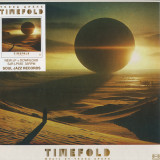
Trees Speak are releasing their new album TimeFold worldwide on 15 Nov 24 on Soul Jazz Records.
Trees Speak return with TimeFold, their sixth release on Soul Jazz Records, further expanding their ever-evolving sonic universe. This new album builds on their signature blend of hypnotic krautrock rhythms, post-punk angularity, and experimental soundscapes while venturing into new terrain by blending influences from avant-garde electronics to ceremonial sound forms.
On TimeFold, Trees Speak (comprised of the Tucson-based duo Damian Diaz and Daniel Martin Diaz) push their musical boundaries from expansive, intergalactic landscapes to eerie, imagined 1970s Italian and French sci-fi horror film scores. The album seamlessly weaves John Carpenter-esque synthesizer motifs with ambient sound sculptures, conjuring immersive worlds that are both cinematic and otherworldly.
The album also incorporates the duo’s deep-rooted influences, which span across electronic pioneers like Jean-Michel Jarre (Oxygene), Tangerine Dream, and Karlheinz Stockhausen. Drawing on the revolutionary techniques of Musique Concrète, TimeFold features experimental track splicing, looping, and collage work that harkens back to the golden age of avant-garde music. At times, the album channels the ceremonial tones and hypnotic rhythms reminiscent of early 1970s krautrock, fusing these sounds with organic instrumentation like dulcimers, adding an earthy, drone-like ritual quality to the experimental electronic framework.
A new element in this release is the inclusion of spoken word by Ashley Christine Edwards, which lends the album a haunting, apocalyptic edge. Her contributions evoke a tone reminiscent of the 1970s avant-garde scene, recalling literary and conceptual artists like Ruth White. The spoken words create a sensory experience akin to ceremonial chants, adding to the atmospheric intensity of the album. These vocal elements tie into the overall theme of TimeFold, which continues Trees Speak’s exploration of futuristic technologies and the communication of nature, with the evocative concept of trees and plants acting as organic hard drives storing data and knowledge.
Drawing further influence from Italian and French horror cinema, Trees Speak explore cinematic tension throughout TimeFold, creating a layered listening experience. The record transports the listener from the haunting, desolate beauty of Southwestern desert vast landscapes to an auditory space that melds early electronic experimentation with the contemporary urgency of conceptual art.
Since their debut Ohms in 2020, Trees Speak’s prolific output on Soul Jazz Records has continually redefined genre boundaries. TimeFold solidifies their position as visionaries in experimental music, offering an album that is as much a meditation on future technologies as it is a tribute to the avant-garde traditions that have come before.
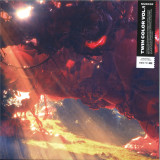
Twin Color - Vol 1 marks the grand return of Murcof to producing a full-length album in all its glory and generosity, nearly two decades after the release of Cosmos in 2007. Celebrated for his classical, minimalist textures and unique soundscapes, Murcof has established himself as a master of modern ambient music alongside Tim Hecker, Alva Noto, and Johann Johannsson. With this new album, Murcof takes a bold step forward, embracing a distinctly cinematic and dystopian narrative influenced by the great science fiction films of the 1980s. This new direction immerses the listener in atmospheres that are at times dark, at times filled with nostalgic brightness, drawing inspiration from post-punk and synth-wave, while partially reconnecting with his early experiments with the Nortec Collective.
Premiered at Mutek Montréal in August 2024, Twin Color is also an unprecedented audiovisual performance, created in collaboration with Simon Geilfus, based in Brussels, who has nourished and colored the album’s production. This immersive performance, conceived in the IRCAM studios in Paris in 2022, unfolds the album's tracks against a backdrop of moving natural landscapes, as mysterious as they are fascinating, highlighted in the album's visual elements.
Twin Color - Vol 1 will be available in vinyl, CD, and digital formats, each with track listings adapted to the listening experience. This album reaffirms Murcof’s unique sonic signature, blending analog synthesizers with modern production techniques to create a multisensory experience, propelling Murcof into an exciting new decade.
Always endeavoring to drop it a little way different, Ital Counselor Records once again stretch things in a forward direction while paying full and forceful tribute to that which has come before. This heartical 7" is a tribute to the late great Prince Lincoln Thompson in the form of a reimagined take on his composition "Kinky Money Game."
It is with great honor that ITAL COUNSELOR records has been able to work with two legends of the music business on this slab of plastic. Firstly, Jeb Loy Nichols comes with a storied history in music and the visual arts. He first came to ITAL COUNSELOR’s attention upon discovering the 1981 compilation, “Wild Paarty Sounds” via Cherry Red/On-U Sound. Later would be greater, with projects skirting the realms of country, soul, reggae, and leftfield. Bands like the Fellow Travelers, solo albums with Adrian Sherwood, and more recently writing songs for Horace Andy’s latest On-U album have all contributed to an impressive body of work.
Over the years when Jeb is not making music, he can be found writing books or churning out block prints of birds, leaves, pithy phrases, and the odd sleeve art for labels like Pressure Sounds, and, yes ITAL COUNSELOR. His sleeve work on this 7” indeed captures the essence of the music hiding under the cardboard exterior. Lo-fi, retro while poignantly on time. Social commentary manifested auditorily and visually.
Jeb’s reinterpretation of Thompson's original bubbles over a slow burning one drop built by none other than Studio One, Riz Records, and Tuff Scout Records alum Gil Cang. In yet another musical first brought to you by ITAL COUNSELOR, this piece of wax represents the only time Jeb and Gil have worked together. The results are a magical mix equally at home in the hands of a sound system operator unconstrained by the current ‘steppers’ norms as it is on a home stereo where one can deeply sit with the lyrics of depth and significance. An old time something feel for these nowadays times. An ITAL COUNSELOR Records essential.
Feel the vibes…
As the tenth candle flickers atop the torta alla panna, Archeo Recordings play the Uno reverse card, breaking with tradition to give us a gift in celebration of its birthday: the first in a series of exquisite EPs on which the label's favourite contemporaries pay homage to past masters. Each re-polished gem is plucked either directly from the beatific back catalogue of the fine Florentine label or is at least Archeo-adjacent, perhaps a sign of future wonders to come. Like a musical version of Janus, who can be found at the heart of Bertoldo di Giovanni's frieze in the Medici villa, Archeo Recordings will continue to look forwards and backwards to provide sublime sounds for us all.
Pepe Maina officially joined the Archeo family in 2019 with the much-needed reissue of his 1979 masterpiece Scerizza (AR015), but his astounding music has been a constant companion to label head Manu for much longer. An inter-dimensional, multi-instrumental maverick, Maina weaves the frayed edges of prog rock, new age, organic jazz and global minimalism into a shimmering tapestry all of his own. The results are spread across fifty years and almost as many albums, largely self-released and always absolutely untarnished by commercial concerns.
Based in a small village in the hills of Brianza, just north of Milan, Maina translates the beauty of his surroundings into transformative tone poems, and the folkloric fusion of "The Infinite", originally released on his 2014 CD Tales From The Hill, is the perfect example of his practice. It opens with a recitation of Giacomo Leopardi's 1825s poem "L'Infinito" by famed Italian actor Vittorio Gassman. A leading figure in the romantic movement, Leopardi explores the idea of time and space within the natural world, and the peace that comes with an appreciation of the immensity of eternity. Manu, longtime digger and now a burgeoning producer, expands upon the original with tribal percussion, chirping electronics and a spheric bassline, folding Maina's elegant strings and gossamer pads into a new arrangement suited for a slow dance under the stars.
Unless you had a well-trained ear tuned to Italy's avant-jazz scene, chances are your first encounter with innovative flautist Roberto Aglieri came via the 2017 Archeo reissue of hisalmost untraceable LP Ragapadani (AR011). It's a true testament to Manu's digging credentials that he snatched this masterpiece out of the esoteric atmosphere and brought it attention it so richly deserved. A delicate union of digital synthesis and versatile flute - be it soft and silvery or
brilliant and clear - the 1987 album was a shapeshifting masterpiece, replaying scenes from Virgil, Verdi, Visconti and Pasolini with a neon glow. Quintessentially Italian, but uncanny and previously unimagined - Penthouse and Portico perhaps. Powered by a percolating prototechno sequence, cascading keys, hallucinogenic vocal snippets and a variety of tonal timbres from Roberto's reed, "Danza N. 1" long deserved the praise reserved for Jean-Luc Ponty's pinnacle, so many thanks to Manu for our collective introduction. The tall task of reinterpreting this particular paragon falls to Perugian polymath Daniele Tomassini AKA Feel Fly, whose peerless skills as both producer and musician have delighted DJs and dancers alike. Hot on the heels of his diverse and definitive remixes of Tony Esposito for AR027, Daniele delivers a radical rework of "Danza N. 1" perfect for both day rave sunshine and full moon party alike. Enhanced by snapping breaks and a rattling kick, the bassline gurgle emerges as a progressive powerhouse, laying the foundation for the trilling flute and circular keys to cast a psychedelic spell. As the slow-Goa revival picks up pace, this one is way ahead of the pack.
Archeo take us all the way back to the start of its story here - well almost. Though it bore the stamp AR001 (2015), this Radio Band reissue actually hit shelves months after Tony Esposito's "Je-Na' / Pagaia"; a false start perhaps but a true classic all the same. Radio Band were a group of DJs from Florence who all sailed the airways of Radio Fantasy in 1984 and whose one and only release was this super groovy slice of Italo-boogie. Following the example of Milanese DJs Band of Jocks but far surpassing their formulaic funk fizzle, Radio Band employed an intergalactic bassline, cosmic keys and that undeniably Italian style of rapping to deliver a sophisticated party-starter which even found its way to disco deity Ron Hardy. Back to the here and now, and if you've found yourself pumping an ecstatic fist to a supercharged Italian epic of late, chances are its from the mind of the mysterious Radiomarc. Operating on the ascendent Popcorn Groove imprint, this shadowy figure steers his country's lost classics into peaktime territories, finding a sweet spot between late Italo-disco, early Italo-house and contemporary cool. Pushing the tempo with a club-ready 4/4, setting the sequencer to stun and supplementing the original melodies with a series of synth riffs, the mystery producer send this one into orbit. Radio Band - Radio Rap - Radiomarc, the circle is complete.
Few have done more to develop cross-cultural musical exchange than Futuro Antico. A collaborative venture from musician, archeologist and ethnomusicologist Walter Maioli, keyboardist and tonal theoretician Riccardo Sinigaglia and multi-disciplinary artist and composer Gabin Dabiré, Futuro Antico formed in Milan in 1979, combining ancient international folkloric traditions with otherworldly electronics. The result is an arresting melange of Mediterranean, African and Asian instrumentation, mimicked by esoteric synth tones and hypnotic minimalism, which the group perfected on their acclaimed 1990 LP Dai Primitivi All'Elettronica. The meditative and transportive "Pan Tuning" belongs to their largely overlooked 2005 CD only release Intonazioni Archetipe, and has been amongst Manu's most loved tracks from the first moment he heard it. Who else is better placed to reshape this evocative opus into an immersive, transcendental dance floor journey than label favourites Mushrooms Project? The duo sows the original elements into a sprawling fifteen minute fusion of séance and science, at times propulsive with a ritualist rhythm of tuned percussion and crunching drum machine at others drifting off into ethereal ambience. Mushrooms Project continue to push the boundaries of the Afro-cosmic style, and this remix marks a new zenith.
Proudly presenting, ‘Калі ты запытаеш (If You Ask)’, a brand new, blissed-out pop production with a ‘70s AOR touch, by the ever-on-point SOYUZ (СОЮЗ). Coming at a period between albums, the single features guest appearances from the sensational musicians, Biel Basile (O Terno, Sessa) and Anthony Ferraro (Toro Y Moi, Astronauts, Etc.). Friends of the band, they add their signature touch on the drums and synth respectively. To complete the package, SOYUZ back the title track with a short but sweet, Wurlitzer-laden, MPB-tinged number, ‘Tenório’.
‘Калі ты запытаеш (If You Ask)’ tells the story of lost dreams. A track that can be interpreted either as a bittersweet longing for childhood times, or for a native place you can’t return to. For the writer Alex Chumak he suggests, "In my case, as in the case of many Belarusians, it’s both".
For this song, Alex chose to sing in his native Belarusian tongue. As he explains this language "to me feels underrepresented in pop music, also it’s a beautiful legacy and sonority that I wanted to share with the listeners of our project around the world". One of the key inspirations was a Belarusian band “Песняры” (“Pesniary”), who produced a host of great progressive folk, jazz fusion and AOR, from the ‘70s to the ‘90s, predominantly sung in Belarusian.
Another key influence was the music coming out of the Brazilian state of Minas Gerais in the ‘70s, drawing inspiration from the sentimental and harmonious music of Beto Guedes, Lô Borges, Fernando Oly and Wagner Tiso.
Having parted ways with their drummer Anton, SOYUZ needed to find a new way to produce songs. The answer was to go remotely. Alex contacted the brilliant Biel Basile, who had recorded Sessa's contemporary classic ‘Estrela Acesa’, in which Alex also participated. Utilising Biel and Sessa’s newly built studio in São Paulo, SOYUZ had Biel record the drums directly to tape to get the rich sound they were after. Adding the final magic into the mix, California’s Anthony Ferraro provided a beautiful Solina String Ensemble synth arrangement, with drummer/recording engineer Albert Karch expertly assisting with the production.
To capture the essence of the single visually, Alex and the Brazilian one-man-industry visual artist Gabriel Rolim, spent a blazing sunny May day in Berlin shooting film and stills – one of which became the perfect cover image. We hope you enjoy this little nugget of SOYUZ mastery, a sweet taster to savour while the new album is recorded.
LRK Records is excited to announce their next special limited edition 45 by Bella Brown & The Jealous Lovers. Due to high demand from DJs and fans alike, we're bringing the in-demand 'Soul Clap' (Radio Edit) to 7". The most streamed track from their album of the same name, this radio edit condenses the energy of the original, which runs over 7 minutes, into an electrifying 3 minutes and 54 seconds. The A-side will be revealed soon, with a special track announcement coming in the next few weeks.
Bella Brown & The Jealous Lovers, originally from Chicago and now based in Los Angeles, are known for their dynamic fusion of 60s/70s soul and funk. Fronted by the Grammy Award-winning Bella Brown, who embodies the power of Tina Turner and Sharon Jones, they channel the fierce spirit of 70s Blaxploitation icons. Backed by The Jealous Lovers, they offer a fresh, modern twist on traditional soul and funk with high-energy live performances.
'Soul Clap' is a dance floor-ready track with Bohannon-style rhythms and James Brown-inspired funk. It's a celebration of the communal energy shared between musicians and audience, perfect for DJs looking to bring the party to life
The new single, "Always Christmas Eve" is an instant holiday classic. The song pays tribute to the band's Chicago soul roots and is produced in their signature style. This original composition offers a modern take on classic soul, featuring real instruments, genuine performances, and authentic artistry. True to the tradition of Bella Brown & The Jealous Lovers, the song carries a meaningful message: "Always Christmas Eve" shares a hopeful message of Christmas joy in an imperfect world, highlighting the goodness in all of us, and reminding us that we can embody the loving spirit of Christmas in any season, even during challenging times.
"Always Christmas Eve" drops digitally November 15, 2024 and will also be released, through LRK Records, as a special edition 7' colored vinyl 45. The 45's B-side features the group's "Soul Clap - radio edit". A funky dance track, which was digitally released as a preview to their Soul Clap LP, and is now making its vinyl debut. The radio edit has already racked up tens of thousands of streams and received extensive airplay across Europe, North America, South America, and Japan.
So Happy Holidays from LRK Records and Bella Brown & The Jealous Lovers!!
Grey/silver coloured vinyl 45
- A1: World Is Dog
- A2: Cctv (Feat Creature)
- A3: Yottabyte
- A4: Bad Pollen (Feat Billy Woods)
- A5: Slum Of A Disregard
- A6: Rfid
- A7: Instant Transfer (Feat Billy Woods)
- A8: Ikebana
- B1: In The Shadow Of If
- B2: Skp
- B3: Hushpuppies
- B4: 14 4 (Feat. Skech185)
- B5: Voice 2 Skull
- B6: Xolo
- B7: Zigzagzig
Black Vinyl[35,08 €]
We’re teaming up with ELUCID and Fat Possum for a limited edition of 300 copies of a Rush Hour black ice coloured edition.
E L U C I D, one half of the illustrious duo Armand Hammer, is here with the full-length follow-up to 'I Told Bessie'. Further experiments in the sonic, expanding on the 'live' side of music paired with the embracing of chaos. Something you haven't heard, or not so for a very long time. E L U C I D is here to reveal the bleakness of reality.
---------------------------------------------------------------------------------
''There is never time in the future in which we will work out our salvation. The challenge is in the moment; the time is always now.''
James Baldwin
A raw, crackling urgency runs through rapper-producer ELUCID’s new album REVELATOR like an underground power line. There is no space here for sepia-toned reminiscences or indulgent self-mythologizing. Intellectual rabbit holes have been filled in with concrete and rebar ; there is nowhere to hide and no off ramp from the audio Autobahn that ELUCID has fashioned—a renegade Robert Moses with gold fronts, bulldozing the homes of the powerful and the complicit. REVELATOR brims with the energy of now, with a refusal to look away. Carpe diem in a murder one mask.
Born in Jamaica, Queens, ELUCID has been on the cutting edge of New York’s underground scene since the mid-2000s. From the beginning, he has defied both convention and expectation. He ran with Okayplayer darlings Tanya Morgan, but his own music eschewed their throwback charm for glitchy noise experiments and bass-swamped culture jamming. His 2016 debut studio project Save Yourself (re-released in a deluxe edition last year) announced him in earnest. But in recent years, his Armand Hammer releases with partner-in-crime billy woods have received significant attention and acclaim. Serving as a followup to his last solo album—2022’s comparatively balmy I Told Bessie—ELUCID hoped to “re-distinguish” himself with REVELATOR, setting himself apart amidst the increasing attention around the music he and his friends are making together.
For ELUCID, this meant setting bold new challenges for himself. One of these was diving further into live instrumentation than ever before—”getting my Quincy Jones on,” as he puts it. The testing ground for this approach was Armand Hammer’s most recent project, 2023’s We Buy Diabetic Test Strips’ Möbius strip soundscapes, warmed with instrumental flourishes and skin-shedding beat progressions. With REVELATOR, though, ELUCID strove to create an atmosphere of chaos, embracing experimental electronics and atonal sample bursts. He worked on much of the album with co-producer Jon Nellen, who comes from a background in avant-garde and Indian classical music. “I wanted to get as freaky as I could at this moment. I wanted people to hear things, maybe for the first time, or in a way they haven’t for a long while,” the rapper explains.
ELUCID arrived at the studio with a collection of noise sources: non-referential samples, glitches and noises. Together he, Nellen, and others created forms out of them and, as ELUCID recalls, “just started playing drums with it.” Their fried, distorted sound was directly inspired by Miles Davis at his most uncompromising—specifically, the tone-clustering funk track “Rated X” from his 1974 double LP Get Up With It. At times, the pairing of rap with avant-fusion sounds also brings Emergency! from The Tony Williams Lifetime to mind, perhaps in an alternate timeline where the late drummer was listening to Ice Cube’s AmeriKKKa’s Most Wanted.
“The World is Dog,” REVELATOR’s lead single, functions as the album’s aesthetic thesis statement. Like the Davis track, the textures are punishing, the tonality is in free-fall, and the driving breakbeat of a groove cuts in and out unceremoniously. Avant-jazz bassist Luke Stewart, who appears throughout the record, holds the whole thing together just long enough for ELUCID to tightwalk over the beat. This tension is exactly where REVELATOR sets itself apart; in a time of drumless loops, and safe soul samples, this is a high-wire act with no safety net. Similarly, the song announces the themes of the album within just a few phrases, evoking the way societies accept and adjust to new levels of debasement and brutality while suffocating under the weight of history: “Can’t clock the kill, all a mystery/Forced past will eating everyone eventually/The world is dog.”
Many of the songs on REVELATOR grapple obliquely with dissolution and disenfranchisement in America and across the world—the grim realities of our domestic sociopolitical climate and our involvement in foreign conflicts. “Much of my artistic and political sensibility comes from the Black arts movement here in New York,” ELUCID explains. “Recognizing the interconnected global struggles against oppression, artists and thinkers created works and actions in solidarity with freedom movements in South Africa and Palestine.” ELUCID cites intellectuals like Amiri Baraka, Kwame Nkrumah, Audre Lorde, Sonia Sanchez, and Nikki Giovanni among his heroes. (One track on the album is specifically inspired by Lorde’s work, “SKP,” citing the scholar’s paper “Uses of the Erotic: The Erotic As Power.”) Songs like REVELATOR’s insistent closer “ZIGZAGZIG,” find ELUCID applying up-to-the-minute messaging, making explicit reference to the conflict in Gaza: “Feed a war machine…from river to sea, in lieu of peace.”
Despite ELUCID’s preference for cacophonous system overload here, the rapper also provides moments of respite. Recorded at The Alchemist’s Los Angeles studio, the laid-back, wheezing “INSTANT TRANSFER” is a collaboration with billy woods, which crystallizes their shared sense of creative determination. “With much momentum behind us and even more on the horizon, I knew a purpose, and that every step was ordered to that purpose,” ELUCID said of the experience. Meanwhile, the jittery “HUSHPUPPIES” is a playful anomaly on the track list, providing a snapshot of ELUCID watching his grandparents in the kitchen while preparing for Friday night fish fry dinners.
“Love still rules over on this side,” ELUCID says. ”I’m raising a family. We are making meaning and finding joy in the midst of all the fucked up-ness of everything around us because the alternative is cowardice and slow death. We remain rooted. We celebrate our people and our wins. Struggle is necessary.”
“IKEBANA” is one of ELUCID’s strongest statements of purpose on the record, blending the record’s heaviest themes with its most hopeful sentiments. supported by a shoutalong refrain and an urgent prog-funk groove. Breaking away from images of dissolution and crumbling societal systems that populate REVELATOR, ELUCID notes that the only way to navigate life’s bleakest landscapes is to cling to love and believe in those around you—to look forward toward something better that may or may not be possible. For the rapper, one of the album’s most trenchant lines comes during a centerpiece of a beat drop: “Being alive/I must look up.”
“The lyric ‘being alive I must look up’ is important especially in the context of this album. Much of the album imagery is harsh and reflects the actual doom some of us experience. But still I/we exist,” ELUCID explains.
Every artist is, in one way or another, the product of their time, bound by life’s leaden gravity to operate within the space of that which is already known. But there are some who are able to shake free of these ties, to shape the culture as it unfolds, to make the present their own.
Revelation, as a concept, points to the scales falling from people’s eyes—something that has been hiding in plain sight becoming clear. “The revelator relates to things that have been talked about, things that have been forecasted,” ELUCID adds. “And now they’re really here, and everyone sees it. And there’s no escaping.” REVELATOR plays out with the unmitigated power of those storms, laying waste to any genre conventions in pursuit of a certain physicality. Here, ELUCID develops a wholly distinctive musical language to explore our fractured modernity.
REVELATOR's packaging was designed by longtime Armand Hammer / Backwoodz art director, Alexander Richter.
A sonic portal to a parallel universe where neon-soaked dreamscapes transform the stark realities of a post-pandemic world. Music for a forgotten future, where echoes of the 80s cast long, enigmatic shadows through a rich tapestry of emotion that charts a journey from isolation and fear towards healing and hope. This is the journey of Season One and Season Two, the debut companion albums for the solo project of Italian composer Battaglia, both out this fall on Four Flies Records.
In 2020, as the world retreated onto itself due to the COVID-19 pandemic, Battaglia entered the recording studio. Driven by a desire for experimentation, she decided to focus on the classic synths that have made history to create a sonic and emotional alchemy that reimagines the 80s to resonate with our current experiences and sensibilities.
Drawing inspiration from the cinematic magic of iconic early-80s films, and especially the haunting soundtracks of Tangerine Dream and John Carpenter, she crafted a soundscape that goes beyond nostalgia to capture the spirit of a generation navigating uncertain times.
Season One and Season Two explore the complexities of a world grappling with lethal pandemics, climate catastrophes, and nuclear disasters through themes such as longing, fear, and hope, set against a scenario that blends elements of dystopian and post-apocalyptic science fiction and, at times, horror.
Season One delves deeper into the darker aspects of this new reality, evoking a sense of unease and uncertainty, occasionally interspersed with soothing flashes of light. In Season Two, while darkness still lingers, the sonic landscape is infused with a sense of optimism and determination, offering glimpses of a possible salvation.
With Battaglia's signature blend of dark wave, synth-pop, suspenseful electronica, and cinematic vibes, Season One and Season Two create a sonic world that is at once hauntingly familiar and utterly captivating -- the perfect soundtrack, one is tempted to say, for the countless sci-fi/horror-fantasy series that have been flooding streaming platforms in the last decade.
The covers of both albums were designed by Eric Adrian Lee, who conceived them as two sides of the same image, two versions of a world in crisis but whose ruins contain the potential for rebirth.
Battaglia's Season One and Season Two will be available on black vinyl LP starting from October 25th. Digital versions of both albums will also be released on the same date, featuring five bonus tracks (two on Season One and three on Season Two).
A sonic portal to a parallel universe where neon-soaked dreamscapes transform the stark realities of a post-pandemic world. Music for a forgotten future, where echoes of the 80s cast long, enigmatic shadows through a rich tapestry of emotion that charts a journey from isolation and fear towards healing and hope. This is the journey of Season One and Season Two, the debut companion albums for the solo project of Italian composer Battaglia, both out this fall on Four Flies Records.
In 2020, as the world retreated onto itself due to the COVID-19 pandemic, Battaglia entered the recording studio. Driven by a desire for experimentation, she decided to focus on the classic synths that have made history to create a sonic and emotional alchemy that reimagines the 80s to resonate with our current experiences and sensibilities.
Drawing inspiration from the cinematic magic of iconic early-80s films, and especially the haunting soundtracks of Tangerine Dream and John Carpenter, she crafted a soundscape that goes beyond nostalgia to capture the spirit of a generation navigating uncertain times.
Season One and Season Two explore the complexities of a world grappling with lethal pandemics, climate catastrophes, and nuclear disasters through themes such as longing, fear, and hope, set against a scenario that blends elements of dystopian and post-apocalyptic science fiction and, at times, horror.
Season One delves deeper into the darker aspects of this new reality, evoking a sense of unease and uncertainty, occasionally interspersed with soothing flashes of light. In Season Two, while darkness still lingers, the sonic landscape is infused with a sense of optimism and determination, offering glimpses of a possible salvation.
With Battaglia's signature blend of dark wave, synth-pop, suspenseful electronica, and cinematic vibes, Season One and Season Two create a sonic world that is at once hauntingly familiar and utterly captivating -- the perfect soundtrack, one is tempted to say, for the countless sci-fi/horror-fantasy series that have been flooding streaming platforms in the last decade.
The covers of both albums were designed by Eric Adrian Lee, who conceived them as two sides of the same image, two versions of a world in crisis but whose ruins contain the potential for rebirth.
Battaglia's Season One and Season Two will be available on black vinyl LP starting from October 25th. Digital versions of both albums will also be released on the same date, featuring five bonus tracks (two on Season One and three on Season Two).
A sense of destiny hangs over Sentir Que No Sabes, Mabe Fratti’s fourth solo-credited album released in a five year span. Her work has always possessed a finely tuned sense of drama capable of expressing a range of emotional states, and across this new album, she conveys the struggle to process various relationships or situations–and the actions that come next. Sentir Que No Sabes is urgent and clear, poppy, generous and approachable, while showcasing a considerable emotional hinterland. It is also, as Fratti is quick to mention, “groovy.”
Written and recorded with her partner, multi-instrumentalist, and co-composer Héctor Tosta (I.La Católica, Titanic), Sentir Que No Sabes is the result of an intense, detail-oriented process. Fueled by a new confidence gained in their collaborative project, Titanic, and its critically acclaimed 2023 LP, Vidrio, the two hunkered down in the familiarity of their studio (aka Tinho Studios) to bash out the initial sonic coordinates of her new record. “We talked and talked, and discussed ways of playing and recording, until things became inevitable,” Fratti explains. “We recorded a bunch of demos at our home studio and that meant we had a lot of time to re-edit and experiment. We really dug in. We were super focused on detail.” Tosta also took up the controls as producer and arranger-in-chief for all additional instruments. The album was later completed at Willem Twee Studios in Den Bosch in the Netherlands, and Pedro y el Lobo Studios and Soy Sauce Studios, in Mexico City.
For the final studio recordings, the pair were joined by drummer Gibran Andrade and trumpetist Jacob Wick to fill out and expand on Tosta’s percussion and brass arrangements. This small group of friends were able to work quickly and openly, and without fear: a testament to the exhaustive groundwork put in at Tinho Studios. This can be heard in three short, intermediary tracks that also manage to be the most aggressive on the record: “Kitana” (a scratch-laden instrumental that acts as a strange prelude for the last track, “Angel nuevo”) and a pair of two-minute instrumental interludes, “Elastica” I and II. None are throwaway mood pieces; rather they act as emotional cue cards, and hint at the way Fratti and Tosta created the overall atmosphere of Sentir Que No Sabes.
A strong sense of rhythm irrigates the sound from the jump, as heard on the glorious opening track, “Kravitz.” Here, the brilliant plucked cello line acts as a bassline and props up the steady thump of the kick drum. The cello’s growl serves as a conduit for a set of slightly paranoid lyrics that tell us “Quizás haya oídos en el techo” (“maybe there are ears in the ceiling”), while the song also introduces another staple of the record: the clever brass stabs, whistles, parps, and other interjections that paint a canvas of traffic in a city. It’s a postmodern, widescreen sound that for some might recall The Blue Nile’s Hats.
Sentir Que No Sabes is a record full to the brim with a modern pop sensibility, invoked by the sort of magpie spirit that ensnares anything it can find, repositioning sounds for the here and now. The keys and melody on the melancholy “Pantalla azul” (“Blue screen error”) transport us back to the glossy mid-1980s. “Oídos” (“Ears”) is a beautiful slice of contemporary, hybrid pop, in which Fratti’s vocal lines delicately spin themselves around the lean structures erected by the brass and drums, and the descending “plink” of a set of piano chords. Then we have a gloriously strong ending with the swell of “Angel nuevo” (“New angel”), another cinematic track full of gentle, instrument-rich swells and eddies that manages to be almost endless in its range–and yet intensely personal, as Fratti’s voice is close, almost whispering in your ear. A much needed lullaby for our fractious times.
The lyrics, for their part, have a stop-start quality to them, and hint at the small, incremental emotional taxes we pay through just living our lives. They circle around the music like birds waiting to swoop. There is something of the spiritual in all of Fratti’s work that expresses itself in a form of yearning: she looks to new horizons while personal dramas find themselves internalized, contextualized, and then dealt with through metaphor. Here, she was keen to mention Tosta’s constant encouragement in her finding a path to best sing or phrase her words to impart their maximum effect. “Hector was super inquisitive about my lyrics and asked me questions about what I meant, which sometimes is something you don't wonder so much about in isolation,” Fratti explains. “Besides, he is a great poet, and you can see that in what he did on the Titanic record. This made me go deeper into my lyric writing and definitely transformed it into something that I feel super happy about now.”
Take “Enfrente” (“In Front”), a track that initially comes across as a languid, glossy number, with plucked cello strings standing in for a bass line and brittle synth parts. Soon we catch on to a brilliant minor chord switch, which mirrors the fear and doubt expressed in the lyrics as someone “trembles up to the podium” in a “search for meaning.” There’s also the startling introduction of a vocoder in “Quieras o no” (“Whether you want it or not”); it comes precisely at the point Fratti sings “Quieras o no es un desastre” (“Whether you want it or not, it's a disaster”). Moments like these leave room for interpretation and, over time, create a strong bond between the listener and the record.
In fact, across Sentir Que No Sabes, each phrase–whether instrumental or vocal–becomes at some level emblematic of acts and moods that impart deep emotional significance. We see this best on “Intento fallido” (“Failed attempt”), which could be the score to feeling trapped in self-doubt, only to suddenly be sprung free by the song’s gloriously upbeat ending. On “Márgen del índice” (“Index margin”), the quicksilver switch between initial disharmony and a beautiful melody is breathtaking, all augmented by evocative arrangements, textured production, and the slightly playful, gnomic lyrics. The track’s emotional ecosystem allows another brilliant ending, which uses the simple repeated phrase, “Cómo lo va a ver?” (“How are you going to see it?”).
So what to make of Sentir Que No Sabes? High gloss Pastoralism? The sound of a city-bound, post-post modern soulscape? No matter the emotions evoked, it's the work of an artist coming into their own, and creating a benchmark record.