"Every day, the skies of New York City fill up with unseen clouds of radio signals spreading over immigrant neighborhoods. These culturally charged clouds of radio energy burst with a flow of content that continually shifts and transforms, following the lifecycle and rhythm of the streets.
quête:signal flow
Italian producer Gledd has been quietly carving out a reputation for groove-led house music that balances raw dancefloor energy with rich musicality. Drawing on influences that span gospel, afrobeat, and classic deep house, his productions channel both heritage and forward-thinking club culture. My House Is Your Church marks his debut release on Delusions Of Grandeur - a fitting home for his expansive, souldrenched sound - and signals a bold new chapter in his evolution as an artist.
The EP opens with On His Way, a percussion-heavy deep roller built for maximum dancefloor impact. Anchored by fat, heavyweight production and a massive low-end presence, the track surges forward with relentless energy. An incredible gospel vocal cuts through the mix, elevating the groove into something transcendent - equal parts spiritual and physical. On It’s Not That Easy, Gledd leans further into his gospel house influences. Highimpact and rhythmically rich, the track weaves together organ fills and subtle tropical flourishes, creating a vibrant, sun-soaked energy while keeping the pressure firmly on the floor.
It’s a track that feels both uplifting and commanding. Flipping to the B-side, Habibi Gospel pushes into more “outernational” territory. A wild, expressive lead vocal takes center stage, riding atop a heavy, driving groove. Organ stabs punctuate the rhythm, locking dancers into a hypnotic flow that bridges cultures and styles with effortless confidence. Closing the EP, Can You Hear My Noise? brings things to a richly textured finale. Slightly more organic in feel, it blends echoing synth stabs, percussive melodic lines, and chopped vocals into a melting pot of sound. The result is a seamless fusion of gospel, afrobeat, and classic house - deep, emotive, and undeniably danceable. With My House Is Your Church, Gledd delivers a statement of intent: music as ritual, the dancefloor as sanctuary.
A Sudden Burst of Noise is a study in equivalence between rotational frequency, material structure and sonic form. The album is based on sonified pulsar data and field recordings captured at a concrete radiotelescope located in the Eifel region of West Germany.
Following the core concept of BRUTALISM, architecture and infrastructure are not treated as backdrop but as structural agents. The radiotelescope – its reinforced concrete body, rotational mechanics and scientific function – serves as compositional framework. Rotational movement becomes rhythm. Structural tension becomes texture.
Measured cosmic data becomes sound.
The source material consists of astronomical measurement data translated into sound, combined with field recordings from the site itself: interacting with exposed concrete, mechanical resonance and electromagnetic presence. Dornen and Lomi process these elements into compositions that oscillate between abstraction and physical density.
The result is not a documentary representation of the site but a sonic architecture derived from it. Each track reflects a structural component: axis, mirror, descent, radiation. The record unfolds as a sequence of material states – from reduction and
erosion to rotation and amplification.
With A Sudden Burst of Noise, BRUTALISM continues its transformation of material, texture and structure into sonic forms. The vinyl format captures our site-specific research process as a physical object.
Italian producer Gledd has been quietly carving out a reputation for groove-led house music that balances raw dancefloor energy with rich musicality.
Drawing on influences that span gospel, afrobeat, and classic deep house, his productions channel both heritage and forward-thinking club culture. My House Is Your Church marks his debut release on Delusions Of Grandeur - a fitting home for his expansive, souldrenched sound - and signals a bold new chapter in his evolution as an artist. The EP opens with On His Way, a percussion-heavy deep roller built for maximum dancefloor impact. Anchored by fat, heavyweight production and a massive low-end presence, the track surges forward with relentless energy. An incredible gospel vocal cuts through the mix, elevating the groove into something transcendent - equal parts spiritual and physical.
On It’s Not That Easy, Gledd leans further into his gospel house influences. Highimpact and rhythmically rich, the track weaves together organ fills and subtle tropical flourishes, creating a vibrant, sun-soaked energy while keeping the pressure firmly on the floor.
It’s a track that feels both uplifting and commanding. Flipping to the B-side, Habibi Gospel pushes into more “outernational” territory. A wild, expressive lead vocal takes center stage, riding atop a heavy, driving groove. Organ stabs punctuate the rhythm, locking dancers into a hypnotic flow that bridges cultures and styles with effortless confidence. Closing the EP, Can You Hear My Noise? brings things to a richly textured finale. Slightly more organic in feel, it blends echoing synth stabs, percussive melodic lines, and chopped vocals into a melting pot of sound. The result is a seamless fusion of gospel, afrobeat, and classic house - deep, emotive, and undeniably danceable. With My House Is Your Church, Gledd delivers a statement of intent: music as ritual, the dancefloor as sanctuary.
Art Bound launches its label with Ghost Signal Theory, a split EP by Brazilian producer Artürst and Georgian producer Toke, exploring a dark, progressive and electro-oriented sound where each track develops its own atmosphere while contributing to the overall flow and cohesion of the project.
Side A features Artürst with two tracks blending progressive grooves with layered textures and subtle acid-infused elements, delivering a hypnotic drive built for peak-time sets.
Side B is a three-tracker exploring Toke’s take on the Tbilisi underground, moving through high-energy electro and trance-infused passages, before closing with a deeper broken rhythm that shifts the pace and brings the journey into a more contemplative space, offering a final moment of suspension.
Leading voices in contemporary Organic House anchor LS001 V.A-Thunderlab Collective, the inaugural vinyl-only edition from Life Signal. This first chapter introduces Life Signal as a curated imprint dedicated to presenting standout works from modern electronic music-pieces selected for their lasting impact and now pressed exclusively for listeners who value both sound and physical format.
These tracks have earned significant attention within the digital space, and this release brings them to vinyl for the first time, giving collectors a chance to experience them in a new, tactile form.
A1-Volen Sentir & PROFF-"Luna Amazonia (PM Mix)"
The record opens with a signature blend of organic textures and melodic flow, shaping an atmosphere that sets the tone for the edition.
A2-Krasa Rosa-"
Kaftan"A refined balance of acoustic nuance and electronic drive, building toward a standout breakdown and a sharp, vocal-chopped lead.
B1-Jiminy Hop-"Cavalier (Extended)"
Marked by Jiminy Hop's characteristic phrasing and evolving percussive movement, this version extends the melodic narrative with precision.
B2-Audiense-"Winterfell (Extended)"
A steadily rising finale combining psychedelic touches and ethno-vocal textures, rounding out the collection with an expansive sense of lift.With LS001, the Life Signal vision arrives on vinyl: curated electronic works preserved for collectors who follow music not only by sound, but by legacy.
MASK Records founder ZentaSkai joins forces with Berlin-based creative Laura Merino Allue under the name Cuddling Monsters, a project centered on analog processes and tactile sound design. Debuting in March 2024, the project explores Detroit-infused House, dub Techno, and minimal soundscapes shaped by raw texture and spatial depth. Working exclusively with analogue instruments, the duo prioritise warmth, imperfection, and presence over polish. Alongside her music work, Laura Merino Allue is also a graphic designer, bringing a strong visual identity to the project’s wider aesthetic.
‘Cuddling Monsters' is inspired by real-life experiences — the raw, imperfect, beautiful moments we move through. We believe in staying present, feeling everything deeply, and embracing the analog flow of the now. It’s about living the moment fully — and like a cuddle on the dancefloor, creating a space where sound holds you, warmth surrounds you, and even the wildest monsters feel safe enough to soften.’ -
Cuddling Monsters
The Cuddling Monsters ‘Vol. 3’ EP opens with ‘Bubble Bloom’, a melodic house track featuring warped, filtered synth tones that set a hazy foundation before a dub-leaning beat settles in. It’s layered with aquatic, bubbly textures and fragmented samples, adding warmth and movement. ‘Warm Waves’ shifts into a lighter, more atmospheric space, increasing the tempo slightly while maintaining a restrained, ethereal character. The B-side closes with ‘Secret Signal’, a long-form techno piece stretching over ten minutes, where evolving synth lines gradually merge with soft, dubby drums and analogue percussion, building steadily without excess before easing out.
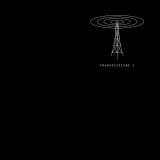
TRANSMISSIONS #1 connects four distinct Skylax signals into a single flow. Each track comes from a precise moment, a specific context, and a clear dancefloor function. Together, they form a transmission built on movement, use and continuity. A1. F.T.G – Tribute ’89 (Fuckthegovernment #001 Mix) is a raw drum-machine workout positioned between dark Chicago house and late-’89 European techno. Stripped, direct and uncompromising, Tribute ’89 quickly became an underground staple, heavily played by Ricardo Villalobos and Raresh — a foundational Skylax signal. A2. Nick Beringer – 57th Corner, taken from Second Floor (Wax Classic, 2016), is a tech-leaning deep house cut marked by restraint, precision and late-night tension, capturing Beringer at a pivotal point in his long-standing relationship with Skylax. B1. Floorfillers – Love Is Growing delivers a powerful house-disco statement rooted in old-school foundations, where filtered disco loops, raw drum programming and uplifting swing echo the lineage of DJ Sneak, Paul Johnson, early Roulé / Crydamoure-era French touch and classic Chicago jack — a modern floor-driver with timeless intent. B2. Nicolas Aftalion – Rue des Wallons brings deep, soulful house with a strong Kerri Chandler influence; warm chords, chunky drums and emotional weight firmly grounded in early ’90s US garage tradition. Supported by Cinthie, it closes the transmission with groove, balance and purpose. TRANSMISSIONS #1 — built to move, built to last, signals in motion. Four tracks. Four signals. Still moving.
Natural Goofy & TC80, two close friends and respected producers, have been spending time together in the studio in Barcelona.
No rules, no timeline, just jamming with machines and letting the sound flow in the moment.
The result is NO PLAN EP: a snapshot of instinct over intent, a record shaped by presence rather than plans. A raw dialogue between friends, gear and the dancefloor.
Made with love, for the music.
Released as a limited vinyl-only edition within the Planka Records series, continuing the label’s mission of capturing underground sounds and sharing them with those who listen deep.
- A1: Ben Klock & Fadi Mohem Feat. Flowdan - Our Sector (Azu Tiwaline & Cinna Peyghamy Remix)
- A2: Ben Klock & Fadi Mohem Feat. Coby Sey - Ultimately (Amotik Remix)
- B1: Ben Klock & Fadi Mohem Feat. Flowdan - Our Sector (Quelza Reinterpretation)
- B2: Ben Klock & Fadi Mohem Feat. Coby Sey - Clean Slate (Alarico Remix)
Azu Tiwaline & Cinna Peyghamy, Amotik, Quelza, and Alarico remix four tracks from Ben Klock and Fadi Mohem’s collaborative album ‘Layer One’. Released last year on the pair’s label LAYER, each artist on the ‘Layer One Remixes’ EP retains the weighty, low-end edge that shaped the album, while reinterpreting four tracks through a myriad of techno, IDM, bass, and experimental shades.
Honouring the conceptual direction of ‘Layer One’, which delved into a post-human world and offered a serene reflection on a realm that continued to flourish in the absence of humanity, the ‘Layer One Remixes’ EP echoes the same theme. The remaining human survivors on Earth signal a remembrance of their sensibilities, told through the powerful lyrics and vocals of grime MC Flowdan and interdisciplinary artist Coby Sey.
Azu Tiwaline & Cinna Peyghamy open the EP with their remix of ‘Our Sector’ featuring the commanding vocals of Flowdan. Fragmented bass-driven textures skitter across the sparse soundscape, culminating in a track primed for the weirder hours of the night. On ‘Ultimately’, Amotik delivers his take on the original featuring spoken word by Coby Sey, and whips up a rolling four-four number pierced with bleepy percussion.
On the flip, Quelza’s reinterpretation of ‘Our Sector’ unfolds with zappy motifs and technoid flourishes, permeating the shadowy pads and spine-chilling harmonics that slink through the atmosphere. Alarico remixes ‘Clean Slate’, serving a potent techno track laced with equal parts restraint and release, enhanced by Coby Sey’s taut vocals.
While the original album represented the more exploratory sides of Ben Klock and Fadi Mohem, the ‘Layer One Remixes’ EP offers a further step into the void, led by five contemporary artists who are unafraid to delve into the murkiest corners of the dystopian world conjured up by Klock and Mohem.
From out of the dark, sparks of feedback birdsong signal a return to the singular sonic environments of Rafael Toral"s sound-world. A year after Spectral Evolution, his acclaimed album of electric guitar conceptions, comes the companion work Traveling Light. Sharpening his focus around a set of jazz standards, his move from abstract form to solid song elicits glints from beyond time and space, crafting a unique listening lens for deep listeners. In the early years of his practice, Toral used the guitar as a generator to create discreet texture and droning tones. Later, he abandoned the guitar entirely, focusing on self-made electronics to render his music with a post-free jazz perspective. For the music of Spectral Evolution and Traveling Light, Toral has combined his methodologies: radically expanding the space within their harmonies with his self-made machines, while engaging directly with his instrument and the chords of the material. In addition to Toral"s proxy orchestra of guitars, sine wave, feedback and bass guitar, Traveling Light features the sounds of clarinetist José Bruno Parrinha, tenor saxophonist Rodrigo Amado, flügelhorn player Yaw Tembe, flautist Clara Saleiro, who each guest on one song. In every contour of Traveling Light"s path - arrangement, improvisation and production - the spring of the old pours through the new in an unstoppable flow. The result is a listening experience of these standards that remains "in the tradition", even as the elongated harmonies seem to alter time such that, as Toral notes, "the chords become events on their own."
Lay Down The Groove returns with their first release in four years — and it marks a milestone. ChordPlay is the debut full- length album by the label heads, following their 2021 EP Pursuit of Sound.
Spanning seven tracks, the album captures a period of personal and artistic growth for the duo. Written and recorded across multiple studios and seasons over the past years, it flows effortlessly through tempos and moods while staying rooted in the pair’s emotive, synth-forward identity.
With a shift toward higher BPMs and more club-oriented energy — without losing the warmth and musicality that define the LDG sound dPlay signals a new chapter in the Lay Down The Groove story. Influenced by the rich legacies of Detroit and Chicago, the record features hardware-driven textures shaped by the Juno 6, SH-101, Prophet 8, Analog Rytm and MicroKorg.
Rooted in rhythm and feeling, ChordPlay captures Lay Down The Groove in evolution — looking forward while honouring their foundations.
Hudd Traxx makes label history with its first-ever full-length album, Dial Me In, from long-time affiliate Iron Curtis. Aptly, if it wasn’t going to be label boss Eddie Leader, Curtis is the natural choice — having contributed more tracks across more releases than any other artist in the label’s history.
This 6-track vinyl sampler comes with a download code for the full 10-track album. Across the set, Curtis delivers a rich and varied journey through deep house, ambient textures, and eclectic grooves, flowing effortlessly from club-ready jams to moments made for home listening.
A landmark release for Hudd Traxx — diverse, soulful, and built for both the dancefloor and beyond.
Japan’s SUDO return to Drumcode with ‘We Are Free’, following their landmark 2024 debut ‘Real World’ Last summer brothers Isao and Takashi aka SUDO gifted Drumcode one of the most inspiring releases we’ve heard in recent times with ‘Real World’. Inspired by Underworld’s incendiary ‘Rez’, the EP was the sound of two producers pouring all their passion and shared musical history into a work that’ll be remembered for years to come.
The release peaked at no.1 on Beatport’s Release Charts and saw a follow up collaboration with Bart Skils ‘Nexus’ out later that year on Drumcode. ‘We Are Free’ continues SUDO’s emotion-led and timeless approach to techno, crafting a four-tracker inspired by the concepts of “freedom, divinity, memory and transition”. The title track genre-hops between electro-edged techno, silky ambient textures and breakbeats. Isao says: “We wanted to express in a powerful and explosive way one of our purposes on the dancefloor – a time of celebration, and freedom from restrictions.”
‘Elysium’ is a transcendental slice of techno that juxtaposes tough industrial rhythms with a stunning break that was inspired by a children’s choir Isao heard one day at Berlin Cathedral. “It took a long time to producer with many patterns until we were satisfied,” Isao shares.
“It was a real process of immersing oneself in the hypnotic groove and finding divinity.” Initially inspired by watching Bart Skils play a NYE 2025 set in Argentina, ‘Lost in Paradise’ is led by a delicate Latin vocal and crisp sun-dappled beats, before stepping up the pace in the second half. “As the production progressed, we were led to a wonderful result with the track’s vocal, a tribute to one of our biggest influences – the untouched nature of Ibiza and the vibes of the light and beautiful people that flow there.” The EP winds down with ‘Horizon’, a simultaneously beautiful yet bittersweet hymn that signals the end of the party.
Gradually, the latest album by Julien Mier, is a sonic journey that delves into the transitions of life, identity, and the blurred boundaries between art and personal growth. With a trilingual brain, Mier reflects on how language shifts have shaped his sense of self throughout his life and the music that he writes. Gradually is his exploration of shapelessness—an urge to break free from rigid musical genres and get closer to his most fundamental expression. The album is composed of nine tracks, each representing a distinct cultural and linguistic influence, all tied together by the theme of gradual evolution.
The first section, Ciel, Soleil, and Espace (French for Sky, Sun, and Space), draws on Mier’s French heritage, evoking the feeling of childhood memories bathed in a warm, nostalgic glow. This fluid, atmospheric section mirrors the soft, ever-changing air, symbolising a time of pure, untainted intention. It feels like a hazy, sepia-toned dream, as fleeting and elusive as the scent of an old friend. The gentle flow of the music mirrors the flow of wind, effortlessly shifting from one element to the next, a reflection of the innocence and clarity of youth.
The second section, Steen, Zee, and Zand (Dutch for Stone, Sea, and Sand), channels the influence of Mier’s childhood in a small Dutch dune village. These tracks are grounded in the hard-edged textures of electronic dance music, a genre that introduced him to a world of rhythm and movement. With a sonic palette of blues, greys, and more defined shapes, this section captures the solid, enduring forces of nature—earth, water, and stone. It’s a sonic landscape rooted in stability, a foundation from which everything can grow. The tracks build from the fluidity of the first section into more structured, rhythmic territories, mirroring the natural transition from childhood innocence to the discovery of deeper, more grounded musical influences.
The final section, Scrap (a collaborative track with the Japanese producer Daisuke Tanabe), Soil, and Spark, dives into the exploration of the world beyond familiar borders. Mier’s relocation from the Netherlands to Australia in 2016 is reflected in these pieces, which grapple with the contrast and complexity of different cultures and environments. These tracks are tinged with rust-red hues and a sense of eroded beauty, evoking a more fragmented, distorted view of the world. The music here is marked by tension, conflict, and the erosion of once-solid forms—symbolic of the digital and ecological storms that shape our modern existence. The closing piece, Spark, signals a new beginning, a hopeful initiation into the cycle of renewal.
The album artwork for Gradually is a conclusive visual representation of this journey, captured in the final frame of an analog film roll that began in the Netherlands and concluded with an image of the streets of Sydney, Australia—a perfect metaphor for the album’s narrative of gradual transition and discovery.
AN ATLAS OF LOSS
Do minerals dream of becoming semiconductors? Do they yearn to carry charges, amplify, switch, and convert energy into emotions comprehensible to humans? And what if, from the darkness of the underground, they had been listening to us sing in caves before the emergence of the first flute? Could they have guided us, through the course of history, to find them, extract them, and create new sounds through sinusoidal waves, to form valves and bend circuits?
If so, minerals would transition from what philosopher Eugene Thacker defines as the ‘planet’—that virginal and unreachable realm for humans that we study through geology, paleontology, and environmental sciences—to the ‘world,’ the space we inhabit, interpret, and synthesise in our daily lives. Sadly, we only remember the world when it erupts violently, through climate catastrophes or when a new virus emerges. Sometimes a tsunami collides with a nuclear plant, or viruses are cultivated as biological weapons in high-security laboratories, provoking a deep biological anxiety, hard to quell, which we all feel beneath our skin.
There exists a third realm, disconnected from both the world and the planet: the ‘earth’, an immense, dense rock floating in space alongside other planets, situated in the cosmological dimension. Relating to the earth is so complex that we only do so through theoretical speculations of a scientific nature or through science fiction, interweaving until one becomes the prophecy of the other, in an infinite, pendular dance. Beyond the darkness of space and Lovecraft’s cosmic horror, the fantasy of human extinction is the most recurrent: to reach a collapse so devastating that we do not survive it, even though the earth does, without us.
In a world where we quantify everything through body sensors, financial algorithms, nanometre-scale robots, and surveillance drones—a world in which everything that can be domesticated and controlled can also be commodified—a superior artificial intelligence would survive the collapse of the species (some speculate it might even cause it) and learn from our mistakes, thanks to our obsessive gathering of data.
Long after our voices fade, minerals will persist in the darkness of screens, in the silicon of chips, and in their pure form, still unexploited underground. Over the millennia, this intelligence might piece together fragments of our reasoning, as if an alien civilization finally connected with one of our spacecrafts loaded with messages cast into the void. It would sort through endless streams of data, unable to grasp the depths of emotion behind what it quantified, recreating simulations of our past, stripped of the nuance that once defined us and conducting experiments in sandboxes.
Some remnants of our existence—faint echoes of forgotten beauty—would be pieced together in an atlas of loss, buried beneath layers of numbers, decayed bots, and corroded hard drives. What will follow? Perhaps bison will once again roam—trotting to the strange pulse of techno, their ancient forms framed by the ruins of our cities.
Buildings will crumble, slowly dissolving under the soft touch of ambient music, and a thousand flowers will bloom with that ancient music created through electrical signals and computation. 7 songs for a future both improbable and inevitable—a final message from a world lost to itself, from planet Earth to planet Earth.
Alfons Pich, 2025
Bomj Diego had one simple dream – to spend a lazy summer weekend at his friend’s dacha, kicking back in a plastic lawn chair, sipping on Ovip Lokos, and letting the world spin as slowly as the rusty ceiling fan in the old guest house.
One Friday, he finally got his chance. He loaded up a plastic bag with a few cans of Ovip Lokos, an ancient Bluetooth speaker, and a single flip-flop (he’d lost the other one in a heated game of dominoes the week before). But as soon as he got off the train at the dacha station, Diego realized he had no idea where the actual dacha was. No address, no signal, just the distant sound of a chainsaw and the smell of freshly cut grass.
Undeterred, he followed the smoke of a barbecue like a hungry wolf. After an hour of wandering, he stumbled into a random backyard where a group of old timers were playing cards around a makeshift table. “Ah, Diego! You made it!” one of them shouted, raising a can of Ovip Lokos. Diego had no idea who the guy was, but he immediately sat down, cracked open his own can, and joined the game.
Hours later, as the sun dipped behind the trees and the mosquitoes started their evening shift, Diego realized – this wasn’t his friend’s dacha. In fact, it wasn’t even the right village. But the old men insisted he stay for shashlik, and as the Ovip Lokos flowed, Diego figured, “Eh, close enough.”
He never did make it to the right dacha, but sometimes, it’s the wrong turn that makes the best story.
The Comfort’s sixth release comes from the Italian producer Cesare Muraca, aptly titled Calabrian Flow.
Spanning four tracks, the record maintains a fundamental structure and attitude towards the dancefloor: dynamic, immersive, and universally compelling. But as always, the devil is in the details. From the A-side to the B-side, these tracks traverse moods and emotional nuance with elegance, unfolding like a well-told story.
The title track, Calabrian Flow, is a hypnotic interplay of bleeps and enchanting melodies, walking the fine line between dramatic ambiguity and raw force. Cosmic Odyssey, on the other hand, carries a sense of urgency, shrouded in shadowy gloom yet punctuated by flickers of light—a delicate interplay of tension and fleeting luminescence.
On the B-side, the record embraces pure release. The cathartic and expressive energy of Dynamic Dance offers both freedom and propulsion, while Working balances maximalism on a blade’s edge. Cesare utilizes choral chants that reverse and morph, synthesizers that pulse like distant signals, vortex-like low-ends, and an extremely tight rhythm. The result stuns and pulls—lingering long after the kick fades out.
"Are You in Heaven?" was famously shouted by Roxy DJ Eddy de Clercq to the crowd at one of the very first legendary house parties in Amsterdam. This phrase not only symbolizes an iconic moment that captured the spirit of the era—it’s also the title of one of the three tracks featured here.
In 1991, inspired by the dance music craze that swept across Europe at the time, Arnoud Winkler and Jochem Peteri (who would later become the one-man supergroup Newworldaquarium) produced music that is equal parts euphoric, emotive, vital, and vibrant—youthful in spirit, naive yet clever. A European translation of a US-American art form, born from pure enthusiasm and concentrated passion for a culture that, to this day, continues to resonate universally.
Originally released on Lower East Side Records, the story told here is full of rave symbolism, after-party joy, and literal can-you-feel-it moments: rattling sub-bass, blissful pads, whispering voices, dub techniques, and subconscious peak-time signals.
Complemented by a new edit of Ulysses Horizon by Gerd Janson (alongside a revised version of the original), alongside Flowerdale Beach, and Are You in Heaven?, the music here hasn’t lost a single inch of its charm or allure. A taste of Dutch house deluxe.