'Yet today is all we have In silence she speaks The rivers below Valleys and peaks As a pale shelter once cherished The shadows we mourn Have all but perished '
'A Pale Shelter' is a trio collaboration between zake, City of Dawn, and Ossa. Two tracks feature close friend Benoît Pioulard. Mastered by Rafael Anton Irisarri.
HESITATION return with a heartfelt take on the Christmas record. A gift of seven traditional pieces fed through a brandy-oiled machine of analogue synthesizers and robotically assisted singing, festooned with wayward horns and primitive sprigs of guitar recorded in a conservatory in Dorchester.
The emotional hit of the results - from the deconstructed Macca synth and plucked harmonics of 'Good King Wenceslas', to the zero gravity glacial cloud that forms 'Once in Royal David's City' - is undeniable. Think John Fahey and Beefheart pulling an augmented reality wishbone, and you're halfway there.
Recommended if you like CS + Kreme, Zappa, Colleen.
out of Stock
Last delivered 4 years ago available to reorder, subject to availability
Ajak Kwai is a name well known to the airwaves, stage, and broader Australian music community for her powerful performances and strong messages that call for inclusion and celebration of the diversity found throughout Australian society. Originally hailing from a small town of Bor (pronounced ‘bohr’) on the Upper Nile in what is now South Sudan, music has always been part of her life.
Alongside sharing political messages through her music, Ajak Kwai is also a radio broadcaster in Melbourne on both PBS and 3CR. Her shows give a voice to the local African community so that they can tell their stories through music and spoken word, and her music selections focus on songs that have changed the world in a positive way. She challenges bias in our society and reminds politicians to be accountable for their language and actions.
Performing in English, Arabic, and her native language, Dinka, Ajak Kwai’s music draws upon South Sudanese funk and blues influences and brings together elements of traditional music alongside more contemporary gestures. The result is something notably unique and powerful.
Ajak Kwai is joined by a band of exceptional standards, including musicians Matthew Erickson, Kanyakumar Shome (Silent Jay, REMI, The Bamboos, Cat Empire, Sampa the Great), Kofi Kunkpe, Maria Moles (Jaala, Jonnine (HTRK), Mildlife), Gabriela Georges and guests Boubacar Gaye (Ausecuma Beats) and Allysha Joy (30/70).
Ajak Kwai’s previous release and fifth album, ‘Let Me Grow My Wings’, was featured as RRR album of the week, feature Album on 2ser, and saw widespread support across community radio. Ajak Kwai has been an ambassador of the Melbourne International Arts Festival for three years and her sets have been highlights at festivals including WOMADelaide, Bluesfest, Brunswick Music Festival, A Festival Called Panama, Dark Mofo, Port Fairy Folk Festival and Woodford Folk Festival.
out of Stock
Last delivered 4 years ago available to reorder, subject to availability
Simona Zambolis first album on Mille Plateaux "Ethernity" is a piece of haunting music - vibrating, pulsing and cutting through the concrete and the chaos at the same time, when you listen close enough. The album is a journey through trans-reality, not only as a melancholic drama, but also as a travel to alien worlds, hence as a necessity of an electronic intervention. "Ethernithy" is radical fictioning in a non-expressive, non-melancholic and ultrablack sense. Profound music demands blackness, not silence. When we speak of communication or mediation, the reference is always that of the mystical tradition of the via negativa; mediation and communication always imply the dissolution of sender and receiver, leaving not only the message that is the gulf or abyss, but a perception out there, which senses should be able to recognize and even love.
out of Stock
Last delivered 4 years ago available to reorder, subject to availability
Black vinyl pressing of the now sold out RSD 2020 reissue.
Cascade was originally released oct 1993 the first single from the now highly regarded LIFEFORMS album. Cascade went on to chart in the UK top 40 at No.27 and has continued to be regarded as an early piece of classic Electronica. Twenty-seven years later FSOL rebuild and create ten new compositions inspired by the original. The familiar electronic swamp of FSOL and engineer Yage can be heard as the tracks journey through fragmented melodies of the original composition.
out of Stock
Last delivered 2 days ago available to reorder, subject to availability
Fierce electro by Human Rebellion on their first release! A heavy 6 track picture disc Mini album that hits hard and relentless. Dark atmospheres and raw heavy beats that topped with cold and percussive basslines, hypnotic arpeggios, sci-fi textures straight out of their modular and analog synths. Essential stuff for those who like powerful and energetic 90's electro-techno rotted in the early 90's. Beautiful debut release from Belgium!
out of Stock
Last delivered 22 months ago available to reorder, subject to availability
Initially released digitally on Christmas Day 2020 as a surprise gift to her fans, Tink's "A Gift and a Curse" was met with wide praise from fans and virtually every outlet. Celebrating the one year anniversary, Tink continues the holiday tradition with a limited edition exclusive pressing for her ride-or-dies. In keeping true to its title, A Gift and a Curse delivers themes of heartbreak, love, and all that goes in between.
out of Stock
Last delivered 4 years ago available to reorder, subject to availability
Sun Rafs disciple and multiface artist Jamal Moss is back to Modern Obscure Musicafter his debut on the label with the "The Anticipatory Organization" under The SunGod alias back in 2018.
J. Moss more known as Hieroglyphic Being is back to the Barcelona based recordlabel with a new aka, OUR SOULS ARE IN THE HANDS OF THE TRANSALOR. Threeyears after "s..kr.t.z.m", released on Warpfs sublabel Arcola, the chicago electronic-wizar signs "An Era of Spiritual Tenebraeh. The new EP is composed by two 18minutes long freejazz-psycodelic improvisations. A trip to the dark holes of the spaceeternity.
"Continue to see yourself shining your light, brighter and brighter with every breathout as you hear yourself silently say these words. May love heal our world. May we allchoose kindness and compassion" - Our Souls Are In The Hands Of The Translator
out of Stock
Last delivered 4 years ago available to reorder, subject to availability
After the worldwide success of their first album Puzzle (1999), which sold over 200,000 copies and went gold in Japan, Xavier Boyer (vocals, guitars), Pedro Resende (bass), Médéric Gontier (guitars) & Sylvain Marchand (drums) reunited with producer Andy Chase to record the follow-up, Wallpaper for the Soul, in New York City. Starting in November 2001 at Stratosphere Sound, the prolific sessions gave birth to twenty tracks, twelve of which appeared on the original tracklist. The eight outtakes were compiled on the mini albums A Piece of Sunshine (2003) & Extra Pieces of Sunshine (2004). This new vinyl edition will be the first time all these songs appear together.
Almost 20 years on, WFTS is a tour de force of contemporary songwriting with obvious nods to the past somehow revisited in a timeless fashion. Tahiti 80’s second effort can also be seen as an alternative and more sophisticated snapshot of an era often associated with the rebirth of rock (The White Stripes, The Strokes…). This set of songs also established them as stalwarts of the Post French Touch cannon, showcasing both their ability to write catchy songs and their knack for mélanges & experimentation. 1,000 Times or The Train are unique examples of blue-eyed soul augmented with French flair (« Prefab Sprout as produced by Thomas Bangalter » suggested Uncut which listed WFTS in their Top Ten’s albums of 2003). Listen to Don’t Look Below today, and ask yourself who was mixing Destiny’s Child with My Bloody Valentine in 2001? Delicate numbers like Open Book or live favorite Better Days Will Come both demonstrate T80’s songwriting skills and their innate sense of melancholia.
Listening back to WFTS today, one cannot help but think of it as an album recorded in a state-of-the-art fashion. All four members would typically perform together in the same room. Basic takes were printed on a 24-track analog tape machine and then bounced onto a computer for editing. A fine example of this method is the title track itself. Originally written on acoustic guitar, Wallpaper … is the result of three eight minutes synthesizer jams pieced together. The Frenchmen were keen to try out multitude of ideas and had developed a taste for experimentation. The sessions also coincide with a rich outburst of creativity from a band on top of their game after several months of touring around the world.
Another typical WFTS characteristic is Richard Hewson’s orchestration. Veteran string arranger, famous for arranging The Beatles’ The Long And Winding Road or writing RAH Band’s ‘80s classic Clouds Across The Moon Hewson gave the songs a sweeping orchestral touch. Strings, Horns & woodwinds were all performed at the now defunct Olympic Studios in London. Urban Soul Orchestra, a 24-piece ensemble who played on Oasis’ or Spice Girls’ hits can be heard on five songs: the opening trilogy Wallpaper…, 1,000 Times and The Other Side, then on the Northern Soul revival Soul Deep and lastly on the album’s closer Memories Of The Past.
Rouen’s most famous four-piece, now relocated in a house on France’s North West Coast, in the quiet seaside town of Étretat, added more bells & whistles and resumed production on the songs. With one last transatlantic leap during the summer of 2002, the boys flew to Portland, Oregon to attend the mixing sessions held by sound wizard Tony Lash (Elliott Smith, The Dandy Warhols…). Suggested by Sub Pop’s craftsman Eric Matthews, also a guest on trumpet and keyboards, Lash would later become a major collaborator on Tahiti 80’s subsequent albums.
In the meantime, Laurent Fétis, the designer behind Puzzle’s iconic artwork, had started working with artist Elisabeth Arkhipoff on a set of nostalgic photographs transfigured with a soft air-bush technique. Those visuals, like their predecessors, have since become an inseparable companion to Tahiti 80’s music.
Many musical fashions and flavors of the month have come and gone, but twenty years after its release, WFTS still sounds fresh and relevant. And always forward-looking, Tahiti 80 is currently wrapping up the recording of their eighth album, to be released in early 2022.
In the September of 1957, between the
filming of Jailhouse Rock and King Creole,
Elvis entered the studio to record a
Christmas inspired LP that would become a
template for all future recordings with
heartfelt versions of Silent Night and O Little
Town Of Bethlehem to bluesy readings of
Santa Bring My Baby Back To Me and Blue
Christmas. Complete with the Rock'n'Roll
inspired Santa Claus Is Back In Town.
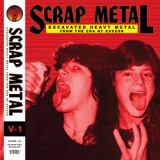
By now you’re probably familiar with our wildly popular Brown Acid series of rare, lost and unreleased proto-metal and stoner rock singles from the 60s-70s. In the endless pursuit of those glorious gems, we often uncover equally brilliant rarities from the late-70s to late-80s Golden Age of Heavy Metal that also just must be heard, but they don’t fit the series’ aesthetic. Scrap Metal, Volume 1 collects some of the greatest unknown and lost Heavy Metal tracks, long buried beneath the avalanche of the era’s classic output.
We all know the old adage that history is told by the winners. But sometimes the losers tell the best stories. And while none of these bands found fame and fortune, this artifact and the volumes to come are testament to the enduring power of heavy music. You can hear the blood, sweat and beers that went into each of these singles. The recordings may be low budget, but the inspiration and talent is immutable. Not only are the amps turned up to 11, the boyish sexual innuendo is cranked to 69. You can hear the convergence of influences — NWOBHM, thrash, glam metal, doom, etc — colliding at once as the era birthed a wellspring of subgenres.
Many of these singles are self-released and were thus limited to a small run of copies. Those that remain are hoarded by collectors and sold for exorbitant amounts. We’ve collected the best of the best for you here. As with Brown Acid, all of these tracks are licensed legitimately and the artists all get paid. Because it’s the right thing to do.
LINER NOTES:
Rapid Tears launch this series with the perfect christening. The Toronto, ON quintet’s 1981 single “Headbang” is such the pinnacle of heavy metal madness that it almost sounds like a spoof. There’s also enough of the rapid-fire sputum that inspired Metallica to bang the head that doesn’t, as such, engage in said practice, to be found on the band’s sole full length Honestly. But “Headbang” is a straightforward glammy anthem for the ages.
Air Raid’s “69 In A 55” may be lyrically so sophomoric that it’s actually pretty clever, but this 1983 Bay Area power metal single is loaded with sleek Judas Priest riffs and interwoven melodies that are downright sublime. The band’s sole release, the 2-song Rock Force 7” features a curious band photo in which 3 band members — dolled up in Crüe makeup and leather — are sexually menacing the lead singer/guitarist tied to a bed. Another low budget highlight is when singer/guitarist Tommy “Thrasher” Merry imitates a delay effect on his vocals as he sings, “tonight!...tonight...night.”
Hades’ “Girls Will Be Girls” has a real demo cassette feel to its vastly uneven mix, but the energy to the performance makes this an undeniable keeper. The long running Paramus, NJ quintet’s 1982 2- song debut 7” titled Deliver Us From Evil features this blistering thrasher dominated by shimmering leads and confident vocals that show why the band went on to near-fame on Metal Blade Records.
Resless don’t need no T to prove that they’ve got “The Power” with this 1984 driving mid-tempo rocker in the vein of Mötley Crüe and Ratt. The River Vale, NJ quartet’s tight crunch wails all over Bon Jovi posers but it’s the band’s unique and subtle deployment of background vocals that gives this rager its staying power.
Pittsburgh, the Steel City, is home to Don Cappa, a band that pays tribute to the burgh, the metal, and the awesomeness of both with “Steel City Metal.” Their lone single, issued in 1987 with only 300 copies released, sounds like the work of some serious steel driving men, with a drummer who might’ve forgotten to wear a hard hat one too many times on the construction site.
The Beast has more of a punk feel to their aggressive “Enemy Ace” track from the 4-song Power Metal EP from 1983 — something like Dr. Know meets D.O.A. But their look, artwork and lyrics all prove that Heavy Metal is where their hearts lie. And this hook filled monster delivers repeated lines like, “I command them all in my lofty realm,” with commendable conviction.
Dead Silence from Denver, Colorado, debuting in 1984 is not to be confused with Dead Silence from Denver, Colorado, who also debuted in 1984. The former a workman’s hard rock bar band, the latter a political peace punk band and neither knowing of the other’s existence throughout their tenure. The pre-internet days were a marvel, indeed.This Dead Silence spits out a slick, Nugent tinged rocker called “Can’t Stop” about life on the road.
The Danger Zone is, by all accounts, not the place to be. And, Hazardous Waste of Boston, MA saw fit to add their two cents on the matter with this 1986 single that combines Van Halen’s flashy musicianship with NWOBHM aggression that sounds so awesome it teeters on itself entering the “Danger Zone.”
Czar’s heavy, doomy “Iron Curtain” single from 1982 hearkens to the sleazy sounds of Saint Vitus and Pentagram with its cranked up DOD Distortion pedal in a Peavey combo amp guitar tone and meaty, barking vocals. The upstate NY quintet only issued this 2-song single, but its driving rhythm, nosedive whammy-bar guitar solos and comparatively mature Cold War subject matter show they had real potential.
Not much is known about Real Steel’s majestic “Viking Queen” from 1987, other than it rocks hard and the 7” 45 sells for upwards of a grand on the collectors market. The Flint, Michigan band recorded at the home studio of local radio personality Bill Lamb, who primarily released Christian Gospel recordings. So, perhaps the band was struck down by a bolt of lightning shortly after this rare single’s release. Whatever the case may be, it’s a must have for fans of classic metal mayhem.
Time fortifies the bonds between us. Since emerging in 2018, Light The Torch have grown stronger in lockstep together as a band and as friends. Through this growth, the Los Angeles, CA trio—Howard Jones vocals, Francesco Artusato [guitar], and Ryan Wombacher [bass]—only enhanced every aspect of their signature sound. Upheld by head-spinning seven-string virtuosity, yet also anchored to skyscraping melodies, the group crafted twelve no-nonsense and no-holds-barred metallic anthems on their 2021 second full-length album, You Will Be The Death of Me [Nuclear Blast].
“The past few years have helped me to become much more personal in my writing,” explains Howard. “Even though I’m kind of a loner, this band became real family. My experiences with Ryan and Fran inside and outside of the band truly bonded us. I think it shows in this album, it truly represents who we are as a group.”
“Every second on this record was thought-out,” adds Fran. “Howard’s performance gives me chills, because it feels so alive. There’s so much emotion in it. I know the guy very well at this point, and our friendship is a big part of Light The Torch.”That friendship cemented over the course of the past three years. The group shot out of the gate as a contender on their full-length debut, Revival. It bowed at #4 on the Billboard US Independent Albums Chart and at #10 on the Hard Rock Albums Chart in addition to receiving acclaim from Revolver, Outburn, and many more. “Calm Before the Storm” racked up a staggering 14.5 million Spotify streams, while “The Safety of Disbelief” remains one of SiriusXM Octane’s all-time most requested songs. They also crisscrossed North America and Europe on tour with the likes of Trivium, Avatar, In Flames, Ice Nine Kills, Killswitch Engage and August Burns Red to name a few.
In late 2019, an idea for the title track “Death of Me” kickstarted the creative process. The guys returned to Sparrow Sound in Glendale, CA to once again work with the production team of Josh Gilbert and Joseph McQueen [Bullet for My Valentine, As I Lay Dying, Suicide Silence].This time around, they also welcomed Whitechapel’s Alex Rudinger on drums. “He’s incredible,” says Fran. “He was exactly what we needed.”Now, they kick down the door for You Will Be The Death of Me with the single “Wilting In The Light.” Howard’s instantly recognizable vocals soar over a sweeping riff and rolling beat before culminating on a massive luminous hook, “Over and over again we struggle. We’re wilting in the light, and we stumble in the dark.”“It has a different vibe and a very interesting riff,” observes Howard. “I love it when listeners can take what they want from a song. This was a special one for us.”
“More Than Dreaming” opens up the record with gut-punching guitar and another knockout hook. Elsewhere, airy keys wrap around chugging distortion on the title track “Death Of Me.” Regarding the latter, the frontman goes on, “Most people have some source of grief in their lives. It’s relatable, and it was appropriate for the song.”After the melodic melancholia of “Come Back To The Quicksand,” Light The Torch recharge the 1987 Terence Trent D’Arby classic “Sign Your Name” as the record’s climax. Shimmering keys bleed into an overpowering verse before it snaps into the immortal chorus beefed up with thick distortion. “Howard stayed at my house with me and my wife for the entire recording of the album,” recalls Fran. “I like to cook, and one night during the first week of pre-production I made everyone dinner. A compilation with ‘Sign Your Name’ started playing, and I thought, ‘I can do a version that would sound awesome!’ Howard knew and loved the song too. For as crazy as it sounded, it worked so well.”
In the end, the bond between Light The Torch burns brighter than ever in the music as they deliver a definitive statement with You Will Be The Death Of Me.
“We wanted to make a fully listenable and fun album that doesn’t let up,” Howard leaves off. “At the same time, we’re showing some heart, passion, and connection. It’s what we’ve always intended to do with this band.”
Keep training!
The Berlin Jazz duo Max Andrzejewski and Johannes Schleiermacher a.k.a. TRAINING and John Dieterich (of Deerhoof) in virtual vastness...
The Corona crisis has presented musicians with difficult tasks over the past year and a half. From album recordings to tour planning. From emergency aid programmes to improvised streaming concerts. There were few musicians who dealt with the difficult situation as playfully as the two jazz musicians Max Andrzejewski and Johannes Schleiermacher from Berlin.
Both have known each other very well for a long time and play together in different outfits. Max as a drummer and Johannes as a saxophonist. Both also like to play synthesizers or samplers. Preferably all at the same time. That's why in the Corona spring of 2020
Richard Dawson is the diminutive Geordie troubadour
whose moving songs have been described as state-ofthe-nation addresses, even - or perhaps especially -
when he’s singing about pre-medieval peasants. Circle
are the genre-straddling pioneers of The New Wave Of
Finnish Heavy Metal, known for wearing spandex or
dead fish onstage and singing in a made-up language.
Together they are… Richard Dawson & Circle! ‘Henki’
is their epic joint record. It might seem a departure to
those who are most familiar with Dawson from recent
solo albums like 2017’s ‘Peasant’ and ‘2020’ (released
in 2019). In fact, ‘Henki’ fits comfortably into the bigger
picture of two acts who have always strived for
uninhibited originality.
Easily the greatest flora-themed hypno-folk-metal
record you’ll hear this year, ‘Henki’ adds an electrifying
new chapter to the remarkable story of each act,
marking the beginning of a beautiful partnership.
CD in printed inner wallet with 12-page booklet.
Double LP in printed inner sleeves plus digital
download card.
In 2014 The Soul Santas’ first, and only, gig at a
Christmas School Fair was a roaring success, after
which they decided it couldn’t be bettered so didn’t
try. Until, that is, some rehearsal recordings were
found on a phone. These recordings inspired
‘Christmas Crackers, Volume 1’, recorded over two
days in October 2020 at Invada Studios.
The album was released last winter digitally and is
now available on vinyl for the first time.
Pressed on green or red vinyl. The colour isn’t
marked on the packaging so the colour received
will be a lucky dip.
Mr. Käfer and Phlocalyst are adding their own chapter to the saga with their collaborative album Now / Again to be released via Melting Pot Music. The vibe of the 12 tracks is chill. The kicks, snares and basslines are crisp but relaxed. Wrapped up in warm melodic layers and led by the distinctive sound of Phlocalyst's trumpet. The Flemish producer grew up in Ghent and relocated to Munich where he plays in a classic orchestra - a rather uncommon day-job for a lofi producer with more than 2 million monthly listeners on Spotify. Mr. Käfer was born in Salzburg – the hometown of Wolfgang Amadeus Mozart and Crack Ignaz – to an Austrian mother and an Algerian father. Today he lives in Cologne. In his music he fuses influences from boom-bap to jazz to traditional North-African music. The album artwork was created by Cologne-based artist Giza One.
nown for her delicate compositions, soaked in dream-like surrealism, Icelandic musician Sóley has attracted a huge following since launching her solo career back in 2010. Her 2012 single ‘Pretty Face’ went on to generate an enormous amount of buzz, and quickly became a viral sensation. Now, with three solo LPs under her belt, Sóley is preparing to debut a completely new sound via the release of her new concept album, Mother Melancholia, on October 22nd.
Described by the artist as "Nosferatu meets Thelma and Louise in a vampire church under the watchful eye of David Lynch", Mother Melancholia is the soundtrack to the end of the world as we know it. As a self-confessed news addict, Sóley became obsessed with the idea that the world is ending. Having surrounded herself with real-life stories of global warming and patriarchal politics she couldn’t shake the feeling that she was going to die. This feeling was so all encompassing that it sparked the idea for a new project. Could there be a soundtrack for the last days of humans on earth? How would that sound?
“I read books about possible dystopian worlds and started writing poems about irrational and in love characters who live in gray and cold imaginary loneliness. In each other’s burning arms. Walking in circles with no way out” she explains. “After all, the album reflects our life here and now. Our life and reality is a kind of dystopian world.”
Whilst writing the album, which serves as a tongue-in-cheek eulogy to our planet, Sóley began reading about ecofeminism, a branch of feminism which uses the concept of gender to analyse the relationship between humans and the natural world. Ecofeminism emphasizes that both women and nature must be respected but also separated. Since the beginning of time, the natural world has been synonymous with female identity, phrases like Mother Nature are commonplace. “The patriarchy views women as volatile and hysterical. Earth and women are either our saviours or our destroyers,” explains Sóley. “It’s so easy to abuse the earth, like the patriarchy has abused women since the dawn of time, then ask for forgiveness afterwards and promise they´ll never do it again”.
The new album sees Sóley move away from the indie-pop of her previous releases. She began by experimenting with writing songs on the accordion, allowing her a new sense of freedom in her writing. The process allowed her to broaden her horizons even further and experiment with a whole range of new and exciting sounds. “I bought myself a theremin as I was really excited about the unpitched sound and there is no perfect pitch during the end of days,” she laughs. “I also bought a mellotron, my first moog and a cello and taught myself how to play each of them. All of these new instruments are particularly suitable for the kinds of aesthetic inconveniences which I have learned to embrace.”
Album opener ‘Sunrise Skulls’, one of the most cinematic moments on the album, was inspired by the Me Too and SlutWalk movements and tells the story of a group of women who rise up and fight the patriarchy. ‘Blows Up’, a track that would be at home on any horror soundtrack, is a sarcastic love letter from the Earth to humans. Standout track ‘Desert’ is an incredibly moving song dedicated to the next generation. “It’s about the guilt you feel, as a mother, for having children and leaving them on the frontline. My daughter, for example, will take over this inevitable war” explains Sóley.
In true soundtrack style, the album flows through the end of the world in chronological order, closing with the Earth’s final moments. ‘Sundown’ is a dark piano ballad detailing human kind’s final day on Earth. “And everyday, I dig my own grave, and as I dive in you´ll hold my hand” she sings, over twinkling piano and swirling synths. We then hear the world end on ‘XXX’, a dark and swirling soundscape that swells before fading to silence. On ‘Elegía’ the silence then turns to the sound of the ocean, as we hear the Earth, like a woman finally free from a violent relationship, healing on her own.
Mother Melancholia is the mark of an artist confidently striding into more experimental territory. With a lengthy and successful career behind her, Sóley felt compelled to try something new and express the real her. The music might be shrouded in darkness but it’s a move that fills her with joy and freedom. “I hope that people not only enjoy the new sound, but also that Mother Melancholia might raise some questions in people, particularly women,” she says. “I’m under no illusions that this album will change the world but I hope that people can connect with the idea”.
out of Stock
Last delivered 4 years ago available to reorder, subject to availability
ALTER- : A REACTION TO THE ALTERMODERNISM IN SOUND ART
For the Automatisme - Alter- album. I am inspired by how the art historian Nicolas Bourriaud defines the Altermodernism. Bourriaud understands the term "Alter" as a way to mean "other". The altermodernism would be another modernity that is different from the avant-garde modernism and post-modernism. More precisely, this is a new paradigm from the XXIe century with alternative ways to motivate artists to be more radical in art by traveling in the physical and digital world, by cutting the frontiers and by creating other time lines. I apply the "alter" subject to time and to landscape and those, to the rhythmic and the ambient glitch music.
1- THE ALBUM HAS A RHYTHMIC SIDE AND A LANDSCAPE SIDE.
1- a : The rhythmic tracks are named Alter-Rate. That means that I offer other types of rhythms by calculating beats with time rate experimentations. The form of the rhytmic tracks, expresses a course, a wandering, which, in the altermodern life, is not just in a standard 4/4 , or just grid based or non-grid based, but it's in a complex hybrid of all of those.
1- b : The ambient tracks are named Alter-Scape. That means that I offer another type of landScapes by a paused temporality and not by a random time or by the time of the nature. Alter-Scape tracks mimic the saturated globalized soundscapes of the XXIe century.
2- THE GLOBALISED AND SATURATED TIME
For Bourriaud, the artists respond to a new globalised perception. They traverse a cultural landscape saturated with signs and create new pathways between multiple formats of expressions and communications1. The Alter- album tracks have saturated rhythms Rates and static ambient soundScapes. The specific context within which we live is the age of globalisation2. In this album, it means that globalised or always evolving rhythm Rates are in constant movements and are also different every time an Alter-Rate track is exported or performed. On the other hand, a globalised landScape is an ambient track with a motionless temporality. In the era of the altermodern, displacement has become a method of depiction3. The movement of the sound in the Alter- album is two sound spaces. The first is the rhythms that make time movement become apparent and the second is an ambient paused or static time that makes possible to feel and to analyze the movement effect of our surroundings.
3- THE CONSTANT TENSION STATE OF ART
For Gilles Deleuze, art is in a constant state of tension, in as much as it oscillates between the poles of chaos and order4. The Alter- album is a tension between chaos and order in rhythmic beat tracks and ambient soundscapes tracks. It is a deterritorialization of the rhythms and the ambiences of today's natural and digital landscapes and it brings them into the computer glitch music format.
By pushing new softwares to their limits, I push at the extreme the software capacity to calculate and to generate sounds. The Alter-Rate tracks are experimentations with time rates and rhythms with the use of probability and artificial intelligence based sequencers. The partition signal starts from a master sequencer that gets into all instruments on a track. Each instrument receives this signal and modulates it with other sequencers that are each programmed differently for every instrument. Finally, all the instruments signals return to a master output that contains a stutter effect. This master channel is sequencing all other channels into one single rhythm. In short, a single rate merges and expands into a vast archipelago of rates and the transformed signal becomes a new single rate. The Alter-Scape tracks are experimentations with midi triggers that give the sensation of a timelessness. Multiple reverb effects are also routed into each other to create soundscapes of continuity. About the type of sounds created in this album, I do experimentations with deep frequency modulation synthesises (FM) on all Alter-Rate and Alter-Scape tracks.
I put a few layers in the tracks to be able to focus on the time space and perception. The tracks are generative and every parameter uses probabilities to be programmed. This is something that was not possible some years ago. The computers are enough powerful to generate that now. I export many times the tracks and i push the computers to their limits by making hard for them to calculate and to generate the tracks with a deep, a pointillist and an extreme software programming. These techniques do different versions every time that I export or perform a track and in my opinion, that opens a fresh and innovative way to do new experimental club music and ambient music. The computer has its own limits too.
Reviews in The Wire, Gonzo, A Closer Listen, Datacide, African Paper, Silent and Sound, and more
out of Stock
Last delivered 6 years ago available to reorder, subject to availability
Born in 1999, Charlie Hickey grew up in South Pasadena,
just minutes from Downtown Los Angeles. Raised by two
singer-songwriter parents, Charlie’s second language was
music since day one. As early as grade school, he was
making sense of the world through songwriting, and by
middle school he was writing, recording and performing
songs that attracted a community of collaborators and could
silence a room.
A turning point for Charlie came at around the age of
thirteen, when he covered a song by then up-and-coming
artist Phoebe Bridgers, who was still in high school herself.
The two quickly became friends and collaborators, setting
Charlie on an exciting new musical path. Years later,
Bridgers introduced Charlie to songwriter, drummer, producer
and her bandmate Marshall Vore, who noticed something
special about Charlie. The two began writing and recording
songs together, and soon Charlie dropped out of school to
work on his music full-time.
Charlie Hickey’s first proper single was ‘No Good at Lying’
and it’s the first track on ‘Count The Stairs’. The Marshall
Vore-produced track introduces us to Charlie’s evocative
storytelling and features Phoebe Bridgers on backing vocals.
“I’m no good at lying / on my back or through my teeth / but
I’m good at dreaming / I can do it in my sleep,” he sings over
hushed guitars and a whimsical banjo, searching for truth as
his unconscious mind runs wild and bleeds into reality. It’s a
slow, quiet, and understated peek to the world of Charlie
Hickey, who is barely of legal drinking age, but taps into such
universal themes that showcase a wisdom beyond his years
and exudes promise for what’s to come.
Born in 1999, Charlie Hickey grew up in South Pasadena,
just minutes from Downtown Los Angeles. Raised by two
singer-songwriter parents, Charlie’s second language was
music since day one. As early as grade school, he was
making sense of the world through songwriting, and by
middle school he was writing, recording and performing
songs that attracted a community of collaborators and could
silence a room.
A turning point for Charlie came at around the age of
thirteen, when he covered a song by then up-and-coming
artist Phoebe Bridgers, who was still in high school herself.
The two quickly became friends and collaborators, setting
Charlie on an exciting new musical path. Years later,
Bridgers introduced Charlie to songwriter, drummer, producer
and her bandmate Marshall Vore, who noticed something
special about Charlie. The two began writing and recording
songs together, and soon Charlie dropped out of school to
work on his music full-time.
Charlie Hickey’s first proper single was ‘No Good at Lying’
and it’s the first track on ‘Count The Stairs’. The Marshall
Vore-produced track introduces us to Charlie’s evocative
storytelling and features Phoebe Bridgers on backing vocals.
“I’m no good at lying / on my back or through my teeth / but
I’m good at dreaming / I can do it in my sleep,” he sings over
hushed guitars and a whimsical banjo, searching for truth as
his unconscious mind runs wild and bleeds into reality. It’s a
slow, quiet, and understated peek to the world of Charlie
Hickey, who is barely of legal drinking age, but taps into such
universal themes that showcase a wisdom beyond his years
and exudes promise for what’s to come.
Mega rare 1974 jazz funk rock album recorded by Argentina's top jazzmen Pocho Lapouble, Ricardo Lew and Adalberto Cevasco (also members of Quinteplus, Jorge Lopez Ruiz's band and Gato Barbieri's group among many others). Includes the irresistible fast-paced funk rock track 'Se Acabó el Recreo' and the ethereal 'Todo en Su Medida y Armoniosamente' and 'Haceme Shaft', featuring Patricia Clark on vocals and unexpected moog arrangements. First time reissue, with remastered sound and original artwork.
Those into world jazz will be aware of the amazing modal, big band and post-bop jazz recordings released in Argentina in the '60s. The body of work produced by the likes of Chivo Borraro, Jorge López Ruiz or Enrique Villegas would be able to rival the recordings of their American counterparts.
The following decade would see a great openness to the exploration, with a jazz language, of other musical genres, with a certain preponderance of rhythm. The members of El Trio are part of a jazz generation with a greater propensity to experiment with electricity and with what could be considered an avant la page exercise of what soon afterwards would be called jazz rock -it is music composed and played, in the faraway Buenos Aires, at the same time Miles Davis adventured into new fields, with such records as "In a Silent Way" or "Bitches´ Brew".
"Todo en su medida y armoniosamente" reflects that same spirit of experimentation and fusion of diverse influences with an eye on both rock and local folklore. It's not surprising that the protagonists of this recording -Pocho Lapouble (drums), Ricardo Lew (guitar) and Adalberto Cevasco (bass) - had accompanied Gato Barbieri himself in his project "Latinoamérica" shortly before the release of this album where the presence of rhythms from the southern hemisphere infused the avant-garde jazz of the Argentine saxophonist. Drummer Pocho Lapouble had also created Quinteplus, which in 1972 released a single studio LP inspired by those same premises of fusion jazz.
This album was originally released on the eclectic local label Music Hall in 1974 and probably distributed in tiny quantities, hence the rarity of this record and the current crazy prices in the collectors' market.
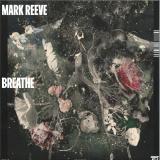
Breathe – the stunning eight-track mini album from long-standing British techno artist Mark Reeve out via Adam Beyer's iconic Drumcode Records.
Following a slew of critically acclaimed single and EP releases on Drumcode over the course of his esteemed decade-long career – the last of which came in the form of his mammoth Distance EP back in February 2020 – Breathe marks Mark Reeve's most extensive musical opus on the legendary imprint, and goes a long way in showcasing the inexhaustible creativity of one of the most prolific and original artists in techno today.
A career-defining moment for Reeve, Breathe has extraordinary allure and maintains the impressive quality of engaging the listener from the very start. A rich and complex body of work, the stunning eight-tracker goes far beyond Mark's trademark transcendental crowd pleasers, encompassing lilting moments of euphoric ambience alongside a sundry offering of full-throttle warehouse juggernauts and ravey breakbeat cuts.
out of Stock
Last delivered 8 months ago available to reorder, subject to availability
Empty surrounds all of me. It’s a poignant line from the third album by Blackwater Holylight that encapsulates the search for self when suddenly everything has changed. There’s a theme of processing vast personal trauma throughout Silence/Motion that eloquently — both lyrically and musically — and simultaneously embodies the crushing emptiness, sorrow, strength and rebuilding of recovering from personal devastation.
“There was so much grief both in the world and interpersonally during the process of creating Silence/Motion,” says vocalist/bassist Allison “Sunny” Faris. “The four of us gave one another more space to be ourselves, to experiment with each other’s ideas and to be gentle with one another more than we ever have before. So, we knew this tenderness would manifest in extremely honest arrangements, and I think that you can hear that throughout the record.”
Curiously, considering the dark times in which it was created, this is the band’s most melodic and catchy music so far. Blackwater Holylight, as the name suggests, is all about contrasts: It’s a fluid convergence of sound that’s heavy, psychedelic, melodic, terrifying and beautiful all at once. And, Silence/Motion finds the band honing those contrasts, letting ideas and moods fully develop from song to song, rather than filling every song with a full range of their capabilities. It allows the band to go fully prog-rock here, and simply stay hushed and intimate there. There’s a new confidence to the band in how seamlessly they wield their stylistic amalgam.
“Writing this album was extraordinarily difficult emotionally, however it did come to fruition fairly quickly,” Faris says. “In the past, the theme of vulnerability has always been a big player and it definitely showed up full force while writing this album.”
Blackwater Holylight recorded the album as a four piece: Faris on vocals and guitar (on “Silence/Motion”, “MDIII”, “Around You” and “Every Corner”) and bass for the remainder, Sarah McKenna on synths, Mikayla Mayhew on guitar (and bass when Faris plays guitar) and drummer Eliese Dorsay. New second guitarist Erika Osterhout will perform the songs with them live. For Silence/Motion the band chose to work with a producer for the first time, bringing in A.L.N. (of Mizmor, Hell) to produce, along with recording engineer Dylan White — who also helmed their previous album Veils of Winter (2019) — at Odessa Recording Studio in Portland, OR. Guest vocals on album opener “Delusional” are by Bryan Funck (Thou.) Mike Paparo (Inter Arma) and A.LN. (Mizmor, Hell) lend guest vocals to album closer “Every Corner.”
Silence/Motion opens softly with interwoven folky single note guitars over an ominous sounding drone for the first minute, akin to moments from Pink Floyd’s Echoes. Suddenly an irresistibly head-nodding, groovy droptuned riff kicks in with the drums and it’s a full on blackened rocker with soaring synths and Funck’s witchy whispers over the top. “Who The Hell,” the track quoted above, takes proceedings into a Krautrock direction, centered around McKenna’s arpeggiated synth loop and Dorsay’s tom-tom triplets, while 16-note guitar strums add tension as Faris wearily sings, “So tell me who the hell would want to live this way — so afraid/ To feel this void, to dwell in it… I can’t describe this pain I wear/ It suffocates and you left it here.” It’s an incredibly powerful 6 minutes. The title track delivers the 1-2-3 punch of the album’s brilliant opening trilogy. It starts with lightly plucked acoustic guitar, plaintive piano chords and Faris’ voice gliding so softly it sounds more like a Mellotron. The song builds slowly toward crescendo, led by a swinging tom pattern, that abruptly switches back to a heavier version of the opening melody.“Silence/Motion” is about digesting and healing from sexual assault. As Faris explains, “It is an ode to the juxtaposition of feeling paralyzingly blank and and like your entire life is moving through you simultaneously.” Elsewhere, Black Metal guitars collide with dreamlike melodies. “Around You” brandishes a hopeful, hummable synth melody and shimmering shoegaze guitars like throwing down a gauntlet. In the end, it becomes undeniably clear just how completely into their own Blackwater Holylight has come.
“The analogy is that with our first record (Blackwater Holylight, 2018) we were getting into to the car and buckling up,” Faris says. “The second (Veils of Winter, 2019) we were turning the car on, and with this third we have kicked into drive toward our destination. Our destination is a bit mysterious and has the ability to change from day to day, but we’re on our way.”
Empty surrounds all of me. It’s a poignant line from the third album by Blackwater Holylight that encapsulates the search for self when suddenly everything has changed. There’s a theme of processing vast personal trauma throughout Silence/Motion that eloquently — both lyrically and musically — and simultaneously embodies the crushing emptiness, sorrow, strength and rebuilding of recovering from personal devastation.
“There was so much grief both in the world and interpersonally during the process of creating Silence/Motion,” says vocalist/bassist Allison “Sunny” Faris. “The four of us gave one another more space to be ourselves, to experiment with each other’s ideas and to be gentle with one another more than we ever have before. So, we knew this tenderness would manifest in extremely honest arrangements, and I think that you can hear that throughout the record.”
Curiously, considering the dark times in which it was created, this is the band’s most melodic and catchy music so far. Blackwater Holylight, as the name suggests, is all about contrasts: It’s a fluid convergence of sound that’s heavy, psychedelic, melodic, terrifying and beautiful all at once. And, Silence/Motion finds the band honing those contrasts, letting ideas and moods fully develop from song to song, rather than filling every song with a full range of their capabilities. It allows the band to go fully prog-rock here, and simply stay hushed and intimate there. There’s a new confidence to the band in how seamlessly they wield their stylistic amalgam.
“Writing this album was extraordinarily difficult emotionally, however it did come to fruition fairly quickly,” Faris says. “In the past, the theme of vulnerability has always been a big player and it definitely showed up full force while writing this album.”
Blackwater Holylight recorded the album as a four piece: Faris on vocals and guitar (on “Silence/Motion”, “MDIII”, “Around You” and “Every Corner”) and bass for the remainder, Sarah McKenna on synths, Mikayla Mayhew on guitar (and bass when Faris plays guitar) and drummer Eliese Dorsay. New second guitarist Erika Osterhout will perform the songs with them live. For Silence/Motion the band chose to work with a producer for the first time, bringing in A.L.N. (of Mizmor, Hell) to produce, along with recording engineer Dylan White — who also helmed their previous album Veils of Winter (2019) — at Odessa Recording Studio in Portland, OR. Guest vocals on album opener “Delusional” are by Bryan Funck (Thou.) Mike Paparo (Inter Arma) and A.LN. (Mizmor, Hell) lend guest vocals to album closer “Every Corner.”
Silence/Motion opens softly with interwoven folky single note guitars over an ominous sounding drone for the first minute, akin to moments from Pink Floyd’s Echoes. Suddenly an irresistibly head-nodding, groovy droptuned riff kicks in with the drums and it’s a full on blackened rocker with soaring synths and Funck’s witchy whispers over the top. “Who The Hell,” the track quoted above, takes proceedings into a Krautrock direction, centered around McKenna’s arpeggiated synth loop and Dorsay’s tom-tom triplets, while 16-note guitar strums add tension as Faris wearily sings, “So tell me who the hell would want to live this way — so afraid/ To feel this void, to dwell in it… I can’t describe this pain I wear/ It suffocates and you left it here.” It’s an incredibly powerful 6 minutes. The title track delivers the 1-2-3 punch of the album’s brilliant opening trilogy. It starts with lightly plucked acoustic guitar, plaintive piano chords and Faris’ voice gliding so softly it sounds more like a Mellotron. The song builds slowly toward crescendo, led by a swinging tom pattern, that abruptly switches back to a heavier version of the opening melody.“Silence/Motion” is about digesting and healing from sexual assault. As Faris explains, “It is an ode to the juxtaposition of feeling paralyzingly blank and and like your entire life is moving through you simultaneously.” Elsewhere, Black Metal guitars collide with dreamlike melodies. “Around You” brandishes a hopeful, hummable synth melody and shimmering shoegaze guitars like throwing down a gauntlet. In the end, it becomes undeniably clear just how completely into their own Blackwater Holylight has come.
“The analogy is that with our first record (Blackwater Holylight, 2018) we were getting into to the car and buckling up,” Faris says. “The second (Veils of Winter, 2019) we were turning the car on, and with this third we have kicked into drive toward our destination. Our destination is a bit mysterious and has the ability to change from day to day, but we’re on our way.”
"Free Jazz " - Ornette Coleman (as); Eric Dolphy (b-cl); Don Cherry, Freddie Hubbard (tp); Charlie Haden, Scott LaFaro (b); Billy Higgins, Ed Blackwell (dr)
The term 'free jazz' was already inexistence – but it had a quite different meaning, namely jazz without paying for an entrance ticket. The album "Free Jazz", however, was intended to lend its name to a quite different style of jazz. 'Free' playing – now this meant that no one was bound to conventions, you could let your imagination run loose. Free jazz gave one the chance to find new rules for every new composition. And it was to be the greatest boost to innovation in the world of jazz. Ornette Coleman’s album from December 1960 stands at the beginning of the free jazz era like a massive portal. Coleman thought big: he brought two quartets into the studio at the same time, both with two wind instruments and no piano, and let them play together for 36 minutes without a break – a collective improvisation. There aren’t any precise themes, although short, fanfare-like motifs do exist in which the winds come together. A continuousdense rhythmic beat underlies the music almost throughout – and the pulse is felt rather than heard. One musician after the other comes into the foreground to improvise, almost like at a jam session. First Coleman, then Dolphy, then the two trumpeters. The other winds, however, never remain silent, then make comments and support one another continually – the energy level is immense the whole time (it was cold in the studio ...). Only when it is the turn of the bass and drum players do the winds remain silent for about eleven minutes. This album is not only a historic caesura, but a truly great experience over andover again.
This Speakers Corner LP was remastered using pure analogue components only, from the master tapes through to the cutting head. More information under pure-analogue
All royalties and mechanical rights have been paid.
Recording: December 1961 in A&RStudios, New York City, by Tom Dowd
A Paean to Wilson is still arguably Vini Reilly and the Durutti Column's most important and consistent piece of work since the demise of the original and seminal Factory Records in the early 1990's. On this release we have the ‘F4 Heaven Sent’ tracks released on vinyl for the first time. They first appeared in 2005 via Wilson's project F4, as being the fourth version of Factory Records. Originally it was download-only release, Heaven Sent (It Was Called Digital, It Was Heaven Sent). A six track CD of personal dedications by Vini ironically the last piece is titled Anthony. Originally this was commissioned for the MIF (Manchester International Festival) where it was premiered in July 2009. Vin had already composed pieces for Tony to listen to whilst he was ill in hospital and it was from here that the project developed. This release belatedly coincides with the new Paul Morley Biography ‘Manchester with Love: The Life and Opinions of Tony ...’Ever critical of Vini's voice, but ever a fierce champion of his talent, the late Tony Wilson would surely appreciate this instrumental tribute by The Durutti Column. ‘Near the beginning of the final night of the Durutti Column's 70-minute international festival tribute to Tony Wilson, A Paean to Wilson, guitarist Vini Reilly announced that he wouldn't be singing: "So you won't have to put up with my awful voice and schoolboy lyrics." If Wilson was with us, he would have chuckled. The Granada presenter-turned-Factory Records boss spent years urging his first signing to stop singing, and concentrate on the virtuosity that led Red Hot Chili Pepper John Frusciante to call Reilly "the greatest guitarist in the world". Two years after his death, Wilson got his way, one of many lovely touches in a very personal, emotional and often warmly funny musical tribute. Wilson signed Joy Division and Happy Mondays, yet never gave up on this cult band he adored, working with them even after his legendary label went bankrupt. A complex man, Wilson was an academic thinker who revelled in Steve Coogan's affectionate, Alan Partridge-style send-up of him. And this tribute was no different. At one point, Reilly known for melancholy launched into something resembling an Irish jig. "Tony loved to laugh," he explained. "He loved absurdities." After the humour came exquisitely mournful music. With Reilly and drummer Bruce Mitchell augmented by bass, keyboard, violin, electric piano, drum machine and trumpet, the band's beautiful pieces reflected Wilson's love of rock and classical. Reilly's plangent guitar work showed grief's emotional spectrum, from sadness to overdriven anger. As in life, Wilson had the last word, his recorded voice expounding thoughts on socialism with an eerie echo. Silence followed as Manchester pondered the loss of one of its truly larger-than-life characters. Then everybody cheered.' Dave Simpson The Guardian 20/7/09
"First Noel is a Christmas album including 25 of the greatest classics as well as three exclusive new tracks I composed especially for the very first Christmas of my son, and in honor of my grandma Odette's last one, past year. The Christmas memories I have are full of wonderful moments, so I insisted on recording this album staying true to the magic of these instants.
First thing, I surrounded myself with 3 great friends of mine and long-time collaborators: François Delporte (guitar), Frank Woeste (piano) and Sofi Jeannin (choirmaster). Sofi has selected 8 singers with celestial, sublime voices. We recorded in two magical places: the studio of my friend Armand Amar - where I had the chance to work on my first albums (Babel Studios in Montreuil) - and the Church of Saint-Julien-le-Pauvre. The latter being the most ancient church in Paris - only a few meters away from the Notre-Dame Cathedral - has always been at the center of significant moments in our family history in France. My father was a sacristan there in the '60s. It is in the sacristy that he elaborated and worked on his trumpeter career. My aunt Hind - whom I loved - also a pianist, and my beloved grandmother, Odette, both had their funeral in this church. It is also in this same church that I got engaged and married… So many milestones.
After recording many albums, I felt it was the right time for me to share my versions of those great Christmas classics, by giving them a much less childish dimension and a more musical, also spiritual one, but still preserving their subtle and necessary fragility, specific of children's music or of those great classics renowned and sang all over the world. I was hoping that First Noel would not be yet "another" Christmas album, with Frank Sinatra-like crooners and Hollywood-style arrangements. Instead, a simple, humble, instrumental album, in the original meaning, without lyrics, allowing the melody to be at the center of it all. Soothing music to dream, to reunite us, regardless of our mother tongue, our age, our culture and more importantly regardless of our religion.
That is how Odette viewed things, and this is also the way I wish Nael and Lily, my children, would listen to the world."
Spiritczualic Enhancement Center are a "spectral trance-jazzensemble with a psychedelic-punk methodology", as they define themselves - an eclectic group of 15 musicians, almost a collective, from Germany, Israel, Iran, USA, Turkey, UK, Russia and former Yugoslavia. Landing on Kryptox, with their 4th record (the others were self released) this is musical material the bandrecorded in several sessions in Romania and the Czech Republic, inside a church in Hamburg and while staying with a commune inrural Denmark over the last years.
out of Stock
Last delivered 4 years ago available to reorder, subject to availability
absent origin’ reassembles and reimagines recordings and musical
scores composed by Mira Calix, globally, over the past decade. It’s a
collage album about edges and borders, cutting and tearing, and
composing new combinations that point to an audio visual manifesto for the 21st Century.
“Like Duchamp, I had started out wanting to make an album, or box, of approximately all the things I produced. In the end, I realised - as much as a collage is the coupling of two or more realities, it also offers the means to examine the materials and culture of an era, questioning and expanding its borders.” - Mira Calix
Every song on the album was created by applying a different collage
process relating to a different visual artist, spanning the history of collage to contemporaries of the practice. The sonic materials are subjected to a myriad of processes; layered, synthesised, constructed and assembled into electronic melodies, textures and complex, frisky dance rhythms that are constantly shifting in surprising ways. absent origin employs collage to make sense of the current moment of displaced voices, disjunction and political unrest.
Calix’s recording sessions from all over the world are the many
fragments we hear across the album; from India to Tasmania, Jordan to Belgium, China to Uganda, her former home of South Africa, to her
current home in Britain. Slicing into these are further recordings of
vocalists, percussionists, choirs, orchestras, quartets and soloists, never appearing in the form in which they were originally intended. The record is a polyphony of predominantly diverse female voices held together by pulsating baselines, haunting electronic sounds and orchestrated melodies and with them, we travel.
The album fizzes with a political energy and the interconnectedness of
everything. At this moment in time, there is an impossibility of separating one thing from another; the effect is strange and not exactly reassuring.
Collage suggests infinite possibilities and each track here is a singularly unique compositional combine, a dizzying hall of mirrors with its own unlikely harmony, its own distinctive rhythm. On ‘absent origin’, collage becomes the tool to make sense of a present that is often anything but.
2LP in printed inner sleeves with 5mm spine outer, printed insert and
digital download code.
out of Stock
Last delivered 4 years ago available to reorder, subject to availability
Veteran producer Thomas Feriero graces us with his first album in years and his debut LP as Maenad Veyl. Hosted inside a sleeve designed with Tomaso Lisca are twelve tracks made of the same contained abrasion we fell for on his EPs for Death & Leisure, Veyl and Pinkman. A full-on workout devoid of fillers, ambient interludes and other mindless garbage, 'Body Count' is as relentless as the name suggests.
out of Stock
Last delivered 4 years ago available to reorder, subject to availability
Night Divine is a series of hymns covered by Brian Fallon. This is a project he's been wanting to create for a long time, inspired by his time singing in the church choir as a child: “These are some of the very first sounds I remember hearing as a child. My mother used to sing these hymns everywhere she went. I felt it was time for me to join in.” He finally got the opportunity to make the intimate record during lockdown, with background vocals by his mother. The lead singer of beloved heartland-punk band The Gaslight Anthem, Brian Fallon stepped away from that sound and into a more soulful singer/songwriter territory on his third solo album, Local Honey. Produced by Grammy-award winning producer Peter Katis (The National, Frightened Rabbit, Death Cab for Cutie), the album debuted at #1 Americana/Folk Album Sales, #2 Current Rock Albums, #3 Americana/Folk Albums, and #9 LP Vinyl Sales. It was largely praised as one of his best works, with Rolling Stone saying “Local Honey is as warm and comforting as its title, full of hooks and narratives that draw you in” (Best Country & Americana Albums of 2020) and Kerrang saying “No matter what side of the genre he sets his mind to, Brian always delivers the goods” (Best Albums of 2020).
When hearing Anna Gréta at the piano, you become witness to an
astonishingly mature artist, with absolutely profound technique, a
complex understanding of style and harmony and an impressively
wide range of musical expression, who has made an extraordinarily
good name for herself in just a few years on the Scandinavian scene.
Over a period of two years, partly influenced by isolation, the twelve
compositions of ‘Nightjar in the Northern Sky’ emerged, for Anna
Gréta not only as a pianist but also as a singer.
The album title ‘Nightjar in the Northern Sky’ sets the tone for the
world of the album: A metaphor for the Scandinavian expanse,
tranquility and the close connection between people and nature, a
theme that runs through the songs in many pictures. “Nature is just an
enormous force in life. It is so much bigger than most of the other
things that otherwise seem so significant to us. And it is, in its infinite
facets, perhaps the greatest inspiration for my music. A place where
the noise falls silent and you can feel and hear yourself again,” before
adding: “Recently I have been developing a passion for bird-watching
- something that I reflect on in the title track. When you observe
nature carefully you can experience or see something unique. Sort of
like searching for love. The nightjar is a bird that is rarely seen flying
across the sky in Sweden and has been observed in Iceland less than
five times. I feel that everyone is looking for something unique in their
lives. And that nature can offer that to the ones open to see it.”
With each of the tracks on the album she creates little, self-contained
worlds that fit into a bigger picture. Light-footed, relaxed, reduced,
concentrated. An art that required a great deal of work and attention
to detail. Together with pop-experienced producer Albert
Finnbogason, Anna Gréta chose the perfect, hand-picked line-up and
sound for each of her extraordinarily refined - harmoniously and
rhythmically - compositions.
Although always in a coherent framework, Anna took elements from a
very diverse range of musical styles, alternating between jazz
elements and influences from pop music to excerpts from classical
and folk. All these elements create a remarkably multi-layered album,
which at the same time tells a coherent, bigger story.
CD in 4-page digipack with 12-page booklet.
180g vinyl with digital download code
Dave Chappelle's viral video "8:46". The video was YouTube's top trending video of 2020 with over 30 million views. The video and subsequent album are a searing rumination in the aftermath of the murder of George Floyd that ignited worldwide outrage and led to protests on race inequality, police brutality and the criminal justice system. Filmed in Ohio on June 6, during the COVID-19 lockdown, "8:46" addresses one deadly plague, while in the grips of another. The B-side of the album features poet Amir Sulaiman's performance of "My Insides Out" and "We Must Win," also recorded in Ohio. It also includes "White Noise," 8 minutes and 46 seconds of silence in remembrance of George Floyd and the countless victims of police brutality and systemic racism. The album cover and artwork features performance and backstage photos from Chappelle's performance as well as images from various George Floyd protests in Los Angeles, CA, all taken by Grammy-nominated artists and photographer Mathieu Britton.
At this stage in the game, the name Whitechapel commands respect. Already sitting on one of the most enviable catalogs in contemporary metal, in 2019 they dropped The Valley, showcasing a confident evolution in their sound and standing as a true landmark release that sets a new standard for the genre. In 2021, they return with that album's successor, the mighty Kin , which is an even more dynamic and diverse collection, further advancing the band's sound into new territory without losing sight of what brought them to this point. The commencement of writing for the album was a direct result of the Covid pandemic, the band having several tours lined up to finish out the cycle for The Valley, but when these got cancelled, they decided to refocus their energies and begin working on a new record. The result is a collection that explores a lot of sonic and emotional territory, and for the first time, it could be said that a Whitechapel record is as much a rock album as it is a metal one, an assertion guitarist Alex Wade agrees with. "It's still very much a metal album, I don't think you would hear any of the songs on mainstream radio, but there are elements of the record that have more of a rock and open vibe. We really wanted these songs to breathe and have life and to sound bigger than anything we've made so far. We have explored more singing on 'Kin' too. It wouldn't make sense to have the majority of the fanbase enjoy that sound and then shy away from it." This is not to say that the band have lost their hardest edges, with the full-on death metal assault that kicks off both "Lost Boy" and "To The Wolves" as brutal and serrated as extreme metal gets, and while vocalist Phil Bozeman explores his wide-ranging singing voice more, he also cuts loose with his trademark roar across the album's eleven tracks.