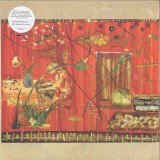
**LTD BLACK AND RED MARBLE**
As humans, we are aware of our inner beast and should therefore be able to control it. We understand our hard-wired primal urges and why they exist in an evolutional sense. We understand the relationship between mind and body. Highly evolved and intelligent, we should be able to recognize these genetic hangovers and control them as a means to act positively and move forward as a compassion-ate species. Unfortunately, this is not the case. Recent global events have proven this. The human race is consuming itself.
World Eater, the new album by Benjamin John Power's Blanck Mass project, is a reaction to this. There is an underlying violence and anger throughout the record, even though some of these tracks are the closest Power has ever come to writing, in his words, actual love songs.'
Maybe subconsciously this was some kind of countermeasure to restore some personal balance,' Power explains.
On World Eater, Power further perfects the propulsive, engrossing electronic music he has created throughout his impressive decade-plus career, both under the Blanck Mass moniker and as one-half of Fuck Buttons, as he elaborates upon the sound of 2015's brilliant double album Dumb Flesh. As massive as the sonic world of the new record often feels, its greatest achievement is in its maximization of a limited set of tools, a restriction intentionally set by Power himself.
As an exercise in better understanding myself musically, I found myself using an increasingly restricted palette during the World Eater creative process. Evoking these intense emotions using minimal components really put me outside of my comfort zone and was unlike the process I am used to. Feeling exposed shone a new light on this particular snapshot. I feel enriched for doing so.'
(A) 1. John Doe's Carnival of Error
(B) 2. Rhesus Negative
(C) 3. Please
(D) 4. The Rat
(E) 5. Silent Treatment
(F) 6. Minnesota / Eas Fors / Naked
(G) 7. Hive Mind
Поиск:silent mind
Все
"Rock and metal music have always been a haven for those who have bigger stories to tell; who have grander emotions to convey. For more than thirty years, Finnish figureheads Amorphis have done their best to carve their very own niche in heartfelt yet aggressive, melancholic yet soothing tunes. On “Halo”, their staggering fourteenth studio effort, the Fins underline their trailblazing status as one of the most original, culturally relevant and rewarding acts ever to emerge from the land of the thousand lakes. In the past, mythology and legend took the role of today’s pop culture: Stories and a set of values uniting us by giving us a voice and a tapestry on which we can find each other and identify with something. By weaving the tales of Finnish national epos “Kalevala” into their songs and interpreting them in a timeless way, Amorphis combine the role of ancient minstrels and luminaries of the modern world, honouring tradition without getting stuck in the past. The vibrant, lively, and touching beauty that is “Halo” highlights their musical and storytelling mastership on a once again soaring level: It’s a progressive, melodic, and quintessentially melancholic heavy metal masterwork plucked from the fickle void of inspiration by original guitarists Esa Holopainen and Tomi Koivusaari, bassist Olli-Pekka Laine, drummer Jan Rechberger, longtime keyboardist Santeri Kallio and vocalist Tomi Joutsen, the band’s long-standing lyrical consciousness Pekka Kainulainen and a selected group of world class audio professionals led by
renowned Swedish producer Jens Bogren. Considering the band’s prolonged journey in the forefront of innovative metal music, it’s difficult to grasp how Amorphis manages to raise the proverbial bar time and time again, presenting a more than worthy finale to the trilogy begun with 2015’s “Under the Red Cloud” followed by 2018’s “Queen of Time.” “It really is a great feeling that we can still produce very decent music as a band,” says Holopainen, a founding member of the band. “Perhaps a certain kind of self-criticism and long experience culminate in these latest albums.” To the songwriter himself, “Halo” sounds both familiar and different. “It is thoroughly recognizable Amorphis from beginning to end but the general atmosphere is a little bit heavier and more progressive and also organic compared to its predecessor,” he elaborates. Tomi Joutsen, the man with vocal cords capable of unleashing colossal, bear-like growls as well as singing soothing, mesmerising lullabies, adds, “To me, ‘Halo’ sounds a little more stripped down compared to ‘Queen Of Time’ and ‘Under The Red Cloud.’ However, don’t get me wrong: when a certain song needs to sound big, then it sounds very big.” He’s right, of course: By stripping down some of the arrangements, the monumental moments become even more monumental. That’s of course also thanks to producing renaissance man Jens Bogren who harvested the thirteen final tracks from a batch of thirty songs Amorphis offered him. “Jens is very demanding, but I really like to work with him,” says Holopainen. “He takes care of the whole project from start to finish, and he allows the musician to focus on just playing. I may not be able to thank Jens enough. Everything we’ve done together has been really great, and this co-operation has carried Amorphis significantly forward.” Indeed. Setting off with the stormy grandeur of opener “Northwards,” Amorphis take us on an epic journey through the lands of the north, their rich cultural and historical heritage and musical traditions. This is not only an album for fans or metal connoisseurs. It’s a must for every imaginative mind out there with a soft spot for cinematic soundscapes, triumphant melodies and breathtaking dynamics measuring the borderlands of light and dark. However, no Amorphis album would be complete without the imaginative and poetic storytelling of renowned lyricist and “Kalevala” expert Pekka Kainulainen. “From day one, Pekka has always been an enthusiastic and prolific lyricist for Amorphis,” says Joutsen. “It is a slow process of translating archaic Finnish poetry into English and adapting it our progressive rhythms. Fortunately, Pekka does everything on time and with great care.” Since 2007’s “Silent Waters,” Kainulainen has been navigating the mythological waters of his homeland with great skill and respect. For “Halo,” he outdid himself once again. “‘Halo’ is a loose themed record filled with adventurous tales about the mythical North tens of thousands of years ago,” he explains. “The lyrics tell of an ancient time when man wandered to these abandoned boreal frontiers after the ice age. While describing the revival of a seminal culture in a world of new opportunities, I also try to reach the sempiternal forces of the human mind.” Thirty-one years after their inception, with uncounted global tours under their belt and fourteen albums deep in their career, Amorphis still proves to be the musical fountain of youth, an extraordinary band constantly reinventing itself without abandoning its mystical roots. With “Halo”, they deliver an astonishing album that deserves to be played everywhere, transcending the realms of metal and rock by its sheer profoundness and musicality."
"Rock and metal music have always been a haven for those who have bigger stories to tell; who have grander emotions to convey. For more than thirty years, Finnish figureheads Amorphis have done their best to carve their very own niche in heartfelt yet aggressive, melancholic yet soothing tunes. On “Halo”, their staggering fourteenth studio effort, the Fins underline their trailblazing status as one of the most original, culturally relevant and rewarding acts ever to emerge from the land of the thousand lakes. In the past, mythology and legend took the role of today’s pop culture: Stories and a set of values uniting us by giving us a voice and a tapestry on which we can find each other and identify with something. By weaving the tales of Finnish national epos “Kalevala” into their songs and interpreting them in a timeless way, Amorphis combine the role of ancient minstrels and luminaries of the modern world, honouring tradition without getting stuck in the past. The vibrant, lively, and touching beauty that is “Halo” highlights their musical and storytelling mastership on a once again soaring level: It’s a progressive, melodic, and quintessentially melancholic heavy metal masterwork plucked from the fickle void of inspiration by original guitarists Esa Holopainen and Tomi Koivusaari, bassist Olli-Pekka Laine, drummer Jan Rechberger, longtime keyboardist Santeri Kallio and vocalist Tomi Joutsen, the band’s long-standing lyrical consciousness Pekka Kainulainen and a selected group of world class audio professionals led by
renowned Swedish producer Jens Bogren. Considering the band’s prolonged journey in the forefront of innovative metal music, it’s difficult to grasp how Amorphis manages to raise the proverbial bar time and time again, presenting a more than worthy finale to the trilogy begun with 2015’s “Under the Red Cloud” followed by 2018’s “Queen of Time.” “It really is a great feeling that we can still produce very decent music as a band,” says Holopainen, a founding member of the band. “Perhaps a certain kind of self-criticism and long experience culminate in these latest albums.” To the songwriter himself, “Halo” sounds both familiar and different. “It is thoroughly recognizable Amorphis from beginning to end but the general atmosphere is a little bit heavier and more progressive and also organic compared to its predecessor,” he elaborates. Tomi Joutsen, the man with vocal cords capable of unleashing colossal, bear-like growls as well as singing soothing, mesmerising lullabies, adds, “To me, ‘Halo’ sounds a little more stripped down compared to ‘Queen Of Time’ and ‘Under The Red Cloud.’ However, don’t get me wrong: when a certain song needs to sound big, then it sounds very big.” He’s right, of course: By stripping down some of the arrangements, the monumental moments become even more monumental. That’s of course also thanks to producing renaissance man Jens Bogren who harvested the thirteen final tracks from a batch of thirty songs Amorphis offered him. “Jens is very demanding, but I really like to work with him,” says Holopainen. “He takes care of the whole project from start to finish, and he allows the musician to focus on just playing. I may not be able to thank Jens enough. Everything we’ve done together has been really great, and this co-operation has carried Amorphis significantly forward.” Indeed. Setting off with the stormy grandeur of opener “Northwards,” Amorphis take us on an epic journey through the lands of the north, their rich cultural and historical heritage and musical traditions. This is not only an album for fans or metal connoisseurs. It’s a must for every imaginative mind out there with a soft spot for cinematic soundscapes, triumphant melodies and breathtaking dynamics measuring the borderlands of light and dark. However, no Amorphis album would be complete without the imaginative and poetic storytelling of renowned lyricist and “Kalevala” expert Pekka Kainulainen. “From day one, Pekka has always been an enthusiastic and prolific lyricist for Amorphis,” says Joutsen. “It is a slow process of translating archaic Finnish poetry into English and adapting it our progressive rhythms. Fortunately, Pekka does everything on time and with great care.” Since 2007’s “Silent Waters,” Kainulainen has been navigating the mythological waters of his homeland with great skill and respect. For “Halo,” he outdid himself once again. “‘Halo’ is a loose themed record filled with adventurous tales about the mythical North tens of thousands of years ago,” he explains. “The lyrics tell of an ancient time when man wandered to these abandoned boreal frontiers after the ice age. While describing the revival of a seminal culture in a world of new opportunities, I also try to reach the sempiternal forces of the human mind.” Thirty-one years after their inception, with uncounted global tours under their belt and fourteen albums deep in their career, Amorphis still proves to be the musical fountain of youth, an extraordinary band constantly reinventing itself without abandoning its mystical roots. With “Halo”, they deliver an astonishing album that deserves to be played everywhere, transcending the realms of metal and rock by its sheer profoundness and musicality."
Not much is known about the German session musician ensemble Studiogruppe 1 from the ‘70s and ‘80s. It’s believed that the grandfather of one member, known only as V.S., originally soundtracked silent films in theatres - although that hasn’t been proved. Studiogruppe1 never rose to prominence in the heyday of studio groups and library records, but it certainly wasn’t due to lack of trying.
Although it’s unknown who the individual members of Studiogruppe1 were, it’s clear they could find a groove within the machines. It appears the sessions were also engineered by V.S., and there’s plenty of space between the notes, which lends a heady atmosphere of anticipation to the music. Just close your eyes and you will find that the music triggers many scenes from the movies in your mind.
Take the opener Dunkler Sonnenaufgang, for example. Waves lap on the shore line of an alternate Coney Island, while the sound system of an abandoned amusement park plays arpeggios in the distance. Errinungen could complement expansive panoramic time-lapses of natural cycles and rolling clouds. The track Wenn Der Tiefe Schlaf Kommt, might accompany a documentary on REM dream cycles and flotation tanks. Sonnentanz raises the temperature, as act III in every movie narrative should, as protagonists rush to overcome their challenges. Ein Neuer Anfang would perfectly soundtrack the plot twist of any number of thrillers, film noirs, or sci-fi mysteries. Album closer War Alles Nur Ein Traum could supplement slow-motion shots of dawning realization, foreshadowing a betrayal or a cliffhanger.
V.S. and Studiogruppe1 have condensed the evocative sounds of the ’80s into something of an art form. Bringing to mind the lilting melodies and melancholy chord movements of Tangerine Dream, Vangelis or Manuel Göttsching, Studiogruppe1 manage to capture widescreen emotional flash points without the need for celluloid, or barely any visual aid, for that matter. These tracks work just as well in the furnace of your imagination or a dark room filled with dry ice and lasers.
Emigrate. The one-time project has become more than that. Much more. The three studio albums, EMIGRATE (2007), SILENT SO LONG (2014) and A MILLION DEGREES (2018), prove that squarely behind Emigrate stands Richard Zven Kruspe – an extremely creative mind who needs the freedom to explore his music and his vision in ways outside of Rammstein. With Emigrate there are no limits, no barriers. Everything is possible, nothing held back, and it’s this ethos that underlines THE PERSISTENCE OF MEMORY, the new studio album, set for release on November 5th. THE PERSISTENCE OF MEMORY is a special jewel indeed, with the nine featured songs bringing together ideas that Richard has collected across the last two decades. Industrial Rock, Rock with electronic elements, however you choose to describe it, there’s no question that the songs here always contain a strong sense of melody, as rousing as they are deep. At one stage, it seemed that the tracks might be part of a bigger project – a vinyl box set of the first three albums with an additional LP included. On this bonus LP would be a selection of unreleased songs dating from 2001 right through to 2018. In the end, however, this material was considered too precious to sit beneath the ‘bonus’ heading, so THE PERSISTENCE OF MEMORY was born... Richard reacquainted himself with his hard drives, coming across ideas, songs and lyrics that deserved to be brought into the light, material too good to remain in the archives. He threw himself fully into the task at hand, as he always does, working on the basis that "A good idea remains a good idea”, and if he felt that there was more to be gained he was open to taking another look at the arrangements and the lyrics; new parts were also recorded here an’ there, after which the entire mix was given a fresh polish, ensuring that the nine songs have a contemporary yet timeless coat of paint. This time, Richard tried to keep things as simple as possible, allowing the creativity to flow, keeping his sights firmly set on pure, raw Emigrate songs. Says Richard: "These songs were created at a certain point in my life, but ideas don't have an expiration date. Sounds, lyrics and themes, on the other hand, do." "Freeze My Mind", for example, is one of the first Emigrate songs ever written, going right back to 2001. Now, 20 years later, it sounds fresh, of the moment, yet Emigrate through & through, something that is true of the album as a whole. Some of the elements are forged in a familiar heat, but these are married to new ways of working, new influences and challenges.
Sebastian Mullaert (Minilogue, Sonkite) joins Hypnus Records with his debut album with the moniker Wa Wu We.
In the presence of the Sun
the grip of the frost release itself
into a dance of the early morning fog.
Ever moving in uncertainty
within light and shadows
clarity is born as we dissolve.
Indra's Kiss
opens the door
where Colors are the birds
&
the 108 dimensions of green
are dancing like the spider and the snake.
Moon is breathing as
the Spotless mind
and the drowned Sea.
Reflections on the Silent surface
of the morning lake
the one eye sing
a sudden song of Eternity.
The monumental fourth album from Pittsburgh’s heaviest…’Absolvere’ takes a dark conceptual journey into the realm of the human mind and the modern condition. With a pulverising production from Christian Donaldson (Shadow of Intent, Cryptopsy, Ingested) and a beautiful striking red & black artwork, the standard edition is available in 3 variants of vinyl, along with a jewel case cd. To add some spicy sauce, the band have also added two variants of a special ‘Crimson’ edition of the album artwork - featuring two special vinyl variants and an Amaray box cd.
Initially released digitally on Christmas Day 2020 as a surprise gift to her fans, Tink's "A Gift and a Curse" was met with wide praise from fans and virtually every outlet. Celebrating the one year anniversary, Tink continues the holiday tradition with a limited edition exclusive pressing for her ride-or-dies. In keeping true to its title, A Gift and a Curse delivers themes of heartbreak, love, and all that goes in between.
Repress
Veteran producer Thomas Feriero graces us with his first album in years and his debut LP as Maenad Veyl. Hosted inside a sleeve designed with Tomaso Lisca are twelve tracks made of the same contained abrasion we fell for on his EPs for Death & Leisure, Veyl and Pinkman. A full-on workout devoid of fillers, ambient interludes and other mindless garbage, 'Body Count' is as relentless as the name suggests.
Night Divine is a series of hymns covered by Brian Fallon. This is a project he's been wanting to create for a long time, inspired by his time singing in the church choir as a child: “These are some of the very first sounds I remember hearing as a child. My mother used to sing these hymns everywhere she went. I felt it was time for me to join in.” He finally got the opportunity to make the intimate record during lockdown, with background vocals by his mother. The lead singer of beloved heartland-punk band The Gaslight Anthem, Brian Fallon stepped away from that sound and into a more soulful singer/songwriter territory on his third solo album, Local Honey. Produced by Grammy-award winning producer Peter Katis (The National, Frightened Rabbit, Death Cab for Cutie), the album debuted at #1 Americana/Folk Album Sales, #2 Current Rock Albums, #3 Americana/Folk Albums, and #9 LP Vinyl Sales. It was largely praised as one of his best works, with Rolling Stone saying “Local Honey is as warm and comforting as its title, full of hooks and narratives that draw you in” (Best Country & Americana Albums of 2020) and Kerrang saying “No matter what side of the genre he sets his mind to, Brian always delivers the goods” (Best Albums of 2020).
First ever vinyl release of ‘Silent Movies’, the 2010 solo album from guitar
great Marc Ribo that finds him taking another surprising step in a career
filled with unexpected turns.
One might expect a program of solo guitar music from Ribot to be filled with
bracing atonality or studies in texture. Instead, Silent Movies is filled with performances of gorgeous contemplation that linger on the mind long after they
are over.
The album reflects Ribot’s fascination with movies and contains pieces intended to function as music for films: some are adaptations of music he has actually
written for films, others for classic silent movies that he scored for his personal
amusement, still others for films of his own imagination.
His goal is to explore, as he says, “the strange area between language and spatiality that exists partly in between music and visual image, and partly as a
common property of both.”
"Empire was originally released on 20th August 1990, and is the band’s most commercially successful album to date, reaching triple platinum status.
It featured the top 10 hit, “Silent Lucidity”, which was nominated for 2 Grammys, and “Jet City Woman”. The follow up to the groundbreaking Operation: Mindcrime, the album was produced by Peter Collins, and recorded in Washington and Vancouver in the spring of 1990. Empire features brilliant and intelligent lyrics and songwriting complimented by incredible musicianship, with the songs ranging from beautiful ballads, strong melodic rockers, and classic heavy fist pumpers. This version, newly remastered at Abbey Road Studios, brings together all the available recordings to narrate the story of this remarkable album. It also contains a DVD which features the accompanying promotional videos and a live performance of the album. The deluxe version features new sleeve notes by noted journalist Alex Milas who spoke with Geoff Tate at length, discussing the making of the album and the concept behind it, and is housed in a 10″ x 10″ box, providing the definitive package."
Includes Download Code and Special Insert Drawing !
Quindi Records continues to yield intriguing prospects as we reach the third edition, moving from Woo's astral ruminations via Cabaret Du Ciel's sonorous meditations on to the dusty, dusky mantras of Dead Bandit. Maintaining the ambiguous creative practices of the label's previous releases, From The Basement r eaches to the earth for the malleable grit of post-rock while making the most of the broader sonic outlooks afforded by kosmische and electronic effects processes.
Dead Bandit are Chicagoan songwriter Ellis Swan and Canadian multi-instrumentalist James Schimpl. Swan has previously released solo works including the stunning, inward-looking album I'll Be Around, a lo-fi Southern gothic dragging the husk of country ballads through battered signal chains. In Dead Bandit, Swan and Schimpl's artistic vision casts its gaze outwards on a vast expanse, where the distortion has space to stretch its legs and the drums pound out into open space. There's a common tonality at work here, the duos guitars telling a thousand hard-bitten tales where Swan's voice falls silent. It's no surprise to learn Swan and Schimpl's reference points include Neil Young's Dead Man soundtrack, SF noise rockers Chrome and the imperial work of the late, great Mark Sandman of Morphine.
You can sense Jim Jarmusch's America just lingering behind the road-weary thrum of 'These Clouds' and detect the shadow of Tom Waits lurking in the raunchy lurch of 'FF M'. The pointedly titled 'Sedated' calls to mind the slowcore movement and its rejection of rock n' roll's fixation on speed. Instead, tonality and atmosphere are key across From The Basement , although the ambient lull of 'I See Her There' is the exception rather than the rule. Dead Bandit's desert sound has vibrancy and immediacy to match its moodiness, from the sultry swagger of opening track 'Mud' to the bold and borderline bombastic 'When I Looked Around'.
Like the previous Quindi releases, this record is inherently experimental in nature, but not at the expense of its warmth and instant appeal. From the basement, an inquisitive pair with primitive tools look out and imagine a colossal plain as the canvas on which to paint their picture
Backed by members of the David Nance Group, Rosali (Long Hots, Wandering Shade, Monocot) wades through the emotional mire with infectious, earworm melodies led by her luminous voice. With their rich, raw instrumentation, these rock ballads sound like the resilience discovered in facing one’s darkest moments, the assurance of the calm and clarity that comes after the storm. As she sings on the second track, “Bones,” “Through the darkness of the field / I walk through without yielding / To the rest of the feelings / I’m carrying.” With her confident song craft, Rosali illustrates the ability to push through, moving toward something greater without being destroyed by the weight of trauma.
Engineered by James Shroeder and featuring Kevin Donahue (Simon Joyner), James Shroeder (Simon Joyner, DNG, Connor Oberst), David Nance, Noah Sterba, Colin Duckworth, and Daniel Knapp, the album was recorded in ten days and the raw immediacy of the music is palpable across these ten tracks. Added adornment was contributed by Philadelphia's Robbie Bennett (War on Drugs) on organ and keys, and Matt Barrick (The Walkmen, Jonathan Fire Eater, Muzz) makes a percussion cameo on “Whisper,”which was tracked at Philly’s Silent Partner Studio, where No Medium was mixed by Quentin Stoltzfus (Mazarin, Light Heat). The open creative collaboration elevated the songs, resulting in the exciting, vibrant sound of the album.
Rosali wrote the bulk of these songs in January of 2019 while on a self-imposed two week residency in the hills of South Carolina. Alone in an old farmhouse, she experienced supernatural events and faced her own demons in the deepest darkness. Perhaps as a result, there is a boldness that permeates the album, a daring vulnerability in both the lyrical themes and their musical accompaniment. Rosali says, “I approach guitar playing the same intuitive way I sing, which is profoundly spiritual for me. Where words fail, the guitar becomes the conduit for raw feelings, providing a direct connection to them. I’m constantly working on being fearless in my work, which means showing the rough side, the mistakes along with the triumphs.”
While writing No Medium, Rosali was inspired by harmonographs—swinging pendulums that create beautiful illustrations of the mathematics of music—considering how the mind, too, creates images through song. She imagined herself as the swinging pendulum—“a body suspended from a fixed point” (Encyclopedia Britannica), governed by the forces surrounding her. She thought about the pendulum’s relationship to time, movement, and even its use in divination practices. The album’s title, lifted from Charlotte Brontë’s, Jane Eyre, resonated with this vision: “I know no medium: I never in my life have known any medium in my dealings with positive, hard characters, antagonistic to my own, between absolute submission and determined revolt. I have always faithfully observed the one, up to the very moment of bursting, sometimes with volcanic vehemence, into the other.” With the multiple meanings of “medium”—as middle ground, a term for psychics, and as the material of artistic expression—No Medium felt like the appropriate name, describing how the self is shaped by the patterns of life .
The influences for the sound of No Medium reflect this pairing of assured vulnerability, in the stylistic coherence of Bob Dylan’s Desire, the tender delivery in Iain Matthews’ Journey From Gospel Oak, the strut and swagger of Bowie’s Hunky Dory, the ambition and beauty of Gene Clark’s No Other, and the playful catharsis of Harry Nilsson’s Nilsson Schmilsson. The Richard and Linda Thompson-esque album opener “Mouth,” places Rosali within both a physical and emotional space. “East of the river I was travelling on / watch me lie, undone / rest me in a forest, overgrown / until I am free of all that I’ve known,” she sings. There is movement, both within a cityscape, and in her outlook on love. Speaking of her thought process when writing the song, she says, “I imagine confidently walking away from the past, toward a new approach to love and intimacy to achieve a closer relationship with myself.”
In “Pour Over Ice,” Rosali explores her relationship with alcohol and her former reliance upon it as a social lubricant to quell her social anxiety, an energizer to keep moving, a means to cope and self-medicate, and most addictively, to lure out her wild side as a free flowing, good time girl. While drinking helped her through some shitty times, it eventually got the upper hand and became an insatiable hole within. She says, “The ‘you’ in the song is really me, talking to that component of myself struggling with drinking and self-sabotage, caught up in the cycle, and all the bad choices I made.” She sings, “Maybe I didn’t care enough / or can’t remember / chasing small pleasures / making fire from embers.” Rosali wanted her lead guitar on this track to simultaneously sound like a slow motion car crash propelling her through the day, and the sound of a gnawing hunger for something more.
Rosali’s alliance with the Omaha musicians that orbit David Nance Group (including Nance himself) came about while on a Long Hots / DNG tour in the summer of 2019. Great friendships formed and one night after playing in Detroit, Dave suggested they be her backing band. The pairing was effortless and natural, and in November of the same year, they were recording No Medium in a basement in Omaha.
Once upon a time, two operators stared at their screens. They sat silently for hours, their whole being dedicated to the task they had been assigned to. Days and nights passed in the same monotonous manner. Suddenly signals showed up on their monitors. Alarms started to ring. Both reacted at the same speed and did what they were supposed to do. Controls and commands were entered, as was protocol. After observing these waves for 61:01 minutes, everything became quiet again. What they had just witnessed made them wonder. For the first time they addressed each other. "The data is transferring through our system," announced the first. “Let us both check how this can be interpreted.” The second validated the response. Together, they looked at what had been recorded. Ideas raced through their complicated minds until they realized simultaneously: sounds! They listened. “Is this an unknown language?” one asked. “This is the first time this has been heard throughout our history,” the other answered. They listened again and again. “This electricity has been arranged to form a cohesive entity,” the first said. “Why would machines be used to create that?” the second mused. Something had awakened inside of them, an obsessive curiosity they had never experienced before. They did not understand and were blown away by the beauty of it. “Do you think it could have been left by humans before us?” one whispered. “If it was, these would be Major Signals,” the other concluded. As they processed these thoughts, the two artificial intelligences sat still.
Frolic Through the Park is the second studio album by American thrash metal band Death Angel. It was their last record to be released on Enigma Records before signing to Geffen Records in 1989. It was a critical success, with Loudwire ranking it number eight in their list of best thrash albums that weren’t released by Metallica, Megadeth, Slayer or Anthrax. It was also a commercial success, resulting in the band’s first world tour. Frolic Through the Park features the single “Bored”, which was used in the 1990 film Leatherface: The Chainsaw Massacare III and was played regularly on MTV’s Headbangers Ball. This LP is an expanded edition, containing a bonus D-side, making it a unique release. It is pressed on silver coloured vinyl and comes in a limited edition of 2000 individually numbered copies.
An exploratory record that dances across time and genre, guided by fidgety miniatures and jazz inflected collage. Throughout, the band pool together their instrumental chops, moving from fluid and serpentine R&B to meditative, minimalistic piano, evoking a contrast of virtuosity and self-surrender.
While constructed from the inspiration of soul, funk and film music, BÉE mediate those influences having first digested them through the productions of Madlib & the RZA.
A sticker on the sleeve tells us Self Help “combines jazz-funk and mysticism,” a signpost to where its musical and spiritual concerns align. The jazz-funk component translates to arresting hooks in sideways song forms: echoes of Gainsbourg spooled through Azymuth-style Brazilian jazz and punctuated by the whip and snap of Steely Dan. “The Sound Where My Head Was,” the instrumental centrepiece, exemplifies present-wave jazz but also ancient sounds, giving off the mothballed air of a Hiroshi Yoshimura record in a library-music archive.
Self Help’s mysticism emerges in broad and specific ways, denoting not only a search beyond cliché and intellect but also an inquiry into the beat, the spirit, the one will. This isn’t new territory for them: Turnbull—the artist formerly known as Slim Twig, who writes and performs with U.S. Girls and various other Toronto concerns—named the group’s Nature, Man & Woman EP after the Alan Watts book. Building these songs from his drafts over three weekends at Toronto’s Palace Sound studio, the ensemble was free to tap out of the city and into some other place, taking up residence in a collective mind maze. The album produces, in equal measure, familiar surprises and the surprisingly familiar. Intoxicated jazz riffs swerve left at phantom intersections. Rhythms cut loose and tie you in knots. But wired in to each song is a sense of gentle accumulation, making every featherlight flourish weigh a ton. U.S. Girls’ Meg Remy brings serenity to “Sing a Silent Gospel,” and wears its antic melodies lightly. The soul shimmer of “Unity (It’s Up to You)” lets the players pool their R&B chops into something fluid and serpentine while, on guest vocals, the musical performance artist James Baley issues urgent declaratives: “Water must pool, as a rule, before tasted/Or else the water is wasted.” The words throughout the record complement the ensemble music while riffing on the precarious nature of unity itself. Then, closer “Extinct Commune” finds Turnbull deserted at the piano, playing phrases of meditative minimalism taking after the composer Joanna Brouk.
For all the record’s reach, it is these contrasting quiet moments that bring Self Help’s communal spirit into focus. A note on personnel: Badge Époque Ensemble now has a seventh member in Karen Ng, the saxophonist and sometime collaborator of Do Make Say Think, Feist, and others. In BÉE, Ng joins Chris Bezant and Giosuè Rosati, her bandmates in the Andy Shauf live band, as well as U.S. Girls co-conspirators Turnbull and Ed Squires, and other Torontonian cross-pollinators listed below. Guest vocalists across Self Help include Meg Remy, who sings with Dorothea Paas on the opener, James Baley, and Toronto singer-songwriter Jennifer Castle on the remarkable “Just Space for Light.” Words by: Jazz Monroe
Conceived as a loosely-based concept album around the idea of crushes and young love, that dog’s sophomore album Totally Crushed Out! is a touchstone underrated classic in line with of-the-era releases like the Breeders Last Splash and Liz Phair’s Exile in Guyville.
From the Sweet Valley High reminiscent illustrated album cover, to the A minus rating given by the dean Robert Christgau, to the Jenni Konner songwriting credit (long before she was the showrunner for HBO’s Girls) this album is quirky, smart, well-written and most of all...enjoyable.
that dog’s touring behind Totally Crushed Out! found them sharing stages with Foo Fighters, Weezer and Teenage Fanclub, their songs being covered live by Pearl Jam, collaborating with Beck, and the vid for “He’s Kissing Christian” achieving sub-Buzz Bin status on MTV.
This 25th anniversary reissue marks the first EVER vinyl appearance for this album. Showing their attention to detail, Third Man Records sleuths got their hands on the original oil painting used for the front cover art and worked directly from that for all relevant artwork needs.
Dona Aka Dj Plant Texture’s debut on Mannequin is the result of an effective true love for the early Chicago Acid and Jackbeat, mixed with textures of EBM and Cold Wave.
“Mindscapes”, featuring the haunted vocals of Aloth, represents a trip into states of consciousness and psychiatric diseases. Ispired by some reports describing America’s Mental health System during the latest 70’s, the EP is a blend of analog machines, forced to create the perfect jam session.
Mastered by Q3000
Graphic design by Silent Servant and AA.
Limited edition of 300 copies on 140gr black vinyl.
The Beneficiaries ist ein brandneues Detroit-Projekt von Jeff Mills, für das er sich mit zwei weiteren Detroiter Legenden zusammen tat: dem nicht minder visionären Detroit Techno-DJ/Produzenten Eddie Flashin' Fowlkes und der Poetin Jessica Care Moore, bekannt durch ihr 2015er Album "Black Tea: The Legend Of Jessi James" (feat. Roy Ayers, Talib Kweli, Jose James, Ursula Rucker), ihrem Beitrag zu Rawkus' legendärem Spoken-Word-Sampler "Eargasms", aus Russell Simmons' HBO-Serie "Def Poetry Jam", sowie Kollabos mit Nas ("Nastradamus"), Jeezy und den Silent Poets. Ferner wirken Amp Fiddler (Keyboards) und die beiden Perucssionisten Sundiata O M und Efe Bes mit. Die 6 Tracks haben eine Länge zwischen fünf und vierzehn Minuten.
Black Vinyl Edition
The Log and the Leeway follows a 6 year journey of personal exploration and drastic change for Bram Bosteels and his singular Kaboom Karavan universe. What entails is a sound-curiosity of rare format, following a metamorphosis that goes beyond the musical.
Early in the process, Bram was struck by the word/concept of a Leeway : the gradual departure from an intented course due to external influences. Following a boyish fascination for explorers travel journals, logbooks and the far fetched corners of the world, he could not have forseen how fitting of a title he had chosen. Drastically all of a sudden one day, completely unexpectedly, Bram experienced his own father dying in front of him from a rare disease. Shocked and confused by this intense encounter, his perspectives and musical course departed from its original path. But at the same time it was an enlightenment and a necessary influence for him to realise the initial idea and finish this album, started over half a decade before.
The ones familiar with Kaboom Karavan already know that nothing really sounds quite like it. Bram’s musical (and non-musical) universe is of the rare breed that seems to be entirely his own. Self-contained, but never opaque. Quite the opposite actually. Bram never pushes us away, instead, by listening to his music we are given view to a synesthetic wunderkammer of images, places, objects and possibilities. Distant but magnetic, alien but intimately familiar, Kaboom is folk music from another dimension. Listening to The Log and the Leeway is like waking up next to a bonfire in the middle of a swamp wearing somebody else’s clothes: You may not know how you got here, but whatever is happening seems to very directly involve YOU. What will happen?
Note from Erik K Skodvin (Miasmah): All the sounds, fabrics, instrumentation and stories that binds The Log and the Leeway together go far beyond what can be touched up in this simple writeup. As someone who have followed this journey since the beginning, and seen it shift from lighthearted fun to the most crepuscular personal experience, heard the stories behind (almost) every field recording and gone through boundless amounts of clips, visual details, notes, and inspirations – I can only say that it is with great pleasure and certain nostalgia I can present this record in full through Miasmah and close this quite extraordinary chapter. Bram is without doubt the most fascinating person I know. Like I told him in April 2020 during a trying time: “If everything fails, we´ll open a Kaboom Karavan museum” - an idea that might not be as far-fetched as it sounds.
Featuring: Cover painting by John Lurie. 16 page booklet of Musical illustration / collagés by Walter Dhoogh & Erik K Skodvin that more or less connects (or confuses) the dots between the music and stories behind. Mastered by Lupo at Loop-O
Exzellente Kollektion des in Kyoto geborenen und in Tokio lebenden, japanischen Digital-Künstler, Fotograf und Komponisten Osamu Sato mit exkusiven und bislang unveröffentlichten Ambient-Aufnahmen aus den Jahren 1993-2001. Osamu Sato began seine Karriere Anfang der 1980er mit ersten Tape-Releases und erlangte weltweite Beachtung durch die Produktion kultiger Videospiele wie "Eastern Mind" (Mac OS) und "LSD Dream Emulator" (Playstation), zu denen er auch die Soundtracks schrieb.
Klein's offbeat singular vision continues to defy classification. Her acclaimed, self-released records – Lagata, Only and CC – along with Tommy for Hyperdub and her theatre musical Care, have allowed glimpses into Klein's uniquely spirally perspective on vocal abstraction, disarming experimentalism and pop culture wonderment. Yet these chapters have also served as masks to conceal the artist's own personal crises of self-belief, misrepresentation and belonging.
An 18-month writing process led to her new album Lifetime. It's an unexpectedly literal body of work which Klein compares to "giving someone your diary." Lifetime embraces the inevitable cycles of existence, phasing through moments of brutality, vulnerability, estrangement and unexpected fortitude. Lifetime embraces the inevitable cycles of existence, phasing through moments of brutality, vulnerability, estrangement and unexpected fortitude. Every sound in Lifetime is intentional, every influence—from 'King of Gospel Music' composer James Cleveland, to early 18th century tonalities in the b side, the work of 'race film' pioneer Spencer Williams, the residue of the religious experience is deeply personal. The 12 songs of the album are pieced together like a puzzle; seamless transitions connect each of its compositions in a reverse chronology, while every chord from every song is echoed someplace else.
What's been hinted at in Klein's live performances is now realised in full for Lifetime. Less vocal work allows her to be even more expressive, and in eschewing a tendency towards brief, truncated sketches, each song serves as its own long conversational piece, committed to realities of a lived experience. The artist who once grappled with self-doubt has set about breaking the cycle of insecurity for others like her, while mindfully chipping away at the conventions of classical music.
Like its artwork, Lifetime addresses intersecting life cycles: the inner and outer selves, hypermodernity versus history, living nightmares and dream states, while seeking the light and darkness in both. Part 1 opens with unmistakable Klein flourishes on the title track. Gusty pads, anxious, frayed-edge static arcs, and craters of deep negative space, all of which melt down to the clean slate of "Claim It," which is a tribute to embracing one's own blessings. "Listen And See As They Take" and "Silent" form their own microcosm, as the sound of crackling kindling burns backwards into imposing structures of distorted strings and disembodied marching drums, before returning to heat and ash again. "For What Worth", in collaboration with sound artist and saxophonist Matana Roberts, explores the kinship between two artists whose shared exploration of lineage leads them both toward uncharacteristically sweet clarity.
Part 2 is further steeped in black expressive styles of the past. "Enough is enough" links the Lifetime narrative to the broader diasporic black experience, inhabiting every chamber of a harmonica with ghostly notes of the present and past, as fragmented gospel chords reflect spiritual bonds between self and the divine. "We Are Almost There" begins the journey with nothing but the looped structures of multitude of voices. The drums and dischord of "Never Will I Disobey" wordlessly create the conditions for "Honour," a near 10-minute composition where crossed boundaries and crossed wires are exposed in real time, and sharp expressions of hurtfulness, accountability and corrupted expectations are rendered beautiful in representational form, via sustained synth tones which hum, jab and flit in natural disharmony. The interlude "Camelot Is Coming" draws on the choir tradition to prelude the spoken word recounts the cycles of trauma and death that form "99." Lifetime closes with the dystopian swirl of "Protect My Blood" a composition which details an excruciating rift, before blooming into serenity as it draws to a close.
Klein's Lifetime is laid bare, from the end to the beginning, and cycled over again. From her place within her family, to their place within her, to viewing the fragility of culture through the lens of memory. It's a lifetime, an embodiment of young livelihood, and an end as much it is a beginning.
- A1: The Mirror (Feat. Kirk Lake)
- A2: Two Sisters (Feat. Anton Newcombe)
- A3: Maria's Theme
- A4: La Cavalerie
- B1: Russian Roulette
- B2: The Inventor
- B3: The Train Creep A-Loopin (Live)
- C1: Nuit Fantôme
- C2: The Gift (Anton Mix)
- C3: Angels And Devils
- C4: Witches Valley
- D1: Curse Of Santa Klaus
- D2: Time Will Tell
- D3: Wunderbar
- D4: The Woods
- D5: Lord Of Flashington
- D6: Silent Night
The Limiñanas are a couple and a band. They have produced records in their own garage in Cabestany located in the south of France for about ten years. They played in Australia, the US and toured Europe regularly. United Kingdom included. The first opus of the now series 'I have trouble in mind' was released on the initiative of Bill and Lisa Roe (iconic label 'trouble in mind") in the US in 2014. It combines all the 45t , unreleased songs recorded by the couple for 'Mojo magazine", tribute to Beach Boys, fanzines, micro labels. All the titles which were difficult to find and that fans were looking for. And now, here it is: I ve got trouble in mind vol 2. The Limiñanas now work mainly with the European label 'Because music". Thanks to their common forces, 3 albums were released. «Traité de guitarre Triolectique» with Pascal Comelade, 'Malamore", which was a tribute to Dino Risi and in 2018 'Shadow People' in the company of the American psychedelic pope Anton Newcombe. Marie and Lio work a lot, they record all the time and love 45t, maxi's and still collaborate with small labels from around the world for specific projects like the traditional song of Christmas 'Convenanza 'from Andrew Weatherall. In this second opus some covers of their favorite titles will be available. The lords of the new church 'Russia"n roulette", 'two sisters' from the Kinks which is the first song recorded with Anton and remixed by the American producer of the first White Stripes album Jim Diamond. 'Live will Tell' from Polnareff, a tribute to 'Suicide' recorded in Australia from the live version of the band and many others. The artwork was designed by Elric Duffau, as for the first volume. Small bonus: the two album covers placed side by side complement each other for a single piece.
*Repress*
The Future Sound of London's long and varied history stretches back almost 25 years and as such a vast amount of unrealised material exists in the FSOL Archives.
1988 to 2018 - 30 years of recorded history
Archived 9 brings further treats from the mammoth FSOL archives - this time ranging from early 90s right up to recent times.
14 unreleased tracks woven together to form over 60 mins of mind bending sound experiments
From light to darkness from forests to deserts
onwards............
Did you know - The Future Sound of London were the first band to distribute their music via the internet, in 1994
Did you know - The Future Sound of London were the first band to use ISDN technology to transmit their music via the internet and also to radio stations across the world - a system that has now been adopted by the radio industry worldwide
Very LIMITED album discs available now:
This is the first album Oscar Mulero has released under his own name, after two acclaimed LPs under the moniker Trolley Route. Well known for his skills as a hard-edged, raw and floor-orientated techno dj, his productions go far beyond, digging deep into the intricate landscape of intelligent techno, floating moods, reminiscent atmospheres, harmony and detail.
Grey Fades To Green is the affirmation of his maturity as a producer, using both hardware and software in the pursuit of a highly coherent and diverse album.
The concept is split into two parts: The Grey and The Green, each one with its own character. The first part is rougher and meant for the dance floor, although pays full attention to detail and complexity. The second part is quieter, has a slower pace and is best enjoyed at home.
In The Green Oscar goes deep into the intellectual side of techno music and is heavily influenced by the post rave sound emerging from the UK in the nineties: Aphex Twin, Gescom, B12, Plaid, Autechre.. but with a contemporary approach.
This part of the album brings you melodies, harmonies, endless atmospheres, and hours of studio work. Each sound has been carefully constructed, nothing is left to chance: Every stereo panning, every change to the synth's parameters has been meticulously designed for your listening pleasure; just what you want when you listen to techno on headphones. Futuristic music made with the utmost care.
'Last Regrets' shows how melancholic harmonies can be a perfect match for abstract beats and a dub-step reminiscence. A fine piece of sci-fi techno.
'Grey Fades To Green' makes a clean break by offering us an industrial drum'n' bass piece with a techno approach that mutates as the minutes tick by. A dub-step melodic track. Futuristic breakbeat for the decades to come.
The final track of The Green, 'Silent Air', picks up the homage to the intelligent techno sound of the beginning and returns to random grooves, crunchy samples, impossible hi-hats and massive synthesizer and step sequencer routines. A perfect ending to this sound journey from the heart of the dance floor to the core of your mind.
A mature work that confirms Oscar Mulero as one of the most qualified studio animals on the techno landscape.
This is the first album of Borusiade, in which she takes her music to a new level, finding her very own expression, that is making us first shiver then sweat, then chill and finally melt.
Cómeme starts 2018 by proving again to be a safe haven and a sanctuary for sensitive plants and unique characters devoted to music - just like Miruna Boruzescu aka Borusiade - from Bucharest - who conquered the radio stations of our parallel worlds and utopian desire. 'Dream catcher' was the name of the show, and 'Jeopardy', a nocturnal EP, her first release on vinyl.
Now, after adventurous travels through night clubs, theatres, windy cities, snowy fields and merciless deserts her desires and imagination have manifested themselves in her very first album, carrying the intriguing title: 'A Body'
The record sleeve features the back of her head, making us wonder what she sees, on the other side. Her visions unfold through 8 pieces of music that follow a dreamlike narrative of associations and transformations. Somber synthetic atmospheres, sparse and spatial rhythmical arrangements, strangely seductive melodies and lysergic ally pulsating bass lines lead us away from a dystopian present towards a sensorial experience we long to repeat as soon as it's over.
'A Body' is a deeply poetic work in which again and again you will hear Borusiade's voice, sometimes dissolving and recreating meanings in mantra-like repetitions, sometimes layering itself to pagan choirs of smooth ecstasy. Then again you will also hear that voice close to you, singing, sharing an experience or a thought. It is always soft, effortless and unpretentious, but always strong, clear and precise, like the voice that speaks to you in an altered state of consciousness. It seems to come from the same person that is holding your hand, when everything else seems to fade into uncertainty while wandering through strange times and places...
Starting with the song CLUSTER the effect is kicking in, we sink into the universe of the album through this throbbing ambience that seems populated by a reverberated ant colony that broke into a synthesizer. The introduction of this album is a complex emotional soundscape that is followed by a song: BREATHE, which sounds like a classic you never heard. With its catchy melancholia, it creates a déjà vu like strange familiarity of the unknown - a memory from the future. And though our minds were just twisting and turning in an overflow of information, we suddenly leave our bodies and observe ourselves breathe.
Other tracks, like DORMANT are more focused on the narration of the body and its state. Words, describing it in many ways, softly and incessantly repeated, are mixed deeply into the soundscapes of a track that features a bass drum so soft it could be a heartbeat. Foggy moments like these dissolve in a track like AN ACUARIAN FEELING, which is queer synthesizer love, shifting in shape and momentum, a ray of light that pushes itself through the nightly atmosphere that was preceding these moments, a similar landscape in different times - a choir enters, cheerful drums, climbing and descending melodies and rhythms of hope. Just like the utopian vision in the title track A BODY, that stands at the end of this journey, which in itself just opens another new horizon.
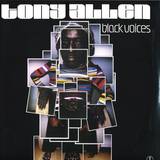
Comet presents the reissue of Black Voices (1999), featuring remastered versions and Ariya (Psyche Juju Mix)' as bonus track, which was not part of the original release.
Tony Allen completely rewrote the books on what was possible within the AfroBeat genre with his stunning 1999 album, Black Voices. When one considers exactly "what" is going on throughout Black Voices, it is quite mind boggling, as it is almost impossible to associate a minimalist, electronic feel with the massive walls of sound which Allen was known to create.
Yet these walls of sound are still very present, yet they gain an entirely new feel due to the presence of the producer, Doctor L. He takes the mesmerizing rhythms that Allen creates and he spins them into a stunningly modern sound. While Doctor L's production work throughout Black Voices is truly fantastic, it is clear that the genius behind the album lies within the mind of Tony Allen. With the absolutely mesmerizing, funky grooves that Allen creates, it comes a little surprise that the vocal collaborations are handled by members of one of the funkiest bands in history: Parliament-Funkadelic.
For almost two decades, Black Voices has remained a stunning example of the fantastic results that can occur when seemingly unrelated genres clash.
REPRESSED !
1970's "Osmium" was Parliament's debut album and possibly the first real indicator of where George Clinton and his notorious band of psychedelic funksters might be headed. The ground zero of P-Funk if you will. Existing since the late 50's as a doo-wop group it was the bands later offerings that sculpted their unique, mildly warped idea of what the FUNK should sound like. Initially they cut a couple of 45's for Detroit Soul label Invictus in 1970 (both of which appear on the LP) then embarked on recording more music for the project, their first full length offering on the label. The group also released the debut Funkadelic LP in the same year with both albums feature the same personnel. The conditions under which "Osmium" was realised have since passed off into mythical status with colourful anecdotes involving marathon LSD consuming sessions in isolation in their Toronto studio and a general air of hallucinatory, intense mental psychosis prevailing throughout. It's under this druggy haze that Parliament honed their own sound, a raucous, blown out, tripping stew of R&B, Blues, Soul and Funk replete with early P-Funk trappings.
"Osmium" is a fascinating ride, wild, rampaging heaviness of the most soulful kind. A glimpse into what was to come from one of the most enduring and colourful groups of the last 5 decades. Often a very difficult LP to track down it has always been sought after and extremely expensive to buy. Appealing to fans of Black music, Rock and psychedelia equally it's contents have shocked, entertained and grooved open minded music lovers since it's release over 40 years ago.
This is the first time the record has been reissued in over a decade, complete with original artwork. Remastered, reissued and fully licensed with the full permission and involvement of Invictus Records, Detroit.
Edanticonf's music feels perfectly crafted for the brooding atmospheric venues he so often performs in. Both the aforementioned adjectives can be attributed to his style of techno too, one that places the focus less on the technical side and more onthe human one, aiming to reflect his emotions and state of being through the hazy soundscapes that draw influence from the natural scenery around him.His concise back-catalogue features releases on revered labels such as M¦REC LTD, Trolldans, Phorma and Silent Season - the imprint which released his debut LP, 'Forest Echo', in 2012. On each release, Edanticonf's work sonically varies, from the more ambient compositions present on his 'Planet' EP for Silent Season to his dub-infused techno release on Italy's M¦REC LTD, but each offering never compromises on its quality, something which sits at the core of this project.
Kicking off the EP is the title-named track, 'The Mind Power', a hypnotic techno number that blends atmospheric textures and arpeggiated synth patterns with industrial-inducing pad tones, gradually introducing further elements throughout its eight minute duration.
'Interlude' follows, a song that much like the rest of the EP focuses its attention on the refined nuances of the analogue synthesiser, blending this with more delicate synth passages and other shadowy digital effects.
Closing this excellent three-track EP is 'We Dance Together', a dazzling, almost trance-like closer that fuses these soaring atmospheric elements and delicate synths with gritty, lo-fi drums to great effect.
germany-via- artist osker offermann, the owner of leading label white presents us a quality dou-bled package on the mule, strongly effecting his meditated mindsets.
as well as his dj sets, his crafted productions have a superb balance between being not too exces-sive, but not being too minimalistic -
creating the dynamism which make people move, based on his own aesthetic featured with well-polished, functional electro phrases and raw machine beats.
because of its floating grooves, will be nice for club use, but also surely will be a good accompany for the home-listening. oskar continually points forward us the fact, that listening to deep house is no longer meandering journey, but something meaningful and fruitful in your life.
Excerpt from the tome:
"I could feel the mana running warm under my skin as the cold dessert breeze swept through the valley. The black cloaks of my brethren fluttered like whips in the wind as our caravan slithered on through the desolate fields that had pulled us so far away from our crypt. The sun was setting and with a cry, I ordered us into a halt.
We were very close now, we could all feel it. Our dragons had been silent for nearly three days and the tension inside of our horde was growing increasingly fierce. I looked down into my hands and saw no trace of the strong fists that had once tamed these giant scaulding creatures. A lifetime flashed before my eyes as I read the scars and wrinkles that ran endlessly across my palms like runes. Then, my eyes jolted toward the horizon as a clap of thunder broke the silence. We all watched as the sun swelled rapidly and we knew that the time had finally come.
By the pounding fists of Ba'al.
To the roars of our burning children.
Death was coming to release us all."
Early support from Claudio PRC, Slam, Oscar Mulero, Patrick Siech, Antonio de Angelis, Arnaud le Texier, Kwartz, MTD, Antonio Ruscito, Retina.IT, Samuli Kemppi, Takaaki Itoh, Rasmus Hedlund, DJ Sandrien, Brando Lupi, Dadub, David Att, NX1, Sam KDC, BLNDR, Luigi Tozzi, Periskop and more.
Body. Mind. Spirit
Espen Beranek Holm is a Norwegian musician and comedian, born 1960 and began his music career as a clarinetist. Inspired by early synthesizer bands Kraftwerk and The Residents, he began making experimental pop music. His debut single Dra te' hælvete' was released in 1981 and was immediately banned by national TV/radio channel NRK due to explicit lyrics. This gave the young artist tons of publicity, helping the single spend almost 6 months on the national charts.
Beranek returned to the Starholm Studios in Oslo from June - September 1981 to record nine new compositions. His debut album, Sound of Danger', was released on Mind Expanding Records in November 1981. Nowhere near as accessible as the previous single, the album fared poorly commercially. Withdrawing from the single's fun, kitsch pop, the album is cool and static, driven by thin rhythm boxes, cold synths, and glacial guitars. Taking heavy cues from David Bowie, all of the songs are sung in a nasally English accent, a rare occurrence in Norway at the time. The lyrics are melancholic, but tinged with paranoia. There are also upbeat tracks that evoke a prog or glam sensibility a la King Crimson, Alan Parsons, or Roxy Music.
All songs have been remastered for vinyl by George Horn at Fantasy Studios in Berkeley. Housed in the original jacket featuring red, black, and white lines that evoke a visualized Richter Scale designed by Monica Moltzau. Each copy includes a 2-sided 8x11' insert with lyrics and an autographed press photo of Beranek.
Thomas Urv and Miss Mostly's Norwegian techno imprint PLOINK drops the second in its trilogy of releases celebrating the brand's 20-year anniversary.
Following on from the first release that featured renowned Scandinavian artists such as Prins Thomas, Mental Overdrive, Urhaug, Nordenstam, Christian Tilt and Hutmacher, the label's next outing sees five more
members of the local scene make appearances.
First up, promising newcomer Saftronic drops the chuggy 'Exit', incorporating soaring synths and spellbinding atmospherics, before PLOINK founder Thomas Urv, who's also preparing the label's debut album, delivers a dense low-end and infectious whirrs in 'Set Lucky'.
Known for his longstanding contribution to ambient and techno with releases on Beatservice, Club Craft, Berserk Fabric, Diametric and Silent Season, renowned Norwegian producer Mind Over MIDI crafts intricate
arpeggios and echoing effects in the arctic inspired 'Ice Plains'.
Releasing on PLOINK before, KSMISK, who are also known as Trulz & Robin, conjure up a sinister production named 'Yme' that features dusky aesthetics and twisted nuances, until Argentinian born CementO concludes the package with the undulating 'Nordisk Skjønnhet'.
Bell Gardens combines the musical visions of Kenneth James Gibson (formerly of Furry Things, now recording as
*Bell Gardens' origins began arguably as more of an experiment than the duo's current 'experimental' projects - McBride's drone- and string-laden ambient symphonies, and Gibson's ventures in dub and minimalist techno - as they sought to manifest their mutual reverence for folk, psychedelia and chamber pop in a traditional band structure without cannibalising any particular past genre. Bell Gardens' sound is less reliant on effects and studio trickery than the pairs' independent guises, laying bare as it does vocals and live instruments with emotional sincerity, and presenting songs imbued with an almost pastoral or gospel simplicity and timelessness.
Slow Dawns for Lost Conclusions was again recorded mostly at home studios, but additionally the band made use of a friend's desert cabin in Wonder Valley, California, and it seems this willingness to retreat from the city has lent an expansiveness to the tracks, in particular the spacious, ceremonial 'Silent Prayer' (written in a snowbound mountain cabin in Idyllwild, C.A.) and the crepuscular 'She's Stuck in an Endless Loop of Her Decline' (mapped out under the stars in the desert).
While the addition of strings (contributed by Lauren Chipman of The Rentals and The Section Quartet) and trumpet (Stewart Cole of Edward Sharpe and The Magnetic Zeros) provides a double rainbow of tonal textures throughout, the nine tracks of Slow Dawns for Lost Conclusions are united by an understated elegance belying the newly expanded, communal effort in the studio: each instrument earns its place, nothing is overwrought or conspicuous. Moreover, it is McBride and Gibson's artistry in building stirring soundscapes from the barest of materials in their other guises that lends such assurance and sophistication to these arrangements.
The band is a result of the complimentary cross-pollination of Gibson and McBride's musical tastes - borne from a late-night conversation between the two that grew wings - and it is the universality of the sentiments and their restrained, reflective approach to writing and recording that allows the music to simultaneously straddle the past and the present. The music avoids pastiche, its pedal steel, sleigh bells and harmonies giving a nod to the ghosts of musical genres past, but never overriding or distracting from the emotional content of the sum of its parts.
The album ends with the glorious 'Take Us Away' - one of the first demos Gibson gave McBride when he was on tour with Stars of the Lid - neatly bringing their work to date full circle and exemplifying the band's mindfulness of their own serendipitous beginnings: the dawning of an auspicious, unique musical force.
Bell Gardens - Take Us Away -
Harmonies alert!! Actually, this is rather lovely. Slow-tempo, just the right side of 'twee' and packed full of strings, as if Air and Midlake had been taking balloon trips over the mid-West and sprinkling good-vibes dust across the land. From L.A. and subconsciously plugged into the '60s dream-pop scene, taking in a little bit of Mercury Rev and Brendan Perry en route, stopping off at Pearls Before Swine and Big Star's house for inspiration, before getting stoned with '70s era Brian Eno and Harold Budd.