With over 2 decades of formal exploration and exhilarating abstraction Get On is, somewhat surprisingly, only the fourth solo Pita full length. Peter Rehberg has always been vouched for pushing the very limits of the technology du jour, be it software or in recent years a complex modular set. Rehberg’s motives are one of unbridled exploration often resulting in extreme and exhilarating audio works.
Having spearheaded the contemporary electronic sound with his uncompromising explorations of noise, rhythm and extreme computer music, he has also worked with numerous experimental musicians in collaboration. Rehberg stands in the wake of a sonic revolution, once fringe, which transformed over time into the sound of a generation of experimental geeks and club freaks worldwide.
Get On follows on from the 2016 release Get In. As with other titles in his ‘Get’ series we have an unwieldy blend of noise, abstraction, gnarled rhythm and blurred melody. Both analogue and digital tools are deployed as a means of expressing something outside of everyday electronics. ‘AMFM’ launches proceedings with some delightfully disorientating ricocheting electronics setting off a subversive sonic spectrum. ‘Frozen Jumper’ presents some ugly skittering electronics which rotate into exquisitely mangled forms before launching into an unsettling euphoria. The last piece ‘Motivation’ is a towering sensitive work, simultaneously haunted and emotionally moving. Get On marks another monumental work in the ongoing evolution from one of the ground zero pioneers of contemporary radical electronic music. As uncompromising as ever this is Pita in his prime. Emotion rung from the most twisted of frames.
Поиск:sim 2
Все
- A1: Imagination (From Clé Ep - 1981 Last Movement Recorded At Pet Sound Studio)
- A2: When I See You (From Clé Ep - 1981 Last Movement Recorded At Pet Sound Studio)
- A3: Landslide (From Clé Ep - 1981 Last Movement Recorded At Pet Sound Studio)
- A4: Colourless Dream (From Colourless Dream 7" - 1981 Last Movement Recorded At Surrey Sound)
- A5: Things We Never Did (From Colourless Dream 7" - 1981 Last Movement Recorded At Surrey Sound)
- B1: Lost In A Moment (From 7" Lost In A Moment/The Tightrope Touch 1982 Midnight Music - Recorded At Silo Studios, London)
- B2: The Tightrope Touch (From 7" Lost In A Moment/The Tightrope Touch1982 Midnight Music - Recorded At Silo Studios, London)
- B3: Man Of Straw (From 12" Man Of Straw - 1983 Midnight Music Recorded At Spaceward Studios)
- B4: Cowboys (From 12" Man Of Straw - 1983 Midnight Music Recorded At Spaceward Studios)
- B5: Close To The Sea (From 12" Man Of Straw - 1983 Midnight Music Recorded At Spaceward Studios)
Exclusive vinyl with the singles released by the Watford post-punk band between 1981 and 1983.
"Before I began to write this piece I listened to some of the tracks and I admit there was a small tear or two as I remembered… Pet Sounds Studios, an 8 track reel to reel studio in a basement under a pet shop in Kennington, South London, our first studio experience as fresh faced 20 year olds. Surrey Sounds, a studio above a milk depot where Siouxsie and The Banshees had recorded singles, we got some studio time through the night when The Professionals (ex Sex Pistols) weren’t recording. Silo Studio in Hammersmith, the engineer was stoned, I smoked at least three packets of cigarettes during the session and having arrived at the studio with a song we believed in, we came out disillusioned and slightly underwhelmed; maybe greatness wasn’t destined to descend upon us at that stage of our career. Spaceward in Cambridgeshire, an old school building turned into a professional recording studio, where we recorded our first album Epic Garden Music over a weekend working through the night with about an hour of sleep. We returned there to record our second album, Feeding The Flame which took two months rather than two days. But my moist eyes are not for the broken dreams, the incredible highs or even the camaraderie with fellow band members, all of whom I may add we are still in touch with. My slight sadness is for my lost youth and the courageous optimism of those early days so viscerally evoked by this collection of songs. The glory of the world fades but in reality Sad Lovers & Giants goes from strength to strength, albeit in a very understated English way mainly because that’s the way we like it. So enjoy these songs which were created with passion and energy over forty years ago but still remain vivid and exciting to a new generation of listeners today." From Garce/Simon Allard's exclusive liner notes (October 2024)
Shadow Pressings celebrates one year and its 5th release with another killer selection of deep, chunky house from the very same (unknown) producer as the label’s debut release.
My Soul sets the tone with a stripped back late night groove, working up THOSE Freddie Hubbard strings and a hooky sax riff. The sound palette is familiar but put together in a skilful and original way ensuring this banger will stand out in the crowd.
Tears follows with a similarly punchy, paired back groove which leaves space for the chiming melodies and spoken word samples to shine. Flipping over we have Lost In The Dance and What Galaxy Is This? which continue the theme of choice vox samples, shuffling drums and rolling basslines.
It’s always a pleasure to welcome Scottish producer Milton Jackson back on Freerange and this time he joins forces with a trio of Detroit heavyweights to deliver the Fire Emoji EP. Brian Kage is a producer / DJ, founder of record label Michigander and has released on esteemed labels such as FXHE and Planet E. Here, Brian is on co-production and mastering duties and helps bring a raw yet musical quality to all four tracks. HazMat Live is a Detroit native known for his unique approach to music and live performances having graced records and live shows with the likes of Kenny Dixon Jr, Amp Fiddler, Bilal, Soul Clap and Delano Smith. Finally, Jon Dixon adds his own inimitable touch to the release with his deft keyboard work. Jon Dixon not only leads the Underground Resistance live acts Galaxy 2 Galaxy and Timeline but has also performed with everyone from Jeff Mills, Carl Craig and Mike Banks through to Goldie, Leon Ware and Dwele.
Lead track Fire Emoji is probably best described as a serious stomper. A paired back club tool which pumps hard and will keep the energy levels simmering on any dance floor worth its salt. Echoing vocals and reverb-drenched hits add a trippy edge whilst an extended break adds extra drama and tension to the arrangement.
The Sunsetters lightens the mood with a euphoric slice of chunky, deep house which acts as the foundation for HazMat Live to deliver his epic synth solo, accompanied by lush strings, deep pads and punctuating 909 snares.
Wanna C U fuses US and UK Garage sounds to form a taught, muscular club groove which will lock you in with it’s fat stabs, swinging beats and repeating sampled vocal hook.
Following the cinematic jazz-funk of Ufo Bar (2021), Banda Maje are back, ready to take you on another sonic journey across Salifornia—and beyond.
Their new 7" single, available starting May 30 via Four Flies, offers an exciting glimpse into the expanded horizons of Banda Maje, serving as a prelude to their sophomore album, Costa Sud.
These past four years, Peppe Maiellano—the band's composer and mastermind—has further refined his unique Mediterranean sound. A deep connection to Italian and Neapolitan roots remains, as evidenced in the heartfelt cover of Peppino di Capri's 1981 track, "Mo…" on Side A. Maiellano keeps things simple, staying faithful to the original, yet manages to freshen the track for today's listeners, making the lyrics resonate with his compelling vocal rendition.
But Maiellano has also embraced new influences, particularly Brazilian music, as showcased in the infectious "(Roda De) Samba Maje" on Side B. This roda-de-samba version of the upcoming album track "Samba Maje," a collaboration with the Amor Pela Roda group featuring Antonio Montuori on percussion and Pasquale Del Solio on cavaquinho, gives us a taste of Maiellano's vision for Costa Sud—a 'music of the South' that transcends geographical and time boundaries, bridging Italy, Brazil, Africa, and contemporary vibes.
Out on 30th May 2025 on 7" and digital.
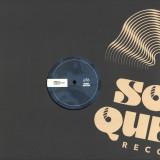
On the latest Soul Quest adventure, the imprint places the journey in the hands of Italian producer Flying Moth, who serves up an enriching palette of groove-laden cuts that are sure to chime along to bright days and sun-kissed evenings.
Flying Moth is the latest alias from producer Niccolò Terranova, who has already demonstrated his jazz-laden dance music chops through the Justnique project and others. Flying Moth is presented as the artist’s most personal project to date, with the ‘Oh Oh’ EP out on Apparel Music highlighting his ability to deliver highly danceable and beautifully presented soulful dance music that lives and breathes heartfelt moments and emotions.
Channelling a myriad of genres and eras, Flying Moth’s music is about catering to new kinds of experiences through displays of enriching musicality and deeply profound compositions. ‘Tides’ is the next step in Flying Moth’s journey, and it feels right at home amongst the sunny vistas and dancefloors of Soul Quest. The EPs opener, ‘Take you higher’ which was made alongside Renato Patriarca is a groover of the highest order. Allowing plenty of time to embed listeners deep within the mix, the first breakdown emerges with a delightful lead melodic line that embraces the chords. The further this track unravels, the more magic is presented—the flute solo is a notable example of this. ‘Bobby’s here’ shares connotations similar to the previous number, albeit with some subtle differences. The chords swirl and dance, with arpeggios adding cascades of melody alongside the hypnotic rhythm section. The track is one of diving deep through the layers in order to deliver a joyous forward momentum - one which feels like it will never cease.
‘Please, keep drinking with me’ begins with a typically upbeat feel. A semi-skippy drumming pattern provides the basis for an overflow of melodic brilliance to come forth, with the track retaining a powerful forward momentum through the mid-range. Inspired, breathy vocals and a one-of-a-kind key solo at the track’s halfway mark add personality and variance. ‘Always Groove in you’, a joint affair alongside Gondii, and this number wastes no time in getting going. A stripped-back yet varied groove weaves around a deep-set bass sequence, but the show that happens up top is a sight to behold - a continual shift between inspired key work and vocal snippets mean that the track never stands still, only evolves and grows. Wrapping things up is Toronto Hustle and Sean Roman providing their twist on ‘Please, keep drinking with me’, and as a remix, it adds an enormity of flavours in the form of sparkling keys, powerful bass notes, and infectious breakdowns.
‘Tides’ might only be Flying Moth’s second EP, but it is a sign of an exciting discography to come. For now, this EP contains all the ingredients to get dancefloors and living rooms moving. Filled to the brim with creativity, thought, and delicateness, ‘Tides’ has an infectious musicality to it - and, perhaps most importantly, a big heart. Time to revel in its emotive brilliance …
- A1: Patina Shift
- A2: Blistex
- A3: Rust Halo
- A4-: Lesio
- B1: Sightjacker Ft. Visio
- B2: Here Used To Be A Star
- B3: Spume (Formerly An Icefield)
- B4: Hypnoxia
- C1: Astral Trepidation Ft Jiyoung Wi
- C2: Spotshadowsphere
- C3: Cable Eater
- C4: Velvet Myst Ft. Heith
- D1: Nerveghost
- D2: Relaxus
- D3: L’ Inaperçu Nous Traverse Ft. Bernardino Femminielli And Habib Bardi
Corrosiv, the sophomore album from Orchestroll, reveals the duo at their most mature and vulnerable. Originally conceived as a reflection on hybridity and bastardization, the album deploys New Age and ambient compositional tropes as a launchpad, exposing their trite sanctity to the realities of corrosion. Having come of age in the 1970s and 1980s, the New Age movement perdures today as a domain of contradictions; its promise of transcendence riddled with the very commercialized dogma from which its adherents claim to flee. Healing modalities such as reiki, crystal therapy, and sound baths are simultaneously pathways to solace and sites of exploitation; their sonic counterparts—ethereal synth pads, shimmering textures, celestial drones—claim to facilitate meditation and enlightenment while devolving into empty signifiers of vitality. With Corrosiv, Orchestroll displays neither reverence nor disdain toward New Age: they exhume it instead, revealing the saccharine effervescence and commodified murk undergirding its aesthetics. The result is intoxicating—disquieting.
Born from a two-week residency at EMS Studios and expanded through a performance at MUTEK Montreal’s 25th anniversary, Corrosiv has since outgrown its original conceptual nucleus, taking on a broader scope. Its inquiry into New Age ideology’s voided rhetoric and aesthetic mysticism now informs a broader interrogation of cultural mediocrity, anti-authoritarianism, gatekeeping, music industry toxicity, and the crumbling edifice of late capitalism and techno-feudalism—all the mechanisms by which meaning is stripped from ceremony, and once-potent forms of knowledge are subsumed into the machinery of economic extraction, severed from their original essence, and transformed into hollow simulacra. Corrosiv distills these themes through a loose narrative: a soul, fixated on wellness as dictated by cosmetic economism, becomes ensnared in an endless afterlife, unable to transcend and shed its dilapidated consciousness.
Framed as an act of audio dissolution, the album thus engages in an alchemical process, whereby complex waveshaping, morphing synthesis, and distortion enact a ritual of fragmentation. There is also friction: between the rigid, mechanical imposition of systematized order and the untamed, chaotic force of organic metamorphosis. Here corrosion and confinement are not solely conceptual motifs; they are enacted in real time, sculpting the album’s terrain. Scraping, tarnishing, degradation—the languid wear of form and substance—become instruments in their own right: buffing as abrasion, entrapment as transformation, corrosion as a means of reconfiguration. The ‘protagonist,’ if there must be one, is the listener, caught within the throes of structural determinism and the potential for emancipation, unable to pass into something greater as the specters of collapsed futures accumulate in the margins.
Corrosiv extends its reach through collaborations with familiar voices: Heith (PAN), VISIO (Haunter), Femminielli (Drowned by Locals), Habib Bardi (Interzone), and Jiyoung Wi (Enmossed, Psychic Liberation, Doyenne) each leave their imprint on its sprawling landscape. At 1h16m, it is a procession, dense with earworms that burrow into the listener’s unconscious.
Misshapen, broken-down metals leach copper into blood, acid reflux burning through the core. Psyche disaggregates into cosmic turmoil, drifting between planes—tongue on rustline, gullet laced with solvent hymns, molars unlatching, bitcrushed to marrowspill. A spasm of brine, ferrous scripture, venomtext blooming in leaden rivulets, cartilage smoldering in phosphor decomposition, synapses drowning in a quicksilver choir. Crest of bile, churning ore, breath clotting into arsenic mist, vein-thread cinched, a corrosive gospel, limb by limb, oxidized to silence.
Ultimately, as the music exhales its final breath, its residue refuses to dissipate—and stillness alone remains. There are no conclusions here—no resolution, no collapse—only the slow drift outward of a vessel unmoored, lost in the sea of symbolic souring. Corrosiv sings the song of a world barren of prophecy, littered with aesthetic detritus. Whether this magic has been transfigured or simply worn away is unclear: the last breath dissipates, but the oxidation does not stop. The silence, too, will decay.
Conceptualized, composed, performed, recorded, mixed, engineered and produced by Jesse Osborne-Lanthier, and Asaël Richard-Robitaille in 2023 and 2024 at Elektron Musik Studion (EMS) - Stockholm, Sweden and Landsc8pe Studio - Montréal, QC, Canada.
Artwork by Jesse Osborne-Lanthier.
Mastered by Stephan Mathieu @ Schwebung Mastering.
- 1: Ulamky Lyusterka
- 2: Hra V Tsvirkuna
- 3: Vdykh Vydykh
- 4: Pole Polynu
- 5: Zovsim Niskil’ky
- 6: Mertvi Zhyttyam
- 7: Sontse Pam’yatti
- 8: Vichnyy Vohon’
Ukrainian composer Katarina Gryvul presents her third LP, SPOMYN, on Subtext. SPOMYN ('recollection') is an exploration of memory’s fragile, fragmented nature, revealing how it shapes the core of who we are. Each track is a fragment — a flicker of something lost, distorted, or forgotten — brought to life through unmediated emotion, acting as an invocation of continuity, connecting us to those who came before us and the fleeting moments of their existence that still resonate within us, and become elements in the lattice of our own selves. Gryvul’s corrupted choral pop compositions, augmented with full frequency electronic and organic experimentation, characterize SPOMYN’s uncanny and chimeric sound. Much like the blurred edges of memory itself, SPOMYN resists resolution, inviting listeners to disintegrate into worlds that linger in shadow and evoke the beauty of the unknowable.
Following her last LP Tysha (‘silence'), released in early 2022 on the Ukrainian imprint Standard Deviation, SPOMYN finds itself in a changed and fractured world in which the urgency to maintain a clear remembrance of the past in the face of erasure and misinformation is ever increasing.
Katarina Gryvul explores the simultaneously fixed and fluid nature of collective and personal narratives by filtering the remembrances of her cultural and musical experience through an idiosyncratic and intuitive approach to music production. The result is aggressively iconoclastic while holding dear the essence of the traditions she has inherited. Katarina Gryvul is a classically trained composer, violinist, and music producer. She blends concept of holophony with avant-garde techniques to develop distinct soundscapes through instruments, voice, analog synths and spatial audio.
- A1: With You There To Help Me
- A2: Nothing To Say
- B1: Inside
- B2: Son
- B3: For Michael Collins, Jeffrey And Me
- C1: To Cry You A Song
- C2: A Time For Everything
- C3: Teacher
- D1: Play In Time
- D2: Sossity; You're A Woman
- D3: Alive And Well And Living In
Mastered by Matthew Lutthans at The Mastering Lab from flat copies of the original U.K. and U.S. analogue master tapes Third studio album featured advanced studio recording techniques Featuring original U.S. tracklisting with bonus track "Alive And Well And Living In" from U.K. release Plated and pressed at Quality Record Pressings Gatefold old-style tip-on jacket by Stoughton Printing Jethro Tull's 1970 classic Benefit was their third studio album in as many years, following the successes of This Was (1968) and Stand Up (1969). For Benefit, Ian Anderson (flute, guitars, vocals), Martin Barre (guitars), Glenn Cornick (bass), and Clive Bunker (drums) were joined by John Evan on piano and organ.
Evan would go on to play on all of Jethro Tull's albums throughout the '70s. It was also the last to include Cornick, who was fired from the band upon completion of touring for the album. Recorded at Morgan Studios, where the band recorded Stand Up, the album featured more advanced studio techniques, such as a backward-recorded flute on "With You There To Help Me" and a sped-up guitar on "Play In Time." Frontman Ian Anderson said Evan had changed the band's style: "John has added a new dimension musically and I can write more freely now.
In fact anything is possible with him at the keyboard." Compared to Stand Up, although containing a similar mix of bluesy hard-rockers and melodic acoustic numbers, Benefit had, as Ian Anderson put it, a "harder, slightly darker feel" compared to previous material. The eclectic fusion of folk, rock, and progressive elements creates a sonic tapestry unlike any other. Anderson's virtuosic flute playing intertwines with Barre's electrifying guitar work, weaving intricate melodies that transport listeners to a world of introspection and imagination. From the hauntingly beautiful "With You There to Help Me" to the whimsical energy of "To Cry You a Song," each track invites exploration of both the inner self and the world beyond.
This Analogue Productions 45 RPM release, plated and pressed at Quality Record Pressings, gives this historic album the rich sonic presentation it deserves. The dead-quiet double-LP, with the music spread over four sides of vinyl, reduces distortion and high frequency loss as the wider-spaced grooves let your stereo cartridge track more accurately. Benefit stands as a testament to Jethro Tull's pioneering spirit, pushing the boundaries of musical expression and leaving an indelible mark on the landscape of rock music. This reissue is clean, balanced and richly detailed, the way an Analogue Productions reissue should sound.
Don’t call it a sequel, it isn’t a Part Deux, ‘Pop Psychédélque: Les Extras’ is simply another slice of fine French Psychedelic Pop from Two-Piers, the label that brought you the groundbreaking compilation ‘Pop Psychédélique’ in 2021. L’es Extras’ is the perfect partner for the original and brings you a whole new bunch of quite simply brilliant pieces of French Pop and Psychedelic flavours from the 1960’s right up into the 2000s.
Pressed on Limited Edition Coloured vinyl for Record Store Day 2025 this is an essential purchase for anyone with a love of French Psychedelic Pop, or anyone who just loves great music for that matter.
‘Pop Psychédélique: Les Extras’ features some of the finest French pop divas of the 1960’s & 1970’s such as Jacqueline Taieb, Brigitte Bardot, Christe Laume, Brigitte Fontaine, alongside artists like Marie Laforêt’s wonderful take on the Rolling Stones ‘Paint it Black’, and the brilliant ‘Les Cactus’ by Jacques Dutronc. Fast forward to the 2010’s and we have tracks from the French Psych scene and lush curiousities from Brigitte, Étienne Daho, The Limiñanas and Ricky Hollywood added into the mix. This Record Store Day Vinyl release includes hard to find tracks on vinyl for the first time.
French Pychedelic Pop, a scene so joyous you can’t help but fall in love…. Les Extras anyone?
- Life Rhythm
- Balance
- Joy Of Life
- Eternity
- Desert Move Feat. Shantel & Thomas Konstantinou
- Second Nature Feat. Dominic Miller
- Open Land
- Full Circle Feat. Bill Evans
- Silence And Sound
- Supernova
- Home
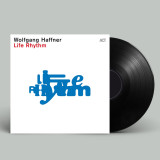
»Ich denke immer wieder aufs Neue darüber nach, wie ich mich als Schlagzeug-spielender Bandleader so positionieren kann, dass das Instrument eine tragende Funktion einnimmt, dies aber auf eine musikalische Weise geschieht und auf keinen Fall als Zurschaustellung von Virtuosität«, sagt Wolfgang Haffner. Diese Haltung zieht sich als roter Faden durch seine gesamte Karriere - und auch durch »Life Rhythm«, sein zehntes Album auf ACT.
Und obwohl Haffners Musik gängigen Vorstellungen virtuoser Schlagzeug-Leader ganz bewusst widerspricht, steht das Instrument diesmal besonders im Fokus. Ausgangspunkt dafür war Wolfgang Haffners allererstes Solokonzert im Jahr 2022 auf Schloss Elmau. Er erinnert sich: »Das war eine Wahnsinns-Herausforderung bei der ich auch vor der Entscheidung stand: Spiele ich jetzt eine Stunde Schlagzeugsolo? Natürlich nicht! Also habe ich habe eine Menge melodisch klingender Perkussionsinstrumente eingebaut, Passagen live geloopt, mit Echos und Delays gearbeitet – im Grunde wie im Studio, nur eben auf der Bühne.« All dies brachte Haffner dazu, sich noch einmal auf ganz intensive Art mit dem Thema mit dem Instrument zu beschäftigen, welches ihn sein Leben lang begleitet. Und so haben alle Stücke auf »Life Rhythm« diesmal ihren Ursprung, nicht wie sonst bei Haffner, am Piano, sondern am Schlagzeug.
Das Ergebnis dieses Prozesses kann man gleich zum Auftakt von »Life Rhythm« auf dem Titeltrack erleben: Das Stück basiert auf einem hypnotischen Groove, bei dem nicht die Becken, wie sonst im Jazz üblich, die Time angeben, sondern vor allem die Trommeln. Das dieser Groove direkt Phil Collins und besonders an dessen Stück »Take Me Home« erinnert, ist kein Zufall: Collins' Art, Drum-Parts zu elementaren Teilen des Songwritings zu machen, ist bis heute eine von Haffners größten Inspirationen. Und auch jedes weitere der elf sehr kompakten, Song-haften Stücke auf »Life Rhythm« öffnet eine eigene Welt des musikalischen Schlagzeugspiels: Mal mal trocken-reduziert mit Besen wie auf »Balance«, poppig bei »Joy of Life«, mit filigranen Becken-Grooves, dezenter Elektronik und Percussion auf »Eternity« oder minimalis-tisch bis kurz vor der Stille in »Silence and Sound«.
Das aus all diesen Stilistiken ein so stimmiges Ganzes ent-steht liegt daran, das Wolfgang Haffner diese im Laufe seiner Karriere bis in die Tiefe durchdrungen hat - an der Seite von stilbildenden Charakteren wie Al Jarreau, Chaka Khan, Pat Metheny, Jan Garbarek, Esbjörn Svensson, Nils Petter Molvaer, Albert Mangelsdorff, Ricardo Villalobos und vielen, vielen mehr. All diese Kollaborationen haben Wolfgang Haffners Voka-bular am Instrument und auch als Komponist geprägt und die da-mit verbundenen, unterschiedlichsten Stile sind gleichermaßen Teil seiner musikalischen Persönlichkeit.
Vielseitigkeit und höchste Musikalität sind auch die Eigen-schaften, die Wolfgang Haffner und seine Mitmusiker auf »Life Rhythm« verbinden. Die Basis bildet ein bestens einges-pieltes Trio zusammen mit Keyboarder Simon Oslender, selbst auch Drummer und Bandleader, und Thomas Stieger, einem der gefragtesten deutschen Bassisten in Pop wie Jazz. Dazu kommen Trompeter Sebastian Studnitzky, Mitstreiter Haffners seit seinem ACT-Debüt »Shapes« und der Finne Arto Mikälä, eine echte Entdeckung in Sachen Klangvielfalt an der Gitarre. Diese Band herausragender Allrounder erweitert Haffner um eine Reihe musikalischer Charaktere, die der Musik ihre ganz eigene Farbe verleihen: Nils Landgren, Freund und Weggefährte seit mehr als 20 Jahren, Saxofon-Ikone Bill Evans, Sting-Gitarrist Dominic Miller, Balkan-Beat-Star Shantel, Bass-Feingeist Nicolas Fiszman, Oud-Virtuose Thomas Konstantinou und Bruno Müller, einer der besten deutschen Jazzgitarristen.
»Life Rhythm«, sagt Wolfgang Haffner, »ist für mich eine Fortsetzung, keine Wiederholung«. Die Musik trägt mit ihrer Wärme, Kraft und Klarheit die charakteristische Handschrift, die Haffner mit seinen Alben und auf tausenden von Konzerten in mehr als 100 Ländern zum wohl populärsten Schlagzeug-spielenden Leader Europas gemacht hat. Und gleichzeitig ist es eine Evolution seiner Musik. Gut möglich, dass Haffners Erfolg genau darin begründet ist, dass seine Musik immer etwas Ver-trautes und etwas Neues beinhaltet und dass Haffner sein Publikum so immer »mitnimmt« im Fluss seiner Ideen - und in einem gemeinsamen »Lebensrhythmus«
With releases on Brooklyn’s Major Records and UK imprints Non Stop Rhythm and Indulgence, DJ Split is a breakthrough producer putting his own stamp on the classic Chicago house sound. For his Shadow Pressings debut he has conjured up five original club cuts that will work their magic on any dance-floor worth it’s salt.
Last Night Baby sets the tone with taught 909 beats, punchy bassline stuttering vocal hits. Piano chords and a smattering of melodic chimes and just the right amount of musicality without taking away any of the raw energy and turbo-charged grunt. Treading a similar path but upping the BPM’s, XNXX goes for the jugular with gnarly FM bassline and frenetic groove.
Flip over for Can I Tell You? which goes a little deeper with a rolling bassline, filtering Detroit pads and strings whilst Step For brings touches of acid, banging 909 toms and vocal chops. Closing out the EP we have One In A Life Time which turns up the jack factor with snappy 808 snares, mechanical bass line and deep stabs. DJ Split is a man on a mission to bang the party and has come prepared with his piñata fully loaded with big, fat beats n basslines.
Amsterdam natives Maarten Smeets and Lars Dales, aka Dam Swindle, unveil their third long-player with the release of a new track, the first to be shared from the upcoming album, ‘Open’ - out on 30 May 2025 via Heist Recordings.
The new album sees the acclaimed duo dive far beyond the deep sonic waters they’re most known for, exploring lower tempos, synthwave, hip-house, and ambient across fourteen tracks. With a gestation period that traces back several years, ‘Open’ is their most intimate and personal body of work thus far, birthed during a time of self-reflection away from touring and personal transformation as individuals.
“We felt the need to tell a very personal story through our music as a translation of our personal development in the past years. We also wanted to make music without a specific goal in mind; We simply wanted to create. By taking away the grid of dance music and any expectations of what a Dam Swindle song should sound like, the creativity started to flow naturally with songs in many different styles and tempos. The result is an album that feels refreshing and uplifting and still very much true to the heart and soul of our sound.” - Dam Swindle, January 2025.
While the trademark Dam Swindle four-to-the-floor beats are still ever-present on tracks like ‘The Present Is Always Perfect’, ‘I Need You’, and ‘Is This Love?’, it’s the gentle waves of synths on opener ‘Home’, the contemplative piano chords of ‘Bloom’ featuring Joep Beving, and the lo-fi ambience of ‘It’s Okay, I Can Wait’ that showcase a melancholic, ethereal sensibility previously uncharted by the duo. Collaborations with vocalists such as NYC’s Haile Supreme on ‘Not Enough’ and Neo-soul singer Faye Meana on ‘Girl’ expertly find room in between the dancefloor and home listening sessions, and a clear standout on the LP is the title cut where message-heavy rapped vocals from UK artist Samson ebb and flow amongst iridescent grooves.
Under the helm of Maarten and Lars’ adept A&R, their Heist imprint has become a beloved home for house heads of both schools old and new, platforming some of dance music’s biggest names from Cinthie to DJ Sneak as well as the musical dawnings of artists such as Kassian and Makèz. The Dam Swindle alias has achieved house music royalty-like status across a storied 15-year career that includes two critically lauded full-lengths, collaborations with the likes of Tom Misch and Kerri Chandler, and a globetrotting touring schedule. This album stands as their most profoundly personal work of art to date, and they can’t wait to share it with you.
- 1: Copycat League
- 2: 6/9
- 3: Poetry From Pain (Feat. Nothing, Nowhere.)
- 4: Mascot
- 5: Roses (Feat. Mike "Truck" Ryan)
- 6: Army Of None
- 7: Talk Real
- 8: Best Served Cold
- 9: Tombstone
- 10: Paydirt
- 11: Still Playin' For Keeps (Big Umbrella Remix)
- 12: Heavy Metal Money (Seen It All Before)
Magenta-Canary Yellow-Black A Side/B Side Colourway
Pushing every boundary to a breaking point, GRIDIRON will go to any extreme and then some. They follow quite possibly the most unpredictable playbook in the game. The band might flood the zone with a corpsepaint-smearing death metal barrage only to double back around for a victory lap narrated by blinged-out and braggadocios bars. Their hybridization of metal, hardcore, and hip-hop wouldn’t be out of place at either OZZfest 1997 or Rolling Loud 2027. It’s why the quintet—Matthew Karll vocals, Will Kaelin [guitar, vocals], Xavier Wilson [guitar], Lennon Livesay [bass], and Tyler Mullen [drums]—have bulldozed their own path as a phenomenon with millions of streams and acclaim from Stereogum, Brooklyn Vegan, NO ECHO, and more. GRIDIRON was born out of a series of COVID-era marathon Call of Duty sessions, which led to writing and recording together. Their musical pedigree spoke for itself with Will also in Never Ending Game, Xavier in Simulakra, and Tyler and Lennon in Scarab. Given their individual experiences, the guys instantly locked into a creative groove. Following the Loyalty At All Costs EP [2020] and Worldwide Brotherhood EP [2021], they dropped their first full-length, No Good At Goodbyes [2022]. The title track reeled in over 851K Spotify streams followed by “25-8” with 560K Spotify streams. Along the way, they also shared stages with everyone from Missing Link to Trapped Under Ice. Now, GRIDIRON continue to smash through walls on their second full-length offering and Blue Grape Music debut, Poetry From Pain.
[k] 11. Still Playin' For Keeps (Big Umbrella Remix) [feat. Daniel Son, Pro Dillinger, Jay Royale]
[l] 12. Heavy Metal Money (Seen It All Before) [feat. Big Body Bes]
»Mother Nature« is the debut solo album by Berend Intelmann, a key figure in the German indie music scene since the late 1980s. Having made his name as a member of groups such as Hallelujah Ding Dong Happy Happy, Guther, and Paula, Intelmann most recently focussed on his work as a producer for artists such as Jens Friebe, MissinCat, or Fotos. »Mother Nature« sees the multi-instrumentalist and singer navigate between pop sentiment and his penchant for classical music on these eight pieces, three of which feature additional contributions by Karaoke Kalk label mate Marla Hansen, synth pop iconoclast Der Assistent, and the versatile Mieke Miami, respectively. »Mother Nature« combines a sense of playfulness with cunning compositional rigour to stunning effect.
Intelmann took full creative licence and worked with the instruments that he feels most comfortable using: the drums, synthesizers, and his voice. While inspired by his life-long passion for pop music in all shades, he also took some cues from his more recent passion for classical music. »The synthesizer melodies are arranged like string quartets, while the songs are presented as musical themes strung together so that they form a coherent story,« he explains. The resulting sound isn’t quite as »krauty« as someone called it, instead the artist prefers to call it »slow-kraut—1980s synth sound with 1970s George Duke-style beats,« though of course he never attempted to fit in one specific genre or replicate a certain sound: This is simply the essence of Berend Intelmann as a composer and storyteller.
The lyrical matter of »Mother Nature« is inspired by life and death. This informs an album that masterfully creates contrasts and utilises the friction generated between them to tell its stories. The album opener and second single »All Gone« greets its audience with the couplet »In the long run / We’re all gone,« but sets this to soothing sounds that form a joyful counterpoint to the fatalism of the words. Also the slowly-unfolding first single »Life Of Another One« sets the stage for a reflection on memories that have become so distant that they feel like belonging to another person altogether with sombre, intertwined melodies. However, these darker tones slowly give way to laid-back grooves, Intelmann’s smooth vocalisations and whirling synthesizer sequences.
The collaborations—a vocal duet with Marla Hansen on »A Focused Mind,« Der Assistent’s subtle theremin contributions to »The Less We Cared« and Mieke Miami flute and saxophone playing on »Mother Nature«—further enrich this album that the artist claims has been »co-produced by friends and family.« Indeed, »Mother Nature« might be Intelmann’s solo debut proper, but he remains a teamplayer at heart.
- Reflexion
- One And All
- Undercurrents
- A Game Of Chess, A Game Of Chance
- The Summer Girls
- Her Key Is Minor
- Inflexion
- Into The Woods
Drag City and Yoga Records are delighted to return to the music of Matthew Young. Following Recurring Dreams (1981, reissued 2014) and Traveler"s Advisory (1986, reissued 2010), Undercurrents (2025) collects eight oddly dissimilar pieces that somehow fit together perfectly. Ranging from heady synthesizer experiments to earthy dulcimer meditations, Undercurrents is unique enough to be called outsider while still occupying a musical world accessible to fans of many genres. Composed and recorded over the span of several decades, Undercurrents displays the wide range of Young"s various sonic pallets: similar to Recurring Dreams, the electronic landscapes meander coherently, and much like Traveler"s Advisory, the album skews from the nearly algorithmic computer music of side one to the moving pastoral folk of the second.
- Dear Rose
- Oblivion
- Judy's In The Sandbox
- Underground
- A Dog's Life
- A Love Song
- Stormy Weather
- Smiley
- Roadkill
- Nobody Knew Her
- Too Much In Between
- Jimmy's Rose Tattoo
- The Long Walk
- All Your Life
- 4: Yrs
In October of 1999, Nina Nastasia recorded the album that would finally document her well-seeded career as a local singer-songwriter in New York City. It was exemplary of Nastasia's style, delicate string arrangements, the restrained beauty of her live band, the deceptive simplicity of her voice, and poignant, life-wise lyrics. The following year, "Dogs" was released on CD by micro-indie label Socialist Records. By the end of 2000, the "Dogs" CD was out of print. But "Dogs" had a special grassroots effect on Nina Nastasia's music career, as fans of the record would correspond across internet message boards and zines, discussing songs and soliciting copies of the rare edition. The album would also mark the beginning of a lasting peer relationship with noted recording engineer Steve Albini. In 2004, Touch and Go Records reissued "Dogs" on CD and, for the first time, on vinyl. The vinyl quickly sold out and remained out of print for nearly two decade_ until now.
Berlin-based Tal Fussman perfectly embodies SEVEN's "in-between house and techno" approach, delivering a 90s-infused progressive house EP that simply feels good. Embracing a spirit of openness to genres and styles, this EP features exciting, dancefloor-ready tracks - further enhanced by a Swiss-made remix from Deetron.
- Apartment Life
- The Machinist
- The Men Are Fighting
- Lakeland
- Seven And Seven
- Over & Over, Pt. 1
- Bells And Bells
Fit for Consequences: Original Recordings, 1984–1987 is the first ever archival release from Repetition Repetition, the “two-man electric minimalist band” consisting of Ruben Garcia and Steve Caton hailing from Los Angeles in the mid 1980’s. Repetition Repetition’s unique blend of cosmic art-rock minimalism / maximalism was self-released across a series of cassettes produced in micro editions, and while garnering the attention and participation of luminaries such as Harold Budd, remained under the radar during the band’s existence. Fit for Consequences: Original Recordings, 1984–1987 collects select material from across the duo’s catalog.
It was over a plate of Mexican breakfast food when Ruben Garcia and Steve Caton first told Harold Budd of Repetition Repetition and the worlds they intended to explore by respective way of synthesizers and guitars --- a rendezvous instigated by the former’s fan mail to the legendary composer. If the upstarts entered this restaurant from a one-way street of admiration, they would leave with not only Budd’s interest but, sometime later, a blessing in the wake of many hours shared by the three in Garcia’s Los Angeles home recording studio: “This is going to be difficult, but God help them, I think they’re great,” noted Budd in a USC lecture in 1985. Now several degrees removed from prior rock music aspirations, the real game was afoot.
Between 1984 and 1988, Repetition Repetition operated within something akin to the underground of the experimental underground, although even that designation perhaps overstates the case. The duo’s sparse output consisted of three cassettes self-released on Garcia’s Third Stone Music label: Repetition Repetition (1985), Lakeland (1987), and The Machinist (1987). Their songs would also be included during this period on Trance Port Tapes’ vital scene-scanning compilations assembled by A Produce. Live performances occurred with similar infrequency, but Garcia and Caton counted converts in quality over quantity, numbering among them the aforementioned Budd, a Chambers Brother, and, judging by a memorably drop-jawed reaction following a rare Repetition Repetition gig, Jackson Browne.
Likewise, critical support materialized in the form of KCRW deejays Brent Wilcox and Dean Suzuki, whose steady airplay positioned Repetition Repetition’s music amidst fearless company like Jon Hassell, Hiroshi Yoshimura, and Richard Horowitz. Yet, to hear fellow Trance Port featured players like Tom Recchion and Bruce Licher of Savage Republic tell it, Garcia and Caton moved as ghosts --- a notion more vexingly endorsed by the silence of record companies that failed to come knocking --- and therein lies an overarching truth to the work itself.
Journey to the heart of Repetition Repetition and one discovers a collective ear impossibly attuned to the hypnotic possibilities of stylistic convergence, the resulting music possessed of seamless multimodalities which beckon to a glimmering plane of the disembodied. Where Caton sought his artistic fixes at an intersection of popular genres, Garcia zoned in on the sonically spare, drawing from the same wellspring as the Enos and Rileys of his personal avant-garde pantheon, and in their coming together the two tapped into a deeper cosmic source. Synthetic walls of keyboard sound in forever states of reprise met waves of shimmering --- and at times even punishing --- guitar in reply, their soundscapes hovering convincingly between, as suggested in fittingly dualistic fashion in a press kit assembled by Garcia, such disparate sensations as bird flight in one song and oil drilling in the next.
But don’t call it a push-pull dynamic, as this was a creative partnership founded upon fluidity and organicism by way of, naturally, repetition. In contrast to, say, the Bressonian ideal of repetitive motion as a great stripping away, the concept in the hands of Garcia and Caton equated to ascendancy via continuous unfolding, a maximal route to minimalism. To be sure, their recording philosophy morphed over the course of the act’s short history, and what started as a process defined by consistent in-person interplay developed into a more isolated method formulated by Garcia, who eventually took to his own one-man bedroom-studio sessions in order to fully chart any and all potential ostinato-loaded paths which he could travel down, the Tascam-captured resonances subsequently provided to Caton as blueprints from which to take flight himself, adding layer upon layer of steel to the proceedings.
If the practice and execution changed, however, the evidence certainly didn’t rest in the results: The seamlessness remained, and, despite the brevity of their time together, so has Repetition Repetition. With this finely calibrated collection of songs in Fit for Consequences: Original Recordings, 1984–1987, Freedom To Spend sees to it that the private worlds of Garcia and Caton can now be visited by all rather than just the count-‘em-on-both-hands lucky few whose musical endeavors or collector vocations carried them into this once-distant dimension.
Repetition Repetition’s Fit for Consequences: Original Recordings, 1984–1987 will be released on Freedom To Spend in vinyl and digital editions on May 30, 2025. The collection includes extensive liner notes from Bill Perrine, and wil be offered alongside Over & Over, a supplemental collection of music available exclusively as a mail order cassette from Freedom To Spend and RVNG Intl.
- A1: Godly (Feat. Damon Albarn)
- A2: Deep Blue (Feat. Little Dragon)
- A3: Osmosis
- A4: U Gotta (Feat. Pharrell)
- A5: Love You More (Feat. T-Pain)
- B1: Zone (Feat. Eric Bellinger)
- B2: Bobby Boucher (Feat. Benji.)
- B3: Electric (Feat. Cochise)
- B4: Put In Work (Feat. Tommy Newport)
- C1: In My Mind
- C2: Robophobia
- C3: Blacklight
- C4: Red Flag
- C5: The Wake
- D1: Die Today
- D2: Flavors Of Karma
- D3: Imagine (Feat. Rama)
- D4: Perfect Fantasy (Feat. Snoop Dogg)
EARTHGANG are a unique rap duo that have been making an impact on the Hip-Hop soundscape since their formation in 2008. Comprised of members Olu and WowGr8, the pair met as freshmen at Mays High School in Southwest Atlanta and were deeply influenced by their surroundings. Their music as EARTHGANG is a fusion of various genres, including R&B, Jazz, Gospel, and Funk, which they use to create innovative albums, experimental EPs, and masterful mixtapes. With a name rooted in the idea of bringing people together, EARTHGANG have gained a massive following, with more than 3 Million monthly listeners on Spotify and over 155 Million views on YouTube. After signing with J. Cole's Dreamville Records in 2017, EARTHGANG's popularity grew even further, with their 2019 album Mirrorland debuting at #40 on the US Billboard 200 Chart and #22 on the US Top R&B/Hip-Hop Albums Chart. EARTHGANG's commitment to community activism, supporting emerging artists, and dedication to pushing boundaries in their music have earned them critical acclaim and a devoted fanbase. Their sound continues to evolve, with each project showcasing their eclectic rhythm that cannot be placed in a box or attached to any one genre. With the latest examples of this being their new EP ROBOPHOBIA, as well as their recent Snakehips collab project SNAKEGANG, EARTHGANG are continuing to push the sonic boundaries of Hip-Hop while simultaneously delivering outside-of-the-box concepts infused with an experimental sound.