“Boot licking, piss drinking, finger frigging, tit tweaking, love biting, arse licking, shit stabbing, motherfucking, spunk loving, ball busting, cock sucking, fist fucking, lip smacking, thirst quenching, cool living, ever giving…”
There’s no fairer introduction to ‘Fist’, Joshua James’ latest contribution to Phantasy, than to advise one simply to prepare themselves. Sampling iconic performance artist, club promoter and designer Leigh Bowery, James connects the expert dancefloor pressure he exacts each weekend as one of London’s best-loved club residents with the unapologetic, defiant legacy of a personal hero. None other than Peaches then takes up the remix mantle for ‘Fist’, intertwining the provocations of two radical performers and connecting three generations of underground queer culture in one sonic menage-a-trois, perhaps the straight-up rudest club record in recent memory.
On the original production, James shifts his sound in a heavier direction still since last summer’s euphoric Amber Rush, which was remixed by labelmate and friend Daniel Avery. A bouncing industrial tilt underscores the heavy-duty production, as Bowery, originally recording alongside Richard Torry in their band Minty, espouses a catalogue of sexual acts - some specialist, all sensational - as James pushes dancers further down into the belly of some revolting rave beast.
A multi-faceted match to Bowery themselves, Peaches continues a decades-long journey dedicated to genre and gender deconstruction with her wild and playful take on ‘Fist’. Dripping in cybernetic club juice, Peaches wraps herself around Bowery’s own teaches on the mic, easily matching his demands as she careens towards a system-rattling techno conclusion.
Search:sim one
After their debut full-length album, Puritan Masochism, took the entire doom and heavy metal scene by storm upon its release in 2020, critically acclaimed Danish blackened death doom outfit KONVENT returns with a sophomore offering that doubles down on the band’s songwriting talent and brutal, heavy sound! The sonic evolution of KONVENT over the course of just two years is immediately evident on Call Down The Sun, surprising with new elements at every turn. Undoubtedly inspired by recent dark times, the ongoing pandemic and cancellation of live performances, the new album sees the Copenhagen-based band more pissed off, fast-paced and pitch black throughout. Rikke Emilie List’s guttural, sublime growls and fierce screams perfectly integrate with a heavy as hell wall of blackened death and funeral doom metal riffs from guitarist Sara Helena Nørregaard, backed by a thick, profound rhythm section provided by bassist Heidi Withington Brink and drummer Julie Simonsen. Tracks such as “Grains” – a ground-shaking, stomping black doom metal epos that will be a must-hear on KONVENT’s upcoming live setlists – showcase the band’s deep black soul with a hint of post-metal and even progressive elements. Featuring a haunting violin and cello guest performance by Felix Havstad, the band creates dark, eerie yet epic atmosphere on “Harena”, revealing threatening yet beautiful facets of their sound. With songs such as “Pipe Dreams” and massive album opener “Into the Distance”, the four-piece unleashes hurricanes of blackened death doom metal. Recorded and mixed by Lasse Ballade at Ballade Studios, Sweden and mastered by Brad Boatright at Audiosiege Studio, the new album’s thunderous apocalyptic sound is impossible to escape. Call Down The Sun a refreshing, vibrant record that is not only poised to top 2022 Album Of The Year lists, but reign as one of the best death and blackened doom metal records of modern times!
After a quarter century of nearly nonstop activity, dystopian Detroit synth-punk institution ADULT. have perfected a strain of stylistic cohesion in the album format, "but for this we wanted something that's falling apart." Becoming Undone, the 9th official full-length by cofounders Nicola Kuperus and Adam Lee Miller, explicitly succeeds in this aim, simultaneously rejecting and reflecting the planetary discord that inspired it. Begun in the latter half of 2020 against a backdrop of unprecedented flux and seismic isolation, the duo kickstarted their muse by sourcing fresh additions to the rig: a vocal loop pedal for Kuperus and Roland percussion pads for Miller. Reconnecting with legacy influences like the politicized industrial percussion of Test Department and the queasy miscreant synthetics of TG's 20 Jazz Funk Greats sparked a series of fruitfully frenetic sessions, centered on themes of impermanence and dissonance. Miller's rationale is blunt: "We weren't interested in melody or harmony since we didn't see the world having that." From the tense technoid blitz of "Undoing / Undone" to the twitchy EBM of "Fools (We Are_)" and "I Am Nothing," the sides bristle with strident acidic revolt and black leather sequential circuits, unhinged and unforgiving. Elsewhere, slower tempos of purgatorial unraveling ("Normative Sludge," "She's Nice Looking") showcase a breadth of vocal FX, Kuperus sounding alternately indignant and possessed, decrying the crimes, fears, and failings of a deluded world. Throughout, the band's chemistry crackles with revulsion and strobe-lit dissent, equal parts exorcism and denunciation. "Humans have always been pretty terrible," Kuperus explains. "But every year the compromises of culture just accelerate." Becoming Undone is also freighted with a more personal pain, as Kuperus' father passed away during the height of the pandemic, just before the album took root. As his hospice caretakers, she and Miller faced the banality of finality, surrounded by objects drained of meaning, "the joy of having a body, but also the drudgery of having one." The record's bewitching closing track, "Teeth Out Pt. II" - which happens to be the first ADULT. song in the group's history without drums - speaks to this sense of doomed corporeal mass and the looming, lightless unknown that binds us all. A seasick haze swells and subsides in slow, low waves, flickering with ring modulation, above which Kuperus sings in a dazed, brooding, transcendent state, as if having finally glimpsed beyond the pale: "Some day / some day I will be silent and free / of this relentless gravity."
Repressed !
Hear & Now's Story Is One Of Friendship And A Shared Passion For Music. It Began With A Chance Meeting On The Dancefoor At Red Zone In Perugia, One Of Italy's Most Legendary Clubs
Of The 1990s. Nearly Three Decades On, These Glassy-eyed Clubbers Have Joined Forces To Deliver One Of The Most Magical And Sun-kissed Albums That Claremont 56 Has Ever Released. By The Time Ricky L And Marcoradi Frst Joined Forces In The Studio In 2016, Both Had Become Established Producers Within Italy's Vibrant Deep House Scene. Between Them, They'd Released Records And Remixes On Such Labels As Ibadan, Uomo, Reincarnation, Top Tracks, Restricted
Tracks And Vega. Keen To Step Away From The Dancefoor, They Decided To Simply Create Beautiful Music For Bleary-eyed After-hours Sofa Sessions, Lazy Summer Afternoons And Early
Mornings Spent Blinking At The Rising Sun.
Aurora Baleare, Their Debut Album, Follows On From A Fantastic Double A-side 12' For Claremont 56 In February 2017. Those Two Tracks Take Pride Of Place Amongst An Eight-track Selection Simply Brimming With Evocative Workouts, Gentle Soundscapes And Noon-bright Sonic Bliss. While You'll Fnd Luscious Instrumental Cuts Designed To Inspire Baggy, Glassy-eyed Shuffing - See The Mid-tempo, Spine-tingling Brilliance Of salsedine', Mind-massaging hirundo' And Dreamy Slow-house Treat sabbia Magica' - It's The Effortless Brilliance Of Marcoradi's Improvised Guitar Playing And The Duo's tmospheric Approach That Really Catches The Ear.
Check, For Example, The Heady Horizontal Shuffe Of trasimeno', Where Poignant Ambient Chords, Jazzy Electric Guitar Solos And Deep Space Electronics Tumble Down Over Shuffing Beats And A Squeezable Synthesizer Bassline, And The Sun-down Adriatic Wonder Of stella Dei Venti', A Track So Effortlessly Loved-up And Blissful That You Might Be Overcome By Emotion (it Certainly Had Us Daydreaming Of Days Spent Exploring The Intense Natural Beauty Of Italy's Adriatic Coast).
Moments Like This, Where The Duo's Dreamy Electronics And Smile-inducing Melodies Seemingly Shimmer Across The Sound Spectrum, Can Be Found Dotted Throughout Aurora Baleare. There's The Darting Digital Synthesizer Motifs, Sparse Hand Percussion And Ricocheting Solos Of airone', The Italo-disco-inspired Chugging Positivity Of la Marsa' And The Title Track's Humid Beachside Breeze, Where Intertwined Electronic And Acoustic Lead Lines Seemingly Glimmer Like Rays Of Sunshine Bouncing Off The Surface Of A Becalmed, Crystal Clear Ocean. Their Roots May Be On The Dancefoor, But Hear & Now Are Fast Becoming Down Tempo Masters. You Can Dance If You Want To, But You May Just Want To Hug A Stranger Instead.
Orange Vinyl
WRWTFWW Records is very happy to announce the release of the new album from legendary Deee-Lite member Towa Tei, celebrating the 30th year of his career. It is available on (orange) vinyl for the first time outside of Japan.
The album, simply titled LP features Japanese music icons Haruomi Hosono and Yukihiro Takahashi (Yellow Magic Orchestra), Yasuaki Shimizu (Kakashi), fellow METAFIVE colleagues Tomohiko Gondo and Yoshinori Sunahara, HANA, Wataru Iga, Shunji Mori, Hidefumi Ino and more.
It was mixed by famed engineer Goh Hotoda and the artwork comes from painter Tomoo Gokita.
Poppy, catchy, dancy, and very funky, Towa Tei’s 10th solo album is 100% delirious ride and a testament to the Deee-Lite member’s ever-expanding creativity, combining simplicity and experimentalism in the most feel-good ways. Indoor, outdoor, and every day of the year, this one will make you dance and smile!
This release is a collaboration between legendary Japanese label Nippon Columbia/Better Days and WRWTFWW Records.
- 01: Entre Vareta Y Canasta (Tangos)
- 02: Sin Prisa (BulerÍA)
- 03: Ya No Hay Olas En La Arena (Taranta)
- 04: Lirios Y Rosas (Fantangos De Huelva)
- 05: A Mi Manuela (BulerÍA)
- 06: SabÚ (Martinete)
- 07: Brota De Mi CorazÓN (GranaÍNa)
- 08: Te La Regalo (BulerÍA)
- 09: Palabras Que Escribe El Aire (Tientos)
- 10: No Tiene DueÑO (SoleÁ)
- 11: Vidalita (Popular)
Diego el Cigala is, with any doubt, one of the greatest flamenco geniuses of our times. Not only because of his voice and charisma, but also for recording such vast and wide discography singing with majesty and no complex any style he could be challenged to perform. At Flamencoenvinilo we wanted to re-catch one of his early works back to his flamenco roots: "Entre Vareta y Canasta" (18 Chulos) was originally published in the year 2000 and, as many of his works, this album has proved the test of time and it has become a true classic. This will be the first time this album comes out on 12". Limited to 500 copies. Accompanied by Niño Josele (guitar) and a large group of percussionists, "Entre Vareta y Canasta" the second album by Diego El Cigala made him known among many people outside the traditional nucleus of flamenco for his simplicity, purity and mastery. The unique voice of this artist moves with naturalness and feeling in styles as different as martinete, bulería or fandangos.
Heiko Voss has earned near mythical status as a torchbearer for the emotional, deeply felt and quietly radical style of electronic music. The blissed-out radiance of his Kompakt Pop single, “I Think About You” remains one of the label catalog highlights and a stellar run of collaborative singles as Schaeben & Voss; others might know him for his stewardship of the excellent, much-underrated Firm imprint. But with his new album, 3:30 Minutes To Live, released by Michael Mayer’s label Imara, Voss returns after a long silence with a beautiful collection of songs that hymn heartbreak with a lusciously melodic touch.
There is something definitive and newly confident in 3:30 Minutes To Live that has it feeling like a real statement of intent if compared to his earlier releases. “Although it’s not, 3:30 Minutes To Live feels like my debut album,” Voss reflects. “All releases before were more song sketches or electronic dance tracks.” Bunkering down in Teary Eyes Studio, Voss worked up somewhere between thirty and forty sketches of songs, which he whittled down to the twelve collected here, all of them situated in a unique space, but very much in accord with Voss’s defining aesthetic, which he describes as “indie pop music with a lot of guitar, electronic elements and a great love for melancholic ‘80s synth-lines.”
Voss is sensitive to both variety and consistency – 3:30 Minutes To Live sits together as an assured, vibrant collection of pop songs, but it’s marked by all kinds of surprising incident, like the guitar solo that erupts out of “This Is My Life”, or the acoustic guitar-led melancholy of the closing “This Summer”. It’s all borne of the alchemy of the studio process and the intimate romance of music-making. “If you constantly feel a little bit like you’re in love while writing and producing your music – simply because of the sound of the synth flowing warmly and gently through the room, or because the sequence of notes awakens something in you, or even a randomly arising groove in the loop of a guitar lick makes you shout, ‘Ha!!’ – then it usually becomes a beautiful song,” Voss nods. “Those moments make me happy.”
There’s also a delicious tension between the push of the music, its melodic lushness and gliding, ballerina-like movement, and the darker currents that pull through Voss’s lyrics, inspired by a “short, dramatic and toxic love affair.” This may read like familiar terrain for a pop album, but the way Voss weaves language through both the extra-linguistic joys of music and the inarticulate speech of the heart somehow allows for direct communication that is simultaneously plain-spoken and deeply profound. “Say It” is a simple, devastatingly effective plaint of alienation; “She Wasn’t Lonely” a simple portrait of everyday living set to chiming, clacking guitars, the music in the bridge taking astral flight as the titular character ‘lets herself go.’
A smart and sharp collection of songs that captures you with its gorgeous melodicism just as it blindsides you with its aching heart, 3:30 Minutes To Live is Heiko Voss at his most assured and open-hearted best.
Heiko Voss hat sich als Fackelträger einer emotionalen, von ganzem Herzen kommenden und nicht auf den ersten Blick radikalen Spielart von elektronischer Musik einen nahezu mythischen Status erarbeitet. Das schiere Glück, welches seine Kompakt Pop-Single "I Think About You" aus dem Jahr 2003 immer noch ausstrahlt, macht sie nach wie vor zu einem der Highlights des Label-Katalogs, wo sie neben einer ganzen Reihe hervorragender Singles als Schaeben & Voss steht; andere kennen Heiko vielleicht durch das tolle und vielfach unterschätzte Label Firm, für das er zusammen mit Thomas Schaeben verantwortlich war. Mit seinem neuen Album “3:30 Minutes To Live”, das am 4. März 2022 auf Michael Mayers Label Imara erscheint, kehrt Voss nun nach einer langen Pause mit einer wunderschönen Sammlung von Songs zurück, die den Herzschmerz – getragen auf den Schwingen unwiderstehlicher Melodien – ausgiebig besingen.
“3:30 Minutes To Live” kommt mit einer gehörigen Portion Überzeugung und Selbstbewusstsein daher, was im Vergleich zu seinen früheren Veröffentlichungen wie ein bewusstes Statement wirkt. "Obwohl es das nicht ist, fühlt sich ‘3:30 Minutes To Live’ wie mein Debütalbum an", meint Voss. "Alle meine vorherigen Veröffentlichungen waren eher Song-Skizzen oder elektronische Dance-Tracks."
Im Teary Eyes Studio arbeitete Voss zwischen dreißig und vierzig Songskizzen aus, die er auf die zwölf hier versammelten Songs reduzierte, die alle ihren eigenen Raum einnehmen, dabei aber sehr gut mit Voss' übergeordneter Ästhetik harmonieren, die er als "Indie-Pop-Musik mit viel Gitarre, elektronischen Elementen und einer großen Liebe für melancholische 80er-Jahre-Synthies" beschreibt.
Voss ist sowohl für Abwechslung als auch für Konsistenz empfänglich - “3:30 Minutes To Live“ ist eine selbstsichere, lebendige Sammlung von Popsongs, die aber auch von allerlei Überraschungen geprägt ist, wie dem Gitarrensolo, das aus “This Is My Life” herausbricht, oder die von einer Akustikgitarre getragene Melancholie des abschließenden “This Summer”.
Das alles ist entstanden aus der besonderen Alchemie des Studioprozesses und der intimen Romantik des Musikmachens. "Wenn du beim Schreiben und Produzieren deiner Musik ständig das Gefühl hast, ein bisschen verliebt zu sein – einfach weil der Klang des Synthesizers warm und sanft durch den Raum fließt, oder weil die Notenfolge etwas in dir weckt, oder sogar ein zufällig auftauchender Groove im Loop eines Gitarren-Licks dich ein 'Ha!' ausrufen lässt – dann wird daraus meist ein schöner Song", nickt Voss. "Diese Momente machen mich glücklich."
Es entsteht eine besondere Spannung zwischen dem positiven Elan der Musik, ihrer melodischen Verschwendungssucht, den gleitenden, Ballerina-artigen Bewegungen und den dunkleren Strömungen, die durch Voss' Texte ziehen, die von einer "kurzen, dramatischen und giftigen Liebesaffäre" inspiriert sind. Das mag sich wie ein vertrautes Terrain für ein Pop-Album anhören, aber die Art und Weise, wie Voss die Sprache sowohl durch die nonverbalen Elemente der Musik als auch durch den nicht artikulierten Ausdruck des Herzens verwebt, ermöglicht eine Art direkte Kommunikation, die gleichzeitig ausgesprochen klar und trotzdem tiefgründig ist. “Say It" ist eine erschütternd einprägsame Anklage von Entfremdung; "She Wasn't Lonely" ist ein einfaches Porträt des alltäglichen Lebens, untermalt von klappernden Gitarren, in dem die Musik einen astralen Flug unternimmt, während die Titelfigur sich "gehen lässt".
“3:30 Minutes To Live“ ist eine kluge und scharfsinnige Sammlung von Songs, die den Zuhörenden mit ihren wunderschönen Melodien fesseln, aber auch mit einer Menge schmerzenden Gefühlen konfrontiert. Ein Album, auf dem Heiko Voss ganz bei sich ist und Euch dabei mehr als nur sein Herz öffnet.
Etran de L'Aïr (or "stars of the Aïr region") welcomes you to Agadez, the capital city of Saharan rock. Playing for over 25 years, Etran has emerged as stars of the local wedding circuit. Beloved for their dynamic repertoire of hypnotic solos and sun schlazed melodies, Etran stakes out a place for Agadez guitar music. Playing a sound that invokes the desert metropolis, Agadez celebrates the sounds of all the dynamism of a hometown wedding. Etran is a family band composed of brothers and cousins, all born and raised in the small neighborhood of Abalane, just in the shadow of the grand mosque. Sons of nomadic families that settled here in the 1970s fleeing the droughts, they all grew up in Agadez. The band was formed in 1995 when current band leader Moussa "Abindi" Ibra was only 9 years old. "We only had one acoustic guitar," he explains, "and for percussion, we hit a calabash with a sandal." Over the decades, the band painstakingly pieced together gear to form their band and built an audience by playing everywhere, for everyone. "It was difficult. We would walk to gigs by foot, lugging all our equipment, carrying a small PA and guitars on our backs, 25 kilometers into the bush, to play for free_ there's nowhere in Agadez we haven't played." Whereas other Tuareg guitarists look to Western rock, Etran de L'Aïr play in a pan-African style that is emblematic of their hometown, citing a myriad of cultural influences, from Northern Malian blues, Hausa bar bands, to Congolese Soukous. It's perhaps this quality that makes them so beloved in Agadez. "We play for the Tuareg, the Toubou, the Zarma, the Hausa," Abindi explains. "When you invite us, we come and play." Their music is rooted in celebration, and invokes the exuberance of an Agadez wedding, with an overwhelming abundance of guitars, as simultaneous solos playfully pass over one another with a restrained precision, forceful yet never overindulgent.
As a confluence of ideas and methods, WILD ROCKET endeavour to interpret the subtle signals of the universe - the interplanetary vibrations - and present them as brash manifestations of sound. Scientists and Shaman alike have endeavoured to interpret the universal whispers, to elucidate meaning from the measurable and the sensible. It is known that to measure and interpret is to alter and colour those signals and this is what drives the development of WILD ROCKET's sound and interpretation.
FORMLESS ABYSS showcases the band's unflinching pummelling style, drifting from repetitive blows to unhinged swirls of din yet always remaining innately infectious and perhaps surprisingly danceable. The record is presented as a continuous piece in three parts.
The title track A FORMLESS ABYSS appears here for the first time in recorded form – a behemoth of a tune which builds around a drone, joined by dual drums and minimal bass locked into a repetitive groove. A groove that is slowly expanded via multiple guitars and synthesis. Vocals eventually join at just the right moment imploring the listener to “leave your criticisms down” and realise “we're all equal now” in the formless abyss or the place between worlds where our earthly preoccupation with human differences are meaningless. We're all in it together, whether we realise it or not.
The second track INTERPLANETARY VIBRATIONS may seem familiar to some in a simpler form. The expanded line up and extended development of the core theme brings a new interpretation and experience that is more than worthwhile. The track's vocals juxtapose the hybrid Germanic language of English with the ancient native Irish language of Gaeilge. Both used to promote meaning and interpretation of the interplanetary vibrations felt by all. The track features large dynamic shifts and changes of pace as the message that “it's time to leave” propagated by the Earth itself becomes more frantic and more desperate. The track culminates in a wash of smashed gongs and distorted guitars, leaving the listener to interpret the message for themselves. Should we leave, to protect ourselves or the Earth itself?
The final track FUTURE ECHOES is a doom/kraut juggernaut coming in at just under twenty minutes. Only one question is asked and none answered, are we doomed to repeat the mistakes of previous civilisations over and over, or can we find the cracks of light that echo through and show us a new way forward? We're left in a swirling formless abyss to consider who we are and where we're headed. Will we ever reach the cosmic truth? Or will we be continuously mocked by the cosmic trout?
WILD ROCKET have proven themselves on the live circuit, playing with such visionaries as Ufomammut, Slomatics, Earth, Boris, The Cosmic Dead and old school rock legends Girlschool. One of the heaviest bands to emerge from the melting pot of talent in the Irish music scene, WILD ROCKET's reputation precedes them wherever they travel and audiences and venues alike are left to piece themselves together in the discombobulation.
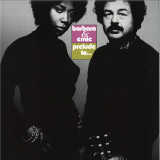
Barbara & Ernie’s only release is a complex combination of soul, folk rock, and late 60’s psychedelia. The constant use of electric sitars, funk leaning bass e multi-layered vocals offers a different take on contemporary pop music, approaching several jazz and world influence. oul singer Barbara Massey and jazz guitarist Ernie Calabria paired up for this rare 1971 album. With Calabria having worked with Nina Simone and Harry Belafonte, among others, and Massey having sung backup for artists including Jimi Hendrix, Cat Stevens, and Herbie Hancock, the pairing was an inspired one and resulted in this superb soul-jazz outing. Massey has a dry yet passionate and evocative vocal quality that often brings to mind Grace Slick. Fittingly, the duo takes on Jefferson Airplane's "Somebody to Love," turning the Summer of Love anthem into a steamy and hypnotic soul-funk jam. Elsewhere, the duo touches upon such varying styles as folk, Latin, and psychedelic rock with cuts like "For You" and "Do You Know?," bringing to mind such similarly inclined acts as the Free Design and Bill Withers.
The Coral is the eponymous debut studio album by British rock band the Coral. It was released on 29 July 2002, through the Deltasonic record label. After finalising their line-up, the band had a residency at The Cavern Club, where they were spotted and signed by Alan Willis of Deltasonic. Following the release of a single and an EP, and two UK tours, the band began recording their debut album. Sessions were held at Linford Manor Studios, Milton Keynes in early 2002, and were produced by the Lightning Seeds frontman Ian Broudie and the Coral. Described as a psychedelia and folk rock album, frontman James Skelly's voice was compared to Eric Burdon of the Animals and Jim Morrison of the Doors.
The Coral toured the United Kingdom twice (one stint as a co-headliner with the Music), and supported Pulp and Oasis for a few shows, leading up to the release of The Coral's lead single "Goodbye" on 15 July 2002. Following an appearance at that year's V Festival, the band toured the UK again in October 2002 to coincide with the album's second single "Dreaming of You" on 7 October 2002. The Coral was released in the United States on 4 March 2003, through Columbia Records.
The Coral received universal acclaim reviews from music critics, many of whom praised the high quality musicianship. The album peaked at number five in the UK, while also charting in France, Ireland, Japan, Scotland, and the US. It, alongside "Dreaming of You", would later be certified platinum in the UK. "Goodbye" charted at number 21 in the UK, and number 28 in Scotland, while "Dreaming of You" peaked at number 13 in the UK, and number 14 in Scotland. The album was nominated for the Mercury Music Prize, and a Brit Award.
The Coral is the eponymous debut studio album by British rock band the Coral. It was released on 29 July 2002, through the Deltasonic record label. After finalising their line-up, the band had a residency at The Cavern Club, where they were spotted and signed by Alan Willis of Deltasonic. Following the release of a single and an EP, and two UK tours, the band began recording their debut album. Sessions were held at Linford Manor Studios, Milton Keynes in early 2002, and were produced by the Lightning Seeds frontman Ian Broudie and the Coral. Described as a psychedelia and folk rock album, frontman James Skelly's voice was compared to Eric Burdon of the Animals and Jim Morrison of the Doors.
The Coral toured the United Kingdom twice (one stint as a co-headliner with the Music), and supported Pulp and Oasis for a few shows, leading up to the release of The Coral's lead single "Goodbye" on 15 July 2002. Following an appearance at that year's V Festival, the band toured the UK again in October 2002 to coincide with the album's second single "Dreaming of You" on 7 October 2002. The Coral was released in the United States on 4 March 2003, through Columbia Records.
The Coral received universal acclaim reviews from music critics, many of whom praised the high quality musicianship. The album peaked at number five in the UK, while also charting in France, Ireland, Japan, Scotland, and the US. It, alongside "Dreaming of You", would later be certified platinum in the UK. "Goodbye" charted at number 21 in the UK, and number 28 in Scotland, while "Dreaming of You" peaked at number 13 in the UK, and number 14 in Scotland. The album was nominated for the Mercury Music Prize, and a Brit Award.
Much is made of Detroit techno progenitors proximity to the auto plants. Similarly, overlooked electronic pioneer Jeff Phelps was raised just blocks from a Western Pennsylvania steel mill_close enough to smell the sulphur and hear the roaring blast furnace. When Tascam released their ground breaking Portastudio in 1984_allowing multi tracking on the far more financially inclusive cassette tape_Phelps purchased one immediately, and quickly added a Roland SH-101 monophonic synthesizer, Fender Rhodes suitcase piano, Roland drum machine, and a basic Radio Shack stereo mic. Those basic tools were employed on his first commercial productions for his own Engineered For Sound label: 1985's "Magnetic Eyes" LP and Antoinette's "Now You're Gone" 45. These DIY sketches generated few profits, and Phelps kept his day job in the energy business. Jeff Phelps eventually found his way back into performance and recording, starting with The Next Level Band near the end of the decade. Houston gourmands might have caught them at the opening of Texas's first Cheesecake Factory. "Magnetic Eyes" has already had a few lives, between TomLab's 2010 replica pressing and inclusion on Dante Carfagna's genre-defying Personal Space compilation. This 2021 edition features the heretofore un-re-released second mix, completed after discovering flaws in the initial 1985 pressing. Enjoy this technically perfect, artist-approved version of a visionary techno-adjacent masterwork.
Back in stock! Ghanaian Afro-Rock From Producer/Composer JJ Whitefield, Inspired By His Karl Hector & The Malcouns And Whitefield Brothers Projects JJ Whitefield, who in the early ‘90s revived the gritty, analogue Funk sounds of the ‘60s and ‘70s with his Poets Of Rhythm, has been working with Now-Again Records for over decade, releasing a flock of acclaimed projects with Karl Hector & The Malcouns, Whitefield Brothers, Rodinia and the Original Raw Soul anthology. He first started exploring African rhythms with the Whitefield Brothers in the late ‘90s, continuing in the ‘00s with Karl Hector & The Malcouns. He’s been instrumental in launching Ghanaian Afro Beat/Funk legend Ebo Taylor´s international career, decades after the maestro recorded the landmark albums that have inspired thousands. Whitefield recorded two new studio albums with Taylor and toured in his band between 2009 and 2013, where he met Taylor’s son Henry and percussionist/Singer Eric Owusu. The trio now front the Johnny! band and find inspiration not only in Ghana’s hypnotic grooves, but also the full frontal fuzz guitar assault heard on the legion of 70s Zambian Zamrock albums reissued by Now-Again. Indeed, Whitefield credits his tours with Zamrock godfathers Rikki Ililonga and WITCH’s Jagari Chanda as instrumental in creating the Johnny’s sonic backdrop. The band is rounded out by Turkish drummer Bernd Oezsevim (Woima Collective, Rodinia) and Indonesian bassist/multi instrumentalist Tomi Simatupang (Whitefield Brothers). This is what was oft-called “Afro Rock” at the core, with the possibilities to stretch out into swinging highlife, sweet soul or psychedelia . The results, point at a new direction for the music inspired by the Great Continent. One that takes a direction once mocked as derivative and asserts its importance on the globe’s current musical stage.
On a balmy Brazilian night in February, 1981, a crowd gathered in Rio de Janeiro's Gávea neighbourhood under the iconic dome of the city's Planetário (Planetarium). Alongside musicians like Helio Delmiro and Milton Nascimento (who were in the audience that night), they were there to see the great "Bruxo" (sorcerer) Hermeto Pascoal live in concert, with his new band formation which would become known simply as "O Grupo" (The Group).
Growing up on a farm in Brazil's northeastern state of Alagoas, Hermeto has always been deeply in tune with, and inspired by nature. In his youth he would make his own flutes to play call and response with the birds and frogs. He would build scrap-metal instruments in his blacksmith grandfather's forge, and sit for hours by the lake listening to the sounds of nature. On the Planetário Da Gávea recordings though, Hermeto is cast as the "sorcerer" or the "cosmic emissary" (as the great Brazilian guitarist Guinga once called him), exhibiting an intuitive sense of harmony and melody beyond that of our own world.
"Tudo e Som" (All is Sound). It's a phrase Hermeto regularly returns to, and it points to the fact that not only can music be made from anything, but also alludes to something much more profound. It's an understanding of the universe as being in a state of constant movement, forever vibrating at the quantum level, like the string of a guitar, or a saxophone's reed. "Tudo e Som" is a declaration of the mystical and spiritual power of sound, as a fundamentally vibrational force.
The series of concerts at the Planetário marked the birth of "O Grupo" which would last with the same line-up (apart from Zé Eduardo Nazário) for the next eleven years. Every member of O Grupo was a phenomenal musician in their own right. It was one of saxophonist/flautist Carlos Malta's first gigs with the group, and the concert unusually featured two drummers, Zé Eduardo Nazário and Marcio Bahia. Nazário, from São Paulo, had played with Hermeto during the mid-70s (as well as with Milton Nascimento, Egberto Gismonti and Toninho Horta, to name a few). Bahia though had just joined the group. Acclaimed keyboard player Jovino Santos Neto was on keyboards, piano and organ, and the great Itiberê Zwarg (who remains in Hermeto's band to this day), played bass. Rounding the group off was the percussionist Pernambuco. During this period (up until the early 90s) the group would rehearse for hours on end, virtually seven days a week, with a total dedication to music and Hermeto's musical vision.
Most of the compositions performed that night at the Planetário had never been recorded before, and many are unique to this album, including the wild 'Homônimo Sintróvio', the exaltant 'Samba Do Belaqua', 'Vou Pra Lá e Pra Cá' and 'Bombardino', which features Hermeto's wonderfully absurd call and response mouthpiece soliloquy. Then there's the stunning 7/4 Samba 'Jegue' which builds with inventive dissonance, before releasing yet another celestially colourful, celebratory refrain. The show also features the first recorded performances of 'Era Pra Ser e Não Foi' and 'Ilza na Feijoada' (inspired by Hermetos' wife Ilza's famed black bean and meat stew), which Hermeto later recorded on his 1984 studio album "Lagoa Da Canoa Município De Arapiraca".
Dubbed by Miles Davis as "one of the most important musicians on the planet", a Hermeto Pascoal live show was (and still is) an experience like no other. Across the recording of the Planetário concert, wild improvisation meets groovy, virtuosic vamping on progressive, extended psychedelic jams. The tracks are generally built around a beautiful, transcendent melody; instantly recognisable as being Hermeto's, and for the most part, the musicians then solo over extended two chord vamps. There's a plethora of powerfully delivered rhythms, wild solos and the performances are punctuated by Hermeto's unpredictable, at times comical sonic antics.
Over forty years since this historic happening, Far Out Recordings is overjoyed to release this magical recording of Hermeto Pascoal e Grupo Live at Planetário Da Gávea, on double vinyl LP, CD and digitally for a February 4th 2022 release.
The US-born, Norwegian-Mexican musician and producer Carmen Villain, real name Carmen Hillestad, has spent the last nine years and four albums gently unraveling song into the sound of emotional impulse. From the tilt and croon of her first two albums to the expansive warmth that flows and pulses beyond ambient in her more recent output, Hillestad's journey is artful musical deconstruction but also somehow spiritual growth.Hence new album Only Love From Now On, her fourth full-length and the culmination of a build-up that really began with the turn in sound evident from third album Both Lines Will Be Blue (2019, Smalltown Supersound) and the subsequent releases Affection In A Time Of Crisis (2020, Longform Editions) and Sketch For Winter IX: Perlita (2021, Geographic North). While the seed of her aesthetic was planted earlier, it has blossomed into something unexpected, benevolent in its composure and altogether luxuriant in its sensuality. If her themes, especially now, are wide, philosophical, and occasionally abstract, the emotional tenor of Hillestad's music is clear and purposeful. Makes sense that her key musical touchstones are dub, ambient, and cosmic jazz - flexible vehicles for tranquil wonder. While it may not contain voice or lyrics, as her two earliest records do, she describes it as, "wishing to maintain a sense of careful optimism for the future, while on the cusp of something unknown." Listening to Only Love From Now On is simultaneously comforting and alluringly strange. Partly it's the contributions of guests Arve Henriksen (trumpet, electronics) and Johanna Scheie Orellana (flutes). Partly it's the fluidity between instruments - such as clarinets - field recordings, the studio, jam, and careful composition. She calls the process a conversation with sound that occurs in her deliberate attempts to experiment with new methods, like granular synthesis, for her music-making. But mostly that strange comfort is in the peace and grateful contentment she has found via the stark recognition of her own privilege - laid bare by the pandemic. Only Love From Now On is fueled by the sense of scale in feeling small in the face of things so large, the contemplation of how the biggest impact we can have is in the people close to us, the attempt to make sure that impact is a positive one, and the choice to try to focus on love instead of fear.
Jimpster’s lockdown LP was made throughout 2020 and finally sees the light of day at the end of February 2022 having been delayed around 6 months due to the ongoing vinyl pressing hold ups. Birdhouse is the revered producers seventh full length LP and can be considered a full circle as he takes a step away from the dance floor to revisit his early inspirations of jazz, 70’s fusion, library music, ambient and sample-based downtempo electronica. With its soulful touches, vocal and live musician features and trademark warm Jimpster production, we also think it could be his most accomplished and accessible yet.
The opening title track sets the tone for what’s to come with rustling percussion, widescreen choral samples, dub FX and drifting pads all coming together to create a sense of optimism. The first of six vocal features comes next. Ascension with UK vocalist Oliver Night (featured on IG Culture’s recent Earthbound LP) is a simple soul jam with live bass from Nick Cohen and Jimpster’s beloved Fender Rhodes joining the lo-fi drum groove.
Next up we’re treated to Voodoo featuring brilliant young NYC MC/poet/producer who first grabbed Jimpster’s attention with his mind-melting track Signs, released in 2020 on Youngbloods. Yoh’s sung (not sung) vocal flow adds a new dimension to the Jimpster sound and is hopefully the first of many more collaborations to come with this perfect pairing. Still Believe takes us on a tripped-out journey into slo-mo, lopsided MPC beats punctuated with otherworldly vocal samples, live bass and Rhodes making for an immersive late night mood.
The first of two tracks on the LP featuring London vocalist and songwriter Cairo drops next entitled Beautiful Day. Another incredibly talented young artist introduced to Jimpster through a mutual friend, Cairo adds a deep and uplifting vibe making for a track you’ll come back to time and time again. A slow-burning nu-soul groove which will draw you in with its warm glow. Lazarusman is a Johannesburg-native poet and vocalist known for his collaborations with Stimming, Joris Voorn and Booka Shade. Here he delivers a poem called Heavy, perfectly punctuating the haunting reverb-drenched horn, Detroit-esque chord stabs and filtered drums.
Future Paradise drops the BPM's further still for a slow-stepping synth ride mixing up rising arpeggios, dubby flugel horn FX and the lushest of strings. It’s been 15 years since Jimpster and Capitol A last joined forces on Left n Right from Jimpster’s Amour LP. Known for his work with Jazzanova, King Britt, Mark De Clive-Lowe and 2008 club anthem Serve It Up on Mantis, the San Francisco native MC delivers his inimitable flow to a blunted jazzy hip hop groove making for one of the LP highlights.
Up next, Rain is an intimate and understated slice of contemporary soul music which pushes another spellbinding Cairo vocal front and centre, underpinned by loose, crunchy beats, dusty keys and moogy flourishes. Picking up the pace, Doors Of Your Heart sees Jimpster get busy chopping up a funk groove whilst Nick Cohen lays down another killer live bass line. Lush keys, modular synths and some crazy FX processing take this into the stratosphere and call to mind some of his earliest productions in the late 90’s on his seminal LP Messages From The Hub.
Winding things down, Jimpster continues to revisit some of the sounds and flavours of his earliest work on Tell You, which goes seriously deep with touches of cinematic big band horns and a looped up vocal sample. Closing out the LP we have the aptly titled Full Circle complete with sublime Metheny/Mays-style pads, muted synth arps and subtle FX to drift away to.
Upcoming new album release from JD Simo entitled 'Mind Control' will be released at the end of October while JD is on tour (9/28 - 11/21 & 1/7/2022 - 1/29/2022 JD Simo... The Chicago-born, now Nashville transplant is like a one-man crusade dedicated to keeping music real, raw, and honest. No matter the setting and no matter his role (whether it’s wingman or bandleader) J.D.’s presence infuses the situation of the moment with the music that’s been fueling him pretty much his whole life, spiced with influences that straddle both decades and dimensions. As a songwriter, guitarist, and producer, he has worked with Jack White, Tommy Emmanuel, Luther Dickinson, Dave Cobb, Blackberry Smoke, and even been a member of Grateful Dead founder Phil Lesh' "Phil & Friends." Now he comes forth with his most unique, original, and rawest effort yet… “Mind Control,” which drops November 5th, 2021. During lockdown in '20, he started cutting tracks in his makeshift studio weekly. Joined by longtime collaborator Adam Abrashoff on drums and longtime friend bassist-producer-engineer Adam Bednarik (Justin Townes Earle), they mused a proverbial soup of shared influences - Hill country trance blues of Junior Kimbrough, RL Burnside, and Asie Payton, hypnotic Afro Beat of Fela Kuti and Tony Allen, psychedelic warps of Captain Beefheart, Funkadelic, and Jimi Hendrix, the old school blues of John Lee Hooker, Earl Hooker, and Lightnin Hopkins and the raw, fuzzy rock of The Stooges and Nirvana. 'Mind Control' is the product of 3 like-minded buddies huddled in a humble setting, making music to make them feel good. The songs' stark, revealing nature is the product of them using the creative process for therapy and enjoyment. Because they had to, for no other reason than they couldn’t not! They love it too much. A positive theme of growth, self-help, and struggles with addiction and mental health lay alongside a haunting, low-down musical landscape. It's raw, funky, and real. Such is life.
- 1: Fate Of Man
- 2: 8 Days (Till The End Of Time)
- 3: Prescient
- 4: Back From The Past
- 5: Revel In Time
- 6: The Year Of '41
- 7: Bridge Of Life
- 8: Today Is Yesterday
- 9: A Hand On The Clock
- 10: Beyond The Edge Of It All
- 11: Lost Children Of The Universe
- 12: Fate Of Man (Alternate Version)
- 13: 28 Days (Till The End Of Time) (Alternate Version)
- 14: Prescient (Alternate Version)
- 15: Back From The Past (Alternate Version)
- 16: Revel In Time (Alternate Version)
- 17: The Year Of '41 (Alternate Version)
- 18: Bridge Of Life (Alternate Version)
- 19: Today Is Yesterday (Alternate Version)
- 20: A Hand On The Clock (Alternate Version)
- 21: Beyond The Edge Of It All (Alternate Version)
- 22: Lost Children Of The Universe (Alternate Version)
“Revel in Time”, the third album from ARJEN ANTHONY LUCASSEN'S STAR ONE, is as much of a reaction as it is a contrast to Arjen Lucassen’s previous album, “Transitus” from Ayreon. While “Transitus” is a cinematic experience that you may almost call a musical, “Revel in Time” is a heavy album that is very riff driven and there is more focus on virtuoso musicianship. Similar to its predecessors, “Revel In Time” works as a concept album. All tracks are inspired by different movies that deal with some kind of manipulation of time. There is one thing this time around that is quite different compared to the earlier STAR ONE albums: The first two had the same cast of four singers: Floor Jansen, Russell Allen, Damian Wilson and Dan Swano. However, this time Arjen decided to generally have mainly one singer per track, and a different for almost each track. This shows especially on CD 2, the “Same Songs, Different Singers”-CD as Arjen likes to call it. The guide vocals that were recorded (for the other singers) were way too good to just be guide vocals. Thus, Arjen decided to release a second version of the songs with the guide vocals on them as CD2. At some point he started spontaneously inviting other singers to sing some of these tracks, because he was curious how the songs would sound with their voices. Ultimately CD2 ended up with no less than 9 different singers, all equally as good as the ones on CD1. A total of about 30 different musicians contributed to the new album, not all of them being singers though. The core of STAR ONE remains Ed Warby’s powerful drums as well as Arjen’s guitar and bass work that hold it all together and give it that typical STAR ONE sound. The icing on the cake is the front cover art that was created by Arjen’s trusted favorite artist Jef Bertels.
- A1: Omowale
- A2: Manifestin (Feat Angelo Arce)
- A3: Ptsd (Feat Georgia Ann Muldrow)
- A4: Goat (Feat Miles Brown)
- B1: Fatherhood (Feat Posdnuos, Big Daddy Kane & Stacy Epps)
- B2: Breathe (Feat Guilty Simpson & Soulyghost)
- B3: Night At The Museum
- B4: Manchurian Candidate (Interlude)
- C1: 3 Sistas & A Child (Feat Dynasty & Medusa)
- C2: Reflections
- C3: Livin N Color (Feat Ras Kass & Giocello)
- C4: Peace Of Mind (Feat Murs)
- D1: Grown Folk (Feat Sadat X)
- D2: Edge Of Tomorrow (Feat 2Mex)
- D3: Say Their Name
Omowale is the powerful new album from Wildchild, one third of the legendary Lootpack crew and a formidable solo artist who released many projects on the iconic Stones Throw Records. Across the 15 tracks, the Cali rapper deftly explores what it means to be a Black man in the U.S. today with timely, poignant lyrics. It’s a hard-hitting look at this country and its decades of wrongdoing, all with an air of optimism for the future. This album is Wildchild’s first solo release since 2016’s T.G.I.F., though he’s clearly kept busy in the interim by working on Omowale and making a number of standout guest appearances. Many of his past collaborators are returning the favor, as we’re treated to dope features from Posdnuos (of De La Soul), Big Daddy Kane, Guilty Simpson, Ras Kass, Murs, and more. Plus, there’s head-nodding production from Madlib, Nottz, Georgia Anne Muldrow, and Mr. Brady, among others. They’re all bringing their A-game on Omowale, an impeccably produced album beyond its instrumentation and rhymes. Wildchild builds on the project’s narrative by incorporating audio from newscasts, protests, and other live events. He also brings that real-world feel to his lyrics, from joyful raps with his son (Black-ish actor/emcee Miles Brown) on the funky “G.O.A.T.” to raw rhymes about police brutality on “Breathe.”
When the album culminates with “Say Their Name”—a moving tribute to the rap legends we’ve lost over the years—Wildchild proves on Omowale that you can balance hope with the harsh, unjust realities of the world.