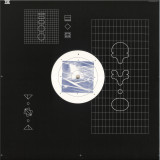
The Berlin-based artist Simina Grigoriu debuts on DCLTD. The opener ' Declare Me' steps up the energy with searing intent, while never losing a sense of deep brooding atmosphere. One for the marathon Sunday afternoon sets. ‘Astral Waters’ bubbles away with tight drum work and a deep Motor City vibe. ‘Technology of Prayer’ mixes late-night techno soundscapes with driving rhythms. An essential tool for bridging moods during longer sessions. And finally ‘The Right Calibre’ positions tribal rhythms at the fore for a rolling cut that doesn’t take a backwards step from creating plenty of tension through the mid-section via a stirring break.
Search:sim one
Since its founding back in 2014, Blume has carved a unique place in cultural landscape, issuing free-standing works, spanning the historical and contemporary, that represent singular gestures of creativity within the field of experimental sound. Joining their broad efforts in building networks of context and understanding that already includes the works by Werner Durand, Sarah Hennies, Bruce Nauman, John Butcher, Jocy de Oliveira, Mary Jane Leach, Valentina Magaletti, Alvin Curran, Julius Eastman, Alvin Lucier, and shortly after returning with the first ever vinyl release to attend to James Tenney’s legendary “Postal Pieces”, the label is now offering a brand new, ambitious work by the American composer Ben Vida, entitled “Vocal Trio”, conceived, performed, and recorded in Bremen, Germany, during the Spring of 2022. A truly stunning work of compositional conceptualism, combining the ideas of systems based synthesis with real-time vocal collaboration - issued in a highly limited vinyl edition of 200 copies mastered by Stephan Mathieu, featuring specially commissioned liner notes by Bradford Bailey and a leporello insert offering the piece visual score - it’s a landmark in contemporary experimental practice and arguably the most forward-thinking and exciting piece by one of the most exciting American artists working today.
Ben Vida first emerged during the mid 1990s within a loose constellation of experimental musicians, centred around a performance series of improvised workshops at the Myopic Bookstore in Chicago, alongside Jim O'Rourke, Kevin Drumm, Chad Taylor, and the other future members of Town and Country - Jim Dorling, Joshua Abrams, and Liz Payne - the band within which he would gain widespread recognition over the following years. Like many other members of that scene, Vida remains a restless product of a fleeting context - Chicago during the 1990s and early 2000s - continuously undermining concrete notions of idiom and signifier within a practice that witnessed him rendering bristling abstractions within Pillow, glacial melodies with Town and Country, the art-rock mayhem of Bird Show Band, and the angular, driving indie rock of Joan of Arc, before becoming immersed in a practice of systems based synthesis, beginning in the 2010s, that guided much of his first decade of output as a solo performer and composer.
As early as 2013, he began to incorporate acoustic sound sources - specifically the human voice - into his work. It was this shift, evolving and refining itself over the last decade, that underscores radically the leap in his practice represented by “Vocal Trio”, a work that encounters Vida composing for the human voice with the ideas that allow for synthesis - transferring the underlying concepts and structures of both subtractive and additive synthesis to the acoustic realm - without using a synthesiser.
During the Spring of 2022 Vida was in Bremen, Germany, collaborating on a dance piece with the choreographer Fay Driscoll, when the production fell into delays. Finding himself with time on his hands, a space at his disposal, and the company of two dancers - Amy Gernux and Lotte Rudhart - who were also singers, the idea for the piece - to utilising the larynx as audio paths (multi-harmonic or harmonically pure) while conceptualising each person’s mouth as a filter to sculpt the timbre and resonance of a given tone - began to take shape in his mind. Considering how typographical scores might be developed into a non-linguistic social framework, Vida drafted a single page of text - what became the score for “Vocal Trio” - accompanied by a set of harmonic suggestion and loose parameters, seeking a core meaning from each word's phonic make-up by each of the three singers (Vida, Gernux and Rudhart) singing as slowly as possible.
At the core of the pulsing vocal drones - intoxicating, harmonically rich long-tones - that make up the duration abstraction of “Vocal Trio”, is Vida’s regard for music as a social space. It is an experiment that seeks liberation through the act of collective music making, by challenging the terms through which the act of composing is perceived and then relinquishing control. The piece’s rehearsals were simply the three performers hanging out, allowing their knowing each other and natural dynamics to contribute to its form as the score, before recording during a single afternoon at the end of a number of days sharing company and space.
Creatively visionary and groundbreaking on numerous terms, as well as being intoxicatingly beautiful and remarkably listenable, Ben Vida’s “Vocal Trio” represents a striking step forward for one of the most ambitious and outstanding sonic artists working in the United States today. Issued by Blume in a highly limited vinyl edition of 200 copies mastered by Stephan Mathieu, featuring specially commissioned liner notes by Bradford Bailey and a leporello insert offering the piece visual score, this is hands down one of the most important contemporary records we’re likely to encounter in 2024.
Benny Howell (aka DJ Subaru) is a UK based producer, DJ and overall promoter of good times who's undoubtedly propelling a new generation of music appreciation with an honourable respect for the earlier beginnings of club culture. Benny Howell might also be the pioneer of a new post-Brexit Eurodance genre, with "Surrender", a catchy Pop oriented production with strong influences from Italodisco and HiNRG, written and produced entirely from scratch with best friend Bella Quirin who co-wrote the lyrics after a break up with her ex. Innocent and charming lyrics over 120's BPM drum machine and a simple melody that you'll be humming in the back of your mind for days to come. Equipped with a Yamaha TX81Z, a few guitar pedals and a makeshift bedroom studio, "Surrender" is the product of a dear friendship between the two music lovers, as per Benny's recount: "Bella came and sung on the track in my bedroom during one of the gaps between Covid lockdowns after I asked her at the pub if she knew any singers and said me of course, and we went from just friends to best friends."
The remix on the B-side by Castro takes a darker turn into what almost sounds like a Techno version with heavy dubbed out effects taking the "Surrender" theme through an unhinged Ketamine flanger vortex. Full cover artwork and mastered at Manmade mastering in Berlin.
One of the key 45s in the output of Prince Jazzbo's Ujama label during the digital era of the late 80s - originally reissued via NYC's Deadly Dragon some 15 or so years back - gets a much needed new cut & press via Death Is Not The End's 333 series.
The late Earlando Neil aka Early B first started performing on soundsystems in the late 1970s, often appearing with his young apprentice Wild Apache, later known as Super Cat. It was alongside Cat that he is credited as a key driver behind the popularisation of the King Majesty and Killamanjaro stables in the early 1980s, following which he had a string of hit records for the likes of Harry J's Sunset imprint, Ossie Thomas' Black Solidarity and Jah Thomas' Midnight Rock label amongst many others.
Following a run of stellar LPs in the mid 1980s Early B's output began to wane as the sound of digital production began to take precedence, but not without firing off one the most killer shots ever recorded on a computerized rhythm for Jazzbo's Ujama in 1987. Reportedly the first time around for the hallowed Replay version, Imitator's subject matter takes aim at the new kids on the dancehall block ripping off the veterans, while he simultaneously pays hard-earned dues to the dancehall's foundation deejays such as Jazzbo himself, U-Roy, Big Youth, Dennis Alcapone, King Stitch, Trinity & Dillinger.
Accomplished NYC singer-songwriter Kelli Sae unveils joyful new single Good Feeling on 21st June 2024, the first fruit of her fourth solo artist album due early next year. Good Feeling swings, sways and shimmies with playful Latino spirit; a summer-fun delight all about seizing the day and embracing love and life. Sae’s sizzling vocals dance in and around deft keys, layered horns, tight guitar parts and, of course, that infectious percussion. Verses switch up to agile scat solos and down to emotive breakdowns – it’s the very best of feelings….
Good Feeling is produced by Chris Franck, co-founder of Da Lata, chief instigator behind Zeep, Smoke City and Batu, and long-standing mastermind for a wealth of other studio projects and remixes. The record features a talented cast of musicians including award-winning Brazilian composer Rafael Martini, who arranged and conducted the horn sections in one of Latin music’s truest heartlands Belo Horizonte.
Kelli Sae’s story has it all. An internationally acclaimed artist, she previously shone as lead vocalist for renowned jazz-funk collectives Incognito, Count Basic and Defunkt, and worked with Tina Turner, Chaka Khan, Patti LaBelle, Ashford & Simpson and Me’shell Ndegéocello among others. Born of Puerto Rican, African and French descent, Sae has soulful eclecticism in her blood. The exciting mix of sounds, cultures and influences across her three, independently-released solo albums to date is testament to this, as well as her respected forays into composing, playwrighting and stage performance.
Good Feeling is Kelli Sae’s latest impactful outing for Reel People Music, following singles Good Love, Right Now and Believe In A Brighter Day earlier this decade. The special relationship is set to blossom further over the coming months. We. Can’t. Wait.
Having spent the last decade evolving into one of dance music’s most sublimely effective producers, CWPT is delighted to welcome Theo Kottis at the peak of his powers, delivering a further four tracks that demonstrate a playful mastery of widescreen sounds for wide-eyed dancefloors.
Capturing the light still shining from his beloved ‘Lighthouse’, finally released earlier in 2024 via Dekmantel and escalated into notoriety thanks to support from trusted selectors such as Ben UFO, Francesco Del Garda and our own Palms Trax, title track ‘Rain’ retains a similar, blindingly authentic nineties reverence, finding ecstasy in a wash of cascading synths, powerful plunges of sub-bass and layer upon layer of elasticated everything.
The Scottish producer’s positive education in the foundations of club music with real personality makes itself known without indulgence; a belief in the subtle tweaks and imagination of classic tech-house, alongside a welcome flirtation with the over-the-top elements that create something potentially anthemic. In this regard, ‘Benirras’ proves to be pure pleasure for dancers who love to be toyed with, its stripped back opening giving way to slowly-escalating, wobbly-jawed hysteria.
On the flip, ‘Grazie’ proves as cordial as its title, a warm and refined slice of sleek house minimalism, a roller with Alfa Romeo sensibilities. Things take a more aquatic turn on ‘Lowkey’, a logically headsy conclusion that sees Kottis sensually bounce the word ‘electro’ around in that very style, its slower tempo and wider space allowing the impressive intricacies of his productions to float up for fresh air.
The second 7” introduces to the world The Mighty Gravillons, an obscure vocal trio bringing us right back to the golden days of roots reggae. With powerful and thought-provoking lyrics, ‘Crumbling World’ is a desperate cry to the world we’re building for the next generations. How can we leave such a world of wars, political conflicts and environmental crisis to our kids? The B side shines by it’s simplicity: The 18th Parallel invited one of their favourite musicians of today’s reggae scene to blow his spellbinding saxophone, Anant Pradhan. The legacy of Tommy McCook, Roland Alphonso or Cedric Brooks has found its worthy embodiment. New York saxophonist graces us with ‘Peace Treaty’.
Switzerland’s Adam’s Bite welcomes Romanian artist Lumieux onto its roster this July with the ‘When I Think Of You’ EP.
Hailing for the Romanian capital of Bucharest, Lumieux is one of many artists coming out of this region and defining a style that’s driven by stripped-back percussion, subtle nuance and detailed intricacies. Lumieux’s productions have found a home on the likes of Subtil Records, Antrakt, Dissonant and UVAR among others, while as a DJ he operates a core member of the prized Sunrise Agency out of Romania. Here though, we see Lumieux delivering his latest EP for Adam’s Bite, following recent material from IULY.B, Flabbergast and Audio Werner.
‘Psycho’ leads the EP, laid out across nine and a half minutes with murky dub chords, fluttering bass tones and choppy vocals intertwined with a swinging drum groove. ‘Tifosi’ follows and retains a similar aesthetic, bringing choppy stab sequences and wandering bass licks to the forefront, underpinned by shuffled modulating percussion and crisp drums.
‘What You Are To Me’ opens the B-side next, stripping things back to twitchy acid tinged synths, hypnotic vocal lines and vocoded voices while bumpy delayed tom toms, weighty kicks and congas subtly evolve and unfold throughout. Lastly ‘Nebula’ rounds out the EP, employing a plucked stab-led bass groove at its core alongside expansive delayed atmospherics and a crunchy saturated rhythm.
Ten years after his first full-length effort ‘Man Is Deaf’ landed him firmly in the runnings for DJ Mag’s album of the year, prodigal son Michael Anthony Wright AKA Brassica returns to Civil Music with a deeply accomplished, painstakingly whittled LP of hydraulic electro slickness, rich synthscapes, and hooky, peak-time tearjerkers for the most discerning front-left lifers. ‘Tribeless Gathering’ is a barnstorming testament to Brassica’s stylistic and timbral deftness, touching down in the elusive epicentre of the club/home listening venn diagram with ease.
From the elastic, neon acid pointillism of opener ‘Hop Kweng’ to the mardy, miasmic plod of closing chugger ‘Changa Hill’, Brassica seamlessly segues between avenues of influence, his notoriously omnivorous musical knowledge roadmapping each turn. Raised on a diet of everything from early rave standards to metal, and schooled in avant garde sonics as a student of sound design at LCC, Brassica does a peerless job of sublimating his countless influences into a record of refined, heterogeneous, and most crucially, catchy, club moods.
Less spartan than his more recent oeuvre on Feel My Bicep, and less baroque than his technicolour experiments in postmodern synth pop with vocalist Stuart Warwick, Tribeless Gathering represents Brassica’s triumphant return to the main room, replete with rushy hooks primed for the planet’s finest soundsystems, and passages of heads-down tension bound to draw listeners right to the edge of their seats. Overall it is a concise and refined testament to Wright’s command of spectral sonics and effortless ability to pressurise a dancefloor. It is no surprise that he has also worked as a prolific mastering engineer, tuning music from a plethora of dance disciplines for maximum club impact. This work extends to his own projects (including this one), cementing them as rare expressions of complete artistry from studio to turntable.
As we delve deeper into the record, we are ushered through a series of accomplished and varied club moods, each channelling a unique cocktail of influences, but retaining a warm, ebullient analogue sensibility unique to Brassica’s work. This playful scope of influence calls to mind James T Cotton or Machinedrum’s experiments in dance music form, but Wright manages it all under one roof, wrangling everything from sashaying wub-laden two step to snarling Dillinja-esque FM damage into something inherently his.
Choice cut ‘Change Yourself’ layers an almost Cerrone-like piano refrain over radiant surges of saturated bass, dubby, strobing chords and a jagged, driving break, building to a jaw-clenching apex of dancefloor elation, while the rude, playful half-step of ‘Elevation’ breaks down the vintage speed garage formula into linear fragments, utilising a tight palette of resonant bass slugs, infectious synth leads and Papua New Guinea-style vocal strobes. The aptly named ‘Hold Tight’ fuses heart-in-mouth UK ‘ardkore pads with glissando acid disturbance and surgical snare fills in a formula which recalls the ethereal grit of Nubian Mindz’ 00s experiments in big-smoke break science, while the questing melodic arcs and arpeggiated squarewaves of ‘Pinball Marinara’ could easily have soundtracked an 80s sci-fi epic, beset with sparkling, bare-bones drum programming and hazy beds of sub sediment.
With ‘Tribeless Gathering’, Brassica both irreverently fuses and pays homage to the many unique and weird permutations of UK dance music. The short lived gathering of junglists, ravers and house hotsteppas of a similar name may have long since dissipated, along with the tribes themselves, but across these 11 tracks, he lays a blueprint for a new sound of togetherness.
One of melodic techno’s biggest breakout stars, Massano steps up for his Drumcode EP debut. The emerging DJ/producer from Liverpool already gave us a taste of his elite studio capabilities via the fantastic ‘Betrayal’, his contribution to last year’s Drumcode A-Sides Vol.12 release – one of the highlights of the compilation. Massano’s sound hits with a fantastic punch, characterised by super charged sound design and powerful melodic riffs with key releases on Afterlife and his own Simulate to date. His ‘Telepathic’ EP reinforces why we’re rightly so excited to have him on Drumcode. The title track is a juicy psy-laced stomper, propelled by a menacing low-end vocal that adds plenty of atmosphere to the cut. ‘Destructure’ is formed around rattling percussive effects, before euphoric melodic layers build in intensity throughout the second half. When the two elements coalesce, we’re treated to a track with immense peak-time power, that never loses its unique edge. ‘The Method’ is a melodic ace, shifting between laser-kisser dynamism and full throttle bass-driven energy.
2024 repress
“The doors are where the windows should be, and the windows are where the doors should be”. If you had been in one of the more open minded all night raves in the early 90s you are likely more than familiar with Earth Leakage Trip’s ‘No Idea’.
You could write several pages about the 'Psychotronic EP' and still not nail it as well as Discogs user covert_operative's description of 'urban, British psychedelic music.' The Acid House narrative is all about ecstasy, but for many, especially outside of London, there was a lot of LSD involved. Things were edgier, too, with parties in derelict, liminal spaces. By the time this record came out in 1991, the rave was properly diverging from its house music beginnings.
The Psychotronic EP was the first release on the legendary Moving Shadow label. Its lead track 'No Idea' is both the perfect entry point to the catalogue and something of an outlier. Neil Sanford had been writing music for a few years before playing some demos to Rob Playford in his car outside a nightclub in Wood Green. Simon Carter got involved, and the pair went to Playford's studio to manifest the madness they'd been sketching with rudimentary gear.
'No Idea's use of samples was wholly inspired and far more surreal than so many of the dark-side tracks that were to follow it. A friend of Neil's had given him a record called 'Happy Monsters' and the lead track, 'Adventures in the Land of Ooog,' lent the unforgettable children's vocals. Neil initially had his doubts. Had they gone too far? However, while working on the track, Rob Playford's girlfriend ran in shouting, "you HAVE to use that!" And so it came to be.
As a footnote, the track did prove to be strong medicine, with at least one documented account of a promoter having to be talked down by his friends after hearing it when psychedelically altered.
The Psychotronic EP is a truly visionary piece of work, standing poised on the edge of the rave's burgeoning future and entirely outside it. As such, it's never not been a cool record, as appealing to lysergic adventurers as it is to house heads, hardcore ravers, or experimental music pioneers. And it has now been lovingly reissued by Blank Mind, for which I'm eternally grateful, seeing as my copy is battered beyond belief.
Written by Piers Harrison
Remastered by Graeme at the Exchange
Licensed with permission from Moving Shadow
Played by Autechre, Colin Dale, Colin Faver, Orbital
2024 repress on pink vinyl
Boston is not exactly worldwide known for its coldwave or synth pop artists. Most of us know the Capital of Massachusetts because of its hardcore legacy that still continues today.
And yet, just like flowers in a rugged land, here comes House Of Harm, a post-punk trio whose new approach to the genre was showcased on their two tape EPs, earning them a cult international following as well as an imposing line up of supporting gigs opening for Editors, She Past Away, Lust For Youth, and The Cure’s Reeves Gabrels. Due on September 4 is their debut full-length Vicious Pastimes out on vinyl LP and digital format.
Nine songs where timeless melodies of Kiss Me Kiss Me Kiss Me-era Cure perfectly match French coldwave moodiness, enhanced by Cocteau Twins ethereal airiness and Creation Records seminal shoegaze sounds. Just enough light reaches House Of Harm’s base layer, giving life to infectious hooks and unforgettable mantras. The gritted core of every song makes expansive moments of release cathartic, always tethered by commanding drums.
Check out the very first single they wrote Isolator and its melancholic synth pop refrain, or Against The Night whose darkwave is as claustrophobic as One Hundred Years. Catch sounds almost like a Sarah Records hit, while the title-track hurls us back into the bleak realms of the Sisterhood. Different influences but everything is just in its place simply because House Of Harm are the rare band where you can feel every individual member’s devotion to each song’s world.
RIYL: The Cure, Depeche Mode, A Flock Of Seagulls, For Against, Drab Majesty.
2024 repress
WRWTFWW Records is very honored to announce the official reissue of Grauzone's essential 1981 maxi single with timeless classic "Eisbär", proto-techno beast "FILM 2", and romantic synth ballad "Ich Lieb Sie", just in time for the 40th anniversary of the Swiss band's formation. The three-track vinyl is sourced from the original reels, cut at 45rpm, and comes with its iconic artwork on a 350gsm sleeve.
Ich möchte ein Eisbär sein...Written by Martin Eicher after a nightmare in which he saw talking polar bears on the walls, and with music by the Grauzone crew consisting of Martin and his brother Stephan Eicher, Marco Repetto, Christian "GT" Trüssel, and Claudine Chirac (on saxophone), "Eisbär" is the most recognizable title from the band, a sublime mix of ingredients reflecting the transitional era it comes from - the raw energy of punk music still palpable, combined with the audacity of early electronics, the warm groove of a disco gem, beautifully fragile lyrics, and one of the best basslines ever. It became a mega hit, totally unplanned, but how could you resist such a track
"FILM 2" is the ultimate b-side monster, a menacing all-instrumental pre-techno masterpiece, slowly building to a magnetizing frenzy. An instant underground favorite, it was famously heard played at both speeds depending on the scenes and DJs you were frequenting, 45rpm as it was first intended, and 33rpm for the cosmic experience (search Daniele Baldelli's Cosmic C75 1982 mixtape online for a great example of this).
The maxi single ends with "Ich Lieb Sie", a synth-pop meets doo-wop ballad, a true love song oozing with innocence. Simple, stylish, and just right.
At the crossroads of post-punk, new wave, pop, and electronic experimentation, the Eisbär maxi offers three songs that are technically different but hold the same spirit, the perfect embodiment of Grauzone's music - wild, unpredictable, and youthful, yet sophisticated, catchy, and ingenious. The magic recipe for the good stuff.
Stephan Eicher went on to be, arguably, the most successful Swiss musician ever, with an international career extending from pop chanson to experimental escapades and collaborations with Moondog, artists Sophie Calle and John Armleder, and author Martin Suter among many other luminaries. Marco Repetto flourished as a techno and ambient producer, releasing multiple projects including releases on Aphex Twin's Rephlex label.
Grauzone and WRWTFWW will continue to collaborate on the band's 40th anniversary reissue campaign, with numerous projects planned for the year, including a vast selection of music, visuals, and literature never available before.
Pitch Dark is a new VA series brought to you by Berlins Pure Hate Trax. For this the 1st in the series they invite 3 new Artists to the label but by no means new to the scene in Codex Empire, Maedon & 7CIRCLE. Also making a welcome return after his debut on VHXX1 is STRISC. Codex Empire – Since 2014, British born, Vienna based Codex Empire has built an international reputation for dark and intense techno productions and live shows. Combining this background in dark electronic music with heavy rhythmic elements makes Codex Empire an intense and simultaneously danceable experience both live and on record. Codex Empire has performed over 100 live shows across Europe, Japan, Korea and Canada, as well as numerous appearances in Berlin at Berghain, Tresor, Arena Club, Suicide Circus and BoilerRoom. Maedon – A native of notoriously grimy Baltimore who spent some seasons in filthy Philadelphia learning the craft, her arrival in New York City circa 2018 signalled a shift in development, one confirmed by the emergence of her Maedon moniker and her partnership with Brooklyn/Berlin techno powerhouse Sonic Groove and its head Adam X. Fast forward three years to Berlin, two albums, a residency at Tresor and an entire world later, Maedon forges ahead to the next phase of a rapidly building career. Assuring her future as the world falls apart, Maedon’s bracing sound and undeniable skills are a story now unfolding, with its beginnings already written in grit.
7CIRCLE – At the helm of Destroy to Rebuild, 7CIRCLE is a musical project without boundaries. Drawing from post punk and metal roots, 7CIRCLE navigates across all genres including Techno and Industrial without compromise or frills. The journey through the discography of 7CIRCLE is a fascinating path filled with darkness and aggressive sounds which are sometimes embellished with a melancholy touch to satisfy lovers of strong emotions. STRISC. – Hailing from the East Midlands, UK and residing in Berlin for the last 8 years, STRISC. is an Artist, DJ & Label Owner who has been making waves due to a relentless output of no-compromise productions that have garnered him the respect and attention of Techno aficionados and peers alike.
2024 Repress
Starting out in 2001 to tie up some loose ends from our regulars, SPEICHER has since become a guarantee for vanguard dance sounds from all over the planet, allowing KOMPAKT to invite and support electronic artists that comfortably inhabit both the delicate and the more deliberate ends of the electronic music spectrum. For SPEICHER 81, Amsterdam-based DJ and producer PATRICE BÄUMEL presents two adventurous minimal epics with decidedly mind-bending propensities.
As a long-running resident DJ at Amsterdam's renowned Trouw club, PATRICE BÄUMEL certainly knows how to draw in a crowd, having proven his skillful approach to hypnotic techno time and time again, as an impeccable host as well as an internationally acclaimed guest DJ in the world's leading venues. Just as his DJ sets, Patrice likes to infuse his own music with raw energy and a sense for sonic adventure - MILE HIGH GANG serves as a perfect example for his credo, underpinning its vibrant synth sequences with a meticulously crafted - and intensely propelling - beat.
The true mind bender, however, arrives with the flipside's aptly named VERTIGO, a deceptively simple, yet unstoppable son of a pitch shifter, cutting its way through spiralling serpentines in dizzying heights. Never one to let himself get bogged down by genre markers or scene compliancy, PATRICE BÄUMEL commutes between electronic factions with ease: he caters to a purist crowd as well as those in dire need of sonic surprises, giving both daydreamers and nighthawks something to rock out about.
Yes, *that* Al Hirt record. Featuring the godlike "Harlem Hendoo", looped unforgettably by De La Soul for the legendary Buhloone Mind State cut, "Ego Trippin' (Part Two)"!
Al Hirt's infamous Soul In The Horn is inextricably tangled up in crate-digger lore. Originally released in 1967, the album has been in heavy, heavy demand for over 30 years, entirely down to the majestic soul-jazz fire of "Harlem Hendoo". And it's a song so good, so vital, so timeless, that it will always tower above everything else in its proximity. This one track alone is worth the price of admission - even if the cost of entry were $100 or even $1000.
However, it would be an error to dismiss this record as merely a one tracker, loaded as it is with dope samples for adventurous beat makers. Certainly the funkiest Al Hirt record, it definitely lives up to the "soul" in the title. Thanks to composer Paul Griffin and arranger Teacho Wiltshire, Hirt got uncharacteristically free and groovy throughout. It comes on more like an obscure KPM library funk record than the easy listening Al was notorious for.
A Louisiana trumpeter and band leader who made Allen Toussaint’s “Java” famous, Al Hirt was also known for TV themes, Dixieland, Swing and being a minority owner of the New Orleans Saints. Unlike every other Al Hirt record - and despite most "diggers" claiming otherwise - this here gem is genuinely hard to come across "in the wild". Normally, you can't give Al Hirt records away, except this particular one, which raises pulses in the crate digging community to life-threatening levels. For every owner claiming to have found their copy for a dollar, there's scores more claiming to have *never* unearthed one in the field. So, paradoxically, you can consider this the most tricky-to-pull "thrift store record", ever. This is why we're finally making it available for everyone, not just those with endless hours to spend scouring the global goodwills!
Soul In The Horn represented an expressive detour into authentic soul-jazz for Al Hirt. Throughout, we're struck by a fierce, fiery energy that's otherwise absent from his typically easy listening work. Without question, the slinky, magical "Harlem Hendoo" is the standout, here. It's also the reason why the record is so scarce and commands awe among crate diggers, sounding like something from an obscure and deeply revered spiritual jazz record. As is often the case, the true genius of the song is tricky to do justice to; it's like a minor miracle of songwriting and performance that simply swooned down from the heavens on the back of horns, bells and harpsichord. It's one of the sweetest musical compositions ever recorded inside a studio - it's only failing is that it's just too short. Sampled brilliantly by De La Soul, it has also been used by The Roots for "Stay Cool" and Nightmares On Wax for "Damn".
The rest of the record makes for a mighty fine listen. From the opening cover of Booker T. & The MG's "Honey Pot", to the propulsive, ultra-funky "Mess Around", it's nothing but a good time. Given its title, the elegant stepper "Calypsoul" sounds exactly as you'd hope whilst the melancholic, wistful "Long Gone" hurts so good. Truly, this is just dying to be looped up, Al's muted playing capturing a soulful longing only horns can often achieve. The bluesy, slo-mo swing of "Sweetlips" oscillates between cool disaffection and swelling pride whilst the graceful, low-key funky "Girl" closes out the A-Side in the fine style. Ushering in the B-Side, the brief but brilliant strut of "Love Ya' Baby" shines brightly before the skipping funky-jazz of true highlight "Sunday-Goin' To Meetin' Time" demands both your attention and your dancing shoes. The mellifluous piano-funk of bass and horn-drenched "Snap Back" serves as the sumptuous prelude to "Harlem Hendoo"'s main character energy before the irrepressible, upbeat R&B of "Ludwig" closes out this quite remarkable album. An album deserving of a place in every serious record collection.
The audio for Soul In The Horn has been carefully remastered by Be With regular Simon Francis, ensuring it sounds better than ever. Cicely Balston's expert skills have made sure nothing is lost in the cut whilst the records have been pressed to the highest possible standard at Record Industry in Holland. The original sleeve has been restored here at Be With HQ as the finishing touch to this long overdue re-issue. This is after-hours music. Let it speak for itself. Listen. Listen to the soul in Al Hirt's horn.
Glasgow based Seated Records return with more 1980s Scottish Post-Punk / New Wave material. In this 8-track mini compilation the label introduces the work of Stirling band 22 Beaches, offering a deep dive into music recorded between 1980-1984 - the majority of which has never seen the light of day!
22 Beaches formed in Stirling in the late 1970s as an evolution of the short lived group ‘Alone at Last’ - drummer Fred Parson’s and guitarist Stephen Hunter being the two who spanned the divide. Out of the six members of 22 Beaches, many were school friends, and the rest naturally fell together. The band toured extensively and played at a truly diverse set of venues across the UK: from a local swimming pool boiler room, to small nightclubs and university parties, to several fundraisers for the miners strike. Maybe most notably of all, drummer Fred Parsons described playing at what he calls “the Grangemouth International”, organised by local promoter Brian Guthrie and which featured an all-star lineup of 22 Beaches, The Exploited and the first incarnation of The Cocteau Twins. A coach was hired to ship the audience to Grangemouth from Stirling, the cost of which was included in the ticket. The gig then paused halfway through for a 'help yourself' buffet. Young promoters take heed. This is how it's done!
Over the course of the 80s the band released music on three different, and now sought after, various artists compilation cassettes. “What Day Is It?” and “Sadie When She Died” were released on a compilation of local Stirling artists 'The A.N.K.L.E File'. The track from which the current record takes its namesake - “Dust” - was initially released on a compilation-tape for the fanzine 'Another Spark'. And ‘‘Zoo” (also featured on this record) was first released on Glasgow label Pleasantly Surprised via compilation, 'An Hour Of Eloquent Sounds', where 22 Beaches rubbed shoulders with early music from Scottish names Primal Scream, Cocteau Twins, The Wake and Sunset Gun. Unfortunately, 22 Beaches never met the same level of commercial success as these others and decided to retire the project in 1984 - leaving their recordings and demos to gather dust (hehe)…until now!
This compilation, “Dust: recordings 1980-1984” follows the band's journey and the changes in their sound over the years. It moves from the raw, punk energy of early DIY recordings through to the A Certain Ratio style Balearica of their later pieces. The record's opener and title track “Dust” is perhaps the most shining example of the latter. Characterised by the plenitude of sonic space in the mix, “Dust” has an almost dub sensibility that is communicated through centrality of Parsons’ drums, McChord’s percussion, and Fildes’ Bass while the harmonising vocals of Sharkey and McGregor chant over the top to give the track its distinctive psychedelic edge. This is an atmosphere only exacerbated by the lofi quality of the recording which sits the vocals in the same aural realm as much 1960s psych-folk. On “Cartoon Boy”, the band strips things down further. A droning bass line persists through the tape fuzz and is accompanied by the sounds of a sole looping guitar chord sequence and McGregor and Sharkey’s vocals - respectively and carefully dancing around one another before harmonising in the most beautiful way. The result is a haunting and abstract Marine Girls style heartbreaker. ‘That Girl’ again delivers a dub adjacent rhythm section similar to that of “Dust”. However, on this instance crisp guitar chords, a distant, phased organ and blue-eyed soul vocal delivery, produce a track that could easily have been a lost Orange Juice recording from their sessions with Dennis Bovel. On “Somebody Got It Wrong” and “One Of Us” the band employ a more macro approach where a jangling guitar with an almost highlife-influenced tone, vocal ad-libs and syncopated percussion give the music a Talking Heads-esque swagger.
Taken together these tracks illustrate a clear trajectory in the band's sound, moving from from the high energy no-wave quality of early recordings towards a more dub influenced, and stripped-back sound - a sonic trajectory followed by so many bands of the time, not least those emerging from the diaspora of Manchester’s Factory Records.
On “Breathing’’ we hear the beginning of this transition, with the strong influence of the oddball NYC disco styles of Was (Not Was) and ZE records. All of this is meshed together with the residual punk rock energy of 1980s UK. This combination is employed to excellent effect with the addition of the distinctly Scottish (and what the band confirmed to me to be spontaneous) vocal delivery of: “Do you love me? Do you want me?” “Aye!” “Do you love me? Do you need me?” “Naw!”.
On the record’s closing tracks, “Zoo” and “Talent Show”, we hear early examples of the band’s work, playing with their rawest all-in-one-take live energy where Hunter’s spiralling guitar riffs and McGregor's distorted vocal exclamations lead the charge. The band recalls that these initial-forays did not always translate so well into multitrack recording and overdubbing: “the deconstruction took away some of the band's natural feel”. On “Talent Show” the record ends with Sharkey delivering an almost unintelligible spoken word section over the top of the track, making for one final, disorientating, almost manic slice of post-punk.
These tracks from 1980-1984 chart the progress of a unique contribution to the world of Scottish Post-Punk and New Wave, encapsulating not only the musical trajectory of 22 Beaches but also echoing the broader sonic landscape of 1980s UK, a testament to the adaptability and creativity of the UK’s underground music of the time.
Swedens #1 techno legend The Source Experience aka Robert Leiner delivers this disturbingly fat acid techno 12'' on Borft that gets into your ears and brain like a locomotive straight from the rave days. On the A-side a crushing stripped down funky repetitive acid stonker that will spank old and young ravers like they were one big ass. B1 continues in a similar fashion but with a almost electro-ish backbeat instead of straight 4/4 and strong hints of classic EBM in the bassline and percussions. The hairs on my arms were standing up at this point. B2 is a weird surprise ending with a downtempo, strangely harmonic, melodic and almost romantic track which somehow reminds me of the Frak classic ''Uttoz gives a song''. If you are into Acid in any form this 12'' is a no brainer, a must have, a future classic. And make sure you have doubles so you can mix together A and B1 and extend them into eternity. 2024-01-18 Joakim Cosmo
- A1: Teresa Winter - No Love Is Sorrow
- A2: Susu Laroche - Black Is The Colour Of My True Love S Hair
- A3: Alex Zhang Hungtai - Me And My Shadow
- A4: Aya - Lovesong
- A5: Maria Minerva - The Storms Are On The Ocean
- A6: Christina Vantzou - Hot Springs (Feat Ezra Fieremans)
- B1: Spivak - Just As You Are
- B2: Flora Yin Wong - The Roof
- B3: Salamanda - La Fille Aux Yeuh De Lin
- B4: Claire Rousay - Breakfast In Bed
- B5: Wild Terrier Orchestra - Cool Waves
- B6: Dania - No Need To Argue
Commissioned and curated by Flora Yin Wong for her label and publishing house Doyenne, ‘Venus Rising From The Sea’ is a collection of love-themed cover versions featuring Teresa Winter, Susu Laroche, Alex Zhang Hungtai, aya, Maria Minerva, Christina Vantzou, Spivak, Salamanda, clare rousay, Wild Terrier Orchestra, Dania and Flora Yin Wong herself covering songs by The Cure, Robert Wyatt, Mariah Carey, The Cranberries, Pentangle, The Carter Family, Spiritualized, Debussy and more.
‘Venus Rising From The Sea’ takes its cues from the classical deity Aphrodite - whose name literally means “sea foam” - for an ever necessary expression of love in the modern age. The label asked friends and collaborators to interpret “love” in whichever way they saw fit, be it obsession, self-love, unrequited, unconditional, whatever. But despite the open brief, and the vastly different modes of execution, all the artists involved somehow ended up linking hands with a shared determination to smudge the original songs into bleary-eyed, uncanny traces of the originals.
To open, Pentangle's jaunty 'No Love is Sorrow' is puffed into stormy clouds by Teresa Winter, who retains the original’s unmistakable bass twang and teases Jacqui McShee's siren song into a saturated buzz of layered, obfuscated words. Verses twist into verses, lines into echoed-out lines, capturing the song’s boundless yearning, rather than tracing its exact contours. Next, Susu Laroche yields one of the set’s highlights on a brilliantly nuanced, highly impactful version of Nina Simone’s take on folk standard ‘Black is the Colour of My True Love’s Hair’, turning the original’s multi-faceted Appalachian/Scottish routes into a heart-stopping, Nico-esque fuzz we haven’t stopped playing for weeks. Christina Vantzou (the CV ov CV & JAB) is joined by pianist Ezra Fieremans in the absorbingly filmic scenes of ‘Hot Springs’, while Maria Spivak's interpretation of Robert Wyatt's 'Just as You Are' finds her singing Brazilian vocalist Mônica Vasconcelos' words with reverence, smearing them into a hypnagogic fantasy.
Flora Yin Wong takes an inconspicuous approach on her love-letter to Mariah Carey's 'The Roof (Back in Time)', itself a melodramatic interpolation of Mobb Deep's Herbie Hancock-sampling 'Shook Ones, Part II'. The unmistakable piano line is frayed into a granulated gurgle, fleshed out by gauzy cries; Mariah's ecstatic diva logic haunts the edges like a furtive glance, hanging beautifully behind Wong's dense soundscapes. Alex Zhang Hungtai's take on the 1927 standard 'Me and My Shadow' is even more atomised, reduced to a disembodied vocal that oozes around a clattering woodblock.
Always a standout, aya's tribute to The Cure's 'Lovesong' infuses the 1989 classic with the same self-investigatory charm she exhibited on 'im hole', slowing it down to a giddy, infatuated lurch, and replacing the guitars with eerily-tuned oscillations and drums with hollowed-out, electrically charged thuds. "I will always love you," she moans through a wall of static, like some lost “Pop Artificielle” addendum. The album’s biggest surprise is saved for last, however, a cover of The Cranberries' 'No Need To Argue' from Paralaxe Editions boss Dania Shihab. Already a poignant memory of a faded romance, Dania's version is even more glacial, her tender voice gusting over inverted guitars and looping, wordless moans, guiding us ever so gracefully into the nether-world.
‘Venus Rising From The Sea’ is a gooey, emotionally raw set of recollections and affirmations from some of the scene's most open-hearted operatives. In the end, the love that's most evident is the love each of the artists has for their source material, somehow binding loose threads into a rich tapestry that will leave you gasping, perhaps a little tearful too.
"Deep Dancefloor Jams of African Disco, Funk, Boogie, Reggae & Proto Electro Music 1977-1986reggWhen a passionate DJ and crate digger intuitively selects music for a DJ compilation, without artistic compromise and without the burden of trends, AfroMagic vol.1 emerges from the depths of his soul. Herewith we present the new favorite phonomancer’s tool for all the DJs who experience the dance floor as a sanctuary and a source of freedom and love.
The most fundamental thing that defines African music is that it was created for dancing. In African dance, there is often no clear distinction between ritual celebration and social recreational entertainment – one can seemlessly merge with the other. Because dance and rhythm have more power than gesture and more richness than words, and because they express the deepest experiences of human beings, dance is in itself a complete and self-sufficient language. It is truly an expression of life with all of its emotions – joy, love, sadness and hope – without which there is no African music and dance. For the African people, dance and music are integral parts of the body and soul, thus depicting the expression of life, current emotional states, visions or dreams. Through hypnotic repetitive music and dance, people communicate with each other and with the souls of the dead, the animals, the plants, the stars, the Gods… They free the body and the spirit through ecstatic states, reaching a healing sense of freedom, happiness, and satisfaction.
Throughout history, this transcendental perception of rhythm and dance originating from Africa, influenced popular music worldwide, thus creating new living and breathing forms of musical genres – freeing them from their industrial mold. Funk, disco, soul, boogie, reggae, dancefloor jazz etc., developed in parallel all over the world. It is foolish to perpetually discuss where they originated from and who were the creators of all these fiery dance floor genres – being obvious that they directly or indirectly originate from the African continent and its people who were as well, over the centuries, influenced by disturbing socio-cultural factors of colonialism. However, no one can enslave the soul. The seeds of free and uninhibited dance and rhythm, true to their original form, initially first sprouted onto the USA’s fertile fields of clubbing and popular music while later evolving in other parts of the world.
The disco funk club culture manifested itself as a phenomenal explosion of artists and grooves in the second half of the 70s in the USA. Shortly it spread around the world continually reigning over charts in its various forms – to this day. Clubs emerged where the DJ is an almighty shaman and the dancers are a tribe united under one roof. This urban ritual had and still has a single goal: togetherness, freedom, and love. Clubs have evolved into temples where we free ourselves from the burden of a consumerist lifestyle and suppressed emotions – a place where we receive love and give love – to be who we really are.
Disco funk clubbing was such an influential global phenomenon that its influence can be observed in various other genres from the disco funk era i.e. progressive rock, which mutated by layering complex rock arrangements with a disco funk groove resulting in hybrids, highly sought by today’s diggers, producers and collectors. The profit-hungry music industry of the 80s very quickly commercialized the original disco funk sound by amputating of its original Afro groove to be able to easily ‘sell’ it globally. So, the original disco funk groove became underground again, and it has remained so until this day. Today, for a DJ to unearth that ravishing groove that will lead the dancers to the stars, he must dig passionately like a true musical archaeologist in search of that groove that picks you up after just a few initial beats. That groove which forces the atoms in your body to vibrate, that groove which unites the body and releases the burden.
The AfroMagic compilation series is created as a tool for real DJs who stick to the aesthetics and essence of clubbing.
This continuation of the Afromagic compilation by DJ Borovich was created in a private jam session which served as an escape route from intense and complex love problems.
Unconsciously driven by intuition and emotion and following a live mix tape framework where many tunes are arranged instantaneously, Borovich narrates his story with a strong rhythm that cuts loose even the most blocked off energy nodes and restores happiness to the spirit and the body.
The musical experience of the groove is completed by the lyrics of the songs, which symbolically give DJ Borovich universal answers to his questions arising from questioning the boundaries, nuances and other forms of love.
When considering that Borovich’s selection was created to facilitate an escape from the burdens of reality through rhythm and dance, we can be sure that Afromagic Vol. 2 will have a 100% uplifting, energized and spaced-out effect on the listeners.
The intro to A1, “Feeling Happy” by the Apostles, introduces us to an experienced and slow, cool and irregularly tight groove containing a confidently sung chorus that instantly gives a sense of freedom and hints at the remainder of Afromagic Vol. 2: “I’m gonna feel happy, ´cause I know I’m gonna be myself.” After the anthemic song mantra of the Apostles, Aigbe Lebarty uncompromisingly continues with a dirty disco rhythm. Acidified by accented synths that elevate it to shamanic levels and held together by a female tribal choir, we embark on an uncompromising ritual disco journey. Without a moment to take a breather the prog funk band Mighty Flames and their Road Man launch a highly vicious and raw, thick funk groove spiced with acid synths and dirty RnR breaks, raising the bar for the A side. Jimi Hendrix himself would surely praise it given the ultimate freedom and virtuosity in the solo sections. With the last tune on A side DJ Borovich decides to burn the floor with Geraldo Pino’s psychedelic, acid furious groove and lyrics which describe this HEAVY part of love problems: “The way she walk, the way she talk, the way she does a funky dances, she is really really heavy – that woman”.
While the A side represents a compact intoxicating afro groove machine that separates us from reality and lifts us up to the stars in over 23 minutes, the B side is a treasure trove of proto sub-genres gems. This selection represents the mission of the Afromagic: to find singular events in African recorded discography of popular music from the 70s and 80s that give evidence to the birth of new modern genres on the Dark Continent even before they emerged in the U.S.A. or Europe. The beginnings of electronic music influenced genres are represented back to back with 80s synth jazzy pop, all painted in African colours.
The B side opens big with Jake Sollo and a huge reggae blues number singing about the humiliation of a man – goosebumps guaranteed! “You think I’m nobody that’s why, you don’t know the way for me, I’m somebody I know, I found myself at last”. Adolf Ahanotu then enters the scene with a hard sliding tackle at B2 and an exotic rare disco funk dancefloor napalm. A ‘Sensation’ that would ignite even the coldest of introverts. While we approach the end of the compilation the narrative revolves again and takes a different turn. No less and no more than to the proto-electro that Baad John Cross serves us in “Give Me Some Lovin´”. The fat and repetitive broken electro synth groove, championing many early 90s electro tracks, is presented here without hesitation and with constant tension accompanied by a mantric chorus “Gimme some, gimme some, gimme some looooovin’, EVERBODY!!!”. Finally, we’re guided to the end of Afromagic Vol. 2 by Eji Oyevole’s 80s synth pop style presented in an authentic afro manner, giving us a glimpse at yet another released Afromagic edition, as well as giving an answer to DJ Borovich’s love problems. A smoothly broken electronic rhythm resembling electrified highlife sounds, carried on the wings of a virtuoso dreamy saxophone on top of which Eji presents the most intimate parts of himself. Finalizing the track with a symbolic chorus, on the surface referring to the dancefloor and simply having fun, but in actuality referring to the skill and happiness of living: “I´m a dancer, I can dance”. So, get up and dance among the stars with DJ Borovich and Afromagic.