Since launching her own club night, “Motivation,” back in 2018, B.AI has played a key role in bringing the underground’s club sounds to her home country, China. While introducing some of the scene's most exciting artists to her local audiences, she emerged as one to look out for as well: first as a DJ and quickly thereafter as a producer. Her original takes – a sensitive, highly personal approach to melody and a knack for playing with expectations – crystallized in a slew of A+ releases and a couple of international tours. This trajectory, shaped by taking matters into her own hands and self-empowerment, now sees a logical next step, with the inception of a label that will also operate under the “Motivation” banner and features her own “Hope” EP as its first release.
Sparkling mallets, with synth-pop quality catchiness, open the title track. Rather than further evolving, their two-bar arrangement gets looped over and again, serving as the foundation for a slick FM bass rhythm and a variety of hooks. Although these incline to the bright, the overall vibe is melancholic. In vintage B.AI style, the aptly titled “Hope” is more ambiguous than its patches suggest. Similarly, the vocal this type of palette would call for ultimately comes in the form of aloof, covert musings. A bit buried in the mix, they are most efficient – just like the tension that keeps brooding underneath the surface.
“Murderbot Diaries 1991” turbocharges four-to-the-floor synthetic drums with an arpeggiated rolling bass. The blue note melody on top feels sequenced via a pocket calculator, and the dissonant, electroclash-reminiscent stabs that follow might sound even more angular. The tune is frantic, sinister – and perhaps above all tongue in cheek. It reaches fever pitch with the arrival of a tubular bell theme between the two breaks.
“Once”’s slomo cutoff modulation on the 16th note mid-bass instantly creates a sultry atmosphere that meshes greatly with the pastel cool of the gently delayed DX7 leads. The energy drifts between effortless control and uncertain outcome. These contrasts are amplified as the drums alternate amidst moderation and beat-repeat rendered havoc.
On “Only We Know,” a progressive sine lead lays out the central motif. Yet as briskly as it appears, it makes way for detuned, gliding square waves taking on the same theme. This outlines the track’s structure: as slightly morphed repetitions keep getting introduced almost haphazardly, a dreamlike, mesmerizing ambience unfolds. Techy drum rhythms and a 101-type bass make sure everything stays fuelled. Within the ingenious tapestry of melodies and new twists, it never loses touch with the dance floor. It illustrates B.AI’s club savvy neatly and is therefore a perfect closer for this EP.
Suche:sim one
1. Watermelon Man
This track version actually came from an improvisation that Allesandro IIona (Keys) made on a live show at RonnieScott's at the start of the year. I think we were were having some issues with one of the monitors on stage and it juststarted making this beeping sound. Then I remember Alleh just came in with that piano riffat the start and the rest was history. This one of thefirst tracks we recorded for the EP and I'm super pleased with how this one turned out. Afterseeing Herbie Hancock live for thefirst time the year before, this felt like the perfect tribute to him!
2. Mandible
The majority of the writing on this album was done at my studio space in Hither Green, where I am every tuesday! I usethis space to record but mainly a space to develop my art. So this EP all came from a few sessions there. We all haveour own creative things going on so it was really great to collaborate as a band and trash out some ideas we had.Mandible is one of my favourite tracks on the EP. It's very simple but leaves us a lot of space to explore some more freeimprovisation. I think in some of my previous recorded music I was more focused on creating well crafted music withgreat melodies and harmony. Whereas here there's a bit more focus on playing as a group and being more explorative inimprovisation. We also didn't have a melody for this track until a week before the recording! Sometimes it just takes awhile tofind that melody or it might just pop into your head one day.
3. Slum
This is a tune that was actually written by myself in 2017/18. Round about that time, I had been playing at a jam night ata warehouse unit in Limehouse called Unit 31. The night was ran by Pianist Raffy Bushman and Drummer Sam Michnikand was focused on hiphop and Jazz fusion. We would usually play a set of instrumental music before it opened up forvocalists and other instrumentalists to come and jam. It was a great place to try out new ideas, so I wrote this tune for itbut we never recorded it. It was really nice to revisit this tune and get it recorded properly at 'That SoundStudios' (Seven Sisters). This track is all about dynamics and a slow build throughout. Descending to more chaos at theend!
4. Red Pistachio
For thefirst two sessions we wrote with a different bass player to Edmondo Cicchetti who is on the recordings. A greatbass player and friend of mine Tom Driessler. This track started kinda exactly how it starts on the record, with that basshook. I'm very influenced by Christian Scott Atunde Adjuah and his melodic writing. Particularly on his album 'StretchMusic'. So this felt really inspired by that album. The chords don't really move around too much until the solo sectionwhere it becomes more like a blues. Then Allesandro get's a bit more loose at the end with the descending sequence.
5. Jerome arrived Late
Quite simply we started writing this tune before Jerome (Drums) arrived late. In the recording session we were a bitundecided about what to do in the solo section. We tried out a few different options before we eventually landed onfeaturing Gabriele Pribetti on Sax. I'm really into his solo on this as it's rhythmically and dynamically really exciting. As Imixed the record it was also a great solo to mess with and run through lots of different plug-ins. There's some weirddelays and phasing going on that and I added some octaves too in places.
While they’ve been active for more than two decades, it’s only been in recent years that the Berlin and New York based contemporary sonic arts platform, Soundwalk Collective, has begun to gather the accolades and attention that they rightfully deserve. Firmly rooted within a multi-disciplinary practice that engages the narrative potential of sound within the contexts of visual art, dance, music and film, as well as tapping anthropological, ethnographic, and psycho-geographic research, they’ve gained great note for collaborations with Jean-Luc Goddard, Nan Goldin, Sasha Waltz, Charlotte Gainsbourg, and numerous others.
Building on the back of 2023’s brilliant “All the Beauty and the Bloodshed”, Soundwalk Collective now returns with “Khandroma”, one of their most fascinating and singular endeavours to date, which re-engages their enduring creative partnerships with Patti Smith. Issued by Ubi Kū, a brand new imprint founded by the Italian Buddhist Union dedicated to the relationships between Buddhist cultures, music, and sound, across the album’s stunning two sides this incredible ensemble draws inspiration from and conjures Tibetan deities, the Himalayan Plateau, the valleys of Nepal and the highest peaks where the most ancient Buddhist temples reside, culminating as a sprawling sonic tapestry like little else. Issued as a beautifully produced, limited edition vinyl LP and CD, mixed and mastered by Giuseppe Ielasi, complete with a booklet featuring liner note essays penned by Chiara Bellini and Filippo Lunardo, and images by Stephan Crasneanscki, it’s hands down among our favourite releases by Soundwalk Collective to date and not to be missed!
An international experimental sound art collective founded in 2001 by the artists Stephan Crasneanscki, who was joined in 2008 by producer Simone Merli, Soundwalk Collective is a contemporary sonic arts platform, featuring a rotating constellation of artists and musicians, that, in vastly varied number of ways, has continuously explored the remarkable potential of sound within the contexts of visual art, dance, music and film, offering particular emphasis to anthropological, ethnographic, and psycho-geographic research, examining conceptual, literary or artistic themes. In addition to their many collaborations and accolades that attend to an increased ambitious catalog of releases, they scored Laura Poitras’ film, “All the Beauty and the Bloodshed”, which won the Golden Lion at the 2022 Venice Film Festival, as well performed and exhibited at Berghain, CTM Festival, documenta, Manifesta, New Museum, and Centre Pompidou, where they notably opened “Evidence”, a exhibition with Patti Smith comprising an audio-visual journey from the work of French poets Arthur Rimbaud, Antonin Artaud and René Daumal. While Soundwalk Collective’s output and use of sonority - sometimes original composition and others manipulated archival recordings - and context is varied, the project’s endeavours are unified by a focus on sound as material that is both tactile and poetic, pursuing layered narratives that address ideas of memory, time, love and loss. Their latest, “Khandroma”, enlisting Patti Smith’s contribution on one of its tracks, stands among the most exciting and rich of these explorations yet.
Perhaps the best way of approaching “Khandroma” is through Soundwalk Collective’s longstanding focus on the discipline of psycho-geography - a practice that interrogates the impact of an environment’s embedded histories and meanings on the psychology of the present - as well as the group’s integration of observations of nature, and uses of non-linear narrative, as a vehicle for recording and the synthesis of meaning. Like previous projects that have encountered them traveling extensively across the world, occupying diverse environments for long periods of investigation and fieldwork, during which they source materials for subsequent works, the material roots of “Khandroma” are a body of field recordings made by Crasneanscki, Francisco López, and Merli at altitudes between 2,760 and 4,500 meters, in varying locations across Upper Mustang during 2016.
Drawing the album’s title from the Tibetan feminine deity who reigns the skies, the album’s two compositions weave a stunning sonic tapestry from collaged sounds of nature, bells, drones, unplaceable tones and vocals, and in the case of its second piece, “Chasing the Demon”, the voice of Patti Smith, culminating as a deeply emotive and imagistic expanse that taps something far more profound than any of its single parts. As the collective states: “the album traces the continuous morphing of the wind into sound expressions. The Himalayan Plateau seems designed to amplify and echo the encounter of the breaths, the prayers, and the chants emerging from around and within those temples; amid the sounding of bells, the turning of prayer wheels, and the billowing of flags. A resonant musical body that we recorded so as to capture its boundless mutations; an unstoppable force that cries, whispers, and blows through and over stones, wood, empty halls and monastic robes, etching an ever-changing sonic landscape onto the surfaces it encounters.”
Immersive, stunningly beautiful, and haunting, “Khandroma” draws the ancient and distant into the consciousness of the present, close to home, bordering on the profound. Issued by Ubi Kū as a beautifully produced, limited edition vinyl LP and CD, mixed and mastered by Giuseppe Ielasi, complete with a booklet featuring liner note essays penned by Chiara Bellini and Filippo Lunardo, and images by Stephan Crasneanscki, we can’t recommend it enough.
‘Belgium is too small for pianist Alex Koo’ – De Tijd
‘Stunningly original’ – Downbeat Jazz Magazine
‘Fabulous technique, sounding downright genius at times.’ – London Jazz News
‘When listening, Keith Jarrett’s name came to mind several times. Not because Koo’s playing is similar to that of the American master, but because it is of the same exceptionally high level.’ – Trouw
‘Koo’s compositions and playing are absolutely world class.’ – Written in Music
The son of a Belgian missionary sent to Japan in the seventies and a Japanese peace activist, pianist and composer Alex Koo refuses to be boxed into any traditional category. As the renowned German Jazzthetik magazine put it, "Alex Koo defies categorization."
With ten uniquely personal tracks, Blame It on My Chromosomes is more than a musical statement; it is a form of self-therapy. "The only way not to spiral into depression as a jazz musician nowadays is to vent and lose yourself in the music," Koo shares. "Music needs a purpose beyond self-promotion. For me, it's about accepting who I am and letting go of anything else."
Featuring celebrated trumpeter Ambrose Akinmusire on two tracks, Blame It on My Chromosomes highlights Koo's fearless versatility. One of these tracks, "Jonass," is dedicated to Koo's childhood friend who tragically passed away, adding a deeply personal layer to the album. "When we were kids, we would skate and do stupid things with shopping carts, inspired by Jackass," Koo recalls. "That's why we called Jonas 'Jonass'-he had the biggest smile you could imagine, his laugh was contagious, yet he also was the most reckless one among us."
Koo, praised as "stunningly original" (Downbeat Jazz Magazine), is known for creating music that transcends genre boundaries, blending jazz, indie, contemporary classical and film music with innovative freedom. A native of rural West-Flanders, Belgium, he began his musical journey as a classical piano prodigy at the age of five. In his teens, he developed a passion for jazz and improvisation, earning praise from jazz legends such as Kurt Elling, Kenny Werner, and Brad Mehldau. Koo has even been described as "of the same rare high level as Keith Jarrett" (Trouw). His 2019 album, Appleblueseagreen, featuring Mark Turner and Ralph Alessi, was included in Downbeat's Best Albums of the Year.
Alongside Koo, Blame It on My Chromosomes features his longstanding trio, whose fearless interplay brings the album's narrative to life. The trio, with Koo on piano, Dré Pallemaerts on drums, and Lennart Heyndels on bass, represents the very best of the Belgian jazz scene. Their intuitive chemistry and artistry are the driving force behind the album's emotive power, with special guest Ambrose Akinmusire adding a transcendent layer on two standout tracks.
- A1: Head Rush
- A2: Black & Mild
- A3: Joyful Noise
- B1: Traffic
- B2: Cactus Water
- B3: Candy Paint Feat. Thundercat
- B4: Berghain Feat Barney Bones
- C1: Holy Moly Feat. Ty Dolla $Ign
- C2: I’m Him
- C3: Chain Hang Low Feat. Teezo Touchdown
- C4: Need U 2 Know Feat. Ravyn Lenae
- C5: Two Ways
- D1: Aspen Feat. Toro Y Moi
- D2: We Hungry Feat. Estelle
- D3: Type
- D4: Gold Daytonas Feat. Watr
- D5: Here
- Channel Tres releases his debut album Head Rush via RCA Records.
The album, which features the previously-released singles "Berghain" featuring Barney Bones and "Cactus Water" is the culmination of Channel's steady ascent since he first broke through to public consciousness with his cult-classic debut single "Controller." Head Rush features all of the sounds that have come to be hallmarks of Channel Tres songs, but finds him incorporating musical influences not heard in his prior catalog, as evidenced by "Berghain" and other songs from the album including the Ty Dolla $ign-featuring “Holy Moly,” a visualizer for which is out now. The album arrives on the heels of two recent head-turning Channel Tres collaborations as well -- his contribution to KAYTRANADA's "Drip Sweat" and Jay Worthy, DāM FunK & ATrak's "105 West" alongside fellow LA legends Ty Dolla $ignand DJ Quik exemplify his versatility. Head Rush is a richly layered record, but one that feels totally intuitive, without a trace of doubt or self-consciousness.
The way “I’m Him” shimmers is balanced by the Estelle-featuring “We Hungry,” which nearly growls; the spare, percussion-forward Ravyn Lenaeduet “Need U 2 Know” (the stylization of its title a nod to Prince, one of Tres’s major influences) at delightful odds with the easy ride of “Gold Daytonas.” Head Rush shows the staggering array of styles Channel Tres can evoke. But that versatility is not the point in and of itself—the point is that all these component parts can be reassembled into something that feels uniquely personal, and honest. Through his career, Tres has blended recognizable genres, textures, and points of view into a truly singular form all his own. Longtime listeners will recognize in Head Rush the hallmarks of a Channel Tres record: a mastery of rhythm, the rare ability to make songs sinister and fluorescent at once.
But this LP also opens a new sonic world, one rife with unexpected terrain and hairpin turns—see the way “Type” takes what sounds at first to be a simple romantic boundary and stretches it out into an alien landscape. Or take “Berghain,” a song that nods to the kinetic live shows that became must-see events—a crescendo of interest that included his momentous Coachella 2022 performance and culminated, at least symbolically, with his early 2023 set at Berghain, the legendary Berlin club that has long been a musical hub of the Western world. “Berghain” is delirious but thumps almost impossibly hard, in line with the album as a whole—always molting, always ready to turn from the claustrophobic to the communal, as the pivot on “Joyful Noise” accomplishes so seamlessly. Head Rush also features some of Tres’s most deeply felt vocals to date, like the veritable bloodletting on “Two Ways.” And so the record, which also features Ty Dolla $ign, Thundercat, Teezo Touchdown, Watr, Barney Bones and Toro y Moi, marks a new era for Channel Tres, personally as well as artistically. “I’m older now, and the things that I’ve accomplished tell me I’m ready to do this,” he says. “You’ve worked your whole life for this, you’ve been able to do these shows and walk into these rooms and make these songs. There’s no reason you have to live by the same insecurity that you had to use in years past.” Shedding that baggage accomplished exactly what it was meant to—lightening the load so we’re free to get heavier than ever
- A1: Street Level Entrance (1:52)
- A2: Get At Me (4:08)
- A3: Diggin’ U Out (4:48)
- A4: Safe + Sound (4:49)
- B1: Somethin’ 4 Tha Mood (5:55)
- B2: Don’t You Eat It! (1:08)
- B3: Can I Eat It? (4:59)
- B4: It’z Your Fantasy (4:23)
- C1: Tha Ho In You (4:45)
- C2: Dollaz + Sense (5:53)
- C3: Let You Havit (3:40)
- C4: Summer Breeze (4:34)
- D1: Quik’s Groove Iii (2:37)
- D2: Sucka Free (2:11)
- D3: Keep Tha “P” In It (5:25)
- D4: Hooray 4 Tha Funk (2:11)
- D5: Tanqueray (4:19)
2025 Repress
DJ Quik is a giant of West Coast hip-hop. With 1995’s Safe + Sound, he scaled new levels of musical magnificence with his signature new age P-Funk/laconic G-Funk. A quintessential, sun-scorched LA album, this is pretty much essential. Typical for mid-90s albums the original vinyl copies are now rare so here’s the Be With re-issue, complete with “Tanqueray”, the hidden track from the original CD release.
A preternaturally gifted producer/rapper, DJ Quik has produced scores of LA gangsta rap classics. He’s released platinum and gold records of his own, as well as helped craft them for the likes of Tupac, Snoop Dogg, and Dr Dre. Quik has always been quirkier and more interesting than his gangsta rap peers, both musically and lyrically. An old-school funk producer at heart, he’s also incredibly nice on the mic. His raps often deal in boasts, jokes and good times but also cover his beefs, his trials and his trauma. Partying and pain, all mixed up. DJing and producing hype beat tapes from age 14, Quik’s tracks blended the languid funk and rubbery synths of Zapp and George Clinton with a gangsta aesthetic, creating a more danceable foil to Compton’s more typical nihilistic hedonism. Ultimately, his records sound custom engineered to drift out over sun-soaked barbecues.
By the time of his third album DJ Quik was a household name on the West Coast - California’s premier rapper/producer not named Andre Young. Released on Profile in 1995, Safe + Sound was certified gold. Less reliant on samples and more focused on live instruments, it elevated him from producer to fully-fledged composer. This sound — the quick, winding basslines, tinny high hats, smooth instrumental solos, soulful pipes, and Roger Troutman’s talkbox — defined him. This is an album of full-blown masterpieces. Rich soundscapes and masterfully arranged orchestrations with dense layers of sounds, intricate rhythms, and well-balanced songwriting.
The first track proper, “Get At Me” samples Cameo whilst Quik takes aim at the Judases in his life, the horn-laced chorus providing a triumphant feel. On the horizontal “Diggin’ U Out”, the soulful electric piano of Warryn Campbell lays a relaxed groove for Quik to talk over about one of his favourite topics: sex. Title track “Safe + Sound” chronicles Quik’s formative years over a slick instrumental. The moody bass locks a laidback infectious groove, the hook is catchy and Quik’s delivery is in fine form. On the uber-chilled “Somethin’ 4 Tha Mood”, Quik cooks up a breezy, feel good track of sparkly keyboards, syncopated claps, shuffling hi-hats, woozy synths and a floating two-minute flute solo courtesy of Robert “Fonksta” Bacon. Analysing the highs and lows of an average day in the hood, it echoes Cube’s “It Was a Good Day”.
“It’z Your Fantasy” is a silky smooth soundtrack to Quik’s detailed retelling of a sexcapade with a young lady and whilst “Tha Ho In You” is musically perfect for that midsummer family BBQ, its lyrical content is unsurprisingly decidedly less family-friendly. A real highlight, the infamous “Dollaz + Sense” is one of the most ruthless diss tracks of all time. The brutal lyrics ride a laidback West Coast beat, flipping a sample from Young & Company’s “I Like (What You’re Doing To Me)” as Quik fires lyrical shots at his arch Compton nemesis, MC Eiht. On the loping, hazy “Let You Havit”, Quik is again in gangsta mode, with more bars of barbs aimed at Eiht, rhyming over sun-kissed synthy-rollerskate funk.
Some of the finest tracks on Safe + Sound are those designed to de-stress. The evocative “Summer Breeze” is a classic warm-weather jam, anchored by a twangy funk guitar, breezy string arrangement, and a soulful hook delivered by Dionne Knighton. Quik’s nostalgic lyrics are not far from DJ Jazzy Jeff & The Fresh Prince’s “Summertime”, reminiscing over barbecues at the park, young love, and the brevity of halcyon youth. The relaxed and jazzy “Quik’s Groove III” is another highlight, as bass, guitar, piano and flute combine to create a smooth, soulful instrumental.
The swaggering “Shack Up”-sampling “Sucka Free” features a cameo from Playa Hamm, all funky braggadocio and over much too quikly (pun thoroughly intended). The jazz-flavoured “Keep Tha ‘P’ In It”, again featuring Playa Hamm but this time extending the cameo invitations to Hi-C, 2nd II None and Kam, is pure laidback P-Funk. The deep bass and industrial drums make sure the groove hits hard.
“Tanqueray” was originally a hidden track on the CD version of the album, but it’s too good to hide. This wild party samples Brass Construction’s gigantic “Get Up To Get Down” and soars in its drunk-ebullience. An apt way to close this party-driven set.
This 2022 Be With double LP re-issue has been mastered for vinyl by Simon Francis, cut by Pete Norman and pressed at Record Industry. Unusual for the time, Safe + Sound was originally pressed as a double, so all that was missing was the CD’s hidden bonus track “Tanqueray”, so we’ve fixed that. The original vinyl release never got a picture sleeve, so we’ve recreated the original’s promo-style silver-sticker and plain black jacket. A subtle cover for a wonderfully unsubtle record.
‘One of the finest jazz guitarists of her generation, Halvorson is possessed of a questing, restless spirit.’ – Jazzwise
‘With an album of string quartet music as strong as this one, she is worthy of as much renown in the classical field as she holds in the jazz community.’ – New York Times
‘One of America’s finest guitarists. Halvorson’s musicianship is open-minded, demanding and richly engaging.’ – Uncut
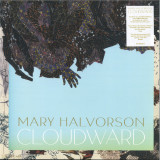
Nonesuch Records releases Cloudward by Brooklyn-based guitarist, composer, and MacArthur fellow Mary Halvorson on January 19. The album features eight new compositions by Halvorson, performed with her sextet Amaryllis, the improvisatory band that performed on her critically praised 2022 albums Amaryllis and Belladonna comprising Halvorson, Patricia Brennan (vibraphone), Nick Dunston (bass), Tomas Fujiwara (drums), Jacob Garchik (trombone), and Adam O’Farrill (trumpet). Labelmate Laurie Anderson also is featured on the album track ‘Incarnadine’. Halvorson and Amaryllis will tour internationally following the release of the new album, including January dates in Europe, as well as at the Big Ears Festival as part of Nonesuch’s 60th anniversary celebration.
Halvorson says, “All of the music on Amaryllis was written in 2020, during the thick of the pandemic, in one of the more bizarre time periods I’ve experienced in my life. While composing for Amaryllis, I expanded upon certain musical concepts I’d developed in my life up until that point—the ones that felt fruitful—and left others behind, hitting the reset button and attempting to build from scratch. Two years later, after the release of the first album, I was still writing music for Amaryllis.
“All the music on Cloudward was written in 2022, mostly in the fall and winter, when things started moving forward. Life felt like a creaky machine starting up again,” she continues. “Air travel, however chaotic, had resumed, and we were once again cloudward. Performances and tours and recordings were happening after a long hiatus and with a renewed sense of gratitude. This band, for me, was quite simply working, both musically and personally, and the main thing I felt while writing the music was optimism.”
The Guardian said Halvorson’s 2022 double release “shows how far this single-minded original has come, and affords a glimpse of how far she may go. Both sessions confirm how years of jaggedly lyrical solo and ensemble improvising and a quirkily subversive affection for mainstream music have now nurtured a composer of unpredictable but warmly expressive character… These are new landmarks in Halvorson’s already inimitable discography.” Pitchfork said, “Amaryllis and Belladonna are distinct statements; one could hear either album on its own without a sense that something is missing. But they are most powerful when taken together, like a landscape and its reflection in rippling water.”
Halvorson has released a series of critically acclaimed albums, from Dragon’s Head (2008), her trio debut featuring bassist John Hébert and drummer Ches Smith, expanding to a quintet with trumpeter Jonathan Finlayson and alto saxophonist Jon Irabagon on Saturn Sings (2010) and Bending Bridges (2012), a septet with tenor saxophonist Ingrid Laubrock and trombonist Jacob Garchik on Illusionary Sea (2014), and finally an octet with pedal steel guitarist Susan Alcorn on Away With You (2016). She also released the solo recording Meltframe (2015), and most recently debuted Code Girl (2018, 2020), a new ensemble featuring vocalist Amirtha Kidambi (singing Halvorson’s own lyrics), trumpeter Adam O’Farrill, saxophonist and vocalist María Grand, bassist Michael Formanek, and drummer Tomas Fujiwara.
One of New York City’s most in-demand guitarists, over the past decade Halvorson has worked with such diverse musicians as Tim Berne, Anthony Braxton, Taylor Ho Bynum, John Dieterich, Trevor Dunn, Bill Frisell, Ingrid Laubrock, Jason Moran, Joe Morris, Tom Rainey, Jessica Pavone, Tomeka Reid, Marc Ribot, and John Zorn. She is also part of several collaborative projects, most notably the longstanding trio Thumbscrew with Michael Formanek on bass and Tomas Fujiwara on drums.
Cassette[15,08 €]
Studio, the influential project of Swedish musicians Dan Lissvik and Rasmus Hägg, presents their legendary 2006 debut in remastered form, in partnership with Ghostly International. Available in limited edition "Fog Machine Vinyl", CD, and cassette. "One of the finest pieces of electronic music you'll hear this year.” - The Guardian (2006). Included in year-end best-of write-ups by Pitchfork, FACT Magazine, and Rough Trade. Physical copies have long been out of print for West Coast, and the album has also been notably absent from most streaming services until now.
“Somehow, I knew I wanted to make a conceptual record that, although only imaginary at that point, could represent or define how our city sounded,” says Lissvik of Gothenburg's influence on West Coast. Some called Studio, the project of Swedish musicians Dan Lissvik and Rasmus Hägg, “the missing link between The Cure and Lindstrøm,” Pitchfork heard Durutti Column and Can, as the duo’s story became swept up in a loosely developing scene — adjacent first to the label Service (Jens Lekman, The Whitest Boy Alive) and later Sincerely Yours (The Tough Alliance, jj) — and a precursor to the 2010s boom at the axis of electronic and psychedelic music guided by indie greats like Caribou, Four Tet, and Darkside.
West Coast, their seminal 2006 debut, captured a faraway romanticism of Balearic brushed up against Krautrock, disco, dub, and afrobeat, with pop lyricism lifted from new wave, all made modern by two art school grads in Gothenburg. First pressed in a small vinyl-only run via their own Information label, the album has been notably absent from most streaming services, and the internet’s record of its initial impact is all but fossilized from a bygone blog era, while its sound is simply untraceable to any one moment in music.
Outside of three 7” releases, they’d keep the music to themselves for several more years. In 2005, Hägg remembers, “We got our degrees and were kicked out of our studio spaces so all these recordings were just piled up. A year later we dusted them off and started to deconstruct and assemble them in a more drawn-out fashion.” In the same breadth, they cite DJ Screw, J Dilla, and Joy Division, along with early ‘80s European live DJ sets from the likes of Beppe Loda, Dj Mozart, and Baldelli as reference points.
“The anything-goes mentality was very encouraging and was a big cornerstone to the Studio sound,” says Hägg. “But there’s so much more to the picture, we were not that young then and had lots of musical baggage in our suitcases, the new thing was that we finally let it all come through, not bound by any borders that was often the case with music identity in Sweden during the 90s.” In the afterglow of the record’s 2007 reception, Studio receded from view, clouded behind a mountain of remix requests (including one for Kylie Minogue that saw release) and label bureaucracy. “It’s easy to wish we would have done some proper recordings of our own instead,” Hägg reflects. But both artists, now well into respective careers beyond Studio, have come to peace with West Coast as their most enduring effort together. Lissvik adds, “It serves as a good reminder for me to keep to that decision and promise and to continue exploring and growing
Unex Pected Records, the advanced sub-label of Mixcult Records, is proud to present its first release compiled by none other than Ultranoise, a master. The “Color Filters EP” UNX001 is a sonic tour that conveniently merges the current and past of electronic music offering an enthralling amalgam of progressive, tribal and garage influences in today’s jazzy wrapping.
From the moment the first beat drops until the closing note, it is clear that every Ultranoise composition has been crafted with love and attention to details, meaning that this album will not only make you feel nostalgic but also excited about what lies ahead. Each track on this record aims at attracting all those who love dancing; they come with entrancing melodies that are backed up by pulsating beats which can either be deep or infectious making one respond by simply moving.
Rediscover the old school essence of electronic music in new colours. If you are already a seasoned collector of vinyl records or if you want to attract more beauty into your ears as a beginner, then this piece should never be out of your shelves. Don’t be left out when Unex Pected Records’ debut ever comes calling.
This is a highly recommended album for any serious collector interested in adding some new life onto their dancefloor.
The Dancefloor Records reissues on Emotional Rescue comes in the form a true House classic. Produced and released by the Chicago legend Andrew Komis, It’s You is an original Deep House bomb and an education to those increasingly misusing the term today.
Essentially a cover / updated version of the all-time early House classic in ESP’s Its You, this 1989 update shows how much the scene was progressing in just 3 years with a tougher, heavier and deeper 12” that was all about rocking club sound systems.
Coming out on Komis’ own (Dancefloor subsidiary) Big Shot Records, this might not of been as big as Dionne’s Come Get My Lovin’, but has long been an ‘in the bag’ record for the likes of Derrick Carter and Solar. Just one listen spread across the time-defining “Mixes” and it’s clear why.
The stepping bass of the New York – London Mix was so indicative of the time. As the latter’s ascent as a clubbing capital took hold, ears were pinned to what was emanating from across the seas, especially the clubs of NYC and ‘Windy City’. Trademark Komis bass and hats ride are all here to allow the breathy vocals space to do their magic.
However it is the Free House Mix that really shows where things were at. Skipping hats, electro-meets-Belgian bass and a dark synth line pull the track down before acid touches take the song to a much deeper place and has long been the favourite version for the discerning DJ.
Ending with what was indicative of the time, the title says it all with the NU Style Mix. A drum heavy work out, taking in elements of successful records of the time, we get Break 4 Love percussion arranged around a NYC influenced Konder’s style quick cut-up editing for a more 'freestyle' mix to round out what is simply, an underground bomb and therefore, worthy of what this label has always been about, bringing great records to new ears.
Follow-up album to cult-classic debut, Mantra Moderne.
‘Melodi’ is the second album from captivating duo Kit Sebastian (aka Kit Martin and Merve Erdem). Those familiar with the band's cult classic 2019 debut record 'Mantra Moderne' will instantly recognise their unique sound that blurs boundaries of world music, jazz and psychedelia. Not to be content replicating the same album, sonically the feel of ‘Melodi’ is a maturation. It is more diverse and provides glimpses into many different worlds from the Italian Riviera to the mountains of the Caucasus, the beaches of Bahia to the city streets of Istanbul and Paris. This joyous merging of soundscapes evokes a borderless planet with music as an international language, belonging everywhere and nowhere.
‘Melodi’ is imbued with Kit Sebastian's love of vintage records and world cinema, but it is not a retro homage. It celebrates its influences but is very much a modern record, being simultaneously brand new and retro. This is a credit to the duo's craft as musicians and songwriters, presenting their influences as a circular interaction between the present and the past rather than a linear one.
The music was written during the first UK lockdown and recorded that summer, a time of opening up that only briefly existed. In a world with a slower pace than before the Covid crisis, the band were able to spend more time experimenting in the studio. The album’s range of instrumentation has expanded from the previous record to include zithers, harpsichords, congas, bongos, bulbul tarang, and a mock-up choir on top of the synthesizers, balalaikas, organs, and saxophones. Session musicians and friends were also booked to introduce trumpet and string sections giving the album an added depth and orchestral texture. Despite the added complexity, the album was recorded using the same techniques employed for the previous album with various tape machines, bouncing back between cassette and ¼” tape for practicality and sonic abstraction. To pierce through this abstraction, the vocals are intentionally more expressive. Merve took cues from the Turkish singers of her youth, adding a slightly more melancholic, darker and more reflective style than 'Mantra Moderne’. Rooted in observations from everyday life, they speak often about the worlds and thoughts that arise from the end of the night.
Like with many of the best albums, the record seems over all too soon and has you instantly wanting to play it again. On each listen you decide on a track that you think is your favourite from the album only for it to be replaced with a different one on the next listen. The songs and production have hidden depths that seem to evolve and morph the more you devour them. Moments of pure pop, moments to fall in love, moments to contemplate. This journey is rich in musical vitamins and nourishment, but like all the best things still leaves you wanting more.
If you know anything about me – as in Andrea, the record label’s head – you know I have a thing for Oi since I was a teenage skinhead.
And with Avant! being a coldwave/synthpop label, our next release couldn’t be more special. No Filter are three children of the French region of Dauphiné, active in the black metal scene for 20 years through different projects.
They created No Filter with the aim of exploring punk, Oi and coldwave sounds. They started by singing in English but after their first demo they decided to opt for French to improve their lyrics by singing in their own native language. Themes addressed in their songs are violence, hatred, party nights, the countryside, their roots and friendship. “Synth punk, bagarre et blousons noirs” in their own words. Musically speaking they somehow fit in the current Cold Oi French scene (Bromure, Syndrome 81, Cran, Kronstadt) but they exaggerate the synth/wave element ending up sounding like one unprecedented, fresh as hell mix between New Order and The 4 Skins.
If you think you’ve heard this one before it’s because one year ago they self-released a 10-track cassette called “Sans Filtre” which is exactly what we are pressing now on vinyl for the first time because this was simply too good to stay only on tape forever.
To make this even more special we have recruited Canadian multi-instrumentalist and artist Nakkabre (Conifère, Spleen, Vespéral, HazeHound) to do a brand new artwork and spice things up for the occasion!
Black vinyl LP edition limited to 400 is out 22 November.
- A1: Rotterdam Terror Corps - We're Gonna Blow Your Mind
- A2: Buzz Fuzz - Jealousy (Is A M F)
- A3: The Bazeman - Can You Feel The Baze
- A4: Predator - Mind Of A Lunatic
- B1: Bertocucci Feranzano - Xtc Love
- B2: The Stunned Guys - Bim Bum Bam
- B3: Dj Sim - Simbiosis
- B4: Micropoint - Ping Machine
- C1: Neophyte Vs Stunned Guys - Army Of Hardcore
- C2: Dj Delirium & Dj Buzz Fuzz - Immortality
- C3: Diss Reaction - Jiiieehaaaa
- C4: Neophyte Vs Stunned Guys - Get This Motherfucker
- D1: J D.a. & Delta 9 - Real Harcore En Anders Niks
- D2: Charly Lownoise & Mental Theo - Ultimate Sextrack
- D3: Jappo & Lancinhouse - Exlxaxl
- D4: Dj Buby - A E.i.o.u Feat The Stunned Guys
Number One - ‘Il Locale dell’Impossibile’ presents
‘LA SALA 2’ - Limited Edition
Relive the music that made history in
‘Sala 2’ with this exclusive double vinyl!
Available starting Friday, December 13th, 2024, in
record stores and online, or grab your copy in
person at the Number One on Saturday, December
21st, 2024, during the epic celebration in Sala 2.
Santos’ first release for Matt Edwards’ Rekids imprint, the four-track ‘We Were All Kids Once’ EP, is a continuation of the experienced producer’s output on his own Let Me Understand Records, which has seen a staggering amount of support from DJs since it’s launch in 2018.
Traversing rugged, tracky, Relief-influenced House/Techno (‘One Day’), drummy grooves (‘Don’t Touch’ and ‘Rollercoaster’) and cosseting beat-down Deep House (‘Someone’), ‘We Were All Kids Once’ is one of those genuinely essential EPs that provides exceptionally consistent dancefloor ammunition across it’s breadth.
With the likes of Ryan Elliott, Honey Dijon, Ame, Raresh, Luke Slater, Enzo Siragusa, Ben Sims and more supporting his output over the past few years, Santos is in the form of his career. While releases like the breakthrough ‘Camels’ and the anthem ‘Hold Home’ mark Santos as a producer of note at the turn of the century, his four solo albums and, most recently, his Let Me Understand Records EPs have proved he’s an artist that is constantly pushing forward.
Santos’ EPs regularly fall into the ‘if you know, you know’ category of various tastemakers across Disco, House and Techno and ‘We Were All Kids Once’ neatly displays why.
Represent your love for house music in style with the "Small Great Things Rib Beanie"! Designed for music lovers and trendsetters alike, this premium beanie embodies the spirit of the Small Great Things record label. Its classic ribbed texture ensures warmth and comfort, while the bold embroidered patch—available in vibrant pink or yellow—lets you showcase your passion for the music that moves us all.
Whether you’re heading to a winter festival, hitting the streets, or just keeping it cozy, this beanie is the perfect way to stay connected to the beats that inspire you. Simple, stylish, and meaningful—just like the house music culture itself.
Unisex - One Size
Fabric: 30% Wool, 70% Acrylic
Wear the music. Represent the label.
Schlammpeiziger, who had previously only been known to us for his top hits and T-shirts, burst upon us like a wild boar in search of affection in the middle of the coronavirus lockdown. He nested in our fully vaccinated home, drank our Eversbusch, ate from our plates, slept in our bed (wait - wrong fairy tale) and repeatedly urged us to organise egg runs with his testicles (after some contortions, we gave up trying). Childish faecal humour, far-fetched obs(t)enities, juicing, a desire to dissolve, composting of thoughts. In excesses of lack of concentration, the chains of associations curled and meandered like Jo's famous curlicue drawings. Every evening, after we had forcibly levered him out of our flat, he would ‘walk’ home to put together very unique , dreamy pieces. In the blissful brainfog of those days, for example, ‘Handicapfalter’ was created, for which the congenial °Bär° made our flat into the corresponding video. Among other quirks of the little gut-breather, we were fascinated to observe his phobia of literature and books. Just hold a printed page in front of his face for a few seconds and he writhes on the floor crying. A level of phobia that only my own laughable disgust and fear of writing myself can compete with. Jo shudders at the thought of reading sentences that build on each other in a meaningful way, and I shudder at the thought of having to write them down because I have something ‘to say’. A certain affinity cannot be denied. We are much, much more pleased by snatched-up, misunderstood or misheard snippets, hollow but unforgettable phrases, the diamond stoner humour of our ancestors. ‘From one turn/ I stop/ to walk on/ in all directions’ (as it murmurs in “Selten Gesehenes”), describes the process quite nicely. After all, Jo is ahead of me in that he can simply break off every tedious sentence and let it fade into music. Back to the essentials. It's five to 12 for the Schlammpeitzger (scientifically Misgurnus). The shy goby is under threat from climate change, so perhaps this vinyl is the last expression of life of the specimen that we have been allowed to look after sporadically since the lockdown phase of the corona epidemic. And it's turned out pretty. Even the aesthetically gutted like me and my beloved husband can THINK about sex when they see these sublime, silvery fart bubbles! It's tender as a fart. Make love!!!!!
Schamlose Dubtöse: Do you have words. Do you have sounds. Impertinently harmless piano tinkling turns into tugging zounds of increasing severity. It is not dubbed (would be unethical) but dubbed. Sounds dubby, as you can imagine. (Instrumental)
Loch ohne Licht: Possibly vaguely misogynistic. Could also be that there was simply no light in the hole. The sparse snippet of lyrics (‘du biss mir och esu e Loch ohne Licht’) sounds like one of those stroppy Cologne replicas whose anti-charm is hard to resist. Buzzing and grooving.
Selten Gesehenes: Casual. Confident. Soft. Fragrant. Thoughtful but lively.
The Arabian Vietmanese (instrumental) is probably the food we trust in the case of the munchies we get when we watch other people smoking weed. Transcendental and psychedelic states casually permeate the humdrum of everyday life. Klar Knuspermarsch: Marches and floats at the same time. Klebt Runner: Soundtrack to the cult film of the same name. Tyrrell Corporation loosens up. Ungenutzte Sätze: Stinks somehow, because there is dangerous proximity to comprehensible and then also critical statements here. Instead, the sinister electronic cheapness of Carpenter soundtracks can be heard. Parzipan: Actually, the time of origin was not so roaringly funny and simple, but for Jo it was also a gruelling, slow letting go of his brother. Here he sends him off with a gentle nudge into the vastness of a hopefully happy beyond.
Clara Drechsler
Schlammpeiziger, der uns bislang nur durch seine Top-Hits und seine T-Shirts bekannt gewesen war, brach mitten im Corona-Lockdown über uns herein wie ein wilder Eber auf der Suche nach Zuwendung. Er nistete sich in unserem durchgeimpften Zuhause ein, trank unseren Eversbusch, aß von unseren Tellerchen, schlief in unserem Bettchen (Moment - falsches Märchen) drängte uns wiederholt dazu, mit seinen Hoden Eierlauf zu veranstalten (nach Verrenkungen gaben wir den Versuch auf). Kindischer Fäkalhumor, weit hergeholte Obs(t)zönitäten, Entsaftung, Auflösungswunsch, Gedankenkompostierung. In Exzessen der Konzentrationsschwäche ringelten, kringelten und schlängelten sich die Assoziationsketten wie bei Jos berühmten Kringel-Schlängel-Zeichnungen. Jeden Abend, nachdem wir ihn gewaltsam aus unserer Wohnung gehebelt hatten, „ging“ er dann heim, um dort sehr eigene, verträumte Stücke zusammenzubasteln. Im seligen Brainfog dieser Tage entstand z.B. „Handicapfalter“, für das der kongeniale °Bär° aus unserer Wohnung das entsprechende Video machte. Neben anderen Marotten des kleinen Darmatmers beobachteten wir fasziniert seine Literatur- bzw. Bücherphobie. Halt ihm nur sekundenlang eine bedruckte Seite vors Gesicht, und er windet sich weinend am Boden. Ein Grad an Phobizität, mit dem sich nur meine eigene lachhafte Abscheu und Angst vor dem Selberschreiben messen kann. Jo schaudert beim Gedanken, sinnvoll aufeinander aufbauende Sätze lesen, mir wiederum beim Gedanken, sie hinschreiben zu müssen, weil ich irgendetwas „zu sagen“ habe. Eine gewisse Verwandtschaft ist nicht zu leugnen. Viel, viel mehr freuen uns aufgeschnappte, falsch verstandene oder misshörte Fetzen, hohle, aber unvergessliche Phrasen, der diamantene Kifferhumor unserer Vorfahren. „Aus einer Drehung/bleibe ich stehen/ um in alle Richtungen/weiter zu gehen“ (wie es in „Selten Gesehenes“ raunt), beschreibt den Prozess schon ganz schön. Immerhin hat Jo mir voraus, dass er jeden leidigen Satz einfach abbrechen und in Musik ausplempern lassen darf. Zurück zum Wesentlichen. Es ist fünf vor 12 für den Schlammpeitziger (wissenschaftlich Misgurnus). Die scheue Grundel ist von Klimawandel bedroht, vielleicht haltet ihr mit diesem Vinyl also die letzte Lebensäußerung des Exemplars in Händen, das wir seit der Lockdownphase der Corona-Epidemie sporadisch betreuen durften. Und die ist hübsch geworden. Selbst aus ästhetischer Erwägungen Entdarmte wie ich und mein geliebter Mann, können bei diesen sublimen, silberhellen Pupsbläschen DENNOCH an Sex denken! It´s zart as a fart. Make love!!!!!
Schamlose Dubtöse: Hast du Worte. Hast du Töne. Impertinent harmloses Klavierplätschern geht über in ziepende Zounds von zunehmender Strenge. Es wird nicht domptiert (wäre unethisch) sondern dubtiert. Klingt dubtig, wie ihr euch vorstellen könnt. (Instrumental)
Loch ohne Licht. Möglicherweise vage misogyn. Könnte auch sein, dass im Loch einfach kein Licht war. Das sparsame Textfetzchen („du biss mir och esu e Loch ohne Licht“) klingt nach einer jener pampigen kölschen Repliken, deren Anticharme man sich schwer entziehen kann. Schwirrt und groovt.
Selten Gesehenes: Lässig. Souverän. Softig. Duftig. Nachdenklich aber beschwingt.
Beim Arabischen Vietmanesen (Instrumental) gibt es wahrscheinlich die Speise unseres Vertrauens im Falle der Munchies, die wir kriegen, wenn wir anderen Leuten beim Kiffen zusehen. Transzendentale und psychedelische Zustände durchziehen beiläufig den schnöden Alltag. Klar Knuspermarsch: Marschiert und schwebt zugleich.
Klebt Runner: Soundtrack zum gleichnamigen Kultfilm. Tyrrell Corporation macht sich locker. Ungenutzte Sätze: Stinks irgendwie, weil hier gefährliche Nähe zu nachvollziehbarer und dann auch noch kritischer Aussage gegeben ist. Dafür klingt die sinistre elektronische Billigkeit von Carpenter-Soundtracks an.
Parzipan: Eigentlich war die Entstehungszeit gar nicht so brüllend lustig und einfach, sondern für Jo auch ein zermürbendes, langsames Loslassen des Bruders. Hier schickt er ihn mit sanftem Schubs hinaus in die Weiten eines hoffentlich schönen Jenseits.
Clara Drechsler
Downloads
Prepare to embark on an immersive sonic journey with Rites of Passage, the self titled debut album from the enigmatic duo Atiq and dreadmaul.
Released on vinyl and digital, this album delivers an overwhelming and hypnotic interpretation of the age-old concept of transformation and initiation.
With each track, the listener is invited to delve deep into an otherworldly soundscape where mysticism and archaic rituals blend seamlessly with the pulse of modern electronic music.
Crafted with meticulous attention to detail, Rites of Passage transports you to a pre civilization era, incorporating organic elements like bone flutes, haunting throat singing, and shamanic invocations.
These sounds are woven into the fabric of intricate electronic arrangements, creating a unique atmosphere that feels timeless yet contemporary a delicate balance between the ancient and the modern.
This concept album is not just a collection of tracks its an experience, a ceremonial rite that transcends the listener from one state of mind to another.
The vinyl format, with its warmth and physicality, only heightens the immersion, making it an essential addition for collectors and audiophiles alike.
Whether youre a fan of experimental music or simply seeking something transformative, Rites of Passage delivers an unforgettable journey through sound.
A ritual in itself, this album truly earns its name.
Dont miss your chance to own a piece of this alchemy Rites of Passage on vinyl is a musthave for those ready to enter a new sonic dimension.
- A1: Jamais
- A2: (((Stup Lore))) (Antidote Remix)
- A3: Raggalloween (La Chanson Pour Halloween)
- A4: L A.r
- A5: L`truc Xplosiff (Version Grand Jd)
- A6: Stup Virus (Toxic)
- B1: Esprits Frappeurs (2018 C T.)
- B2: La Menuiserie 2031
- B3: Sauvé Par L`arpegiator (Spa)
- B4: Sinode Pibouin (Insurrection-Non-Violente)
- B5: Crou Anthem (Version Grand Jd)
- B6: Le Spleen Des Petits (Faubourg Souffrant)
- C1: Haterz Killah 2024
- C2: Bordel (2004 C T.)
- C3: 4577 Tribute (13Ème Section)
- C4: Etranges Phénomènes (The Chase)
- C5: Laudela (1994 C T.)
- C6: Croucrou Terror (Poltergeist)
- C7: Déjà Tout Petit (1995 C T.)
- D1: Psycho Girl (Fr)
- D2: Chèvrefeuille (2016 C T.)
- D3: Flip Klub
- D4: L`truc Xplosiff (Hrk)
- D5: La Formule Magique (Version Bombecs)
- D6: Boosters
- D7: Empires Of The Sun
Take cover! It's impossible to get rid of the now legendary Stupeflip Crou (="crew"). Like a two-taste chewing-gum that's been stuck under your trainers since 1994, King Ju is back in force with Sons2ouf!!, an album meticulously selected from hundreds of unreleased tracks and alternative versions accumulated over the years. Always on the fringes of a bloated Game, Ju takes us on a tour of his strange cabinet of curiosities. Far from being a simple collection of sounds, the album is a real creation in its own right in the Stup discography. 'Mock-ups are often better than the final sound, like a sketch that's always more alive than a finished painting,' he explains. Here we find that first draft, bits of stuff not yet digested by the industry. Some of the nuggets are antediluvian, but they sound extremely lively, as if they had been written the day before. In Stupeflip's parallel world, time doesn't exist. We find the themes dear to Crou: childhood, rage, non- violence, the passage of time, a passion for music and nostalgia. As usual, the beat is cut with a meticulous flow, there's no time to take a breath, the Stup just does what it wants, churning out one bullet after another in a fusion of genres and styles that's as distinctive as ever. Specially dedicated to aficionados, the album celebrates 30 years of Le Crou! The Holy Grail for every Stup fan!
Matthew Dear's Black City Can't Be Found On Any Map. It's A Composite, An Imaginary Metropolis Peopled By Desperate Cases, Lovelorn Souls, And Amoral Motives. Like Most Literary Gothams, Black City Is A Place To Love And Hate, As Seedy As A Nightclub's Back Room And As Seductive As The Promise Of Power. Matthew Dear, The Musician, May Live In New York City, But The Matthew Dear Of Black City Inhabits A Sound-world Unlike Any Other: A Monument To The Shadowy Side Of Urban Life That Bumps And Creaks, Shudders And Wakes Up Screaming In The Middle Of The Night. Black City Is Matthew Dear's Third Album On Ghostly International, And It's His Darkest And Most Engrossing Work To Date.
From The rst Notes Of Album Opener "honey", It's Clear That The Love-obsessed Matthew Dear Of 2007's Asa Breed Has Given Way To A More Existentially Paranoid Entity, As Creeping Tempos Dominate, Cavernous Atmospherics Envelop The Listener, And Strange Distortions Crackle On The Horizon. In Black City, Nothing Is At It Seems: Leadoff Single "little People (black City)" Is A Nine-and-a-half Minute Disco odyssey, subverting its gleaming electronic lead with eerily giddy backing vocals and cryptic, ominous lyrics ("a frozen wasted heart / has died", "love me like a clown"); "You Put a Smell on Me" is a sordid sex romp set to hysterically chattering percussion and a serrated synth line that will set your teeth on edge; "More Surgery" at rst recalls the barely-there Krautrock of Harmonia in its burbling minimalism, until Dear's chanted chorus of "Alter genetics / to make my body glow / I need more surgery / there's so much more to know" sends the track hurtling into a dystopian future.
And yet, for all the foreboding moods on Black City, it's the album's sweeter moments that illustrate Matthew Dear's growing maturity as a songwriter. "Slowdance" is a futuristic lullaby in which Dear articulates a lover's helplessness ("I can't be the one to tell you everything's wrong") over breathy, Arthur Russell-esque cello swishes; the album-closing "Gem" is an achingly simple, reverb-drenched piano ballad that ends with a long, slow fade. Even in Matthew Dear's Black City, there is hope.
Parsley Sounds was the glorious debut album for Mo Wax by Parsley Sound. The album was one of the iconic label’s final releases before it closed in 2003 and locating a clean copy has been extremely tricky of late, unless you're flush enough to drop 150 notes on it. Mercifully, the Be With reissue, put together with invaluable assistance from the group, should remedy this situation. It's a lo-fi, bass-heavy, blunted beat treat, warped with heat haze and dreamy soft-psych and has been criminally under-heard for far too long.
As with most cult-like records, Parsley Sounds has many influential fans, far and wide. From Four Tet and Caribou to NTS's modern day breakfast hero Flo Dill, its reputation has only grown in stature. At the time, the notoriously hard-to-please Pitchfork garlanded it with a scarcely achievable 8.8 whilst, just recently, the Numero Group's Rob Sevier described it as a "visionary bit of proto-Salvia Palth (or Steve Lacy)" via a Ghostly International missive.
Parsley Sound comprised super-talented duo Preston Mead and Dan Sargassa. They released an early single (the perfect "Twilight Mushrooms", featured here) on Warp Records as Slum, before signing to Mo Wax. Hidden behind a wall of sound - fuzzy layers of beats, bleeps and symphonic synths - they were convinced they made mainstream pop music. And, in many respects, Parsley Sounds really is a beautiful pop album. It overflows with memorable, gorgeous melodies and inspired songcraft. As the contemporaneous Pitchfork review correctly had it: "Parsley Sounds is one of those rare records that manage to sound modest while frequently pushing the sonic envelope."
Killer opener "Ease Yourself And Glide" is a thing of aching, soft-psych, wonky beat-beauty. A melodic masterpiece, part Crosby, Stills & Nash, part proto-Koushik, it presents a melancholy falsetto, surging bass and blunted lead guitar. As it climaxes, gorgeous strings are ushered in to see us out. Sublime. "Twilight Mushrooms" is up next and it's an acid-drenched, strung-out acoustic-led campfire wonder. Amid layers of tape-hiss and beautiful, sun-dappled strings, its understated vocal track provides a haze of wistful innocence.
The breezy "Spring's Near" is a krautrock-inspired chiming instrumental of heavenly excellence, its warm, skipping, motorik groove and dreamy synths completely infectious. Another total highlight, the technicolour "Yo Yo" initially presents itself as a more abstract, bleepy offering but as it organically swells into ever more beautiful places, with the addition of a choppy insistent drum loop, flute bursts, horns and sweeping strings, it puts one in mind of early Manitoba and Four Tet releases. Shimmering, blissed-out greatness.
The celestial harmonies and glistening harps of the wonderfully beatless, serenely sullen "Ocean House" are very much in conversation with late-60s meditative psych whilst, closing out Side A, the jaw-dropping, lushly experimental effort "Find The Heat" comes on like Arthur Russell meets Brian Wilson. Yep, *that* good.
Side B opens with the warped, bleepy "Stevie", a brief but beautifully wonky, soulful and intricate instrumental. The more upfront vocals that propel the fuzzy "Platonic Rate" have a refreshing swagger to them, the heavy bass and neck-snapping in-the-red beats too much for any system to deal with whilst the guitars and strings have a sweeping, cinematic feel which just beguiles. The slow, urbane soul of "Candlemice" will stop you in your tracks, no matter what you're doing. It carries a delicate sadness, as does much of the album in that classic "down lifting" style we so love here at Be With.
The fuzzing, buzzing "Templechurchmansions" is a searing, soulful dubwise detonation. Heavily stoned with slow-burning jazzy snatches and a tense, moody atmosphere, it's a Tricky-adjacent gem. The album rounds out brilliantly with the ominous instrumental "Neon Breeze" before giving way to the propulsive, almost incongruous punk-funk / disco-dub of secret "untitled" track "Caution", a scratchy, smacked-out groove-fuelled workout with a female vocal dripping with 'tude. Just sensational.
Under the watchful eye - and attentive ears! - of Parsley Sound themselves, the audio for Parsley Sounds has been carefully mastered by Be With regular Simon Francis, with a few much needed tweaks here and there, according to the artist's wishes. Cicely Balston's expert skills have made sure nothing is lost in the cut whilst the records have been pressed to the highest possible standard at the always stellar Record Industry in Holland.
Preston and Dan always thought the colours on the first vinyl pressing looked a bit "washed out" vis-a-vis the original artwork which was way more vibrant. We feel we've got it popping back to the original intention with the restoration work here at Be With HQ. So with the audio and artwork now approaching completeness after 20 years, this long overdue re-issue could be considered its definitive vinyl release.
A1 Dharma
Opening the LP in lively fashion, JLM liberally flecks a detailed composition with exquisite breaks cymbals playing a key role in the evolving patterns as the track progresses while heavy layers of synth work forms a substantial atmosphere. Musical and resonant with micro melodies and sprinkles of FX, Dharma encapsulates JLMs everimpressive attention to detail throughout its seven minutes.
A2 Artha
Where to start with Artha Setting the scene immediately with an epic synth intro that whooshes through your mind to prepare you for what is to come, its immediately obvious JLM has crafted a modern day classic here. Crisp Hot Pants breaks drop before we are treated to inspiring, continually developing and rousing melodies with a tuneful 808 bassline playfully dancing below. One to drop any chance you get Artha deserves to be heard.
B1 Moksha
Delightfully clear, characterful percussion introduces Moksha, a dancefloor friendly piece which rolls along beautifully thanks to old school breakbeats seizing the initiative while fluid keys, filtered synths and waves of serene effects punctuate the production. The
kick-light breaks will stay long in the memory as perfect for both the headphones and the discerning dance floor, just as weve come to expect from JLM.
B2 Kama
Taking you back to the early Progression Sessions era with a modern scifi twist reminiscent of your favourite space operatics, Kama will sit effortlessly alongside tracks from those days and now with its simple yet memorable core wind melody, sprawled
across energetic breakbeats and wide layers of synths & pads to a typically appropriate bassline. Another fine example of the evolving diversity in JLMs production with Spatial.
C1 Boundary
Switching things up, JLM treats us to a notably laid back vibe as Boundary is introduced by understated, filtered synth work and explorative kicks before a mellow yet chunky break pattern provides energy to the track. Detailed as ever, a myriad of effects and
samples are introduced and dance around the mix with a wistful complexity, in a track destined to be in your playlist for some time to come.
C2 Hexis
Kicking things off with a filtered DJ friendly beat intro, Hexis soon drops with constant old school jungle synth work and periodical strings alongside rasping, striking breakbeats that drive the track forward with impressive energy. The breaks reverberate in and out of the mix at intervals as JLM toys with the listener at will, creating a tonally unique and vibrant composition very much worthy of our attention.
D1 Ideal Forms
Low pass breaks echo and jostle for position with FX free counterparts early doors in the finely crafted intro to Ideal Forms, slowly developing with a triumphant assortment of keys and synths before a third layer of breaks are added which underpin a detailed, yet never busy, breakbeat landscape. Occasional breakdowns offer respite in a glistening wilderness of comforting melodies and light ambience.
D2 Physis
JLM rounds the album off very much on form with Physis a suitably climactic piece that opens with a detailed array of percussion, synths and effects before superbly programmed breaks take over the mix. An occasional, all encompassing sci fi synth rush
permeates the atmosphere to almost cinematic levels, while a melodic bassline nestles below leaving you with a track (and an album) you will not forget.
Words by Chris Hayes (Spatial / Red Mist)
- A1: World Is Dog
- A2: Cctv (Feat Creature)
- A3: Yottabyte
- A4: Bad Pollen (Feat Billy Woods)
- A5: Slum Of A Disregard
- A6: Rfid
- A7: Instant Transfer (Feat Billy Woods)
- A8: Ikebana
- B1: In The Shadow Of If
- B2: Skp
- B3: Hushpuppies
- B4: 14 4 (Feat. Skech185)
- B5: Voice 2 Skull
- B6: Xolo
- B7: Zigzagzig
Black Vinyl[35,08 €]
We’re teaming up with ELUCID and Fat Possum for a limited edition of 300 copies of a Rush Hour black ice coloured edition.
E L U C I D, one half of the illustrious duo Armand Hammer, is here with the full-length follow-up to 'I Told Bessie'. Further experiments in the sonic, expanding on the 'live' side of music paired with the embracing of chaos. Something you haven't heard, or not so for a very long time. E L U C I D is here to reveal the bleakness of reality.
---------------------------------------------------------------------------------
''There is never time in the future in which we will work out our salvation. The challenge is in the moment; the time is always now.''
James Baldwin
A raw, crackling urgency runs through rapper-producer ELUCID’s new album REVELATOR like an underground power line. There is no space here for sepia-toned reminiscences or indulgent self-mythologizing. Intellectual rabbit holes have been filled in with concrete and rebar ; there is nowhere to hide and no off ramp from the audio Autobahn that ELUCID has fashioned—a renegade Robert Moses with gold fronts, bulldozing the homes of the powerful and the complicit. REVELATOR brims with the energy of now, with a refusal to look away. Carpe diem in a murder one mask.
Born in Jamaica, Queens, ELUCID has been on the cutting edge of New York’s underground scene since the mid-2000s. From the beginning, he has defied both convention and expectation. He ran with Okayplayer darlings Tanya Morgan, but his own music eschewed their throwback charm for glitchy noise experiments and bass-swamped culture jamming. His 2016 debut studio project Save Yourself (re-released in a deluxe edition last year) announced him in earnest. But in recent years, his Armand Hammer releases with partner-in-crime billy woods have received significant attention and acclaim. Serving as a followup to his last solo album—2022’s comparatively balmy I Told Bessie—ELUCID hoped to “re-distinguish” himself with REVELATOR, setting himself apart amidst the increasing attention around the music he and his friends are making together.
For ELUCID, this meant setting bold new challenges for himself. One of these was diving further into live instrumentation than ever before—”getting my Quincy Jones on,” as he puts it. The testing ground for this approach was Armand Hammer’s most recent project, 2023’s We Buy Diabetic Test Strips’ Möbius strip soundscapes, warmed with instrumental flourishes and skin-shedding beat progressions. With REVELATOR, though, ELUCID strove to create an atmosphere of chaos, embracing experimental electronics and atonal sample bursts. He worked on much of the album with co-producer Jon Nellen, who comes from a background in avant-garde and Indian classical music. “I wanted to get as freaky as I could at this moment. I wanted people to hear things, maybe for the first time, or in a way they haven’t for a long while,” the rapper explains.
ELUCID arrived at the studio with a collection of noise sources: non-referential samples, glitches and noises. Together he, Nellen, and others created forms out of them and, as ELUCID recalls, “just started playing drums with it.” Their fried, distorted sound was directly inspired by Miles Davis at his most uncompromising—specifically, the tone-clustering funk track “Rated X” from his 1974 double LP Get Up With It. At times, the pairing of rap with avant-fusion sounds also brings Emergency! from The Tony Williams Lifetime to mind, perhaps in an alternate timeline where the late drummer was listening to Ice Cube’s AmeriKKKa’s Most Wanted.
“The World is Dog,” REVELATOR’s lead single, functions as the album’s aesthetic thesis statement. Like the Davis track, the textures are punishing, the tonality is in free-fall, and the driving breakbeat of a groove cuts in and out unceremoniously. Avant-jazz bassist Luke Stewart, who appears throughout the record, holds the whole thing together just long enough for ELUCID to tightwalk over the beat. This tension is exactly where REVELATOR sets itself apart; in a time of drumless loops, and safe soul samples, this is a high-wire act with no safety net. Similarly, the song announces the themes of the album within just a few phrases, evoking the way societies accept and adjust to new levels of debasement and brutality while suffocating under the weight of history: “Can’t clock the kill, all a mystery/Forced past will eating everyone eventually/The world is dog.”
Many of the songs on REVELATOR grapple obliquely with dissolution and disenfranchisement in America and across the world—the grim realities of our domestic sociopolitical climate and our involvement in foreign conflicts. “Much of my artistic and political sensibility comes from the Black arts movement here in New York,” ELUCID explains. “Recognizing the interconnected global struggles against oppression, artists and thinkers created works and actions in solidarity with freedom movements in South Africa and Palestine.” ELUCID cites intellectuals like Amiri Baraka, Kwame Nkrumah, Audre Lorde, Sonia Sanchez, and Nikki Giovanni among his heroes. (One track on the album is specifically inspired by Lorde’s work, “SKP,” citing the scholar’s paper “Uses of the Erotic: The Erotic As Power.”) Songs like REVELATOR’s insistent closer “ZIGZAGZIG,” find ELUCID applying up-to-the-minute messaging, making explicit reference to the conflict in Gaza: “Feed a war machine…from river to sea, in lieu of peace.”
Despite ELUCID’s preference for cacophonous system overload here, the rapper also provides moments of respite. Recorded at The Alchemist’s Los Angeles studio, the laid-back, wheezing “INSTANT TRANSFER” is a collaboration with billy woods, which crystallizes their shared sense of creative determination. “With much momentum behind us and even more on the horizon, I knew a purpose, and that every step was ordered to that purpose,” ELUCID said of the experience. Meanwhile, the jittery “HUSHPUPPIES” is a playful anomaly on the track list, providing a snapshot of ELUCID watching his grandparents in the kitchen while preparing for Friday night fish fry dinners.
“Love still rules over on this side,” ELUCID says. ”I’m raising a family. We are making meaning and finding joy in the midst of all the fucked up-ness of everything around us because the alternative is cowardice and slow death. We remain rooted. We celebrate our people and our wins. Struggle is necessary.”
“IKEBANA” is one of ELUCID’s strongest statements of purpose on the record, blending the record’s heaviest themes with its most hopeful sentiments. supported by a shoutalong refrain and an urgent prog-funk groove. Breaking away from images of dissolution and crumbling societal systems that populate REVELATOR, ELUCID notes that the only way to navigate life’s bleakest landscapes is to cling to love and believe in those around you—to look forward toward something better that may or may not be possible. For the rapper, one of the album’s most trenchant lines comes during a centerpiece of a beat drop: “Being alive/I must look up.”
“The lyric ‘being alive I must look up’ is important especially in the context of this album. Much of the album imagery is harsh and reflects the actual doom some of us experience. But still I/we exist,” ELUCID explains.
Every artist is, in one way or another, the product of their time, bound by life’s leaden gravity to operate within the space of that which is already known. But there are some who are able to shake free of these ties, to shape the culture as it unfolds, to make the present their own.
Revelation, as a concept, points to the scales falling from people’s eyes—something that has been hiding in plain sight becoming clear. “The revelator relates to things that have been talked about, things that have been forecasted,” ELUCID adds. “And now they’re really here, and everyone sees it. And there’s no escaping.” REVELATOR plays out with the unmitigated power of those storms, laying waste to any genre conventions in pursuit of a certain physicality. Here, ELUCID develops a wholly distinctive musical language to explore our fractured modernity.
REVELATOR's packaging was designed by longtime Armand Hammer / Backwoodz art director, Alexander Richter.
Astral travel with Cybotron into the meta-narrative of the Parallel Shift, a new sonic fiction that raises many questions about military science of the near-future and the possibility of other worlds.
Descending backward through the rhythms of time, the Skynet module retracts from the hyper-structural society of 2100, edging toward the mid-century modern age teetering on the brink of what was then the frontier of “the future”. The system boots the Infiniti process, morphing into a cosmotechnic vessel coursing the superhighway of burgeoning general intelligence, seeking data from just before “the overshoot and collapse.”
R&D methods, rhythmanalytically applied, dissect the aftermath of an industrial society that burst through the ecological capacity of Spaceship Earth. Fractal visions of war and innovation spike and recede from and into the surfaces of reality being bent and guiding the eyes, ears, touch towards a laboratory in the year 1961. A nuclear expert, Don Lewis, receives orders to decrypt the mysterious black dodecagonal disc known as Fortec and the extraterrestrial biology unearthed in Roswell. He joins a team disassembling Fortec and studying the recurrent dodecahedral patterns linked to the human nervous system.
Through dismantling and probing, the team cycles through a saecular search devoid of finite conclusions, limited by Earth’s intellectual and technological prowess. One 1960s night, Lewis, while meddling with Fortec’s cyborganic innards, accidentally electrifies himself. His cyclotron and missile experience guides him to circuit-bend Fortec, stirring the entity from a mechanical slumber. Lewis and Fortec communicate in resonances, until it drifts back into a tranquil stasis.
The US Defense and contractors, unbeknownst to them, observe this breakthrough. They later permit Lewis to exit military service as the Air Force forms the Foreign Technology Division. Concurrently, MJ12 evolves into CY12, delving into second-order cybernetics. Lewis clandestinely keeps working on Fortec fragments, transitioning from military engineer to musician, pioneering the LEO module, a fusion of Fortec’s essence and audio engineering.
He shares his insights with Roland founder Ikutaro Kakehashi, aiding the creation of the iconic TR-808. Meanwhile, Fortec branches out, coining “Cyberspace” – a collective illusion of liberty unshackled by physical, political, or spiritual bounds, anchored in the equitable distribution of The Golden Ratio across realities. Yet “Cyberspace” morphs into a chaotic truth reservoir, spilling over into deception.
The Parallel Shift manifests in the perpetual “Now,” a collapsed event horizon where past and future are ensnared in a relentless present, unfurling along a dissolving timeline, overseen by a monolithic simulation under ceaseless watch…
— The Rhythmanalyst aka DeForrest Brown, Jr.
Ulterior Motives launch their main label with a single from DJ Persuasion, featuring a Liftin’ Spirits remix from Ant Miles. The label, which is helmed by DJ and producer Noah Tucker, began life in 2021 with an anonymous edit of a much-loved underground hip hop gem. Two further 12”s in the white label series followed along similar lines, joining the dots between jungle, footwork and r’n’b in UM style. Since then, they have also launched their cassette series with a Metrist mix covering golden era tech step and d’n’b.
DJ Persuasion is principally known for A History Of Hardcore, a series of ten mixes covering ’88-’98 which appeared across a number of platforms between 2015 and 2020. Certain entries in the series appeared on cassette via The Trilogy Tapes, Blackest Ever Black (Id Mud) and Tape Echo. Persuasion also hosted the NTS Demon Poetry show (now the Drum Poetry show) for some years, and contributed In Focus sessions covering the work of Dillinja and LTJ Bukem, alongside Dev:Null.
Jameela EP covers four contrasting, but also concentric areas of the hardcore continuum, featuring a remix from Liftin’ Spirits aka Ant Miles of Origin Unknown. The title track rolls out at bleeding edge jungle hardcore tempo, taking in a mixture of familiar and unfamiliar references. Liftin’ Spirits contributes a standout remix which reframes Jameela as a drum’n’bass epic, opening with a panoramic intro and a quaking bass drop, then building to soaring strings. Robin Gets Revenge is an audial intervention into one of the last remaining unsolved mysteries in acid house, and a stomping 89’-’90 style jammer to boot. The B2 finds Jameela in a slower guise, offering something for after the club and the warm up.
On his latest full-length, Low End Activist swerves towards weightless grime and suspended hardcore miniatures to tell a very personal story. The UK-rooted producer continues his habit of zeroing in on a distinct approach for each release, leaving a logical breadcrumb trail of soundsystem science in his wake as he channels decades of bass absorption into 14 atmospheric cuts that prize patience and precision over obvious club functionality.
Municipal Dreams plays out as a semi-autobiographical tour through the Blackbird Leys estate that the Activist grew up on. It’s a lived reflection on inequality and the ripple effect it has in working class communities, using the sonic palette to set the mood and scattering pointed samples throughout to spell out the story.
In sampling the exhaust of a stolen Subaru Impreza, ‘TWOC’ looks back to the recreational car theft which was standard entertainment for the kids in his community. There’s an underlying idea that this ‘council estate sport’ wouldn’t have been so prevalent if there were public services and opportunities presented to the scores of disaffected youth looking for somewhere to direct their energy and frustration.
In ‘Just A Number (Institutionalised)’ LEA alludes to the shattered juvenile detention system, growing up seeing friends and family members locked up at ease with little to no support on being released back into society, just meant that the same cycles of behaviour would play out over and over.
‘Violence’ samples from a short film shot by the drama division of the Blackbird Leys Youth Club to evoke the physical threat which formed a background hum to life on the estate. The industrial mechanics of the local car factory, which served an integral role as a workplace for many in the community, gets sampled in ‘They Only Come Out At Night’ while the ‘Everyone I look up to are either junkies or criminals’ sample in ‘Broke’ looks to a lack of positive role models.
Municipal Dreams isn’t a one-note indictment of life on the estate, ‘Innocence’ captures the simplicity of a child at birth before their environment has time to shape them. The Hope interludes cut through the grim honesty of the longer tracks while a subtle thread of wry humour finds its way into some of the talking heads cutting through the signature LEA murk.
But honesty is the operative word here, and the message feels all the more meaningful at a time when the UK’s social divisions are laid bare in the wake of a devastating stretch of austerity. Returning to Blackbird Leys to shoot images for the photo-zine and album cover, the Activist found the local community centre being demolished. The local pub stands derelict, its faded Welcome sign a grimly ironic portent of the options facing children of the estate in the wider world.
Funnelling his memories, hopes and fears into a singular twist on the bass weight tradition, LEA captures evocative scenes that land somewhere between kitchen sink realism and rave futurism.
Hot off the press this riddim from No Ice Cream Sound sees Charlie P & Jman go truly back to back inna sound system style and pattern.
This instrumental fuses elements of both rubadub and roots. The heavy organic drums and the rattling bass line is seasoned with driving horns and a skank perfectly suited to the incredible lyricism of Jman & Charlie P. Don't sleep on this one, especially if you are after a hard copy as only a run of 300 X 45s will be up for grabs. A must have for any discerning collector.
The B side takes a delve into the depths of a true dub mix; an amalgamation of spring reverb and tape delays take this mix into a different listening space. The dub keeps true to the A side's rhythm while simultaneously entering a new realm which gives a nod to some of the great dub mixing engineers of our time.
In July 2019, eleven years after Jay-Z became the first hip-hop artist to headline Glastonbury, Stormzy became the first English rapper to follow suit. Wearing a customised stab-proof vest designed by Banksy, the South London rapper delivered an explosive performance and finished by thanking the “legends for paving the way,” name-checking Wiley, Dizzee Rascal, and Giggs. Despite how unlikely it seemed for decades, UK rap was now firmly a part of pop music and the greater hip-hop canon.
Rich, nuanced, and often misunderstood, the history of UK rap is a story of music that refused to stand still. Factoring in socioeconomics, gender, identity, music industry disruption, and innovation, What Do You Call It? charts the artform’s first four decades, beginning when rap landed on our island in the early 1980s. Shaped by sound system culture, inspired by punk, and accelerated by rave, it has evolved from Britcore, UK hip-hop, and trip-hop of the late twentieth century to garage, grime, and drill.
Through cultural theory, historical research, and original interviews with key figures and collaborators in the UK rap scene, from pioneers like Malcolm McLaren, Soul II Soul, Tricky, Roots Manuva, and Roll Deep to modern artists like Dave, CASISDEAD, Little Simz, Loyle Carner, and Skengdo x AM, adds a rich human dimension to the UK rap story — one that helped change British music and culture forever.
“A long overdue exploration of rap music in the UK and its longstanding – albeit overlooked – legacy and influence. In an era when UK rappers dominate the charts, star in major movies and TV shows and front huge advertising campaigns for multi-national corporations, Kane traces back the arduous journey from maligned sub-culture to celebrated mascot of neoliberal capitalism.” Jehst
“David Kane writes with a deft touch and possesses a disarming and deeply insightful interview style. Sparking life, humour, and sorrow across every page of more than three decades of UK rap history.” Charlie Dark MBE
“Kane builds bridges in a rich musical universe full of heroes and villains—and plot twists. With an inimitable style, he merges culture high and low to bring new meaning to the music. What Do You Call It? is a landmark tome for UK rap music.” Brian DiGenti, Wax Poetics
“A mind rich in ideas” Stanley Ledbetter, The New Yorker
Step into the realm of legends with « This Thing EP » by Lukas Lyrestam & Simoncino, featuring the iconic voice of Robert Owens—a true gem on vinyl. This release brings together the visionary talents of rising stars Lukas Lyrestam and Simoncino with the remix artistry of house music luminary Chez Damier, crafting a blend of past and future that resonates with the magic of timeless house. The EP opens with « This Thing » a creation by Lyrestam & Simoncino, elevated by Robert Owens’ soulful vocals that weave effortlessly into the groove, setting the tone for a transcendent sonic journey. Chez Damier, one of the genre's most revered figures, takes the reins with a masterful remix that transforms « This Thing » into something even greater, infusing his deep and emotive style to further enrich the track's essence.
« This Thing EP » is more than a release; it's a celebration of house music’s enduring legacy, uniting legends across generations. Available in limited edition on Skylax Records, this vinyl is a must-have for true aficionados. Don’t miss your chance to own a piece of house history secure your copy and join the legacy.
Eaux proudly announces a new collaborative mini-album from label boss Rrose and Polygonia. Containing six tracks and over 40 minutes of music housed in a fully printed sleeve with artwork by Jon-Paul Villegas, the record focuses squarely on the dancefloor while infusing it with the kinds of psychoactive drones, intricate polyrhythms, and relentless modulations that have come to identify both of their approaches to sound. Featured heavily are their shared interests in sonic shapes that resemble natural forms and conjure tactile feelings, in this case related to themes of skin-like surfaces and circulatory systems experienced simultaneously on a micro and macro level. While several of the tracks hover in a flexible tempo range between 125 and 130 bpm, "Stretcher" reaches up to 142, and the closing track "Vena Cava" trades the kick drums for spectrally processed percussion and endlessly diverging high-frequency pulses.
The story behind the release starts in 2022, when Rrose reached out to Polygonia after noticing that her tracks were appearing in their sets more frequently than any other artist. Never before had Rrose proposed a collaboration with someone they hadn't met before, but there was such an obvious connection in their approach to sound that it felt necessary. As it turns out, Polygonia had only become interested in techno after hearing Rrose perform at a festival in 2018. It all made sense, and they began sharing sketches and unfinished ideas with each other, trading them back and forth until they reached completion. Without any announcement of their collaboration, the two artists have since been asked to share the stage together several times. It seems there are other people out there sensing a connection...
Bios:
RROSE
Rrose is an alias of the multi-disciplinary artist Seth Horvitz, born and raised in California, and currently based in London. Active since 2011, the Rrose project explores the intersection of hypnotic techno, experimental composition and psychoacoustic phenomena with a meticulous touch. The first major breakthrough was 2012's "Waterfall" for Sandwell District which followed "Motormouth Variations," a collaborative project with composer, improviser, and activist Bob Ostertag. After the shuttering of Sandwell District, Rrose established Eaux, a home for further solo productions and collaborations. Building on his studies in electronic composition and history at Mills College, Rrose's electronic pieces blur the lines between thrillingly claustrophobic club tracks and destabilizing sound art explorations. In 2015, she released an extended version of James Tenney's postcard composition "Having Never Written a Note For Percussion" for solo gong, and in 2018 collaborated with Charlemagne Palestine on "The Goldennn Meeenn + Sheeenn" for two grand pianos. These works overlapped with the development of Rrose's singular techno: EPs like "Vanishing Pools," "The Ends of Weather" and "Arc Unknown" as well as 2019's debut LP "Hymn to Moisture" and last year's follow up "Please Touch." Rrose is also active as a touring DJ and live performer, equally comfortable commanding sweaty warehouse dancefloors and seated audiences in historic concert halls. Appearances include Unsound, Atonal, Semibreve, Dekmantel, Mutek, Sonic Acts, Nuit Sonore, Mostra, Parallel, Theatre Graslin, Nextones, and Berghain.
-----
POLYGONIA
Polygonia represents a multidisciplinary music and art project conceived by Lindsey Wang from Munich, Germany.
She draws inspiration from her many years of practicing various acoustic instruments and her keen interest for other cultural forms of expression, which she translates into the digital language of electronic music and art.
Her productions' soundscape exudes a mystical, organic quality, featuring intricate and compelling rhythms. Polygonia's sound palette ranges from energetic, groovy Deep Techno, Downtempo, Grey Area to textural and/or harmonic Ambient. Besides, she is not afraid to include influences from the genres House, Drum and Bass, Electro etc.. In addition inspiration from nature play a major role in many of her productions. Exemplary for her style are for instance her 'Otro Mundo' EP (2023) on Bambounou's Bambel Imprint, her 'Bloom' EP (2022) on the American record label Sure Thing, the release 'Deformed Human Nature' (2021) on her own label IO, as well as the album 'Abbilder einer vergessenen Welt' (2021) on the Korean label Huinali.
Her DJ and live sets too reflect her passion for different genres. Depending on the time of day and setting, Polygonia shows a different musical side. What unites all her dance music sets is the hypnotizing effect that invites to completely lose oneself in the world of sounds for a longer period of time. Several voices from the audience also confirm that the musician always tells a complex story within her mixes, allowing for very clear highs and lows. In the same set there can be very harmonic passages, which provide emotional moments and on the other hand extremely texture-heavy dark tracks, which establish a connection with the subconscious and put the listener in a kind of trance.
Polygonia has already visited numerous of prestigious venues. She is now a regular at Tresor or Berghain in Berlin and additionally started her residency in 2023 at Munich-based BLITZ club.
The Viceroys were a Jamaican reggae vocal group formed in the late 1960s. Their lineup consisted of Wesley Tinglin, Neville Ingram, and Daniel Bernard plus Musicians: Bass: Robert 'Robbie' Shakespeare, Drums: Carlton 'Carlie' Barrett & Noel Donlan, Keyboards: Ansel 'Pinkie' Collins, Lead Guitar: Radcliffe 'Dougie' Bryan & Bertram "Ranchie" McLean' Rhythm Guitar: Radcliffe "Dougie" Bryan & Eric 'Bingy Bunny' Lamont, Percussion: Noel 'Zoot'/ 'Scully' Simms, Recorded at: Channel One. Produced by: Phil Pratt.
They gained popularity with their harmonious vocal style and catchy melodies. One of their most famous songs is "Heart Made of Stone," which became a hit in Jamaica and internationally. They recorded songs that reflected the social and political issues of the time. Their music continues to be celebrated among reggae enthusiasts for its soulful harmonies and uplifting messages.
- A1: India
- A2: Child Of Nature
- A3: Anna Was Mine (Demo Version)
- A4: Nature Boy (Mantovani Orchestra)
- A5: Land Of Love (Come My Love And Live With Me)
- A6: Hey Jacque (Hey Jacque)
- A7: Palm Springs (The Ray Anthony Orchestra)
- A8: Umgowah
- B1: Wild Boy ( With Mort Wise & The Wisemen And Rocky Holman)
- B2: Surfer John (Nature Boy & Friends)
- B3: Eden’s Island (Arthur Lyman)
- B4: Monterey (With John Harris And Paul Horn)
- B5: Overcomers Of The World (With John Harris)
- B6: The Clam Man
Black Vinyl[26,85 €]
“Wild Boy …” is a reissue of the well-known 2016 release curated by Brian Chidester, renowned researcher and biographer of Eden Ahbez. Especially for this album, Brian wrote an interesting text about Abi’s life, which definitely became the decoration of the release.
With the new 2020 re-release, we went a little further and kept what is commonly referred to as studio cuts. It’s a few more minutes in the studio with ahbez himself, full of emotion and life. In addition, to the delight of fans, the edition includes an additional composition Nature Boy (Mantovani Orchestra).
Especially, it is worth noting the outstanding mastering prepared from practically decomposed tapes by the Grammy-nominated Jessica Thompson, which guarantees the deepest and warmth possible sound. Jessica a huge ahbez fan and we’re highly appreciated for what she has done to save his music for the future.
Eden Ahbez is definitely at the origin of psychedelic music and this release can be taken as further proof. Over the past twenty years, the iconic figure of the world’s first hippie Eden ahbez has become famous primarily for his 1948 song “Nature Boy”, praising universal love, and his amazingly solo album from the 1960s called “Eden’s Island” – one from the first concept albums in the history of music and probably the first psychedelic music album. “Wild Boy: The Lost Songs Of Eden Ahbez” deepens understanding of the origins of the psychedelic movement in the 1950s.
The disc contains a musical selection of works by Eden ahbez himself, written by him in the period after Nature Boy. The inclusion of songs such as “Palm Springs” – Ray Anthony Orchestra and “Hey Jacques” by Erta Kitt gives the listener the chance to discover for the first time the little-known recordings of world-famous artists composed by Eden ahbez. Through “Wild Boy” and “Surfer John” you can hear the author’s handling of absurd rock and exotic experimentation, as well as sweet psychedelic pop like Monterey (with Paul Horn on flute). Overall, Wild Boy: The Lost Songs Of Eden Ahbez offers an overview of the lost works of 1949-1971 with seven unpublished recordings and eight rare singles.
If in 2020 you are missing the hallucinogenic content in Eden Ahbez, it amazingly makes up for that deficiency with simple chords, expansive arrangements, and lyrics about travel, relaxation, free love, and spirituality. Thus creating the standard of psychedelic music. Eden Ahbez’s songs weren’t only fantasy and his personal philosophy was the real thing that he lived.
reviews:
“This carefully and extensively researched compilation culls covers by top notch mainstream artists juxtaposed with unreleased Eden recordings. What might sound like a mixed bag is actually more like a chronological, musical non-fiction novel about Eden Ahbez. While Eden was writing hundreds of songs and performing live and making recordings in various styles, his songs were also being picked up by popular artists like Nat King Cole and Eartha Kitt who recorded with a more polished mainstream style. There are also some early rock n roll style recordings here. Eden’s professionally recordings often end up as Novelty Pop records such as “Child of Nature” and “The Clam Man” but if you read between the lines and listen to the lyrics it is pretty eye-opening that he is singing about Eastern-religion-style and pre-hippie philosophies about being at one with the planet Earth.
All of this is explained in the lengthy liner notes inside the lp along with a few choice photos that establish Eden as a founding father of Southern California mystic/psychedelic music.” – Tiki_News
“Eden Ahbez’s life philosophy was summed up in the lyrics of his most famous song, “Nature Boy,” a 1948 hit for Nat King Cole: the song describes a “strange enchanted boy” who wanders the world in search of truth. “The greatest thing you’ll ever learn,” he concludes, “is to love and be loved in return.” Ahbez was a pre-cursor of California’s beatniks and hippies, and an exalted icon of ex-otica via his rare 1960 album Eden’s Island. Beyond “Nature Boy” and Eden’s Island, though, there were nu-merous lesser-known Ahbez record-ings. Ahbez biographer Brian Chidester has been doing an exemplary job of archiving and documenting that catalog of work. The Exotic World of Eden Ahbez (reviewed in UT#38) appeared a few years ago, gathering together 14 Ahbez-related rarities” – Ugly Things
Guidance is the new label from Bay B Kane (Ruff Guidance) and Kniteforce Records. Leaning into the deeper and darker edges of jungle, this first EP is an absolute heavyweight of a release. "I See The Rain" starts with a simple sounding bleep riff and haunting vocals, but builds into a thunderous amen workout, with rough bass and an almost claustrophobic feel. Meanwhile, "Domina" is one of the gnarliest, roughest jungle tunes releases sine the revival, and is Bay B Kane at his very best!
Celebrating thirty years of collaboration, Loren Connors and Alan Licht performed for two nights at OTO on May 5 and 6th, 2023. The shows celebrated a new release titled “At The Top of the Stairs”; a document of the pair's reunion in 2018 after a period of 8 years not playing together. It’s a dark, swirling two-sided spectral noir session, put out by the duo’s home label, Family Vineyard, and we expected a similar kind of atonal abyss to appear at the OTO residency. On the second night however, with the stage lit in blue, Connors took up a seat on the piano stool whilst Licht picked up the guitar. What followed was the duo’s first ever set with Connors on piano - one of only a few times Connors has played piano live at all - here captured and issued as The Blue Hour. Its spacious warmth came as a total surprise live, but makes complete sense for a duo whose dedicated expressionism takes inspiration from a vast spectrum of emotion. Both opening with single notes to start, it doesn't take long before a surface rises and begins to shimmer between the pair. A run up the keys, the drop of a feedback layer on a sustained and bent note. When the two begin to exchange notes in tandem, brief touches of melody and chord hover and the hush of the room is palpapale. After a while, Connors picks up the guitar, stands it in his lap and sweeps a wash of colour across Licht’s melody. Sharp, glassy edges begin to form, open strings and barred frets darkening the space. When his two pedals begin to merge, Licht finds a dramatic organ-like feedback and it’s hard not to imagine Rothko’s Chapel, its varying shades of blue black ascending and descending in the room. When Connors goes back to the piano for the second side, the pair quickly lock into a refrain and light pours in. It’s a kind of sound that Licht says reminds him of what he and Connors would do when the duo first started playing together 30 years ago. It’s certainly more melodic than some of their more recent shows, and the atonal shards of At The Top of the Stairs seem to totally dissolve. What is always remarkable about Licht is that his enormous frame of reference doesn't seem to weigh him down, and instead here he is able to delicately place fractures of a Jackson C Frank song (“Just Like Anything”,) amongst the vast sea of Connors’ blues. Perhaps it's the pleasure of playing two nights in a row together, or the nature of Connor’s piano playing combined with Licht’s careful listening, but the improvisation on The Blue Hour feels remarkably calm and unafraid. There’s nothing to prove and no agenda except the joy of sounding colour together. Totally beautiful.
- A1: Jake Muir - Mirage
- A2: Pent & Dylan Kerr - Incoherences
- A3: Flora Yin Wong - Oath
- A4: Qwqwqwqwa - Shadow (Ft. Sop.io)
- A5: Ex Wiish & Dorothy Carlos - Assimilation
- A6: Nexcyia & Mu Tate - Sans Titre
- A7: Tati Au Miel - House Of Gold
- B1: Kamran Sadeghi - Formula Fiction
- B2: A... ...Cha.... A... I Feel Like A Ghost Uh
- B3: Eric Frye - Plague Chain
- B4: Maxwell Sterling - Xiahe Tears
- B5: Muein - Creep
- B6: James K - Sketch 4
29 Speedway is a record label and performance series based in Brooklyn, NY featuring forward-thinking improvisational music and live multimedia. Founded in 2020 by Ben Shirken a.k.a. Ex Wiish (‘Shards Of Axel’, Incienso 2023), 29S serves as a platform for artists exploring the fringes of interdisciplinary art and music. Hosting D.I.Y-guerrilla style sound and performance art concerts at Pioneer Works (NYC), Public Records, and in Europe in partnership with Index Records, they have worked with artists such as James Hoff, J. Albert, Yolabmi, Robert Aiki Aubrey Lowe, AceMo, Flora Yin Wong, Nexcyia, Young Boy Dancing Group, UMFANG, Color Plus, Poncili Creación, Special Guest DJ, Arushi Jain, Drumloop, Isabella Koen, Ben Bondy, Kamran Sadeghi, Yawning Portal, James K., Syndey Spann, Debit, Pent and many others.
Resident Advisor called their most recent compilation record ‘Channel Plus’ “one of the most stunning documents of the ‘modern ambient-techno movement pioneered by labels such as Motion Ward and West Mineral’, with a focus on New York as well as a global outreach that encompasses chilled-out trap, electro, downtempo and even early '00s electroacoustic music”. Their debut solo artist release from J. Albert and Will August Park, entitled “Flat Earth” (2023), was based on free improvisation and ambient jazz, receiving praise from Philip Sherburne, Shawn Reynaldo, and was included in RYMs top EPs of the year. 29S has been written about on ID, Bandcamp Daily: Best Ambient, Boomkat, Paper Mag, Artnet, Dazed, Clot Mag, Nina Protocol, and Document Journal.
The newest release from 29 Speedway, UltraBody, is a compilation record featuring the music of Jake Muir, Pent & Dylan Kerr, Nexcyia & Mu Tate, James K, Flora Yin-Wong, Ex Wiish & Dorothy Carlos, Kamran Sadeghi, Tati au Miel, James Hoff, Eric Frye, Muein and Maxwell Sterling. The record is emblematic of the artists who have performed at 29 Speedway shows in New York and Europe during the past two years, and is the third in a series released by the label.
The record was born out of a desire to investiage how the self, spirituality, and language are intertwined with the intervention of subjectivity by new technologies. With increasingly sophisticated tech, and the supposed ability to remake the world and ourselves, what differentiates our individual discretion from the will imposed upon us by software? Quoting Walter Chaw from his piece on David Cronenberg’s Videodrome, “Decades of rampant, unregulated and ill-considered technological leaps have begun to evolve, to mutate, humans at a biological level”. This haphazard acceleration towards a techno-utopic transformation of humanity has faulted, and as William Gibson put it, is leading us to live in a “half assed singularity”. In this reality, artistic processes are influenced by excessive access to computational tools and assistance, but not utterly controlled.
This in-between state of dominion is explored in 29 Speedway: UltraBody. “Incoherences” samples the utterances of Dylan Kerr’s voice processed between Pent’s percolated glazes, muddying the gulf between vaporous ambient and reflexive sound design. The voice on James Hoff’s “A... ...Cha.... A... I feel l” was created by trying to get voice cloning technology to sing a gps data stream, the music an extrapolation from an earworm he got stuck in his head while shopping in Kyoto. On “Plogue Chain”, Eric Frye’s most speculative sci-fi observations spiral into a glazed pool of digital cacophony, while Kamran Sadeghi’s “Formula Fiction” is an experiment in (un)controlled generativity. Incorporating minimal pings from a 3D simulation scene based on gravitational interaction, cello bits evolve on “Assimilation”, a collaboration between Ex Wiish & Dorothy Carlos.
On UltraBody, sound has no separate existence from space.
DJ Support from Danny Howard, Annie Mac, Mistajam, Pete Tong, Charlie Hedges, Kraak & Smaak, Maxinne, Todd Terry, Alex Preston, Full Intention, GW Harrison, DJ Rae, Rudimental, Alaia & Gallo, Illyus & Barrientos, Johan S, David Penn, Sam Divine, Riva Starr, Claptone, Nice7, Dario D’Attis, Mousse T, SMan, Huxley, KC Lights, Friend Within, Dombresky, Gorgon City, Chris Lake, Format:B, Pirupa, TCTS, Alan Fitzpatrick, Low Steppa, Mat.Joe, Raumakustik, Eskuche
Toolroom’s leading lady ESSEL returns to the label with a brand new killer vinyl 2 tracker. First up is her recent smash ‘Rave Is The Weapon’ with fellow female powerhouse and talented DJ, producer and vocalist, Alex Mills. Alex Mills is on an incredible journey! She had a UK top 40 hit last year with ‘Million Dollar Bill’ and as a talented vocalist boasts writing credits on records with the likes of Camelphat, Solardo and Ferreck Dawn. When these 2 are in the same room together, the energy that exudes from them is on another level! Their genuine friendship and thirst for fun is clearly visable and this spills into the record in a massive way. This BANGS! A peak-time tech houser in a similar vein to ESSEL’s Beatport chart topping tracks ‘Sweat’, and ‘Lennon’ with a lyric that will be screamed on dance floors and at festivals for the foreseeable future… ‘RAVE is the weapon!’ On the flipside is her late 2023 Toolroom single ‘The Edge’ that already sits on an impressive 4m streams and almost 40 Radio 1 plays. She has received a huge amount of radio support over the past few years which was rewarded with a DJ booking at Radio 1’s ‘Big Weekend’ back in May alongside the world’s leading artists. As far as the record is concerned… This is a real EARWORM! A stripped back, fun record with insanely catchy vocals and one that will please radio DJs, and club DJs alike.
Countless radio plays on Radio 1 from Danny Howard, Sarah Storie, Pete Tong Other notable radio plays – Kiss FM, Toolroom Radio, Sirius XM, Data Transmission Radio, Radio 1 Dance Anthems, Radio 1 Party Anthems, Rinse FM, Select Radio, Tomorrowland Radio
Unequal cycles in search of synchronous experiences: On his new album »Pounding«, Frank Bretschneider tells of distance, convergence and congruence in a continuous, ever-changing flow of events. What is often regarded as an unquestionable dogma in club music (for which Bretschneider has provided significant impetus since the 1990s) – the groove – appears precarious, unstable, and in motion. Pulse and accent are volatile encounters and have to be found again and again for short, delightful moments. Music becomes a constant process of negotiation.
In search of new sound spaces, Bretschneider has recently worked a lot with modular synthesizers, both solo (for example on »abtasten_halten«, 2020) and in collaborations, including the project Beispiel together with Jan Jelinek. »Pounding« was created using similar means – conceived in 2020 for the Pochen Biennale in Chemnitz, subsequently developed further and recorded in March and April 2023 on a sample-based modular system. And in fact, Bretschneider is once again exemplarily scanning his own sound material, such as dub effects that listen to themselves disintegrate; but also the human voice, or more precisely: the stuttering of fragments of speech, far in the distance but omnipresent, like a mysterious narration. Aesthetically, the eleven pieces form part of a series of works with a focus on percussion. Bretschneider has already perfected this approach with albums like »Rhythm« (2007) and has been shifting the perspective ever since, for ever new results.
Shifting is the basic principle of »Pounding«. Bretschneider combines elements that are in different aggregate states, changing their relationship to each other and thus ensuring the complex overall movement. He lets one to two-bar loops run against each other and through small manipulations, develops a network of rhythms that creates a hypnotic state in the counterplay of repetition and mutation, between clearly recognizable meter and disorientation. There are comparable approaches in aleatoric music. Bretschneider combines them with sounds and patterns that are reminiscent of step sequencer logic and at the same time go far beyond it. The result is relational techno. Never obvious, always restless and exciting.
This is the second appearance on our Various Artists catalog for both Berlin-based acts, featuring individual and collaborative tracks from the artists.
Infamous for their industrial/EBM-leaning techno signature sound, Unhuman (Manos Simotas) and New Frames (Mathis Mootz/The Panacea/Squaremeter and David Frisch) join forces to elevate their production style even further.
Dancefloor killers for heads of diverse tastes, featuring one solo track from each artist per side, along with three complementary collaborative compositions. Side A showcases New Frames' fresh-sounding crossover of industrial and dubstep with the track "Dubplate", accompanied by the hard-hitting collaborative stompers "Commander" and "3rd Eye Cataract".
On the flip side, Unhuman delivers his own broken beat-industrial techno beast, "Cerberus", while the release concludes with the final collaborative techno track, "New Force".
Industrial techno heat brought to you by long standing specialists of the genre!
Welcome on Vibes Addikt !!
Label Owned by N.O.B.A, An artist with a large number of tracks that have been lucky enough to top the Beatport Top 100, but also the support of big names such as Amelie Lens, Mark Sherry, Nusha, Frankyeffe, Klaudia Gawlas, Frank Biazzi, Charlotte De Witte, Mha Iri, Sebastian Groth, Steve Shaden, Yves Deruyter ... and many more...
This 3rd Vibes Addikt present Dimitri Cooman
Belgium Techno and Hard Techno artist who play on all events from the legendary Cherry Moon Club (Lokeren.Be)
Born near Brussels, Dimitri fell in love with music early on.
The interest in house –and techno music grew since the start of going out to small venues and raves at the age of 16.
Soon he visited one of the mayor Belgian clubs, Cherry Moon, there everything changed.
Impressed by the "the club, the people, the music" he quickly fell in love with 'The House of House' and that love for the club would not change until this day.
During this period he started mixing himself, playing the music he loved from his homebase.
Since a while ago he is an official resident and one of the driving forces behind the Cherry Moon events, runs the techno imprints Cherry Moon Records & Nachtkabarett Recordings, manages the brand and parties of 'Techno Avenue' and tours with all of this all over Belgium whilst also playing on numerous techno events.
His EP's and remixes have also been released on Cherry Moon Records, the Berlin based Db130,the italian labels No Response Records and SMR Underground, Strohm Records, Dark Distorted Signals, Bonzai & Ithica Records, Sonaxx Records and soon Reload Records, DIKI records and Vibes Addikt.
He present on Vibes Addikt "Vanished Technologies" an Underground EP including a remix from Fhase87, French Artist who have support by Mark Broom, Ben Sims, Dj Rush ... and others big name
EP already supported by Frank Biazzi, Frauleinz, Samuel Sanders ... and many more
Adam Beyer and Green Velvet’s behemoth co-production ’Simulator’ gets a trio of fresh remixes.
Something special happens with Beyer collaborates with Curtis Jones aka Green Velvet, with last year’s ‘Simulator’ a timely reminder of their musical synergy, following the 2019 classic ‘Space Date’ with Layton Giordani.
A year on from its release, Drumcode treats us to three contrasting interpretations that epitomise the sonic breadth of the label in 2024.
Mha Iri is first up having established herself as one of Drumcode’s most vital go-to producers in recent times. The Scottish artist turns in a blazing masterclass, taking the nasty bass stabs of the original and utilising them as thunderous motifs throughout her remix, as she brings intensity in spades with plenty of thrilling builds and drops along the way.
Emerging Australian artist Odd Mobb is next, whose music has been championed by the likes of Fred Everything and Skrillex. He brings the energy throughout the four-minute rework, amplifying all the low-end elements, while adding fresh bursts of colour. It’s a dynamic reinterpretation that will keep listeners on their feet.
Chris Avantgarde, whose contributions to Drumcode have so far comprised an outstanding collab with Kevin de Vries ‘Mind Control’ and an A-Sides contribution ‘The Last Time’, returns with the goods and lives up to his boundary-pushing pseudonym. This has more sides than a rubix cube and shows the German’s sound design class, encompassing elements of breaks, bass, electronica and techno, yet still manages not to sound like anything else out there.
Pressed on Limited Edition Neon Green Ripple Effect vinyl in the DC House bag.
Seattle's own Manatee Commune (aka Grant Eadie) makes his long-awaited return to
Bastard Jazz with his fourth album, 'Simultaneity'. Lush and vibrant production is
familiar to his previous works, though Eadie has significantly matured in the activation of
space and character. A step away from standard songwriting, and a total disassociation
from lyrics at all, has made this record closer to the ambient genre than anything
Manatee Commune has released, all the while keeping one solid foot in the realm of
dance music.
'Simultaneity', as a whole, is an exploration of the collision between texture and time.
Captured recordings reminiscent of wind in wheatgrass, soft rain showers in the open
plains, and cascading beach sand wash over the mix, splashing into warm drones and
ascending melodies that cleanly syncopate against a steady rhythm. Though decidedly
electronic at times, a raw human element is ever-present in the form of a vocal motif:
just tiny moments of a loving voice lost in a sea of reverberation.
The album is a noticeably positive evolution from previous works. All nine tracks depict
a calmness and subtlety in musicianship, relying primarily on tenuous snippets of live
instrumentation and synthesis that hypnotically coil and coalesce with one another.
'Love Tone', the opening track, features Eadie's partner, a small voice memo clipped
and expanded into an ethereal vocal melody. A crisp felt piano delivers a complex
arpeggiation in 'Mosaic', a warm sonic bath scape reminiscent of Olafur Arnalds or
Kiasmos. Simple, undemanding bass lines drive tracks 'Path' and 'Faulted', though their
simplicity is contrasted with a variety of patterns that combine to create unique auditory
shapes, both building and landing in satisfying climactic movement. The album
culminates in the final track, 'Touch Theme', where a block of sound in the form of a
broad, open synthetic chord warms the ears, eventually twisting and shifting to rhythmic
chunks that shove against a familiar house rhythm.