-Heavy Weight 100% Organic Cotton
-Oversize Fit
-460gsm
-Made In Portugal
We recommend checking the size chart closely before placing your order, as we’re unable to accept returns for sizing issues. Since the fit runs rather large, going one size down is usually a good idea!
The measurements (in cm) are taken flat, from seam to seam. For the best fit, we suggest comparing them to a similar item you already own.
Buscar:simi
-Heavy Weight 100% Organic Cotton
-Oversize Fit
-460gsm
-Made In Portugal
We recommend checking the size chart closely before placing your order, as we’re unable to accept returns for sizing issues. Since the fit runs rather large, going one size down is usually a good idea!
The measurements (in cm) are taken flat, from seam to seam. For the best fit, we suggest comparing them to a similar item you already own.
"Infamous 2" Post Punk C60 Cassette Mix - (Comes with a bonus download code )
A Second Edition of "Lost" tracks from The Seminal Jon Savage "Fame" 78-81 Post-Punk Compilation
This D60 cassette (CTRUE34) contains 18 tracks (including The Slits, The Modettes, Dislocation Dance, Anthony Moore, The Chrome Etc ) a second collection of tracks that were considered for inclusion on the celebrated Jon Savage Post-Punk collection on CTR "Fame" (78-81) at some point-but discounted due to licensing issues or similar reasons. Once more, this Ltd edition cassette provides a slightly different take / vision of the album that became "Fame"." A natural companion to the "Fame" 78-81 collection on vinyl & the 2021 Re-edition on vinyl, CD & Of Course "Infamous " the first C60 . Mixed by CTR with care & attention. Only available from the CTR webstore-nowhere else.
- A1: Design - Premonition
- A2: Vision - Lucifer’s Friend
- A3: Richard Bone - Alien Girl
- A4: John Howard - I Tune Into You
- A5: Ian North - We’re Not Lonely
- A6: Selwin Image - The Unknown
- B1: Harry Kakoulli - I’m On A Rocket
- B2: Rich Wilde - The Lady Wants To Be Alone
- B3: Billy London - Woman
- B4: Alan Burnham - Science Fiction
- B5: The Microbes - Computer
- B6: The Goo-Q - I’m A Computer
- C1: Gerry & The Holograms - Gerry & The Holograms
- C2: The Warlord - The Ultimate Warlord
- C3: Die Marinas - Fred From Jupiter
- C4: Dee Jay Bert & Eagle - I Am Your Master
- C5: Peta Lily & Michael Process - I Am A Time Bomb
- C6: Sole Sister - It’s Not What You Are But How
- D1: Alasdair Riddell - Do You Read Me?
- D2: Karel Fialka - Armband (The Mystery Song)
- D3: John Springate - My Life
- D4: Idncandescent Luminaire - Famous Names
- D5: Disco Volante - No Motion
- D6: Dream Unit - A Drop In The Ocean
Compiled by Philip King
“And then came the rise of synth pop : blokes with dodgy haircuts hunched over keyboard-operated
machines stuffed with wires and do-it-yourself tone oscillators making sounds like a brood of geese
passing gas in a wind tunnel. Whoopee! This is the way the ‘70s ended : not with a blood-curdling bang
bang but with a cheap, synthesized, emasculating whimper.”
NICK KENT, NME.
All The Young Droids: Junkshop Synth Pop 1978-1985 is a new compilation that charts the
underbelly of the epoch-defining sound of the synthesiser in 80s popular music. Compiled by Philip
King (previously seen compiling All The Young Droogs, Glitterbest and Boobs - The Junkshop
Glam Discotheque), the music here connects the dots between DIY synth enthusiasts grappling with
new, cheap synthesisers at the tail-end of punk and wannabe, jobbing songwriters enthral to the new
music pioneered by Gary Numan, Depeche Mode and Daniel Miller’s Mute Records. Featuring rare
tracks of auto-didactic progressive pop music, proto-techno punk, shoot-for-the-stars-land-in-the-gutter
chart flops and heralded, underground synth classics, School Daze paints a picture of beautiful failure.
Complete with extensive sleeve notes written by King and never before seen imagery, all 24 tracks
were remastered by RPM in-house engineer Simon Murphy, many from vinyl copies due to lost master
tapes. The story told on All The Young Droids is one of the dawning opportunity presented by both the
emergence to the market of cheaper analog synthesisers and the distribution networks plus indie labels
that exploded with the advent of punk music in 1976. While the music that sprouted out all over the
globe in the wake of these factors was decried as fake, plastic, a refutation of punk’s guitar-led
revolution, it’s telling that much of the music on All The Young Droids.. was created in bedrooms,
ramshackle studios and home-made set ups with often borrowed equipment. In the era of record labels
jumping to capitalise on the success of The Sex Pistols, The Clash (both on major labels, of course)
these artists struggled to stand out from a new gold-rush with next to no budget or PR team. With radio
and labels desperate for the new Yazoo, what resulted was a testament to necessity being the mother
of invention.
At the time, the synthesiser was the music of the future, a shiny new machine that could paint like an
orchestra with a single finger and a 4-track. In the hands of Manchester avant-pranksters Gerry & The
Holograms it’s a pulsing, sardonic weapon.. the only instrument on the Messthetics classic lampooning
of New Wave fashion. In Hamburg, a 16 year old Andreas Dorau used it to write and record (with his
female classmates on vocals) a global smash in Fred Vom Jupiter (later licensed to Mute Records).
The hard-to-find English version (Fred From Jupiter, natch) is included here. Many artists with alreadystoried careers caught the bug and recorded synthesiser-fuelled peons to space, computers, the future
and, of course, love-interests. Harry Kakoulli, late of Squeeze, recorded a solo album in 1979 that
included the incredible power-synth-pop smash-that-never-smashed I’m On A Rocket. Similarly, Ian
North of Neo and American Power Pop stalwarts Milk ’n’ Cookies bought a Korg MS20 and used a
tape machine to record We’re Not Lonely, an absolute lost-classic of minimal synth pop. We’re Not
Lonely also features on the Junkshop Synth Pop sampler 7” twinned with John Howard unreleased
track You Will See, released April 12th 2025.
There are plenty of compilation debuts in evidence. Sole Sister were a mysterious trio who were
featured on the Scaling Triangles compilation of female-fronted, queer-adjacent post-punk /
underground music that also featured The Petticoats. Selwin Image were from San Francisco and
featured members of the recently defunct power pop/punk group The Pushups. Their stupidly catchy
The Unknown fizzes with New Wave energy - think XTC to Sparks but remains unreleased until now.
Dream Unit’s A Drop In The Ocean is an early synth wave cut, positively teaming with Joy Division
instrumentation, previously only released on a long-forgotten and super rare, self-released EP.
Incandescent Luminaire’s Famous Names belies an archetypal struggle of a small-town trying to
make it in a cruel industry but is a thrilling New Romantic-Synth Wave cross over with a OMD
gloominess that’s a joy to hear. Feminist Minimal Wave track I Am A Time Bomb by performance artist
Peta Lilly and Michael Chance is a revelation destined for new found cult status. It was released on 7”
and lost until now.
The flipside to the subterranean, never-made-it synth pop mentioned above are the ambitious, even
fruity attempts at success that have a perennial elegance to their confidence. New Jersey-ite Billy
London (real name Ed Barth) tried to cash in on the synth boom with Woman, released by a major
label, a lurching new wave track built on the Louie Louie rhythm and a wonderfully camp Lou Reedstyle sleazy vocal before exploding in the synthesised chorus. The song bombed but with a chorus like
this, you have to wonder why? Ex-Glitter Band member John Springate’s My Life is truly epic, with
doomed chord progressions and massive sounding drums turning into at least 3 different songs in the
course of the track. Before you wonder what’s going on the song resolves with a glorious return to the
main refrain.
The dry-ice-dressed dance floor is well catered for too. Design’s Premonition and Vision’s Lucifer’s
Friend are stone-cold minimal synth bangers, well loved but given a new lease of life here. The
Warlord’s The Ultimate Warlord was released in 1978, a homespun proto Hi NRG banger that was
later re-recorded by The Immortals in Canada who had a club hit with it. One-man- band Disco
Volante’s No Motion was re-issued by Synth wave label Medical in 2012 but makes its first vinyl
compilation appearance here. Close your eyes and you can imagine what Lawrence of Felt would have
sounded like with some cheap Korgs a little earlier in his career. Gibraltar-based trio The Microbes
imagined a computer programming people to dance - how prescient - and ended up with a propulsive,
robo-funk track with splendid rubbery bass playing over a tectonic drum machine. Previously picked up
by Belgian label Stroom TV, Dee Jay Bert & Eagle’s heavily Euro-accented I Am Your Master
demands the listener to “come to paradise!” In a frankly terrifying manner.
All The Young Droids is the first compilation to peel away from the narrative that dour, Minimal Synth
and Cold Wave were the only musical children of the first rush of synth pop. Philip King and School
Daze Records describe a much more complicated world: along with the austere, Brutalist children of
Daniel Miller (who produced Alan Burnham’s Bowie-Low-influenced Science Fiction here) was a
plethora of desperate cash-ins, accidental mainstream hits, ambitious pop dramas and major label
punts that went nowhere. Crucially, the compilation blurs the line between junk and treasure. What if the
two things are interchangeable. What if it’s all science fiction?
- A1: Design - Premonition
- A2: Vision - Lucifer’s Friend
- A3: Richard Bone - Alien Girl
- A4: John Howard - I Tune Into You
- A5: Ian North - We’re Not Lonely
- A6: Selwin | Image - The Unknown
- B1: Harry Kakoulli - I’m On A Rocket
- B2: Rich Wilde - The Lady Wants To Be Alone
- B3: Billy London - Woman
- B4: Alan Burnham - Science Fiction
- B5: The Microbes - Computer
- B6: The Goo-Q - I’m A Computer
- C1: Gerry & The Holograms - Gerry & The Holograms
- C2: The Warlord - The Ultimate Warlord
- C3: Die Marinas - Fred From Jupiter
- C4: Dee Jay Bert & Eagle - I Am Your Master
- C5: Peta Lily & Michael Process - I Am A Time Bomb
- C6: Sole Sister - It’s Not What You Are But How
- D1: Alasdair Riddell - Do You Read Me?
- D2: Karel Fialka - Armband (The Mystery Song)
- D3: John Springate - My Life
- D4: Incandescent Luminaire - Famous Names
- D5: Disco Volante - No Motion
- D6: Dream Unit - A Drop In The Ocean
Compiled by Philip King
“And then came the rise of synth pop : blokes with dodgy haircuts hunched over keyboard-operated
machines stuffed with wires and do-it-yourself tone oscillators making sounds like a brood of geese
passing gas in a wind tunnel. Whoopee! This is the way the ‘70s ended : not with a blood-curdling bang
bang but with a cheap, synthesized, emasculating whimper.”
NICK KENT, NME.
All The Young Droids: Junkshop Synth Pop 1978-1985 is a new compilation that charts the
underbelly of the epoch-defining sound of the synthesiser in 80s popular music. Compiled by Philip
King (previously seen compiling All The Young Droogs, Glitterbest and Boobs - The Junkshop
Glam Discotheque), the music here connects the dots between DIY synth enthusiasts grappling with
new, cheap synthesisers at the tail-end of punk and wannabe, jobbing songwriters enthral to the new
music pioneered by Gary Numan, Depeche Mode and Daniel Miller’s Mute Records. Featuring rare
tracks of auto-didactic progressive pop music, proto-techno punk, shoot-for-the-stars-land-in-the-gutter
chart flops and heralded, underground synth classics, School Daze paints a picture of beautiful failure.
Complete with extensive sleeve notes written by King and never before seen imagery, all 24 tracks
were remastered by RPM in-house engineer Simon Murphy, many from vinyl copies due to lost master
tapes. The story told on All The Young Droids is one of the dawning opportunity presented by both the
emergence to the market of cheaper analog synthesisers and the distribution networks plus indie labels
that exploded with the advent of punk music in 1976. While the music that sprouted out all over the
globe in the wake of these factors was decried as fake, plastic, a refutation of punk’s guitar-led
revolution, it’s telling that much of the music on All The Young Droids.. was created in bedrooms,
ramshackle studios and home-made set ups with often borrowed equipment. In the era of record labels
jumping to capitalise on the success of The Sex Pistols, The Clash (both on major labels, of course)
these artists struggled to stand out from a new gold-rush with next to no budget or PR team. With radio
and labels desperate for the new Yazoo, what resulted was a testament to necessity being the mother
of invention.
At the time, the synthesiser was the music of the future, a shiny new machine that could paint like an
orchestra with a single finger and a 4-track. In the hands of Manchester avant-pranksters Gerry & The
Holograms it’s a pulsing, sardonic weapon.. the only instrument on the Messthetics classic lampooning
of New Wave fashion. In Hamburg, a 16 year old Andreas Dorau used it to write and record (with his
female classmates on vocals) a global smash in Fred Vom Jupiter (later licensed to Mute Records).
The hard-to-find English version (Fred From Jupiter, natch) is included here. Many artists with alreadystoried careers caught the bug and recorded synthesiser-fuelled peons to space, computers, the future
and, of course, love-interests. Harry Kakoulli, late of Squeeze, recorded a solo album in 1979 that
included the incredible power-synth-pop smash-that-never-smashed I’m On A Rocket. Similarly, Ian
North of Neo and American Power Pop stalwarts Milk ’n’ Cookies bought a Korg MS20 and used a
tape machine to record We’re Not Lonely, an absolute lost-classic of minimal synth pop. We’re Not
Lonely also features on the Junkshop Synth Pop sampler 7” twinned with John Howard unreleased
track You Will See, released April 12th 2025.
There are plenty of compilation debuts in evidence. Sole Sister were a mysterious trio who were
featured on the Scaling Triangles compilation of female-fronted, queer-adjacent post-punk /
underground music that also featured The Petticoats. Selwin Image were from San Francisco and
featured members of the recently defunct power pop/punk group The Pushups. Their stupidly catchy
The Unknown fizzes with New Wave energy - think XTC to Sparks but remains unreleased until now.
Dream Unit’s A Drop In The Ocean is an early synth wave cut, positively teaming with Joy Division
instrumentation, previously only released on a long-forgotten and super rare, self-released EP.
Incandescent Luminaire’s Famous Names belies an archetypal struggle of a small-town trying to
make it in a cruel industry but is a thrilling New Romantic-Synth Wave cross over with a OMD
gloominess that’s a joy to hear. Feminist Minimal Wave track I Am A Time Bomb by performance artist
Peta Lilly and Michael Chance is a revelation destined for new found cult status. It was released on 7”
and lost until now.
The flipside to the subterranean, never-made-it synth pop mentioned above are the ambitious, even
fruity attempts at success that have a perennial elegance to their confidence. New Jersey-ite Billy
London (real name Ed Barth) tried to cash in on the synth boom with Woman, released by a major
label, a lurching new wave track built on the Louie Louie rhythm and a wonderfully camp Lou Reedstyle sleazy vocal before exploding in the synthesised chorus. The song bombed but with a chorus like
this, you have to wonder why? Ex-Glitter Band member John Springate’s My Life is truly epic, with
doomed chord progressions and massive sounding drums turning into at least 3 different songs in the
course of the track. Before you wonder what’s going on the song resolves with a glorious return to the
main refrain.
The dry-ice-dressed dance floor is well catered for too. Design’s Premonition and Vision’s Lucifer’s
Friend are stone-cold minimal synth bangers, well loved but given a new lease of life here. The
Warlord’s The Ultimate Warlord was released in 1978, a homespun proto Hi NRG banger that was
later re-recorded by The Immortals in Canada who had a club hit with it. One-man- band Disco
Volante’s No Motion was re-issued by Synth wave label Medical in 2012 but makes its first vinyl
compilation appearance here. Close your eyes and you can imagine what Lawrence of Felt would have
sounded like with some cheap Korgs a little earlier in his career. Gibraltar-based trio The Microbes
imagined a computer programming people to dance - how prescient - and ended up with a propulsive,
robo-funk track with splendid rubbery bass playing over a tectonic drum machine. Previously picked up
by Belgian label Stroom TV, Dee Jay Bert & Eagle’s heavily Euro-accented I Am Your Master
demands the listener to “come to paradise!” In a frankly terrifying manner.
All The Young Droids is the first compilation to peel away from the narrative that dour, Minimal Synth
and Cold Wave were the only musical children of the first rush of synth pop. Philip King and School
Daze Records describe a much more complicated world: along with the austere, Brutalist children of
Daniel Miller (who produced Alan Burnham’s Bowie-Low-influenced Science Fiction here) was a
plethora of desperate cash-ins, accidental mainstream hits, ambitious pop dramas and major label
punts that went nowhere. Crucially, the compilation blurs the line between junk and treasure. What if the
two things are interchangeable. What if it’s all science fiction?
Peter Cunnah and Al Mackenzie, a.k.a D:Ream land with their brand new, fifth studio album Do It Anyway, a well crafted, feel good blend of pop-electronic songs. Do It Anyway's songs draw on a combination of the duos current & past life experiences, a 30 year journey through pop music and UK club culture plus some wry geo-political commentary. When added to some finely honed song-writing skills that delivered ten Top 40 hit singles Do It Anyway proves to be an accomplished album. Do It Anyway is preceded by the release of the self-titled lead single, D:Ream's homage to the not-so-innocent golden days of 90s clubbing adventures and will be priority promoted to radio & press alongside the album, aiming at mainstream national radio, BBC Radio 2, 6 Music, Capital plus red top and broadsheet press. A further single, The Geek Who Rules The World, is slated for release post-album to continue the campaign through the summer and will similarly be promoted as a priority single. D:Ream are probably best known for their hits Things Can Only Get Better and UR The Best Thing. However, there is so much more than that to discover. They scored two UK Top 10 albums: 1993's D:ream On Vo1 and 1995's World, plus ten Top 40 singles! Things Can Only Get Better was no.1 for four weeks in 1994 then was famously co-opted as the anthem in 1997 by Tony Blair's Labour Party, writing D:Ream into English history; pop, political and otherwise!
Balmat 17 marks both a return and a new frontier. It is the second album on the label from Patricia Wolf, whose 2022 album See-Through is one of the most beloved in Balmat’s catalog; it also marks the first time that Wolf has turned her hand to a film soundtrack. The results are every bit as magical as fans of the Portland, Oregon, composer’s music might expect.
Hrafnamynd—Icelandic for “raven film”—is a new feature-length documentary by experimental filmmaker Edward Pack Davee. Shot on a mix of film and digital formats, and incorporating his father’s Ektachrome slides from the 1970s, the autobiographical film works on multiple levels at once: a reminiscence of his childhood in Iceland, an exploration of landscape and folklore, and a documentary study of the island nation’s ravens—including a talking raven named Krummi.
Wolf is the perfect artist to score such an unusual film. Mixing ambient music and field recording—including extensive experience documenting bird song—Wolf brings an unusually empathic perspective to her music. In the context of Hrafnamynd, her airy melodies, pensive atmospheres, and vivid textures intuitively complement the film’s grainy film stock and blown-out colors. Friends for years, the two artists further bonded when Wolf asked Pack to film music videos for her songs “Woodland Encounter” (from See-Through) and “The Culmination Of” (from I'll Look For You In Others). Pack used Wolf’s previously recorded music as placeholders as he began assembling a rough cut of the film, which made her a natural choice to help him complete his idiosyncratic vision with an all-new, bespoke score.
But Wolf’s soundtrack also indisputably stands alone as a full-length album. Largely created using the UDO Super 6 synthesizer, it features a carefully distilled palette of warm, string-like pads and darkly glistening mallets, rounded out with the very occasional introduction of nylon string guitar. Musically and stylistically, the album’s 11 tracks represent both a continuation of the ruminative sound of See-Through and also an extension into new expressive modes. Few musicians, ambient or otherwise, are as skilled at balancing melody with atmosphere, or at finding ways to eke fresh at finding ways to eke fresh, surprising sounds out of an intentionally reduced toolkit. Meditative, immersive, and emotionally generous Wolf’s Hrafnamynd soundtrack evokes a range of ambient classics from decades past while confidently marking out its own verdant patch of ground.
Artist’s Statement:
Edward and I have been friends for years, but we really started to get to know one another better after I hired him to make music videos for my songs “Woodland Encounter” and “The Culmination Of.” For those projects we got to spend a lot of time hiking in various locations around the Pacific Northwest with his camera, very nice lenses, and tripod. Keeping quiet, hidden, and vigilant we searched for wildlife, good light on the trees, meadows, lakes, rivers, and skies. Edward was already an appreciator of my music and I was already in awe of his filmmaking talents so it felt like a great fit. Although we work in different areas of art our styles compliment one another. We both tend toward slow and careful pacing, with a focus on emotion and introspective reflections on life and the landscapes around us. For this reason, Iknew that I could trust Edward to create videos for my music. We saw so many beautiful and unexpected things on our filming days, but I was moved to tears once I saw how magnificent and poetic it all was. His video work from the cinematography, to the editing, and color correction helped bring my inner vision to life.
A few months after that, Edward surprised me with an invitation to work on the soundtrack for his new film, Hrafnamynd. I enthusiastically said yes. I had always wanted to work on a film, and I knew that his filmmaking style would be inspiring to write music for. I had recently acquired an UDO Super 6 synthesizer but hadn't used it much. I decided that this would be the synth that I'd use for the film. It has the ability to sound very modern, but can also sound so warm and fuzzy, like a synth from the 1970s. It turned out to be the perfect instrument for this project as the film itself straddles time from the ’70s to today.
When Edward sent me the rough cut of the film, he used placeholder music to help give me an idea of the emotion and energy that he was hoping to achieve for each scene. For many of the scenes, Edward used music from my albums as temporary tracks. This told me that he trusted my work and style and therefore I should just trust my intuition with how to proceed. I wanted to make sure that everything that I made was a direct reflection of what was happening on screen, a mirror of its emotion and energy so people could really lock into the film psychologically. This process took my composing to unexpected places—like being led by a strange cat or a raven that seemed to have something to show me. I found that the approach made the music so much more dynamic than my usual style. I really enjoyed being influenced by the action and dialog on the screen. Thankfully, Edward was very happy with the work. I made sure to handle this project with the utmost care because this is about his life and his family, and an exploration of the experiences that made him an artist and filmmaker. While watching the film many times over, I found myself thinking about my own family and my early memories with them and how the place where I grew up has influenced who I have become. I found that his film invites the viewer to reflect on their own lives in a similar way. I hope that this music and film can guide others to contemplate on the history of their beingness and the people and places that shaped them.
Another aspect to this project is the splendor and wonder of Iceland itself. I had the opportunity to visit Iceland for the first time in 2023. I got to play a show there for the Extreme Chill Festival and met many friendly and brilliant Icelanders. I also got to collect field recordings that I used in the film. It's a fascinating place and culture that easily captures the hearts and imaginations of anyone who visits. Whether you spend your time in the city immersed in its impressive arts scene, or venture out into the wilderness to behold its wondrous landscape, it will leave a lasting impression. The soundtrack is also a love letter to Iceland itself.
Nicola Conte once again expands the boundaries of his creativity through a joint venture created with fellow Bari-based and rising to international fame producer Nico Lahs. A connection rooted in an artistic synergy melting leftfield dance music and live organic sounds. This new project is set to make waves in 2025.
Stylistically, Tema Due is defined by a sophisticated, elegant approach to dance music, tailor-made for discerning club environments. Anchored in Afro-jazz percussion, the sound naturally evolves into electronic territory through an irresistible groove. The compositions are richly layered yet deceptively simple: on “Macumba De Oxalá” - whose title alone evokes trance-like states and cathartic release - voices and instruments gradually emerge, each at their own pace, building toward an increasingly hypnotic and immersive crescendo.
“La Danse de l’Esprit” unfolds in a similar fashion and features four special guests who bring an exotic, textured feel to the track: Dario Bassolino on electric piano, Magnus Lindgren on flute, Abdissa Assefa on percussion, and Lalin St. Juste on vocals.
This “EP1” is just the beginning. A second 12” and a full-length double LP are set to follow by autumn-glistening gems for lovers of the most refined electronic Afro-jazz for the dancefloor.
Token presents the 6th chapter of the Fuga series. Challenging new faces to complete the label's sound, Fuga VI is another focused compilation that balances spatial detail and rhythmic bite.
Skipping any introduction to dive straight into the essence of the compilation, Skjöld portrays 'Forbidden City' as a tense aquatic exploration. With pressure in the low end, he keeps the record alive by conjuring obscure pads to give dimension and intrigue to an already nervous track. This persistence is quickly met with weight; Tapefeed's 'Residual Memory' follows up to tap into the label's more aggressive side. Riddled with mechanical sound design bordering on the industrial, the Tapefeed duo creates dancefloor dominating energy that sets them apart with an all-out approach. The density of this second track feeds smoothly into Stephen Disario's 'Out Of Tune' - a drum-forward record with dispersed texture. The LA based producer puts his hi hats brutally forward to cut through the space, finding a remarkable balance between its two sides and exploiting its confrontation. Returning to the label's recognizable resonance, Merino steps in with 'Memoria' - a manic 5 minute synth loop with minimal percussion. Dealing in restraint and dissonance, Merino naturally finds a home in Fuga VI with this track before heading back into the peak time paranoia of JSPRV35 in 'Question'. Pushing up the intensity and flicking through vintage percussion lines, 'Question' is an extraverted homage to the origins of techno that embodies flair. The track drives through the middle of Fuga with ease, bouncing rhythm off a sharp bassline with thundering claps and snares. 'Catch 22' by Terminus restores balance with minimalism but pace. A hypnotic break in the second half is sure to mesmerize dancers and home listeners alike. Stuttering hats shake throughout 'Catch 22' to push the track along, keeping the harmony low and maintaining focus on the movement. With a similar tempo, Sanna Mun follows up with 'Binary Systems'. A speedrun through an acid-like bassline, the track's rhythm is obsessive and persistent as we reach the conclusion of the compilation. Fuga VI comes full circle with a ghostly track by Mode_1 called 'Lifespan', stretching time and tunneling through with booming toms and shuffled hats. Keeping the pressure high and maintaining that never ending energy is the only way to wrap up such a high energy release and Mode_1 does just that.
- A1: Why? (Superchumbo Super Extended Mix Ft. Neil Tennant)
- A2: Smalltown Boy (Bronski Beat & The Knocks Ft. Perfume Genius - Extended Mix)
- A3: Junk (An Electrogenetic Remix By Gareth Jones)
- A4: Love And Money (Rsf Metropol Italo Remix)
- B1: Need A Man Blues (Rsf Metropol Nrg Remix)
- B2: I Feel Love / Love To Love You Baby (Ultramix)
- B3: Johnnie Remember Me (A Jazz Affair)
+ 7 tracks for the first time on vinyl
* 5 tracks previously unreleased
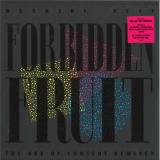
- Following on from the success of the 2024 editions of The Age of Consent and the incredible viral activity for 'Smalltown Boy', London Records follow up with Forbidden Fruit - a remix compendium to The Age of Consent. Similarly to 1995's Hundreds and Thousands album, The Age of Consent has been re-interpolated to create a new remix album - traversing Hi-NRG, House, Italo Disco and more - while working together as a cohesive listening experience.
The project’s title track is the perfect blend of gossamer shoegaze and Graveface’s signature eerie nocturnal feel, with the lyrics similarly balancing the purity of love against mankind’s darker instincts in the face of romantic obsession.
“‘For Keeps’ is a story written from the perspective of someone who is so desperately in love, they’d do anything to hold onto that love,” the band shares. “We just wanted to explore a really dark part of the human psyche.”
To further elucidate on these themes, Night School has shared a music video that pairs performance footage with a narrative of amour fou that gets a little bit too fou—I won’t spoil anything, but there is manslaughter involved.
- Hypnagogia
- Hold My Hand
- Under The Spell Of Joy
- Bliss Out
- Hey Dena
- The Universe
- It All Washes Away
- Little Things
- 10: Day Miracle Challenge
- I'd Rather Be Dreaming
- Dream Cleaver
The album opens with "Hypnagogia," an ode to the space between sleep and wakefulness where we are open to other realms of consciousness. The song slowly builds along a steady pulse provided by bassist Pickle (Nicole Smith) and drummer Rikki Styxx. Tripped out saxophone bleats from guest player Gabe Flores swirl on top of the organ drones laid out by guest keyboardist Gregg Foreman. The band's choral objectives for Under the Spell of Joy are established right off the bat, with Bonnie Bloomgarden's melodic invocations bolstered by a choir, giving the album a rich and vibrant wall-of-sound aesthetic. The song ominously builds on its hypnotic foundation until it opens up into a raucous revelry at the four-minute mark. The portentous simmer of the opening track yields to the ecstatic rocker "Hold My Hand," where verses reminiscent of Velvet Underground's "I'm Waiting For The Man" explode into big triumphant choruses. From there the band launches into the title track, which marries the griminess of The Stooges with an innocence provided by a children's choir chanting the album's primary mantra "under the spell of joy / under the spell of love." Death Valley Girls have always vacillated between lightness and darkness, and on "Bliss Out" they demonstrate their current exuberant focus with a patina-hued pop song driven by an irrepressibly buoyant organ line laid down by keyboardist The Kid (Laura Kelsey). A similar cosmic euphoria is obtained on "The Universe," where alternating chords on the organ help elevate soaring saxophone and keyboard lines out beyond the stratosphere. If you're looking for transcendental rock music, look no further.
Reissue of in-demand Italo title, with accompanying edits by Hysteric. "For the much-requested 12'' reissue of Roaring Mosquitoes, Best Record followed the hint by a die-hard German researcher and esteemed DJ of 'hidden musical treasures' Frinda Di Lanco. Further enriching this reissue - masterfully remastered by Dom Scuteri - with two of his splendid edits is the Australian DJ-producer George Hysteric, one of the world's leading authorities and a leading figure in Italo Disco. The juxtaposition of the two songs performed with grit and physicality by Agostina Casalino and her cousin Antonietta Casalino (aka Roaring Mosquitoes) highlights two aesthetically and rhythmically similar approaches, albeit with different roots and inspirations. "You Aren't With Me" has the merit of not wanting to reinvent the genre, but exploits the familiarity of pop-dance forms, obtaining an immediate catchiness. The piece stands out for its linearity while reworking melodic mechanisms typical of the 80s new wave: short instrumental intro, well-defined verse-chorus, obsessive repetition of melodic hooks that make it an immediate and "dragging" song on the dance floor. The arrangement focuses on a solid electronic drum groove, sinuous basslines, clean guitar riffs, "cutting" keyboards and the use of the chorus typical of the Italo Disco of those years. Some passages recall the melodic line and rhythmic progression of "Tonight... Crazy Night", an intriguing song that the Canadian artist Dorine Hollier created in 1984 at the Titania Studios in Rome with Pierluigi Giombini. Even with "Ah Ah Ah Ah" which features a vibrant and cheerful sound there's a playful use of citation for some idea that Diego Pepe took from a Micky & Joyce track. It evokes the "space disco" spirit of Jean-Pierre Massiera and the influence of the French scene of 1979: polyphonic synthetic strings, echo effects on electronic hi-hats and a vaguely futuristic atmosphere, but with an even more captivating sound revitalized with more scratchy modern touches and compressed basslines. A mix of vintage and contemporary that enhance its charm."
2025 Repress
Growing up on the north Atlantic island of Iceland bestows one with an unusual and often intense relationship with light and colour: Summers come with endless days, Winters with scant sunlight yet increased sightings of the Aurora Borealis; the mysterious and awe-inspiring glow across the sky. Channelling these energies, Exos
comes to Tresor with his Green Light EP, a five-track collection of the sort of spectrally rich techno synonymous with the Northman’s 27-year career.
Across the EP, the five tracks fizz and pulsate driving ever forward, making the release’s title a three-way play on words referencing the continuous travelling of photons, the verdant warping of the Northern Lights, and the universal colour for Go, for forward propulsion. Smart wordplay can also be found in titles like Grátt Silfur, a term in Íslenska (literally “grey sliver”) which signifies a tension between two parties, further extending the colour metaphor and dark/light dichotomy found elsewhere.
The digital release comes with three extra tracks that continue the dynamic energy, pushed along by the same shifting, mutating force where the music often feels like voices calling out from the darkness or the shimmer of light as the sun rises across the horizon.
Green Light EP continues this year’s blazing return from an artist who, similar to his output, is never stagnant: ever changing form yet ever moving forward.
- Samaritan
- Auld Ashok
- Bygg En Menneskekropp
- Shape Of Ash
For 15 years, female-fronted quintet LEONOV have been honing their captivating brand of celestial doom metal. Named after Aleksej Leonov, the first human to take a walk in space, the Norwegians combine the melancholic slow burn of King Woman with the ethereal heaviness of Subrosa and an incredible voice that undeniably reminds of Julie Christmas. Shape of Ash showcases the refined sound of a band that has been around for quite a while_ a band whose career has been a similar slow burn as their music, yet a band that has managed to stay together and create music throughout all these years, despite the odds of families and the real world. Like staring into a purgatory bonfire, listening to `Shape of Ash' is a powerfully entrancing experience. Dealing with themes of helplessness, uncertainty, conflict and resolution, these four songs touch upon the many adversities of life. On Shape of Ash, LEONOV create moments of primordial heaviness on which Tåran's unique voice floats atop, blends in effortlessly in some moments and takes reserved distance in others. With the 4 songs that make up this stunning EP, the band sets the bar incredibly high for their upcoming full length album. We can't wait for it! FOR FANS OF GGGOLDDD, King Woman, Marriages, Subrosa, Cult of Luna, Julie Christmas, Chelsea Wolfe, True Widow, Spurv
With a clutch of EPs under his belt spanning a wealth of pallets, Henzo narrows the focus on his debut studio album “The Poems We Write For Ourselves” - a culmination of persistent iterations over several years, distilling his sonic milieu into something that feels decidedly his own. The album proper is coupled with a debut live performance which reinterprets the tracks and splices them with omitted material from the time of writing - recorded in full in the intimate confines of Manchester’s growingly infamous Stage and Radio basement. Honing his craft in the shadows of Lancashire, Poems is an expansive reflection of the producer’s time spent away committing to the scope of an LP.
A thread of stratified sound design weaves throughout the record, but with a discerning dancefloor proclivity mostly prevalent. Cold opener “Noggin” riffs on noughties Raster-Noton a la Byetone rebuilt with fractal tear out DnB, with closer “Indulgence” following suit on a puckered plod of Dub Techno ambience. More club-focussed moments come in the form of “Rustica Slump” and “Blue Will...”, the former’s sickly sweet vocals resolved by the latter’s stoic UKG/Techno rudeness. “A Bouquet of Clumsy Words” channels mechanical shuffle with a stripped back 2/4 pulse whilst maintaining a firmly FWD>>energy alongside “Plant Your Roots In Me” on a similar vector - swapping out a straight kick pattern for a bludgeoning 808 assault on an early Hessle-indebted tip.
“Take Stock, Touch Grass” harks to golden era ClekClekBoom and Night Slugs with a bare bones kick and vocal motif, updating the formula with a tweaking lead line that places it firmly in the contemporary space. “Swell:Shrink” sings from the same sheet with a shrieking, space age wobble doing the heavy lifting, knocking the pace back to a shoulder-lean swagger on a slow fast conundrum Henzo has shown his flair for on previous releases.
The outliers to Henzo’s more known approach, “Worm Grunting” with Belfast’s Emby, an amalgamation of halfest time DnB and illest mannered Road Rap, plus “The Rest Is The Mess You Leave”, a starkly anti-retro Ghettotek endeavour, give grounds to the LP. Clearly rooted in the comfortable universe of the dancefloor, these tracks expand the producer’s realm into loftier heights as he graduates into long play land.
New Traditions is a collection of pipe music, electronic music, mouth music and folk music from five emerging and prominent Scottish artists.
It started in Sutherland with a recording of The Waters of Kylesku. “Do you learn any Gaelic at the school?” asks Hamish Henderson of Christine Stewart. “No,” she answers. “That’s a shame,” he responds, “Isn’t it?” she says. Then she sings. Her voice is of the peat itself, grown from the earth as the language was. It soars raptor-like above drenched ground and scoured pink rock.
Next, to Nancy Dorian, a linguistic missionary of sorts, who came from America to watch a language die. She charted the decline of Gaelic in a cluster of Sutherland villages from 1963 to 2020 when the terminal native speaker passed. Gaelic has origins in nature, with each letter of the alphabet named after a tree. It seems significant that the land of the north is now all-but devoid of forest.
Enter Alan Lomax, who travelled the world documenting indigenous music. Material from his archives feature on (fucking) Moby’s platinum selling Play. Despite the record’s worldwide commercial success we know very little of the music he essentially exploited.
Then musician Martyn Bennett, who built tracks around Lomax recordings of Scots and Gaelic voices, and did so with love that shared his blood with the cancer that killed him. His records both popularised and preserved obscure indigenous Scottish music.
This collection of tunes has similar intent: to consolidate ephemeral words in physical grooves - real as the rigs that still scar the earth - but also a desire to interpret. These versions have the greatest reverence for the originals at heart, but like the architecture of a great gallery, serve to protect and elevate.
- A1: Pharoah Jones
- A2: Ghost Gospel
- A3: Ill Feeling
- A4: Capital Punishment
- A5: Do Not Adjust
- A6: Cool Green Trees
- A7: Chill Scratch
- A8: Poisonous Fumes
- A9: Welcome Aboard The Starship
- B1: Keep On Runnin
- B2: Sounds Impossible
- B3: Painted Faces
- B4: The Knew Style
- B5: Chicken Wing Blues Sauce
- B6: Kool Breeze
- B7: Sexx Bullets
- B8: Soul Child
- B9: Take Off Runnin
- B10: Centurian
- B11: Bozack
- B12: Church
- B13: Splash One
- B14: Hank
- B15: 73 Goatee
"Chasing the funky symphonies that filled my head and my dreams..."
December 25th, 2023 - an Instagram post. Stimulator Jones shared half a dozen FIRE tracks from his beat tape archive. We were immediately drawn to the rough hewn boom bap.
"I'd release that", Rob commented.
Hours of material was shared and the result is this: Cool Green Trees (1999-2005). A collection of beats and loops Stimulator Jones created between the ages of 14-20 at home in his basement, bedroom and computer room in Roanoke, Virginia.
You will not believe the profound soulful genius contained within these naive schoolboy melodies.
December 25th, 1998 - 25 years ago to the day and his much-coveted Yamaha SU10 sampler was finally bestowed upon young Stimmy AKA Sam Lunsford: "I immediately hooked up a CD Walkman to the input jack and looped the beginning two bars of Grover Washington Jr.'s "Mercy Mercy Me". I don't know what exactly was so thrilling about hearing two measures of music repeating over and over but it was so infectious and hypnotizing and enthralling to me. I'll never forget that ecstatic rush of making my first loop - an uncontrollable, gleeful smile plastered all over my face." When you hear the pocket breakbeat symphonies featured here on Cool Green Trees, you'll feel the same sense of frisson.
In the wake of his Stones Throw breakthrough - Exotic Worlds & Master Treasures - Stimulator Jones was pegged by many as a 90s throwback artist. However, he literally IS a 90s artist. He's been recording music most of his life and he's now 40. He created the bulk of Cool Green Trees as a teenager. Everything before 2004 was recorded when Sam was still in school. He was in 8th grade when he made the 1999 tracks - he didn't even have his learner's permit. This album is a snapshot of a young man in a simpler time. Things were still mysterious back then and he was flying blind, relying on his ears and having to figure things out for himself: "I had no road map for becoming a beatmaker. I have been collecting music since I was a kid, I am a lifelong digger and seeker of cool and interesting sounds. I was there in the golden age of Hip Hop, and while I may have been a suburban white kid in Roanoke, Virginia, I was tuned in and I bought so many classic albums when they came out. I was attracted to Hip Hop because of the musical and poetic quality. I was hypnotized by the rhythms, partially because I was a drummer. I didn't brag about collecting my breakbeat records or making beats - it was something I did in isolation. It wasn't something I generally wanted to bring attention to and it didn't really score me any cool points. I certainly wasn't flexing on social media about it."
Hell, he can do that now!
Opener "Pharoah Jones" was inspired by Yesterday's New Quintet and Madlib's ability to capture that classic 70s sound whilst playing all the instruments. Sam created this one stoned afternoon by laying down a 2 bar loop and a shaker loop on his Yamaha SU700 sampler. He hung a microphone from the ceiling and played his Yamaha Stage Custom drum kit over the top before adding ender Rhodes and playing his dad's Selmer tenor sax through an Electro Harmonix Memory Man echo pedal. Yes! Up next, "Ghost Gospel" utilises a dope loop from a gospel record and adds some soul-funk drums overtop, whilst working that filter knob. Says Sam: "The loop reminded me of something Ghostface would rap over. The sample was in 3/4 waltz time but I flipped it for a 4/4 groove, a technique I picked up from RZA. "Ill Feeling" uses sped-up pieces from a dusty old funk record and putting them over a classic NOLA drum loop; gain chopping up a slow, bluesy 3/4 time signature and bending it to a 4/4 groove. Classy shit. "Capital Punishment" features drums tapped in live, inspired by MF Doom's Special Herbs series. "Do Not Adjust" consists loops found on a compilation of 70s French music at Happy's Flea Market, a classic Roanoke digging spot.
The sublime, evocative title track, "Cool Green Trees" was created when Sam was still living at home. He dumped samples off his SU10 into the family desktop and arranged them in a demo version of Pro Tools: "This track was sort of my ode to the DJ Shadow style of sample based production. Super spacey, slow, and moody. The heavily filtered drums were inspired by Alec Empire's 'Low on Ice' album. I later added some scratches and sounds from a Spider Man storybook record." "Chill Scratch" snags the final bit of a bossanova record and pairs it with a drum loop before adding experimental scratching run through an Electro Harmonix Memory Man echo pedal. "Poisonous Fumes" was made using a sampler, mixer and a turntable; a kind of mixtape beat collage with added scratches and sounds from various records. Using dialogue from superhero records was a nod to Madlib. "Welcome Aboard The Starship" is dark, downtempo trip-hop with a spooky bent. Sam paired a slow, hard drum loop with a guitar sample grabbed off a psychedelic rock record. To finish, he added various backwards sounds and weird atmospheric effects and a little scratching. Swoon.
Side B opens with "Keep On Runnin", made on a borrowed Roland SP202 sampler. Having always loved the sound of the Lo-Fi filter on those machines, reminiscent of the Emu SP1200, Sam always imagined Del or another of the Hieroglyphics crew rapping over this beat. You can certainly hear why. "Sounds Impossible" sees Sam experimenting with layering multiple kick samples at different volumes to create patterns similar to those heard by Showbiz and Lord Finesse during their God-level 1995 period. "Painted Faces" was made by chopping up a REDACTED record which he had gotten from Happy's Flea Market and paired it with a REDACTED drum loop. By the time Sam recorded "The Knew Style", he had acquired a shitty old 1960s portable turntable off eBay. It didn't function properly when he bought it but his brother opened it up, cleaned it out and got it working: "I remember he told me that there was a bunch of sand inside of it when he opened it up, as if its previous owner had taken it to the beach. I would take that turntable on my Happy's Flea Market digs so I could preview records...that's how I found this loop."
"Chicken Wing Blues Sauce" loops up a classic blues joint and pairs it with some REDACTED drums. A bit of filtering and arranging et voilà! "Kool Breeze", from 1999, is one of Sam's oldest surviving beats, as is "Sexx Bullets". The Roots sampled the same record, leaving Sam frustrated yet vindicated. "Soul Child" was an early SU10 creation, looping a dusty old Soul Children 45 and pairing it with 70s rock drum loops to great effect. "Take Off Runnin" was another loop found digging with a portable turntable. Paired with some boom bap drums it makes for a hypnotic head-nod groove. "Centurian" was intended to be a little beat interlude a la Pete Rock. The sample is from a sun-dappled soft-psych record and it's paired with a Robin Trower drum loop that just happens to fit perfectly. Sometimes you slap things together kind of haphazardly and magic happens. "Bozack" was the first beat Sam made using Pro Tools, his first foray into using chopped sounds instead of loops, an exciting new world. "Church" is beat interlude using a Phil Upchurch loop with the "Long Red" drums - a favourite break of Dilla et al. Sam was really on a tear in late 2004, probably because he was unemployed and phoneless and able to just make beats all day. He made "Splash One" on a borrowed Yamaha SU700 and again was experimenting with tapping the drums in live with his fingers, instead of using a loop or sequenced pattern. Channeling 9th Wonder, Sam used a water splash sound effect from a Batman record as a percussive element, hence the title (also a 13th Floor Elevators reference). The main loop is a backwards portion of one of his favourite Roy Ayers songs.
"Hank" is another fun little beat interlude thing, created on a borrowed Roland SP202 sampler with the fantastic Lo-Fi effect that resembled the Emu SP1200 at a fraction of the price. "73 goatee", from 99, is another of his oldest surviving beats, created in his bedroom with his Yamaha SU10 and his brother's Vestax MR-300 4-track recorder: "This one will always feel special. I can remember having a feeling all the way back then on the night that I created it that this was a solid beat with a catchy loop. There was something in the Fender Rhodes melody that resonated with me emotionally, and I had never heard a producer sample that portion before. I felt like I had found my own unique sound, my own unique loop. It came from an Ahmad Jamal '73. I actually even recorded myself rapping and scratching over this beat way back then, I still have that version in all its imperfect sloppy glory."
Sam explains just how much these tracks mean to him: "They all have immense historical and sentimental value and I'm proud of them. These beats come from an innocent, simple time when I was just figuring out how to craft these sounds. They're something very personal to me. They are the initial part of a journey that I really was taking *alone*. There was no YouTube. I couldn't Google shit. I didn't even know any other beatmakers, producers or DJs in my town that could teach me anything. It was always just me, alone, in a room with some equipment - chasing the funky symphonies that filled my head and my dreams. What I was doing wasn't cool. Most of my peers thought I was a weirdo and couldn't care less. Creating these sounds was an anti-social endeavour. In a sense, I felt like it was me against the world, and all I had to instruct and assist me were the recordings produced by my heroes - RZA, DJ Premier, Erick Sermon, Beatminerz, Showbiz, Diamond D, Beatnuts, Prince Paul, The Bomb Squad, Pete Rock, Q-Tip, E-Swift, Mista Lawnge, DJ Shadow, Cut Chemist, Peanut Butter Wolf, El-P and so many more...I dedicate this collection to them, and to my older brother Joe who has always been a musical and technical guiding light for me.
This was a time before every kid was a self-described producer and beatmaker, before everyone had a DAW, before Kanye and "chipmunk soul", before Red Bull beat battles, before there was any social media beyond chat rooms and AOL Instant Messenger, before Soundcloud, before SP-404 mania, before lo-fi beats to study to, before Splice, before targeted ads for MIDI chord packs, etc. In 99 when I told people that I had a sampler and made beats I was mostly met with bewildered confusion and indifference. Kids and adults alike would wonder why I got this weird machine for Christmas instead of something worthwhile like a Playstation or a mountain bike or even a guitar for that matter because at least that could be used to make "real music". Back then, sampling was still not widely respected as an art form - it was seen as lazy, talentless and unoriginal at best and outright criminal theft at worst. I had gotten respect for playing drums and guitar and things of that nature but this was a step in the wrong direction in the eyes of many."
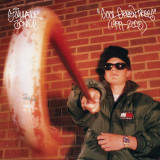
The cover photo is a picture of Sam standing on his back porch in the latter part of 1998, just before he got his first sampler. He was 13 years old, in 8th grade. His dad took the picture with his 35mm film camera: "I actually wanted to be pointing my dad's .22 pistol at the camera lens but he wouldn't let me. He gave me an old walking cane to use instead. The Tommy Hilfiger puffer jacket came from the lost and found at William Fleming High School where my mom worked as a secretary. I was thrilled when she brought it home because we never spent money on expensive name brand clothing like that - we were for the most part strictly a sale rack, bargain bin, thrift store, yard sale, flea market kind of family when it came to clothes. My watch is some cheap off-brand fake gold department store watch." Mastering for this vinyl edition was overseen by Be With regular Simon Francis and it was cut by the esteemed Cicely Balston at Abbey Road Studios to be pressed in the Netherlands by Record Industry.
Unreleased electronic / jazz / madness from two titans of jazz and experimentation: JOHN SURMAN and KARIN KROG.
I could now write a load of blown up puffery about how amazing this is, but everyone does that, and a lot of the time it’s all a load of bollocks. But basically this was sent to me by Karin / John when I asked if they had anything hanging about that had not been released. This came through and blew my tiny mind. Like something from prime Annette Peacock “Pony” period. Here is what John Surman said…
John Surman writes:
Back in 2012/13 there had been some talk about a big futuristic open air urban dance/theatre production for about 80/100 actors/dancers with lasers and all kinds of lighting effects on different stages. I was invited to get involved and, together with Ben and Karin, we eventually decided to get to work on some ideas. I think that the original plan was that in performance there would be a mixture of live music and electronica.
Not altogether surprisingly, bearing in mind the complexity of the project, it never moved forward and developed into anything more than an interesting idea. It was probably over ambitious & I guess the funding never came through.
The only information I that I can find relating to the production refers to two silent movies made in 1927/1928 by the filmmaker Eugene Deslaw, entitled `La Marche Des Machines´ and `Les Nuits Électriques.These were clearly intended to act as inspiration for the project.
After months turned into years it became obvious that the project was going nowhere, and so the recorded music laid around gathering dust until Johnny Trunk asked Karin if she had any interesting music that he might be interested in releasing. One thing led to another and so, finally, Electric Element found a home!
For anyone interested in the equipment used this will have to be an approximation since the memory might be playing tricks. Karin was probably using a Yamaha Rex50 f/x unit, a Roland VT-3 Voice Transformer and an Oberheim Ring Modulator. I was playing Bass Clarinet and Contrabass Clarinet through various f/x units together with a Yamaha WX5 wind synth. All the instruments and voice were also processed through Ben´s equipment. After writing this I asked Ben for his recollections and he came up with the following:
John, Karin and I created this music in 2 or 3 days in the winter of 2013 at their studio in Oslo, Norway. I followed up with another 2 or 3 days of mixing, editing and post-processing . We kept a collaborative, improvisational and free-form approach to the sessions. I grew up immersed in music such as Cloudline Blue, the 1979 duo album of Krog/Surman, and this felt like a similar approach. I have mixed sound for many of their live duo concerts and I would use effects and electronics as an
accompaniment and counterpoint to the performed music. The relation of organic and artificial sound sources in music has always fascinated. In this case, I used some contemporary digital signal processing to introduce my own aesthetic into the conversation, in particular using granular synthesis to recombine small 'clouds' of sound into alternate forms. Some of the software tools I used included Ableton Live, Max/MSP and Reaktor.
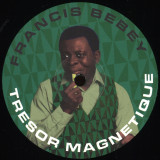
Francis Bebey was a visionary who explored the intersection of African traditions and global music long before it became a global trend. Born in Cameroon, Bebey's sound was an eclectic blend of his rich cultural heritage and his deep exploration of modern music, spanning genres from traditional folk and jazz to funk and electronic experimentation. As an artist, Bebey was ahead of his time, using his unique voice and instruments to forge new paths for African music to be heard worldwide. His legacy is not just in the music he created but in the way he opened doors for the global recognition of African artists, influencing generations of musicians, producers, and fans alike.
This release marks an exciting moment, as we introduce remixes of bebeys iconic productions by contemporary electronic producers, giving new life through creative re imaginings.
Tracks:
Le Grand Soleil De Dieu (Psychemagik Remix): The UK-based musical duo are known for their eclectic blend of electronic music, psychedelic rock and mystical global sounds. Formed by Danny McLewin and Tommy McLewin, the duo has carved out a unique niche within the global music scene though their intricate arrangements. Their Remixes and Collaborations have been with artists like Fleetwood Mac, Tame Impala, and Hercules & Love Affair. Their psychedelic dub remix has otherworldly qualities, with dreamy atmospheres and bouncing baselines throughout this brilliant opening track.
Guinee (Turbotito Edit): The Berlin-based DJ and producer known for his infectious blend of house, disco, and funk. With a knack for smooth, groovy beats and a deep love for melody, Turbotito's music brings a fresh, energetic vibe to the dance floor. On this track, he effortlessly re-imagines and elevates the world of Guinee to match his signature sound. A combination of a great pulsing base line, ethereal vocals and bird sound effects incorporated into the percussion makes this track an absolute stand out.
Agatha (Voilaaa Remix): Bruno "Patchworks" Hovart from Lyon is the brains behind the Voilaaa project. Fusing soulful grooves, funk, and disco with an unmistakable French touch, Voilaaa creates infectious, feel-good rhythms that blend classic and contemporary influences. In this track we find the first big hook of the album vocally, coupled with Bebey's lively humour in spoken French on top of joyous instrumentation. The smooth vocals, catchy melodies, and vibrant arrangements, bring a fresh energy to the original hit track - a brilliant homage.
Forest Nativity (Red Axes Edit): Red Axes are a dynamic electronic music duo from Tel Aviv, blending disco, house, and psychedelic influences into infectious, genre-defying tracks. Known for their unique sound, warm analog textures, and hypnotic rhythms, Niv Arzi and Dori Simao craft music that moves both the body and the mind. Forest Nativity arrives as a full circle closer, incorporating some of the most authentic African instruments such as a Balafon, an instrument similar to a xylophone and a Djembe, a hand drum central to many West African traditions. The 7 minute track is guaranteed to take you on a fascinating journey through Bebey's culture and livelihood.