Cerca:simi

Generi
Tutto
Arat Kilo - Danama

Arat Kilo

Danama

12inchAC197LP
Accords Croisés
21.04.2025

“Trustworthy”. is the meaning of “danama”, this Bambara word from Mali. Believing in oneself, in others, in the word given, in desirable futures. Advocating optimism, momentum towards the future, collective strength and the wise magic of cultural blending… especially during these troubled times of endless wars, of nationalist withdrawals or the abundance of naturals disasters, all encouraged by a carnivorous capitalism?

So confidence, we need tons of it. Maintained by the flame, the phlegm and the stratagem of these afro-groove scientists, without ignoring their sorrows nor the scandals of History. This is the athletic art of Arat Kilo, who remain without question the best ethio-jazz orchestra in France, on the trail of this fifth album recorded in the Spring of 2024. Confidence was also needed to change the way things worked. For all the previous albums, the band came together in the studio to play each track together, all in the same room, in the romantic idea of a warm, lively, organic gesture, in the manner of the great Ethiopian masters of the 60s and 70s.

For Danama, the music was initially collected in tandem: guitar/bass, drums/percussion, saxophone/trumpet, and the two voices. A few new instruments were added along the way : dark synthesizers, a bass clarinet, a tiny guitalélé (similar to the ukulele) and a Malian n'goni (sometimes described as ‘the griot's lute’). Then, and above all, there was the question of experimenting with real sound production, using sound design, multi-track exploration and effects applied to the textures collected over eight days at the Gong studios in Montreuil and OneTwoPassIt in Bagnolet just outside Paris.

In this way the band, all growing up influenced by the hip French Radio Nova's ‘Grand Mix’, were completely free to express their natural taste for fusion between genres. Borrowing from the frantic rhythms of Newark's jersey club, English 2-step or New Orleans brass bands, grafted onto Arat Kilo's musical base: tezeta, the famous minor pentatonic scale typical of Ethiopian jazz, melancholic to perfection. The result is layers of sound, collages of emotions, like the album cover, created by artist Clément Laurentin from multicoloured fragments of posters torn up in the street.

So Arat Kilo are back: The same band, the same collective strength, the same fight for values, their new album “Danama” carries the demand for a better world even further, with words of hope from singer Mamani Keita and the social critique of American MC and poet Mike Ladd ! The result is this luminous voyage down the Danama canal. In all, eleven songs and an instrumental, mixed by Mathieu ‘Gib’ Gibert - one of French band La Fine Équipe's beatmakers - set to drive the crowds wild and remind us how to stick together again.

pre-ordina ora21.04.2025

dovrebbe essere pubblicato su 21.04.2025

21,56
Rindert Lammers - Thank You Kirin Kiki
  • 01: Summer In Shibuya
  • 02: Opening Credits
  • 03: Thank You Kirin Kiki
  • 04: Thank You Hiroshi Yoshimura
  • 05: Closing Credits

Rindert Lammers' debut album is a heartfelt exploration of gratitude, blending personal narratives with cinematic imagery in a serene and soulful ambient jazz style. Inspired by Japanese cinema and the raw authenticity of YouTube confessions, the album captures a mood of introspection and appreciation. Central to the album is the track "Thank You, Kirin Kiki," which draws from a powerful scene in the film Shopliers. Lammers explains "It's one of my favorites. The Japanese actress Kirin Kiki plays the grandmother of a ‘chosen family’, all of whom have fled or lost their own families in some way. In this scene, one of her last scenes before her (real) death, Kirin Kiki (the grandmother) looks at her family and says, 'Thank You!' twice towards the children and the sea. Kirin Kiki improvised these words on the spot, and it's such a poignant moment in the film, but also indicative of her impending death. I found the gratitude so moving it fit perfectly with the gratitude I found in the voice clip from "Thank You Hiroshi Yoshimura. "The fourth song, "Thank You Hiroshi Yoshimura," opens with a voice clip that acts almost as the protagonist of a film, reflecting on a turbulent time of sleeping in parks and on the streets. This voiceover was inspired by a comment on a Hiroshi Yoshimura video on YouTube that began, “This album reminds me of...” Lammers noticed the deeply personal responses le on these videos, so he recorded various similar YouTube comments from people around the world, initially intending to set them to music. Though much of this idea evolved, this particular voice clip remained a central influence, ultimately inspiring a cinematic journey within the album. "Summer in Shibuya" sets the scene as a trailer, "Opening Credits" introduces the narrative, and "Closing Credits" gently brings it to a close. While there’s a Japanese and Tokyo theme running through the tracks, Lammers doesn’t view the album as a tribute to Japan or Tokyo specifically—he’s never visited and admits to knowing only fragments of the culture. Yet he's drawn to Japanese environmental music and is an avid Murakami reader, seeing Japan as a powerful, visual inspiration in his mind’s eye. In a way, the album is also his “thank you” to the beautiful art that Japan has shared with the world.

pre-ordina ora18.04.2025

dovrebbe essere pubblicato su 18.04.2025

26,68
Conductor Williams - CONDUCTOR WE HAVE A PROBLEM, Pt. 3
  • 1: Modus Operandi V
  • 2: Get Away! (Feat. Rome Streetz)
  • 3: Board 40
  • 4: Hell In A Hellcat (Feat. Elijah Hooks & Elzhi)
  • 5: Space Heater (Feat. Domo Genesis
  • 6: Ecstasy
  • 7: Hold You (Feat. Benny The Butcher & Wiz Khalifa)
  • 8: Diamond Skin
  • 9: Guilty (Feat. Leon Thomas)
  • 10: Down Bad (Feat. Bishop Nehru)
  • 11: Necessary Cherry (Feat. Wiki)
  • 12: Kent (Feat. Elijah Hooks

Third installment in the "CONDUCTOR WE HAVE A PROBLEM" series. Features Rome Streetz, Elzhi, Elijah Hooks, Domo Genesis, Russ, Benny the Butcher, Wiz Khalifa, Leon Thomas, Bishop Nehru, and Wiki. On 180 gram black vinyl. CONDUCTOR WE HAVE A PROBLEM, Part 3 is the fifth album by producer Conductor Williams, released on October 31, 2024. It is the third installment in the CONDUCTOR WE HAVE A PROBLEM series, following both the first and second installments, which were released respectively in March and November 2023. The album is also Conductor’s first vocal compilation, featuring guest appearances from Rome Streetz, Elzhi, Elijah Hooks, Domo Genesis, Russ, Benny the Butcher, Wiz Khalifa, Leon Thomas, Bishop Nehru, and Wiki. The Conductor described the album as “a take on deception” and “a play on textures via emotion as sound, anxiety, fear, and joy. These all derive from a similar place, and this album is a journey through it


[f] 6. Ecstasy [Freestyle] (feat. Russ)

pre-ordina ora18.04.2025

dovrebbe essere pubblicato su 18.04.2025

36,93
Black Country, New Road - Forever Howlong (LP 2x12" + MP3 Gatefold Sleeve)

Black Country, New Road veröffentlichen ihr neues Studioalbum „Forever Howlong“ auf Ninja Tune! Das Album ist ihre erste Studioveröffentlichung seit ihrem Album, „Ants From Up There“, aus dem Jahr 2022, neben ihrem für den Mercury Prize nominierten Debüt, „For The First Time“ und folgt auf „Live At Bush Hall“ aus dem Jahr 2023. Jetzt, auf dem dritten Studioalbum, beginnt die Band wieder von Grund auf und vollzieht eine weitere wundersame musikalische Verwandlung.
Das lang erwartete neue Album wurde von James Ford (von Simian Mobile Disco, der u.a. bereits mit Arctic Monkeys, Depeche Mode und Blur zusammenarbeitete) produziert und zeigt Black Country, New Road in einer neuen Form, in der die Gesangsaufgaben - und der Großteil des Songwritings - zwischen Tyler Hyde, Georgia Ellery und May Kershaw aufgeteilt sind. „Forever Howlong“ ist ein ehrgeiziges, detailliert ausgearbeitetes Album, das von Folk über Prog und Barock-Pop bis hin zu einem Hauch von Alt-Rock alles enthält - mit Anklängen an Joanna Newsom, Randy Newman, Fiona Apple und Janis Ian - und dabei doch diesen unverwechselbaren, einzigartigen Sound beibehält, den nur diese Kombination von Musiker:innen hervorbringen kann. Obwohl das Album sehr vielfältig und umfangreich ist, fühlt es sich auch sehr kohärent und fokussiert an, da es drei verschiedene Stimmen und Stile aufnimmt und sie nahtlos in einen neuen kollektiven Sound einfließen lässt.

non in magazzino

Ordina ora e ordineremo l'articolo per te presso il nostro fornitore.

29,37

Last In: 12 months ago
Black Country, New Road - Forever Howlong (LP 2x12" + MP3 Gatefold Sleeve)

Black Country, New Road veröffentlichen ihr neues Studioalbum „Forever Howlong“ auf Ninja Tune! Das Album ist ihre erste Studioveröffentlichung seit ihrem Album, „Ants From Up There“, aus dem Jahr 2022, neben ihrem für den Mercury Prize nominierten Debüt, „For The First Time“ und folgt auf „Live At Bush Hall“ aus dem Jahr 2023. Jetzt, auf dem dritten Studioalbum, beginnt die Band wieder von Grund auf und vollzieht eine weitere wundersame musikalische Verwandlung.
Das lang erwartete neue Album wurde von James Ford (von Simian Mobile Disco, der u.a. bereits mit Arctic Monkeys, Depeche Mode und Blur zusammenarbeitete) produziert und zeigt Black Country, New Road in einer neuen Form, in der die Gesangsaufgaben - und der Großteil des Songwritings - zwischen Tyler Hyde, Georgia Ellery und May Kershaw aufgeteilt sind. „Forever Howlong“ ist ein ehrgeiziges, detailliert ausgearbeitetes Album, das von Folk über Prog und Barock-Pop bis hin zu einem Hauch von Alt-Rock alles enthält - mit Anklängen an Joanna Newsom, Randy Newman, Fiona Apple und Janis Ian - und dabei doch diesen unverwechselbaren, einzigartigen Sound beibehält, den nur diese Kombination von Musiker:innen hervorbringen kann. Obwohl das Album sehr vielfältig und umfangreich ist, fühlt es sich auch sehr kohärent und fokussiert an, da es drei verschiedene Stimmen und Stile aufnimmt und sie nahtlos in einen neuen kollektiven Sound einfließen lässt.

pre-ordina ora04.04.2025

dovrebbe essere pubblicato su 04.04.2025

30,67
Patrick Conway - Loss / Silencio

Patrick Conway crossed the threshold to find a new hope. This is his third offering for the ESP Institute. On side A, 'Loss' sets an overall melancholic tone for the record. A single repeating high note on the piano establishes a guiding element, which is eventually supported by a tear-jerking yet resolving chord progression, a trailing choir of angelic voices, and a filter-modulating synth that pads the widest zones of the mix with the occasional counter-melody. Robust in and of itself, Patrick’s melodic arrangement floats gracefully over an otherwise antagonistic rhythm section built from his signature corroded dancehall arsenal. This hornets nest of boxed live kick drums, piccolo snares, and high-pitched toms is held together by a dry veneer of saturation, sitting at safe distance from but in natural harmony with the bulbous low-frequency atmospherics. On the flip, 'Silencio' employs a similar statement at the top of each measure, this time an anthemic polyphonic synth stab as opposed to the singular piano note, however, unlike the layered melodies throughout 'Lost', here Patrick explores the narrative possibility of negative space—call and response, rhythmic dialogue, and the implied notes that leave the listener’s or dancer’s intuition to complete a phrase. In the game “musical chairs,” children run around manically until signaled to find a chair, at which point their diverse personalties must urgently synchronize, until set free to run again and repeat the process. Patrick's approach for 'Silencio' conjures said metaphor—his melody and rhythm are unleashed to meander and spasm within the confines of each respective bar, until that anticipated synth stab unifies everything “on the one”—controlling the chaos, calling on muscle memory and affirming logic. These two songs will be with you always as they always have been.

non in magazzino

Ordina ora e ordineremo l'articolo per te presso il nostro fornitore.

14,08

Last In: 12 months ago
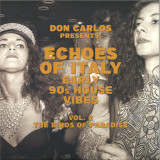
Various - ECHOES OF ITALY – THE BIRDS OF PARADISE – EARLY 90S HOUSE VIBES VOL.2 (2x12")

Googling “paradise house”, the first results to pop up are an endless list of European b&b’s with whitewashed lime façades, all of them promising “…an unmatched travel experience a few steps from the sea”. Next, a little further down, are the institutional websites of a few select semi-luxury retirement homes (no photos shown, but lots of stock images of smiling nurses with reassuring looks). To find the “paradise house” we’re after, we have to scroll even further down. Much further down.

It feels like yesterday, and at the same time it seems like a million years ago. The Eighties had just ended, and it was still unclear what to expect from the Nineties. Mobile phones that were not the size of a briefcase and did not cost as much as a car? A frightening economic crisis? The guitar-rock revival?! Certainly, the best place to observe that moment of transition was the dancefloor. Truly epochal transformations were happening there. From America, within a short distance one from the other, two revolutionary new musical styles had arrived: the first one sounded a bit like an “on a budget” version of the best Seventies disco-music – Philly sound made with a set of piano-bar keyboards! – the other was even more sparse, futuristic and extraterrestrial. It was a music with a quite distinct “physical” component, which at the same time, to be fully grasped, seemed to call for the knotty theories of certain French post-modern philosophers: Gilles Deleuze, Félix Guattari, Paul Virilio... Both those genres – we would learn shortly after – were born in the black communities of Chicago and Detroit, although listening to those vinyl 12” (often wrapped in generic white covers, and with little indication in the label) you could not easily guess whether behind them there was a black boy from somewhere in the Usa, or a girl from Berlin, or a pale kid from a Cornish coastal town.

Quickly, similar sounds began to show up from all corners of Europe. A thousand variations of the same intuition: leaner, less lean, happier, slightly less intoxicated, more broken, slower, faster, much faster... Boom! From the dancefloors – the London ones at least, whose chronicles we eagerly read every month in the pages of The Face and i-D – came tales of a new generation of clubbers who had completely stopped “dressing up” to go dancing; of hot tempered hooligans bursting into tears and hugging everyone under the strobe lights as the notes of Strings of Life rose up through the fumes of dry ice (certain “smiling” pills were also involved, sure). At this point, however, we must move on to Switzerland.

In Switzerland, in the quiet and diligent town of Lugano, between the 1980s and 1990s there was a club called “Morandi”. Its hot night was on Wednesdays, when the audience also came from Milan, Como, Varese and Zurich. Legend goes that, one night, none less than Prince and Sheila E were spotted hiding among the sofas, on a day-off of the Italian dates of the Nude Tour… The Wednesday resident and superstar was an Italian dj with an exotic name: Don Carlos. The soundtrack he devised was a mixture of Chicago, Detroit, the most progressive R&B and certain forgotten classics of old disco music: practically, what the Paradise Garage in New York might have sounded like had it not closed in 1987. In between, Don Carlos also managed to squeeze in some tracks he had worked on in his studio on Lago Maggiore. One in particular: a track that was rather slow compared to the BPM in fashion at the time, but which was a perfect bridge between house and R&B. The title was Alone: Don Carlos would explain years later that it had to be intended both in the English meaning of “by itself” and like the Italian word meaning “halo”. That wasn’t the only double entendre about the song, anyway. Its own very deep nature was, indeed, double. On the one hand, Alone was built around an angelic keyboard pattern and a romantic piano riff that took you straight to heaven; on the other, it showcased enough electronic squelches (plus a sax part that sounded like it had been dissolved by acid rain) to pigeonhole the tune into the “junk modernity” section, aka the hallmark of all the most innovative sounds of the time: music that sounded like it was hand-crafted from the scraps of glittering overground pop.

No one knows who was the first to call it “paradise house”, nor when it happened. Alternative definitions on the same topic one happened to hear included “ambient house”, “dream house”, “Mediterranean progressive”… but of course none were as good (and alluring) as “paradise house”. What is certain is that such inclination for sounds that were in equal measure angelic and neurotic, romantic and unaffective, quickly became the trademark of the second generation of Italian house. Music that seemed shyly equidistant from all the rhythmic and electronic revolutions that had happened up to that moment (“Music perfectly adept at going nowhere slowly” as noted by English journalist Craig McLean in a legendary field report for Blah Blah Blah magazine). Music that to a inattentive ear might have sounded as anonymous as a snapshot of a random group of passers-by at 10AM in the centre of any major city, but perfectly described the (slow) awakening in the real world after the universal love binge of the so-called Second Summer of Love.

For a brief but unforgettable season, in Italy “paradise house” was the official soundtrack of interminable weekends spent inside the car, darting from one club to another, cutting the peninsula from North to centre, from East to West coast in pursuit of the latest after-hours disco, trading kilometres per hour with beats per minute: practically, a new New Year’s Eve every Friday and Saturday night. This too was no small transformation, as well as a shock for an adult Italy that was encountering for the first time – thanks to its sons and daughters – the wild side of industrial modernity. The clubbers of the so-called “fuoriorario” scene were the balls gone mad in the pinball machine most feared by newspapers, magazines and TV pundits. What they did each and every weekend, apart from going crazy to the sound of the current white labels, was linking distant geographical points and non-places (thank you Marc Augé!) – old dance halls, farmhouses and business centres – transformed for one night into house music heaven. As Marco D’Eramo wrote in his 1995 essay on Chicago, Il maiale e il grattacielo: “Four-wheeled capitalism distorts our age-old image of the city, it allows the suburbs to be connected to each other, whereas before they were connected only by the centre (…) It makes possible a metropolitan area without a metropolis, without a city centre, without downtown. The periphery is no longer a periphery of any centre, but is self-centred”.

“Paradise house” perfectly understood all of this and turned it into a sort of cyber-blues that didn’t even need words, and unexpectedly brought back a drop of melancholic (post?)-humanity within a world that by then – as we would wholly realise in the decades to come – was fully inhuman and heartless. A world where we were all alone, and surrounded by a sinister yellowish halo, like a neon at the end of its life cycle. But, for one night at least, happy."


non in magazzino

Ordina ora e ordineremo l'articolo per te presso il nostro fornitore.

28,99

Last In: 6 months ago
Stefan Ringer - Meekside Freekside

Repress!

With an arsenal of releases on labels like NDATL, PPU, Black Catalogue, 2MR, and Harsh Riddims, Atlanta artist Stefan Ringer presents the first release on his own imprint FWM Entertainment. This contribution contains a fluid spectrum of sounds 'Southside', is a soulful, sexy summer house cut. 'Great Beat' follows up in a similar vein; jazz inspired, introspective, and upbeat. While 'Wanna Be Bad' is a freaky skating rink inspired track. 'Got Me 123' is a Hypnotic 2 step groove, and rounding it out is 'FR Shawty' a slowed vocal stepper.

non in magazzino

Ordina ora e ordineremo l'articolo per te presso il nostro fornitore.

20,80

Last In: 6 months ago
Nengue - Los Ninos Del Parque EP

The Italian 80s avant garde / anarcho scene is explored in this limited 12” release presenting Nengue and their previously unreleased cover version of the new wave classic Los Ninos Del Parque and the electro pop wave African Beat.

The tumultuous political climate of the 1960s through 1980s inspired Italian artists to craft an introspective, psychological musical landscape. As civil unrest, violent demonstrations, and political murders became commonplace, Italy's centres of intellect vibrated with activist energy. This atmosphere gave birth to a unique, mechanized sound that blended electronic elements with a raw, discordant aesthetic, reflecting the chaotic spirit of the times.

Through vintage forms of social networking and music sharing, a community led process steered the scene, publishing zines and records that grasped alternative concepts of music and lifestyle.

Nengue, were similar to many of these lo-fi, retro-future electronic music pioneers. Based in Rome, their music / art backgrounds flowed with anti-art, extreme noise, futurism, industrial, experimental, martial, folk, free jazz and exotica.

With a couple of releases as a duo, as was often the case, they appeared in numerous other projects and the music was a mixture of their individual backgrounds.

Extraordinarily, only appearing on a couple of obscure cassette compilations, indicative of the time, the quality of Nengue’s productions stands testament. Originally approached to reissue their Cosmic meets Kraftwerk inspired African Beat, a wonderful yet simple electronic idiom, layers of electronica rising, each element an addition flow, vocals the release’s waves.

However, the discovery of their cover of Los Ninos Del Parque – describing it as ‘powerful anarchic nonsense’ – is rightfully now the primary focus.

Acting as some Brutalist interpretation, its sharp electronics and industrial vocals, propel you to a brick-strewn squat party and a place in anarcho folklore.

These are matched with a remix / remake by Berlin’s Bionda e Lupo. Presenting a ‘Neumisch’, Sneaker’s exacting studio mastery and Sano’s additional vocals are a blessing – a new duo version – dynamic and wonderfully special.

To complete, the powerful dub of African Beat closes. Stepping out of his time as one half of Romanian duo Khidja (DFA / Hivern Discs), Andrei Rusu builds on his recent solo releases / remixes for Malka Tuti with a fantastic, bottom heavy version, perfectly building with expertise, an EP for the basements of today that was made in the dark times of the past.

non in magazzino

Ordina ora e ordineremo l'articolo per te presso il nostro fornitore.

18,28

Last In: 10 months ago
Modus Pitch - Re:Polyism

»Re:Polyism« is a track-by-track reinterpretation of Friedrich »Fritz« Brückner’s 2022 debut solo album as Modus Pitch, »Polyism,« through artists affiliated with Altin Village & Mine and/or former collaborators of the prolific Leipzig-based musician and producer. Each track from »Polyism« has been remixed or reworked by different artists such as Modeselektor, Angel Bat Dawid, Maya Shenfield or Mouse on Mars member and HJirok producer Andi Toma, but the album—mastered by Tim Roth a.k.a. Sin Maldita and released as a strictly limited vinyl LP with reimagined artwork by Carmen Orschinski—follows the original record’s tracklist. This makes »Re:Polyism« a veritable musical prism, refracting the creativity inherent to Brückner’s genre-transcending original works through other people’s artistic lenses to create an even more colourful end result.

First off are the Gebrüder Teichmann with their take on opener »Drive,« carefully adding more depth and uncanny sounds to the jazzy, drum-focused piece. Unsurprisingly, Modeselektor go a lot further with their remix »Rainbow,« turning the two-minute track into a dubstep-adjacent banger with infectious synth work that is twice as long and comes with a mind-melting breakdown. With their take on »Hilltop Jacuzzi,« Peaking Lights turn the blissful original into a piece that calls to mind experiments at the intersection of dub, ambient, and industrial music in the mid-1990s. Cloud Management radically transform the eerie »Compound Eye Dialogue« into a rhythmically charged mid-tempo post-krautrock epic, while the Seekers International’s »Jelly Roll Dub« of »Gelée Royale« uses the original’s lush textures to turn up the intensity even further.

On the flipside, Andi Thoma gives the intricate synth pop/breakcore fusion of »Suspender« a similarly dubwise treatment before venturing into gqom territory, pulling it out of the leftfield and straight onto the dancefloor—peak-time use only. Maya Shenfeld then brings her trademark modular synth work to »Outer Veil,« accentuating the focus on Hendrik Otremba’s uncanny spoken word performance even further. This sets the mood perfectly for vocal experimentalist Agnese Menguzzato working her singular magic. Under her hands and with her voice, the multi-layered ambient soundscapes of »Lava Fans« become even larger-than-life-like than before. When Angel Bat Dawid takes the menacing drones of »Iridescent Path« as a template for a trap-inspired beat over which she lets loose on the clarinet, that serves as both the ultimate counterpoint and perfect coda to »Re:Polyism.«

These nine reinterpretations of the highly diverse source material underline Brückner’s singular approach to music-making while also emphasising their makers’ idiosyncratic talents. This makes »Re:Polyism« more than simply a remix album—it’s a polylogue between visionary minds.

pre-ordina ora28.03.2025

dovrebbe essere pubblicato su 28.03.2025

21,43
Kapote - Para Mytho Disco  LP 2x12"

Toy Tonics Music Berlin presents "Para Mytho Disco". The 2nd "Kapote" album of label founder and creative director Mathias Modica.
Keyboarder, DJ, producer, music nerd, graphic designer, multi-instrumentalist, sub-culture impressario and artist (formerly known as Munk of Gomma records.)

Kapote & Toy Tonics
In the last years Kapote was in the spotlight mainly for building the Toy Tonics label with his friends. Developing a platform for new positive quality dance music with a human touch. Toy Tonics is the opposite of the dark, druggy Techno and Trance sounds of the last years.
The warm inclusive music of Toy Tonics represents a new vibe that a young generation of diverse, stylish and culturally intersted generation of dancers loves now. Kapote's Toy Tonics became the key label for that vibe. (In 2024 Toy Tonics made 150 Toy Tonics events in 18 countries. With more than 150.000 people dancing. 90 millions streams on their music.)
Toy Tonics is more than a music label: It's a audio - visual universe. A community, almost a movement.
Based on a new positive attitude and aesthetic diversity. Mixing musicianship with DJ culture, analogue music with electronic, ideas from the past with sounds from now. To create something new. Connecting dance music with graphic design, art and underground fashion.
Kapote and his gang release vinyl, posters, shirts, art fanzines and make exhibitions and partys.

Toy Tonics started in Berlin as a underground niche project. But now became the key label of the new house, wild style disco and organic dance music scene.
Probably one of Berlin's biggest electronic music phenomena along with Keinemusik and Live from Earth.

It went fast: 2020 Kapote's crew started to make small parties in Berlin's off spaces. The "Toy Tonics Jams". The parties became "talk of the town", and Berlin clubs like Griesmühle and Panorama Bar invited the crew. Then international clubs and festival called. Toy Tonics were invited to SONAR (playing the mainstage with Kaytranada and DJ Tennis), KALA festival, Montreux Jazz festival.
Now TT has a residency at Panorama Bar Berlin and sold out events in Europe leading clubs like Phonox in London, Rex Club in Paris, Tunnel in Milan.
Toy Tonics now is the reference brand of a new generation of music loving dancers. Similar to Gomma records, Kapote's former label (2003 - 2015) that was one of the key labels of the "indie dance" scene of the Y2K years (along with DFA and Output Records).

Kapote created a multi-cultural movement with graphic designers, photographers, illustrators from the Berlin scene.
They publish the Toy Tonics Pocket Poster magazine, posters and design shirts. They organize the Toy Tonics Pop Up Galleries mixing music and art. In underground venues in Berlin and in new gallery spaces and museums around Europe.
Toy Tonics has been invited by Palais de Tokio museum in Paris, Triennale Museum Berlin, Design week Milano to create events.
The new Kapote album
The 12 tracks have a very own style. Based on dance music, but going much further. "Para Mytho Disco' is a futuristic mix of sounds. It's far away from the dark monotone techno and trance music from Kapote's hometown Berlin. Instead, he creates warm friendly atmospheres full of sonic colours and little musical surprises.
Kapote's knowlege of music history and his backround as a jazz piano student and son of classic music composer is clearly inside this music. Before turning into a DJ and electronic music producer he has been playing in bands since he was 13 years old.
The album is full of emotional chord progressions played by Kapote on various keyboards. Sometimes reminding music from the past, without being retro at all. The basslines and melodies are inspired by jazz fusion from the 1970ies. And he programmed syncopated grooves that come from afro-american dance music. There are influences from Japanese electronic music (Yellow Magic Orchestra), from 1980s Synthwave and from 1990s electronica (like Squarepusher and Luke Vibert).

Kapote plays keys, bass, flutes and percussions, he plays synth solos and sings on a few tracks. The complexity of the arrangements makes this music never boring. Lot of melodies and solos that catch the listener. Colourful soundscapes that make you want to listen or dance to this album more, and discover details also after you heard it several times.

Kapote background

Before starting Toy Tonics, Kapote used to run a label called Gomma. He produced four albums under the name Munk and music for other artists.
He produced music with Peaches, Franz Ferdinand founder Nick McCarthy, with New York street art legend The Rammellzee, Italian actress Asia Argento, the first three albums of WhoMadeWho and worked with LCD Soundsystem (listen to "Kick out the chairs", the Munk song with James Murphy )
In those "Gomma days" Kapote aka Munk was also one of the main DJs for VICE magazine parties and made music for art projects and fashion brands (Margiela, Prada, Colette).
In 2015 he stopped Munk and Gomma and started Toy Tonics. He found young producers and helped to develop their sound (Coeo, Cody Currie, Gee Lane, Barbara Boeing, Sam Ruffillo). Later he founded the sublabel Kryptox to release music by Berlin based bands that make new forms of jazz or neo classical sounds.

Under the name Kapote Mathias didnt release much:
Only his Kapote debut album "What it is" (2019) and an EP called "Electric Slide" (2022) and a collabo EP with Italian producer Sam Ruffillo ("Robot Salsa").

An although his Munk and Kapote music was an underground phenomena his music has always been a favourite of many great people from the scene.
Supported by DJs like Harvey, Chromeo, Moodymann, Jennifer Cardini, Gerd Janson, MYD, Andrew Weatherall to Blessed Madonna, Justice and Laurent Garnier… to name just a few.

non in magazzino

Ordina ora e ordineremo l'articolo per te presso il nostro fornitore.

20,59

Last In: 8 months ago
Mr K - Giving My Love / Brazil Mr K Edits 7"

Mr. K with two slices of Philadelphia disco, from smooth and slinky on our A-side to all-out floor pounding disco madness on the B.

Janice McClain, rightly adored for her Garage classic “Smack Dab In The Middle” (feat. on MXMRK-2068) but her second single is a real under-the-radar treat. The comfortably laid back groove somewhere between a stepper and simmering midtempo disco, classy and danceable as the finest Philly soul. Originally on a small LA-based label in 1983 (and sounding like it could have come out a good five years earlier), written and produced by McClain’s uncle Milt Tennant and his writing partner Thom Page, the same team responsible for “Smack Dab” — all Philadelphia rooted, so the sound should come as no surprise. Add McClain’s heartfelt and uplifting vocal and we easily have a lost classic. Mr. K’s edit trims the rare 12-inch version down for maximum sonic fidelity for its first appearance in a 7-inch format.

The flip side vibe goes in a completely different direction, although once again has its roots in Philly. The disco remake of the standard “Brazil” was a massive hit for the Ritchie Family in 1975, topping Billboard’s dance charts and getting deep into the Top 20 on the Hot 100. The group itself was a studio concoction led by veteran producer Richie Rome, with legendary trio Sweethearts of Sigma handling vocals — you’ll recognize their trademark harmonies from other huge classics like “Ain’t No Stoppin’ Us Now” and “Love Is The Message", studious listeners will detect a lot of similarities in the vamp section of “Brazil” and “Love Is…” as the MFSB house band launches into their trademark groove. This vamp section is unfortunately truncated on the original 7-inch single, but the always-attentive ear of Mr. K picks this point to begin his edit, starting where the original single faded out and giving us a full four-plus minutes of galloping disco delight.

Two flavors, both as tasty as it gets, all on one compact piece of wax! Another essential addition to your collection.

non in magazzino

Ordina ora e ordineremo l'articolo per te presso il nostro fornitore.

11,56

Last In: 8 months ago
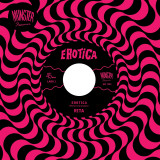
RITA / AGUATURBIA - EROTICA

Rita/Aguaturbia

EROTICA

7"-VinylMR7389
MUNSTER
28.03.2025
  • Erotic (Rita)
  • Erotica (Aguaturbia)

Two killer tracks of erotic psychedelia with a jazzy twist and touches of acid rock by the French cabaret star Rita and Chilean rock pioneers Aguaturbia. A perfect soundtrack to an imaginary sexploitation film, half-way between the classic sound of library records and a progressive and hypnotic musical journey driven by fuzzy guitars. French actress, model, dancer and singer Rita Cadillac, local star at well-known Parisian cabarets like Crazy Horse or Folies Bergère, recorded several 45s in the 1960s. In 1969, and most likely following the success of the Welsh band Man (from whom they "took inspiration" when recorded this 'Erotica'), released this song that could have easily worked as the perfect soundtrack for a sexploitation movie. Rita's sensual voice is wrapped in a piece of background music that could have been taken from a classic library record from the KPM, Chappell or Montparnasse 2000 catalogues. Hammond-driven prog jazzy passages, subtle fuzzy guitar solos and a contagious bassline all delivered by some anonymous studio band accompanied by Rita's provocative whispers and moans. This 7"-only rarity has been compiled many times over the years, but we thought it would be nice to have it reissued in its original format. What better than another song in a similar vein and identical title, 'Erotica' by Chilean rock pioneers Aguaturbia, to complete this single? Denise's alluring vocals dance harmoniously with Carlos' electrifying guitar loaded with fuzz and wah wah effects, building up a progressive and hypnotic musical journey. This song was included in their much sought-after debut LP and we present it here again as the perfect accompaniment to the sensual Rita.

pre-ordina ora28.03.2025

dovrebbe essere pubblicato su 28.03.2025

12,82
Gyedu-Blay Ambolley - Simigwa

Gyedu-Blay Ambolley

Simigwa

12inchSTRUTLP472
STRUT
21.03.2025
  • A1: Kwaakwaa
  • A2: Akoko Ba
  • A3: This Hustling World
  • B1: Toffie
  • B2: Adwoa
  • B3: Fa No Dem Ara

Strut Records is proud to announce a new official reissue of Simigwa by Gyedu-Blay Ambolley, launching a series of releases on Strut celebrating the legendary Ghanaian label Essiebons.

Essiebons, founded by Ghanaian music producer Dick Essilfie-Bondzie in 1959, is one of Ghana's most important independent labels featuring prominent artists such as Gyedu-Blay Ambolley, C.K. Mann, and Ebo Taylor. Ambolley’s Simigwa is a groundbreaking album, recognised as a Ghanaian classic and boasting one of the most iconic covers of the 1970s. Originally released in 1975, the album introduced Ambolley's unique "Simigwa" style, which combined highlife with funk and soul, influencing the evolution of a new generation of Ghanaian artists.

This new Strut LP reissue features an exclusive interview with Ambolley himself, offering fresh insights into the creation of this classic album.

Gyedu-Blay Ambolley’s innovative fusion of highlife with influences from American soul and funk solidified his position as a key figure in Ghana’s vibrant 1970s music scene. His solo career followed work with iconic bands such as Houghas Extraordinaires, Meridians of Tema, Ghana Broadcasting Band and the Uhuru Dance Band. Inspired by the legendary James Brown, Simigwa delivers infectious rhythms, dynamic horn sections, bold vocal stabs, and mesmerising percussion breaks. An enduring classic for all fans of highlife and Afro-funk.

pre-ordina ora21.03.2025

dovrebbe essere pubblicato su 21.03.2025

23,32
Pharoahe Monch - PTSD (Post Traumatic Stress Disorder) LP 2x12"

Pharoahe Monch is one of the most revered and influential emcees in the history of hip-hop, and 2024 marks the 10th anniversary of his fourth studio album "PTSD: Post Traumatic Stress Disorder".

In PTSD, Pharoahe Monch continues the story he began telling in his previous LP, "W.A.R. (We Are Renegades)" from 2011. The Queens emcee narrates, in both literal and metaphoric ways, about the trials and tribulations of an independent artist who is at war with the music industry and the struggle of the black male experience in America.

In 2012, during an interview with Shawn Setaro, host of the podcast The Cipher, the rapper explained the connections between the two projects, beyond their titles. “The W.A.R. album was like, I’m going to battle against the machine, I’m doing this independently. I’m putting some things out that I learned and I’m going to expose about the music industry. PTSD is the result of me doing that, where I am emotionally now. It’s similar to how someone comes back from war and is stricken by re-adjusting to a regular situation.”

Monch told MTV Hive that PTSD is “more mental, emotional and personal” because it came out of the depths of a period of depression. He also gave the internal and external factors that helped him create the album. “I was working on the title track, which took me to a point in between Internal Affairs and Desire, where I was heavily depressed. Through the waiting period, the industry period, and going through a lot emotionally. Then there was the physical problem with asthma. It was the worst. So I started off with that title track and my manager was like, ‘Yo, let’s really dive into that state and how you got to where you are now, and how this follows what people go through to get back to a so-called ‘normal’ situation’.”

The concept album follows a veteran through combat experience, his return home, relationship dissolution, drug addiction, painful depression, and, finally, a triumphant but realistically rendered decision to keep living and struggling.

pre-ordina ora21.03.2025

dovrebbe essere pubblicato su 21.03.2025

34,24
7FO - Ryu no Nukegara

7Fo

Ryu no Nukegara

12inchEM1178LP2
Em Records
21.03.2025

7FO: pronounced "nana f o" in English, "nana" being seven.Ryuno Nukegara: "dragon's husk". These are the only difficulties you'llencounter here. This is warm, friendly, very relaxed music, very"understandable" and yet intriguing, sure to appeal to fans ofelectronic ambient, dub and chill-out music, as well as artists likeHaruomi Hosono, Captain Ganja, La Monte Young, Equiknoxx andTapes.The Osaka-based 7FO combines groovily sparseelectronic percussion with similarly sparse dub-feel synth bass, aswell as pentatonic synth and steel pan melodies, the latter with anintriguing Okinawa/Sunda/Malay feel. Sparkling dub-influencedprocessing and thoughtful mixing gives us a music which istrans-oceanic, warm, and enveloping. Following releases onRVNG, Bokeh Versions and Metron,Ryu no Nukegarais availableon digital, CD and 12" LP, featuring a suite of four tracks and the20-minute title track, whose titular dragon is Asian: a potentsymbol of water, strength and good luck.

pre-ordina ora21.03.2025

dovrebbe essere pubblicato su 21.03.2025

20,38
ATAHUALPA YUPANQUI - A Mi Me Gusta Que Suenen

"The Beatles spread the use of electric guitars all through the world, and Bolivia was no exception. “The British Invasion” hit a politically convulsed country, and it fell upon a rich multi-cultural scene that was further expanded when the psychedelic counterculture youth movements coming from San Francisco also took the hearts of the country’s youngsters.
It was a big mixture of influences thrown in a cauldron that saw a link between the LSD drenched hippie generation and the country’s native ancestors. Bolivians were not new to mind-expanding experiences, the acid experiences promoted in the USA by Ken Kesey and Timothy Leary found their local counterpart in the old indigenous traditions of using plants such as the ayahuasca to open their doors of perception.
On this compilation you will find some of the more interesting young bands from a 1960s Bolivia bringing the sounds of a new generation and marrying them with the rich musical background of the country. The garage-sounding psychedelic beat made by these young musicians would soon open new horizons, and Bolivia would soon see how traditional sounds, like their local version of the cumbia, would evolve in a similar way as it would do in the neighboring country of Perú."

pre-ordina ora21.03.2025

dovrebbe essere pubblicato su 21.03.2025

23,11
VARIOUS - The Ayahuasca Fuzz!: 14 Protocumbian Garage Rockers From 1960s Bolivia

"Héctor Roberto Chavera (1908-1992) under his stage name Atahualpa Yupanqui is the most important Argentinian folk singer-songwriter. His father was a mestizo of Quechua and Basque ascendant who worked for the railroad company. The family moved to Tucumán, in the Argentinian northwest when he was nine years old. There Héctor adopted the stage name of Atahualpa Yupanqui in tribute to two legendary Incan kings. His quechua nickname can also be read as “he who came from afar to tell stories”.
In his youth, he travelede through the northwest of the country studying the indigenous cultures. He would get into politics joining the Argentinian Comunist Party and in 1931 took part in the failed Kennedy Brothers uprising against José Félix Uriburu coup d’êtat. when the uprising was defeated he had to seek refuge in Uruguay until 1934.
In his poems set to music, Yupanqui depicts scenes of his country¡s live and landscapes and has a very present commitment to the working class in a similar way to that of other famed singer-songrwriters, with the name of Woody Guthrie coming first to mind.
This compilation collects some of the best songs of his extensive discography in their original recordings. Many of them have been covered internationally by artists such as Daniel Viglietti, Mercedes Sosa, Facundo Cabral, Victor Jara, Los Albas, Marie Lafôret or Joan Manuel Serrat, among others."

pre-ordina ora21.03.2025

dovrebbe essere pubblicato su 21.03.2025

23,11
Little Fritter - Dub Riddem

A regular of Australia’s thriving musical circuit, Kane Dignum aka Little Fritter makes his debut on Hot Creations with Dub Riddem. The EP continues an impressive 2020, that has seen the Gold Coast native’s standout productions land on the likes of Desert Hearts and etcetc already this year.

Those aforementioned features are present right from the offset, as Dub Riddem leads proceedings. A reverberating vocal keeps us hooked, before hard-hitting drums combine with a shimmering cow-bell lead to form a real dancefloor weapon. Puff Puff comes next, with prominent kicks giving way to a chuggy, up-and-down bassline, whilst lyrical samples echo in the background to create a choppy, groove-lead atmosphere. How Lucky Should We Feel? rounds things off in a similarly club-ready vein, merging resonant vocal cuts with punchy drum patterns and bringing shimmering hi-hats in tow.

Little Fritter has been a regular on the electronic music circuit for more than a decade. Having had his first release back in 2008, few artists have stayed as relevant and cutting-edge as the Gold Coast mainstay. Performances at Berlin’s Club De Visionaire and Barcelona’s Off-Sonar cemented his reputation as a respected prospect in the scene.

non in magazzino

Ordina ora e ordineremo l'articolo per te presso il nostro fornitore.

10,04

Last In: 13 months ago
Articoli per pagina:
N/ABPM
Vinyl