Twoonky, the brothers duo from Brescia (Italy) formed by Michele and Simone Bornati, is back on Macadam Mambo for a second album. After their brillantissimo ‘Dezzo’ from 2019, which was well noticed by the underground scene, the new opus ‘Ottico’ won’t leave you static. This is the kind of masterpiece that the more you listen, the more you love.
At the opposite of grandiloquent music that would have immediate effect, ‘Ottico’ is much more subtile, surfing on a cool wave of styles, a collage of vibes going from 70’s Kraut to 90’s Trip-Hop, where the analog sounds of guitars, synths, distorded voices, saxo, samples and electronics FX match so well, creating an ensemble in the unique mutant flow of the Twoonky’s that makes it so intemporal and so modern in the meanwile. It’s not about being curious, it’s about being open on crossing boundaries, like they are used to do with their unique place called Spettro in Brescia, where all the avant-garde of the electronic scene is coming to perform.
‘Ottico’ could be a kind of representation of the spirit of Spettro, and possibly one of the most interesting release of 2023. We don’t know why, but it’s true, Italians do it better
Search:simon li
Edition of 500 copies. Comes with download code and insert.
' Funkadelic touring the vast Caribbean coastline of Venezuela, together with Afrosound and Grupo Bota, with endless supplies of Aguardiente and other substances, in a “Back to the future” setting. ' ....?
Lola's Dice's debut album is the result of a radical musical transmutation, marked by the phenomenon of massive Venezuelan emigration. The songs contained in "Pura maldad" expose the current point of that process with amazing detail. Rhythms that were considered exclusively "traditional" and almost untouchable back home (Tamborera, Gaita) get twisted, stretched and pushed beyond any imaginary limit, while being combined with healthy doses of Disco, Funk, Electro, Techno and their Caribbean counterparts, Merengue, Salsa and Compass.
Having taken their first steps in the key of Funk-Rock, things first took a turn after the leader Javier Bohorquez met Venezuelan producer Alex Figueira (Fumaça Preta, Conjunto Papa Upa, etc) at a show and he handed him a business card. The tropical psychedelic sound Figueira was specialized on spoke immediately to Javier, as it did combine many of the crazy and groovy elements he loved from the most "out there" Funk (a la Funkadelic), with the countless Caribbean rhythms he had been exposed to, having grown up in Venezuela.
After the first EP "Viaje al centro del ritmo", where everything acquired a decisive tropical tone, a further eccentric exploration of the music of their homeland became inevitable. The subsequent single "Cacri 'e Playa / Sr Cartujo" clearly showed where things were moving towards.
“Pura Maldad” is a true tropical lysergic trip, and while you see vibrant colors and things move in very strange ways, the sun never seizes to shine. Despite its profoundly experimental character, the album proves very useful to anyone in need of getting a party started, maintained or fully blown up, depending at what point of the evening it’s played.
Artwork by Colombian artist Kevin Simón Mancera.
Produced by Alex Figueira at Heat Too Hot, Amsterdam.
Since Interstellar Space, John Coltrane's posthumously released duo album with Rashied Ali, the combination of sax and drums has received an aura of sublime spiritual ambition. It is where tireless truth seekers come together to aim for something transcendental. Something too big for words. Of course, a lot has happened in the meantime.
The available options - philosophically, stylistically, temperamentally - are endless. Musicians are aware of those historical turning points, yet they also try to add their own twists and interpretations. Some of them succeed. One of reed player Mattias De Craene's many projects - MDC III - is a project involving drums and saxophone. A striking difference: De Craene invited two drummers (Simon Segers, Lennert Jacobs), that have been active in the worlds of jazz, pop, free improvisation and experimental music. They are the ideal foil for De Craene's vision, which seems to exclude no opposites. While the use of a recorder, electronics and percussion steers the music beyond the classic acoustic limitations, the result becomes strikingly rich with contrasts. What is abstract and introspective the first moment can switch - gradually or abruptly - to moments of fierce ecstasy the next.
The music feels free (free from limitations, free to choose its own logic), but also invites. Shifting moods and textures are combined with intricate rhythmical patterns, as the drummers lock together in dense, complex and/or ritualistic grooves. A minimal pulse, accompanied by murmuring hisses of brushes and a serenading sax is contrasted with moments of exuberance. The result is many things at once, but despite these wildly varying colors, sounds, textures, rhythms and moods, they are all linked, part of a generous, iridescent whole.
The trance-inducing trio MDCIII is back. And that equals yet another delicious load of modular drums, wildly processed saxophone sounds, improvisation & pulsating grooves.
After their first EP, MDCIII ft. Sylvie Kreusch, and their subsequent first (internationally) acclaimed album 'Dreamhatcher', the 'double drums' saxophone trio with Mattias De Craene, Simon Segers & Lennert Jacobs is all set to show what angle rock 'n roll can really come from. On their new album 'Drawn In Dusk' (release: end of September via W.E.R.F records) the trio delivers a whole new palette of sounds that are just as mystical, energetic and wild as 'Dreamhatcher'.
Italian DJ and producer Francis De Simone debuts on Lee Foss and Jamie Jones' label Hot Creations with London Bass. Having built a solid back catalogue in recent years, his first Hot Creations release embodies the dynamic sound of the Palermo-born artist, channelling chunky tech house and disco-flavoured melodies.
De Simone explains his creative thinking behind the EP. "These tracks fully express my devotion to music. I ranged a lot, trying to remember an 80's sound up to a more raw and synthetic groove with Latin vocals to embrace the different ethnic groups." Reflecting his thoughts to a tee, the title track rumbles with a massive bassline and chopped-up vocals that add an instant burst of energy. Things get weird on Saludos A Todos, as thumping kickdrums collide with a trippy melody and even trippier vocals, creating a wavey atmosphere. The ideal club curveball. On Off White, De Simone delivers a pacey number packed with burbling beats and clicky percussion, complemented by dreamy vocals. The hint is in the name on closing track, This Is Undergound. A big room delight, De Simone drops a stripped-back banger, where the lyrics do the talking in tandem with a driving bassline. An excellent addition to the Hot Creations discography.
Based in Palermo, Italy, Francis De Simone stems from a family of musicians. Having played the drums from age two, the versatile artist can make anything from rock, pop and jazz, but these days, De Simone pens electronic music. His father worked as a bouncer for various local discos and exposed De Simone to dance music from a young age, later inspiring him to produce house and techno with an uplifting tint. Releases on Glasgow Underground, LW Recordings and REALM Records have helped shape the profile of this flourishing artist, with plenty more to come further down the line.
recut und repressed !
VINYL ONLY !
No Rush second release is a split EP that includes Arapu and Simone Adinolfi, each of them expressing a personal feeling about the antithesis of time, seen like infinite as much as just a moment.
While Arapu is showing elegance in Morning Clue with its deep and airy melodies and a more decisive and funky touch in End Of That using his special bassline blended with outstanding scratchy sounds, Simone Adinolfi gives a more melodic and warm imprint in Levantyne, where hypnotic pads are permeated by dreamy piano chords, and then gets more gloomy and raw in Relapse, showing his introspective side.
In October 1974, the first number of “L'Indépendant du Jazz”, a small self-produced magazine DIY -before punk supposedly invented the concept- was launched by Jef Gilson, Gérard Terronès, Jean-Jacques Pussiau and a few other specialists of a different kind of jazz in France, it looked at the already long career of Jef Gilson and in detail at the album with saxophonist Philippe Maté:
“The ‘Workshop’ is, with Philippe Maté (alto-sax), an undeniable success. Maté is genuinely ‘the’ most inventive French saxophonist since Michel Portal burst onto the jazz scene (who has also worked with Jef Gilson on both “Enfin” and “Gaveau”).”
Even though the author of the article is a mysterious I.H. Dubiniou, and it is difficult to know if it is a real person or a pseudonym used by one of the merry bunch, it is also tempting to hear it as what Jef Gilson really thought about his new discovery. Even more so as the two men would work together over a long period, as Maté became one of the key figures of Gilson’s Europamerica orchestra up until the 1980s.
Philippe Maté had started to make a name for himself with the Acting Trio when they released an album on the BYG label in 1969, and he was also one of the regular sidemen for the Saravah studios (he can notably be heard on albums by Higelin, Fontaine or his cult duo album with Daniel Vallancien).
The album was recorded on 4 February 1972, at the Foyer de Montorgueuil, where Gilson had set up his studio, with more or less the same team found on “La Marche Dans Le Désert” by Sahib Shihab + Gilson Unit (recorded ten days later). This was drummer Jean-Claude Pourtier and pianist Pierre Moret (regular Gilson accomplices since “Le Massacre Du Printemps”), alongside Maurice Bouhana and Bruno Di Gioa on various percussions and/or wind instruments. On bass is Didier Levallet, of the now mythical Perception, (Jean-François Catoire would replace him with Shihab) and Philippe Maté who took top billing, rather than the American saxophonist afterwards. The two albums are however quite different. This “Workshop” is more abrasive, more free. Made up of two long improvisations each of over 22mn, “L'Œil” on side A and “Vision” on side B (Gilson specialists would recognise the nod to one of his albums from the 60s), the album plunges you into the depths, attempting to drown you in electronic waves, dragging you back to the surface by the collar, giving you a good shakedown, before showing you the light, leaving you breathless on the shore after 46mn of the most intense music French has to offer. “An undeniable success”, they said. (by Jérôme "Kalcha" Simonneau)
Angelo Sindaco is the producer’name behind the self-titled project, Sindaco, active since the mid-80s in the experimental and industrial electronic music’ circuit up to the most innovative house music now lands
on Simona Faraone’s label, New Interplanetary Melodies with his latest work, Spiritual Safari (NIM010).
For this release, Sindaco took the help of some of his longtime collaborators and friends such as DJ and producer Andrea Salomoni, here with his aka Abyssy, Brazilian Kraut-classic singer Marcela Dias and musician Nico Pasquini aka Stromboli.
Spiritual Safari was born from a particular sci-fi vision of Africa as the last border of post-post-modernism, in which, Sindaco’s artsy approach combined with Abyssy’s more exquisitely Detroit feel blend to perfection giving birth to tracks with a more ecstatic flavor such as Absenthium (1) and Gommaflex feat. Stromboli (3) or more sinuous and deep like Bem bem bem (2), graced by the sweet voice of Marcela Dias or Monolite (4) feat. Abyssy that transports us to a Techno dimension of rare elegance.
With Atlantic Road (5) the mood becomes more rarefied despite of the pushing rhythm, while in Son (6 feat. Abyssy) field recordings and synths turns more airy and shimmering bringing to mind some typical early 90s house productions. In Amazonas (7 feat. Marcela Dias) sounds comes from idm matrix while The Cave (8 feat Abyssy), the track that closes this beautiful record, you are enveloped by a soft tropical cloud thanks to its wrapping bass line and foggy synths that will conquer the most demanding users as by now a tradition for all the records curated by New Interplanetary Melodies.
Spiritual Safari was written and recorded between Bologna and Rio de Janeiro during 2022.
Falling by the Wayside – A Motown flavored uplifting, unmissable and irresistible new single.
Singer Paul Mac Innes and producer Mattias Axelsson share a great love for the timeless Motown sound that led them to write "Falling by the Wayside" sometime before the pandemic. The song was put on hold. But at a live performance, they chose to perform the song and then understood that the time had come to record this track for real. They booked the new studio Skeppet in Gothenburg and brought along some of the city's best musicians.
Support and rotation on Swedish National Radio P3 and P4 (Swedish equivalent to BBC)
“Tune of year for me. I played it on my weekly section of Lost and Found on WMBR in Boston in August and on the September Metropolitan Soul Show and I’m so pleased this is coming on vinyl!”
Simon White — Metropolitan Soul Show
“And there’s no stopping. Much to our delight, Paul has released a bonus B-side Instrument version! Now there are tears in my eyes!”
— Scandinavian soul
“…The sound is timeless, conceived sometime in Detroit - the implementation extremely competent and in all departments with the ability to give the joy of Motown a few more rounds….”
— Sonic Soul Reviews…
The moons of Saturn are the inspiration for this brooding, often soaring and searching odyssey of dark electronica.
The second largest planet in the solar system after Jupiter, and the sixth planet from the sun, Saturn is orbited by 53 confirmed moons, with another 29 that are unnamed and still being studied.
Saturnian is a suite of thirteen choral tracks taking their names from some of Saturn's known moons; Dione, Daphnis, Phoebe, Prometheus, Rhea, Janus, Titan, Enceladus, Tethys, Telesto, Mimas, Hyperion and Iapetus, all named after figures from Greek and Roman mythology, each loaded with their own turbulent back stories. It is the debut release by Holmes + atten Ash, written, recorded and produced remotely in Edinburgh and Bristol by the duo Simon Holmes and Paul Nash.
Their project began during the 2020 lockdown. For Simon, time was spent exploring the Pentland Hills south of Edinburgh. For Paul, the Mendip Hills, south of Bristol. Both would experience the darker side of our human impact on the environment. Simon observed the wilderness as a wasteland, finding discarded, rusting metal littering the Pentland Hills while Paul witnessed the decimation of the ancient woodland of the Mendips' King's Wood due to the destructive tree fungus ash dieback.
These field trips fuelled a desire to navigate not just the landscape, but the duo's emotional place within it. Their collaboration led to a concept album that explores the outer reaches of the solar system, while simultaneously grounding them in a specific place. Looking inwards as much as outwards, theycreated soundscapes based on deeply imagined and felt connections to their surroundings.
After Simon had created a choral piece to accompany Luke Jerram's enormous, world touring artwork Museum of the Moon, Saturnian was a natural progression. When Simon was sent an initial score for the ethereal track Enceladus, composed by Paul in Bristol, he added choral arrangements recorded in Edinburgh. Their shimmering, tense opus continued to evolve from there. Just as the discarded bed springs and abandoned car parts that Simon stumbled upon in the Pentland Hills seemed to him at once "horrible but also oddly beautiful", Saturnian melds together melancholy and levity, fusing moments of dark angst with a celestial calm.
Opening with the glistening, hopeful brightness of Dione, increasingly urgent rhythms give way to digital, otherworldly calls from what might be rainforest creatures chirping into life with robotic squawks and delicate keyboard lines on Phoebe, followed by slowed down, monastic song on Rhea. Tethys is a hypnotic blur of synthesiser and soft chanting, while Rhea is a mysterious, echoing chasm, lifted by melodic, gentle male vocals. Janus has a glowing, effervescent energy, swiftly followed by a sense of tension on Titan, which throbs with driving percussive unease.
The album artwork is a pencil drawing created by Edinburgh artist Simon Kirby. It was made by a robot drawing machine, using custom algorithms that bring to life recordings of the sound of magnetic waves near Saturn's icy moon, Enceladus. The lines in the centre of the drawing are distorted by sound captured by the Cassini spacecraft which studied Saturn for over a decade.
Much like Saturn and its frozen, rocky moons, this debut album from Holmes + atten Ash is mysterious and beguiling, with a hint of foreboding in the depths of its powerful beauty and epic scale.
Swell Maps / Television Personalities affiliated C86-era indie pop rescued from sheer obscurity and thrust into semi-obscurity by FELT. The Catburgers were a short-lived Scottish group, this recording initially primed for release on Dan Treacy’s Dreamworld imprint yet placed on the perennial backburner as so many creative projects inevitably are.
Soundcloud uploads dating back over a decade ago and the odd blog/twitter post aside, the group seemingly lived on only in the memories of those who happened to catch them on the Edinburgh scene back in the day. Until now! With the help of the National Sound Archives, the original master tape containing these three tracks has been rebaked, cut and mastered for seven-inch.
‘Holiday House’ sounds immediately at home in the Postcard Records nexus, the influence of 1980 particularly tangible. Slower paced and with a touch more melancholy than its companions, the song sounds both in and out of time, as if some young teens raised on a hand-me-down diet of Pastels CDs might have laid it down yesterday.
Jowe Head of Swell Maps joins the group for ‘The Acid Tree’, whilst EP closer ‘Diving For The Brick’ sees the band ruminating on weak knees, sore lungs and stinging eyes down at the local swimming pool.
Accompanying the release is the original demo tape predating this record, recorded at The Rocking Horse Studios in Bathgate in Autumn 1986. The demo is restored from a tape copy owned by journalist Simon Reynolds and contains some of the tracks that made it onto the 7".
Some records just stop you in your tracks. They resonate with you and feel instantly familiar like an old friend, even on the first listen. SOYUZ's third album ‘Force of the Wind’ is one of those records. It holds all the trademarks, beauty, and eccentricities of classic Brazilian recordings, from the 60s and 70s, that we have come to love. Think artists such as Milton Nascimento, Lô Borges, Burnier e Cartier, Arthur Verocai et al. But this record wasn’t made in Brazil and is in fact a brand-new release.
SOYUZ (which translates as 'union') is a creative collective from Minsk, Belarus, led by composer, arranger, and singer, Alex Chumak, multi-instrumentalist, Mikita Arlou, and drummer, Anton Nemahai. SOYUZ's previous albums explored and reimagined the legacy of jazz-oriented, non-English-language pop music of the 20th century. For their third album, there is a stronger focus, and it is influenced by 70s Música popular Brasileira and building bridges from it to present-day Belarus. Alex notes that from the moment he first encountered Brazilian music, he found in it a kind of concentrated emotion that felt as if it were familiar to him from his childhood. This non-verbal emotion and connection between the listener and musician echoes in the music, regardless of understanding of the language the album is recorded in.
‘Force of the Wind’ includes songs sung in Russian and Portuguese as well as instrumental compositions. Its musical palette is both acoustic and electroacoustic: rich warm Rhodes piano, soaring string arrangements, and a controlled drum swagger sounding both relaxed yet super tight. Alongside Alex's sublime vocals, that grace the majority of the tracks, the album features guest performances by multi-talented musician and vocalist Kate NV and rising Brazilian star, Sessa. Alex also recently arranged a number of tracks on Sessa's highly praised 2022 album 'Estrela Acesa'.
On the album, the trio is joined by a cast of friends; NY-based musician of Turkish origin percussionist, Cem Mısırlıoğlu, classically trained composer, Simon Hanes, who aided with string arrangements and conducting the string players, Netherlands-based Brazilian multi-instrumentalist, Gabriel Milliet, on flutes. With the collaboration of these friends SOYUZ have created nine songs/suites that are subtle and plenitude and like the best albums, leave you aching for more.
‘Force of the Wind’ is an enigma, Brazilian yet not Brazilian, vintage yet still contemporary, out of sync with modern culture yet completely relevant and necessary.
It might seem tongue-in-cheek on the surface, but the fact that the title of Eldritch Priest's sprawling debut vinyl release, Omphaloskepsis, is the Greek translation for “navel-gazing” unlocks something essential to the Vancouver-based composer and writer's singular outlook.
Perhaps even more telling is the title of Priest's 2013 book Boring Formless Nonsense: Experimental Music and the Aesthetics of Failure (Bloomsbury), whose 300-odd pages read as though you've been dosed with potent hallucinogens. Throughout the text Priest addresses—celebrates, even—the titular elements via various musical examples, including that of his peers. What's so bewildering it is that his descriptions of how boredom, formlessness, and nonsense manifest are laced with the very tactics he's depicting. Passages tie themselves in knots, footnotes engulf the “primary text,” he even deliberately misleads the reader.
The restless stasis of Omphaloskepsis could be regarded as an extension of this book's wayward spirit. Things unfold fairly slowly and consistently but it'd be a stretch to describe it as properly contemplative. Like attempting to meditate with a high fever, any sense of tranquility is constantly derailed as one succumbs to queasy agitation. The piece's foundation is a seemingly endless guitar melody; an organic meander that neither seems to repeat or offer any concessions to narrative directionality. Priest unfurls this rambling cantus firmus in a rich, clean, jazz-like tone, but as it's played, it's repeatedly tangled with snarls of dense digital processing and shadowed by stumbling virtual “band.” These strident interjections blatantly contrast with the guitar, yet they aren't so violent as to offer more than a faint itch of distraction. As such, the distinctive amorphousness that this piece asks us to inhabit for its 54-minute duration leaves a strong impression, but also feels utterly intangible.
In addition to his recorded forays, Priest's disorienting music has also been performed by top-tier interpreters such as the Arditti Quartet, Quatuor Bozzini, Philip Thomas, Anton Lukoszevieze, and Continuum. While living in Toronto he co-founded the collective neither/nor with John Mark Sherlock, which featured a cross section of musician-composers playing each other's work including Eric Chenaux, Doug Tielli, Eric KM Clark, Heather Roche, and Rob Clutton. “Though the name refers specifically to a loosely knit group of composers and performers,” remark's the collective's website “neither/nor is also a sensibility that refuses art’s messianic pretensions and the gaping maw of commercialized society, opting instead for art’s right to be esoteric.” In 2021, when Eric Chenaux and Martin Arnold relaunched their neither/nor-adjacent Rat-drifting imprint, an album by Priest, Many Traceries, was among the first to be released. Perhaps unsurprisingly, Priest was a student at the University of Victoria, a school that's come to be known for fostering such staunch individualists as Arnold, Linda Catlin Smith, Allison Cameron, and Anna Höstman.
As a scholar, Priest writes from a 'pataphysical perspective and deals with topics such as sonic culture, experimental aesthetics and the philosophy of experience. Priest brings these interests to his job as an Associate Professor in the School for the Contemporary Arts at Simon Fraser University, interests that also inform his work as a member the experimental theory group The Occulture. In addition to Omphaloskepsis, his new book, Earworm and Event: Music, Daydreams and Other Imaginary Refrains,
One of the all-time classic UK Garage releases from the minds of two masters, Grant Nelson and Simon Firmin as 24hr Experience, gets a much-deserved official reissue remastered straight from the DAT tapes via Digital Tape Recordings.
Wall-to-wall anthems that capture of everything great about the hey days of UKG. Rough, tough, swung beats, bouncing basslines, dreamy pads and chopped up vocals, at a pace that sets dancefloors alight every time. You’d be hard pressed not to have heard the likes of ‘I Need A Man’ or ‘Together’ absolutely tear up the dance before, reloads and wheels left, right and centre. Timeless business that should be a part of every collection.
In contrast to their previous EP’s, ‘Xenolith’ ups the intensity focusing on rugged breakbeats and destructive low end pressure. Across four tracks the duo experiment at different tempos, unearthing a myriad of themes inspired by forensic analysis and autonomous technological forces. Like alloys mysteriously grown from ore, fragmented artifacts of familiar origin take on new meaning. ‘Xenolith’ is bound together by complex and dystopian atmospheres, forging perhaps Tracing Xircles most intriguing record so far. A1 Xenolith A2 Surface Level B1 Blindspot B2 Closed Circuit All tracks written & produced by Simon Pilkington & Luke Standing Mastered by Helmut Erler | Cut @ Dubplates & Mastering Berlin Artwork by Hayden Martin / Haxan Studio
After a little stop animae returns with its new limited edition series. Three tracks that reflect our style, a minimal and mental sound for a journey that leads to another dimension.
Played by: Cristi Cons, Priku and Arapu
Following the arrival of their debut album ‘Alterazione’, LF58 (F.Scorcucchi and G.Tillieci) are back on Astral Industries with a special trove of outer-space explorations. Recorded one evening back in April 2019 as a live performance at Rome’s Brancaleone, the eponymously titled album offers a sprawling journey across the pan-dimensional ether. Spread across six sides of vinyl, the performance includes fully improvised material as well as choice selections from Simone Giudice, Jonas Kopp, Nuel, Birds of Prey, Rapoon, Steve Roach and Adham Shaikh. There is no doubt that the unique energy and circumstances of the evening contribute to a certain atmosphere present in the music.
With seemingly no beginning nor end, the session emerges in suspension; an electric ocean of infinite deepness. Gleaming across the patter of galaxies on a wide black backdrop, its myriad vistas are projected like transitioning scenes of an unending story. The gentle tide brings with it specks of cosmic debris and mysterious signals. Soon, quiet drones are overtaken by ripples of solar flare and percussive clamours. Forms melt like liquid, a ball of amorphous plasma pulsating with ecstatic radiance. Prying open universe within universe, ‘Live at Brancaleone’ has a vastness that cannot really be contained.
The established favourite Nicolas Laugier AKA. The Reflex has been a crucial name in the fabric of electronic music, and is widely praised for his masterful production style which has gained the seal of approval of heritage artists such as Nile Rodgers, Giorgio Moroder, Nina Simon, Kid Creole, Kathy Sledge, Noel Gallagher, Bono and Paul Weller - morphing some of the world classics into contemporary; certified rave anthems. Loved by tastemakers alike including Rob Da Bank, Gilles Peterson, Craig Charles and Mistajam, The Reflex is responsible for unleashing some of the best remixes to date.
Returning off the back of his latest revision of Norman Doray and Darren Crook's 'Sweet Freedom', which has so far gained nearly 150 worldwide radio spins since it's release on 6th November, The Reflex now puts forward an incredible 2021 revision of two time Grammy award winner Nile Rogers' 'Do What You Wanna Do'. A modern disco anthem, the track has since been remixed by producers like MK, Eats Everything and Rob Da Bank. With an already established repertoire of essential remixes and re-edits, the London based producer combines his unique Disco and Soul blend with his acclaimed musical initiative to create what will be an intricate and exceptional upgrade, and a key selection of an already impressive arsenal of releases.
A percentage of the royalties from this release will be donated to Nile Rodgers' 'We Are Family Foundation' - who collaborate with forward thinking organisation who believe in youth and together, build creative programming and content, empowering young people to take humanity forward.
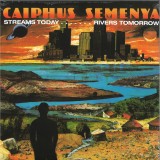
Caiphus Semenya, AKA Mr Letta Mbulu, is a South African legend and Streams Today… Rivers Tomorrow, his second solo LP, is perfect. A ten out-of ten album if ever we heard one. It’s also incredibly rare, especially in good condition, so Be With is delighted to present this reissue.
Now a revered composer, musician, and arranger, Caiphus left apartheid South Africa in the 60s for self-imposed exile in Southern California together with his wife, Letta Mbulu. Settling in Los Angeles he started working with the likes of Hugh Masekela and Miriam Makeba and other exiled and semi-exiled South african artists, as well as, of course, his wife Letta.
Caiphus also found himself working with and composing for a broad range of jazz and pop artists, including Lou Rawls, Nina Simone and Cannonball Adderley. His facility with both jazz and African forms served him well. His LA stay also the beginning of an ongoing collaboration with Quincy Jones, the fruits of which can be tasted in Caiphus’s African compositions for the scores to Roots and Spielberg’s adaptation of The Color Purple.
Originally released in 1984, Streams Today… Rivers Tomorrow is not just a musical masterpiece, it is also the soundtrack to the life of many South Africans - both then and now. Fusing the US-heavy sounds of boogie, disco and funk with Afrobeat and traditional African elements, it’s truly a spectacular listen. Jabu Nkosi handles keyboards on the album, with synths by Caiphus and Craig Harris. Sipho Gumede is on bass and Condry Ziqubu is on guitars.
The Afro-Cuban grooves of “Mamase” open the record. Continuing where Listen To The Wind left off, this is another horn-heavy call-and-response ode to a positive life. Life as an invitation to party, to take part, to “get involved”. But only if you’re willing to let in the transcendent power of music. “There’s gonna be a Mardi Gras, there’s gonna be a carnival; there’s gonna be a jamboree, there’s gonna be a bacchanal”. Who can resist that? Vibrations everywhere.
It’s followed by the joy of “Aida”. Gleeful, dayglow keys and synths *just* on the right side of mid-80s sleaze are accompanied by a killer bassline, slick, skipping drums and proud horns. Infectious funk.
The tempo is taken down a few notches for the powerful “Nomalanga” and the lamentations of a heartbroken man who must leave his wife Nomalanga and their children to join the fight against apartheid. It’s an emotional song, no question, but it doesn’t bring you down. The uplifting music and optimistic vocal delivery from Caiphus and his backing singers in the second half offer hope.
Breezy drums and contemplative keys act as a backdrop for the stunning backing vocal harmonies in the intro of “Moshanyana”. This gives way to stuttering beats, a bassline to die for and Caiphus giving it his all, over guitars, marimba and synth strings. Another slo-mo winner.
Side two opens with “Dial Your Number”, an uptempo English-language boogie-funk workout, complete with mid-song cutaway to a random telephone call. Whether or not this propels the song into “key track” status, we’ll let you decide.
What’s not up for debate is the brilliance of “Matswale”. This was a hit in South Africa in the mid-80s and you can still hear why. It might just be our favourite Caiphus hit. Wow. This is some damn fine breezy, beautiful, emotional pop. The restrained playing, the guitar licks and the gentle keys are out of this world. The beats? Thundering, direct and slick. The singing? It’ll give you goosebumps. As for the sentiment? This is Caiphus singing to his in-laws about their daughter’s adultery, begging them to intervene and help him save his marriage. Not your typical pop single story-telling!
The ferocious “Ndi-Kulindile” closes the set with a nod to the coming sound of the States. The hard-edged, electro-influenced drum patterns and bouncing, elastic bassline are something of a departure from the album’s predominant sound, yet one wonderful constant, Caiphus’s exceptional delivery and his sparring with his backing vocalists, is satisfyingly present and warmly deployed.
With Simon Francis handling the mastering of this Be With edition, you know it sounds as fantastic as ever. The stunning sleeve has been restored, with its painting of a dream-like cosmic vista, as a lone figure takes in a scene that’s part distant planet, part urban sprawl. One listen and you’ll be transported.
Caiphus Semenya, AKA Mr Letta Mbulu, is a South African legend and Streams Today… Rivers Tomorrow, his second solo LP, is perfect. A ten out-of ten album if ever we heard one. It’s also incredibly rare, especially in good condition, so Be With is delighted to present this reissue.
Originally released in 1984, Streams Today… Rivers Tomorrow is not just a musical masterpiece, it is also the soundtrack to the life of many South Africans - both then and now. Fusing the US-heavy sounds of boogie, disco and funk with Afrobeat and traditional African elements, it’s truly a spectacular listen. Jabu Nkosi handles keyboards on the album, with synths by Caiphus and Craig Harris. Sipho Gumede is on bass and Condry Ziqubu is on guitars.
One listen and you’ll be transported.