DJ and producer, co-founder of the legendary London club night Lost, Steve Bicknell returns to the fray with a brilliant new 12", 'Modes of Thought'. Comprising three full tracks and six locked grooves, the record represents the debut release on Bicknell's brand new label, 6dimensions. Art by Harumasa Kono.
Throughout his career, Steve Bicknell has retained a true groundedness, with everything he's stood behind being indelibly marked by a progressive and uncompromising attitude. Sticking firm to ideals and principles, he has remained connected to the roots of techno, eschewing the mainstream to follow an unswerving, singular vision, guided by a deep and enduring devotion to the music that inspires him and a desire to present it in the purest way possible.
Stepping out here with new material and a new venture, Bicknell's trademark raw, minimal aesthetics and conceptual underpinning have clearly been retained. He describes new release 'modes of thought' as being founded upon "the awareness of thought processes, understanding the connection between the heart and the brain through vibrations that are created via the blood-stream." Essential floor gear, 'modes of thought' introduces three tracks of taught, lean minimal techno before handing creativity over to the DJ with the inclusion of six locked groove loops.
Lean and precise, with a beautifully controlled pallette, wide dynamics and rich level of sonic detail, the record flies out of the blocks with the pumping 'harmonious balance', described by its creator as a "reflection on hatred and furthering an understanding of hate and how acceptance induces balance". Continuing to unpack the work, 'the moment I stopped' is described as "a realisation of the importance of self-preservation to balance yourself in order to take care of others close to you"; whilst on the flip, 'messenger molecules' depicts "the flow of blood and how it feeds the brain of feelings through coded information".
Cerca:singular
For its fifth release, Amsterdam's Taped Artifact offers up a various artists EP that features four tracks including one from the boss, Kevin Arnemann, as well as Hiver, Elmer and Physical Therapy. It is a moody and atmospheric deep techno offering that fits in with the label's ever more singular aesthetic. Up first is Physical Therapy, a producer who since 2012 has put out some fine EPs and LPs on labels like 1080p, Unknown to the Unknown and Liberation Technologies. It is a roomy affair with corrugated mid tempo drums down low and haunting pads up top. Building in intensity with some icy hi hats, it ends up as a ghoulish number that adds real theatre to the floor. Next up is Elmer, key part of Brussels' Bepotel Records crew. Melting techno, wave and dub into raw and expressive new forms, this new cut 'Simple Models' makes great use of analog machinery. Again deep and horizonless, a rippling lead synth line plays off an industrial bass riff as paddy drums roll on below. It's humid and heady stuff, to be sure. Then comes the boss who offers a more dubbed out and bumpy dubtechno track with expansive chords rolling off into the distance and light and airy hi hats dancing in the mid ground. It's one to get floors moving before the Hiver duo of Giuseppe Albrizio and Sergio Caio from labels like Curle and Vidab close things out with the dusty old breakbeats and woozy spaced out synths of 'Intersect.' This is a subtle but impactful EP full of sensitive underground sounds that pack a real punch. Vital Sales Points: - 5th release on Taped Artifact - First Various Artists compilation on Taped Artifact - Custom made artwork by photographer Merel Kemp - Artwork
Collapsing Horizons is the third full length album from Netherlands based deep ambient duo Tangent.
Limited clear with white splatter and blue with white vinyl. NON-RETURNABLE
This album much like the two preceding it—2013s "1mk2" (Mindtrick) and 2014s "Transience" (Tympanik)— is a sonic journey with arching atmospheres and themes. An aural representation of the formation of matter and it's disintegration in unison. The music, much as the album's namesake, could very well be the soundtrack to new universes being created on the ashes of collapsing ones.
Ralph van Reijendam and Robbert Kok who are the two behind Tangent moonlight in a long list of paradoxical musical projects. Fire Walk with Us, Rob Klerkx and the Secret, Disavowed, and Synesis Absorption are all quite different from Tangent's sprawling yet steady ambience.
This such daily musical juxtaposition allows Tangent the immersive focus on the ideas that make Tangent what it is. It would be a misnomer to think that with all the extra curricular time spent in more extreme forms of music that Tangent is a frenetic force. They are exactly the opposite. Dense pads, rolling beats and brilliant shimmers of resonance punctuate their electronic based instrumentals in just the correct manner to stargaze, day-dream, bliss-out, or even brood about starting over...
Black Truffle is pleased to present Speak To Me, the sixth full-length release from 3/4HadBeenEliminated, the Italian trio of Stefano Pilia, Claudio Rocchetti and Valerio Tricoli. Based on source material recorded in Bologna and Berlin over the course of several years, the album is made up of two side-long pieces meticulously constructed in post-production by Tricoli in his singularly dense and unpredictable style. Although their live performances have always been entirely improvised, in their recorded work the group focuses on using improvised recordings as source material for compositions built up through layering, editing and analogue manipulation, extending the practices of Teo Macero, Faust and This Heat. Melancholic instrumental ruminations sit alongside cracked electronics, concrete sounds and Tricoli's whispered vocals, drawn together into dense assemblages animated by gradual transformations and sudden jump cuts.
Beginning from the abstractions of their self-titled debut release in 2004, the group embarked on a trajectory that saw them move toward near-song structures, Tricoli's voice becoming a dominant element amid an increasingly dense and layered production style. On Speak To Me, however, the listener feels confronted by the ghost of music, sonic memories echoing across a psychedelic expanse. Evacuated of any clear structure, the music becomes a reverb-saturated morass, from which crystalline details momentarily emerge: shimmering echoed guitar, bowed double bass, tactile hand percussion, skittering electronics. Suffused with a darkly pensive atmosphere, Speak To Me is an elegant summation of the distinctive blend of electroacoustic techniques, instrumental improvisation and contemporary psychedelia pioneered by 3/4HadBeenEliminated over the last decade.
Matthew Dear's Audion project stands proudly at the intersection between art and hedonism, realised over a decade long dedication to powerful and relevant dance music. Growing out of the vibrant DIY Detroit underground, Audion and his contemporaries were free to feed off the energy reverberating from UK and European dancefloors, but singular in their desire to create their own sound and spirit. An Audion release is techno in it's purest sense - whether it's pushing the bombastic limits, spinning the dancefloor out of control or elegantly toying with just a few sonic elements. 'Alpha' is Audion's first artist album in 10 years and comes at the end of a period of fevered activity. The collective body of work standing as a marker in time and a defining moment in the life of the artist. Drowning out the noise of the outside world, 'Alpha' was a puzzle pieced together sonically in the shadows and wildly brought to life in a matter of weeks. The artwork for 'Alpha' has again been realised by Will Calcutt, Dear's long time collaborator, who has a visual plan for the music that matches the sonic vision, completing the final critical piece of the puzzle. Taken from the album, Gut Man Cometh and Destroyer get the remix treatment from UK producers Matthew Herbert and FOLD
- A1: All That Is You
- A2: Droplet
- A3: Holiday
- B1: Leave My Bones
- B2: Hide
- B3: Stray
- B4: You Don't Know S
Britsh quintet Me and My Friends are set to release their captvatng and mesmerising second album,
Hide Your Way, on Soundway Records this summer. A unique and singular blend, it's the sound of Eng-
lish folk colliding head-on with the golden-era music of 1970s West Africa and the West Indies.
Towering vocal harmonies, soaring cello and clarinet lines, colossal basslines and drum paterns
combine on an exquisite rollercoaster-ride of the emotons from euphoria to melancholia and back
again.
Bound by a mutual love of the sun-drenched vintage sounds of afrobeat, soukous, highlife and roots
reggae, the UK-based 5-piece re-invent these infuences around the instantly recognisable voice and
fnger-style guitar of songwriter and singer Nick Rasle. The band's sound involves a meetng of diverse
musical backgrounds: Fred Harper's gospel-infuenced drumming and James Grunwell's deep basslines
provide the bed for Sam Murray's growling clarinet tone and Emma Coleman's strident cello and faw-
less ear for vocal harmony.
Having enthralled festval audiences across the UK with their breathless live show, Hide Your Way sees
the band embarking on a deeper exploraton of the playfulness and rhythmic agility which has come
to defne their sound. A rich and varied pool of musical ideas sits alongside a plaintve lyricism, as the
songs tell tales of regret, corrupton, loss and deceit. The result is something fresh and original, mar-
rying the emotonal vocal power of folk music with early jazz and delta-blues singing and the driving
rhythms of West-Africa's golden era and the heart and soul of the great roots-reggae songwriters.
Figure SPC inevitably arrives at the alphabet's last letter and therefore the end of what has been a most prosperous runtime and success story. Already accountable for its first release 'A' seven years ago, Jeroen Search has proven essential to the sublabel's course with his many cornerstone contributions. This final, special extended release grants him the ample scope to tell the closing chapter in all proper detail. Spread across two fully packed 12s the Dutch veteran producer wastes no time but lets his ever evolving array of machines do the talking. They speak in many tones - be it snappy or propelling, vivid or restrained, stomping or intricate - yet they all retain Search's consistently singular voice. Each of the nine tracks was composed as a live take, with elements being reduced to the utmost minimum but always carrying the kinetic energy onto the next bar. Thus this ultimate catalogue number SPC Z not only bears witness to an artist's impressive ability to reliably distill the pure essence of a groove. It is also the grand conclusion to an esteemed series that has become a staple in many DJ's bags, brought forth plenty of future classics and left its unmistakable mark on techno. Crafty, refined and irresistibly moving, this record is sure to be stirring up dancers around the globe.
Late last year, the world was introduced to DJ Wey via 'Nosebleed,' a singularly jacking piece of house destruction on the Lovers Rock no. 6 compilation. Now the enigmatic producer returns to the LR fold with his debut EP 'Introduccion.' Across four tracks, Wey maps a wild, tripped out terrain, both sinister and fun: 'Anthem Para La Club,' recorded with J. Albert as Amigos DJs, bounces bitter tales of rejection against a twisting, unrelenting drum track. With Wey on the mic, jokes seethe and complaints dissolve into laughs, while the percolating drum pattern takes on a truly anthemic quality. Elsewhere, Wey indulges his dreamier side: 'Emily's' infectious, bouncing bassline and wandering leads are soaked in emotion, while 'Tare Gent Us' builds on the sickeningly-sweet tension of 'Nosebleed.' Finally, 'Llanganatis' closes out the EP with a moment of breathtaking introspection. Unfinished melodies flicker across aquatic pads, while a distant electro beat betrays the producer's Miami roots. Fresh, fun, out of control and yet surprisingly nuanced, Lovers Rock is proud to present DJ Wey's 'Introduccion.'
Robert Crash is an alias of Italian DJ and producer Fransesco Schito and now he makes a debut outing on Creme Organization with a tidy four track EP. In the past he has turned up on Dog In The Night Records, and with these cuts lays out his singular take on outlier house and techno. Up first is 'Gigolo', a spare and weird house cut with sine waves and random claps, hunched drums and trippy synth lines. It's a unique track made in a unique way and will lead to plenty of freaky dance floor moments, for sure. 'Co. Art' is a whacked out techno cut with slap-funk claps, blistering and blistered synth lines and a rugged bit of bass underlining it all. The track is cavernous and metallic, empty and distant as if it somehow survived a nuclear blast. On the flip, 'Alzheimer' is a slow and gurgling, swampy techno number with broken drums and crawling synths that sound like their batteries have run down. Icy, watery melodies eventually rain down, but the track remains resolutely eerie. Last of all, 'Fabric' is another decaying track with subtle, heavily filtered synths and drums all making for a minimal groove that is barely there. This is heavily deconstructed music that sounds like little else out there and may well be the start of a very fast rise through the ranks for Robert Crash.
OID is the solo project of Russian producer Andrei Antonets who is set to release his latest track 'Bright Side of Life' on PNN Records (13/07/2015) Born in Riga and having lived in Berlin, OID is now based in Moscow, where he is inspired by the city's rapidly changing scene. 'Bright Side of Life' translates a sense of potential, it is upbeat without being commercial. The track's singular sound has prompted The Field, Popnoname & J.P Janzen (Von Spar) and Mujuice all to produce remixes which will appear on the EP alongside the original. Each of these deliver a unique take on this uncommon yet catchy tune.
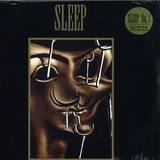
BACK IN STOCK NOW!! "Volume One is the debut album. It was the only album recorded with original guitarist Justin Marler, before he became an Orthodox monk. Volume One showcases a darker sound and stronger doom metal influence than Sleep's later work. The image featured on the cover is taken from the Salvador Dali painting "Soft Self-Portrait with Fried Bacon".
Their only album as a four piece of Al Cisneros, Matt Pike, Justin Marler and Chris Haikus
LP repressed for first time in many years.
allmusic
"For all their budding, precocious talent, Sleep's 1991 debut, Volume One, quickly betrays their still quite heavy debt to doom metal forefathers like Black Sabbath, Witchfinder, and Saint Vitus. Driven by Matt Pike and Justin Marler's lumbering mass of low-tuned guitar riffs, Al Cisneros' (still going as Luke here) serpentine bass and ragged screams, and drummer Chris Haikus' cyclopean kit pummeling, occasional highlights such as "The Suffering," "Nebuchadnezzar's Dream," and "The Wall of Yawn" prove less memorable than they are sensorially overwhelming. And yet, ironically, Sleep's rhythm guitars would never again be kept as under control, nor would their leads sound quite as refined as they do here (see the cleaner harmonies employed to good use on "Numb" and "Catatonic," for example). This was probably due to the onetime involvement of the significantly less stoned Marler, who would soon exchange the group for a monastery where he would study to become a monk. Fittingly enough, however, losing the versatility of a second guitarist was exactly what Sleep needed to focus their singular power into a crushing force, and the remaining trio would flourish immediately behind the sheer physicality of Pike's six-string style, as proven by 1993's superlative sophomore LP, Sleep's Holy Mountain."
Ruede Hagelstein and Watergate go hand in hand. Not only is Ruede one of the longest running residents at the club, but he's also the man behind some of the label's most acclaimed music and the curator responsible for lucky number 13 in the illustrious Watergate mix series. With this, it seemed obvious to put Ruede up to his next task: an album. It is with great anticipation and excitement that we bring you the first LP for both Ruede and Watergate Records, Apophenia. Apophenia is the experience of seeing patterns or connections in random or meaningless data, and for Ruede, this is the perfect interpretation to describe his writing process, in which ideas appear from the empty, chaotic darkness. A random chord progression or percussion arrangement opens the door to the imagination where structures appear and begin to take shape. Unlike most of his previous work, Apophenia is not strictly attached to the dance floor, but created to fit just as seamless while listening at home as it is in the club. For over a year, Ruede collected ideas and visualized his plan. It was important not to mimic his earlier work, but to focus on a certain sound. While staying minimalistic yet extremely organic and melodic he has created a timeless long player. While the LP spans a range of emotions, it is always grounded in Ruede's unparalleled, singular sound. Pair that with some notable features from artists like PillowTalk, Hollis P. Monroe & Overnite, Justin Evans and C.A.R. and you have a plethora of dazzling music.
Young Australian producer Campbell Irvine follows up his 2014 debut with his second release for Infrastructure, 'Reunion of Two Bodies'
The extended EP consists of two full sides of vinyl, plus a 50 minute continuous CD, entitled 'Terms Of Propaganda'. Following Irvine's initial discovery by label founder Function thanks to a chance meeting, the producer's relationship with Infrastructure has since blossomed. 'Reunion Of Two Bodies' marks a new chapter for the Berlin-based musician, his heavily weighted Modern World Music routed sound continues to grow, furthering him as an excitingly singular new talent
Since its 2005 debut, Torsten Profrock's T++ project has grown in stature and scope to the point where it's admired by fans of techno, dubstep, d'n'b and experimental electronics alike, and annexed by none. Anchored in the kind of scuffed, sub-heavy atmospherics Profrock developed in his 90s recordings for Chain Reaction, and naturally influenced by his work with Robert Henke as Monolake, the sound of T++ is singular, always evolving, difficult to fix.
Long ago snagged by the rhythmic innovations of the post-jungle underground, here Profrock makes explicit his debt to the radical fringe of UK garage. Snapping 2-step rhythms are at the heart of all four tracks; for all the distress, deconstruction and detournement they undergo at his hands, the spirit and swing of the British soundsystem tradition is unmistakable.
Further, Wireless is a kind of remix, a commission, shot through with the contorted samples of voice and ndingidi from a handful of old East African 78s (collected on the Honest Jon's compilation Something Is Wrong).
The result is a record that sounds at once ancient and modern, possessing a unique tonal language, and with it a curious, almost occult power — his most expressive, energetic and fully-realised work, affirming the enduring fundamentals of the T++ aesthetic even as it steers it into uncharted climes.
Uncto's seminal 2013 release Pain was an uncompromising exercise in rhythmical brutality amidst a conflux of themes of suffering, industry, man, and machine.
The record now sees itself reinterpreted and reimagined under the auspices of some of the scene's most eminent and accomplished forerunners in what is perhaps, as it arrives on an opulent red double-vinyl format, the label's most ambitious addition to its catalog to date.
Long-time trailblazers Exium first take on 'Dirty Minds' as they apply their unequalled peak-time treatment. While retaining the driving force of the original, the Spanish duo transmute its somber sense of narrative into a singular and infective pattern that unrelentingly maintains its intensity throughout. In contrast, Frenchman Mondkopf's reconstruction is a radical departure from its progenitor, almost as if the merciless titular oppressor ('Schinder') has been injected with an empathogenic truth serum and made to face the toll of his deeds. Serving as his final penance, the resultant insuppressible melodic radiance gushes to the fore as powerfully as his remorse and tears.
Continuing on the second record, Canadians Orphx draw upon the immense and unwieldy cyclicality of 'Judas Cradle' as they deconstruct the torture device into a prolonged yet unfaltering dirge. Harnessing the raw power of the original, they adroitly fuel and layer the modular solemn synths of the drawn-out nine minute epic. Finally, the unequivocal master of industrial cannonry, Ancient Methods (DE), takes on and reins in the unyielding beast of 'It,' leaving the monster not only tamed but fully subjugated to his will. Now capable of executing the most inscrutable order, itsees itself violently degenerated to the barest of elements and recombined anew, with the cadence of its frame shifted and staggered to the striding rhythm of a being more machine than flesh. Providing solace and closure are Uncto themselves, as they complement the compositions with two droning interludes.
Mastered by CGB at Berlin's Dubplates & Mastering, Pain Remixes will be available at fine vinyl retailers
This EP was made during a period where my whole outlook on everything was transforming. The Voidloss project started as an investigation, I was conducting a lot of research and study on the mind, the occult, on different thought modes, and the Voidloss project represented this. The idea was about a leap in to the void. A leap of abandonment into the dark, with total acceptance, total commitment. The idea was to lose myself to the void. This was mainly a spiritual journey for me, and could be best explained by 3 things, the void of Miyamoto Musashi from Go Rin No Sho, The concept of the Tao from the writings of Lao Tzu, and the concept of the abyss from the works of Aleister Crowley. Part of this journey deep inside the self was frightening and horrific, the total loss of self, of all identity and ego, and part of it was beautiful and enlightening. I wanted the music to reflect this, and I wanted the music to change as I changed, as I went to and through all these interesting places. In essence this was about freedom. So fast forward some years and I felt I had sharpened my mind quite effectively, the music had twisted and changed and flowed with me. At the point I began making the music for this EP, I had grown quite angry with the amount of conformity I was perceiving in life. Politically, socially, musically, there was this drive of conformity in the world. I think part of it, and only a part, comes from the prevalence of social media, the need to belong and to be liked, the idea of judging yourself and your works through the perception of others. Musically I felt that within techno there was a tendency for the music to fit within a set of confines dictated by fashion and hype, and this was reducing the diversity of the music, it seemed also that the practices of commercial music were seeping in to techno as the music became more popular. Hype and business driven decisions, brand building and so on. I always felt techno was more about art, and I began to get frustrated. Equally I felt that politically there was less and less choice, as all decisions seemed to lead to the same outcomes. I became more interested in the concept of anarchism, of the idea that government was no longer needed. I have always in my life had a drive to question everything. I've always been 'naughty' and rebellious and done things my way, to my advantage or my disadvantage, I could never accept being anything other than myself all the way. If everyone walks in one direction, I will walk the other way, even if it takes me over the edge of a precipice, just to see what is there. All this stuff influences my music, and during the period of making this EP I was angry, kicking against the things I no longer liked or wanted, screaming dissent. There is a lot of anger and rage, and of course rebellion. I wanted the music to capture that unbridled fury you have when you are in your late teens, when you just start learning about yourself and you start rebelling and questioning things around the time the world is really pushing you to conform. I was soundtracking my own philosophical riot. Previous to this my Voidloss stuff had been more introverted, more pensive and melancholy, more self destructive, more cerebral. For this new music I wanted something more immediate but without being too obvious. In terms of the choices I made I still leaned more towards broken rhythms for beat structure. I find it very difficult to do anything interesting with 4x4 kicks any more, it's too rigid for me, it limits my freedom. I like the looseness you get from more 'drummer' like beats, I guess probably because I have been playing drums all my life. The challenge is to get the same rolling power from broken rhythms as you get from 4 to the floor. It's not easy, there is a ridiculous amount of trial and error and the rejection percentage is high. I also was trying to use less 'synthy' sounds. I wanted to try to take a more acousmatic approach to sound design. With the current modular synth revival in techno I was hearing a lot of 'old' synth sounds re-emerging, and this didn't seem like a progression to me. I wanted to make sounds that were hard to source for the listener, where they weren't sure if it was synth or real world sample, digital or analogue. This involved a lot of experimentation. My process involved a lot of field recording, especially with contact microphones, which open up a whole new world of interesting sounds. You are effectively recording sounds through objects in the environment, 'hearing' the world as these objects hear them, I was using guitars, feedback loops, handmade instruments as well. So I was combining this with different synthesis, granular synthesis, sample synthesis, physical modelling, FM synthesis and of course analogue. Everything was reprocessed and re-synthesised, I tried hard to obscure the source and make something new as much as possible. The stuff on this EP was part of my live PA for some time, so as I learned how the music worked live I could go back and make changes, sometimes the environment I was playing in transformed the sound as well, and so I would try to go back an incorporate this in to the music. For remixes I wanted to choose artists that I respected for their vision as well as for their output, so my list of people I wanted was extremely short. Inigo Kennedy has always been an artist I have respected greatly. His music has always been unique to himself, he remains outside of fashions and trends even though his name has become very big recently. He takes risks with his work, experimenting and exploring, yet remaining relevant to the club, and just tirelessly forging ahead, seemingly for the sake of art above all else. And he's just a really nice guy to deal with. His remix is everything I expected it to be in that it is the unexpected. Regis is another artist who forges his own path in music, you cant really even begin to discuss the avantgarde in techno without including his name, he is one of the foundation stones for artistry and the outsider mentality in techno. His music is always unique to his own vision, and along with it comes an interesting artistic philosophy taking in situationism, post punk and industrial ideology and a good dose of tricksterism ala PT Barnum, all of which comes out in his music and the way it is presented. The man is a truly singular force and it is an honour to have him on this record. Overall the concept here is that of rebellion and dissent. Of asking questions, following your own path, of maintaining some place in yourself that burns like a forest fire.
Whether or not I have succeeded I guess is down to the listener, I'm never happy with my music, I keep wanting to move forwards, or somewhere else, and am constantly trying and failing to capture some essence of perfection. But like Bukowski said
'It's the only good fight there is'
There is something singularly unique and peculiar in the degree to which seemingly unsettling themes and extreme taboos have been explored, most notably in the medium of film, in the land of Nippon. Free from the constraints of reality, notions of grotesque brutality, torture, fetishism, and sadomasochism, to name a few, have oftentimes served as driving motifs in the examination of the true nature of violence latent in the most repressed reaches of the human mind. Concurrently, in the realm of electronic music, many Japanese producers have often been able to cultivate and harness a daring yet distinctly refined and inimitable form of organized sonic chaos, one almost instantly recognizable to the occidental ear. The music of Tomohiko Sagae, and in particular his latest contribution to Furanum's catalogue, The Spurt of Blood, is perhaps a quintessential example of the confluence of the former themes and latter medium.
At the outset of the record, the beholder is faced with the 'Vacant Eyes' of a staggering monstrosity, a subdued and subjugated automata in the midst of a bleak dystopia, nearly lifeless but for the grudgingly conceded advance of its death march. As a battery of gratuitous aural violence led by a dominant synth is rapidly unleashed in the subsequent composition, a growing malaise transforms into fractured bone and psyche alike, with no distinction made anymore between the tearing of metal, flesh, or the fabric of the mind. Culminating in 'Severe Pain', with limits of endurance breached and descent into madness the only seeming form of respite, relentlessly rolling drums and hauntingly sublime howls provide the context for the dawning realization of pain as a virtue in and of itself, when a demented pleasure and the exhilarative liberation that lies therein begins to emerge. In the final act, reinterpreted by Furanum stalwarts Uncto, roles are tellingly reversed as the vacant eyes of the victim become that of the oppressor. With cold-blooded precision, the original is reengineered into a force of merciless domination, its elements machined and recalibrated for pure power.Words: PSD
'Decadubs 5' is a vinyl-only double-pack companion to 'Hyperdub 10.4', the fourth and final CD in Hyperdub's series of collections throughout 2014 to mark the label's first decade in existence. Both 'Decadubs 5' and its full-length parental set explore the club spaces opened up by house, garage and techno, as viewed through Hyperdub's singular filters. Side 1 leads out with 'Lambeth', a long awaited previously unreleased track by Burial, with an unusually triumphant and - compared to recent extended montages - relatively direct 2step feel. This is followed by the low slung tech-garage of Kode9's 'Oh', while on the flip the whole of Side 2 is given over to the lush deep house of Cooly G's 'Love Again'. Side 3 opens with the fathoms-deep bubbling bass and synth washes of DVA's extremely psychedelic 'Monophonic Nightmare', then Dorian Concept turns in a quirky remix of Martyn's classic 'Mega Drive Generation', which originally appeared on Hyperdub's fifth anniversary compilation in 2009. Side 4 reveals another classic from the vaults in the shape of Cooly G's skeletal house cut 'Him Da Biz', and the EP comes to a close with energy levels turned up on Funkystepz's 'Vice Versa', a track much in demand since it first appeared on Kode9's 'Rinse 22' mix compilation from 2013.
E C2 | Martyn - Mega Drive Generation (Dorian Concept Remix)
The unsung hero of melodic techno prepares to step up to the Poker Flat plate for a second time, continuing the partnership that began with the epic 'Planet Funk EP' earlier this year. Vince Watson is a stalwart of the scene and truly in a league of his own: an unparalleled discography, a singular flair for arrangement, and a signature sound of lush layers and deep irresistible grooves. 'Rock It' is another complete chapter written in Watson's unique vocabulary. The EP's title track's swift pacing and bright multi chords-create a constant state of uplift and progression, movement and light. Subtle changes and hypnotic building loops drive this number towards a state of blissful contradiction: slow-burn euphoria. 'Sonar' contains all the scale, emotion and colour that the title may suggest; a prominent chord progression is sustained throughout, running through the track like a shot of neon, ensuring its future a peak time anthem. 'Feel It' is the yin to the yang of the previous tracks, easing into a looser, deeper tech house tempo, and unravelling tight melodic harmonies for breezy watercolour washes of pads.