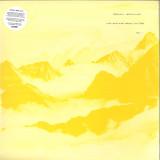
Exceptional recordings by this New age maestro. Only recently re-discovered by his friend JD emmanuel & the band Sun Araw. Originally released on cassette in 1983 and now for the first time vailable on 180g Vinyl. For fans of Joanna Brouk, JD Emmanuel and Pauline-Anna Strom.
Randall McClellan was a founding member of the electronic music studio at the Eastman School of Music in 1967 where he later received a Ph.D. in Composition, Theory and Musicology. A growing interest in North Indian music and vocal technique prompted him to develop his personal compositional practice into an active platform for inducing altered states of mind. He constructed his concerts to be spaces for harmonization of mind and body through a musical practice informed by his esoteric studies of ancient mystery schools and sacred geometry, believing these to be primarily teachings on intentional resonance.
These performances were given between 1977 and 1983 in semi-darkened spaces that allowed listeners to relax on carpeting while being enveloped by sound. Each improvisation lasts from twenty-five to forty-five minutes. An entire performance is up to three hours and is designed to provide an environment of meditative sound. They gained in popularity and were soon attended by larger audiences. His final live performance took place at New York City's Alternative Museum in October, 1983.
The “Music of Rana” Enviromental Series uses synthesizers, drone box, tamboura, voice and tape delay to create an environment of continuously evolving multi-layered melody. Described as subtle, graceful and of other worlds. The name RANA, meaning “Sunbreath”, has its origin in ancient philosophical concepts that recognized vibration as the fundamental creative force and central principle of the many esoteric mystery schools of the ancient world. It is now evident that the use of music for its ability to alter mind states and for its effectiveness as a therapeutic aid was music’s original purpose and an important concept of these mystery schools. In the broadest sense, the practice of music for its healing ability may well stand as our oldest continuous musical tradition.
This album is the first volume in the series, previously issued as a cassette in 1983, and part of the cassette box set published by Sun Ark in 2013. This music is based on principles outlined in Randall’s book, The Healing Forces of Music: History, Theory and Practice. These compositions are selected for their meditational and healing abilities. EQ settings of treble and bass levels determine the music's effect upon you. Please explore until the most comfortable settings are found.
FACT MAG: "These deeply meditative pieces are an expert take on how subtleties and concentrated listening go hand-in-hand. There is inherent beauty here, but it’s the deeper aspects that make the biggest impact."
Search:sir go
Tape
Pauline Oliveros and Guy Klucevsek's "Sounding / Way" was originally released on cassette in 1986 and has been out of print ever since. This LP was cut by John Golden and pressed at RTI in order to achieve a quiet, dynamic pressing.
The Sounding / Way concept was simple. Each artist would write a piece for two accordions and then they would perform them together. Thus, side A contains Guy Klucevsek's Tremolo No. 6 performed by Guy Klucevsek and Pauline Oliveros. Side B contains Pauline's composition The Tuning Meditation, also performed by both Pauline and Guy.
This is the second release in an on-going effort between Important Records and the Pauline Oliveros Trust to maintain and promote the music, philosophy and legacy of Pauline Oliveros.
Guy Klucevsek is one of the world’s most versatile and highly-respected accordionists. He has performed and/or recorded with Laurie Anderson, Bang On a Can, Brave Combo, Anthony Braxton, Anthony Coleman, Dave Douglas, Bill Frisell, Rahim al Haj, Robin Holcomb, Kepa Junkera, the Kronos Quartet, Natalie Merchant, Present Music, Relâche, Zeitgeist, and John Zorn.
Pauline Oliveros, composer, performer and humanitarian is an important pioneer in American Music. Acclaimed internationally, for four decades she has explored sound - forging new ground for herself and others.
Through improvisation, electronic music, ritual, teaching and meditation she has created a body of work with such breadth of vision that it profoundly effects those who experience it, and eludes many who try to write about it. Oliveros has been honored with awards, grants and concerts internationally. Whether performing at the John F. Kennedy Center in Washington D.C., in an underground cavern, or in the studios of West German Radio, Oliveros' commitment to interaction with the moment is unchanged. She can make the sound of a sweeping siren into another instrument of the ensemble.
"On some level, music, sound consciousness and religion are all one, and she would seem to be very close to that level." John Rockwell
"Through Pauline Oliveros and Deep Listening, I now know what harmony is. It's about the pleasure of making music." John Cage
The Toolroom Family is happy to announce the release of KC Lights' brand new single 'Cold Light' that lands as the highly anticipated follow up to his global hit 'Girl’ which, in spite of the global shutdowns of clubs and festivals last year went on to be the ‘stay at home’ summer anthem for 2020.
‘Girl’ dominated the airwaves with BBC Radio 1 daytime playlist inclusions, KISS FM, Capital Dance, Sirius XM in the US and specialist playlists all over the world. It has now amassed over 5m streams on Spotify alone and still going strong.
As we move further into 2021, timed right on the back of some of his most recent stellar remixes for James Hype, Topic, Blinkie, Lost Kings and Nightlapse, KC Lights returns to lift our bleak spirits with the aptly named ‘Cold Light’.
He has collaborated with UK singer, songwriter Leo Stannard, who is being hailed as one of the most talented and exciting songwriter / vocalists to emerge in recent years, which is quite impressive during these times of quarantines and lockdowns. Most recently, Leo featured on CamelPhat’s track ‘Blackbirds’ which is featured on the Camels album, ‘Dark Matter.” He may also be recognized for his work with Maverick Sabre, Tom Odell, Rae Morris, Lewis Mokler and many more.
‘Cold Light’ is signature KC Lights with a stripped back groove and tribal drums complimented by Leo’s sublime vocal which takes the track to a whole new level! It’s feels like another anthem in making from this emerging star and with a club mix and a 6am remix, it really is the perfect tune to take us into the promise of lighter and warmer months ahead.
Blue Vinyl
Park Hye Jin hat gestern ihr mit Spannung erwartetes Debütalbum, „Before I Die“, angekündigt, das am 10. September 2021 bei Ninja Tune erscheint. Das Album - komplett von der in Südkorea geborenen und nun in L.A. lebenden Produzentin, Rapperin, Sängerin und DJ geschrieben, produziert und performt - folgt auf die Veröffentlichung ihrer sehr erfolgreichen EP, „How Can I“ vom letzten Jahr, sowie auf eine Reihe von Kollaborationen mit Künstler*innen wie Clams Casino & Take A Daytrip („Y DON'T U“), Blood Orange („CALL ME“ Freestyle) und Nosaj Thing („CLOUDS“), sowie auf den Remix von Galcher Lustwerk für „Can You“.
Seit gestern Abend ist die Leadsingle und der Album-Opener, „Let’s Sing Let's Dance“ zu hören, ein wehmütiger Dance-Track, der Hye Jins mantraartigen Gesang über Klavierakkorde und wummernden Bässen platziert. Auf den anderen Tracks des Albums demonstriert sie eine deutlich erweiterte Klangpalette, in die sie eine Reihe von Einflüssen aus den Bereichen Elektronik, Hiphop und Downtempo einfließen lässt, um die bisher vollständigste Vision ihres Sounds zu präsentieren.
„Before I Die“ wird am 10. September 2021 auf Ninja Tune veröffentlicht, anschließend geht Hye Jin später in diesem Jahr auf Tour in Nordamerika, darunter eine Co-Headline-Show mit Shlohmo in New York, sowie Shows in Toronto, San Francisco, Miami und New Orleans.
Ihr Debütalbum folgt auf ein paar unglaubliche Jahre für die junge Künstlerin, in dem sie ihre gefeierte „How Can I“ EP auf Ninja Tune veröffentlichte. Eine Platte, die von Rolling Stone, Pitchfork („25 Most Anticipated Albums of the Summer“), FADER, i-D, Resident Advisor und vielen anderen hoch gelobt wurde und in zahlreichen „Best Of“-Listen 2020 von Billboard, The Guardian und anderen vertreten war. Auch in Deutschland fand die EP sensationellen Anklang, mit lobenden Artikeln und Beiträgen in u.a. Süddeutscher Zeitung, Rolling Stone Deutschland, im Missy Magazin, im Deutschlandfunk Kultur, im BR2, bei Radio Fritz oder im Musikexpress, die sie ebenfalls in ihre Liste der hoffnungsvollsten Newcomer*innen für 2021 aufnahmen.
Hye Jin wurde auch in die NME 100-Liste der „Essential emerging artists for 2021“ und in die „Generation V“-Serie des V Mag aufgenommen. Auch die britische GQ und Stereogum bezeichnen sie als „one to watch“. Die Lead-Single der EP, „Like This“, wurde auch im Soundtrack von FIFA 2021 verwendet und erhielt große Unterstützung von BBC Radio 1 und 6 Music, war #1 der „Top Electronic“ in den NACC-Charts (North American College and Community Radio) und in den „Top 200“ insgesamt, mit weiterer Unterstützung von KEXP, KCRW, SiriusXMU und mehr.
Composer and saxophonist Brian Brown produced some of the most refined Australian jazz recordings during the 1970s. A versatile musician whose distinct impressionist music melded modern jazz with the outer limits of free experimentation. Considered to be his greatest work was the 1975 concept album Carlton Streets, an ambitious recording that romanticised the sights, sounds and the nostalgia of this once-bohemian Melbourne neighbourhood. Differing from his eco-jazz composition Wildflowers heard on the recent Roundtable compilation Pyramid Pieces, Carlton Streets explores the polar opposite, offering jazz impressions of the urban environment. Comparable to other pioneering jazz-rock groups such as Ian Carr's Nucleus and mid-period Soft Machine, the album is a mosaic of ecstatic jazz-rock groove, spirited free improvisation and expanded experimental textures. A potent fusion that owes as much to Australian 20th-century avant-garde composers as it does to the influence of the electric jazz innovators, specifically early Weather Report and Herbie Hancock's Mwandishi. The Roundtable are pleased to showcase this important artist and offer a new edition of this landmark Australian jazz recording. Restored from the original master tapes and presented in a gatefold sleeve including liner notes and rare photos. Released for Record Store Day 2021.
Tape
Pauline Oliveros' Tara's Room has long been a favorite in the Imprec office and it's a great honor to be able to release it on LP for the very first time. Tara's Room was cut by John Golden and pressed at RTI in order to achieve a quiet, dynamic pressing. Originally released on cassette in 1987 following the 1986 release of "Sounding / Way" with Guy Klucevsek which is also available on LP via Imprec.
"Both pieces are intended to aid the listener in times of spiritual change, but are just fine for 'everyday' use as well. Highly recommended." Charles S. Russell, Ear Magazine
This LP features two long sides of infinite depth and sensitivity. Oliveros performs these pieces using a Just Intonation accordion and her Expanded Instrument System in order to bend both time and pitch.
Pauline Oliveros, composer, performer and humanitarian is an important pioneer in American Music. Acclaimed internationally, for four decades she has explored sound - forging new ground for herself and others. Through improvisation, electronic music, ritual, teaching and meditation she has created a body of work with such breadth of vision that it profoundly effects those who experience it, and eludes many who try to write about it. Oliveros has been honored with awards, grants and concerts internationally. Whether performing at the John F. Kennedy Center in Washington D.C., in an underground cavern, or in the studios of West German Radio, Oliveros' commitment to interaction with the moment is unchanged. She can make the sound of a sweeping siren into another instrument of the ensemble.
"On some level, music, sound consciousness and religion are all one, and she would seem to be very close to that level." John Rockwell
"Through Pauline Oliveros and Deep Listening, I now know what harmony is. It's about the pleasure of making music." John Cage
Midsommar is a folk horror film written and directed by Ari Aster. It follows a couple (played by Florence Pugh and Jack Reynor) and their friends who travel to Sweden for a festival that occurs only once every
90 years, only to find out that it’s part of a Scandinavian pagan cult. The film was released in 2019 to positive reviews. Music plays a key role in the film. The score was created by Bobby Krlic, a.k.a. the Haxan Cloak, who has also produced for Father John Misty, Goldfrapp, Troye Sivan, Björk and many more. Rather than creating a typical horror score, Krlic made beautiful and harmonious compositions that complement the film’s setting in rural Sweden, while still maintaining an unsettling sense of terror.
DE’WAYNE has one goal and that is simply to take
over the world.
Starting in Houston and moving to Los Angeles,
DE’WAYNE is an alternative artist who is just as
inspired by punk acts like The Stooges as he is
hip-hop artists like Andre 3000.
DE’WAYNE’s debut album, ‘STAINS’, covers
personal topics like sex, politics and his pride and
struggles growing up as a black man in the United
States.
Recently DE’WAYNE has received airplay on radio
stations such as Sirius XM Alt Nation, KROQ,
WRFF, WNYL and more, as well as being covered
by publications like MTV, Hot Topic, Alternative
Press and NME.
DE’WAYNE has also recently been featured on
singles by Waterparks, Anti-Flag, Point North,
Masego and more.
For fans of Waterparks, Yungblud, Grandson.
LP pressed on red vinyl.
A producer with 20 years of experience perfecting his craft, we’re excited to welcome Ramon Tapia to Drumcode for his debut EP.
The artist previously contributed a pair of cuts to the A-Sides series in recent years with ‘Sonic Therapy’ and Drum Control’, while also playing the Drumcode stage at Tomorrowland in 2019. Elsewhere he’s dropped heat on Truesoul, led by the crisp groover ‘Manipulate’. His ascension to Drumcode for his first full-fledged solo EP release is richly deserved.
As with so many during the past year, Tapia’s taken his studio work in colourful and interesting directions. ‘The Future of Mankind’ is a multi-faceted beast. The title track is a straight-up weapon, driven by an ascendent riff that’s energetic and hopeful in equal doses. ‘Song of Sirens’ sees ambient pads and rolling percussion combine for a quality cut every DJ needs. ‘Screwdriver’ does what it promises on the tin; guttural and textured, it’s a necessary transitional tool for every techno set. ‘Hold On’ is the kind of emotion charged dance music that’ll make us go collectively weak at the knees when raving returns. We’re already excited to hear it rinsed at Drumcode Festival in Malta this September, when Tapia joins the party.
"On August 13th, the first-ever vinyl reissue of UK top 5 album 12 Memories from Travis continues the reissue streak from the Scottish rock band. Cut at London’s Metropolis Studios & features all original packaging replication including photography by Anton Corbijn. As well as the standard black vinyl, a limited white vinyl edition will be available exclusively at Travis’ official store & Independent record shops.
None other than Sir Elton John raved that 12 Memories would “take you on a real journey… like The Beatles’ Revolver”. And, just like The Beatles in 1966, Travis were at a critical juncture when it came to recording their fourth album & the follow up to the multi-Platinum international breakthrough The Invisible Band. 12 Memories is the third vinyl reissue from Travis so far in 2021, it follows 2007’s The Boy With No Name vinyl re-release May 28th & the first ever vinyl reissue for debut album, Good Feeling released April 2nd via Craft Recordings. "
- A1: Billy F Gibbons -- (I've Got) Levitation
- A2: Mosshart Sexton -- Starry Eyes
- A3: Jeff Tweedy -- For You (I'd Do Anything)
- A4: Lynn Castle & Mark Lanegan -- Clear Night For Love
- A5: The Black Angels -- Don't Fall Down
- A6: Neko Case -- Be And Bring Me Home
- B1: Margo Price -- Red Temple Prayer (Two-Headed Dog)
- B2: Gary Clark, Jr. & Eve Monsees -- Roller Coaster
- B3: Ty Segall -- Night Of The Vampire
- B4: Lucinda Williams -- You're Gonna Miss Me
- B5: Chelsea Wolfe -- If You Have Ghosts
- B6: Brogan Bentley -- May The Circle Remain Unbroken
* Pressed on special RSD color wax.
* Includes bonus limited edition flexi of an ultra rare recording performed by Roky Erickson.
* Pressed at RTI.
Texan Roky Erickson was one of the true mind-blowing pioneers of psychedelic music. The original leader of the Austin-based 13th Floor Elevators formed in 1965, Erickson and band invented a brand new style or rock & roll, one that was slightly unhinged while it explored the consciousness-expanding influence of LSD on music. After three years, the group imploded with mental issues and legal challenges, ending with Erickson being incarcerated for several years in the Hospital for the Criminally Insane in Rusk, Texas. When he was released in the early '70s the musician continued on his own trail, recording songs that had come to him in his far-flung cerebral wanderings. Erickson, who passed away May 31, 2019, is now celebrated on this 12-track tribute to one of the most original rockers ever.
The participants range the whole world of modern music, and each chose one of Erickson's originals to stamp their own imprint on. They include Billy F Gibbons, Lucinda Williams, Mosshart Sexton (a/k/a Alison Mosshart & Charlie Sexton), Neko Case, Mark Lanegan & Lynn Castle, Jeff Tweedy, Margo Price, Gary Clark Jr & Eve Monsees, Ty Segal, Chelsea Wolfe, The Black Angels and Brogan Bentley. The album is co-produced for release by Bill Bentley, executive producer of the 1990 Roky Erickson tribute album Where The Pyramid Meets The Eye on Sire Records, and Matt Sullivan, co-founder/owner of Light in the Attic Records.
The songs range from Erickson's debut iconic original, "You're Gonna Miss Me," recorded when he was a member first in The Spades and then the 13th Floor Elevators during the early '60s in Austin, to some of Erickson's later songs, like "If You Have Ghosts," which heard him exploring some of the outer limits of the human psyche. Each new recording is a stunning modern take on the sound that Roky Erickson gave the world over a half-century of writing, recording and touring. No one has ever equaled those explorations.
This truly is the music of the spheres, as Erickson once sang about his sound, as seen through the eyes and ears of those who are united in their love and respect for a person who dedicated his life to rock & roll. Roky Erickson, through the trials and tribulations of a man both imbued with greatness and haunted by darkness, never quit in his quest to share with others what he heard and saw. As he sang on the 13th Floor Elevators last recording, "May the circle remain unbroken."
- A1: The House Song - Lee Hazlewood
- A2: If Only She Had Stayed - Chris Gantry
- 3: Endless Miles Of Highway - Jerry Reed
- A4: The Back Side Of Dallas - Jeannie C Riley
- A5: Way Before The Time Of Towns - Hoyt Axton
- A6: Strawberry Farms - Tom T Hall
- B1: Down From Dover - Dolly Parton
- B2: July 12, 1939 - Charlie Rich
- B3: What Am I Doing In L.a.? - Nat Stuckey
- B4: Mr Stanton Don’t Believe It - Rob Galbraith
- B5: Saunders’ Ferry Lane - Sammi Smith
- B6: Four Shades Of Love - Henson Cargill
- C1: Drivin’ Nails In The Wall – Waylon Jennings & The Kimberlys
- C2: Ruby, Don’t Take Your Love To Town – Kenny Rogers & The First Edition
- C3: Why Can’t I Come Home - Ed Bruce
- C4: Mr Walker, It’s All Over - Billie Jo Spears
- C5: Harlan County - Jim Ford
- C6: Widow Wimberly - Tony Joe White
- D1: Belinda (Alt Take) - Bobbie Gentry
- D2: Joanne - Michael Nesmith & The First National Band
- D3: Mr Jackson’s Got Nothing To Do - John Hartford
- D4: Alone - Lee Hazlewood & Suzi Jane Hokom
- D5: Fabulous Body And Smile – Sir Robert Charles Griggs
- D6: I Feel Like Going Home - Charlie Rich
• “Choctaw Ridge” explores a new country sound, one that emerged at the end of the 60s in the wake of Bobbie Gentry’s ‘Ode To Billie Joe’, a shock number one hit in 1967. When singers like Gentry, Jimmy Webb, Michael Nesmith and Lee Hazlewood moved from the south to Los Angeles to make it in the music business, they were not part of the Nashville in-crowd and they forged a new direction.
• ‘Ode To Billie Joe’ was the tip of the iceberg, and its success helped a bunch of singers and storytellers to emerge over the next three or four years. Some of the tracks on this collection bear that song’s stamp more clearly than others: Sammi Smith’s moody ‘Saunders’ Ferry Lane’ had a similar mystery lyric, and Henson Cargill’s ‘Four Shades Of Love’ is a portmanteau, with one (or possibly two) of the theoretically romantic situations ending in death.
• Suddenly, character sketches of southerners became a lot more rounded – women didn’t have to stay home, or take abuse at the office, and darkness wasn’t only found at the bottom of a bottle. Storytelling is the link between all of the songs on this collection. We have cautionary tales about what could happen to someone who heads for the bright lights and doesn’t make it, ending up in the grasping hands of ‘Mr Walker’ (Billie Joe Spears), or on the ‘Back Side Of Dallas’ (Jeannie C Reilly), or on a mortuary slab in the case of the songwriter with the ‘Fabulous Body And Smile’ (Robert Charles Griggs). And there are stories about wanting to go home – Nat Stuckey’s ‘What Am I Doing In LA?’ and Charlie Rich’s ‘Feel Like Going Home’ – and others from Ed Bruce and Lee Hazlewood, who know that their home isn’t home anymore.
• The tracklist and fulsome sleeve notes have been put together by Bob Stanley (Saint Etienne) and Martin Green (Smashing, The Sound Gallery), who have been collecting these records for decades.
• The voices are resonant and relatable, and the productions take in the best of what pop had to offer in the late 60s and early 70s. Before the factionalism between smooth pop-conscious Nashville and the hedonistic ‘outlaws’ made it look inward again, this was a golden era for an atmospheric, inclusive and progressive country music. It began on the third of June, another sleepy, dusty Delta day.
- A1: Peach Of Immortality
- A2: Umbrella Spinner
- A3: Dialogue Between A Grandmaster Of The Knights Hospitaller & A Genoese Sea-Captain
- A4: Vulning
- A5: Lathe Of Heaven
- A6: Sirin
- A5: Nowhere Much Narrower
- A6: Charioteers
- A7: Milk Street
- B1: Magic Mountain
- B2: Ophir
- B3: Paradigm & Places
- B4: Threadneedle
- B5: Ferae
- B6: Forest Of Materials
Black Truffle is pleased to present Sylva Sylvarum, an epic new work from Ora Clementi, the collaborative project of crys cole and James Rushford. Primarily conceived and recorded over several months together in Melbourne, Sylva Sylvarum is a stunning step forward from the mumbled, creaking sound world of the duo’s debut, Cover You Will Softer Me (Penultimate Press, 2014). From the opening ‘Peach of Immortality’, which takes an unpredictable journey from layers of chiming bells, vocal harmonies and lush synth pads to a desolate landscape of half-animal, half-digital wooshes and cries, it is immediately clear that cole and Rushford are working here with an entirely unique sound palette. Throughout the record’s four sides, we hear a large array of carefully detailed synthesizer sounds (many of them recorded at the remarkable Melbourne Electronic Sound Studio), sparse drum machine hits, wind instruments and field recordings of animals, often with a twistedly late 80s/early 90s flavour that at various points calls up New Age references, Robert Ashley’s later operas or the thinned-out textures of early digital GRM.
Threaded through this distinctive array of sounds are the two musicians’ voices, sometimes singing, sometimes speaking through varying degrees of manipulation. A guiding thread through the pair’s collaboration, beginning with their initial experiments with lip-readings, the presence of these two voices – cole’s crisp and sibilant, Rushford’s rich and low – reinforces the sense that the music is immersed in itself, less performed by two people than occurring between them. On Sylva Sylvarum, these voices first come to the forefront on the third piece, ‘Dialogue Between a Grandmaster of the Knights Hospitaller and a Genoese Sea Captain’, where in unison they intone fragments of a description of an imaginary space taken from a 17th century utopian text. The two voices resurface periodically thereafter, most stunningly in the unexpected turn into cushiony dream pop on ‘Magic Mountain’. At other points, the subtle manipulation of pitch and intonation in the close-miked vocal performances filters the recitations through a fog of abstraction that climaxes with the almost incomprehensible alternating syllables of the side-long closer ‘Forest of Materials’. Like the album’s title, these textual elements are drawn from various literary descriptions of utopias, a theme that also informed the pair’s musical approach. Far from anything dryly illustrative, utopia figures into Sylva Sylvarum as an invitation to inhabit otherworldly spaces that, like the empirical details that proliferate in these literary utopias, are grounded in mundane reality but shot through with the eldritch. Admirably framed by the abstracted digital topographies of Sabrina Ratté’s artwork, the uncanny sweep of the album’s fifteen pieces is expansive enough to take in stretches of crackling austerity, warped microtonal keyboard etudes and moments of stunning beauty, the latter most strikingly when cole and Rushford are joined by Callum G’Froerer on trumpet and Joe O’Connor on trombone for a series of dream-like moments moving from growling overtones to poignant lyricism.
Presented in a deluxe gatefold sleeve with stunning artwork by Sabrina Ratté and pressed on mint green vinyl. Mixed and mastered by Joe Talia at Good Mixture, Berlin.
Lloyd Altamont Thomas Robinson recorded many songs as a singer first for Studio One in 1963 and later for many labels and Jamaican producers including Duke Reid,
Lloyd Daley, Sir JJ and more. Robinson was part of the duo Lloyd and Devon, whom had quite a few good songs under their belt including a hit for Derrick Morgan's Hop label,
"Red Bum Ball.". With Glen Brown, under the name Lloyd & Glen, he wrote and recorded many outstanding Rocksteady & early Reggae tracks, some quite heavily influenced by
Black Soul including the two sublime tracks featured here. He went on to record the big dancehall hit “Cuss Cuss” in 1984 on the Harry J. label.
Glenmore Lloyd Brown, began his career as a vocalist in Sonny Bradshaw’s jazz group before recording duets with Hopeton Lewis, Dave Barker, and Lloyd Robinson.
Later, Brown became the founder and owner of the Reggae/Dub labels Pantomine and South East Music. A sought after producer he worked with many with many
Reggae greats including U Roy, Gregory Isaacs, Big Youth, I-Roy, Prince Jazzbo, Johnny Clarke, Lloyd Parks, and Little Roy.
The heavy rhythms of his Dub productions resulted in his being known as "The rhythm master".
As “Lloyd & Glen”, they composed, sang and recorded together about 15 tracks, ranging from Ska to Rocksteady to Soul on a variety of labels between 1966 and 1968.
Most of these songs are outstanding, many are just sublime with a strong American Soul influence.
- A1: I Burn Today
- A2: Old Black Dawning
- A3: Bluefinger
- A4: Horrible Day
- A5: Do What You Want (Gyaneshwar)
- A6: Velouria
- B1: Tight Black Rubber
- B2: Space Is Gonna Do Me Good
- B3: Headache
- B4: Angels Come To Comfort You
- B5: All My Ghosts
- B6: The Water
- B7: Wave Of Mutilation
- C1: Massif Central
- C2: I Heard Ramona Sing
- C3: Bullet
- C4: Test Pilot Blues
- C5: The Holiday Song
- C6: She Took All The Money
- C7: Dead Man's Curve
- C8: Brackish Boy
- D1: Sir Rockabye
- D2: Mr. Grieves
- D3: Your Mouth Into Mine
- D6: Nimrod's Son
- D7: Jumping Beans
- D8: Cactus
- D4: I'll Be Blue
- D5: Broken Face
Previously only available as an ultra-rare USB drive release, Demon Records presents the first reissue of ‘Live At
The Hotel Utah Saloon’.
Recorded in 2007, the album captures an intimate solo performance by Black Francis at San Francisco’s historic Hotel Utah Saloon venue. Featuring renditions of songs from across the Black Francis / Frank Black catalogue including ‘Headache’, ‘I Heard Ramona Sing’, ‘All My Ghosts’ and ‘Wave Of Mutilation.
This reissue features a brand new remix of the complete show by Jason Carter and is pressed on two 140g red vinyl.
- A1: Africa Is My Root - Osayomore Joseph And The Creative Seven
- A2: Ta Gha Hunsimwen - Akaba Man The Nigie Rokets
- A3: Popular Side - Akaba Man And The African Pride
- B1: Iranm Iran - Victor Uwaifo And His Titibitis
- B2: Sakpaide No 2 - Victor Uwaifo And His Titibitis
- B3: Ta Ghi Rare - Akaba Man The Nigie Rokets
- C1: My Name Is Money - Osayomore Joseph
- C2: Ogbov Omwan - Akaba Man The Nigie Rokets
- C3: Aibalegbe - Victor Uwaifo And His Titibitis
- D1: Who Know Man - Osayomore Joseph And The Ulele Power Sound
- D2: Obviemama - Victor Uwaifo And His Titibitis
- D3: Ororo No De Fade - Osayomore Joseph And The Ulele Power Sound
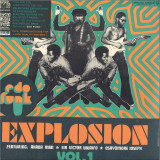
Analog Africa Presents Edo Funk Explosion Vol. 1, available on
2xLP/Gatefold LP with 20-page booklet / CD with 36-page booklet. It was
in Benin City, in the heart of Nigeria, that a new hybrid of intoxicating
highlife music known as Edo Funk was born.
It first emerged in the late 1970s when a group of musicians began to experiment with different ways of integrating elements from their native Edo culture
and fusing them with new sound effects coming from West Africa s night-clubs.
Unlike the rather polished 1980 s Nigerian disco productions coming out of the
international metropolis of Lagos Edo Funk was raw and reduced to its bare
minimum.
Someone was needed to channel this energy into a distinctive sound and Sir
Victor Uwaifo appeared like a mad professor with his Joromi studio. Uwaifo
took the skeletal structure of Edo music and relentless began fusing them with
synthesizers, electric guitars and 80 s effect racks which resulted in some of the
most outstanding Edo recordings ever made. An explosive spiced up brew with
an odd psychedelic note known as Edo Funk.
That’s the sound you’ll be discovering in the first volume of the Edo Funk Explosion series which focusses on the genre’s greatest originators; Osayomore
Joseph, Akaba Man, and Sir Victor Uwaifo: Osayomore Joseph was one of the
first musicians to bring the sound of the flute into the horn-dominated world
of highlife, and his skills as a performer made him a fixture on the Lagos scene.
When he returned to settle in Benin City in the mid 1970s - at the invitation of
the royal family - he devoted himself to the modernisation and electrification
of Edo music, using funk and Afro-beat as the building blocks for songs that
weren’t afraid to call out government corruption or confront the dark legacy of
Nigeria’s colonial past.
Akaba Man was the philosopher king of Edo funk. Less overtly political than Osayomore Joseph and less psychedelic than Victor Uwaifo, he found the perfect
medium for his message in the trance-like grooves of Edo funk. With pulsating
rhythms awash in cosmic synth-fields and lyrics that express a deep personal
vision, he found great success at the dawn of the 1980s as one of Benin City’s
most persuasive ambassadors of funky highlife.
Victor Uwaifo was already a star in Nigeria when he built the legendary Joromi
studios in his hometown of Benin City in 1978. Using his unique guitar style as
the mediating force between West-African highlife and the traditional rhythms
and melodies of Edo music, he had scored several hits in the early seventies,
but once he had his own sixteen-track facility he was able to pursue his obsession with the synesthetic possibilities of pure sound, adding squelchy synths,
swirling organs and studio effects to hypnotic basslines and raw grooves. Between his own records and his production for other musicians, he quickly established himself as the godfather of Edo funk.
What unites these diverse musicians is their ability to strip funk down to its
primal essence and use it as the foundation for their own excursions inward to
the heart of Edo culture and outward to the furthest limits of sonic alchemy.
The twelve tracks on Edo Funk Explosion Volume 1 pulse with raw inspiration,
mixing highlife horns, driving rhythms, day-glo keyboards and tripped-out guitars into a funk experience unlike any other.
fter a hiatus of over eight years Fuzzy Lights are making a welcome return. Burials is the follow-up to the critically acclaimed album Rule of Twelfths, and the fourth album from the Cambridge-based post-folk collective.
Their sound has been stripped back to its component parts, deconstructed and rebuilt under less obvious influences. There’s a bedrock of folk-rock - predecessors like Trees and Fairport Convention - but this is then built upon through multiple layers, from the stillness of Talk Talk to the orchestral chaos of Godspeed You! Black Emperor. With Burials Fuzzy Lights have cultivated these sounds and influences into something new and fresh that distances the album from the rest of the folk-rock crowd.
The most striking element of these songs is how intimate they are. Lyricist Rachel Watkins has revealed a lot about herself in these seven songs, which have been written from a very personal perspective. Raw experiences have been distilled into each piece, her translucent vocals often betraying the content of the songs themselves. The album is bookended with the most personal of these. Opener ‘The Maidens Call’ reveals her loss from suffering a miscarriage, whilst album closer, ‘The Gathering Storm’ frames the rallying cry of women’s rights around how individuals must work together now, and in future generations, to destroy prejudice. There is also engagement with humanity’s immediate surroundings and the environment. ‘Under The Waves’ deals with devastation of coral reefs, ocean resources and our natural world, and ‘The Graveyard Song’ imagines the perception of time from the juxtaposed views of a yew tree and a young woman.
As scenarios, paths, and outcomes shift around us, Burials’ amalgam of glowering, intense instrumentation, timeless, weightless melody, and exactingly revealing lyricism carves a very particular path through the world. This is music that tears us away from the everyday not just as a form of escapism, but as a means of self-reflection on hardship and the strategies we develop to overcome it. It is the band’s rawest yet most accomplished statement to date.
Polo & Pan's debut album Caravelle reached the heights of professional recognition by being certified platinum in the international market, gold in France, with three singles exceeding the threshold of gold certification outside of France, consecrating Polo & Pan as the new French Touch ambassadors. Now, our two explorers invite us with Cyclorama to a journey through time, along the steps of human existence. After a year of lockdown introspection, the duo decided to create music that weaves themselves into the backgrounds of our lives. From birth to death and transcendence, Cyclorama offers a colorful score to the "comedy of life" as Celentano sang, this existential theatre that is played-out by every human being.’’ Out everywhere on 6/25.
- A1: Apple Gabriel - In The Jungle (Tuff Gong Version)
- A2: Earl 16 & Mutabaruka - Back To The Roots / Ship A Come
- A3: Brinsley Forde & David Hinds - Chillin' (Tuff Gong Version)
- A4: Chezidek - Spiritual People
- A5: Spiritual Dub
- B1: Var - You Alone
- B2: Micah Shemaiah - Rubadub
- B3: Rubadub Dub
- B4: Ras Teo - Way Up
- B5: Way Up Version
The legendary soundman and record producer, Lloyd Coxsone, began his career in the 1960’s soon after arriving from Jamaica. He was one of the first soundmen to play at West End clubs where a generation of British pop stars like the Beatles and the Rolling Stones first heard music from Jamaica. Sir Coxsone sound then dominated the seventies, when Bob Marley & Dennis Brown were among his greatest allies, as heard on unforgettable dub-plates from that era.
He formed the Tribesman Label and issued King of the Dub Rock before recording the likes of Fredlocks, Willy Stepper & Jimmy Lindsay. King of the Dub Rock 1 & 2 are recognized as reggae classics. They not only feature Lloydie’s own productions but also riddims by Jamaican producer Gussie Clarke and heavyweight dubs by mix master Scientist. On King of the Dub Rock 3, Lloydie teams up with Jahsolid Rock Music, who’s albums with Brinsley Forde, Apple Gabriel and Earl 16 were regularly heard on Sir Coxsone playlists. This album features exclusive dub mixes and vocal tracks from these artists plus brand new tunes by Mutabaruka, Chezidek, Micah Shemaiah, Var & Ras Teo.
King of the Dub Rock 3 is an essential companion for all Coxsone fans wanting to complete the trilogy. It delivers such a high standard of musical quality that it promises to be a modern day classic!
Roy Montgomery, a pioneer of the NZ underground, believes there is
always new sonic terrain to investigate. His latest series of albums for
Grapefruit marks forty years of rigorous exploration in which he’s
managed to navigate disparate genres, scenes, and atmospheres, always
at the forefront of experimental independent music. To commemorate,
Grapefruit will be releasing four new Montgomery albums in 2021.
The first installment, Island Of Lost Souls, arrived to great acclaim
in January. The second and latest album, His Best Forgotten Work,
features Montgomery’s rare, brooding vocals across nine gorgeous
tracks recorded from his home in Christchurch, New Zealand.
His Best Forgotten Work follows the intense, all-instrumental Island
Of Lost Souls. It departs in spirit with darkly buoyant variations on
popular songs, including two highly anticipated covers of legendary
songs by The Carpenters (“Superstar”) and Tim Buckley (“Song To
The Siren”). Montgomery shows the listener that these influences
aren’t such strange bedfellows after all; one need only listen closely.
Where some might be inclined to relax and lean into their legacy
at this stage in a sprawling career, Montgomery’s new music
continues to seek and challenge. His compositions are beautiful as
well as disconcerting, and often speak to precarity and dread. His Best
Forgotten Work is a title with tongue planted firmly in cheek, alluding
to the artist’s position of enjoying a peculiar bit of fame in relative
obscurity. But listening to his dry wit and rich voice, one will find it
isn’t easily forgotten.