Caleb Landry Jones is a continual creator. The Texan-born star found fame as an actor - you’ll recognise him from key roles in X-Men: First Class, Three Billboards Outside Ebbing, Missouri, amongst others - but music is perhaps his first love, and his source of greatest comfort. A chance encounter with famed auteur Jim Jarmusch brought him into the orbit of Sacred Bones, and the stalwart independent released Caleb’s 2020 debut album The Mother Stone. Psychedelic in a defiantly non-retro way, this indulgent, freewheeling trip won critical acclaim, but masked a secret - he’d already finished another album.
Filming alongside Tom Hanks in dystopian themed Finch, Caleb found himself writing during those long evenings after the shoot in locations across New Mexico, idling away his hours by focusing on creativity. “I need it,” he says, “I’ve tried working without it. On one acting job, I intentionally didn’t bring a guitar to try and do it without music... but that didn’t last long. I need to create
something - it could be a drawing, it could be a song - because otherwise I feel like I’m wasting time. Which is something I do plenty of on my own!”
With his creative faculties burning, Caleb knew he had to get straight back into the studio when filming stopped. Linking with the same cast who formed The Mother Stone, he resumed his partnership with producer Nic Jodoin, based out of the elegant Valentine Recording Studio in Los Angeles. A studio steeped in history - everyone from Bing Crosby to Frank Zappa worked there - he interrupted mixing sessions for his own debut album in order to focus on something different.
Gadzooks Vol. 1 is unlike anything you’ve heard before - comparisons range from Skip Spence’s fractured masterpiece Oar through to skewed troubadour Robyn Hitchcock, via John Lennon’s black moods on The White Album and Frank Zappa’s caustic surrealism. Recording to tape, Caleb would hack away at each take, re-assembling the songs like Escher diagrams. “It’s like when you’re swimming in the pool,” he smiles, “and you’re doing a bit of butterfly, and then that gets old after a while. So then you start doing breaststroke, and then that gets old after a while. I think it’s just a reaction from the place where we were before.”
Part of a flood-tide of creativity - as its title suggests, a second half to this album is already on the horizon - Gadzooks Vol. 1 is thrilling, shocking, and wonderfully entertaining. Each song starts and finishes in entirely unique places, often totally divorced from each other. “I’m trying to write something very simple,” he says, “And it gets really abstract because I don’t know any other way.”
- Follow up to the critically acclaimed debut The Mother Stone
- Actor in Finch, Get Out, Twin Peaks, Three Billboards Outside Ebbing, Missouri
- Positive press for The Mother Stone ran in Pitchfork, Billboard, Entertainment Weekly, FLOOD, Newsweek, The AV Club, Document Journal, The New Yorker, The FADER, NPR and others
Buscar:ski mix
Moon Duo's debut album Mazes, recorded in San Francisco and mixed in Berlin during 2010 as the band prepared to move to the mountains of Colorado, explores a far broader, lighter, sound. That’s most clear on the dreamy organ and skipping riff of the title track, which recalls the Velvet Underground, or the handclaps and swinging organ bloops over the potent shredding and guttural riff delivered by Johnson in When You Cut. Throughout, Mazes is the sound of Moon Duo carving out their own identity, looking to the horizon, and moving forward.
Late 2011 saw the release of the darker, mostly instrumental Horror Tour EP around the band’s fall tour of Eastern Europe; Record Store Day 2012 brought a limited edition LP Mazes Remixed which featured remixes by the likes of Sonic Boom, Psychic Ills, and Purling Hiss. Now Moon Duo are set to release Circles, their second full-length LP with Souterrain Transmissions. The band will also set off on a worldwide tour in support of the album in October and November.
Formed in San Francisco in 2009 by Wooden Shijps guitarist Ripley Johnson and his partner, Sanae Yamada, Moon Duo’s first two critically acclaimed EPs, Killing Time (2009) and Escape (2010), fused the futuristic pylon hum and transistor reverb of Suicide or Silver Apples with the heat-haze fuzz of American rock ‘n’ roll to create tracks of blistering, 12-cylinder space rock. Now
their debut album Mazes, recorded in San Francisco and mixed in Berlin during 2010 as the band prepared to move to the mountains of Colorado, explores a far broader, lighter, sound.
That’s most clear on the dreamy organ and skipping riff of the title track, which recalls the Velvet Underground, or the handclaps and swinging organ bloops over the potent shredding and guttural riff delivered by Johnson in When You Cut. Throughout, Mazes is the sound of Moon Duo carving out their own identity, looking to the horizon, and moving forward.
- A1: Dubbing In The Front Yard
- A2: Judgement Dub
- A3: Gates Of Dub
- A4: Babylon Dub
- A5: Somewhere Dub
- B1: Carry On Dubwise
- B2: Crab In A Barrel Dub
- B3: Hold Them Dub
- 4: Lowdown Dub
- B5: Overdue Dub
- C1: Jumping Dub
- C2: Skilful Dub
- C3: Ethiopian Dub
- C4: Still In Love Dub
- C5: A Rootsy Dub
- D1: I Cant Go On Without Dub
- D2: A Steppin Dub
- D3: A Rocking Dub
- D4: A Mighty Dub
- D5: The Best Dub
Bunny Lee as producer. Prince Jammy as engineer. The Aggrovators making the tracks. A Holy Trinity of Jamaican Music. Throughout the years, recorded music has been shaped by some enduring partnerships between producer and engineer, such as Teo Macero and Fred Plautt for Miles Davis, Jerry Wexler and Tom Dowd for Atlantic Records, and George Martin and Geoff Emerick for the Beatles. But possibly none were as prolific as the collaboration between Bunny 'Striker' Lee and Prince Jammy at King Tubby's Studio between 1976 and 1982.
In 1977 and 1982 respectively, Conflict Dub and Dubbing In The Front Yard were released in London as white labels in extremely limited quantities. The two LPs found the triumvirate of Lee, Jammy and The Aggrovators on perfect form, with driving instrumentals, flashes of vocal beauty, and mixes that ripped apart and rebuilt traditional notions of sonic structure. Due to the nature of their limited release (not to mention the lack of artwork and even titles) the two dub LPs quickly disappeared into that mythic realm of records whispered about by only the most hard-core reggae collectors. This release is the first-ever reissue of these sought after LPs, and contains all the original songs in both vinyl form (double LP set with both albums on the original labels) and a lush double pack cd with 3 extra bonus tracks. The sleeve notes are by Diggory Kenrick with amazing photos by Howard Johnson, director of the influential Channel 4 documentary 'Deep Roots Music'.
The 3 CD bonus tracks are all remixes. Two from Paolo 'Dubfiles' Baldini for the Dubbing in the Front Yard set. One for Conflict Dub by Diggory Kenrick.
In 2018, Pressure Sounds celebrated its 100th album release since it's founding in 1995. In that time, the label has been responsible for unearthing and celebrating some of the rarest, most influential and unique Jamaican records ever cut.
Hold onto your hats! The Allergies are back in the building. Yes, the UK beatmakers have got an absolute one-two punch with this new 7" single, as both sides are fire-in-the-hole, future classics in the making, ready to soothe your soul and ignite the party.
Leading the way is the vintage funk and beefed-up breaks bomb, 'Love Somebody'. A mix of crazy up-tempo grooves and loops, snatches of reworked soul samples, deft scratching, and dancefloor energy up the wazoo. It's that unique Allergies signature sound, with a whole new splash of club-rocking polish smothered on top.
Oh, my… And holding its own on the B-side of this release is the title track from that feverishly anticipated full length album, 'Promised Land'. This beaty, meaty, Moby meets Fatboy Slim-style anthem, will have your loins stirred, and feet tapping with its next-level sampling skills, and hugs-all-around, end-of-a-festival wonderment.
Bored At My Grandma's House is the moniker of 19-year old Leeds-based Amber Strawbridge, starting out as an exercise in passing time when she was quite literally bored at her Grandma's place. First single & EP opener 'Showers' is about time alone & listening to your mind - “Do you ever think of showers as like a new beginning?“ is a poignant opening line, about that therapeutic space for you to really think and let your thoughts surface. In Amber's own words "showers are a kind of therapy in my opinion, they give you time to reflect and think without influence from anything external."
Born in Whitehaven, Cumbria to musical family, and raised on the likes of Bowie & Pink Floyd there was always plenty of opportunity to mess around on the various instruments lying around the house. Attempts at proper music lessons went awry as Amber shunned the rules & rigidity, and so instead she gradually taught herself piano, guitar & drums. After time travelling in Cambodia, teaching English & helping with projects in various villages, Amber stayed with her Grandma & began to use the aeons of spare time to make tunes on Garageband & upload them to soundcloud. As a wave of BBC Introducing support rolled in, coupled with a move to Leeds to study music, the bedroom set-up evolved & a full EP began to take shape.
Playing all the instruments & self-recording most of the EP at home, Amber took the tracks to Alex Greaves (Working Men's Club, Bdrmm) at the Nave studio for live drums & some final mixing flourishes, leaving an EP full of lo-fi charm but with a studio feel. Inspired by Slowdive, Wolf Alice & Alvvays, Sometimes I Forget You're Human Too showcases Amber's singular vision of indie-pop, on an EP that deals with topics like humanity, nostalgia & the current refugee crisis.
Speaking on the EP title Amber says "Sometimes I forget you’re human too is the realisation that everyone is the same. In the sense that we are all human, everyone has issues and problems to face, everyone makes mistakes and has success. I used to compare myself to others a lot and think ‘wow they have their life together’ or ‘how are they so happy all of the time’ but that’s not the case it’s just what you can see on the outside ...so it’s kind of an EP of self assurance and reminding myself that it’s ok to not have it together all the time because no one does as we’re all just human after all"
The EP is just the start for Bored At My Grandmas House "I’ve already got a few tracks which I’m thinking could be potentially for an album, I’d definitely like to do a bigger project next and have the sound I’d like in mind. I’ve recently just got a band together so hopefully when live shows are resurrected I’ll have a few of those!" 2021 is looking to be anything but boring for Amber Strawbridge.
’Angelo lost his shit over it. Aaliyah’s 3rd favourite track of all time is on it. David Bowie rocked up with it to a TV interview, declaring it “the most exciting sound of contemporary soul music”.
In 1996, Lewis Taylor released his self-titled masterpiece. A true modern classic, it’s an album that was years ahead of its time. Forget 25 years ago, it could easily have been made in 2021. An effortless blend of neo-soul, sophisticated pop, smart grooves and laid-back white funk, it enjoyed rapturous reviews from critics and music legends alike. But the album never managed to make an impact and given what was likely a token vinyl release at the time, the original records have long since been near-impossible to find. Lewis Taylor’s Lewis Taylor remains a holy relic for some and criminally unknown to most.
Lewis Taylor’s impeccable influences created a dazzling sonic palette: the LP as a whole suggests the visionary brilliance of Prince; the vocal stylings evoke the yearning power of Marvin Gaye; the effortless guitar playing shares the virtuosity of Jimi Hendrix; the haunting tones conjure Tricky; the innovative production and engineering invite comparisons to studio mavericks like Todd Rundgren and Brian Eno; the multi-layered, complex harmonies flash on Pet Sounds-era Brian Wilson; the dark, drama is reminiscent of both Scott Walker and Stevie Wonder; the complex arrangements create textures and moods with the feel of Shuggie Otis on Inspiration Information; the bold experimentation is akin to progressive artists like Faust and Tangerine Dream; the atmosphere is in conversation with Jeff Buckley’s Grace… and we could go on. That might all sound like marketing hyperbole, but not as far as Be With is concerned. It is a genuine wonder how an album this good could’ve passed so many people by.
But despite all the reference points, the similarities are really only skin-deep because the album sounds truly original. It occupies its own distinct, strange universe that feels dark and brooding one moment, bright and joyous the next. Ultimately, Taylor sounds like Taylor.
Although you wouldn’t know it from the credits, the album wasn’t the work of Lewis alone. Sabina Smyth gets an executive producer credit on the original sleeve, but in fact she worked with Lewis on the production and arrangements, did a lot of the backing vocals and she co-wrote Track, Song, Lucky and Damn with Lewis.
Lewis clarified all this in a Soul Jones interview with Dan Dodds in 2016. He explains how not giving Sabina the credit she was due at the time was an unfortunate consequence of where his head was at and he’s now trying to set the record straight.
Together they created an exquisite and sensually-charged record, with a freshness to the writing that makes the songs catchy, melodic-yet-deep and sometimes even funky. The music is predominantly guitar-led and a mixture of organs and synths, live drum loops and electronic percussion make for a sort of modern soul backing orchestra.
On the surface the album is gorgeously laidback, but beneath the lush, sometimes slick, production there’s a murkiness in the seriously gritty funk/hip-hop instrumentation. Lewis Taylor can be a claustrophobic listen. Even its one-word, often seemingly throw-away track titles add to the sense of unease. In its most positive moments, there’s still a sense that things aren’t quite right. The magic comes from this compelling tension.
The languid, strutting “Lucky” is a sensational opening statement. Sinuous electric guitar winds around the shaking percussion with a killer bass line rattling your bones, and Lewis’s voice is sublime. Its six-and-a-half unhurried minutes manage to distill the work of Marvin, Al Green and Bobby Womack because yes, it’s *that* good. Up next is the tough, dusty drum and jazzy, unsettling psych-guitar workout of “Bittersweet”. Aaliyah described it the “perfect song”, which says it all. By turns loping and soaring, tightly coiled and blasting free, 25 years on its discordant, swaggering majesty still sounds like future R&B.
The swinging, blue-eyed funk of “Whoever” oozes sophisticated sunshine soul for hazy days before “Track” sweeps in. The music tries to lift us up, beyond the reach of the vocals trying to drag us back down as Taylor sings “my mood is black as the darkest cloud”. The spare, dubby electro-soul of “Song” closes out the first half of the album with barely contained dread as it creeps towards the lush, synth-heavy coda.
The smouldering “Betterlove” eases us into the second half, coming on like a languorous response to the call of “Brown Sugar”, before sliding into the shuffling, softly-rocking “How”. Somehow the remarkable “Right” manages to both warm things up and smooth things out even more. Taut yet luxurious, it’s definitely not wrong.
“Damn” was to have been the album’s title track and you might also be able to hear its influence on D’Angelo’s Voodoo, maybe most obviously in the chaotic closing moments of “Untitled (How Does It Feel)”. Building to a screeching wall of noise that suddenly cuts dead, “Damn” sounds like the natural end to the album, with the celestial a cappella “Spirit” serving as a heavenly reprise.
When it came to the sleeve, art director Cally Callomon heard Taylor’s music as “sideways off-camera glances at a plethora of influences he had” and wanted to interpret that visually: “I went off into night-time London to see if I could find his song titles in off-beam low-fidelity photographs. I even found a shop called Lewis Taylor”. With a slide for each of the album’s ten tracks, nine of them are on the inner sleeve and the slide for “Damn” makes the front cover. It should’ve been the album’s title, but concerns over distribution in the US scuppered this.
One of UK soul’s most fascinating artists, Andrew Lewis Taylor is an enigmatic figure and a hugely under-appreciated talent. A prodigious multi-instrumentalist who got his start touring with heavy blues/psych outfit the Edgar Broughton Band, he released two albums of psychedelic-rock as Sheriff Jack before Island signed him on the strength of a demo alone. But Taylor was destined to be one of those artists unable (or unwilling) to be pigeonholed and despite the best efforts of Island’s publicity department the music never sold in the quantities it needed to or deserved to. Island eventually let him go in the early 2000s and in June 2006, Lewis Taylor retired from music.
Typical for the mid-90s, this CD-length album was squeezed onto a single LP for its original vinyl release. Simon Francis’s fresh vinyl mastering now spreads out the ten tracks over a double LP so nothing is compromised. And as usual, the records have been cut by Pete Norman and pressed at Record Industry. The original artwork has been restored at Be With HQ and subtly re-worked to work as a double.
This sprawling psychedelic soul opus really is a forgotten should-be-classic. We know that there are those of you who know, and as for the rest of you, we’re a bit jealous that you’re getting to hear Lewis Taylor for the first time.
»DNA« is Rosaceae’s second album for Pudel Produkte after last year’s acclaimed »Efia« for the Hamburg label. The eight tracks further explore the artist’s interest in the interplay of sound and language while also adding skittering rhythms and thumping kickdrums to the mix. »DNA« is a complex but enriching album that as a whole not only reflects ideas of resistance, solidarity and internationalism, but also how they are mediated and their meanings are shaped by different types of mediation. Whether Rosaceae seems to mimic the sound of rapid machine gun fire, indulges in gabber-informed beats or soothing, tinkling ambient sounds: by the end of the album the sonic experience could as much provide solace as it may be understood as an elegy, it has become abundantly clear that even the most straightforward usages of certain musical elements or statements on this album are more complex than they may seem at first. Much like »Efia,« »DNA« poses uneasy questi-ons but provides no easy answers—neither in sound nor in language.
Part. 2[22,65 €]
After featuring on the label with a contribution to Erell Ranson’s “Hand In Hand” Remix EP in 2018, SUED co-operator SW. punches back in on KOC with a hectic six-track sonic journey by way of inaugural transmission.
Crest-surfing the margins betwixt abstract beat-making, hardware experimentation and further explosive club-ready wares, the German producer breaks the trip in with the tropical hot "ariaJA" - reeling out a savvy mashup of animalian field recording, spaced-out FXs and loopy elastic bounce.
Cranking up the heat, a notch further, "moonNEWsoon" pulls out a hot mix of muscle-aching breaks, jackin' n’ smackin' toms and iridescent synth stabs, all coated with a thick sauce of mind-boggling machine stunts. Trading its gridlocked intro for an aqueously luxuriant design throughout, gOiOsee has us deep-diving in an all-blue scenario where each element finds itself draped in richly-hued envelopes.
Flip sides and here comes the further shape-shifting, non-formulaic "mASsLESS", which invites us to see straight through glassy cascades of skittish snares, gummy synth arpeggios and futuristic chimes as an Eden of AI-rendered birdsongs and forgotten melodies come to life before our eyes.
Back to a more dynamic mindset, “justMUST4y brings lush flights of altered piano chords and pop-informed harmonics face to face with a gritty, metronomic drum work to weave another singularly off-kilter epic SW. holds the secret of, right before "VFXpeaksTWIN" wraps it all up in a soul-invigorating, Twin Peaks-scented and horizon-broadening ambient finale.
After the exploration of snowy mountains of Alpestres, released on Hands in the Dark in 2018, French composer Matthias Puech ventures into new territories, sketching a cartography of the invisible where the journey, in chiaroscuro, is announced as a rite of passage. A Geography of Absence, as introspective as unpredictable, immerses the listener into a unique sensory whirlwind where organic matter becomes almost palpable. A researcher in theoretical computer science and an engineer at GRM, Matthias Puech constructs a dialog between synthetic music and field recording, capturing sounds that surround him and creating his own sonic language with the help of synthesizers he designs and develops; notably the Oscillator Ensemble and the Tapographic Delay, made by the American company 4ms.
Composed during a moment marked by ordeal and mourning, A Geography of Absence retraces an inner journey where the physicality of sound leads the listener into an initiatory tunnel filled with apparitions, ghosts, visions. With sound oscillations as a navigational map, we progress, step by step, through the meanders of an unknown world, dazzled by the prospect of a new synthetic horizon, an electronic biotope teeming with life and incarnations. Playing with time, space and matter in an approach similar to that of musique concrète, Matthias Puech combines ambient and noise, floating sounds and electroacoustic experimentations, thus shaking up our listening perspective, which finds itself walking through a parallel universe, strata after strata, sequence after sequence.
The trip begins with “Hollow”, as if on board a night train travelling at full speed through ghost towns. Or is it a spaceship? Removed from their original habitat, sounds – picked up during walks or moduled by synths – are free to be interpreted differently by everyone, according to the memories that shape us. Granular and metallic, this first piece takes us to an elsewhere in orbit. "Work Song" is built around the pulsation of the void, of space, where strange creatures and liquid emanations abound. We become fetus, cocoon coiled in the placenta, heart beating to the rhythm of the gooey choreography of the human body. "Chrysalis" awakens the racket that lies dormant in us, when the skin changes, when the transition takes place. One seems to recognize certain sounds stemming from nature but they could also be mirages, imitating reality to render the barely perceptible engulfing. “Tunnel Vision” brings out a herd of haunted bells, slowly swelling in a pastoral maelstrom, ending in a deafening buzz. Further on, the chirping of an animatronic bird mixes with the hooting of an owl: "A Faint Beacon" invokes a nocturnal vigil that mixes the crackling of a fire and icy gusts of wind blowing everything away. Like an epic, sucking the listener into the breach of a black hole in the center of the Milky Way, it's up to "Homeostasis" to conclude in the high spheres and contemplative vapors, where the balance of dawn announces a rebirth.
A Geography of Absence is a meticulous and sensitive piece that constructs a delicate symphony of extremes, between introspection and desire for the unknown. Accompanied by the ink work of the artist Léa Neuville, whose folds of prints sketch this imaginary atlas, Matthias Puech becomes a narrator of mental adventures. And succeeds once again in transcending reality to dig a path to the unspeakable.
Singer, guitarist, flautist (and practitioner of the double tin whistle), John is
also a member of celebrated traditional group Skipper’s Alley and is joined
here by bandmate Ultan O’Brien (also of Slow Moving Clouds).
Also contributing to the record are singer Consuelo Breschi of the duo Varo,
sean n s singer Saileog N Ceannabh in, Phil Christie (O Emperor / The Bonk) on
keyboards, and drummer & composer Ross Chaney who created many of the
Tascam tape-loop drones that bind the album together.
The record was produced, engineered and mixed by Brendan Jenkinson (Villagers / Cloud Castle Lake) who also joins in on a host of instruments for the record. It was recorded and mixed at Oxford Lane and Sonic Studios, Dublin. The
material John Francis Flynn has chosen to record includes songs learned from
recordings of Shirley Collins, Frank Harte and settled Traveller Paddy Quilligan,
two songs written by activist and folk revivalist Ewan MacColl, and a West Indies halyard shanty published by “Last Working Shantyman” Stan Hugill, alongside in-studio improvisations and tunes picked up by John along the way
Shin Sekai[10,71 €]
Para One presents " Sundial ", the third extract from his new album SPECTRE: Machines of Loving Grace. After " Shin Sekai " and its commanding choir and drums, the chilling skies of " Alpes ", the producer points his arrow towards the heart. The track goes only up, from its hopeful arpeggio, a melodic bassline building higher floors, towering with layers of direct yet fine drawn synth chords. " Sundial " is wide and intimate, nostalgic, and confident at the same time.
The " Sundial " EP offers 3 remixes. Hot Chip draw first with a dance floor ready version, adding their own signature riffs and textures to the original canvas. The " Nodandanintheokotantan Mix " by England born / Berlin based Call Super chooses a playful replaying of the whole piece, changed into an array of micro percussions, reshaping the main melody from bits and pieces, until a plain piano enters the frame. Finally, Para One himself reworks " Sundial " and reveals even more the versatility of the original track, remodeling it into a manifest to dance, elastic beats and house music stabs in hand.
Lesley Rankine (Silverfish) and Mark Walk (Skinny Puppy) formed Ruby in 1995. Ruby’s first album, Salt Peter, was released in 1995. The album would produce three singles, all of which would chart in the UK. It was made almost entirely using computers and without a band. Salt Peter’s first single was “Paraffin”, released in November 1995. The compilation New Voices vol. 3 from Rolling Stone featured this song as its second track. It was followed up with what is perhaps Ruby’s best known song, “Tiny Meat”, which was also released in 1995. It would be the only song by the band to chart in the United States, reaching at #22 on the Modern Rock Tracks list. This song was also included in the compilation MTV Fresh 2. Another single, “Hoops” came out in early 1996. Later in that year the promotion-only single for the track “Swallow Baby” was put out for radio play. Additionally, the song “This Is” was used on the soundtrack to the popular 1996 film The Cable Guy.
Salt Peter is a dark, eerie fusion of trip-hop and industrial, with quietly menacing beats and droning synths. Provocative, as well as well- written. Salt Peter remains a promising debut. It is released as a limited edition of 500 individually numbered copies on “Tiny Meat” (transparent red & black mixed) coloured vinyl.
COS might not be the first genre defying progressive music group you’ve heard who share both wordless onomatopoeic vocals and a snappy three letter title (complete with philosophical leanings and alchemic penchants) but on listening to this first ever custom Cos compendium you might have just discovered a new favourite!
Perhaps it’s no coincidence that COS share close spiritual, stylistic or social connections to the aforementioned bands, as one of the few long-withstanding single-syllable ensembles to remain utterly idiosyncratic and incomparable within their hyper-focussed and impenetrable creative bubble. But as a 1970s group that effortlessly MIX head-nod prog, synth-driven jazz, cinematic sound-designs, dislocated disco, arkestral operatics and high-brow conceptual anti-pop grooves, it’s easier to remember the name COS than thumb the vast amount of genre-dividers in your local record shop which COS COULD occupy. With the crème de la crème of Belgian jazz/prog/psych/funk within their ranks, their combined idea-to-ability ratio litters the Cos-ography with concepts that aficionados, future fans, collaborators and critics still haven’t began to unravel.
With their earliest roots in the compact jazz group Brussels Art Quintet the group spent their sapling years creating art-school prog under the name Classroom, this flourishing collective, cultivated by multi-instrumentalist mainstay Daniel Schell, would soon shed its leaves, dropping band-members and typographics reducing its moniker to simply COS (a multi-purpose, globally recognised word, with links to Alchemy and philosophy, with a hard phonetic delivery to suit the groups heavier rhythmic approach). In it’s new skin COS also shed all forms of orthodox language to find its true exclusive voice. Fronted, in the conventional sense, by the daughter of author and part-time jazz player Jean De Trazegnies, the bands wordless singer changed her name to Pascale SON, to accentuate the French word for “sound”. Drawing comparisons with sound poets like Polish jazz legend Urszula Dudziak or Hungarian Katalin Ladik, but retaining the crystalline femininity (and funk) of Flora Purim, while effectively sharing an imaginary lyric book of non-words with Damo Suzuki, Magma or a future Liz Fraser... To use the word “unique” would, by COS academic standards, be lazy journalism.
Aye Aye Mi Mi’ is the second single from Mano Le Tough’s new album, ‘At The Moment’ which is coming soon on Pampa Records; . The single really highlights the vocal & instrumental skills of the Irish producer, resulting in an indie dance ear-worm that’s hard to shake.
“It’s the only tune on the record that survived from my original batch of demos and sketches” says Mano. “It’s a kind of reflection on narcissism, social media saturation and the ego”.
Big Country’s sixth studio album, ‘The Buffalo Skinners’ was originally released in 1993. The self-produced, impassioned explosion of rock roundly delivers on pulling this band's working-class masculinity, love of full-throated guitar and sense of political and social outrage together in one rousing, melodic, lyrical onslaught.
Featuring the singles ‘Alone’ and ‘Ships’, along with fan favorites ‘What Are You Working For’ and “We’re Not In Kansas”, these relying on a heavier guitar sound than their previous album, the pace rarely lets up throughout, taking in the anthemic `The One I Love' and the outraged “The Selling of America” before it all ends on the angry, science-gone-wrong, cloak and dagger horror tale of “Chester's Farm”.
The original vinyl version of the album only had a limited pressing and was only one 1 vinyl. This new deluxe version has been split across 2 vinyl for optimum sound quality and also features some b-sides and rare tracks on side 4.
The package is a 6mm spine gatefold sleeve and 2x 180gm Heavyweight Black Vinyl with sleeve notes written by guitarist Bruce Watson.
- A1: Africa Is My Root - Osayomore Joseph And The Creative Seven
- A2: Ta Gha Hunsimwen - Akaba Man The Nigie Rokets
- A3: Popular Side - Akaba Man And The African Pride
- B1: Iranm Iran - Victor Uwaifo And His Titibitis
- B2: Sakpaide No 2 - Victor Uwaifo And His Titibitis
- B3: Ta Ghi Rare - Akaba Man The Nigie Rokets
- C1: My Name Is Money - Osayomore Joseph
- C2: Ogbov Omwan - Akaba Man The Nigie Rokets
- C3: Aibalegbe - Victor Uwaifo And His Titibitis
- D1: Who Know Man - Osayomore Joseph And The Ulele Power Sound
- D2: Obviemama - Victor Uwaifo And His Titibitis
- D3: Ororo No De Fade - Osayomore Joseph And The Ulele Power Sound
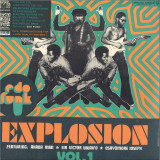
Analog Africa Presents Edo Funk Explosion Vol. 1, available on
2xLP/Gatefold LP with 20-page booklet / CD with 36-page booklet. It was
in Benin City, in the heart of Nigeria, that a new hybrid of intoxicating
highlife music known as Edo Funk was born.
It first emerged in the late 1970s when a group of musicians began to experiment with different ways of integrating elements from their native Edo culture
and fusing them with new sound effects coming from West Africa s night-clubs.
Unlike the rather polished 1980 s Nigerian disco productions coming out of the
international metropolis of Lagos Edo Funk was raw and reduced to its bare
minimum.
Someone was needed to channel this energy into a distinctive sound and Sir
Victor Uwaifo appeared like a mad professor with his Joromi studio. Uwaifo
took the skeletal structure of Edo music and relentless began fusing them with
synthesizers, electric guitars and 80 s effect racks which resulted in some of the
most outstanding Edo recordings ever made. An explosive spiced up brew with
an odd psychedelic note known as Edo Funk.
That’s the sound you’ll be discovering in the first volume of the Edo Funk Explosion series which focusses on the genre’s greatest originators; Osayomore
Joseph, Akaba Man, and Sir Victor Uwaifo: Osayomore Joseph was one of the
first musicians to bring the sound of the flute into the horn-dominated world
of highlife, and his skills as a performer made him a fixture on the Lagos scene.
When he returned to settle in Benin City in the mid 1970s - at the invitation of
the royal family - he devoted himself to the modernisation and electrification
of Edo music, using funk and Afro-beat as the building blocks for songs that
weren’t afraid to call out government corruption or confront the dark legacy of
Nigeria’s colonial past.
Akaba Man was the philosopher king of Edo funk. Less overtly political than Osayomore Joseph and less psychedelic than Victor Uwaifo, he found the perfect
medium for his message in the trance-like grooves of Edo funk. With pulsating
rhythms awash in cosmic synth-fields and lyrics that express a deep personal
vision, he found great success at the dawn of the 1980s as one of Benin City’s
most persuasive ambassadors of funky highlife.
Victor Uwaifo was already a star in Nigeria when he built the legendary Joromi
studios in his hometown of Benin City in 1978. Using his unique guitar style as
the mediating force between West-African highlife and the traditional rhythms
and melodies of Edo music, he had scored several hits in the early seventies,
but once he had his own sixteen-track facility he was able to pursue his obsession with the synesthetic possibilities of pure sound, adding squelchy synths,
swirling organs and studio effects to hypnotic basslines and raw grooves. Between his own records and his production for other musicians, he quickly established himself as the godfather of Edo funk.
What unites these diverse musicians is their ability to strip funk down to its
primal essence and use it as the foundation for their own excursions inward to
the heart of Edo culture and outward to the furthest limits of sonic alchemy.
The twelve tracks on Edo Funk Explosion Volume 1 pulse with raw inspiration,
mixing highlife horns, driving rhythms, day-glo keyboards and tripped-out guitars into a funk experience unlike any other.
Big Country’s “Without The Aid Of A Safety Net” was their first ever live album, originally released in 1994 and recorded at a homecoming gig at The Barrowland Ballroom in Glasgow.
The set mixes tracks taken from their recent studio album, The Buffalo Skinners, such as the singles Alone and Ships, along with the classic tracks from their catalogue In A Big Country, Look Away, Fields Of Fire as well as two Neil Young covers, Rockin’ In The Free World and Hey, Hey, My My (Out Of The Blue).
The original vinyl version of this album only had a limited pressing on 1 vinyl. This new deluxe version features the complete unedited concert recording split over 3 vinyl for optimal sound quality. The package is a tri-fold sleeve with 3x 180gm and Heavyweight Black Vinyl with sleeve notes written by guitarist Bruce Watson.
Parisian label Chuwanaga proudly presents Latitude, Saint-James label co-founder new studio project. Keeping it close to the deep jazz-funk ethos of the label, Latitude brings to the light two luminous songs of joy and hope for a better day, highly danceable yet rich and complex grooves with a human feel to feed your soul and make you move. Their new EP Leo / Attitude presents these first effort with a Dub Remix by Mato: plenty of diverse tastes for every music enthusiasts. Available as Vinyl 12" and Digital.
Latitude is french. Not a random collection of chansons sung in french. Latitude is so french in its sheer elegance, in its simple yet so sophisticated seemingly effortless attempt to groove in a pop context, trying to create moments of grace in the process. Latitude is here with the right vibe as the chorus of "Attitude" says it in french: "It’s the bad attitude, always the good latitude". Latitude is sprung out of the wicked musicianship of Parisian jazz-funk and fusion mavericks and Saint-James tight and adventurous compositions and production. All that jazz combined with David Cukier (Greita) retro-futurist engineering skills in these intense sessions captured in his cutting edge vintage Delta studio.
On A Side, "Leo (Extended Mix)" is an uptempo disco track for the dancers but also a beautiful song for the summer. A seductive number with a pregnant classic French jazz-funk feeling with the help of Parisian singer Club Celest’s energy and beautiful voice. It comes on digital as a short edit for radio but as a serious extended 12inch mix on the vinyl with 8 minutes and 10 seconds of pure pleasure, ending in a real climax after an irresistible percussion break.
On B1, "Attitude" enchanting quality shines with a banging rhythm section and goes for the win as an anthem chorus while sweeping synths keep on growing till the very last drop. On B2, Reggae/Dub don Mato (Stix Records) delivers a sweet dub wise riddim for the Lovers Rock massive.
The Turbo Guidance quest keeps going on. Our musical roughnecks decided to seek help from a wizard. They needed to empower their earing sense and their dancing skills like mutant elves. Luckily the mighty Mali-I was living in the nearby forest and had something special to share...
In his hightower, it took Mali-I years to find and cook secretly the delicate mixture. It's forbidden to name the ingredients, but once you taste it you immediately feel the bouncy chords and dub delays rising. Play the mighty sound of the "Fallow Tales" and enter into the blue magic power. Full versatility to expand your mind and to reach a parallel astral plane. Exactly what our heroes need to face the coming storm. Next step is going to be darker...
*Sprinkle your ears with the red powder to increase the musical experience*
Vinyl sweetly pressed in 400 limited copies (no repress business) with a riso insert printed in two colors (blue and black) on a Munchen Pure Rough paper 150g/m2 (at Studio Fidele, Paris).