Serving up eleven tracks of rhythmic garage-psych goodness, ‘Boots N Cats’ is the third full-length from Melbourne outfit Beans and the first of two albums set for release in 2024. The long-awaited follow-up to 2018’s ‘Babble’ and 2020’s ‘All Together Now’, it’s a record that finds Beans frontman (and The Murlocs drummer) Matt Blach putting percussion at centre-stage. “I’ve always wanted to make a drum-based album, dedicated around the beat first and then everything else follows”, Blach says, explaining his desire to explore “different production approaches, like hip-hop and crunched drums, and show an admiration and appreciation for the likes of The Meters, Wu-Tang and James Brown” as much as the acid-soaked 60s/70s rock you’d expect. What emerges from the beat-first approach on ‘Boots N Cats’ charts mutant garage-rock boogies ('Groove', 'Silhouette') and festival tent psychedelia ('Haunted', 'Dreaming Daisy'), by way of blissed-out funk instrumentals ('One To Four', 'Siamese Blundstone'). The line is constantly skirted between a loose, carefree vibe and interesting, meticulous musicianship – never falling into the trap of taking itself too seriously. It’s a sunny kaleidoscope of chugging guitars, driving basslines, soaring organs and warm, echo-soaked vocals – driven always by the tightly-wound rhythms and grooves that Blach has been in pursuit of since he was a kid: “The title of the album comes from me learning drums from my dad. He had a background of German heritage and during lessons would jokingly say ‘nein, boot’n’cats’n’ like a simple 1,2,3,4
Cerca:skirt
Harm’s Way is Duck Ltd.’s most intuitive and organic album yet, the result of keen observation, self-possessed songwriting, and a collaborative spirit. Building on the successes of their previous releases, the deeply relatable album displays a band operating at a nuanced, lyrical and musical best.
Ducks Ltd. make inviting and frenetic guitar pop for when life feels overwhelming. While the band’s songs are ostensibly breezy, a palpable anxiety boils underneath that communicates something deeper about everyday existence. On their latest album Harm’s Way, the Toronto duo of Tom McGreevy and Evan Lewis hones in on interpersonal and societal collapses, urban decay, and the near-impossibility of keeping a level head when everything around you seems to be falling apart.
“They’re songs about struggling,” says singer and lyricist McGreevy (who also plays bass and rhythm guitar). “About watching people I care for suffer, and trying to figure out how to be there for them. And about the strain of living in the world when it feels like it's ready to collapse.”
Even with its often dark subject matter, Harm’s Way is Ducks Ltd.’s most vividly rendered and collaborative collection yet. It’s an undeniable evolution for the band, not just in how these songs soar, but in their entire writing and recording processes. Composed on tour while supporting acts like Nation of Language, Illuminati Hotties, and Archers of Loaf, the album displays the band’s finely tuned songcraft and well-earned, road-tested confidence. “When we got signed, we had played maybe five or six shows ever. After last year, it’s in the hundreds. That experience can change your perception of your own music and songwriting,” says McGreevy. “In the past when we got stuck on a song we had a tendency to look at our favourite records to see how they tackled it. But now, instead of asking ‘what would Orange Juice do?’, we’d ask, ‘what would we do?’.” Lewis adds, “We have this really great thing where every decision with the band is filtered through both of us. Here especially, we really figured out how to make something that truly sounds like us.”
The band, fortified by this strong sense of sonic identity and a self-assurance in their new material—and in contrast to their critically acclaimed 2021 debut Modern Fiction and 2019 EP Get Bleak, both self-recorded and self-produced in a Toronto basement—wanted to bring Harm’s Way to life in a new city, with an outside producer, and with some of their favourite musicians. “We realised that so many of our favourite bands who are making guitar music right now are from Chicago,” says McGreevy. Working with producer Dave Vettraino (Dehd, Deeper, Lala Lala), they enlisted a marquee cast of Windy City collaborators to round out the tracks on Harm’s Way, including: Finom’s Macie Stewart (violin, string arrangements); Ratboys’ Marcus Nuccio (drums on most tracks); Dehd’s Jason Balla (who helped arrange the backing vocals, to which he also contributed); and backing vocals from Julia Steiner (Ratboys), Nathan O’Dell (Dummy), Margaret McCarthy (Moontype), Rui De Magalhaes (Lawn), and Lindsey-Paige McCloy (Patio). The band’s touring drummer, Jonathan Pappo, and bassist Julia Wittman also appear on the LP.
Ducks Ltd. are a band that already thrives on skirting the edges of buoyant jangle pop and driving power pop, and the duo credits these collaborators with helping to push their sound even further. “Historically our process has been really tightly controlled and insular. On this record, we worked with people who we trusted with a pretty wide range of musical backgrounds and they had approaches and ideas that helped open up the record's sonic palette,” explains McGreevy. “Jason thinks about backing vocals in a totally different way than I do and is super intuitive with melodic ideas. Julia and Margaret have a really deeo understanding of harmony. Macie and Dave were comfortable with the idea of improvising string parts which took some of those layers in some surprising directions. Dave also has an amazing ability to create atmosphere on a recording, and encouraged us to use a bunch of different techniques, tones, and processes to achieve that.”
Harm’s Way’s lush, melodic swagger is clear from the first notes of opener “Hollowed Out.” A song about living with decline (inspired by a Toronto sinkhole), its bright, indelible catchiness serves in contrast to its lyrical unease. Anchored by Lewis’ shimmering electric guitar, “The Main Thing” laments growing apart from a person whose views you once shared while managing to toss in references to both the unglamorous lives of middle relief baseball pitchers and the occult. Other songs split the difference between country and krautrock, like the rollicking “Train Full of Gasoline,” which uses the 2013 Lac-Mégantic rail disaster in Quebec as a metaphor for self-destructive patterns. Meanwhile, “Deleted Scenes” mourns the absence of someone no longer in your life (even if for very good reasons) and recalls The Cure at their most direct, and closer “Heavy Bag” employs enveloping, mournful strings to evoke a sense of how misery frequently loves company.
This is the first album of Mickey Stevenson’s Venture material. ‘Funky Way’ was the label’s first release and a hit in 1967, despite limited airplay due to having the word “funky” in the title. It went on to become an early funk classic, covered by Rufus Thomas for Stax, Tommy Strand for Fame, Jimmy Bee for Kent, Ray Johnson and others.
[i] 09 Tryin' To Fly My Kite [In Rainy Weather]
Der beste Postpunk, ist der, der überrascht und in dem ganz viel Punkrock steckt. TV Cult aus Köln haben das verstanden und liefern mit ihrem Debüt-Album "Colony" eine absolute Ausnahmescheibe, mit deren Sound sie sich in hiesigen Gefilden so ziemlich allein auf weiter Flur bewegen. Mit ihren walzenden Basslines, der kalten, erdigen Gitarrenarbeit, den stoisch-druckvollen Drums und den englisch-sprachigen Vocals, die zwischen Crooner- und Hardcore-influenced wechseln, beschwören die 10 fantastischen Tracks von "Colony" eine breite Palette an Einflüssen, die von DC über Manchester bis Australien reichen. TV Cult vereinen damit eine hohe Bandbreite an Sounds, die sich vom klassischen Joy Division-Postpunk über 90er-Dischord-Elemente bis hin zu Iggy Pop-Reminiszenzen und der aktuellen Aussie-Punk-Szene um Bands wie Mini Skirt erstrecken. Egal ob im Mid- oder Uptempo, funktioniert "Colony" als Konsequenz erschreckend gut auf allen Ebenen und TV Cult können sich getrost auf die Fahne schreiben, ein zugleich vertraut wirkendes und dennoch völlig überraschendes, zeitloses Postpunkalbum aufgenommen zu haben, das zudem einen unverkennbaren, packenden Trademarksound birgt.
Isabelle Adjani ist das, was man eine Ikone des französischen Kinos nennen kann. Mit ihren fünf César-Auszeichnungen (ein beeindruckender Rekord) in der Kategorie "Beste Schauspielerin" für "Possession", "Ein tödlicher Sommer", "Camille Claudel", "La Reine Margot" und "Skirt Day" hat sie keinen Zweifel an ihrem Starstatus gelassen - sowohl in Frankreich als auch international. Die Wartezeit auf ein Album von Isabelle Adjani schien nicht enden zu wollen.
Nach ihrer legendären Reise mit Serge Gainsbourg, die sie vom Grund des Swimmingpools (Adjanis eigene Worte in ihrer ersten musikalischen Veröffentlichung mit der französischen Musiklegende Gainsbourg, Pull marine) zu den Höhen des Ruhms führte, begann sie mit der unglaublichsten Besetzung zu arbeiten, die diese Ära zu bieten hatte - Benjamin Biolay, Etienne Daho, Gaëtan Roussel, Seal, Simon Le Bon, Christophe, Akhenaton, Daniel Darc, Philippe Pascal, David Sylvian, Youssou N'Dour und Peter Murphy. Diese Veröffentlichung ist das Ergebnis von 15 Jahren Sessions und Treffen, bei denen die Zeit einfach keine Rolle mehr spielte.
Das neue Album, das vollständig von Pascal Obispo produziert wurde und bei dem Pascal Obispo und Cécile de Laurentis gemeinsam Regie geführt haben, ist endlich aus seiner Puppe geschlüpft. Isabelle Adjani meldet sich mit ihrem einzigartigen Album "Bande originale" (dt.: "Soundtrack") zurück, das in Form von 12 Duetten ein musikalisches Großereignis für die Festtage sein wird.
Your favourite lez-loonatics Roza & D. Tiff are back at it with the Tapestry Of Sound; Reloaded - revamped and ready to rock your local dancefloor. With 3 freaky sleek OG cuts from the dynamic duo and a deliciously danceable remix from the progressive prince Olsvanger, you’d be a stupid boy to miss out on this one.
Expect all the classique Step Ball Chain-isms & more, tongue & cheek techno, percussive paradise and bass heavy bombs, with a few naughty noughties references for the True HeadsTM.
Das nächste Album in unserer Vinyl-Serie von CAKE ist "Comfort Eagle", das vierte Studioalbum der Band, das die Hitsingles "Short Skirt / Long Jacket", "Love You Madly" und "Comfort Eagle" enthält. Der Longplayer enthält remasterte Audioaufnahmen und wird zum ersten Mal als eigenständige 180g 1-LP-Vinyl veröffentlicht (früher war sie als Teil eines RSD-Boxsets erhältlich). Réédition du classique de Cake "Comfort Eagle" en vinyle.
For over two decades Jonathan Katsav has used his Crave project to fray rap at its fringes, using Memphis and Houston's low-and-slow legacy to inform sounds that have as much in common with Merzbow as they do Tommy Wright III. Working under a variety of different monikers such as Lieu Noir, Sniper Bait and Soul Collector, the French producer is most prolific as Crave, and "Inner War Delirium" is a substantial and broadly cinematic addition to his canon. Katsav approaches each track as if it's a scene from a movie, using real life experiences to explore separate characters and contrasting emotions. Using different narrators and disparate vocal styles, he navigates grim, blown-out landscapes, driving neon drenched trap synths and horror choirs against overdriven kicks and waterlogged industrial atmospheres. Mangled field recordings, squealing static and gurgling synthesized bass opens 'PHYLLIS', goading the cautious with serrated, carnival synths and cacophonous vocals that sway lugubriously between rap and grindcore. The relationship between dark and light, death and rebirth, is at the heart of "Inner War Delirium", rippling through every track's oozing amalgamation of inebriated hip-hop and buzzsaw noise. Katsav's sounds are an attempt to subject us to the physicality of his own life's puzzle, and he cuts them into vignettes like a director. On the album's final track, listeners are swiped from in front of the speakers and bundled into the trunk of a car, rain rattling on the metal and the album playing on in the distance. It's a way for the producer to turn the camera back on the audience and ask them to consider their own complicated reality - it's Crave's story, but everyone's a part of it.
After releasing their debut project “Voyage” in 2022, Tapioca, the Brussels-Kigali-based, Brazil-inspired duo return with LP “Samba em Kigali.” Building on their sound and influence, “Samba em Kigali” is a definitive step up and clear sonic growth for the twosome, whose debut, RA wrote, is "if Anderson Paak. & Marco Valle made a Brazilian pop-funk record.” Arriving via Berlin’s Jakarta Records May 19th.
Tapioca (32k Monthly Listeners on Spotify), the Belgian duo made of rapper / lyricist Alessandro “Le Tagarel” Vlerick and producer & composer Simon “SiKa” Carlier, tapped into a unique and infectious groove with their debut LP “Voyage,” released in 2022 via Jakarta Records’ “Dubplates” series. Positive reviews came flooding in, including coverage from, among others, BBC Radio 6, KCRW, Resident Advisor, JAZZIZ as well as performances and features on Worldwide FM and Bandcamp Daily. Their debut also landed on global editorial playlists such as Spotify’s “Global Groove,” (600k) “Tulum Vibes” (110k) and Deezer’s “Chilling Pool” (31k). “Voyage,” as the name indicates, was an ode to freedom, escape and the discovery of alternative cultural horizons that brought together various spoken-word testimonies from Portuguese friends around the world. Tapioca’s upcoming LP, “Samba em Kigali,” picks up the thread where “Voyage” left off, acting as an ode to traveling and, more broadly, of the inherent beauty of the African continent. Le Tagarel has worked as a teacher in Kigali, Ruanda, for the past years and his time there is reflected in the album’s buttery lyricism, putting forth the proposition that Africa and Brazil are in fact not so far apart - Africa is, and will always be, present in Brazilian culture. Featuring the Dillaesque sound infused with inspiration from rap, jazz, MPB and funk of the 70/80’s to the stunningly fleshed out lyricism - the LP sways like a ship on the smoothest of seas, a pure ray of aural sunshine to welcome the warm weather. Artwork was stunningly put together by Simone Cihlar (Anderson Paak. Tom Misch, Ivan Ave) and visualizers done by the stalwart crew at Die Ottos (Flofilz, K Le Maestro, Suff Daddy, S.Fidelity, Gianni Brezzo). Jakarta is ecstatic to share such a high-water mark of an album, out everywhere physically / digitally May 19th.
Kicking off “Samba em Kigali” is the impeccably smooth 1st single, “Lagoas de Ruanda” out March 22nd along with LP pre-order announcement. Instantly catchy, the crisp guitar, funky bass and buoyant underlying percussion are the perfect vitamin of joy that gives rise to Le Tagarel’s vocals. The track is a perfect sonic voyage that encapsulates the continued growth of Tapioca’s sound and gives a sonic peek into the LP. Infectious and groovy, the song skirts a line along samba, R&B and jazz with an almost hip-hop bounce.
2nd single, “Sabor Swahili,” out April 12th, is a nostalgic groovy splash that melds soft keys, bass and a percussive edge that slides you into an aural pocket. The song moves in a joyous melancholy that is almost impossible to move to, the under-water synth stabs keep your shoulders loose while the rhythm keeps you bouncing along. Even if you don’t know Portuguese, you’ll be singing along by the tracks end. The joyous 3rd single “Terra Preta” is out April 26th and will lift you up high to keep you in a serene mood anytime, anywhere. Focus track is the headnodding grooves of “Cara de Arabe.” Building from “Voyage,” Tapioca provides a fresh, rare vibe, adding a slight dose of disco to the R&B-driven progressions. “Samba em Kigali” is a unique album that is soaked and marinated in a sonic and visual aesthetic that brings with it feelings of joy, movement, and a global home, and sonic moods ranging from Bruno Berle and Marcos Valle inspired arrangements to bouncing progressions with a swingin’ percussive edge. Besides online promotion from the label and artist profiles, the album will further be promoted by external agencies within the US and UK.
Canto A Lo Divino is the unique musical expression of the Chilean peasant world - a conversation with the divine nourished by Biblical and other sacred texts. It is communal music, played in packed rooms throughout the night on the 25-string guitarron, its ancient melodies transmitted through the 10-line decima form originating in Spain and found across the Caribbean, South America, and even into the Mississippi Delta. Rooted in the remote Central Valley of Chile at the skirt of the mountains and following the slopes of the major rivers, the Canto tradition has persisted for centuries in the voices of hundreds of men and women who sing of saints, divine images, and angelitos (very young children who have died). The verses are also centered around daily life in the valley - labor and drought, family, animals, and plants. There are countless entonaciones (melodies) that define this region, its communities, and its unique worldview. Mississippi Records is privileged to work with the Museo Campesino En Movimiento and their archive of hundreds of hours of intimate field recordings of the Canto - music rarely, if ever, heard outside of the region. Artwork is provided by another inhabitant of Chile's Central Valley, a baker called Frederico Lohse, who brought divine visions from the Cantos to life, painted on reused flour bags. Canto A Lo Divino celebrates the complexity and solemn, stunning beauty of this nocturnal, communal form of musical devotion. Double vinyl LP comes housed in deluxe gatefold jacket with 8 pages of lyric translations and liner notes about the Canto tradition by researcher Danilo Petrovich.
First-ever reissue of the 1988 album. Gatefold LP includes new and restored artwork and a chapbook, featuring forty-eight pages of lyrics, essays, photographs, and Gordon's extraordinary drawings for each song. The Choctaw, Assiniboine, and Texan poet, journalist, visual artist, American Indian Movement activist, and musician Roxy Gordon (First Coyote Boy) (1945-2000) was above all a storyteller, known primarily as a writer of inimitable style and unvarnished candor, whose wide-ranging work encompassed poetry, short fiction, essays, memoirs, journalism, and criticism. Over the course of his career he recorded six albums, wrote six books, and published hundreds of shorter texts in outlets ranging from Rolling Stone and The Village Voice to the Coleman Chronicle and Democrat-Voice, in addition to founding and operating, with his wife Judy Gordon, Wowapi Press and the underground country music journal Picking Up the Tempo. Along the way he cultivated close friendships with fellow Texan songwriters such as Lubbockites Terry Allen, Butch Hancock, and Tommy X. Hancock, as well as Ray Wylie Hubbard, Billy Joe Shaver, and, most famously, Townes Van Zandt, whom he called his brother. Although his work covered a vast array of topics exploring strata personal, local, global, and cosmic alike, Gordon's primary subject as a writer, musician, and visual artist was always American Indian culture, specifically the ways it collided and coexisted with European American culture in the South and West-and within the context of his own life and braided identity. The ten songs on Crazy Horse Never Died, his first officially released and distributed album, were recorded in Dallas in 1988. "Songs" is perhaps an imprecise taxonomy for what Roxy captured on this and his other albums, all of which remain out of print or were released in instantly obscure limited editions of homebrew cassettes and CD-R's. (Paradise of Bachelors plans to reissue remastered, expanded editions of his catalog; Crazy Horse is the first.) He only occasionally attempted to sing, and his musical recordings are primarily corollaries of, and vehicles for, his poems. His sharp West Texan drawl, tinged by formative years of reservation living in Montana and unmistakable once you hear it-high, lonesome, flat, and cold-blooded as a bare rusty blade-instead patiently unfurls in skewed sheets of anecdotal verse and discursive narrative rants. Although Gordon's music at times incorporated powwow style drumming, fiddling, or unaccompanied ballad singing, the majority of it hews to an idiosyncratic spoken word style, accompanied by atmospheric, sometimes synth-damaged country-rock that skirts ambient textures and postpunk deconstructions. His songs are essentially recitations over backing tracks of finger picked guitars, rubbery washtub bass, and buzzing, oscillating keyboards. On the stark yellow and red jacket of Crazy Horse, which he designed himself, Gordon describes these recordings as innately ambivalent in terms of form, content, and identity: These are poems and/or songs about the American West, white and Indian. My life has been Indian and/or white. Maybe there's not a lot of difference-maybe. I guess that's mostly according to which white person or which Indian you're talking about. That's probably what this album's about. Crazy Horse Never Died comprises songs that span the personal and political arcs of his writing practice and the poles of his native and white ancestries.
Repress!
Berk Offset brings his committed strain of swinging techno freakdom to Accidental Jnr for a four-track EP aimed squarely at the hips.
Offset, also known as Rainer Maria Silke, has been skirting around the fringes of outsider dance music in Germany for more than a decade, releasing two notable EPs on Jena’s bastion of weirdnik, jazz-informed minimal, Musik Krause, and dropping bombs for the wonky techno die-hards at Snork Enterprises.
Those past exploits are instructive for the sound Offset presents on Intraface.
Fusing lean, late night rhythmic submission with evocative strokes of off-kilter jazz sampling and errant synth experimentation, Offset’s twist on 4/4 club music has exactly the kind of inspired otherness represented throughout Accidental’s family of labels.
With its name indicative of the music's boundary-testing diversity and Southwestern inspiration, On the Border finds the Eagles leaving everything on the table and embracing a harder edge that takes the band out of more relaxed territory and establishes it as a group that knows how – and wants – to rock. Glenn Frey, Don Henley, new member Don Felder, and company immediately announce their intent on the defiant album-opening hit "Already Gone" and never look back, crafting a gem of a record that from start to finish is arguably their most consistent and balanced effort.
Limited to 10,000 numbered copies, pressed on dead-quiet MoFi SuperVinyl at RTI, and mastered from the original analogue master tapes, Mobile Fidelity's ultra-hi-fi UltraDisc One-Step 180g 45RPM 2LP collector's edition pays tribute to the record's significance and enhances the experience for generations to come. Playing with reference sonics that elevate an effort revered by audiophiles, it provides a lively, dynamic, transparent, and intimate view of a release whose contemporary importance continues to grow. The opportunity to zero in on the particulars of the Eagles' golden harmonies, distinct vocal timbres, and cohesive interplay has never been better.
Visually, the premium packaging and gorgeous presentation of the UD1S On the Border pressing befit its select status. Housed in a deluxe box, it features special foil-stamped jackets and faithful-to-the-original graphics that illuminate the splendor of the recording. No expense has been spared. From every angle, this UD1S reissue exists as a curatorial artefact meant to be preserved, touched, and examined. It is made for discerning listeners that prize sound quality and production, and who desire to fully immerse themselves in the art – and everything involved with the album, from the iconic Navajo cover painting to the meticulous finishes.
And with On the Border, there's plenty to take in and soak up. Declared by famed critic Robert Christgau as "the Eagles' best album," the 1974 set claims a rich backstory. Initially recorded amid tumultuous sessions with producer Glyn Johns in London shortly after the release of the group's sophomore Desperado set, On the Border took a new turn after the band elected to scrap most of the prior work, return to its native California, and team with producer Bill Szymczyk to give the material less of a smooth, polished sheen and more toughness. Szymczyk also afforded the Eagles more input and freedom in the arrangements, and suggested adding another guitarist to play on "Good Day in Hell." Felder got the call, and so won over the Eagles with his skills, he quickly became the fifth member of the band.
While the late-arriving Felder only plays on one other album cut, "Already Gone," his mates more than prove their muster on the remainder of a double-platinum affair that established the Eagles as a force whose range transcended the calmer country-leaning style it perfected on their first two LPs. Primarily written by Jackson Browne and shelved during the Desperado sessions due to its higher-energy nature, the throttle-twisting "James Dean" ricochets with barbed riffs and rebellious swagger. Listen without limits to how Szymczyk's raw production stamps the song with a leather-and-jeans cool befitting its protagonist. Similarly rugged, the slide-guitar-fueled "Good Day in Hell" boasts its own mean streak. And the funk-laced, boot-stomping title track cautions "don't you tell me 'bout your law and order." Throughout On the Border, the Eagles are in no mood to mess around.
Not that the band skirts sentimental territory. On one of the era's finest covers, the Eagles nail the bittersweet feelings and bring high-definition detail to the vivid scenery of Tom Waits' "Ol' '55," a song the group makes its own. The rustic ballad "My Man" serves as a tribute to the recently deceased Gram Parsons, with singer-guitarist Bernie Leadon taking the lead on the microphone as he pours his heart out to his former Flying Burrito Brothers mate. And when it comes to romance, is it possible to top "Best of My Love"? Graced with Henley's honey-dipped vocals, refined wordless group harmonies, brushed drums, and the gentle strum of acoustic guitars, the Johns-produced cut soared to Number One and set the stage for what would soon be the Eagles' reality: global dominance.
More About Mobile Fidelity UltraDisc One-Step and Why It Is Superior
Instead of utilizing the industry-standard three-step lacquer process, Mobile Fidelity Sound Lab's new UltraDisc One-Step (UD1S) uses only one step, bypassing two processes of generational loss. While three-step processing is designed for optimum yield and efficiency, UD1S is created for the ultimate in sound quality. Just as Mobile Fidelity pioneered the UHQR (Ultra High-Quality Record) with JVC in the 1980s, UD1S again represents another state-of-the-art advance in the record-manufacturing process. MFSL engineers begin with the original master recordings, painstakingly transfer them to DSD 256, and meticulously cut a set of lacquers. These lacquers are used to create a very fragile, pristine UD1S stamper called a "convert." Delicate "converts" are then formed into the actual record stampers, producing a final product that literally and figuratively brings you closer to the music. By skipping the additional steps of pulling another positive and an additional negative, as done in the three-step process used in standard pressings, UD1S produces a final LP with the lowest noise floor possible today. The removal of the additional two steps of generational loss in the plating process reveals tremendous amounts of extra musical detail and dynamics, which are otherwise lost due to the standard copying process. The exclusive nature of these very limited pressings guarantees that every UD1S pressing serves as an immaculate replica of the lacquer sourced directly from the original master recording. Every conceivable aspect of vinyl production is optimized to produce the most perfect record album available today.
A potentially surprising release on Editions Mego. Another planned prior to the untimely passing of Peter Rehberg in 2021.
Melvin Gibbs is the renowned bass player and producer from Brooklyn who’s vast resume includes playing with Sonny Sharrock, John Zorn, The Rollins Band, Dead Prez, Caetano Veloso and Femi Kuti amongst others. A solid resume, no doubt, but what is Gibbs doing on Editions Mego?
Behind the scenes, those who know Gibbs knew that amongst all this he was also tinkering away at another form of music, one which skirts around the border between music and sound design. The Wave is the first release that reveals this side of Gibbs’ creative output to those outside his inner circle.
The driving force for this output is Gibbs’ multi-decade friendship with acclaimed American video artist and cinematographer Arthur Jafa. Over the course of time Gibbs and Jafa have had many conversations about music and the connection between film and music. Jafa’s desire to make film that worked the way Black (as in Black/African-American/ Afro-diasporic peoples) music worked inspired Gibbs to study the filmmakers Serge Eisenstein and Dziga Vertov and incorporate their philosophies and tactics when recording his own music. The two discussed sound design which directly informed Gibbs’ choice of music making tools and led to him acquiring Symbolic Systems Kyma software and hardware, incorporating this as a composition tool and sound design and component in his work. These conversations bore concrete fruit through Gibbs’ work for TNEG, the film studio Jafa ran with filmmakers Malik Sayeed and Elissa Blount Moorhead. Gibbs created the soundtrack for their very first project, the short film “Deshotten 1.0” (2009 - directed by Jafa and Sayeed) as well as their Martin Luther King-inspired meditation on Black life “Dreams Are Colder Than Death” (2013, directed by Jafa)
The bass-forward music, or ‘sonics’ as Gibbs calls it, emerged from an alternative mode of contemplation, a mode that he sees as closer to the mindset of a rootworker, an African-American herbal doctor who cures psychic ailments using means derived from African spiritual practice, entering a forest to find the right plants for a suffering client than a mediator attempting to invoke mindfulness. Gibbs says this practice yields results that suggest an aural form of creation akin to coagulation, a formal movement that gives the sense that a flow of sounds can emit something bearing resemblance to solidifying objects.
In 2020 Jafa asked Gibbs to work on the soundtrack for a work in progress called “The Wave''. When they got together to work on the soundtrack, Jafa played Gibbs a selection of sounds that included random moments of (probably unwanted) feedback on 70's Miles Davis records, Pop Smoke's Brooklyn drill, the music of Bernard Gunter and Darmstadt-style compositions made with test equipment. Those sounds, filtered through years of conversation with Jafa about Black creativity and the possible evolution of Black music, formed the sonic vocabulary of “The Wave”.
Swedish Meatballs Vol 2 - The Psychedelic Hard Rock
Underground 1970-1977
Way-out heavy psych mindblowers with blistering guitars and pounding
drums! Sweden " heaven and hell
Strictly limited edition of 500 copies only. Comes with a striking day- glow
coloured sleeve and a massive 16- page booklet cram packed with photos and
previously untold stories. Subliminal Sounds swings open the portals to the long
lost, ultra-rare, or previously unreleased, music and history of these loud and hairy
underground hard rocking champions. Possessed zit covered Viking teens going
berserk and blasting loud and heavy sounds at youth halls making the stoner kids
go meatball crazy. Mini skirt moose hunters. Mid-70s communal people parks
hedonistic punch- drunk all- night benders. Local biker club bacchanalias with
fierce lesbian bikers make out on stage as the band's rambles on. Heavy metal
greasers in their imported American muscle cars chicken racing with ice bears.
Hard rock glam rockers accompanying XXX live shows and a previously unknown
connection to all mighty Bathory goat. All in a day's work for the Swedish
Meatballs. This is a tasty new release in our series: The Swedish Hard Rock
Underground " A Smorgasbord of Heavy Sounds !
The new EXOTICA sensation has a Name : The ROUNDELLS, This talented French trio+1 is exploring the world and its crazy rhythms on this amazing debut album. All the cuts were recorded and mixed at the ELECTROPHONIC studio, down in Lyon, France, by the wizard of the place Hervé Bessenay. With a handfull of vacuum equipment and vintage effects, Hervé"s got it ! The mid century Lounge Exotica sound that was in vogue from Miami to Malibu in the 50"s... full analogical recording rules ! So get your Bamboo skirt and Limbo barefoot in the sand !
Vinyl[21,39 €]
Dan Álvarez de Toledo and Jordan Dunn-Pilz have a special bond. Growing up in Newburyport, Massachusetts, the two were fast and unshakable friends through sleepovers, school choir practices, and discovering formative bands, to the point that now, as roommates in Brooklyn, they finish each other’s sentences. This shared history and obvious love for each other are tangible in their songwriting project TOLEDO, named after the Spanish town and Álvarez’s familial namesake. Their music, which is full of seamless harmonies throughout, skirts the softer edges of indie rock and the darker fringes of pop with each song imbuing a heaping dose of vulnerability and emotional openness. On How It Ends, their debut album which is out September 23 via Grand Jury Music, the two dive into each other’s family histories and traumas as they navigate their own lives as twenty-something musicians. These tracks are striking for their blunt honesty but also for the way Álvarez and Dunn-Pilz’s real-life chemistry translates on record: the 12 songs are as tender as a warm hug and as clarifying as a needed reality check. This LP is the product of deep self-reflection and the necessary hard work that comes with any relationship.
Cassette[9,20 €]
Dan Álvarez de Toledo and Jordan Dunn-Pilz have a special bond. Growing up in Newburyport, Massachusetts, the two were fast and unshakable friends through sleepovers, school choir practices, and discovering formative bands, to the point that now, as roommates in Brooklyn, they finish each other’s sentences. This shared history and obvious love for each other are tangible in their songwriting project TOLEDO, named after the Spanish town and Álvarez’s familial namesake. Their music, which is full of seamless harmonies throughout, skirts the softer edges of indie rock and the darker fringes of pop with each song imbuing a heaping dose of vulnerability and emotional openness. On How It Ends, their debut album which is out September 23 via Grand Jury Music, the two dive into each other’s family histories and traumas as they navigate their own lives as twenty-something musicians. These tracks are striking for their blunt honesty but also for the way Álvarez and Dunn-Pilz’s real-life chemistry translates on record: the 12 songs are as tender as a warm hug and as clarifying as a needed reality check. This LP is the product of deep self-reflection and the necessary hard work that comes with any relationship.
- 1: World Peace
- 2: Your Child
- 3: For Fats
This previously unreleased album by the Horace Tapscott Quintet was unearthed from master tapes in the Flying Dutchman archives. Recorded in 1969 and was intended to be a follow-up album to the classic 'The Giant Is Awakened' which was released that year.
The iconic pianist and composer Horace Tapscott was one of the most unique and important figures in LA’s jazz world. This lost recording was produced by one of the pivotal figures in jazz, Bob Thiele, a leading behind-the-scenes star who worked with many of the greats in jazz, such as Quincy Jones, Duke Ellington, John Coltrane, Della Reese, Shirley Scott, Gil Scott-Heron, the list goes on. His name can be seen gracing, arguably the best, Impulse! releases and those released on his own Flying Dutchman imprint set up in 1969.
Joining Horace for this three-track, deep, heavy, avant-garde session is the same stellar cast featured on 'The Giant Is Awakened'; Arthur Blythe on Alto Sax, Everett Brown Jr on Drums, with David Bryant and Walter Savage Jr. on Bass. Kicking things off we have 'World Peace’, which starts with an almost baroque-esque melody, leading to an eruption in sound, it then ends in the same manner it began. The beautiful 'Your Child' is the jewel in the crown, skirting modal, deep jazz and introducing elements of free jazz. 'For Fats' with its bow bass and piano intro takes you on a journey, dropping into, at times dark, stormy melodies and developing a driving energy as the composition progresses.
After recording this album, Horace was said to be wary of the music industry, so he retreated and distanced himself from this world, recording only for the independent labels UGMAA, Interplay Records, and Nimbus West Records. He set up The Pan-Afrikan People’s Arkestra and reintroduced the pan-African-roots sound back into the heart of jazz. He also developed and promoted the art form through performances and recordings.
Thankfully, this session from these wonderful musical pioneers was preserved and finally has its time to shine.
Featuring brand-new artwork by the illustrious artist/designer/musician Raimund Wong (Total Refreshment / Floating World Pictures)
Officially the latest album released by the british super group, »Lows & Highs« is the triumphant epilogue to these fascinating adventure in rhythm. Featuring vocals from Crucial Tony and Lizard Logan this is probably the most straight ahead reggae album in their whole discography. Producer Adrian Sherwood is in charge behind the desk while Style Scott, Eskimo Fox and Donald Campbell bring all their potential efforts on the drums. Deadly Headley and Dave’ Flash’ Wright are the top horn section here. The album features the bonus track »Read And learn« from 1982 single »Love I Can Feel«. A must have for any english dub worshipper.
- A1: All Saints Day
- A2: Triangle Tangle Tango
- A3: Bad Times Too
- A4: Midget Sings
- A5: Seven Miles
- B1: Big Car Intro
- B2: Big Car
- B3: First Steps
- B4: Rotund For Success
- B5: Lfm
- C1: All Saints Day Original
- C2: Bad Times Three
- C3: The Star Spangled Bradbury
- C4: Lfm Dub
- C5: Chasing Skirt
- D1: Greater Reward
- D2: Greater Dub
- D3: Big Car Crash
2022 Repress
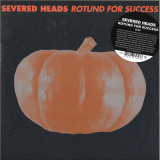
Medical continues it's exploration and admiration our beloved Severed Heads. Long overdue and much needed reissue of their1989 album "Rotund For Success". Special expanded 2LP version including alternate versions and remixes. "Rotund" is a treasure trove of hits including "All Saints Day", "Greater Reward" and "Big Car". Includes deluxe gatefold heavy duty full color jacket featuring the iconic pineapple and pine cone featured on the singles. Remastered by Mr. Ellard himself. Double 160gm black vinyl. Limited Edition.
A multicultural explosion of West African, French and Brighton sounds
Stranded Horse is a touring machine centered around composer, songwriter and
instrument maker Yann Tambour.Whilst he had developed his own kora playing
and teamed up with local player Boubacar Cissokho (cousin and protege of
erstwhile Tambour collaborator Ballake Sissoko) In terms of repertoire, there is
nothing to stop him from covering Joy Division, the Smiths or even Jackson C.
Frank and the moving "My Name is Carnival".Behind Yann Tambour and his band
Stranded Horse lies a faith in chance encounters, a belief that renewal is born out
of chaos. They strive to skirt conventions and labels and wed together
unexpected genres, rules and habits in an album of erratic wanderings, dance and
trance, at a time when more and more get walled off by reluctance and suspicion.
But a strange spell, it seems, was cast on our stranded horse since he chose to
hit the dancefloor for the first time the very year nobody could. Yann Tambour
was first known as Encre at the turn of the millennium. He was then whispering
and stacking orchestral samples into a kind of spoken word electronica with an
acoustic tinge. But in 2005, he decided to return to his early love for arpeggios
and dusted off his classical guitar, all the while growing a fascination for the kora,
an instrument symbolic of West-Africa.
But Stranded Horse doesn't forget to draw on the indie heritage that is still very
much present, as evidenced by "In A Sharper Fairway", which may remind the
most passionate folk fans of the folk- mindedness of Jackson C Franck. As for
the choice of English or French, it is a natural one, whether it is a question of
immersing oneself into the contemplative and poignant "Sparks Turn To Stone" or
entering the frenzied dance of the irresistible "Rumba du trépas", the richness of
the lyrics is reinforced by a voice stripped of all artifice, making each composition
sincere and authentic. The same is true when, with Youssou N'Dour's permission,
Stranded Horse adapts Star Band de Dakar's heady and vast "Thiely" from Wolof
to French.
A multicultural explosion of West African, French and Brighton sounds
Stranded Horse is a touring machine centered around composer, songwriter and
instrument maker Yann Tambour.Whilst he had developed his own kora playing
and teamed up with local player Boubacar Cissokho (cousin and protege of
erstwhile Tambour collaborator Ballake Sissoko) In terms of repertoire, there is
nothing to stop him from covering Joy Division, the Smiths or even Jackson C.
Frank and the moving "My Name is Carnival".Behind Yann Tambour and his band
Stranded Horse lies a faith in chance encounters, a belief that renewal is born out
of chaos. They strive to skirt conventions and labels and wed together
unexpected genres, rules and habits in an album of erratic wanderings, dance and
trance, at a time when more and more get walled off by reluctance and suspicion.
But a strange spell, it seems, was cast on our stranded horse since he chose to
hit the dancefloor for the first time the very year nobody could. Yann Tambour
was first known as Encre at the turn of the millennium. He was then whispering
and stacking orchestral samples into a kind of spoken word electronica with an
acoustic tinge. But in 2005, he decided to return to his early love for arpeggios
and dusted off his classical guitar, all the while growing a fascination for the kora,
an instrument symbolic of West-Africa.
But Stranded Horse doesn't forget to draw on the indie heritage that is still very
much present, as evidenced by "In A Sharper Fairway", which may remind the
most passionate folk fans of the folk- mindedness of Jackson C Franck. As for
the choice of English or French, it is a natural one, whether it is a question of
immersing oneself into the contemplative and poignant "Sparks Turn To Stone" or
entering the frenzied dance of the irresistible "Rumba du trépas", the richness of
the lyrics is reinforced by a voice stripped of all artifice, making each composition
sincere and authentic. The same is true when, with Youssou N'Dour's permission,
Stranded Horse adapts Star Band de Dakar's heady and vast "Thiely" from Wolof
to French.
- 1: Things Are Looking Good (Out In Hollywood) / Baker Knig
- 2: Honey Baby / Bobby Goldsboro
- 3: Don't Push Me Around /Jay Brown
- 4: Daisy Petal Picking / Jimmy Gilmer And The Fireballs
- 5: (They're All In)The Senior Class / Mickey Lee Lane
- 6: Sister Twister / Carl Perkins
- 7: Speed Lovers / Billy Lee Riley
- 8: Midnite Blues / Charlie Rich
- 9: North East End Of The Corner / Dion
- 10: Blood From A Stone / Ricky Nelson
- 11: Short Skirts / Bobby Garrett With Ray Lee's Combo
- 12: Drip Drop / Dion Di Mucci
- 13: Tv Commercials / Barney Kessel
- 14: The Swinger / Hal Baine, His Drum And Orchestra
- 15: West Coast / Pegi Boucher
- 1: 6Close Your Eyes / Jamie Coe & The Gigolo's
It seems Summer is here in May this year and so does the next DOGHOUSE Summer compilation! A lot of platers to "Gogo" your booty by the pool...Soon available! Sixties rockin' Pop at his best...
Playing in Dixieland jazz bands during his teens and then passing through some Kansas City jazz acts, New York-born alto saxophonist Steve Lacy became associated with the avant-garde jazz movement from the mid-1950s, playing on free jazz pianist Cecil Taylor’s influential debut LP and early work by the Canadian pianist Gil Evans, before serving a long tenure with the idiosyncratic improv pianist Theolonius Monk, whose work he would continue to reference throughout his career. Visiting Europe from the md-1960s, starting with a trip to Copenhagen with pianist Kenny Drew (who made the Danish city his home thereafter), Lacy later travelled to Italy to form a quartet with Italian trumpeter Enrico Rava (who had earlier played in Argentinian sax player, Gato Barbieri’s group), plus South African exiles and former Blue Notes members Johnny Dyani on double bass and Louis Moholo on drums. Lacy subsequently moved to Paris, which became his permanent base from 1970, leading a sextet there whilst also exploring the limits of the alto saxophone as a solo instrument. The disparate and often discordant album Threads was recorded in Rome at Mama Dog studio in 1977 for filmmaker-turned-record producer Aldo Sinesio’s Horo Records label; comprised of six of Lacy’s own compositions, the album saw Lacy supported by Alvin Curran on piano and Frederic Rzewski on flugelhorn, synthesizer and percussion, the pair both longstanding members of the experimental group, Musica Elettronica Viva.GO
An unheard production unit entirely geared towards hi-octane live explosiveness and spine-tingling studio hustle-and-bustle, Hysteria Temple Foundation step up with their anticipated debut platter, "Atrahasis EP" - a four-track EP by way of manifesto, due out for release on September 13 / 21.
Elusive and haunting by nature, skirting Shackleton-esque dub meanders, polyrhythmic folk instrumentation and further left-of-centre sonic divagations, the sound of Hysteria Temple Foundation is one that sheds skins when you expect it least. Scanning out a baroque timeline where no-holds-barred floor traction wildly clashes along deeper sound investigations, "Atrahasis" ushers us into a twirly pit of tribal drums and bow echoes.
Summoning the spirits of Muslimgauze and African Headcharge for a hectic ride in a sandstorm-caught bazaar of processed darbukkahs and further steely industrial tropes, "Annunaki" gets the ball rolling in sheer immersive fashion. Cranking the heat up a notch, "Gamesh" rushes us headlong into ruthless rapids of accelerated ritual drums and mind-expanding acid onslaughts breathing in some squelchy spaciousness into its intricately-woven web of sound.
Flip sides and here's the proper grime-steppish number "Ziuziu" taking over your brainwaves with a fierce unloading of harnessed machine rage and dystopian cybernetics turned into some club-optimised weaponry. Back to a dubby kind of vibe, "Chmanze" raises an army of louder-than-loud kicks, FX-laden percs, sizzling spurts and ankle-snapping breaks, all fit to breeze across the bulkiest sound systems with utmost sangfroid and nonpareil trenchancy.
Keeping his carbon footprint at a minimum, Santilli sails from Sydney to Hamburg via ten textured vignettes delicately drawn with guitar, bass and organic percussion. Relaxing, reflective and endlessly
beautiful, ‘Tidal’ explores elemental inspiration through a humanistic gaze.
Whether you know Max Santilli through Ken Oath duo Angophora, previous releases ‘Surface’ and ‘In Circles’, or this is your first time making his acquaintance, you’ll agree he’s right at home on the
Growing Bin. The multi-instrumentalist crafts exquisite acoustic music in tune with the finer moments of Windham Hill and ECM; a perfect fusion of talent, balance and the emotion shared by each release on the Hamburg label.
As befits its inspiration ‘Tidal’ is an organic affair, related through bright acoustic guitar, hazy chimes and hand played percussion. Where the Australian draws you in with hypnotic repetition, the subtlety, warmth and tonal variation serve as a welcome reminder we’re living off grid. Though expert fretwork
often takes centre stage, especially on the delicate B1 ‘Warm You Give’, it’s the blend of kalimba, woodblock, hand drums and shaker which truly transport the listener through open waters; a rhythmic
breeze carrying us through the maritime drones and bowed squall. At times the salt air is spiced with cardamom and cloves (‘Sea’) or lemongrass and galangal (‘Valleys’), as we skirt the Indian Ocean or
the Java Sea. ‘Lapse’ provides subtle hints of fourth world jazz as mallets take the lead, leaving the guitar to provide its own shimmering texture.
Clear your mind, clear your schedule and make some time for ‘Tidal’, an opportunity to breathe in time with the planet
In the Italian panorama of the '70s, Chrisma (Christina Moser and Maurizio Arcieri) skirted the common rules of Italian pop (the aura of progressive rock or the first wave of prolific folk singers); in fact, they created Italian new wave from scratch. After the release of their 1977 debut album Chinese Restaurant (SPITTLE 051LP) -- so far from the punk revolution and so deep into the algid dynamics of the Mittel-European sound -- came Hibernation, their creative peak on which they embrace the revelation of the man-machine and venture into the realms of incomparable robots Kraftwerk. Again the album was produced by Niko Papathanassiou (brother of the Greek legend Vangelis), and it features very sophisticated cover artwork created by famous photographer Mario Convertino. Chrisma, so far ahead of their time, crafted an opus that should be considered at the same emotional level as the most famous synth-pop bands from the UK and Germany. Highlights include "Vetra Platz," a long digital ride worthy of the most famous Kraftwerk singles; "Calling" and "Gott Gott Electron," a primeval couplet of furious post-punk numbers; and the lush "Lover," with Miss Moser still in top form. This reissue includes the original artwork with a silver background. RIYL: T. Rex, Nico, Kraftwerk.
- A1: Groove City / Tony Mason
- A2: She's About A Mover / Otis Clay
- A3: Me And My Chaufeur / Big Mama Thornton
- A4: Harlem Shuffle / Bob And Earl
- A5: Cadillac Jack / Andre Williams
- A6: Rover Or Me / Good Time Charlie
- A7: Let's Do It Again / Billy Sha-Rae
- B1: I Can't Put My Finger On It / Junior Parker
- B2: Instant Everything / Ko Ko Taylor
- B3: Big Leg Women (With A Short, Short Mini Skirt)/ Israel
- B4: The Sloppy / Billie Young
- B5: I Remember Mini-Ginny / Good Time Charlie
- B6: Cracker Jack / Mickey And His Mice
- B7: Take It Off / Groundhog
Ai Aso’s immaculately crafted form of minimalist pop music skirts the edges of tensity with the manner and with the skill of a tight rope walker, calmly balancing repeatedly at every step, with a combination of surety and the risk of a slip, a fall, and an unknown uncoiling of events. Aso's capacity to capture, or inspire, the tension and attention from within the listener and observer are quite pronounced. At Aso's concert the performance constantly teeters near the brink, a sharpened awareness in the hall emerges from all observing, with the will of that most delicate balance. On “The Faintest Hint” she brings a meta level to the proceedings, the dream of a singer in a bright sunlit room in the centre of the density of the society, simply and precisely searching for single ideas, single tones, a sense of sensuality and even a dream of a grandeur (rock dream) emerge. A stillness prevails, even a sharp set of instances of dreaming, melancholia, nostalgia… or even saudade. The album was recorded, mixed & mastered by Soichiro Nakamura at Peace Music between 2018-2020. Atsuo and I joined these sessions as producers, and moreso as catalysts, yet also became the skeleton of a band on the album (with the tender touch). The legendary Japanese rock band Boris accompany Aso on two pieces. A faintest hint of sharpness and la tendresse féroce quickly erodes into a fine brief cloud of the purest crystalline dust.
–Stephen O'Malley, Stockholm June 2020
- A1: Das Goldene Zeitalter - Don't Give Up Your Smile Today
- A2: Nu Art Quartet - Black Bandit
- A3: John Tinsey - Freedom Excelsior (Part 2)
- A4: Obie Jessie Quartet - Black King
- A5: Walt Bolen - Peace Chant
- B1: Genghis Kyle - Bakit Ba
- B2: Luna Brothers Trio - Mozambique
- B3: Hozan Yamamoto - Spotlight On Sapporo
- B4: The Milestones - Funk
From 1963 to 2014: "Peace Chant - raw deep and spiritual jazz" exhibits 51 years of music. A well matched anthology with sounds to dive into, hard rhythms to dance to and vocals to meditate on.
The Tramp Records crew has compiled 9 tracks in nice order and dramaturgy. Some tunes you might have never heard before unless you own one of the rare original vintage vinyl records. Peace Chant is released on two separate LPs with own catalogue numbers and on one CD. Some songs I can't get out of my mind:
The previously unreleased "Don't Give Up Your Smile Today" is opening the compilation. It's from Das Goldene Zeitalter, a band that didn't survive - but whose members had a huge influence on German jazz, soul, afrobeat and funk within the last years merging into groups like The Poets of Rhythm, The Whitefiled Bros., and The Malcouns. Boris Geiger aka. Bo Baral sings a Pharoah Sanders like tune, his voice deeply resonating, the rhythm section heavily grooving.
After the first three woolly recorded tracks Walt Bolen's "Peace Chant" with its dry and funky sounds with flute, two guitars and percussion is quite a pleasure to listen to. Organ and voice are Bolen's who used to play the keys in San Fernando Valley church when he was a child. "Peace Chant" was recorded for his own Ar-Que label in 1972 and is one of the few cuts with him as a leader. He has played sessions and clubs for years and today he is sitting at the church organ again.
This publication's oldest recording dates back to 1963: "Mozambique" by Luna Brothers Trio, a Caribbean and hypnotic instrumental. For my jazz trained ears it is rather unusual that the güiro (the gherkin played with a stick) is being played throughout the entire song. Heavily laid back cowbell, concas and timbales and the slightly detuned piano are wonderful! "Mozambique" sounds like from another star but its origin is Los Angeles, where the brothers Fred and Ricardo Luna had their night club band. You could imagine a bast skirt strip and at the same time the great Raumpatrouille (Space Patrol) landing on German B&W TV screens in 1966.
Hozan Yamamoto recorded crime jazz with the Japanese bamboo flute shakuhachi. He belonged to Tony Scotts "Music for Zen Meditation" in 1964, played with Ravi Shankar, avant-garde jazz bassist Gary Peacock and appeared at Donaueschingen Festival for contemporary music. Tokio university's open minded lecturer recorded the funky and modal "Spotlight on Sapporo" in 1972.
Linda “Babe” Majika’s insanely brilliant Don’t Treat Me So Bad is a tight six tracks of blistering electro-flavoured bubblegum and synth-drizzled solar-powered machine-funk. It has become increasingly hard to find, with copies currently moving for over £200. But this is definitely a case of eye-watering price equalling heart-thumping quality.
Once of the Hot Soul Singers, Don’t Treat Me So Bad was Linda’s debut LP as a solo artist. It was produced by Ace Mbuyisa of boogie-funk maestros Freeway and was originally released on Umkhonto Records in South Africa in 1988.
The enormous “Let’s Make A Deal” is probably the best known track here, and it’s definitely the best one if you ask us. Linda’s vocals drip with attitude over warm, breezy synths and an urgent, edgy electro beat to create a timeless club-ready bomb that sounds as fresh as ever. But the rest of the album is far from filler.
Opening track “Kunzima (Tabalaza Mjita)” instantly brings the sunshine vibes, strutting out the gate with that unmistakable South African steppers groove. It’s a deceptively simple song, with multiple instrumental elements arriving and taking leave with admirable restraint.
“It’s Our Home” is a powerful showcase for Linda’s vocals, enhanced by some life-affirming call and response backing vocals throughout. In fact they’re a joyous presence on the whole album. The insistent pipes and swirling, bubbling synths of title track “Don’t Treat Me So Bad” follow. A spacious proto-piano house banger that closes out the first side in phenomenal fashion.
Arriving as track two on the second side, “Unga B’Omthemba Umuntu” has the unenviable task of following the huge “Let’s Make A Deal”. It does the job with class, bringing the tempo down to a mid-paced tropical bounce with lilting harmonies and welcome traces of hi-life guitar. Wonderful stuff. “Playboy” is is another unbeatable head-nod groover rounds out the set wonderfully. That bassline high in the mix is to die for, and the chorus will make any dancefloor smile.
As ever, Simon Francis on mastering duties elevates this release, adding heft and elegance in all the right places with his customary deft touch. The memorable cover art, in which Linda appears straight out of the 1950s with her polka dot skirt and butter-wouldn't-melt pose, has been faithfully restored. But don’t let the innocent styling fool you - Don’t Treat Me So Bad is the work of one badass woman who can hold her own, and then some.
Any botanist will extol the virtues of cross-pollination, and musical hybrids are a Growing Bin speciality. For the latest release Parisian outfit Maât splice jazz with Balearic, dub, house and Afro to create a free thinking LP dedicated to world fusion fore-runners Codona.
If Singu found calm amongst the chaos of Tokyo for ’Siku’ (GBR017), then Maât map out a Sunday stroll through the sun dappled streets of the Parisian banlieue on ’Solar Mantra’. Humming reeds converge into a pre-dawn chorus before dewy sequences and drifting syncopation signal sunrise over La Vilette, a perfect place to start ‘The Walk’. Skirting the Périphérique, the Parisian ensemble pick out a street percussionist by Boulevard d’Algérie then detour to Pré-Satint-Gervais to draw a bassline out of the Metro Area, adding an Environ cool to the uptempo ‘Jaki & Bryn’. With icy bells, brooding guitars and melancholic vocals, ‘Feuglace’ transports Miko’s garten to the 20th arrondissement while the polyrhythmic patter and micro-tuned guitars of ‘Solar Mantra’ see out the A-side with a fourth world hymn.
Chakras cleansed and ready for a B-side rebirth, Maât take us dancing through Père Lachaise via organic house bomb ‘Quetzal Pacino’, an emotive exploration of rhythmic mallets, dreamy pads and propulsive bass, which moves like the Innerzone Orchestra re-arranged by Jon Hassell. Rest comes with the soothing pianos and swelling sine waves of the pastoral ‘Clarière’, a hazy homage to the noon sun on a clearing. Circular motifs, limber grooves and dubby bass mean we’re on the move again, slipping into Montreuil with the echo-drenched scat and firm back beats of ‘Mount Beuvray’, before ‘Llomé Dub’ takes us home in time for a cool beer and much needed smoke on the balcony. Acoustic guitar, lilting piano and a gorgeous female vocal ride the punchy bass and clattering drums to perfection, keeping us company until the day fades into a contented haze.
Patrick Ryder
- A1: Four Below Zero - Esp
- A2: Florence Miller - The Groove I'm In
- A3: Personal Touch - It Ain't No Big Thing
- A4: Jesse Gould - Out Of Work
- B1: Wild Honey - I've Been Working
- B2: Smokie Brook - Long Time Ago
- B3: Sentimental Souls - It's Party Time With Getting In The Groove
- B4: Eddie Owen - Determination
- B5: Hooker - Hooker (Part 1)
- C1: Dennis Mobley - Superstition
- C2: Magnetic Touch - Ain't Gonna Be A Next Time
- C3: Ella Hamilton & Don Willis Spoon Band - I'm Gonna Fool You!
- C4: Eddie Owen - Shake Off That Dream
- D1: Sons Of Darkness - What It Look Like
- D2: Flame & The Sons Of Darkness - Solid Funk
- D3: King David - Hitch Hike One More Time
- D4: Henry Brooks - Mini Skirt
- D5: Otis & The King Pins - Funky Donkey
Peter Brown is one of the ultimate in Harlem underground music business entrepreneurs. From the 70's, all through the 80's he had a stream of releases on a plethora of labels, but ultimately under the
P&P banner. From soul, to disco to the birth of hip hop, he covered all the street sounds of New York and in a series of comps Demon are exploring his legacy. P&P soul and funk covers the 1970's with a number of rare, sought after masterpieces and some
equally essential obscurities.
From the former category we have the magnificent ESP by Four
Below Zero, Dennis Mobley's Rare Groove instrumental version of Superstition and Florence Miller's soul floor filler 'The Groove I'm In' Super rare funk is present from Wild Honey, Smokey Brooks and Flame & The Sons. The roots of disco is well represented with Magnetic Touch's original version of Ain't No Big Thing and Ella Hamilton's I'm Gonna Fool You.
Patrick Conway keeps a low profile and wobbles through the alleyways. This is his first offering for the ESP Institute. Side A’s Know The Future is properly moody, a UK rave track skirting the fringe of everything we hold dear from the days of our youth—big grey melancholy chords, mild shuffling breaks and anonymous diva cries peppered sparsely throughout—yet the artist manages to skillfully tick our nostalgia boxes whilst avoiding the road into full-blown pastiche. It's a versatile track, easily suitable for both the early hours in the warehouse or the tender drive home where your terrible Tuesday awaits. On the flip side, Patrick continues his plunge into emotional depths, summoning layers of ghostly sighs, chopping up the beats in half time and introducing a more prominent use of bass, but midway through Digital Warfare he jettisons the angelic pleasantries in favor a more deranged headspace. He’s had us swallow the wrong pills, sending us through a labyrinth of mirrors and echoes for the second half of the track, only to partially find our footing in the last minute. These two songs will send you to another time and place.
Hailing from the heartland of British techno, Sheffield’s John Shima is one of the leading lights of UK electronics. His beautifully crafted sounds have graced a host of imprints including Distant Worlds, Exalt Records and, of course, FireScope. It is to the latter that Shima returns with his long awaiting debut album, The Lonely Machine.
John Shima is a master melody weaver, with this first LP attesting to his deftness of touch. Celestial chords and star gazing synthwork permeate this ten track odyssey. The musical heritage of Shima’s hometown, the elegance, majesty and subtlety of British electronics, is invoked from the needle drop. A range of influences come to the fore in this 2LP. Skirting around the edges of astral ambience and tonal texture are nods to industrial history, the rasp and resonance of rhythms in “Empires”, with the inspiration of Detroit surfacing in the future funk of “Phase Distortion” and “Linear.” Dreamscapes are painted in delicate hues, the fragile movements of “Accepting”, with brooding works adopting thicker basslines and ruffled notes as with “Distrust.” Nevertheless, it is the incandescent brightness of Lonely Machine that truly shines. Radiant pieces of elating electronics, complex and joyful compositions that chime with unbridled hope and open-hearted optimism.
Neville Watson returns to DBA with The Midnight Orchard, his first full-length in five years. Watson is a key figure on the electronic music scene at large and has made regular appearances on Don't Be Afraid, as well as on celebrated imprints such as Crème Organization, Clone and Rush Hour, where he released some of his best-known work alongside Kink.
In a crowded landscape of factory-line jack trax and synthesis for the sake-of-it, it's little surprise that Watson's physical, arresting takes on house and techno have been such a staple in the record bags of the world's leading DJs for the past twenty years. Throughout The Midnight Orchard, Watson seamlessly bridges his futurist leanings gleaned from a lifelong commitment to electronic music with the anarchic spirit of his acid-house heritage.
The record still finds catharsis in the relentless pulse that has defined Watson's life since his early residencies where he peddled ecstatic escapism to towns on the commuter belts of London, notably via his involvement in seminal Reading party Checkpoint Charlie. However, there's a more somber, arguably introspective and perhaps even somewhat wistful tone at play throughout. This might surprise those who've invested their feet and hearts in tracks with titles like Night Of The Inflatable Muscleheads and Everything I Know About House (I Learned on Facebook).
In a move away from his previous musical leanings, The Midnight Orchard embraces a distinctly more UK sound, unapologetically chronicling the paranoia that can be found skirting the euphoria of rave. And while Watson has avoided the eyebrow-arching pitfalls of the self-serious DJ full-length, it must be noted that the rhythms here are more skittering, the atmosphere less jubilant and the signature lo-fi hiss, fully popularised and bastardised since Watson's last album, has taken on a more fore-boding tone.
Meanwhile, the atmosphere elsewhere harks to a more idealistic world, particularly on the cascading and subdued Eine Kleine Emusik, and the euphoric We Own The Night. Twin Tub and Reet Dux provide dubby, sensual moments of escapism. There's uncompromising, hard-nosed rhythms on Dee Sides, and cosmic electro throughout 4am in the Trees. The album then concludes in a bold fashion with Displays of Brotherly Love and the resolutely hopeful atmosphere of Phosphorescent.
Reflecting decades of immersion in club culture and taking inspiration from wider-found sounds, The Midnight Orchard is loaded with thrilling parallels and a sense of genuine unpredictability. Tracks like Come On In and Anarcho Midnight are layered with unease, utilising pitch dark arpeggios and skittish, growling electronics to devastating effect.
Having dedicated the last eighteen months of his life to the studio, Watson has rec-orded what is undeniably the most unexpected music of his career. Amid the dark-ness, The Midnight Orchard has borne fruit.
Of all the releases on Italy's legendary Cramps Records, Raul Lovisoni and Francesco Messina's seminal LP from 1979 has long remained among the most beloved. Prati Bagnati Del Monte Analogo not only introduced the world to the work of two gifted composers, but also is notable for being produced by electronic pioneer Franco Battiato. A sister album to Prati Bagnati would be Giusto Pio's breathtaking Motore Immobile, likewise graced with the maestro's gentle hand around the same time.Lovisoni and Messina are both central figures within the Italian avant-garde. Part of a generation of artists who contributed to a radical rethinking of musical practices and composition, they reveal Minimalism as it's rarely known: delicate melodies, subtle harmonic interplay, incorporating diverse creative traditions and slowly giving way to an ever-expanding open space.Prati Bagnati Del Monte Analogo's meditative title track, inspired by René Daumal's surrealist novel Le Mont Analogue, features Messina on synthesizer and Michele Fedrigotti's impressionistic piano, while on Lovisoni's "Hula Om" and "Amon Ra," solo harp, crystal glasses and Juri Camisasca's radiant vocal drones further ascend into the stratosphere. Skirting the outer edges of ambient, new age and experimental music, Prati Bagnati has a transformative beauty unlike anything else.Superior Viaduct's edition reproduces the original sleeve design and is recommended for fans of Jon Hassell, Luciano Cilio and Popol Vuh.
«Prelude» EP is the inceptive release of Oxmose, which marks the first entry in an ongoing catalogue, and the beginning of a journey with various artists. At its heart, the «Prelude» EP is a dialogue between two composers, a conversation that traces the line between abstract, electronic experimentalism and gliterring interpretive jazz. Parisian producer Shcaa takes control of Side A with 'Core', a near 20 minutes exploration into sound, which skirts the fringes of avant-garde minimalism and experimental rhythms. The song's acute cadence lays a dense and atmospheric foundation for the EP. - Side B sees Romanian artist Traian - Chereches offer-up an absorbing - counterpoint to Shcaa's opener on 'Cage'. The energy of Chereches' rebuttal fuses organic and interpretive sounds into a deft jazz reinterpretation, revealing a wide and surprising cinematic ambience. Mastered by Rashad Becker from Dubplates & Mastering Berlin, « Prelude » will be released on limited edition 12'', 180g heavyweight vinyl - with an outer sleeve featuring handmade artwork created by graphic designer Alice Voinea. The organic materials used in her work, emphasizing the interchange of the record, adding a further layer of continuity, one that streches between the artist, the music and the listener. - Written by Tom Fenwick
Tadd Mullinix's Charles Manier project returns with a third double-LP, Luxus Steroid Abamita, an edict of nine new amorphous transmissions and clustered, clangorous, hemi-synthetic funk. This is experimental machine music: it's inspired by the fringes of dance, but skirts petrified arpeggios and other stock Wave and Technopop emblems. Its spirit elicits Sheffield Post-Punk and Düsseldorfer NDW desiderata, but exploits are crisp, psychedelic, and expansive. Lyrics come as laconic Dada, sociopolitical impressions—in counterpoint to concrète tape smears, echoing guitar deluges, and entrenched in ever-shifting grime. A wide spectrum of density is proffered. Atmospheric zones are submerged, modulating knells. When tempos increase, sample & hold mutations make synthesizers sputter and writhe. The title track and opus, Yopo (Calcium Tree)' carry this with heavy pulses—storming like locomotives.