Search:slick

Styles
All
Lag & X-Coast - XL Traxx EP

Lag&X-Coast

XL Traxx EP

12inchREKIDS210
Rekids
12.12.2022

Lag & X-Coast announce collaborative project XL Traxx.

Lag is a DJ/producer who has previously released on MORD, THEM, Elements, and Don’t since his first 12” in 2013. X-Coast has released on Steel City Dance Discs, Unknown To The Unknown and his own Riviera Records following his smash debut with the 90s-tinged ‘Mango Bay’ in 2016. Teaming up for the first time, the Serbian duo unleash their new project XL Traxx with a fierce three-track EP on Radio Slave’s Rekids.

Leading the release is the energetic ‘M-Bomb’, bringing heaving kicks, rave stabs, and vocal snippets together for a rowdy affair. On the flip, ‘E-Dancer’ sees clever sampling and atmospheric pads meet over pounding drums before the propulsive ‘D-Edge’ rounds out the vinyl with slick synthesis and shuffling
percussion.

out of Stock

Order now and we will order the item for you at our supplier.

14,08

Last In: 2 years ago
Dames Brown featuring Andrés & Amp Fiddler - What Would You Do?
 
2
also available

Remixes[14,50 €]


Repress!


Epitomising the very best of their hometown’s unparalleled musical heritage, Detroit’s Dames Brown are the vocal trio you may not yet know by name but are sure to know by voice. Lending their exquisite range to a number of modern house essentials, including Sophie Lloyd’s ‘Calling Out’, The Vision featuring Andreya Triana ‘Heaven’ and David Penn’s ‘Nobody’ in recent years, Athena Johnson, Teresa Marbury and LaRae Starr now release ‘What Would You Do?’ on a limited 7” package. Produced by long-time collaborator of the group and fellow Motor City native Amp Fiddler and Mahogani Music regular Andrés, this slick, funk-filled and typically soulful vinyl release features the exceptional original version as well as Lyon house superstar Folamour’s remix, with his signature groove a perfect match for the Dames mesmerising vocal.

out of Stock

Order now and we will order the item for you at our supplier.

14,08

Last In: 76 days ago
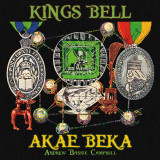
Akae Beka - Kings Bell

Akae Beka

Kings Bell

12inchIGBZRLP005
Before Zero Records
09.12.2022

Kings Bell, first made available to the world on CD and digital on November 1, 2011, is now being released on a 12" vinyl courtesy of Before Zero Records. This LP joined the best of St Croix with the best of Jamaica: an amazing lineup of players spearheaded by the venerable Jamaican production maestro Andrew "Bassie" Campbell. The result of this collaboration is Kings Bell – a modern roots masterpiece. As Vaughn Benjamin's first-ever full-length collaboration with a Jamaican producer, Kings Bell was a historic release and features some of the greatest musicians the genre has ever seen including Leroy "Horsemouth" Wallace, Earl "Chinna" Smith, Squidley Cole, Mikey "Boo" Richards and Sticky Thompson.

The driving musical force behind the album, producer and bassist Andrew "Bassie" Campbell has crafted beautiful rhythms that truly compliment the deep lyrics of Vaughn Benjamin. The power and authenticity of Andrew Bassie's productions stand out from the mass of slickly-produced modern roots coming out of Jamaica today. Much of the music was recorded organically in Jamaica at Tuff Gong Studio, with additional overdubs, vocal recording and mixing completed at I Grade's studio in St. Croix. The result is a collection of songs that capture not only the essence of classic roots from the hands and minds of some of the individuals who have literally helped build the genre, but also the urgency and innovation of the present time. In more than seventy albums and in over twenty years of Midnite music nothing like this cross-fertilization of Jamaican classic roots tradition mixed with St. Croix's own deep roots tradition has ever happened, making "Kings Bell" a glowing highlight in the expansive catalogue of Vaughn Benjamin. A catalogue born from a non-stop movement in pursuit of progressing his craft and delivering his message to the world. One of Benjamin's most fruitful stops along his journey was with I Grade Records, headed by producer/engineer/multi-instrumentalist Laurent "Tippy I" Alfred, regarded by many as some of the finest work of his career.

pre-order now09.12.2022

expected to be published on 09.12.2022

21,43
Omochi - Interior 1

Omochi

Interior 1

12inchETHBO17LP
Ethbo Music
25.11.2022

Omochi, (honorific “O” before mochi) in daily parlance is a rice cake, a dense glutinous product suited to many recipes, sweet or savoury. Stick one under the grill, watch it burst open, wrap it in crisp seaweed and dip it in soya sauce - a healthy snack, and a staple around Japanese New Year. Like everything, Omochi also has its dark side - each year it kills off a small section of the aged community, the gluey bolus a hard act to swallow - the unwary can quickly choke to death.

This Omochi is in fact Tadaki Matsunaga, of early 2000s Tokyo three piece Femini Flyers. The original Feminis were Tadaki (bass), Sachie (vocals) and Koji (drums) that was it, no guitars, no synths, Tadaki's bass being the rhythm and lead, and boy could he make it sing. Their 7” single Like You See / Masterbed was an early Ethbo release was the most requested track from Japan Blues’ Boiler Room Collections video - now pulled off the internet by The Powers That Be - since it was first aired, way back in 2014. Now the single trades for a collector's premium with those in the know. Since that recording, Omochi has built, and been working in, his home studio. The first release being his Ethbo 7” Devil, in 2019.

The follow-up is a roller-coaster ride, his own take on several genres in his forage bag, marinated to his own recipe. You'll hear his expert bass in amongst the fungii, some slick R'n'B guitar styling, several dollops of glitch-tronics, some falling-down-the-stairs drum'n'bass, a slice of kraut, Omochi's louche voice, and a spot of Sachie, the lead singer of the legendary Feminis.

This modern psychedelic omnibus, flying in the face of logic (an Ethbo template) was pressed by Omochi at Toyo Kasei, the last independent Japanese pressing plant, housed it in a tip on sleeve and shipped it to the UK, grill-ready for release. Itadakimasu!

pre-order now25.11.2022

expected to be published on 25.11.2022

24,33
Third Attempt - The Novel Sound LP

Beatservice Records are thrilled to present the hotly-anticipated third album from Oslo-based production maestro, Third Attempt. 'The Novel Sound' follows on from the widely acclaimed 'Beats From The Quarantine' album released in April 2021, and further compliments the young artist's deserved reputation as one of the dance underground's most exciting talents to emerge in recent years.

Third Attempt (aka Torje Fagertun Spilde) has been dazzling us with his far-reaching music since arriving in the Beatservice fold with 'Shoreline' back in 2018, and since then his ever-evolving repertoire has continued to serve up immaculate sonic surprises. The fast-rising 23-year old artist has wasted no time making his indelible mark, displaying a frenetic work rate alongside an impeccable ear for constructing compelling leftfield grooves.

'The Novel Sound' opens with the rolling deviance of 'Freak Out', where a dusty string sample makes way for vocal samples, scratches, and searing sirens permeating a bass-heavy groove, setting the tone magnificently for the music that's primed to unfold. Next, we arrive in the mid-tempo chug of 'Age Of Steam'. Evolving over a crisp, club-ready rhythm, heavy funk guitars, dancing keys and distant vocal stabs cascade over driving bass before soaring strings herald the arrival of a slick breakdown section. The icing on the cake arrives as bubbling acid joins sensational horn motifs, breaking down once again for a starry-eyed beatless passage that leaves us yearning for a reprise.

'My Girl' features amorous vocal samples hovering over an irresistible disco beat, with alluring rhythm guitars and dreamy e-piano chords setting the scene for rousing horns to blast off into blissful summer skies. Before we've found time to catch our breath, 'Nu Funk' arrives with snappy hip hop samples scratched over tight beats and a delectable bass guitar hook. The groove pauses for dubbed-out space delays to echo into the night before a singing lead guitar joins the rhythm elements to burst back into life, with flute motifs, elegant strings, and otherworldly sweeps elegantly meandering across the panorama.

Set over a groove that arrives like a cool summer breeze, 'Sunbeam Symphony' drifts over soul-soothing chords, weighted bass and slick, rolling beats. Hypnotic keys guide us into position as the drums build energy and the bass notes power us forward. Third Attempt's dextrous keyboard solo dazzles momentarily before subsiding for a dub-infused break, with spaced-out vocal chops and rising sweeps building tension before the groove resumes and the virtuoso solo once again majestically soars. Maintaining the sun-kissed meditations, 'Definite' effortlessly floats through waves of thick bass, funk guitar chops and elegantly fused samples, with seductive chords, hypnotic horns and laser-tight drums combining to create a near overpowering dream state.

The heavy trip-hop rhythms of 'Nightfall' enrapture the listener as rich chords discreetly beckon, with cascading congas, mysterious melodies and exotic refrains building before the glorious lead vocal appears like a hyper-luminous flash of light. The chords disappear into the nothingness, before the carefully selected sample of 'Working Man' drifts in to fill the empty space. Smokey drums soon arrive, joined by weighted bass, foggy chords and an enigmatic whistle lead, fusing to conjure a half-lit world lifted from the pages of an evocative film noir novel.

The enlivening tablas, glitchy effects and saucer-eyed sweeps of 'Greed' hide subliminal messages casting a knowing eye over the consumer-driven society and self-help culture that pervade our society, before we arrive at the album's charmed finale. 'Last Winter Of My Childhood' yet again manages to transport the listener into a gently hallucinatory realm, with drowsy bass notes, tripped out pads and emotive strings building to a profound and rush-inducing crescendo.

'The Novel Sound' once again sees Third Attempt dextrously merging expansive musical aesthetics that fuse trip-hop, funk, soul and disco to deliver a sound that – although endowed with vintage sensibilities – feels proudly up to date. Continuing his breathtaking development in dazzling style, the album feels destined to echo over blissed-out sunsets, back-room excursions and twilight skies for many years to come.

out of Stock

Order now and we will order the item for you at our supplier.

11,98

Last In: 7 months ago
Lee Tracy & Isaac Manning - Is it What You Want

As the sun sets on a quaint East Nashville house, a young man bares a piece of his soul. Facing the camera, sporting a silky suit jacket/shirt/slacks/fingerless gloves ensemble that announces "singer" before he's even opened his mouth, Lee Tracy Johnson settles onto his stage, the front yard. He sways to the dirge-like drum machine pulse of a synth-soaked slow jam, extends his arms as if gaining his balance, and croons in affecting, fragile earnest, "I need your love… oh baby…"

Dogs in the yard next door begin barking. A mysterious cardboard robot figure, beamed in from galaxies unknown and affixed to a tree, is less vocal. Lee doesn't acknowledge either's presence. He's busy feeling it, arms and hands gesticulating. His voice rises in falsetto over the now-quiet dogs, over the ambient noise from the street that seeps into the handheld camcorder's microphone, over the recording of his own voice played back from a boombox off-camera. After six minutes the single, continuous shot ends. In this intimate creative universe there are no re-takes. There are many more music videos to shoot, and as Lee later puts it, "The first time you do it is actually the best. Because you can never get that again. You expressing yourself from within."

"I Need Your Love" dates from a lost heyday. From some time in the '80s or early '90s, when Lee Tracy (as he was known in performance) and his music partner/producer/manager Isaac Manning committed hours upon hours of their sonic and visual ideas to tape. Embracing drum machines and synthesizers – electronics that made their personal futurism palpable – they recorded exclusively at home, live in a room into a simple cassette deck. Soul, funk, electro and new wave informed their songs, yet Lee and Isaac eschewed the confinement of conventional categories and genres, preferring to let experimentation guide them.

"Anytime somebody put out a new record they had the same instruments or the same sound," explains Isaac. "So I basically wanted to find something that's really gonna stand out away from all of the rest of 'em." Their ethos meant that every idea they came up with was at least worth trying: echoed out half-rapped exhortations over frantic techno-style beats, gospel synth soul, modal electro-funk, oddball pop reinterpretations, emo AOR balladry, nods to Prince and the Fat Boys, or arrangements that might collapse mid-song into a mess of arcade game-ish blips before rallying to reach the finish line. All of it conjoined by consistent tape hiss, and most vitally, Lee's chameleonic voice, which managed to wildly shape shift and still evoke something sincere – whether toggling between falsetto and tenor exalting Jesus's return, or punctuating a melismatic romantic adlib with a succinct, "We all know how it feels to be alone."

"People think we went to a studio," says Isaac derisively. "We never went to no studio. We didn't have the money to go to no studio! We did this stuff at home. I shot videos in my front yard with whatever we could to get things together." Sometimes Isaac would just put on an instrumental record, be it "Planet Rock" or "Don't Cry For Me Argentina" (from Evita), press "record," and let Lee improvise over it, yielding peculiar love songs, would-be patriotic anthems, or Elvis Presley or Marilyn Monroe tributes. Technical limitations and a lack of professional polish never dissuaded them. They believed they were onto something.

"That struggle," Isaac says, "made that sound sound good to me."

In the parlance of modern music criticism Lee and Isaac's dizzying DIY efforts would inevitably be described as "outsider." But "outsider" carries the burden of untold additional layers of meaning if you're Black and from the South, creating on a budget, and trying to get someone, anyone within the country music capital of the world to take your vision seriously. "What category should we put it in?" Isaac asks rhetorically. "I don't know. All I know is feeling. I ain't gonna name it nothing. It's music. If it grabs your soul and touch your heart that's what it basically is supposed to do."

=

Born in 1963, the baby boy of nine siblings, Lee Tracy spent his earliest years living amidst the shotgun houses on Nashville's south side. "We was poor, man!" he says, recalling the outhouse his family used for a bathroom and the blocks of ice they kept in the kitchen to chill perishables. "But I actually don't think I really realized I was in poverty until I got grown and started thinking about it." Lee's mom worked at the Holiday Inn; his dad did whatever he had to do, from selling fruit from a horse drawn cart to bootlegging. "We didn't have much," Lee continues, "but my mother and my father got us the things we needed, the clothes on our back." By the end of the decade with the city's urban renewal programs razing entire neighborhoods to accommodate construction of the Interstate, the family moved to Edgehill Projects. Lee remembers music and art as a constant source of inspiration for he and his brothers and sisters – especially after seeing the Jackson 5 perform on Ed Sullivan. "As a small child I just knew that was what I wanted to do."

His older brother Don began musically mentoring him, introducing Lee to a variety of instruments and sounds. "He would never play one particular type of music, like R&B," says Lee. "I was surrounded by jazz, hard rock and roll, easy listening, gospel, reggae, country music; I mean I was a sponge absorbing all of that." Lee taught himself to play drums by beating on cardboard boxes, gaining a rep around the way for his timekeeping, and his singing voice. Emulating his favorites, Earth Wind & Fire and Cameo, he formed groups with other kids with era-evocative band names like Concept and TNT Connection, and emerged as the leader of disciplined rehearsals. "I made them practice," says Lee. "We practiced and practiced and practiced. Because I wanted that perfection." By high school the most accomplished of these bands would take top prize in a prominent local talent show. It was a big moment for Lee, and he felt ready to take things to the next level. But his band-mates had other ideas.

"I don't know what happened," he says, still miffed at the memory. "It must have blew they mind after we won and people started showing notice, because it's like everybody quit! I was like, where the hell did everybody go?" Lee had always made a point of interrogating prospective musicians about their intentions before joining his groups: were they really serious or just looking for a way to pick up girls? Now he understood even more the importance of finding a collaborator just as committed to the music as he was.

=

Isaac Manning had spent much of his life immersed in music and the arts – singing in the church choir with his family on Nashville's north side, writing, painting, dancing, and working various gigs within the entertainment industry. After serving in the armed forces, in the early '70s he ran The Teenage Place, a music and performance venue that catered to the local youth. But he was forced out of town when word of one of his recreational routines created a stir beyond the safe haven of his bohemian circles.

"I was growing marijuana," Isaac explains. "It wasn't no business, I was smoking it myself… I would put marijuana in scrambled eggs, cornbread and stuff." His weed use originated as a form of self-medication to combat severe tooth pain. But when he began sharing it with some of the other young people he hung out with, some of who just so happened to be the kids of Nashville politicians, the cops came calling. "When I got busted," he remembers, "they were talking about how they were gonna get rid of me because they didn't want me saying nothing about they children because of the politics and stuff. So I got my family, took two raggedy cars, and left Nashville and went to Vegas."

Out in the desert, Isaac happened to meet Chubby Checker of "The Twist" fame while the singer was gigging at The Flamingo. Impressed by Isaac's zeal, Checker invited him to go on the road with him as his tour manager/roadie/valet. The experience gave Isaac a window into a part of the entertainment world he'd never encountered – a glimpse of what a true pop act's audience looked like. "Chubby Checker, none of his shows were played for Black folks," he remembers. "All his gigs were done at high-class white people areas." Returning home after a few years with Chubby, Isaac was properly motivated to make it in Music City. He began writing songs and scouting around Nashville for local talent anywhere he could find it with an expressed goal: "Find someone who can deliver your songs the way you want 'em delivered and make people feel what you want them to feel."

One day while walking through Edgehill Projects Isaac heard someone playing the drums in a way that made him stop and take notice. "The music was so tight, just the drums made me feel like, oh I'm-a find this person," he recalls. "So I circled through the projects until I found who it was.

"That's how I met him – Lee Tracy. When I found him and he started singing and stuff, I said, ohhh, this is somebody different."

=

Theirs was a true complementary partnership: young Lee possessed the raw talent, the older Isaac the belief. "He's really the only one besides my brother and my family that really seen the potential in me," says Lee. "He made me see that I could do it."

Isaac long being a night owl, his house also made for a fertile collaborative environment – a space where there always seemed to be a new piece of his visual art on display: paintings, illustrations, and dolls and figures (including an enigmatic cardboard robot). Lee and Issac would hang out together and talk, listen to music, conjure ideas, and smoke the herb Isaac had resumed growing in his yard. "It got to where I could trust him, he could trust me," Isaac says of their bond. They also worked together for hours on drawings, spreading larges rolls of paper on the walls and sketching faces with abstract patterns and imagery: alien-like beings, tri-horned horse heads, inverted Janus-like characters where one visage blurred into the other.

Soon it became apparent that they didn't need other collaborators; self-sufficiency was the natural way forward. At Isaac's behest Lee, already fed up with dealing with band musicians, began playing around with a poly-sonic Yamaha keyboard at the local music store. "It had everything on it – trumpet, bass, drums, organ," remembers Lee. "And that's when I started recording my own stuff."

The technology afforded Lee the flexibility and independence he craved, setting him on a path other bedroom musicians and producers around the world were simultaneously following through the '80s into the early '90s. Saving up money from day jobs, he eventually supplemented the Yamaha Isaac had gotten him with Roland and Casio drum machines and a Moog. Lee was living in an apartment in Hillside at that point caring for his dad, who'd been partially paralyzed since early in life. In the evenings up in his second floor room, the music put him in a zone where he could tune out everything and lose himself in his ideas.

"Oh I loved it," he recalls. "I would really experiment with the instruments and use a lot of different sound effects. I was looking for something nobody else had. I wanted something totally different. And once I found the sound I was looking for, I would just smoke me a good joint and just let it go, hit the record button." More potent a creative stimulant than even Isaac's weed was the holistic flow and spontaneity of recording. Between sessions at Isaac's place and Lee's apartment, their volume of output quickly ballooned.

"We was always recording," says Lee. "That's why we have so much music. Even when I went to Isaac's and we start creating, I get home, my mind is racing, I gotta start creating, creating, creating. I remember there were times when I took a 90-minute tape from front to back and just filled it up."

"We never practiced," says Isaac. "See, that was just so odd about the whole thing. I could relate to him, and tell him about the songs I had ideas for and everything and stuff. And then he would bring it back or whatever, and we'd get together and put it down." Once the taskmaster hell bent on rehearsing, Lee had flipped a full 180. Perfection was no longer an aspiration, but the enemy of inspiration.

"I seen where practicing and practicing got me," says Lee. "A lot of musicians you get to playing and they gotta stop, they have to analyze the music. But while you analyzing you losing a lot of the greatness of what you creating. Stop analyzing what you play, just play! And it'll all take shape."

=

"I hope you understood the beginning of the record because this was invented from a dream I had today… (You tell me, I'll tell you, we'll figure it out together)" – Lee Tracy and Isaac Manning, "Hope You Understand"

Lee lets loose a maniacal cackle when he acknowledges that the material that he and Isaac recorded was by anyone's estimation pretty out there. It's the same laugh that commences "Hope You Understand" – a chaotic transmission that encapsulates the duality at the heart of their music: a stated desire to reach people and a compulsion to go as leftfield as they saw fit.

"We just did it," says Lee. "We cut the music on and cut loose. I don't sit around and write. I do it by listening, get a feeling, play the music, and the lyrics and stuff just come out of me."

The approach proved adaptable to interpreting other artists' material. While recording a cover of Whitney Houston's pop ballad "Saving All My Love For You," Lee played Whitney's version in his headphones as he laid down his own vocals – partially following the lyrics, partially using them as a departure point. The end result is barely recognizable compared with the original, Lee and Isaac having switched up the time signature and reinvented the melody along the way towards morphing a slick mainstream radio standard into something that sounds solely their own.

"I really used that song to get me started," says Lee. "Then I said, well I need something else, something is missing. Something just came over me. That's when I came up with 'Is It What You Want.'"

The song would become the centerpiece of Lee and Isaac's repertoire. Pushed along by a percolating metronomic Rhythm King style beat somewhere between a military march and a samba, "Is It What You Want" finds Lee pleading the sincerity of his commitment to a potential love interest embellished by vocal tics and hiccups subtlely reminiscent of his childhood hero MJ. Absent chord changes, only synth riffs gliding in and out like apparitions, the song achieves a lingering lo-fi power that leaves you feeling like it's still playing, somewhere, even after the fade out.

"I don't know, it's like a real spiritual song," Lee reflects. "But it's not just spiritual. To me the more I listen to it it's like about everything that you do in your everyday life, period. Is it what you want? Do you want a car or you don't want a car? Do you want Jesus or do you want the Devil? It's basically asking you the question. Can't nobody answer the question but you yourself."

In 1989 Lee won a lawsuit stemming from injuries sustained from a fight he'd gotten into. He took part of the settlement money and with Isaac pressed up "Saving All My Love For You" b/w "Is It What You Want" as a 45 single. Isaac christened the label One Chance Records. "Because that's all we wanted," he says with a laugh, "one chance."

Isaac sent the record out to radio stations and major labels, hoping for it to make enough noise to get picked up nationally. But the response he and Lee were hoping for never materialized. According to Isaac the closest the single got to getting played on the radio is when a disk jock from a local station made a highly unusual announcement on air: "The dude said on the radio, 107.5 – 'We are not gonna play 'Is It What You Want.' We cracked up! Wow, that's deep.

"It was a whole racist thing that was going on," he reflects. "So we just looked over and kept on going. That was it. That was about the way it goes… If you were Black and you were living in Nashville and stuff, that's the way you got treated." Isaac already knew as much from all the times he'd brought he and Lee's tapes (even their cache of country music tunes) over to Music Row to try to drum up interest to no avail.

"Isaac, he really worked his ass off," says Lee. "He probably been to every record place down on Music Row." Nashville's famed recording and music business corridor wasn't but a few blocks from where Lee grew up. Close enough, he remembers, for him to ride his bike along its back alleys and stumble upon the occasional random treasure, like a discarded box of harmonicas. Getting in through the front door, however, still felt a world away.

"I just don't think at the time our music fell into a category for them," he concedes. "It was before its time."

=

Lee stopped making music some time in the latter part of the '90s, around the time his mom passed away and life became increasingly tough to manage. "When my mother died I had a nervous breakdown," he says, "So I shut down for a long time. I was in such a sadness frame of mind. That's why nobody seen me. I had just disappeared off the map." He fell out of touch with Isaac, and in an indication of just how bad things had gotten for him, lost track of all the recordings they'd made together. Music became a distant memory.

Fortunately, Isaac kept the faith. In a self-published collection of his poetry – paeans to some of his favorite entertainment and public figures entitled Friends and Dick Clark – he'd written that he believed "music has a life of its own." But his prescience and presence of mind were truly manifested in the fact that he kept an archive of he and Lee's work. As perfectly imperfect as "Is It What You Want" now sounds in a post-Personal Space world, Lee and Isaac's lone official release was in fact just a taste. The bulk of the Is It What You Want album is culled from the pair's essentially unheard home recordings – complete songs, half-realized experiments, Isaac's blue monologues and pronouncements et al – compiled, mixed and programmed in the loose and impulsive creative spirit of their regular get-togethers from decades ago. The rest of us, it seems, may have finally caught up to them.

On the prospect of at long last reaching a wider audience, Isaac says simply, "I been trying for a long time, it feels good." Ever the survivor, he adds, "The only way I know how to make it to the top is to keep climbing. If one leg break on the ladder, hey, you gotta fix it and keep on going… That's where I be at. I'll kill death to make it out there."

For Lee it all feels akin to a personal resurrection: "It's like I was in a tomb and the tomb was opened and I'm back… Man, it feels so great. I feel like I'm gonna jump out of my skin." Success at this stage of his life, he realizes, probably means something different than what it did back when he was singing and dancing in Isaac's front yard. "What I really mean by 'making it,'" he explains isn't just the music being heard but, "the story being told."

Occasionally Lee will pull up "Is It What You Want" on YouTube on his phone, put on his headphones, and listen. He remembers the first time he heard his recorded voice. How surreal it was, how he thought to himself, "Is that really me?" What would he say to that younger version of himself now?

"I would probably tell myself, hang in there, don't give up. Keep striving for the goal. And everything will work out."

Despite what's printed on the record label, sometimes you do get more than one chance.

out of Stock

Order now and we will order the item for you at our supplier.

11,72

Last In: 3 years ago
Upstairs - It's Hard To Get In The Showbiz

Upstairs, a band from Frankfurt, Germany was active from 1977 to 1983. Though considering themselves mainly a rock group, the band incorporated elements of funk, jazz rock and disco into their music. On their rare and privately released debut album "It's Hard To Get In The Showbiz" from 1980 they created something that could be called Germany's definite answer to AOR, yet still with an edgy and unique krautrock flavor.

The album starts with "Wontcha Try," a track where core songwriter, guitarist and lead singer Helmer Sauer is telling the story about being dismissed from his job: "They tried to tell me in a fucking gentle way, that the time had come to kick me…". Sauer serves more personal, hard-edged lyrics on the album as well. On "Happy Hooker," for example, he tells the story of a working girl in the red light milieu: "The job is as hard that you really can never imagine, she serves for the money, degradin' herself in a way - if you'd know how she's feelin' you wouldn't laugh at all". An empathetic view on the subject of prostitution rarely heard at that time.

But aside from the profound lyrics and songwriting, the album has a lot to offer on the groovy side of things. With catchy bass lines, rhythm guitar, Fender Rhodes, Moog synthesizer, Clavinet and swift crisp drumming "It's Hard To Get In The Showbiz" is one of the best examples of late 70s flavored funky rock from Germany. Additional to the aforementioned "Wontcha Try" another DJ delight should be "Make Your Steps On Better Lines" which showcases a superb synth line and disco funk flavors. We also get the slick mellow latinesque AOR grooves of "Get On A Plane" as well as the now-classic "You're Just Yourself", which marks the most soulful track of the LP. As followers of our label are already well aware, "You're Just Yourself" was featured on the compilation, "Boogie On The Mainline - A Collection Of Rare Disco, Funk And Boogie From Germany 1980-1987" from 2018.

The band mainly performed locally and never really had ambitions to release their music on a bigger label. Too bad that Upstairs only released this one album. Of course, the highly sought-after original pressing is almost impossible to find nowadays. Therefore, we are proud to finally make this record available again after 40 years for a reasonable, regular LP price. Only 300 copies of the carefully re-mastered repress have been produced, and included is a printed lyrics insert identical to the original.

out of Stock

Order now and we will order the item for you at our supplier.

18,45

Last In: 3 years ago
Lacuna Coil - Comalies XX LP 2x12"

Back in 2002, Lacuna Coil released an album which is now undeniably an anthem laden millennial classic that established them as a band with the stamina to go the distance and much of the climbing that still lay ahead back then. Now, 20 years later, Lacunca Coil decided to revisit the songs, but not to just re-record the songs as they were, but deconstruct and transport them into 2022. ‘This is not a reboot or a spin-off or anything like that,’ says vocalist Cristina Scabbia. ‘We just wanted to give these songs a 2022 dress and see how this guy or girl who was born 20 years ago would still look fucking slick in 2022.’

pre-order now14.10.2022

expected to be published on 14.10.2022

34,83
Lacuna Coil - Comalies XX LP 2x12"

Back in 2002, Lacuna Coil released an album which is now undeniably an anthem laden millennial classic that established them as a band with the stamina to go the distance and much of the climbing that still lay ahead back then. Now, 20 years later, Lacunca Coil decided to revisit the songs, but not to just re-record the songs as they were, but deconstruct and transport them into 2022. ‘This is not a reboot or a spin-off or anything like that,’ says vocalist Cristina Scabbia. ‘We just wanted to give these songs a 2022 dress and see how this guy or girl who was born 20 years ago would still look fucking slick in 2022.’

pre-order now14.10.2022

expected to be published on 14.10.2022

34,83
FRANK & TONY - THE EARLY YEARS

Frank&Tony

THE EARLY YEARS

12inchSATLTD005
Scissor & Thread
30.09.2022

Finally getting a vinyl re-release is Frank & Tony’s seminal work with breakout duo Bob Moses. Back in 2012 Francis Harris and Anthony Collins (Frank & Tony) worked with their fellow New Yorkers before they went on to sign to Domino and blow up globally.
The four track EP kicks off with Elea - a deep and thoughtful collaboration utilizing Frank & Tony’s slick production with understated vocals. Next up on the A side is Holding On, featuring iconically Bob Moses vocals atop of a low-key bumping groove. There’s also washes of brass that add a new dimension to the track. Flipping over to the B side, Holy for Her (which also appeared back in 2012), is a densely wound, hypnotic rhythm, providing the basis for Tom Howie and Jim Vallance to do their special thing. Winding things up, Marigold is another early classic from the same period - a dubbed-out groove with sharp percussion and a killer, signature vocal. An essential release capturing a vital period in both outfits' development.

out of Stock

Order now and we will order the item for you at our supplier.

11,39

Last In: 8 months ago
RETROSPECT - 4 U

Retrospect

4 U

12inchCB026
Constant Black
26.09.2022

Constant Black is one of the numerous labels in UK artist Burnski's orbit. He's been a man on form on all fronts in recent years and here he snaps up Retrospect for a trio of super slick and funky minimal house cuts. 'Ay-up!' is a cheeky opener with subtle northern welcomes hidden in the mix as the lithe bass and 2-step tinged drums do their thang. It's reet good. 'Schneebly' gets more pacey and balmy, with silky and oily bass and kinetic drum work all underpinned by a sick bass tone. Last of all comes '4 U' which has something of an upright garage skip and downright irresistible groove. These are high functioning, charismatic cuts to pump up any floor.

out of Stock

Order now and we will order the item for you at our supplier.

13,40

Last In: 2 years ago
Lee Tracy & Isaac Manning - Is it What You Want LP

As the sun sets on a quaint East Nashville house, a young man bares a piece of his soul. Facing the camera, sporting a silky suit jacket/shirt/slacks/fingerless gloves ensemble that announces "singer" before he's even opened his mouth, Lee Tracy Johnson settles onto his stage, the front yard. He sways to the dirge-like drum machine pulse of a synth-soaked slow jam, extends his arms as if gaining his balance, and croons in affecting, fragile earnest, "I need your love… oh baby…"

Dogs in the yard next door begin barking. A mysterious cardboard robot figure, beamed in from galaxies unknown and affixed to a tree, is less vocal. Lee doesn't acknowledge either's presence. He's busy feeling it, arms and hands gesticulating. His voice rises in falsetto over the now-quiet dogs, over the ambient noise from the street that seeps into the handheld camcorder's microphone, over the recording of his own voice played back from a boombox off-camera. After six minutes the single, continuous shot ends. In this intimate creative universe there are no re-takes. There are many more music videos to shoot, and as Lee later puts it, "The first time you do it is actually the best. Because you can never get that again. You expressing yourself from within."

"I Need Your Love" dates from a lost heyday. From some time in the '80s or early '90s, when Lee Tracy (as he was known in performance) and his music partner/producer/manager Isaac Manning committed hours upon hours of their sonic and visual ideas to tape. Embracing drum machines and synthesizers – electronics that made their personal futurism palpable – they recorded exclusively at home, live in a room into a simple cassette deck. Soul, funk, electro and new wave informed their songs, yet Lee and Isaac eschewed the confinement of conventional categories and genres, preferring to let experimentation guide them.

"Anytime somebody put out a new record they had the same instruments or the same sound," explains Isaac. "So I basically wanted to find something that's really gonna stand out away from all of the rest of 'em." Their ethos meant that every idea they came up with was at least worth trying: echoed out half-rapped exhortations over frantic techno-style beats, gospel synth soul, modal electro-funk, oddball pop reinterpretations, emo AOR balladry, nods to Prince and the Fat Boys, or arrangements that might collapse mid-song into a mess of arcade game-ish blips before rallying to reach the finish line. All of it conjoined by consistent tape hiss, and most vitally, Lee's chameleonic voice, which managed to wildly shape shift and still evoke something sincere – whether toggling between falsetto and tenor exalting Jesus's return, or punctuating a melismatic romantic adlib with a succinct, "We all know how it feels to be alone."

"People think we went to a studio," says Isaac derisively. "We never went to no studio. We didn't have the money to go to no studio! We did this stuff at home. I shot videos in my front yard with whatever we could to get things together." Sometimes Isaac would just put on an instrumental record, be it "Planet Rock" or "Don't Cry For Me Argentina" (from Evita), press "record," and let Lee improvise over it, yielding peculiar love songs, would-be patriotic anthems, or Elvis Presley or Marilyn Monroe tributes. Technical limitations and a lack of professional polish never dissuaded them. They believed they were onto something.

"That struggle," Isaac says, "made that sound sound good to me."

In the parlance of modern music criticism Lee and Isaac's dizzying DIY efforts would inevitably be described as "outsider." But "outsider" carries the burden of untold additional layers of meaning if you're Black and from the South, creating on a budget, and trying to get someone, anyone within the country music capital of the world to take your vision seriously. "What category should we put it in?" Isaac asks rhetorically. "I don't know. All I know is feeling. I ain't gonna name it nothing. It's music. If it grabs your soul and touch your heart that's what it basically is supposed to do."

=

Born in 1963, the baby boy of nine siblings, Lee Tracy spent his earliest years living amidst the shotgun houses on Nashville's south side. "We was poor, man!" he says, recalling the outhouse his family used for a bathroom and the blocks of ice they kept in the kitchen to chill perishables. "But I actually don't think I really realized I was in poverty until I got grown and started thinking about it." Lee's mom worked at the Holiday Inn; his dad did whatever he had to do, from selling fruit from a horse drawn cart to bootlegging. "We didn't have much," Lee continues, "but my mother and my father got us the things we needed, the clothes on our back." By the end of the decade with the city's urban renewal programs razing entire neighborhoods to accommodate construction of the Interstate, the family moved to Edgehill Projects. Lee remembers music and art as a constant source of inspiration for he and his brothers and sisters – especially after seeing the Jackson 5 perform on Ed Sullivan. "As a small child I just knew that was what I wanted to do."

His older brother Don began musically mentoring him, introducing Lee to a variety of instruments and sounds. "He would never play one particular type of music, like R&B," says Lee. "I was surrounded by jazz, hard rock and roll, easy listening, gospel, reggae, country music; I mean I was a sponge absorbing all of that." Lee taught himself to play drums by beating on cardboard boxes, gaining a rep around the way for his timekeeping, and his singing voice. Emulating his favorites, Earth Wind & Fire and Cameo, he formed groups with other kids with era-evocative band names like Concept and TNT Connection, and emerged as the leader of disciplined rehearsals. "I made them practice," says Lee. "We practiced and practiced and practiced. Because I wanted that perfection." By high school the most accomplished of these bands would take top prize in a prominent local talent show. It was a big moment for Lee, and he felt ready to take things to the next level. But his band-mates had other ideas.

"I don't know what happened," he says, still miffed at the memory. "It must have blew they mind after we won and people started showing notice, because it's like everybody quit! I was like, where the hell did everybody go?" Lee had always made a point of interrogating prospective musicians about their intentions before joining his groups: were they really serious or just looking for a way to pick up girls? Now he understood even more the importance of finding a collaborator just as committed to the music as he was.

=

Isaac Manning had spent much of his life immersed in music and the arts – singing in the church choir with his family on Nashville's north side, writing, painting, dancing, and working various gigs within the entertainment industry. After serving in the armed forces, in the early '70s he ran The Teenage Place, a music and performance venue that catered to the local youth. But he was forced out of town when word of one of his recreational routines created a stir beyond the safe haven of his bohemian circles.

"I was growing marijuana," Isaac explains. "It wasn't no business, I was smoking it myself… I would put marijuana in scrambled eggs, cornbread and stuff." His weed use originated as a form of self-medication to combat severe tooth pain. But when he began sharing it with some of the other young people he hung out with, some of who just so happened to be the kids of Nashville politicians, the cops came calling. "When I got busted," he remembers, "they were talking about how they were gonna get rid of me because they didn't want me saying nothing about they children because of the politics and stuff. So I got my family, took two raggedy cars, and left Nashville and went to Vegas."

Out in the desert, Isaac happened to meet Chubby Checker of "The Twist" fame while the singer was gigging at The Flamingo. Impressed by Isaac's zeal, Checker invited him to go on the road with him as his tour manager/roadie/valet. The experience gave Isaac a window into a part of the entertainment world he'd never encountered – a glimpse of what a true pop act's audience looked like. "Chubby Checker, none of his shows were played for Black folks," he remembers. "All his gigs were done at high-class white people areas." Returning home after a few years with Chubby, Isaac was properly motivated to make it in Music City. He began writing songs and scouting around Nashville for local talent anywhere he could find it with an expressed goal: "Find someone who can deliver your songs the way you want 'em delivered and make people feel what you want them to feel."

One day while walking through Edgehill Projects Isaac heard someone playing the drums in a way that made him stop and take notice. "The music was so tight, just the drums made me feel like, oh I'm-a find this person," he recalls. "So I circled through the projects until I found who it was.

"That's how I met him – Lee Tracy. When I found him and he started singing and stuff, I said, ohhh, this is somebody different."

=

Theirs was a true complementary partnership: young Lee possessed the raw talent, the older Isaac the belief. "He's really the only one besides my brother and my family that really seen the potential in me," says Lee. "He made me see that I could do it."

Isaac long being a night owl, his house also made for a fertile collaborative environment – a space where there always seemed to be a new piece of his visual art on display: paintings, illustrations, and dolls and figures (including an enigmatic cardboard robot). Lee and Issac would hang out together and talk, listen to music, conjure ideas, and smoke the herb Isaac had resumed growing in his yard. "It got to where I could trust him, he could trust me," Isaac says of their bond. They also worked together for hours on drawings, spreading larges rolls of paper on the walls and sketching faces with abstract patterns and imagery: alien-like beings, tri-horned horse heads, inverted Janus-like characters where one visage blurred into the other.

Soon it became apparent that they didn't need other collaborators; self-sufficiency was the natural way forward. At Isaac's behest Lee, already fed up with dealing with band musicians, began playing around with a poly-sonic Yamaha keyboard at the local music store. "It had everything on it – trumpet, bass, drums, organ," remembers Lee. "And that's when I started recording my own stuff."

The technology afforded Lee the flexibility and independence he craved, setting him on a path other bedroom musicians and producers around the world were simultaneously following through the '80s into the early '90s. Saving up money from day jobs, he eventually supplemented the Yamaha Isaac had gotten him with Roland and Casio drum machines and a Moog. Lee was living in an apartment in Hillside at that point caring for his dad, who'd been partially paralyzed since early in life. In the evenings up in his second floor room, the music put him in a zone where he could tune out everything and lose himself in his ideas.

"Oh I loved it," he recalls. "I would really experiment with the instruments and use a lot of different sound effects. I was looking for something nobody else had. I wanted something totally different. And once I found the sound I was looking for, I would just smoke me a good joint and just let it go, hit the record button." More potent a creative stimulant than even Isaac's weed was the holistic flow and spontaneity of recording. Between sessions at Isaac's place and Lee's apartment, their volume of output quickly ballooned.

"We was always recording," says Lee. "That's why we have so much music. Even when I went to Isaac's and we start creating, I get home, my mind is racing, I gotta start creating, creating, creating. I remember there were times when I took a 90-minute tape from front to back and just filled it up."

"We never practiced," says Isaac. "See, that was just so odd about the whole thing. I could relate to him, and tell him about the songs I had ideas for and everything and stuff. And then he would bring it back or whatever, and we'd get together and put it down." Once the taskmaster hell bent on rehearsing, Lee had flipped a full 180. Perfection was no longer an aspiration, but the enemy of inspiration.

"I seen where practicing and practicing got me," says Lee. "A lot of musicians you get to playing and they gotta stop, they have to analyze the music. But while you analyzing you losing a lot of the greatness of what you creating. Stop analyzing what you play, just play! And it'll all take shape."

=

"I hope you understood the beginning of the record because this was invented from a dream I had today… (You tell me, I'll tell you, we'll figure it out together)" – Lee Tracy and Isaac Manning, "Hope You Understand"

Lee lets loose a maniacal cackle when he acknowledges that the material that he and Isaac recorded was by anyone's estimation pretty out there. It's the same laugh that commences "Hope You Understand" – a chaotic transmission that encapsulates the duality at the heart of their music: a stated desire to reach people and a compulsion to go as leftfield as they saw fit.

"We just did it," says Lee. "We cut the music on and cut loose. I don't sit around and write. I do it by listening, get a feeling, play the music, and the lyrics and stuff just come out of me."

The approach proved adaptable to interpreting other artists' material. While recording a cover of Whitney Houston's pop ballad "Saving All My Love For You," Lee played Whitney's version in his headphones as he laid down his own vocals – partially following the lyrics, partially using them as a departure point. The end result is barely recognizable compared with the original, Lee and Isaac having switched up the time signature and reinvented the melody along the way towards morphing a slick mainstream radio standard into something that sounds solely their own.

"I really used that song to get me started," says Lee. "Then I said, well I need something else, something is missing. Something just came over me. That's when I came up with 'Is It What You Want.'"

The song would become the centerpiece of Lee and Isaac's repertoire. Pushed along by a percolating metronomic Rhythm King style beat somewhere between a military march and a samba, "Is It What You Want" finds Lee pleading the sincerity of his commitment to a potential love interest embellished by vocal tics and hiccups subtlely reminiscent of his childhood hero MJ. Absent chord changes, only synth riffs gliding in and out like apparitions, the song achieves a lingering lo-fi power that leaves you feeling like it's still playing, somewhere, even after the fade out.

"I don't know, it's like a real spiritual song," Lee reflects. "But it's not just spiritual. To me the more I listen to it it's like about everything that you do in your everyday life, period. Is it what you want? Do you want a car or you don't want a car? Do you want Jesus or do you want the Devil? It's basically asking you the question. Can't nobody answer the question but you yourself."

In 1989 Lee won a lawsuit stemming from injuries sustained from a fight he'd gotten into. He took part of the settlement money and with Isaac pressed up "Saving All My Love For You" b/w "Is It What You Want" as a 45 single. Isaac christened the label One Chance Records. "Because that's all we wanted," he says with a laugh, "one chance."

Isaac sent the record out to radio stations and major labels, hoping for it to make enough noise to get picked up nationally. But the response he and Lee were hoping for never materialized. According to Isaac the closest the single got to getting played on the radio is when a disk jock from a local station made a highly unusual announcement on air: "The dude said on the radio, 107.5 – 'We are not gonna play 'Is It What You Want.' We cracked up! Wow, that's deep.

"It was a whole racist thing that was going on," he reflects. "So we just looked over and kept on going. That was it. That was about the way it goes… If you were Black and you were living in Nashville and stuff, that's the way you got treated." Isaac already knew as much from all the times he'd brought he and Lee's tapes (even their cache of country music tunes) over to Music Row to try to drum up interest to no avail.

"Isaac, he really worked his ass off," says Lee. "He probably been to every record place down on Music Row." Nashville's famed recording and music business corridor wasn't but a few blocks from where Lee grew up. Close enough, he remembers, for him to ride his bike along its back alleys and stumble upon the occasional random treasure, like a discarded box of harmonicas. Getting in through the front door, however, still felt a world away.

"I just don't think at the time our music fell into a category for them," he concedes. "It was before its time."

=

Lee stopped making music some time in the latter part of the '90s, around the time his mom passed away and life became increasingly tough to manage. "When my mother died I had a nervous breakdown," he says, "So I shut down for a long time. I was in such a sadness frame of mind. That's why nobody seen me. I had just disappeared off the map." He fell out of touch with Isaac, and in an indication of just how bad things had gotten for him, lost track of all the recordings they'd made together. Music became a distant memory.

Fortunately, Isaac kept the faith. In a self-published collection of his poetry – paeans to some of his favorite entertainment and public figures entitled Friends and Dick Clark – he'd written that he believed "music has a life of its own." But his prescience and presence of mind were truly manifested in the fact that he kept an archive of he and Lee's work. As perfectly imperfect as "Is It What You Want" now sounds in a post-Personal Space world, Lee and Isaac's lone official release was in fact just a taste. The bulk of the Is It What You Want album is culled from the pair's essentially unheard home recordings – complete songs, half-realized experiments, Isaac's blue monologues and pronouncements et al – compiled, mixed and programmed in the loose and impulsive creative spirit of their regular get-togethers from decades ago. The rest of us, it seems, may have finally caught up to them.

On the prospect of at long last reaching a wider audience, Isaac says simply, "I been trying for a long time, it feels good." Ever the survivor, he adds, "The only way I know how to make it to the top is to keep climbing. If one leg break on the ladder, hey, you gotta fix it and keep on going… That's where I be at. I'll kill death to make it out there."

For Lee it all feels akin to a personal resurrection: "It's like I was in a tomb and the tomb was opened and I'm back… Man, it feels so great. I feel like I'm gonna jump out of my skin." Success at this stage of his life, he realizes, probably means something different than what it did back when he was singing and dancing in Isaac's front yard. "What I really mean by 'making it,'" he explains isn't just the music being heard but, "the story being told."

Occasionally Lee will pull up "Is It What You Want" on YouTube on his phone, put on his headphones, and listen. He remembers the first time he heard his recorded voice. How surreal it was, how he thought to himself, "Is that really me?" What would he say to that younger version of himself now?

"I would probably tell myself, hang in there, don't give up. Keep striving for the goal. And everything will work out."

Despite what's printed on the record label, sometimes you do get more than one chance.

out of Stock

Order now and we will order the item for you at our supplier.

23,49

Last In: 3 years ago
Glenn Fallows & Mark Treffel Pres. - The Globeflowers Master Vol.2 LP

Glenn Fallows and Mark Treffel released their first album, ‘The Globeflower Master Vol. 1’, on Mr Bongo in September 2021. With its lush, warm and timeless productions paying homage to classic 60s and 70s soundtrack composers, it was very well received and struck a chord with the scene’s connoisseurs. Louder Than War emphatically stated, "It’s impossible not to like The Globeflower Masters Vol. 1.”, with Gigwise echoing that praise “slickly compelling retro vibes”.

The Globeflower Master Vol. 2 is the slightly edgier and more grown-up sequel to Mark and Glenn's 2021 debut album. For this excursion, the Brighton-based duo wanted to lean a little further into their European film soundtrack influences, with particular inspiration mined from the works of Stefano Torossi, David Shire, and Roger Webb. This expansion of their sound builds upon the rich tapestry of cinematic funk à la David Axelrod, Serge Gainsbourg and Morricone that fashioned Vol. 1. Here the arrangements, melodies, and harmonies have been refined; only what is needed is left. Pulled into its vortex for the ride. This record doesn’t pull any punches.

The recordings are drenched in visual imagery; they stimulate the senses and invite the imagination to roam. Ethereal, hazy memories of lost summers are triggered; the beauty of listening to music when driving along a deserted road in the Italian countryside lined with cypress trees heading towards the sun, and beyond. As the musical journey progresses, we even take a voyage to another planet. Whether these memories are real or constructed recollections of scenes from film and television, the tracks evoke a feeling of nostalgia and comfort. Like all the best music, 'The Globeflower Masters Vol. 2' takes us out of ourselves even if it's only temporarily.

To consolidate the shape of the sound, drummers Timmy Rickard and Ollie Boorman (who also featured on Vol. 1) and John Maiden (Tricky collaborator) sprinkled their magic and forged their stamps onto the recordings. Collaborating with other talented musicians contributed to the picture Mark and Glenn wanted to paint. The ‘Globeflower Master Vol. 2’ is a fitting tribute to the music they love and care deeply about and a glorious addition to their musical world.

out of Stock

Order now and we will order the item for you at our supplier.

25,42

Last In: 3 years ago
TV Blonde - Ghost In My Mirror

TV Blonde is a veritable triple threat—singer, songwriter, producer. Bear witness to the LA native's infectious bedroom soul masterpiece entitled Ghost In My Mirror. Whether your tastes call for harmonics, punchy rhythms, or both - best believe this LP has them in spades. Smoky vocals deliver deep vulnerable expressions, while rolling dreamscapes stain these fluttering reverb laden tracks. The LA native transfixes us with infectious groove after infectious groove. The icy heat of Fuck It Up’s plucked harmonics bleed into warm synth lines with biting vocals. With snares shuffling seismically atop a pastiche funk ground, Fool’s driving percussion pulsates towards a breakdown that emanates a quiet, slick cool. Idyllic soundscapes are in no short supply either and are tenderly crafted; A pillowy bassline sitting beneath crisp high-mids on Where is My Baby adds depth, with liquid synthwork drizzled atop the break. Plucked strings slide underneath grounded musings on Come Back Again, slowly taking the album’s built-up energy and distilling it into slowed down concentrate. While maintaining an aged realism, TV Blonde weaves dreamlike aural tools into inviting and entrancing cuts on Ghost In My Mirror. Soulful and beat-driven tunes lie ahead on this 11-track scape - savor the journey.

TRACKLIST: 1. Ghost 2. Fuck It Up (featuring Palmer Eldritch) 3. Pick Up Your Phone 4. Fool 5. Where Is My Baby 6. My Love Is The End 7. Before The Lie (Prelude) 8. Why Do I Lie 9. Searching For 10. I Feel Ugly Today 11. A Song For My Little Woeful Sinner 12. Don't Break My Chest

pre-order now23.09.2022

expected to be published on 23.09.2022

27,10
MOUNTAIN BREWS - MOUNTAIN BREWS LP 2x12"

Perpetual Doom is proud to present a special double-LP from Mountain Brews. Spearheaded by Jake Longstreth, Los Angeles-based painter and co-host of Apple Music’s Time Crisis with Ezra Koenig, Mountain Brews was founded around a vital American tradition: sippin’ cold ones to the “tasteful palette of seventies rock.” Full of warm melodies and guitars that evoke a Mojave glow, Mountain Brews occupy the sunny spot right between the studio-slick hits of early Eagles and the laidback jams of the Grateful Dead. And now that their four previous EPS are available in a single package, there’s nothing left to do but grab a seat, turn up the music, and crack one open.

Mountain Brews are pros at keeping things loose and light. Recorded by the same group of old pals that make up a LA based Grateful Dead cover band, Richard Pictures—including Longstreth, Aaron Olson, Ryan Adlaf, and John Nixon—these seventeen tracks celebrate the early seventies’ spirit of easy-going collaboration. You can hear it when a guitar slide greets the opening strum on the title track, an assuming ode to the pleasures of drinking and hiking: “As we get to the top of the mountain, there’s a view,” Longstreth sings. “Take a load off and crack a few mountain brews.” And while the song boasts virtuoso playing worthy of Desperado, the vibe is less barstool machismo than six-pack camaraderie.

It’s a self-aware R&R mindset that pulses through tracks like “You Eagled,” which ponders both a great golf score and the trials of becoming “classic,” and “It’s My Masterpiece,” with its tightly coiled licks and breezy nonchalance with regards to inevitable civilizational demise. Sure, the Brews know there’s a down for every up. “Raised in a Place” and “Big Bummer Hotel” acknowledge that even the chillest California cowboys get the middle-aged blues, resurrecting the heartland synthesizers of late eighties Don Henley and Bruce Hornsby to find a little meaning in the madness. And Ezra Koenig and Danielle Haim contribute vocals to help “The Worst Margarita of My Life” go down just a little easier.

These four EPs were recorded between 2019 and 2021 in various bedrooms and studios across California. “Uphill From Here” brings it all back around as guitarist Aaron “Bobby” Olson sings about meeting Jake on the trail once again: “And it’s all uphill from here,” he sings. “We may have to stop and down these beers.” But whether it’s uphill or down, Mountain Brews makes it clear—the journey is better with company.

pre-order now21.09.2022

expected to be published on 21.09.2022

45,59
ACT! - Strange Bounty / About Life

Toronto-based musician and producer David Psutka aka ACT! (fka Egyptrixx / Anamai / Ceramic TL) will release his latest project ‘Strange Bounty / About Life’ for his own Halocline Trance imprint.

‘Strange Bounty / About Life’ is Psutka’s debut album proper as ACT! following the release of the “sonic mixtape” ‘Universalist’ in 2018 and the augmented reality soundtrack ‘Grey Matter AR’ in 2021; a series of Snapchat filters created by artist Karen Vanderborght and soundtracked by ACT! which explored the poetic and existential potential of AR and social media.

The new album represents a refinement of aesthetic and compositional ideas that exist across Psutka’s various projects and collaborations. It is a bold blend of new psychedelia braided with ecstatic groove. It’s a collage of physical sound, composition and freeform electronics that is simultaneously original, bold, and balmy whilst retaining a certain timeless familiarity and the obvious, indelible hallmarks of Psutka’s creative vision.

“‘Strange Bounty / About Life’ is in some ways my most refined record. The previous period of solo material was quite experimental and spontaneous, whereas this was written slowly and with more intentionality, and as a result, feels very clarified. Robin Dann of Bernice, and Alanna Stuart of Bonjay both contributed lovely vocal work to the record and it was written and performed primarily on guitar. I think it is fair to call this an 'experimental guitar record'.” David Psutka (ACT!)

On opener ‘Oblivion Shuffle’ synths trickle and squelch beneath vintage arcade bleeps, an off-kilter rhythm and mournful vocals. The palette of faintly dystopian electronics, unnerving ambience and scorched, wonky rhythmic pulses reoccur across the album on tracks like ‘Separation Code Is Togetherness Meta’, ’50 Million Motives For Making’, ‘Peace Javelin Heaven Bound’ and ‘Street Racer’.

Elsewhere on the record the guitar is more obviously prominent, and its presence allows the thematic subtleties of ACT’s music to flourish. It becomes clear after numerous listens that there is a push and pull at play across the whole project; one of optimism vs existentialism, of anxiety vs hope - a consistent theme of Psutka’s back catalogue. The track titles themselves even begin to reveal juxtaposition contained within and a deeper inspection of the lyrics reveals more.

‘Lotto’ and ‘Rebuild Your Body’ and title track, ‘Strange Bounty / About Life’ all feature slick classic soul hooks, silky vocals and smooth Balearic guitar licks over the idiosyncratic beats and distinctive electronic instrumentation. A perfect melding of the two seemingly disparate stylistic directions on the album. A real testament to the refinement promised by Psutka on this project.

In addition to ACT!, Psutka has released music with numerous projects including Anamai, Egyptrixx and Ceramic TL, he has collaborated widely with artists such as Junior Boys, Ipek Gorgun, and Kuedo as well as Jessy Lanza (2016) and an official remix for Massive Attack’s ‘Hymn of the Big Wheel (2012). The contributions on this album, from Robin Dann and Alanna Stuart, reflect the deeply collaborative nature of the Halocline Trance label and the Toronto creative scene more broadly.

Many of Psutka’s releases have received critical acclaim from media outlets such as Pitchfork, Exclaim, The Quietus and Resident Advisor. As a live performer, he has toured extensively including performing at Sonar Festival, Roskilde, Mutek, MOMA PS1 Warm-UP and CTM Festival. He’s also presented sound installations at various institutions such as Galeria Civica Commune di Modena, and Art Gallery of Ontario (AGO).

In 2015, Psutka launched Halocline Trance as a home for his various sound projects, events and collaborations. Now a creative collective and label, it has grown to include a diverse array of artists including Casey MQ, Xuan Ye, Myst Milano, Colin Fisher and others. The label is described as “genre-agnostic” and conceptually open, supporting work across a wide spectrum of creative fields including soundtrack recording, AR design and traditional artist albums. Their impeccable roster also includes, theorist/improviser Eldritch Priest, and AR/VR artist Karen Vanderborght. In recent years, Halocline Trance has established itself as a platform that facilitates many of Canada’s most exciting creative music projects. Many of the releases have received critical acclaim from outlets including Pitchfork, Exclaim, Bandcamp and Resident Advisor.

out of Stock

Order now and we will order the item for you at our supplier.

12,56

Last In: 3 years ago
M-High - Enchant Me EP

M-High

Enchant Me EP

12inchLCS017
Locus
19.09.2022

M-High makes his LOCUS debut with his four-track EP, ‘Enchant Me’.

With Amsterdam’s house scene continuing to flourish, M-High has seen his stock surge in recent months. Still young in the game, his releases and remixes via labels such as META, Moxy Muzik and Politics Of Dancing have seen him flying high alongside his fellow compatriots while also evolving from a label regular to A&R duties at PIV alongside founder Prunk. Having featured for the label’s New Year’s Day party in London, the Dutchman touches down on LOCUS for the first time with four fresh productions via his ‘Enchant Me’ EP.

Title cut ‘Enchant Me’ is a slick and classy effort fusing rich chords and skipping drums with zipping acid lines, while ‘Do You Even Groove’ pairs things back as rolling drums and sweeping electronics zig-zag through sparse textures. Next, ‘Endless Whispers’ combines sharp organ stabs with breezy pads and warm basslines, with the low-end heavy ‘Faded Senses’ closing the show and offering up yet more late-night dancefloor grooves.

out of Stock

Order now and we will order the item for you at our supplier.

15,55

Last In: 8 months ago
Various - Total 22 (2x12")

Various

Total 22 (2x12")

2x12inchKOM450
Kompakt
16.09.2022

It’s common knowledge that KOMPAKT’s TOTAL series serves as our yearbook, a musical wrap up of the past 12 months. Therefore it doesn’t come as a surprise that this year’s edition is informed by another pandemic year, where dancefloors were still mostly deserted and the devastating developments in Eastern Europe. Kompakt’s A&R team still kept on foot on the imaginary dancefloor, while scouting different realms apart from the big room euphoria. Anyway, brain dance has always been a key ingredient to our catalogue.

The Voigt brothers are opening this years vinyl edition in an unusually romantic fashion. ‘Why’ combines a bubbly FM bassline with lush washes of looped guitars. High off the (presumably high) heels of her recent album ‘Jesus Was An Alien’ she delivers a spanking new excursion into her sonic world, ‘The Hill’. Our Mexican friend Rebolledo makes his first ever solo appearance on TOTAL with his trademark hypnotic desert sound. Jürgen Paape is calling a spade a spade with ‘Le Monde À Changé’ – The world has changed indeed. Our prodigal son, Matias Aguayo, returns to the mothership with ‘Cinco Y Rojo’. An exercise in Chicago-esque groove theory paired with a cheeky visitor from Denmark. Spot the reference and win a pair of hooves. It’s hard to find a quality party around Cologne without Jonathan Kaspar on its bill. Rightly so, as he continues to hone his craft as an impeccable DJ and producer. Michael gives the tremendously talented Danish singer songwriter eee gee a proper Mayer treatment and Kompakt founding member Jörg Burger closes off the festivities with a groovy midtempo chugger that reminisces ‘Blue Lines’ era Massive Attack as much as the late Andy Weatheralls low slung psychedelia.

Es ist allgemein bekannt, dass die TOTAL Reihe eine jährliche Positionsbestimmung des Kölner Labels KOMPAKT darstellt und der Jahrbuch-hafte Charakter war ja auch immer beabsichtigt. So wundert es wenig, dass man TOTAL 22 die Irrungen und Wirrungen des zweiten pandemischen Jahres 2022 deutlich anhört. Die A&R Abteilung des Labels hatte zwar – trotz geschlossener Clubs – weiter mindestens einen Fuss auf dem imaginären Tanzboden, aber man spürt, dass es ein eher verhaltener Jahrgang geworden ist. Dance Tracks brauchen einen entsprechenden Resonanzraum – und der war zumindest bis zur Deadline dieser Platte kaum gegeben. Aber Kopfdisco gehörte schon immer zum kompakten Repertoire. Letztlich entsteht in diesem vom Big Room los gekoppelten Bereich meist die interessanteste Musik.

Die Gebrüder Voigt eröffnen TOTAL 22 auf einer unerwartet romantischen Note. Quirlige FM Bässe schmiegen sich an verhuschte Gitarrenloops, so dass es eine wahre Freude ist. Perel hat gerade ihr fulminantes Album “Jesus Was An Alien” abgeliefert und spurtet bereits mit Siebenmeilenstiefeln (oder vielleicht auch Pumps?) zum nächsten Ziel: ‘The Hills’. Unser mexikanischer Freund Rebolledo ist erstmals solo auf einer TOTAL zu finden und beschwört mit ‘The Sharper Image’ seinen hypnotischen Prärie Sound herauf. Jürgen Paape nennt das Kind direkt beim Namen: Le monde a changé… Die Welt hat sich verändert – ein Kommentar zum Zeitgeschehen, der keiner Erklärung bedarf. Nach längerer Abstinenz hat Matias Aguayo wieder am Mutterschiff angedockt. ‘Cinco Y Rojo’ ist ein Lehrstück in Sachen Chicago-esquen Grooves, kombiniert mit einem frechen Besucher aus dem Dänemark der 80er. Findet die Referenz und gewinnt ein paar nagelneuer Hufen. Es ist derzeit schwer eine qualitativ hochwertige Party im Rheinland zu finden, auf der Jonathan Kaspar nicht spielt. Zurecht, denn er schärft seine Skills als DJ und Produzent wie ein Sushi Chef sein Messer. Michael Mayer dreht die überaus talentierte Singer Songwriterin eee gee auf links und überlässt seinem Weggefährten Jörg Burger das letzte Wort. "Crawling Up That Hill’ ist ein slicker Midtempo Groover, der in seiner behutsamen Psychedelik irgendwo zwischen Massive Attack in der ‘Blue Lines’ Epoche und Andy Weatherall changiert.

out of Stock

Order now and we will order the item for you at our supplier.

24,33

Last In: 7 months ago
Order Of The Toad - Spirit Man LP

Order Of The Toad

Spirit Man LP

12inchWAAT080LP
Gringo
16.09.2022

3rd album of kaleidoscopic 60s psych pop from Glasgow quartet, feat. members of The Wharves, Nightshift and Current Affairs. Now in their 5th year of existence, Order of the Toad forge onwards with 12 frenetic new compositions, pulled together throughout windows of opportunity during the covid era. Recently a four piece (new guitarist Fionnan joining the Order just before the lockdowns began), Gemma Fleet (Current Affairs/ ex- The Wharves/Kasms) remains the spiritual lynchpin and main energy conductor from which Chris Taylor (Personality Toilet/Open Face), Andrew Doig (Robert Sotelo/Nightshift) and of course now Fionnan (Open Face) are powered. With added twin guitar dimensionality, the band flirt with an 80s new wave sound at times on Spirit Man, garnishing their regular sound with new hues of blue and purple atop the amphibious green of previous efforts. ‘Subterranean’ which opens the set is evidence of a B52s style composite, Doig’s now familiar faux organ guitar franken-sound holding steady beneath the wild and youthful six string movement that Fionnan brings to the toadstool. Elsewhere Taylor takes the lead Vox on ‘Salt of the Earth’, ‘Upstairs Downstairs’ and ‘The Dumbening’, all further progressions of the ensemble’s sound. Song structure and chord elements subtly mutate away from the 60’s nucleus of yore, Taylor bringing a Kevin Ayers meets Bill Callahan vocal approach to his cleverly assembled lyrical narratives, the band weaving about tempos with eccentric colour around him. Of course Fleet’s voice is central throughout, always simultaneous with her precise elasticity on the 4 string bass guitar, providing the likes of ‘Golden Rod’ with a sweeping Grace Slick meets Dolly Parton wail, a hollering Kate Bush style octave leap during the kinetic ‘Fog Horn’ and the fast paced crescendo of hollers at the back end of ‘Beyond the Pale’, a breathless 4 chord slammer. Her graceful and acute vocalisms paint the world of Order of the Toad and never before as vibrantly.

pre-order now16.09.2022

expected to be published on 16.09.2022

20,97
Items per Page:
N/ABPM
Vinyl