Leo Ceccanti should be a familiar name to all followers of the Claremont 56 label. Alongside sometime studio partner Gianluca Salvadori, he was responsible for two delightfully distinctive Almunia albums released on the label, 2011’s New Moon and 2013’s Pulsar. Both sets were filled with golden, sun-kissed sounds, psychedelic grooves and immersive, life-affirming soundscapes.
Now he’s decided to go it alone as Leo Almunia, delivering a debut album for Claremont 56 that’s every bit as alluring, wide-eyed and evocative as those he made with Salvadori. In keeping with his previous work, the album blends layered acoustic and electric guitars with toasty bass, dreamy synthesizers and grooves that variously touch on hypnotic house, chugging mid-tempo disco, sunset-ready Balearic beats and, on the glistening, life-affirming album highlight ‘Wishing Star’, loose-limbed jazz breaks.
What’s most significant about Ceccanti’s personal musical style is not the blend of stylistic influences he draws on – think psychedelic rock, progressive rock, jazz-rock, new age ambient and slow-motion disco – but rather the way he uses it to paint vivid aural images that genuinely linger long in the memory.
After opening with the duelling guitars and chunky dub disco grooves of ‘Sinking Fields’, Ceccanti sashays between magical moments of rush-inducing positivity, heart-tugging poignance and heady nostalgia.
Along the way, you’ll find numerous sonic highlights. On the intoxicating 21st century psychedelia of ‘Panerea’, jangling chords and eyes-closed psych-rock guitar solos ride a chugging, thickset electronic bassline, while ‘Il Cormorano’ is a metronomic, flash-fried workout rich in fuzz-tone guitar motifs, bluesy riffs and echoing instrumental touches.
He cannily joins the dots between Mid-West Americana and throbbing, psychedelic disco-chug on ‘Loveblind’, while ‘Minor Circle’ sits somewhere between Santana, the Pat Metheny Band and sunrise-ready Balearic blues. Arguably even better is the saucer-eyed brilliance of ‘Brillo De Luna’, where a dubbed-out electronic beat becomes enveloped in life-affirming acoustic guitar chords, exotic slide guitar motifs and string-bending solos. If John Lennon had ingested MDMA rather than LSD before writing ‘Across The Universe’, it would probably sound like this.
Then there’s the album’s crowning moment, closer ‘Can’t Hold a Lover’. A heart-aching, largely ambient instrumental that channels the loneliness and anguish felt by many of those separated from their nearest and dearest during the pandemic, it sees Ceccanti brilliantly wrap a variety of sun-bright guitar textures and solos around some of the loveliest synthesizer chords you’re every likely to hear. On an album packed with effervescent, mood-enhancing musical highs, it’s a rare moment of bittersweet bliss.
Suche:slide
Red Vinyl
Cinema Paradiso Recordings is proud to announce the release of the soundtrack to the motion picture 'The Parallax View', on vinyl for the first time ever, this coming April 30th 2021. Based on the book by Loren Singer, ‘The Parallax View’ is directed and produced by Alan J Pakula as the second instalment of his Political Paranoia trilogy - alongside Klute (1971) and All the President's Men (1976). With cinematography by Gordon Willis (The Godfather trilogy, Annie Hall) and starring Warren Beatty, this political thriller from 1974 is perhaps even more relevant today than it was back then.
The legendary score by composer Michael Small is regarded as a benchmark in the sound of paranoia thrillers that dominated cinema in the 1970s, with revered film critic Pauline Kael hailing the film as an essential for all fans of the genre. Now, 47 years later, the soundtrack will finally be available to own on vinyl.
The CPR edition of ‘The Parallax View’ soundtrack includes for the first time the infamous brainwashing scene, an influence on countless films and TV shows over the years. Notably, most recently with the Watchmen series and shows Mr Robot and Homecoming even using the music from the film. Whilst researching to gain approval for this usage we discovered from Jon Boorstin, (Assistant to Pakula on The Parallax View), that the unaccredited disembodied voice from the ‘Parallax Test’ scene belonged to director Pakula himself.
The single LP, deluxe gatefold limited edition in coloured vinyl comes with liner notes that include two essays by Scott Bettencourt and Alexander Kaplan (of Film Score Monthly), which provide a fascinating insight into the making of the film and an analysis of the score.
“The Parallax View embodies a particularly paranoid moment for America, when assassination wounds were still fresh and the President’s bungling burglars were running him out of the White House. Michael Small’s music beautifully captures our hope, our dread, and our nostalgia for truer values. In the Parallax Test sequence, he brilliantly seduces the assassin in all of us. Watching this today, wrapped in Michael's music, what was once wild fantasy feels at least as credible as the pronouncements of our Kool-Aid drinking Congressmen. “
- Jon Boorstin
Never underestimate the power of a woman with her back to the wall. In March 2020, as Covid blew across the planet, the shutters came down on live venues and recording studios, and the music scene fell suddenly silent, Ghalia Volt faced the same dilemma as every other artist.
What now? The answer was One Woman Band. Having joined with the cream of the US roots scene for two acclaimed albums, 2017’s Let The Demons Out and 2019’s Mississppi Blend, Volt’s rebirth as a solo performer wasn’t a decision made lightly. But if an apprenticeship busking in her native Brussels taught Volt anything, it’s that she already had everything she needed to make magic.
“In March, I started playing on a real drum set,” she recalls.
“Playing a kick, snare and hi-hat plus a tambourine with my two feet, while playing slide/guitar and singing at the same time.” After road-testing the new format at shows across Mississippi, Volt realised that one was the magic number.
In August, she committed to the project, embarking on a month-long Amtrak train trip that became an intensive writing session, the shifting landscapes beyond the window inspiring her pen to scratch as never before. Tracked live in November at Memphis’s legendary Royal Sound Studios, One
Woman Band is Volt’s most lyrically honest and groove-driven material to date.
You can feel the turn of those train wheels in the addictive stomp of songs like
Reap What You Sow, while the rattle-and-shiver slide guitar of Espiritu Papago
evokes the scream of a locomotive whistle.
“Imagine John Lee Hooker on mushrooms, lost in the desert of Arizona, on a hot
summer day,” says Volt. “That’s the vibe of that song.” The Covid-19 pandemic
is an unprecedented chapter of human history, with no clear end in sight.
But Ghalia Volt has given us the soundtrack to better times ahead, and the
songs we’ll still be singing when we meet on the other side. This might be a
One Woman Band - but you’re always welcome to ride shotgun.
"We want to make people feel good about things that we feel terrible about." says David Brewis, who has co-led the band Field Music with his brother Peter since 2004. It's a statement which seems particularly fitting to their latest album, Flat White Moon released on 23 April via Memphis Industries. Sporadic sessions for the album began in late 2019 at the pair's studio in Sunderland, slotted between rehearsals and touring. The initial recordings pushed a looser performance aspect to the fore, inspired by some of their very first musical loves; Free, Fleetwood Mac, Led Zeppelin and The Beatles; old tapes and LPs pilfered from their parents' shelves. But a balance between performance and construction has always been an essential part of Field Music. By March 2020, recording had already begun for most of the album's tracks and, with touring for Making A New World winding down, Peter and David were ready to plough on and finish the record. The playfulness that's evident in much of Flat White Moon's music became a way to offset the darkness and the sadness of many of the lyrics. Much of the album is plainly about loss and grief, and also about the guilt and isolation which comes with that. Those personal upheavals are apparent on songs like Out of the Frame, where the loss of a loved one is felt more deeply because they can't be found in photographs and compounded by the suspicion that you caused their absence, or on When You Last Heard From a Linda, which details the confusion of being unable to penetrate a best friend's loneliness in the darkest of circumstances. Some songs are more impressionistic. Orion From The Streets combines Studio Ghibli, a documentary about Cary Grant and an excess of wine to become a hallucinogenic treatise on memory and guilt.. Others, such as Not When You're In Love, are more descriptive. Here, the narrator guides us through slide-projected scenes, questioning the ideas and semantics of 'love' as well the reliability of his own memory. The result is a generous record of bounteous musical ideas, in many ways Field Music's most immediately gratifying to date.
LTD EDITION TRANSPARENT VINYL
"We want to make people feel good about things that we feel terrible about." says David Brewis, who has co-led the band Field Music with his brother Peter since 2004. It's a statement which seems particularly fitting to their latest album, Flat White Moon released on 23 April via Memphis Industries. Sporadic sessions for the album began in late 2019 at the pair's studio in Sunderland, slotted between rehearsals and touring. The initial recordings pushed a looser performance aspect to the fore, inspired by some of their very first musical loves; Free, Fleetwood Mac, Led Zeppelin and The Beatles; old tapes and LPs pilfered from their parents' shelves. But a balance between performance and construction has always been an essential part of Field Music. By March 2020, recording had already begun for most of the album's tracks and, with touring for Making A New World winding down, Peter and David were ready to plough on and finish the record. The playfulness that's evident in much of Flat White Moon's music became a way to offset the darkness and the sadness of many of the lyrics. Much of the album is plainly about loss and grief, and also about the guilt and isolation which comes with that. Those personal upheavals are apparent on songs like Out of the Frame, where the loss of a loved one is felt more deeply because they can't be found in photographs and compounded by the suspicion that you caused their absence, or on When You Last Heard From a Linda, which details the confusion of being unable to penetrate a best friend's loneliness in the darkest of circumstances. Some songs are more impressionistic. Orion From The Streets combines Studio Ghibli, a documentary about Cary Grant and an excess of wine to become a hallucinogenic treatise on memory and guilt.. Others, such as Not When You're In Love, are more descriptive. Here, the narrator guides us through slide-projected scenes, questioning the ideas and semantics of 'love' as well the reliability of his own memory. The result is a generous record of bounteous musical ideas, in many ways Field Music's most immediately gratifying to date.
Isasa’s fourth LP is a guitar excursion from a skillful, humble guide. Minimal, contemplative songs, rich in atmosphere and warm in spirit.
Some musicians give their name to their first album, signifying introduction. Some hold it in reserve — it took Wire 39 years to get around to calling an LP Wire. But whenever they do so, they are making a statement. For Conrado Isasa, an acoustic guitarist from Madrid, Spain, the decision to call his fourth album Isasa reflects the fact that his music’s relationship to his own identity has evolved. Isasa presents an artist whose work reflects that he knows and accepts where he comes from.
Between 1993 and 2003, he played electric guitar in the hardcore metal band Down For The Count and the post rock combo, A Room With A View. These were collective statements, communications between small groups and a select underground community. After the latter group’s demise, Isasa stepped back from recording, and for a while from guitar playing as well. He spent some time learning to play the trumpet, but was inspired to return to the guitar in 2007 after he heard Geoff Farina play a Mississippi John Hurt song for the encore of a Glorytellers gig. Then came another period of learning, during which he studied the playing of Hurt, John Fahey, Jack Rose, and Glenn Jones.
Performing as Isasa, he made three records, each of which can be heard as confrontation with an artistic challenge. Las Cosas (2015) is between the man and his acoustic guitar; what could he do with his fingers, a slide, six steel strings, and a box of wood? Los Días (2016) faces the broader issue of how to deal with the requirements of the American Primitive guitar style. Like Fahey, Rose, and Jones, Isasa sought to make an album that used a cohesive sequence of guitar and banjo instrumentals to express personal experiences. With its references to the sights, sounds, and tastes one might encounter in Madrid, it is like a poetic diary written with the distance that comes from having mastered a second language. After making that record, Isasa toured parts of the United States, and played at The Thousand Incarnations Of The Rose, a festival that gathered representatives of American Primitive guitar’s past, present, and future in Takoma Park, the town where the style’s original synthesist, John Fahey, was born. Insilio (2019) began to look beyond that style, dealing with Hindustani raga forms and adding other instrumental textures.
And now comes Isasa. The name suggests something very personal, and it’s true that it draws upon Isasa’s closest relationships. Two compositions are either named for or feature the voices of his children, but their presence helps this music to transcend the purely personal. For what could be more universally shared than the joy and love one feels for children? Others invoke concepts — absence, liberty, love, reunion. They may mean one thing to Isasa, and another thing to you, but by sharing his reactions to them, he invites you to recognize yours. Isasa isn’t just using his experiences to tell you about his life; he is using what he knows about life to help us know a little more about ours.
- A1: Gambit
- A2: Halt Mal
- A3: Hideo Ochi
- A4: Seemy 2
- A5: Bruuh
- A6: Opanke
- A7: Imani Yangu (Feat Imam Ally Salaam)
- A8: By Your Side
- B1: Go Thru Changes With Me
- B2: Okami 7
- B3: Slide Away (Feat Reginald Omas Mamode Iv)
- B4: Eddy St
- B5: I Hear Everything (Feat Kurt Wagner & Keshavara)
- B6: Tofu Break
- B7: It Takes Two To Tango
- B8: Azuki
Objets Trouvés
1 – ein Alltagsgegenstand, der zum Kunstwerk gemacht wird, indem der Künstler ihn findet, seiner bisherigen Funktion entledigt und ihn als Kunstwerk behandelt.
2 – ein Album von Twit One mit 16 Songs, inspiriert von verschiedenen Situationen und Sounds. Die Gästeliste wird geschmückt von Reginald Omas Mamode IV aus London, Kurt Wagner (Lambchop) aus Nashville und den Kölner Artists Keshavara und Imam Ally Salaam. “Objets Trouvés” ist Twit Ones drittes Soloalbum bei Melting Pot Music. Wenn wir seine Projekte mit Hulk Hodn (als Testiculo Y Uno), den Summers Sons (als Syrup), Lazy Jones (als Flatpocket), Count Bass D und Fleur Earth dazuzählen, dann blicken wir auf 10+ LPs zurück (LP steht für Longplayer; die Betonung ist uns wichtig, da wir jedes Twit One Album auf Vinyl releasen). 2009 startete Twit One das Beat-Game in Deutschland zusammen mit seinem Weggefährte Hulk Hodn. Twit One war Lo-Fi lange bevor Instrumental-Hip-Hop zu Coffeshop-Musik wurde (Wun Two und FloFilz können das bestätigen), obwohl er seinen Sound niemals mit einem solchen Begriff beschreiben würde. Heute spielt Twit One in seiner eigenen Liga und hat einen Ausdruck eigens für sein Genre geprägt: Cool Bap. Er ist ein Beats schaffender Tausendsassa, der Musik, Artworks und Videos kreiert. Er ist Musikkurator, DJ, Radiohost und betreibt einen Plattenladen (Groove Attack Recordstore in Köln). Auf der Suche nach „Beats to chill or study to“ wird man bei „Objets Trouvés“ nicht fündig. Bei einer Vorliebe für Musik, die ausdrucksvoll und vielseitig ist, eine Botschaft transportieren kann und ihre Wurzeln kennt, sollte „Objets Trouvés“ zum Standardrepertoire werden. Unterstützt von einem Team aus grandiosen Gästen – von Londoner MC/Sänger Reginald Omas Momade IV bis zu Kurt Wagner von den US-Alternativ-Rock-Ikonen Lambchomp – vereint Twit One Hip-Hop, Soul, Jazz und Funk wie nur er es kann. Untangiert von Trends und Moden ist sein Sound charakterisiert von Humor und kompromissloser Eigensinnigkeit, besonders empfehlenswert für Fans von Sun Ra, Dilla oder Moodymann (um nur ein paar der GOATS zu nennen).
Whitesnake celebrates the blues sound that helped inspire its multi-platinum career on a new collection that features remixed and remastered versions of the group’s best blues-rock songs. The Blues Album is the third and final release in the band’s Red, White and Blues Trilogy, a series of compilations organised by musical themes that began earlier in 2020 with Love Songs (red) and The Rock Album (white). The new compilation delivers a potent mix of hits and deep tracks that originally appeared between 1984 and 2011 on six Whitesnake studio albums and Coverdale’s solo album, Into the Light.
Whitesnake’s singer-songwriter David Coverdale says, the music reflects how blues artists like Muddy Waters, Howlin’ Wolf, and the three Kings (Albert, B.B. and Freddie) continue to inspire him. In the album’s liner notes, he writes: “It’s hard to find the words to show how profoundly they connected with my soul. But ‘blues’ to me is a beautiful word that describes emotional expression… feelings, be it feelings of sadness, loneliness, emptiness… but, also those that express great joy, celebration and dance, sexiness and love!!!”
The Blues Album showcases two of the band’s biggest songs: “Slow An’ Easy,” a big hit in 1984 from Whitesnake’s massive album Slide It In, and the smash “Give Me All Your Love” from the band’s 1987 self-titled globally successful album. Other choice tracks from Whitesnake are also featured: “Looking For Love” and “Crying In The Rain,” and “Steal Your Heart Away.” The collection also includes “If You Want Me,” a studio recording released in 2006 as a bonus track on the live album, Live…in the Shadows of the Blues. Coverdale also taps his 2000 solo album, Into the Light, for “The River Song.”
Repress
When you find DJ Sotofett and Telephones on remix duties for the mighty Joan Bibiloni it's sure to be a treat. For the 22nd installment in the Saft series, two of Bibiloni's greatest numbers from "Born" (1989), are re-imagined for the occasion.
Sotofett opens up the A-side with an extended version of Bibiloni's "El Sur". Clocking in just under twelve minutes, the so-called "mastermix" is a version in the vein of the extended disco singles from the era of the original. Sotofett's supernatural dancefloor touch centers around Bibiloni's guitar-licks that gently slide along and communicate with the other elements of the original. This is a version to close a night with - or better yet - to close a summer set just before sundown.
The B-side contains a reworked version of "Sa Fosca" by another Norwegian artist: Telephones. "Telephones Coastal Dub", is another lengthy endeavor. The ten (and something) minutes long venture keeps in line with the Mallorcan character of the Bibiloni sound, while giving it a subtle touch of dancefloor, complete with the signature lead of the original as the focal point. The extensive intro and the balance between breeziness and firmness is sharply done and will make sure that the version can find its way into numerous settings.
It's tempting to think that you have all the answers, screaming your gospel every day with certainty and anger. Life isn't quite like that though, and the debut album from London four-piece TV Priest instead embraces the beautiful and terrifying unknowns that exist personally, politically, and culturally. Posing as many questions as it answers, Uppers is a thunderous opening statement that continues the UK's recent resurgence of grubby, furious post-punk music. It says something very different though - something completely its own. Four childhood friends who made music together as teenagers before drifting apart and then, somewhat inevitably, back together late in 2019, TV Priest was borne out of a need to create together once again, and brings with it a wealth of experience and exhaustion picked up in the band's years of pursuing 'real life' and 'real jobs', something those teenagers never had. Last November, the band - vocalist Charlie Drinkwater, guitarist Alex Sprogis, bass and keys player Nic Smith and drummer Ed Kelland - played their first show, to a smattering of friends in what they describe as an "industrial freezer" in the warehouse district of Hackney Wick. "It was like the pub in Peep Show with a washing machine just in the middle_" Charlie laughs, remembering how they dodged Star Wars memorabilia and deep fat fryers while making their first statement as a band. Unsurprisingly, there isn't a precedent for launching a band during a global pandemic, but among the general sense of anxiety and unease pervading everything at the moment, TV Priest's entrance in April with the release of debut single "House Of York" - a searing examination of the Monarchy set over wiry post-punk and fronted by a Mark E. Smith-like mouthpiece - served as a breath of fresh air among the chaos, its anger and confusion making some kind of twisted sense to the nation's fried brains. It's the same continued global sense of anxiety that will greet the release of Uppers, and it's an album that has a lot to say right now. Taking musical cues from post-punk stalwarts The Fall and Protomartyr as well as the mechanical, pulsating grooves of krautrock, it's a record that moves with an untamed energy. Over the top of this rumbling musical machine is vocalist Charlie, a cuttingly funny, angry, confused, real frontman. Uppers sees TV Priest explicitly and outwardly trying to avoid narrowmindedness. Uppers sees TV Priest taking musical and personal risks, reaching outside of themselves and trying to make sense of this increasingly messy world. It's a band and a record that couldn't arrive at a more perfect time.
-LTD. LOSER EDITION-
This LIMITED LOSER INDIES edition is on GREY MARBLED Vinyl! It's tempting to think that you have all the answers, screaming your gospel every day with certainty and anger. Life isn't quite like that though, and the debut album from London four-piece TV Priest instead embraces the beautiful and terrifying unknowns that exist personally, politically, and culturally. Posing as many questions as it answers, Uppers is a thunderous opening statement that continues the UK's recent resurgence of grubby, furious post-punk music. It says something very different though - something completely its own. Four childhood friends who made music together as teenagers before drifting apart and then, somewhat inevitably, back together late in 2019, TV Priest was borne out of a need to create together once again, and brings with it a wealth of experience and exhaustion picked up in the band's years of pursuing 'real life' and 'real jobs', something those teenagers never had. Last November, the band - vocalist Charlie Drinkwater, guitarist Alex Sprogis, bass and keys player Nic Smith and drummer Ed Kelland - played their first show, to a smattering of friends in what they describe as an "industrial freezer" in the warehouse district of Hackney Wick. "It was like the pub in Peep Show with a washing machine just in the middle_" Charlie laughs, remembering how they dodged Star Wars memorabilia and deep fat fryers while making their first statement as a band. Unsurprisingly, there isn't a precedent for launching a band during a global pandemic, but among the general sense of anxiety and unease pervading everything at the moment, TV Priest's entrance in April with the release of debut single "House Of York" - a searing examination of the Monarchy set over wiry post-punk and fronted by a Mark E. Smith-like mouthpiece - served as a breath of fresh air among the chaos, its anger and confusion making some kind of twisted sense to the nation's fried brains. It's the same continued global sense of anxiety that will greet the release of Uppers, and it's an album that has a lot to say right now. Taking musical cues from post-punk stalwarts The Fall and Protomartyr as well as the mechanical, pulsating grooves of krautrock, it's a record that moves with an untamed energy. Over the top of this rumbling musical machine is vocalist Charlie, a cuttingly funny, angry, confused, real frontman. Uppers sees TV Priest explicitly and outwardly trying to avoid narrowmindedness. Uppers sees TV Priest taking musical and personal risks, reaching outside of themselves and trying to make sense of this increasingly messy world. It's a band and a record that couldn't arrive at a more perfect time.
LTD. WHITE W/ DARK BLUE SPLATTER VINYL
First time ever on vinyl! On beautiful white vinyl with a dark blue splatter // "Webster explores themes of different relationships through her broody tunes, tackling the notion of writing only sad songs by writing her "saddest song" yet. In a way, the record feels like a comingof-age for the singer-songwriter into her own perfectly curated moment, which surely will lead to bigger and better things." - NYLON // "Faye Webster is filled with lush bluegrass sounds, featuring plenty of slide guitar and the occasional trill of a fiddle, which Webster's fragile voice flits through like that of a younger Natalie Prass." - W Magazine // "_a soulful offering heavily inspired by the country and western music she grew up listening to." - Pitchfork "Her self-titled record will win fans across the musical spectrum for its left-of-center approach to folk. Webster is a lifelong student of country-western songwriting and Americana sound (...) But she punctuates her own tunes with subtle flourishes of funk. Her voice hits a sweet spot somewhere between bluegrass powerhouse Alison Krauss, Natalie Prass, and Tennis's Alaina Moore, whose light vocals glide across any melody." - VICE // #8 album of 2017 - Gorilla vs. Bear
- Limited edition, 180g heavy, weisses Vinyl, extra-großes, gefaltetes Booklet, Cover Sleeve mit Mittelloch auf der Rückseite
Die Geschichte Von Lambchop Ist Die Der Steten Veränderung Und Weiterentwicklung. Was Vor Fast 30 Jahren Im Keller Von Kurt Wagner Begann Und Von Ihm Selbst Scherzhaft Als most Fucked-up Country Band In Nashville' Bezeichnet Wurde, Hat Sich Inzwischen Nicht Nur Als Eine Der Dienstältesten Sondern Auch Innovativsten Bands Der Us Amerikanischen Musikszene Etabliert. Seit Jeher Verbinden Lambchop Unterschiedlichste Genres Wie Folk & Country, Mit Soul Und Urban Electronica Zu Einem Ganz Eigenen, Unnachahmlichen Sound. Kein Lambchop-album Klingt Wie Das Andere, Aber Jedes Klingt Immer Unverwechselbar Nach Lambchop. Nach Ihrem Wegweisenden Album - flotus (2016) Hat Die Band Aus Nashville Jetzt Ein Neues Album Für Den 22.03.2019 Angekündigt. Für this (is What I Wanted To Tell You)' Arbeitete Kurt Wagner Mit Matthew Mccaughan (bon Iver, Hiss Golden Messenger) Zusammen, Der Ihn Auch Als Teil Des Lambchop Live Ensembles Im April Auf Tour Begleiten Wird.
Im Sommer 2017 Machte Sich Wagner Auf, Über Die Blue Ridge Mountains In Richtung North Carolina, Zum Geburtstag Seines Langjährigen Freundes Und Chef Des Merge Labels: Mac Mccaughan. Dort Traf Er Auf Seinen Jüngeren Bruder Matt Mccaughan, Der Das Letzte Jahrzehnt Als Schlagzeuger Für Bon Iver Und Hiss Golden Messenger Verbrachte. Matt Und Kurt Kannten Sich Schon Viele Jahre, Aber Erst An Diesem Abend Beschlossen Sie Zusammen An Musik Zu Arbeiten. Wagner Schickte Mac Neue Songideen Und Mccaughan Schickte Wagner Synthesizer-stücke Zur Inspiration. Schließlich Gingen Beide Gemeinsam In Nashville Ins Studio, Pedal Steel Und Piano Und Der Harmonika Von Nashvilles Legende Charlie Mccoy, Die Diesen Schwarz-weißen Skizzen Leben Einhauchte.
Das Ergebnis Ist "this (is What I Wanted To Tell You)", Ein Album, Ergreifend Ehrlich, Atemberaubend, Wunderschön Und Überraschend. Aber Lambchop Sind Nicht Immer Nur Für Eine Überraschung Gut, Sondern Überraschen Immer Wieder Mit Verdammt Guten Songs. Wenn Kurt Wagner Etwas Zu Sagen Hat, Hören Wir Natürlich Hin, Das Sollten Sich Alle Zu Herzen Nehmen. Diese Platte Muss Man Einfach Hören!
Heute Gibt Es Die Erste Single Aus Dem Album: the December-ish You' Eine Verblüffende Mischung Aus Bewährt Emotionalen Slide-guitar Und Pianoflächen Alter Lambchop-schule Und Effektiven Pvc Pop Beats, Claps Und Samples, Über Die Kurt Wagner Die Melancholischste friday Night Fever' Ballade Der Dekade Croont.
(pair of 2) Get the 2020 look with our exclusive Bonzai branded face masks. Do your part to help curb the spread while looking sharp and ready to party. This pack includes 2 reusable face masks made from cotton and polyester with elasticated ear loops and adjustable slides for maximum comfort. Available in 2 colours, the classic Bonzai logo and sunburst background features on the white mask, while the black mask is adorned with the Bonzai Skull logo. #wearebonzai is blazoned down the sides adding a little bit of extra style.
'How is it that one of Art Blakey’s greatest albums with the Jazz Messengers is so little known? The 1961 edition of the Messengers included Lee Morgan on trumpet, Wayne Shorter on tenor saxophone, Bobby Timmons on piano, and Jymie Merritt on bass. In February and May of 1961, this group (with pianist Walter Davis Jr sitting in on two tracks) entered Rudy Van Gelder’s studio in New Jersey and proceeded to lay down Roots & Herbs, a brilliant set of six Shorter compositions including the driving hard bop of the title track, the playful “Ping Pong,” and the clever “United.” The album was eventually released in 1970 and deserves a place among Blakey’s finest recordings.
The Diabolical Liberties release their debut album "High Protection & The Sportswear Mystics" via the boundary breaking On The Corner Records label - a bastion of oddball jazz and electronics from the worldwide underground. Comprising Rob Gallagher (vocals, guitar, bass) and Alex Patchwork (head of squarepushing), the duo's debut longplayer is a rough, unpolished gem of a record that falls clumsily in the gaps between post-punk, electronica and jazz. Lead single 'Sliders' embodies this identity crisis, simultaneously honouring and deriding the ubiquity of said footwear over resonant breakbeats, plonking cowbell and the screeching horn of Ignacio Salvadores (King Krule / Gal Go). Elsewhere, the brilliant Emma Jean Thackray sprinkles 'High Protection' with cosmic dust, 'Bigger Than You' is a ramshackle (but no less respectful) homage to the 70s Ghanaian disco/fusion purveyed by legends like Ebo Taylor and Pat Thomas. All produced and recorded in a shed, on train platforms, trains, tubes and occasionally Caffè Nero in Cheam when it was quieter than home.
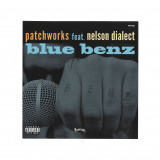
Favorite Recordings presents an exclusive collaboration between French producer Bruno ‘Patchworks’ Hovart (Voilaaa, Mr President, Taggy Matcher, …) and Australian NYC-based rapper and poet Nelson Dialect. The two artists met two years ago after Nelson’s gig in Lyon and, of course, they discussed and seriously planned to collaborate one day, both having an everliving love for early nineties hip hop. Then came the quarantine and Covid-19 with Patchworks locked in Lyon, Nelson Dialect in NYC: it seemed to be the right time to do it. A few months later and they finally drop Blue Benz, the result of their long distance collaboration, coming as a beautiful 7inch filled with proper Jazz & Soul Hip Hop vibes.
On A side, « Blue Benz » reminds indeed the best feelings of the nineties hip-hop with its infectious slapped bass rhythm and subtle Rhodes chords, all fiiting perfectly with Nelson Dialect’s serious flow!
On B Side, « Jazzy Blue Benz » offers an alternate take on the same groove, focusing more on the electric guitar gentle slides with a more percussive beat and horns arrangements with a proper NYC jazz
feeling.
From Adelaide, Australia, Nelson Dialect now lives in New York working with Bronx label Red Apples 45 started by AG of DITC and Ray West. Making music since he was 16, he has received critical acclaim for his work with producer Must Volkoff and their most recent album Magnetism. Before moving to New York, Nelson toured extensively in Australia supporting some of the biggest international Hip Hop acts including Mobb Deep, Lupe Fiasco, Ghostface Killah, GZA, RZA, Pharoahe Monch and DJ Premier among many more. He just released a new album Opal Mind with French producer NuTone.
>>>>Cryovac Recordings is a loose collective of collaborators bound by a strong personal view of the techno sound. The outfit assembled to create this installment of Cryovac are diverse in approach and unified in spirit. They are the maintainers of their style, and leaders of their movements. Cryovac is based in Detroit and is a platform brought to life by the efforts of a vinyl community of craftsmen and artists. Cryovac endures to shine light on a path less traveled .
>>>> The E.P. starts with Jason Garcia’s “down like”a crispy 4/4 slide back rocker groove intermittently intersected by urgent synth, earsplitting climaxes, and compulsive samples that form rhythm. Body Mechanic follows up with a couple swigs of old school tec- funk surrounded by a dreaming synth lost in the memories of the fat boys. Flip to the backside where Garcia & Kretsch deliver “LA80s” a theme that is story told with dramatic synth, driving kick and bass, and triumphant rises and falls tying and dying together. Isaac Prieto’s “Searching” takes us out with a smooth minimal animal that shifts an easy melody and turns sleekly through a gauntlet of hi-hat , clap, and twisted sharp detunes.
To close the 3 EP reissue series of Neville King and Lee Laing's King & City label, the all female group Charisma are presented with their summer infused Lovers cut, Everything Is Fine.
Three Lewisham friends, Angela Richardson on lead vocals, with Geselle and Janie backing, were active from 1982 to 1990, but are really remembered for the early recordings made with Neville King. Their debut, Everything Is Fine rides the Lovers sound at its peak. Written with One Blood's Lloyd Robinson, with the rest of band of Robinson brothers providing the rhythm section, this is pure South London sound system music.
Recorded again at TMC (Tooting Music Centre) Recording Studios - working alongside the likes of Dillinger, Tradition and New Musik - Everything Is Fine rides a beautiful soul reggae rhythm as Trevor (Drums) and Lloyd (Bass) Robinson set the foundations, while One Blood provide the Dub mix.
A true love's lament, a song of hope, serenity and pure vibes. Label head Chuggy slides behind the mixing desk for an extended Discomix that stretches, loops and dubs the vocal and dub back forth, to close a glimpse at this uniquely British phenomenon, taking reggae closer to it's heart and soul.
Counterchange presents 'Eigenlicht' by Portuguese-German multi-instrumentalist, producer and award-winning film composer John Gürtler.
Gently teetering between krautrock-influenced synth mantras and saxophone improvisations, down-tempo electronica, sound design experiments and moments of rich ambience, 'Eigenlicht' is a diverse album of electro-acoustic music. The 11 tracks were recorded between two studios and on location at Berlin's infamous Teufelsberg, the abandoned Cold War era US spy-radio and radar outpost named 'Field Station Berlin', surrounded by forest to the west of the city.
A document of Gürtler's development, many of the pieces here were first laid down in his bunker-like former basement studios at Drontheimer Straße in north Berlin, before he eventually elevated above ground - both physically and musically - building his current Paradox Paradise studio and becoming an established film music composer. In 2019 John won the European Film Academy Award for Best Score, for his soundtrack for Nora Fingscheidt's debut feature 'Systemsprenger' (System Crasher).
In recent years John collaborated on a number of projects with acclaimed German producer and composer Phillip Sollmann aka Efdemin, performing live and releasing the 'Gegen Die Zeit' EP on Sky Walking, a subsidiary of Dial records where he also remixed Efdemin's 'Parallaxis' under the moniker The Borderland State.
In part an ode to the Macbeth Systems M5 modular synthesizer, with its three oscillators, much of the album features the towering instrument, whose uniquely rich tone and rumbling, pure bass end characterises tracks like 'Eigenlicht', 'M5', 'Synthetics' and 'Five Voice'.
"The M5's built in spring reverb and huge sliders and faders - as opposed to all the tiny knobs on Eurorack synths - make it as playable as any acoustic instrument."
John's primary background is in acoustic music, coming from woodwind and keyboard instruments, improvisation and composition. The leap into working with computers and electronic instruments found him exploring ways to make synths and samplers sound as organic as possible.