Twin readings from Joy Division’s post-punk gospels, on 7” for the first time. Codeine’s 1994 take on “Atmosphere” were the New York slowcore band’s final recorded moments, a glum, if not melodic, take on the Salford quartet’s requiem to solitude. On the flip, Dallas’ Bedhead tackle the opener for Unknown Pleasures, reimagining “Disorder” as jangly indie rock. Housed in an elegant black and silver sleeve, with embossed braille lettering for the visually impaired.
Поиск:slow
Все
Remastered and first ever vinyl and CD release When it came time to create "What I like to do," GRÓA took advantage of the prolonged standstill of lockdown and spent months on end in a friend’s studio, slowly building up an elaborate sonic world that unequivocally captures the joyful ferocity of their live show. To achieve the album’s glorious unpredictability, the band allowed themselves an even greater level of freedom in the writing and recording process. “All our songs are made in such different ways,” says Fríða. “Sometimes they come from us jamming in the garage, but other times we’ll sit down and draw a song on paper and then try to put the images to music. Another thing we love to do is switch instruments—when I hear Karó play the bass, for example, it gives me new ideas because she looks at the bass in a completely different way than I do. We’re always trying to find a new angle on what we’re creating.” Encompassing everything from the gorgeously ominous sprawl of “Ég skal bíða eftir þér” (“I will wait for you”) to the hypnotically loopy harmonies of “Grannypants,” What I like to do also marks the first GRÓA release to feature one of Karó self-built instruments. “For the last album I made a waterphone, which is a metal instrument that you pour water into and then play with a bow,” explains Karó, who’s currently studying new media compositions at university.
Louien is back with her third album, which sees her taking a big leap into a more indie pop sounding universe. She started out writing melancholic folk songs on her debut album, but has slowly found her own voice and a real knack for melodies. We heard hints of this on her last album, «No Tomorrow/Figure Me Out», and on this album - «Every Dream I Ever Had» - she really embraces her new sound. On songs like «Please» and «Hours», you can clearly hear influences from artists like Boygenious, Gracie Abrams and Lizzy McAlpine, while on «Losing My Mind» she turns it up one more notch, with responding vocals from her band, and a tight drum groove. «Quite Like This» is a another highlight from the album, which highlights her skill for writing unbelievably big and beautiful pop ballads. You could say that this is a slightly new turn for Louien, but still with strong songwriting and amazing melodies as the core of all her songs.
Mit dem smoothen Groover "Fall For You" und dem eindringlichen Funker "Viper Flames" auf der Flip gibt der Brite James Alexander Bright seinen Soloeinstand bei Athens Of The North - ein Vorbote seines Mitte 2024 erwarteten, dritten Albums. Zuvor veröffentlichte Bright zwei Alben auf !K7 Records, zwei Kollabo-LPs mit den Flying Mojito Bros und Tom Findlay (Groove Armada), Mixsets für BBC 6Music sowie einen Beitrag für die "Too Slow To Disco"-Serie.
When Paul Murphy released his critically acclaimed debut solo album, Claremont 56, in 2006, many thought it would be the first of many. In a way, it was, as in the years since he’s released a string of collaborative sets alongside Benjamin J Smith (as Smith & Mudd), and as part of underground ‘supergroups’ Paqua, Bison and Hillside. But that second solo album? Well, it just had to wait. In early 2023, Murphy finally decided to scratch that itch, roping in some of his most trusted collaborators (keyboardist and bassist Michele Chiavarini, percussionist Patrick Dawes, guitarist Dave Noble and HF International’s Kashif included) to lay down a sumptuous set of tracks that not only showcases his now familiar (bit hard to pigeonhole) neo-Balearic sound, but also proves how much he has matured as a writer and producer since 2006.
In The Garden of Mindfulness is richly musically detailed, expertly arranged and full to bursting with fluid instrumental solos, with Murphy and his collaborators serving up tracks that brilliantly blur the boundaries between languid jazz-funk, downtempo, vintage synth-laden krautrock, dubby grooves and sun-splashed soundscapes. It simply sparkles from the moment that opener ‘Eighty Three’ slowly rises like the morning sun, with gentle, undulating synth sounds ushering in a slow-motion jazz-funk excursion rich in twinkling electronics, spacey pads and warming bass. Recent single ‘Katanaboy’, a lusciously layered dub disco-infused dancefloor excursion in Murphy’s familiar style, raises the temperature a touch, before ‘Bonne Anse’ and the sublime ‘Unka Paw’ (whose combination of evocative fretless bass, extended electric piano solos, Clavinet licks and acoustic guitars is genuinely spellbinding) invite a combination of wavy shuffling and flat-on-the-back, eyes-closed appreciation.
And so it continues, with gorgeous title track ‘In The Garden of Mindfulness’ making way for the boogie-influenced, Japanese-British brilliance of ‘Hangsang’ (check the jaunty pianos, yearning breakdown and exotic melodies). Murphy’s long held love of warm, weighty bass, hypnotic disco grooves, colourful analogue synth sounds and jazzy guitars once again comes to the fore on ‘Way Of The Hollow’ before the album reaches a fittingly triumphant conclusion with ‘Late In March’.
A neat sonic summary of all that makes the set such a rewarding and entertaining experience, repeat listens reveals a wealth of musical details, from off-kilter triple-time drums and surprise bass guitar solos, to impeccable piano solos (provided by the immensely talented Chiavarini), fizzing jazz-funk synth doodles and stirring synth-strings. It’s a breathlessly brilliant way to end an album that was genuinely worth waiting for.
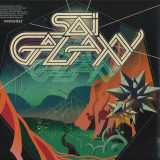
The star-studded Sai Galaxy project returns, bringing together West African legends Steve Monite and Rob with multi-instrumentalist Simon Durrington, guitar maestro Alfred Bannerman and Egypt 80 trumpet player Bade for a second EP of vital Afro-disco and soul.
The EP follows up 2022’s Get It As You Move EP, blending layers of vocal harmonies and synth washes with a rock-solid disco base. The sound stays faithful to the analogue production techniques of the 70s and 80s, adding a modern touch informed by Durrington’s Digital Afrika project.
Lead single ‘Hold You Tonight’ features Nigerian disco icon Steve Monite (best known for his mega hit ‘Only You’), revisiting his 80s origins with a dancefloor-ready slice of dubbed out boogie. ‘Rich Man Poor Man’ (featuring Ghana’s very own ROB) slows down the tempo and brings the highlife influence to the fore, while ‘Sometimes It Rains’ brings a neo soul bump with the Omar-esque sound of Fijian vocalist Kaivili.
- Diana Slowburner Ii
- On My Way
- Gone To Earth
- On The Run's Where I'm From
- Dim Stars (The Boy In My Arms)
- Trespassers In The Stereo Field
- Too Tired To Shine Ii
- It's Alright
- Magnificent Seventies
- Using The Hope Diamond As A Doorstop
- Blue Chaise
- Where Have All The Good Boys Gone
- White House
- Two Way Diamond I
- Two Way Diamond Ii
- Don't Wake Me
- Weather Report
- A Good Friend Is Always Around
- It's All About Us
- A Schoolboy's Charm
- The Wait
- New Drifters I
- New Drifters Ii
- New Drifters Iii
- New Drifters Iv
- The Golden Band
- I Must Soon Quit The Scene
- Will The Real Danny Radnor Please Stand?
- Diana Slowburner Ii
- High Fidelity Vs. Guy Fidelity
- Magnificent Seventies
- Waking Up Is Hard To Do
- Dr. Pepper
- The Only Living Boy Around
- It's All About Us
- On My Way
- Thin Fingers
- Living Room Incidental #2 / The Corduroy Kid
- Where Did You Come From?
- Too Tired To Shine I
- Queen Of Her Own Parade
- Mellow Fellow
- You Don't Want Me To Arrive, Do You?
- What Are We Going To Tell Guy?
- Where
Green White Vinyl[89,87 €]
Lo-fi, low budget, and low key, The American Analog Set's suite of hypnotic, neo-psychedelic, Texas sloth-kraut LPs appeared briefly on Austin's Emperor Jones label and slunk quietly into the sprawling indie underground as the old millennium crested. Gathered here are "The Fun Of Watching Fireworks", "From Our Living Room To Yours", and "The Golden Band" albums, garnished with period b-sides, outtakes, and demos. Remastered from the original analog tapes,this early-career spanning 5xLP box includes lyrics, photos, and ephemera from the before times.
- Diana Slowburner Ii
- On My Way
- Gone To Earth
- On The Run's Where I'm From
- Dim Stars (The Boy In My Arms)
- Trespassers In The Stereo Field
- Too Tired To Shine Ii
- It's Alright
- Magnificent Seventies
- Using The Hope Diamond As A Doorstop
- Blue Chaise
- Where Have All The Good Boys Gone
- White House
- Two Way Diamond I
- Two Way Diamond Ii
- Don't Wake Me
- Weather Report
- A Good Friend Is Always Around
- It's All About Us
- A Schoolboy's Charm
- The Wait
- New Drifters I
- New Drifters Ii
- New Drifters Iii
- I Must Soon Quit The Scene
- Will The Real Danny Radnor Please Stand?
- Diana Slowburner Ii
- High Fidelity Vs. Guy Fidelity
- Magnificent Seventies
- Waking Up Is Hard To Do
- Dr. Pepper
- The Only Living Boy Around
- It's All About Us
- On My Way
- Thin Fingers
- Living Room Incidental #2 / The Corduroy Kid
- Where Did You Come From?
- Too Tired To Shine I
- Queen Of Her Own Parade
- Mellow Fellow
- You Don't Want Me To Arrive, Do You?
- What Are We Going To Tell Guy?
- Where
- New Drifters Iv
- The Golden Band
Black Vinyl[83,99 €]
Lo-fi, low budget, and low key, The American Analog Set's suite of hypnotic, neo-psychedelic, Texas sloth-kraut LPs appeared briefly on Austin's Emperor Jones label and slunk quietly into the sprawling indie underground as the old millennium crested. Gathered here are "The Fun Of Watching Fireworks", "From Our Living Room To Yours", and "The Golden Band" albums, garnished with period b-sides, outtakes, and demos. Remastered from the original analog tapes,this early-career spanning 5xLP box includes lyrics, photos, and ephemera from the before times.
“I like to work with a variety of instruments and set ups,” says Mark Van Hoen, sometimes known as Locust or Autocreation but here working under his own name on the excellent Plan For A Miracle, his first physical release of solo music since 2018’s Invisible Threads. ”Sometimes it’s literally in my studio, with all the hardware electronics available. Sometimes the laptop, using software instruments. Some of the tracks on this record were recorded in the desert (Joshua Tree) using a 4-track tape machine and small modular synthesiser set up. Each track was recorded in different location using different instruments, which accounts for the distinction between each piece. It’s also about my own reaction to my environment, and what’s going on in my life at the time.”
The Croydon-born Van Hoen started musical life in the early 1990s, signing for R&S records in 1993 but developing his own, myriad and distinctive style across a range of releases on Touch, Editions Mego and other labels, using a battery of instruments, including analogue synthesizers and taking a number of different approaches to recording, rather than ploughing a single sonic furrow. He has worked on a number of collaborations, including with Nick Holton and Neil Halstead of Slowdive, under the moniker of Black Hearted Brother - their Stars Are Our Home was released in 2013. “I have known Neil Halstead since 1992,” says Van Hoen. “He shared a house with me for a couple of years, and the music I was making and listening to along with clubs I was attending had an influence particularly on Pygmalion, the final Slowdive album on Creation.”
Each track on Plan For A Miracle does indeed sound like a world unto itself, a mini-environment, a weather condition, an ecosystem created for the moment. It’s a collection of tracks recorded over the past few years, released on Bandcamp - despite his apparent absence, Van Hoen works constantly. Opener “Climates”, in its exquisite limpidity, feels like a homage to Brian Eno, one of his most formative influences in his teen years, commencing with Music For Films, which he bought in 1979. “This Is For Them”, feels like a ghostlike throwback to early drum & bass or electronica, reminiscent of his own, earliest outings. “There have been a number of requests from labels to make some more music like my very early releases on R&S,” says Van Hoen. “This is part of ‘letting go’ and realising that there’s nothing less creative about going back to those styles again.”
“Pencil Of Spheres” is something else again, a magnificent, imaginary glass structure, shimmering, refracting, without visible means of suspension, a thing of impossible beauty. “Electric Lights” evokes an abandoned fairground, its lights still pulsating, its music lingering. “The Underpass”, meanwhile, insofar as it reminds of anything at all, is faintly reminiscent of Cluster or Neu’s! West German ambience, the urban mundane rendered magical, the sodium lights, the whitewashed walls. The reverberant, faintly oriental chimes of “Insight” transport us yet again, burgeoning and intensifying.
The landscapes, the skyscapes rendered on Plan For A Miracle feel unpopulated as a rule - but when he does introduce vocal elements, Van Hoen has a history of doing so to spectacular effect - think of “Real Love” from 1998’s Playing With Time, the seductive intonation of its title recurring throughout like a series of massive holograms, echoing, stuttering, breaking up, surging. Here, there are just the faintest of vocals, barely distinct, disquieting. “There’s been a bit of a game changer in recent times,” explains Van Hoen. “AI software that enables you to extract vocals and instrument parts from virtually any recording. That means sampling individual parts from existing sources is no longer limited to the original mix exposing certain parts soloed. The vocal parts I use are from multiple sources and often pitch shifted altered rhythmically and melodically.“ There’s further vocal chatter on “I Really Do”, proceeding at a faster pace as if giving chase, or being pursued - distant, enigmatic. “The Music”, meanwhile, its beat tolling, lost in its own fog of static, features a curious intonation, like the ghost of a lost Walker Brother.
Sadly, the album’s title is in reference to a personal tragedy on Van Hoen’s part - the loss of his wife. Titles such as “I Won’t Give Up”, which faintly reminds of another Eno masterpiece, Another Green World, in its nautical hurly-bury, or the pastoral strains of “Mrs Who”, heavily clouded with sadness, seem to allude to this. “In fact the record was recorded entirely before she passed away,” says Van Hoen, “most of it before she even became very ill. The title was given to the album when it started to look like she wasn’t going to make it beyond a few months. It was something Osho said - “plan for a miracle” - so it was a statement of hope. Unfortunately it was not to be.” Although the album is non-thematic, non-specific in its atmospheres, sound paintings, elegant structures it most certainly stands as a magnificent monument to Osho’s memory.
-David Stubbs.
- A1: 007 Shanty Town
- A2: Israelites
- A3: It Mek
- A4: You Can Get It
- A5: Pickney Gal
- A6: Peace On The Land
- A7: I Believe
- B1: Look What They’re Doing To Me
- B2: Please Don’t Bend
- B3: My Reward
- B4: Little Darling
- B5: Life Of Opportunity
- B6: When I’m Cold
- B7: Archie Wah Wah
- C1: Hippopotamus
- C2: Warlock
- C3: Licking Stick
- C4: What Will You Gain
- C5: Trample
- C6: The More You Live
- C7: Go And Tell My People
- D1: Reggae Recipe
- D2: Yakety Yak
- D3: Where Did It Go
- D4: First Time For A Long Time
- D5: Stop The Wedding
- D6: Mother Nature
- D7: Life Hope And Faith
Desmond Dekker recorded some of his best known songs together with his backing group the Aces. Their single “007 (Shanty Town)” made him Jamaican music’s first outernational superstar, reaching the 14th place in the UK charts. The Leslie Kong produced Double Dekker was first issued in 1973 and consists of the best material Desmond recorded during his early years. In 1969 he scored a number one hit with the legendary song “Israelites”. You’ll hear how the Ska music from the mid-60s developed to the Rocksteady sound. This was “Ska” or “Blue Beat”—(or its new name for the slower tempo “Rock Steady”), and the lyrics come from the Calypso-Mento method of telling about current events in music. He was really at his prime from 1969 to 1971, and recorded classics such as “It Mek” (1969) and “You Can Get It If You Really Want” (1970), which you’ll both find on this record. Even before Bob Marley and Jimmy Cliff Jamaica already had their own international superstar, Desmond Dekker was his name.
Double Dekker is available as a limited edition of 750 individually numbered copies on orange coloured vinyl.
2024 Repress
* Following on from the success of our 'Liftin Spirit Reloaded' vinyl series, we are pleased to announce our next project in collaboration with Ram Records. 'Ram Reloaded' will be a series of limited 12" vinyl from Ram's early years, re-mastered from the original DATs and presented onto our usual, high quality, heavy weight vinyl.
* In 1994, Shimon made his first appearance in the Ram studio to create two tracks alongside Ant Miles. With additional production from Andy C, and the vocal sampled from the film ‘Predator’, Shimon’s debut track soon fell into place. Highlighting the usual precision tooled breaks, synonymous with the emerging Ram style, Ant Miles’s reversed bass line and stereo oscillating effects had an immediate impact on dancefloors throughout the UK, cementing Shimon as an artist to watch out for in the future. For the flipside to Predator, Ant Miles and Shimon went on a roller jungle vibe with haunting pads and slow time stretched vocals, creating a hypnotic trance state perfectly complimenting the A side.
Promotion across chosen internet websites and Hardcore/Jungle 12” vinyl communities.
- A1: Passage Through The Spheres
- A2: All Life Long (For Organ)
- A3: No Sun To Burn (For Brass)
- B1: Prisoned On Watery Shore
- B2: Retrograde Canon
- B3: Slow Of Faith
- C1: Fastened Maze
- C2: No Sun To Burn (For Organ)
- D1: All Life Long (For Voice)
- D2: Moving Forward
- D3: Formation Flight
- D4: The Unification Of Inner & Outer Life
Kali Malone's anticipated new album "All Life Long" is a collection of music for pipe organ, choir, and brass quintet composed by Kali Malone, 2020 - 2023. Choral music performed by Macadam Ensemble and conducted by Etienne Ferschaud at Chapelle Notre-Dame-de-L'Immaculée-Conception in Nantes. Brass quintet music performed by Anima Brass at The Bunker Studio in New York City. Organ music performed by Kali Malone and Stephen O'Malley on the historical meantone tempered pipe organs at Église Saint-François in Lausanne, Orgelpark in Amsterdam, and Malmö Konstmuseum in Sweden. Kali Malone composes with a rare clarity of vision. Her music is patient and focused, built on a foundation of evolving harmonic cycles that draw out latent emotional resonances. Time is a crucial factor: letting go of expectations of duration and breadth offers a chance to find a space of reflection and contemplation. In her hands, experimental reinterpretations of centuries-old polyphonic compositional methods become portals to new ways of perceiving sound, structure, and introspection. Though awe-inspiring in scope, the most remarkable thing about Malone's music is the intimacy stirred by the close listening it encourages. Malone's new album All Life Long, created between 2020 - 2023, presents her first compositions for organ since 2019's breakthrough album The Sacrificial Code alongside interrelated pieces for voice and brass performed by Macadam Ensemble and Anima Brass. Over the course of twelve pieces, harmonic themes and patterns recur, presented in altered forms and for varied instrumentation. They emerge and reemerge like echoes of their former selves, making the familiar uncanny. Propelled by lungs and breath rather than bellows and oscillators, Malone's compositions for choir and brass take on expressive qualities that complicate the austerity that has defined her work, introducing lyricism and the beauty of human fallibility into music that has been driven by mechanical processes. At the same time, the works for organ, performed by Malone with additional accompaniment by Stephen O'Malley on four different organs dating from the 15th to 17th centuries, underscore the mighty, spectral power that those rigorous operations can achieve. All Life Long simmers in an ever-shifting tension between repetition and variation. The pieces for brass, organ, and voice are alternated asymmetrically, providing nearly continuous timbral fluctuation across its 78-minute runtime even as thematic material reiterates. Each composition's internal framework of fractal pattern permutations has the paradoxical effect of creating anticipated keystone moments of dramatic reverie and lulling the listener into believing in an illusory endlessness. On an even more granular level, the historical meantone tuning systems of each organ used, and the variable intonation of brass and voice, provide further points of emotional excavation within the harmony. The titular composition "All Life Long" appears twice on the album, first as an extended canon for organ and again in the final quarter, compactly arranged for voice In the latter, Malone pairs the music with "The Crying Water" by Arthur Symons, a poem steeped in language of mourning and eternity. For organ, "All Life Long" moves with a patient stateliness, the drama concentrated in moments when shifting tonalities generate and release dissonance and ecstasy. For voice, each word is saturated with feeling, the singers swooping gracefully downward to capture the melancholy of the narrator's relationship to the timeless tears of the sea. "Passage Through The Spheres," the album's opening piece, contains lyrics in Italian pulled from Giorgio Agamban's essay In Praise of Profanation. In it, Agamban defines profanation as, in part, the act of bringing back to communal, secular use that which has been segregated to the realm of the sacred, a process Malone enacts each time she performs on church organs. This is not music of praise, or of spiritual revelation, but it is an artistic enactment of translating the indescribable. It carries the gravity of liturgical chant, and its fixation on the infinite, but draws its weight from the earthly realm of human experience. A music that draws the listener into the present moment where they can discover themselves within the interwoven musical patterns that can come to resemble the passage of days, weeks, years, a lifetime.
Formed in late 2018, the at the time 4-piece band from Denmark pursued the stylistic vein of the 90"s shoegaze scene with crusty distortion guitars, progressive drums, and supremely airy vocal figures. Only two years after their formation, the band self-released their lo-fi-heavy debut EP, Everytime; a daydreamy handful of songs with alluring atmospheres of heartbreak and self-disorientation, that was quickly discovered by the legendary platform KEXP through their digital sale on Bandcamp. Meltways" debut album, Nothing Is Real, is a strikingly infectious collection of explosively driven songs. Warm blankets of noisy guitars and oceans of reverb melt with Mathias" angsty, yet liberating lyrics. Recorded in Esbjerg at Tobakken Studio, mixed and engineered by Mathias, and mastered by Slowdives Simon Scott.
From the depths of Gothenburg, The Family Men emerge. Since 2017, they have slowly carved out a sound entirely their own within the current music scene, standing out as one of the hardest groups in Sweden today. Making use of unconventional sampling, chainsaw-guitars and gritty industrial tones, they manage to blast their way into yet uncharted musical territory. Their debut album 'No Sound Forever' is an explosive, daring and vital record of a band ready to swallow you whole.
The latest release on An’archives, Suikyō, documents a first-time meeting between three Japanese improvisers: Takashi Masubuchi on guitar and harmonica; Ayami Suzuki on voice and electronics; and Tomo on hurdy-gurdy. Recorded at Permian on the 29th of January, 2023, it’s a stunning, forty-minute long improvisation of rare artistic sympathy. Notably, it was the first time the trio had performed together, though Masubuchi and Suzuki have prior form as a duo; on the evening itself, the trio performance was preceded by solo sets from Suzuki and Tomo, which served as a kind of introduction, of sorts, to the broader aesthetic visions of two of the musicians on Suikyō.
Masubuchi, Suzuki and Tomo make for a fascinating trio, not only due to the shared musical sympathy that’s clear from their performance, but also due to their histories, and the way these dovetail on the music you hear on Suikyō. Masubuchi has recorded a number of stunning solo albums for guitar and has also improvised with a number of musicians: you can hear his responsiveness and thoughtful playing on albums alongside Suzuki, Taku Sugimoto, Straytone, Shizuo Uchida, Takahiro Kawaguchi, and more. Suzuki’s work for voice has been documented on several solo cassette releases, and in consort with Tetuzi Akiyama, Rob Noyes, Leo Okagawa, Aidan Baker and Tobias Humble. And Tomo’s music can be heard on a small clutch of solo CDs, as a member of Tetragrammaton and Archeus, and in collaboration with Junzo Suzuki.
The way their instrumental voices meld together on Suikyō, though, is evidence of a capacity both to draw from these histories, and to take these collective knowledges to new places. And sometimes, unexpectedly old places: Masubuchi notes that his guitar on this set took him back to the rock and blues he used to play, perhaps in earlier groups like Pelktopia, which he suggests contributes to “the psychedelic mood” of Suikyō. Tomo’s hurdy gurdy matches this by pulling drones out of the air or allowing melodies to slowly morph and envelop the listener – their development, at times, reminds me of troubadour music from Occitanie.
Suzuki’s presence is equally compelling and curious. Her voice is an eternally flexible instrument, and whether it sits unadorned within the soundworld magic’d into space by Masubuchi and Tomo, or slips between the cracks thanks to subtle use of electronic effects, it has a quality about it that is both otherworldly – at times, the voice soars and pirouettes – and thoroughly, deeply grounded, of this earth, a most human and intimate encounter. There is a lovely consort between Suzuki and Tomo, the voice and hurdy-gurdy shadowing each other: as Tomo notes, “the hurdy gurdy has been an instrument played to accompany singing since the Middle Ages.” For Suzuki, the performance was “psychedelic and hedonistic in a good way,” but it wasn’t simply given in to that experience: “we were at the same time looking at it from an objective point of view.”
That feels like the right way to approach Suikyō: as a performance that both sets the mind and ears spinning, but with a careful, thoughtful, and considerate objectivity to its moment-by-moment development. It’s also incredibly gorgeous. As a first encounter, it’s surprising in both its comfort and its challenge: and as Masubuchi says, the playing together feels just the way it had to be: “instinctive, unintentional, and inevitable.”
Jackie Ross had a storied career that began when the great Sam Cooke recruited her for his SAR label in 1962. After that, she went on to sing with Syl Johnston's band and sign with the notorious Chess label in 1964. It was there she dropped her biggest hit 'Selfish One', which reached number 11 on the U.S. Billboard Hot 100, before many more tunes came on the likes of Brunswick and others.
Her 1980 album A New Beginning For was produced by Chicago soul scene mainstay James Van Lear and now gets its first reissue courtesy of P-Vine. It shows the range and depth of emotion Jackie could tap into with a mix of slow motion stirrers and more funky and upbeat numbers.
Bassmæssage is the heaviest and most consistent bass music night out of Leipzig, operating way over 30 low frequency terrapeutic events since 2007.
Hosting ventral vibrations by the likes of Mungo's Hifi, Moonshine, Rupture, Hardwax and the homies of Jahtari, maintaining strong relations within the local soundsystem culture like Zoumo and Plug Dub and pushing a ton of grass-roots DJs and visual artists, out of doubt it is a sure shot for all who like it low and want it vibrant.
2015 saw the release of the "Volume One" vinyl, blending all kinds of styles and tempi by artists who had played at a Bassmæssage. Dub met Dubstep, Footwork went along some Snailfunk Drum'n'Bass and even Skweee had a cameo. And all this happened on one plate with a warm vibe from start to finish.
It is about time to revive the label with a new vinyl compilation named "Second Drop", following the tradition of a nice roundup across various bass music tearitorries. One side pumps at uplifting 160 BPM, while the flipside is shifting down to relaxing 135 and even 120 speeds.
Nuphlo and Bukkha team up for the energetic modern halftime piece "Drip". Nuphlo might ring a bell as part of The Nasha Experience from London and Leeds, connecting asian roots with nowadays UK bass sounds. Bukkha is state-side born and has recently emigrated to Spain, from where this worldwide touring DJ machine is firing a plethora of bass music styles on renowned labels like Moonshine, System and Innamind.
DjBadshape passes the breakbeat driven torch with handsome melodies and subby kickbass on "Drift" to reflect Leipzig's well various scenes. While checking her tracks on Defrostatica and Human, one may also find artworks for Bassmæssage and more.
Sun People is closing the 160 side with the deep but dirty retro 90s jungle bit "Rise Up". Combining Techno, Footwork and UK Hardcore Breakbeats, the Graz based bass buab made it to releases on Exit, Rua and Alphacut.
Flipping sides, Dub Across Borders redefines steppers dub into the dreamy yet rolling "Bass Tree Dream". The project was found by a Copenhagen dubber when living in Colombia, fusing the rural folklore with soundsystem energy into a world-bass music. This can be heard on labels like Basscomesaveme, Translation and 45Seven and is best to be experienced in its live dubbing appearance which premiered at a Bassmæssage in 2015.
Paranoid One grabs these feelings and drops them a bit more sinister, "Glimp" manages to hide a playful 4 to the floor kick as well beyond its smooth soundscapes and percussions. As Paranoid Society these split personalities from Tallinn were delivering to Modern Urban Jazz and Alphacut already since a decade at least.
bhed finishes with the slow far-away dubsteppish "Minerva". Make sure to not only check the releases on Row and Trusik but also the freshly baked Neuburg based live act in between cosy ambient and lush bass music at the next Bassmæssage on 18th November in LeipZig!
Everybody Trance is more than proud to crash onto labels bubble, with the first episode: Various Vol. 1., illustrating our bash vision with a frenetic and hypnotic grooves tour. Dense, knotty and intoxicating tracks, overflowing with finesse, display all over this EP, including Maelita & Kick 21, Botwin, Gogo Gadgeto, Subsism and Ekzander, mastered by Alden Tyrell and designed by Jimmy Premier.
The third and final EP from the ten year anniversary series by French label D3 Elements is another one that offers a wide range of excellent grooves. To kick off, Jason Hogans takes us into woozy late night territory with muffled leads and lazy breaks, then Zopelar heads for the cosmos on his radiant synth laced house offering 'Resolution.'
Malik Hendricks keeps it low key and slow with his intimate basement sounds on 'Green Mango' then Meftah rebuilds on a dusty Theo Parrish tip with 'Maha Shatki.' Damar Davis offers pure cosmic deep house lushness on closer 'Kiss In The Dark.'
- A1: Brainticket - Places Of Light
- A2: T.j. Lawrence - Fireplay
- A3: Robert Rental - Double Heart
- B1: African Head Charge - No, Don't Follow Fashion
- B2: Keith Hudson - Nuh Skin Up Dub
- C1: Smokin' Cheeba - When I Was A Youth
- C2: The Wad - 15 Inches
- D1: Idjut Boys & Laj - Foolin' (Beatin On Dave)
- D2: Jbb Et Soprann - Tibi Lap
Part 2.[29,83 €]
Optimo (Espacio) started life as a weekly club night. It was born at The Sub Club in Glasgow on a wet, windy, wintry November Sunday night in 1997. Run by JD Twitch and partner in crime Jonnie Wilkes. Optimo was a reaction against what felt like an increasingly conservative musical soundtrack in clubs here at that time. Clubland felt as if it had become very bland and a bit too serious; it was the era of the dawn of the Superstar DJ. Clubs often felt like bastions of male energy. It seemed dance music and culture was going somewhere far, far away from where it was meant to be. The notion of fun had got lost.
It was no longer the world they had devoted ten years of their lives to already, and lots of their friends felt the same. When the opportunity came up to do a Sunday night at The Sub Club it felt like the perfect opportunity to rip it all up and start again. So they did. There was nothing in the city (or possibly anywhere) like it. As the club believed wholeheartedly in what they were doing, there was no pressure from The Sub Club to fill the club. So, they embraced the freedom. Groups of people who had never been in the same room at the same time before came together. A community of kindred spirits started to emerge.
Word spread, slowly. Lots of people checked it out. Many loved it, some hated it. The core of the Optimo idea was to embrace music they loved that might work on the dancefloor from whatever era or genre they thought felt right. It might not seem very radical now but at that time it was revolutionary.
After about a year and a half, the club went from having 100 people attending most nights to suddenly one week having 500 people turn up. It was very weird. It was as if a collective light bulb went off in people’s heads in Glasgow. From that week on, until the very last weekly Sunday night at the Sub Club, in 2010, over a decade later, it was packed.
There were 550 Sunday Optimo nights. A LOT of music was played. So, what was the music? People often find it hard to pin down exactly what Optimo is. This has been a positive but also a negative as we live in a world where people want easily defined “brand identities”. The simplest definition of the music played is “music for dancing”, which of course is a very broad definition. Even better than trying to define it in words, we have these 2 volumes of music that give a hint of what that might be.
This is not a “Best of Optimo” or a “Greatest Hits of Optimo” compilation. For people who come to, or used to come to the nights there are of course “Greatest Hits”. But, over such a long timespan they are “hits” belonging to a certain moment in time and space. Someone who came to Optimo in 1997 would have a completely different notion of the big tracks at the club to someone coming in 2003, or 2010, or today. This compilation is just a snap shot missing several genres that might make up the DNA of Optimo. There is though a broad sweep through lots of music Optimo loves, that they believe is amazing. Music that they know will rock a dancefloor, that they have played between 1997 and 2023. Of course Optimo nights were not all about rocking the dancefloor. The first hour was always a time for them to play music they loved that often was far removed from the dance. Side 1, Volume 1 of this compilation is the kind of music one might hear at the very start of an Optimo night.
Optimo have always loved a good slogan. The most long lived, and fitting Optimo slogan is "We Love Your Ears", which is in essence what it is all about to them.