Collecting recordings made between 1953 and 1956, Miles Davis Plays For Lovers is a look at the more sensitive and sensual side of the great trumpeter, focusing on his sultry and smoky late night ballads. Mostly featuring his legendary mid-50s quintet of Coltrane, Garland, Chambers, and Jones, this collection highlights that groups ability to slow things down to a soulful, brilliant simmer. Classic jazz ballads that swing, perfect for late nights with a lover at your side.
quête:slow
Close your eyes and merge into Benedikt Frey’s 'Fastlane'. Imagine sitting in the driver’s seat of a an automobile, one with exceptional horsepower and torque, as you stare out the windshield at the red light, warping in fata-morgana a mile down the road. It’s a straight-away, a black top with two lanes, and against your better judgment you decide to floor the gas. No hesitation in your muscle, your ankle or the ball of your foot, which you now realize is some kind of universal pivot, the first point of contact fusing your body with the will of machine. In this moment you’re in awe that you, a human, an animal, grew from pond scum into something so advanced as to engineer this thing, a mechanical beast capable of overwhelming power and exhilaration. But you also feel a seductive dread, an outside force diverting you from caution toward a dangling carrot of curiosity, asking yourself, ‘How far can I take this thing?’ The dread, now a constant, is numbed, equalized by an adverse intoxicating gratification. You feel both sensations in real time, however, rather than take responsibility for yourself, friends, family and innocent bystanders, you cement your foot to the floor and lean your head back. Noise around you fades to mute. Smell the benzene-scented air, feel the wind on your face, the menacing vibration of the vessel you control beneath you and every grain of asphalt under its tires. This mile has now lasted an eternity and you’ve left your body for some objective view, as if watching climax of a film. Past the point of no return, you embrace abandon and lean into fate. The film becomes slow motion, a crawling pace so mesmerizing you convince yourself of an option to eject yourself from this madness, but as you finally let go of your last morsel of fear, you run the red light head-on into the nucleus of a fantastic glistening sculpture of torn metal, glass, oil, broken dreams and heartache. 'Fastlane' may be just drum machines and synthesizers if you’re timid, but listen harder and know the catastrophic reality of existence, a wreckage so gruesome we dare not rubberneck, but afterall it is our nature to stare.
Octave One return with Never On Sunday Vol.2, an EP with new remixes from Orbital and Giorgia Angiuli next to three standout recent tracks.
The Detroit duo’s Never On Sunday alias was born in the nineties with a view to making a mix of downtempo, deeper and more thoughtful electronic sounds. After just two EPs, it lay dormant until last year when the new EP The Bearer on their own 430 West label brought it back to life to a great reception. Then came the Octave One Presents Never On Sunday album this year that collected together a wealth of originals and remixes which are now coming on 12".
First up is legendary brotherly duo Orbital - a UK antecedent to the Burden brothers who have been crafting pioneering electronic sounds for decades. Their remix of ‘Price We Pay’ feat. Karina Mia is deep house excellence. It has a bouncy groove, elastic bassline and simmering vocals that send shivers down the spine and the sci-fi synths twinkle up top. Italian multi-instrumentalist Giorgia Angiuli has long been innovating in the techno world, drawing on her classical background to craft standout sounds for the likes of Kevin Saunderson’s KMS label. Her remix is six uplifting minutes of synth arpeggios, soulful techno drums and epic breakdowns that will captivate any dance floor.
The b-side features three cuts from the Never On Sunday (Deluxe) album and opens up with 'Lifelike', a slow, pulsing dub with mysterious melodies and sinewy synths reflecting light like stars in a night sky. A textured bassline arrives to bring a real sense of tension to the melodic beauty. 'Soon After' is another cosmic cut that rides on hammering bass beneath lush synths capes and rays of hope that pierce the darkness. The blissful 'Mona' closes down with heavenly and expansive pads that shimmer and shine as rich bell sounds and choral pads bring a warm sense of atmosphere.
Never On Sunday Vol.2 is another package of deeply emotional electronic sounds.
Verwirrung - das Gefühl, perplex und verwirrt zu sein - ist die Inspiration für das neue Album von Pale Jay. Es ist eine gefühlvolle Erkundung des allmählichen Zerfalls einer Familie aufgrund von jahrelanger Vermeidung und Missverständnissen. Während dieser schwierigen Zeit begann Pale Jay, die Geschichten, mit denen er immer gelebt hatte, zu hinterfragen und seine Identität neu zu untersuchen. Das daraus resultierende Werk, Bewilderment, ist sein erstes komplettes Album, das Antworten auf diese und andere Fragen geben will. Pale Jay ist ein ausgebildeter Jazzsänger und Pianist und hat alle Songs des Albums geschrieben, aufgenommen und produziert, mit Ausnahme von "By The Lake", das in Zusammenarbeit mit seinen Labelkollegen Okonski - Steve Okonski, Aaron Frazer und Michael Montgomery - entstanden ist. Die Musik von Pale Jay ist von einer Vielzahl von Songwritern beeinflusst, darunter Labi Siffre, Carole King und William Onyeabor. Bewilderment ist eine nahtlose Mischung aus Pale Jays Markenzeichen, staubigem Soul, langsamer Disco- und Afrobeat, wobei die Streicherarrangements von Raven Bush den beatlastigen Produktionen eine zusätzliche Ebene der Magie verleihen. Pale Jays Debüt-LP ist eine fesselnde Reise der Selbstentdeckung. Jeder Song auf Bewilderment erzählt eine eigene Geschichte, aber alle haben ein gemeinsames Thema: persönliches Wachstum und Selbsterkenntnis.
- An Anxious Host Is Described
- A Grift Is Detailed
- One Man's Trash Is Another Man's Garbage
- Skull Of Cortázar
- The Aftermath Of Post Office Arson Is Described
- The Sunken Cost Is Detailed
- Goes Reptile
- The Other Side Of The Coin Of The Confession Of The Medievalist
- Cart Dog
- Tired To The Bone
- Spanish House Is Described
Since the early 2010s, Josh Mason has slowly amassed an enchanting discography, publishing recordings on labels such as Florabelle, Dauw, Longform Editions, and his retired Sunshine Ltd. imprint. Whether focusing on electric guitar or modular synthesizer, Mason approaches his music with intentionality, tenderness, and a keen ear for detail, resulting in an exceptional and enduring oeuvre.
His workmanlike approach to craft and monomaniacal interest in circuit design culminated in 2021’s “Utility Music,” a daunting book/CD project that documents and unpacks a yearlong exploration of a Doepfer A-100 Eurorack system. The irony of such a project is that it might lead listeners to believe that academic technique and synthesis technology are the animating principles of his practice, but the reality is that this is only part of the story. Listening to Mason’s music one gets the sense that, like a good novelist, he truly cares about his characters, which take the forms of the textures and timbres of archaic wavetable oscillators, idiosyncratic filters, pulverized samples, and exotic noise sources.
“An Anxious Host” feels like a pivotal release in Mason’s catalog. It’s his first vinyl outing since 2019’s astounding “Coquina Dose,” and it may be the most succinct and potent album he’s made. The track titles function like stage directions in a play, intimating a hazy, filmic narrative populated by schemers, dreamers, and lost souls. As ever with Mason’s work, place is paramount, and this record is thoroughly shot through with the humidity, warmth, and “end of the line”-ness of the state of Florida. Seasick swells and sunken melodies; swampy, sputtering loops; sonic flotsam pooling together and flowing out, beckoning the listener to come have a soak.
Stephen Steinbrink discovered a short YouTube video of a street magician who approaches a highschooler walking home in Barstow, California. “Here, let me show you my idea,” he says, as he places a quarter on the kid’s hand. The magician performs some relaxed flourishes, and the coin vanishes. In silence, the kid stares at his hand at the nothing where there once, indisputably, was something, until his wonder finds a single word: “Cool.” The title of Disappearing Coin, the new album from Oakland songwriter Stephen Steinbrink, comes from this short clip. “When I look at it now,” he says, “I relate to the kid, who’s obviously uneasy in his body, and going through the experience of being a teenager in the early 2000s growing up in a bleak desert town like I did. I also relate to the coin, an inanimate disc of possibility. And I relate to the magician, an absurd facilitator of sending what is tactile and concrete into the wispy conceptual realm.” “I’ve watched it probably a hundred times,” he says. “It cracked me up but also blew my mind open the feeling of wonder I experienced watching this video became a guide as I navigated new ways of staying in the realm of what’s both real and magical.” Following the 2018 release of Utopia Teased, Steinbrink completed an apprenticeship in the nearly-lost art of Stained Glass, becoming a glazier at a studio that over three years, fully restored the enormous 90-year-old windows in San Francisco’s Grace Cathedral. He committed to his Buddhist study, beginning lay monastic training before the process was thwarted by the pandemic. He dove deeper into music production for other artists, engineering two albums by Boy Scouts released on Anti- Records in 2018 and 2021. Steinbrink delighted in the way these pursuits pulled at the thread of ego’s tapestry and decentralized him from his craft, allowing him to embody a new role as a creative caretaker engaging in practices that felt communal and restorative. “As I slowly began writing for myself again, I tried to imbue my new songs with this sense of playfulness and wonder I felt while exploring these other interests.” He says. Feeling unlocked from the pressures of perfection that he often felt in his earlier work, creating Disappearing Coin felt buoyant and healing. “The album feels like an integration of all of my past musical selves zeroing in on the present,” Steinbrink explains, “I felt free to explore new ways of writing, through different perspectives, experimenting with fictional songwriting, visual archetypal language, and total collaboration.” This “total collaboration” was a joyous new venture after years of solo performing and recording. The album can be seen as a 42 minute session of show and tell, the manifestation of Steinbrink repeating the mantra of “Here, let me show you my idea” to himself over and over. Disappearing Coin is at once a welcome return for the veteran Steinbrink and the debut of a totally new artist, one who has found a new path to himself with new goals of openness, curiosity, and self-acceptance. “Recalls the magic pop purity of Arthur Russell...its minimalism manages to feel enlightened and transformative.” PITCHFORK // “Melodic and self-assured. Steinbrink delivers his knotted lyricism with a smooth lilt.
Der moderne klassische Komponist und Pianist Lambert kehrt mit einem neuen, atmosphärischen SlowTempo-Album zu seinen Klavierwurzeln zurück. Introspektiv und wunderschön karg lädt dieses 15-TrackAlbum mit Downtempo-Soloklaviermusik und Ambient-Elektronik in eine chillige Lo-Fi-Trance ein. Veröffentlicht auf dem Label Mercury KX.
The fourth album from Australian metal masters, Parkway Drive. It was another creative leap forward for the chart-topping Australian band, "Atlas" boasts some of the most up front and confrontational material Parkway Drive has ever released, while at the same time taking several unexpected turns into lush sonic terrain, redefining their trademark sound while reinforcing their position as leaders in their field. the album includes the "Wild Eyes" which is a huge sing-a-long live anthem.
Angel Attack delivers his debut album Divine Practicalities on his label, House of Reptile. The Boston and London-based artist blends several sound palettes, sharing his most poignant body of work to date. The album includes two remixes by Univac and Blind Delon, respectively.
The title track acts as a prelude to the album. A broken-beat,
experimental number, it dips into cinematic soundscapes and warbling percussion, which Angel Attack describes as an “introduction to summarise the emotions we are about to experience on the album.” Tightening Tension follows suit. It’s a mutation of broken techno with electro flavours over a malicious Moog bassline, featuring the vocals of French producer IV Horsemen, whose lyrics conjure a smokey, bonechilling atmosphere between skittery drums. Angel Attack dives into a metal-edged mood on Ankles, stitching distorted riffs between broken beats.
The energy is visceral. Come To Me is straight-up Japanese Horror-inspired electro, combining eerie textures with thudding kickdrums and a gnarly scream — a freaky trip at just over five minutes. Franco-Spanish author, singer, DJ and musician Pedro Peñas Robles, aka HIV+, features on Oblivion War. A sludgy, slow-burning soundscape ensues with a deluge of downtempo, hip-hop and EBM textures, complemented by HIV+’s gravelly voice. Whipping up the pace, Wrists blurs the lines between sci-fi, electro and goth. A stinging melody snakes between staccato claps and ghostly pads — lethal energy of the highest order.
Forgotten is the postlude-type track of the album, and this is where Angel Attack’s interdisciplinary approach comes to life. It’s the most piercing tune of the release, complete with a guitar melody, stripped-back drums and pagan throat chants provided by Angel Attack. An introspective offering, staying with the listener long after the record stops spinning.
Black Truffle is pleased to welcome free jazz legend Joe McPhee back to the fold with Oblique Strategies, a wild trio recorded in Antwerp in 2018 in the company of Mette Rasmussen’s fire-breathing alto saxophone and Dennis Tyfus’s post-Fluxus antics on tape, voice, and percussion. Rasmussen and Tyfus have previously recorded together as Bazuinschal, and some similar strategies are on display here: mysterious metallic scrapes, extended tones in which voice and sax become indistinguishable, comic explosions of varispeed tape. With McPhee on board, however, proceedings are more sumptuous, with the two horns moving fluidly from expeditions into the extremes of their instruments’ registers to pointillistic note-splatter and Ayler-esque folk melodies; we even get to bask in some of the slow-motion free blues that McPhee has now been playing for half a century. McPhee is heard primarily on tenor, Rasmussen mainly on alto, but with Rasmussen doubling on sundry objects, and the whole trio contributing vocals, certainty about who is doing what becomes nigh impossible.
The recording and production add to this hazy unclarity. Where much contemporary improvised music aims at dryly clinical hi-fi, the lively reverberant space of Oblique Strategies calls to mind the less-than-pristine sonics of classic free jazz artefacts like John Tchicai’s Afrodisiaca or McPhee’s own Underground Railroad. A further dimension of oblique unpredictability is added by subtle changes in the sense of space: at times merely a reverb tail glimpsed between phrases, at other points the whole mix seems to be momentarily swallowed up in slap-back, blurring the lines between acoustic instruments and the decayed fidelity of Tyfus’ tape playback. Spread across four pieces ranging from four to nineteen minutes in length, Oblique Strategies moves with anarchic swagger from explosions of clattering cymbals and bellowing horns to near-silent episodes of mysterious rumble and clunk. ‘Death or Dinner?’ opens the record with a lovely duet of climbing melodic patterns shared between the two saxophones, played with a buzzing oboe-like tone. A long, wavering note sung by Tyfus cues the first of countless changes of direction, eventually leading to a crescendo of watery splutters and duelling saxes. At points Tyfus’ keening resemble the signature moves of his friend and collaborator, Ghédelia Tazartès; at others, his tape-sped huffs and puffs possess a rawness reminiscent of Henri Chopin or Gil Wolman. The dialogue between wailing saxophones and vocal cries, punctuated by percussive thuds and crashes, can at times feel less like a musical performance and more like the calls of some mysterious forest creatures, possessing a primordial energy that might remind some listeners of the outdoor antics of Brötzmann and Bennink’s Schwarzwaldfahrt.
Oblique Strategies can also be delicate at times, as on the beautiful third piece, ‘Destilled Edible’, dominated by a slow, microtonal melody played with a breathy tone resembling a shakuhachi. The closing side-long ‘Light My Fire’ ranges across classic improv call and response, skittering trumpet blurts, inept cymbal clatter, mock-operatic vocals, and crude tape manoeuvres. Momentarily pausing at the ten-minute mark for an interlude of ghostly room sound and crackling texture, its closing moments unfurl a glorious dual saxophone finale, the almost epic tone subtly undermined by Tyfus quietly tapping out swing rhythms. Arriving in a striking sleeve adorned with Tyfus’ drawings, Oblique Strategies is an invigoratingly free-spirited blast of improvisation.
Downloads
War sein Vorgängeralbum "Step Into The Earthquake" von 2017 noch eine poetische Reaktion auf das US-amerikanische Politdesaster, so wendet Simon Joyner sich auf Pocket Moon dem Privaten zu, den kleinen Gesten, dem Alltäglichen, zwischenmenschlichen und intimen. Für einen Songwriter seiner poetischen Kraft und Kenntnis ist auch das kein Sujet das er mit oberflächlichen Beschreibungen abhandelt und auf Allgemeinplätzen parkt. Seine Musik ist voll Achtsamkeit: Joyner beobachtet die Gewalt, die Schönheit und die Absurdität des Alltags aus nächster Nähe und findet eine angemessene, vielsagende Form. Wer zuhört, kann mit ihm darüber lachen, nachzudenken oder manchmal auch erschrecken, und schreiend davon wegzulaufen. Simon Joyner, der musikalisch das unkonventionelle, unverstellte schätzt - jene Sounds und Künstler die sich an die brüchigen, ungeschliffenen Ränder wagen - ging zu Pocket Moon ein für Ihn anregendes Wagnis ein: Anstatt mit seiner band The Ghost, in seiner Heimatstadt Omaha aufzunehmen, bat er seinen langjährigen musikalischen Partner Michael Krassner ihm eine Band in Phoenix zusammen zu stellen. Die lernte er erst zu den tatsächlichen Aufnahmen kennen. Es gab keine seperaten Proben, sondern aufgezeichnet wurde, zumeist live, was sich eben bei diesem Treffen musikalisch entwickelte. Die Band verwendet dabei eine breite Palette von Instrumenten und Texturen und verleiht so jedem der rauhen wie erhabenen Songs eine zusätzliche Nuance. Bei allem Minimalismus erreichten sie zusammen eine feine klangliche Offenheit, Spannung und Abgehangenheit, wie Joyner sie sich wohl wünschte. Für unsere Ohren ist Pocket Moon unter seinen mittlerweile 14 Alben wohl eins seiner feinsten.
Big Crown Records is proud to present the debut full length offering from Les Imprimés, Rêverie. The stirring and ethereal sounds of Les Imprimés have been making fans of anyone who hears them since their first 7" single hit the speakers. Morten Martens is the man behind the band. Born, raised, and working in Kristiansand, Norway, he keeps a low prole while making his heart felt, highly infectious, and unique music. This album is a long time coming for Martens and it is sure to make him a name to be reckoned with. The first thing you notice listening to Les Imprimés is the high level of musician-ship. Martens plays nearly every instrument on the recordings and handles the production and arranging. He has been making records for decades, winning a Spellemann Award (aka, the Norwegian Grammy) in 2006 for producing a HipHop album as well as getting nominations across three other genres. While awards and accolades speak to the level of his talent, this new album really shows who he is an artist on his own terms. Moving away from being a hired gun on the touring scene naturally led him to start doing more studio work. Slowly collecting gear and getting more experi-ence behind the boards he built his own studio on the island of Odderoya and was making a living playing with and recording other people's music. As the story goes, after those sessions would end he would work on his own project into the wee hours of the night. From these late night sessions, Les Imprimés was born and Rêverie began to take shape. However, "it wasn't until COVID, when things locked down, that I was really able to nd the time to focus on Les Imprimés" Morten says about creating and leading his own solo project. "It was a scary time. But I knew I had to do something with it." He took the sum of his inuences, combined them with his own vibe and got busy writing the music, playing the instruments, and singing the songs. "It's soul music, but I don't exactly have the soul voice," Morten explains humbly. "But I do it my own way, in a way that's mine. "It is his sound, his fingerprint, his sensibility, that makes his music hard to put in a box. The album showcases both Martens' range and his ability to make a cohesive album. The lead single "Falling Away" starts with a raw drum break and turns into a lushly arranged tune that paints the picture of love when it slips away. On "Still Here" he professes his resilience through life's twists and turns over a thundering track that puts a new spin on the B side ballad genre. Songs like "You" and "Our Love" mix tones from 60s and 70s Soul with arrangement nods to Doo Wop records while Martens' lyrics and delivery leave you singing the melodies long after they finish. "Love & Flowers" finds Martens in a moment of clarity with a song that ts the niche sub genre of happy break up tunes, the four on the floor track will move the dancefloor or while the message will resonate with anyone who put too much effort into the wrong situation in their lives. However, it is songs like "Muse" and "Chess" that really encapsulate the uniqueness of Les Imprimés as they push the boundaries of genre, one a profession of love for music and the other a cover of an electronic record respectively. Martens' lyrics, emotion, and delivery truly make the whole thing come together and stand out from any of his peers. There's an infectiousness and a pop sensibility in the writing that is done with the utmost class and taste giving Les Imprimés the rare quality of immediate attraction that only deepens the more you listen.
In Japanese, the word “Guru-Guru” refers to the state of spinning, whirling.?
This state is captured in the work of Japanese artist Hoshina Anniversary, who makes his third appearance on MUSAR with his EP Guru Guru and marks the return of the label after an extended break.
Hoshina’s self-titled brand of ‘Watechno’ has appeared on well-loved dance music labels like ESP Institute, Volvox’s Jack Dept and Young Marco’s Safe Trip, alongside MUSAR where he also appeared as Shifting Gears back in 2022; an electronic-jazz-centered moniker.
His Guru Guru EP captures the latest snapshot of Hoshina’s sound and sees him draw from Japanese language as a through-line.
The title track is the clearest representation of his ‘Watechno’, where he uses Japanese instrumentation on top of a menacing EBM-style march. The track's slowly whirling momentum is the “Guru-Guru”.
On tracks like “Banri”, which means far away in Japanese, we see new shades to Hoshina’s work as he mixes a Japanese Wadaiko drum groove with acidic elements and piano melodies to make a track of contradictions which pairs roughness with elegance. Whereas on “Usagi”, Japanese for rabbit, Hoshina fires up the BPM.
Piano melodies remain here but their effect is more drifting and emotive than on “Banri”.
“Kaga” is named after a place in the southernmost part of Ishikawa Prefecture, between Kanazawa City and Fukui City.
On this track, Hoshina’s love for jazz comes through and even mirrors the work we heard from him under Shifting Gears.
- A1: Innocent Bystander
- A2: Goodnight Old Friend
- A3: Drop Back
- A4: Silverbird
- A5: The Show Must Go On
- A6: The Dancer
- B1: Tomorrow
- B2: Don't Say It's Over
- B3: Slow Motion
- B4: Oh Wot A Life
- B5: Why Is Everybody Going Home
In a career spanning 50 years, Leo Sayer has sold more than 80 MILLION records worldwide.
• 'Silverbird' is Leo’s incredible debut album, originally released late in 1973, reaching #2 in UK Albums Chart and includes
the debut single ‘Why Is Everybody Going Home’ and the hit ‘The Show Must Go On’ (#2).
• Co-produced by Adam Faith and David Courtney, ‘Silverbird’ was recorded at several locations including Virgin Records’
Manor Studios, The Who’s lead singer Roger Daltrey’s Barn Studio and Apple studios.
• Following another successful UK tour in Autumn 2022, Leo Sayer has recently been on tour in the USA for the first time in
decades; a country that took him to their hearts with two #1 Singles and a GRAMMY Award and although he now has
Australian citizenship, Leo remains one of the UK's great singer/songwriters and performers of all time.
• This 50th Anniversary celebratory half-speed master version has been newly mastered by Phil Kinrade, and expertly cut
using transfers of the original audio tapes using precision half-speed mastering by Barry Grint at AIR Mastering, London
and is pressed on heavyweight 180g vinyl, with a 4-page insert containing the lyrics.
Big Crown Records is proud to present the debut full length offering from Les Imprimés, Rêverie. The stirring and ethereal sounds of Les Imprimés have been making fans of anyone who hears them since their first 7” single hit the speakers. Morten Martens is the man behind the band. Born, raised, and working in Kristiansand, Norway, he keeps a low profile while making his heartfelt, highly infectious, and unique music. This album is a long time coming for Martens and it is sure to make him a name to be reckoned with.
The first thing you notice listening to Les Imprimés is the high level of musicianship. Martens plays nearly every instrument on the recordings and handles the production and arranging. He has been making records for decades, winning a Spellemann Award (aka, the Norwegian Grammy) in 2006 for producing a Hip Hop album as well as getting nominations across three other genres. While awards and accolades speak to the level of his talent, this new album really shows who he is as an artist on his own terms.
Moving away from being a hired gun on the touring scene naturally led him to start doing more studio work. Slowly collecting gear and getting more experience behind the boards he built his own studio on the island of Odderøya and was making a living playing with and recording other people's music. As the story goes, after those sessions would end he would work on his own project into the wee hours of the night. From these late night sessions, Les Imprimés was born and Rêverie began to take shape.
However, "it wasn't until COVID, when things locked down, that I was really able to find the time to focus on Les Imprimés" Morten says about creating and leading his own solo project. "It was a scary time. But I knew I had to do something with it." He took the sum of his influences, combined them with his own vibe and got busy writing the music, playing the instruments, and singing the songs. "It's soul music, but I don't exactly have the soul voice," Morten explains humbly. "But I do it my own way, in a way that's mine."
It is his sound, his fingerprint, his sensibility, that makes his music hard to categorize. He has crafted an album of songs with different energies that all fit together to make one gorgeous record. The lead single “Falling Away” starts with a raw drum break and turns into a lushly arranged tune that paints the picture of love when it slips away. On “Still Here” he professes his resilience through life’s twists and turns over a thundering track that puts a new spin on the B side ballad genre. Songs like “You” and “Our Love” mix tones from 60s and 70s Soul with arrangement nods to Doo Wop records while Martens’ lyrics and delivery leave you singing the melodies long after they finish. “Love & Flowers” finds Martens in a moment of clarity with a song that fits the niche sub genre of happy break up tunes, the four on the floor track will move the dancefloor while the message will resonate with anyone who put too much effort into the wrong situation in their lives. However, it is songs like “Muse” and “Chess” that really encapsulate the uniqueness of Les Imprimés as they push the boundaries of genre, one a profession of love for music and the other a cover of an electronic record respectively. Martens’ lyrics, emotion, and delivery truly make the whole thing come together and stand out from any of his peers. There’s an infectiousness and a pop sensibility in the writing that is done with the utmost class and taste giving Les Imprimés the rare quality of immediate attraction that only deepens the more you listen.
Werewolves formed in 2019 and have proceeded to release an album a year to increasing acclaim and global calamity. Three full lengths and one EP later, the band performs an act of creative peristalsis with album four “My Enemies Look And Sound Like Me” due out 11th August 2023. Bassist/vocalist Sam (The Antichrist Imperium, The Berzerker) says: “Here it finally is, the recording that will cement our place in the technical death metal world as some of the greatest soloists and most thought-provoking lyricists working in music today. Our ability to shape raw art from ethereal nuance is second only to our famously slow craftmanship.” He continues “Of course I’m fucking kidding. This album is as idiotic as the rest, if not more. CAVEMAN RIFFS. Blasting. Screaming. Bowing to a shrine with pictures of Mortician, Marduk, and Angelcorpse. This isn’t going to be the album that brings people together and catalyses world peace. Apparently it has greater emotional reach than our earlier work but we haven’t noticed that ourselves, we’re morons. I can confirm that there is more swearing on this album than all the others, it’s positively Australian-esque”.
First official reissue for this roots reggae masterpiece, originally recorded in 1977. The Bushrangers, also known as Clem Bushay All Stars is the house band of producer Clem Bushay. They recorded the ''Stuntman'' album with musicians like Barry McVicker, Bunny McKenzie, Candy McKenzie, Carl Lewis, Dennis Bovell, Desmond Charles, Hughie, Janet Kay, Jimmy Haynes, Jimmy Mack, Jimmy Stratdan, Joseph Charles, Junior Bailey, Junior English, Michael Charles, Stanley, Suzy Browne, Moon Rocks and Zabandis...The album was also produced by Bushay.
Julian Cannonball Adderley's only Blue Note album, Somethin' Else, would likely forever be famous in music lore if just for the presence of Miles Davis. The iconic composer/trumpeter steps into the role of sideman on the 1958 set, one of just a handful of times he'd make such a move after the calendar passed the mid-1950s. Yet evaluating Somethin' Else strictly on Davis' involvement misses the big picture. Plain and simple, Adderley's jubilant work remains a jazz landmark due to the chemistry of its Hall of Fame personnel, enthusiasm of its participants, and sophistication of its arrangements – not to mention the reference-grade production and inclusion of the definitive renditions of two all-time jazz standards.
Limited to 6,000 numbered copies, pressed on dead-quiet MoFi SuperVinyl at RTI, and mastered from the original master tapes, Mobile Fidelity's ultra-hi-fi UltraDisc One-Step 180g 45RPM 2LP collector's edition pays tribute to the record's merit and includes the bonus track "Allison's Uncle." Offering reference-calibre sonics, this spectacular collector's version provides a clear, transparent, ultra-dynamic, and up-close view of a cornerstone effort that witnesses Adderley and Davis sharing horn duty alone for the only time in their fabled careers – an arrangement that occurred as a result of Adderley having joined Davis' majestic sextet a year prior.
The premium packaging and beautiful presentation of the UD1S Somethin' Else pressing befit its extremely select status. Housed in a deluxe slipcase, it features special foil-stamped jackets and faithful-to-the-original graphics that illuminate the splendour of the recording. No expense has been spared. Aurally and visually, this UD1S reissue exists as a curatorial artefact meant to be preserved, touched, and examined. It is made for discerning listeners that prize sound quality and production, and who desire to fully immerse themselves in the art – and everything involved with the album, from the iconic photos to the gorgeous finishes.
The vibrant potency reveals itself openly on an analogue set that provides full-range reproduction of an ensemble that also includes pianist Hank Jones, bassist Sam Jones, and drummer Art Blakey. Each and every snare hit, downbeat, and cymbal splash registered by the latter take on realistic proportions, blooming and decaying as they would right in front of you on a stage. Jones' foundational bass lines register with uncommon depth and palpability, the litheness of the strings and fullness of the instrument epitomizing the definition of rhythm. Stellar, too, are the surefooted 88s. Sublime in scale, tonality, and attack, with the delineation such you can practically separate the white and black keys in your mind. As for that liquid interplay between Adderley and Davis? Breathtakingly lifelike in timbre, naturalism, purity, and presence. This collector's version takes you there – there being Rudy Van Gelder's legendary New Jersey studio in March 1958 to witness it all unfold, again and again.
For reasons that extend far beyond the outstanding playing and flawless repertoire, Somethin' Else is without question a record you'll always want to watch and hear come together. As veteran critic Bob Blumenthal observed writing about the album four decades after its release, "The instant rapport achieved by the quintet is thus the product of much shared and common history, though the tensile strength that they create throughout created a totally unique feeling that can be attributed to the sensitive musicianship of all concerned, including the supposedly hard bopping leader and drummer." Such inimitable feeling, or emotion, courses throughout every passage, and no where more obviously than on "Autumn Leaves" and "Love for Sale."
Without question, the discreet interpretations of the Johnny Mercer and Cole Porter songs, respectively, found on Somethin' Else have long been considered part of jazz's alluring mystique. Adderley and Davis bring contrasting approaches to the table yet sound of a singular mind on "Autumn Leaves," with the latter's muted trumpet and the headliner's lush alto saxophone dovetailing into a performance that endures as a blueprint for expression, counterpoint, sophistication, fluidity, and linearity. Blues, melody, and romance pour from their horns. Their bandmates, picking up on the intimate vibe and calm mood here – as well as on the spry, head-over-heels spirit of "Love for Sale" – join in on the conversation with sharp economy and float-on-air roundedness.
Not to undersell the other three numbers, all deserving five-star status. Twelve measures in length, the title track offers a slow burn in swing. Written by Adderley's brother, Nat, the 12-bar "One for Daddy-O" transmits funk flavors. The closing "Dancing in the Dark" pops with lushness and temptation, its stream of bold colours and understated textures calling for a moonlight twirl, or at least fantasies suggestive of a memorable night. Somethin' else, indeed.
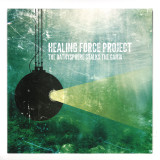
Healing Force Project continues its sonic journey towards territories of dub/reggae derivation. In this case, creating for Analog Versions, two tracks with a dark flavor, introspective but never banal. In the piece "The Bathysphere Stalks The Ganja", which gives the title to the 10inch record, there is a well-defined rhythmic gait, obviously with a markedly dub timbre and a structure that almost transforms into a jungle mantra, almost giving the listener a feeling of sensory loss. Continuing on this type of production and composition, "Jah Connection" develops on a slow groove in the first bars of the track, and then opens up to contexts close enough to the breakbeat and with a voice that repeatedly punctuates the riddim that is created step by step. Bottom line: whoever listens to this project just has to let themselves be carried away by these timeless sounds.
Chain Of Flowers return with their lofty and long-simmering sophomore full-length, rich with reckonings, reverb, and redemption: Never Ending Space. Despite some of the songs dating back a few years, the record first began materialising in earnest during the pandemic, by which point most of the band had relocated from Cardiff to London.
Reunited and rejuvenated, they picked up where they left off, booking two multi-day sessions at Hackney hub Total Refreshment Centre with producer Jonah Falco. In this time they successfully channelled their kinetic chemistry into 10 full-blooded anthems of torn dreams, poetic delirium, and “hope stretched too far.” Musically, Never Ending Space skews notably more maximal than the group’s previous work, fleshed out with trumpets, saxophone, synth, percussion boxes, and spoken word. (Smith jokingly calls them The Chain Of Flowers Orchestra).
Yet the songs still swing and soar with a charged heart, ripe with hooks, drama and ragged melody. Opener “Fire (In The Heart Of Hearts)” stirs to life on a tide of wiry guitar and defiant horns, facing down the embers of love that still glow in the wake of pain: “Peace came tumbling like a shower of bricks / The mind twists slowly till everything fits.”
A tense energy ripples throughout – from the nocturnal rush of “Serving Purpose” and “Amphetamine Luck” to the bruised battle cries of “Torcalon” and “Old Human Material.” Outliers like “Praying Hands, Turtle Doves” hint at proggy possible futures, while instrumental vignette “Anomia” offers an intriguing glimpse at a lesser heard facet of the band: swaying, shadowy, subdued. The album’s title track is also its closing cut, a stomping, sparkling ode to “the wrong side of the night, where time goes to die.” Smith describes the scene: “Everyone’s talking, screaming, trauma bonding, but no one’s listening. Broken dialogue. Shouting over each other. You want to switch off, but everyone’s too fucked.” The guitars spiral and slide towards the oblivion of dawn, the chance to crash and do it all again.