Pat Kelly possesses one of the great soul voices to come out of Jamaica. Influenced by the fantastic American singer Sam Cook, Pat Kelly could ride over any tune that came his way and with his outstanding falsetto voice always added a little magic to each recording.
Pat Kelly (born 1949,Kingston, Jamaica) began his singing career in 1967 when he replaced Slim Smith as lead singer of the Techniques, his voice working so well with the impeccable harmonies of Winston Riley and Bruce Ruffin. Their first hit for the mighty Duke Reid stable was a version of Curtis Mayfield's tune 'You'll Want Me Back' retitled 'You Don't Care' which held the Number 1 position in Jamaica for six weeks. Their next hit was another Curtis Mayfield cover of the Impressions 'Minstrel and Queen' again retitled for the Jamaican market as 'Queen Minstrel'. Further hits followed with such cuts as 'My Girl' and 'Love is Not a Gamble' before in 1968 Kelly decided to become a solo artist and hooked up with producer Bunny Lee. Bunny decided not to break the tried and tested formula and put Kelly on another Curtis Mayfield track 'Little Boy Blue' a style that
suited his voice so well. This paid dividends and was followed with 'How Long' (will I love you)' which gave them the biggest selling Jamaican hit of 1969. A track which broke the mould in that often used tradition where Jamaican tracks are sweetened
for the foreign markets by adding string arrangements. This was reversed on this occasion as the tune had already been released in the UK and dubbed over with strings so came back to the Jamaican shores and released there.
Another string to Pat Kelly's bow was his engineering skills. Having already spent a year in America studying electronics he put this to good use and became little known to many
one of the chief engineers at Channel 1 studios in the late 1970's and early 1980's.
For this release we have focused on the fabulous singing skills of Mr Kelly and have compiled some of his finest recording moments for your listening pleasure. The aforementioned timeless cuts to 'How Long ( Will I Love You )', 'Little Boy Blue'
alongside some other killer lost classics, as our set opener 'It's a Good Day', 'Somebodys Baby', 'Give Love a Try' and 'I'm In the Mood for Love'. His version of 'Twelfth Of Never' in a Rocksteady Style sounds as good now as it did then. We have
also included his interpretation of the James Carr soul hit 'Dark End of the Street' which has Pat Kelly working over the same rhythm as 'How Long' but giving it a different slant
with these fresh lyrics. A fine set from one of the Islands finest, Jamaican Soul indeed... hope you enjoy the set.
Cerca:smith inc
For Quiet Town, her first album of new material in 12 years, Smith called on producer and musician Neilson Hubbard, alongside engineer Dylan Alldredge. Hubbard enlisted guitarists Will Kimbrough, Megan McCormick, and Juan Solorzano, bassist Lex Price, Danny Mitchell on keys and horns, and a host of acclaimed vocalists for the background vocals, including Maureen Murphy, Nickie Conley, Jodi Seyfried, Matraca Berg, Kate York, and Park Chisolm.
Smith’s talent for expressing the most human of vulnerabilities is on full display on the new album. Beyond the title track, other album highlights include “Jericho,” co-written with esteemed artist and Nashville Songwriters Hall of Fame songwriter Matraca Berg, which gives voice to anticipation of impending life changes of monumental import; “I’d Rather Be a Bridge,” a plea for compassion and connection; and “Farther Than We Should Have,” co-written with Natalie Hemby and K.S. Rhoads. The latter is a song about overcoming the deck stacked against kindred spirits who together trek through a difficult journey and find footing beyond beating the odds.
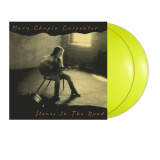
How could this album, one of the biggest crossover country smashes of the ‘90s and a complete artistic triumph, remain a vinyl wallflower at this late date?! Well, we at Real Gone Music are pleased and proud to take this classic Mary Chapin Carpenter release to the dance with a special 2-LP expanded highlighter yellow vinyl edition that includes an entire bonus side featuring a live performance from 1994, the same year Stones in the Road was released! The accolades and accomplishments of this record are almost too numerous to list here: #1 on the Country charts, Top 10 on the Billboard 200 Pop charts, a number 1 Country hit with “Shut Up and Kiss Me,” other charting singles like “Tender When I Want to Be,” “House of Cards,” and “Why Walk When You Can Fly?”, and Grammies for Best Country Album and Best Female Country Vocal Performance. But hits and awards aside, what makes this album so special is that every song packs its own unique emotional punch, starting with the title tune that was first covered by Joan Baez; you could also point to the transcendent “John Doe No. 24” and the brilliant “End of My Pirate Days” as firsts among equals on this amazingly consistent and rewarding album (which Country Universe called the best Contemporary Country album of all time!).
Some credit must be given to the band that producer John Jennings assembled, including drummer Kenny Aronoff, keyboardist Benmont Tench, guitarists Lee Roy Parnell and Steuart Smith, and backing vocalists Trisha Yearwood, Shawn Colvin, and Linda Williams. But, as always with a Mary Chapin Carpenter album, it’s the songwriting that’s the real star: witty, wistful, personal, and REAL. With gorgeous hooks to boot! Side D includes the four tracks that came out on the Live at “Her Majesty’s Theatre” EP recorded in London, featuring a version of “Shut Up and Kiss Me,” and it all comes with two printed inner sleeves boasting lyrics. Released on its 30th anniversary with the full consent and support of the artist herself!
"The Affectionate Punch is the debut studio album by the Scottish post-punk and new wave band the Associates. The album was released on 1 August 1980. From the album ""The Affectionate Punch"" and ""A"" were released as singles. Upon its release, The Affectionate Punch was declared ""a kind of masterpiece"" by Paul Morley of the NME, who described it as ""a passionate cabaret soul music, a fulfilment of the European white dance music Bowie was flirting with back then."" None other than Robert Smith (the Cure) can be heard doing backing vocals on ""The Affectionate Punch"" and ""Even Dogs in the Wild"". Nigel Glockler (Saxon) is the drummer on this album. The Affectionate Punch is available as a limited edition of 1000 individually numbered copies on turquoise coloured vinyl and includes an insert."
- 1: Cypress Crossing
- 2: Pink River Dolphins
- 3: Ride To Cerro Rico
- 4: Dust From The Mines
- 5: The Shadow Song
- 6: Irene, Goodnight
Ava Mendoza has never made an album quite as personal as her second solo full-length, The Circular Train. Through her decades of collaborations with Nels Cline, Carla Bozulich, William Parker, Fred Frith, Matana Roberts, and Mick Barr—plus years leading her power trio Unnatural Ways and playing in Bill Orcutt’s quartet—the guitarist’s name has become synonymous with virtuoso technique, raw passion, and visceral resonance, a player pushing the edges of the guitar’s possibilities. Along the way, from 2007 to 2023, Mendoza was writing these slow-burning, incandescent songs. The Circular Train is comprised solely of her single-tracked guitar playing and, on two songs, her corporeal singing. Her first solo LP of original material since relocating from California to New York City a decade ago, much of The Circular Train was honed amid pandemic years that clarified the virtues of slowing down. This expressive avant-rock is a definitive introduction to one of the most uncompromising and inquisitive visions in creative music. Mendoza’s thrilling melange of free jazz, blues, noise, classical training, and blazing experimental rock’n’roll all coheres with ecstatic feedback, with picking and solos that crest with shimmer. Sometimes she sounds like a one-woman Sonic Youth with guttural and poised vocals that equally evoke Patti Smith and blues greats like Jessie Mae Hemphill. Conceptually, The Circular Train is presented as a psychogeographical train ride through certain of Mendoza’s musical homelands. The songs draw on ancestral and recent familial memories, notably of her parents’ roots in mining towns—in her father’s home country of Bolivia and mother’s hometown of Butte, Montana, each country with its own history of colonialism, racism, forced labor, the eradication of culture and the subsequent excavation of it. These adventurous songs were composed in cars and planes, in the heart of the Mississippi Delta, in Los Angeles and upstate New York—which is to say in motion. “Ride to Cerro Rico,” named for the mountain and silver mine at the center of Potosi, Bolivia, was inspired by Mendoza’s great grandmother’s life there in a Quechua mining family. “Dust From the Mines” drew from that history as well as Mendoza’s familial lineage of miners in Montana, building up to stunning swaths of shredded iridescence. “Pink River Dolphins” was inspired by a visit to the Amazon rainforest, swimming with dolphins alongside her father—the pink bufeos that inhabit both Bolivia and Columbia—and the song is dedicated to the memory of Mendoza’s late friend, the Colombian-American trumpeter jaimie branch. They shared a fascination with those intelligent and agile creatures who often communicate by echolocation. “Make a sound, it comes back around,” Mendoza sings, and later, “Echo, echo/The answer in a sound,” evoking what branch knew well: through music we navigate life. The Circular Train contains one cover, “Irene, Goodnight,” composed by Gussie Lord Davis and popularized by Leadbelly; Mendoza has been performing it for over 20 years. Almost as deeply embedded in her repertoire is the penultimate track, “The Shadow Song.” “Treat your shadow kind and it might treat you good,” Mendoza sings on this song that she’s been reworking for over a decade, an emblem of devotion. “Treat your shadow kind and it might treat you right,” she repeats, becoming a blues mantra. What is a shadow self if not one’s secret world, which, once laid bare, awaits an echo, a return?
Camelot, the legendary seat of King Arthur's court in Early Middle Ages Britain, was probably not a real place. A corruption of the name of a real Romano-Briton city, the word "Camelot" accumulated symbolic, mythic resonances over centuries, until achieving its present usage as a near-synonym of "utopia." In the mid-20th century alone, Camelot inspired an explosion of representations and appropriations, among them the violent, affectless Arthurian court of Robert Bresson's 1974 film Lancelot du Lac and the absurdist iteration of Monty Python's 1975 Holy Grail, both of which feature armored knights erupting into fountains of blood; the mystical Welsh world of novelist John Cowper Powys's profoundly weird 1951 novel Porius, with its Roman cults, wizards and witches, and wanton giants; and the nationalist nostalgia of President John F. Kennedy's White House. Unsurprisingly there are fewer Camelots in more recent memory. Camelot, Canadian songwriter Jennifer Castle's extraordinary, moving 2024 chronicle of the artist in early middle age, charts a realer, more rooted, and more metaphorical place than the fabled Camelot of the Early Middle Ages (or its myriad depictions), but it too is a space more psychic than physical. In Castle's Camelot, the fantastic interpenetrates the mundane, and the Grail, if there is one, distills everyday experience into art and art into faith, subliming terrestrial concerns into sublime celestial prayers to Mother Nature, and to the unfolding process of perfecting imperfection in one's own nature. Co-produced by Jennifer and longtime collaborator Jeff McMurrich, her seventh record is at once her most monumental and unguarded to date, demonstrating a mastery of rendering her verse and melodies alike with crisply poignant economy. For all their pointedly plainspoken lyrical detail and exhilarating full-band musical flourishes, these songs sound inevitable, eternal as morning devotions. "Back in Camelot," she sings on the lilting, vulnerable title track, "I really learned a lot / circles in the crops and / sky-high geometry." The album opens with a candid admission of sleeping "in the unfinished basement," an embarrassing joke that comes true. But the dreamer is redeemed by dreaming, setting sail in her airborne bed above "sirens and desert deities." If she questions her own agency_whether she is "wishing stones were standing" or just "pissing in the wind"_it does not diminish the ineffable existential jolt of such signs and wonders. This abiding tension between belief and doubt, magic and pragmatism, self and other, sacred and profane, and even, arguably, paganism and monotheism, suffuses these ten songs, which limn an interior landscape shot through with sunstriped shadows of "multi-felt dimensions" both mystical and quotidian. The epic scale and transport of "Camelot," with its swooning strings, gives way dramatically to "Some Friends," an acoustic-guitar-and-vocals meditation in miniature on Janus-faced friends and the lunar and solar temperatures of their promises_"bright and beaming verses" versus hot curses_which recalls her minimalist last album, 2020's achingly intimate Monarch Season. (In a symmetrical sequencing gesture, the penultimate track, the incantatory "Earthsong," bookends the central six with a similarly spare solo performance and coiled chord progression, this time an ambiguous appeal to _ a wounded lover? a wounded saint? our wounded planet?) Those whom "Trust" accuses of treacherous oaths spit through "gilded and golden tooth"_cynics, critics, hypocrites, gurus, scientists, doctors, lovers, government, the so-called entertainment industry_sow uncertainty that can infect the artist, as in "Louis": "What's that dance / and can it be done? What's that song / and can it be sung?" Answering affirmatively are "Lucky #8," an irrepressible ode to dancing as a bulwark against the "tidal pools of pain" and the "theory of collapse," and "Full Moon in Leo," which finds the narrator dancing around the house with a broom, wearing nothing but her underwear and "big hair." But the central question remains: who can we trust, and at what cost faith, in art or angels or otherwise? Castle's confidence in her collaborators is the cornerstone of Camelot. Carl Didur (piano and keys), Evan Cartwright (drums and percussion), and steadfast sideman Mike Smith (bass) comprise a rhythm section of exquisite delicacy and depth. This fundamental trio anchors the airiness of regular backing vocalists Victoria Cheong and Isla Craig and frames the guitars of Castle, McMurrich, and Paul Mortimer (and on "Lucky #8," special guest Cass McCombs). Reprising his decennial role on Castle's beloved 2014 Pink City, Owen Pallett arranged the strings for Estonia's FAMES Skopje Studio Orchestra. On the ravishing country-soul ballad "Blowing Kisses"_Pallett's crowning achievement here, which can be heard in its entirety in the penultimate episode of the third season of FX's The Bear_Jennifer contemplates time and presence, love and prayer_and how songwriting and poetry both manifest and limit all four dimensions: "No words to fumble with / I'm not a beggar to language any longer." Such rare moments of speechlessness_"I'm so fucking honoured," she bluntly proclaims_suggest a state "only a god could come up with." (If Camelot affirms Castle as one of the great song-poets of her generation, she is not immune to the despairing linguistic beggary that plagues all writers.) Camelot evinces a thoroughgoing faith not only in the natural world_including human bodies, which can, miraculously, dance and swim and bleed and embrace and birth_but also in our interpretations of and interventions in it: the "charts and diagrams" of "Lucky #8," a daydreamt billboard on Fairfax Ave. in LA in "Full Moon in Leo," the bloody invocations of the organ-stained "Mary Miracle," and all manner of water worship, rivers in particular. (Notably, Jennifer has worked as a farmer and a doula.) The album ends with "Fractal Canyon"'s repeated, exalted insistence that she's "not alone here." But where is here? The word "utopia" itself constitutes a pun, indicating in its ambiguous first syllable both the Greek "eutopia," or "good-place"_the facet most remembered today_and "outopia," or "no-place," a negative, impossible geography of the mind. Utopia, like its metonym Camelot, is imaginary. Or as fellow Canadian songwriter Neil Young once sang, "Everyone knows this is nowhere." "Can you see how I'd be tempted," Castle asks out of nowhere, held in the mystery, "to pretend I'm not alone and let the memory bend?"
. For Fans Of: The Weather Station, Weyes Blood, Adrianne Lenker, Phoebe Bridgers, Joan Shelley, Lana Del Rey, Cass McCombs, Angel Olsen & Neil Young. Camelot, the legendary seat of King Arthur’s court in Early Middle Ages Britain, was probably not a real place. A corruption of the name of a real Romano-Briton city, the word “Camelot” accumulated symbolic, mythic resonances over centuries, until achieving its present usage as a near-synonym of “utopia.” In the mid-20th century alone, Camelot inspired an explosion of representations and appropriations, among them the violent, affectless Arthurian court of Robert Bresson’s 1974 film Lancelot du Lac and the absurdist iteration of Monty Python’s 1975 Holy Grail, both of which feature armoured knights erupting into fountains of blood; the mystical Welsh world of novelist John Cowper Powys’s profoundly weird 1951 novel Porius, with its Roman cults, wizards and witches, and wanton giants; and the nationalist nostalgia of President John F. Kennedy’s White House. Unsurprisingly there are fewer Camelots in more recent memory. Camelot, Canadian songwriter Jennifer Castle’s extraordinary, moving 2024 chronicle of the artist in early middle age, charts a realer, more rooted, and more metaphorical place than the fabled Camelot of the Early Middle Ages (or its myriad depictions), but it too is a space more psychic than physical. In Castle’s Camelot, the fantastic interpenetrates the mundane, and the Grail, if there is one, distills everyday experience into art and art into faith, subliming terrestrial concerns into sublime celestial prayers to Mother Nature, and to the unfolding process of perfecting imperfection in one’s own nature. Co-produced by Jennifer and longtime collaborator Jeff McMurrich, her seventh record is at once her most monumental and unguarded to date, demonstrating a mastery of rendering her verse and melodies alike with crisply poignant economy. For all their pointedly plainspoken lyrical detail and exhilarating full-band musical flourishes, these songs sound inevitable, eternal as morning devotions. “Back in Camelot,” she sings on the lilting, vulnerable title track, “I really learned a lot / circles in the crops and / sky-high geometry.” The album opens with a candid admission of sleeping “in the unfinished basement,” an embarrassing joke that comes true. But the dreamer is redeemed by dreaming, setting sail in her airborne bed above “sirens and desert deities.” If she questions her own agency whether she is “wishing stones were standing” or just “pissing in the wind” it does not diminish the ineffable existential jolt of such signs and wonders. This abiding tension between belief and doubt, magic and pragmatism, self and other, sacred and profane, and even, arguably, paganism and monotheism, suffuses these ten songs, which limn an interior landscape shot through with sunstriped shadows of “multi-felt dimensions” both mystical and quotidian. The epic scale and transport of “Camelot,” with its swooning strings, gives way dramatically to “Some Friends,” an acoustic-guitar-and-vocals meditation in miniature on Janus-faced friends and the lunar and solar temperatures of their promises—“bright and beaming verses” versus hot curses which recalls her minimalist last album, 2020’s achingly intimate Monarch Season. (In a symmetrical sequencing gesture, the penultimate track, the incantatory “Earthsong,” bookends the central six with a similarly spare solo performance and coiled chord progression, this time an ambiguous appeal to … a wounded lover? a wounded saint? our wounded planet?). Those whom “Trust” accuses of treacherous oaths spit through “gilded and golden tooth” cynics, critics, hypocrites, gurus, scientists, doctors, lovers, government, the so-called entertainment industry sow uncertainty that can infect the artist, as in “Louis”: “What’s that dance / and can it be done? What’s that song / and can it be sung?” Answering affirmatively are “Lucky #8,” an irrepressible ode to dancing as a bulwark against the “tidal pools of pain” and the “theory of collapse,” and “Full Moon in Leo,” which finds the narrator dancing around the house with a broom, wearing nothing but her underwear and “big hair.” But the central question remains: who can we trust, and at what cost faith, in art or angels or otherwise? Castle’s confidence in her collaborators is the cornerstone of Camelot. Carl Didur (piano and keys), Evan Cartwright (drums and percussion), and steadfast sideman Mike Smith (bass) comprise a rhythm section of exquisite delicacy and depth. This fundamental trio anchors the airiness of regular backing vocalists Victoria Cheong and Isla Craig and frames the guitars of Castle, McMurrich, and Paul Mortimer (and on “Lucky #8,” special guest Cass McCombs). Reprising his decennial role on Castle’s beloved 2014 Pink City, Owen Pallett arranged the strings for Estonia’s FAMES Skopje Studio Orchestra. On the ravishing country-soul ballad “Blowing Kisses” Pallett’s crowning achievement here, which can be heard in its entirety in the penultimate episode of the third season of FX’s The Bear Jennifer contemplates time and presence, love and prayer and how songwriting and poetry both manifest and limit all four dimensions: “No words to fumble with / I’m not a beggar to language any longer.” Such rare moments of speechlessness “I’m so fucking honoured,” she bluntly proclaims suggest a state “only a god could come up with.” (If Camelot affirms Castle as one of the great song-poets of her generation, she is not immune to the despairing linguistic beggary that plagues all writers.) Camelot evinces a thoroughgoing faith not only in the natural world including human bodies, which can, miraculously, dance and swim and bleed and embrace and birth but also in our interpretations of and interventions in it: the “charts and diagrams” of “Lucky #8,” a daydreamt billboard on Fairfax Ave. in LA in “Full Moon in Leo,” the bloody invocations of the organ-stained “Mary Miracle,” and all manner of water worship, rivers in particular. (Notably, Jennifer has worked as a farmer and a doula.) The album ends with “Fractal Canyon”s repeated, exalted insistence that she’s “not alone here.” But where is here? The word “utopia” itself constitutes a pun, indicating in its ambiguous first syllable both the Greek “eutopia,” or “good-place” the facet most remembered today and “outopia,” or “no-place,” a negative, impossible geography of the mind. Utopia, like its metonym Camelot, is imaginary
Lonnie Smith (1942 – 2021), was an American jazz organist. He was part of several vocal ensembles in the 1950s, includ- ing the Teen Kings which included Grover Washington Jr. Art Kubera, the owner of a local music store, gave Smith his first organ, a Hammond B3. Smith’s affinity for R&B mixed with his own personal style as he became active in the local music scene. In 1965 he met guitarist George Benson. The two con- nected on a personal level and formed the George Benson Quartet, featuring Lonnie Smith, in 1966. After two albums under Benson’s leadership, Smith recorded his first solo al- bum ‘Finger Lickin’ Good (Soul Organ)’ with George Benson and Melvin Sparks on guitar, Ronnie Cuber on baritone sax, and Marion Booker on drums. This combination remained stable for the next five years. After recording several albums with Benson, Smith became a solo recording artist and sub- sequently recorded over 30 albums under his own name.
Numerous prominent jazz artists joined Smith on his albums
and in his live performances, including Lee Morgan, David “Fathead” Newman, King Curtis, Blue Mitchell, and Joe Lova- no. The album ‘Finger Lickin’ Good (Soul Organ)’ showcases Lonnie Smith’s virtuosity and his innovative approach on the organ, with tracks that feature intricate solos and groovy rhythms so typical of the soul jazz and jazz funk genres. Lon- nie Smith was named 9 times “the best organist of the year” by the Jazz Journalists Association.
This release comes as a limited edition of 750 copies on smoke coloured vinyl.
- Breakup
- You Made A Hit
- Little Girl
- Rockin' Bandit
- Willing And Ready
- Right Behind You Baby
- So Young
- Shake Around
- Life Is A Flower
- Candy Doll5
By the end of 1957, the rockabilly heyday of Sun Records was virtually over. Ray Smith's importance to the legacy of the label is that his first Sun session in January 1958 heralded the new era of rock 'n' roll.
Despite recording a string of excellent rocking singles for Sun, commercial success eluded Ray Smith. A year after a series of outstanding concert performances in the UK and Holland during 1978, Ray Smith died tragically as a result of a shooting accident on 29 November 1979.
'Shake Around' Includes 'So Young', 'Rockin' Bandit' and 'Break Up', which he recorded several months before labelmate and friend Jerry Lee Lewis' made it a hit single.
"Nobody wanted recognition more than Ray. He was totally wrapped up in what he was doing. There was never a dry thread on him after a show!" - Sam Phillips
"Lover Man by the Archie Shepp Quartet featuring Annette Lowman was originally released in 1989. For this release tenor saxophonist Shepp was joined by pianist Dave Burrell, bassist Herman Wright, drummer Stephen McCraven and vocals by Annette Lowman. It's a diverse album with the title track featuring Lowman's warm vocals and Shepp's tenor in the background., the band's jazzy swings version of Duke Ellington's ""Squeeze Me"" and 8 other pieces.
This expanded edition of Lover Man includes two tracks ""Margy Pargy"" and ""Tribute To Bessie Smith"" which were previously only available on cd. "
- A1: Dear Fool (3.27)
- A2: Igloo (2.42)
- A3: Nothing New (3.10)
- A4: I Won't Get My Feet Wet Again (3.21)
- A5: Who Is India? (3.46)
- A6: Let Me Not Put You Down (4.53)
- B1: Only A Week Away (3.24)
- B2: Playing Is No Song (2.42)
- B3: You're So Right, September (3.34)
- B4: The Weeds In The Yard (2.33)
- B5: Rolling Back (4.16)
- B6: Frog In The Jam (3.35)
Bonus 7”
A. Rincón de Luna (2.55)*
B. Voices (2.34)*
Singer/Songwriter Juliet Lawson’s album, ‘Boo’, was released on the Sovereign label in the UK in 1972. The album was the confident debut of a young British artist and featured twelve of Lawson’s own compositions.
In the same wave of early 1970s English singer-songwriters such as Nick Drake, Vashti Bunyan, Christine McVie and despite being described at the time as ‘Britain’s answer to Joni Mitchell’ ‘Boo’ was to prove her only major label release with limited commercial success.
Over the next 50 years the album’s reputation has slowly grown and is today an expensive and collectible item. ‘Boo’ is presented here in its entirety.
The first pressing of the vinyl edition of the album also come with a bonus 7-inch single featuring two early demo tracks produced by ex-Yardbirds founder Paul Samwell-Smith, who also produced Carly Simon and Cat Stevens. Special Limited-Edition Album with bonus 7” Single + Download Code.
Includes interview with Juliet Lawson and exclusive photography.
The debut recording from the duo of multi-award-winning Scottish author David Keenan and Bruce Russell, the guitarist from the greatest underground rock band of the late 20th century, New Zealand’s The Dead C, was recorded live in Christchurch, NZ, as part of the WORD festival in August 2023. A series of live improvised settings that pair readings from Keenan’s monolithic and critically-acclaimed modernist masterpiece, Monument Maker (White Rabbit 2021), with guitar and electronics from Russell, the music takes off on the kind of post-VU fantasy of punk-primitive free music posited by Russell in projects like A Handful of Dust while expanding on Russell’s no-technique blues w/scalpel sharp riffs and aformal blats of pure electricity that match the religious eroto-mania of the text. Keenan reads w/shamanistic intensity and with a sonorous, incantatory rhythm, while Russell conjures the very ghost of the book straight out of the air. Think the early Patti Smith/Lenny Kaye spoken word/guitar jams informed by religious painting, Bach cantatas, Pierre Reverdy, Goya, Charles Olson, Arthur Doyle and Rudolph Grey. Features full colour photography by musician and artist Heather Leigh taken in-situ during the writing of Monument Maker in France in 2018. Bruce Russell is a practitioner in sound, who for forty years has been a member of The Dead C and A Handful of Dust. He mixes rock, electro-acoustics, noise and improvisation in equal measures. Also directed two of New Zealand’s vanguard independent labels, Xpressway and Corpus Hermeticum. His solo guitar practice reconfigures the blues as a form of improvisational auto-destruction. He is also a writer and his next book is titled ‘Rock’n’roll: my part in its downfall’. David Keenan is the author of six novels; This is Memorial Device (Faber & Faber) which won the London Magazine Prize for Debut Fiction and was shortlisted for the Gordon Burn Prize; For the Good Times (Faber & Faber), which won the Gordon Burn Prize and was shortlisted for the Encore Award for Second Novels; Xstabeth (White Rabbit), which was shortlisted for the Dublin Literary Prize; The Towers The Fields The Transmitters (White Rabbit); Monument Maker (White Rabbit), which was a Rough Trade Book of the Year; and Industry of Magic & Light (White Rabbit). Edna O’Brien has said of him “I sometimes think David Keenan dreams aloud. His prose has the effortless, enigmatic, unsettling quality of dreams… reading him feels like being cut open to the accompanying sound of ecstatic music.”
‘Expansions’ reaches its 50th anniversary of recording this year. The ground-breaking jazz funk track is one of the most influential records in club music, being a dancefloor hit in the UK and New York on release, and going on to be a foundation piece for club culture.
It has been sampled, quoted and remade and now for the first time the full length version is available on a 7-inch single. It is paired with ‘Cosmic Funk’
- A1: Five Days (Mixed)
- A2: Love Don't Pay The Bills (Mixed)
- A3: Make It Alright (Mixed)
- B1: Please Don’t Break My Heart - Dj Andy Smith Reach Up Disco Wonderland Re-Edit (Mixed)
- B2: I Like Funky Music - Skratch Bastid Turntable Mix (Mixed)
- B3: Black Water Gold Part 2 - Dj Andy Smith Reach Up Disco Wonderland Extended Mix (Mixed)
- C1: Disco Hi-Life (Mixed)
- C2: Lovin' You - Smoove Disco Dub (Mixed)
- D1: Change (Mixed)
- D2: Free Yourself - Full Intention Extended Remix (Mixed)
- D3: Bad Times - Yam Who Extended Vocal Remix (Mixed)
- E1: Body Work (Mixed)
- E2: The Big Throwdown (Mixed)
- E3: Losers & Fools - Dj Andy Smith Reach Up Disco Wonderland Re-Edit (Mixed)
- F1: Beyond The Clouds (Mixed)
- F2: You're So Far Away - Dj Andy Smith Reach Up Disco Wonderland Re-Edit
Releasing in the autumn of 2024 Andy Smith's curation of the 3rd volume in his Reach Up – Disco Wonderland series brings us more carefully selected music from the Discosphere. With tracks from artists as far ranging as Buscrates, Trailer Limon and Rena Scott included in this 16 track killer compilation Andy has also included excellent edits and remixes from such stellar names as Full Intention, Yam Who and Skratch Bastid. Indeed, the CD and digital versions of the release also include a fully continuous Skratch Bastid mix of all 16 tracks. Reach Up-Disco Wonderland vol. 3 was curated during the lockdown periods of the pandemic after a series of virtual 'nights out' viewing DJs such as Skratch Bastid, The Nextmen, Chris Wheatley and others performing sets on the Twitch platform. Andy is now playing out in the real world with some of the DJs he 'met' online so now the time is right to drop this compilation on BBE Music. Andy Smith's pedigree in sourcing and mixing tracks from across eras and genres goes back to his debut compilation release The Document in 1998, he was the explorer and provider of samples and breaks for the first two Portishead albums and played as the band's international tour DJ. His compilation track record of some fifteen plus releases since 1998 has covered New Orleans Funk, Northern Soul, Reggae, the mixed genre follow ups to the The Document and, of course, the now three volumes of the Reach Up-Disco Wonderland series on BBE Music. Pressed as a triple vinyl LP, along with the aforementioned double CD and digital versions, not only is Reach Up-Disco Wonderland vol. 3 a delight for the DJ consul and the dance floor, but also an audiophile's dream on vinyl with all tracks mastered at the renowned and Grammy nominated Carvery Studios.
- A1: Perc
- A2: Please Come Back And Knock
- B1: Music Of Spheres
- B2: Asset
- B3: Feelu
Long time PPU contributor, video producer, and designer, SOFTgrid steps into the fold with their EP “Knock”. Includes “FEELU” as featured in the 2024 summer blockbuster Bad Boys IV : Ride Or Die starring Martin Lawrence & Will Smith.
Demoscene and Cracktro enthusiast, SOFTgrid started life navigating the dark waters of text user interfaces, with early memories of Bulletin Board Systems, and as time and technology progressed, they eventually obtained the various bits of software needed for their creation, this was by means of WAREZ servers in private chat rooms far from town hall.
SOFTgrid is most at home organizing their existence to a grid, be it pixels or the linear movement of sound on a timeline. ASCII and ANSI are their preferred means of expression, SID and PAULA chips their preferred means of communication.
Recorded at British Grove and Abbey Road studios, Daphne Guinness’s fourth
album, Sleep, is unlike anything Guinness has produced before. Contemplative, self-
reflective, and personal, it represents her most beguiling body of work to-date; a
sleek sophisticated experience enhanced by an array of esoteric creative touches,
complementing its dancefloor rush.
Mixed by Ricky Damian, known for his work with Lady Gaga, Adele, Georgia Smith,
Dua Lipa, her creative connections include long standing collaborator Malcolm
Doherty and Tony Visconti (who scored the album’s strings).
The album’s scale is further amplified by collaborators, including Guy Pratt (Madonna, Michael Jackson) and Rob Shirakbari (Burt Bacharach, Dionne Warwick), plus a 34-piece string section.
The scope of her associations extends far beyond the core album. Daphne collaborated with Nick Knight of SHOWStudio for the video to early single ‘Hip Neck Spine’, and with the iconic filmmaker and photographer, David LaChapelle for the current single ‘Volcano’.
- Reverend Horace Tyler - Intro 00:35
- The Thrillers Band - The Thrillers Band Theme 03:12
- Carla & The Carlettes - Love Makes A Woman 04:06
- The Channels 4 - I Wish It Would Rain 03:13
- Sharon Seabrook & The Starlettes - Come & Get These Memories 03:03
- The United Souls - I Want To Be Sweeter To You (Than I Was Yesterday) 03:08
- The Destinations - Cowboys To Girls 03:11
- Carla & The Carlettes - Grooving 03:00
- The Channels 4 - Cross My Heart 03:30
- The United Souls - The Way You Do The Things You Do 02:39
- The Starlettes - Dry Your Eyes 02:13
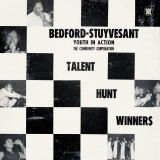
Big Crown Records is proud to present the reissue of one of Brooklyn’s most sought after “holy grail” soul records, YIA Talent Hunt Winners. Youth in Action, Inc. (YIA) was formed in 1963 when the Central Brooklyn Coordinating Council received a grant to develop a youth services program in the Bedford-Stuyvesant community. It was originally organized to identify and address the social problems that were leading to the high crime rate in Bed-Stuy. Recently the Smithsonian Museum of African American History released an archive of footage filmed by a community activist, which shows the real-world effects of the group’s efforts: young people engaged in sports, the arts, and other activities to better themselves and their world. The appearances by Jackie and Bobby Kennedy point to the group's relationship to the Great Society programs of President Lyndon B. Johnson. What there is no mention of in either the NMAAHC’s collection of YIA materials nor in the Brooklyn Public Library’s also extensive collection is this talent show and the record that came to be because of it.
Local vocal groups chose tunes to cover from the era (1964 - 1968) ranging from The Rascals to The Intruders, from The O’Jays to Billy Stewart. All of these groups were backed by a local act called The Thrillers Band. The winners of the talent contest were then invited into the studio to record their versions which would be pressed up on this record and given away to local radio and TV stations. The hope of the whole thing was that this would help the young groups get discovered by producers and record labels and start their professional music careers. The intro to the album is Reverend Horace Tyler congratulating the winners and asking them “to just remember, when you reach the top and become our big stars of tomorrow, don’t forget YIA”.
What this album may lack in fidelity and production it more than makes up for in charm. The engineers at the recording sessions pump in pre recorded applause and screaming to give the it the feel of the day of the contest while the young groups sing their hearts out, clearly giving their all. From today’s perspective, soul music fans will lose it over the choices of covers on this record and the killer, raw, innocent performances of them by these local Brooklyn groups. The Channels 4, Carla & The Carlettes, The United Souls, Sharon Seabrook & The Starlettes, and The Destinations all won that day and got to take place in this record. It makes you wonder, and even pine for the performances of the groups who didn’t make the cut, even if just to find out what tunes they covered, or better yet, were their original songs written by some of them for this contest?
It is with great pleasure that we make this available to the public again. This is a truly rare record, and an awesome piece of New York History.
Still Music Chicago is thrilled to announce the reissue of Jiraffe's ''Out'A The Box,'' a legendary dance record from New York City. Originally released in 1988 on Goldqwest Records, this track emerged from the collaboration between Richie Weeks and Al Smith. This limited 12'' release includes a full sleeve with a never-before-seen picture of Richie Weeks with Vaughan Mason at Vaughan home studio and a story of ''Out'A The Box''. Richie Weeks, known for his work with The Jammers and Weeks & Co, founded Goldqwest Records after Salsoul Records closed. Inspired by his friend Vaughan Mason, Richie ventured into house music production, recording demos that caught the attention of Reynald ''Crazy Frenchman'' Deschamps of M.T.I Exports. A generous supporter funded Goldqwest's third release, leading to Richie and Al Smith creating ''Out'A The Box'' at Al's home studio in Philadelphia. The track blended post-disco, dance, latin, and proto-house elements, achieving cult status among DJs worldwide.
The sophomore effort from Gray/Smith refines their petroleum-based, hard-lullaby sound with a decidedly dusty precision. To call this pair's brand of country-rock détournement "cosmic" would be too breezy: L. Gray and Rob Smith prefer to stare into sunken depths, channeling their recondite affections for lay-by mauve zones and red-dirt guitar wanderings. Formed in the outer-edges of Kings and Richmond counties circa 2020, Gray/Smith is something of an East-Coast involution. L. Gray (guitar and vocals) and Rob Smith (drums, guitar and vocals) are both trusty veterans of "band's bands" like Pigeons (Soft Abuse), No-Neck Blues Band (Revenant, Locust), Rhyton (Thrill Jockey), and The Suntanama (Drag City), freewheeling groups known for mining from polyglot sources: rough-hewn folk and the spiritual avant-garde, bargain-bin hard rock and and collector's-choice psychedelia alike. On their first, self-released LP Gray/Smith, serendipitously recorded at Gary's Electric at the top of 2021, the pair trained their assured chops onto the great American song-form, honing a murky but tight approach that variously cribs "urban cowboy" and finger-picked primitivism. A string of cryptic appearances soon followed, including a short-lived residency at a now-shuttered vodka dive; a micro-tour with Coloradan songstress Josephine Foster; and a series of backyard and barroom gigs sharing stages with compatriots like Stella Kola, Blues Ambush, Samara Lubelski, and Wednesday Knudsen. Heels in the Aisle is the slipshod, burnt-out, mid-'70s unter-prog comedown to their debut's backwoods, bushy-tailed, early-'70s, country-rock meanderings_expect more unrestrained riffs, artful studio wizardry, and worn-down introspection. Joining the ranks of bloodshot-eyed, blues-rock medleys à la Canned Heat's "Parthenogenesis" and Grand Funk's "Into The Sun," "The SDSPS" is the nearly side-length opening cut, an expanded song-cycle condensing and riffing on the themes of their debut. "Help Me" ventriloquizes Pomona College outlaw Kris Kristofferson's slow-roaring ballad of libidinal woe. On the flip side, "Verrazano Tile" and the title track pay heed to lower bays of Staten Island, while their arrangement of the traditional Zimbabwean tune "Guabi Guabi" is a bright Dead/Feat-like jaunt with blissed-out wah-wah pay-off. "Gaslight Boulevard" is lean, mean, and eight-beers-in space rock, and the closing track "Kekule's Ring" is a slack-jawed, wistful crash back down to earth. All this, packaged in a luxe, expertly-printed sleeve photographed by downtown artist Lary 7 and designed by Eric Wrenn (Sophie's Oil of Every Pearl's Un-Insides).
- A1: Joyful Noise
- A2: The King Is Alive
- A3: Let You Go
- A4: Praise God For That
- A5: Everything Good
- A6: How Sweet The Sound
- B1: Gallows (Oh What A Savior)
- B2: Can't Lose
- B3: Armor
- B4: Somebody Loves You
- B5: Love Is
Centricity Music recording artist Jordan Feliz quickly became a household name when his first radio single “The River,” the title track from his critically-acclaimed debut, became a smash hit. Spending an unprecedented 12 weeks at No. 1, the chart-topping single was named ASCAP’s “Christian Music Song of the Year” and garnered Feliz his first RIAA Platinum® certification. Thanks to his charismatic vocals and signature blend of soulful pop, each of his seven subsequent radio singles has landed in the Top 10 with “Witness,” “Glorify” and “Jesus Is Coming Back” notching three more No. 1’s for the singer. In addition, the California- native has been nominated for five Dove Awards, taking home the trophy for 2016’s “New Artist of the Year,” and has amassed nearly 500 million lifetime streams. Along with his heartwarming children’s hardcover book, Beloved, and his headline tours, Feliz has also shared stages around the country with some of the biggest names in Christian music, including TobyMac, Michael W. Smith, For KING & COUNTRY, Matthew West and Crowder.