Les Enfants Terribles presents LETM011 by DJ Real Madrid with the new EP No Smoking:
Dear readers and listeners,
My name is Tillmann Ostendarp, others know me as DJ Real Madrid. I love to play instruments, I love to play with machines. And this is something I did in May 2024, when I spent one week in my beautiful studio. Over the course of the week I recorded „NO SMOKING“ which is going to be my first Vinyl Release as „DJ Real Madrid“. No Smoking contains 4 Tracks: „Ta Ta“ which is a Juno-driven deep homage to the god of funk „Johnny Guitar Watson“. „Leave It Be“ is a big percussive jam that tells you to mind your own business. When I knocked out „GGGGGG“, I invited Dino Brandao and Mel D over to jam on the microphone, which led to a dark humorous ode to the insanity of our world. The last track is called „Merlasco“ and brings back the hope that we all will come together in the morning sunrise!
quête:smoking jo
- 1
In recent years, Blackploid has come to be one of Central Processing Unit's signature artists. The German producer has averaged more than a record a year for the Sheffield imprint since he first landed on CPU in 2021. This prolific run continues withCosmic Drama, Blackploid's second LP for the label. The album takes the baton from its predecessorEnter Universein style, delivering twelve tracks of top-quality machine-funk that draw down from electro's classic artists while also imbuing proceedings with a playfulness that very much gives things a signature Blackploid-ish flavour.
Cosmic Dramasets its stall out from the off. The opening run of 'Alien', 'World Construction' and 'Virtual State' all deliver piston-snapping beats which anchor pleasing melanges of B-movie synth lines. Alongside this, Blackploid adds little flourishes which add buoyancy to each joint - a syncopated bassline reminiscent of I-f's late-90s classic 'Space Invaders Are Smoking Grass', crackling robo-voiced commands, skittering synth chords which wash across the mix and so on. It's the work of someone completely at ease with their craft, comfortable enough to take risks without upsetting the apple cart of their sound's core appeal.
Blackploid's idiosyncratic approach to synth work is something which distinguishesCosmic Dramafrom the pack. Electro has long been a genre which prides itself on innovation on the keys, but few producers are willing to push their sonics as far as Blackploid does - take the seasick churn of pads and processors on 'Multiverse', for instance, or the way John Carpenter-esque single-note lines dovetail with gurgling synthetic pulses and eerie, spacious chords on 'The Lab', a highlight ofCosmic Drama's midsection.
Cosmic Dramaskips along at club tempo throughout - every one of these joints will get bodies moving in dark rooms across the galaxy. However, even when tracks maintain their single-minded pursuit of machine-funk perfection, they never forget to deliver on the hooks. Blackploid has lead lines (and counter-melodies) to burn here, and each track knots them together in ever-more intriguing ways as they plough onwards. Drexciyan heads will be thrilled by the sci-fi delights of 'Species', for instance, while Blackploid brings melodies as cold as they are catchy on the aptly-named 'Polar Dunes'. By the timeCosmic Dramahits upon the vroom-vrooming bassline line of closer 'Contact', you're fully enthralled to the album's combination of broken-beat heft and synthetic melodiousness.
Central Processing Unit mainstay Blackploid comes through with another delightful dozen of electro heaters for the Sheffield label.
RIYL:Drexciya, I-f, Cygnus, AFX
1021 is the third studio album from Toronto singer/songwriter, Rochelle Jordan. Originally released in 2014, 1021 is the album that forever changed Rochelle’s trajectory as an artist. Filled with moments of honest and pure self expression yet still showing signs of who she has eventually become, the album showcases Rochelle’s resilience as an indie artist, her unapologetic risk taking, and her drive and uncompromising belief in herself. The album’s production is filled with lush, airy, evocative beats, with her vocals drawing comparison to the iconic R&B superstar, Aaliyah - in fact, “Ease Your Mind,” was co-produced with Eric Seats, who produced the iconic Aaliyah track, “Rock the Boat.” Since then, Rochelle has gone on to become a major player in the R&B and dance spaces, most recently working with Kaytranada on his new album. To celebrate the 10 year anniversary since it’s release, 1021 will be making its debut on vinyl for the very first time. 2xLP, pressed on Baby Blue Galaxy vinyl and includes a 24x36 double-sided poster, as well as three additional songs not originally included on the album - this is strictly for the Day Ones.
Schlammpeiziger, who had previously only been known to us for his top hits and T-shirts, burst upon us like a wild boar in search of affection in the middle of the coronavirus lockdown. He nested in our fully vaccinated home, drank our Eversbusch, ate from our plates, slept in our bed (wait - wrong fairy tale) and repeatedly urged us to organise egg runs with his testicles (after some contortions, we gave up trying). Childish faecal humour, far-fetched obs(t)enities, juicing, a desire to dissolve, composting of thoughts. In excesses of lack of concentration, the chains of associations curled and meandered like Jo's famous curlicue drawings. Every evening, after we had forcibly levered him out of our flat, he would ‘walk’ home to put together very unique , dreamy pieces. In the blissful brainfog of those days, for example, ‘Handicapfalter’ was created, for which the congenial °Bär° made our flat into the corresponding video. Among other quirks of the little gut-breather, we were fascinated to observe his phobia of literature and books. Just hold a printed page in front of his face for a few seconds and he writhes on the floor crying. A level of phobia that only my own laughable disgust and fear of writing myself can compete with. Jo shudders at the thought of reading sentences that build on each other in a meaningful way, and I shudder at the thought of having to write them down because I have something ‘to say’. A certain affinity cannot be denied. We are much, much more pleased by snatched-up, misunderstood or misheard snippets, hollow but unforgettable phrases, the diamond stoner humour of our ancestors. ‘From one turn/ I stop/ to walk on/ in all directions’ (as it murmurs in “Selten Gesehenes”), describes the process quite nicely. After all, Jo is ahead of me in that he can simply break off every tedious sentence and let it fade into music. Back to the essentials. It's five to 12 for the Schlammpeitzger (scientifically Misgurnus). The shy goby is under threat from climate change, so perhaps this vinyl is the last expression of life of the specimen that we have been allowed to look after sporadically since the lockdown phase of the corona epidemic. And it's turned out pretty. Even the aesthetically gutted like me and my beloved husband can THINK about sex when they see these sublime, silvery fart bubbles! It's tender as a fart. Make love!!!!!
Schamlose Dubtöse: Do you have words. Do you have sounds. Impertinently harmless piano tinkling turns into tugging zounds of increasing severity. It is not dubbed (would be unethical) but dubbed. Sounds dubby, as you can imagine. (Instrumental)
Loch ohne Licht: Possibly vaguely misogynistic. Could also be that there was simply no light in the hole. The sparse snippet of lyrics (‘du biss mir och esu e Loch ohne Licht’) sounds like one of those stroppy Cologne replicas whose anti-charm is hard to resist. Buzzing and grooving.
Selten Gesehenes: Casual. Confident. Soft. Fragrant. Thoughtful but lively.
The Arabian Vietmanese (instrumental) is probably the food we trust in the case of the munchies we get when we watch other people smoking weed. Transcendental and psychedelic states casually permeate the humdrum of everyday life. Klar Knuspermarsch: Marches and floats at the same time. Klebt Runner: Soundtrack to the cult film of the same name. Tyrrell Corporation loosens up. Ungenutzte Sätze: Stinks somehow, because there is dangerous proximity to comprehensible and then also critical statements here. Instead, the sinister electronic cheapness of Carpenter soundtracks can be heard. Parzipan: Actually, the time of origin was not so roaringly funny and simple, but for Jo it was also a gruelling, slow letting go of his brother. Here he sends him off with a gentle nudge into the vastness of a hopefully happy beyond.
Clara Drechsler
Schlammpeiziger, der uns bislang nur durch seine Top-Hits und seine T-Shirts bekannt gewesen war, brach mitten im Corona-Lockdown über uns herein wie ein wilder Eber auf der Suche nach Zuwendung. Er nistete sich in unserem durchgeimpften Zuhause ein, trank unseren Eversbusch, aß von unseren Tellerchen, schlief in unserem Bettchen (Moment - falsches Märchen) drängte uns wiederholt dazu, mit seinen Hoden Eierlauf zu veranstalten (nach Verrenkungen gaben wir den Versuch auf). Kindischer Fäkalhumor, weit hergeholte Obs(t)zönitäten, Entsaftung, Auflösungswunsch, Gedankenkompostierung. In Exzessen der Konzentrationsschwäche ringelten, kringelten und schlängelten sich die Assoziationsketten wie bei Jos berühmten Kringel-Schlängel-Zeichnungen. Jeden Abend, nachdem wir ihn gewaltsam aus unserer Wohnung gehebelt hatten, „ging“ er dann heim, um dort sehr eigene, verträumte Stücke zusammenzubasteln. Im seligen Brainfog dieser Tage entstand z.B. „Handicapfalter“, für das der kongeniale °Bär° aus unserer Wohnung das entsprechende Video machte. Neben anderen Marotten des kleinen Darmatmers beobachteten wir fasziniert seine Literatur- bzw. Bücherphobie. Halt ihm nur sekundenlang eine bedruckte Seite vors Gesicht, und er windet sich weinend am Boden. Ein Grad an Phobizität, mit dem sich nur meine eigene lachhafte Abscheu und Angst vor dem Selberschreiben messen kann. Jo schaudert beim Gedanken, sinnvoll aufeinander aufbauende Sätze lesen, mir wiederum beim Gedanken, sie hinschreiben zu müssen, weil ich irgendetwas „zu sagen“ habe. Eine gewisse Verwandtschaft ist nicht zu leugnen. Viel, viel mehr freuen uns aufgeschnappte, falsch verstandene oder misshörte Fetzen, hohle, aber unvergessliche Phrasen, der diamantene Kifferhumor unserer Vorfahren. „Aus einer Drehung/bleibe ich stehen/ um in alle Richtungen/weiter zu gehen“ (wie es in „Selten Gesehenes“ raunt), beschreibt den Prozess schon ganz schön. Immerhin hat Jo mir voraus, dass er jeden leidigen Satz einfach abbrechen und in Musik ausplempern lassen darf. Zurück zum Wesentlichen. Es ist fünf vor 12 für den Schlammpeitziger (wissenschaftlich Misgurnus). Die scheue Grundel ist von Klimawandel bedroht, vielleicht haltet ihr mit diesem Vinyl also die letzte Lebensäußerung des Exemplars in Händen, das wir seit der Lockdownphase der Corona-Epidemie sporadisch betreuen durften. Und die ist hübsch geworden. Selbst aus ästhetischer Erwägungen Entdarmte wie ich und mein geliebter Mann, können bei diesen sublimen, silberhellen Pupsbläschen DENNOCH an Sex denken! It´s zart as a fart. Make love!!!!!
Schamlose Dubtöse: Hast du Worte. Hast du Töne. Impertinent harmloses Klavierplätschern geht über in ziepende Zounds von zunehmender Strenge. Es wird nicht domptiert (wäre unethisch) sondern dubtiert. Klingt dubtig, wie ihr euch vorstellen könnt. (Instrumental)
Loch ohne Licht. Möglicherweise vage misogyn. Könnte auch sein, dass im Loch einfach kein Licht war. Das sparsame Textfetzchen („du biss mir och esu e Loch ohne Licht“) klingt nach einer jener pampigen kölschen Repliken, deren Anticharme man sich schwer entziehen kann. Schwirrt und groovt.
Selten Gesehenes: Lässig. Souverän. Softig. Duftig. Nachdenklich aber beschwingt.
Beim Arabischen Vietmanesen (Instrumental) gibt es wahrscheinlich die Speise unseres Vertrauens im Falle der Munchies, die wir kriegen, wenn wir anderen Leuten beim Kiffen zusehen. Transzendentale und psychedelische Zustände durchziehen beiläufig den schnöden Alltag. Klar Knuspermarsch: Marschiert und schwebt zugleich.
Klebt Runner: Soundtrack zum gleichnamigen Kultfilm. Tyrrell Corporation macht sich locker. Ungenutzte Sätze: Stinks irgendwie, weil hier gefährliche Nähe zu nachvollziehbarer und dann auch noch kritischer Aussage gegeben ist. Dafür klingt die sinistre elektronische Billigkeit von Carpenter-Soundtracks an.
Parzipan: Eigentlich war die Entstehungszeit gar nicht so brüllend lustig und einfach, sondern für Jo auch ein zermürbendes, langsames Loslassen des Bruders. Hier schickt er ihn mit sanftem Schubs hinaus in die Weiten eines hoffentlich schönen Jenseits.
Clara Drechsler
Downloads
Late-night jams in their new studio sees Jazzbois return to their beat-tape roots on Still Blunted
Having established themselves as one of the leading live bands in Europe grooving in improvised jazz motifs and hip-hop beats, Budapest trio Jazzbois return with their fourth LP Still Blunted that sees them touch base with their beat-tape roots.
Now situated in the heart of Buda at their new studio above a club, the Hungarian trio of Bencze Molnár (Rhodes/synth), Viktor Sági (bass) and Tamás Czirják (drums) take a more considered approach to Still Blunted and offer a snapshot into the jams, sessions, and shows they have played over the past year. The new album comes after performing at the legendary Montreux Jazz Festival this summer and will be followed by a European tour in October.
Inspired by contemporaries Domi and JD Beck, Kiefer, Nala Sinephro, and the sounds of Radio Juicy, Jazzbois have been more critical of their track selection for the sequel to their Goes Blunt albums. They’ve ripped up their playbook of producing records in a matter of days and took their time to approach the record through reworking their favourite tracks recorded over the past year.
“We’re trying to keep the same formula but there was a lot of thought gone into the process of making an improvised jam sound like a song. It has to be good in the moment, and we chose the ones we felt were expressive and resonated the most with us musically. We focus on our feelings in the moment and have trust in our own taste and music visions.”
The trio’s new studio has offered them the space and time to get the best out of their creativity. “This new spot is a Jazzbois headquarters. It’s above this club, sometimes there's a DJ playing outside on the street – everyday there's something on and lots of people coming and going. We hang out for the whole day and just record anything or edit.”
Jazzbois are a part of the rich, underground jam scene in Budapest, and those improvised-led sessions have fed into Still Blunted. One of their late-night jams turned after-parties produced sketches for tracks they selected for the album.
“It was the end of a wild night celebrating getting the album done. We’re having a jam and we looked around while we were recording and there was twenty people smoking and drinking around us – half of them we didn't even know who they are. It turned into an open after-party where people were coming to ours from the club. It was very spontaneous and unexpectedly, we made five or six new songs we ended up using for the album.”
The ethos of those unplanned, open jams is something they carry through into their live shows, as they never rehearse so their music can develop freely. Their trusted fourth ‘live’ member DomBeats joins them on Still Blunted adding saxophone to some of the psychedelic-tinged beats, such as on singles Shangri La and Chrome. After recently digging back into 70s and 80s jazz, discovering more hip-hop sampled tracks, and absorbing the breaks and high-energy of footwork and juke, these influences come through strong across Still Blunted.
The footwork sound is replicated in the shuffling, busy drums of Shangri La, with the echoing guitar twang reminiscent of a sample you may hear on an MF Doom beat. “Shangri La was a catalyst for the new album. It reflects on our trip to America and SXSW. We played at this venue Shangri La. The Texan air and sun are in that track.”
Chrome takes on a much more furious style of playing that allows for the drums to cascade and flow along with the pulsating, chromatic bass line, with the synths and saxophone spiralling into an engrossing frenzy. The liquidy keys and synths glides over the bass on Flute Thang, creating a 70s jazz-funk vibe that stands out from the rest of the album.
With hundreds of thousands of monthly listeners across Spotify and Apple Music, they have become a playlist staple that has earned them millions of streams since their debut release Jazzbois Goes Blunt in 2019. As more live dates are booked for the Hungarian trio, Jazzbois continue to transform the traditional jazz trio sound into deep, groove-led beats on Still Blunted.
- A1: Roni Size, Reprazent - Heroes (Kruder's Long Loose Boss
- A2: Alex Reece - Jazz Master (K&D Session Tm)
- B1: Bomb The Bass - Bug Powder Dust (K&D Session Tm)
- B2: Lamb - Trans Fatty Acid (K&D Session Tm)
- C1: Count Basic - Speechless (Drum 'N' Bass)
- C2: Rockers Hi-Fi - Going Under (K&D Session Tm)
- D1: Depeche Mode - Useless (K&D Session Tm)
- D2: Count Basic - Gotta Jazz (Richard Dorfmeister Remix)
- E1: Aphrodelics - Rollin' On Chrome (Wild Motherfucker Dub)
- E2: Knowtoryus - The Revenge Of The Bomberclad Joint (K&D S
- F1: Rainer Trüby Trio - Donaueschingen (Peter Kruder's Remix
- G1: David Holmes - Gone Ft Sarah Cracknell (K&D Session Tm
- G2: Sofa Surfers - Sofa Rockers (Richard Dorfmeister Remix)
- H1: Mama Oliver - Eastwest (Stoned Together)
- H2: Bomb The Bass - Bug Powder Dust (Dub)
- H3: Kruder & Dorfmeister - Boogie Woogie
- I1: Sin - Where Shall I Turn (K&D Session Tm Vol
- I2: Bone Thugs-N-Harmony
- I3: Kruder & Dorfmeister - Lexicon
- J1: Knowtoryus - Bomberclad Joint (K&D Session Tm)
- J2: Rockers Hi-Fi - Going Under (Evil Love & Insanity Dub)
- J3: Strange Cargo - Million Town (K&D Session Tm)
- K1: Count Basic - Speechless (Peter Kruder Vocal Mix)
- K2: Lewis Taylor - Lucky (Kruder & Dorfmeister Suicide Mix)
- L2: Ufo - L O.v.e. (K&D Session Tm)
- L3: Lewis Taylor - Lucky (Kruder & Dorfmeister Reprise Mix)
- K3: Roni Size - Heroes (Peter Kruder Powercut Mix)
- L1: Madonna - Nothing Really Matters (Kruder & Dorfmeister
Normal[58,78 €]
Occasionally an album comes along that seems to capture the mood of the time. "The K&D Sessions" was one. In the late 1990s no afterparty, smoking session or languid Sunday afternoon was complete without Kruder & Dorfmeister blasting from the Bang & Olufsen. Now approaching it"s 25th anniversary the lore around this iconic release, steeped in a silvery cloud of smoke, retains a star quality which only shines brighter as time hurtles on. With the original having sold well over a million copies by this point in time, it"s hard to imagine a mix or remix compilation being able to inform a movement like "The K&D Sessions" has. To celebrate this monumental milestone, we"ve created a limited boxset in 6LP and 3CD of "The K&D Sessions", mastered and cut by LA luminary Bernie Grundman for a luxurious listening experience, with newly designed inner sleeves using unseen photos from the original photo shoot. Inserted in the box is a forty-page booklet containing multitudes more never before seen photos from the same shoot and notes which recount humorous tales surrounding the duo and the people who spent time with them in this epoch. Included on the 6th LP is their legendary 11 minute shimmering remix of Madonna"s "Nothing Really Matters". The 6th LP also contains Peter Kruder"s Powercut Mix of Roni Size"s "Heroes" and K&D"s remix of U.F.O, "L.O.V.E.". In addition there are two cerebral alternate remixes of Lewis Taylor, one being completely dubbed and the other the using the vocal line for this beautiful gem, "Lucky" and a special remix of "Speechless" by Count Basic. These have been staples in K&D"s sets and now take their rightful place collected in the canon of "The Sessions".
- A1: James Brown - Hundred Mile High City (Ocean Colour Scene)
- A2: Skanga - It's A Deal, It's A Steal (Tom, Nick & Ed)
- A3: Junior Murvin - The Boss
- A4: Lewis Taylor/Carleen Anderson - Truly, Madly, Deeply
- A5: Dusty Springfield - "Hortif**Kinculturist" (Winston)
- A6: John Murphy/David Hughes - Police & Thieves
- B1: Robbie Williams - 18 With A Bullet
- B2: E Z Rollers - Spooky
- B3: The Stooges - The Game
- B4: The Castaways - "Muppets" (Harry, Berry & Gary)
- B5: Stretch - Man Machine
- B6: Evil Superstars - Walk This Land
- C1: John Murphy & David Hughes - "Blaspheming Barry" (Barry)
- C2: John Murphy & David Hughes - I Wanna Be Your Dog
- C3: John Murphy & David Hughes - It's Kosher (Tom & Nick)
- C4: James Brown - Liar Liar
- C5: The Stone Roses - "I've Been Shot" (Plank & Dog)
- C6: Pete Wingfield - Why Did You Do It
- C7: Guns 4 Show Knives 4 A Pro" (Ed & Soap)
- C8: Oh Girl
- C9: If The Milk Turns Sour (With Rory)
- C10: Zorba The Greek
- D1: I'll Kill Ya (With Rory)
- D2: The Payback
- D3: Fools Gold
- D4: It's Been Emotional (Big Chris)
- D5: 18 With A Bullet
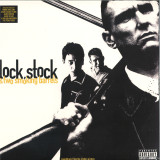
Originally released on Island Records in September 1998, the soundtrack to the box-office smash film, written and directed by Guy Ritchie, quickly became a must-own album, and is frequently cited as one of the best movie soundtracks of all time.
Lock, Stock and Two Smoking Barrels redefined the British gangster film and established Guy Ritchie as one of the greatest directing and writing talents of his generation. Using a frenetic mixture of filmic styles, humour, violence, breakdown of the fourth wall, narration, and vast amounts of swearing, it is hard to imagine a time when this film and its influence was not around. It made a star of the-then unknown Jason Statham, and, amazingly, hard man footballer Vinnie Jones, who as Big Chris, had several scene-stealing moments. Taking his cue from Quentin Tarantino, who had been meticulously curating his film soundtracks since the early 90s, Ritchie made the music to his film tell its own story, complete with memorable snatches of dialogue between many of the tracks.
It offers a beautifully eclectic selection of songs from the preceding three decades, plus then-current artists providing some of their best material, such as Hundred Mile High City by Ocean Colour Scene or E-Z Rollers' drum'n'bass masterpiece Walk This Land. Of the heritage tracks, Dusty Springfield sings her sultry take on Spooky; James Brown appears twice with The Boss and The Payback; The Stooges with I Wanna Be Your Dog, and two versions of Pete Wingfield's masterful one-hit-wonder 18 With A Bullet; in its 1975 original and a contemporary cover by Lewis Taylor and Carleen Anderson. And this is only half of it.
- 1: Blunts Rolled By (Ft. Ras_G)
- 2: Toast Up The Broccoli (Ft. Kahil Sadiq)
- 3: 2High (Ft. Koreatown Oddity)
- 4: Sourdiesel (Interlude)
- 5: Edeus Og (Spacebase Hybrid)
- 6: Haze
- 7: Ate2Manyedibles
- 8: Smoking? (Ft. Zeroh)
- 9: Nickelsackkah (Ft. Kahil Sadiq)
- 10: Kush Og
- 11: Blunt2Thaface
- 12: Grabbaskills
- 13: Lordsunlib Og (Spacebase Hybrid)
- 14: 47 + 2
- 15: Last Nugg
- 16: Regular (Somebeforenone) Outro
"BLUNTS ROLLED" GSF13 the first posthumous release of unheard music by RAS-G'. Eighteen raw transmissions: unreleased beats, remixes, loops & smoky spacecraft meditations arranged in true mixtape spirit exactly as RAS envisioned them. This isn’t a vault dump, it's RAS_G in full form - unfiltered, joyful, psychedelic & rooted in the low end theory.
"BLUNTS ROLLED" continues the ASP mission: connecting hood to heaven, ancient to future, earthly to astral. These sounds crackle with cosmic dust & Cali sunshine - grounded in LA soil, projected into Saturn’s rings. Featuring transmissions from ASP family Kahil Sadiq, The Koreatown Oddity, Zeroh, and even G himself... voices and energies orbiting each other in intimate, galaxy-folding, head-nodding, fronto-scented universes.
Talulah’s Tape is the debut offering from magnetic Midwest-jangle collective Good Flying Birds. Across a patchwork mixtape of stripped-down home recordings that span the independent-guitar spectrum, the band delivers colorful, intricate pop songs perched between the immediacy of DIY punk and the intimate sweetness of twee. Breakbeats, memes, and noise glue everything together, making the album feel as chronically online as it is timeless.
Originally released on cassette in January 2025 by Midwest-punk legend Martin Meyers’s Rotten Apple label, the tape sold more than 300 copies in under a month and quickly became an out-of-print and coveted item. Meyers called it “certified catnip for popheads.” Now, with a refined track list and a fresh master from Greg Obis, Talulah’s Tape returns on LP and CD via Carpark and Smoking Room in October 2025.
While production and approach vary, a through-line of sensitive self-contemplation rests on bright, scrappy guitars and hyperactive melodic bass. Opener “Down on Me” rides a buoyant bass line while jangling guitars frame reflections on overcoming trauma: “I see you in the mirror every time I cry / I hear your voice every time I try.” Next, the guitars trade twinkling counter-melodies on “I Care for You,” pairing sugary, lovestruck lyrics with effervescent strums: “You catch me when I fall / You build me up so tall.”
The rosy grin occasionally twists into a wicked smirk. “Dynamic” warns, “You used to paint the face, but now you’re just the clown,” while “Glass” asks, “Is it lonely at the top when everyone follows the trend, and you hold the pen?” Both tracks brim with sparkling guitar interplay. By the closing, nearly five-minute “Last Straw,” Good Flying Birds stand far beyond conventional indie-pop or 4-track punk, unveiling a roller-coaster of unpredictable changes, vocal harmonies, and instrumental cross-talk.
Altogether, Talulah’s Tape is a pastel-yellow, candy-coated shell filled with thoughtful juxtapositions and melodic experiments. Standing on the same ground as idiosyncratic songwriters like Connie Converse and Daniel Johnston, Good Flying Birds find sweetness in sadness, tear stains on a colorful flower-print couch. Simultaneously, it’s packed with the scratchy guitars and vibrant rhythms of Scottish guitar groups like The Pastels, Orange Juice, and Josef K. It’s a tremendous opening statement from a band just getting started.
"Static Shock out here still pushing the finest in international punk and hardcore. This time with a smoking debut from Oslo’s Draümar. Their influences are from the same city block with groundwork laid by groups like So Much Hate and Svart Framtid. Unfortunately, the songs are blasting away at the same monumental enemies albeit with different faces. The never-ending nuclear question, societal unease, genocide, and a steadfast approach to not turn away from the constant horror of today’s world make up the tapestry of this 12”.
The intro and outro track nod and update John Carpenter’s Assault On Precinct 13 setting the stage for a flurry of cold, desperate Norwegian punk - instantly identifiable and as potent as ever. Indeed, they’ve scraped the blood, sweat and victory off the floors of Blitz and distilled it into a Molotov aimed directly at a world in constant crisis. These are chords and context against a rising fascist world where screaming is not limp response but also tactic, celebration and affirmation. Aside from the fury contained in the original tracks you get a bonus treat in the dual vocal attack on the Bannlyst song ‘Herrene’ which features original Bannlyst vocalist, Finn Erik Tangen - instantly identifiable and still just as pissed."
- 1: Bad All By Myself
- 2: One Foot On The Brake, One On The Gas
- 3: The Flirt In The Car Wash Skirt
- 4: Homeless Blues
- 5 13: Th Street And Trouble
- 6: Make A Pocket For Your Grief
- 7: More Time
- 8: If I Should Lose Your Love
- 9: Wayward Women
- 10: Crazy Love Affair
- 11: Cold Side Of The Bed
- 12: What Kind Of World Is This?
- 13: You Can't Strike Gold From A Silver Mine
"Rough and ready blues played with unmitigated intensity…scorching and soulful, joyous and stomping.
—Living Blues
Electrifying and raucous…one of the few authentic links to pure Chicago blues.
—Chicago Tribune
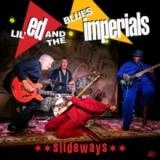
Lil’ Ed & The Blues Imperials are the reigning champions of raucous, slide-stoked Chicago blues. They’ve achieved legendary status with over 40 years of critically acclaimed recordings and raucous foot-stomping gigs on club, theatre and festival stages all over the world. Slideways is a tour-de-force of old-school Chicago blues played with contemporary urgency.
Shows in support begin on street date in Chicago, followed by Milwaukee, Minneapolis, Columbus, Cleveland, Dayton, New York and Syracuse amongst others. Touring will continue throughout Spring and Summer.
Press, radio and social media focus on album and tour dates, pitching stories and reviews to over 1000 print and internet media contacts around the world. Over 1400 radio programmers worldwide will be serviced and solicited for blues specialty show and selected Triple A and Americana rotation airplay. The album is certain to be welcomed with open arms by the blues media.
Slideways is bursting with Lil’ Ed’s rollicking slide-work and rough-hewn vocals on a joyous blend of smoking slide guitar boogies, raw-boned shuffles, and heart-stopping slow blues. As always, The Blues Imperials supply rock-solid, road-tested and gloriously riotous backing."
- A1: Elektro Returns
- B1: I Am Elektro '25
It's a wild tribute to the chain- smoking Moto- Man from 1938 -- a character with so much hubris, he makes HAL 9000 look like a bundle of anxious circuits. On the A- side, "Elektro Returns" blasts off as a Clavioline- driven stomper with a bouncy beat and feverish chord changes. Think JEAN JACQUES PERREY on a bad LSD trip. On the other side, "I Am Elektro '25", reinvents their 2019 track of the same name. This fuzz- drenched pounder could have made THE VENTURES' Nokie Edwards wish he'd been built as a robot! Back from the future and outta space - LES ROBOTS return from their intergalactic journey! Moog on!
His fourth album, City Music works as a counterpart to Morby’s acclaimed 2016 release Singing Saw, an autobiographical set that reflected the solitude and landscape in which it was recorded. Saw was imagined as “an old bookshelf with a young Bob and Joni staring back at me, blank and timeless. They live here, in this left side of my brain, smoking cigarettes and playing acoustic guitars while lying on an unmade bed.” And now follows City Music, the yang to its yin, the heads to its tails. It is a collection crafted using the other side of its creator’s brain, the jumping off point perhaps best once again encapsulated by an image. “Here, Lou Reed and Patti Smith stare out at the listener,” explains Morby. “Stretched out on a living room floor they are somewhere in mid-70s Manhattan, also smoking cigarettes.” It finds Morby exploring similar themes of solitude, but this time framed by a window of an uptown apartment that looks down upon an international urban landscape “exposed like a giant bleeding wound.”
- Que Pasa
- Oye
- Groovy Samba
- Descarga China
- Bomba Chévere
- Para Pello
- The Jody Grind
- Como Fue
- Descarga China (Groove Version)
Manteca’s 2014 album, first time on vinyl. Manteca, the London Latin jazz/salsa funk combo, are back with a first-time vinyl release of their brilliant digital album “Oye” from 2014. “Oye” is a collection of heavy-duty Latin music that reaches well beyond the standard salsa or Cuban dance-band style, appealing to anyone and everyone, from mambo dancers to B-boys, jazz brothers to soul sisters! Led by Colombian singer Martha Acosta and bassist Javier Fioramonti, who have played with everyone from Roberto Pla and Candela, to Alex Wilson’s groups and Salsa Celtica, as well as backing Latin legends such as Joe Bataan, Jack Costanzo, Henry Fiol and Azuquita, this band really cooks! “Que Pasa” is smoking Latin funk, this will get your head nodding and foot tapping for sure.“Oye”, a lovely mid-tempo Afrobeat/Latin jazz fusion number with punching brass and super-funky kit playing. There are three cover versions on the album: Horace Silver’s “The Jody Grind”, a 1960s Blue Note Records soul jazz classic. Manteca does it justice, taking the original and turning it into a heavy Mongo Santamaria style funky Latin soul belter. Sergio Mendes’s “Groovy Samba” is also given the 1960s Mongo “Watermelon Man” style Latin soul jazz treatment. Very hip arrangement, and some fantastic brass soloing in there too. The last one is a brave choice. It’s the timeless bolero standard “Como Fue”, which the band plays beautifully. “Para Pello” (“For Pello”), a conga-style big percussive beat that evolved from Afro-Cuban street carnivals. Secondly, “Bomba Chevere”, a blend of Puerto Rican bomba and Colombian cumbia. The big Afro-Cuban track of the album is “Descarga China”, which has two different mixes. One is a descarga funk mix with some heavyweight kit playing and smoking trumpet soloing, while the other is a more straight-ahead Latin jam with Javier’s upright bass playing underpinning the whole number in a very Cachao way. Big shouts to the whole band, which features some of the best musicians from the London Latin music scene of the last three decades. These cats are as good as you’ll get in Latin music from anywhere across the world.This London Latin music gem has been crying out for a vinyl release for over a decade. At last, it's here. Slap it on the turntable, drop the needle on track one, turn the volume up, press play and be ready to dance. Standing still is NOT an option! DJ Lubi (One Jazz / Totally Wired Radio)
Talulah’s Tape is the debut offering from magnetic Midwest-jangle collective Good Flying Birds. Across a patchwork mixtape of stripped-down home recordings that span the independent-guitar spectrum, the band delivers colorful, intricate pop songs perched between the immediacy of DIY punk and the intimate sweetness of twee. Breakbeats, memes, and noise glue everything together, making the album feel as chronically online as it is timeless.
Originally released on cassette in January 2025 by Midwest-punk legend Martin Meyers’s Rotten Apple label, the tape sold more than 300 copies in under a month and quickly became an out-of-print and coveted item. Meyers called it “certified catnip for popheads.” Now, with a refined track list and a fresh master from Greg Obis, Talulah’s Tape returns on LP and CD via Carpark and Smoking Room in October 2025.
While production and approach vary, a through-line of sensitive self-contemplation rests on bright, scrappy guitars and hyperactive melodic bass. Opener “Down on Me” rides a buoyant bass line while jangling guitars frame reflections on overcoming trauma: “I see you in the mirror every time I cry / I hear your voice every time I try.” Next, the guitars trade twinkling counter-melodies on “I Care for You,” pairing sugary, lovestruck lyrics with effervescent strums: “You catch me when I fall / You build me up so tall.”
The rosy grin occasionally twists into a wicked smirk. “Dynamic” warns, “You used to paint the face, but now you’re just the clown,” while “Glass” asks, “Is it lonely at the top when everyone follows the trend, and you hold the pen?” Both tracks brim with sparkling guitar interplay. By the closing, nearly five-minute “Last Straw,” Good Flying Birds stand far beyond conventional indie-pop or 4-track punk, unveiling a roller-coaster of unpredictable changes, vocal harmonies, and instrumental cross-talk.
Altogether, Talulah’s Tape is a pastel-yellow, candy-coated shell filled with thoughtful juxtapositions and melodic experiments. Standing on the same ground as idiosyncratic songwriters like Connie Converse and Daniel Johnston, Good Flying Birds find sweetness in sadness, tear stains on a colorful flower-print couch. Simultaneously, it’s packed with the scratchy guitars and vibrant rhythms of Scottish guitar groups like The Pastels, Orange Juice, and Josef K. It’s a tremendous opening statement from a band just getting started.
Talulah’s Tape is the debut offering from magnetic Midwest-jangle collective Good Flying Birds. Across a patchwork mixtape of stripped-down home recordings that span the independent-guitar spectrum, the band delivers colorful, intricate pop songs perched between the immediacy of DIY punk and the intimate sweetness of twee. Breakbeats, memes, and noise glue everything together, making the album feel as chronically online as it is timeless.
Originally released on cassette in January 2025 by Midwest-punk legend Martin Meyers’s Rotten Apple label, the tape sold more than 300 copies in under a month and quickly became an out-of-print and coveted item. Meyers called it “certified catnip for popheads.” Now, with a refined track list and a fresh master from Greg Obis, Talulah’s Tape returns on LP and CD via Carpark and Smoking Room in October 2025.
While production and approach vary, a through-line of sensitive self-contemplation rests on bright, scrappy guitars and hyperactive melodic bass. Opener “Down on Me” rides a buoyant bass line while jangling guitars frame reflections on overcoming trauma: “I see you in the mirror every time I cry / I hear your voice every time I try.” Next, the guitars trade twinkling counter-melodies on “I Care for You,” pairing sugary, lovestruck lyrics with effervescent strums: “You catch me when I fall / You build me up so tall.”
The rosy grin occasionally twists into a wicked smirk. “Dynamic” warns, “You used to paint the face, but now you’re just the clown,” while “Glass” asks, “Is it lonely at the top when everyone follows the trend, and you hold the pen?” Both tracks brim with sparkling guitar interplay. By the closing, nearly five-minute “Last Straw,” Good Flying Birds stand far beyond conventional indie-pop or 4-track punk, unveiling a roller-coaster of unpredictable changes, vocal harmonies, and instrumental cross-talk.
Altogether, Talulah’s Tape is a pastel-yellow, candy-coated shell filled with thoughtful juxtapositions and melodic experiments. Standing on the same ground as idiosyncratic songwriters like Connie Converse and Daniel Johnston, Good Flying Birds find sweetness in sadness, tear stains on a colorful flower-print couch. Simultaneously, it’s packed with the scratchy guitars and vibrant rhythms of Scottish guitar groups like The Pastels, Orange Juice, and Josef K. It’s a tremendous opening statement from a band just getting started.
Scintillating, alchemical kosmische; visionary, deep, and luminous; and beautifully sleeved, with gold foiling and silver ink.
Works In Metal fans out a set of acid treatments and finely sharpened blades — cutting, shaping, suspending form. Sounds are melted down and forged as if liquid metal.
The works are paired. Arc’s Blue Flame previews the smoking volatility at the album’s core. Echoes and resonance soften the dissonant, bright textures; all overlaid with Fofana’s signature, percussive kick drums. Welding drills into the discordant thrills and spills of metamorphosis. Sparks fly and the bittersweet arc of change unfolds.
Fofana discreetly folds in text, poetry, and field recordings, spooring their decomposition and recomposition with a prismatic point of view. The coupling Obscure Light (Decomposition) and Obscure Light (Recomposition) marks something new in his music. The pulse is brightly honed, cascading beyond the dancefloor, exultingly eluding musical genre.
Works in Metal is perhaps Fofana’s most narrative album. At its heart is the killer, extended Lure of the Fragment / So Another Sound Suggests Itself. Melodies circle in call-and-response patterns, balancing proximity and distance, signalling the inward gravity required to work with metal. A nested story-line, with birds flying in; an album within an album. Dredging up memories and associations, Fofana filters in selections from his sound-archives. Layered with synths, field recordings become instruments in their own right. The last three minutes proffer precious clarity — a memory, in miniature, flashed onto molten metal.
In 1943 Suzanne Césaire declared that ‘our surrealism will then supply them the leaven from their very depths. It will be time finally to transcend the sordid contemporary antinomies: Whites-Blacks, Europeans-Africans, civilized-savage: the powerful magic of the mahoulis will be recovered, drawn from the very wellsprings of life. Colonial idiocies will be purified by the welding arc’s blue flame. The mettle of our metal, our cutting edge of steel, our unique communions — all will be recovered’. Works in Metal is a tribute to her prophecy; its enactment, sculpted in sound.
Washed Up Color Vinyl is Clear w/ White Splatter! A white ship sailing in a sea of blackness, Codeine's swan song arrived in 1994 amid grunge's ascension to alt radio's godhead status. John Engle's guitar alternates between crystalline and sludge, and Stephen Immerwhar's distorted bass floats on top of punishing drums from newcomer Doug Scharin (Rex, June of 44), resulting in nine perfect meditations on the loneliness and uncertainty of early adulthood. "Codeine's unyielding numbness creates its own kind of warmth _ the feeling of cold water running for so long that it suddenly feels hot." _ Spin
- Duffy And Mr Seagull
- Mind Contorted
- Fourteen Years
- The Moon Song
- Two-Love
- Rêve Réveiller
- Bag Of Excuses
- To Know Him Is To Love Him
- Mri Song
- Alone On The Rope
- Planet Ping Pong
Third album by singer and producer Charlotte Marionneau. A collection of sonic trips that try to capture the spark of beat poetry. She is almost a magician who has captured the directness of punk and can do magic with the emotion of pop. And she is always in the experimental grab bag. On the track 'Two-Love' Noel Gallagher plays piano and bass. Further on there is a Daniel Johnston cover presented as a duet with Terry Hall and his son Theodore and here Noel plays guitar. Marionneau reminds one of a female Syd Barrett. She counts among her admirers: Kevin Shields, Mazzy Star, Noel Gallagher, The Television Personalities, Simon Raymonde, Grimm Grimm, Piano Magic and Cillian Murphy. Le Volume Courbe "Planet Ping Pong" is a collection of sonic trips echoing fulgurances of beat poetry. Charlotte is a magician who can weave the directness of punk with the emotions of pop while staying in the realms of edgy experimentation. The bunny comes out of the hat smoking a cigarette and looks you in the eye. The single "Two-Love" is a collaboration with Noel Gallagher on piano and bass and Lascelles Gordon on percussions. The album also includes a cover by Daniel Johnston "Mind Contorted" which is presented as a duet with Terry Hall, and also features his son Theodore Hall and Noel Gallagher on guitars. The originality of Charlotte's music shares something with outsider art: naïve, primitive, primal, rather than following the standard rules. The new album selfproduced and mixed by Brendan Lynch and Charlotte is no exception, It's a unique and compelling listen laced with surprises, subversions and a refreshing candour which sets it apart from anything else. Charlotte was born and raised in France and moved to London in 1995. She was first signed to Alan McGee Poptones label in 2001, and her debut "I killed my best friend" was released in 2005 on Honest Jon's Records. She has also worked with a number of other bands and musicians including Kevin Shields, Mazzy Star, Noel Gallagher, The Television Personalities, Simon Raymonde, Grimm Grimm, Piano Magic etc.. Her song "Born to Lie" was featured in Series 2 of Killing Eve and Spotify selected her song "Rusty" for their "best of the decade 2010-2020" alternative compilation. Cillian Murphy selected the same song for his BBC6 compilation. "She reminds me of a female Syd Barrett... she keeps running into me all over the place from concerts or serving me ice cream at the Curzon on a wet Saturday night or on Jools Holland with the High Flying Birds... I love Charlotte... a great talent and a real psychedelic soul musician." Alan McGee "Inspiring originality, fiercely independent beautiful music, always years ahead of its time. I remember hearing Charlotte's music for the first time and being immediately taken by the freshness, great melodies and utterly unique approach." Kevin Shields "When I first met her she was wearing a cape... she looked like a little piece of Lego. She told me she liked some of my songs but not all. (I hadn't even asked her opinion!!) She's beautiful, fearless and one hell of a tambourine player." Noel Gallagher. "Charlotte is bewitchingly talented, a true rarity that has inspired many creative people. The kind of woman songs are written about. She's an artist that steals your heart away and then comforts you with her stunning music." Hope Sandoval. "A true original and a truly unique artist. There is not many I can say this about, but I honestly think I love everything she's ever recorded! All hail the Scissor Queen!" David Holmes.
e BAG OF EXCUSES [V3]
[g] DUFFY AND MR SEAGULL [V3]
[i] MIND CONTORTED [V4]
[e] BAG OF EXCUSES [V3]
[g] DUFFY AND MR SEAGULL [V3]
[i] MIND CONTORTED [V4]
A fully licensed, analogue reissue -- sure, on cassette and not on vinyl, that's a
long story -- of the first Index LP, originally released in 1967
The "Black Album" is one of the all-time holy grails of psychedelia, with originals going
for more than $4,000. It is an album "with a really druggie sound, full of feedback and
fuzzy guitars. The vocals, when present, are not easily heard. The cover of 'Eight Miles
High' is very good, probably one of the best cover versions I have ever heard. The
original songs all follow a similar pattern as the covers, with hazy guitar riffs and loud
rhythms. The last track is particularly noisy and unstructured. Hidden in amongst the
echoing canyons of sound there's some really snotty punk attitude wrapped up in
trippy velvet fuzz."
This record is magnificent-- bizarre, atmospheric, amateurish (in the best of all
possible ways). It has a wonderful bleak sound, both droning and murky... the atonal
sound of 1960's rock that would leave the most lasting impression on what would
become future punk, post-punk and indie rock artists.
"Much has been written about this incredible band. Much of it isn't true. Index was
formed in the early spring of 1967 in Grosse Pointe, Michigan. I was 18 years old
when I met a chain-smoking 16-year-old named Gary Francis. Our conversation soon
got around to rock and roll. He told me that he and his friend, John Ford, were forming
a band. I told him that I played drums and we arranged a jam session at John's home
on Lakeshore Drive. Our first meeting was incredible. Our sound was full and
powerful. John's lead guitar techniques were fresh and innovative. After our first
sessions we knew we had something special. Index was born. Soon we hit the local
'sock hop' circuit, playing at high schools and teen clubs in the area. We poured our
unique sound out at The Hideout, Undercroft and G.P. War Memorial every weekend.
One afternoon John pulled out a new album he had been listening to. It was a new
band with a mind-shattering sound called 'The Jimi Hendrix Experience.' John played
some songs he had written inspired by this 'psychedelic' sound. Over the next few
days, 'Fire Eyes,' 'Shock Wave' and 'Feedback' were written. This album was recorded
in December of 1967 at the Ford estate. It is recorded in mono with literally one
microphone and with all instruments and vocals recorded at the same time. The cover
photo is of founders of a singing group John joined at Yale. The stiff, board- like
figures seem to characterize the exact opposite of this musical collection. This
reissue is taken from the original recordings. Nothing has been added and all songs
are in their original length. Over the years various bootleg copies of this album have
surfaced but this is the original work." --Jim Valice
- 1: Good Clothes Feat. Demae (Prod. Chris Keys)
- 2: Teen Summit
- 3: My Nigga Feat. $Ilkmoney, Quelle Chris & Big Kahuna Og (Prod. Shungu)
- 4: Lil One (Intro)
- 5: Lil One (Prod. Micall Parknsun)
- 6: Checkonme Feat. Lojii (Prod. August Fanon)
- 7: Nottooshabby Feat. Quelle Chris, Nickelus F & $Ilkmoney (Prod. Child Actor)
- 8: Lord Forgives, I Hold Grudges Feat. Denmark Vessey & Pink Siifu (Prod. Denmark Vessey)
- 9: The Times (Prod. Mono En Stereo)
- 10: Forever Dream (Interlude)
- 11: Forever Dream (Prod. Chris Keys)
- 12: Corner Pocket Feat. Quelle Chris & Bbymutha (Prod. Alchemist)
- 13: Dr Phil (Skit) Feat. Sycho Sid
- 14: Yougotme!! (Prod. Quelle Chris)
- 15: Foreverever Dream (Interlude)
- 16: Say Thank You Feat. Pink Siifu & Turich Benjy (Prod. Foisey)
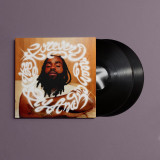
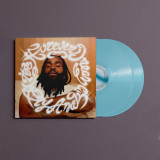
Fly Anakin is a rapper and producer who approaches his craft in a way few contemporaries can. Vigilant yet unorthodox, DIY-minded yet prolific, the Richmond, Virginia multihyphenate’s razor-sharp lyrics, ear for soulful production, and collaborative synergy are the result of over a decade of fundamental mastery. Described by Madlib as “one of the illest MCs,” the Mutant Academy cofounder was in his pocket well ahead of his acclaimed solo debut, Frank (2022). After years of consistent releases with his collective, Anakin broke major ground in 2020 with his and Pink Siifu’s joint project FlySiifu’s, followed by their $mokebreak EP in 2021. A student of the East Coast’s golden age, Anakin transmutes its spirit into music that’s both classicist and pioneering, having worked with the likes of Freddie Gibbs, redveil, BbyMutha, and MAVI. With the release of a Mutant Academy debut album completed, and his solo album (The) Forever Dream imminent, Anakin has cemented his place as a leader in rap’s underground Renaissance.(The) Forever Dream commemorates a new era of freedom for Anakin, who rarely approaches bodies of work without a preconceived concept. Executive produced by Quelle Chris, the project, which features the likes of Denmark Vessey, The Alchemist, BbyMutha, and Pink Siifu, includes songs that Anakin believes are some of his most experimental and ambitious. “The album is me and Quelle kicking it, smoking, learning each other, and playing video games,” he says of the project’s inspiration and recording process. “It was time to make some mindless music, to tackle production I would’ve otherwise picked up.” The long anticipated project comes after years of Anakin and Quelle developing a strong rapport, stemming back to 2019. “Quelle is one of the best collaborators ever—he’s not biased but he knows what he likes, open minded but stubborn at the right times,” Anakin says of his collaborative relationship with the Grammy nominated producer. “On the low we just alike but polar opposites, we can do no wrong together.”
- What Was
- Above Us
- What Am I? / Radio Tower
- Lotus Leaf
- Sideline
- Nature's Eternal
- Fiction Interlude
- All My Life
- Cycles
- Up In The Stars
- Grow
Luke Titus is a Chicago-born drummer, songwriter, producer, and multi-instrumentalist known for his remarkable versatility and genre-spanning artistry. With deep roots in jazz and a knack for blending it seamlessly with experimental music, drum & bass, and beyond, Titus has earned a reputation as a world-class drummer and a dynamic force across the national musical landscape. Growing up in Chicago's vibrant music scene, Titus flourished alongside fellow young artists in the early 2010s. His work quickly positioned him as a key figure in the city's jazz, hip-hop, and R&B communities, leading to collaborations that propelled him to national recognition. Continue to follow the thread of Luke Titus' many contributions to jazz and alternative scenes across America, and what emerges is a singular weave between his roots in Chicago, LA and New York communities. From What Was Will Grow A Flower is the second LP from the prolific young songwriter and producer, codifying his many musical leanings into an emergent, nearly clairvoyant statement of musical intent. Blooming and innovative songwriting, effervescent vocal hooks, virtuosic instrumental passages, and meticulously studied production techniques abound. About the album, Titus says "This album is about spirituality and connectivity, both with the universe and the self, as told through my personal journey. It questions reality as a way to deepen one's connection to it. I dedicate this album not only to anyone who has been through hard times, but to anyone who relates to the cyclical nature of the human experience. And more than that, I dedicate this album to my mom." As a producer and songwriter, Titus' fingerprints can be found on numerous acclaimed projects, including Noname's Room 25, Luke Titus & Cisco Swank's Some Things Take Time, Orion Sun's Orion, and Ravyn Lenae's Hypnos. His co-production credits span across a roster of innovative talents like Steve Lacy, Monte Booker, Brian Sanborn, Teo Halm, Phoelix, Cisco Swank, Saba, Kiefer, Elijah Fox, and Itai Shapira. Titus has taken his talents to the global stage, performing at high-profile festivals and venues such as Lollapalooza, Coachella, Pitchfork, Blue Note NYC, North Sea Jazz Fest, Smoking Grooves, Fuji Rock Festival, Blue Note Tokyo, and NYC Winter Jazz Fest, amongst many others.
- 1: Good Clothes Feat. Demae (Prod. Chris Keys)
- 2: Teen Summit
- 3: My Nigga Feat. $Ilkmoney, Quelle Chris & Big Kahuna Og (Prod. Shungu)
- 4: Lil One (Intro)
- 5: Lil One (Prod. Micall Parknsun)
- 6: Checkonme Feat. Lojii (Prod. August Fanon)
- 7: Nottooshabby Feat. Quelle Chris, Nickelus F & $Ilkmoney (Prod. Child Actor)
- 8: Lord Forgives, I Hold Grudges Feat. Denmark Vessey & Pink Siifu (Prod. Denmark Vessey)
- 9: The Times (Prod. Mono En Stereo)
- 10: Forever Dream (Interlude)
- 11: Forever Dream (Prod. Chris Keys)
- 12: Corner Pocket Feat. Quelle Chris & Bbymutha (Prod. Alchemist)
- 13: Dr Phil (Skit) Feat. Sycho Sid
- 14: Yougotme!! (Prod. Quelle Chris)
- 15: Foreverever Dream (Interlude)
- 16: Say Thank You Feat. Pink Siifu & Turich Benjy (Prod. Foisey)
Fly Anakin is a rapper and producer who approaches his craft in a way few contemporaries can. Vigilant yet unorthodox, DIY-minded yet prolific, the Richmond, Virginia multihyphenate’s razor-sharp lyrics, ear for soulful production, and collaborative synergy are the result of over a decade of fundamental mastery. Described by Madlib as “one of the illest MCs,” the Mutant Academy cofounder was in his pocket well ahead of his acclaimed solo debut, Frank (2022). After years of consistent releases with his collective, Anakin broke major ground in 2020 with his and Pink Siifu’s joint project FlySiifu’s, followed by their $mokebreak EP in 2021. A student of the East Coast’s golden age, Anakin transmutes its spirit into music that’s both classicist and pioneering, having worked with the likes of Freddie Gibbs, redveil, BbyMutha, and MAVI. With the release of a Mutant Academy debut album completed, and his solo album (The) Forever Dream imminent, Anakin has cemented his place as a leader in rap’s underground Renaissance.(The) Forever Dream commemorates a new era of freedom for Anakin, who rarely approaches bodies of work without a preconceived concept. Executive produced by Quelle Chris, the project, which features the likes of Denmark Vessey, The Alchemist, BbyMutha, and Pink Siifu, includes songs that Anakin believes are some of his most experimental and ambitious. “The album is me and Quelle kicking it, smoking, learning each other, and playing video games,” he says of the project’s inspiration and recording process. “It was time to make some mindless music, to tackle production I would’ve otherwise picked up.” The long anticipated project comes after years of Anakin and Quelle developing a strong rapport, stemming back to 2019. “Quelle is one of the best collaborators ever—he’s not biased but he knows what he likes, open minded but stubborn at the right times,” Anakin says of his collaborative relationship with the Grammy nominated producer. “On the low we just alike but polar opposites, we can do no wrong together.”
- 1: Good Clothes Feat. Demae (Prod. Chris Keys)
- 2: Teen Summit
- 3: My Nigga Feat. $Ilkmoney, Quelle Chris & Big Kahuna Og (Prod. Shungu)
- 4: Lil One (Intro)
- 5: Lil One (Prod. Micall Parknsun)
- 6: Checkonme Feat. Lojii (Prod. August Fanon)
- 7: Nottooshabby Feat. Quelle Chris, Nickelus F & $Ilkmoney (Prod. Child Actor)
- 8: Lord Forgives, I Hold Grudges Feat. Denmark Vessey & Pink Siifu (Prod. Denmark Vessey)
- 9: The Times (Prod. Mono En Stereo)
- 10: Forever Dream (Interlude)
- 11: Forever Dream (Prod. Chris Keys)
- 12: Corner Pocket Feat. Quelle Chris & Bbymutha (Prod. Alchemist)
- 13: Dr Phil (Skit) Feat. Sycho Sid
- 14: Yougotme!! (Prod. Quelle Chris)
- 15: Foreverever Dream (Interlude)
- 16: Say Thank You Feat. Pink Siifu & Turich Benjy (Prod. Foisey)
Fly Anakin is a rapper and producer who approaches his craft in a way few contemporaries can. Vigilant yet unorthodox, DIY-minded yet prolific, the Richmond, Virginia multihyphenate’s razor-sharp lyrics, ear for soulful production, and collaborative synergy are the result of over a decade of fundamental mastery. Described by Madlib as “one of the illest MCs,” the Mutant Academy cofounder was in his pocket well ahead of his acclaimed solo debut, Frank (2022). After years of consistent releases with his collective, Anakin broke major ground in 2020 with his and Pink Siifu’s joint project FlySiifu’s, followed by their $mokebreak EP in 2021. A student of the East Coast’s golden age, Anakin transmutes its spirit into music that’s both classicist and pioneering, having worked with the likes of Freddie Gibbs, redveil, BbyMutha, and MAVI. With the release of a Mutant Academy debut album completed, and his solo album (The) Forever Dream imminent, Anakin has cemented his place as a leader in rap’s underground Renaissance.(The) Forever Dream commemorates a new era of freedom for Anakin, who rarely approaches bodies of work without a preconceived concept. Executive produced by Quelle Chris, the project, which features the likes of Denmark Vessey, The Alchemist, BbyMutha, and Pink Siifu, includes songs that Anakin believes are some of his most experimental and ambitious. “The album is me and Quelle kicking it, smoking, learning each other, and playing video games,” he says of the project’s inspiration and recording process. “It was time to make some mindless music, to tackle production I would’ve otherwise picked up.” The long anticipated project comes after years of Anakin and Quelle developing a strong rapport, stemming back to 2019. “Quelle is one of the best collaborators ever—he’s not biased but he knows what he likes, open minded but stubborn at the right times,” Anakin says of his collaborative relationship with the Grammy nominated producer. “On the low we just alike but polar opposites, we can do no wrong together.”
- 1: Autumn
- 2: Bougainvillea
- 3: Horses I
- 4: Time
- 5: Way To Get Out
- 6: Fruit From The Vine
- 7: Buffalo
- 8: Horses Ii
- 9: Colorado
- 10: Blue Deja Vu
- 11: Mr. Wine
- 12: Horses Iii
Tobacco City is a Chicago-based band that blends cosmic country with a mix of psychedelic rock and honky-tonk soul. Their sound captures the essence of small-town nostalgia while embracing modern-day themes, exploring heartache, longing, and the bittersweet nature of life. With their uplifting energy and authentic songwriting, Tobacco City continues to carve out a unique space in the countrytinged Americana scene. On Horses, the highly anticipated follow-up to their critically acclaimed debut, Tobacco City, USA, the band takes listeners on a nostalgic journey through the haze of youth, where time feels suspended and plans are nonexistent. The album’s lyrics conjure vivid images of small-town life—smoking schwag behind the grocery store, drinking cream from a gas station with your first love—capturing that carefree, uncertain time when the future felt distant. The music channels the spirit of ’70s country with influences from legends like Gram Parsons and Emmylou Harris, bringing a timeless, uplifting energy to each track. At the same time, the lyrics intersect with modern-day themes, blending the beauty and innocence of youth with the harsh realities of life. Horses feels like a contemporary take on classic country, merging a nostalgic past with the complex world of today, all while remaining undeniably authentic and heartfelt. This follow-up to Tobacco City, USA—which received high praise from NPR and Rolling Stone— cements the band’s place at the forefront of a new wave of countrytinged Americana. “...Like the Chicago band’s namesake, a slow smoke hangs in the air, heavy with heartbreak and feather-blue eyeshadow, but puts a brave face on. Lexi Goddard sings with a far-away look over a pedal-steel cry, a melody that sways to country songs on jukeboxes of yore...” —NPR “Chicago’s Tobacco City do more with less... spacious grooves as pedal steel wafts through like a gentle breeze. Vocalist Lexi Goddard and Chris Coleslaw sounds simultaneously wistful and playful throughout...” —Rolling Stone
- A1: The Serious Matter
- A2: Í Alvöru Talað
- B1: Tempo 116.7 (Reaching For Dangerous Levels Of Sobriety)
- B2: Tempo 116.7 (Clean Acid / Dirty Beats)
- B3: Super Fucked
Following on the somnambulant heels of When I See The Sun, our massive, near-complete Codeine overview, comes What About The Lonely?, an eight-track LP recorded at the group's live zenith. Captured direct from the mixing board at a stop on Codeine's November 1993 swing through the Midwest, opening for Mazzy Star, this document finds Stephen Immerwahr, John Engle, and Doug Scharin running through their hits at Chicago's notorious Lounge Ax for a crowd of chatty "120 Minutes" fans. Gastr Del Sol's David Grubbs adds his guitar to two songs, slinking on and off the 24-inch stage with little fanfare, but leaving his signature indelibly on the performance.
“Friends, they are my ticket out of this place I am in… feels like nothing more than a dirt bike vacation stop between Phoenix and San Diego.” Dirt Bike Vacation—for Worried Songs Records—explores the sonic world of the late amateur guitar player, Charles ‘Poppy Bob’ Walker, through a captivating set of instrumental songs made in the mid-1980s. Recorded on a single-track, Marantz field recorder, the project is a transportive document of Walker’s days spent as a meatpacking employee in Yuma, Arizona and the dailiness of that existence: driving to work, sitting in his backyard, walking around drunkenly, unwinding on the couch with a friend. These sketches, showing an experimental tendency, are surprisingly ahead of their time; some exhibit ad hoc tape delay (“Granite Bluffs,” “Goodbye YMCA”), while others make use of primitive overdubbing (“Continuation to Moon Doctor”). Not dissimilar to works such as Bruce Langhorne’s The Hired Hand soundtrack, Walker’s guitar playing is melodic, texturally rich and beautifully sober. On a musical tour from Nashville to Los Angeles, musician-archivist, Cameron Knowler, uncovered these songs from a series of dusty cassette tapes housed at a branch of the Yuma County Library. Originally tipped off by cryptic metadata entries found through an online finding aid, Knowler requested a sound sample and was immediately drawn in by their eerie, yet hopeful nature: “I didn’t care what they sounded like at first, but once I heard just a few seconds, I had to find out everything I could about Charles, who he was, and if he was still alive.” As it turns out, the two had miraculously crossed paths over 20 years prior when Cameron was a young boy accompanying his mother, a gem trader, on a biyearly sojourn to Quartzsite, a town 80 miles north of Yuma: “Charles, sitting down and smoking in a recliner, withdrawn, held what I now understand to be a mid-1990s Martin D-28 guitar. Unlike other old-timers, his instrument was sharply tuned and had a nice sound, even to my young and uncalibrated ears. Though his left hand showed signs of highly developed arthritis, his musical ideas were animated by a palpably deep understanding of fretboard anatomy, arrangement and harmony.” Sorting through the index cards associated with these tapes, Knowler was able to gain a detailed sense of most recording’s provenance, whereabouts and time: Walker’s Datsun pickup truck chugging along boiling hot Interstate 80, the Marine Corps Air Station parking lot, the Eastern Wetlands on the banks of the Colorado River, a fishing trip to Martinez Lake. Trying to reduce the amount of his own subjectivities coloring the work, Cameron constructed titles and track sequences by borrowing information gleaned from Charles’ handwritten notes: “I tried to organize everything by time of day, giving the listener the sense of how a Yuma day might sound and feel like, and each song title—even the record itself—is borrowed from his own words.” This proved no small task, as many notecards had to be deciphered and then coupled with their native tapes which needed extensive restoration treatments. The result is a project very much out of the blue, and one that is intensely personal to Knowler, having grown up in the same town under similar circumstances. “It feels like a part of my own journey as a guitarist reckoning with the defining marks of a gothic border town,” he remarks. “At the time I would’ve met Walker, I didn’t have much outside influence, but he has been in there all the while.” In their current form, the tracks combine to create a sonic journey that boldly contributes to the traditions of acoustic guitar soli, archival digs and field recordings all the same; most importantly, it is a creative document which shows a day-in-the-life of a man grappling with the human experience under a ubiquitous Yuma sun.
*RED VINYL*Of the plethora of touted "private press hard rock monsters'' out there, very few live up to the swaggering riff-fury of west coast blasters ODA. Commonly known as the "Black Album," the first clobbering platter by the quartet was released on their own tiny Loud Phonograph Records imprint and now commands large sums—but is actually worth the heavy hype. The band naturally centered around Randy Oda, a multi-talented ax shredder and keyboardist, and the lineup was filled out by his brother Kevin on drum assault, Art Pantoja on lead bellows and rhythm guitar, and galloping bassist Kyle Schneider. The Oda brothers were born in Alameda County, California, attending Kennedy High School in Richmond, and started the band while still teenagers at the beginning of the '70s. ODA was influenced by hard UK rockers like Deep Purple, Zep, Free, and the Who, and they gigged all over the Bay Area, with Randy garnering comparisons to Jeff Beck's molten six-string mastery. This 1971 self-titled LP (aka the Black Album) fully displays their blistering talents, but despite some local airplay on KSAN radio, the band packed it in by '73. This would not be the end of the Oda story, as Randy joined CCR's Tom Fogerty in the outfit Ruby afterwards, laying down his licks on two LPs that flirted with the mainstream, while staying true to his highly electric guitar muse. In 1983, ODA actually reformed for one more LP on Loud Phonograph, entitled Power Of Love. The comeback album delves a little deeper into radio friendly power pop, which makes sense, as in '82 Oda co-wrote "Think I'm In Love" with Eddie Money (which, let's face it, is Money's best song by like a mile). Randy would also collaborate with Fogerty as a duo, and the posthumous Sidekicks album (released after Fogerty passed) listed the clearly-integral Randy Oda as "arranger, composer, guitar (acoustic), guitar (electric), keyboards, primary artist, and producer.” In the 2000s, Randy would start another band with his brother called OPO which means "to lay a foundation" in Hawaiian, and ODA would reform to play a benefit in 2015 along with other obscure and heady/heavy Bay Area rockers like Savage Resurrection and Country Weather (some live footage of the event shows the band still rocking hard). At last, Riding Easy is legitimately reissuing ODA's first smoking, gargantuan LP with bonus tracks, so crank this one up in the '70s Camaro with the windows open, and some dirt weed joints a-blazin'. #
Mighty Vertebrate is the International Anthem debut from Anna Butterss. The Adelaide born bassist / composer has been a first call for LA tour and studio work since relocating there in 2014 – racking up credits with notables across the experimental, jazz, and pop worlds alike – but their most notable contributions to the burgeoning LA scene have been as a member of both Jeff Parker’s ETA IVtet and rising proto-trance supergroup SML, who Pitchfork says “represents the thrilling next phase of a vibrant L.A. community.”
“I had just gotten off of a bunch of touring at the end of 2022 and just wanted to write music,” says Butterss. “The best way for me to do that, I’ve found, is to set myself a discreet and focused task."
I’m going to make a song where the bass doesn’t function in the role of a bass.
I’m going to work on this for an hour and then I’m going to stop.
I’m going to make a song that uses groups of three-bar phrasing.
I want to sample something and make it into a song.
I’m going to start with a drum machine.
The music itself reflects that structure beautifully, with the material being tightly
composed and melodically realized by Butterss well in advance of production concerns. Here they reconvene a group of trusted longtime collaborators to bring their compositions to fruition: Ben Lumsdaine (drums, guitar, production), Josh Johnson (sax), and Gregory Uhlmann (guitar), plus a smoking guest appearance from Jeff Parker. The breadth and scope of the results might have been difficult to achieve otherwise. From the Robbie-Shakespeare-in-groove-mode intro to the album opener “Bishop” to the spacious cinematic doom of “Seeing You”, there is a lot to wrangle into one cohesive concept. On Mighty Vertebrate, Butterss and crew do just that.
"15 sizzlin’ surf guitar cuts recorded at the crest of the genre! Brothers Richard and Thomas Frost, more known for their work as Powder, shred through these surf-rockin’ standards – all tucked away until now!
Turning in a smoking rendition of studio guitarist Jan Davis’ “The Fugitive,” later covered by the Ventures (and much later, Laika & the Cosmonauts), they also lay down a hot version of “Opus Twist” – also by way of the Ventures, written by Tommy Allsup and J.I. Allison of the Crickets. Three other instrumentals came from the Let’s Hide Away & Dance Away With Freddy King album: “San-Ho-Zay,” “Just Pickin’,” and “Sen-Sa-Shun.” He delivers a lovely “Sleep Walk” sans Santo & Johnny’s steel guitar, and converts pianist Floyd Cramer’s “Last Date” to guitar.
Balancing out the program are live tracks from Big Al’s Gas House in neighboring Belmont, showing the emergence of British Invasion along with credible renditions of R&B warhorses “Linda Lu” and “Come On.” “Route 66” is obviously the Stones version, with Rich playing the Keith Richards guitar solo – “and ‘Roll Over Beethoven,’ you could tell it was the Beatles’ version because my guitar licks are George Harrison.”
Vividly illustrating the band’s meld of R&B and surf are the two versions of “San-Ho-Zay” – the relaxed groove in the bedroom versus the furious live rave. Lord knows what’s going on in “The Fight” – a typical set-opening/closing riff breaking up a brawl?
Though they never released even a 45, these live cuts and “Bedroom Tapes” prove without a doubt that they’d have been up to the task had the opportunity presented itself."
You remember this 1994 album... it’s the one with the hit song “Need You Around,” which was “around” pretty much everywhere back then, including in the movie Clueless (for that matter, “Lucky Day” from this album was in Tommy Boy, “Mrs. You & Me” was in Angus, and “Gotta Know Right Now” in Boys). That led to the Popes opening for acts like Morrissey, whose voice lead singer and songwriter Josh Caterer— one of three Caterer brothers in the band—rather echoes (Moz himself proclaimed this album “extraordinary, the most lovable thing I’d heard in years”). If you like power pop hooks with heart, look no further...our release comes in pink & white “sunburn” vinyl to honor the front cover photo (put a shirt on, man!) inside a gatefold jacket.
Introducing "Uprising Volume 2" by Zaratustra, the Highly Anticipated Second Installment of the Acclaimed Series on Skylax Records. Following the Groundbreaking Success of "Uprising Volume 1" in the Indie Dance Scene, Zaratustra Returns With a Collection of Tracks That Push the Boundaries of Genres, Inspired by Indie Dance, Italo Disco, Ebm, New Beat, Acid, and Ethnic Music. Prepare to Be Captivated by the Infectious Energy of "Uprising Volume 2." the Ep Opens With the Mesmerizing "Dark Clouds" (Club Mix), Reminiscent of the Futuristic Vibes of I-F's "Space Invaders Are Smoking Grass" and the Early 2000s Brilliance of Tiga. the Instrumental Version of "Amours Electroniques" Takes You on a Nostalgic Journey, Evoking the Spirit of Miss Kittin & the Hacker's Iconic Sound. Emilio Van Rijsel Delivers an Astounding Acid Trance Techno Remix of "Dark Clouds," Surpassing Expectations and Becoming an Undeniable Highlight of the Ep. for an Extra Treat, Those Who Purchase the Vinyl on Our Bandcamp Will Receive the Full Instrumental Version of "Dark Clouds," the Vocal Version of "Amours Electroniques" (Feat. Angst for Greta), and the Vocal Version of Naranja's Remix. Speaking of Naranja, the Ep Features a Dynamic and Uptempo Remix of "Amours Electroniques" (Instrumental) by the Talented Producer. Naranja's Remix Infuses the Track With a Pulsating Rhythm and Compelling Grooves, Elevating the Energy to New Heights While Maintaining the Essence of the Original. It's a Captivating Reinterpretation That Will Ignite Dancefloors and Leave Listeners Craving More. "Uprising Volume 2" Is a Powerful Testament to Zaratustra's Ability to Revive the Spirit of the Early 2000s New Wave and Electroclash Era. Each Track Encapsulates the Essence of That Time, Infusing It With a Modern Touch That Will Leave Listeners Craving More. Join the Uprising and Immerse Yourself in the Electrifying Soundscapes of Zaratustra. This Vinyl Release Is a Must-Have for Any Music Enthusiast Seeking a Sonic Adventure That Defies Genres and Rekindles the Spirit of a Bygone Era. Grab Your Copy of "Uprising Volume 2" and Witness the Evolution of Zaratustra's Artistic Prowess, as He Continues to Shape the Future of Electronic Music....
"Who am I to myself? Just one of my impressions" by F. Pessoa
The new album of the Polski Piach trio is titled Anomalia (Anomaly), and is the band's third album.
They play:
Piotr Mełech - bass clarinet
Piotr Domagalski - bassetl
Patryk Zakrocki - acoustic guitar, general vision and care of the band.
After Południe and Północ (South / Noon and North/Midnight - thematically referring to the time of day and night as well as geographical directions), the band recorded a fully acoustic album, raw but brighter than Północ. The songs contain the title anomalies and are narrative, even cinematic. They flow. The music of Polski Piach is a journey, both through the listener's imagination and musical styles.
The album was recorded live in Piotr Zabrodzki's analog studio. The music was recorded on tape and mixed in analogue way.
The cover was designed by Paweł Ryżko using drawings by Patryk Zakrocki.
Stephen EvEns highly anticipated new album Here Come the Lights is set for release, March 29, the album is self-produced and mastered with Sean McGee (Abbey Road) will be released via Onomatopoeia (Hurtling, William D. Drake, Crayola Lectern). The album celebrates the recent success of his limited-edition vinyl only release, Smoking Is Cool (recorded with Steve Albini). Here Come The Lights takes a step into the future, as folk-art tales are interspersed with psych rock magic and post-punk sensibilities amidst swooping and motoric guitars, sound effects and metronomic happenings, in this rich tapestry of life. A Song For Europe teases, cracking, and fizzing onto our radar, this ‘love affair to Europe’ is a celebration of a continent and moments in time, complete with virtuoso guitar, full backing choir and grunge atmospherics. Firefly has a pure folk aesthetic, sound effects, symphonies, and percussion combine in a call to find one’s true strength. BBQ Head picks-up more of a groove, interspersed with rapping style lyrics fused with the fuzzy intermission of 7 Bells. Lazy Eyes takes on a more mournful and melancholic hue, depicting a couple’s evasive looks over dinner, as they avoid the elephant in the room, cracks into a soaring space-rock ending. A Tree takes us on a kaleidoscopic journey into the forest, as EvEns takes a moment out from modern life, where he and his dog Rudy escape into the autumnal wilderness. A Bee takes on a more high glam Roxy Music appeal meets 70s novelty pop, fun and exhilarating. The album is polished off with a song of hope called Happy New Year, metronomic beginnings, gentle Hammond orchestrations weigh-up the importance of friendship and the meaning of success. Multi-instrumentalist and talented musician Stephen EvEns tours with his own guitar and full band line-up. The album welcomes a whole host of Brixton Hill Studios collaborators, accompanied by former Echobelly/Curve bassist Debbie Smith, Cardiacs alumni Bob Leith and William D. Drake, and Hurtling guitarist and sometime My Bloody Valentine keyboard player Jenny Macro, Stephen EvEns plays live at The Lexington, alongside labelmates from Onomatopoeia
Surface Noise, a brand new LP of well-turned guitar pop, complete with roaring chords and propulsive rhythms behind Dunlap's clever and cultured lyrics. Austin, Texas quartet Gentlemen Rogues celebrate aggressive guitar pop anthems _ bearing the influences of The Replacements, Superdrag, Jawbreaker, and similar visionaries _ and have been gaining momentum and increased attention. Since their debut in 2011, the band _ Danny Dunlap (guitar/vocals), Josh Power (drums), John Christoffel (guitar), and Dave Hawkins (bass, vocals) _ have honed their hooks over numerous singles, EPs, and the 2022 full-length collection, A History of Fatalism. Gentlemen Rogues have supported diverse acts like the Lemonheads, Smoking Popes, the Dandy Warhols, Mrs Magician, and Riverboat Gamblers on stages across the U.S. and the UK. In 2021 Gentlemen Rogues opened for both indie-punk icons Superchunk and Bob Mould, who personally selected the band to provide sole support on the Texas leg of his Distortion and Blue Hearts tour. Little Steve Van Zandt, Springsteen's steady side-kick, has been strong supporter, Pressed on Transparent Electric Blue vinyl! Includes hand-numbered obi-strip and download card.
- Chance Is Her Opera
- Heatwave Pavement
- Green Ray
- Orange Zero
- Late July
- Darkness-Blue Glow
- Mono Valley
- Coastal Lagoon
- Alkaline Eye
- 3: Am Walking Smoking Talking
- Three Fires
- Disc 2
- She Smiled Mandarine Like
- Under The 3000 Foot Red Ceiling
- Orange Zero (Single)
- Chance Is Her Opera (Demo)
- Late July (Demo)
- Alkaline Eyed (Demo)
- She Smiled Mandarine Like (Demo)
World Of Echo are proud to announce the long-awaited reissue, on 17th February, of the self-titled debut album by Bristol’s Movietone. Originally released in 1995 by Planet Records and reissued on CD in 2003 by The Pastels’ Geographic Music imprint, this is the first time Movietone has been reissued on vinyl. An expanded double-LP edition, it includes the extra tracks from the 2003 CD (their first two singles, and an unreleased demo of “Chance Is Her Opera”), and adds three more unearthed gems: demos of “Alkaline Eye” and “She Smiled Mandarine Like”, and an early take of “Late July”, recorded in a garden by Dave Pearce (Flying Saucer Attack) in 1993. Taken together, this is the definitive collection of music from the first phase of one of Bristol’s most remarkable groups.
Movietone was the cumulation of a series of events, explorations, and discoveries, starting at secondary school – the group’s core membership of Kate Wright, Rachel Brook, Matt Elliott and Matt Jones met at Cotham School in Bristol. As for many other groups, their early years were all about experimenting, and finding ways to ‘make do’, a DIY sensibility that would inform Movietone through their decade-long lifespan. From formative rehearsals in a shed in the garden of Brook’s family home, to recording early material to four-track in Redland Library, and on into the Whitehouse and Mr Grin’s studio sessions for their debut album, Movietone’s music fell together in a creatively unpredictable, yet conceptually rigorous manner.
By the time they released Movietone, they’d found a home with Bristol’s Planet, run by author Richard King and James Webster, who had both released their first two singles, “She Smiled Mandarine Like” and “Mono Valley”. There was other music happening around them in Bristol, too, from the Jones brothers’ avant-rock outfit Crescent (who were Movietone’s closest conspirators), through Elliott’s jungle/electronica project Third Eye Foundation, and Brook and Elliott’s membership of Flying Saucer Attack. A closely knit community, Movietone are the centre of this nestling architecture of groups.
The vision in the music, mostly, belongs to Wright, but Movietone ran in democratic creative consort. Listening back to Movietone, you can hear this democracy in action through the wildness of the music, which is balanced by the poetics of Wright’s lyrics and melodies. Full of half-captured memories and entangled abstractions, there’s an elliptical, ruminative quality to much of the writing here that shows the deep influence of the Beat Generation writers, along with a twilight environment captured in the songs that’s pure third-album Velvets, Galaxie 500, early Tindersticks, Codeine. Unpredictable interventions – the crashing glass in “Mono Valley”, the sudden explosions of “Orange Zero” – point towards the noise blowouts of My Bloody Valentine, the unpredictability of Sonic Youth; Wright’s understated vocal cadence suggest a deep, embodied understanding of John Cage’s Indeterminacy.
Movietone would go on to make three fantastic albums for Domino – Night & Day (1997), The Blossom Filled Streets (2000) and The Sand & The Stars (2003) – and their Peel Sessions were released early in 2022 by Textile. Still held in high regard by artists like Steven R. Smith, and The Pastels, whose Stephen McRobbie once described them as “one of the great unknown English groups,” it’s an absolute thrill to listen to Movietone anew – still inspired, still seductive, still magic, still mysterious.
Wewantsounds is delighted to reissue Brion Gysin"s cult avant funk album produced by Ramuntcho Matta in the early 80"s. The hugely influential Gysin who, with his friend William Burroughs, was revered by the likes of David Bowie, Brian Jones, Laurie Anderson, Genesis P-Orridge, is accompanied here by Matta - on his return from a two-year spell in New York - and French post punk stalwarts Yann Le Ker (from the group Modern Guy) and Frederic Cousseau (from Suicide Romeo) plus special guests including Don Cherry, Elli Medeiros, Lizzy Mercier Descloux, Caroline Loeb and Senegalese drummer Prosper Niang (Xalam). This is the first time the album is reissued on vinyl, newly remastered from the original tapes, augmented with bonus tracks and a 2 page colour insert featuring new liner notes by Gysin scholar Jason Weiss.
Finnish Electro flashback! For the first time on vinyl, German label Electro Empire rereleases Polytron's crispy analogue produced and 808-loaded Electro Empire theme song from 2003. The Finnish ElectroBass cruiser is accompanied by another classic, the Polytron 2003 remix of Pimeyden Jousi (Bow of Darkness) by legendary gothic rockers Two Witches from 1988. With vocoderized Finnish vocals and dark synth work, this remix is pure Electro-Disco magic. For fans of raw analogue Electro like DJ Overdose, Cosmic Force or I-F's Space Invaders Are Smoking Grass.
- A1: The Sugarhill Gang - Rapper's Delight
- A2: Joe Bataan - Rap-O Clap-O
- A3: Funky 4 + 1 - That's The Joint (Remix)
- A4: Afrika Bambaataa X Zulu Nation & Cosmic Force - Zulu Na
- B1: Grandmaster Flash & The Furious Five - The Message
- B2: Super-Wolf - Super-Wolf Can Do It
- B3: Spoonie Gee - Spoonin' Rap
- B4: Cold Crush Brothers - Basketball Throwdown
- B5: Fab 5 Freddy - Down By Law
- C1: Boogie Down Productions - 9Mm Goes Bang
- C2: Jungle Brothers - Straight Out The Jungle
- C3: Digital Underground Feat 2Pac - Same Song
- C4: Monie Love Feat True Image - It's A Shame (My Sister)
- C5: Grand Puba - I Like It (I Wanna Be Where You Are)
- D1: The Pharcyde - Runnin
- D2: Capone-N-Noreaga - Invincible
- D3: D I.t.c. Feat. Ag., Big L & O.c. - Thick
- D4: Dj Honda Feat Mos Def - Travellin' Man
- D5: Rza - Grits
- E1: Percee P - Raw Heat (45 Version)
- E2: Guilty Simpson Feat Spacek - Smoking
- E3: Brooklyn Academy - Black Out
- E4: Dizzee Rascal - Fix Up, Look Sharp
- E5: Chinese Man Feat Kendra Morris & Dillon Cooper - Liar
- F3: Brand Nubian - Slow Down
- F4: Bozoo Bajou Feat Oh No - Back Up
- F5: Greyboy Feat Main Flow & Elgin Park - Uknowmylife
- F1: Beat Assailant - Hard Twelve (The Ante)
- F2: Lanu Feat Kero One - It's Time
Following on the somnambulant heels of When I See The Sun, our massive, near-complete Codeine overview, comes What About The Lonely?, an eight-track LP recorded at the group's live zenith. Captured direct from the mixing board at a stop on Codeine's November 1993 swing through the Midwest, opening for Mazzy Star, this document finds Stephen Immerwahr, John Engle, and Doug Scharin running through their hits at Chicago's notorious Lounge Ax for a crowd of chatty "120 Minutes" fans. Gastr Del Sol's David Grubbs adds his guitar to two songs, slinking on and off the 24-inch stage with little fanfare, but leaving his signature indelibly on the performance.
The free folk/jazz sound of modern Los Angeles. Featuring a heavy bunch of musicians and vocalists including Moor Mother.
"Fearlessly Accessing the Divine Spirit From Here on Out" is the vinyl debut from pianist, composer, and producer Diego Gaeta. He has previously released projects as Club Diego and with the trio Human Error Club (whose members Mekala Session and Jesse Justice helped produce this record). He has quickly become a fixture in a number of Los Angeles musical environments, working with Lionmilk, The Pan Afrikan Peoples Arkestra, Carlos Niño, Black Nile among others. This album is a synthesis of these many LA environments, and carries chamber, jazz, ambient, and folk influences, ultimately giving it an uncategorizable feel similar to works by Arthur Verocai or David Axelrod.
Gaeta recorded the initial ideas for the album by himself after experiencing a burst of creativity during the lockdown of 2020, in the aftermath of a season of protests in Los Angeles, on a piano at his home in El Sereno. "I was constantly not in tune with myself, always awaiting outrage and tragedy in a very unstable world. However, hitting the streets in support of various ongoing pandemic community actions felt necessary and it marked a point in time that ushered in large societal changes. The weight of that era made me feel allergic to making art at the time. All of these ideas came after that period, expressing my reflections subconsciously. I remember that the ideas came in a short amount of time, and then they developed."
Once he had created the tracks as Ableton sessions, he realized the gravity and context of how he was processing his ideas so he, as he puts it, "felt like taking them outside the hands of midi and into the hands of friends." Gaeta was able to assemble his dream band, which ended up being a 9-piece ensemble, or a nonet. "I felt that at some point I was channeling the geometrical balance of that nonet...it's almost as if I had a sextet and then the three of the sextet that's not the rhythm section were doubled. It's a really dense sextet, that's how I see it."
The recording process began the following summer in June 2021 as the musicians were all adjusting to the newfound dynamic of getting tested for COVID, waiting a few days, and then meeting up to record. "We were eating Indian food, some of us were smoking, it was a nice memory, but I felt a little stressed, because I was the bandleader, and I felt the emotional weight of my music."
The title track and single, featuring vocals by Jimetta Rose, begins with a speech by Gaeta delivered when playing with Black Nile in 2019 at the Levitt Amphitheatre in MacArthur park. Gaeta provides the following account: "Even though it was in 2019, socio-political tensions and issues were at the forefront for me at that time. I wrote a speech that was intended to be critical of the US but it ended up becoming a collage inspired by different women that had messages of freedom that spoke to me the most. I quoted Nina Simone and Georgia Anne Muldrow, it wasn't something that I read but something that she said "kicking it with consciousness and style" that phrase stuck with me, so I used it in that speech. Although critical, the speech had a positive feeling to it, and it was hopeful. I gave that speech while fireworks were going off."
Moor Mother & Zeroh are found on their respective tracks, Memory Screen & Eccolo - both delivering a distinct, commanding vocal performance. Low Leaf colors the track Soft Spot with harp, a beautiful ballad nestled in the center of the album. Other players include Gregory Uhlmann on guitar, Jon Kaye on violin, Devin Daniels on alto saxophone, Caleb Buchanan on bass, Dante Luna on vibraphone, Patrick Behnke on viola, Bryan Baker on tenor saxophone/flute, and Mekala Session on drums.
"I’d like for us tonight to embody a freedom oriented life. Freedom isn’t just a dream, it’s a place we must all arrive at together, as one by one the people of the Earth help each other to be Free of power, hate, and insecurities. Let’s kick it with consciousness and style. Can y’all dig that? YEAH. I can too. So now we’d like to present to you a spiritual transmission I like to call: 'Fearlessly Accessing the Divine Spirit of Freedom From Here On Out.' YEAH" - Diego Gaeta
- 1: Summertime In London
- 2: I've Been Watching You / You've Been Watching Me
- 3: Jim
- 4: Like A Face That's Been Starved Of A Kiss
- 5: It's A Brand New Morning
- 6: Me & My Old Guitar
- 7: A Town Called Home
- 8: Bob & Veronica's Big Move
- 9: It Isn't Easy Being An Angel
- 10: If I Make It Back To Mary's House
- 11: Together Through The Rain
They drift with phantom ease from spare, intimate, literate alt-country to a nuanced, weighted music bearing the marks of rock'n'roll history..." Classic Rock 8/10 // ”...slow burning, emotional intensity" Mojo **** // ”Alluring and seductive." Uncut **** // Morton Valence’s eighth, and eponymously titled album, comes to you, courtesy of Cow Pie Recordings, featuring 11 new songs, produced by the legendary BJ Cole. Robert ‘Hacker’ Jessett and Anne Gilpin, who form the nucleus of Morton Valence, effortlessly take the country music genre, which is generally considered a uniquely American musical form, and create something uniquely English, without ever compromising their authenticity. The atmosphere that BJ Cole brings to the album is palpable, in both production values, and his unmistakable pedal steel guitar performances, on songs such as the plaintive ‘Together Through the Rain’, where an estranged Anne and Hacker reunite under the shelter of an umbrella, walking through the rain and trading verses along the way. Or the more upbeat country rock of ‘I’ve Been Watching You/You’ve Been Watching Me’, which is almost as if Richard and Linda Thompson had touched down in some Nashville backbar before heading for the bright lights. And of course, the scintillatingly down-beat opener, and instant urban-country classic; ‘Summertime in London’, where Hacker reflects on his home city from afar, through simultaneously tear-stained and rose-tinted glasses. What gives the album its country hallmark, are the narratives in the songs. However, they forego the typical Americana for an altogether more kitchen-sink aesthetic. We see the return of MV alter egos Bob and Veronica in ‘Bob and Veronica’s Big Move’, as they make their way from the big city to what could only be the arcadian blue-collar tranquillity of Hastings, or Skegness perhaps? There’s the bewildered small-town homecoming of a wannabe prodigal son in ‘A Town Called Home’. And a conversation with ‘Jim’, a seemingly old-school kind of bloke, with a penchant for midday drinking and late-night city shenanigans. As well as BJ Cole’s steel guitar, there are other collaborations too. ‘Like a Face that’s Been Starved of a Kiss’, co-written with Band of Holy Joy front man, and lyrical visionary Johny Brown. Flamenco guitar genius, Amir John Haddad, sits in on the urban-cowboy ballad, ‘Me & My Old Guitar’, the skewed violin of Dylan Bates brings something of the vaudeville to songs such as ‘It Isn’t Easy Being an Angel’, Guy Jackson adds his sublime keyboards throughout, and the whole thing is held together by unsung rhythm section heroes Jamie Shaw on drums and Josh De Mita on bass. As with all Morton Valence albums, along with the shade, there is always some light, in particular the escapist cosmic romp of ‘It’s a Brand-New Morning’, or the wryly observant, ‘It Isn’t Easy Being an Angel’, where the protagonist discovers that he’s living in some weird kind of purgatory where even the late Johnny Thunders has quit smoking. This is an ambitious album, formed through a unique symbiosis of musical characters, which is ready to redefine UK country music, put ‘urban country’ centre-stage, and should be heard by everyone
A white ship sailing in a sea of blackness, Codeine’s swan song arrived in 1994 amid grunge’s ascension to alt radio’s godhead status.
John Engle’s guitar alternates between crystalline and sludge, and Stephen Immerwhar’s distorted bass floats on top of punishing drums from newcomer Doug Scharin (Rex, June of 44), resulting in nine perfect meditations on the loneliness and uncertainty of early adulthood.
A white ship sailing in a sea of blackness, Codeine’s swan song arrived in 1994 amid grunge’s ascension to alt radio’s godhead status.
John Engle’s guitar alternates between crystalline and sludge, and Stephen Immerwhar’s distorted bass floats on top of punishing drums from newcomer Doug Scharin (Rex, June of 44), resulting in nine perfect meditations on the loneliness and uncertainty of early adulthood.
Western Massachusetts band Landowner play abrasively clean minimalist-punk. Singer Dan Shaw began Landowner in 2016, writing and recording Impressive Almanac with a practice amp and a laptop drum machine. Those available tools would inform the band’s unapologetic sound—clean, confrontational, and absurdly stark. With a stated goal to sound like “Antelope playing Discharge”, Landowner’s diamond hard structures, repetitious instrumentals and caricatured hardcore make space for lyrics that reflect on the global systems our lives are tangled in and the dark absurdities we take for granted.
Landowner’s fourth Born Yesterday full length Escape the Compound focuses on the powerful grips manipulators and reality-deniers have on their victims, examining the social, political and interpersonal damage of cult-like influence and control. “A lot of the lyrics focus on cult manipulators and narcissists: falling victim to their toxic dynamics, and the difficulty of escaping their grip” says Shaw. From climate change deniers and conspiracy theorists to deceptive narcissists and actual cult leaders, Landowner explores the ubiquity of modern unreality through evocative imagery and a keen sense of awareness. The band’s plain instrumentation sheds and subverts hardcore punk’s noisy veil in favor of a direct, unswerving examination of these themes.
Written and recorded following the release of 2020’s Consultant, Escape the Compound finds Landowner leaning into the studio through deeper experimentation with a wider palette of sounds. The group’s lineup of Josh Owsley (bass), Elliot Hughes (guitar), Jeff Gilmartin (guitar), Josh Daniel (drums) and Dan Shaw played often since coming together in 2017. But with pandemic restrictions in place, the making of Escape the Compound became a much more insular pursuit, one where the mixing and mastering process helped turn the band’s most varied batch of material into a cohesive, thematic collection of songs.
Album opener “Witch Museum” is a collage of dark Massachusetts historical imagery. The song evokes a kind of cult dynamic traveling like a shadow through time, where dark absurdities are taken for granted, toxic behaviors are excused, and normalcy begins to shift. The line “Gail's behavior has changed” casts fictional “Gail” as the dark manipulator, whose whim we’re at the mercy of. She sheds her toxic behavior and the crisis finally ends - “and peace returns to the Commonwealth”- an absurdity, given that cult leaders and narcissists rarely seem to change.
By considering the past, Landowner sheds light on the present. The band challenges egomaniacs reluctant to accept an uncomfortable reality with both cynicism and concern. The literal landowner described in “Heat Stroke” collapses in exhaustion, cooked by a suffocating bass line and sizzling hi-hats. “You'd rather die of heat stroke than to let anybody see you change your mind,” Shaw gasps, later pleading with the character in “Floodwatch” to “please reconsider” their brazen stubbornness as they plunge through the rising waters of a flooded road.
The character in “Swimmer of Note” refuses to admit their miscalculations, instead doubling down on an ever-growing and increasingly-unsteady tower of lies. The sneering “Damning Evidence” sets a scene all too familiar: a smoking gun scenario with zero consequences. Shaw’s exaggerated vocal refrains and sarcastic inflections mock false hope: “how will they be expected to keep their minds intact, at the shock of simply hearing such damning evidence?”
“Beyond the Darkened Library” creaks open a secret passageway into a dimly lit, endless labyrinth of conspiracy theories, in which the character becomes hopelessly lost. “Aftermath” sounds the alarms: “stare so long that you start getting used to it; one glance says you should never get used to it.” The pair of “Tactics” tracks express what Shaw calls “an interpersonal microcosm of the album’s themes.”
Perhaps the most ambitious arc on Escape the Compound loosely begins with the title track. The subject in “Escape the Compound” gradually recognizes their own victimhood and plans a calculated flight from the “captivating shepherd” – hop the fence, flee, and regain autonomy. As the narrator escapes their stifling and abusive cult microcosm, a much grander existential timeline begins to appear. “Thousands of Years in Fast Forward” narrates a psychedelic surrender to the shared human experience through space and time, an ego-death adjacent to our ancestry, our own existence, and the before and after. “At the site of the crater, molecular hands unclasp molecular hands as you lose conditioning,” Shaw sings on the title track, “Your grandmother's garden. Your grandmother's kitchen. Your grandmother's primordial ocean.” It’s a profound actualizing glimpse into a true, forgotten reality and a startling reconnection with the self.
Western Massachusetts band Landowner play abrasively clean minimalist-punk. Singer Dan Shaw began Landowner in 2016, writing and recording Impressive Almanac with a practice amp and a laptop drum machine. Those available tools would inform the band’s unapologetic sound—clean, confrontational, and absurdly stark. With a stated goal to sound like “Antelope playing Discharge”, Landowner’s diamond hard structures, repetitious instrumentals and caricatured hardcore make space for lyrics that reflect on the global systems our lives are tangled in and the dark absurdities we take for granted.
Landowner’s fourth Born Yesterday full length Escape the Compound focuses on the powerful grips manipulators and reality-deniers have on their victims, examining the social, political and interpersonal damage of cult-like influence and control. “A lot of the lyrics focus on cult manipulators and narcissists: falling victim to their toxic dynamics, and the difficulty of escaping their grip” says Shaw. From climate change deniers and conspiracy theorists to deceptive narcissists and actual cult leaders, Landowner explores the ubiquity of modern unreality through evocative imagery and a keen sense of awareness. The band’s plain instrumentation sheds and subverts hardcore punk’s noisy veil in favor of a direct, unswerving examination of these themes.
Written and recorded following the release of 2020’s Consultant, Escape the Compound finds Landowner leaning into the studio through deeper experimentation with a wider palette of sounds. The group’s lineup of Josh Owsley (bass), Elliot Hughes (guitar), Jeff Gilmartin (guitar), Josh Daniel (drums) and Dan Shaw played often since coming together in 2017. But with pandemic restrictions in place, the making of Escape the Compound became a much more insular pursuit, one where the mixing and mastering process helped turn the band’s most varied batch of material into a cohesive, thematic collection of songs.
Album opener “Witch Museum” is a collage of dark Massachusetts historical imagery. The song evokes a kind of cult dynamic travelling like a shadow through time, where dark absurdities are taken for granted, toxic behaviours are excused, and normalcy begins to shift. The line “Gail's behaviour has changed” casts fictional “Gail” as the dark manipulator, whose whim we’re at the mercy of. She sheds her toxic behaviour and the crisis finally ends - “and peace returns to the Commonwealth”- an absurdity, given that cult leaders and narcissists rarely seem to change.
By considering the past, Landowner sheds light on the present. The band challenges egomaniacs reluctant to accept an uncomfortable reality with both cynicism and concern. The literal landowner described in “Heat Stroke” collapses in exhaustion, cooked by a suffocating bass line and sizzling hi-hats. “You'd rather die of heat stroke than to let anybody see you change your mind,” Shaw gasps, later pleading with the character in “Floodwatch” to “please reconsider” their brazen stubbornness as they plunge through the rising waters of a flooded road.
The character in “Swimmer of Note” refuses to admit their miscalculations, instead doubling down on an ever-growing and increasingly-unsteady tower of lies. The sneering “Damning Evidence” sets a scene all too familiar: a smoking gun scenario with zero consequences. Shaw’s exaggerated vocal refrains and sarcastic inflections mock false hope: “how will they be expected to keep their minds intact, at the shock of simply hearing such damning evidence?”
“Beyond the Darkened Library” creaks open a secret passageway into a dimly lit, endless labyrinth of conspiracy theories, in which the character becomes hopelessly lost. “Aftermath” sounds the alarms: “stare so long that you start getting used to it; one glance says you should never get used to it.” The pair of “Tactics” tracks express what Shaw calls “an interpersonal microcosm of the album’s themes.”
Perhaps the most ambitious arc on Escape the Compound loosely begins with the title track. The subject in “Escape the Compound” gradually recognizes their own victimhood and plans a calculated flight from the “captivating shepherd” – hop the fence, flee, and regain autonomy. As the narrator escapes their stifling and abusive cult microcosm, a much grander existential timeline begins to appear. “Thousands of Years in Fast Forward” narrates a psychedelic surrender to the shared human experience through space and time, an ego-death adjacent to our ancestry, our own existence, and the before and after. “At the site of the crater, molecular hands unclasp molecular hands as you lose conditioning,” Shaw sings on the title track, “Your grandmother's garden. Your grandmother's kitchen. Your grandmother's primordial ocean.” It’s a profound actualizing glimpse into a true, forgotten reality and a startling reconnection with the self.
Washed Up Color Vinyl is Clear w/ White Splatter! A white ship sailing in a sea of blackness, Codeine's swan song arrived in 1994 amid grunge's ascension to alt radio's godhead status. John Engle's guitar alternates between crystalline and sludge, and Stephen Immerwhar's distorted bass floats on top of punishing drums from newcomer Doug Scharin (Rex, June of 44), resulting in nine perfect meditations on the loneliness and uncertainty of early adulthood. "Codeine's unyielding numbness creates its own kind of warmth _ the feeling of cold water running for so long that it suddenly feels hot." _ Spin
A white ship sailing in a sea of blackness, Codeine's swan song arrived in 1994 amid grunge's ascension to alt radio's godhead status. John Engle's guitar alternates between crystalline and sludge, and Stephen Immerwhar's distorted bass floats on top of punishing drums from newcomer Doug Scharin (Rex, June of 44), resulting in nine perfect meditations on the loneliness and uncertainty of early adulthood. "Codeine's unyielding numbness creates its own kind of warmth _ the feeling of cold water running for so long that it suddenly feels hot." _ Spin
After the success of Codeine's Frigid Stars LP, the trio of Stephen Immerwahr, John Engle, and Chris Brokaw booked time at Harold Dessau Recording in June 1992 to track an eight-song sophomore album. A few days and a couple of unexplainable high-pitched frequencies later, the record was scrapped, shelved, and forgotten about. Brokaw left the band shortly after, and these songs were re-tracked in various iterations for Codeine's final LP. On its 30th anniversary, Numero has unearthed these recordings, restoring the original White Birch to the band's exacting standards with producer Mike McMackin. A slowcore masterpiece hidden in plain sight.
San Francisco is most often associated with the cartoon sounds of DirtyBird when it comes to electronic music but Federsen offers up some deliciously deep dub techno here. He joins the Lempuyang stable and brings with him plenty of fine Maurizio influences from the off: 'Rotation' is all grainy pads and lo-fi drum loops , 'Noir' has a more silky and minimal tech house feel and 'Expiravit' brings a classic dub sound. The closing track 'Aeon' is perfect for late night smoking sessions.
Alternative Hip Hop Artist Rebel ACA Channels his Pain in "Migraine" ft. Spragga Benz, Rodney P
LONDON - The word "migraine" can make you twinge, especially if you experience the pounding head, vertigo, and tinnitus associated with migraines. Imagine if you put all those feelings into music - that is what Rebel ACA did with his latest single, "Migraine."
Rebel ACA's new single flows through his twenty-year journey of advising on international tax by day and rapping and producing by night. Perhaps, the ACA stands for his accounting qualification.
Dropping in April, there will be two versions, an original version and a DJ Phantasy Remix of "Migraine" on streaming platforms. Depending on the version, "Migraine" is a musical representation of a severe headache. The drum and bass mix features a funky, constant drone throughout the track, while the original version is a funk-latent hip-hop song.
"I suffer very badly from migraines every week," said Rebel ACA. "To me, it was logical to write a song about migraines. The lyrics talk about what it feels like by using synthesizers to bring out the feeling of a migraine."
Joining Rebel ACA on the single is Spragga Benz and Rodney P. The duo shares their thoughts on using marijuana to cure a migraine. While Rebel ACA acknowledges he is not a medical doctor, studies have shown that smoking weed can reduce migraine pain.
"We talk about smoking weed to fight the migraine," he said. "The lyrics revolve around what it feels like to have one in your head. Doctors have told me that migraines are caused by triggers like alcohol and getting f*cked up. Then you get a migraine and now you get more f*cked up on pills or weed to feel better." This revolving cycle spirals throughout the single.
Born and raised in the UK, Rebel ACA experienced London's musical melting pot from birth. Hailing from northwest London, he was exposed to the rich Caribbean influence and massive underground music scene.
From squat parties to illegal raves, London's music was all mashed up, and Rebel ACA soaked up every genre and cultural influence. As a result, he is a successful singer/songwriter/producer who fuses hip hop, reggae, and indie sounds to create his unique style.
"Where I come from, the UK hip hop is like the 90s hip hop in America," he stated. "There is a hip hop scene that talks about poetry. I'm trying to keep it real with my lyrics and talk about things that are important other than guns, money, and bitches."
Rebel ACA's music is versatile but uniquely his own by utilizing numerous live instruments and coming in hard with a big boom-bap sound. The Rebel ACA sound is born by adding a funk influence on his tracks aligned with funky bass. On "Migraine," he uses some vintage 70s French influence vibes to give the single a flavor of its own. There is nothing out there like "Migraine."
Rebel ACA records under Buttercuts Records, a company he owns and operates. The London-based production company has been "bashing out buttery beats" since 2000. Buttercuts Records is the go-to place for releasing hip hop, reggae, breaks, funk, soul, and folk records with a tongue-in-cheek attitude and marketing that surpasses witty wordplay.
As "Migraine" gains international attention, it is easy to understand how Rebel ACA combines old and new hip hop with effortless flows and brilliant lyrics. Maybe the world is ready for an international tax advisor who drops bars and vibes out to some wicked rhymes.
Make sure to stay connected to Rebel ACA on all platforms for new music, videos, and social posts.
a A1. DJ PHANTASY VOCAL MIXfeat. Rebel ACA
b A2. DJ PHANTASY DUB MIXfeat. Rebel ACA
[c] A3. DJ PHANTASY INSTRUMENTAL MIX [feat. Rebel ACA]
[d] B1. OLD KOOL F U NKY MIX [feat. Rebel ACA]
[e] B2. OLD KOOL F U NKY INSTRUMENTAL [feat. Rebel ACA]
[feat. Rebel ACA]
A heavy old school sound reverberates from the Midlands reggae scene, one which remains unrivalled across the UK and is perfectly summed up by Capital Letters, whose mixing from 1985 is of an impeccable quality, here rereleased for reggae fans everywhere. Reality by Capital Letters should be a collectors favourite and a new generations introduction, it is a brilliant revival of classic authentic material and overall vibrant piece of work.
Available on limited-edition orange tiger vinyl. 300 copies only! Be prepared to be blown to shit as the action/adventure GREEN TEAM, Calvin Valentine & Lawz Spoken, join forces once again! Calvin Valentine (Weeds is Awesome, Boy In Jeans) stars as TIGER, a P-38 driving, pot-smoking bat out of hell. Alongside Tiger is international, silent assassin mega-star Lawz Spoken starring as COBRA, a badass with a bad attitude and an even badder chip on his shoulder. Hop in the range with GREEN TEAM as they go on the hunt for the world's finest weed, exotic trucks, remote locations & rarest vhs tapes. Scorned by betrayal from friends, enemies, bad business & heartbreak, the duo is left with no other option but to seek absolute REVENGE. Joining them on the journey are co stars - Illa J (ICE), Milc (WOLF), Nia Joe (FOX) & on-set dj, Celly. Revenge is a disease and Green Team has the cure! Jammed with incredible special effects REVENGE OF THE TIGER is an exhilarating mix of non stop action, bong rips & romantic comedy.
Now available on limited-edition (300 pcs) orange tiger vinyl, REVENGE OF THE TIGER is: "All that and a bag of grass" - Surfer Chick Magazine.
- A1: Genuine Approach (Intro)
- A2: Three For Twenty Nine (Feat Sean Price & Johnny O)
- A3: Sepulveda Blvd (Feat Eptos Uno)
- A4: The Vibe (Feat Kev Brown)
- A5: Sharpshooters (Feat Moka Only & Dj Zole)
- A6: King Of The Kings (Feat Blu & Donel Smokes)
- A7: End Of Dayz (Feat Mic Bles)
- B1: Heres The Sign (Feat Reef The Lost Cauze & Eq)
- B2: Smoking Veterans (Feat General Steele Of Smif-N-Wessun)
- B3: Till The Smoke Clears (Feat Medusa)
- B4: The Sickness Remains (Feat Kdub Sos & Copywrite - Remix)
- B5: Young Legends (Feat Scarub & Silvandgold)
- B6: Global Connects (Feat Nejma Nefertiti, Dj Booker & Mc Yinka)
- B7: Lethal (Feat Eq & Planet Asia)
Destruct is an MC from Los Angeles who joined forces with legendary
Hip-Hop artists forging his reputation on a global scale in the Hip-Hop
community. Alongside with Mind the Wax, Destruct brings some of his
most ground-breaking collaborations, with fourteen tracks including
classic and unreleased joints featuring Sean Price, Blu, General Steele of Smif-N-Wessun, Moka Only, Jake One, Kev Brown among others,
exclusive to "The Best You Never Heard" vinyl.
Deca’s streak of entrancing releases continues with Smoking Gun, an album that deftly blends psychedelic, raw production with sharp insights and clever lyricism. But it’s also much more than that. Smoking Gun is a sonic representation of an artist grappling with living in America, a country with a network of broken systems that leaves Deca questioning when and if it may turn around. To say this all makes for a compelling listen would be a vast understatement, because the New York City-based rapper/producer knows the key to presenting this material. He does it in a way that’s both refreshing and new, but never isolating or simply too oddball. There’s a left-field quality to his work, but Deca knows exactly what he’s doing. To prove that point, he enlisted fellow outside-the-box thinkers like Blu and Homeboy Sandman to appear on some of the album’s standout cuts. “Shelter,” which features Blu, is a jazzy, dusty piece of thoughtful hip-hop with crazy flows and lyrics to match. It’s so good you’ll wish these two would record an entire project together, and the same goes for Boy Sand’s appearance on “Dawn Wind.” Backed by Deca’s own low-key funky production, both he and Homeboy Sandman go verse for verse, each offering their own take on how to liberate yourself from the machine that aims to surveil and control both our outer world and inner peace. Other tracks embody a similar energy, including the justifiably cynical “St. America (feat. DJ Stan Solo)” and stunning “Tuning.” The latter track may just be the most impressive piece on Smoking Gun, thanks in part to the mind-melting beat-switch. It’s a thrilling musical journey that furthers Deca’s narrative about mankind’s ethical plight, and the problems we collectively face. TRACKLIST: 1. Smoking Gun (Intro) 2. St. America (feat. DJ Stan Solo) 3. Tuning 4. Blight 5. Flight Path (feat. Ichiban, DJ AWHAT!) 6. Hive of Industry 7. Crab Apples 8. Shelter (feat. Blu) 9. Tunnel Under 10. Dawn Wind (feat. Homeboy Sandman) 11. War Heads 12. The Eagle's Descent
Deluxe gloss laminated gatefold reissue with bonus 7” The Silly Egg E.P . Pressed on half & half colour vinyl (Red/Turquoise) with a white vinyl 7”. Includes printed inner sleeve.
East London’s The Gymslips, Paula Richards, Suzanne Scott and Karen Yarnell, barged their way onto the post punk scene in 1981. They openly embraced drinking, Pie & Mash, monkey boots and double denim right from the start. Often credited with being the first female Oi! band, but they brought so much more to the table with their punky 60s influenced girl pop.
Formed in 1980, The Gymslips started playing live the following year, and opened for Dolly Mixture on a 1981 UK tour. The band referred to themselves as “Renees” a late 60s term for mod girls, the same subculture that named boys “Ronees”. Drummer Karen Yarnell told the NME that a “Renee was a girl who got as much shagging done as a bloke while also matching him for pint drinking, fag smoking, nose-picking, farting and the wearing of skinhead style double denim”.
They recorded 5 sessions for the John Peel show, after signing to Abstract Records their first single was a cover of Suzi Quatros 48 Crash, which was released in 1982. The following year they released Their sole album Rocking With The Renees along with 2 further singles “Big Sister” & “Robot Man”
After Karen Yarnell left to join Serious Drinking, this ended The Gymslips Mk 1. Although they were to return 2 years later with a new line up to release their final single “Evil Eye”
- A1: Rock This Mother
- A2: Talk To Me Girl
- A3: You Can Find Me
- A4: Check This Out
- A5: Jesus Going To Clean House
- A6: Hope You Understood
- A7: Is It What You Want
- A8: Love Is Everlasting
- A9: This Is Hip-Hop Art
- A10: Opposite Of Love
- A11: Do You Know What I Mean
- B1: Saving All My Love For You
- B2: Look Out Here I Come
- B3: Girl You Always Talking
- B4: Have A Great Day
- B5: Take My Hand
- B6: I Need Your Love
- B7: Your Town
- B8: Talk Around Town
- B9: Booty Head/Take A Little Walk
- B10: I Love My Mama
- B11: I Never Found Anyone Like You
Vinyl LP[23,49 €]
As the sun sets on a quaint East Nashville house, a young man bares a piece of his soul. Facing the camera, sporting a silky suit jacket/shirt/slacks/fingerless gloves ensemble that announces "singer" before he's even opened his mouth, Lee Tracy Johnson settles onto his stage, the front yard. He sways to the dirge-like drum machine pulse of a synth-soaked slow jam, extends his arms as if gaining his balance, and croons in affecting, fragile earnest, "I need your love… oh baby…"
Dogs in the yard next door begin barking. A mysterious cardboard robot figure, beamed in from galaxies unknown and affixed to a tree, is less vocal. Lee doesn't acknowledge either's presence. He's busy feeling it, arms and hands gesticulating. His voice rises in falsetto over the now-quiet dogs, over the ambient noise from the street that seeps into the handheld camcorder's microphone, over the recording of his own voice played back from a boombox off-camera. After six minutes the single, continuous shot ends. In this intimate creative universe there are no re-takes. There are many more music videos to shoot, and as Lee later puts it, "The first time you do it is actually the best. Because you can never get that again. You expressing yourself from within."
"I Need Your Love" dates from a lost heyday. From some time in the '80s or early '90s, when Lee Tracy (as he was known in performance) and his music partner/producer/manager Isaac Manning committed hours upon hours of their sonic and visual ideas to tape. Embracing drum machines and synthesizers – electronics that made their personal futurism palpable – they recorded exclusively at home, live in a room into a simple cassette deck. Soul, funk, electro and new wave informed their songs, yet Lee and Isaac eschewed the confinement of conventional categories and genres, preferring to let experimentation guide them.
"Anytime somebody put out a new record they had the same instruments or the same sound," explains Isaac. "So I basically wanted to find something that's really gonna stand out away from all of the rest of 'em." Their ethos meant that every idea they came up with was at least worth trying: echoed out half-rapped exhortations over frantic techno-style beats, gospel synth soul, modal electro-funk, oddball pop reinterpretations, emo AOR balladry, nods to Prince and the Fat Boys, or arrangements that might collapse mid-song into a mess of arcade game-ish blips before rallying to reach the finish line. All of it conjoined by consistent tape hiss, and most vitally, Lee's chameleonic voice, which managed to wildly shape shift and still evoke something sincere – whether toggling between falsetto and tenor exalting Jesus's return, or punctuating a melismatic romantic adlib with a succinct, "We all know how it feels to be alone."
"People think we went to a studio," says Isaac derisively. "We never went to no studio. We didn't have the money to go to no studio! We did this stuff at home. I shot videos in my front yard with whatever we could to get things together." Sometimes Isaac would just put on an instrumental record, be it "Planet Rock" or "Don't Cry For Me Argentina" (from Evita), press "record," and let Lee improvise over it, yielding peculiar love songs, would-be patriotic anthems, or Elvis Presley or Marilyn Monroe tributes. Technical limitations and a lack of professional polish never dissuaded them. They believed they were onto something.
"That struggle," Isaac says, "made that sound sound good to me."
In the parlance of modern music criticism Lee and Isaac's dizzying DIY efforts would inevitably be described as "outsider." But "outsider" carries the burden of untold additional layers of meaning if you're Black and from the South, creating on a budget, and trying to get someone, anyone within the country music capital of the world to take your vision seriously. "What category should we put it in?" Isaac asks rhetorically. "I don't know. All I know is feeling. I ain't gonna name it nothing. It's music. If it grabs your soul and touch your heart that's what it basically is supposed to do."
=
Born in 1963, the baby boy of nine siblings, Lee Tracy spent his earliest years living amidst the shotgun houses on Nashville's south side. "We was poor, man!" he says, recalling the outhouse his family used for a bathroom and the blocks of ice they kept in the kitchen to chill perishables. "But I actually don't think I really realized I was in poverty until I got grown and started thinking about it." Lee's mom worked at the Holiday Inn; his dad did whatever he had to do, from selling fruit from a horse drawn cart to bootlegging. "We didn't have much," Lee continues, "but my mother and my father got us the things we needed, the clothes on our back." By the end of the decade with the city's urban renewal programs razing entire neighborhoods to accommodate construction of the Interstate, the family moved to Edgehill Projects. Lee remembers music and art as a constant source of inspiration for he and his brothers and sisters – especially after seeing the Jackson 5 perform on Ed Sullivan. "As a small child I just knew that was what I wanted to do."
His older brother Don began musically mentoring him, introducing Lee to a variety of instruments and sounds. "He would never play one particular type of music, like R&B," says Lee. "I was surrounded by jazz, hard rock and roll, easy listening, gospel, reggae, country music; I mean I was a sponge absorbing all of that." Lee taught himself to play drums by beating on cardboard boxes, gaining a rep around the way for his timekeeping, and his singing voice. Emulating his favorites, Earth Wind & Fire and Cameo, he formed groups with other kids with era-evocative band names like Concept and TNT Connection, and emerged as the leader of disciplined rehearsals. "I made them practice," says Lee. "We practiced and practiced and practiced. Because I wanted that perfection." By high school the most accomplished of these bands would take top prize in a prominent local talent show. It was a big moment for Lee, and he felt ready to take things to the next level. But his band-mates had other ideas.
"I don't know what happened," he says, still miffed at the memory. "It must have blew they mind after we won and people started showing notice, because it's like everybody quit! I was like, where the hell did everybody go?" Lee had always made a point of interrogating prospective musicians about their intentions before joining his groups: were they really serious or just looking for a way to pick up girls? Now he understood even more the importance of finding a collaborator just as committed to the music as he was.
=
Isaac Manning had spent much of his life immersed in music and the arts – singing in the church choir with his family on Nashville's north side, writing, painting, dancing, and working various gigs within the entertainment industry. After serving in the armed forces, in the early '70s he ran The Teenage Place, a music and performance venue that catered to the local youth. But he was forced out of town when word of one of his recreational routines created a stir beyond the safe haven of his bohemian circles.
"I was growing marijuana," Isaac explains. "It wasn't no business, I was smoking it myself… I would put marijuana in scrambled eggs, cornbread and stuff." His weed use originated as a form of self-medication to combat severe tooth pain. But when he began sharing it with some of the other young people he hung out with, some of who just so happened to be the kids of Nashville politicians, the cops came calling. "When I got busted," he remembers, "they were talking about how they were gonna get rid of me because they didn't want me saying nothing about they children because of the politics and stuff. So I got my family, took two raggedy cars, and left Nashville and went to Vegas."
Out in the desert, Isaac happened to meet Chubby Checker of "The Twist" fame while the singer was gigging at The Flamingo. Impressed by Isaac's zeal, Checker invited him to go on the road with him as his tour manager/roadie/valet. The experience gave Isaac a window into a part of the entertainment world he'd never encountered – a glimpse of what a true pop act's audience looked like. "Chubby Checker, none of his shows were played for Black folks," he remembers. "All his gigs were done at high-class white people areas." Returning home after a few years with Chubby, Isaac was properly motivated to make it in Music City. He began writing songs and scouting around Nashville for local talent anywhere he could find it with an expressed goal: "Find someone who can deliver your songs the way you want 'em delivered and make people feel what you want them to feel."
One day while walking through Edgehill Projects Isaac heard someone playing the drums in a way that made him stop and take notice. "The music was so tight, just the drums made me feel like, oh I'm-a find this person," he recalls. "So I circled through the projects until I found who it was.
"That's how I met him – Lee Tracy. When I found him and he started singing and stuff, I said, ohhh, this is somebody different."
=
Theirs was a true complementary partnership: young Lee possessed the raw talent, the older Isaac the belief. "He's really the only one besides my brother and my family that really seen the potential in me," says Lee. "He made me see that I could do it."
Isaac long being a night owl, his house also made for a fertile collaborative environment – a space where there always seemed to be a new piece of his visual art on display: paintings, illustrations, and dolls and figures (including an enigmatic cardboard robot). Lee and Issac would hang out together and talk, listen to music, conjure ideas, and smoke the herb Isaac had resumed growing in his yard. "It got to where I could trust him, he could trust me," Isaac says of their bond. They also worked together for hours on drawings, spreading larges rolls of paper on the walls and sketching faces with abstract patterns and imagery: alien-like beings, tri-horned horse heads, inverted Janus-like characters where one visage blurred into the other.
Soon it became apparent that they didn't need other collaborators; self-sufficiency was the natural way forward. At Isaac's behest Lee, already fed up with dealing with band musicians, began playing around with a poly-sonic Yamaha keyboard at the local music store. "It had everything on it – trumpet, bass, drums, organ," remembers Lee. "And that's when I started recording my own stuff."
The technology afforded Lee the flexibility and independence he craved, setting him on a path other bedroom musicians and producers around the world were simultaneously following through the '80s into the early '90s. Saving up money from day jobs, he eventually supplemented the Yamaha Isaac had gotten him with Roland and Casio drum machines and a Moog. Lee was living in an apartment in Hillside at that point caring for his dad, who'd been partially paralyzed since early in life. In the evenings up in his second floor room, the music put him in a zone where he could tune out everything and lose himself in his ideas.
"Oh I loved it," he recalls. "I would really experiment with the instruments and use a lot of different sound effects. I was looking for something nobody else had. I wanted something totally different. And once I found the sound I was looking for, I would just smoke me a good joint and just let it go, hit the record button." More potent a creative stimulant than even Isaac's weed was the holistic flow and spontaneity of recording. Between sessions at Isaac's place and Lee's apartment, their volume of output quickly ballooned.
"We was always recording," says Lee. "That's why we have so much music. Even when I went to Isaac's and we start creating, I get home, my mind is racing, I gotta start creating, creating, creating. I remember there were times when I took a 90-minute tape from front to back and just filled it up."
"We never practiced," says Isaac. "See, that was just so odd about the whole thing. I could relate to him, and tell him about the songs I had ideas for and everything and stuff. And then he would bring it back or whatever, and we'd get together and put it down." Once the taskmaster hell bent on rehearsing, Lee had flipped a full 180. Perfection was no longer an aspiration, but the enemy of inspiration.
"I seen where practicing and practicing got me," says Lee. "A lot of musicians you get to playing and they gotta stop, they have to analyze the music. But while you analyzing you losing a lot of the greatness of what you creating. Stop analyzing what you play, just play! And it'll all take shape."
=
"I hope you understood the beginning of the record because this was invented from a dream I had today… (You tell me, I'll tell you, we'll figure it out together)" – Lee Tracy and Isaac Manning, "Hope You Understand"
Lee lets loose a maniacal cackle when he acknowledges that the material that he and Isaac recorded was by anyone's estimation pretty out there. It's the same laugh that commences "Hope You Understand" – a chaotic transmission that encapsulates the duality at the heart of their music: a stated desire to reach people and a compulsion to go as leftfield as they saw fit.
"We just did it," says Lee. "We cut the music on and cut loose. I don't sit around and write. I do it by listening, get a feeling, play the music, and the lyrics and stuff just come out of me."
The approach proved adaptable to interpreting other artists' material. While recording a cover of Whitney Houston's pop ballad "Saving All My Love For You," Lee played Whitney's version in his headphones as he laid down his own vocals – partially following the lyrics, partially using them as a departure point. The end result is barely recognizable compared with the original, Lee and Isaac having switched up the time signature and reinvented the melody along the way towards morphing a slick mainstream radio standard into something that sounds solely their own.
"I really used that song to get me started," says Lee. "Then I said, well I need something else, something is missing. Something just came over me. That's when I came up with 'Is It What You Want.'"
The song would become the centerpiece of Lee and Isaac's repertoire. Pushed along by a percolating metronomic Rhythm King style beat somewhere between a military march and a samba, "Is It What You Want" finds Lee pleading the sincerity of his commitment to a potential love interest embellished by vocal tics and hiccups subtlely reminiscent of his childhood hero MJ. Absent chord changes, only synth riffs gliding in and out like apparitions, the song achieves a lingering lo-fi power that leaves you feeling like it's still playing, somewhere, even after the fade out.
"I don't know, it's like a real spiritual song," Lee reflects. "But it's not just spiritual. To me the more I listen to it it's like about everything that you do in your everyday life, period. Is it what you want? Do you want a car or you don't want a car? Do you want Jesus or do you want the Devil? It's basically asking you the question. Can't nobody answer the question but you yourself."
In 1989 Lee won a lawsuit stemming from injuries sustained from a fight he'd gotten into. He took part of the settlement money and with Isaac pressed up "Saving All My Love For You" b/w "Is It What You Want" as a 45 single. Isaac christened the label One Chance Records. "Because that's all we wanted," he says with a laugh, "one chance."
Isaac sent the record out to radio stations and major labels, hoping for it to make enough noise to get picked up nationally. But the response he and Lee were hoping for never materialized. According to Isaac the closest the single got to getting played on the radio is when a disk jock from a local station made a highly unusual announcement on air: "The dude said on the radio, 107.5 – 'We are not gonna play 'Is It What You Want.' We cracked up! Wow, that's deep.
"It was a whole racist thing that was going on," he reflects. "So we just looked over and kept on going. That was it. That was about the way it goes… If you were Black and you were living in Nashville and stuff, that's the way you got treated." Isaac already knew as much from all the times he'd brought he and Lee's tapes (even their cache of country music tunes) over to Music Row to try to drum up interest to no avail.
"Isaac, he really worked his ass off," says Lee. "He probably been to every record place down on Music Row." Nashville's famed recording and music business corridor wasn't but a few blocks from where Lee grew up. Close enough, he remembers, for him to ride his bike along its back alleys and stumble upon the occasional random treasure, like a discarded box of harmonicas. Getting in through the front door, however, still felt a world away.
"I just don't think at the time our music fell into a category for them," he concedes. "It was before its time."
=
Lee stopped making music some time in the latter part of the '90s, around the time his mom passed away and life became increasingly tough to manage. "When my mother died I had a nervous breakdown," he says, "So I shut down for a long time. I was in such a sadness frame of mind. That's why nobody seen me. I had just disappeared off the map." He fell out of touch with Isaac, and in an indication of just how bad things had gotten for him, lost track of all the recordings they'd made together. Music became a distant memory.
Fortunately, Isaac kept the faith. In a self-published collection of his poetry – paeans to some of his favorite entertainment and public figures entitled Friends and Dick Clark – he'd written that he believed "music has a life of its own." But his prescience and presence of mind were truly manifested in the fact that he kept an archive of he and Lee's work. As perfectly imperfect as "Is It What You Want" now sounds in a post-Personal Space world, Lee and Isaac's lone official release was in fact just a taste. The bulk of the Is It What You Want album is culled from the pair's essentially unheard home recordings – complete songs, half-realized experiments, Isaac's blue monologues and pronouncements et al – compiled, mixed and programmed in the loose and impulsive creative spirit of their regular get-togethers from decades ago. The rest of us, it seems, may have finally caught up to them.
On the prospect of at long last reaching a wider audience, Isaac says simply, "I been trying for a long time, it feels good." Ever the survivor, he adds, "The only way I know how to make it to the top is to keep climbing. If one leg break on the ladder, hey, you gotta fix it and keep on going… That's where I be at. I'll kill death to make it out there."
For Lee it all feels akin to a personal resurrection: "It's like I was in a tomb and the tomb was opened and I'm back… Man, it feels so great. I feel like I'm gonna jump out of my skin." Success at this stage of his life, he realizes, probably means something different than what it did back when he was singing and dancing in Isaac's front yard. "What I really mean by 'making it,'" he explains isn't just the music being heard but, "the story being told."
Occasionally Lee will pull up "Is It What You Want" on YouTube on his phone, put on his headphones, and listen. He remembers the first time he heard his recorded voice. How surreal it was, how he thought to himself, "Is that really me?" What would he say to that younger version of himself now?
"I would probably tell myself, hang in there, don't give up. Keep striving for the goal. And everything will work out."
Despite what's printed on the record label, sometimes you do get more than one chance.
The Viennese singer songwriter Sofie Royer, FKA
Sofie, returns with her second album, ‘Harlequin’, for
Stones Throw, the follow up to her well-received debut
album, ‘Cult Survivor’, in 2020.
‘Harlequin’ journeys between Sofie’s adolescence and
adulthood, blending her nostalgia for early aughts
reality television and American mall punk subculture
with her passion for medieval performance, European
cabaret, and Vienna’s ballet and opera history.
For her new record, Sofie adopts the visual aesthetic
and gestures of the court jester, clown and cabaret
artist, from the album artwork through to her live
performances.
She previously released her compilation, ‘Sofie’s SOS
Tape’, in 2016, featuring artists including Mndsgn and
Charlotte dos Santos. Sofie was also an original
member of Boiler Room and an NTS Resident DJ.
Sofie featured on Toro Y Moi’s new album, ‘MAHAL’
(Dead Oceans) and is supporting Toro Y Moi on his UK
and EU headline tour in October along with her own
‘Cabaret’-style headline shows in key UK and EU
markets later in 2022.
For fans of Cate Le Bon, Charlotte Gainsbourg, Jenny
Hval, Julia Jacklin, Dora Jar, Midnight Sister, Caroline
Polachek, Drugdealer, Clairo.
LP includes lyric and photo insert
- A1: Rock This Mother
- A2: Talk To Me Girl
- A3: You Can Find Me
- A4: Check This Out
- A5: Jesus Going To Clean House
- A6: Hope You Understood
- A7: Is It What You Want
- A8: Love Is Everlasting
- A9: This Is Hip-Hop Art
- A10: Opposite Of Love
- A11: Do You Know What I Mean
- B1: Saving All My Love For You
- B2: Look Out Here I Come
- B3: Girl You Always Talking
- B4: Have A Great Day
- B5: Take My Hand
- B6: I Need Your Love
- B7: Your Town
- B8: Talk Around Town
- B9: Booty Head/Take A Little Walk
- B10: I Love My Mama
- B11: I Never Found Anyone Like You
Cassette[11,72 €]
As the sun sets on a quaint East Nashville house, a young man bares a piece of his soul. Facing the camera, sporting a silky suit jacket/shirt/slacks/fingerless gloves ensemble that announces "singer" before he's even opened his mouth, Lee Tracy Johnson settles onto his stage, the front yard. He sways to the dirge-like drum machine pulse of a synth-soaked slow jam, extends his arms as if gaining his balance, and croons in affecting, fragile earnest, "I need your love… oh baby…"
Dogs in the yard next door begin barking. A mysterious cardboard robot figure, beamed in from galaxies unknown and affixed to a tree, is less vocal. Lee doesn't acknowledge either's presence. He's busy feeling it, arms and hands gesticulating. His voice rises in falsetto over the now-quiet dogs, over the ambient noise from the street that seeps into the handheld camcorder's microphone, over the recording of his own voice played back from a boombox off-camera. After six minutes the single, continuous shot ends. In this intimate creative universe there are no re-takes. There are many more music videos to shoot, and as Lee later puts it, "The first time you do it is actually the best. Because you can never get that again. You expressing yourself from within."
"I Need Your Love" dates from a lost heyday. From some time in the '80s or early '90s, when Lee Tracy (as he was known in performance) and his music partner/producer/manager Isaac Manning committed hours upon hours of their sonic and visual ideas to tape. Embracing drum machines and synthesizers – electronics that made their personal futurism palpable – they recorded exclusively at home, live in a room into a simple cassette deck. Soul, funk, electro and new wave informed their songs, yet Lee and Isaac eschewed the confinement of conventional categories and genres, preferring to let experimentation guide them.
"Anytime somebody put out a new record they had the same instruments or the same sound," explains Isaac. "So I basically wanted to find something that's really gonna stand out away from all of the rest of 'em." Their ethos meant that every idea they came up with was at least worth trying: echoed out half-rapped exhortations over frantic techno-style beats, gospel synth soul, modal electro-funk, oddball pop reinterpretations, emo AOR balladry, nods to Prince and the Fat Boys, or arrangements that might collapse mid-song into a mess of arcade game-ish blips before rallying to reach the finish line. All of it conjoined by consistent tape hiss, and most vitally, Lee's chameleonic voice, which managed to wildly shape shift and still evoke something sincere – whether toggling between falsetto and tenor exalting Jesus's return, or punctuating a melismatic romantic adlib with a succinct, "We all know how it feels to be alone."
"People think we went to a studio," says Isaac derisively. "We never went to no studio. We didn't have the money to go to no studio! We did this stuff at home. I shot videos in my front yard with whatever we could to get things together." Sometimes Isaac would just put on an instrumental record, be it "Planet Rock" or "Don't Cry For Me Argentina" (from Evita), press "record," and let Lee improvise over it, yielding peculiar love songs, would-be patriotic anthems, or Elvis Presley or Marilyn Monroe tributes. Technical limitations and a lack of professional polish never dissuaded them. They believed they were onto something.
"That struggle," Isaac says, "made that sound sound good to me."
In the parlance of modern music criticism Lee and Isaac's dizzying DIY efforts would inevitably be described as "outsider." But "outsider" carries the burden of untold additional layers of meaning if you're Black and from the South, creating on a budget, and trying to get someone, anyone within the country music capital of the world to take your vision seriously. "What category should we put it in?" Isaac asks rhetorically. "I don't know. All I know is feeling. I ain't gonna name it nothing. It's music. If it grabs your soul and touch your heart that's what it basically is supposed to do."
=
Born in 1963, the baby boy of nine siblings, Lee Tracy spent his earliest years living amidst the shotgun houses on Nashville's south side. "We was poor, man!" he says, recalling the outhouse his family used for a bathroom and the blocks of ice they kept in the kitchen to chill perishables. "But I actually don't think I really realized I was in poverty until I got grown and started thinking about it." Lee's mom worked at the Holiday Inn; his dad did whatever he had to do, from selling fruit from a horse drawn cart to bootlegging. "We didn't have much," Lee continues, "but my mother and my father got us the things we needed, the clothes on our back." By the end of the decade with the city's urban renewal programs razing entire neighborhoods to accommodate construction of the Interstate, the family moved to Edgehill Projects. Lee remembers music and art as a constant source of inspiration for he and his brothers and sisters – especially after seeing the Jackson 5 perform on Ed Sullivan. "As a small child I just knew that was what I wanted to do."
His older brother Don began musically mentoring him, introducing Lee to a variety of instruments and sounds. "He would never play one particular type of music, like R&B," says Lee. "I was surrounded by jazz, hard rock and roll, easy listening, gospel, reggae, country music; I mean I was a sponge absorbing all of that." Lee taught himself to play drums by beating on cardboard boxes, gaining a rep around the way for his timekeeping, and his singing voice. Emulating his favorites, Earth Wind & Fire and Cameo, he formed groups with other kids with era-evocative band names like Concept and TNT Connection, and emerged as the leader of disciplined rehearsals. "I made them practice," says Lee. "We practiced and practiced and practiced. Because I wanted that perfection." By high school the most accomplished of these bands would take top prize in a prominent local talent show. It was a big moment for Lee, and he felt ready to take things to the next level. But his band-mates had other ideas.
"I don't know what happened," he says, still miffed at the memory. "It must have blew they mind after we won and people started showing notice, because it's like everybody quit! I was like, where the hell did everybody go?" Lee had always made a point of interrogating prospective musicians about their intentions before joining his groups: were they really serious or just looking for a way to pick up girls? Now he understood even more the importance of finding a collaborator just as committed to the music as he was.
=
Isaac Manning had spent much of his life immersed in music and the arts – singing in the church choir with his family on Nashville's north side, writing, painting, dancing, and working various gigs within the entertainment industry. After serving in the armed forces, in the early '70s he ran The Teenage Place, a music and performance venue that catered to the local youth. But he was forced out of town when word of one of his recreational routines created a stir beyond the safe haven of his bohemian circles.
"I was growing marijuana," Isaac explains. "It wasn't no business, I was smoking it myself… I would put marijuana in scrambled eggs, cornbread and stuff." His weed use originated as a form of self-medication to combat severe tooth pain. But when he began sharing it with some of the other young people he hung out with, some of who just so happened to be the kids of Nashville politicians, the cops came calling. "When I got busted," he remembers, "they were talking about how they were gonna get rid of me because they didn't want me saying nothing about they children because of the politics and stuff. So I got my family, took two raggedy cars, and left Nashville and went to Vegas."
Out in the desert, Isaac happened to meet Chubby Checker of "The Twist" fame while the singer was gigging at The Flamingo. Impressed by Isaac's zeal, Checker invited him to go on the road with him as his tour manager/roadie/valet. The experience gave Isaac a window into a part of the entertainment world he'd never encountered – a glimpse of what a true pop act's audience looked like. "Chubby Checker, none of his shows were played for Black folks," he remembers. "All his gigs were done at high-class white people areas." Returning home after a few years with Chubby, Isaac was properly motivated to make it in Music City. He began writing songs and scouting around Nashville for local talent anywhere he could find it with an expressed goal: "Find someone who can deliver your songs the way you want 'em delivered and make people feel what you want them to feel."
One day while walking through Edgehill Projects Isaac heard someone playing the drums in a way that made him stop and take notice. "The music was so tight, just the drums made me feel like, oh I'm-a find this person," he recalls. "So I circled through the projects until I found who it was.
"That's how I met him – Lee Tracy. When I found him and he started singing and stuff, I said, ohhh, this is somebody different."
=
Theirs was a true complementary partnership: young Lee possessed the raw talent, the older Isaac the belief. "He's really the only one besides my brother and my family that really seen the potential in me," says Lee. "He made me see that I could do it."
Isaac long being a night owl, his house also made for a fertile collaborative environment – a space where there always seemed to be a new piece of his visual art on display: paintings, illustrations, and dolls and figures (including an enigmatic cardboard robot). Lee and Issac would hang out together and talk, listen to music, conjure ideas, and smoke the herb Isaac had resumed growing in his yard. "It got to where I could trust him, he could trust me," Isaac says of their bond. They also worked together for hours on drawings, spreading larges rolls of paper on the walls and sketching faces with abstract patterns and imagery: alien-like beings, tri-horned horse heads, inverted Janus-like characters where one visage blurred into the other.
Soon it became apparent that they didn't need other collaborators; self-sufficiency was the natural way forward. At Isaac's behest Lee, already fed up with dealing with band musicians, began playing around with a poly-sonic Yamaha keyboard at the local music store. "It had everything on it – trumpet, bass, drums, organ," remembers Lee. "And that's when I started recording my own stuff."
The technology afforded Lee the flexibility and independence he craved, setting him on a path other bedroom musicians and producers around the world were simultaneously following through the '80s into the early '90s. Saving up money from day jobs, he eventually supplemented the Yamaha Isaac had gotten him with Roland and Casio drum machines and a Moog. Lee was living in an apartment in Hillside at that point caring for his dad, who'd been partially paralyzed since early in life. In the evenings up in his second floor room, the music put him in a zone where he could tune out everything and lose himself in his ideas.
"Oh I loved it," he recalls. "I would really experiment with the instruments and use a lot of different sound effects. I was looking for something nobody else had. I wanted something totally different. And once I found the sound I was looking for, I would just smoke me a good joint and just let it go, hit the record button." More potent a creative stimulant than even Isaac's weed was the holistic flow and spontaneity of recording. Between sessions at Isaac's place and Lee's apartment, their volume of output quickly ballooned.
"We was always recording," says Lee. "That's why we have so much music. Even when I went to Isaac's and we start creating, I get home, my mind is racing, I gotta start creating, creating, creating. I remember there were times when I took a 90-minute tape from front to back and just filled it up."
"We never practiced," says Isaac. "See, that was just so odd about the whole thing. I could relate to him, and tell him about the songs I had ideas for and everything and stuff. And then he would bring it back or whatever, and we'd get together and put it down." Once the taskmaster hell bent on rehearsing, Lee had flipped a full 180. Perfection was no longer an aspiration, but the enemy of inspiration.
"I seen where practicing and practicing got me," says Lee. "A lot of musicians you get to playing and they gotta stop, they have to analyze the music. But while you analyzing you losing a lot of the greatness of what you creating. Stop analyzing what you play, just play! And it'll all take shape."
=
"I hope you understood the beginning of the record because this was invented from a dream I had today… (You tell me, I'll tell you, we'll figure it out together)" – Lee Tracy and Isaac Manning, "Hope You Understand"
Lee lets loose a maniacal cackle when he acknowledges that the material that he and Isaac recorded was by anyone's estimation pretty out there. It's the same laugh that commences "Hope You Understand" – a chaotic transmission that encapsulates the duality at the heart of their music: a stated desire to reach people and a compulsion to go as leftfield as they saw fit.
"We just did it," says Lee. "We cut the music on and cut loose. I don't sit around and write. I do it by listening, get a feeling, play the music, and the lyrics and stuff just come out of me."
The approach proved adaptable to interpreting other artists' material. While recording a cover of Whitney Houston's pop ballad "Saving All My Love For You," Lee played Whitney's version in his headphones as he laid down his own vocals – partially following the lyrics, partially using them as a departure point. The end result is barely recognizable compared with the original, Lee and Isaac having switched up the time signature and reinvented the melody along the way towards morphing a slick mainstream radio standard into something that sounds solely their own.
"I really used that song to get me started," says Lee. "Then I said, well I need something else, something is missing. Something just came over me. That's when I came up with 'Is It What You Want.'"
The song would become the centerpiece of Lee and Isaac's repertoire. Pushed along by a percolating metronomic Rhythm King style beat somewhere between a military march and a samba, "Is It What You Want" finds Lee pleading the sincerity of his commitment to a potential love interest embellished by vocal tics and hiccups subtlely reminiscent of his childhood hero MJ. Absent chord changes, only synth riffs gliding in and out like apparitions, the song achieves a lingering lo-fi power that leaves you feeling like it's still playing, somewhere, even after the fade out.
"I don't know, it's like a real spiritual song," Lee reflects. "But it's not just spiritual. To me the more I listen to it it's like about everything that you do in your everyday life, period. Is it what you want? Do you want a car or you don't want a car? Do you want Jesus or do you want the Devil? It's basically asking you the question. Can't nobody answer the question but you yourself."
In 1989 Lee won a lawsuit stemming from injuries sustained from a fight he'd gotten into. He took part of the settlement money and with Isaac pressed up "Saving All My Love For You" b/w "Is It What You Want" as a 45 single. Isaac christened the label One Chance Records. "Because that's all we wanted," he says with a laugh, "one chance."
Isaac sent the record out to radio stations and major labels, hoping for it to make enough noise to get picked up nationally. But the response he and Lee were hoping for never materialized. According to Isaac the closest the single got to getting played on the radio is when a disk jock from a local station made a highly unusual announcement on air: "The dude said on the radio, 107.5 – 'We are not gonna play 'Is It What You Want.' We cracked up! Wow, that's deep.
"It was a whole racist thing that was going on," he reflects. "So we just looked over and kept on going. That was it. That was about the way it goes… If you were Black and you were living in Nashville and stuff, that's the way you got treated." Isaac already knew as much from all the times he'd brought he and Lee's tapes (even their cache of country music tunes) over to Music Row to try to drum up interest to no avail.
"Isaac, he really worked his ass off," says Lee. "He probably been to every record place down on Music Row." Nashville's famed recording and music business corridor wasn't but a few blocks from where Lee grew up. Close enough, he remembers, for him to ride his bike along its back alleys and stumble upon the occasional random treasure, like a discarded box of harmonicas. Getting in through the front door, however, still felt a world away.
"I just don't think at the time our music fell into a category for them," he concedes. "It was before its time."
=
Lee stopped making music some time in the latter part of the '90s, around the time his mom passed away and life became increasingly tough to manage. "When my mother died I had a nervous breakdown," he says, "So I shut down for a long time. I was in such a sadness frame of mind. That's why nobody seen me. I had just disappeared off the map." He fell out of touch with Isaac, and in an indication of just how bad things had gotten for him, lost track of all the recordings they'd made together. Music became a distant memory.
Fortunately, Isaac kept the faith. In a self-published collection of his poetry – paeans to some of his favorite entertainment and public figures entitled Friends and Dick Clark – he'd written that he believed "music has a life of its own." But his prescience and presence of mind were truly manifested in the fact that he kept an archive of he and Lee's work. As perfectly imperfect as "Is It What You Want" now sounds in a post-Personal Space world, Lee and Isaac's lone official release was in fact just a taste. The bulk of the Is It What You Want album is culled from the pair's essentially unheard home recordings – complete songs, half-realized experiments, Isaac's blue monologues and pronouncements et al – compiled, mixed and programmed in the loose and impulsive creative spirit of their regular get-togethers from decades ago. The rest of us, it seems, may have finally caught up to them.
On the prospect of at long last reaching a wider audience, Isaac says simply, "I been trying for a long time, it feels good." Ever the survivor, he adds, "The only way I know how to make it to the top is to keep climbing. If one leg break on the ladder, hey, you gotta fix it and keep on going… That's where I be at. I'll kill death to make it out there."
For Lee it all feels akin to a personal resurrection: "It's like I was in a tomb and the tomb was opened and I'm back… Man, it feels so great. I feel like I'm gonna jump out of my skin." Success at this stage of his life, he realizes, probably means something different than what it did back when he was singing and dancing in Isaac's front yard. "What I really mean by 'making it,'" he explains isn't just the music being heard but, "the story being told."
Occasionally Lee will pull up "Is It What You Want" on YouTube on his phone, put on his headphones, and listen. He remembers the first time he heard his recorded voice. How surreal it was, how he thought to himself, "Is that really me?" What would he say to that younger version of himself now?
"I would probably tell myself, hang in there, don't give up. Keep striving for the goal. And everything will work out."
Despite what's printed on the record label, sometimes you do get more than one chance.
El Goodo guitarist and songwriter 'Pixy Jones' has announced that his debut album entitled 'Bits n Bobs' is due for release on 16th of September via Strangetown Records.
After 4 albums with El Goodo, Welsh psych scene stalwart Pixy Jones has himself compiled a truly remarkable collection of tracks that fluctuate from 60's harmony-rich psych pop, to Alt-Country with ringing tremelo guitar.
The swaggering 'I'm Not There' is the first single to be taken from 'Bits n Bobs' accompanied by a magical version of Beatles track 'And Your Bird Can Sing' as it's B SIde, which will be released digitally on Friday 1st of July.
Pixy had this to say about the release:
The album was originally intended as a solo project under the pseudonym of “Wallace Russell”. I recorded it alongside the recording of Zombie (El Goodo) whenever I could get in the studio. There are some really old songs that have always been overlooked for 'El Goodo' albums for one reason or another, a few new ones which I wrote specifically for this, and a couple that would have probably ended up on the intended double album version of Zombie if we’d kept going with the double album idea. I’ve since ditched the 'Wallace Russell' name and gone back to 'Pixy Jones' as I figured there’s no need to have a pseudonym if nobody knows who you are in the first place. Even though I dropped the name I’ve kept the walrus mask for now as it is more photogenic than my actual face.
I had no recording budget so I had to fund it by quitting smoking and saving the money up to pay for studio time. It took, I think, two and a half years to record, which is by far the quickest I’ve ever recorded an album.
Originally I wanted it to just be a quickly recorded slap dash and get it out sort of thing but I had a year and a half during Covid to think about it a bit more and ended up taking more care to get it done properly. It was just me there so I played most of it myself apart from Stephen Black (Sweet Baboo) who played brass and woodwind on one song and Rhodri Brooks (AhGeeBe) plays some pedal steel on a couple.
Elliott and Canny from 'El Goodo' played drums and bass on Wind Street during the ‘Zombie’ recording sessions.
The album was recorded and mixed in Aerial Studios with Tim Lewis, (Thighpaulsandra), a couple of songs were finished in the house during the lockdowns.
Copenhagens own dj legend and veteran producer KIM KEMI releases another jacking and euphoric banger- ONLY SMOKE - his stylish and subtle sound design and varied arrangement take hints of Robert Hoods minimal riffs and flesh out a full funky arrangement taking us on that classic luxurious sonic journey. Pres play and trigger the
smoke machine - or the soap bubbles.
Martinez ́s remix is a more electro affair that could blend well with classic Underground Resistance releases. Watch out for the acid topline. Martinez is a Swedish electronic music producer and DJ, currently based in Copenhagen. Martinez kick started his carrier
in 2000 with his "Laidback Grooves EP" on the notorious Chicago based Deep-House label Guidance Recordings.
Asmus Odsats remix of SMOKE KILLS is taking the track in a more broken but funky IDM territory, breaking the track down adding avantgarde dub details over the stuttering beat.
Asmus Odsat is a former resident at Culture Box and co-founder of Ritual Malmö as well as the BULK club night releases via. FALK DISKS, the club focused sub-label of FALK (Fuck Art Lets Kill) with his ‘Ecstatic Half Truth’ EP, is played by Courtesy - even in her BBC Radio 1 show mix.
An added bonus to these 3 unique remixes is Kim Kemis beautiful
Tropical Tucan, a perfect opening track fusing sensual chilly Detroit pads and jacking understated beats into a growing glowing mind-state that is worthy of a Carl Craig spin - let it ride - don't miss the climax - you will end up looping it. An essential tool. Enjoy!
For an artist whose career is flush with enigma, myth, and disguise, Nashville Skyline still surprises more than almost any other Bob Dylan move more than four decades after its original release. Distinguished from every other Dylan album by virtue of the smooth vocal performances and simple ease, the 1969 record witnesses the icon's full-on foray into country and trailblazing of the country-rock movement that followed. Cozy, charming, and warm, the rustic set remains for many hardcore fans the Bard's most enjoyable effort. And most inimitable. The result of quitting smoking, Dylan's voice is in pristine shape, nearly unidentifiable from the nasal wheeze and folk accents displayed on prior records.
Mastered on our world-renowned mastering system and pressed at RTI, this restored 45RPM analog version zeroes in on the shocking purity and never-again-replicated croon of Dylan's vocals. Enhanced, too, are the images associated with the calmly strummed and picked acoustic guitars and decay connected to the fading notes. The dimensions and ambience of the Columbia studio translate via subtle echoes and natural blend of instruments melding with one another, akin to honey integrating with tea. Providing comparably soothing effects, relaxing vibes pour forth from this reissue, which affords this masterpiece the fidelity it's always deserved. Wider grooves mean more information reaches your ears.
"Is it rolling, Bob?," Dylan famously queries producer Bob Johnston at the beginning of "To Be Alone With You," indicating the laissez-faire feelings that surrounded the sessions and helped yield the laidback, convivial music defining the album – arguably the most unique in the artist's vast catalog. While he dipped his toes into country waters on the preceding John Wesley Harding, Nashville Skyline throws its collective arms around the style in bear-hug fashion and drops any obvious folk references. Everything from the songs' moods to the amicable arrangements reacts against the era's turmoil and popular sounds.
This beautiful and beautifully executed effort might stand as Dylan's most effective protest ever, even if many missed the point upon original release. Advocating peace, love, and old-world allure without calling attention to any characteristic in an overly forward manner, Dylan frames the songs as ballads, rags, lullabies, and gentle honky-tonk dances. He adheres to expeditious brevity, keeping the arrangements tight and free of any filler, thus allowing the melodies to immediately work their magic and place hummable memories inside listeners' heads.
Indeed, if any Dylan masterpiece is overlooked, it's Nashville Skyline. In addition to his superb singing and infallible songs, Dylan enjoys backing from a crackerjack assembly of Nashville session musicians including Charlie Daniels, Marshall Grant, W.S. Holland, Charlie McCoy, Ken Buttrey, and Norman Blake. Country pros, and their respective performances, don't come any better.
As much as on any of his records, Dylan resides in a good place, mentally and emotionally. The idyllic, warmhearted environs of Nashville Skyline stand apart now just as they did in the late 1960s. The sincerity conveyed on the inviting "Lay Lady Lay," relief sighed on the romantic "Tonight I'll Be Staying Here With You," and unlimited promise expressed on the jittery "To Be Alone With You" parallel the lessons-learned yearning and genuine desire found on "One More Night," bracing "I Threw It All Away," and eternal "Girl From the North Country," performed to perfection with Johnny Cash.
A new 6-track mini album from a musician with a long list of credits including South African trumpet legend Hugh Masekela, afrobeat co-creator Tony Allen and Ethiopian jazz originator Mulatu Astatke as well as many Brit-jazz and international roots artists. "It's Time" blends spiritual Afro-jazz groove with free improv, spoken poetry and other-worldly atmosphere, with lyrics and titles hinting at unorthodox takes on reality and the times we live in.
Phil Dawson is a top London guitarist who has worked and schooled himself extensively in many different African, Latin and Brazilian music traditions together with styles that more typically cross the radar of someone with a similar British background: roots reggae, punk rock, blues, soul, R'n'B, jazz and funk. As a sideman, he's played with a host of living legends of Afro-fusion music including South African jazz trumpet giant Hugh Masekela, Nigerian afrobeat co-creator Tony Allen, Ethiojazz pioneer Mulatu Astatke, the Algerian "king of rai" Khaled, and London based Ghanaian afro-rock dons Osibisa. Heavy company for sure.
Now he's releasing a new mini 6 track album of original compositions under his own name and band - Phil Dawson ٤-tet - and he's joined by a stellar cast of London's finest players who include Rowland Sutherland (flutes - Airto Moreira, David Murray, Carla Bley), Khadijatou Doyneh (spoken word - The Heliocentrics, Danny Keane), Gaspar Sena (drums - Alfa Mist, Maria Chiara Argiro), Marius Rodrigues (drums - Oriole, Hermeto Hermeto Hermeto), Lekan Babalola (percussion - Cassandra Wilson, Ali Farka Toure) and Matheus Nova (bass - Antonio Forcione, Ed Motta, Jazzinho). Phil himself features on guitars, Fender Rhodes and piano.
'This is great' - Gilles Peterson, BBC Radio 6 (on 'It's Time)
'Beautiful' - Kassin (producer Caetano Veloso, Sonzeira etc) (on 'It's
Time')
'Rapid-fire guitar work with variety and energy' – The Guardian, UK
'A great guitarist' – Tony Allen
'An absolute killer - irresistible' - Snowboy (on 'Gnostic Hilife')
'Phil Dawson and his (quintet) are really smoking at the mo. No wonder the London jazz young guns are ripping it up with bands
like this leading the way. Miss them at your peril' – Russ Jones (Future World Funk)
Jazzwise Review
The British guitarist Phil Dawson is a fixture of a plethora of Brit-jazz bands and international roots outfits; his nuanced stylings have graced the work of A-listers from Ethio-jazz guru Mulatu Astatke to such late African greats as Tony Allen and Hugh Masekela. Like any an in-demand session player worth his chops Dawson also fronts his own trio/quartet/quintet, all of which allow him to stretch out and do his own thing, which – with his quintet - he does to pleasing effect here.
Buoyed by flute, bass and percussion, It's Time is a six-track brew combining free improv and spoken word with Afro-spiritual groove and a far-out esotericism befitting these strangest of times. Opener 'It's Time (Radio Edit)' is a psychedelic romp through a beneficent cosmos where ringing chords and woodwind trills underpin Khaditjatou Doyneh's pathos-laden musings on love and the universe and one of three variations on a theme. Over three minutes longer at 9:34, 'It's Time (aka Ougama)' is a freewheeling instrumental made dazzling by Dawson's silver-fingered guitar work; Doyneh resumes her pronouncing on the more dissonant but equally mind expanding 'It's Time (Fully Spoken)'. Then there's 'Gnostic Hilife', whose three interpretations each juxtapose the structures of this West African lingua franca in ways tight, spacious and inventive
The Line Is A Curve is about letting go. The core of the record is that the pressures we face do not always have to be heavy burdens, but can be reframed; the more pressure a person is under, the greater the possibility for release.
The album plays like a chronicle of pressures - the mind-numbing pursuit of a comfortable life, the eternal striving for more, the pressures of the city, the country, the times. The pressures of maintaining relationships, of battling illness, addiction, poor mental health, the vacuous life of our online selves. As we move through these chronicles though, the mood brightens. The musicality becomes more expansive as the lyrical horizon broadens and we glimpse coastlines, high streets, scrap yards, train stations in the rain; the entire album begins to let go. We encounter the contributions of artists who I love and admire, guest vocalists and instrumentalists, and so we defeat the sense of isolation felt in the opening track with a sense of deeply connected community. More Pressure, the penultimate song, is the essence of the whole album and the epiphany that leads to Grace, which is a prayer, a surrendering; ‘Please move me, please move through me, please unscrew me, please loosen me up.’ But once we get to the end of Grace, and the album, we loop back to the start – to ‘Kiss off the day with a mute mouth. Pass the commute like I can die faster than you.’ Because no matter how much a person grapples with, realises, deeply understands, about life and their place in it, we still wake up in the morning back to square one. Life isn’t solved the minute you figure something out about it. It’s a daily operation to increase your resilience, cultivate a deeper acceptance, let go of what’s chasing you and lean in to the pressures. It’s cyclical, as I believe all things are. And instead of trying to fight the cycles, this album asks us to surrender to them. To let go.
These general themes, of acceptance, resilience, surrender are also about where I’m at in my personal life, in my journey towards a greater acceptance of myself as an artist and as a human being. Being more honest with the world and my community about who I am and letting go of some heavy heavy shame, which is a glorious thing.
This album has a beautiful heart, there is so much love running through it and I can’t wait for people to experience it.
No less than 12 months later arrives ‘Deep Blue View’ – not so much of a follow-up, as a mini-flipside moving the Jazz from AM to PM, between city and sea.
“I originally had AM Jazz down as walking around some New York backstreet at 4am, smoking in a fedora, looking for crimes to solve but it now ends as night begins,” reveals Al, of his latest tale’s gradual evolution. “Deep Blue View is the night-time album now… like losing yourself deeper in the fog, or disappearing in the sea… would someone, or some 'thing' come to save you or would they , or it , come along for the ride?”
Usually by now, Daveyhulme’s own could-be John Barry would have left distractions of success for suburban side-projects and writing with his fellow Mancunian musicians, but AM Jazz left unfinished business - and, with 50 or so session recordings leaving a litter of sonic debris strewn about the cutting room floor, one major clean-up. Deep Blue View is 6 brand new tracks crafted from its reconstructed and revived remnants, unfurling like Sinatra’s Wee Small Hours to reinforce the strangely beautiful atmosphere of Al’s now revered repertoire. “I had the urge to create something new and started playing around with different EPs and pseudonyms but when I sequenced these tracks, I was really happy how smoothly they flowed; it just needed an opener. I quickly wrote ‘Deep Blue View’ and it fell into place. It’s great, so I carried on, knowing it was time to save the best stuff for myself,” Al grins.
Just as AM Jazz was created in the spirit of his earlier working style on debut album Tower of Love, Deep Blue View fuses Al’s love of finding the ‘right’ in the odd, weird, back-to-front and everything in between, with the hi-fi meets lo-fi sounds of his crate-digging curiosity and empathy for TV themes and movie soundtracks. Guided by melody, his home-based sorcery of working with analog, tape and field recordings opposed to the lure of studio mechanics allowed his inner subconscious to tap at the door and reveal itself in new musical forms. “In the studio it’s tempting to turn everything up loud but I’ve got bad tinnitus and don’t want to write anything else in a Beatles style. I have done all that now… at home I have a computer, a microphone and just go crazy and lose myself staring at the screen. Then suddenly loads of music is written.”
Setting his inner autopilot to flight mode, ‘Peppergone’ adds to the tracks’ nocturnal narrative and appears reborn after a last-minute culling from AM Jazz’s initial tracklist. Like a beautifully romantic ode to Beethoven’s Moonlight Sonata, it is a fitting tribute to dearly departed best friend 'Batfinks', written in the middle of a tough night. “I have no idea why or how the song came about because I was so upset to do anything, let alone record any music. But there you go. Somehow I did and it’s a really special thing. I know he would have dug me using his chords; growing up we’d both try to create the perfect chord sequence. This is his idea of that. I hope he doesn’t think it’s shit,” Al jests.
Also revived from AM Jazz’s archive is the simmering groove of ‘Night Talk Late Street’ and instrumental ‘Star Six Seven’, whilst ‘Have Another Cigar’ weaves its own semi-autobiographical fairy-tale with lyrics written and sung by long-time pal and former housemate Aidan Smith. Transformed from backing track into a cool morsel of story pop, it recalls the drunken joy of when the pair would make recordings together between singing the Everly Brothers at full volume. “I’m sure it’s about not wanting the musical party to stop and having to get on with real life,” Al says.
‘String Beat’ meanwhile, soars like a beautiful Bond theme with the shimmer of Lee Hazlewood holidaying in Palm Springs, alongside perhaps, the waltzing string-like synthonies of some long-lost rhythm and blues orchestra of Davyhulme (whose real-life origins reside with the Berlin Symphony Orchestra), introduced to him by Super Furry Animals’ Cian Ciaran. “I’ve never created anything this moody before and have always threatened to do something John Barry-esque with some slightly dark and spooky musical changes.”
Canadian collective The Hello Darlins, dubbed “the Broken Social Scene of
Americana”, release their first full-length LP Go By Feel on June 11, 2021.
With over 500,000 combined Spotify streams for their initial three singles, it’s
safe to say there’s a lot of anticipation for their debut album. The buzz began
building almost immediately after the Calgary, Alberta-based Americana collective debuted on the scene in early 2020, with American Songwriter calling the
group “the product of a talented pool of session musicians craving more,” while
Americana UK stated, “It’s great to see a band put together by the talented
folks who would usually be ‘behind the scenes.’”
So, who exactly are The Hello Darlins? The seeds of the band took root in 2016
when vocalist/producer Candace Lacina crossed paths again with keyboardist/
producer Mike Little after first meeting at a recording studio years earlier. Once
reconnected, they soon found themselves making music together in between
their work with other artists, an impressive list that ranges from Shania Twain
to Charlie Major, The Road Hammers to George Canyon as well as the late B.B.
King.
In short order, the couple began inviting others within their circle to participate, including Murray Pulver (Crash Test Dummies), Clay- ton Bellamy (The
Road Hammers), Matt Andersen, Dave and Joey Landreth (aka The Bros. Landreth), Russell Broom (Jann Arden), and ace fiddler Shane Guse.
On Go By Feel, this incredible collection of talent has forged a hybrid of country,
gospel and blues like no other, from the heart-wrenching ballads “Aberdeen”
and “Prayer For A Sparrow” to the classic country-rocker “Mountain Time” and
the album’s soulful title track.
Making music influenced by times of joy and sorrow is natural for Candace and
Mike, as both come from families with long musical traditions within Canada.
It all adds up to The Hello Darlins preferring to add “North” to the Americana
genre, a more than symbolic gesture that’s in line with a musical vision that will
continue to evolve as soon as the band gets a chance to play live with a lineup that could potentially consist of anywhere between five to nine players on
stage.
Until then, audiences will now be able to fully savour the tunes, musicianship
and production of Go By Feel, proof positive that teamwork ultimately leads to
exceptional results.
- Dark Strands - The Last Ride
- Dark Strands - We Own The Night
- Dark Strands - Black Dog
- Dark Strands - Wandering Star
- Vox Low - I'll Save You Anyway (Evelyne)
- Vox Low - I'm Coming To Your House (Feat. Tarik Ziour)
- Vox Low - Loving Hell
- High Boys - Drunken Master
- High Boys - Down With Chaos
- High Boys - This Is The Captain Speaking
- High Boys - No Hope For A Sexual Revolution
- Timothy J. Fairplay - Mindfighter
- Timothy J. Fairplay - Nightmare City
- Timothy J. Fairplay - Lost In The Mirror Maze
- Timothy J. Fairplay - Jennifer Has Some Strange Ideas
- Fontän - Sen Sen No Sen (Red Axes Remix)
- Fontän - Mangsebung (Timothy J Fairplay Remix)
- Fontän - Gangri (Khjinda Remix)
- Fontän - Bardo (Mythologen Remix)
- Fontän - Shadows (Pardon Moi Remix)
- Birds Of Paradise - Tito
- Birds Of Paradise - Joy-Rides
- Birds Of Paradise - Smoking Holiday
- Birds Of Paradise - Breather Resist
- Mythologen - The Joy I Feel
- Mythologen - Canavan's Peckham Pool Club
- Mythologen - Blackheath
- Mythologen - House Of Parakeet
- Jamie Paton - Enhance 224
- Jamie Paton - State Line
- Jamie Paton - Disk Memories
- Jamie Paton - Leviathan Aftermath
- Frak - Corridor
- Frak - Stetoskop
- Frak - Micro Fisson
- Frak - Arcitect
- Birds - Solitary Dancers
- Birds - Night Time Life
- Birds - Dont Drink The Acid Water
- Birds - Young Blood
What better way to celebrate 100 releases than with a handmade box containing soul expanding music!? Höga Nord Rekords have reached an important goal and releases a rare box set containing all 12” from the HNRUK-series plus a new record from Birds, unique for this box. Except Birds, this compilation includes Dark Strands, High Boys, Vox Low, Timothy J. Fairplay, Fontän, Bird Of Paradise, Mythologen, Jamie Paton and Frak.
The music is of course the main focus of all releases on Höga Nord Rekords but what birthday gift comes without a proper wrapping? This exclusive handmade box made in Norrmalms kartongfabrik in Stockholm, is a celebration to the Scandinavian Bronze age. You’ll find rock carvings like those on the artwork scattered over the land but mostly near Gothenburg, home of Höga Nord Rekords on the Swedish west coast.
Archaeological evidence proves similarities in ornaments and pictures between the Nordic and European Bronze age, just like you find common features in the music released on our label. Though the acts in this compilation box come from all over Europe and beyond, they stem from an obscured and mysterious common source of escapism, purity and creativity.
- A1: Didn't You Hear?
- A2: No Smoking
- A3: Dream Sequence 1
- A4: Dream Sequence 2
- A5: Kevin's Theme
- A6: Sail! Sail!
- A7: Kevin And Paige
- B1: Bamboo City
- B2: Walk To Grange Hall
- B3: Virgil's Theme
- B4: Walk To The Other Side Of The Island
- B5: Death Talk And Jeep Approach
- B6: Jeep Ride
- B7: Dead Tree
- B8: Didn't You Hear? (End Title)
Reissue of Mort Garson’s long-out-of-print soundtrack for the 1970 experimental film Didn’t You Hear?
•One of the first-ever all-electronic film scores
•Remastered from the original master tapes
Six years before the release of his landmark Mother Earth’s Plantasia LP, composer and arranger Mort Garson met experimental film director Skip Sherwood, who was interested in an electronic score for his new movie, Didn’t You Hear? While not much is known now about the exact nature of their collaboration, we have Garson’s magnificent score as a record of those heady, early days after his lifechanging discovery of the Moog synthesizer. Notable for being one of the earliest screen appearances by a young Gary Busey, Didn’t You Hear? also boasts one of the first-ever all-electronic movie scores. Though the score was first released in 1970, it sounds as adventurous and futuristic today as it must have then. Originally available only in the lobby of the theater at screenings of the movie in Seattle, the soundtrack LP went out of print shortly after the film’s release. It has been a sought-after record for collectors of Mort Garson and early electronic music ever since. Sacred Bones is honored to reissue Didn’t You Hear? as it was meant to be heard, taken from the original master tapes and given a pristine remaster by engineer Josh Bonati.
ABOUT MORT GARSON: Morton S. “Mort” Garson was a Canadian-born composer, arranger, songwriter, and pioneer of electronic music. He is best known for his albums in the 1960s and 1970s that were among the first to feature Moog synthesizers. His best known album is Mother Earth’s Plantasia, a 1976 Moog album designed to be played “for plants and the people who love them.” Sacred Bones Records has undertaken the project of giving official, licensed reissues to key releases from Mort Garson’s catalog, with the intention of bringing these bold masterpieces to a 21st century audience.
Krakow based Olivia joins Pinkman with a modern twist on ancient charming practices. "Dancing Snake" takes you to a surging tomb rave in the heat of the desert. Your dehydrated soul will be satisfied by liquid notes of acid, while your mind is hypnotized by oriental melodies. Grubby rhythms and crunchy kicks reminisce about reality, making you wonder whether this all was just a lucid dream.
- A1: Rice Brothers - Soul Food
- A2: Mel & The Blue Aces - Cold Sweat
- A3: Silas & The Soul Counts - Pass The Soul
- A4: Bob Bassett - Put It In There
- A5: Rudi Johnson Trio - This Is It
- A6: Sam Hankins & The Ho Dads - Shotgun
- B1: Crumb & The Soul Touchers - The Crawl
- B2: The Magnificents - Mister Kool
- B3: Mr Cbs - Funky Boo Ga Loo
- B4: Tom Hurley Combo - You Better Believe It
- B5: Leo Valentine Trio - Kitchen Sink
- B6: Lewie & The 7 Days - Night Train
- B7: George & The Highlanders - Smoking Bananas
The Hammond organ was first manufactured in 1935. In 1954, the now famous Hammond B3 model was introduced with additional harmonic percussion feature. When the company went out of business in 1985, around two million of various models of the Hammond organ have been produced.
The Hammond B3 was originally marketed to churches as a lower-cost alternative to the wind-driven pipe organ. It quickly became popular with professional jazz musicians in organ trios. Jimmy Smith's use of the Hammond B3 inspired a generation of organ players, and its use became more widespread in the 1960s and 1970s in rhythm and blues, rock, reggae, and progressive rock.
This collection is centered on the exciting and dynamic sounds of the Hammond B3 organ!
Los Afroins was the flagship salsa band of the obscure but beloved INS label from Colombia. Their 1975 LP "Goza La Salsa" is just as hard to find as their first record, and contains 10 bright and sassy salsa dura treasures that light up the dance floor with their incessant rhythms, syncopated trumpets and trombone and buoyant melodies. There are smoking covers of hits by Panama's Bush y sus Magníficos ('Salsa Al Pindin') and Bronx timbalero Orlando Marín and His Orchestra ('Está De Bala') as well as updated renditions of old Cuban chestnuts 'La Masacre' (written by Joseíto Fernández of 'Guantanamera' fame) and 'Matusa' (originally titled 'Macusa', composed by Francisco Repilado aka Compay Segundo).
The entire record makes for a very tasty and satisfying party platter filled with guaguancó, mozambique, pachanga, descarga and bolero that deserves to be more accessible and better known by today's fans of Colombian salsa who may have heard of The Latin Brothers or Sonora Carruseles, but have yet to discover the short-lived but highly sought after Los Afroins. "Goza La Salsa" is presented here in facsimile artwork and pressed on 180 gram vinyl.
“The aptly named Goza La Salsa (Enjoy Salsa) is the second album by Los Afroins, the flagship salsa band of the obscure but beloved INS label (Industria Nacional Del Sonido Ltda., Medellín, Colombia). The combo's repertoire focused mostly on cover versions hit tunes from New York, Cuba and Puerto Rico, both classic and contemporary, but for this record, their sophomore outing from 1975, their arrangements got tighter and there are more original compositions, which makes for a satisfying evolution in both style and content. Pianist Agustín "El Conde" Martínez, who would later work with Joe Arroyo and Juan Piña, led the group and did some arranging, with studio session production by INS artistic director Alfredo "Sabor" Linares. The vocals were handled by a pair of fresh-faced singers, Lucho Puerto Rico and Roy "Tayrona" Betancourt, who would later go on to fame in the 1980s, the former with his own Lucho Puerto Rico Y Su Conjunto Sonero and Conjunto Son Del Barrio (both in collaboration with Alfredo Linares), and the latter with Willie Salcedo, Reales Brass De Colombia, and Los Caribes. Additional arrangements were by Luis Felipe Basto of Los Black Stars and Luis E Mosquera, while the rest of the band was made up of INS related studio musicians. Goza La Salsa is just as hard to find as their first record and contains 10 bright and sassy salsa dura treasures that light up the dance floor with their incessant rhythms, syncopated trumpets and trombone and buoyant melodies. There are smoking covers of hits by Panama's Bush y sus Magníficos ('Salsa Al Pindin') and Bronx timbalero Orlando Marín and His Orchestra ('Está De Bala') as well as updated renditions of old Cuban chestnuts 'La Masacre' (written by Joseíto Fernández of 'Guantanamera' fame, and a hit for Cuarteto Caney) and 'Matusa' (originally titled 'Macusa', composed by Francisco Repilado aka Compay Segundo and made famous by Duo Los Compadres). This time around there are six excellent originals with the hottest pair being Lucho Puerto Rico's theme song 'Puerto Rico Power' and the percussion heavy final track, 'Alejada' sung and composed by Roy Betancourt. Just like the first album, the entire record makes for a very tasty and satisfying party platter filled with guaguancó, mozambique, pachanga, descarga and bolero that deserves to be more accessible and better known by today's fans of Colombian salsa who may have heard of The Latin Brothers or Sonora Carruseles, but have yet to discover the short-lived but highly sought after Los Afroins." Pablo E Yglesias DJ Bongohead of Peace & Rhythm
Funky soul-jazz organist Caesar Frazier crafted superior Hammond funk. 75, his second LP, is a rare gem. It’s comfortably his greatest artistic statement.
The follow-up to Hail Ceasar!, it’s a taut, grooving set that expands his sound and, put simply, it’s got better songs. The key elements of his debut album are all there – production from maestro Bob Porter, accompaniment from hip players (Bernard “Pretty” Purdie, Cornell Dupree, John Tropea) and arrangement from Horace Ott - but the overall sound is elevated. The tightly jamming, expressive jazz-funk makes for a richer, fuller, more satisfying experience.
75 is a mixture of hard-driving originals, deeply beautiful slower numbers to vary the tempo and a couple of classy covers. The crazy bombastic “Mighty Mouse” - a riot of horns, organ and in the pocket drums - became an acid jazz classic at Dingwalls and it’s easy to see (hear?) how. A blissed out, lushly instrumental take on Seals and Crofts’s “Summer Breeze” follows, perfect for those sunshine sets.
Side A closes with the heavenly “Sweet Children”. A loping, funky jazz masterpiece famously sampled by Kanye West for Common’s “Real People” from Be. It opens beautifully, with soaring sax and a funky horn section combining with weightless keyboard tones atop snapping drums. Unsurprisingly, the excellence endures right through to the end.
The B side opens with perhaps the album’s most famous track. "Funk It Down” contains the familiar “I can feel the funk” vocal refrain throughout. But it’s the gorgeous, insouciant bridge that you should all know and love, having been used as the hook for Gang Starr’s “Ex-Girl To Next Girl”. A great cover of Stevie Wonder's “Living for the City” comes next, with an unforgettable bass-line which anchors the entire heavy rhythm section workout. Dizzying organ, triumphant horns and sun-dappled guitar grooves combine to create “Walking On The Side”, rounding out a pretty smoking set.
This is one of those rare 70s funk-soul-jazz LPs on which a bad track cannot be found. It’s all essential. So of course finding original copies on vinyl at affordable prices has been tough for years.
Mastered brilliantly by Simon Francis, cut by Pete Norman and with painstakingly reproduced artwork by the Be With team, this fresh Be With reissue ensures this legendary LP now sounds, looks and feels as sensational as it should.
“The year is 1982. Rita Mitsouko has not yet recorded its eponymous debut album. The pile of ashes that once was Disco is still smoking on the field of Comiskey Park. New Wave is a phrase, Post-Punk Rock a thing. In France, young musicians dream of New York City – some with more devotion than others. Lapassenkoff are to early 1980’s downtown New-York what seminal New Wave act Marie Et Les Garçons (who met John Cale on their way to CBGB) are to the city’s musical scene in the late 1970’s: an unexpected cousin from Lyon.
Indeed, going through Shing ‘n’ Tsé! sometimes feel like an impromptu meeting between John Lurie and Tom Tom Club in the basement of some French record store. If we press pause for a minute, a question comes to mind: how on earth such a unique blend of funk, post-punk, jazz fusion & hip hop (!) – more easily associated with, say, The Mudd Club, than with Les pentes de la Croix-Rousse – made its way to the brains of three French musicians?
The answer probably lies in a Swiss chalet, some 40 kilometers away from Zurich. Sent there by the wise people from Mosquito (the label which also gave Ramuntcho Matta and Carte de Séjour the opportunity to record their first album), the band experiences Alpine ennui and mysterious neighbours (a certain Carlos Peron, for instance). That is probably during this stay in Swiss meadows that they opened a Pandora’s box called experimental music, leading them into recording the mind-blowing sample-based – and accidentally proto-everything – M Le Maudit,, that would later grace Belgian airwaves via the famous Liaisons Dangereuses radio show.
But if we’re looking for a bigger picture, M Le Maudit is just an example of how inventive their approach to music was. This compilation is a testimony of a decade-long feverish flirt between the Lyon trio and dance music. From the infectious electric boogie cuts Shing A Ling and Roadie to the somehow euro-house-fuelled Ma Poubelle Angelina, via many unclassifiable yet iconic songs like Bossi Le Bosseman or Fièvres, Frissons, the compilation demonstrates one thing: Lapassenkoff took the road less traveled by and contributed to a different history of French Pop music.”
Pierre-Arthur Michau.
A third of Italian production act Agents Of Time, Sharp Felon loops out of the trio's orbit to land his debut solo EP on Maceo Plex's Lone Romantic, 'Let The Game Begin' - featuring three stunt-driving cosmonautical bangers that aim to abolish all sense of gravity in the club and beyond. Breaking in at fierce speed, 'Devil Trail' attacks pedal to the metal and leaves prismatic wisps of vapor in its wake. A proper electro-magnetic dasher, the track alternates steady shooting sequences of 303-marinated bass with eloquent kosmische-indebted synth maneuvers and laser-precise breaks, all joining forces to have your feet shuffling and mind drifting up into higher spheres of consciousness in one potent backhanded caress.
A more straightforward affair, B-side opener 'Telework Titan' lifts its listener off to a further compelling state of meditative balance through a nonetheless muscular groove and epic-sized sub-bass moves. Cruising in the upper layers of the stratosphere, Sharp Felon's stamps on the accelerator of his shark-mouthed spaceship and hedgehops across craggy alien reliefs with personal hands-on skills. Intergalactic transmissions announce an imminent extra-terrestrial invasion, it's time to tune out and enter the melee. Laser guns blazing and acid stabs smoking, 'Cyber Fex' nose-dives in an enemy-occupied territory and washes over the ground brawl like a hi-tech tsunami. Purebred Donald-ian face-melter in sheer Dopplereffekt meets Arpanet fashion, this one lacks no oomph.
It was chance that brought about the release of One/Three, Dabrye's debut album. Early demos were tucked on the B side of a cassette Tadd Mullinix passed to Sam Valenti in 2000 while working at the Dubplate Pressure record shop in Ann Arbor. Mullinix had spent the late '90s producing jungle, techno, house, hip-hop and more using the All Sound Tracker software as a primary instrument. Each style pulled from a similar sound palette as Mullinix used limitations to define the contours of di-erent musical personalities. Dabrye was his hip-hop wildstyle, a captivating collage of sparse instrumentals inspired by the laid back vibes of midwestern hip-hop and east coast boom bap, the futuristic funk of Umma-era Jay Dee, and the calculated subtlety of Detroit dance music. Released in 2001 as the first in an intended trilogy, One/Three announced Dabrye's arrival with an unavoidable contribution to Detroit hip-hop. Ghostly International is reissuing the album in 2017 for the first time, including a long overdue vinyl edition.
On its release One/Three was the rare album that appealed to both fans of Slum Village's smooth yet rugged hip-hop and enthusiasts of the distinct American IDM released by labels like Schematic. Over the following decade, the inadvertent demo submission turned into a body of work that placed Dabrye alongside innovators such as Prefuse 73 amid the cannon of a new generation of producers. Today, One/Three remains a concise and intriguing study in instrumental hip-hop that helps join the dots between J Dilla and Flying Lotus.
One/Three is a record that says much with little. There are no obvious hip-hop tropes. Instead Mullinix captures the ingenious minimalism of '90s hip-hop instrumentals to build tracks both supple and hard, joyous and melancholy, full of sharply angled rhythms and warm rubbery basslines: 'The Lish' throws a sickly sweet saxophone against digitally fragmented melodies, 'How Many Times (with this)' draws you in with an irresistible, clipped guitar groove, the rhythmic stutter of 'Smoking The Edge' makes your head spin with pleasure. Playing with his inspirations, Mullinix injects omitted downbeats for imagined rhymes and repurposes the intricacy of ragga jungle for breakdowns.
But what really defines One/Three is the rhythmic sensibility and metric modulation of Detroit's school of hip-hop production, which Mullinix was a fervent student of. The beats feel like they're constantly escaping a rigid tempo grid even though they are, in fact, pretty tight. A lot of it is nuance,' Mullinix explains. I've been known to say that I'm not impressed by spectacle. I think that nuance is what really captivates people.'
If you like your beats with a dash of class, do not miss this. An essential purchase of the highest order.' -BBC
- First time all tracks from the original 2001 release appear on vinyl.
- Remastered by Daddy Kev
- Standard weight black vinyl is inserted in to 3.5mm matte finish vinyl jacket.
- Download card includes free download of the Payback EP
Rekids return with an ethereal release from burgeoning producer Patrick Conway featuring Hessle Audio's Pangaea on remix duties.
"Records inspired by transcendental mediation, UK rave, Sheffield bleep/warp records, Carl Craig circa early 90's, silent servant, Shabba Ranks and joss sticks smoking out the studio..." - Patrick Conway
Syncopated percussion introduces 'Sandy Lane' whilst ebbing pads and metallic nuances add to an overall shadowy aesthetic. 'Orbit' then sees intricate breaks; ghostly synths and murky melodies join piercing vocal cries before Pangaea delivers a cacophonous remix combining crunchy drums with effervescent notes and a throbbing low-end.
- 1