It’s been a few years since Captain Mustache took a ride with Kompakt – 2021, to be exact, when he released the “Everything” single, and subsequently made an appearance on that year’s entry in the Total series. But this visionary French producer has been busy, indeed fiercely productive, ever since, appearing on Helena Hauff’s Return To Disorder and John Digweed’s Bedrock, collaborating with Dave Clarke, Popof, The Advent, Paris The Black Fu, Keith Tucker from AUX88... and two beautifully eloquent albums, Tourbillon Nocturne and Indigo Memories. But with The Super Album, Captain Mustache returns to Kompakt with his most sublime collection yet. On The Super Album, the Captain soundtracks an imagined “whole day for party people.” He welcomes friends old and new on board: opening with the poetic club banger of “About Love”, with guest appearance from Speakwave (aka dynArec), The Super Album shifts gears into the lush, sunny “Shifting Basslines”, where Captain Mustache’s pulsing electro-disco is the perfect fit for a third collaboration with electroclash pioneers Chicks on Speed. After the deep techno pulsations of “Laser Me” and the glitzy pop shine of “Gimme Ya Mustache”, more guests arrive: Arnaud Rebotini of Black Strobe on the slinky “I Love Watching U”, and then a spoken cameo from the truly legendary French disco diva Amanda Lear on “Mustache Of The Universe”, a glitzy glitterball of a song that’s shrouded in ghostly synths. All those tracks appear on the 12” version of The Super Album – download the digital version and you get six more slices of Mustache magic. Here, the narrative turns more insular, more dancefloor focused – the party people have moved through the daytime and they’re in their element, diving deep into the night-time economy. The album spirals, beautifully, into stark electro, driving techno, with great moments of beauty and melancholy – see the pointillist arpeggios of “Everything” (which features Play Paul), the disco stomp of “Acapulco Citron”, and a breath-taking double-bill of stripped back psychedelic electro on “Pulsions Organiques”, and the layered, luscious, swooning “Clair-Obscur”. From there, it’s an astral glide into the Dopplereffekt-ish “Galaxian Symbiosis” before Foremost Poets join Captain Mustache to wave the night goodbye with the brittle, brilliant “Floorwax”. It’s a day in the life, but all in service to the pleasures of nightlife; the dancefloor is The Super Album’s beacon, your body the pliable material moulded into evocative new shapes by this dense, hypnotic, brilliantly pop album.
Поиск:so fierce
Все
Vargmal Records continues to explore immersive, thought-provoking techno with an abstract spirit by presenting Corners EP from the emergent collaborative UK project Terrain. The Kosovo-based label was launched in 2022 with a considered balance of classic and contemporary techno, featuring Italian techno pioneer Leo Anibaldi and commissioning attendant remixes by contemporary Italian maestro Donato Dozzy.
Continuing the label's embrace of subliminal sounds for adventurous dance floors, Terrain deliver four tracks of snaking, subtle rhythms pivoting away from rigid structures towards a more fluid kind of techno. It's a sound the duo of Joe Baker and Voytek Stanley channeled on their debut release and they expand on the principles from that record in superlative style on Corners.
The EP opens up with the weighted pressure of 'Blind Spot', a dense workout pivoting on a fractured kick punching out underneath interwoven sheets of texture and atmosphere. 'Vintage' develops this theme with dubby chord washes which bloom out over the fine detail of the deceptively complex beat configuration. 'Corners' meanwhile adjusts the temperature from cooly meditative to subtly fierce accents Terrain edge into their sound.
It's an elegant fusion that remains at ease with the overall mood of the EP, but a noticeable shift in energy for the B side. 'Singularity' completes the picture with additional input from Localhost, welcoming layers of noisy melodics which sit comfortably on top of Terrain's dubby pulses. More open and searching than the introspection which holds sway elsewhere, it's a tonal shift that opens the sound of Terrain out and brings a sense of balance to their assured second record.
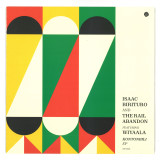
Following on from the successes of their first two LPs, "Kalba" and "Small Small", Isaac Birituro & The Rail Abandon return with the "Kontonbili EP". A collection of seven tracks that trace the traditional West African roots of their sound whilst adding their unique touch, largely courtesy of Isaac's xylophone, Sonny Johns' folky embellishments and the vocal prowess of powerful Ghanaian songstress Wiyaala.
The lead single "Hado Deeli" roughly translates to "My Rival" and is a vibrant discussion between two rivals, one of whom is always making a fuss about anything and everything, even when things are all good! "Gargar", with its collaboration of xylophone, whistles, Wiyaala's effervescent vocals and relentless groove represents, quite literally, the band's "joining together" for this EP. In contrast, "I Know" sees Sonny Johns takes over lead vocal duties to lament the breakdown of a relationship accompanied by muted horns and Wiyaala's soothing backing vocals. "Nimmbalia" continues in a mellow and reassuring tone before emerging as one of the most uplifting and simultaneously fierce cuts on the EP! The traditional version of "Bawa" - the original take of which can be found on last year's "Small Small" LP - strips things back a little, before culminating in a battle of xylophone, whistles and choir. "Yeri Villa" has a wonderfully laid back, sun drenched feel with some truly beautiful vocal refrains, and finally - only available on the digital version - comes the deeply percussive and trance inducing "Darpeny", rounding off a rather stunning EP from this cross continental outfit.
All tracks feature Ghanaian singer, song-writer, model and actor, Wiyaala. With a strong fanbase in Africa and beyond, "the lioness" made her mark on Wah Wah 45s and BBC 6 Music last year when she featured on the A-listed "Senye", described as "perfection" by Annie Mac and "pure joy!" by Tash LC.
e 05: Bawa (Traditional) feat. Wiyaala
Berlin based Millhouse has been bangin' out the tunes for over 20 years, playing in venues across Europe alongside many of the world’s top DJ’s, continuously demonstrating energetic musical dynamics in mixing and producing the machine based techno he’s become so well-known and respected for.
Continuing with the ‘Limited As Fuck’ series of releases, on our fiercely independent techno label based in Scotland, we’re absolutely going to cause outrageous arm waving behaviour on the dance floors with this scandalous techno due to the despicable nature of the notoriety it’s going to make for itself. Full of driving kicks, bass lines and sinister synth stabs, this release will set off a series of events that’ll shock your speakers with outrageous consequences.
WARNING: TUMULTUOUS TECHNO OF SUCH MAGNITUDE CAN ONLY LEAD TO A DANCE FLOOR DISASTER SHOW
The post-industrial Ruhr-Area has been an indisputable part of Germany's techno landscape since the very beginning. More than 30 years after techno's golden era and after a manifold challenging pandemic, the scene and its sounds are blooming like never before. Ahmet Sisman and his project The Third Room can be described as key factors for both the area's ongoing, sustainable dedication to electronic music and its current success, being more and more embedded in cultural contexts and society overall.
It's unsurprising that the first album of Ahmet Sisman, the multitalented artist and man of action, is a well-considered mix of familiar and pioneering sounds, enriched by countless influences within and beyond technos constantly evolving sub-genre scenery. With a sophisticated 50/50 mix of four on the floor strikes and innovative breaks, Sisman manages to hit a sweet spot between raw but groovy, experimental but subtle nostalgia, melodious but noisy.
All this is already worthy of a listen, but placed in context, it perfectly fits the musical approach of the Ruhr-Areas biggest transcendental techno project - The Stone Techno Series and Festival. Like the bound-breaking release series of the last two years, 'The Third Space' maintains the metallic and fierce sound vision of a coal mining tradition with everlasting impact. The time travel through industrialization and renaturation continues here with T3R008 and gains a whole new dimension from Sisman's skilled handwriting.
Repress!
Amazingblaze is the latest red-hot new talent to be signed up by Charlotte de Witte's KNTXT label. The Russian artist serves up four fierce techno weapons on his Venture EP, due for release on 25th February 2022.
Though a relative newcomer, Amazingblaze is already making big moves mixing up heavy-hitting hard trance and techno. He has a sound that combines old school influences with new school sound design, and it never fails to captivate the dance floor. On this first EP for KNTXT, all of the signature Amazingblaze essentials are here: weighty drums, massive synths and authentic atmospheres.
Says the artist, "The Venture EP was started when I was living in Saint-Petersburg and there was a pandemic situation. Experimenting with different shades of techno I created a pretty authentic sound which works very well on the dance floor. After leaving Saint-Petersburg I decided to move to Moscow, gladly the pandemic restrictions there were lifted and I became inspired by the new city and parties where I've never been before, I completed the EP adding some new bangers with an already experienced touch.”
Says Charlotte de Witte, “My eye fell on Amazingblaze for the first time during the preparation of my Tomorrowland Around The World Set, where I closed with his beautiful track "Stratosphere". A couple of months later, I fell head over heels in love with his track "Venture", which, I'm proud to announce, turns out to be the title track of the newest EP on KNTXT. Venture captures every crowd of people I’ve played it to, ever since I debuted it in my set at Exit Festival. The entire EP is an out of the box masterpiece.”
First up is the mighty 'Venture' with its pummelling drums and turbo-charged trance stabs. They are bright and bring the energy while a rapped vocal adds something utterly fresh. 'Inner Fire' ups the ante further with a diva female vocal straight from the classic trance era. She brings waves of euphoria and, after a spine tingling breakdown, the machine-gun grooves fire on. There is terrific turbulence in the synth stabs of techno gem 'Flashback' as well as industrial textures and walls of white noise that bring real tension. ‘Neutron’ closes down with the most fierce groove of the lot, this time rippled with cosmic psy trance chords and irresistible video game synths to take you into the next dimension.
Venture EP is a superb outing from Amazingblaze.
Croatian DJ & producer heavyweight Insolate debuts on Luke Slater's legendary Mote-Evolver imprint with a massive four-tracker of pure bred techno ready for the dance floor. After leaving her signature on highly respected labels such as DJ Deep's Deeply Rooted, Developer's Modularz, Ben Sim's Symbolism as well as her Out Of Place imprint which she operates along with Volster, she now delivers 'Push' a finely crafted EP of peak time material. Opening the A side, fierce workout 'Outer Bass' is showcasing a sinister driving energy that is followed by the raw frenetic groover title track 'Push'. On the flip side 'Blow' is a trippy, no-compromise cut, while closing, classy atmospheric track 'Desire' finishes off the EP with its effortless soulful touch and elegant, melodic synth pads flying by.
Since Interstellar Space, John Coltrane's posthumously released duo album with Rashied Ali, the combination of sax and drums has received an aura of sublime spiritual ambition. It is where tireless truth seekers come together to aim for something transcendental. Something too big for words. Of course, a lot has happened in the meantime.
The available options - philosophically, stylistically, temperamentally - are endless. Musicians are aware of those historical turning points, yet they also try to add their own twists and interpretations. Some of them succeed. One of reed player Mattias De Craene's many projects - MDC III - is a project involving drums and saxophone. A striking difference: De Craene invited two drummers (Simon Segers, Lennert Jacobs), that have been active in the worlds of jazz, pop, free improvisation and experimental music. They are the ideal foil for De Craene's vision, which seems to exclude no opposites. While the use of a recorder, electronics and percussion steers the music beyond the classic acoustic limitations, the result becomes strikingly rich with contrasts. What is abstract and introspective the first moment can switch - gradually or abruptly - to moments of fierce ecstasy the next.
The music feels free (free from limitations, free to choose its own logic), but also invites. Shifting moods and textures are combined with intricate rhythmical patterns, as the drummers lock together in dense, complex and/or ritualistic grooves. A minimal pulse, accompanied by murmuring hisses of brushes and a serenading sax is contrasted with moments of exuberance. The result is many things at once, but despite these wildly varying colors, sounds, textures, rhythms and moods, they are all linked, part of a generous, iridescent whole.
The trance-inducing trio MDCIII is back. And that equals yet another delicious load of modular drums, wildly processed saxophone sounds, improvisation & pulsating grooves.
After their first EP, MDCIII ft. Sylvie Kreusch, and their subsequent first (internationally) acclaimed album 'Dreamhatcher', the 'double drums' saxophone trio with Mattias De Craene, Simon Segers & Lennert Jacobs is all set to show what angle rock 'n roll can really come from. On their new album 'Drawn In Dusk' (release: end of September via W.E.R.F records) the trio delivers a whole new palette of sounds that are just as mystical, energetic and wild as 'Dreamhatcher'.
Sardinian born E.L.I.A.S is an artist who’s always evolving and producing music that combines hard kicks with distorted synths and mean rumbling grooves in equal heavy measure. His enthusiastic mind grows with each step he takes musically, becoming more and more focused with every fist clenching beat he knocks out.
Continuing with the ‘Limited As Fuck’ series of releases, on our fiercely independent techno label based in Scotland, we’re exploiting some other-worldly storming techno here for those club conquering moments in which you’d unconditionally establish full control over the dance floor with a warlike incursion into the bass bins.
Penetration directly into the minds of those who hear this invasive release will inevitably lead to a lack of all self-control as all members of the tribe will involuntarily bust some ferocious moves on their favourite pista da ballo.
WARNING: NOT PLAYING THIS RIOTOUS MUSIC WILL INSTIGATE AN ABOMINABLE SCANDAL
- A1: Allah U Akbar (Lp)
- A2: Ain't No Mystery
- A3: Meaning Of The 5%
- B1: Pass The Gat
- B2: Black Star Line (Feat Redd Foxx)
- B3: Allah & Justice
- B4: The Godz
- C1: The Travel Jam
- C2: Brand Nubian Rock The Set
- C3: Love Me Or Leave Me Alone
- C4: Steal Ya 'Ho
- D1: Steady Bootleggin
- D2: Black & Blue
- D3: Punks Jump Up To Get Beat Down
- E1: Punks Jump Up To Get Beat Down (Single Mix - 7")
- F1: Love Me Or Leave Me Alone (Remix)
It was released on February 2, 1993 and is celebrating its 30th Anniversary. Lead MC Grand Puba left the group to pursue a solo career in 1991, following the release of their revered debut One for All. DJ Alamo also left to work with Puba, leaving MC's Sadat X and Lord Jamar, who enlisted DJ Sincere to join the group. It was a safe bet that In God We Trust wouldn't have attempted any new jack swing crossovers or tie-dyed imagery. Though the makeover is drastic, it is convincing, with Lord Jamar and Sadat X stepping up with some of the era's fiercest, most intense rhymes and lyrics that were extremely militant reflecting the group's identity adhering to the philosophy of the Nation of Gods and Earths. The album produced two singles, Punks Jump Up to Get Beat Down and Love Me or Leave
Me Alone which both charted on the Billboard Hot 100 chart.
(part 2/3 featuring Sept, Raven, Frazi.er & Trym) Amelie Lens' EXHALE Records continues to deliver fiercely dynamic techno from the underground's most promising, rising and established artists with its second VA compilation.
Amelie Lens' EXHALE Records continues to deliver fiercely dynamic techno from the underground's most promising, rising and established artists with its second VA compilation.
Following EXHALE's first VA release in 2020, the party series turned label once again welcomes existing members, flourishing producers and blossoming new artists to the EXHALE family for its second various artists compilation.
Opening the second EXH002 vinyl is 'Bóg Jest w Techno' event boss Sept, who presents us with a stripped back cut layered with piercing synth keys and gentle electro elements in 'Beyond The Veil'. Acid stabs and a female voice echo the track title in Raven's trippy cut 'Metal On Metal', with light airy synths to close out that simulate euphoria. We're taken on a dark and weighteir expedition with Frazi.er in 'Systematic Ignorance' - a brooding bass drives the sound, with acid melodies adding texture throughout. Keeping up pace is 'Kendall' by Trym, a cinematic composition that utilises cymbals, hi-hats and synth notes to create a brighter melody over its dark percussion.
Repress
Guy J returns home to Lost & Found with two absolute monster tracks! And for the first time in the labels history, these tracks will be available on vinyl as well digital download.
Let's get straight to business then and its Dizzy Moments kicking us off. A techno grooved workout with percussive layers meeting subtle yet ethereal pads, creating a warm atmospheric vibe. The track expands with the sounds growing as the elements ooze from within, creating an epic melodic masterpiece as delays interact creating a dreamy smile inducing gem of a track that we are positive will create a serious fuss and will send clubbers wild.
Diaspora grinds in to action from the off, with its slightly tribal tinged percussion, brooding bass stabs and cool fx setting the mood, swiftly followed by creeping pads that lighten the vibe while adding an air of mystery, dropping its fierceness, but only temporarily, before we pound back in to action. Gated chords meet cool keys as we meander around the ups and downs of this monster. Another serious slab of dance floor devastation from Guy.
Two outstanding tracks that will no doubt be flying straight in to many a DJ's playlist at rapid speed.
- A1: Die Prophezeiung (Hadone Version)
- A2: Der Weg Des Kriegers (Mrd Version)
- B1: Die Augen Des Teufels (Stigmata Version 1)
- B2: Blick Des Bösen (Exium Version)
- C1: Kein Entkommen (Héctor Oaks As Djkaos11 Version)
- C2: Bisswunden (Introversion Version)
- D1: Verlorene Seelen (Ø Phase Version)
- D2: Feuersturm (Dj Boss Version)
- D3: Die Augen Des Teufels (Stigmata Version 2)
Repress !
From Another Mind celebrates its fifth anniversary with 'Versionen 008’, a mammoth remix package of SHDW & Obscure Shape tracks from Héctor Oaks, Ø Phase, Exium, and more.
Comprising nine remixes of the German producer/DJ outfit, 'Versionen 008' covers four sides of vinyl and features adaptations from a wealth of modern techno talent, rising stars, and scene veterans alike,
with Hadone, MRD, Stigmata, Exium, Héctor Oaks AKA DJKAOS11, Introversion, Ø Phase, and DJ Boss making contributions.
With the influences across the release darting between acid, techno, and rave, 'Versionen 008' is a no holds barred journey into the sounds of dark, cavernous rooms and sweaty basements alike, providing a
keen insight into who SHDW & Obscure Shape are passionate about as artists.
From the fast-paced, dub techno infused MRD version of ‘Der Weg Des Kriegers’, the explosive energy in Exium’s remix of ‘Blick Des Bösen’, to the two versions of ‘Die Augen Des Teufels’ by Stigmata, who effortlessly provides a dose of early 2000’s nostalgia, all aspects of the pair’s musical tastes are covered. Héctor Oaks takes ‘Kein Entkommen’ in an otherworldly direction, painting the track with his
signature voice, while Ø Phase brings his powerful and hypnotic sound to the duos ‘Verlorene Seelen’.
Elsewhere on the release, ‘Die Prophezeiung’ receives a shot of trancey energy from France’s Hadone and Introversion breathes new life into ‘Blisswunden’, developing the track into a melodic dream
amongst metallic percussion. The penultimate ‘Feuersturm’ gets the DJ Boss treatment, as the Slovakian DJ/producer transforms the track into a dynamic late-night roller.
Taking in these variety of moods across the remixes, the compilation sways between different strains of techno, from anthems to DJ tools, covering both modern and vintage to provide a diverse compilation
that will no doubt be warmly welcomed by DJs and listeners alike.
Favouring fiercely high-energy and gritty productions, the duo has used the label as an outlet for their dark, intense sound to the rapturous responses from DJs and dancefloors and 'Versionen 008' sees them celebrate five years of the imprint in typically uncompromising fashion.
We live in the time when rave is the word that is only used when people want to describe a fierce party or to describe colors, styles and some types of electronic music. Basically, the word "Rave" became sort of a metaphor. But back in the days, it was the name for the revolution, no less than that. Warehouse Memories was born to give a direction to that Revolution, this is Rave 001.
2026 Repress
Deadbeat & Tikiman's occasional collaborative performances have since blown the minds of many audiences
Deadbeat. Tikiman. Infinity. Dub. A quadrangle of such obvious statement and perfect musical inference may very well never have been uttered for those of the wholly weeded out persuasion. Indeed, when the great book of Dub music is written the names Scott Monteith and Paul St Hilaire will undoubtedly figure highly in its chapters devoted to recent years. Monteith, the last great prodigal son of the doctrine handed down from the Blue Mount of Lord Scratch and King Tubby, St Hilaire the undisputed voice of a generation, those fanatical warrior monks, followers of the most Holy House of Ernestus and Von Oswald incarnate.
Having developed a fast friendship from their very first meeting in Montreal at the premier Micro Mutek event a decade ago, Deadbeat and Tikiman's occasional collaborative performances have since blown the minds of audiences from Berlin to Tokyo and many points in between. No great surprise then that their first album length venture is a Tour de Force of Dub music of the highest order.
Nearly a year in the making, the genetic code of Deadbeat's Infinity Dubs series gets shot through with a Dreader than Dread Kingstonian logic, hi hats dropping back from the three to the one, Tikiman at his most militant, poetic, fierce, and flowing. These are the recordings of two lions uncaged, and none who bare witness shall escape their fiery judgement.
If music is truly eternal, here be two voices which shall echo in infinity with all the weight, reverence, and dire power unleashed with every tectonic bass hit, and every whimsical turn of phrase. And if these eight burnt offerings are any indication of what happens when these two sit down for a session of smoke and reasoning, here's hoping they choose to do it frequently. Dub without end. Ad Infinitum.
First time reissue of JP free jazz rarity, pre-Seikatsu Kōjyō Iinkai group.
The single album self-released by the quartet Shūdan Sokai in 1977 is one of the most vital documents of mid-seventies Japanese free jazz, documenting Tokyo’s free scene at the precise moment when it began to shift to a handful of tiny venues on the western fringes of the city. In Free Jazz in Japan, Teruto Soejima identifies the extant venue Aketa no Mise in Nishi-Ogikubo as the pioneer of this decamping from the centre: a cramped basement beneath a rice shop, seating just 20 people. Musician-run, operated on a shoestring, these spaces offered a vital site for community, creativity, and a small measure of financial independence — “even though it was in a basement, in spirit it was a loft.”
Among the most active of the new venues was Alone in Hachiōji, nearly an hour from Shinjuku, in a district shaped by universities, lower rents, and a thriving counterculture. Originally opened in 1973 as a jazu kissa, Alone was unusually spacious and equipped with a stage, grand piano, and drum kit. Around 1974, Junji Mori and Yasuhiro Sakakibara began working there, booking free jazz players on weekends and establishing the venue as a crucial hub. Mori recalls early appearances by figures including Kazutoki Umezu, Toshinori Kondo, and others who would define the scene.
In early 1976, Umezu and pianist Yoriyuki Harada — recently returned from New York’s loft jazz environment, where they had played with musicians such as David Murray and William Parker — formed Shūdan Sokai with Mori and drummer Takashi Kikuchi. The name, meaning “mass evacuation,” pointed to their self-chosen exile in Hachiōji. With Alone as their home base, the quartet developed a music characterized by an infectious sense of enjoyment and a willingness to integrate free jazz with elements of song structure. Harada switched between piano and bass; the group experimented with rap-like vocal pieces, jabbering nursery rhymes over bass rhythms.
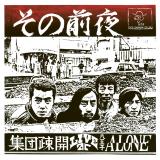
They returned to Alone on December 24 to record Sono zen’ya (Eve), releasing it on their own Des Chonboo Records, partially funded by advertisements from local businesses printed on the rear cover. The closing “Ballad for Seshiru,” dedicated to Harada’s newborn son, unfolds over a delicate piano melody that moves into emphatic chords as intertwining alto lines rise and spiral.
Alone closed in September 1977, and Shūdan Sokai soon dissolved, later morphing into the expanded Seikatsu Kōjyō Iinkai Orchestra. What remains is a recording rooted in a specific place and moment: a fiercely independent scene sustained by small rooms, close listening, and collective commitment.
UILTY RAZORS, BONA FIDE PUNKS.
Writings on the topic that go off in all directions, mind-numbing lectures given by academics, and testimonies, most of them heavily doctored, from those who “lived through that era”: so many people today fantasize about the early days of punk in our country… This blessed moment when no one had yet thought of flaunting a ridiculous green mohawk, taking Sid Vicious as a hero, or – even worse – making the so-called alternative scene both festive and boorish. There was no such thing in 1976 or 1977, when it wasn’t easy to get hold of the first 45s by the Pistols or the Clash. Few people were aware of what was happening on the fringes of the fringes at the time. Malcolm McLaren was virtually unknown, and having short hair made you seem strange. Who knew then that rock music, which had taken a very bad turn since the early 1970s, would once again become an essential element of liberation? That, thanks to short and fast songs, it would once again rediscover that primitive, social side that was so hated by older generations? Who knew that, besides a few loners who read the music press (it was even better if they read it in English) and frequented the right record stores? Many of these formed bands, because it was impossible to do otherwise. We quickly went from listening to the Velvet Underground to trying to play the Stooges’ intros. It’s a somewhat collective story, even though there weren’t many people to start it.
The Guilty Razors were among those who took part in this initial upheaval in Paris. They were far from being the worst. They had something special and even released a single that was well above the national average. They also had enough songs to fill an album, the one you’re holding. In everyone’s opinion, they were definitely not among the punk impostors that followed in their wake. They were, at least, genuine and credible.
Guilty Razors, Parisian punk band (1975-1978). To understand something about their somewhat linear but very energetic sound, we might need to talk about the context in which it was born and, more broadly, recall the boredom (a theme that would become capital in punk songs) coupled with the desire to blow everything off, which were the basis for the formation of bands playing a rejuvenated rock music ; about the passion for a few records by the Kinks or the early Who, by the Stooges, by the Velvet mostly, which set you apart from the crowd.
And of course, we should remember this new wave, which was promoted by a few articles in the specialized press and some cutting-edge record stores, coming from New York or London, whose small but powerful influence could be felt in Paris and in a handful of isolated places in the provinces, lulled to sleep by so many appalling things, from Tangerine Dream to President Giscard d’Estaing...
In 1975-76, French music was, as almost always, in a sorry state ; it was still dominated by Johnny Hallyday and Sylvie Vartan. Local rock music was also rather bleak, apart from Bijou and Little Bob who tried to revive this small scene with poorly sound-engineered gigs played to almost no one.
In the working class suburbs at the time, it was mainly hard rock music played to 11 that helped people forget about their gruelling shifts at the factory. Here and there, on the outskirts of major cities, you still could find a few rockers with sideburns wearing black armbands since the death of Gene Vincent, but it wasn’t a proper mass movement, just a source of real danger to anyone they came across who wasn't like them. In August 1976, a festival unlike any other took place in Mont-de-Marsan – the First European Punk Festival as the poster said – with almost as many people on stage as in the audience. Yet, on that day, a quasi historical event happened, when, under the blazing afternoon sun, a band of unknowns called The Damned made an unprecedented noise in the arena, reminiscent of the chaotic Stooges in their early adolescence. They were the first genuine punk band to perform in our country: from then on, anything was possible, almost anything seemed permissible.
It makes sense that the four+1 members of Guilty Razors, who initially amplified acoustic guitars with crappy tape recorder microphones, would adopt punk music (pronounced paink in French) naturally and instinctively, since it combines liberating noise with speed of execution and – crucially – a very healthy sense of rebellion (the protesters of May 1968 proclaimed, and it was even a slogan, that they weren’t against old people, but against what had made them grow old. In the mid-1970s, it seemed normal and obvious that old people should now ALSO be targeted!!!).
At the time, the desire to fight back, and break down authority and apathy, was either red or black, often taking the form of leafleting, tumultuous general assemblies in the schoolyard, and massive or shabby demonstrations, most of the time overflowing with an exciting vitality that sometimes turned into fights with the riot police. Indeed, soon after the end of the Vietnam War and following Pinochet’s coup in Chile, all over France, Trotskyist and anarcho-libertarian fervour was firmly entrenched among parts of the educated youth population, who were equally rebellious and troublemakers whenever they had the chance. It should also be noted that when the single "Anarchy in the UK" was first heard, even though not many of us had access to it, both the title and its explosive sound immediately resonated with some of those troublemakers crying out for ANARCHY!!! Meanwhile, the left-wing majority still equated punks with reckless young neo-Nazis. Of course, the widely circulated photos in the mainstream press of Siouxsie Sioux with her swastikas didn’t necessarily help to win over the theorists of the Great Revolution. It took Joe Strummer to introduce The Clash as an anti-racist, anti-fascist and anti-ignorance band for the rejection of old-school revolutionaries to fade a little.
The Lycée Jean-Baptiste Say at Porte d’Auteuil, despite being located in the very posh and very exclusive 16th arrondissement of Paris, didn’t escape these "committed" upheavals, which doubled as the perfect outlet for the less timid members of this generation.
“Back then, politics were fun,” says Tristam Nada, who studied there and went on to become Guilty Razors’ frontman. “Jean-Baptiste was the leftist high-school in the neighbourhood. When the far right guys from the GUD came down there, the Communist League guys from elsewhere helped us fight them off.”
Anything that could challenge authority was fair game and of course, strikes for just about any reason would lead to increasingly frequent truancy (with a definitive farewell to education that would soon follow). Tristam Nada spent his 10th and 11th unfinished grades with José Perez, who had come from Spain, where his father, a janitor, had been sentenced to death by Franco. “José steered my tastes towards solid acts such as The Who. Like most teenagers, I had previously absorbed just about everything that came my way, from Yes to Led Zeppelin to Genesis. I was exploring… And then one day, he told me that he and his brother Carlos wanted to start a rock band.” The Perez brothers already played guitar. “Of course, they were Spanish!”, jokes their singer. “Then, somewhat reluctantly, José took up the bass and we were soon joined by Jano – who called himself Jano Homicid – who took up the rhythm guitar.” Several drummers would later join this core of not easily intimidated young guys who didn’t let adversity get the better of them.
The first rehearsals of the newly named Guilty Razors took place in the bedroom of a Perez aunt. There, the three rookies tried to cover a few standards, songs that often were an integral part of their lives. During a first, short gig, in front of a bewildered audience of tough old-school rockers, they launched into a clunky version of the Velvet Underground's “Heroin”. Challenge or recklessness? A bit of both, probably… And then, step by step, their limited repertoire expanded as they decided to write their own songs, sung in a not always very accurate or academic English, but who cared about proper grammar or the right vocabulary, since what truly mattered was to make the words sound as good as possible while playing very, very fast music? And spitting out those words in a language that left no doubt as to what it conveyed mattered as well.
Trying their hand a the kind of rock music disliked by most of the neighbourhood, making noise, being fiercely provocative: they still belonged to a tiny clique who, at this very moment, had chosen to impose this difference. And there were very few places in France or elsewhere, where one could witness the first stirrings of something that wasn’t a trend yet, let alone a movement.
In the provinces, in late 1976 or early 1977, there couldn’t be more than thirty record stores that were a bit more discerning than average, where you could hear this new kind of short-haired rock music called “punk”. The old clientele, who previously had no problem coming in to buy the latest McCartney or Aerosmith LP, now felt a little less comfortable there…
In Paris, these enlightened places were quite rare and often located nex to what would become the Forum des Halles, a big shopping mall. Between three aging sex workers, a couple of second-hand clothes shops, sellers of hippie paraphernalia and small fashion designers, the good word was loudly spread in two pioneering places – propagators of what was still only a new underground movement. Historically, the first one was the Open Market, a kind of poorly, but tastefully stocked cave. Speakers blasted out the sound of sixties garage bands from the Nuggets compilation (a crucial reference for José Perez) or the badly dressed English kids of Eddie and the Hot Rods. This black-painted den was opened a few years earlier by Marc Zermati, a character who wasn’t always in a sunny disposition, but always quite radical in his (good) choices and his opinions. He founded the independent label Skydog and was one of the promoters of the Mont-de-Marsan punk festivals. Not far from there was Harry Cover, another store more in tune with the new New York scene, which was amply covered in the house fanzine, Rock News (even though it was in it that the photos of the Sex Pistols were first published in France).
It was a favorite hang-out of the Perez brothers and Tristam Nada, as the latter explained. “It’s at Harry Cover’s that we first heard the Pistols and Clash’s 45s, and after that, we decided to start writing our first songs. If they could do it, so could we!”
The sonic shocks that were “Anarchy in the UK”, “White Riot” or the Buzzcocks’s EP, “Spiral Scratch” – which Guilty Razors' sound is reminiscent of – were soon to be amplified by an unparalleled visual shock. In April 1977, right after the release of their first LP, The Clash performed at the Palais des Glaces in Paris, during a punk night organised by Marc Zermati. For many who were there, it was the gig of a lifetime…
Of course, Guilty Razors and Tristam were in the audience: “That concert was fabulous… We Parisian punks were almost all dressed in black and white, with white shirts, skinny leather ties, bikers jackets or light jackets, etc. The Clash, on the other hand, wore colourful clothes. Well, the next day, at the Gibus, you’d spot everyone who had been at this concert, but they weren’t wearing anything black, they were all wearing colours.”
It makes sense to mention the Gibus club, as Guilty Razors often played there (sometimes in front of a hostile audience). It was also the only place in Paris that regularly scheduled new Parisian or Anglo-Saxon acts, such as Generation X, Siouxsie and the Banshees, the Slits, and Johnny Thunders who would become a kind of messed-up mascot for the venue. A little later, in 1978, the Rose Bonbon – formerly the Nashville – also attracted nightly owls in search of electric thrills… In 1977, the iconic but not necessarily excellent Asphalt Jungle often played at the Gibus, sometimes sharing the bill with Metal Urbain, the only band whose aura would later transcend the French borders (“I saw them as the French Sex Pistols,” said Geoff Travis, head of their British label Rough Trade). Already established in this small scene, Metal Urbain helped the young and restless Guilty Razors who had just arrived. Guitarist for Metal Urbain Hermann Schwartz remembers it: “They were younger than us, we were a bit like their mentors even if it’s too strong a word… At least they were credible. We thought they were good, and they had good songs which reminded of the Buzzcocks that I liked a lot. But at some point, they started hanging out with the Hells Angels. That’s when we stopped following them.”
The break-up was mutual, since, Guilty Razors, for their part, were shocked when they saw a fringe element of the audience at Metal Urbain concerts who repeatedly shouted “Sieg Heil” and gave Nazi salutes. These provocations, even still minor (the bulk of the skinhead crowd would later make their presence felt during concerts), weren’t really to the liking of the Perez brothers, whose anti-fascist convictions were firmly rooted. Some things are non-negotiable.
A few months earlier (in July 1978), Guilty Razors had nevertheless opened very successfully for Metal Urbain at the Bus Palladium, a more traditonally old-school rock night-club. But, as was sometimes the case back then, the night turned into a mass brawl when suburban rockers came to “beat up punks”.
Back then, Parisian nights weren’t always sweet and serene.
So, after opening as best as they could for The Jam (their sound having been ruined by the PA system), our local heroes were – once again – met outside by a horde of greasers out to get them. “Thankfully,” says Tristam, “we were with our roadies, motorless bikers who acted as a protective barrier. We were chased in the neighbouring streets and the whole thing ended in front of a bar, with the owner coming out with a rifle…”
Although Tristam and the Perez brothers narrowly escaped various, potentially bloody, incidents, they weren’t completely innocent of wrongdoing either. They still find amusing their mugging of two strangers in the street for example (“We were broke and we simply wanted to buy tickets for the Heartbreakers concert that night,” says Tristam). It so happened that their victims were two key figures in the rock business at the time: radio presenter Alain Manneval and music publisher Philippe Constantin. They filed a complaint and sought monetary compensation, but somehow the band’s manager, the skilful but very controversial Alexis, managed to get the complaint withdrawn and Guilty Razors ended up signing with Constantin with a substantial advance.
They also signed with Polydor and the label released in 1978 their only three-track 45, featuring “I Don't Wanna be A Rich”, “Hurts and Noises” and “Provocate” (songs that exuded perpetual rebellion and an unquenchable desire for “class” confrontation). It was a very good record, but due to a lack of promotion (radio stations didn’t play French artists singing in English), it didn’t sell very well. Only 800 copies were allegedly sold and the rest of the stock was pulped… Initially, the three tracks were to be included on a LP that never came to be, since they were dropped by Polydor (“Let’s say we sometimes caused a ruckus in their offices!” laughs Tristam.) In order to perfect the long-awaited LP, the band recorded demos of other tracks. There was a cover of Pink Floyd's “Lucifer Sam” from the Syd Barrett era – proof of an enduring love for the sixties’ greats –, “Wake Up” a hangover tale and “Bad Heart” about the Baader-Meinhof gang, whose actions had a profound impact on the era and on a generation seeking extreme dissent... On the album you’re now discovering, you can also hear five previously unreleased tracks recorded a bit later during an extended and freezing stay in Madrid, in a makeshift studio with the invaluable help of a drummer also acting as sound engineer. He was both an enthusiastic old hippie and a proper whizz at sound engineering. Here too, certain influences from the fifties and sixties (Link Wray, the Troggs) are more than obvious in the band’s music.
Shortly after a final stormy and rather barbaric (on the audience’s side) “Punk night” at the Olympia in June 1978, Tristam left the band ; his bandmates continued without him for a short while.
But like most pioneering punk bands of the era, Guilty Razors eventually split up for good after three years (besides once in Spain, they’d only played in Paris). The reason for ceasing business activities were more or less the same for everyone: there were no venues outside one’s small circuit to play this kind of rock music, which was still frightening, unknown, or of little interest to most people. The chances of recording an LP were virtually null, since major labels were only signing unoriginal but reassuring sub-Téléphone clones, and the smaller ones were only interested in progressive rock or French chanson for youth clubs. And what about self-production? No one in our small safety-pinned world had thought about it yet. There wasn’t enough money to embark on that sort of venture anyway.
So yes, the early days of punk in France were truly No Future!
Recycled Cherry" (Red/Black) Vinyl[28,53 €]
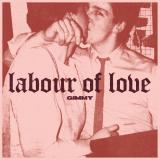
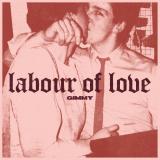
Australian indie and garage-rock firebrand, GIMMY unveils her new EP Labour of Love — a raw, emotionally charged collection that fuses gritty indie rock, post-punk bite and tender poetic expression, all powered by Gemma Owens’ unmistakable vibrato and fiercely honest songwriting.
Where her 2024 debut Things Look Different Now was a slow-burn, two-to-three–year voyage of change and introspection, Labour of Love hits with an entirely new force: intuitive, immediate and deeply connected to Owens’ emotional world. Written over six months and captured in an intense 4–5 day studio burst with producer Sam Joseph (King Gizzard), the EP moves with the urgency of something that needed to be felt and heard, right away.
Across seven compelling tracks, GIMMY dives into social anxiety, grief, falling in love and the chaotic beauty of everyday life, with each song arriving “on its own terms” — born from late-night home writing sessions, snippets of inspiration while travelling and moments of full-band electricity. Sonically, Labour of Love nods to Soft Play, Nick Cave, Fontaines D.C., The Preatures and The Smiths, yet remains unmistakably GIMMY: expressive, gritty, vulnerable, cheeky and alive in every moment.
Ultimately, the EP is an unfiltered snapshot of emotional truth, celebrating life’s highs, lows and everything in between, and showcasing GIMMY at her most dynamic, powerful and compelling to date.
Black Vinyl[27,31 €]
Australian indie and garage-rock firebrand, GIMMY unveils her new EP Labour of Love — a raw, emotionally charged collection that fuses gritty indie rock, post-punk bite and tender poetic expression, all powered by Gemma Owens’ unmistakable vibrato and fiercely honest songwriting.
Where her 2024 debut Things Look Different Now was a slow-burn, two-to-three–year voyage of change and introspection, Labour of Love hits with an entirely new force: intuitive, immediate and deeply connected to Owens’ emotional world. Written over six months and captured in an intense 4–5 day studio burst with producer Sam Joseph (King Gizzard), the EP moves with the urgency of something that needed to be felt and heard, right away.
Across seven compelling tracks, GIMMY dives into social anxiety, grief, falling in love and the chaotic beauty of everyday life, with each song arriving “on its own terms” — born from late-night home writing sessions, snippets of inspiration while travelling and moments of full-band electricity. Sonically, Labour of Love nods to Soft Play, Nick Cave, Fontaines D.C., The Preatures and The Smiths, yet remains unmistakably GIMMY: expressive, gritty, vulnerable, cheeky and alive in every moment.
Ultimately, the EP is an unfiltered snapshot of emotional truth, celebrating life’s highs, lows and everything in between, and showcasing GIMMY at her most dynamic, powerful and compelling to date.
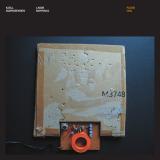
Some years ago, Kjell Bjørgeengen and Keith Rowe attempted to convert video signals into sound by setting up Rowe’s pickups next to an old CRT monitor, turning its magnetic field into a sound generator. Rowe further developed the system with David Jones at Alfred University, slimming down the setup using a copper coil, a circuit board, a video input, and a telephone pickup. Jones named it the »Flood Coil«, and it’s that instrument you can see on the album’s front cover and that lies at the core of these recordings, made without any physical live input from the artists themselves. In essence, it’s generative music in its purest form.
Bjørgeengen’s video feed is generated by oscillators, then routed into Marhaug’s pedals and then back into the Flood Coil, so any visual shifts alter the sound, and any modification to the sound changes the video. The duo have played this setup live many times, but for this studio version they left the system to do its thing without any intervention for two minutes at a time before moving onto the next idea. They recorded hours and hours using this process and then selected 18 highlights for this album, extracting harsh noise, power electronics, lulling feedback drone, and peculiar rhythmic snippets to show the scope of their technique.
A wall of growling, hi-octane Pulse Demon-style noise opens the set, gradually exposing us to more asymmetric textures, shifting through unstable repetitions that transform Merzbow’s metal-inspired screams into »Aaltopiiri«-era rhythmic noise. It’s remarkable, actually, how much Marhaug and Bjørgeengen can squeeze from the system, chancing on shivering, lower-case chugs and pops, galloping drums, soundsystem subs, and grinding blast beats that sound like Napalm Death’s »Scum« piped through a broken amp stack. It ain’t pretty, but noise/industrial freaks will revel in the fierce delights inside.