- Barbara Lynn - (Until Then) I´ll Suffer
- Willie Tee - Dedicated To You
- The Drifters - I Dig Your Act
- The Dynells - Call On Me
- Barbara Lewis - You Put A Song In My Heart
- Dee Dee Warwick - What Manner Of Man
- Bettye Swann - It´s Time To Say Goodbye
- Wilson Pickett - I´ve Come A Long Way
- Sam & Dave - Still Is The Night
- Darrell Banks - Here Comes The Tears
- Doris Troy - He Don´t Belong To Me
- The Isley Brothers - The Last Girl
- Aretha Franklin - I Can´t See Myself Leaving You
- Judy Clay - The Love Of My Man
Поиск:so what music
Все
- Lp Tracks: Queen Feat. Kim Jennett
- Ain't Got No Troubles On The Road Feat. Pete Brown, Chris Farlowe & Tommy Schneller
- Try Me Again Feat. Hamburg Blues Band
- Sunshine Of Your Love Feat. Dennis Chambers, Malcolm Bruce & Maya Sage Tomorrow's Blues Feat. Clem Clempson, Marlia Rae, Harry Waters, Alfred Mehnert, Anne Hauter &Detlef Blanke
- Why Are You Ashamed Of Me? Feat. Heidi Solheim
- I'm A Ram Feat. Jed Potts, Paul Jones, Phil Bee, Alex Lex & Paul Jobson
- I Don't Know Where My Heart Is Feat. Beth Morris
- Road Angel Feat. Vanja Sky & Danny Bryant
- Rock'n Roll Hoochie Koo Feat. Curt Cress, Frank Itt & Stoppok
- Do What I Say Feat. Clawfinger & Millie & Luca Crew
- Bust A Button
It is a monster album which unites the who's who of the modern blues and rock scene and took Krissy one year to produce! Friends on the album include rap metal giants Clawfinger, the god of hellfire Arthur Brown, the voice Chris Farlowe, Germany's soul queen Inga Rumpf, legendary singer songwriter Stoppok, the iconic Hamburg Blues Band, elite drummers Dennis Chambers & Curt Cress, Blues singing dynamite Big Daddy Wilson and many more. The album includes 24 songs and is almost 3 hours long with a mix of Krissy's original material and his favourite cover songs. "It was a long time in the making and I managed to get it done. I started the pre-production in November 2022 and went in the studio to begin the meat and potatoes process in January 2023. I wanted to get all my favourite musicians together that I have met on the road in my career. They are not all here by any means, but a good handful are! I did not want this album to have a box, so there are many different genres from metal to blues and jazz to rock'n'roll. But in the end, it is a Krissy Matthews record."
- A1: Goldne Abendsonne, Wie Bist Du So Schön
- A2: Aprilnacht
- A3: Urin Deiner Blüten 1
- A4: Mutter Maria Zwischen Den Himmeln
- A5: Requiem Für Eine Ringelnatter
- A6: Urin Deiner Blüten 2
- B1: Apfelbaum, Kuh Und Backofen
- B2: Nie Kann Ohne Wonne, Deinen Glanz Ich Sehn
- B3: Requiem Für Ein Schwalbennest
- B4: Morgensonne
- B5: Afra Altar Maidbronx
Originally released on tape by SicSic in 2014, Aprilnacht commemorates a decade of music from Brannten Schnüre and marked the spring in a tetralogy of albums about the four seasons when it came out. Back then the Würzburg-based project consisted solely of Christian Schoppik, who later welcomed Katie Rich to take over the vocals. He used to perform as Agnes Beil, but dropped the name when, while making this album realized his music was becoming "much gentler and more fragile". Aprilnacht already captured the particular musical ideas that Schoppik would thoroughly keep exploring, delving deeper and deeper into the use and manipulation of samplers from sources so diverging as to wander between the five continents to post-war German family television and cult cinema. Heir of the ritualistic intensity of Coil, of the intricate sampler assemblies of Ghédalia Tazartès', and of the dusty, dismal old ballads from around the world, Brannten Schnüre manages to make these paths cross in a territory that is as inherent as it is uncanny; sieged by the past and intimate as a hearth. An organic approach to folk, ambient, and sound collage, where ethereal yet thoroughly textured pieces coalesce in enthralling, delicate, and innermost musical rituals.
The album cover paintings reveal the temper: dreary old towns where shadows come to dim the slow passage of crepuscular colors, a soft area of reanimation where wind and light come close and foresee the night of spring. Aprilnacht was inspired by the stories of German philosopher and writer Friedrich Alfred Schmid Noerr, whose work exhaustively examines the conflict between paganism and Christianity, safeguarding myth in a way that Schoppik describes as boldly modern, humorous and unpredictable in its variations of the Germanic folklore motifs. "I wanted to do the same with the music," he states, and the music here could as well be suitable for a night when household deities welcome wandering will-o'-the-wisps, water nymphs, and gyrovagues to discuss Perchta's leadership of The Wild Hunt, but this album is not a folk tale, it's not an elegy to worlds already gone, hidden in years; it's an intersection of routes that open mysteriously before our ears like a congregation of vapors. Aprilnacht is a gathering of voices; "There are too many children, and none of them keeps quiet," reads the last verse of «Requiem für eine Ringelnatter.»
Sensuality drips over the music to celebrate both the voluptuousness and tragic quality of nature; "It's raining on me, urine from your flowers," Schoppik sings in «Urin deiner Blüten» and later on, faced with a snake's erotic features, as if he wanted to be embraced by it: "Your quick, sharp tongue and your warm venom; that's what the pond is missing." Orality is where this profusion of contents thrives. When the voices get closer and condense, the words reveal the saliva employed to pronounce them; we feel the mouth and the tongue, but when breath envelops them in sorrow and softens their edges, they sound distant, diffused in the atmosphere, letting go of the body that held them. These two vocal facets oscillate permanently and interact naturally with the fertile assembly of samplers and instruments that develop throughout the album, which condense and disperse impersonating each other, interweaving to search for a specific syntax. Tangled whisperings of enigmatic phrases, timid voices that stick out to check the scene but hide away quickly, shivering trance chants and monastic ambiances, distant screams and clamors in between chaos and warfare swirl until bursting into subtle songs where even Mother Mary comes forth softly. Soothed by foggy atmospheres and crackling punctuations, these voices shape a vulnerable crowd, an occasion of fragility. Along this swarm of songs thrown into thin air, accordions sound like heavy-breathing lungs; clarinets sigh like curtains shaking; violin solos wander around like bees; Gjallarhorns cries distend like fleeing cattle; glockenspiels evoke remote music boxes and inherited toys; backward emanations emerge like slender waves retreating. On the banks of stretching loops and ember textures is where the songs slowly nest, collecting the words to find their tone.
A poem by Jorge Teillier says, "To talk with the dead you have to choose words that they recognize as easily as their hands recognized the fur of their dogs in the dark. To talk with the dead you have to know how to wait: they are fearful like the first steps of a child. But if we are patient one day they will answer us with a flame that suddenly revives in the fireplace." This may be Brannten Schnüre's main purpose: To find the voice to speak to those of whom we were a vision. Not in mourning, but acknowledging the obscure and volatile nature of spring's regenerative force, searching for the treasure of balance, as evidenced in the lyrics of «Requiem für ein Schwalbennest,» "Its nest was destroyed so many times before it was finished, and despite that, the shallow builds as if it is infatuated." The same idea is here in the words of Schmid Noerr, who made poetry an act of resistance to the horror of Nazism; "Since having seen the ability of a brilliant spirit to die, with a calm mouth that everyone saw, health is true again and we affirm it, even if rivers of blood flow." And as we call for the dusk's kindness, waiting to return home and eat with our kin by the stove, our ears become used to the games of the night. We feel like we're rowing on wetlands, while the "moon musick" keeps us vigilant against the slightest movement of water or sweet moan because eeriness here is imperative for survival. Do not succumb to the insipid howl of death, for nothing may last but mutability. You see, the rock has moved a little during the night; the rest is just wind fleeing from the void.
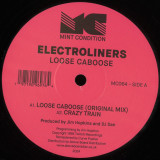
Mint Condition - A record label focused on excavating the outer fringes of classic House and Techno. Unreleased mixes, classics, overlooked gems and never heard before material, mined from the last 30+ years of contemporary dance music are the order of the day. From Chicago, Detroit and New York to London, San Francisco and beyond. Mint Condition have got their digging hats on to bring you exclusive heat and those rarer than rare jams that have been in your wants list for years. Dig in!
A serendipitous encounter at an SF record store in the early 90s brought together local music aficionados DJ Dan and Jim Hopkins. Their collaboration birthed the legendary Electroliners project, channeling their shared passion for underground and funky sounds into the iconic left-coast rave anthem, 'Loose Caboose', now firmly nestled in your hands. Pooling their musical prowess, Dan and Jim embarked on a journey of sonic exploration, meticulously crafting their signature sound by dissecting samples and breakbeats, infusing the musical landscape with a revitalizing energy. As their reputation grew within the local scene, they found themselves tasked with supplying a track for a promotional CD-ROM by a burgeoning software company.
Through marathon sessions of digging, slicing, sequencing, and exchanging snippets over phone calls, Electroliners hit their creative stride. It was only natural to unveil their creation in the raw intensity of a live rave setting. Thanks to a connection with DJ DRC, they seized the opportunity, and the rest is history. Copies of the record flew off the shelves by the thousands locally, and its overseas acclaim, spearheaded by licensing through XL Recordings in the UK, cemented its status as a bona fide underground classic. But what exactly is an Electroliner you might ask? Jim sheds light on the inspiration: “I delved into books on trains at the public library,” he reveals. “Among them, 'Electroliner' caught my eye, a train line in the Midwest. Given the track's pulsating train horn, 'Electroliner' and 'Loose Caboose' simply clicked.”
'Loose Caboose' is an all-time classic, and still causes much damage on the dancefloor today. Yet another unmissable addition to the MC reissue catalogue, fully licensed from the artists, mastered and cut by Curve Pusher, and available once again available for purchase. Do not sleep.
Another well kept secret from the Italian cult electronic music imprint - Interactive Test. A 4 track EP with a wide range of flavours in "house" music, very much dependent on the different samples employed. A side starts off with a deep house track echoing similar atmospheric qualities as to some of the dancefloor oriented productions making their way into US underground scene around that time, specifically Chicago and Detroit. The Percapella Mix makes the dedication to the Canadian Disco legend Gino Soccio very clear with a lengthy sample of "There's a Woman", a track which uses early electronics in a pioneering way, with what could possibly be one of the first examples of an Acid Bass line. On the B-side, things slow down a a notch with more clear cut explorations in Acid house featuring layers of synths and percussive samples and occasional placement of vocal samples from countries far away from Italy, all made possible thanks to the new exciting technologies that had recently been made available to producers at the time. Remastered by Man Made Mastering in Berlin and re-released with new full cover artwork.
- A1: Pikiran Dan Kepentingan (Thoughts And Concerns)
- A2: Fenomena Demi Fenomena (From Phenomena To Phe-Nomena)
- A3: Lubuk Yang Terdalam (The Depths Of The Depths)
- A4: Manusia Oh Manusia (Human, Oh Human)
- B1: Selalu Ada Jalan Keluar (There Is Always A Way Out)
- B2: Meyakini Sebuah Jawaban (Believe In An Answer)
- B3: Kepada Cahaya Yang Menerangi Jiwa (To The Light Which Illuminates The Soul)
Born in 1977, in Malang, East Java, Wukir Suryadi began playing music for theatre at the age of 12 with the Idiot The-ater Studio, and later with the Rendra Theater Workshop. In his solo work, and as a member of Senyawa, Error Scream, Bendera Hitam Setengah, Potro Joyo and other groups, Wukir breaks the boundaries of traditional music, death metal and avant-garde performance. On this new release, “Cycle and Prayer,” recorded in 2023, he expands the edges of his unique artistic world further, by digging in to meditative improvisation, art, and community building in his home workshop in the mountains of central Java. These recordings vibrate inwards, toward the microcosmic ecologies of forests and rivers; they distort outwards, resonating with global waves of apocalyptic change that are forcing all living beings to the edges of existence on earth. The result is a meditative poem that moves, as its titles an-nounce, from phenomena to phenomena, praying that humans find a way out from the depths of the depths to the light that illuminates the soul.
An essential mode of creative work for Wukir is the creation of unique instruments, using these sound sources as “bullets of expression.” In addition to the spear-like tube zither Bambu Wukir, he has created the Solet, Enthong, Garu, Luku, Arrows, and Industrial Mutant instruments, which in addition to being used in live performance, have been exhibited in the Instrument Builders Project and the 2017 Jakarta Biennale. In the past few years, Wukir has begun to collaborate with local guitar makers, carpenters, and suppliers of native endemic wood in the mountain region of Salatiga. Using earthen bricks along with local woods (suren, coconut, mindi, and waru lengis) as building materials, he constructed a new studio and workshop space in Tingkir, where this album was made. The trees, water and air of the local environment have exerted a powerful influence in Wukir’s documentations of instrumental sound. On this recording, he uses the simple Cetta guitar, an instrument designed in Bali and made for Indonesian children and local communities of folk and popular musicians, in order to explore the different sonic characteristics of a more “normal” instrument built from local wood.
The themes of the album -- cycle and prayer -- arise from a foreboding series of meta-events that shook Indonesia and the world over the past years, following one after the other: the COVID-19 pandemic, the Ukrainian-Russian war, the Kanjuruhan Stadium tragedy in which football supporters were gassed and killed by police, revelations of govern-ment failures and corruption, the rise of personal vehicles, the increasing disturbance of natural patterns of the rainy season and other ecological cycles. “In these waves of technology and narratives of truth made for certain interests, playing a sound at a certain frequency and repeating can try to bring images and feelings to a certain point of con-sciousness,” Wukir told me. “Sound is a prayer that creates a change, whether gradual or rapid, in the behaviour of living things, to face the demands of the time, as humans struggle to live according to what they believe.” The draw-ings and sketches used for the cover spontaneously emerged alongside the recordings, as an instinctive depiction of “time and sound, nature that is outside of oneself, and nature that is within.”
Following the singles "Zanzare" and "Barocco", Chiaré is the self-titled debut album from songwriter and multi-instrumentalist Chiaré, aka Chiara Ianniciello, the latest recipient of the Bianca D'Aponte Award for emerging Italian singer-songwriters.
The album, which will be out on April 19th, contains eight atmospheric and intimate tracks where Chiara's warm and gentle voice weaves snapshots from her feelings and her personal story over retro-flavoured, jazz-infused arrangements that are reminiscent of some of Italy's finest singer-songwriters (Lucio Battisti and Pino Daniele in particular).
"It all started about three years ago," says Chiara. "Ernesto Massimino Voza and I started from a sound that somehow wasn't really me, and after a long process of trial and error, we finally found what seemed to be right for me. Peppe Maiellano, who arranged all the music, brought it full circle. The album has a common thread: love. Almost all of the songs are about strategic love, the fear of freely loving someone and the frustration at not being able to get out of an on-and-off relationship that made me suffer, but that I've tried to narrate with some irony. If my writing were an artistic movement, it would be naturalism. I drew a lot of inspiration from Pino Daniele, Eduardo De Crescenzo, and Lucio Battisti, while trying to develop my own personal, authentic style."
Chiara holds a diploma in jazz singing and is now completing her studies in classical double bass. In her debut album she uses both standard Italian and the Neapolitan dialect, mixing jazz, soul and R'n'B. Modernity and tradition come together, creating a delicate yet irresistible sound.
As mood changers go, this track is up there with the best. Last year whilst DJing with miche at Shapes festival in the snow-capped mountains of Switzerland, a breathtaking yet ominous Alpine sky suddenly became a picture postcard moment. The clouds parted and a double rainbow formed, as miche dropped Studio Rio's bossa nova remake of Bill Withers’ all-time classic 'Lovely Day'. From there, the dancefloor shifted gears and morphed into full-swing feel-good vibes, in a beautiful, spontaneous moment nobody could have planned for.
Mr Bongo now proudly presents a reissue of this brilliant, bossa-channelling Bill Withers reinterpretation from Studio Rio’s 2014 release ‘The Brazil Connection’. Masterminded by the German Grammy award-winning Berman Brothers, the project was born out of their deep love of Brazilian music. “Our goal was to bring the Brazilian joie de vivre to iconic performances by well-known artists. What would these classic songs sound like had they been recorded in the studios of Rio de Janeiro in the first place, with the best Brazilian musicians and arrangers?” the brothers reflect.
Capturing the life force of Brazil, the beating heart that is its music, they set out to find the musicians who would fit best with their concept. Landing in Rio in 2013 a series of coincidences led to them being introduced to their idols Marcos Valle and Roberto Menescal, who both agreed to come on board. The Berman Brothers also wanted to find some of the musicians who recorded with one of Brazil’s most influential composers Tom Jobim. “Fifty years after Jobim made the music that really defines bossa nova, we found that many of his sidemen were still active, including Paulo Braga of Jobim’s famed rhythm section. It was magic; everything just fell into place.”
There's no question that the original of ‘Lovely Day’ is up there as one of the most feel-good, spirit-lifting anthems of all time. Here the brothers, with the help of a whole host of Brazil’s finest musicians, rework Bill’s soul-fuelled groove into a bossa nova slice of sunshine. With the blessing of Bill and Sony, they were given access to the original multitracks so they could incorporate Bill’s vocals perfectly into the new arrangement.
Joy-injected horns and bouncing double bass blend with the smile-inducing samba flavour of Pretinho da Serrinha’s cavaquinho playing. Tying it all together Torcuato Marinao who worked with the likes of Gal Costa, Gilberto Gil and Caetano Veloso, completes the line-up as arranger of the songs.
The perfect end-of-the-night track, mood lifter or soul warmer, remakes don’t get much better than this.
Step into a time machine and groove back to the electrifying era of the mid-80s, where undiscovered US tracks found their sonic sanctuary on Morgan Kahn’s groundbreaking Street Wave record label. The reverberations of this musical revolution rippled from the gritty streets of NYC, transcending borders to captivate the entire globe. Picture it: 808s pulsating, synthesisers painting the airwaves with vibrant hues of rhythm and nostalgia. In the heyday of the eighties, rap wasn’t just a genre – it was a movement, a cultural force with a message that resonated through the beats and break moves. The lyrical poets of the time wove tales of real-life struggles and triumphs, creating a tapestry of sound that still echoes with relevance today.
Fast forward to the present, and the spirit of the 80s lives on in a classic track that encapsulates the magic of that unforgettable era. The torchbearers of timeless tunes, High Fashion Music, recognised the gem that was waiting to be polished. Enter Ben Liebrand, a musical maestro tasked with breathing new life into this iconic piece. Liebrand, has conjured three versions of this classic anthem. First up, the Nu-Disco funk-boogie rub, a groove so infectious it’ll have you hitting the dance floor in a heartbeat. Then, there’s the percussive-led Funk Mix – a rhythm-driven journey that takes the original to new heights. And for the pièce de résistance, the outrageously good nu vintage Electro Mix, a sonic masterpiece that bridges the gap between the past and the present with unmatched finesse.
Join us on this sonic voyage, fast forward into the future, as we celebrate the resurgence of an 80s cult classic, transformed by the wizardry of Ben Liebrand.
Repress!
The publication of "Jet Sounds" in October 2000 and its subsequent release on the international market represented the turning point from the initial productions carried forward by Schema and the new course taken by the label reaching sales of 40,000 copies and still counting. It's the year 2000 and the avant-garde of the new jazz pop Italian scene is called "Jet Sounds". The debut album by Nicola Conte features nearly 20 musicians and moreover the visionary, sophisticated appeal of Nicola with a sound that has already become T . He tells a cinematic story as the images become a soundtrack for the music: Scene 1: A young woman is walking on the sea shore. She's alone, only white sand and crystal blue water by her side. It's late in the afternoon and the sun is glancing over her shoulders while a soft bossa nova fills the air. Scene 2: He's drivin' fast, there's little time left and a man to chase. Like busy spiders working a web, the beat of the big band pulses a 5/4 jazz theme. Scene 3: It's night; the park; shadows following, shadows hiding mystery? Undefined eastern/oriental sounds adrift on a pulsing psychedelic beat. What's the next move...?
- A1: Forro Violento (Instrumental)
- A2: Grao De Areia
- A3: Nao Vou Reclamar De Deus
- A4: Toda Beleza
- A5: Put@Ria!
- B1: Rubelia
- B2: Posso Dizer
- B3: Vinheta As Palavras
- B4: As Palavras
- B5: Forro Violento
- C1: Torto Arado
- C2: Lua De Garrafa
- C3: Na Mao Do Palhaco
- C4: Doutor Albieri
- C5: Samba De Amanda E Te
- D1: Amor De Mae
- D2: Vinheta As Palavras Ii
- D3: Assum Preto
- D4: Forro No Escuro
- D5: Toda Beleza (Pelos Loirinhos)
Pink Vinyl[29,96 €]
Some albums are game-changers in a genre. Take OutKast's Speakerboxxx / The Love Below or Primal Scream's Screamadelica, they observe, study, and then flip what an album can mean to a genre or moment in time.
From the very first listen of Rubel’s Latin Grammy-nominated third album As Palavras, Vol. 1 & 2, you can feel its transformative force for the MPB genre. Here we see one of Rio’s brightest stars, fusing the contemporary with the classic, soaking up the richness of Brazil’s musical heritage. The result is a marauding 20-track epic, incorporating traditional styles such as forró, MPB, pagode and samba with modern baile funk, rasteirinha and hip-hop.
The album exudes a sense of freedom and creativity, playfully and provocatively juggling the familiar with the forward-thinking. The tracks are divided across two records, navigating feelings of love, heartbreak and discovery, whilst balancing themes of violence, passion, irony and affection. Collaborating with some of the country’s most esteemed artists such as Gabriel do Borel, Liniker, Luedji Luna, Tim Bernardes and Ana Caetano, Rubel takes this fusion of styles, subjects and flavours to the global stage.
The grand, forró-blending, choral opener, ‘Forró Violento (Instrumental)’ sets the tone for the album, with references and links between tradition and modernity everywhere to be seen. From the Ana Frango Elétrico produced, funk flexing, samba-soul brilliance of ‘Não Vou Reclamar de Deus’, to the album’s title cut ‘As Palavras’, in collaboration with Tim Bernardes, that melds MPB influences with electronic elements and hip-hop touches.
Across both sides of the album, Rubel’s story-telling gift is given space to shine. ‘Torto Arado’ featuring Liniker and Luedji Luna, beautifully references the racial injustice, tragedy, hope and ambition found in one the most celebrated Brazilian novels of recent times by Itamar Vieira Júnior. Elsewhere, ‘Na Mão do Palhaço’ manifests a satirical march about a suicidal conservative middle-aged man, who is rescued by the miracle of the carnival.
At times the album is gentle and intimate with tracks like ‘Toda Beleza’ featuring Bala Desejo, or the ode to friendship ‘Lua de Garrafa’, composed with the legendary Milton Nascimento. At others, the grooves hit harder, with sounds from the favelas laced within. ‘Put@ria!’, explores the universe of baile funk, with BK’ and MC Carol trading off on the mic, as ‘Rubelía’ moves between reggaeton, funk, and hip hop. The latter is a tribute to a key influence of the album, Spanish star Rosalía and her parallel mix of current with classic.
Ultimately though the beauty of this album lies in its concept. In the midst of a country divided, ‘As Palavras Vol. 1 & 2’ sets out to bring together genres and generations, grounded in rhythms and words that have helped define Brazil through the ages.
blue LP[24,33 €]
red LP[27,31 €]
Crystal Clear[22,27 €]
Deluxe Split Vinyl[34,66 €]
Inspired by Dua’s own self-discovery, Radical Optimism is an album that taps into the pure joy and happiness of having clarity in situations that once seemed impossible to face. The hard goodbyes and vulnerable beginnings that previously threatened to crush your soul, become milestones as you choose optimism and start to move with grace through the chaos.
Infused with the energy of Dua’s hometown, London, the attitude of the album embodies the rawness, honesty, confidence and freedom of ‘90s Britpop. Radical Optimism transports its listener to a dreamy pop world rich in musicality, lyrically unapologetic and sonically liberating.
The 3x GRAMMY and 7x Brit Award-winning global pop powerhouse worked with a team of core collaborators throughout the project including Caroline Ailin, Danny L. Harle, Tobias Jesso Jr. and Kevin Parker.
The Baby Seals debut album, "Chaos," is a sonic exploration that blends heavy guitars, a pop edge, and a punk rock garage spirit with a heavy attack. The band, comprised of Amy "Amos" Devine on drums and backing vocals, Kate Shore on bass and backing vocals, and Kerry Devine on guitar and lead vocals, delivers a raw and energetic collection that captures the essence of their live performances. Recorded in March 2023 in Thaxted, just outside of Essex, "Chaos" embodies the DIY ethos that has defined The Baby Seals' approach to music. Working with engineer Joe in a secluded outhouse surrounded by fields, the band laid down the tracks live over a day, capturing the unfiltered essence of their sound. Joe's extensive collection of homemade pedals added a unique touch to the recording, while Benny T's mixing expertise brought the album to its final form. The decision to minimise post-production sets "Chaos" apart from previous recordings, reflecting the band's commitment to authenticity and a desire to showcase their growth and maturity. On Chaos Kerry says: “Chaos is the next phase in life for us lasses in the band - babies and mid-life responsibilities. The album definitely is about how we feel and experience the world around us in our 30s and 40s. Someone who heard the album recently said it's like the The Baby Seals have grown up and I liked that because that's what I feel likes happened to me in the last two years… The album definitely has Themes: inclusivity, gender inequality, the mental load, the motherload, power, body positivity, challenging taboos, liberation. The importance of what to take seriously and what not to take seriously. Title track, Chaos is one of the songs on the album which I'd written after a series of events including watching an interview with the late writer Benjamin Zephaniah who said the only way to liberation for all was to tear big governments down and to believe in your community. The cover photo by Jeff Pitcher sums us up and hopefully gives you a feeling of what the album sounds like. Album design was created by Igor Prato Luna, he just seemed to understand what we are about. He referenced loads of wonderful album cover, poster and flyer artwork from the 60s - 90s, and even some fabulous sci-fi artwork from the 1920s and those incredible 1950s sci-fi pulp book covers. Nothing was referenced too heavily, though, and Igor definitely made it his own
Kee Avil's music is both adventurous and intimate, intellectually challenging and emotionally resonant. The Montréal guitarist and producer's 2022 debut LP Crease garnered plaudits from outlets like The Wire, The Quietus, Mojo and Foxy Digitalis, picking up a Canadian Juno Award nomination and Bandcamp Album Of The Day and Albums Of The Year along the way. Its intricate construction, unnerving atmospheres, and knife-edge take on avant-pop prompted comparisons to early PJ Harvey, This Heat, and Gazelle Twin. A remix EP with work by claire rousay, Ami Dang, Cecile Believe, and Pelada brought collaborative perspectives to four Crease tracks, offering new pathways within those songs. With Spine, Kee Avil strips back her heavily textured compositions, opening up a much rawer sound. She calls it folk—and while traditionalists might scoff, this is urgent music that reflects the precarity of modern life, as well as the jarring mixture of electronic and real-world interactions that have become the fabric of our day-to-day experiences. There's a hypnotic post-punk somnambulance to it all, using the repetition and fracturing of melodic phrases interwoven with delicate electronics to create curious and persistent hooks. While not a concept album, themes of time's passage, remembrance, and decay crop up across multiple tracks. Each track intentionally only has four elements—guitar, electronics, and two other instruments, with Kee's voice and guitar pushed to the front. Within this minimalist framework, the juxtaposition of beauty and discomfort that is key to the Kee Avil sound stands out in skin-prickling relief. "We're shaped by many versions of ourselves," says Avil. "I was looking back at these versions of myself and what could have been, what didn't end up being and what did end up being, and going back like that through time. Seeing the future, the past." Spine was written in Kee Avil's home studio after a lapse in writing while touring Crease and working on other projects. She is a well-known and respected member of the Montréal experimental scene, and formerly ran Concrete Sound Studio with Zach Scholes, who continues to work with her as a producer on Spine. Compared to the three years that went into making her debut, Spine emerged in a matter of months—a process that may also be a factor in its intensity and sharpness: "This record was much harder, like it was really discovering everything from scratch." In her desire to not simply replicate or extend the sound of Crease, she felt she had to rip up the rule book, write in a different way, and pare back songs against her usual instincts. Sometimes, when we work against our ingrained habits, we get to the core of who we really are. Spine is an exercise in that process. Without over-intellectualizing or being didactic, it hits immediately and emotionally, especially if you are a person who has spent much time in the process of self-examination. Kee's voice hisses, whispers, and chants; her guitar bends and rings; electronics skitter and crackle; violin creaks like a door in the wind. There is something so evocative about the atmospheres she creates that it's easy to overlay one's own feelings onto her work, but to do that wholly would be to overlook one of the most important things about Spine: Kee Avil's clear and thoughtful vision. This isn't just the next step forward in her artistic trajectory; it's a stunner of a record that stands on its own, a bracing and thrilling listen that has much to reveal about the contradictions inherent in being human. — jj skolnik.
- A1: Turn It On Again
- A2: Invisible Touch
- A3: Mama
- A4: Land Of Confusion
- A5: I Can't Dance
- B1: Follow You, Follow Me
- B2: Hold On My Heart
- B3: Abacab
- B4: I Know What I Like (In Your Wardrobe)
- C1: No Son Of Mine
- C2: Tonight Tonight Tonight
- C3: In Too Deep
- C4: Congo
- D1: Jesus He Knows Me
- D2: That's All
- D3: Misunderstanding
- D4: Throwing It All Away
- D5: The Carpet Crawlers 1999
clear 2x12"[34,66 €]
Zur Feier des 25-jährigen Jubiläums der ursprünglichen Veröffentlichung im Oktober 1999 wird das mehrfach mit Platin ausgezeichnete Genesis-Album "Turn It On Again: The Hits' zum ersten Mal auf Vinyl erhältlich sein. Das Album enthält 18 Tracks, die die gesamte Karriere der Band umfassen. Von ihren Anfängen mit Titeln wie "I Know What I Like (In Your Wardrobe)" und "The Carpet Crawlers" bis hin zu ihren weltweiten Hits der frühen 80er Jahre wie "Turn It On Again" und "Mama" und ihren großen Hits in diesem Jahrzehnt und in den frühen 90er Jahren mit "Invisible Touch" und "I Can't Dance". Das Artwork des Albums bleibt dem Original treu: Der Schriftzug GENESIS ist verschiedenen Albumcovern der Band entnommen und die berüchtigte "I Can't Dance"-Silhouette von Tony Banks, Phil Collins und Mike Rutherford stammt aus dem Video zum Song. Genesis sind eine der weltweit erfolgreichsten und meistverkauften Bands aller Zeiten. Sie haben schätzungsweise 100 Millionen Alben verkauft und spielen seit Jahrzehnten in ausverkauften Stadien und Arenen auf der ganzen Welt, zuletzt mit ihrer weltweit ausverkauften Last Domino? Tournee durch die Jahre 2021 und 2022. Die Entwicklung von Genesis ist einzigartig, ihr Sound hat sich im Laufe ihrer Karriere immer weiter entwickelt und verbessert. Nach mehreren Besetzungswechseln in den späten 60er Jahren kurz nach der Gründung war die Band Anfang der 70er Jahre mit den Originalmitgliedern Tony Banks, Peter Gabriel und Mike Rutherford sowie Steve Hackett und Phil Collins etabliert und erlangte weltweite Bekanntheit, bevor Gabriel 74' und Hackett 77 die Band verließen. Als Collins nach Gabriels Ausstieg zum Frontmann wurde, bildete sich ein Kern aus Banks, Collins und Rutherford, der bis heute besteht und weltweit große Anerkennung und kommerziellen Erfolg erlangt hat.
- A1: Turn It On Again
- A2: Invisible Touch
- A3: Mama
- A4: Land Of Confusion
- A5: I Can't Dance
- B1: Follow You, Follow Me
- B2: Hold On My Heart
- B3: Abacab
- B4: I Know What I Like (In Your Wardrobe)
- C1: No Son Of Mine
- C2: Tonight Tonight Tonight
- C3: In Too Deep
- C4: Congo
- D1: Jesus He Knows Me
- D2: That's All
- D3: Misunderstanding
- D4: Throwing It All Away
- D5: The Carpet Crawlers 1999
black 2x12"[32,73 €]
Zur Feier des 25-jährigen Jubiläums der ursprünglichen Veröffentlichung im Oktober 1999 wird das mehrfach mit Platin ausgezeichnete Genesis-Album "Turn It On Again: The Hits' zum ersten Mal auf Vinyl erhältlich sein. Das Album enthält 18 Tracks, die die gesamte Karriere der Band umfassen. Von ihren Anfängen mit Titeln wie "I Know What I Like (In Your Wardrobe)" und "The Carpet Crawlers" bis hin zu ihren weltweiten Hits der frühen 80er Jahre wie "Turn It On Again" und "Mama" und ihren großen Hits in diesem Jahrzehnt und in den frühen 90er Jahren mit "Invisible Touch" und "I Can't Dance". Das Artwork des Albums bleibt dem Original treu: Der Schriftzug GENESIS ist verschiedenen Albumcovern der Band entnommen und die berüchtigte "I Can't Dance"-Silhouette von Tony Banks, Phil Collins und Mike Rutherford stammt aus dem Video zum Song. Genesis sind eine der weltweit erfolgreichsten und meistverkauften Bands aller Zeiten. Sie haben schätzungsweise 100 Millionen Alben verkauft und spielen seit Jahrzehnten in ausverkauften Stadien und Arenen auf der ganzen Welt, zuletzt mit ihrer weltweit ausverkauften Last Domino? Tournee durch die Jahre 2021 und 2022. Die Entwicklung von Genesis ist einzigartig, ihr Sound hat sich im Laufe ihrer Karriere immer weiter entwickelt und verbessert. Nach mehreren Besetzungswechseln in den späten 60er Jahren kurz nach der Gründung war die Band Anfang der 70er Jahre mit den Originalmitgliedern Tony Banks, Peter Gabriel und Mike Rutherford sowie Steve Hackett und Phil Collins etabliert und erlangte weltweite Bekanntheit, bevor Gabriel 74' und Hackett 77 die Band verließen. Als Collins nach Gabriels Ausstieg zum Frontmann wurde, bildete sich ein Kern aus Banks, Collins und Rutherford, der bis heute besteht und weltweit große Anerkennung und kommerziellen Erfolg erlangt hat.
“Suddenly it’s ok to be a square” - Twelve Cubic Feet, a clear case of a band which should have been bigger than The Beatles but, for some malignant reason, became a blurry footnote in the history of underground music. Formed from the ashes of Exhibit A in the Spring of 1981, the band disappeared leaving no trace shortly after 1983. During their brief existence they released a series of stickers, a monthly newsletter, two cassette tapes and their incomparable ‘Straight Out Of The Fridge 10”, which was at the very top of our dream records to release since we started Sealed Records. Twelve Cubic Feet released this perfect 22 minute 7 track album in 1982 on Namedrop Records (home to Doof, Philip Johnson and Cold War and ran by Philip Johnson and 12CF guitarist Paul Platypus). It is a glorious scratchy DIY indie pop gem with a post punk spirit. The sound is naive and fragile yet very addictive. Based around jangly clean guitars, drums that are on the edge of falling apart, haunting keyboards and a female vocalist that has a knack for a golden pop hook. Hard not to fall in love with. It’s beautiful with a ragged charm that deserves to be heard by the masses. Anarcho Indie pop anyone?? The band played a lot of the anarcho punk haunts of the early 80’s - Autonomy Centre in Wapping, Centro Iberico and London Music Collective and were equally heralded by punks (Andy Martin from The Apostles released one of their tapes) and the DIY music crowd. The line up changed after the 10” and they recorded a Joe Foster produced demo and fell in with Alan McGee's Communication Club crowd. Twelve Cubic Feet burned bright for just a handful of years and now it’s time to burn bright again. Hopefully this reissue will help them reverse one of their sticker statements “today we’re nobodies but tomorrow you’ll know who we are”. This reissue comes with the 16 page booklet that came with the original 10". Twelve Cubic Feet feature members who did time in bands such as Khmer Rouge, The Reflections, Solid Space, Doof and What Is Oil? Amongst others. For fans of the Marine Girls, Girls at our Best, Hornsey At War, Swell Maps and Postcard Records
Warehouse Find!
Red D is back for a follow up to his brilliant Chez EP which dropped last year and this time he's going for the jugular! The man responsible for
some of the finest house music of the last decade as FCL (with San Soda) and FCL vs VFB (with Motor City Drum Ensemble) knows a thing or two about
what makes the dancefloor lose its s**t, with tracks such as Let's Go Seven, It's You and Can We Try all testament to this.
When he's not DJing at the likes of Panorama Bar or hosting his own stage at Tomorrowland, Red D can be found running his own mighty fine We Play House label from his Ghent HQ.
Moan The Mania opens this release in suitably back to the raw fashion! A minimal drum machine groove and clipped bassline lay the foundations of this tribute to all things jacking with a sprinkling of porno groans to help you on your way. This is sleazy machine funk at it's very best. Next up we have a remix from Eli Escobar, the native New Yorker who has recently been making major waves following the release of his LP Happiness on Classic.
As someone who has remixed the likes of Lana Del Rey, Kim Ann Foxman, Honey Dijon and Holy Ghost we knew he'd be the man to take Red D's baton and run with it.
Keeping the overall vibe of the original intact
Eli cranks the energy further with additional in your face percussion parts and a couple of perfectly placed build ups. Flipping over we have Chase The Cat which takes a similarly stripped-back and minimal approach as Moan The Mania but goes heavier on the 707 beats. Finally we have Dusk Or Dawn closing the release with a deeper mood.
Simple FM synth stabs and glassy chimes provide a tender and naive-sounding counterpoint to the basic beats.
Red D proving once again that limiting your tools and not over-complicating things can often have so much more impact when it comes to house music.
Warehouse Find!
Jimpster serves up the first single entitled Crave from ahead of his forthcoming Silent Stars LP complete with remixes from Atjazz and Flabaire.In its original form Crave, which features the vocals from hotly-tipped Londoner Florence Rawlings, is an emotionally charged electronic torch song guaranteed to get inside your head from the very first listen. The spacey chords and punctuating string stabs bring hints of the 80's to mind whilst Florence's gentle vocal floats in the air like a fresh sea breeze. In addition to the mesmerizing original we present two brilliant and contrasting remixes from one of the UK's legendary producers Atjazz as well as Paris' rising star Flabaire whose D.KO Records has been dropping gem after gem since 2013. Atjazz spins Crave into outerspace with a fat, driving groove and twisted sonics making for an incredibly deep and forward-looking slice of aural gold. In contrast, Flabaire looks back to the early 00's for his classic soulful house rework which calls to mind the sounds of Spinna and vintage Naked Music. Closing the release we have another original track entitled Where You Are featuring Berlin based US native Khalil Anthony. Here we find Jimpster doing what he does best, creating a sublime late night club track with his deft musical touch making this one that will stand out in the crowd.
A punk classic, gloriously anthemic power pop from the cult UK outfit. On 17 March 1978, a mere six months after the release of their self-titled debut, The Boys second album “Alternative Chartbusters” was released (once again, produced by Dangerfield & Steel). As AllMusic recognises, “Alternative Chartbusters” was way ahead of its time, a buried treasure that only got dusted off much later: “Condemned at the time for offering up little more than a straight carbon copy of its predecessor, the second Boys’ album has since ascended to the pantheon of power pop greats, a combination of the band's own inestimable position at the forefront of what, by early 1978, was already a burgeoning movement, and their seemingly effortless grasp of the rudiments of, indeed, a great pop song.” Along with the Sex Pistols, Clash and the Damned, The Boys were part of the first wave of the mid-1970’s UK punk explosion. Armed with an arsenal of killer Steel/Dangerfield songs The Boys became the first UK punk band to sign an album deal in January 1977 and subsequently released two albums, their self-titled debut and the follow-up “Alternative Chartbusters” in quick succession. Highly regarded by the music press and their contemporaries, yet somehow criminally ignored by a wider punk audience, unable to grasp their heritage of vintage rock ‘n’ roll that went back to Chuck Berry courtesy of The Beatles. Their well-crafted songs, together with Steel and Dangerfield’s layered harmonies, even led to them being described as ‘The Beatles of Punk’