Faitiche releases the album Improvisations And Edits, Tokyo 26.09.2001 on vinyl for the first time. For the original 2002 CD on Soup-Disk and Sub Rosa (Audiosphere), Jan Jelinek and the Japanese trio Computer Soup (Satoru Hori – trumpet, Osamu Okubo - toys & electronics, Kei Ikeda - toys & electronics) presented eight tracks all recorded one afternoon in the trio’s living room in Tokyo. They are excerpts from a joint group improvisation that subsequently underwent rudimentary editing, on which Jelinek and Computer Soup worked separately.
Jelinek met the three musicians at his first concert in Japan in 2001, at Tokyo’s Yellow club, where Computer Soup performed as the support act. Delighted by their free improvisation on pocket-sized electronic toys, trumpet and oscillators, he arranged to meet Hori, Okubo and Ikeda a few days later for a session at their apartment. The resulting three-hour recording, made on their living room floor, formed the basis for Improvisations and Edits. A few days later, Jelinek returned to Berlin. Over the following months, they separately chose passages from the recording that were then edited and assembled into an album.
Formed in Tokyo in 1996 as a quintet (including Shusaku Hariya and Daisuke Oishi), Computer Soup began by performing with acoustic instruments on the streets of Shibuya. Ikeda und Okubo soon switched instruments, and from then on the group’s minimalistic but densely woven sound was defined by electronic toys, oscillators and Satoru Hori’s trumpet. Their first album was released in 1997 on the Japanese label Soup Disk. Eight further releases followed.
From the reviews of Improvisations and Edits, Tokyo 26.09.2001 in 2003:
"The mind-blowing first track Straight Life is perhaps the best example of what the album has to offer. Jelinek's trademark smears and washes occupy the midrange, like ghosted images of Joe Zawinul's electric piano floating quietly in the wind. DSP jazz modes are set against a walking bassline (possibly computer generated) and a gently tooted trumpet complete with Harmon mute, a dead ringer for Miles Davis' Prestige-era ballads. The effect is something like a three-dimensional film, with different realities on each layer; images of what jazz was manage to interact with a real-time demonstration of all it could be."
pitchfork, 2003
"Improvisations and Edits is a warm and mellow Ambient release with beautiful glitch fragments, static noise bursts and real trumpet intersections. However, there are times where it is the exact opposite, mainly effect-laden, overdriven and bouncy with a lack of melodies and focus, so be aware of these specific tracks."
ambientexotica, 2003
"Often deliciously dreamy and hazy, Improvisations and Edits is like listening to an exceptional instrumental jazz performance while half-conscious or under some sort of chemical influence. Computerised blips and bleeps, loops and treatments and murky sonic skips curl up around desolate horn notes and scattered instrumental noises that culminate in elegant music."
exclaim.ca, 2003
Поиск:so what music
Все
Most of Gen X-ers who grew up in the mid-1980s Indonesia must have seen Soedjarwoto Soemarsono, known with his nom de guerre “Gombloh” performing on a state-run television station, playing some of his biggest hits from that era, pop gems like “Kugadaikan Cintaku (I Pawn Off My Love)”, “Setengah Gila (Half-Crazy).”
But of course, it is not fair to judge Gombloh only from these hits. Dig deeper and you will find buried treasure in his early stuff from Indra Records, and there are many of them.
His album with the band Lemon Tree’s Anno ‘69 (yes, that’s the name of the band) is all remarkable, but what he did for Chandra Records was no less spectacular. How can you go wrong with songs like “Kebyar-Kebyar”, the unofficial national anthem for Indonesia, dan “Berita Cuaca” one of the better epic songs in a catalogue full of epochal songs? These were all long out of print and in our journey to source the original master for these albums we met Bob Djumara of Nirwana Records, the Surabaya, East Java-based label which broke Gombloh into the mainstream in the mid-1980s. Almost all albums Gombloh recorded for his early labels, Indra Records and Chandra Records were critically acclaimed, but commercially they bombed, big time. Nirwana Records came up with an ingenious plan. What if they recorded Gombloh performing live and release it as is. After all, the first song in Gombloh debut record Nadia & Atmospheer is him strumming on his guitar backed by the cheering of a crowd, who could be heard going wild when he hurled that epithet “bastard” at the end of the song
The end result is a brilliant recording which despite being recorded live the sound quality so pristine leading many to doubt the claim of being live. Regardless, Nirwana shipped a decent number of units and Gombloh could buy his first car, a Katana Jeep, with money from the royalty.
One of the best things about Live Gila is its perfect sequencing, beginning with Gombloh’s social commentary on the rich’s debauched lifestyle of preying on young boys and girls, one of the most popular subjects allowed by the censoring machine of the New Order authoritarian government. The second song “Untuk Persada” is a soaring ode to the nation. For this song, Gombloh could be heard drawing his inspiration from The Police, which was undoubtedly popular in the early 1980s, even in a faraway port city like Surabaya.
Listening to this record as a whole (we omitted the last song from the original master tape “Bagimu Negeri” which sounds too jingoistic), we could not help but point to some of similarities it has with Bob Dylan’s Blood on the Tracks. Not a single composition in this record sound indigenous (the Malay-influenced rock of Panbers or Koes Plus come to mind); they all sound modern and effortlessly catchy, and had it not been for the language, this album could be mistaken for a musical output from someone growing up in Laurel Canyon or Southern France.
There are only limited copies of vinyl records in the second-hand market today available for Gombloh music, if at all. For his ardent fans, they have to scavenge for old cassettes to continue to be able to enjoy his music and have to pay top dollar for that. In Indonesia, where he was a superstar in the early 1980s, Gombloh was largely forgotten. With this project, we can only hope that the time is ripe for Gombloh to reemerge and now, more than ever, his music could speak to a bigger audience.
Orbiting Human Circus' new album is called Quartet Plus Two. What is Orbiting Human Circus? It is the continuing evolution of Julian Koster (Neutral Milk Hotel, The Music Tapes), whose music and storytelling under this moniker have encompassed immersive theater and a Night Vale Presents podcast, as well as more traditional albums. Central to the album are the "two" referenced in the title: North and Romika, the singing saws, whom Koster doesn't "play" so much as encourage. "I think saws sing like angels," says Koster. "I always have. Since I was a little boy. When you encourage them to sing, they do so earnestly and beautifully. It's an honest and real sound." The origins of Quartet Plus Two are as magical and seemingly unlikely as everything else in Koster's career. While walking through New York's Central Park, he stumbled upon Gauvain Gamon and Kolja Gjoni_a standup bass player and drummer, respectively_playing Gershwin and Mingus, and a musical partnership was born. Pianist Benji Miller rounds out the titular quartet, with Koster's longtime collaborators Robbie Cucchiaro (horns) and Thomas Hughes (orchestral arranging and chimes) of The Music Tapes also contributing to the record. The music they make together is at once familiar and unrecognizable, as Koster and Orbiting Human Circus interpret jazz compositions by Irving Berlin, Duke Jordan, George and Ira Gershwin, and others, alongside Koster's three originals. The use of the term "composition" is intentional and speaks to Koster's relationship with the music of Quartet Plus Two in far more evocative terms than "cover" or "standard." "To me it was always magical that there were these people called `composers' who created symphonies and popular songs for other people to breathe into life and existence all over the world and throughout time," he explains. "They traveled into our homes as sheet music, endless recorded interpretations, or were passed from hand to hand, village to village, like folk tales, changed by every hand that touched them. That music was something that came to life in our own living rooms and lives, songs that our grandmothers might have sung in a choir that we might sing just as earnestly. I just think it's nice, and I would love to share that feeling in any way we can."
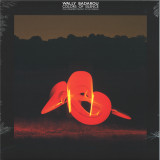
Synth pioneer and musical polymath, Wally Badarou is a genius. But you know that already. A vinyl version of his majestic Colors Of Silence has been craved by the Balearic cognoscenti ever since its low-key 2001 release. Indeed, when we first started work on Be With, we asked some pals with exquisite taste what their dream release would be. We asked Balearic legend Moonboots and, without hesitation, he said Colors Of Silence by Wally Badarou. We didn't know Wally had made this album. And most still don't. But that's about to change.
Colors Of Silence is ostensibly a new age album. As ever though, Wally's sophisticated synth textures and expressive keyboard runs are so full of character, so full of life, that this work of art transcends any easy genre categorisation. It's simply stunning, throughout. It sounds like A.r.t. Wilson or Suzanne Kraft, with traces of CFCF and Jonny Nash. But it was made a good decade earlier than the work of these modern giants. Sometimes, it doesn't seem far from some Larry Heard albums.
Island Records founder Chris Blackwell's friend Nathalie Delon asked Wally to provide music for the yoga DVD she was to release. Lack of time on both sides made them agree on using "quality demos" Wally had in his ideas bank. It's understandable why Colors Of Silence remains somewhat of a lost gem. As Wally explains: "Total lack of promotion made it an 'intimate' release, which was exactly what I was looking for: just a buzz-maker and time-buyer that would allow me to concentrate on the real thing as soon as I'd have time, which could also turn into a rare collecting item later, once the final versions made their way to success. You never know."
Over the years, Colors Of Silence has become a true cult record for the ambient/Balearic heads.
The beguiling but brief "Dance In The Dust" is the shuffling, hyper-percussive, hypnotic opener. It gives way to the deep serenity of "Amber Whispers". It's a gliding, divine, mini melodic masterpiece. It'll make you swoon in its extreme beauty. The bright and breezy "Where Were We" follows, a tropical, reggae-tinged bounce through the islands.
The uptempo groove is maintained on the keys-drizzled soca-funk of "The Lights Of Kinshasa" before Side A is rounded out with "Pictures Of You". It starts with stately, melancholic, unadorned piano and this alone would make for a beautiful song. But Wally always gives us that bit extra and he effortlessly introduces warm, dreamy pads and minimal, slo-mo percussion to augment a frankly stunning piece of work.
Ushering in Side B, Wally's mesmeric piano playing is to the fore again, in the intro to uber-chilled "Serendipity For Two". The playing becomes more mellifluous as the track progresses and adds warmth through exotic percussion, woodwind, sweeping synths and digi-drums. It has echoes of, er, Echoes. It segues seamlessly into the more propulsive, wavy "Smiles By The Millions". If you're not nodding and grinning along widely to the gently throbbing bassline underpinning this, we can't help you. The meditative "Higher Still" follows, cinematic in feel and ever so slightly sinister with the strings. It sounds particularly Badalamenti-esque, if you ask us.
That unmistakable, almost peculiar Badarou funk - so lyrical, so texturally rich and so rhythmically spacious - is all over "Oriental". Next up, "Days To Wonder" brings the serenity back, insistent yet melodic keys, as if played in a place of worship, coupled with birdsong, conjure a kind of instant nostalgia for halcyon days of youth. The contemplative "Dawn Of Europa" is a sombre, beatless, ambient journey whilst the glorious, too-brief "Crystal Falls" features soft percussion and sparkle before fully glistening with some gentle head-nod beats. Wally brings this incredible collection to a mellow, tender close with the graceful "Purple Lines".
There can be few artists more under-appreciated given their vast influence than Wally Badarou. His solo work practically defined the sound of the Balearic DJs of the 1980s, and thus the more sophisticated sound of dance culture thereafter. A synth specialist, Badarou was the long-time associate of Level 42. He was one of the Compass Point All Stars (with Sly and Robbie, Barry Reynolds, Mikey Chung and Uziah "Sticky" Thompson), the in-house recording team of Compass Point Studios responsible for a series of albums in the 1980s recorded by Grace Jones, Tom Tom Club, Mick Jagger, Black Uhuru, Gwen Guthrie, Jimmy Cliff and Gregory Isaacs. Badarou's keyboard playing could also be heard on albums by Robert Palmer, Marianne Faithfull, Herbie Hancock, M (Pop Muzik), Talking Heads, Manu Dibango and Miriam Makeba. He also produced Fela Kuti. Phew!
Meticulously remastered and cut by both Simon Francis and Cicely Balston respectively, it has been pressed to the highest possibly quality at Record Industry in Holland. Special thanks must go to Apiento from Test Pressing who first introduced us to Wally and facilitated all those early zoom meetings. It couldn't have happened without his help. Not least on pulling the art together, too, which features striking original photography by Mads Perch. Benji Roebuck of Roebuck Press did his thing brilliantly in art working the whole package to completion. All in all: essential.
An introduction to our next release that we name DOUBLE JOURNEY.
Featured When we are all truly Free composed by Kuniyuki Takahashi. Taken from the forth coming Translate Pt 2 by Joe Claussell. When we are all Free takes one on a journey into cosmic landscapes and deep though provoking sounds. Residue I Believe by Joaquin Joe Claussell of deep tech house that continues to tap into and express the darker side of Joe Claussell
SORA
It is times such as these that further supports our choice of remedy and why our pursuit to delve deeper into the creative process remains relentless and of profound importance. Due to the unfortunate and dangerous constant overlooking the special gift bestowed upon all of us by the higher power, it calls upon us to continue forward with our mission for productive change which has become ever more crucial to reach. What we're referring to isn't exactly in plain sight for all to see, but obvious enough to those who care to pay attention. However, what has become undeniably apparent to us; is the powerful moving vibration that emits from sound and art and how we connect with them. It is a higher calling that cannot be neither denied nor questioned, and we can only praise the wisdom, truth and love that they bestow upon us. Thoughts like the aforementioned is how and why SORA; an extension of Sacred Rhythm Music & Cosmic Arts, came into existence. Enjoy the Double Journey…
- A1: Fabienne 15 35
- A2: Großer Terpentinsee 03 31
- B1: The House Of Marvick 01 47
- B2: Pillow Junction 04 37
- B3: Luke's Boutique 06 23
- B4: Die Verwundung 03 54
- C1: Scheusalstage 05 13
- C2: Time To Get Ritchie 02 03
- C3: Navajo Blanket 06 52
- D1: Schlehe 10 35
- D2: Wie Sieht Es Aus? 03 27
- D3: Frausus Iii (Marduk) 04 20
- D4: Sieh Mal An (Edit) 01 44
- D5: I Wish I Had You 02 48
- D6: Counter-Culture Also Very Good 01 46
- D7: Daddy 'N'junior 02 44
- D8: Warning 03 34
God knows enough has been written about Workshop. Surely you haven't read it, but this group has been around since 1985, and what they did was this: musically quite limited, they made the music they wanted to hear, but in an ingenious way. Some played the instruments skillfully and others not so much. Something came out of it! One says: that's just the way I like it. The other one boasts: yes, I understood everything how you play here, sometimes you hit it, or sometimes you play so that the parents cry with joy. In fact, seven records were recorded, which, with the exception of the second LP, are still more than worth listening to today. Are they in danger of being forgotten?
Yes and no. What is worth listening to here has often been banned. One must bring it out again. Make attentive. Against the forgetting. These impetuous songs - just let them get close to you again and listen to them in a new context and forget all the smart-ass talk that was said about them. That means to put the self with all its reality entanglements in the pillory. This is of course not only pleasant. Bravo!
The composer behind one of the most sensational breakthroughs in Danish music invites you on a crackling, ever-changing and deeply personal journey. His third album Atmospherics drops after a decade in which Mike Sheridan has searched deeply to find and capture his inner sound.
Films, theatres and art museums have benefited from Mike Sheridan‘s sense of sound and melody for the past 10 years. An album has been a long time coming because, in the wake of his breakthrough at the age of 16, he needed to listen extra closely to his inner sounds.
With Atmospherics, he unfolds the music in a meeting between who he once was and who he is today.
Three years ago, he began to create what is now the album Atmospherics. The term refers to electrical disturbances in the atmosphere, such as during a thunderstorm, which can interact with and distort wireless signals. Here, the title refers to both the sound of the album itself, where computer collages, classical instruments crystal clear melodies and heavy rhythms collide, and to the electronic processing and reworking. But really, he thought it would be a quiet release, almost devoid of melodies. Themes and music slide in and out of each other on the album. There are moments of dub, techno, pop and modern compositional music.
There are sounds and beats that crackle, dissolve, replace each other, or connect with each other in new ways.In this way, Atmospherics can be listened to as a long exhalation from an artist who has dared to hold his breath longer than most.
Atmospherics features both Danish and international guests such as Agnes Aldén (a singer, songwriter and producer from Falun, Sweden), Indra Rios-Moore (a singer, songwriter and arranger, from the Lower East Side of Manhattan), BYLJA and Janus Rasmussen - as well as a host of Sheridan‘s regular musicians.
The artwork for Atmospherics is created by visual artist Nicolai Howalt.
- Derived From The Trout Mask In A Tentative Manner 04:55
- The Dissolution Of Time 08:57
- Abdication 05:02
- The Alphabet Of Steps 06:23
- Les Cycles Extatiques 06:52
- The Geometry Of Rhythmics 05:26
- At The Margin Of Moments 06:37
- Through The Deserts Of Postmodernity 09:36
- Stereometry Of Moving Bodies 06:27
- Suspecting Metaphysical Symbols 07:28
After two years, Carl and Andreas present their second album, and once again, it opens up a wide associative space for us. What strikes us initially is the uncommon instrumentation: a church organ, harpsichord, glass tubes, and more. Like their first album (The Aporias of Futurism), it is mysterious and dark. But it also carries a strong touch of rebellion and adrenaline, sometimes quite pointedly. The pieces are now shorter and feature intricate yet irresistible rhythms. The impact is immediate, yet it maintains a sense of solemnity and ceremony. The Apollonian complexity of the rhythms and subtle melodic interweavings is transformed into a Dionysian, ecstatic, hypnotic, and at times tribal context. "Music for Unknown Rituals" oscillates between primitive instincts and avant-garde intrigues.
The process began in Döblitz, a small village on the Saale river in Germany, inside an old church that houses an organ built in 1886 by Johann Adolph Ibach. Carl and Andreas gained access and secluded themselves there for a few days, accompanied by the organ, an instrument made of glass tubes, and a set of modular synthesizers. After recording the basic tracks in Döblitz, the work continued in Munich and Berlin. Carl played electric guitars, harpsichord, bass, metallophone, xylophone, Indian harmonium, and various percussive instruments. Andreas added layers of electronic sounds, noises, and atmospheric drones. He also created percussive structures extracted and derived from recorded material of technical and industrial noises, which contrasted with the acoustic drums played by Carl. The antithetical approach continues with the dichotomous arrangement of the instruments, often panned hard left and right in the stereo field, creating an antiphonic communication. Some parts, especially the use of the electric guitar, evoke memories of the psychedelic sixties. However, this is anything but a nostalgic album—these musical references are merely remnants, set pieces, and fragments used from a contemporary, post-modern, post-youth-cultural, and post-romantic perspective.
Although Andreas and Carl continue on their chosen path of composing music with an almost literary narrative structure, this album is conceptually and formally completely different from their first effort. If “The Aporias of Futurism” was a revolutionary manifesto (in a pataphysical sense), "Music for Unknown Rituals" is more like the implementation in action; it is the practical application of the previous statement. To put it another way, if "The Aporias of Futurism” was the conceptual manifesto of a dark utopia of modernity, "Music for Unknown Rituals" is the staging of free will surrendering to the myths and catharsis of a Greek tragedy. And in response to this, the artwork features a leitmotif of histrionics with hands, the hands being the first and intuitive part of the body to express something: a ritual, a prayer, a defeat...
— Andreas Gerth is one half of Driftmachine, and Carl Osterhelt is part of F.S.K and collaborates with Hans-Joachim Irmler of Faust. Both became connected through their participation in the Tied & Tickled Trio.
Since their formation in 1977 Mark Perry’s group Alternative TV have moved far away from their more direct punk rock beginnings into all manner of other areas of music that have sometimes themselves drawn from improvisation, free jazz, industrial and electronic music. On Direct Action, Alternative TV’s first studio album since Opposing Forces in 2015, we are presented with six instrumental tracks which steadily rip apart all expectations as they shed all allusions to rock music in favour of the kinda sonic mutilations that once helped 1979’s classic (and Nurse With Wound list endorsed) Vibing Up the Senile Man (Part One) stumble into weird and wonderful shapes. Direct Action marries guttural electronics to sounds most artists would consign to the bin and through Perry’s long perfected mastery of pulling together disparate strands to create something entirely alchemical and invigorating delivers a unique stamp to the ATV story. With the help of longtime collaborator Dave Morgan alongside the input of Gareth Matthews, Ruth Tidmarsh and Cos Chapman, abstract patterns of dishevelled sound rub alongside occasional percussion, disembodied plasma guitar strums and even what seems like an oboe groaning in a murky corner. Similar to its distant cousin of Vibing…, everything adds up to a whole that’s demanding yet completely rewarding as every listen prises open the dark scab of contemporary malaise to reveal something fresh. The front cover’s homage to an incredible album by a pioneering electronic group we are not going to name should in itself point to the unpredictable nature of the music here. If you are savvy enough to get that reference, then you’re on the right path to understanding where Direct Action resides. Easy listening this ain’t. Limited to 600
- A1: Step Up (Ft. Joseph Cotton & Bellyman)
- A2: Reggae Music And Love (Ft. Alborosie & Yami Bolo)
- A3: Fi Di Youths (Ft. Skarra Mucci)
- A4: Quieren Mas (Ft. Alika & Blackout Ja)
- A5: Enough (Ft. Liam Bailey)
- A6: Love On Tap (Ft. Alo Wala)
- B1: Rasta Corner (Ft. Ghetto Priest)
- B2: Don't Stop (Ft. Afu-Ra & Ruffian Rugged)
- B3: Do Good (Ft. Million Stylez)
- B4: No Sabes Na (Ft. Tracy De Sà)
- B5: This World Is A Hell (Ft. Jolly Joseph)
- B6: Dub And Bass (Ft. Caporal Negus)
- B7: Piki Piki (Ft. Dynamq)
With 2 solo albums («Digital Pixel » in 2016 and « Bass Attack » in 2018 ), a dozen of EPs and more than 800 shows performed all over the globe, the most international French beatmaker in the world of Reggae is back on November 2023 with his brand new album « Step Up », in which he pushes further the fusion between Reggae and Bass Music. With « Step Up » Manudigital made his music evolves toward more electronic and hybrid productions. He navigates between musical genres like no one does, inviting guests from all over the world. Armed with his bass, MPC and synthesiser, Manudigital surrounded himself with no less than 17 hand-picked artists to make his productions their own. « (…) I was already working on my upcoming album and I thought I would keep this small Reggae loop to take it to another style, fully electronic which has given my new album’s DNA » - Manudigital about the track « Step Up » The album opens with the eponymous explosive track « Step Up » featuring veteran Jamaican deejay Joseph Cotton and British Drum & Bass MC Bellyman, author of the successful YouTube video series « Carz Barz ». Among the artists of the British underground musical scene, Reggae/Soul genius Liam Bailey has been invited on the Pop-infused Digital Reggae track « Enough » which will delight the lovers of soulful Reggae. Manudigital also reminds us Reggae has always be his first love and, after having produced Alborosie and Protoje’s hit « Strolling » a few years ago, he proposed the Sicilian MC to collaborate with Jamaican artist Yami Bolo on the track « Reggae Music and Love ». A big tune built upon a classic digital riddim in the Jamaican way, a catchy chorus carried by the high voice of Yami Bolo and the legendary flow of Alborosie of the verses. Cult band Asian Dub Foundation’s singer Ghetto Priest takes also part of the project with « Rasta Corner », MC Caporal Negus joins Manudigital on « Dub and Bass » and on tour, and Jolly Joseph sings on « The world is Hell » for the Reggae Dub tracks of the album. In terms of surprises, Manudigital takes pleasure in inviting benchmark artists in each musical genres, walking through Lo Fi Hip-Hop’s path with the Dancehall President aka Skarra Mucci on « Fi Di Youths », Baile Funk with Punjabi-American rapper Alo Wala and their song « Love on Tap » or even Afrobeat with Dynamq for the last song « Piki Piki ». Finally, whereas Manudigital will soon celebrate his career 10th anniversary and as his name resonates in sound systems from all over the world, we appreciate each risk taken and each nod to Reggae Culture, wondering what his next shape will be. First parts of response on November 17, 2023 with the release of
After a string of two dozen brilliant albums beginning in the 1950’s, clarinetist, saxophonist, flutist,
composer and arranger Jimmy Giuffre stopped recording. For nearly ten years he focused solely on
live performance. This album, Music for People, Birds, Butterflies and Mosquitoes, marked his return
to the studio after his self imposed hiatus. Known for developing forms of jazz which allowed for free
interplay between the musicians, Giuffre began his career as an arranger for Woody Herman’s big
band in the late 1940s. Playing primarily saxophone, he became a central figure in the West Coast
cool jazz scene of the 1950’s, with the Lighthouse All Stars in Hermosa Beach, CA. In the late 50’s, he
began working within different configurations of the trio format, on what he called “blues-based folk
jazz.” A prime example being his piece "The Train and the River" famously featured in 1958 Newport
Jazz Festival concert film, Jazz On A Summer’s Day. The trio here is completed by drums and bass
with Giuffre trading seamlessly between tenor saxophone, clarinet, flute and bass flute. The twelve
original compositions are very much in Giuffre’s signature style. The melody explorations have an
eastern vibe, and are played in hushed tones with an almost chamber music like quality. From 1973,
originally on the Choice label, this album has been remastered and is being presented here as the
artist intended, with its original title, track order and album artwork, for the first time since its original
release. Remastered by Alex McCollough at True East Mastering. Vinyl cut by Jeff Powell at Take Out
Vinyl.
David Byrne is a modern renaissance man - and that’s not just a cliché. From the heady days as co-founder of the celebrated art new-wave group Talking Heads (1976-88) through his own constantly evolving and innovative solo music career, he has pursued his muse on many different artistic fronts. He’s been the driving force behind a body of work that has been both intellectually daring and commercially successful...and he shows no signs of slowing down decades later. This show, captured on November 28, 2001, came on the heels of his hit single, “Like Humans Do” and the release of the album Look Into The Eyeball, which was another typically eclectic musical stew reflecting a variety of styles and influences, from Philly soul to a D.C. Go-Go inspired groove and his first-ever Spanish composition, “Desconocido Soy.” Critics at the time called it his best work in years, and his performance on the Austin City Limits stage shows why. Joined by Austin’s own eclectic tango ensemble Tosca, Byrne takes us down many different musical roads in his ACL debut. Of course, besides the brilliant songwriter and performer that he is, he’s also an accomplished performance artist, photographer, web journalist, film writer / director, composer of motion picture soundtracks, and founder of his own world music label, Luaka Bop Records. He also has a collection of Grammys, Oscars and Golden Globes on his mantel. His music may be complex and poetic, but he makes no bones about his ultimate intent: “I want to move people to dance and cry at the same time. - Terry Lickona (Producer Austin City Limits)
Dalmata Daniel welcomes Filmmaker and Petros Spatharos for the eighth part of their split series. This obscure 3-3 track vinyl is the debut of the Columbian music maker on the label. However, for the Athens-based producer it's a return after his participation on "Dalmata Daniel eats Lahmacun" compilation. But this project isn't their first collaboration, because Petros released his first album on Body Musick, Filmmaker's own imprint.
Filmmaker probably doesn't really need to be introduced to those who are comfortable with contemporary underground music. In less than five years he has composed and released a huge and relevant oeuvre by himself or on labels such as the UK-based Opal Tapes, Dutch Tartarus, Greek Phormix or the German Veyl, etc. To add Dalmata Daniel to this list is kind of a dream come true for the label, because they have been following his musical journey since the beginning. And no doubt, his side of the vinyl is another testament to his already perfected sound. What you recognise from the first moment of this noisy, industrial, sometimes dissonant ebm driven electro, infused with a film noir atmosphere and total darkness.
While on the flip side, Petros Spatharos keeps the obscurity going, which is the real link with his split partner's music. Only his sound is clean, not chaotic, but rather underworld techno with an extremely restrained tempo and some beyond-the-grave acid screams. That's how this inferno journey will be complete with full of dark emotional atmospheres and hypnotic textures.
- Intro At The Piano
- Red, White, And Blue
- Improvisation At Heart Mountain
- Summer Of '42 (Orchestral Edition)
- Improvisation In The Root Cellar
- ? ? ? ? ? (Iga Ueno Castle)
- Improvisation At Jerome, Ar
- Theme For Jerome (Orchestral Edition)
- ? ? ? ?? (Nada Sou Sou)
- ? ? ? ? ? ? ? ? (Ue O Muite Arukou)
- A Safe Place For Animals
- Manchester (Acoustic Edition)
- Removal (With Kara Kondo)
- Violin Tsunami For The Victims Of Tacoma Detention
- Epilogue From Improvisations On Eo9066
- For Every Voice That Never Sang
- War
- Removal
- Arrival At Heart Mountain
- Coldest Of The Camps
- Know Your Enemy:japan
- Improvisation For The Tokyo Firebombing
- Intro To 1853
- 1853: Commodore Perry And His Black Ships
- Bach's Double Violin Concerto In The Key Of Gypsy Swing
- Keiko Ishibashi
- My Name Is Kishi Bashi
- Proud American
- The 442Nd - Go For Broke
- Chicago Meditation
- A New Life
- The Pilgrimage
- Omoiyari And The Model Minority Myth
"Omoiyari" means to have empathy and consideration for others, and act on it. This fall, the American indie-folk multi-instrumentalist and singer-songwriter Kishi Bashi is set to release the companion album to his forthcoming documentary song film, titled Music from the Song Film: Omoiyari. Consisting of two LPs_"The Songs" and "The Score"_the release showcases what is essentially the soundtrack to Omoiyari, the feature-length motion picture co-directed by Kishi Bashi, aka Kaoru Ishibashi or "K," which is being released via MTV Documentary Films in November. Focusing on K's own six-year journey of discovery surrounding his research of the incarceration of 120,000 Japanese Americans that followed the attack on Pearl Harbor in 1941, the film is part social justice documentary and part song-film experiment. The album includes K's live improvisations, which are featured in the documentary, many recorded on the sites where the concentration camps stood. Written during and about the artist's transformational dive into his personal identity and serving as a broad survey of the Japanese American experience as well as the incarceration_Music from the Song Film: Omoiyari serves as an evocative musical accompaniment to the lessons of empathy and compassion portrayed in the film and highlights the process and power of one of modern indie's most talented musicians.
First heard by global audiences on Sahel Sounds' Music from Saharan WhatsApp series, Malian guitar hero Bounaly (the stage name of Ali "Bounaly" Traore) makes his full-length debut with "Dimanche à Bamako" ("Sunday in Bamako"). Recorded live on location, the music on "Dimanche à Bamako" is a mix of regional favorites, traditional standards, and originals. Long songs with looping rhythms, pounding kick, and electric shredding guitar, punctuated by shout outs to the guests of honor. A raw and frenetic take on Northern Mali desert sound, playing for the diaspora at a Bamako wedding.
As a father and touring musician I made this album to keep my kids company in my absence, hopefully for them to sing along with in their mom’s car. These songs evoke memories of my mother playing her Martin parlor guitar and of my father, at the family turntable, telling stories about Furry Lewis and Gus Cannon or explaining a song’s meaning. I wanted to share these childhood favorites with my kids. This collection of childhood favorites was recorded for fun, at home, with family and friends in the spirit of sharing. Everyone is welcome. I wanted to share these songs with my kids and my friend’s kids as well as expose my daughters to the joy of learning, performing and recording music that my father shared with me. The recording was largely done in 2017 during dinner parties, sleep overs and play dates, either in a family style social setting or while the kids slept. After burning rough mix CDs for the family car, I set the project aside until 2023. Finishing the album with fresh ears album benefitted from my film score work done in 2020 and 21. I love letting projects simmer on the back burner until the time is right. The perspective of time can’t be bought or faked. My daughters sang on the album, both in 2017 and in 2023. Overdubbing my daughters on top of their younger vocals, 6 years later, was a unique sensation and document of their youth. You can hear my youngest daughter sneeze and improvise wordless melodies but my oldest daughter stole the show after her first overdub party, taking me aside and asking “don’t you get paid for singing on a record?” - Luther Dickinson
- Desperate Love
- Crying's Just A Thing You Do
- Lucky Penny
- Hunting For Sugar
- On The Lips
- Undivided Heart & Soul
- Bloodhound Rock
- Style (Is A Losing Game)
- Jubilee
- Under The Spell Of City Lights
- Let's Get Out Of Here While We're Young
JD McPherson presents what he calls "A truly romantic garage rock record". Undivided Heart & Soul produced by Dan Molad (Lucius) & McPherson, and developed largely in the studio (that studio being the historic RCA Studio B in Nashville), carries a sense of immediacy and irreverence. Putting the hands of Dan Molad on the wheel of the record ensured that the music didn't take too many expected turns. "Having toured with Lucius and befriended Dan, I knew he was the guy to push my buttons and challenge me to try new things. He's a tireless worker. He's constantly tinkering away on something... and music just falls out of him." The vintage recording equipment and instruments still housed in RCA Studio B greatly informed the direction of the record. "Each night, at the end of tracking, someone would invariably say, "You wanna put vibes on this?", speaking of the old RCA Vibraphone. I mean, you can hear THAT vibraphone on Roy Orbison's "Crying"... we couldn't keep our hands off of it. It guided some of the songs into some strange and wonderful places. "Lucky Penny" took such a cool turn once Ray (Jacildo, keys) added some to it. We wrote several songs on the piano that Floyd Cramer played "Last Date" on. We were soaking up so much of the phantom energy in that room, it led to some incredible sonic territory." "Most folks know
- A1: Andras - The Same Old Boring Thing (01 37 Min)
- A2: Tambien - Breakbeat Frosch Interlude (02 53 Min)
- A3: Franziska Kronitzer - Drehen Und Lächeln (02 52 Min)
- A4: Bell Towers - I Make Music For Myself And I Dj For Money (02 00 Min)
- B1: 5Am - Answer (03 42 Min)
- B2: Coper - Stop (03 14 Min)
- B3: Samo Dj - Turning Point (03 59 Min)
- C1: Eden Burns - 10 Years Off (05 04 Min)
- D1: Bell Towers & Adam - Keep Moving Forward (02 53 Min)
- D2: Dj City - Tu Trouveras (03 59 Min)
- D3: Nice Girl – Make Things Better (03 02 Min)
- E1: Mr Tophat - Fade Away (06 36 Min)
- E2: Mainline Magic Orchestra - House Music 2 The World (Lokotron Live Mix) (04 00 Min)
- E3: Olaf Nicolai – Everday At Noon (00 04 Min)
- F1: Salamanda - Whistling (03 47 Min)
- F2: Aiden Ayers - Canyon No 1 (07 33 Min)
- F3: Martin Brugger - Low Mute (03 55 Min)
- F4: World Gym - It Always Ends In Tears (04 41 Min)
Public Possession turns 10. What holds it all together?
Comedy & Rhythm. Find us in between the sun and the moon. Onward, forward, don’t step backward.
The source is everywhere.
• Where (Who) Am I? An angel with an UFO.
• Toot, Toot, Beep, Beep....
• Maintain a child’s mind
• Listen, talk, see
• Archeaology (dig it)
• WOW (curiosity)
• Easy & Diffifficult
• Mix It Up
• Soft Education
• Love Unlimited
We are not doing this alone.
The biggest thank you goes to the P.P. Team & all label artists.
To many more years!!
Kacy & Clayton first met Jeff Tweedy in the backroom of the Fillmore Auditorium in San Francisco in September 2016. The band had been invited to open for Wilco on night 4 of their annual 5-night run. While waiting for their soundcheck, Jeff appeared through a curtain backstage and introduced himself. In the conversations that followed, Kacy Anderson, Clayton Linthicum and Jeff Tweedy discussed their mutual appreciation of Davy Graham and Jeff’s understanding of Saskatchewan’s geography. Those conversations would eventually blossom into an invite to stop by Wilco’s studio, the Loft, a visit they made only weeks later. In January 2017, Kacy & Clayton returned to the Loft with a rhythm section and a batch of new songs. Over the course of 8 days, the band recorded 9 songs with Jeff Tweedy producing and Loft house engineer Tom Schick at the helm. These 9 songs are what would become the band’s fourth album, The Siren’s Song. While writing and recording The Siren's Song, Kacy & Clayton found inspiration in the music of Sammi Smith, The Everly Brothers, Link Wray's chicken shack LPs, country records with harpsichords, The Sir Douglas Quintet, Gene Clark, Jeannie C. Riley, as well as British traditional singers like Peter Bellamy and the Watersons. The Siren's Song is a product of these influences and an extraordinary progression in the band's own sound.