Restock
If you've ever had the feeling that things just don't make sense, that there's a hidden world of dark magic waiting in the dead spaces, the forgotten corners... well this is the music for you.
Dutchman Erik Griffioen's obsession with the esoteric is well known, and for some time his Lloyd Stellar alias has focused on this sense of the world just out of view.
Griffioen runs LDI Records as an outlet for his prolific creativity, but this release for Gated pulls from his early works, the tracks that almost got away.
This is one-strobe-in-a-dark-room electro, which rides the fine line that exists somewhere between euphoria and madness. It's relentlessly underground. And we love it.
Buscar:so what music
"I wanted to talk about what I know best, which life from my perspective" Rébecca M’Boungou is not unaware of the universal part of her mixed race life so many upheavals, splendors, melancholies, pleasures or pains present in this century.Kolinga tells much more than the musical adventure of a dark-skinned country girl from southwestern France who expresses herself in French, English and Lingala on a music which drawsfrom pop, Congolese rumba, jazz, soul, song, hip hop...
Emerald Green Vinyl[29,83 €]
Option Explore, Dylan Moon’s second full-length album, is a glassy-eyed survey of pop’s playing field both past and present, and a collection of clever, colorful songs filtered through frequencies, timbres, and dreams discovered and discarded while its maker shifts from one sub-genre to the next.
Option Explore signals a significant departure from Moon’s debut 2019 album Only the Blue s, which at its heart is a folk record from the forlorn fringes of psychedelia: a little mysterious, but ultimately lucid in its internal logic and generous with standalone, but sing- along, songs. Dylan’s 2020 EP Oh No Oh No Oh No suggested both a shift in his writing and listening habits, culminating with the 2021 compilation Moon’s Toons Vol. 1. On Option Explore, Moon willfully spins multitudes. With a careful study of synthpop, a penchant for warped yet unwavering guitar grooves, and an effortless songwriting ability, he leans into unlikely convergences, and arrives at something deeply futuristic in its disregard for genre sanctity.
A guiding principle for Option Explore was the “explore/exploit trade-off” concept, a behavioral mechanism of foraging (“the choice between exploiting a familiar option for a known reward and exploring unfamiliar options for unknown rewards”) which has been employed within computational neuroscience and psychiatry. Moon uses exploratory foraging as a manifesto for song construction: music without end, without limit. Many of these songs avoid conclusive compositional conventions, and sound more like turning a radio dial than pressing preset play. Tracks begin at what feels like a midpoint and fade out with little warning, adding to the sensation of sonic melt.
Black Vinyl[29,83 €]
Option Explore, Dylan Moon’s second full-length album, is a glassy-eyed survey of pop’s playing field both past and present, and a collection of clever, colorful songs filtered through frequencies, timbres, and dreams discovered and discarded while its maker shifts from one sub-genre to the next.
Option Explore signals a significant departure from Moon’s debut 2019 album Only the Blue s, which at its heart is a folk record from the forlorn fringes of psychedelia: a little mysterious, but ultimately lucid in its internal logic and generous with standalone, but sing- along, songs. Dylan’s 2020 EP Oh No Oh No Oh No suggested both a shift in his writing and listening habits, culminating with the 2021 compilation Moon’s Toons Vol. 1. On Option Explore, Moon willfully spins multitudes. With a careful study of synthpop, a penchant for warped yet unwavering guitar grooves, and an effortless songwriting ability, he leans into unlikely convergences, and arrives at something deeply futuristic in its disregard for genre sanctity.
A guiding principle for Option Explore was the “explore/exploit trade-off” concept, a behavioral mechanism of foraging (“the choice between exploiting a familiar option for a known reward and exploring unfamiliar options for unknown rewards”) which has been employed within computational neuroscience and psychiatry. Moon uses exploratory foraging as a manifesto for song construction: music without end, without limit. Many of these songs avoid conclusive compositional conventions, and sound more like turning a radio dial than pressing preset play. Tracks begin at what feels like a midpoint and fade out with little warning, adding to the sensation of sonic melt.
Josh Hughes (Cub\cub) returns for his second album of a long hot summer, Radiant Crush. Following the glimmering enchantments of his previous outing, Nothing New Under The Sun, this latest chapter brings things to a dizzying climax. While Josh's palette champions the lo-fi, it's his ability to unveil rich melody, seemingly spilling through ever shifting sliding doors, that leads the listener on a merry dance of intangible delights. As Radiant Crush continues to build, we increasingly discern hazy voices coming through the divide: Through a Narrow Window resonates like a lost gem from This Mortal Coil; until Drift finally breaks through with Louisa Osborn's blissful vocal performance, pulling everything into focus to stand as the album's glorious centre piece. While Radiant Crush is very capable of speaking for itself, when pressed Josh describes his work as "music for an incurably ambiguous world", and we can see how nothing is quite what it seems when he goes on to describe this latest album in similarly evasive terms: "Radiant crush is a series of nebulous concepts designed to make the listener think about the way in which we as human beings can idealise a past that never existed. The album focuses on the fragility of the human brain and the power emotions have over recollection through tracks that leave you with a feeling of longing, for something you can’t quite put your finger on. I think more than any other work I’ve made, this album feels the most human. Vocals feature quite prominently throughout the record, most of them are distorted, veiled or fragmented in keeping with the theme of a loss of connection and meaning. Drift is the only track on the album with intelligible vocals, this was intentional as it honestly and tenderly deals with the theme of living in an incurably ambiguous world." Radiant Crush will be released on 2nd September, via digital platforms and limited edition pressed vinyl. Genre: Electronic / Ambient
The Hammond Organ is lead singer on this soulful and orchestral journey about industrial decay and the death of the steel town. Deep from the rusted steel mills of Youngstown Ohio, we bring you the much-anticipated reissue of the melting debut from the Scone Cash Players. It's the same organist that brought you the screaming organ on all those Daptone favorites from The Sugarman Three. Scone was behind that organ bench on the modern classics as follows. "Sugar's Boogaloo", "Soul Donkey", "Pure Cane Sugar", and "What the World Needs Now." Adam Scone entered the studio on Dunham Street in Brooklyn. He was wearing a blue Adidas jump suit. The studio had just opened. At the helm were his old compadres from The Dap-Kings. Namely Thomas Brenneck, Eric Kalb, Homer Steinweiss and lan Hendrickson-Smith. They make up the "Bliss Machine" behind Scones's groove. It was a truly rare moment to catch these masters of music and taste in between tours of Sharon Jones and Charles Bradley. Tommy put the mics around. Scone powered up the organ. The analog tape machine turned and turned until they couldn't turn any more. These songs were recorded. We worked all day and all night. Tears were shed. Espresso was made. There was beer on tap. 3 days of life were taken to make this album. We will never get them back. They were distilled to 40 minutes of pure emotion. It's a tale of woe. It's a tale of leaving art for responsibility. It's a farewell to an era. It's a journey that the Hammond B3 organ wasn't accustomed to. You can't compare this album to any other organ record. Don't expect to hear what you want. Free your mind. Be open. Your world is going to feel the heat of the BLAST FURNACE! It never quite feels how you want it to. Don't get burned... FOR FANS OF: Delvon Lamarr Organ Trio, The Sure Fire Soul Ensemble, New Mastersounds, Soulive, Jimmy Smith, Khruangbin
JON GOMM'S 'THE FAINTEST IDEA' WILL BE REISSUED ON VINYL FOR
THE FIRST TIME SINCE 2020.Jon Gomm, the UK based acoustic guitar
virtuoso, finds new emotional depths in immense melodic pop
landscapes, with his 'The Faintest Idea'
As one of the pioneers of the modern fingerstyle sound, Jon Gomm has a rare gift
for turning one instrument into what feels like an entire orchestra. The singersongwriter's 2003 home- recorded debut, 'Hypertension', was nothing short of a
musical revelation. Things changed for Jon when landmark single 'Passionflower'
racked up millions of views on YouTube & other media platforms in 2012 – with
British legend Stephen Fry describing him on mainstream television as someone
"playing the guitar in a way I'd never seen it played before" & "an all-round genius".
The Faintest Idea's title is based on the notion that all of us, to some extent, are
just 'The Faintest Idea', "It's an enigmatic title," says Gomm. "There's a fine line
between a metaphor & a pun, so I guess it dances on that" & explores the
contrasts between the warmth of Gomm's acoustic articulation with more icy
affairs, thanks to the synth parts & production work from Australian musician
Andy Sorenson, together they have created a contemporary masterpiece.
The Faintest Idea's immersive & emotional 11 tracks see a musician coming to
terms with the talents that got him recognised & choosing to evolve into the
unexpected. This album just boils down to the magic of one man with his guitar &
voice. And what a powerful magic it is.
The album is complemented by the delicate hand drawn pen & ink cover art
created by Lee Zimmerman. 'The Faintest Idea' is issued via Kscope on Black LP.
Limited edition 300 copies. Sababa 5’s debut single features the talented Japanese singer and belly dancer Yurika. The two songs - Crossroad of Love (Ai no Kousaten) and Blue Universe (Aoi Sekai) – blend Yurika's dreamy vocals and texts with the band's 70's sensibility and Israeli soul music. As the band plays a mediterranean groove of both Israeli and Arabic origins, Yurika's Japanese lyrics float effortlessly on top. Sababa 5 and Yurika met in the summer of 2017, when Yurika was in Israel for an internship at the Orly Portal Dance Company. Yurika, performing at the time as a belly dancer with Boom Pam and Ouzo Bazooka, wrote lyrics in Japanese for two melodies composed by Sababa 5 guitarist Ilan Smilan. Both songs on the single are love songs, love that is both personal and universal. The combination of lyrics in Japanese, Yurika's gossamer vocals influenced by the Kayokyoku style and the Israeli sound of Sababa 5 creates a unique and interesting sound. Yurika (vocals), Ilan Smilan (guitar), Amir Sadot (bass) In the recording Lior Romano (keyboards) and Assan (drums).
ABOUT SABABA 5 Sababa 5 was formed in 2016 by Amir Sadot and Ilan Smilan, both members of TIGRIS band and the Hoodna Orchestra. The four members of Sababa 5 are already well known for their work with some of Tel Aviv's top artists/vocalists such as Gili Yalo, Liraz Cherchi, Sari and Reno, Ester Rada and Kutiman - to name but a few. With influences that range from Wrecking Crew and The Funk Brothers recordings from the 60's, to analog Middle Eastern music from the 70's, the sound of the band constantly evolves around different genres and rhythms. Yet, in its core, Sababa 5 remains very much a groove-centric band. The main source of inspiration for the band are "lehakot ketzev" (beat groups) from Israel that played innovative combinations of psychedelic rock mixed with Mediterranean Arab music during the 60’s and 70's. The fusion of East and West, along with the new spirit brought by the band members, creates a unique mix of styles that comes together into a new and original work. The band is currently working on a new instrumental album alongside the production of new songs for local singers. ABOUT YURIKA Born in the Chiba district on the eastern outskirts of Tokyo, Yurika began her journey towards belly dancing at the tender age of five, taking up lessons in jazz dance. After high-school, she applied for belly dancing lessons almost by chance - yet as she quickly fell in love with the music and the nature of the movements, Yurika knew this is what she was meant to do. Before long, Yurika began traveling around the Middle East, learning belly dancing in different cities and countries like Egypt, Morocco and Turkey. Whilst in Turkey, she met the famous Istanbul-New York based female darbuka player Raquy Danziger - who later invited her to perform in Israel. Once in Israel, Yurika began studying with Orly Portal, a master of contemporary folklore dance. After finishing her studies with Orly, Yurika remained in Tel Aviv and joined bands like Boom Pam and Ouzo Bazooka as a dancer. In her work with Sababa 5, Yurika is featured as a vocalist for the first time.
The legendary BORIS celebrate a 30 year career as one of experimental music's most forward-thinking, heavy, and innovative bands with the new album Heavy Rocks (2022). Continuing their series of Heavy Rocks records, BORIS once again channels the classic proto-metal sounds of the 70s into something all new. The album, 10 pulse-pounding tracks, highlight the very trajectory of BORIS and their storied career - from the driving, fuzzed out Rock N' Roll opener "She is Burning", to the punk, raucous "My Name is Blank", BORIS are heavier than ever before. "Question 1" is just kickass - D-beats give way to a doomed, spaced out and heavier-than-anything guitar wailing and feedback, before diving back into their Metal, sending the listener into a complete frenzy. This is unmistakably BORIS, and this is the band at the height of their powers. Elsewhere on the record, a more daring, "out there" side of the band begins to shine on tracks such as the aptly titled "Blah Blah Blah", the industrial "Ghostly Imagination" and the truly wild "Nosferatou". Noisy passages (not unlike prior collaborations with legendary artists like Merzbow,) collide with visceral vocal howls while a relentless, almost Zornian-saxophone shreds harder than any guitar solo ever could. In 2022, BORIS cement what Heavy Rock means to them, and release one of their most captivating records to date.
Bobby Oroza puts his desire for the profound on wax with his sophomore album Get On The Otherside. Musically, he has updated the formula we were introduced to on the first record. But lyrically, songs are bravely rooted in the more complicated, ubiquitous inner tangles of life like self-examination and coming to terms with the vastness of the human experience. With Coronavirus bringing the world to a halt, Bobby-a father and husband-had to do something. No tours to play or studio time to fill, Bobby found himself back in the construction yard, doing blue-collar work to provide for his family. "I was super grateful for the work-a lot of my colleagues didn't have an option like that," Bobby admits. More than a few personal hardships forced him to acknowledge and work through some brutal truths. And what came of it? Well, for one, this new record Get On The Otherside which pretty well describes what Bobby's been through: He had to demolish his ego, his old ways of thinking, and his tried approaches to anchor into a refreshed perspective with new understandings. As Bobby tells it, "I had to do some real self-searching, come to terms with what was wrong, and how much of it I was responsible for." So how does this translate to the new album? Moments of clarity as to where the real value in life lies on "I Got Love," encouraging numbers like the title track "The Otherside", and declarations of self actualization on "My Place, My Time." Even the more straightforward love songs are outside the box lyrically like "Sweet Agony" and "Loving Body." If you have never had the pleasure of catching one of Bobby's live shows you may have no idea that he is a maverick on the guitar. He lets us in on a little of that on "Passing Things" with a solo that possesses the same restrained and space that his lyrics do. As we'd expect, the songwriting still has that raw, direct edge to it. But an evolution has taken place. There are new points of view on familiar territory which in Bobby's words "For me to love, I needed to take a bigger view of love. One with less ego and more empathy" really hold true. The result is a record with Bobby's new found humility on full display and a message of encouragement to anyone who is struggling and can't see a way out. It still may be hard to nail down and define Bobby and his sound. He's no one thing more than the other. But what he's showing us now, on Get On The Otherside, is that we can also label him a soulful, philosophical optimist. Someone who can say a lot with a little, and who wants us all to know that it's us that has to do the hard lifting to truly live a life in love-both with the world and with yourself.
Somewhere in the middle of the first track, “Torres e Baldios”, there’s a sudden change of pace with percussion rhythms interfering with the trance-like sound of the first six minutes. It sounds like steps, people running away on a corridor bashing their feet. It dazzles you because of how unexpected it is, how unpredictable those sounds sound like and, most of all, how it makes perfect sense. It is a monstrous piece. And the beginning of a new age for Ondness, in the same year he defied his Serpente moniker to create an absolute classic, “Dias da Aranha”.
What makes “Oeste A.D.” so remarkable is the intangible idea of nostalgia. “Aqua Matrix Alternative Nation” recreates with a slowed down mentality the theme of one of the main events of the Expo 98 in Lisbon. It’s nowhere similar to the original, what it does is to mess around with the global ideas that were such a big part of that event. The Portuguese musicians that were invited to collaborate with Expo 98 were mesmerized by the ideas of union and globalization, creating overpriced music that sounds like shit today. “Aqua Matrix Alternative Nation” messes around with that vibe in a positive way. Think Mark Leckey playing around with his rave memories. Same thing, but in Portugal we had Expo 98.
Jokes aside, B Side is more futuristic with “Torres e Baldios II” and “Endless Domingo”, a nod to “Endless Summer”, by Fennesz, and “Endless Happiness” (from “Beaches And Canyons”), by Black Dice, mashing up – freely - both covers and reminding of how great 2001/2002 was for experimental music. Both tracks are full of sci-fi drama and this sickness of the future that has been travelling with Ondness since its early days. But the approach here is somehow different. Before “Oeste A.D.” the Ondness sound was fragmented, sparse and intensively reflexive. There was this uncertainty to it that made the previously releases so good. But “Oeste A.D.” is full of clarity, the phrases are straightforward, and the music moves in one direction, continuously. Before, there were loads of unanswered questions. The only doubt is when will the world start to care and listen to Bruno’s brilliant music. Now sounds like a good time.
- 1: Haizea - Egunaren Hastapena
- 2: Izukaitz - Xori Bele
- 3: William S. Fischer - Pello Joxepe
- 4: Magdalena - Lanera Sartzen
- 5: Enbor - Agurra Ii
- 6: Itoiz - Ezekielen Ikasgaia
- 7: Koska - Ogia Eska
- 8: Itziar - Ameskoi
- 9: Errobi - Andere
- 10: Lisker - Amets Jazarriak
- 11: Amaia Zubiria Eta Pascal Gaigne - Itxasoan Laino Dago
- 12: Gontzal Mendibil - Hasperen Itun
- 13: Urria - Arrano Beltza Eta Amaia
1972-1985 KATEBEGIAK - Prog-Rock, Psych-Folk & Jazz-Rock Music from the BASQUE COUNTRY. The album KATEBEGIAK, now published by ELKAR, contains 13 tunes on double LP gatefold edition from Haizea, Izukaitz, William S. Fischer, Magdalena, Enbor, Itoiz, Koska, Itziar, Errobi, Lisker, Amaia Zubiria & Pascal Gaigne, Gontzal Mendibil & Taldea and Urria, and the CD-Book edition adds an extra bonus track by the great unknown artist Juan Arkotxa. Complied by Mikel Unzurrunzaga Schmitz aka DJ Makala. Music produced in the 70's in the Basque Country got trapped between two earth shattering artistic currents; Ez Dok Amairu in the 60s and Basque Radical Rock in the 80's, and unfortunately, most of the lovely discs and tunes created at that magical time have been pushed to a remote (and sometimes even despised) corner of our collective memory. 60's and 80's music currents are almost opposite, and both work as magnetic poles with a very strong power of attraction, and maybe also as a burden for any of the later artistic currents. 60's generation of artists searched within their rich and ancient cultural roots to acknowledge and update them, in proud, hopeful and unforgettable folk songs. The 80's one on the other hand, worked in a flammable environment in constant social and political conflict and found in punk the perfect way to express their anger and weariness for so many unfulfilled promises and the lack of opportunities into short, noisy, direct and corrosive songs, technically sparse but full of energy and expressive power. Most of the "classic" names engraved in our memory come from one or the other like Benito Lertxundi, Mikel Laboa, Lourdes Iriondo and Xabier Lete or Kortatu, Hertzainak, Zarama, Las vulpes, Eskorbuto or Cicatriz. 70's generation and their music work somehow as the "missing link" ("katebegia" in Basque) between the two. They loved folky tunes and don't forget their ancient roots, but they also look outside for inspiration and experimentation. Just as the 80's boys and girls found punk the 70's guys found a completely different sonic and aesthetic landscape in the works of Grateful Dead, Fairport Convention, King Crimson, Soft Machine, Gong_ and worked closely with keen souls in other neighboring regions such as Maquina!, Pau Riba or Sisa in Catalonia or Smash and Triana in Andalusia. This resulted in more abstract and poetic lyrical content, much longer psych-folk-prog-jazz tunes, full of complex instrumental passages and mesmerizing structures of sheer ambition and masterful execution in many cases. But, most important of all, they found a voice of their own, rich, unique, and fascinating, and that's what makes them so valuable to us. Not only to us, but also to lots of vinyl collectors and crate-diggers around the world, who have in many cases paid fortunes for some of the original editions of LPs that are the source of tunes in this compilation. Mikel Unzurrunzaga Schmitz aka DJ Makala, DJ and producer of worldwide scope and wisdom, noticed this fact first and decided to pay homage to these wonderful tunes through this masterful and dedicated selection for your pleasure and as an open invitation to dig deeper into your adventures in the dark and hidden side of Basque popular music.
The Body has been an iconic force in heavy music for over 2 de- cades with a long history of collaborations. Recent collaborators include BUMMER, Full of Hell, Thou, Uniform. Lee Buford from The Body is also in Manslaughter 777 and Sightless Pit. BIG| BRAVE have a singular voice in heavy music, honed over 5 albums The Body and BIG|BRAVE are both bands possessed with an unequaled ability to convey overwhelming weight with simplicity, repetition, and detailed sonic atmospheres; artists who continue to alter the definition of what it means to be a heavy band. The Body are consistently prolific while increasingly ambitious as untethered producers and collaborators. BIG|BRAVE shape sound with dense waves of guitar and feedback, minimalist and hypnotic crashes, and emotionally exacting vocal melodies. In collaboration, The Body and BIG|BRAVE shift the gravity of their compositions to woven layers of percussion and unspooling guitars that sprawl through stark frameworks of earthy folk. Their debut collaborative album Leaving None But Small Birds distills the two ensembles" pioneering approach to heavy music into psalms for the forgotten, threnodies of lost love, and odes to vengeance. Typical to The Body"s creative process, Leaving None But Small Birds was composed almost entirely in the studio at Machine With Magnets with engineer/producer Seth Manchester. The Body and BIG|BRAVE aimed to challenge themselves to craft a fully realized and cohesive work that strayed outside the boundaries of the music they make individually. The Body"s Lee Buford set up the initial challenge: collaborating to make an album that evoked the country and folk roots of The Band. BIG|BRAVE"s Robin Wattie compiled lyrics and melodic lines from across Appalachian, Canadian, and English hymns and folk songs. Select phrases were then reworked and precisely arranged to center the experiences of marginalized characters, victims of hardship, and those yearning for love within each story. The despair and empowerment of these traditional tunes draw remarkable parallels with each group"s focus on championing people often cast aside in history. The Body and BIG|BRAVE, following a folk tradition, make each song their own through shifts in perspective and a synthesis of passages from kindred tales. BIG|BRAVE"s roots as a minimalist folk band and The Body"s love of old-time, country blues, and folk music enable the quintet to strike a formidable balance between sorrowful lamentation and uplifting resolve to weighty effect. Leaving None But Small Birds thatches together two monumental innovative forces that render the emotionally profound with lucid, devastating vitality
- A1: Quad
- A2: Don't Know Yet
- A3: Chipped
- A4: Slow Down
- A5: U33
- B1: Television
- B2: Woke Up
- B3: Widowmaker
- B4: Taken Too Much
- B5: Coogan's Bluff
- C1: Chipped (Peel Session, Maida Vale 10/11/95)
- C2: Widowmaker (Peel Session, Maida Vale 10/11/95)
- C3: Theme (Peel Session, Maida Vale 10/11/95)
- C4: Woke Up (Peel Session, Maida Vale 10/11/95)
- C5: Spliff Riff (Peel Session, Maida Vale 10/11/95)#
- D1: Quad (Live Bbc Radio 1 Rock Show, Glasgow 31/03/96)
- D2: U33 (Live Mark Radcliffe Bbc Radio 1, Manchester 02/05/96)
- D3: Television (Live Mark Radcliffe Bbc Radio 1, Manchester 02/05/96)
- D4: Jellystoned Park ( B-Side Of Television 7")
BLACK VINYL REPRESS
ITS 25 YEARS Since the first Heads album was released.. .so.. for 2021..Rooster has decided to get the album back in print on vinyl.. but changing the artwork. With some silver foiling and bordering, the single sleeve has been boosted to a sweet gatefold, Rooster also got the Radio 1 sessions from the time remastered, and re-cut along with the huge b-side to their Television 7” “Jellystoned Park”.
So there you have it, a double vinyl silver jubilee reissue of a fantastic debut album!
From the original reissue sales notes:
“The Heads had self-released a couple of 7"', and then Cargo Uk's inhouse label Headhunter UK got to release a further 7", and then the Debut album in 1996. Amidst a world suffocating in Britpop smarm, the Heads cut a timely swathe with their unkempt rock psychedelique. The album contained 10 tracks of guitar driven, amp destroying rock, with cues taken straight from the US underground, Stooges, MC5, Mudhoney, Pussy Galore, early Monster Magnet too but with a disitinctly British stamp, some of the drone and fuzz from Loop / Spacemen 3, some of the attitude of the Fall, Pink Fairies and Walking Seeds and overlaid with the spaced rock of early Hawkwind. It was obvious that the four members of the Heads were music obsessives. The debut album was recorded at Foel studios (owned by Dave Anderson from Hawkwind) and engineered by Corin Dingley, it was mastered by John Dent at LOUD.”
We’ve asked for some new appraisal of the Heads for the Silver Jubilee edition from good friends....
Stewart Lee February 2021
“The Halley's Comet victory orbits of historic heavy artefacts from Detroit, like The Stooges or The MC5, leave grateful onlookers aghast. But, hidden away in Bristol, The Heads are still with us now, our homegrown acid-garage godfathers, an ongoing thirty-two year old concern with a back catalogue arguably more consistent than the super-dense psyche-rock groups that inspired them. The Heads arrived fully formed and have spent three decades becoming more like themselves, a musical black hole that sucks in all surrounding matter. I love The Heads “
Phil Alexander February 2021
“The Heads make music for freaks in the know. If you were there in 1996, you’ll know just what that means…
Back then, they were gloriously out of step with the pop-cheese of the time and geezerly lumpiness of Britpop. Theirs was an altogether different take on music – a take inspired by the glorious burn-out of the ‘60s, the sonic overdrive of the ‘70s and the axis of joy created by the combination of excess volume and repetition.
We could name-check some inspirations and kindred spirits: The Stooges, Hawkwind, Floyd, Loop, Sabbath, Amon Düül II, Spacemen 3, Walking Seeds, Mudhoney, Monster Magnet among them... But in all honesty, The Heads have always existed in a world of their own, surfacing as and when the mood takes them, before returning to their subterranean rehearsal room to jam their way through yet more mind-altering riffs and mood-altering rhythms.
Relaxing With The Heads is their first defining statement. It is also possibly their most straight-forward release, the sound of a band attempting to find structure in their playing rather than abandoning themselves to their wildest impulses. That would come later…
And yet, 25 years on, this album blasts forth like few records from that time, its slacker charm welded to super-fuzzed riffs that propel its 10 tracks ever onwards. Righteous is probably the only word for it…”
'No Sub Reino dos Metazoários' is the first and only record by musician and poet Marconi Notaro, out of Pernambuco, Brazil. Originally released independently, however, with the support and distribution of Rozenblit, the 1973 album featuring Lula Cortes, Zé Ramalho and Robertinho de Recife is part of the holy trilogy of "Psicodelia Nordestina" amongst the equally mindblowing Paebiru (1975) and Satwa (1973). For its non-comercial a raw aesthetics, the record became a true rarity among collectors worldwide and one of the most important albums of Brazilian Psychedelia. For years it was known that the master tape of 'No Sub Reino dos Metazoários' had been lost during two floods that wrecked the Rozenblit Studios. Lots of equipment were damaged and plenty of material gone. However what no one expected was that the tapes were kept on the highest shelves in the studio where the water did not reach with the thought of "equipment can be replaced, master tapes are unique". Notaro's daughters inherited and rescued the tape and made it available so that Fatiado Discos could release the first and remastered version from the original tapes since 1973. The lysergic highest moments come with nature elements textures as water and wind mixing together with the unmistaken sound of the Tricórdio Acústico - which is a very unique instrument that Lula Côrtes brought himself from India and then adapted it with the help of a local luthier to the regional sound of the Brazilian northeast. The gatefold designed by Lula Côrtes is portrayed in this release and it also has its inner side designed by Cátia Mezel, apart from an extra insert with unpublished photos of Marconi provided by the musician's family.
Brand new 2022 ‘Moons of Phobos’ repressing:
2LPs pressed on ‘ghostly’ grey vinyl.
Two worlds have collided and what glorious and
odd worlds they are. After a successful summer
tour pairing Les Claypool’s Primus with Sean
Lennon’s The Ghost Of A Saber Tooth Tiger, Les
and Sean have decided to combine their abstract
talents into a project called The Claypool Lennon
Delirium.
The pair’s efforts thus far have spawned the full
length release called ‘Monolith Of Phobos’.
“Sean is a musical mutant after my own heart,”
said Claypool. “He definitely reflects his genetics -
not just the sensibilities of his dad but also the
abstract perspective and unique approach of his
mother. It makes for a glorious freak stew.”
Lennon added, “It’s been an honor and a
challenge playing with someone of Les’ caliber, but
luckily the Gods of Pinot Noir shone favorably
down and granted us a bundle of devilish tunes
about monkeys, outer space and sexual deviancy.”
Radio Diaspora works on the concept of cultural identity, which is flexible and dynamic. This provocation is generated by referring to all African ancestry moved by the diaspora and its sonorous, vocal, polyrhythmic, and polyphonic codes - all the ancestral heritage that has spread throughout the world following expropriations, genocide, and slavery - sampling and amplifying references that become triggers of energetic approaches. A heavy core of representations and senses aims to exorcize through noise and strangeness all secular violence against people of the African diaspora. In the title song of this album, 'Negro Humor', the respected Brazilian actor Grande Otelo highlights the contradiction of the clown, which awakens joy in everyone but is a sorrowful, lonely figure, ridiculing himself and putting himself in the most embarrassing situations. Relieved, loud laughter echoes in the audience because it is not the target of ridicule. In 'Despacho', Radio Diaspora explores the dichotomy of society by introducing a speech by Brazilian lawyer Hédio Silva Júnior specialised in Afro-Brazilian religion. He questions a rule under discussion in Brazil's Congress that would prohibit the use of chickens in Candomblé and Umbanda rituals. Silva Júnior points out that everyone takes a stand to protect the rights of animals, but the same cannot be said of the defense of young black people and outlying societies. The track 'Meia-Noite' evokes a celebrated point of Umbanda, an Afro-Brazilian religious syncretic cult, permeated by free jazz and electronic atmospheres developed by the duo. The other songs on the album are divided into two parts. They feature the voices of North American icons of the black struggle for civil rights: The tracks 'A.H.M. Al-Shabazz 1 and 2', amid sonic dissonances, use extracts from speeches by the American leader Malcolm X, and in 'Muhammad Ali 1 and 2' we hear quotes from famous interviews given by the boxer and activist. Ali ironizes the questions he asked his mother as a child, why all good and positive things are associated with white. "Mother, how come is everything white? Why is Jesus white with blonde hair and blue eyes? Angels are white, the Pope, Mary, and even the angels. When we die, will we go to heaven? She said naturally we go to heaven. So, I said, what happened to all the black angels they took from the pictures." His Inquiry, however, is seen as a joke by the white audience present at the TV show, which laughs off Ali's scathing criticism. Radio Diaspora uses art as an instinctive force to reject submission to traditions and culture as taming. Music is the weapon. "The (album) sound means to exorcise racism out of our minds and make us ready to act". - Rômulo Alexis
- A1: Call It A Night 03 47
- A2: Toby Whyle What A Ride 03 23
- A3: Toby Whyle Maze 03 21
- A4: Toby Whyle No One Moves 03 12
- A5: Toby Whyle Not In The Slightest 04 29
- B1: Gave My All 03 24
- B2: Toby Whyle Quiet The Silence 03 41
- B3: Toby Whyle Liven Up This Place 03 54
- B4: Toby Whyle Pity 03 47
- B5: Toby Whyle Trip To The Sun 05 49
What happens when you let go of something you've always been passionate about? Will it come back? And if so, in what ways and with what impact?
These questions laid the foundation for Toby Whyle's debut album 'Call It A Night'.
It is a journey to find out what feels right to him-this means escaping old patterns and allowing himself to try new things. Musically, he exposes himself unreservedly to the gravitational forces of electronic music and guitar pop by orbiting these points of attraction without ever really getting caught by either of them. Each song moves along its own trajectory, fueled by Toby's thoughts and experiences.
His first single, 'No One Moves', hitting number 1 on the FM4 charts in early 2021, marked the beginning of a new adventure-a journey upon which Toby embarks entirely on his own for the first time. After his first EP, 'A Mood Of Its Own', and the release of further singles, the debut album 'Call It A Night' will be out on May 20th, 2022, on Matches Music.
PRESSTEXT
Writing songs has always been quite natural and ever-present in Toby Whyle's life. And he's written plenty of them over the last decade. However, what's new is the realisation that songwriting is one of his few means to slow down the bright and fast-paced world surrounding us. Driven by the urge to create and develop something new, he started to write again. And suddenly, this feeling of being able to pause time came out more intense and immediate than ever.
In this way, the singer, songwriter, and guitarist manages to stand back from the constant rush, carving out space to move freely at his own pace. " Each song is an empty room, and I can decide for myself how I'm going to furnish it. It might get rather chaotic with stuff piled up to the ceiling, then again there's almost nothing in it", he describes his approach to songwriting. For him, creating melodies, crafting music and lyrics is not just a means of reflecting on situations he finds himself in but also a tool of handling them. Toby's music strives to affect and inspire people in all the different phases in life, as his songs are also a result of the diverse situations he's gone through.
Aesthetics and craftsmanship play a crucial role in Toby Whyle's creative process, from crafting songs, recording and producing them, and building and maintaining a particular visual language. He aims to create high-quality and exceptional music that enthuses and delights people, which sparks energy and conveys a certain feeling.
Bassist and composer Milo Fitzpatrick (Portico Quartet) launches new collaborative project with saxophonist Jordan Smart (Mammal Hands)
Vega Trails is a new project from double-bassist and composer Milo Fitzpatrick, a founder member of Portico Quartet, who has also performed with the likes of Nick Mulvey and Jono McCleary and features saxophonist Jordan Smart (Mammal Hands, Sunda Arc) in a richly powerful duo bringing together two powerfully charismatic musicians. The project which takes its name from Carl Sagan's science fiction novel 'Contact' (a book about signals of new life detected from the Vega system) andwas born out of a desire to bring the elements of bass and melody to the foreground in their rawest form and Fitzpatrick explains that he deliberatelychose the stripped back approach.
"There is so much in just one musician's sound; the emotional, the intellectual, the vulnerability and power of their character. But often these delicate nuances can be submerged in the quest for a group sound. In Vega Trails I wanted to grant the musicians space to breathe and be heard and for the listener to witness the intimacy and depth of a conversation between two voices, bass and melody. I was also interested in how the limitations would guide both the composition and performance and to push us both to places close to the limits of what we could play, and it is in this place where I believe the character of a musician blossoms and comes forward".
Tremors in the Static was composed during Lockdown as Fitzpatrick immersed himself in music that had space and sparseness such as Swedish fiddle music and Indian Classical music. Jan Johansson's legendary 'Jazz på Svenska' (jazz versions of Swedish folk songs) was another influence, as was a collection of ancient lullabies by Spanish soprano singer Montserrat Figueras. Through exploring the harmonic and textural possibilities on the bass, Fitzpatrick would cycle riffs and motifs whilst singing melodies, and he began to create the music debuted here. However, it was only after listening to Charlie Haden's album of duets, 'Closeness', that the project would come into focus as a duo, and Fitzpatrick immediately knew that the second musician had to be Jordan Smart.
"I saw Jordan play at two Gondwana Records events – in Berlin and Tokyo. Both times I was mesmerised by the intensity and conviction of his playing. His commitment to the cause of transcending himself and the listener made a lasting impression on me. When I began writing this record, I knew I needed a strong player who had equal conviction in their playing as me, but also someone who understood the importance of melody"
It was an inspired idea as Smart brought an openness and positivity which allowed the music to be both experimental and bold. Smart's ability to play tenor and soprano saxophone with equal command, as well as bass clarinet and Ney flute, allowed them to open up the pallet of sound and pull the melodies into varying emotional landscapes.The final piece of the puzzle was the performance space. Fitzpatrick knew that he wanted the two players to react off of a third element. The music was written for an ambient space which interacted with the notes: decaying and disintegrating them into silence. They found the perfect space in a church in Fitzpatrick's local neighbourhood of Stamford Hill.
"The recording space is the canvas on which the sound interacts and flows, it is the frame in which notes can live, breathe and die and is as important as the other elements. A resonant recording space, like a church, allows this stripped back sound to resonate, echo and linger, enough to create images and landscapes in which stories can play out".
This then is Vega Trails, a project that brings together two open-mined and communicative musicians for the first time, to tell beautiful winding stories together and to create something soulful and new.Something bigger than both of them and something that leaves us all richer for hearing it. Enjoy!
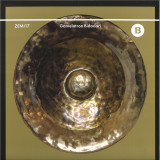
The Gamelatron is many things; one could call it a sculpture, a multimodal installation, an instrument, a robot, a feat of engineering, a vision—and it is all of these things. More importantly, though, it is a concept sustained by Aaron Taylor Kuffner, aka Zemi17, whose Gamelatrons are “sound producing kinetic sculptures” designed to create an immersive, visceral experience for the listener. Not a small feat, and yet the ambitions of Zemi17 are absolutely realized in this long-standing project, culminating now in his third release for The Bunker NY: Gamelatron Bidadari.
The Gamelatron Bidadari is not just a name—it is one of seventy-plus musical sculptures that Zemi17 has conceptualized, designed, and fabricated. Therefore, it would be inaccurate to think of this release as simply a series of arrangements composed in a finite period of time. Rather, it’s a window into a project and a process that is much larger than any single album can encapsulate. Gamelatron Bidardi is the culmination of more than a decade of work, and is central to Zemi17’s evolution, not only as a musician but as an artist.
Having studied gamelan for many years in Indonesian villages and at the Institut Seni Indonesia in Yogyakarta, Kuffner is a musician, an artist, technologist, and craftsman. The gongs in his sculptures are co-created with master Indonesian artisans. Each Gamelatron composition is site-responsive, meaning its sounds are composed for the acoustics and intentions of the space it inhabits, whether it’s an art gallery, a wooded landscape, or the inner temple of Burning Man. The Gamelatron does not stand alone: it is in constant co-creation with its physical environment, and in dialogue with gamelan’s long-standing history.
Originally exhibited at the Smithsonian Renwick as part of a show entitled, No Spectators: The Art of Burning Man, the Gamelatron Bidadari produces sounds that are delicate yet strong, and deeply hypnotic. Textured chiming creates intricate polyrhythmic patterns that are both complex and simple, or in a word, elegant. On Gamelan Bidadari, Zemi17 refrains from adhering to the strict musical structures; his approach to composition is free flowing.
He says, “I want to evoke what the music tells me it has to offer. It is like following water to its conclusion (or non-conclusion).” The arrangements on this album, written by Zemi17 and performed by the robotic arms of the Gamelatron, leaves the listener feeling enchanted, nourished and enriched.
A sense of the mystical comes through in the tonal quality of the instrument, and is conceptually felt in the sculpture’s name: the Bidadari, which loosely translates to “forest nymph.” The music conjures up natural wonder, and the four sculptures that make up the Gamelatron Bidadari, in fact, resemble trees. They are four independent yet connected entities, each with a large gong situated at their structural base—the sonic “roots” of the sculpture—while smaller gongs branch off of a golden, trunk-like spine. The Gamelatron Bidadari is as physically stunning as it is mesmerizing to the ear. A kind of divinity is invoked through its sound, or a sacred cohesion between past and present, tradition and new form. Meant to be viscerally experienced, the sounds of the Gamelatron call for sublime togetherness. Gamelatron Bidadari is not just an album but the crystallization of Kuffner’s work; it is a condensed yet spacious glimpse into the sonic power of Zemi17’s Gamelatrons, which have already been heard and experienced live by over a million people.