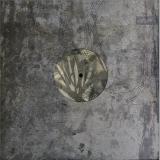
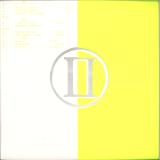
One of the most innovative and ambitious albums ever made, Genioh Yamashirogumi’s Ecophony Rinne is a sonic masterpiece featuring over 200 musicians that expanded the limits of what music and sound could do.
Before Akira there was Ecophony Rinne. Originally released in 1986, Ecophony Rinne is a four-part symphony of “ecological music” by Geinoh Yamashirogumi that married ancient tradition with technological innovation, and changed the way we listen to music in the process.
Half-speed mastered at Abbey Road by Miles Showell, Time Capsule’s high-tech analogue reissue is the first to reproduce composer Ōhashi’s ground-breaking “Hypersonic Effect” theory on vinyl, cutting frequencies beyond the realm of human hearing into wax to capture the full spectrum emotional impact of this extraordinary work.
Founded by genius polymath Tsutomu Ōhashi aka Shoji Yamashiro, Geinoh Yamashirogumi is a shapeshifting collective of over a hundred members from across disciplines. Rejecting professional musicianship, Ōhashi cultivated an ethos where neuroscientists, psychologists, doctors, journalists, engineers and students could critique society through artistic expression and pursue their research in ethnomusicological performances that spanned global traditions, Eastern spirituality and Western classical form.
Ecophony Rinne represents the pinnacle of this vision - an expansive orchestral suite made with over 200 musicians that channeled Ōhashi’s thinking about mankind’s relationship with nature, and fundamental questions of life, death and rebirth.
Here pipe organ synths made from sampled Tibetan horns sit alongside field recordings from Central African forests, Buddhist mantras circle dummy head microphones, Javanese Jegog percussion ensembles pulse like verdant ecosystems, and the acoustics of temples, caves and landscapes are conveyed in the mix. Weaving together culture, nature and technology, it is a record that vibrates with the polyphony of life on Earth.
But Ecophony Rinne was not only musically innovative. Noticing the difference between vinyl and CD versions of the album where digital reproduction limited the sound, Ōhashi developed a theory of “Hypersonic Effect”, determining that ultra-high frequencies above 20khz can impact human perception even if they are inaudible. At once a physical and a psychological experience, to listen to Ecophony Rinne is to feel music differently.
The rest is history. After its release, Ōhashi was approached by director Katsuhiro Ōtomo to produce the soundtrack for Akira, the work for which Geinoh Yamashirogumi is best known. Emerging from the shadows at last, Ecophony Rinne was its transcendental blueprint, reissued in its most complete hypersonic form on vinyl for the first time.
Rather than describe nature, Ecophony Rinne embodied it. Rather than reflect culture, Ecophony Rinne defined it. Rather than explore technology, Ecophony Rinne changed it. As a work of art, it is more relevant than ever. You won’t have heard anything like it.
Поиск:so what music
Все
- A1: Dj Tennis - Hello Hello
- A2: Rudy With A Hoodie - Lovelovelove
- B1: Dj Tennis & Ashee - I Wanna Know
- B2: Easttown - Bubblicious
- C1: Josh Wink - Higher State Of Consciousness (M-High Edit)
- C2: Andre Zimmer - Simpli-City
- D1: Paurro - Bubbles
- D2: Vitess - Insane
- A | Redrago - She Got It Wrong (10")
- B | Redrago - Free The Drums (10")
Manfredi Romano, founder and A&R of Life and Death Records, has been a pivotal figure in electronic music for over two decades. This year marks an important milestone as he is invited to curate the upcoming fabric presents mix for fabric Records, a release that highlights his instinctive storytelling and the distinct musical identity he has cultivated throughout his career.
Manfredi’s journey began in Italy around the turn of the millennium, tour-managing punk bands and organizing left-field music events before completing his studies in computer science at the University of Pisa. He went on to form DAZE, Italy’s first booking agency dedicated exclusively to electronic music, laying the groundwork for what would become a globally influential presence in the scene.
In 2010, he shifted focus to his own artistic project, DJ Tennis, which quickly gained international recognition for its emotive blend of house, techno, and disco. Renowned for creating intimate atmospheres in even the largest spaces, DJ Tennis has performed at leading clubs such as Circoloco Ibiza, Fabric London, and Panorama Bar Berlin, and at major festivals including Sonar, Timewarp, Primavera Sound, and Coachella. His 2022 residency at Phonox in London further showcased his ability to shape dancefloors with nuance and depth. Since 2017, he has also co-founded and curated Rakastella, the celebrated Art Basel Miami festival created in partnership with Life and Death and Innervisions.
As a producer, DJ Tennis draws from early relationships with post-rock pioneers such as Godspeed You! Black Emperor, Tortoise, and Fugazi, channelling their influence into intricately layered electronic compositions. His work has appeared on respected labels including Kompakt, Rhythm Assault, Running Back, !K7, Cercle Records, Aus Music, and Circoloco Records, alongside frequent releases on Life and Death. His remix portfolio includes collaborations with Diplo, Boys Noize, Loco Dice, WhoMadeWho, and Acid Pauli, among many others. He has also previously contributed a DJ-Kicks mix, bringing his eclectic sensibilities to one of electronic music’s most beloved series.
After extended periods living in Miami, Berlin, and Barcelona, DJ Tennis now resides in Paris. Outside the studio and club environment, Manfredi is a passionate chef who has curated menus for charity events and collaborated with Beatport at ADE, Pioneer, and Resident Advisor. He is also an avid collector of bicycles, vintage action figures, and vinyl — his record collection now surpasses eleven thousand pieces.
With the forthcoming fabric presents DJ Tennis release, he offers a deeply personal, narrative-driven statement that reflects decades of crate-digging, boundary-pushing selections, and a lifelong devotion to sound. It marks a new chapter in his artistic evolution and stands as one of the year’s most anticipated entries in the iconic series.
The first single from DJ Tennis is a collaboration with long-time studio partner Ashee, and it immediately sets the tone for the mix: warm, seductive, rhythm-driven, and emotionally charged.
“I Wanna Know” is a sleek club track built around a pulsing groove and a steady, hypnotic rhythm. The low end is rounded and warm, giving the track a driving but understated momentum. Percussion is crisp and minimal, allowing the bassline and vocal elements to take center stage. The repeating, robotic earworm of a vocal hook, “I wanna know’ is the lynchpin to the track and will remain in your head long after the track has finished.
It’s the kind of record that warms up a room early in the night, sets the tone for a sunset beach set, or adds a lush, emotional peak during a more leftfield club moment.
- A1: A Festa Do Santo Reis 02 41
- A2: Não Quero Dinheiro (Só Quero Amar) 02 31
- A3: Salve Nossa Senhora 01 56
- A4: Um Dia Eu Chego Lá 02 06
- A5: Não Vou Ficar 02 57
- A6: Broken Heart 01 16
- B1: Você 04 05
- B2: Preciso Aprender A Ser Só 02 46
- B3: I Don’t Know What To Dowith Myself 03 42
- B4: É Por Você Que Vivo 02 33
- B5: Meu País 01 35
- B6: I Don’t Care 02 38
Tim Maia’s second album, published in 19671, deepened and refined the Brazilian artist’s groundbreaking fusion of soul, funk, R&B, and MPB, firmly establishing him as a unique voice in Brazilian music. Compared to his 1970 debut album (HE70014), this second album features more sophisticated arrangements, tighter grooves, and a stronger command of American soul influences, reinterpreted through a distinctly Brazilian sensibility. The alcum features Tim Maia’s most widely recognized hit “Não Quero Dinheiro (Só Quero Amar)”. This vinyl edition is the first after 10 years and the first European one.
- A1: T. Rex Is Loud
- A2: Love Can't Break The Spell
- A3: Mr. Mountebank
- A4: Carry The Name
- A5: It's Over
- A6: Purgatory Silverstar
- B1: Who You Are
- B2: Grime Of The World
- B3: Try Me
- B4: They Don't Know What's Right
- B5: Thich Nhat Hanh
- B6: Awake
Cassette[16,39 €]
Djo, the musical project of Joe Keery, returns with his fourth studio album, The Crux Deluxe—an expansive, 12-track companion album to The Crux, written, recorded and produced by Keery and his collaborator Adam Thein. Following the massive success of his single “End of Beginning,” which topped both the US and Global Spotify charts and amassed over 2 billion streams worldwide, the deluxe record is full of songs that were written at the same time as The Crux album sessions and recorded at Electric Lady Studios in NYC.
On 'Vesturgata Gaze', Hitam traverses a new biome. Geographically and metaphorically. Through this introductory release on Omen Wapta, a remarkable voice in techno lunges into artistic deliverance. Here we, the listeners, find ourselves with an EP that harbours the emotive voltage of a perspective-pivoting trip. Tectonic shifts reshuffle subterranean frequencies, rhythmic phrases carry the timbre of ancient rainfall and we humbly stand witness as ceremonial incantations demarcate indigenous land. In elusive ways, this record assigns a bardic function to mostly nonverbal music. All five tracks consistently resemble traces of life-affirming encounters by sculpting Iceland's geological features into sound. 'Vesturgata Gaze' shows that commitment and intimate collaboration, taking on bold artistic ventures, touching moss and glaciers - that's what can break the mould.
MTY-3.14 “π”, released on March 14, 2026, is the fifth and final chapter of a journey begun fifteen years ago.
This standard edition presents the final form of Polar Inertia across three 12" vinyl records, featuring 11 tracks. Nothing added, nothing removed—only the music, unfolding in full.
Images dissolve, words fall away. What remains are faint echoes, like footprints slowly erased in fresh snow.
This final opus does not close the path. It fades into it. π is not an ending, but a state: the moment where movement continues, even as the world turns silent.
A last step.
A final trace.
Still moving, beneath the cold.
POLAR INERTIA
We are no one because we want to be no one,
And to be no one we have to be everywhere and nowhere- Polar Inertia examines the enigmatic and blurry realms, embracing the art of obscured vision.
Encountering the collective Polar Inertia is much like being absorbed by fog and captivated by its ever-shifting forms and densities, with things being as indistinguishable as in a whiteout.
Formed in 2010 by a group of artists, Polar Inertia transcends visibility, delving into structures that lie beyond the public gaze. Layers upon layers intertwine within the fabric of Polar Inertia, extending beyond their profound electronic compositions and live performances. It manifests as a conceptual universe, where sound, monochrome aesthetics, and elusive narratives converge, much like trying to grasp the intangible fog. The entity that is Polar Inertia is involved in installations, print- and video work and texts created for different contexts and live in different spheres such as Palais de Tokyo in Paris or the Lyon Biennale of Contemporary Art. Still, clubs and festivals are perfect spaces to experience these nebulous soundworlds and immerse in them. Fittingly, some of Polar Inertia’s appearances include the colossal halls of Berghain and Bassiani and at experimental festivals like Mutek Montreal and Atonal Berlin, that like to break with the classic club conventions.
Polar Inertia's sonic landscape unfolds with wafting textures accompanied by resonating beats and drones, reverberating through empty spaces, merging with the vast expanse of nothingness. Their sound exists at the crossroads of ambient, experimental, and deep techno, interwoven with vocal narratives. Since their inaugural release “Indirect Light“ on Dement3d Records in 2011, they remain a stronghold of relevance and captivation in the electronic domain.
Mastered by sixbitdeep, with artistic direction by Diplomatie Studio.
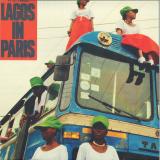
The West African band and new sensation LAGOS IN PARIS make their striking debut with the release of their first and bold, EP « WE ARE LAGOS IN PARIS ».
After gaining support on their two first singles « Mali Spirit » and « Afro G Western » from Colors Studio, Trace or even Rollingstone and being broadcasted on BBC Radio 1Xtra the collective continues to expand and spread what they call the AFRAW sound : a mix of traditional African music with modern electronic styles resulting in a raw, powerful, and unique sound.
Recorded in different places across West Africa and Europe, every track on « WE ARE LAGOS IN PARIS » is shaped by the artists, musicians, and cultures they encountered along the way.
Blending heady blues loops in « Afro G Western », or groovy electronic basslines in « Faya », always with pure vibrant vocals, LAGOS IN PARIS offers trough this project a visceral and authentic experience speaking directly to the soul.
The listening experience also extends to the visual with the single « Faya », which will be accompanied by a video shot in Ghana, capturing the energy and aesthetic of the song.
Music never exists in a vacuum — every scene and sound evolves from the non-stop exchange of ideas between different groups and cultures. Traditions get passed down from one generation to the next, and then individual heads take influence from their own unique perspective. Sometimes, certain people strike upon fusions that spark massive new movements, but even those rarest innovations came from somewhere.
Jon E Cash knows this more than most — the legendary beats he started putting out at the turn of the millennium had their own disparate roots and influences which he had the motivation to put together into a sound he called sublow. There wasn't any other reference point for this music — when he took the first white labels of 'Drop Top Bimmer Kid' into Blackmarket Records in Soho, London, he had to describe it to a puzzled Nicky Blackmarket and J Da Flex as being, "between garage and hip-hop."
Playing catch-up in 2004, Rephlex Records nodded to sublow when trying to introduce a wider audience to the sounds which had been tearing up the London underground. "Grime. Sublow. Dubstep... It's Music. Different people call it different things depending on when they discovered it." But Jon E Cash's sound was rooted in more than the UK garage that had dominated the clubs through the late 90s, reaching way back to his pre-teen days when the first waves of hip-hop culture crossed the Atlantic and broke in the UK.
25 years on, it's a fine time to reflect on the impact of the music Cash made at the turn of the millennium. History looks back favourably on what he and the Black Ops crew were doing with sublow in the early 00s. The timing meant it ran in parallel with what was happening over East with Pay As U Go, Roll Deep et al, and of course there was crossover. Every DJ and every MC was on the hunt for the best beats they could find. But there's a whole different swagger to sublow — a different web of influences, a different intention and so a different outcome. It's still there in the beats Cash is making more than 20 years later — his 3dom Music label is carrying upfront productions with that sublow DNA coursing through their veins. Whatever the beat or the tempo, the drums are still hard as nails, and the bass is tuned for maximum rave damage.
- 1: Carrion Crawler
- 2: Contraption / Soul Desert
- 3: Robber Barons
- 4: Chem-Farmer
- 5: Opposition
- 6: The Dream
- 7: Wrong Idea
- 8: Crushed Grass
- 9: Crack In Your Eye
- 10: Heavy Doctor
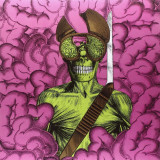
What's the first thing you think of when someone mentions Thee Oh Sees? Probably their riot-sparking live show, right? Visions of a guitar-chewing, melody-maiming John Dwyer careening across your cranium, rounded out by a wild-eyed wrecking crew that drives every last hook home like it's a nail in the coffin of what you thought it meant to make 21st-century rock 'n' roll? Yeah, that sounds about right. But it misses a more important point-how impossible Thee Oh Sees have been to pin down since Dwyer launched the project in the late '90s as a solo break from such sorely missed underground bands as Pink and Brown and Coachwhips. (While Dwyer still records songs on his own, Thee Oh Sees is now a five-piece featuring keyboardist / singer Brigid Dawson, guitarist Petey Dammit, drummer Mike Shoun and multi-instrumentalist / singer Lars Finberg.) That restlessness extends to everything from the towering, thirteen-minute title track of 2010's Warm Smile LP to the mercurial moods of 2008's The Master's Bedroom Is Worth Spending a Night In. Now, Thee Oh Sees chase the home-brewed symphonies of Castlemania with the scrappy, high-wire hooks of Carrion Crawler / The Dream. Originally envisioned as two EPs, it was cut live to tape in less than a week at Chris Woodhouse's Sacramento studio in June, reflecting the battering-ram bent of the band's live show better than any bootleg ever could. "As I'm sure most would agree," explains Dwyer, "Castlemania was more of a vocal tirade. This one's meant to pummel and throb." That it does, whether one blasts the slow, speaker-bruising build of "The Dream," the sunburnt organs and dovetailing guitars of "Crack in Your Eye" or the interstellar instrumental "Chem-Farmer," a perfect example of what happens when one takes a well-oiled machine-a gang of rabid road warriors, really-and adds a second, groove-locked drum set to the mix. To listen is to realize that Dwyer's music is as manic as the underground comic inclinations of his artwork; colorful and confusing in a way that's more than welcome. It's downright refreshing, like a slap in the face at 5:00 in the morning. Or, as Dwyer puts it, "You have to leave a mark somehow."
‘What It’s Like to Be a Bat’ is the first album of producer and composer Finn Streuper. The record takes its title from a well-known philosophy paper on consciousness, exploring its ideas through sound. The fragmentary music opens up a delicate, weightless world of sound, combining jazz, electronic and library music.
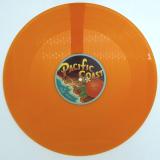
Introducing the 4th instalment of the Pacific Coast House rebirth. We bring back another much sought-after 12” from The Coastal Commission & Jesse Outlaw. “Bring down the Walls” was a nod to Raze’s “Break for Love”, Robert Owens “Bring Down the Walls” and Ritchie Hawtin’s use of the Roland 606 throughout “Sheet One”. Long out of reach and fetching $100+ on Discogs, Atjazz’s freshly remastered editions are finally available .. “Let it Go” was never mastered & only ever cut to dub-plate. It has now been mastered & available in all it’s glory.
Coastal Commission “Bring Down the Walls” “Bring down the Walls” was a nod to Raze’s “Break for Love”, Robert Owens “Bring Down the Walls” and Ritchie Hawtin’s use of the Roland 606 throughout “Sheet One.” We gave the tune a Californian psychedelic twist with conga laden drums, a moody synth, low pulsing 303 patterns + Benjamin Zephaniahs patois call to “Move the Body Rhythmwize!” The first PCH releases had dropped Worldwide to International acclaim from DJ’s far and wide across the Globe with support in London, Paris & New York. However the local scene here in L.A that preached “Love, inclusion & Unity” was anything but that. L.A at that time was very tribal & divided up into 3 camps. If you weren’t affiliated with any of them (aka independent) then you were pretty much locked out of getting any kind of gig support or the Dj’s from those camps actually playing the music. The local feedback from Dj’s was that what we were making wasn’t “house,” but “Techno” which was absurd to me. “Bring Down the Walls” was a mantra to “move the bod”y and in doing so “bring down the walls” of separation not just in L.A but throughout society in general. Thank goodness for support from people like Terry Francis, Eddie Richards, DJ Deep & Philly Stalwart King Britt. After years of copies going for upward of $100+ on Discogs the now freshly remastered copies by At Jazz’s Martin Iveson are finally hitting the platters this Spring.
Jesse Outlaw “Let it Go” I met Jesse at Beatnonstop Records on Melrose Ave with Miguel Placencia in the late 90’s. Miguel (RIP) was a mainstay in the Underground scene and had always been very supportive of my endeavors. He had had success with a huge release on Yellow Orange and was working with Jesse under the moniker “When Worlds Collide.” I signed “Brighter Days” & “Set you Free” from them and released the tracks on my Seductive imprint. They told me that they were making the tracks on a Sony Playstation “Music Now” program and I was like FFS “What.s more Underground than that!?” Later Jesse gave me some of his solo work. The track “Let it Go” was never mastered & only ever cut to Dub-plate and featured on my 1st PCH mix “Pacific Coast House Sounds.” It has now been mastered by Martin Iveson and is available in all it’s glory. The dreamy vocal “You need to let it go” beckons over the top of driving percussive Latin beats and church organ which is a great compliment to the flip side of “Bring down the Walls.” All in all two West Coast stompers now finally available remastered on PCH in Orange vinyl.
The first resonant space Zosha Warpeha played in was the Emanuel Vigeland Museum in Oslo, Norway. Built as a mausoleum, its walls reach up into a gradual archway, creating an environment where sound expands and reverberates for twelve seconds before decaying into silence. Warpeha was greeted only by dim lights when she entered, and it wasn’t until she had spent several minutes listening that she was able to make out the frescoes that covered every inch of the room: graphic depictions of the cycle of life from conception through death. As the sound of her Hardanger d’amore encountered the walls and these slowly emerging scenes, they obscured its point of origin in both time and space, augmenting its own life cycle. The experience sat in the back of her mind over the next several years as she developed her own patient style of composition and performance, one that comes into full bloom on her new album I grow accustomed to the dark.
When Warpeha was selected as an artist in residence at Brooklyn’s ISSUE Project Room in 2025, she saw it as an opportunity to more intentionally explore how her music might fill a room with ample natural reverb. I grow accustomed to the dark documents two single-take solo performances for Hardanger d’amore and voice at IPR, with both pieces composed in a unique tuning system developed to interact with the space itself. Listeners can trace resonance from the contact of the bow on gut strings into the body of the instrument, its five sympathetic strings offering another layer of refraction, before the sound is thrown about the cavity of the room. The echoes emerge like a photographic double exposure, or wisps of smoke that linger in the air, creating ghostly harmonic convergences that blur the line between what is there and not-there. Sound begins to act like light, a synesthetic alchemy that transforms drones into beams and ornamental trills into flickers.
Both side-long compositions, “filament” and “visual purple,” exemplify a duality that animates Warpeha’s music: an expressive, individualistic style that draws on extensive knowledge of her instrument’s history in folk traditions, and an austere, devotional quality maintained by focus and precision. Though very different in character and structure, both pieces evolve slowly through numerous repetitive phrases, passages of stillness, and bursts of intensity. “filament” opens with a cycle of delicate melodic fragments played and sung around a drone before blossoming into an outpouring of swooping arpeggios, harmonics flying from the strings like sparks off a bonfire. The disorienting pulsation of harmonic beating forms the core of “visual purple,” the close-tone dissonance building to a swarm of open strings ringing boldly throughout the space. After the knotty tones reach their climax, the piece collapses into studied quietude, hushed, but without any drop in intensity.
When Warpeha first visited the Vigeland Museum in 2019, she was in Oslo to deepen her relationship to the Hardanger fiddle through the study of Norwegian traditional music, which is primarily passed down aurally. The experience of learning songs by ear, not only internalizing the tune but also absorbing the techniques and tonalities by listening, was a crucial step in her development as a composer. The years since have seen her sharpen those skills as a prolific member of the New York avant-garde and improvised music communities. Warpeha’s music encourages listeners to join her in this journey, to listen closely with each repeated phrase and through each dramatic shift. Like the frescoes on Vigeland’s walls, with time and intention, the depth of I grow accustomed to the dark comes on like a revelation.
- A1: We Got The Party
- A2: Nobody's Perfect
- A3: Make Some Noise
- A4: Rock Star
- A5: Old Blue Jeans
- B1: Life's What You Make It
- B2: One In A Million
- B3: Bigger Than Us
- B4: You And Me Together
- B5: True Friend
The wait is over! Season 2 music from the iconic Disney Channel series HANNAH MONTANA is available now on stylized black and white vinyl and features all the hits including We Got the Party, Nobody’s Perfect, Life’s What you Make It and more!
- 1: Pile
- 2: Wings
- 3: Amors
- 4: A
- 5: Good Lord
- 6: Ready
- 7: Leathered & Laced
- 8: Qualia
- 9: Ω
- 10: The All
Consuming you in one swoop, through 10 tracks of poetic electronic-pop odyssey’s, Evadney’s sensational voice acts as the guiding force, weaving between piano, strings, harp, driving electronic elements, and almost beatless moody textures.
Following the release of 3 eps on Black Acre, being remixed by I.JORDAN, inclusion on Jamz Supernova’s BBCRadio ‘Ones To Watch’ list, the Glastonbury Emerging talent list and creating an audiovisual live show performed in the UK and Shanghai, Evadney’s debut album ‘It’s Dreaming’ looks set to solidify him as a bold new voice on the UK music scene, bringing with him a new world of melancholy, narrative-driven pop.
The subjects of sexuality, love, family and a yearning for the divine are played out across this cinematic piece of work. “I’m asking myself and everyone to consider; Where is your love? What does it mean for you? What are your boundaries around it and why?” - Evadney. On ‘Plie’ Evadney’s vivid storytelling flows effortlessly in a surreal conversation with an angel who teaches him how to dance. ‘Qualia’’ is a harp laden ode to his parents and their enslaved ancestors, whilst ‘Leathered & Laced’ and ‘Good Lord’ are devastatingly beautiful and honest stories of Evadney pulling himself out of his darkest moments of lost direction and substance abuse.
- 01: The Lake Will Give You Everything You Need
- 02: Sounding The Voice (Feat. Koleka Putuma)
- 03: The Poetry Of The In-Between
- 04: Iqhude: A Tale Of Horns And Bones
- 05: I Am Because You Are
- 06: Portals
- 07: A Basic Guide To String Theory (Feat. Shane Cooper)
- 08: Everything Is Connected To Everything (Feat. Ben Lamar Gay &Amp; Gontse Makhene)
- 09: We Oscillate, We Modulate
- 10: Mothers
Pioneering Swiss trombonist and composer Andreas Tschopp marries contemporary jazz with South African horns and homemade ocarinas, creating a record quite unlike anything you've heard before. "What if We Align Our Breath" disregards the curvature of borders, genre, and time itself - tugging a thread through the history of wind instrumentation with ghostly agility.
At the heart of the record lie spiralling, bonelike kudu (antelope) horns - instruments that have lent their stirring calls to indigenous South African rituals and signalling systems for millennia. These horns are clustered, harmonised and stretched beyond their godly usage by Tschopp - his extended techniques coaxing an array of melancholy, playful voices to canter through the album.
Flourishes of trombone, alpine flutes and a stellar supporting cast on double bass (Shane Cooper), cornet (Ben LaMar Gay), udu drums (Gontse Makhene) and spoken word (Koleka Putuma) bring groove, countermelody and a sense of earthy introspection to the proceedings. This is inconceivable music: a sighing tapestry of brass, clay and bone that hints at some preconscious connectedness, tracing figures that rejoice, exhale and embrace outside of time.
Recommended if you like Francis Bebey, quantum physics, peat bogs.
- A1: Harris & Orr - Spread Love
- A2: Terry And Deep South - Trying To Get By
- A3: Toshiyuki Honda - Burnin' Waves
- A4: Igna Igwebuike - Disco Bomp
- B1: Janette Renee - What's On Your Mind (Super Club Remix)
- B2: Grupo Serenata - Sodade, Tem Pena D’mim
- B3: Vital Disorders - Zombie
- B4: Alphonsus Idigo - Flight 505
- C1: Dj Food - Peace (Harvey's 30 Something Mix)
- C2: Man Jumping - In The Jungle
- C3: Stars - Dancin’ People
- D1: Gaucho - Dance Forever (Club Version)
- D2: 49Th Floor - Night Passage (Bongo Mix)
- D3: Orion Agassi - Desacato
- D4: Fatdog - Remember Feat Cj Raine
yellow vinyl[28,15 €]
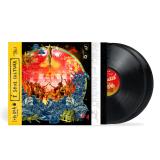
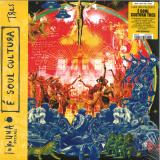
With two deeply cherished compilations already in the bag, Luke Una steps up for the third volume in his É Soul Cultura series on Mr Bongo. A love letter to the dancefloor and its power to unite people from all corners of society amid growing division and extremist politics. Genre-spanning in nature, the 15 tracks travel between cosmic soul, boogie, proto-house, slo-mo technoid grooves, drum machine afro, astral bass-bugging futurism, jazz funk, dance, and disco. Each having the ability to move the body as much as the heart.
From his formative years in Sheffield to co-founding Manchester’s much-fabled Electric Chair with Justin Crawford, through to helming the iconic LGBTQ institutions of Homoelectric / Homobloc, Luke has spent 40 years immersed in dance music. His latest outlet, É Soul Cultura, has grown from a label to a globe-spanning events series with Luke holding residencies and embarking on tours across the world from Japan and Australia to America and Europe.
“For me, the dancefloor was never about a one-dimensional, thudding, 130 BPM beat only. It's a much more dynamic, broader vision than that. I cut my teeth in an era where a 100 BPM record had as much impact, excitement, and energy as a 134 BPM dancefloor jazz funk or techno record”, Luke mentions. É Soul Cultura Volume 3 is the perfect embodiment of that notion: “It’s about four decades in the trenches playing dance music, the late-night afters, the shebeens, the basements, warehouse parties, the eight-hour journeys in East London, through to festival sets at Houghton and We Out Here. It’s music unconstrained by genre or tempo and more about making your body move”.
But this isn’t simply a collection of disparate dance tracks; they carry meaning and soul. “It’s less about escapism, more about reconnection. My experience of post-covid has been the coming together of all the clans in various clubs and gatherings. A reaction to a very toxic world out there, where the aggro rhythms of division have sought to divide us, and people don't meet as often. The coming back together face-to-face in clubs has encouraged a real love in the air, there's a real togetherness and collective spirit”.
Opening up the compilation is a track that channels that very message, the transcendental, soul-rousing Harris & Orr ‘Spread Love’. Joining the dots from there, to the low-slung deep house closer of Fatdog ‘Remember’, you’ll find electronic drum machine Nigerian funk, sitting side by side with dancefloor Cape Verdean brilliance, a post-punk cover of Fela Kuti, rubbing shoulders with cosmic electro, and an Una-championed, 8-minute, kickless DJ Harvey remix. There’s jazz funk in various guises moving from boogie synth to astral travelling, slo-mo acidic raw techno, and a ‘79 soul stepper, alongside swirling percussive Italo disco and tribal-charged house. All infused with an innate ability to bring people together.
As society becomes increasingly fractured, É Soul Cultura Volume 3’s message is more than movement. It’s about dance music’s power to unify people from all walks of life and break down the barriers that divide us.
- A1: Harris & Orr - Spread Love
- A2: Terry And Deep South - Trying To Get By
- A3: Toshiyuki Honda - Burnin' Waves
- A4: Igna Igwebuike - Disco Bomp
- B1: Janette Renee - What's On Your Mind (Super Club Remix)
- B2: Grupo Serenata - Sodade, Tem Pena D’mim
- B3: Vital Disorders - Zombie
- B4: Alphonsus Idigo - Flight 505
- C1: Dj Food - Peace (Harvey's 30 Something Mix)
- C2: Man Jumping - In The Jungle
- C3: Stars - Dancin’ People
- D1: Gaucho - Dance Forever (Club Version)
- D2: 49Th Floor - Night Passage (Bongo Mix)
- D3: Orion Agassi - Desacato
- D4: Fatdog - Remember Feat Cj Raine
black vinyl[28,36 €]
With two deeply cherished compilations already in the bag, Luke Una steps up for the third volume in his É Soul Cultura series on Mr Bongo. A love letter to the dancefloor and its power to unite people from all corners of society amid growing division and extremist politics. Genre-spanning in nature, the 15 tracks travel between cosmic soul, boogie, proto-house, slo-mo technoid grooves, drum machine afro, astral bass-bugging futurism, jazz funk, dance, and disco. Each having the ability to move the body as much as the heart.
From his formative years in Sheffield to co-founding Manchester’s much-fabled Electric Chair with Justin Crawford, through to helming the iconic LGBTQ institutions of Homoelectric / Homobloc, Luke has spent 40 years immersed in dance music. His latest outlet, É Soul Cultura, has grown from a label to a globe-spanning events series with Luke holding residencies and embarking on tours across the world from Japan and Australia to America and Europe.
“For me, the dancefloor was never about a one-dimensional, thudding, 130 BPM beat only. It's a much more dynamic, broader vision than that. I cut my teeth in an era where a 100 BPM record had as much impact, excitement, and energy as a 134 BPM dancefloor jazz funk or techno record”, Luke mentions. É Soul Cultura Volume 3 is the perfect embodiment of that notion: “It’s about four decades in the trenches playing dance music, the late-night afters, the shebeens, the basements, warehouse parties, the eight-hour journeys in East London, through to festival sets at Houghton and We Out Here. It’s music unconstrained by genre or tempo and more about making your body move”.
But this isn’t simply a collection of disparate dance tracks; they carry meaning and soul. “It’s less about escapism, more about reconnection. My experience of post-covid has been the coming together of all the clans in various clubs and gatherings. A reaction to a very toxic world out there, where the aggro rhythms of division have sought to divide us, and people don't meet as often. The coming back together face-to-face in clubs has encouraged a real love in the air, there's a real togetherness and collective spirit”.
Opening up the compilation is a track that channels that very message, the transcendental, soul-rousing Harris & Orr ‘Spread Love’. Joining the dots from there, to the low-slung deep house closer of Fatdog ‘Remember’, you’ll find electronic drum machine Nigerian funk, sitting side by side with dancefloor Cape Verdean brilliance, a post-punk cover of Fela Kuti, rubbing shoulders with cosmic electro, and an Una-championed, 8-minute, kickless DJ Harvey remix. There’s jazz funk in various guises moving from boogie synth to astral travelling, slo-mo acidic raw techno, and a ‘79 soul stepper, alongside swirling percussive Italo disco and tribal-charged house. All infused with an innate ability to bring people together.
As society becomes increasingly fractured, É Soul Cultura Volume 3’s message is more than movement. It’s about dance music’s power to unify people from all walks of life and break down the barriers that divide us.
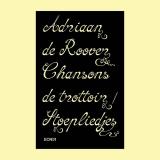
This is a special work by acclaimed composer and musician Adriaan de Roover, who has released records on Dauw, VIERNULVIER, PIAS, and Consouling Sounds. Chansons de trottoir / Stoepliedjes documents his relationship to sampling in the form of a radio play.
Originally created as a radio piece for Resonance FM in Manchester, the album is a sonic portrait of a walk through Brussels. It is constructed from two field recordings: one made during a walk from Metro Midi towards Adriaan’s home, and another recorded on a walk towards Flagey. Rather than foregrounding recognizable landmarks, the piece focuses on the pavement underfoot: the steady, repetitive rhythm of footsteps on sidewalk tiles.
The recordings are mixed with samples from the music of the Brussels hip-hop group STIKSTOF. Their music became the soundtrack to a period in which Adriaan’s desire to move from Antwerp to Brussels began to take shape. Through repeated listening, the city of Brussels gradually revealed itself to him. This experience echoes that of countless music fans who, while listening to The Beatles, imagine what Liverpool might be like: a city revealed through sound and myth, often crystallized in lukewarm Hard Rock Café–style projections.
Chansons de trottoir / Stoepliedjes is an exercise in sampling and an exploration of how one might find a personal place within the music of others. It frames appropriation as an attentive and considered act. Suspended between memory and imagination, the piece exists closer to a dream state than to reportage.
- 01: Maria Do Carmo - Beijos São Como As Rosas
- 02: Jose Paradela D&Apos;Oliveira - Fado De Se Velha
- 03: Edmundo De Bettencourt - Crucificado
- 04: Madalena De Melo - Cantares
- 05: Luiza Baharem - Fado Mondego
- 06: Alberto Xavier Pinto - Fado Do Paraizo
- 07: Maria Victória - Fado Maria Victória Nº 1
- 08: Maria Silva - Fado Alice
- 09: Adelina Fernandes - Misérias
- 10: Estêvão Amarante - Fado Do Cauteleiro
- 11: Alfredo Marceneiro - Olhos Fatais
- 12: Ermelinda Vitória - Fado Da Minha Aldeia
- 13: Dr. Lucas Junot - Triste (Fado)
- 14: Maria Alice - Quando O Meu Filho Adormece
- 15: Laura Santos - A Magia Do Fado
- 16: Joao Rocha Jor - Fado Rocha
Tape[16,39 €]
The definition of the word 'fado' is technically 'fate', though the Portuguese meaning bound up with this term is more complex. The music itself can be fairly closely compared with that of Greek rebetika - also the American blues or the original working-class tango music of Argentina and Uruguay - and similarly takes it's common subject matter from the various cruel realities of the world. Though perhaps what distinguishes fado in character is it's often poised acceptance of the pains of life rather than protestation or resistance - as writer Paul Vernon says "It speaks with a quiet dignity born of the realisation that any mortal desire or plan is at risk of destruction by powers beyond individual control"
Death Is Not The End compile here a spine-tingling collection of fado recordings, taken from records issued in the mid 1910s through to the 1930s. The fado's Lisbon and Coimbra variants are presented here by some of the music's earliest recorded stars - spanning a time period leading up to the emergence of the fado's all-conquering star, Amália Rodrigues.
- The Orientalist
- Mother Dubber
- 112: Dub
- Hard Working
- Bad Weather
- Short Visit
- Enter The Dragon
- Onew Dub
- Delhi-Katmandou
- Taniotoshi
- Echo-Logik
When High Tone Live dropped on Jarring Effects, it wasn't just another live album - it was a statement. Captured in the spring of 2003, the Lyon-based collective condensed years of experimentation into an 11-track journey that redefines what live dub can be. Since their formation in 1997, High Tone have stood at the crossroads of dub, electronic music, rock, and urban culture. With Jarring Effects as their home base, they built a reputation for transforming the stage into a laboratory - a place where basslines mutate, beats deconstruct, and every frequency breathes. High Tone Live draws from four key releases - Low Tone, Opus Incertum, Bass Température and ADN - Acid Dub Nucleik - revisiting them through the raw energy of the stage. Classics like "Dehli Katmandou" and "Enter the Dragon" are stretched, twisted, and reborn in extended, improvisational forms. Two unreleased tracks, "112 Dub" and "Onew Dub," complete the set, adding a dose of fresh material to a disc that feels both retrospective and forward-looking. As with any live recording, there are rough edges: the mix shifts, some moments feel caught mid-explosion. But that's the beauty of High Tone Live. The imperfections add warmth, immediacy - a reminder that this music is made by humans pushing machines to their limits. High Tone Live stands as one of the strongest documents of Europe's post-dub explosion. It's a record that bridges continents and genres - a sonic travelogue where analog grit meets digital hypnosis. More than a live set, it's a manifesto of independence and sound exploration, stamped with the unmistakable seal of Jarring Effects.