Search:soft cell

Styles
All
Rafael Anton Irisarri - A Fragile Geography: Reworks (TAPE)

A decade after its release, A Fragile Geography returns transformed. This limited edition cassette accompanies the AFG10 anniversary reissue, offering an inspired re-envisioning of Rafael Anton Irisarri’s landmark compositions. Reworks presents distinctive readings of these pieces, with each artist leaving their personal mark on the material. The titles remain unchanged, with the sole exception of “Hiatus,” reborn here as “Ausencia.” Together, these reimaginings extend the emotional cartography of the album into new terrains.

KMRU reframes “Displacement” with expansive, glimmering layers that open into meditative ambient landscapes. Nairobi born and Berlin based, he is known for morphing field recordings into vivid aural experiences, often capturing the texture of footsteps, foliage, and distant city life and weaving them into contemplative soundscapes. In this version he introduces subtle new sounds, including stringlike synths that trace and heighten the piece’s emotional arc. The result invites close listening, offering enveloping tones where the organic and the synthetic gently collide and flow.

Penelope Trappes renders “Reprisal” as a voice-led invocation of the delicate and the intimate. Her wistful vocals bloom with fragile sorrow, rising over shimmering strands of strings to create a sound world at once sacred and shadowed. She is adept at channeling inherited grief into music that is transcendent and otherworldly. The interplay of her voice, the strings, and her use of space and depth draws those qualities into Irisarri’s orbit, imbuing “Reprisal” with the same spiritual weight and clarity that define her most powerful work.

Kevin Richard Martin (a.k.a. The Bug) transforms “Empire Systems” into a cavernous “Iced Mix,” driven by polyrhythmic double bass motifs and sculpted from subterranean pressure and negative space. Known for pushing sound to its physical limits, Martin brings the stark intensity of his dub and noise infused practice into Irisarri’s architecture. The track seethes with harmonic distortion and erupts in white noise rhythms, its brooding low end depth and icy reverberant textures amplifying the tension. Vulnerability and force are set in stark relief, as silences feel as heavy as the bursts of sound themselves. The result is a stark study in atmosphere, restraint and impact, reframed through Martin’s singular lens of sonic mass and low end intensity.

On Side B, Mabe Fratti opens with a cinematic, dreamlike, Lynchian reimagining of “Hiatus” in her native Spanish (“Ausencia”). She threads cello and voice so wondrously that her rendering feels at once hauntingly beautiful and disquieting. Emotionally charged melodies shift in unexpected directions, while her soft, intimate vocals hover above Irisarri’s brooding synth textures. Fratti’s gift for blending experimental and avant pop sensibilities with visceral, emotionally powerful expression shines resplendently here. She gives voice to Irisarri’s reflections on the passage of time and his growing desire to reconnect with his familial roots.

Abul Mogard stretches “Persistence” into a vast drone elegy. A master of patient sound sculpting, Mogard layers evolving waves of analog synths into a dense shroud that radiates its own internal light. Gradual surges of tone and subtle harmonic shifts emphasize the piece’s endurance and inevitability. Irisarri’s original composition, in Mogard's hands, becomes a rumination on time’s unrelenting flow. Melancholy and transcendence coexist in equal measure in this engulfing, cathartic rework.

William Basinski and Gary Thomas Wright close the cycle with a spectral version of “Secretly Wishing for Rain.” Basinski’s field recordings of Reseda rainfall and birdsong, which open and close the rework, add a personal touch and evoke the imagined sound of a grainy film reel flickering to life. The piece suspends Irisarri’s yearning for the Pacific Northwest, lodging it hazily between memory, place and an unreachable dream. It feels like a fading recollection, half forgotten and half felt. A final gesture that dissolves the album into vapor, leaving the listener adrift in its lingering afterglow.

Mastered with great care by Stephan Mathieu and featuring a remixed version of the original artwork by Daniel Castrejón, this edition refracts the language of the original through new prisms. Less a return than a passage, across time, across interpretation, into uncharted emotional realms.

out of Stock

Order now and we will order the item for you at our supplier.

15,08

Last In: 6 months ago

Titanic - Hagen

STANDFIRST Titanic, the project spearheaded by Mabe Fratti and Hector Tosta (aka I. la Católica), return with a sumptuous and life-affirming new album.


In her sensational 1929 biography Tiger Woman, dancer and socialite Betty May claimed her ‘coster’s eye’ meant she liked to wear as many colours as possible. “Colours to me are like children to a loving mother. Each is my favourite, yet I can never bring myself to deny the others by preferring one.” May’s bold and inclusive strategy is one that manages to transfer itself, almost a century later, to Hagen, the new record by Titanic.


Many will know Titanic as the Mexico City-based brainchild of cellist and singer Mabe Fratti and multiinstrumentalist Hector Tosta who is now operating under the pseudonym, I. la Católica, (taken, rather unusually, from the name of the street the pair live on). With Hagen, and their previous release, Vidrio, (2023), the pair are creating a distinctive signature sound in modern alternative pop music. Nobody else sounds quite like them. Both records have an open hearted nature and simple, winning melodies that play off against a taste for drama, spectacular orchestration and a feeling of otherworldly mystery. Hagen is the more ambitious, sometimes more mystical effort. From the opening handclaps of ‘Lágrima del Sol’, (a wonderfully uptempo playground chant translating as a tear from the sun but, surely, not referencing the brand of pineapple wine?), the record dances its way through various mid-to-late-eighties inspirations, lush and widescreen passages of melancholy and vertiginous contrasts.


Mystery is often found in the simple but slightly odd song titles. English translations of various track titles give, ‘you swallowed the gum’, ‘leak’, ‘a tear from the sun’, ‘raising the trophy’ ‘digging dimensions’, ‘the owner’, ‘the decapitated hen’ and ‘the trap is exposed’. All denote striking images, metaphysical hints and emotional cues or simple, even childlike actions. Though Fratti and Tosta don’t reveal its provenance, the album’s title could even be a crafty play on words: the listener would be forgiven in thinking the moments of brash contrast and eyebrow raising theatricalism in the music constitute a musical nod to German punk chanteuse, Nina Hagen.


On Hagen, singer and cellist Mabe Fratti once again displays her brilliant knack of speaking to us directly. There is never the suspicion of her playing to the gallery, and the directness of many of the lyrics don’t allow it. Parallel to this, Fratti has an almost magical ability to give Hector Tosta’s melodies, and her and Tosta’s lyrics ones imbued with an insight and meaning that feels otherworldly. Tosta admitted it was “pretty wild to hear Mabe take the interpretations to a different place” and the listener can pick up on the delight Fratti takes in (literally) adding a voice to the many narratives.


Two examples can be shown here: ‘Gotera’ (Leak) uses harsh slashes of cello and tough, gunfire-like guitars and drums and multiple vocal lines that could be acting as a Greek chorus. They play off brilliantly against Fratti’s soft, slightly baleful vocal take that delivers lyrics such as: ‘nobody knows where the leak is / but I know where it is / they fight in front of the door and / nobody can go in’. With ‘La Gallina Degollada’ the somewhat blithe melody melody line, sung with what could be sarcastic brio by Fratti, plays against an itchting rhythm and rasping guitar part. The punch comes when you see that the song is about a chicken that has been decapitated and read lyrics such as: ‘I already saw it, it moved, the decapitated chicken’ / ‘could it be that I'm broken’ and ‘Two people hurt each other by thinking that they no longer agree’/ ‘Hours pass and the chicken represents what scares me’.


There may be death and fights to deal with, but there is also a quality of chirpy self-reliance about Hagen that is a key part of its nature. Like Betty May and her colourful outfits, Hagen’s sound often revels in its own sense of richness. Throughout, the record delivers vaulting string sections or glutinous guitar squeals that could, like the powerful, driving ‘Escarbo Dimensiones’ (Digging Dimensions) have come directly from a glossy 1980s TV series. Fratti sees this “glam sound” developed by Tosta on the aforementioned track and ‘Te Tragaste el Chicle’ (You Swallowed The Gum), as moments that were truly “revealing” for the album as a whole during its making.


What else? The thud and thump of ‘La Trampa Sale’ (The Trap is Exposed), and its sudden change of tempo and mood betrays a monstrously ambitious piece of music, the players almost greedily creating the sounds. Other moments are heart wrenching: ‘Libra’ ends on a poppy chord switch that cleverly ramps up the emotion inherent in the music’s notation. You could almost imagine a teenager in a bedroom forty years ago, rewinding the track over and over on a small, cheap cassette player, unable to get enough of that sugarsweet switch. Elsewhere, Oneohtrix Point Never adds stardust and an unearthly sense of space on the changeable, slightly moody meditation, ‘Pájaro de Fuego’ (Firebird). The record ends with ‘Alzando el Trofeo’ (Lifting the Trophy), a track that could soundtrack a state wedding, what with its beautiful cascading piano parts, a sugary vocal and short triumphal guitar riffs that add a rich patina to the overall sound. Fratti: “When I doubled those vocals on ‘Alzando el Trofeo’ I felt there was an epiphany happening, right at that moment.”


Making a good record is a team game. Tosta and Fratti recall seeing Randall from Circular Ruin Studios in NYC “tweak the drums in ‘Libra’ to make that amazing effect of the gated reverb”, or the shaping of ‘Gotera’, “when (recording engineer) Nate Salon added some synths to the track.” Drummer Eli Keszler, “an amazing and versatile player” had the songs down pat in a couple of days” and, according to Tosta, Oneohtrix Point Never “just came to one of the sessions and we hung out, and after all the recordings he and Nate were together in some studio and out of nowhere they sent us some beautiful tracks for ‘Pájaro de Fuego’! Fratti concurs. “He decided that he wanted to record because he was listening to the record (Nate works closely with him) and he really liked it! It was a total honour, indeed!”


Bedazzled by the playing, the skyscraping ambition in the arrangements and the giddy moments of contrast thrown up by Hagen, we could allow ourselves a brief moment of flippancy and state that Titanic’s new record is Yacht Rock meets Aeschylus, full-on. It’s also worth speculating that, in this hyper-sensitive, intemperate age, Titanic’s music has the power, however fleetingly, to heal hurts. Hagen is a brilliant showcase for a fresh and enriching form of pop music: displaying a magpie eye for what glints and plundering what has gone before.


Like Vidrio, Hagen was partially and additionally recorded at Fratti and Tosta’s house, aka Tinho Studios in Mexico City, as well as Golden Girl Studios & Circular Ruin Studios in New York City. Mixing was done by Santiago Parra in Pedro y el Lobo Studios, Mexico City and mastered by Rafael Anton Irisarri at Black Knoll Studios, New York City. The recording engineer was Nate Salon.


Hagen featured Mabe Fratti on cello, vocals & backing vocals, I. la Católica on guitar, keyboards, prepared piano, bass & backing vocals, drums by Eli Keszler and synths in ‘Pájaro de Fuego’ from Daniel Lopatin and Nate Salon.


All compositions on Hagen are written by I. la Católica, except ‘Escarbo Dimensiones’ & ‘Pájaro de Fuego’, which were composed by I. la Católica and Mabe Fratti. The record was produced by I. la Católica and co-produced by Nate Salon & Mabe Fratti. And all lyrics are by I. la Católica except ‘Escarbo Dimensiones’, ‘Gotera’, ‘Gallina degollada’ & ‘Pájaro de Fuego’, which were written by I. la Católica & Mabe Fratti.

out of Stock

Order now and we will order the item for you at our supplier.

25,17

Last In: 6 months ago
Titanic - Hagen

STANDFIRST Titanic, the project spearheaded by Mabe Fratti and Hector Tosta (aka I. la Católica), return with a sumptuous and life-affirming new album.


In her sensational 1929 biography Tiger Woman, dancer and socialite Betty May claimed her ‘coster’s eye’ meant she liked to wear as many colours as possible. “Colours to me are like children to a loving mother. Each is my favourite, yet I can never bring myself to deny the others by preferring one.” May’s bold and inclusive strategy is one that manages to transfer itself, almost a century later, to Hagen, the new record by Titanic.


Many will know Titanic as the Mexico City-based brainchild of cellist and singer Mabe Fratti and multiinstrumentalist Hector Tosta who is now operating under the pseudonym, I. la Católica, (taken, rather unusually, from the name of the street the pair live on). With Hagen, and their previous release, Vidrio, (2023), the pair are creating a distinctive signature sound in modern alternative pop music. Nobody else sounds quite like them. Both records have an open hearted nature and simple, winning melodies that play off against a taste for drama, spectacular orchestration and a feeling of otherworldly mystery. Hagen is the more ambitious, sometimes more mystical effort. From the opening handclaps of ‘Lágrima del Sol’, (a wonderfully uptempo playground chant translating as a tear from the sun but, surely, not referencing the brand of pineapple wine?), the record dances its way through various mid-to-late-eighties inspirations, lush and widescreen passages of melancholy and vertiginous contrasts.


Mystery is often found in the simple but slightly odd song titles. English translations of various track titles give, ‘you swallowed the gum’, ‘leak’, ‘a tear from the sun’, ‘raising the trophy’ ‘digging dimensions’, ‘the owner’, ‘the decapitated hen’ and ‘the trap is exposed’. All denote striking images, metaphysical hints and emotional cues or simple, even childlike actions. Though Fratti and Tosta don’t reveal its provenance, the album’s title could even be a crafty play on words: the listener would be forgiven in thinking the moments of brash contrast and eyebrow raising theatricalism in the music constitute a musical nod to German punk chanteuse, Nina Hagen.


On Hagen, singer and cellist Mabe Fratti once again displays her brilliant knack of speaking to us directly. There is never the suspicion of her playing to the gallery, and the directness of many of the lyrics don’t allow it. Parallel to this, Fratti has an almost magical ability to give Hector Tosta’s melodies, and her and Tosta’s lyrics ones imbued with an insight and meaning that feels otherworldly. Tosta admitted it was “pretty wild to hear Mabe take the interpretations to a different place” and the listener can pick up on the delight Fratti takes in (literally) adding a voice to the many narratives.


Two examples can be shown here: ‘Gotera’ (Leak) uses harsh slashes of cello and tough, gunfire-like guitars and drums and multiple vocal lines that could be acting as a Greek chorus. They play off brilliantly against Fratti’s soft, slightly baleful vocal take that delivers lyrics such as: ‘nobody knows where the leak is / but I know where it is / they fight in front of the door and / nobody can go in’. With ‘La Gallina Degollada’ the somewhat blithe melody melody line, sung with what could be sarcastic brio by Fratti, plays against an itchting rhythm and rasping guitar part. The punch comes when you see that the song is about a chicken that has been decapitated and read lyrics such as: ‘I already saw it, it moved, the decapitated chicken’ / ‘could it be that I'm broken’ and ‘Two people hurt each other by thinking that they no longer agree’/ ‘Hours pass and the chicken represents what scares me’.


There may be death and fights to deal with, but there is also a quality of chirpy self-reliance about Hagen that is a key part of its nature. Like Betty May and her colourful outfits, Hagen’s sound often revels in its own sense of richness. Throughout, the record delivers vaulting string sections or glutinous guitar squeals that could, like the powerful, driving ‘Escarbo Dimensiones’ (Digging Dimensions) have come directly from a glossy 1980s TV series. Fratti sees this “glam sound” developed by Tosta on the aforementioned track and ‘Te Tragaste el Chicle’ (You Swallowed The Gum), as moments that were truly “revealing” for the album as a whole during its making.


What else? The thud and thump of ‘La Trampa Sale’ (The Trap is Exposed), and its sudden change of tempo and mood betrays a monstrously ambitious piece of music, the players almost greedily creating the sounds. Other moments are heart wrenching: ‘Libra’ ends on a poppy chord switch that cleverly ramps up the emotion inherent in the music’s notation. You could almost imagine a teenager in a bedroom forty years ago, rewinding the track over and over on a small, cheap cassette player, unable to get enough of that sugarsweet switch. Elsewhere, Oneohtrix Point Never adds stardust and an unearthly sense of space on the changeable, slightly moody meditation, ‘Pájaro de Fuego’ (Firebird). The record ends with ‘Alzando el Trofeo’ (Lifting the Trophy), a track that could soundtrack a state wedding, what with its beautiful cascading piano parts, a sugary vocal and short triumphal guitar riffs that add a rich patina to the overall sound. Fratti: “When I doubled those vocals on ‘Alzando el Trofeo’ I felt there was an epiphany happening, right at that moment.”


Making a good record is a team game. Tosta and Fratti recall seeing Randall from Circular Ruin Studios in NYC “tweak the drums in ‘Libra’ to make that amazing effect of the gated reverb”, or the shaping of ‘Gotera’, “when (recording engineer) Nate Salon added some synths to the track.” Drummer Eli Keszler, “an amazing and versatile player” had the songs down pat in a couple of days” and, according to Tosta, Oneohtrix Point Never “just came to one of the sessions and we hung out, and after all the recordings he and Nate were together in some studio and out of nowhere they sent us some beautiful tracks for ‘Pájaro de Fuego’! Fratti concurs. “He decided that he wanted to record because he was listening to the record (Nate works closely with him) and he really liked it! It was a total honour, indeed!”


Bedazzled by the playing, the skyscraping ambition in the arrangements and the giddy moments of contrast thrown up by Hagen, we could allow ourselves a brief moment of flippancy and state that Titanic’s new record is Yacht Rock meets Aeschylus, full-on. It’s also worth speculating that, in this hyper-sensitive, intemperate age, Titanic’s music has the power, however fleetingly, to heal hurts. Hagen is a brilliant showcase for a fresh and enriching form of pop music: displaying a magpie eye for what glints and plundering what has gone before.


Like Vidrio, Hagen was partially and additionally recorded at Fratti and Tosta’s house, aka Tinho Studios in Mexico City, as well as Golden Girl Studios & Circular Ruin Studios in New York City. Mixing was done by Santiago Parra in Pedro y el Lobo Studios, Mexico City and mastered by Rafael Anton Irisarri at Black Knoll Studios, New York City. The recording engineer was Nate Salon.


Hagen featured Mabe Fratti on cello, vocals & backing vocals, I. la Católica on guitar, keyboards, prepared piano, bass & backing vocals, drums by Eli Keszler and synths in ‘Pájaro de Fuego’ from Daniel Lopatin and Nate Salon.


All compositions on Hagen are written by I. la Católica, except ‘Escarbo Dimensiones’ & ‘Pájaro de Fuego’, which were composed by I. la Católica and Mabe Fratti. The record was produced by I. la Católica and co-produced by Nate Salon & Mabe Fratti. And all lyrics are by I. la Católica except ‘Escarbo Dimensiones’, ‘Gotera’, ‘Gallina degollada’ & ‘Pájaro de Fuego’, which were written by I. la Católica & Mabe Fratti.

out of Stock

Order now and we will order the item for you at our supplier.

25,17

Last In: 6 months ago

Suicide AFTR 7 - Blanked EP

Barcelona-based record label Hot Plates, founded by Nico and Dom of Suicide After 7, is thrilled to present its debut release: a four-track EP distributed by Runas. The record is a dynamic journey through analog textures and genre-blurring rhythms, unified by a shared spirit and sonic identity. Crafted with vintage gear like the TR-808, Juno-106, FM synths, and Prophet, the EP showcases a range of moods and energies:

“Blanked” sets the tone with crisp pads, a subtle Chicago house rhythm, and a blend of futuristic and retro synths. It carries an ominous yet invigorating feel—an understated dancefloor burner that slowly creeps in.

“Fish Fry” pushes into darker territory, with an edgy, slightly menacing EBM vibe. Anchored by a gritty FM bass and splashes of sharp percussion, it rolls forward with underground intensity and eerie momentum.

“Orion” shifts the tone into something romantic and nostalgic, channeling classic Italo influences. Soft pads and a hypnotic, pulsing synth create a dreamy, forwardmoving energy that feels both futuristic and wistful.

“Sole Seller” closes the EP with a disco-inspired banger—playful, stripped-back, and built to move. Sparse vocals float above the groove, giving it just the right hint of attitude while keeping it firmly locked in dance territory.

Each track opens a different window into the Hot Plates universe. Together, they form a cohesive, well-rounded EP—diverse in style, but united by that
unmistakable Suicide After 7 essence

out of Stock

Order now and we will order the item for you at our supplier.

13,40

Last In: 22 days ago
KARA-LIS - COVERDALE - FROM WHERE YOU CAME

Ein dynamisches und erhabenes Werk voller Emotionen und Sensibilität, "From Where You Came" als eine Reihe nächtlicher Übertragungen, altertümlicher Verfeinerungen und lebendiger Geschichten, die reich an erhellenden Qualitäten sind. Die Kombination von programmatischer Musik des 19. Jahrhunderts mit Jazz aus der Mitte der 70er Jahre und ihrem unverwechselbar farbenfrohen und mehrdimensionalen Kompositionsansatz, der die Improvisation einschließt, ermöglicht Coverdale die Synthese mit Live-Instrumenten in einer genrefreien, aber deutlich erkennbaren Geste der Wiederverbindung mit Land und Körper durch Klang zu verbinden. Sie betrachtet Komposition als diagnostische Methodik zu spirituellen Zwecken, leitet emotionale Resonanz wie Ladungsströme und verdrahtet das rein Gefühlte in elektronische Signale. Obwohl sie auf mehreren Kontinenten komponiert und aufgenommen hat, unter anderem im GRM Studio in Paris und dem Elektronmusikstudion EMS in Stockholm, wurde "From Where You Came" im ländlichen Ontario, Kanada, fertiggestellt. Mit Beiträgen der multidisziplinären Klangkünstlerin und Cellistin Anne Bourne und dem mit einem Grammy ausgezeichneten Posaunen-Wunderkind Kalia Vandever, enthalten die 11 ausgedehnten und doch verdichteten Kompositionen des Albums Streicher, Holzbläser, Blechbläser, Tasten, Software und modulare Synthese, die eine musikalische Sprache einschreiben, die Animationen mit ungefilterter, beeindruckender Klarheit wiedergibt. ,Alles kann eine Stimme haben", sagt sagt Coverdale. ,Für mich ist die Stimme mehr als nur menschlich." Passenderweise ist es die eigene Stimme der Künstlerin die sich im einhüllenden Schwellwerk des Albumauftakts in Luft auflöst: ,Everything you know is real", singt sie in ,Eternity`, "I'm sorry, life is beautiful." Als zwischen Animismus und Animalismus oszilliert, ist das folgende Album absolut voll von Leben in all seiner atemberaubenden Komplexität. Coverdale rechnet mit der Erfahrung von Trauer, Entwurzelung und dem Druck der totalen Freiheit und Unabhängigkeit ab, und beweist eine übernatürliche Fähigkeit, die Trübsal in höchst fantasievolle und inspirierende Fantasy-Epen aus Klang zu verwandeln.

out of Stock

Order now and we will order the item for you at our supplier.

22,27

Last In: 11 months ago
B-Movie - Hidden Treasures

B-Movie

Hidden Treasures

12inchWLV001
Wanderlust
30.05.2025
  • A1: Citizen Kane
  • A2: Remembrance Day
  • A3: Polar Opposites
  • A4: Marilyn Dreams
  • A5: Ice
  • B1: La Lune Lunatique
  • B2: All Fall Down
  • B3: Nowhere Girl
  • B4: Crowds
  • B5: Beginning To Fade

In May 1981 B-Movie and Soft Cell went into Advision Studios in London with the same producer, Mike Thorne (Wire, Bronski Beat, China Crisis, The Communards) to record singles for the label they were both signed to. Phonogram had really wanted to sign B-Movie but had also committed to Soft Cell, having been coerced into it by Stev0, who managed both artists and wouldn’t let them have one without the other. B-Movie commenced recording the dark moody anti-fame anthem ‘Marilyn Dreams’, whilst Soft Cell got underway on a cover of an obscure Northern Soul classic. When both songs were released in July 1981, ‘Tainted Love’ became a worldwide hit and shot Soft Cell to international fame, making them the biggest stars of 1981. B-Movie had formed in 1979, in Mansfield, a typical northern town in the middle of the Nottinghamshire coalfield. Originally a three piece featuring, vocal / bass, guitar and drums, they expanded by adding a keyboard player to broaden their initial post punk sound. Local Lincoln independent record label, Dead Good Records, firstly put them on the compilation LP ‘East’, followed by 7" inch EP and then a mini-album releases, which led to an appearance on the legendary Some Bizarre label (alongside the likes of Blancmange, Depeche Mode, Soft Cell and The The)
Major label interest followed, from which came the deal with Phonogram, B-Movie initially re-recording the track ‘Remembrance Day’, which reached No61 in the UK chart in early 1981 and, more importantly, was played by BBC Radio 1 DJ John Peel, and appearing in his Festive 50 for that year. All of the recordings the band made during their Phonogram period have been consigned to the Universal Music vault for several decades, with the band finally managing to have these returned in 2024. The various tapes have been digitised and restored, resulting in the creation of what would have been their 1982 debut LP ‘that never was’. Ten tracks including the three singles plus seven previously unreleased recordings. The CD version contains a further seven recordings including the 12” versions, single B-sides and the track “Moles’” from the Some Bizarre compilation.So “Hidden Treasures” from B-Movie, is only four decades late but still able to sit seamlessly alongside contemporaries like The Chameleons and The Sound. The LP is a darker, more brooding and psychedelic affair, more akin to the gothic elements of the Bunnymen or Joy Division, than the ‘pop sensations’ Phonogram wanted them to become. By both opening and closing this chapter of B-Movie, it puts them firmly in the same bracket as their new wave and post-punk contemporaries, which is the least they deserve, as one of the great ‘lost’ bands of the early 1980’s. "It’s nice to hear B-Movie are finally getting a chance to release their forgotten gems’” Matt Johnson (The The) Vinyl

pre-order now30.05.2025

expected to be published on 30.05.2025

22,27
Surface Detail - Marea Nera LP

The first in a proposed series of transmissions, Surface Detail's mystifying debut introduces an incorporeal body that exists only through sound and sensation, prompting listeners to discern a spiritual realm beyond the physical. Its surging electro-acoustic compositions push past the material world to plunge into deeper sonic dimensions, slowly revealing a philosophy borne of near-death and out-of-body experiences that challenges perception itself.

Overhauling vintage experimental techniques with their bespoke modern methodologies and processes, Surface Detail rearrange the musical timeline, merging vastly different concepts to hint at questions rather than provide solid answers. Their uniquely immersive soundscapes use texture, rhythm and tonality to help brush away the superficial and contemplate the unknown, approaching its delicate, controversial subject matter with sensitivity and sensuality. Not just an auditory experience, 'Surface Detail' tests the potential of sound itself, eliciting visceral physical reactions with its uncanny subtleties.

Those principles are divulged immediately on opening track 'Marée Noire', as breathy saxophone notes loops and swirl over cosmic oscillations and microtonally tuned drones. It's music that cracks open a passage that snakes through various genres, suggesting silhouettes rather than affirming banal musical preconceptions. Skeletal rhythms appear in the ether for only a moment, disappearing into the sonic landscape, and Surface Detail's bespoke instrumentation materializes just to bring out the cellular intricacy of the music, concentrating the gaze on microscopic textures and irregularities that discompose the senses. As the album drifts forward, it bends material reality even further: on 'Southern Breach', warm, lower-register organ tones intermingle with sinewy guitar twangs, evaporating into warped, hypnotic oscillations and eerie echoes; and by 'Superbook of the Dead', the conspicuous details have almost disappeared completely, replaced by subterranean clangs, industrial ambience and other-worldly electrical interference.

It's in this way that Surface Detail softly assert their convictions, insinuating a narrative that subliminally ushers listeners down an hypnagogic River Styx by removing all traces of the familiar. On closing track 'Broken Silicates', distant lullabies, dissociated stutters and ghostly woodwind sounds blot fractal patterns on the wide open space, reincarnating the album in a liminal zone that's not constrained by somatic logic. Whisper quiet and utterly beguiling, it transcends material existence, dissolving barriers between surface and depth.

out of Stock

Order now and we will order the item for you at our supplier.

26,60

Last In: 11 months ago
Various - NOW - Yearbook 1980 - 1984: Vinyl Extra (5x12")
 
75
out of Stock

Order now and we will order the item for you at our supplier.

41,39

Last In: 11 months ago
KARA-LIS - COVERDALE - FROM WHERE YOU CAME LP

Ein dynamisches und erhabenes Werk voller Emotionen und Sensibilität, "From Where You Came" als eine Reihe nächtlicher Übertragungen, altertümlicher Verfeinerungen und lebendiger Geschichten, die reich an erhellenden Qualitäten sind. Die Kombination von programmatischer Musik des 19. Jahrhunderts mit Jazz aus der Mitte der 70er Jahre und ihrem unverwechselbar farbenfrohen und mehrdimensionalen Kompositionsansatz, der die Improvisation einschließt, ermöglicht Coverdale die Synthese mit Live-Instrumenten in einer genrefreien, aber deutlich erkennbaren Geste der Wiederverbindung mit Land und Körper durch Klang zu verbinden. Sie betrachtet Komposition als diagnostische Methodik zu spirituellen Zwecken, leitet emotionale Resonanz wie Ladungsströme und verdrahtet das rein Gefühlte in elektronische Signale. Obwohl sie auf mehreren Kontinenten komponiert und aufgenommen hat, unter anderem im GRM Studio in Paris und dem Elektronmusikstudion EMS in Stockholm, wurde "From Where You Came" im ländlichen Ontario, Kanada, fertiggestellt. Mit Beiträgen der multidisziplinären Klangkünstlerin und Cellistin Anne Bourne und dem mit einem Grammy ausgezeichneten Posaunen-Wunderkind Kalia Vandever, enthalten die 11 ausgedehnten und doch verdichteten Kompositionen des Albums Streicher, Holzbläser, Blechbläser, Tasten, Software und modulare Synthese, die eine musikalische Sprache einschreiben, die Animationen mit ungefilterter, beeindruckender Klarheit wiedergibt. ,Alles kann eine Stimme haben", sagt sagt Coverdale. ,Für mich ist die Stimme mehr als nur menschlich." Passenderweise ist es die eigene Stimme der Künstlerin die sich im einhüllenden Schwellwerk des Albumauftakts in Luft auflöst: ,Everything you know is real", singt sie in ,Eternity`, "I'm sorry, life is beautiful." Als zwischen Animismus und Animalismus oszilliert, ist das folgende Album absolut voll von Leben in all seiner atemberaubenden Komplexität. Coverdale rechnet mit der Erfahrung von Trauer, Entwurzelung und dem Druck der totalen Freiheit und Unabhängigkeit ab, und beweist eine übernatürliche Fähigkeit, die Trübsal in höchst fantasievolle und inspirierende Fantasy-Epen aus Klang zu verwandeln.

out of Stock

Order now and we will order the item for you at our supplier.

22,27

Last In: 12 months ago
MARC ALMOND & MICHAEL CASHMORE - FEASTING WITH PANTHERS LP 2x12"

A stellar collaboration between composer Michael Cashmore (Current 93) and vocalist Marc Almond of Soft Cell fame. Two complementary creative sensibilities in intimate interlock; supreme compositional and vocal talents fusing to make uniquely dramatic musical and vocal interpretations of searing beauty and insight. Specifically, this suite of songs feature the heightened lyricism of a stunning array of cult poets, both contemporary and of yesteryear. 'Feasting With Panthers' is a stellar collaboration between composer Michael Cashmore (Current 93) and vocalist Marc Almond of Soft Cell fame, in the nearest thematic echo and nod, in the latter's vast back catalogue, to the darker gothic influences of his celebrated Marc And The Mambas period and his acclaimed 'L'Absinthe' and 'Jacques' twisted chanson solo albums. This album's defining aesthetic is the setting of outsider poems to music. Poems by Count Eric Stenbock plus unique lyrical translations - by celebrated poet Jeremy Reed - of works by Jean Genet, Jean Cocteau, Arthur Rimbaud, Paul Verlaine, as well as Reed's own poetry. The emphasis throughout is on 'decadent' poems of thwarted love, ill-fated romance, self-destruction and death: many poems are woven with homo-eroticism, laced with opium dreamstates and all are accompanied by Michael Cashmore's haunting and melancholic music that lends the verses a deft yearning for beauty and a bittersweet, melancholic longing for lost innocence and youth. Originally released in 2011 and long since deleted, 'Feasting With Panthers' is now restored to back catalogue availability as a double vinyl album - it's first ever vinyl edition - with a variant of the original album artwork and two printed, full colour inner sleeves complete with lyrics and pictures and featuring four bonus tracks. The album was recorded over several years by the artists sending music files back and forth by e-mail and post; the artists never once recording together in the studio. Berlin based Michael Cashmore worked at home composing the music, playing all of the instruments and adding Marc's vocals from files recorded in London. The resulting album is a glorious union of sensual talents, both in voice and music, complementing the intriguing and evocative poetic texts. The project began after Current 93's David Tibet gave Marc a book of poems by the Baltic German poet Count Stanislaus Eric Stenbock. Marc was instantly attracted to the dark eroticism and the melancholic yearning of the verse and, so, contacted Michael Cashmore, whom he had previously worked with on Current 93's reading of 'Idumea'. He felt Michael would have the right understanding of the verse with his intricate, beautiful musical compositions. From this, the project developed to include many of Marc's favourite poems by some of his favourite 'outsider' poets with common thematic ground.

pre-order now25.04.2025

expected to be published on 25.04.2025

34,41
Various - Q1#1EP

Various

Q1#1EP

12inchQ1E2012
Q1E2 RECORDINGS
04.04.2025

Electronic music at its best offers a tantalising glimpse of the future, capturing the moment of conception where new worlds and genres are brought into being. Amsterdam-via-Berlin label Q1E2 (standing for “quality first, ego second”) embodies this expansive promise on their new various-artists compilation, a thrilling speed-run through the cosmic outer-reaches of contemporary club sounds that highlights the work of essential emerging producers from around the globe.

Milan producer Jack Bags opens the proceedings with “Natural Thing”, an astral deep-dance immersion with zero-gravity synthesizer pads and skeletal dub percussion that echo out through the void, sensuous vocal samples arriving like scattered transmissions from the stereo of some long-lost spacecraft. datSIM’s “Influx” races through kaleidoscopic sci-fi spacescapes, presenting a futuristic reimagining of UK bass sounds with dextrous organ melodics and widescreen atmospherics. Mike Riviera and Marco Ohboy bring us back down for a more earthly kind of ecstatic experience, cranking up the humidity and coaxing out the endorphins with the appropriately-titled “Euphoria” - a rugged, rave-adjacent heater that cleverly rearranges elements of classic house and garage into a decidedly modern club workout.

Elsewhere there’s a distinctive undercurrent of jazz flowing through the compilation, mapping out thrilling new evolutions of the music on and off the dancefloor. Dr Sud’s mesmeric rhythm excursion “Zaffiro” unfurls like the coils of a cosmic serpent, tessellating percussion and slinking subs tracing intricate beat geometries. A Soft Mist Production’s “Upside Down Rainbows” settles in for the afters with smoked-out soulful atmospherics, syrupy vocals curling and turning in the air like smoke vapors from the last vestiges of a still-lit cigarette. The Rabbit Hole’s “Tail Groove” closes out the proceedings with a surprising bait-and-switch - opening on lustrous lounge piano that could have been comped straight from a Bill Evans record, the track quickly gives way to interstellar bass ‘n’ breaks. The producer’s canny use of cello licks adds a grounded, organic feel, jazz futurism that recalls Photek or LTJ Bukem’s sampling experiments.

Taken together, the label’s new compilation provides a snapshot of a scene in constant evolution, taking the temperature of the modern electronic scene and finding it to be in rude health.

Written by Matthew Fidler

out of Stock

Order now and we will order the item for you at our supplier.

12,56

Last In: 13 months ago
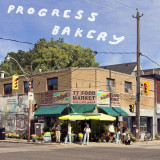
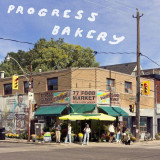
Eliza Niemi - Progress Bakery
  • A1: Do U Fm
  • A2: Novelist Sad Face
  • A3: Green Box
  • A4: Dusty
  • A5: The Linda Song
  • A6: Dm Bf
  • B1: I Tried
  • B2: Melodies Like Mark
  • B3: Wildcat
  • B4: How U Remind Me
  • B5: Pocky
  • B6: Bon Tempiii
  • B7: Pt Basement
  • B8: Alberqurque Ii
  • B9: Mary's
also available

Yellow Coloured Vinyl[29,37 €]


Kneading dough is tricky – you should know how it’s supposed to feel. If you try too hard you could make it worse. It’s a beautiful practice – creation with a gentle touch, to work at something so it can be left alone. “If it’s too drawn out it’s awful. It’s easy to give too much.” Dance in the mirror. Contemplate your veiny hands. Who do they remind you of?

You begin by mixing flour and water. “What happens when your people die? Why’d they move the rock to the other side of Ulster Park?” Eliza Niemi asks two seemingly unrelated questions in a rising melody with guitar accompaniment, like fingers playing spider up to the nape of your neck. Gentle pressure. Strands of gluten form to bind the mix. A new question lingers in the binding. When she admits “but I don’t know how to tell if I’m feeling it or not,” that question surfaces through the text. It is reiterated throughout the album. When I’m working with dough I think the same thing to myself.

On Progress Bakery, her second album as a solo artist, Eliza knows to leave some questions alone – to let juxtaposition and tension be the proof. It doesn’t have to be hard. The feelings and revelations they provoke rise in the heat. The smell is sweet. Crispy on the outside and soft all the way through. She playfully slip-slides through words and sounds and images, delighting in surprise, skimming ideas like stones cast across clear water, touching down briefly with uncommon grace.

The question provoked between those opening lines resurfaces in the strands between songs – “Do U FM” is fully formed and beautifully layered, while “Novelist Sad Face” is a short, acapella rendering of gentle curiosity. What is holding these ideas together? Some songs demand more, seem to carry a whole load – eventually the skipping stone will halt to sink and resume its idle duty – while others drift in and out of focus, the way thoughts and dreams become interwoven before the mind is sunk into true sleep.

Music and words don’t always have to interact. Where she decides to keep them apart gives a new contour to where and how she puts them together. The kind of thing you’re supposed to take for granted with songs and their singers comes alive in Eliza’s hands – the little miracle of mixing, kneading, stretching, and stopping.

So often on Progress Bakery, Eliza teases out truth and meaning by asking questions. “Do I wanna be crying?” “Do you want me good or do you want me bad?” “Do I need an eye test?” “I’m writing songs in my head while you’re going over stuff with me — is that cruel??” In “Pocky” Eliza ends with a question that feels to me like the actual biography, succinct and revealing:

I don’t wanna be made to see
I just wanna ask “what’s that?”

Grace that ought to be rare, but in its care and precision is offered humbly, with great generosity, and without announcing itself. Eliza’s simple, miraculous music is given further form and shape by a group of collaborators – invaluable guest musicians Jeremy Ray, Evan Cartwright, Steven McPhail, Kenny Boothby, Ed Squires, Carolina Chauffe, Dorothea Paas, Louie Short, and Avalon Tassonyi. Together with Louie Short, who recorded, mixed, and produced the album along with Jeremy Ray and Lukas Cheung, Eliza has cultivated a richness in sound and texture that prods and provokes the ticklish ear. Barely audible guitar tinkering, a brief lo-fi field recording of trumpets, the harmonic clicking of a looped synthesizer, a flourish of reeds, a child’s conversation, each uncanny sound perfectly placed, rippling out under a soft breeze.

Lay in bed alone at night and ask aloud to the stillness,

“What were you doing at the Albuquerque Airport?
What were you doing there??”

And hear your question answered by a dream of swelling, undulating cellos. Try to grasp at the melody and structure. It’s not an answer (if there could be one), but it moves deeper, closer to the weird layer of fleeting moments and disconnected images, barely perceptible at its core. Wait for the dream reel to click into place.

Eliza took me for a ride in Nicole (her beloved Dodge Grand Caravan) and told me she’d been thinking of the album as an embodiment of transition – and I think every transition, known or unknown, carries the weight of new meaning, skittering off the surface tension of life as you know it, creating ripples, sometimes bouncing off and sometimes breaking through. There is a trick you can use to tell if a dough is glutinous enough. You’re supposed to stretch it out as thin as you can without breaking it and hold it up to the light. If you can see through, even if it renders the world murky and uncertain, you should leave it alone. I love this trick. It’s one that Eliza seems to know intuitively: work gently and ask questions and don’t always expect answers, and when you can, take a glimpse at something new, and then leave.

pre-order now04.04.2025

expected to be published on 04.04.2025

27,10
Eliza Niemi - Progress Bakery

Eliza Niemi

Progress Bakery

12inchTAR118SX
Tin Angel
04.04.2025

Kneading dough is tricky – you should know how it’s supposed to feel. If you try too hard you could make it worse. It’s a beautiful practice – creation with a gentle touch, to work at something so it can be left alone. “If it’s too drawn out it’s awful. It’s easy to give too much.” Dance in the mirror. Contemplate your veiny hands. Who do they remind you of?

You begin by mixing flour and water. “What happens when your people die? Why’d they move the rock to the other side of Ulster Park?” Eliza Niemi asks two seemingly unrelated questions in a rising melody with guitar accompaniment, like fingers playing spider up to the nape of your neck. Gentle pressure. Strands of gluten form to bind the mix. A new question lingers in the binding. When she admits “but I don’t know how to tell if I’m feeling it or not,” that question surfaces through the text. It is reiterated throughout the album. When I’m working with dough I think the same thing to myself.

On Progress Bakery, her second album as a solo artist, Eliza knows to leave some questions alone – to let juxtaposition and tension be the proof. It doesn’t have to be hard. The feelings and revelations they provoke rise in the heat. The smell is sweet. Crispy on the outside and soft all the way through. She playfully slip-slides through words and sounds and images, delighting in surprise, skimming ideas like stones cast across clear water, touching down briefly with uncommon grace.

The question provoked between those opening lines resurfaces in the strands between songs – “Do U FM” is fully formed and beautifully layered, while “Novelist Sad Face” is a short, acapella rendering of gentle curiosity. What is holding these ideas together? Some songs demand more, seem to carry a whole load – eventually the skipping stone will halt to sink and resume its idle duty – while others drift in and out of focus, the way thoughts and dreams become interwoven before the mind is sunk into true sleep.

Music and words don’t always have to interact. Where she decides to keep them apart gives a new contour to where and how she puts them together. The kind of thing you’re supposed to take for granted with songs and their singers comes alive in Eliza’s hands – the little miracle of mixing, kneading, stretching, and stopping.

So often on Progress Bakery, Eliza teases out truth and meaning by asking questions. “Do I wanna be crying?” “Do you want me good or do you want me bad?” “Do I need an eye test?” “I’m writing songs in my head while you’re going over stuff with me — is that cruel??” In “Pocky” Eliza ends with a question that feels to me like the actual biography, succinct and revealing:

I don’t wanna be made to see
I just wanna ask “what’s that?”

Grace that ought to be rare, but in its care and precision is offered humbly, with great generosity, and without announcing itself. Eliza’s simple, miraculous music is given further form and shape by a group of collaborators – invaluable guest musicians Jeremy Ray, Evan Cartwright, Steven McPhail, Kenny Boothby, Ed Squires, Carolina Chauffe, Dorothea Paas, Louie Short, and Avalon Tassonyi. Together with Louie Short, who recorded, mixed, and produced the album along with Jeremy Ray and Lukas Cheung, Eliza has cultivated a richness in sound and texture that prods and provokes the ticklish ear. Barely audible guitar tinkering, a brief lo-fi field recording of trumpets, the harmonic clicking of a looped synthesizer, a flourish of reeds, a child’s conversation, each uncanny sound perfectly placed, rippling out under a soft breeze.

Lay in bed alone at night and ask aloud to the stillness,

“What were you doing at the Albuquerque Airport?
What were you doing there??”

And hear your question answered by a dream of swelling, undulating cellos. Try to grasp at the melody and structure. It’s not an answer (if there could be one), but it moves deeper, closer to the weird layer of fleeting moments and disconnected images, barely perceptible at its core. Wait for the dream reel to click into place.

Eliza took me for a ride in Nicole (her beloved Dodge Grand Caravan) and told me she’d been thinking of the album as an embodiment of transition – and I think every transition, known or unknown, carries the weight of new meaning, skittering off the surface tension of life as you know it, creating ripples, sometimes bouncing off and sometimes breaking through. There is a trick you can use to tell if a dough is glutinous enough. You’re supposed to stretch it out as thin as you can without breaking it and hold it up to the light. If you can see through, even if it renders the world murky and uncertain, you should leave it alone. I love this trick. It’s one that Eliza seems to know intuitively: work gently and ask questions and don’t always expect answers, and when you can, take a glimpse at something new, and then leave.

pre-order now04.04.2025

expected to be published on 04.04.2025

29,37
Eliza Niemi - Progress Bakery
  • A1: Do U Fm
  • A2: Novelist Sad Face
  • A3: Green Box
  • A4: Dusty
  • A5: The Linda Song
  • A6: Dm Bf
  • B1: I Tried
  • B2: Melodies Like Mark
  • B3: Wildcat
  • B4: How U Remind Me
  • B5: Pocky
  • B6: Bon Tempiii
  • B7: Pt Basement
  • B8: Alberqurque Ii
  • B9: Mary's

Kneading dough is tricky – you should know how it’s supposed to feel. If you try too hard you could make it worse. It’s a beautiful practice – creation with a gentle touch, to work at something so it can be left alone. “If it’s too drawn out it’s awful. It’s easy to give too much.” Dance in the mirror. Contemplate your veiny hands. Who do they remind you of?

You begin by mixing flour and water. “What happens when your people die? Why’d they move the rock to the other side of Ulster Park?” Eliza Niemi asks two seemingly unrelated questions in a rising melody with guitar accompaniment, like fingers playing spider up to the nape of your neck. Gentle pressure. Strands of gluten form to bind the mix. A new question lingers in the binding. When she admits “but I don’t know how to tell if I’m feeling it or not,” that question surfaces through the text. It is reiterated throughout the album. When I’m working with dough I think the same thing to myself.

On Progress Bakery, her second album as a solo artist, Eliza knows to leave some questions alone – to let juxtaposition and tension be the proof. It doesn’t have to be hard. The feelings and revelations they provoke rise in the heat. The smell is sweet. Crispy on the outside and soft all the way through. She playfully slip-slides through words and sounds and images, delighting in surprise, skimming ideas like stones cast across clear water, touching down briefly with uncommon grace.

The question provoked between those opening lines resurfaces in the strands between songs – “Do U FM” is fully formed and beautifully layered, while “Novelist Sad Face” is a short, acapella rendering of gentle curiosity. What is holding these ideas together? Some songs demand more, seem to carry a whole load – eventually the skipping stone will halt to sink and resume its idle duty – while others drift in and out of focus, the way thoughts and dreams become interwoven before the mind is sunk into true sleep.

Music and words don’t always have to interact. Where she decides to keep them apart gives a new contour to where and how she puts them together. The kind of thing you’re supposed to take for granted with songs and their singers comes alive in Eliza’s hands – the little miracle of mixing, kneading, stretching, and stopping.

So often on Progress Bakery, Eliza teases out truth and meaning by asking questions. “Do I wanna be crying?” “Do you want me good or do you want me bad?” “Do I need an eye test?” “I’m writing songs in my head while you’re going over stuff with me — is that cruel??” In “Pocky” Eliza ends with a question that feels to me like the actual biography, succinct and revealing:

I don’t wanna be made to see
I just wanna ask “what’s that?”

Grace that ought to be rare, but in its care and precision is offered humbly, with great generosity, and without announcing itself. Eliza’s simple, miraculous music is given further form and shape by a group of collaborators – invaluable guest musicians Jeremy Ray, Evan Cartwright, Steven McPhail, Kenny Boothby, Ed Squires, Carolina Chauffe, Dorothea Paas, Louie Short, and Avalon Tassonyi. Together with Louie Short, who recorded, mixed, and produced the album along with Jeremy Ray and Lukas Cheung, Eliza has cultivated a richness in sound and texture that prods and provokes the ticklish ear. Barely audible guitar tinkering, a brief lo-fi field recording of trumpets, the harmonic clicking of a looped synthesizer, a flourish of reeds, a child’s conversation, each uncanny sound perfectly placed, rippling out under a soft breeze.

Lay in bed alone at night and ask aloud to the stillness,

“What were you doing at the Albuquerque Airport?
What were you doing there??”

And hear your question answered by a dream of swelling, undulating cellos. Try to grasp at the melody and structure. It’s not an answer (if there could be one), but it moves deeper, closer to the weird layer of fleeting moments and disconnected images, barely perceptible at its core. Wait for the dream reel to click into place.

Eliza took me for a ride in Nicole (her beloved Dodge Grand Caravan) and told me she’d been thinking of the album as an embodiment of transition – and I think every transition, known or unknown, carries the weight of new meaning, skittering off the surface tension of life as you know it, creating ripples, sometimes bouncing off and sometimes breaking through. There is a trick you can use to tell if a dough is glutinous enough. You’re supposed to stretch it out as thin as you can without breaking it and hold it up to the light. If you can see through, even if it renders the world murky and uncertain, you should leave it alone. I love this trick. It’s one that Eliza seems to know intuitively: work gently and ask questions and don’t always expect answers, and when you can, take a glimpse at something new, and then leave.

pre-order now21.03.2025

expected to be published on 21.03.2025

25,17
Roseaux - Roseaux III

Roseaux

Roseaux III

12inchFAN34656
Fanon
21.03.2025
  • A1: My People Ft.. Ghetto Boy
  • A2: Why Should I Smile Ft. Mélissa Laveaux
  • A3: Solitude Ft. Isabel Sörling
  • A4: Hey I Want You Ft. Olle Nyman
  • A5: You Say (Inst.)
  • A6: With Us Ft. Ben L’oncle Soul
  • B1: California Intro (Inst.)
  • B2: California Ft. Ala.ni
  • B3: Loving You Is All I Want To Do Ft. Aloe Blacc
  • B4: Mandolinho (Inst.)
  • B5: Again Ft. Anna Majidson

"Float like a butterfly and sting like a bee" said the famous boxer Mohammed Ali, in reference to his legendary strike. This punchline also works wonderfully in music, listening to Roseaux's third album. A French success story, created with all modesty and honesty by the Parisian trio: Emile Omar, Alex Finkin and Clément Petit.

The three musketeers of sound cultivate their know-how, now acclaimed by critics and an ever-growing audience since their first project in 2012. It took them time to take a step back and gain perspective in order to offer us a return that is both joyful and resounding.

Roseaux takes root on the banks of soul, folk, jazz, and songs from all eras, a cascade of inexhaustible sounds, where the three composers draw their inspiration and merge their experiences.

The leaves of Roseaux soar to the breath of wonderful voices, chosen with precision by the three friends, like that of the American singer Aloe Blacc, present since the beginning of the adventure, essential enchanter of the three episodes.

Conceived as a dreamlike escapade full of emotions, on the fringes of the massive, instantaneous and often disembodied production, Roseaux is a totally artisanal group, a sort of UFO in the French musical landscape, which operates on instinct and above all on desire.

Thus, Roseaux has become an expert in bringing together, for the duration of a record, the artists who specifically form the DNA of their host: captivating voices, a plot on the piano and cello, but also encounters and reunions, in a poetic and deliberately nebulous universe.

A welcoming nebula, where the listener is invited to listen and immerse themselves without hindrance, in a luxuriant, wild, exciting sound forest. This third album is the work of 3 music lovers, capable of switching roles: writing, arrangements, production, from which emerge this time, eleven tracks with chiseled melodies including three colorful and unusual instrumentals.

A journey between melancholy and euphoria, which led Roseaux to the ends of the planet, from the Caribbean to Europe via Africa to unearth other vibrations and unique performers: the captivating Grenadian-British singer Ala.ni, the little English afropop prince from Ghana, Ghetto Boy, and the disturbing Swedish Isabel Sörling, sign here a first flamboyant collaboration with the group.

While the talented Haitian-Canadian Mélissa Laveaux, the hypnotic Scandinavian singer Olle Nyman, the sparkling French-Canadian Anna Majidson and our remarkable national Ben, already present on the second part, still manage to create a surprise by revealing new aspects of their range.

Roseaux's voices are decidedly impenetrable and its magic is renewed today by making the strength of all these scintillating elements dialogue, to be discovered in a setting of softness and voluptuousness.

Nature is full of reeds, this one is unique.

pre-order now21.03.2025

expected to be published on 21.03.2025

22,90
Various - NOW That's What I Call Gold - Ultimate Hits 3x12"
 
46

NOW Music proudly presents NOW That’s What I Call Gold – The Ultimate Hits – this essential 3-LP set brings together 46 tracks by legendary artists with timeless anthems, celebrating some of the greatest hits of all time, including chart-topping classics and enduring favourites.


LP1 sets the stage with Queen’s electrifying ‘A Kind Of Magic’, followed by Philip Bailey & Phil Collins’ #1 ‘Easy Lover’. The Police feature with their #1 smash ‘Message In A Bottle’, while The Killers follow with their record-breaking anthem ‘Mr. Brightside’. The massive ‘Stick Season’ from Noah Kahan is up next before the first side finishes with Lana Del Rey’s stunning ‘Video Games’. Flip the LP over for contemporary classics from Coldplay and Duran Duran. Sinéad O’Connor’s ‘Nothing Compares 2 U’ still sounds raw and breath-taking and is followed by classics from the Pretenders, Shirley Bassey, Dusty Springfield, and Soft Cell’s ‘Tainted Love’, one of the best-selling UK singles of the ‘80s, whilst another of those closes out the first LP: Ultravox with their masterpiece, ‘Vienna’.


LP2 delivers a legendary lineup, including Billy Joel with his Grammy-winning ‘Just The Way You Are’ and Céline Dion’s powerful version of ‘All By Myself’. John Denver’s ‘Take Me Home, Country Roads’ and Paul Simon’s groundbreaking ‘Graceland’ are featured along with the pop genius of Electric Light Orchestra with ‘Last Train To London’. While on the other side timeless ballads from Elton John with ‘Tiny Dancer’ and Lewis Capaldi’s ‘Someone You Loved’ come ahead of Wings, Simply Red and ‘60s gems from Stevie Wonder, The Supremes and the peerless ‘Walk On By’ from Dionne Warwick.


LP3 opens with Neil Diamond’s universally beloved singalong anthem, ‘Sweet Caroline’ and Cliff Richard’s mid-70s classic, ‘Devil Woman’. Disco legends Donna Summer (‘MacArthur Park’) and Gloria Gaynor (‘I Will Survive’), lead into Sophie Ellis Bextor’s ‘Murder On The Dancefloor’ which became a smash for the second time recently. Ed Sheeran and Pharrell Williams had enduringly popular hits with ‘Galway Girl’ and ‘Happy’, and the side closes with the harmonic vocals of All-4-One and their beautiful signature song ‘I Swear’. The final side is packed with anthemic and uplifting classics kicking off with Spandau Ballet’s ‘Gold’, Survivor’s ‘Eye Of The Tiger’, and Take That’s soaring ‘Rule The World’. The remainder of the collection celebrates and showcases some of the ‘70s greatest tracks including Bonnie Tyler’s ‘Lost In France’, Marianne Faithfull’s poignant ‘The Ballad Of Lucy Jordan’ and Blondie’s era-defining and genre-defying #1 ‘Heart Of Glass’.


NOW That’s What I Call Gold is a must-have for all music lovers —packed with legendary artists, timeless hits, and unforgettable moments in pop. Don’t miss out on this golden treasure trove of musical brilliance!

out of Stock

Order now and we will order the item for you at our supplier.

39,71

Last In: 13 months ago
JUDITH HAMANN - AUNES

Judith Hamann

AUNES

12inchSPLP154
Shelter Press
14.03.2025
  • By The Line
  • Casa Di Riposo, Gesu' Redentore
  • Seventeen Fabrics Of Measure
  • Bruststärke (Lung Song)
  • Schloss, Night
  • Neither From Nor Towards

Aunes is a rare solo album from peripatetic Australian cellist-composer-performer Judith Hamann, presenting six pieces recorded across several years and countries. Developing the collage techniques and expanded sound palettes heard on their previous releases, Aunes makes use of synthesizers, organ, voice and location recordings alongside the dazzlingly pure, enveloping tones of Hamann's cello. The record takes its name from an old French unit of measurement for fabric, varying around the country and from material to material. Unlike the platinum metre bar deposited in the National Archives after the Revolution as an immovable standard, an aune of silk differed from an aune of linen: the measure could not be separated from the material. In much the same way, in these six pieces_which Hamann thinks of as `songs'_formal aspects such as tuning, pacing, melodic shape and timbre are not abstractions applied universally to musical material but are inextricable from the instruments and sounds used, even from the places and communities in which the music was made. Audible location sound embeds the music in its place of making, as in the delicate duet for church organ and wordless singing `schloss, night', where shuffles and cluttering in the reverberant church space form a phantom accompaniment, gradually displaced by a uneasy shimmer of wavering tones from half-opened organ stops. `Casa Di Riposo, Gesu' Redentore' documents a walk up a hill to an outdoor mass in Chiusure, layering voices near and far with footsteps, insects and other incidental sounds. Like in the work of Moniek Darge or Luc Ferrari, location recordings are folded on themselves in space and time, their documentary function dislocated to dreamlike effect. On other pieces, it is the emphatic presence of the performing body that grounds the music, whether in the intimate fragility of Hamann's softly sung and hummed vocal tones or the clothing that rustles across a microphone on the opening `by the line'. The idea of a music inextricable from its material conditions is perhaps most strikingly communicated on the album's briefest piece `bruststärke (lung song)', composed from layered whistling recorded while Hamann suffered through an asthma flare up, the results halfway between field recordings of an imaginary aviary and the audiopoems of Henri Chopin. More than any of Hamann's previous solo works, a strong melodic sensibility runs through Aunes, even when, like on `seventeen fabrics of measure', the music hangs together by the merest thread. At other points, Hamann's love of pop music is more obvious: the rich synth harmonies of `by the line' could almost be a melting fragment of a backing track from Hounds of Love. The expansive closing piece `neither from nor toward' exemplifies the highly personal musical language that Hamann has developed in recent years through constant solo performance (and a rigorous discipline of instrumental practice), pairing two overdubbed voices with the boundless depth and harmonic richness of just-intoned cello notes, calling up Ockegham or Linda Caitlin Smith in its elegiac slow motion arcs. Hamann's most personal work yet, Aunes arrives in a striking sleeve reproducing a section of a painting made from sewn pieces of dyed wool by Wilder Alison, a friend and fellow resident at Akademie Schloss Solitude, one of the temporary homes where much of this music was recorded.

pre-order now14.03.2025

expected to be published on 14.03.2025

22,27
The Hacker - Laser & Smoke

The Hacker

Laser & Smoke

12inchREKIDS258
Rekids
25.02.2025

Legendary French DJ and producer The Hacker debuts on Radio Slave’s Rekids with the ‘Laser & Smoke’ EP on 21st February 2025. The two-track ‘Laser & Smoke’ EP harkens back to The Hacker’s early 90s roots in Detroit-inspired Electro & Techno. First, he starts with ‘Turborave’, a tasteful, bleepy cut with an unignorable bassline and muted dub chords that wash over its snappy groove. ‘Turborave’ is the kind of heads-down, lose-yourself dancefloor moment for the later hours before ‘Harmonia’ sees The Hacker play with high-voltage cables on the B-side. Charged-up zaps and zippy acid call and respond while bodied drum hits keep the rhythm moving, whistles and pads occasionally joining in.

Pioneering DJ and producer The Hacker is renowned for being a leading proponent of Electroclash in the early 2000s, his Techno and EBM-infused sound, and iconic collaborations with Miss Kittin. With releases on labels like Dark Entries, Mannequin Records, and Turbo, as well as remixes for Air, Soft Cell, Dave Clarke, and Front 242, The Hacker remains a vital force in electronic music. He now adds Radio Slave’s Rekids to his extensive discography for the first time via the ‘Laser & Smoke EP.

Radio Slave’s Rekids was founded in 2006 and has since spawned successful offshoots with the Techno-focused Rekids Special Projects in 2017 and its newest sublabel, REK’D, in 2024. With Matt Edwards as the sole A&R, Rekids has been crucial in developing early artist careers and has become a haven for established acts operating in House and adjacent genres, having recently featured the likes of Harry Romero, Hilit Kolet, William Kiss, Bushwacka, Mathias Kaden, Tiger Stripes, Tal Fussman, and many more.

stock from13.05.2026

13,24

Last In: 22 days ago
Luca Sulic & Stjepan Hauser - 2CELLOS LP
  • A1: Where The Streets Have No Name
  • A2: Misirlou (Theme From Pulp Fiction)
  • A3: Use Somebody
  • A4: Smooth Criminal
  • A5: Fragile
  • A6: The Resistance
  • B1: Hurt
  • B2: Welcome To The Jungle
  • B3: Human Nature
  • B4: Viva La Vida
  • B5: Smells Like Teen Spirit
  • B6: With Or Without You

Young Croatian cellists Luka Sulic and Stjepan Hauser, together known as 2CELLOS, have achieved sensational success by taking the cello to a new level. Their playing style has broken down the boundaries between different genres of music, from classical and film music to Pop and Rock. 2CELLOS have no limits when it comes to performing live and are equally as impressive when playing Bach and Vivaldi as they are when rocking out AC/DC. Their debut album is a thrilling collection of chart-topping rock and pop songs performed in their signature style.

2CELLOS rose to fame in 2011 when their version of Michael Jackson’s “Smooth Criminal” took the world by storm. The YouTube video became a massive viral sensation leading to a record deal with Sony Masterworks and an invitation to join Sir Elton John on his worldwide tour. The song charted at No. 10 on the Billboard Hot 100 Digital Songs Chart and landed the 2CELLOS’ debut album in the Top 100.

In addition to many sold out solo tours (US, Japan, Europe) and collaborations with the Red Hot Chili Peppers, Queens of the Stone Age and George Michael, the duo have also appeared on major TV shows such as The Tonight Show with Jay Leno, The Ellen DeGeneres Show, The Bachelor and many others. Together with the Chinese classical superstar pianist Lang Lang, they appeared at the CCTV New Year’s Gala for more than 1 billion viewers.

2CELLOS features the duo’s renditions of popular songs such as “Use Somebody”, “Smooth Criminal”, “Fragile”, “Hurt”, “Smells Like Teen Spirit” and more. It is released as a 10th anniversary edition of 1500 numbered copies on white coloured vinyl. It is housed in a heavyweight jacket with soft touch laminate and includes an insert.

pre-order now07.02.2025

expected to be published on 07.02.2025

33,57
JAKOB DINESEN - SLOW FLOW

Jakob Dinesen

SLOW FLOW

12inchAPRLP135
APRIL RECORDS
31.01.2025

Since the late 90"s, Jakob "Dino" Dinesen has become a stalwart of the Danish jazz scene, performing with nearly everyone of note in the country as well as internationally celebrated names such as Kurt Rosenwinkel, Jeff "Tain" Watts, Jakob Bro and Paul Motian. Finding joy and inspiration in the building of bridges between genre boundaries, his career in music has seen him travel and perform all over the world, enriching his sound and soul with every new experience. His new record seeks to convey his dream of a future world at peace with itself. "Slow Flow" is set to release on January 25th on April Records. "I envision a world where people from every corner of the globe come together, dancing, sharing meals, and finding joy through my music. My children are a blend of Africa and Denmark, and I hope they"ll carry the traditions and wisdom of both their mother and father as they navigate their path. I would love for music like this to be the soundtrack to their journey through life." Rooted in the playful live sound of an atypical quintet featuring cello and djembe, Slow Flow sits in a unique space somewhere between earthy, simplistic, and acoustic and contemporary, electronic, and unexpected. The record"s sound is soft spoken and full of compassion-a dark-timbred music where the intimate, warm breath of his tenor saxophone intertwines with the crisp, organic tones of the cello. Together, they float over smooth, analog synths and electronic loops, while the carefully crafted lines of the bass and the gentle rhythm of hands on drum skins carry the music forward. Occasional erratic, quirky bursts from an affected keyboard and weaving improvisations offer moments of energy and contrast. Each of the album"s nine original compositions paint musical pictures of contentment that are dear to Dino, as well as offering musical tributes to four of his heroes in Yusef Lateef, Wayne Shorter, Coleman Hawkins and Eddie "Lockjaw" Davis". Drawing on modern European jazz, African rhythms, Italian circus music, and reggae, Slow Flow plays as a deeply personal exploration of Dino"s identity, whilst providing a dream-like message of global peace that promises to resonate with like-minded people all around the world..

pre-order now31.01.2025

expected to be published on 31.01.2025

22,90
Items per Page:
N/ABPM
Vinyl